US farmers, firms flag higher costs even as Trump touts affordability
Washington (AFP) – As biting prices weigh on families heading into the US holiday season, farmers and business owners say President Donald Trump's tariffs have driven up production costs on everything from turkeys to vegetables.
Issued on: 26/11/2025
FRANCE24
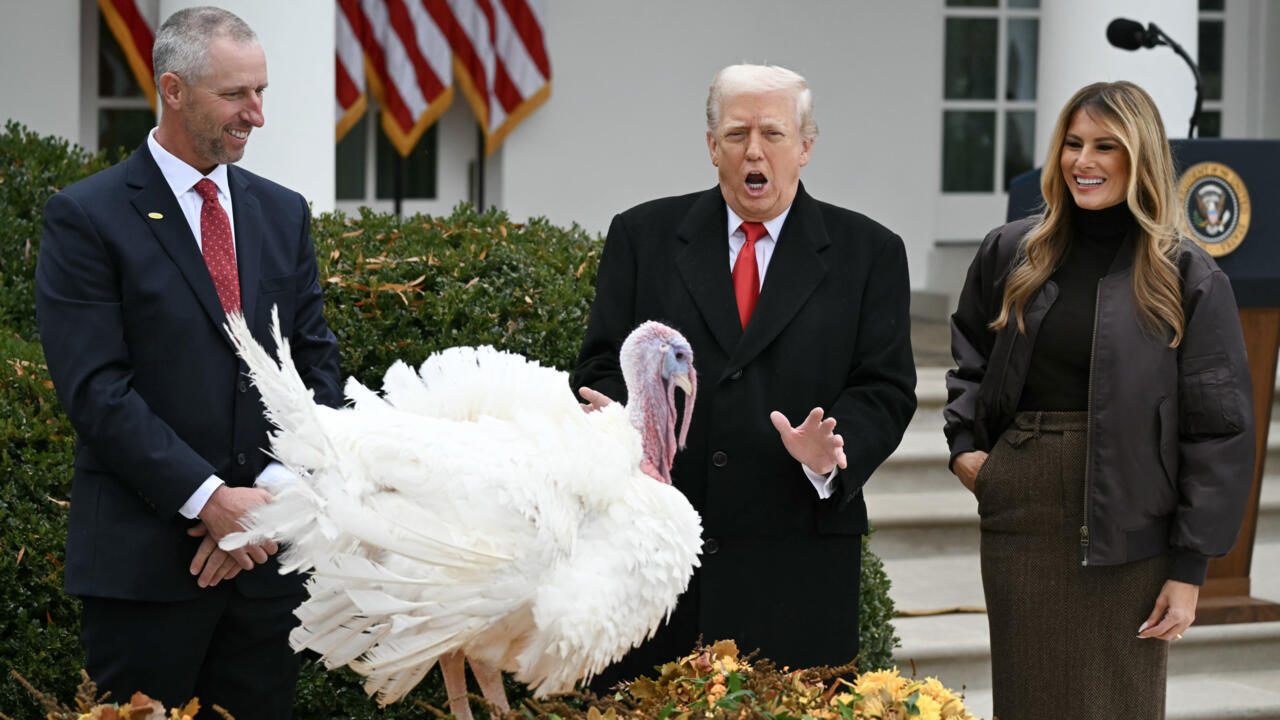
First Lady Melania Trump looks on as US President Donald Trump pardons Gobble, one of the National Thanksgiving turkeys, during the White House turkey pardon ceremony in the Rose Garden of the White House in Washington, DC © ANDREW CABALLERO-REYNOLDS / AFP
Grocery prices rose 2.7 percent from a year ago in September, recent government data showed, while a Politico poll found that groceries were the most challenging category for Americans to afford.
But appeals against Trump's tariffs and households' cost-of-living worries contrast against the administration's messaging -- as officials work to convince Americans of the strength of the world's biggest economy.
"While my great work on the Economy has not yet been fully appreciated, it will be! Things are really Rockin'," Trump wrote on his Truth Social platform over the weekend.
He stressed that prices were "coming sharply down."
The White House has pointed to cheaper Thanksgiving meals offered by retailers this year, although some observers caution this could be due to a different mix of products available.
Even as the country has not seen a broad inflation surge from tariffs, economists, policymakers and business owners note that the levies have added to costs.
North Carolina-based farmer Mary Carroll Dodd told reporters this week that "because of increases in our cost, mostly due to tariffs, we've had to raise the price of some of our vegetables" like collards and kale.
 'When... crops cost more to grow, the price per pound of turkey goes up,' a farmer says © TIMOTHY A. CLARY / AFP
Even before new tariffs, input costs like fertilizer, seed, chemicals, equipment and fuel were already at all-time highs, added Nick Levendofsky, executive director of the Kansas Farmers Union.
"With tariffs, they are going up even more," he added. "Corn and soybeans make up much of the feed for turkeys and other livestock. When those crops cost more to grow, the price per pound of turkey goes up."
Already, wholesale turkey prices are about 40 percent higher due to supply challenges fueled by avian illnesses, the American Farm Bureau Federation said recently.
This signals that price pressures will likely persist, even if retail prices fell this year as stores featured Thanksgiving deals to draw in consumers.
Business challenges
The Farm Bureau's recent survey noted that prices of fresh vegetables have jumped, with a "continued shortage of farmworkers" and fast-growing wages adding to costs.
"Almost certainly some of that labor shortage is due to the crackdown on both legal and illegal immigration," said Jeremy Horpedahl of the libertarian Cato Institute.
But proponents of Trump's trade strategy argue that tariffs are not a direct driver of price hikes in key sectors like housing, food or health care.
US beef prices for example have been boosted by a drought in recent years and a shrinking cattle herd, said economist Jeff Ferry at the Coalition for a Prosperous America, a group that supports Trump's tariffs.
"The supply chain, including manufacturers and the importers, are absorbing most of the tariff while holding consumer price increases in check," he said.
Grocery prices rose 2.7 percent from a year ago in September, recent government data showed, while a Politico poll found that groceries were the most challenging category for Americans to afford.
But appeals against Trump's tariffs and households' cost-of-living worries contrast against the administration's messaging -- as officials work to convince Americans of the strength of the world's biggest economy.
"While my great work on the Economy has not yet been fully appreciated, it will be! Things are really Rockin'," Trump wrote on his Truth Social platform over the weekend.
He stressed that prices were "coming sharply down."
The White House has pointed to cheaper Thanksgiving meals offered by retailers this year, although some observers caution this could be due to a different mix of products available.
Even as the country has not seen a broad inflation surge from tariffs, economists, policymakers and business owners note that the levies have added to costs.
North Carolina-based farmer Mary Carroll Dodd told reporters this week that "because of increases in our cost, mostly due to tariffs, we've had to raise the price of some of our vegetables" like collards and kale.
'When... crops cost more to grow, the price per pound of turkey goes up,' a farmer says © TIMOTHY A. CLARY / AFPEven before new tariffs, input costs like fertilizer, seed, chemicals, equipment and fuel were already at all-time highs, added Nick Levendofsky, executive director of the Kansas Farmers Union.
"With tariffs, they are going up even more," he added. "Corn and soybeans make up much of the feed for turkeys and other livestock. When those crops cost more to grow, the price per pound of turkey goes up."
Already, wholesale turkey prices are about 40 percent higher due to supply challenges fueled by avian illnesses, the American Farm Bureau Federation said recently.
This signals that price pressures will likely persist, even if retail prices fell this year as stores featured Thanksgiving deals to draw in consumers.
Business challenges
The Farm Bureau's recent survey noted that prices of fresh vegetables have jumped, with a "continued shortage of farmworkers" and fast-growing wages adding to costs.
"Almost certainly some of that labor shortage is due to the crackdown on both legal and illegal immigration," said Jeremy Horpedahl of the libertarian Cato Institute.
But proponents of Trump's trade strategy argue that tariffs are not a direct driver of price hikes in key sectors like housing, food or health care.
US beef prices for example have been boosted by a drought in recent years and a shrinking cattle herd, said economist Jeff Ferry at the Coalition for a Prosperous America, a group that supports Trump's tariffs.
"The supply chain, including manufacturers and the importers, are absorbing most of the tariff while holding consumer price increases in check," he said.
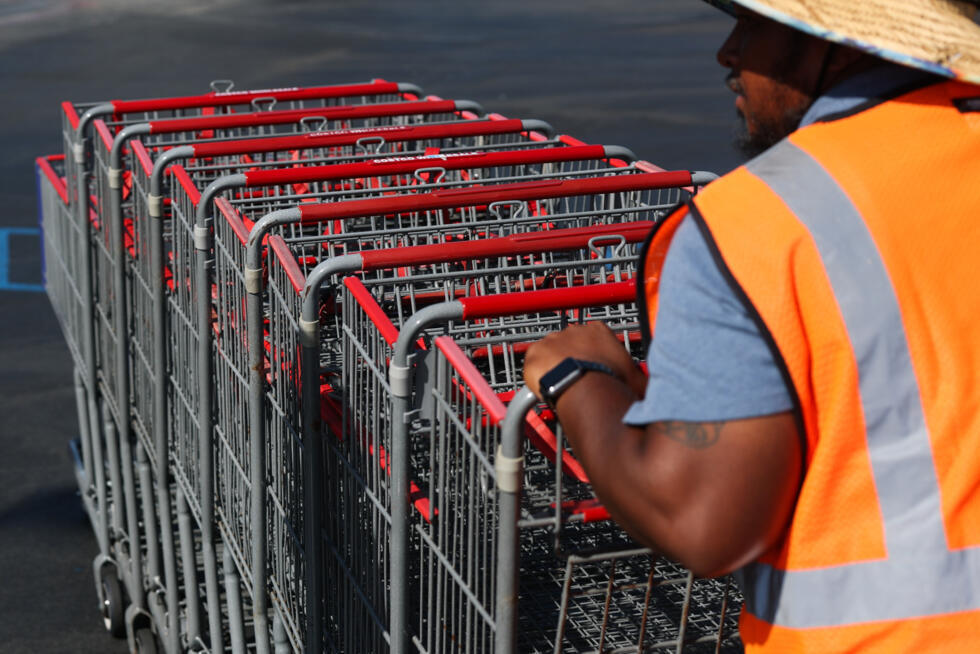
Proponents of Trump's trade strategy argue that tariffs are not a direct driver of price hikes in key sectors like housing, food or health care © Patrick T. Fallon / AFP
But the picture ahead remains complicated.
In a nod to farmers' challenges, the government is considering aid for the sector hit by low crop prices and a trade row with Beijing this year.
Levendofsky, however, said: "Farmers don't want a bailout. They want trade, not aid."
Some small business owners say they struggle to survive, even as the year-end shopping season approaches.
Jared Hendricks, who owns Village Lighting Co in Utah, told reporters that his company is "approaching a million dollars in tariffs this year" that were not originally in his forecast.
His company specializes in holiday decorations and solutions, placing orders a year in advance with much of the sales tied up in agreements with customers.
"We've sold a lot of that good to them directly at a loss," he said. "At this point, we've kind of transitioned from working for profits to working for tariffs."
"We are just in business to pay off our tariff debt," Hendricks said.
© 2025 AFP
But the picture ahead remains complicated.
In a nod to farmers' challenges, the government is considering aid for the sector hit by low crop prices and a trade row with Beijing this year.
Levendofsky, however, said: "Farmers don't want a bailout. They want trade, not aid."
Some small business owners say they struggle to survive, even as the year-end shopping season approaches.
Jared Hendricks, who owns Village Lighting Co in Utah, told reporters that his company is "approaching a million dollars in tariffs this year" that were not originally in his forecast.
His company specializes in holiday decorations and solutions, placing orders a year in advance with much of the sales tied up in agreements with customers.
"We've sold a lot of that good to them directly at a loss," he said. "At this point, we've kind of transitioned from working for profits to working for tariffs."
"We are just in business to pay off our tariff debt," Hendricks said.
© 2025 AFP
Farmers bemoan crushing Trump tariffs facing higher prices during holiday season
Common Dreams
November 26, 2025

A farm worker in a field. (Shutterstock)
US farmers warned on Tuesday that they are under increasing strain thanks to President Donald Trump’s tariffs, and they predicted more price increases were coming for American consumers during the holiday season.
As reported by The Packer, representatives from the Kansas Farmers Union, supermarket chain supplier Royal Food, and North Carolina-based Red Scout Farm detailed during a conference call how Trump’s tariffs on nearly all imported goods were raising prices on vegetables, fruits, grains, and meats.
Mary Carol Dodd, owner of Red Scout Farm, said during the call that her farm depends on products imported from other countries, including greenhouse materials, insect netting, and produce bags. With no low-cost domestic substitutes for these products available, said Dodd, she will have no choice but to raise prices.
“When the price of everything it takes to grow vegetables goes up, from soil to tools to fertilizer, packaging, transportation, then the vegetables on the holiday table go up as well,” Dodd explained. “For a small, diversified farm like us, those costs add up quickly. Our profit margins are already very thin, so every increase means tough choices.”
For Dodd, those tough choices have taken the form of a 50% price hike on collard greens and kale, and a 50-cent price increase on mixed-lettuce bags.
Nick Levendofsky, executive director of the Kansas Farmers Union, said during the call that price increases were inevitable given that most farms already operate on razor-thin profit margins.
“Every added cost in the supply chain eventually shows up at the checkout line,” he said. “Tariffs stack up on top of already high input costs, and families end up paying more for the same ingredients they bought last year.”
Colin Tuthill, president of Royal Food, expressed bewilderment that the president would enact policies that raised Americans’ food prices, especially after he won an election last year on the promise to reduce grocery prices starting on his first day in office.
“Placing a tariff or a tax on any kind of food item makes absolutely no sense to me,” he said. “We’re raising the price of food for the most in need.”
The American Federation of Teachers, Century Foundation, and Groundwork Collaborative last week issued a report estimating that Thanksgiving costs for US consumers have gone up by roughly 10% over the last year, with staples such as onions, spiral hams, and cranberry sauce all recording increases of 22% or higher.
The groups also found that Trump’s policies were squarely to blame for the price increases, and not just the tariffs. Specifically, they pointed to chaos at agencies such as the US Department of Agriculture that have weakened efforts to contain bird flu on US farms, which has in turn hurt the supply of poultry heading into the holiday season.
Although Trump has walked back some of his tariffs on staples such as coffee, bananas, and chocolate, the groups noted that this rollback likely came too late to offer relief to US families this year.
“Trump campaigned on bringing down the price of groceries on day one,” they wrote. “Yet in the biggest grocery week of the year, families across the country aren’t seeing any savings. Instead, their budgets are being carved up alongside the Thanksgiving turkey.”
November 26, 2025
A farm worker in a field. (Shutterstock)
US farmers warned on Tuesday that they are under increasing strain thanks to President Donald Trump’s tariffs, and they predicted more price increases were coming for American consumers during the holiday season.
As reported by The Packer, representatives from the Kansas Farmers Union, supermarket chain supplier Royal Food, and North Carolina-based Red Scout Farm detailed during a conference call how Trump’s tariffs on nearly all imported goods were raising prices on vegetables, fruits, grains, and meats.
Mary Carol Dodd, owner of Red Scout Farm, said during the call that her farm depends on products imported from other countries, including greenhouse materials, insect netting, and produce bags. With no low-cost domestic substitutes for these products available, said Dodd, she will have no choice but to raise prices.
“When the price of everything it takes to grow vegetables goes up, from soil to tools to fertilizer, packaging, transportation, then the vegetables on the holiday table go up as well,” Dodd explained. “For a small, diversified farm like us, those costs add up quickly. Our profit margins are already very thin, so every increase means tough choices.”
For Dodd, those tough choices have taken the form of a 50% price hike on collard greens and kale, and a 50-cent price increase on mixed-lettuce bags.
Nick Levendofsky, executive director of the Kansas Farmers Union, said during the call that price increases were inevitable given that most farms already operate on razor-thin profit margins.
“Every added cost in the supply chain eventually shows up at the checkout line,” he said. “Tariffs stack up on top of already high input costs, and families end up paying more for the same ingredients they bought last year.”
Colin Tuthill, president of Royal Food, expressed bewilderment that the president would enact policies that raised Americans’ food prices, especially after he won an election last year on the promise to reduce grocery prices starting on his first day in office.
“Placing a tariff or a tax on any kind of food item makes absolutely no sense to me,” he said. “We’re raising the price of food for the most in need.”
The American Federation of Teachers, Century Foundation, and Groundwork Collaborative last week issued a report estimating that Thanksgiving costs for US consumers have gone up by roughly 10% over the last year, with staples such as onions, spiral hams, and cranberry sauce all recording increases of 22% or higher.
The groups also found that Trump’s policies were squarely to blame for the price increases, and not just the tariffs. Specifically, they pointed to chaos at agencies such as the US Department of Agriculture that have weakened efforts to contain bird flu on US farms, which has in turn hurt the supply of poultry heading into the holiday season.
Although Trump has walked back some of his tariffs on staples such as coffee, bananas, and chocolate, the groups noted that this rollback likely came too late to offer relief to US families this year.
“Trump campaigned on bringing down the price of groceries on day one,” they wrote. “Yet in the biggest grocery week of the year, families across the country aren’t seeing any savings. Instead, their budgets are being carved up alongside the Thanksgiving turkey.”
Tariff rollbacks a 'drop in the bucket' compared to yearly family cost: analyst
Adam Lynch
November 26, 2025
President Donald Trump recently opted to rollback some tariffs to try to bring down prices on things like coffee, fruit and beef, but CNN analyst Matt Egan says the average U.S. household isn’t even going to notice.
“This would be like if your landlord raised your [monthly] rent by $200 bucks. And then, to make up for it, handed you a gift card for $35,” Egan told CNN anchor John Berman.
The White House claims the tariff rollbacks will address the affordability crisis, and research does show some items may get less expensive. Egan said the cost of bananas could drop by almost 3 percent, and coffee and nuts could get 7 percent cheaper. But Egan said there’s no guarantee stores and markets will pass those savings back to customers because stores “are reluctant to lower prices after raising them.”
But, more importantly, the rollback is not enough to register with straining households.
“But, let's just say [stores] do share the savings with consumers. Peterson Institute research shows that this will lower prices by about $5 billion per year. Now that sounds like a lot — but it's a big country,” Egan said. “When you break this down per household, we're only talking about an annual savings of $35 bucks from these tariff rollbacks. Just $35 bucks. That's against estimates from the budget lab at Yale that the impact of the tariff hikes are costing households $1,700. So, $35 savings $1,700 in cost.”
Enten showed footage of White House Economist Kevin Hassett claiming “prices for goods … weren't necessarily going up just because of tariffs," and that “prices will go down … because the supply of the goods into the U.S. is going to increase” with the rollbacks.
“This is just another example of the disconnect between the rhetoric and the reality on prices," Egan said. “The president says there's no inflation. Clearly there is. He says that grocery prices are down. They're clearly not. And, yeah, rolling back tariffs could help a little bit on the edges. but this is really just a drop in the bucket.”
Adam Lynch
November 26, 2025
COMMON DREAMS
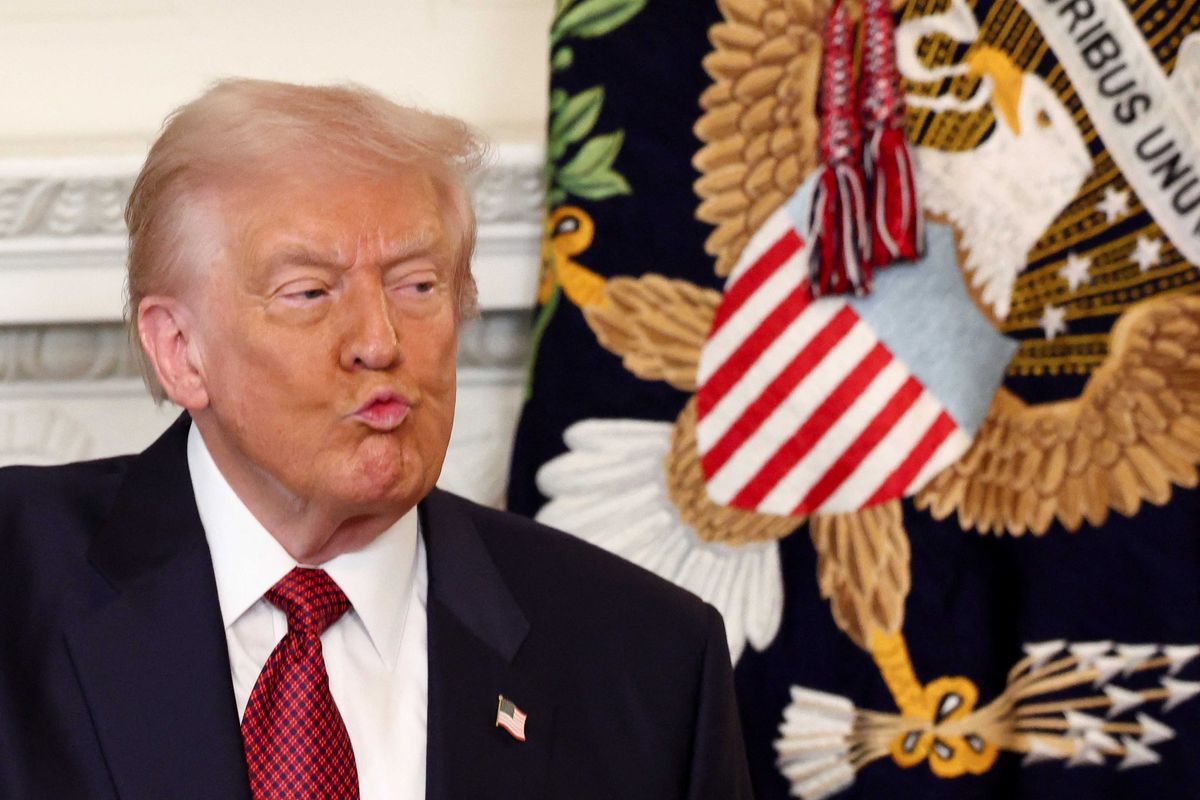
U.S. President Donald Trump gestures during a breakfast with Republican Senators at the White House in Washington, D.C., U.S. November 5, 2025. REUTERS Kevin Lamarque
U.S. President Donald Trump gestures during a breakfast with Republican Senators at the White House in Washington, D.C., U.S. November 5, 2025. REUTERS Kevin Lamarque
President Donald Trump recently opted to rollback some tariffs to try to bring down prices on things like coffee, fruit and beef, but CNN analyst Matt Egan says the average U.S. household isn’t even going to notice.
“This would be like if your landlord raised your [monthly] rent by $200 bucks. And then, to make up for it, handed you a gift card for $35,” Egan told CNN anchor John Berman.
The White House claims the tariff rollbacks will address the affordability crisis, and research does show some items may get less expensive. Egan said the cost of bananas could drop by almost 3 percent, and coffee and nuts could get 7 percent cheaper. But Egan said there’s no guarantee stores and markets will pass those savings back to customers because stores “are reluctant to lower prices after raising them.”
But, more importantly, the rollback is not enough to register with straining households.
“But, let's just say [stores] do share the savings with consumers. Peterson Institute research shows that this will lower prices by about $5 billion per year. Now that sounds like a lot — but it's a big country,” Egan said. “When you break this down per household, we're only talking about an annual savings of $35 bucks from these tariff rollbacks. Just $35 bucks. That's against estimates from the budget lab at Yale that the impact of the tariff hikes are costing households $1,700. So, $35 savings $1,700 in cost.”
Enten showed footage of White House Economist Kevin Hassett claiming “prices for goods … weren't necessarily going up just because of tariffs," and that “prices will go down … because the supply of the goods into the U.S. is going to increase” with the rollbacks.
“This is just another example of the disconnect between the rhetoric and the reality on prices," Egan said. “The president says there's no inflation. Clearly there is. He says that grocery prices are down. They're clearly not. And, yeah, rolling back tariffs could help a little bit on the edges. but this is really just a drop in the bucket.”
U.S. late credit card payments 'highest since Great Recession' this holiday: analyst
Adam Lynch
November 26, 2025
Adam Lynch
November 26, 2025
COMMON DREAMS

'Young Corporate Guy Showing His Debit Card' [Shutterstock]
It’s officially shopping season but CNN analyst Harry Enten says high prices are destroying America’s credit cards in the Trump economy.
There are 3 million more shoppers between Black Friday and Cyber Monday, according to analysis, but 90-day credit card delinquencies are exploding.
“I mean, look at this. It's the highest since the Great Recession,” said Enten. “We're talking about 12.4 percent of [credit card] balances are at least 90-plus days late. That is way up from where we were three years ago at this point, when it was 7.6 percent of balances that were 90 plus days late. So, clearly, people are taking on more debt and the debts are climbing higher on their credit cards.”
Enten added that the credit card debt was another aspect of wealthy Americans buying more while the rest of the U.S. tightens their belts.
“You look at those making at least $100,000, the amount of money being spent [by them] up 5 percent. Then you go down the next bracket, at $50,000 to 100,000, it's down 6 percent. And then look at that: Under $50,000 income — way down there, down at 16 percent,” said Enten.
“So that 16 percent drop in the amount of money being spent for household incomes less than $50,000 … compared to up 5 percent [rise] among those making more than $100,000 — I think that is the perfect illustration of this k-shaped economy, whereby folks who are doing pretty gosh darn good are putting out their money, but those who aren't are really going to hold back this year versus last year.”
'Young Corporate Guy Showing His Debit Card' [Shutterstock]
It’s officially shopping season but CNN analyst Harry Enten says high prices are destroying America’s credit cards in the Trump economy.
There are 3 million more shoppers between Black Friday and Cyber Monday, according to analysis, but 90-day credit card delinquencies are exploding.
“I mean, look at this. It's the highest since the Great Recession,” said Enten. “We're talking about 12.4 percent of [credit card] balances are at least 90-plus days late. That is way up from where we were three years ago at this point, when it was 7.6 percent of balances that were 90 plus days late. So, clearly, people are taking on more debt and the debts are climbing higher on their credit cards.”
Enten added that the credit card debt was another aspect of wealthy Americans buying more while the rest of the U.S. tightens their belts.
“You look at those making at least $100,000, the amount of money being spent [by them] up 5 percent. Then you go down the next bracket, at $50,000 to 100,000, it's down 6 percent. And then look at that: Under $50,000 income — way down there, down at 16 percent,” said Enten.
“So that 16 percent drop in the amount of money being spent for household incomes less than $50,000 … compared to up 5 percent [rise] among those making more than $100,000 — I think that is the perfect illustration of this k-shaped economy, whereby folks who are doing pretty gosh darn good are putting out their money, but those who aren't are really going to hold back this year versus last year.”

No comments:
Post a Comment