
The UN has designated November 25 as the International Day for the Elimination of Violence Against Women, stressing that nearly one in three women around the world are abused in their lifetime. The scourge has only worsened during the Covid-19 pandemic, which has led to a sharp increase in domestic violence. In France alone, more than one hundred women were killed by their current or former male partners in 2024, according to government figures.
A woman or girl killed every 10 minutes, UN report finds
 According to the Un report, during the course of 2024, around 83,000 women and girls were deliberately killed around the world
Africa had highest femicide rate in 2024
The UN said that women and girls were being subjected to extreme forms of violence in every part of the world.
The regional breakdown saw Africa with the highest rate of femicide in 2024 with 3 per 100,000 women and girls, followed by the Americas with 1.5, Oceania with 1.4, Asia with 0.7 and Europe with the lowest at 0.5.
The report called for "urgent, coordinated prevention" and specified six key areas, among them, strengthening legal frameworks, survivor-focused services and firearm restrictions.
Edited by Sean Sinico
DW with dpa, AFP
25/11/2025
New data from the UN shows the worrying scale of global femicides, with some 50,000 women and girls killed by a partner or family member in 2024 alone. UN Women says no real progress has been made on the deadly trend.

Image: Sodiq Adelakum/REUTERS
A woman or a girl is killed every 10 minutes around the world, new figures released by the United Nations on Monday showed.
The 2025 femicide report by the United Nations Office on Drugs and Crime (UNODC) and UN Women says that no real progress has been made when addressing such killings.
The UN said the release of the report marked the International Day for the Elimination of Violence against Women.
Is violence against women an epidemic no one cares about? 26:04
Tens of thousands of women and girls killed in 2024
During the course of 2024, the report found that around 83,000 women and girls were deliberately killed. Nearly 60% of them — or 50,000 — died at the hands of intimate partners or family members.
This equates to a woman or girl being killed by a partner or family member nearly every 10 minutes.
In comparison, the UN said 11% of male homicides were perpetrated by intimate partners or family members.
"The home remains a dangerous and sometimes lethal place for too many women and girls around the world," said John Brandolino, UNODC's acting executive director.
"The 2025 femicide brief provides a stark reminder of the need for better prevention strategies and criminal justice responses to femicide," Brandolino added.
The report also highlighted how technology had worsened some types of violence, like cyberstalking, coercive control, and image-based abuse. It was found to be a possible risk factor that escalated to the physical world and, in some cases, led to women and girls being killed.
"Femicides don't happen in isolation. They often sit on a continuum of violence that can start with controlling behavior, threats, and harassment — including online," said Sarah Hendriks, director of UN Women's policy division.
A woman or a girl is killed every 10 minutes around the world, new figures released by the United Nations on Monday showed.
The 2025 femicide report by the United Nations Office on Drugs and Crime (UNODC) and UN Women says that no real progress has been made when addressing such killings.
The UN said the release of the report marked the International Day for the Elimination of Violence against Women.
Is violence against women an epidemic no one cares about? 26:04
Tens of thousands of women and girls killed in 2024
During the course of 2024, the report found that around 83,000 women and girls were deliberately killed. Nearly 60% of them — or 50,000 — died at the hands of intimate partners or family members.
This equates to a woman or girl being killed by a partner or family member nearly every 10 minutes.
In comparison, the UN said 11% of male homicides were perpetrated by intimate partners or family members.
"The home remains a dangerous and sometimes lethal place for too many women and girls around the world," said John Brandolino, UNODC's acting executive director.
"The 2025 femicide brief provides a stark reminder of the need for better prevention strategies and criminal justice responses to femicide," Brandolino added.
The report also highlighted how technology had worsened some types of violence, like cyberstalking, coercive control, and image-based abuse. It was found to be a possible risk factor that escalated to the physical world and, in some cases, led to women and girls being killed.
"Femicides don't happen in isolation. They often sit on a continuum of violence that can start with controlling behavior, threats, and harassment — including online," said Sarah Hendriks, director of UN Women's policy division.
Femicide in Brazil — the silent war on women 26:34
Africa had highest femicide rate in 2024
The UN said that women and girls were being subjected to extreme forms of violence in every part of the world.
The regional breakdown saw Africa with the highest rate of femicide in 2024 with 3 per 100,000 women and girls, followed by the Americas with 1.5, Oceania with 1.4, Asia with 0.7 and Europe with the lowest at 0.5.
The report called for "urgent, coordinated prevention" and specified six key areas, among them, strengthening legal frameworks, survivor-focused services and firearm restrictions.
Edited by Sean Sinico
Rising domestic violence in France prompts sweeping bill to protect women
France has unveiled a framework bill with 53 measures to curb rising violence against women after a spike in domestic femicides. The bill, announced by Gender Equality Minister Aurore Bergé, comes as countries on Tuesday marked the International Day for the Elimination of Violence Against Women.
Issued on: 25/11/2025 - RFI

The latest figures in France show domestic femicides rose 11 percent between 2023 and 2024, with 107 women killed by a partner or ex-partner.
AP - Luca Bruno
Feminist organisations have sought such a text for years, while the bill also extends to violence against children.
In an interview with French news agency AFP, Bergé said that a comprehensive framework "would go further on a number of issues that have not yet been addressed, or have only minimally been addressed by the law".
The bill was drafted with all parliamentary groups and includes 53 legislative measures plus regulatory steps.
The move comes as deadly attacks on women rise in France. The latest figures from the Interministerial Mission for the Protection of Women (Miprof) show domestic femicides rose 11 percent between 2023 and 2024, with 107 women killed by a partner or ex-partner
Feminist organisations have sought such a text for years, while the bill also extends to violence against children.
In an interview with French news agency AFP, Bergé said that a comprehensive framework "would go further on a number of issues that have not yet been addressed, or have only minimally been addressed by the law".
The bill was drafted with all parliamentary groups and includes 53 legislative measures plus regulatory steps.
The move comes as deadly attacks on women rise in France. The latest figures from the Interministerial Mission for the Protection of Women (Miprof) show domestic femicides rose 11 percent between 2023 and 2024, with 107 women killed by a partner or ex-partner
Shift in responsibility
Bergé says more emphasis needs to be place on the perpetrators of violence who have until now "not felt afraid" due to a number of reasons.
"The statute of limitations protects them, the anxiety of filing a complaint protects them, the anxiety of confrontation protects them, the anxiety of the length of the legal process also protects them, " she says.
"They must be the ones who are afraid, they must be aware that the victims, at any moment, will be able to access justice."
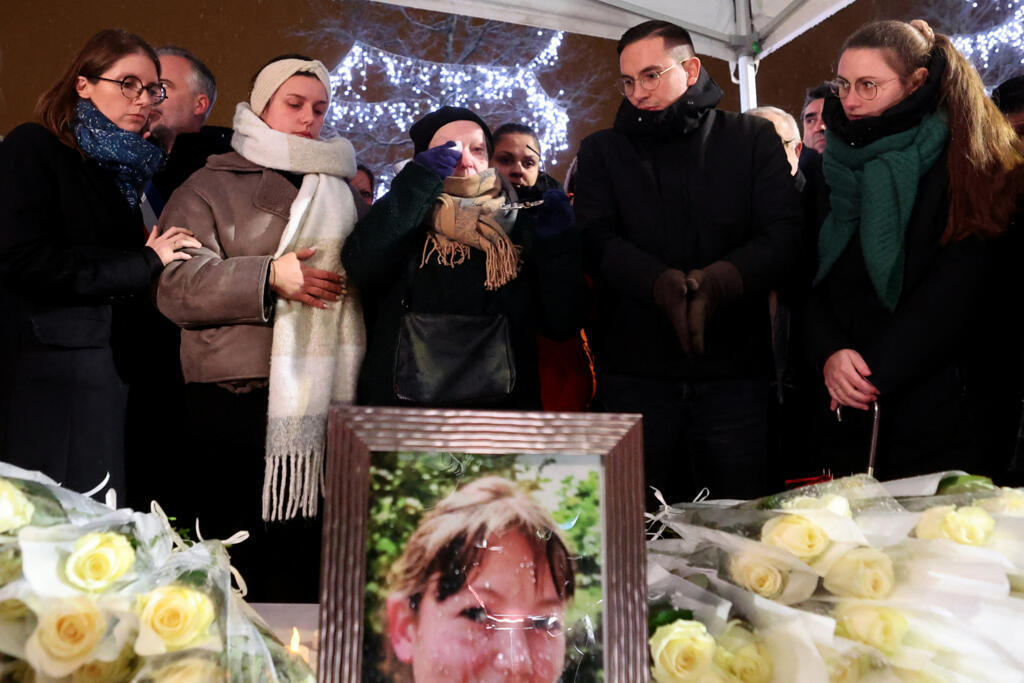
French Minister responsible for Equality between women and men and the fight against discrimination Aurore Bergé (L), joins the family members react during a pay tribute to Isabelle Mortaigne, killed on New Year's, during a tribute at the Town Hall in Haumont, northern France on 8 January, 2025. AFP - FRANCOIS LO PRESTI
Bergé said the killing of a woman by a partner or ex-partner is a collective failure and shows the lack of a cultural shift.
“Today, unlike in Spain, we haven't yet achieved the momentum that leads the whole of society to say 'This is also my share of responsibility as a company, as a colleague, as a friend, as a neighbour'," she said.
Bergé said progress is visible but barriers remain. She said all victims should have unconditional access to legal aid in cases of domestic or sexual violence “but this is not currently the case”.
Bergé said the killing of a woman by a partner or ex-partner is a collective failure and shows the lack of a cultural shift.
“Today, unlike in Spain, we haven't yet achieved the momentum that leads the whole of society to say 'This is also my share of responsibility as a company, as a colleague, as a friend, as a neighbour'," she said.
Bergé said progress is visible but barriers remain. She said all victims should have unconditional access to legal aid in cases of domestic or sexual violence “but this is not currently the case”.
Support for victims
Victims should be able to have their lawyer present during medical examinations if they wish, Bergé said, adding that this should include guidance on how they will be questioned.
The law will allow victims to record their testimonies so they do not have to repeat themselves during the legal process. Case dismissals must always be justified and could be open to appeal.
The other measures in the bill are designed to tackle the issue of coercive control, less obvious to the untrained eye.
"Being a victim of domestic violence doesn't necessarily mean having bruises, being strangled, or being raped; it also means being under control," Bergé said.
It can mean bank account closures, GPS tracking, phone chips and the monitoring of victims' social interactions.
All of these actions must be defined in law much more systematically, Bergé added.
Bergé said platform managers on sites like OnlyFans “must be classified as pimps”.
On sexual violence against young children, the bill proposes criminal record checks for all professionals who work with children, including civil servants, temporary workers, trainees and contract staff.
Bergé's proposal has been met with scepticism by some women's associations who demonstrated at the weekend and are calling for a budget of €3 billion euros to implement the law.
They are concerned that the state budget being debated in parliament "would result in massive setbacks for women's rights, because many associations would see their funding called into question", warned Sophie Binet, the general secretary of the CGT union.
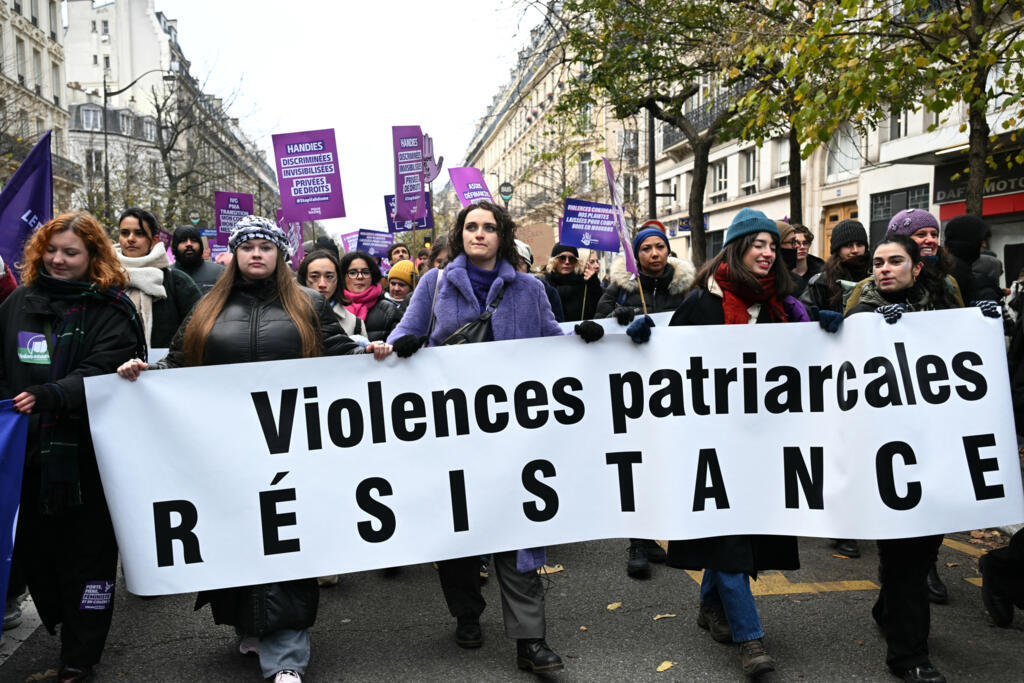
Protesters march behind a banner reading "Patriachal violence - resistance" during a demonstration called by the French collective NousToutes (Us all) to protest against violence against women, in Paris, on 22 November, 2025. © AFP - BERTRAND GUAY
Role of technology
Tuesday marks the International Day for the Elimination of Violence Against Women, an annual awareness campaign coordinated by the United Nations.
Accoring to a report by the United Nations Office on Drugs and Crime and UN Women, released Tuesday, some 50,000 women and girls were killed by intimate partners or family members in 2024.
Based on data from 117 countries, this breaks down to 137 women per day, or around one woman every 10 minutes, the report said.
The report said technological development has exacerbated some kinds of violence against women and girls and created others, such as non-consensual image-sharing, doxxing, and deepfake videos.
"We need the implementation of laws that recognise how violence manifests across the lives of women and girls, both online and offline, and hold perpetrators to account well before it turns deadly," said Sarah Hendricks, Director of UN Women's Policy Division.
Role of technology
Tuesday marks the International Day for the Elimination of Violence Against Women, an annual awareness campaign coordinated by the United Nations.
Accoring to a report by the United Nations Office on Drugs and Crime and UN Women, released Tuesday, some 50,000 women and girls were killed by intimate partners or family members in 2024.
Based on data from 117 countries, this breaks down to 137 women per day, or around one woman every 10 minutes, the report said.
The report said technological development has exacerbated some kinds of violence against women and girls and created others, such as non-consensual image-sharing, doxxing, and deepfake videos.
"We need the implementation of laws that recognise how violence manifests across the lives of women and girls, both online and offline, and hold perpetrators to account well before it turns deadly," said Sarah Hendricks, Director of UN Women's Policy Division.
France’s ongoing struggle to protect child victims of domestic violence
Domestic violence is rising in France and children have been recognised in law as victims in their own right since 2022. As the world marked International Day for the Elimination of Violence Against Women on Tuesday, RFI visited the country’s only centre supporting children as they try to recover.
Issued on: 25/11/2025 - RFI
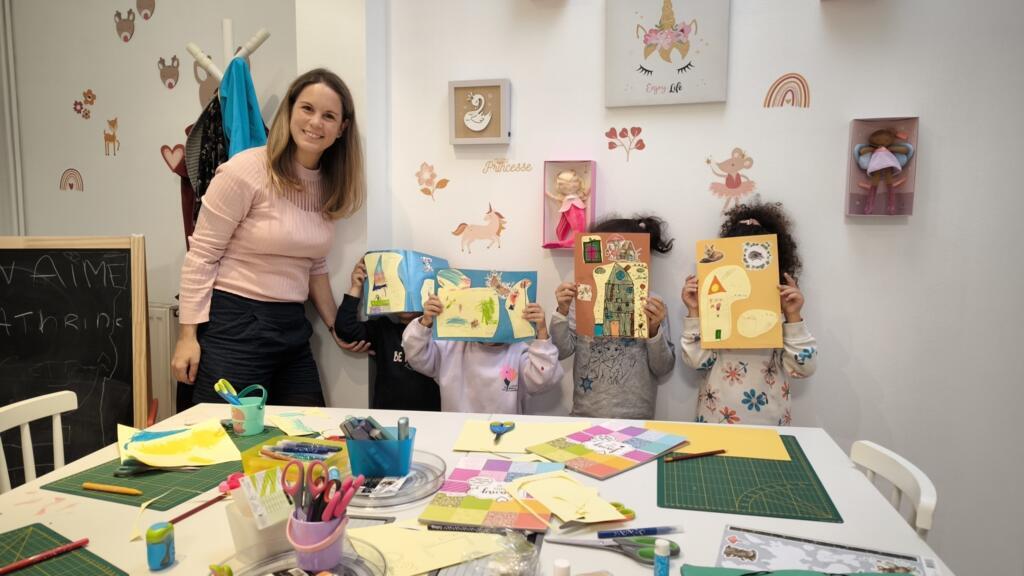
Children show off their "emotion houses" after a workshop led by Laëtitia Via, an author of children's books. © Aurore Lartigue/RFI
With dolls and toys on the shelves, books and balls and ladybird-shaped beanbags, the Une main pour 2main ("A hand for tomorrow") centre in Domont, north of Paris, has been designed to be as welcoming as possible for children.
"When you live in a violent environment, you don't play anymore. You don't make any noise. Children try to make themselves invisible," says Catherine Goujart-Delambre, the centre's director.
This is the only centre in France dedicated to helping children rebuild after living through domestic violence, which continues to increase despite measures meant to stop it.
On Monday, France's Gender Equality Minister Aurore Bergé unveiled a new bill of 53 measures to curb rising violence against women, which also extends to violence against children.
With dolls and toys on the shelves, books and balls and ladybird-shaped beanbags, the Une main pour 2main ("A hand for tomorrow") centre in Domont, north of Paris, has been designed to be as welcoming as possible for children.
"When you live in a violent environment, you don't play anymore. You don't make any noise. Children try to make themselves invisible," says Catherine Goujart-Delambre, the centre's director.
This is the only centre in France dedicated to helping children rebuild after living through domestic violence, which continues to increase despite measures meant to stop it.
On Monday, France's Gender Equality Minister Aurore Bergé unveiled a new bill of 53 measures to curb rising violence against women, which also extends to violence against children.
Letting children be children
On Wednesdays, Saturdays and some days during school holidays, the centre welcomes children aged four to 17 for free workshops.
"We wanted to give them back their place as children for an hour, so they no longer have to be either witnesses to violence, or carers of the parent who is a victim," says Goujart-Delambre.
In the arts and crafts room, older children are making Christmas tree ornaments
"While they are making crafts, they don’t think about anything else," Goujart-Delambre explains. It is a small but important step in rebuilding their self-confidence.
The youngest children are looked after by Laetitia Via, an author of children's books, who works with them on "expressing emotions" through reading, singing and drawing. "The important thing is that we give them the space to talk," she says.
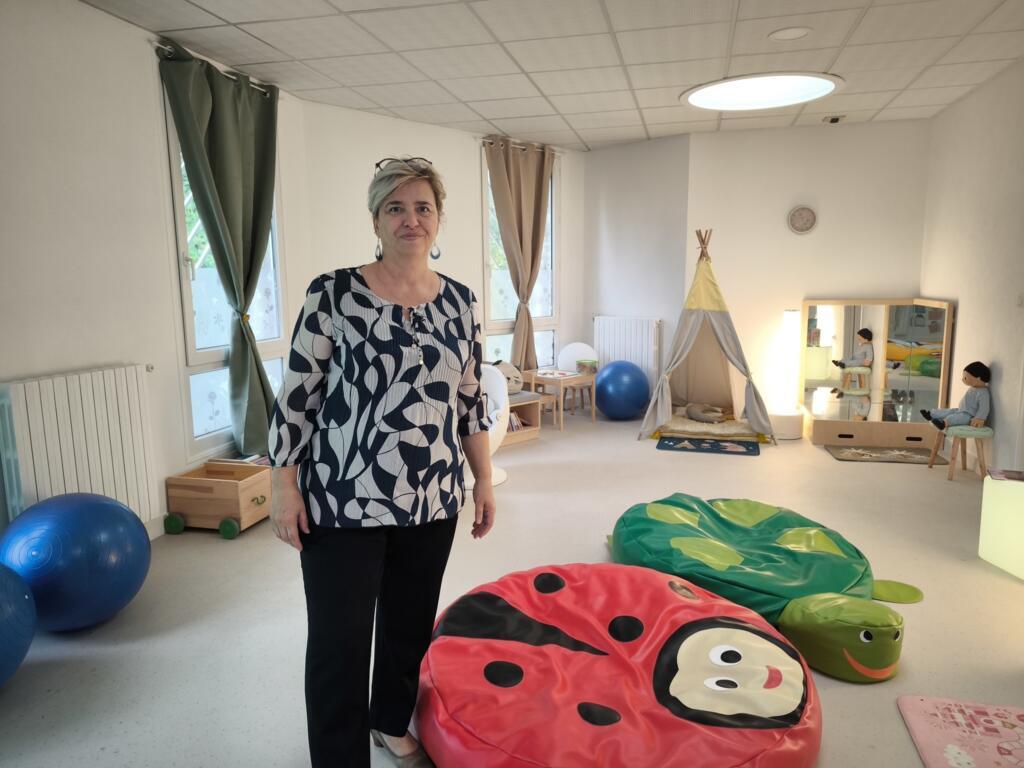
Catherine Goujart-Delambre was inspired by her daughter and granddaughter to found her organisation helping women who are victims of domestic violence, and later the centre for child victims. © Aurore Lartigue/RFI
Each room in the centre has a name, and the music and drama room is called "Anaïs and Lola", after Goujart-Delambre’s daughter and granddaughter. It was their experiences that led her to set up an organisation to help victims of domestic violence in 2014.
Lola, now 10, was three weeks old when her mother, Anaïs, called Goujart-Delambre for help after being beaten by her partner.
A few months later, Goujart-Delambre’s best friend, Katie Salvador, also became a victim of domestic violence. Shortly afterwards, the two women set up Mon Âme Soeur ("Soul sister") to help other women in the same situation.
Its success then led them to create Une main pour 2main to help children specifically.
Each room in the centre has a name, and the music and drama room is called "Anaïs and Lola", after Goujart-Delambre’s daughter and granddaughter. It was their experiences that led her to set up an organisation to help victims of domestic violence in 2014.
Lola, now 10, was three weeks old when her mother, Anaïs, called Goujart-Delambre for help after being beaten by her partner.
A few months later, Goujart-Delambre’s best friend, Katie Salvador, also became a victim of domestic violence. Shortly afterwards, the two women set up Mon Âme Soeur ("Soul sister") to help other women in the same situation.
Its success then led them to create Une main pour 2main to help children specifically.
Victims in their own right
According to France’s High Council for Equality Between Women and Men (HCE), 398,000 children were "co-victims" of violence against women in 2019.
And since 2022, children exposed to domestic violence have been recognised as victims in their own right, even if they were not physically harmed.
This status gives them access to support, including psychological assistance. But in practice, Salvador says, very little is actually available.
The centre does not have its own dedicated in-house psychologist – Laurianne Chaine intervenes in emergencies.
She explains that children exposed to domestic violence can develop symptoms of post-traumatic stress disorder, including sleep disturbance, anxiety, anger, frustration and a constant sense of being on alert. "In the context of domestic violence, it's their sense of safety that is affected."
"It feels good after everything we've been through," says Samia (not her real name), a mother who is bringing her children here for the second time. "They're very happy to come."
Long-term consequences
For Goujart-Delambre, helping these children is also a matter of prevention. From her years of helping adult victims, she says many were also exposed to violence as children.
"Every time, we ask if there was a history of violence in childhood, on one side or the other. In most cases, the answer is yes," she says.
A report from the HCE also found that 40 to 60 percent of violent men had witnessed domestic violence as children.
However Chaine says this cycle is not inevitable. "Just because a child has witnessed violence, does not mean that they will become violent themselves. But they may be vulnerable as adults, and may reproduce the same patterns, with their own children becoming victims of bullying, for example."
Immediate psychological support can help prevent trauma from becoming entrenched and causing long-term consequences.
Juliette (not her real name) left her partner in July. Social services referred her to the centre, she explains, sitting on one of the sofas in the reception area. "My four-year-old son has terrible tantrums. I don't really know how to react. He hits me and kicks me, and I feel that they resent me for the separation."
"Anger is often an expression of deep sadness," explains Chaine gently.
For Goujart-Delambre, one of the major obstacles to helping these children is that an abusive parent often retains parental authority, and will often refuse to approve psychological treatment.
A law passed in March 2024 aimed at strengthening child protection made it easier to remove parental authority, but in practice such decisions remain extremely rare.
"There is a beginning of awareness," says Goujart-Delambre. "We recognise the children as victims, but what are we doing about it?"
This article was adapted from the original version in French by Aurore Lartigue.
For Goujart-Delambre, helping these children is also a matter of prevention. From her years of helping adult victims, she says many were also exposed to violence as children.
"Every time, we ask if there was a history of violence in childhood, on one side or the other. In most cases, the answer is yes," she says.
A report from the HCE also found that 40 to 60 percent of violent men had witnessed domestic violence as children.
However Chaine says this cycle is not inevitable. "Just because a child has witnessed violence, does not mean that they will become violent themselves. But they may be vulnerable as adults, and may reproduce the same patterns, with their own children becoming victims of bullying, for example."
Immediate psychological support can help prevent trauma from becoming entrenched and causing long-term consequences.
Juliette (not her real name) left her partner in July. Social services referred her to the centre, she explains, sitting on one of the sofas in the reception area. "My four-year-old son has terrible tantrums. I don't really know how to react. He hits me and kicks me, and I feel that they resent me for the separation."
"Anger is often an expression of deep sadness," explains Chaine gently.
For Goujart-Delambre, one of the major obstacles to helping these children is that an abusive parent often retains parental authority, and will often refuse to approve psychological treatment.
A law passed in March 2024 aimed at strengthening child protection made it easier to remove parental authority, but in practice such decisions remain extremely rare.
"There is a beginning of awareness," says Goujart-Delambre. "We recognise the children as victims, but what are we doing about it?"
This article was adapted from the original version in French by Aurore Lartigue.

No comments:
Post a Comment