MULTIPOLAR GEOPOLITICS
India advances $2bn submarine lease as Putin arrives in New Delhi
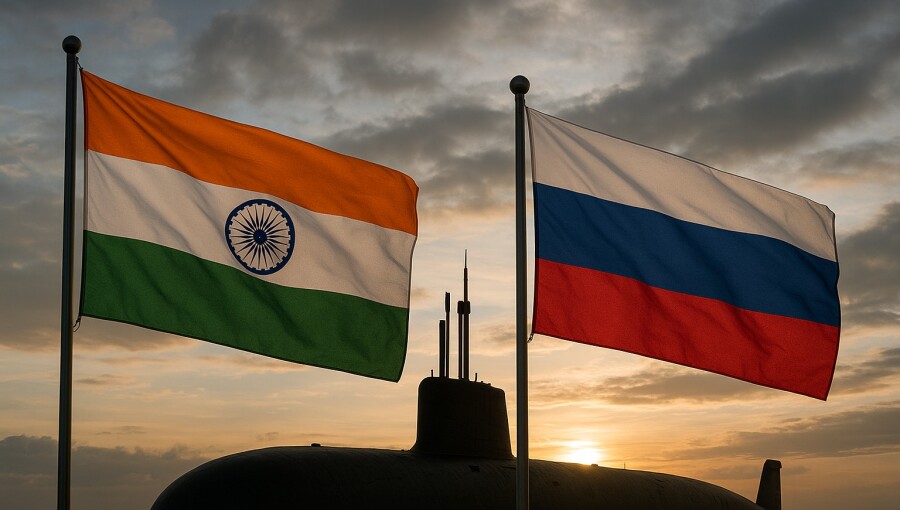
India has agreed to lease a nuclear-powered attack submarine from Russia in a deal valued at roughly $2bn, concluding protracted negotiations just as Vladimir Putin makes a rare visit to New Delhi, Bloomberg reports. The arrangement follows nearly a decade of intermittent talks that were frequently slowed by cost discussions and technical planning.
Indian officials visited a Russian shipyard in November to settle the remaining details. New Delhi expects to receive the vessel within two years, though the level of engineering involved means delivery could extend beyond that timeline. The submarine is intended to expand the navy’s fleet of nuclear-powered platforms, complementing two existing boats already in service.
Putin’s arrival marks his first trip to India since the launch of Russia’s full-scale assault on Ukraine. His meeting with Indian PM Narendra Modi is set to underline enduring defence and energy co-operation, even as New Delhi pursues broader diversification in its security partnerships. India has in recent months strengthened engagement with both Moscow and Beijing, while simultaneously managing friction with Washington over tariffs imposed by the Trump administration. New Delhi is currently seeking to ease those duties as part of broader trade discussions.
According to reports, India’s naval leadership has signalled that the commissioning of the new attack submarine is imminent, without elaborating. The platform will be larger than India’s current leased Russian-built boats, which formed a core component of the navy’s earlier nuclear-propulsion experience. The previous leased submarine was returned in 2021 after a decade in Indian service.
Under the terms of the agreement, the vessel will not be deployed in combat operations. Its primary role will be to support training and operational development as India expands its domestic nuclear-submarine programme. Maintenance and support services form part of the contract, extending Russia’s technical role in India’s undersea capabilities for another ten years.
The lease comes as interest in nuclear-powered submarines grows across the Indo-Pacific. Australia is developing similar boats with the UK and the US through the AUKUS partnership, while South Korea is exploring options with Washington. Only a handful of states possess the technology to operate such craft, underscoring their strategic value.
India continues to balance its long-standing relationship with Moscow against deeper defence ties with Western partners. Although Russian systems account for a diminishing share of Indian procurement, Moscow remains central to areas such as nuclear propulsion. India is preparing to commission its third ballistic-missile submarine next year and is progressing with two domestically built nuclear-powered attack submarines, signalling a sustained commitment to an expanded sea-based deterrent.
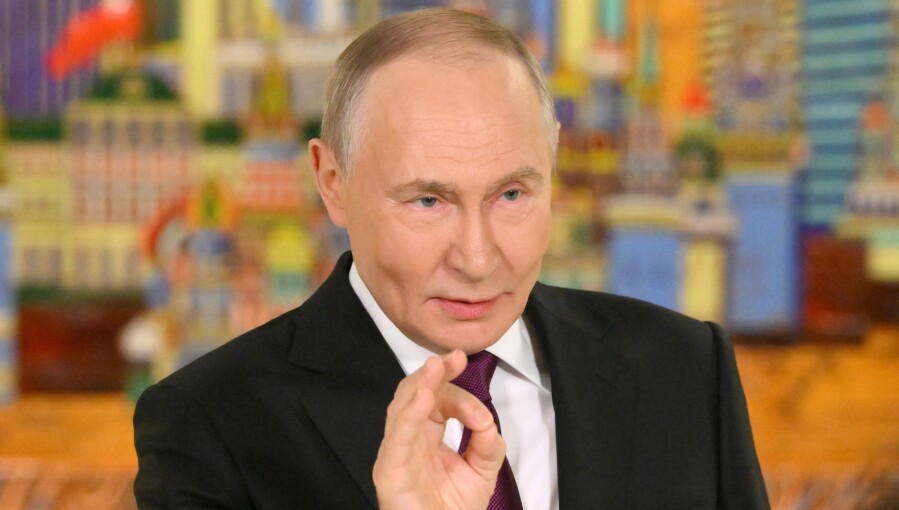
Russian leader Vladimir Putin has set out a broad agenda for his much awaited trip to India, signalling continuity in Russia’s strategic partnership with New Delhi and offering rare insight into ongoing exchanges with Washington over the conflict in Ukraine.
In comments published ahead of the December 4-5 state visit, the Russian leader highlighted the long-standing character of ties with India, describing the relationship as one that has expanded across defence, energy and technology over several decades according to Vedomosti. He underlined the depth of his working rapport with Prime Minister Narendra Modi and indicated that both sides had sought an in-person meeting in India for some time.
Despite the constraints of Western sanctions, Moscow and New Delhi have continued to widen their economic cooperation. Bilateral transactions are now settled largely in domestic currencies, and both governments are exploring new mechanisms to ease technical and financial bottlenecks created by the sanctions regime.
Putin also outlined the substance of recent talks with senior US intermediaries, Vedomosti added including discussions on Washington’s latest proposals to stabilise the situation in Ukraine. He characterised the exchanges as detailed and methodical, noting that the US side has organised its plan into several thematic sections to allow more structured negotiations. According to the Russian account, the framework mirrors ideas first raised during the bilateral summit in Anchorage.
The Kremlin maintains that the core elements of the American initiative remain unchanged and that President Donald Trump is personally intent on moving the process forward, though Moscow views the task as complex and politically fraught. Putin dismissed suggestions that rejoining the Group of Eight forms part of any settlement plan.
On Ukraine, the Russian leader reiterated Moscow’s long-held position that regions in the east opted for separation following the referendums conducted during the early phase of the conflict. He argued that Russia had previously urged Kyiv to withdraw its forces but that Ukraine pursued continued military action. Moscow, he said, intends to secure control over Donbas and the wider areas it refers to as Novorossiya, whether through force or through an eventual political arrangement.
Putin signalled that he does not wish to disclose which elements of the US initiative Russia rejects, arguing that the current priority should be to sustain momentum behind any move towards a negotiated outcome rather than to amplify disagreements at this stage.
COMMENT: Putin's India visit signals push for major overhaul in relations
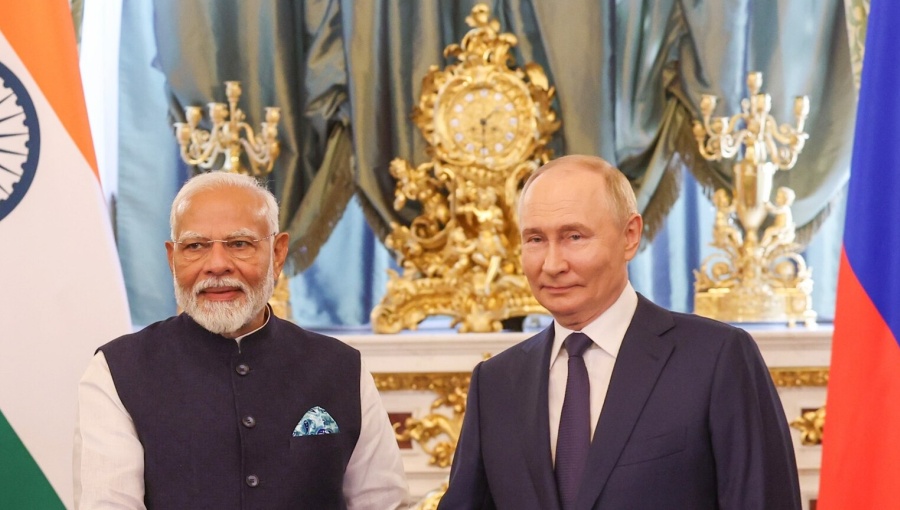
Russian President Vladimir Putin arrives in New Delhi on December 4, 2025 for his first visit to India since Russia's invasion of Ukraine upended global energy markets and defence supply chains. The two-day state visit, culminating in the 23rd India-Russia Annual Summit, comes as Moscow attempts to recalibrate a commercial relationship that has grown fivefold since 2021 but left India nursing a trade deficit approaching $59bn.
While an International Criminal Court(ICC) warrant against President Putin remains active, it is very unlikely to be acted on by Indian authourities as New Delhi values its relationship with Moscow far more than complying with less pressing non-binding international law requirements.
The Kremlin's willingness to confront that imbalance head on marks a notable shift in bilateral dynamics. Russian officials have pledged to formulate concrete proposals for reducing the deficit, whilst both nations prepare to sign a landmark mobility agreement facilitating the movement of skilled and semi-skilled Indian workers to Russia.
The numbers underscore why rebalancing has become urgent. According to a report by Indian state owned DD News, bilateral trade soared from $13bn in 2021 to approximately $68bn in FY2024-25, propelled almost entirely by India's voracious appetite for discounted Russian crude.
Indian imports from Russia totalled $63.84bn against exports of merely $4.88bn, creating a ninefold expansion of the deficit over four years. India’s External Affairs Minister S. Jaishankar acknowledged the disparity bluntly during an August 2025 meeting of the Inter-Governmental Commission in Moscow, declaring that addressing the imbalance required immediate attention.
For New Delhi, the visit presents an opportunity to extract meaningful market access concessions before committing further to the relationship. Indian trade negotiators have identified more than 65 non-tariff barriers impeding exports, particularly in marine products and agriculture. Complex certification requirements, language barriers in documentation, and slow approval processes for fisheries, especially shrimp processing facilities have frustrated Indian exporters seeking to capitalise on rupee surpluses accumulating in Russian accounts.
Unless these obstacles are dismantled India will struggle to boost shipments even if a broader trade agreement materialises. The first round of negotiations for a free trade arrangement between India and the Russia-led Eurasian Economic Union(EAEU) commenced in the last week of November 2025, following the signing of terms of reference in August 2025. The proposed deal would grant Indian businesses preferential access to a market comprising Russia, Armenia, Belarus, Kazakhstan, and Kyrgyzstan, an economic bloc representing roughly 1.5bn people and collective output exceeding $8.5 trillion.
For Russia, the stakes are equally significant, Moscow’s Deputy Economic Development Minister Vladimir Ilychev has opined that eliminating Indian tariffs, which can exceed 100% on certain goods, would substantially diversify Russian exports. Beyond tariffs, the summit will spotlight ambitious connectivity initiatives designed to shrink the geographical and logistical distance between the two economies. The International North-South Transport Corridor(INSTC) linking India to Russia via Iran has witnessed increased Russian coal and fertiliser shipments in 2025.
Russian fertiliser exports to India jumped 20% in the first half of 2025, reaching 2.5mn tonnes and accounting for a record 33% of Indian imports. Thermal coal deliveries rose by a third over the same period, with Russia capturing 5% of the Indian market despite broader declines in coal consumption. From Moscow’s perspective, the Northern Sea Route(NSR) represents perhaps the most strategically consequential area of potential cooperation.
Russian officials have courted India for deeper involvement in Arctic shipping, offering to train Indian seafarers in polar navigation and explore joint shipbuilding projects. The route, which trims weeks off traditional voyages between Europe and East Asia, could provide India with an alternative corridor insulated from chokepoints in the Red Sea and Southeast Asian waters. Rosatom, Russia's state nuclear corporation and the NSR's infrastructure operator, has positioned the partnership as a long-term strategic imperative rather than a mere commercial arrangement. However from India’s lens, the NSR is counter productive for its trade as the traditional Suez canal route is more direct and shorter from its own shores to European ports.
Payment mechanics will feature prominently in the discussions. India and Russia have expanded rupee-rouble arrangements to protect trade from sanctions and reduce dependence on dollar-denominated transactions. The Reserve Bank of India(RBI) has simplified the opening of special rupee vostro accounts, enabling Russian exporters to hold rupee balances that can be invested in government securities and other Indian assets. Yet challenges persist, Russia's massive crude exports generate rupee accumulations far exceeding what India can absorb through its limited export capacity, and many Russian firms continue to prefer US dollar, Euro and Chinese yuan payments.
Defence cooperation, historically the centrepiece of the relationship, is expected to gain a second win during Putin’s visit. Russia's share of Indian arms imports has declined from roughly 76% in 2009 to 36% between 2020 and 2024, reflecting New Delhi's diversification towards French and American suppliers alongside its domestic manufacturing push. Nevertheless, with 60 to 70% of India's military equipment still of Russian origin, maintenance support and spare parts remain indispensable. Preliminary discussions around additional S-400 air defence regiments and the Su-57 stealth fighter are expected, though finalisation lies highly uncertain and further ahead. Especially as Russia is yet to deliver the last 2 S-400 regiments India has already paid for. The broader geopolitical context also lends the summit additional weight. Washington has exerted sustained pressure on India over its Russian energy purchases, with the Trump administration framing the trade as enabling Moscow's war effort.
Russian officials have pushed back though, with Kremlin press secretary Dmitry Peskov calling for a global architecture that insulates bilateral ties from third country interference during a Russian state owned news outlet Sputnik press meet in New Delhi on December 2 2025.
What emerges from the summit will signal whether India-Russia economic ties can evolve beyond their current energy and defence dominated structure. Moscow's pledges to address the trade deficit, combined with movement on the EAEU agreement and connectivity corridors, suggest genuine intent to place the relationship on more sustainable foundations.
Whether those commitments translate into tangible market access for Indian pharmaceuticals, textiles, and agricultural products will determine whether the partnership can withstand the pressures bearing down upon it from Washington and the shifting currents of global commerce.

No comments:
Post a Comment