Sunday, November 07, 2021

U.S. Shale Patch Reports Blowout Earnings

  • U.S. shale drillers have posted strong Q3 earnings as a result of rising crude prices
  • Large shale drillers in the U.S. are slow to increase production, and instead focus on shareholder returns

  • 2022 production guidance remains very modest for most large shale drillers
 

Nearly 60% of S&P 500 companies have reported third-quarter 2021 earnings, and the energy sector has again emerged as a standout performer.

According to the latest FactSet data, the Energy sector is reporting the second-largest positive (aggregate) difference between actual earnings and estimated earnings (+15.9%), behind only the Financial sector. 

Within this sector, Phillips 66 (NYSE:PSX) ($3.18 vs. $1.90), Chevron (NYSE:CVX) ($2.96 vs. $2.20), and Valero Energy (NYSE:VLO) ($1.22 vs. $0.92) have reported the largest positive EPS surprises.

However, the U.S. Shale Patch has emerged as the class valedictorian.

After a turbulent period characterized by mounting debts, dwindling cash flows, and awful share performance, the U.S. shale patch has roared back to life with the current earnings season, proving that the worst is finally behind the rearview mirror. Earnings are on tap this week for U.S. independent oil producers, with Continental Resources (NYSE:CLR), Devon Energy (NYSE:DVN), Diamondback Energy (NASDAQ:FANG), EOG Resources (NYSE:EOG), and Occidental Petroleum (NYSE:OXY) all reporting stellar Q3 2021 earnings.

Here's a peek into how shale producers have been faring this earnings season.

#1. Continental Resources

Continental Resources (NYSE:CLR), the shale driller owned by one of the richest and most prominent shale wildcatters, Harold Hamm, has reported strong Q3 numbers that, nevertheless, failed to meet Wall Street's expectations.

Continental Resources has reported Q3 revenue of $1.34B, good for 93.5% Y/Y growth but $70M below the Wall Street consensus. Adjusted net income clocked in at $437.2 MM while GAAP EPS of $1.01 missed by $0.20.

With oil prices consolidating above $80 per barrel, the majority of shale producers are solidly profitable, and many are returning excess cash to shareholders in the form of hiked dividends. Continental Resources has followed suit by hiking its dividend 33% to $0.20, but has also gone off the beaten path–the company is finally taking a stake in North America's biggest oil field.

Continental has announced plans to acquire 92,000 net acres in the Permian Basin from Pioneer Natural Resources Co. for $3.25 billion. The company will pay cash for the assets in the Delaware Basin, a subregion of the massive Permian.

Until now, CLR has focused on the Bakken shale in North Dakota, where it's the largest operator. But with output from other U.S. oil fields flatlining or declining, the Permian's multi-layered tiers of oil-soaked rock offer new avenues for growth. According to Continental, its new Permian assets will pump the equivalent of about 50,000 barrels of oil a day, and generate an extra half-billion dollars in annual free cash flow at current commodity prices.

CEO Bill Berry has revealed that the company has been exploring a potential Permian deal for 20 years, but until now, it "never thought the time was right or the economics were right."

Wall Street is hardly convinced.

CLR shares have tanked nearly 9% after announcing the deal, with Siebert Williams downgrading the shares to Hold from Buy with a $55 price target, cut from $69.  The firm says the deal raises serious questions regarding Continental's M&A strategy, and the lower potential shareholder capital returns over the near future.

Meanwhile, Leo Mariani, an analyst at Keybanc Capital Markets Inc., says the market may not like the idea of CLR getting into a new basin at this point in the commodity price cycle.

Despite the latest selloff, CLR still boasts a 174% gain in the year-to-date.

#2. Devon Energy Devon Energy (NYSE:DVN) has returned its Q3 scorecard that easily beat on both top-and bottom-line expectations. The Oklahoma-based shale producer reported revenue of $3.47B (+224.3% Y/Y), $1.08B higher than the consensus, while net earnings of $838M represented a vast improvement from the $92M loss the company reported for last year's corresponding quarter. Meanwhile, the company reported Q3 GAAP EPS of $1.24 vs.($0.25), beating by $0.31.

Q3 production soared 87% Y/Y to 608K boe/day, with production expenses declining 1% to $9.91/unit driven by operational efficiency gains and the benefits of scalable production growth in the Delaware Basin.

The company expects Q4 output of 583K-601K boe/day and expects to maintain FY 2022 production of 570K-600K boe/day, with $1.9B-$2.2B in capital spending on its upstream operations.

Devon's free cash flow generation increased 8-fold from the fourth quarter of 2020 to $1.1B, while the balance sheet strengthened with cash balances increasing by $782 million to a total of $2.3 billion.

Related: Aramco CEO: Underinvestment In Oil Is A ‘’Huge Concern’’

Devon Energy increased its fixed-plus-variable dividend payout by 71% to $0.84/share and also authorized a $1B stock buyback program. The company says the top priority for its free cash flow generation will continue to be the funding of its fixed-plus-variable dividend and distribute up to 50% of the remaining free cash flow to shareholders through a variable dividend.

DVN shares are up 176% YTD.

#3. Diamondback Energy

Diamondback Energy (NASDAQ:FANG) has posted Q3 revenue of $1.91B (+165.3% Y/Y) beating Wall Street's consensus by $430M while GAAP EPS of $3.56 beat by $0.73.

The company's Q3 2021 average production clocked in at 239.8 MBO/d (404.3 MBOE/d), with Q3 2021 Permian Basin production averaging 223.0 MBO/d (374.3 MBOE/d).

Q3 2021 cash flow from operating activities came in at $1,199 million; Operating Cash Flow was $1,131 million while Free Cash Flow was $740 million.

Diamondback has announced a commitment to return 50% of free cash flow to stockholders beginning in Q4 2021. To this end, the company raised its dividend 11% to $0.50 per share, marking the second consecutive quarterly increase after hiking by 12% in the second quarter. The company's board has also authorized a $2 billion share repurchase program as part of this commitment.

For the full year, FANG expects production to clock in at 222 - 223 MBO/d (370 - 372 MBOE/d), up from its previous guidance of 219 - 222 MBO/d (363 - 370 MBOE/d). The company has also lowered its full-year 2021 cash CAPEX guidance to $1.49 - $1.53 billion, down 4% at the midpoint from $1.525 - $1.625 billion previously.

FANG shares have rallied 133% YTD.

#4. EOG Resources

EOG Resources (NYSE:EOG) has reported Q3 revenue of $4.78B (+103.4% Y/Y), beating by $430M while net income of $1,095M represented a big jump from a $42M loss recorded in Q3 2020. Meanwhile, GAAP EPS of $1.88 narrowly missed by $0.01 but was a big improvement from last year's $0.07 loss.

EOG generated $1.4 billion of free cash flow and announced that capital expenditures came near the low end of guidance range driven by sustainable cost reductions.

EOG said total company crude oil production of 449,500 Bopd was above the high end of the guidance range due to better well productivity. 

EOG Resources has declared a $0.75/share quarterly dividend, good for an 81.8% increase from prior dividend of $0.41. The company also declared a special dividend of $2.00 per share, payable on December 30; for stockholders of record on December 15.

"Our high-return investment program... has positioned the company to step up our cash return to shareholders,should also be taken as a signal of our confidence that we can continue improving in the future. EOG has never been in better shape. Our high-return business model is sustainable for the long term, underpinned by a deep inventory of double premium drilling locations," EOG CEO Ezra Yacob told shareholders during the company's earnings call.

#5. Occidental Petroleum

Occidental Petroleum (NYSE:OXY) has become the latest shale patch producer to post an easy earnings beat on the strength of high oil and gas prices. The Texas company–which eschews wildcatting in favor of an oil recovery model–reported Q3 Non-GAAP EPS of $0.87 beats by $0.20 while GAAP EPS of $0.65 was in-line with expectations. 

OXY reported that cash flow from continuing operations clocked in at $2.9 billion, capital spending was $656 million, while free cash flow excluding working capital came in at over $2.3 billion.

The company exceeded production guidance midpoint by 15 Mboed, despite the impact of Hurricane Ida, with production of 1,160 Mboed from continuing operations. Meanwhile, OxyChem generated record earnings and increased total year pre-tax guidance to $1.45 billion

Occidental also announced that it had completed its large-scale divestiture program with the sale of Ghana in October; repaid $4.3 billion of long-term debt and retired $750 million of interest rate swaps.

OXY shares have gained 95% YTD.

By Alex Kimani for Oilprice.com

Global powers could suffer financially in the move away from fossil fuels - study

Low carbon initiatives affect more than just the climate. Some countries have much to gain, while others face great economic risk.

By EMILY CRASNICK
JERUSALEM POST  
Published: NOVEMBER 6, 2021

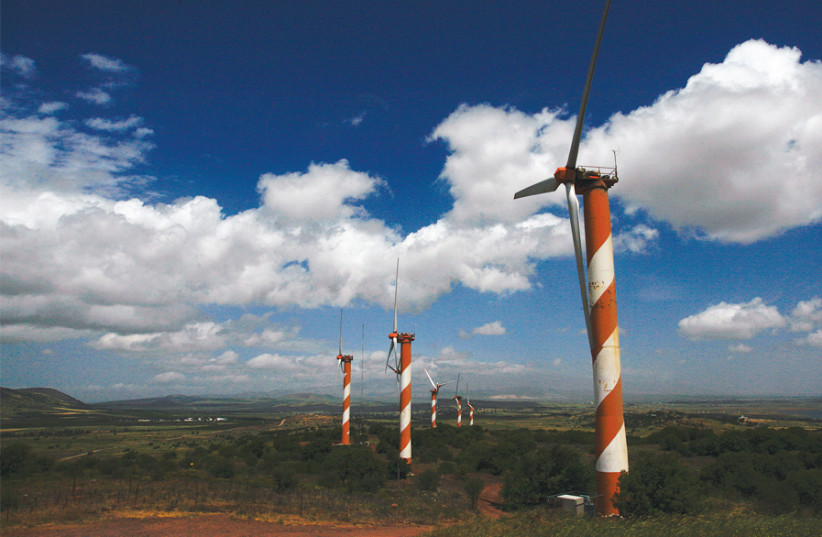
WIND TURBINES pictured in the Golan Heights.
(photo credit: REUTERS)

For years, the choice to move away from fossil fuels has been a costly one, causing many countries to delay implementing environmental policies and leaving others to pick up the tab. A recent study by the universities of Exeter, Cambridge, the Open University and Cambridge Econometrics shows that this is no longer the case. There is much to be gained from a shift toward renewable energy, environmentally and economically.

The global transition from fossil fuels to renewable energy is well underway, and it’s now apparent that getting on board may actually be the most effective approach for countries to both combat climate change and save money. As environmentally-friendly policies are implemented in an increasing number of countries, the choice to continue relying on fossil fuels may come with more consequences than a changing climate alone. Exactly what risks or rewards a country faces will depend on its relationship with fossil fuels.

Countries can be divided into one of three categories. For those that are heavily reliant on the import of fossil fuels, such as those in the European Union and China, moving toward greener policies has many benefits. Decarbonization for these countries means an opportunity to redirect financial resources toward the innovation of new technologies and jobs on a domestic level.

At the same time, oil-rich countries that rely on the export of fossil fuels, such as Saudi Arabia, can reduce negative impact on their own economies from decreased global demand for fossil fuels by preemptively flooding the market at a reduced cost.

Countries like the US, Canada and Russia are regarded as “large uncompetitive exporters” and stand to lose the most from continued reliance on fossil fuels. In a market flooded by exports from other oil-rich countries, these large exporters would be unable to compete. Stranded oil assets combined with lack of investment in new technology could lead to industrial decline as certain economic activity and job sectors dependent on the fossil fuel industry become obsolete. Redirecting efforts toward the creation of new low-carbon technology would help to mitigate the negative economic impact.

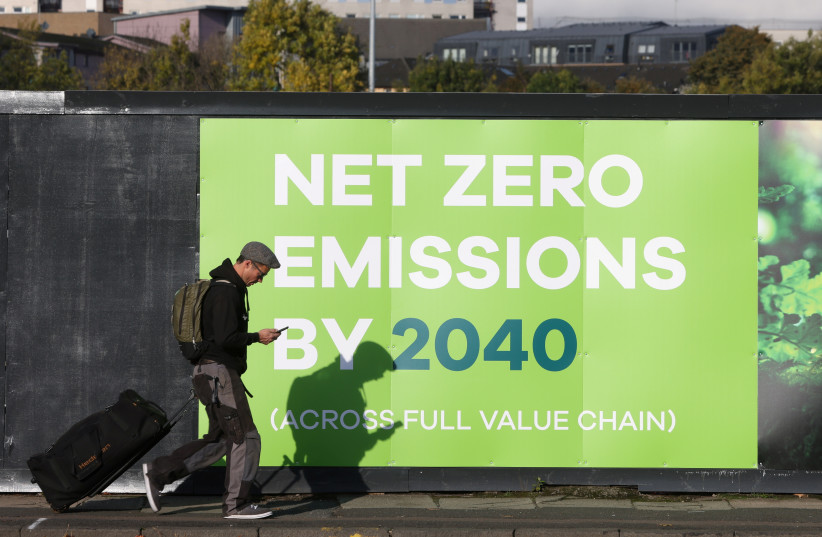
A man walks past a advertising in relation with the UN Climate Change Conference (COP 26) where world leaders discuss how to tackle climate change on a global scale, near the conference area in Glasgow Scotland, Britain October 30, 2021. (credit: REUTERS/YVES HERMAN)

“As the economy transforms, if you do not decarbonise, you are shooting yourself in the foot.” Professor Jorge Viñuales, of the University of Cambridge and co-author of the study, said. “The key question is how to do it in the specific conditions of your country.”

“The disruptive nature of the low-carbon transition makes untenable a macroeconomic strategy based on ‘business-as-usual,” said Dr. Pablo Salas, from the University of Cambridge Institute for Sustainability Leadership (CISL).

“Supporting low-carbon innovation is the only way to maintain long-term competitiveness in a decarbonizing economy."

Resource-Rich, Canada Grapples With Key Commodity Shortage: Workers

CALGARY, Alberta, Nov 5 (Reuters) – Canada’s economic recovery from the pandemic is being hampered by labor shortages across industries ranging from energy to aviation to agriculture, forcing companies to consider multiple salary hikes and offer other perks.

Statistics Canada data on Friday showed the national unemployment rate hit a 20-month low in October. The shortage of skilled and unskilled workers threatens to hurt economic growth and fuel inflation, which is already at an 18-year high.

“Talent is an issue in every sector, at every level of the value chain, in every part of the country, and there’s no silver-bullet-fix at hand,” said Leah Nord, a senior director at the Canadian Chamber of Commerce.

Industry groups blame the shortage partly on COVID-19 unemployment benefits that alleviated the need for some people to work, and increased demand for better work-life balance among younger workers as older employees retire.

One solution, companies say, is to raise the numbers of temporary foreign workers. The federal government and several provinces are working on possible changes that would shorten the process to bring such workers to Canada and raise the maximum number of temporary foreign workers allowed to work per facility, said Richard Vigneault, spokesman for Quebec pork producer Olymel. The company is looking for 3,000 workers to add to its 14,000-member workforce, he added.

In the energy services sector, which is entering its busiest time of year as the winter drilling season gets underway, a shortage of labor has propelled firms to boost wages 10% since June, according to the Canadian Association of Energy Contractors (CAOEC).

To attract workers, companies are also offering more flexibility in the hours they operate.

Canada’s oil and gas sector contributes about 5% to national GDP and CAOEC Chief Executive Mark Scholz said the labor crunch could leave companies unable to capitalize on soaring energy prices.

Precision Drilling (PD.TO), Canada’s biggest rig contractor, is offering referral bonuses and incentives to recruiting teams to help address worker shortages, CEO Kevin Neveu said.

“I’ll tell you, it’s a big challenge right now,” Neveu told a third-quarter earnings call.

Suzanne Benoit, president of aerospace trade group Aero Montreal, said some Canadian companies are considering whether to raise salaries twice in the same year to retain workers.

“They feel obliged, or the people will leave,” Benoit said on the sidelines of the organization’s recent supply chain summit in Montreal, the country’s aerospace hub.

“It’s a perfect storm in the sense that there is inflation, a shortage of workers and the aging of the population,” she added.

The agriculture sector has long struggled to hire enough workers to pick fruits and vegetables. But this year is also seeing shortages of butchers and truck drivers, said Debra Hauer, manager of labor market intelligence at the Canadian Agricultural Human Resources Council.

Staffing shortages may improve as the government transitions people off its main emergency income support program and onto traditional unemployment benefits.

But some sectors could see extended shortages, including in the oil sands’ next maintenance season in early 2022.

“There are just not enough people to go around,” said Hugh MacDonald, business manager for the Boilermakers Lodge 146 union in northern Alberta. “Next spring, I don’t know what we’re going to do.”

Additional reporting by Allison Lampert in Montreal; Editing by Dan Grebler
How space solar panels could power the Earth with 24/7 clean energy

It's always sunny in space.


Monisha Ravisetti
CNET
Nov. 6, 2021 

Could space-based solar power change the world one day?
Getty Images

Solar power has been a key part of humanity's clean-energy repertoire. We spread masses of sunlight-harvesting panels on solar fields, and many people power their homes by decorating their roofs with the rectangles.

But there's a caveat to this wonderful power source. Solar panels can't collect energy at night. To work at peak efficiency, they need as much sunlight as possible. So, to maximize these sun catchers' performance, researchers are toying with a plan to send them to a place where the sun never sets: outer space.

Theoretically, if a bunch of solar panels were blasted into orbit, they'd soak up the sun even on the foggiest days and the darkest nights, storing an enormous amount of power. If that power were wirelessly beamed down to Earth, our planet could breathe in renewable clean energy, 24/7.

That would significantly reduce our carbon footprint."The real virtue of space solar power is the ability to deliver solar energy day and night."
Michael Kelzenberg, California Institute of Technology

Against the backdrop of a worsening climate crisis, the success of space-based solar power could be more important than ever. The state of the climate is in the spotlight right now as world leaders gather in Glasgow, Scotland, for the COP26 summit, which has been called the "world's best last chance" to get the crisis under control.

CNET Science is highlighting a few futuristic strategies intended to aid countries in cutting back on human-generated carbon emissions. Next-gen tech like space-based solar power can't solve our climate problems -- we still need to rapidly decarbonize our energy systems -- but green innovation could help achieve the goals of the Paris Agreement: Limit global warming to well below 2 degrees Celsius (3.6 degrees Fahrenheit) by the end of the century.

An unlimited supply of renewable energy from the sun might help us do that.

From science fiction to fact

For decades, space solar power has lived in the minds of science fiction lovers and scientists alike.

In the early 1900s, Russian scientist-mathematician Konstantin Tsiolkovsky was steadily churning out a stream of futuristic designs envisioning human tech beyond Earth. He's responsible for conjuring things like space elevators, steerable rockets and, you guessed it, space solar power.

Since Bell Labs first invented the first concrete "solar panel" in the '50s, international scientists have been working to make Tsiolkovsky's sci-fi fantasy a reality. They include Japanese researchers, the United States military and a team from California Institute of Technology spearheading the Space Solar Power Project.

Space solar power "was investigated extensively in the late 1960s and the 1970s, sort of in the heyday of the Apollo program," said Michael Kelzenberg, senior research scientist on the project.

Unfortunately, due to the materials' weight and bulk, the era's technology wasn't advanced enough to cost-effectively achieve the feat. It would've been exceptionally difficult to send classic solar panels to space via a rocket without breaking the bank.

"The distinctively unique and defining feature of the Caltech approach is a focus on reducing the component mass by 10 to 100 times," said Harry Atwater, the project's principal investigator. "This is essential to reducing both the manufacturing and the launch costs to make space solar power economical."


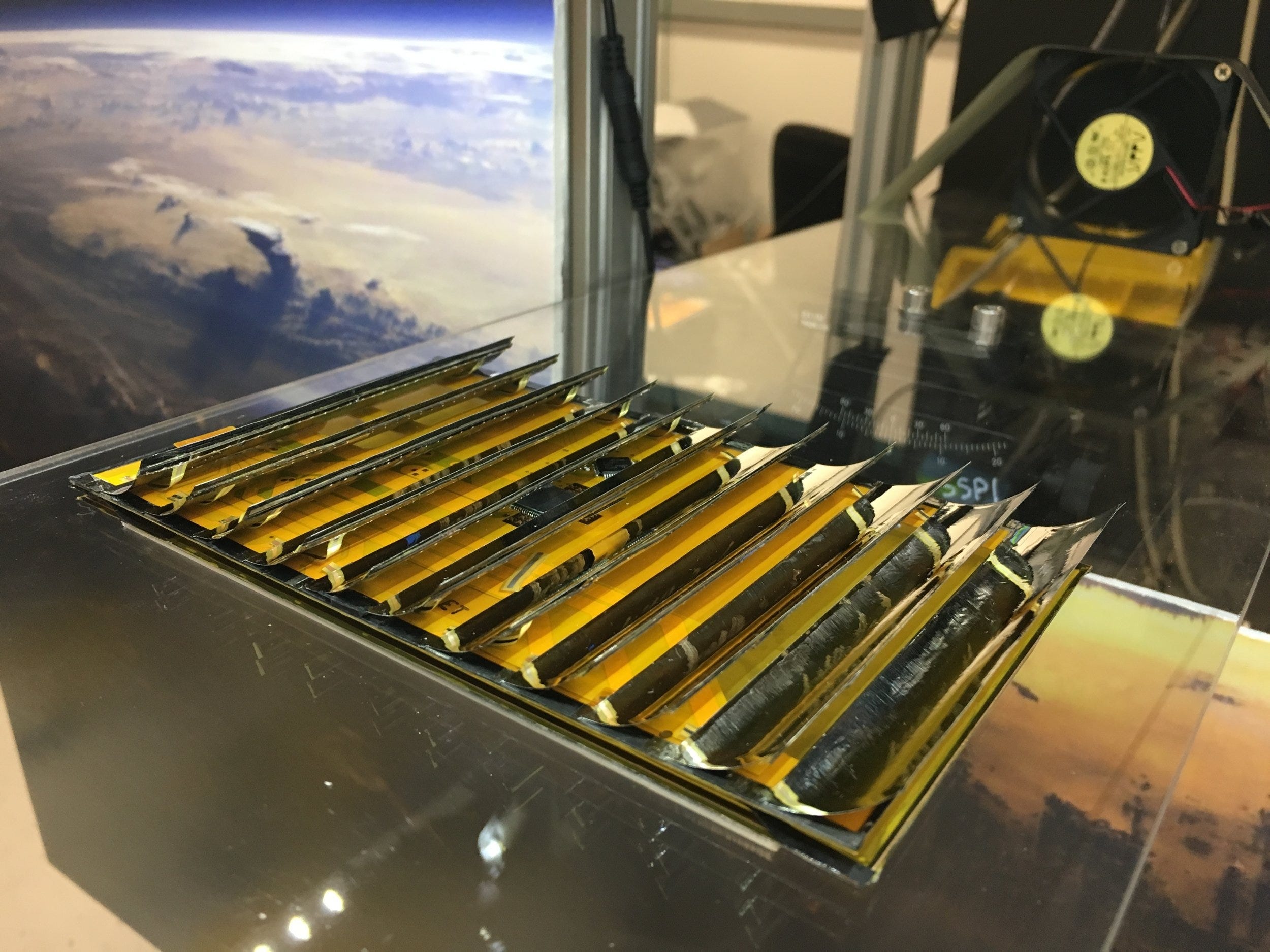
A structural prototype of Caltech's lighter solar panels. Caltech/The Space Solar Power Project


A sky full of solar panels


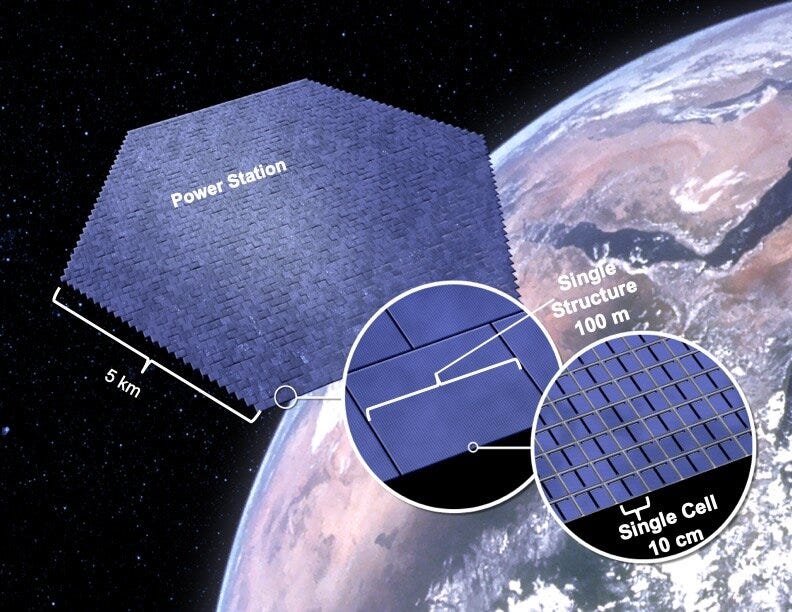
Instead of employing a rocket to transport traditional solar panels to space, the Caltech team advocates a new type of panel that's lighter, more compact and foldable. They suggest dispatching into orbit a large number of these airy, mini solar panels resembling tiles.

Each individual tile has everything it needs, like photovoltaics, to harvest solar energy. When connected in space, the little squares essentially make a giant renewable energy mine floating around Earth.

Though the team has been looking at a range of composites to create the ideal ultralight structure, some are actually less effective when compared with Earth-based solar panels. But Kelzenberg notes that in space, "effectiveness" earns a new meaning.

"The increase in effectiveness really comes from the fact that by putting them in space, they get plenty of intense sunlight because the sunlight doesn't have to come through the atmosphere," he said. "They also get sunlight, basically, 24 hours a day."


Each small solar panel is a part of something much, much bigger.
Caltech/The Space Solar Power Project

When the sun shone on these panels, they'd absorb bundles of direct current, or DC, energy. In the team's mechanism, that energy would get translated into radio frequencies. The next step would be to bring that power down to Earth.

That would happen, according to the team, through microwave radiation. Radio frequency energy would be beamed toward our planet onto areas reminiscent of solar fields in the desert. But in place of what are typically solar panels, these regions would contain receivers with antennas that collect the harvested energy.

It's basically wireless energy transfer, something Nikola Tesla famously alluded to in the late 19th century.


Using such radiation, Kelzenberg says, allows the system to operate in rain and fog, at night and during gentle storms, only risking disruption by the most severe weather. However, one question often raised about wireless radiation patterns is whether they would adversely impact vegetation or features of the land.


Atwater says that isn't a concern.

"The power density received on Earth would be equivalent to the power density in sunlight on a sunny day," he explained. "And systems for space solar power can be designed to be intrinsically safe in this regard."

As an extra safety precaution, Kelzenberg says, familiar measures can be taken, like cordoning off the receiver zone. Cellphone towers, which use a similar form of wave communication, do the same.

After the Earth-planted receivers retrieved the energy in the form of radio frequencies, they'd work with a ground station to convert it back to DC energy, which would then be transformed into alternating current power, or AC power, fed into the utility grid, Atwater said. 


Wireless energy transfer could help bring us 24/7 clean energy.
Caltech/The Space Solar Power Project

It's a complex process, but that last bit, the AC power, is the regular old electricity that runs through your house's sockets to charge your iPhone and give life to your laptop. Voila.

Beam the Earth up, Scotty

"Our first space flight to demonstrate space solar power component technology is now scheduled for late 2022, on a commercial spacecraft," Atwater said.

Though the team won't be launching the real deal, they'll be conducting an experiment that'll demonstrate the feasibility of the technologies on a smaller scale. It'll be a makeshift, simpler form of the invention. They'll even be sending a number of solar cells that've never seen the vacuum of space before.

But one day, if space-based solar power becomes a reality, it could change the world.

Not only would it help power remote areas and balance out the power grid to prevent outages, it could also send energy to mining operations on other planets.

"Space solar power can be deployed to remote areas on Earth where there is not an existing utility grid; it could also be used to generate baseload power on the moon or Mars via a similar scheme of orbital power generation and beaming to the surface," Atwater explained.

Most importantly, the energy humans could generate via 24/7 sun power would be enough to meet the climbing demands of our planet and even replace nuclear or coal power. "It represents a source of 'baseload' power that is continuously available, unlike solar panels on Earth," said Atwater.

Added Kelzenberg, "That's why we think that it can play an important role in going to a fully carbon-neutral power grid in the future."

Of course, there's a long road ahead. Even if the team's 2022 experiment is successful, there are manufacturing costs to consider, as well as legal questions about taking up orbital space (there may be governmental restrictions). Questions around the practicality of replacing known power grids with space-solar power plants will also remain.

But at the end of that path, we may find something golden.

"I think certainly we can agree that getting a cheap solar panel and putting it on the ground is going to cost a lot less than launching one into space," Kelzenberg said. "But the real virtue of space solar power is the ability to deliver solar energy day and night."

First published on Nov. 5, 2021 at 1:00 p.m. PT.
Wind and solar power could meet most electricity demands of major countries, study says

Anthony Vasquez-Peddie
CTVNews.ca writer
Friday, November 5, 2021

Wind turbines turn behind a solar farm in Rapshagen, Germany, 
Oct. 28, 2021. 
AP Photo/Michael Sohn

TORONTO -- Most of the electricity demand in advanced, industrialized nations can be met with a combination of wind and solar power, according to a recent study, but contingency measures may be necessary in order to fully satisfy requirements.

The study, published in the peer-reviewed journal Nature Communications, confronted the question of dependability of electricity systems that rely on intermittent resources. It found the most reliable renewable systems were heavily based on wind and could meet electricity requirements in the countries studied 72 to 91 per cent of the time. By mixing in 12 hours of stored energy, the figure increased to 83 to 94 per cent.

Despite the positive numbers, the researchers caution that even in a system that exceeds 90 per cent of a country's needs, hundreds of hours of unmet demand may occur annually.

"Wind and solar could meet more than 80 per cent of demand in many places without crazy amounts of storage or excess generating capacity, which is the critical point," Steve Davis, study co-author and University of California, Irvine, professor of Earth system science, said in a news release. "But depending on the country, there may be many multi-day periods throughout the year when some demand will need to be met by energy storage and other non-fossil energy sources in a zero-carbon future."

The team of researchers analyzed 39 years of data from 42 countries to determine if solar and wind energy sources could sustain their needs.

They found that large countries closer to the equator could more easily convert to sustainable power resources due to the amount of solar energy available throughout the year. Higher-latitude countries, however, must lean more heavily into wind power.

"Historic data show that countries that are farther from the equator can occasionally experience periods called 'dark doldrums' during which there is very limited solar and wind power availability," Dan Tong, lead author and assistant professor of Earth system science at Tsinghua University.

The researchers also found land mass to be a factor in terms of reliability. Countries with the largest land areas, such as Canada, had the most reliable solar and wind systems.

Smaller countries in regions like Europe, however, do not have the same luxury. The researchers say cooperation between nations in terms pooling and sharing energy may help relieve potential problems.

"Europe provides a good example,” Tong said. “A lot of consistency and reliability could be provided by a system that includes solar resources from Spain, Italy and Greece with bountiful wind available in the Netherlands, Denmark and the Baltic region.”

To meet more demand for electricity, countries could engage in increased capacity overbuilding, the addition of batteries and additional storage methods.

“Around the world, there are some definite geophysical constraints on our ability to produce net-zero carbon electricity,” Davis said. “It comes down to the difference between the difficult and the impossible. It will be hard to completely eliminate fossil fuels from our power generation mix, but we can achieve that goal when technologies, economics and sociopolitical will are aligned.”

Currently, two-thirds of Canada’s electricity comes from renewable resources, according to the federal government. About 59.6 per cent of the total is produced via hydroelectricity, while 5.1 per cent comes from wind and 0.6 per cent comes from solar energy.

Canada also exports about eight per cent of the electricity it generates to the U.S.


Wind and solar could power the world's major countries most of the time

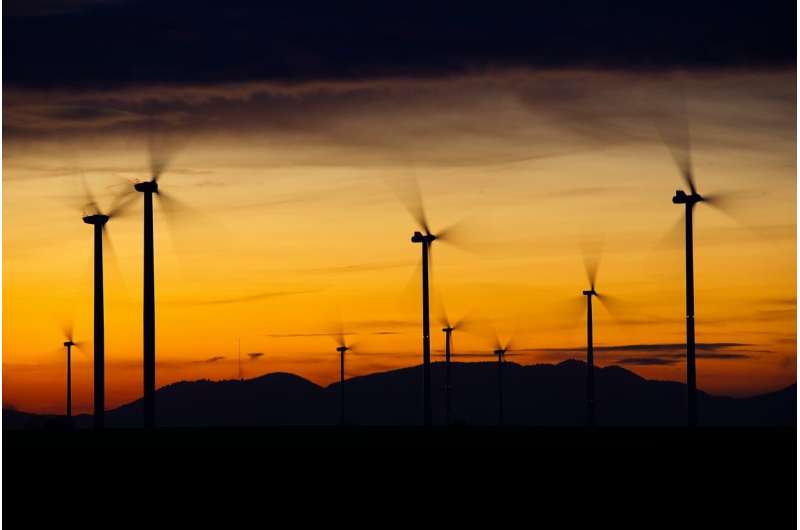
wind power
Credit: Pixabay/CC0 Public Domain

With the eyes of the world on the United Nations COP26 climate summit in Glasgow, Scotland, strategies for decarbonizing energy infrastructure are a trending topic. Yet critics of renewables question the dependability of systems that rely on intermittent resources. A recent study led by researchers at the University of California, Irvine tackles the reliability question head-on. 

In a paper published recently in Nature Communications, the authors, including experts from China's Tsinghua University, the Carnegie Institution for Science and Caltech, said that most of the current electricity demand in advanced, industrialized nations can be met by some combination of wind and solar power. But that positive finding comes with the caveat that extra efforts are going to be necessary to completely satisfy the countries' requirements.

Most reliable systems, which are dominated by wind power, are capable of meeting electricity requirements in the countries studied 72 to 91 percent of the time, even without , according to the study. With the addition of 12 hours of energy storage capacity, systems become dominated by solar power and can satisfy demand 83 to 94 percent of hours.

"Wind and solar could meet more than 80 percent of demand in many places without crazy amounts of storage or excess generating capacity, which is the critical point," said co-author Steve Davis, UCI professor of Earth system science. "But depending on the country, there may be many multi-day periods throughout the year when some demand will need to be met by energy storage and other non-fossil energy sources in a zero-carbon future."

The team analyzed 39 years' worth of hourly energy demand data from 42 major countries to evaluate the adequacy of wind and solar power resources to serve their needs. They found that a full conversion to sustainable power resources can be easier for larger, lower-latitude countries, which can rely on solar power availability throughout the year.

The researchers highlighted Germany as an example of a relatively smaller country, in terms of land mass, at higher latitude which will make it more challenging to meet its electricity needs with wind and solar resources.

"Historic data show that countries that are farther from the equator can occasionally experience periods called 'dark doldrums' during which there is very limited solar and  availability," said lead author Dan Tong, assistant professor of Earth system science at Tsinghua University. "One recent occurrence of this phenomenon in Germany lasted for two weeks, forcing Germans to resort to dispatchable generation, which in many cases is provided by fossil fuel-burning plants."

Among the approaches the researchers suggested to alleviate this problem are a building up generating capacity that exceeds annual demand, developing long-term storage capabilities and pooling resources of multiple nations on a continental land mass.

"Europe provides a good example," said Tong, who began her work on this study as a post-doctoral scholar in UCI's Department of Earth System Science. "A lot of consistency and reliability could be provided by a system that includes solar resources from Spain, Italy and Greece with bountiful wind available in the Netherlands, Denmark and the Baltic region."

The researchers found that a  and  system could provide about 85 percent of the total electricity demand of the United States, and that amount could also be increased through capacity overbuilding, addition of batteries and other storage methods, and connecting with other national partners on the North American continent.

"Around the world, there are some definite geophysical constraints on our ability to produce net-zero carbon electricity," said Davis. "It comes down to the difference between the difficult and the impossible. It will be hard to completely eliminate  from our  generation mix, but we can achieve that goal when technologies, economics and socio-political will are aligned."Green hydrogen production from curtailed wind and solar power

More information: Dan Tong et al, Geophysical constraints on the reliability of solar and wind power worldwide, Nature Communications (2021). DOI: 10.1038/s41467-021-26355-z

Journal information: Nature Communications 

Provided by University of California, Irvine 

As Africa’s renewables grow, fossil fuels inventories drop – report


MINING.COM Staff Writer | November 5, 2021 

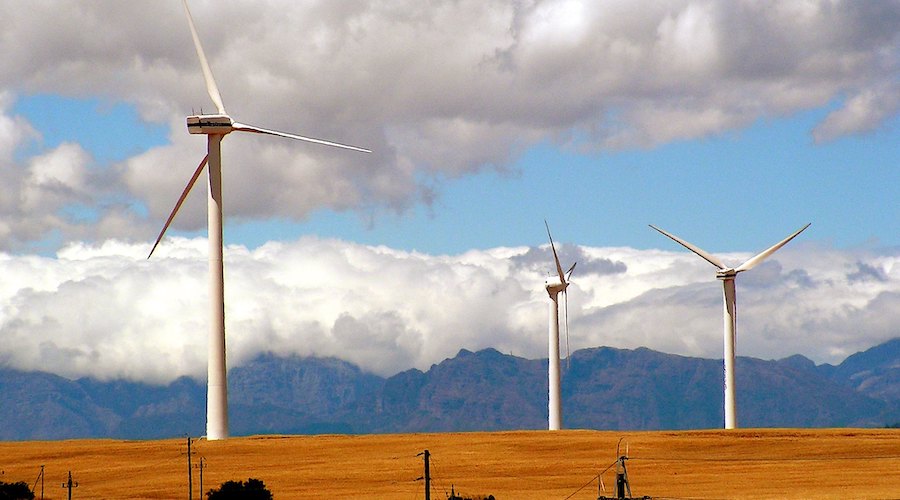
Wind turbines in South Africa. (Image by Lollie-Pop, Flickr).

In contrast to fossil fuels, Africa’s renewable energy sector shows uptake in generation, capacity, and forecasts, a new report by PwC states.


According to the consultancy, the continent’s fossil fuel inventories show a downturn in production, consumption, and exports between 2019 and 2020, which is largely a result of delays or cancellations of large projects due to the covid-19 pandemic, as well as global investment pressure resulting in the rapid exit of and disinvestment in portfolios.

Looking just at oil, PwC data show that production significantly decreased by 19% to 6.8 mmbbl/d from the prior year. This accounts for 7.8% of global production. Consumption saw a decrease of 14% to 3.5 mmbbl/d from the prior year, and exports saw a drop to 5.7 mmbbl/d.

“Despite companies commencing exploration and development projects, planned capital expenditure in 2020–2021 fell from $90 billion pre-covid-19 to $60 billion,” the report titled Africa Energy Review 2021 reads.

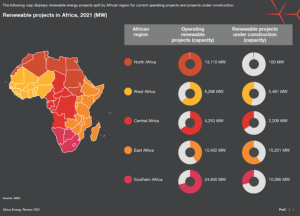
The other side of the coin is renewables, which are on the rise across the continent with an annual growth rate of 21% between 2010 and 2020 and a current total renewable capacity of more than 58 GW – of which hydropower contributes 63%.

The consultancy firm reports that wind energy generation increased by 14% and solar energy generation increased by 13%, while total renewable energy generation increased by 11% in 2020 compared to the previous year. Solar capacity increased by 13%, wind capacity increased by 11% and hydropower increased by more than 25% in 2020 compared to 2019.
 
Graph from PwC’s Africa Energy Review 2021.

“Most African countries are also increasing investment in solar and hydropower technologies with projects currently under construction estimated to add 33 GW of renewable energy capacity,” the review states.

“Total installed renewable energy capacity in Africa has grown by over 24 GW since 2013. The continent’s capacity is expected to increase again by the end of 2021 with growth led by solar and wind projects in Egypt, Algeria, Tunisia, Morocco, and Ethiopia.”

Despite these positive trends, mid-term forecasts can look daunting, as PwC says that 27.32 EJ of additional renewable generation is needed within Africa’s energy mix by 2050 to compensate for declining fossil fuels. This is a significant increase from the current renewable generation of just 1.79 EJ.

“Africa’s coal and oil energy production are expected to drop by around 96% and 71% respectively by 2050. This will be driven by declining demand for fossil fuels globally with leading international oil and gas companies already refocusing their portfolios to include higher renewables exposure,” the report reads. “Renewable energy is expected to see large gains in Africa over the next three decades. By 2050, energy production from solar and wind is expected to increase by as much as 110 times and 40 times respectively.”

In the view of the experts at PwC, employment levels in the energy sector will depend greatly on the way the energy transition takes place.

They believe that if Africa is pressured into rapidly transitioning to renewables and is assisted in this process through renewable energy funding, the transition of workers away from fossil fuel-related jobs will be much faster. This means that the potential loss of jobs can be mitigated.
Net-zero goals

Although Africa is home to 17% of the global population, it produces less than 5% of global annual emissions and accounts for only 3% of global cumulative emissions.

Yet, 35 out of 54 African countries have made commitments towards net-zero emissions, a goal that is unaffordable for most of them as an estimated $2.8 trillion are needed just to transition to a clean energy mix and reduce its current annual CO2 emissions of 1.62m kilotons of CO2e.

“Investment in low-carbon energy systems in Africa lags global pace, but despite global climate finance commitments from developed economies aimed at $100bn per annum, the allocation to Africa falls significantly short of what the continent requires to meet global targets. The fiscal constraints being experienced across Africa create a challenge for the continent to move with pace on its net-zero journey,” the report reads.

For the analysts at PwC, private partnerships, public-private partnerships and blended finance are key and will need to be deployed together with strong public sector governance and innovative financing instruments to overcome these challenges.
MINING IS UNSUSTAINABLE
UN at COP26: “Enough of mining…we are digging our own graves”

Frik Els | November 2, 2021

Via Youtube

It did not take long for COP26 to turn into a farce this week with UN Secretary General António Guterres pleading with the gathered highnesses and excellencies to declare enough is enough.


Socialist party ex-PM of Portugal, Guterres delivered a rousing 10-minute speech at the opening ceremony saying (around the 0:45 mark) “we face a stark choice – either we stop it or it stops us”:

“It is time to say enough!

“Enough of treating nature like a toilet, enough of burning and drilling and mining our way deeper. We are digging our own graves.”


Who’s going to tell him?

COP26 will be a colossal mining cop-out

“The International Energy Agency’s annual World Energy Outlook […] is probably the closest thing to a bible in the energy world,” says a Bloomberg article following the publication of the 2021 edition.

Released earlier than usual in time for the Conference of Parties (COP26) starting in Glasgow, this edition – the 44th – “has been designed, exceptionally, as a guidebook to COP26”.

At 386 pages IEA WEO 2021 is quite the tome (download here). Under Section 6.3.1, you’ll find the energy bible’s take on “critical minerals”. It is six pages in total.

Those six pages may be headlined critical minerals, but it’s hard to detect a sense of urgency in Section 6.3.1:

“The rapid deployment of low-carbon technologies as part of clean energy transitions implies a significant increase in demand for critical minerals.”
We have questions

The word “significant” used here contains multitudes (lithium “100 times current levels” according to the IEA’s own calculations) and the Paris-based firm has some questionne:

“The prospect of a rapid increase in demand for critical minerals – well above anything seen previously in most cases – raises questions about the availability and reliability of supply.”

With only six pages to work with, the IEA has to be succinct in its appraisal of the mining industry:

“The [supply] challenges are compounded by long lead times for the development of new projects, declining resource quality, growing scrutiny of environmental and social performance and a lack of geographical diversity in extraction and processing operations.”

Questions raised. Challenges compounded. Take that global warming!

Mining ghost protocol

Edinburgh-based Wood Mackenzie has also been doing some research ahead of COP26.

Woodmac, which beat the IEA by four years, releasing its first oil report in 1973, is expanding its mining and metals practice, most recently with the acquisition of London-based Roskill.

A new report by Julian Kettle, SVP of Woodmac’s metals and mining division, and senior analyst Kamil Wlazly, answers the questions about the availability of supply in the very title:

Mission impossible: supplying the base metals for accelerated decarbonisation

Woodmac is refreshingly blunt in its assessment of mining’s role in fighting climate change:

“The energy transition starts and ends with metals.”

“Achieving global net zero is inexorably linked to base metals supply.”

“Base metals capex needs to quadruple to about $2 trillion to achieve an accelerated energy transition.”

Whoomp, there it is.

The hidden ones

There are many eye-popping graphs in Mission impossible (download here) but this one perfectly illustrates why the decarbonisation goals of the Conference of Parties, without plans for new mines, only add hot air to the warming planet.


Woodmac gets straight to the point: “delivering the base metals to meet [net zero 2050] pathways strains project delivery beyond breaking point from people and plant to financing and permitting.”

Copper, which Woodmac emphasizes “sits at the nexus of the energy transition” stands out particularly.

The 19 million tonnes of additional copper that need to be delivered for net-zero 2050 implies a new La Escondida must be discovered and enter production every year for the next 20 years.

Even if you focus on just one of the obstacles bringing new copper supply online – the time it takes to build a new mine – and leave aside all other factors, net-zero 2050 has zero chance.

Great great grandfathered in


Consider that among the world’s largest copper mines, La Escondida is a relative newcomer – it was discovered in 1981, and only hit 1 million tonnes 20 years later. (MINING.COM’s official measure of copper production is the escondida which equals one million tonnes.)

The weighted average discovery year of the planet’s top 20 biggest copper mines is 1928. US number one mine Morenci (less than half an escondida in 2020) was discovered in 1870. Chile and the world’s number two copper mine Collahuasi (O.63 escondida) dates back to 1880.

When Congo’s Kamoa-Kakula went into production in May this year it was the biggest new mine to do so since Escondida. By 2028 it will produce 840,000 tonnes a year. Kamoa-Kakula is a poster child for rapid mine development, yet Robert Friedland’s exploration team discovered the deposit back in 2003.
Let it be resolved

With ample reserves, the US has a number of uncommitted projects that would support the Conference of Parties and their wannabe cheerleader, the Biden administration, advancing its climate goals.

A top contender is the Resolution project in Arizona, near the town of Superior in the area known as the Copper Triangle.

Contained copper tops 10 million tonnes, making it the sixth-largest measured deposit in the world. It’s an underground high-grade mine that shrinks its environmental footprint.

The world’s number one and two mining companies, BHP and Rio Tinto, have already spent $2 billion on it, including reclamation of a historical mine. The deposit was discovered in 1995 and 26 years later remains stuck in permitting hell.

Looks like a perfect candidate for fast track approval to help with those lofty climate goals and create those millions of promised green jobs.

Right? Trump – five days before leaving office – publishes a pivotal environmental report on the project.

Wrong. Biden rescinds the study and Democrats add specific wording to the $X.X trillion infrastructure bill that would block Resolution from going ahead.

Perhaps not surprising then, the news that BHP and others are looking at the previously shunned African copperbelt.

When central Africa is a friendlier jurisdiction for miners than the US, there may be something wrong with your strat… For more see above and below.

We process, you dig


The White House’s policy is one of relying on other countries to supply metals to the US because “it’s not that hard to dig a hole. What’s hard is getting that stuff out and getting it to processing facilities.”

A strategy that worked so well for the US with rare earths.

Perhaps the White House got the idea from Indonesia, which insists miners build processing plants and refineries to own the entire battery metal supply chain and by extension huge chunks of electric vehicle manufacture.

Tiny difference though: the grand design of Jakarta, like Beijing, Santiago, et al, includes the first link in the supply chain.

And when things go wrong in metals supply for automaking, they go really wrong, as the EU found out this month.

Overburdening overburden


Biden desperately wants a deal before COP26 to brag about all the ways it fights emissions by subsidizing American electric cars, windmills and solar panels overseas lithium, nickel, cobalt, copper, silver, and rare earth mining companies.

As if the permitting process isn’t torture enough, there’s more in Biden’s bill that’ll make miners and explorers gnash their teeth and pull their hair out.

Also included in the reconciliation spending measure is an 8% gross – yes, gross isn’t it – royalty on existing mines and 4% on new ones. New ones? Ha!

There would also be a 7 cent fee for every tonne of rock moved.

This is a particularly confounding proposal. Not easy to find anything in the tax code that shows this kind of ignorance of how an industry operates, but it would not be dissimilar to taxing farmers for every acre ploughed (multiplied by the length of the blades just to make sure you precisely measure the displaced dirt), regardless of any harvest.
What’s another year

It was two years ago almost to the day on the occasion of a Greta Thunberg protest in MINING.COM’s hometown of Vancouver, that this paper declared Thunberg and Alexandria Ocasio-Cortez as the mining industry’s unlikely heroines.

We urged miners to embrace the goals of the environmental movement and initiatives like the Green New Deal.

With all the glaring holes drilled into COP26’s decarbonisation plans, it sure feels like it was Greta and AOC that copped out of this embrace, not mining.
Tesla to open Canada battery gear factory in Markham, Ontario
Reuters | November 5, 2021 |

View of Markham, Ontario. Credit: Wikimedia Commons

Tesla Inc plans to open a factory to produce battery manufacturing equipment in the Canadian city of Markham, Ontario, Mayor Frank Scarpitti said, as the electric carmaker ramps up the production of cheaper, higher-range 4680 battery cells.


Scarpitti did not provide many details. In 2019, the U.S. electric carmaker acquired Canada-based Hibar, which manufactures pumps used in fast-speed battery assembly that Tesla is introducing for its new 4680 cells.

“I’m delighted to share that Tesla Canada is joining our already robust automotive and technology ecosystem by locating a manufacturing facility in the City of Markham,” the mayor of the city near Toronto said on Twitter.

“The facility will be the first branded Tesla Canada manufacturing facility in Canada and will produce state-of-the-art manufacturing equipment to be used at the Gigafactories located around the world in the production of batteries.”

Tesla did not immediately comment on the mayor’s tweet. Last year, Tesla senior vice president Andrew Baglino said at the Battery Day event that its “vertical integration” with Hibar and others would allow them to build batteries faster and scale up production of its 4680 battery cells.

Baglino said last month that Tesla will start delivering its first vehicles with 4680 batteries early next year, but added that “this is a new architecture and unknown unknowns may exist still.”

Tesla currently builds the 4680 cells at its pilot factory in California and plans to start their production at its upcoming factories in Texas and Berlin.

(By Hyunjoo Jin; Editing by David Gregorio)

Tesla Canada to locate manufacturing facility in Markham, Ontario

Markham's mayor welcomed the company with posts on Twitter and Instagram


By Jonathan Lamont @Jon_Lamont
NOV 6, 2021

Markham, Ontario Mayor shared on social media that Tesla Canada would locate a manufacturing facility in the city to produce manufacturing equipment for use at the company’s ‘gigafactories.’

In a post on Twitter and Instagram, Frank Scarpitti welcomed Tesla, calling it a great
addition to “the ‘future car’ cluster of companies” in Markham. You can read the full quote from the image below:

“I am delighted to share that Tesla Canada is joining our already robust automotive and technology ecosystem by locating a manufacturing facility in the City of Markham. The facility will be the first branded Tesla Canada manufacturing facility in Canada and will produce state-of-the-art manufacturing equipment to be used at the Gigafactories located around the world in the production of batteries.
Scarpitti also clarified that the manufacturing facility would be located “just south of Highway 7 west of Warden.”

The mayor’s announcement comes just days after Tesla Canada put out a call for applications on LinkedIn, which also included a recruitment video republished by Tesla North on YouTube.

The video shows a short interview with employees at the Markham location who work on battery development, factory design, charging infrastructure, battery CNC machine programming and more.


Source: Frank Scarpitti (Twitter) Via: Tesla North
Sherritt plans to expand Cuban nickel mine
Canadian Mining Journal Staff | November 4, 2021 

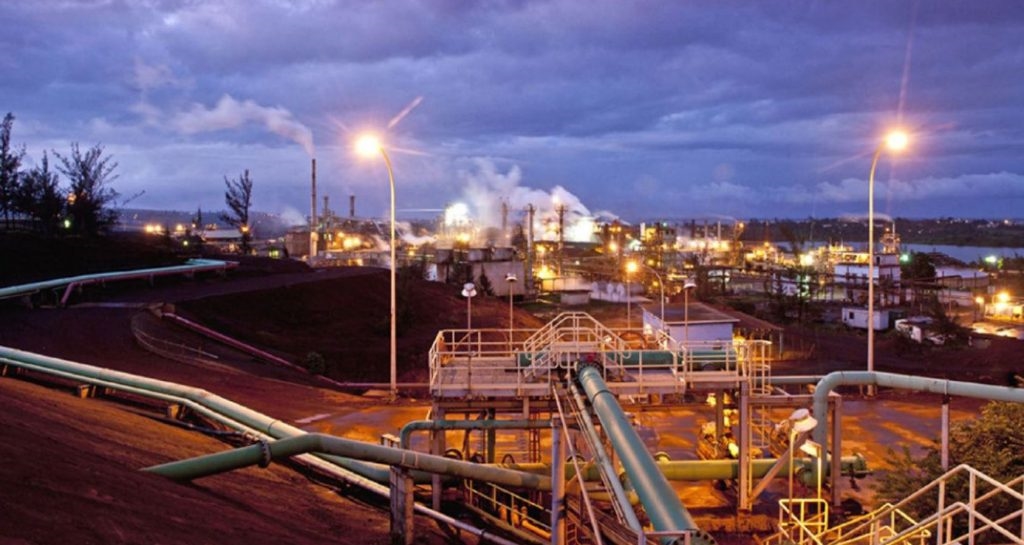
The Moa nickel mine in Cuba is a joint venture of Sherritt and General Nickel.
 Credit: Sherritt International

Sherritt International (TSX: S) is making plans to expand production and lengthen the life of the Moa nickel-cobalt mine in Cuba. Moa is a joint venture of Sherritt (50%) and General Nickel Co. of Cuba (50%).


The plan calls for a multi-phased approach, and work will include a new slurry preparation plant and expansion of other circuits at the mill. Existing equipment at Sherritt’s 100%-owned refinery in Fort Saskatchewan, Alberta, is part of the plan.

Moa is a lateritic nickel deposit mined by open pit methods. The ore is pressure acid leached on-site and then transported to the refinery in Canada. Finished nickel and cobalt are produced as well as a byproduct ammonium sulphate fertilizer.

The most recent 43-101 resource estimate at Moa was completed in 2019. At that time, the project had 111.9 million measured tonnes grading 1.03% nickel and 0.13% cobalt. The indicated portion was 46 million tonnes at 0.94% nickel and 0.12% cobalt. The inferred resource was 32.6 million tonnes grading 0.89% nickel and 0.13% cobalt.

(This article first appeared in the Canadian Mining Journal)