Friday, December 03, 2021

Misinformation fuelled by ‘tsunami’ of poor research, says science prize winner

Dutch microbiologist Elisabeth Bik, winner of prestigious John Maddox prize, says trust in science is being undermined
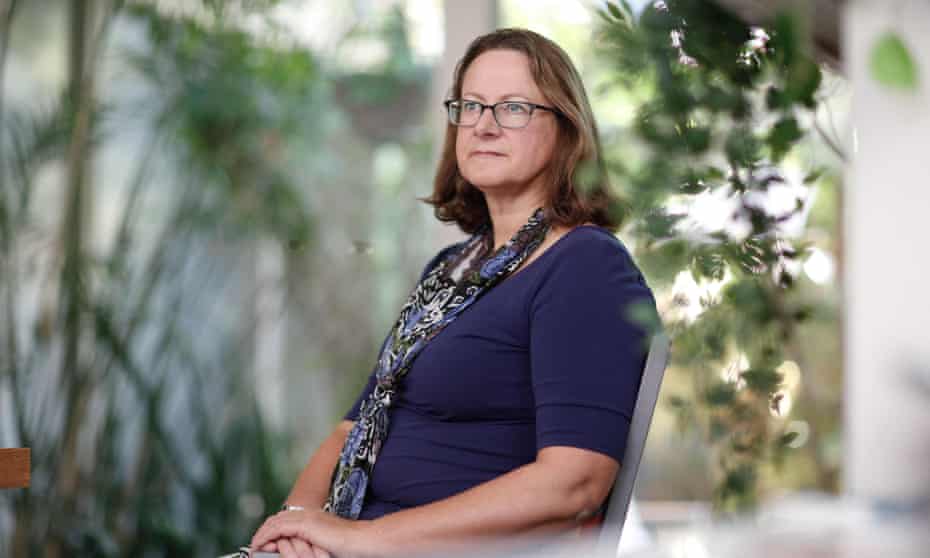
Elisabeth Bik won the John Maddox prize for standing up for science in the face of harassment, intimidation and lawsuits.
 Photograph: Amy Osborne/AFP/Getty Images


Hannah Devlin Science correspondent
THE GUARDIAN
Wed 1 Dec 2021

A “tsunami” of poor quality research is fuelling misinformation and could undermine trust in science, the winner of the prestigious John Maddox prize has warned.

Elisabeth Bik, a Dutch microbiologist turned science sleuth who on Wednesday evening won the John Maddox prize for standing up for science in the face of harassment, intimidation and lawsuits, said the intense pressure to publish papers is leading to a “dilution” of the quality of scientific literature.

This risks flawed work being “amplified by bad actors” such as those seeking to stoke fears about vaccination.

“The danger with social media is that even a mediocre or bad or flawed paper can be taken by people who have different agendas and brought into the spotlight and celebrated as the new truth,” Bik said. “That is a new danger that has not been there before.”

She cited a recently retracted paper linking the HPV vaccine to female infertility and another that appeared to overstate the risk of myocarditis from Covid vaccines.

Bik has been recognised for her work exposing problems including image doctoring, plagiarism, data manipulation and unsound methodology.

She took up the campaign after discovering her own work had been plagiarised in 2013, and in 2019 left her job at a biotech firm to pursue the issue full time, funding her work through a Patreon account.

After raising serious concerns about claims that hydroxychloroquine was effective in treating Covid infections, Bik faced online harassment and threats of violence. Larger trials found no evidence to support the use of hydroxychloroquine to treat Covid patients.

The controversial French professor behind the work, Didier Raoult, threatened legal action against her, which she described as “scary and intimidating”.

In general, Bik said, the intense demand for solutions to the global pandemic has created a new pressure for scientists to deliver breakthroughs.

“A lot of scientists wanted to become the big saviour of the pandemic,” she said. “That brought a lot of fraud or just even poorly executed research. People want to become a hero and might go to great lengths to achieve that.”

This vision of the heroic scientist sits in contrast to the reality of life in the laboratory, Bik said. “Ninety percent of your results will be failures, every now and again you’ll get a success … but most of the time it’s sad and boring to be in the lab,” she said. “You can work really hard in science and still not get the results everyone hoped for. You have to be able to deal with that.”

Through her Science Integrity Digest, Bik encourages the public and other scientists to learn how to spot manipulated data. Her work has led to the retraction of around 600 papers and she derives “some satisfaction” from setting the record straight. But she has a spreadsheet of nearly 5,000 papers that she has reported as problematic and says the overall response from scientific publishers has been disappointing.

“We [scientists] write the papers for free, we peer review them for free and then still we have to pay the publisher $4,000 to get our paper published,” she said. “Where does that money go to? It seems a lot of people sitting in shiny offices, bosses of bosses of bosses, people who don’t seem to be doing something directly to my paper. It’s hard to justify.”

Bik said that winning the prize was a “great honour and delight”. The prizes are awarded jointly by the charity Sense about Science and the journal Nature, where John Maddox was a former editor.

Tracey Brown, the director of Sense about Science, said: “The shocking thing about what Elisabeth is doing in challenging fraud and misrepresentation of scientific findings is that this is something that most people think already happens. Only it doesn’t. And in fact she has been unique and often alone in sounding the alarm. The judges were struck by her unstinting determination.”

A second John Maddox prize for an early career researcher was awarded to Mohammad Sharif Razai, a GP and researcher at St George’s, University of London, for bringing an evidence-based understanding of racial health inequalities to bear in public and policy debates. Razai’s work has covered vaccine hesitancy among ethnic minority groups and systemic racism as a cause of adverse health outcomes.


When variations in Earth's orbit drive biological evolution

When variations in Earth's orbit drive biological evolution
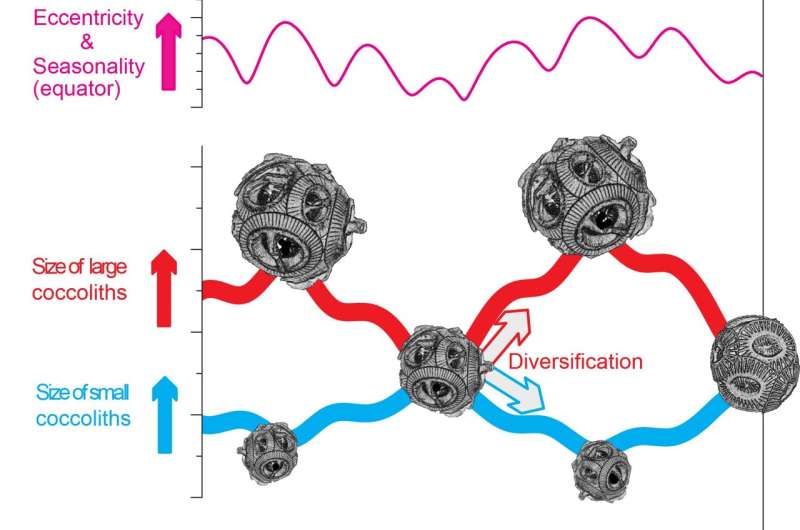
Coccolithophores, an important constituent of the plankton, evolved following the rhythm of 
Earth’s orbital eccentricity. Credit: Luc Beaufort / CNRS / CEREGE

Coccolithophores are microscopic algae that form tiny limestone plates, called coccoliths, around their single cells. The shape and size of coccoliths varies according to the species. After their death, coccolithophores sink to the bottom of the ocean and their coccoliths accumulate in sediments, which faithfully record the detailed evolution of these organisms over geological time.

A team of scientists led by CNRS researchers show, in an article published in Nature on December 1, 2021, that certain variations in Earth's orbit have influenced the evolution of coccolithophores. To achieve this, no less that 9 million coccoliths, spanning an interval of 2.8 million years and several locations in the tropical ocean, were measured and classified using automated microscope techniques and artificial intelligence.

The researchers observed that coccoliths underwent cycles of higher and lower diversity in size and shape, with rhythms of 100 and 400 thousand years. They also propose a cause: the more or less circular shape of Earth's orbit around the Sun, which varies at the same rhythms. Thus, when Earth's orbit is more circular, as is the case today (this is known as low eccentricity), the equatorial regions show little seasonal variation and species that are not very specialized dominate all the oceans. Conversely, as eccentricity increases and more pronounced seasons appear near the equator, coccolithophores diversify into many specialized species, but collectively produce less .

When variations in Earth's orbit drive biological evolution
The diversity of coccolithophores and their collective limestome production evolved under 
the influence of Earth’s orbital eccentricity, which determines the intensity of seasonal 
variations near the equator. On the other hand, no link to global ice volume or temperature 
was found. It was therefore not global climate change that dictated micro-algae evolution 
but perhaps the opposite during certain periods. Credit: Luc BEAUFORT / CNRS / CEREGE

Crucially, due to their abundance and , these organisms are responsible for half of the limestone (, partly composed of carbon) produced in the oceans and therefore play a major role in the carbon cycle and in determining  chemistry. It is therefore likely that the cyclic abundance patterns of these limestone producers played a key role in ancient climates, and may explain hitherto mysterious climate variations in past warm periods.

In other words, in the absence of ice, the biological evolution of micro-algae could have set the tempo of climates. This hypothesis remains to be confirmed.The smallest skeletons in the marine world observed in 3-D by synchrotron techniquesMore information: Luc Beaufort, Cyclic evolution of phytoplankton forced by changes in tropical seasonality, Nature (2021). DOI: 10.1038/s41586-021-04195-7. www.nature.com/articles/s41586-021-04195-7

Journal information: Nature 

Provided by CNRS 

Research aircraft reveal a surprisingly strong Southern Ocean carbon sink

antarctica
Credit: Unsplash/CC0 Public Domain

The Southern Ocean is a significant carbon sink, absorbing a large amount of the excess carbon dioxide emitted into the atmosphere by human activities, according to a new study led by the National Center for Atmospheric Research (NCAR).

The findings provide clarity about the role the icy waters surrounding Antarctica play in buffering the impact of increasing greenhouse gas emissions, after research published in recent years suggested the Southern Ocean might be less of a sink than previously thought.

The new study, published this week in the journal Science, makes use of observations from research aircraft flown during three field projects over nearly a decade, as well as a collection of atmospheric models, to determine that the Southern Ocean takes up significantly more  than it releases. The research also highlights the power that airborne observations have to reveal critical patterns in the .

"You can't fool the ," said NCAR scientist Matthew Long, the paper's lead author. "While measurements taken from the  and from land are important, they are too sparse to provide a reliable picture of air-sea carbon flux. The atmosphere, however, can integrate fluxes over large expanses. Airborne measurements show a drawdown of CO2 in the lower atmosphere over the Southern Ocean surface in summer, indicating carbon uptake by the ."

Uncertainty about the role of the Southern Ocean

Once human-produced emissions of CO2—from burning fossil fuels and other activities—enter the atmosphere, some of the gas is taken up by plants and some is absorbed into the ocean. While the overall concentration of CO2 in the atmosphere continues to increase, causing the global temperature to rise, these land and ocean "sinks" slow the effect.

A more precise understanding of where carbon sinks exist, how big they are, and how they may be changing as society continues to emit more CO2 is crucial to projecting the future trajectory of climate change. It is also necessary for evaluating the impact of potential emission reduction measures and CO2 removal technologies.

Scientists have long thought that the Southern Ocean is an important carbon sink. In the region around Antarctica, cold water from the deep ocean is transported to the surface. This upwelling water may not have seen the surface of the ocean for hundreds of years—but once in contact with the atmosphere, it's able to absorb CO2 before sinking again.

Measurements of CO2 and related properties in the ocean suggest that 40 percent of all human-produced CO2 now stored in the ocean was originally taken up by the Southern Ocean. But measuring the actual flux at the surface—the back and forth exchange of CO2 between the water and the overlying air throughout a year—has been challenging.

In recent years, scientists have used observations of pH taken from autonomous floats deployed in the Southern Ocean to infer information about air-sea carbon flux. The results of those efforts suggested that the carbon sink in the Southern Ocean might be much smaller than previously thought. The possibility that the prevailing understanding of the role the Southern Ocean plays in the carbon cycle might be wrong generated a lot of discussion within the scientific community and left unanswered questions, including where the excess CO2 is going if not into the Southern Ocean. Could there be a significant sink on land or elsewhere in the global oceans that scientists have missed?

The DC-8 flying laboratory on ATom's second deployment carried over 30 instruments to sample the atmosphere. Credit: Chelsea Thompson, NOAA

The value of atmospheric measurements

In the new study, the research team sought to address the uncertainty by looking at carbon in the air instead of in the water. The atmosphere and the ocean exist in balance, and they are constantly exchanging CO2, oxygen, and other gases with each other.

The research team pieced together airborne measurements from three different field projects with deployments stretching over nearly a decade: the HIAPER Pole-to-Pole Observations (HIPPO) project, the O2/N2 Ratio and CO2 Airborne Southern Ocean (ORCAS) study, and the Atmospheric Tomography (ATom) mission.

While there are also surface monitoring stations that measure CO2 in the atmosphere over the Southern Ocean, these stations are relatively few and far between, making it difficult to characterize what is happening across the entire region.

"The atmospheric CO2 signals over the Southern Ocean are small and challenging to measure, especially from surface stations using different instruments run by different laboratories," said NCAR scientist Britton Stephens, a co-author of the study who co-led or participated in all of the field campaigns. "But with the suite of high-performance instrumentation we flew, the signals were striking and unequivocal."

Critically, the data from the aircraft campaigns captured the vertical CO2 gradient. For example, during the NSF-funded ORCAS field campaign, which took place in January and February 2016, Stephens, Long, and other scientists on board the NSF/NCAR HIAPER Gulfstream V  could see a decrease in CO2 concentrations on their instruments as the plane descended.

"Every time the GV dipped near the surface, turbulence increased—indicating the air was in contact with the ocean—at precisely the moment when all the CO2 instruments registered a drop in concentrations," Stephens said. "You could feel it."

The new study finds that this gradient is quite sensitive to the air-sea carbon flux, offering researchers an unprecedented opportunity to characterize the Southern Ocean's carbon uptake.

"We needed observations that included both intensive surveys at a particular time of the year and that spanned the seasonal cycle," Long said. "That was the motivation for combining multiple aircraft campaigns that span roughly a decade. We were able to aggregate them together to assess the mean seasonal cycle of CO2 variability in the atmosphere."

After piecing together how CO2 typically varies in the atmosphere at a particular time of the year, the research team turned to a suite of atmospheric models to help them translate their atmospheric profiles into an estimate of how much CO2 the ocean was soaking up or releasing. Their conclusion was that the Southern Ocean takes in significantly more carbon in the summer than it loses during the winter, absorbing a whopping 2 billion tons of CO2 over the course of a year. In the summer, blooms of photosynthetic algae, or phytoplankton, play a key role in driving CO2 uptake into the ocean.

The research team noted that a regular program of future airborne observations over the Southern Ocean could also help scientists understand whether the area's capacity to continue taking up carbon may change in the future. A similar measurement strategy could yield important information in other regions of the globe too.

"We've really seen that these observations are hugely powerful," Long said. "Future aircraft observations could yield extremely high scientific value for the investment. It's critical that we have a finger on the pulse of the carbon cycle as we enter a period when global society is taking action to reduce CO2 in the atmosphere. These observations can help us do just that."Uncertainty of future Southern Ocean carbon dioxide uptake cut in half

More information: Matthew Long, Strong Southern Ocean Carbon Uptake Evident in Airborne Observations, Science (2021). DOI: 10.1126/science.abi4355. www.science.org/doi/10.1126/science.abi4355

Journal information: Science 

Provided by National Center for Atmospheric Research 

Zapping cow dung with lightning is helping to trap climate-warming methane

Story by Reuters
 Wed December 1, 2021

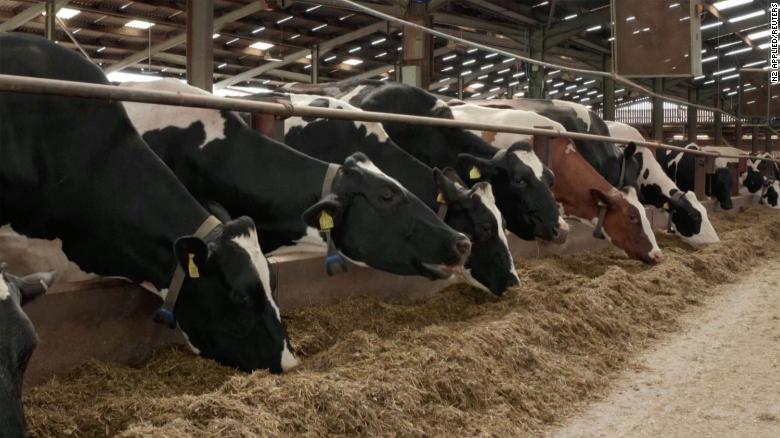
Dairy cows at a test farm in Buckinghamshire, England, where the Oslo-based company N2 Applied is testing plasma technology to prevent methane emissions.

A Norwegian technology company has found a way to stop livestock slurry from releasing methane -- by zapping it with artificial lightning.

Methane is a potent greenhouse gas emitted from sources including leaky fossil fuel infrastructure, landfill sites and livestock farming.

Oslo-based N2 Applied is testing its plasma technology at several sites in Europe, including on three farms in the UK.

"In essence, we're harnessing lightning to zap livestock slurry and lock in harmful emissions," N2's Chris Puttick told Reuters at one of the test farms in Buckinghamshire, England.


At this site, 200 dairy cows are providing the raw material: dung.
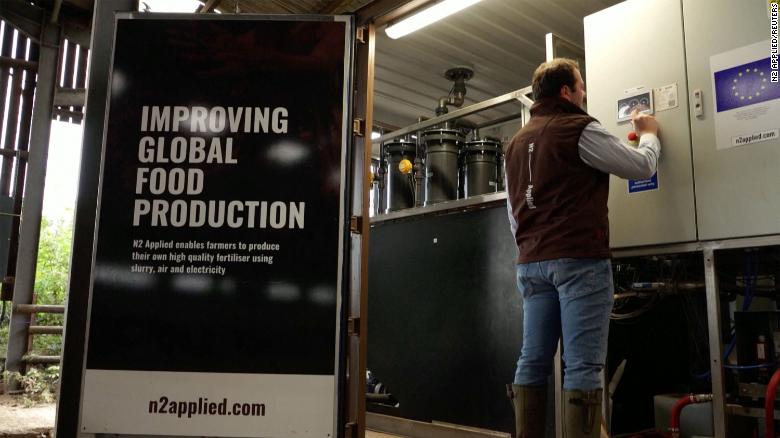
A manure scrapper collects all the excrement from the barn floor and deposits it in a pit where it is then moved through the N2 machine, housed in a standard-sized shipping container. Nitrogen from the air and a blast from a 50 kilowatt plasma torch is forced through the slurry 'locking in' both methane and ammonia emissions.


Scientists say this invisible gas could seal our fate on climate change

"When we add nitrogen from air to the slurry, it changes the environment to stop methanogenesis basically. So it drops the pH down to just below six and we're catching that early. So it stops the breakdown of those methane microbes that then release the gas to the air," Puttick said, adding their patented technology is the only one of its kind.
What comes out of the machine is an odorless brown liquid, called NEO -- a Nitrogen Enriched Organic fertilizer.
According to N2, their NEO has double the nitrogen content of regular nitrogen fertilizer; one of the most commonly used fertilizers to boost production of corn, canola and other crops.
Puttick said independent tests showed their technology reduces methane emissions from slurry by 99%. It also cuts by 95% the emission of ammonia; described by the EU as one of the main sources of health-damaging air pollution.
On a 200-cow dairy farm this equates to "a reduction of 199 tons of carbon equivalent every year with one machine," said Puttick, adding that they're now looking to scale out the technology across the UK livestock sector, and have recently installed it at a pig farm.


The N2 Applied farm in Buckinghamshire, England.
A commercial model of the device is due for release in June 2022, in a modular "stackable" form; so bigger farms can add units to cope with their amount of slurry. Exact pricing is yet to be announced, but Puttick said capital investment for a farm will be similar to that of a medium-sized tractor.
N2 Applied has received over 17 million euros (around US $19.2 million) of funding from the European Union's Horizon 2020 research and innovation program.
The Global Methane Pledge, launched at the COP26 summit in Glasgow in November, committed to reducing methane by 30% by 2030.
Methane has a higher heat-trapping potential than CO2 but it breaks down in the atmosphere faster, meaning deep cuts in methane emissions by 2030 could have a rapid impact on slowing global warming.
A UN report in May said steep cuts in methane emissions this decade could avoid nearly 0.3 degree Celsius of global warming by the 2040s.

Hyundai backs hydrogen powered cars despite being a decade behind EVs

December 1, 2021 2 By BRET WILLIAMS

The company feels that battery electric technology is far ahead, but hydrogen cars are still worth pursuing.

Hyundai has announced that while it believes that H2 vehicles remain a decade behind their battery electric counterparts, it is still worthwhile to invest in both zero-emission technologies.
The company still plans to continue in the electric and fuel cell vehicle marketplaces.

Hyundai Motor is investing in electric vehicles (EVs) but is also moving forward with both hydrogen powered cars and heavy-duty trucks. Its first electric hatchback will be on its way to the United States in the next few weeks. Moreover, the automaker also unveiled a battery electric SUV last month in Los Angeles.

That said, even as it starts to roll out new electric vehicles, the Korean automaker also has intentions to bring hydrogen cars into the mainstream. Still, it doesn’t expect H2 vehicles to be the most competitive vehicles until closer to 2030.
Hyundai has already said the system in its hydrogen powered cars and trucks is twice as powerful.

The H2 fuel cell vehicles will not only be twice as powerful as its current version but is also 30 percent smaller and will cost half as much. At the same time, José Moñoz, Hyundai chief operating officer and head of its operations in the Americas said that hydrogen cars remain at about the same point in development that battery electric vehicles had reached in the early 2010s.


“At that time people were still asking, ‘Is this going to happen? This is not true. We don’t have infrastructure. People won’t like it.’ Now there’s (charging) infrastructure; the technology has evolved; the ranges are better; the features are great. And more importantly, people who buy one now say they’ll buy another,” said Moñoz in a recent Forbes report discussing the automaker’s hydrogen powered cars. “Hydrogen is going through a similar phase—the phase of introducing a new technology. But we need better (fueling) infrastructure because it’s still very limited. However, in terms of the reaction by the consumer, when they drive a vehicle that is powered by hydrogen, there is a fantastic reaction.”

Interested in alternative energy and how hydrogen fuel works?
Many are wondering…is hydrogen energy the future? There are many signs that point to yes…someday, the world could rely on H2 to keep the lights on – Learn more about How efficient is a hydrogen fuel cell. Also, why big named companies like Rolls Royce, Shell, BP and more investing into green hydrogen projects for the near future – Read more about – Who is the largest producer of green hydrogen? Also, make sure to visit our H2 Learning Center.


US Hydrogen Fuel Cell Powered Ferry Completes First Fueling

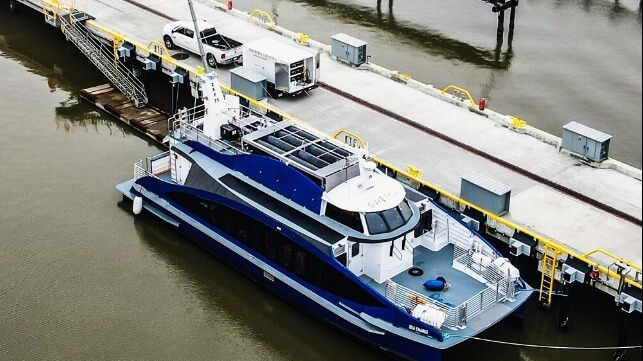
first hydrogen fueling for U.S. fuel cell ferry Sea Change
Sea Change was fueled from a truck in Washington (Swtich Maritime)

PUBLISHED NOV 30, 2021 6:01 PM BY THE MARITIME EXECUTIVE


In the race to develop and operate hydrogen fuel cells for commercial vessels, the U.S. effort known as the Sea Change, a catamaran ferry to operate in San Francisco Bay, reports that it has achieved additional key milestones. The vessel, which was launched in August, has completed its first fueling with hydrogen gas for a vessel in the United States and has received critical approvals as it continues on track to enter service in 2022.

Switch Maritime, which built the vessel as the first in a series it plans to develop with hydrogen propulsion, reported that the Sea Change completed its first hydrogen fueling. At All American Marine shipyard in Bellingham, Washington, the Sea Change received hydrogen into its 242 kg tanks on the upper deck. The fueling during sea trials is being handled by West Coast Clean Fuels, which Switch retained to develop and permit the end-to-end fuel supply chains that will deliver hydrogen to the Sea Change, as well as BayoTech, for high-pressure gaseous hydrogen delivery using transport trailer-to-ship transfer to Sea Change during sea trials in Washington.

The Sea Change uses a first-of-its-kind maritime hydrogen and fuel cell system designed and developed by Zero Emission Industries. The company also developed the system demonstrated during the fueling on November 18 that allows the vessel to receive gaseous hydrogen directly from a hydrogen truck. The fuel loaded in the vessel’s tanks included green hydrogen, produced in California by an electrolyzer powered with renewable solar power.

“While it’s taken us years to get to this point, the timing couldn’t be better,” says Pace Ralli, CEO of Switch Maritime. “In this moment, our nation is more committed than ever to making the transition to a carbon-free economy. Hydrogen will play a major role in that future, and major players in the maritime industry are ready to decarbonize. We are grateful to all our partners, and proud to play a small role in accelerating the widescale adoption of hydrogen power. Hopefully this is just the first domino to fall.”

The fueling follows the regulatory approval in October by the United States Coast Guard of the hydrogen powertrain and storage systems onboard the Sea Change, representing the culmination of years of cooperation with the USCG focused on safely integrating hydrogen power and storage systems on passenger vessels. According to the companies, the achievement of this significant milestone they believe will unlock the possibility of many future deployments of similar hydrogen power systems on all vessel types – including ocean-going containerships.

The new 75-passenger ferry, which is a 70-foot catamaran ferry designed by Incat Crowther, is equipped with a hydrogen fuel cell system from ZEI. The system includes 360kW of fuel cells from Cummins and 242kg of hydrogen storage tanks from Hexagon Purus. A 600kW electric propulsion system from BAE Systems includes 100kWh of lithium-ion battery storage from XALT. It was built at All American Marine and launched in August.

The Sea Change is unique in that it uses gaseous hydrogen in its fuel cell. Other demonstrate vessels are burning liquid hydrogen in a more traditional combustion engine. Switch says the Sea Change will use the hydrogen in fuel cells producing electricity to power electric motors for distances up to 300 nautical miles and speeds up to 20 knots. That will give the vessel similar capabilities to similar diesel-powered vessels.

Having successfully performed the first hydrogen fueling, the Sea Change is now performing final operational sea trials before delivery from the shipyard and before starting operations in the California Bay Area in Q1 2022.

 Switch’s vision is to achieve a fully zero-carbon fueling supply chain of green hydrogen, which is currently in short supply in the U.S. Building more and larger vessels that demand large volumes of hydrogen offtake the company believes will increase green hydrogen production volumes, and drive the cost of hydrogen lower than diesel, further advancing the rollout of hydrogen-fueled fleets. 


Leading Towboat Owner Plans to Buy a Fuel Cell-Powered Prototype

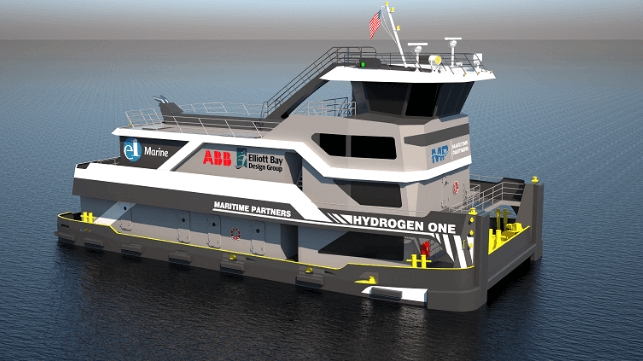
hydrogen one
Courtesy EBDG

PUBLISHED NOV 29, 2021 6:02 PM BY THE MARITIME EXECUTIVE


Maritime Partners, a leading vessel owner and financier in the inland towing sector, is planning to order a prototype methanol-fueled, fuel-cell-powered towboat for delivery in 2023. 

The boat will be built to a novel design developed by the naval architects at Elliott Bay Design Group (EBDG), in partnership with system integrator ABB and methanol-to-hydrogen supplier E1 Marine. The combination of methanol fuel, E1's methanol reformer (which strips out the methanol's hydrogen) and a hydrogen fuel cell gives it a significant edge over battery-powered systems for sheer range. The system delivers about 550 miles of transit distance - enough for about four days of travel - for a typical towboat running at normal speeds. 

EBDG thinks that this combination may be the only commercially-available option for decarbonizing a towboat for long-haul operations. Finding a new power source for the towboat sector is difficult, since towboats have limits for size and displacement in order to fit under bridges and navigate shallow rivers. Batteries only work on fixed routes, with daily time and access for charging, and a towboat’s limited storage capacity restricts the use of pressurized or cryogenic gases as fuels. There are also very few dockside facilities that can bunker a towboat with these more technically-demanding fuels, and as a practical matter, this would limit a vessel’s range and functionality. By contrast, methanol is a ubiquitous industrial chemical and a familiar cargo for the inland towboat industry. 

"The US towboat market is one of the most traditional in the world, so it's important to recognise what this represents: the first step in a shift from diesel electric to methanol electric, and a major advancement towards zero emissions," said David Lee of ABB Marine & Ports. 

Virtually all methanol on the market today is derived from natural gas, and while its use does result in carbon emissions, the higher efficiency of a fuel cell means that operating the new system would result in a lower carbon footprint than operating a conventional diesel engine. According to E1, while running on standard methanol the hydrogen generator / fuel cell set produces zero particulates, zero NOX, zero SOX, and 28 percent less CO2 than a diesel generator. If the operator switches to "green" methanol produced from a source of green hydrogen - when and if it becomes available - this carbon footprint could be further reduced without altering the equipment on board. 

“Shipowners have been understandably reluctant to commit to low carbon fuels until the infrastructure is available to refuel their vessels. The M/V Hydrogen One solves that problem by using methanol, which is safe and readily available worldwide," said Austin Sperry, the co-founder and COO at Maritime Partners.

Facebook sold ads that compared vaccines to the Holocaust and said 'Make Hanging Traitors Great Again'
mloh@businessinsider.com (Matthew Loh) 
A man looks at a computer screen with a Facebook logo in Warsaw, Poland on February 21, 2021 
Jaap Arriens/NurPhoto via Getty Images

Facebook made $780,000 selling ads with violent and anti-vaccine messages, CNN's Donnie O'Sullivan reported.

It boosted at least four ads for shirts that compared vaccines to the Holocaust.
The pages running the ads have fewer than 10,000 followers, but the ads reached around 1 million people each.

Facebook sold ads for t-shirts and sweaters with slogans that likened the US COVID-19 response to Nazi Germany and suggested that vaccines are poison or like the Holocaust, CNN's Donnie O'Sullivan reported.


In the last few years, the social media platform has made $780,000 in total from such clothing ads, which were run by the pages "Ride the Red Wave" and "Next Level Goods," Sullivan wrote.

"Slowly and quietly, but it's a Holocaust," read the shirt design on one ad, which featured a syringe alluding to the COVID-19 vaccine.

Another ad touted a similar syringe design on a shirt that said: "Proudly Unpoisoned." According to Facebook data, it was mostly shown to men, and the top states it displayed the ad in were Texas, Florida, Pennsylvania, and California.

On November 29 to 30, the page "Ride the Red Wave" ran ads for a sweater that said: "I'm originally from America but I currently reside in 1941 Germany," comparing the US pandemic response to the Nazi regime's rule of Germany in the early years of World War II.

"Make Hanging Traitors Great Again," said another shirt on an ad run in June. While the first three ads were taken down for violating Facebook's advertising policies, this one has not been removed at the time of publishing.

The pages running these ads paid Facebook to reach estimated audiences of more than 1 million people per ad, though "Ride the Red Wave" has fewer than 10,000 followers, according to CNN, and "Next Level Goods" has fewer than 7,000 likes, according to Facebook data.

A spokesperson for Facebook's parent company, Meta, told CNN that the ads comparing vaccines to the Holocaust and poison, as well as the one that suggested the pandemic response was like 1941 Germany, went against Facebook's vaccine misinformation policies.

It did not say if the "Make Hanging Traitors Great Again" ad violated its policies, per CNN.

Facebook and Meta regularly say that they've aided vaccination efforts and have helped people get accurate and verified information about COVID-19.

Facebook did not immediately respond to Insider's request for comment.
REST IN POWER
Kentucky author and 'Merry Prankster' Ed McClanahan dies

LEXINGTON, Ky. (AP) — Ed McClanahan, a Kentucky author, teacher and friend of counterculture icon Ken Kesey, died Saturday at his home in Lexington, according to his wife. He was 89.

© Provided by The Canadian Press

McClanahan lived in Lexington with his wife Hilda, who remembered him as a “great man.”

“Everybody knows what an icon he was," she said Wednesday. “I miss him.”

McClanahan was born in Brooksville in Bracken County. In 1962, he met Kesey, author of “One Flew Over the Cuckoo’s Nest,” and Kesey’s band of Merry Pranksters while at Stanford University as part of a creative writing fellowship, according to the Lexington Herald-Leader.

The communal travelers' exploits were chronicled in Tom Wolfe’s 1968 book “The Electric Kool-Aid Acid Test.” When he was with the LSD-fueled jesters, McClanahan was known as “Captain Kentucky" and would frequently wear costumes, an experience he recalled in his 1985 memoir, “Famous People I Have Known.”


McClanahan's first book, a coming-of-age novel entitled “The Natural Man,” was published in 1983, and McClanahan was inducted into the Kentucky Writers Hall of Fame in 2019. His last two books were published last year. His cause of death was not reported.

“Ed was one of the best writers of my time,” a friend of McClanahan’s, Kentucky author Wendell Berry, told the newspaper. “He was almost perfect in the way he made his sentences, the way he heard his sentences. He had a very large sense of humor and it came to rest on his language.”

McClanahan also taught writing at multiple universities, including Stanford University, Oregon State University, the University of Kentucky, Northern Kentucky University and the University of Montana.

Frank X. Walker, the director of the University of Kentucky Creative Writing Program, told the Herald-Leader that he was saddened to lose “someone who had made so many of us laugh so hard for so long."

“Ed was a pillar in the community of writers of his generation that established Lexington and Kentucky as a legitimate literary hotbed,” Walker said. “His mentorship and support of a whole generation of younger writers will be missed.”

The Associated Press
ONTARIO
Milton's Working Poor


Drive into Milton from any direction and you're greeted with the sight of streets lined with single-family homes stretching out into the distance. It's no wonder when the population sits at 139,400, and is projected to be 230,000 by 2031.

The prosperous neighbourhoods often mask a hidden poverty; called that because it's something that isn't out the open. "From the outside everything appears normal, but the family isn't making enough to cover all expenses," Chuck Charlton said Charlton, a local real estate agent has seen some of it first-hand, and been moved to help. He has been running food drives benefitting Food4Kids and the Salvation Army for the last 10 years. Charlton, estimates that 1-2% of people in Milton fall into this category. A 2018 report from the United Way of Hamilton-Halton puts the figure at 5.7%, the highest of all Halton municipalities.

"The term working poor are people who work in precarious jobs, and are remunerated at minimum wage. In Halton we do not see poverty on our streets like other areas, thus our poverty is hidden," Halton Food4Kids Executive Director Gayle Kabbash said. Food4Kids is an agency that helps families unable to meet food budget requirements due to the cost of living.

COVID-19 has meant the need for their services has increased by 30%. As of October, they have helped over 800 children. "As a result, we have had to increase outreach to generating funding to meet the growing need." Food drives, such as the one held by Charlton play a role as they secure food that suppliers don't carry. "I am happy to share our incredible community, including many businesses have expanded their support allowing us not to turn any child or family away," Kabbash said.

"In this climate of high living cost many families are struggling to make ends meet. It's not unusual for us to encounter folks who are working multiple part-time or casual minimum wage positions just to cover the cost of rent," Ruth Hickman, Director/Pastor with the Salvation Army said. COVID-19 has increased need for the for the food bank by 30%. They offer a Hydro Assistance program, and have recently added an extra two days in order to keep up with demand. "Whether folks are in arrears or needing a discount in order to keep up with payments we are doing what we can to help them navigate the system," Hickman said.

The Salvation Army started its annual Christmas assistance program November 22. They're still looking for donations of toys, gifts for teens and $25 gift cards for children. "Large drives and events organized by groups like Charlton Advantage and Miracle on Main go a long way in stocking our neighbours' shelves and putting smiles on their children's faces," she added.

Housing prices have increased by 47% over the last 2 years. A single family home sells for approximately $1.2 million. Buyers are eligible for a mortgage of up to 5 times their income. In Milton, where the average income is $104,000 it could mean a mortgage as high as $520,000. Numerous studies indicate parents are helping with the down payment, but even then the dream of home ownership is out of reach. "The solution in most cases is to move further and further away until can afford what you want," Charlton said.

Milton Transitional Housing (MTH) feels the impact of housing prices first-hand. Their program has room for 10 is facing an increased need due to COVID-19. Executive Director Donna Danielli would like to expand but is finding it challenging "It is becoming more difficult to connect with landlords and rent new accommodations which are affordable for our clients," she said in an email. The agency also faces a hurdle of finding affordable housing for clients who have completed the two year program. In spite of all the problems, the agency has successfully graduated 5 clients in the last six months.

For Danielli, the term "working poor" refers to the clients she sees on a daily basis. "So many people, making minimum wage or receiving shelter support through Ontario Works (OW) or Ontario Disability Support Program (ODSP) are simply not able to make ends meet in this world of increasing housing costs. They are being forced to make choices between safe housing, food, transportation and so much more," she said.

Charlton thinks the problem with housing prices come down to the supply. Too many buyers, and too few homes. He suggests shortening approval processes, as well as ending blind bidding- part of an election promise from the federal Liberals. He admits higher market prices are a problem. "Whenever regular people with good, stable jobs can't afford regular homes, there's huge cause for concern," he said.

Laura Steiner, Local Journalism Initiative Reporter, The Milton Reporter, Milton Reporter
Living wage proposal a divisive issue for council


The idea of even considering implementing a living wage of $18.90 for municipal employees proved divisive for Niagara-on-the-Lake councillors, though a plan to look into the proposal narrowly passed.


A motion presented last week by Coun. Norm Arsenault sought to have the town look into committing to pay all of its employees a living wage as calculated by the Ontario Living Wage Network. It's estimated the plan would affect fewer than two dozen town workers.

Arsenault said the minimum wage is too low. He acknowledged the Ford government's plan to boost it to $15 per hour in January but insisted that is still below where it needs to be.

Approving the living wage concept would be an opportunity for the town to demonstrate leadership to the rest of the community, he said.

Couns. Clare Cameron, Gary Burroughs and Wendy Cheropita voted against the proposal, but it passed with Lord Mayor Betty Disero and Couns. Allan Bisback, Sandra O’Connor and Arsenault all in favour. Couns. Erwin Wiens and John Wiens were not in attendance.

Town staff were directed to bring a report back to council in February or March of next year on the impact of implementing a living wage at the town.

Cameron said paying $18.90 an hour would cause the municipality to compete with businesses in town that are struggling to find labour.

“I feel uncomfortable with the thought that we might might jump ahead and somehow also be competing with local businesses for potential talent,” she told council.

“I think it’s our job to try and get out of the way.”

Cameron said the town could show leadership by asking local businesses how it could support them in paying a living wage while rejecting the idea of the town paying a living wage itself.

Treasurer Kyle Freeborn noted the vast majority of town employees and contractors already make more than $18.90. He said there were probably 15 to 20 employees who make less than that.

Cameron said the idea that paying people better wages to attract more labour was too simple a solution to a complex problem.

“I wish that it was easy enough to fix the labour market and to fix people's economic struggles by simply bumping up wages. I do not believe that the solution to those issues is that simple,” she said.

While wages are an important factor for people in where and how they work, having room for advancement and a good team dynamic are equally important, she said.

“So, I find this an overly simplistic attempt. Very well-intentioned, but it’s too simple.”

Cameron was also concerned that the idea of a “living wage” was too undefined. She said it could increase exponentially based on factors out of the town’s control and the town could be forced to pay if it signs on to the Living Wage Network.

The estimated cost for increasing all employees' pay to the living wage was cited as upward of $36,000 per year. Arsenault noted the figure in relation to the town's $14 million operating budget.

Cameron emphasized that this price tag was nearly identical to the town’s discretionary grants for community organizations and didn’t want the living wage to interfere with its ability to support local organizations.

Disero supported the motion and used an example from her time as a Toronto city councillor to explain why.

She said Toronto once declared it would require anyone doing business with the city pay a “fair wage” to their employees.

“All of those people against it said, ‘Oh no, the world is going to come to an end. People aren’t going to be able to bid on things.’ And that didn’t happen. It was a different time, I realize, but that just didn’t happen.”

Disero stressed that the motion only asked for a staff report on the impact of the policy and was not a motion to implement it.

Cheropita cited an example from earlier this year for rejecting the idea.

She said she was trying to find someone to be an event manager for the summer and was offering $20 per hour.

“I could not find anybody to work for $20 an hour because students were sitting at home and collecting (Canada Emergency Response Benefits),” she said.

“So, it’s not always about a motivation for money and I really did try very, very hard.”

Cheropita said if there were any full-time staff who weren’t making $18.90 then she would have supported the motion.

“But, when it’s students, most students live at home, at least in this area, and the sort of money that we’re paying, I understand it to be between $14.75 and $17 an hour. That’s a pretty good part-time job for the summer and most kids are really happy to work for that,” she said.

Burroughs argued there should be a difference between a living wage for a full-time worker and what a student or part-time worker makes.

Craig Pickthorne, who spoke to council on behalf of the Living Wage Network, said it would be difficult for the organization to determine different wages based on whether someone lived with their parents or on their own.

He said calculating the wage on the cost of living in an area was the proper solution, adding that, for students, tuition is a big cost and can rival the cost of living independently.

“First of all, your example of how expensive it is to go to university — it’s not that expensive relative to the cost of putting on a university,” Burroughs responded which prompted a look of bewilderment from O’Connor.

It makes no difference if they are “a student living at home looking down the barrel of a $30,000 student debt or they have a family of four supporting two small children. If you need the work done, then you should pay a living wage,” Pickthorne responded.

He said only 18 per cent of minimum wage earners are students or people under 20.

He pointed to Gales Gas Bar as a Niagara and NOTL business that is part of the Living Wage Network and noted it is one of the group's "champion" businesses.

Bisback supported the motion and cited some personal research as to why.

“There’s a lot of complaints about restaurants specifically not getting staffed,” he said.

“And what I found out was that most restaurants (in Toronto) that made the decision during the pandemic to pay over and above the minimum wage had no issue getting staff.”

Bisback brought up the cost of living versus the minimum wage.

“Unfortunately, people need to take two, three, four jobs just to pay the bills and I think this is a move in the right direction and I think it sets leadership,” he said.

Evan Saunders, Local Journalism Initiative Reporter, The Lake Report
Canada must deeply invest in oceans to combat climate change

Canada must exploit the advantages its three coasts provide and stop sidelining oceans and the critical role they can play in tackling the climate crisis, marine ecologist Julia Baum says.

“We need to quit treating the ocean as a niche issue,” said Baum, President’s Chair at the University of Victoria, whose research examines the impacts of global warming on oceans and what they can contribute to climate change solutions.

The ocean absorbs 23 per cent of the world’s human-caused carbon emissions, as well as 90 per cent of the excess heat caused by greenhouse gases, Baum said.

But despite their impressive role in mitigating global warming, oceans are largely ignored as a potential game-changer when it comes to formulating Canada’s climate plans.

“Oceans are our first line of defence against climate change, and they need to start being recognized and financed as such,” Baum said, “because they are the primary thing standing between us and a planet that is too hot for people to inhabit.”

Ottawa has committed to protecting 30 per cent of its oceans by 2030, but Canada hasn’t fully examined how much carbon its oceans capture or detailed ways they could mitigate emissions, she said.

“Canada has the longest coastline in the world, but has not yet incorporated oceans into its climate action plan,” she said.

Ocean-based solutions can potentially handle one-fifth of the greenhouse gas emissions reductions (21 per cent) needed to meet the UN’s Paris Agreement climate goals by 2050, she said.

But to maintain its ocean advantages, Canada must protect and restore marine ecosystems, such as seagrass beds, salt marshes, and kelp forests, which act as powerful carbon sinks, Baum said.

The oceans' ability to continue providing climate change services and to weather global warming and other anthropogenic impacts, such as pollution, are flagging rapidly, she said.

"We've taken oceans for granted and a lot of ocean ecosystems are very close to tipping points," Baum said.


Video: Curbing climate change could prevent millions of deaths, research suggests (cbc.ca)


Pause
Ad 00:12 - up next "Curbing climate change could prevent millions of deaths, research suggests"
Loaded: 0.00%


Unmute
0

Curbing climate change could prevent millions of deaths, research suggests


"If we don't limit warming to 1.5 C, we will lose virtually all tropical coral reefs on the planet, and with them, 25 per cent of all life in the oceans.

“If we cross those lines, oceans might no longer be able to play the critical climate-regulating role that they have in the past."

Beyond preserving its "blue carbon" systems, Canada also needs to reform commercial fisheries by reducing fossil fuel use and to curb overfishing and destructive practices such as bottom-trawling, which churns up enormous amounts of carbon stored in the seabed, she said.

Canada and British Columbia also need to scale up marine renewables and foster associated technological development to grow the green economy for coastal communities, Baum added.

“Offshore wind, wave or tidal energy could offer huge contributions to climate solutions,” she said. Transforming the shipping industry by using net-zero strategies such as electrifying ports, ferries and ground transport, and/or employing green hydrogen technology would also result in sizable emissions drops while providing sustainable jobs.

But for those things to happen, Canada, like most countries, needs to address the financial deficit oceans suffer.

The role of forests in mitigating climate change is widely recognized, Baum said, noting that at the recent UN climate conference in Glasgow, significant financial commitments were announced to protect them globally.

“The scale of financial commitments for the ocean is dwarfed in comparison and that really needs to change,” she said.

Given Canada is in the process of developing its blue economy strategy, now is the time to specify how oceans can play a role in reaching our climate goals, said Baum.

“We're waiting to see if that blue economy strategy is going to be a net-zero strategy,” Baum said, adding any oil and gas exploration or subsidies for the fossil fuel industry would be contrary to the goal of sustainable ocean development.

Dropping emissions as quickly as possible in Canada and worldwide is the best means to ensure oceans can continue to regulate the climate, Baum said.

“We can't continually be pushing our oceans on every front, stressing them out to the max, and also expect that they’ll still be resilient and able to face climate change.”

Rochelle Baker / Local Journalism Initiative / Canada’s National Observer

Rochelle Baker, Local Journalism Initiative Reporter, Canada's National Observer