Monday, March 21, 2022

Comment
Azov, the far right and ‘national myths’ in Ukraine
How important are fascist groups such as the Azov regiment in Ukraine? Sam Ord looks at how they fit a wider pattern


Far right group Azov march in Kiev, Ukraine, in 2019 (Picture: Goo3)

SOCIALIST WORKER 

Ukraine’s president Volodymyr Zelensky is generally right wing and supports US imperialism, however he is not a Nazi. But Ukrainian far right groups, quite small in themselves, prosper because of an explosion of “patriotic” ideas pushed out by the government.

Like many other countries, including Britain, Ukraine’s rulers seek to create a sense of national unity. They elevate ideas and figures from the past who can serve as a glue to bind people together and motivate them against Vladimir Putin. That has accelerated sharply since the Russian invasion of Crimea in 2014.

As a Ukrainian novelist wrote in The Economist magazine this month, “The country used to lack national myths. Now they’re everywhere.” In 2014 the Ukrainian state deliberately launched a new campaign to emphasise its hostility to the Russian regime.

Building on a process that began earlier, this meant rehabilitating “anti-Soviet” figures who are beloved by the fascists such as Nazi collaborator Stepan Bandera. His Organisation of Ukrainian Nationalists was responsible for the murder of tens of thousands of Ukrainian Jews and Poles.

Already by 2009 there were 30 Bandera monuments in western Ukraine and four museums. In 2010 Bandera was named a “Hero of Ukraine” by the outgoing right wing president Viktor Yushchenko. This was part of emphasising ethnic divisions as austerity bit after the financial crisis.

He was stripped of the title in 2011 under Yushchenko’s replacement, president Viktor Yanukovych. But when Yanukovych was removed by the Maidan revolt in 2014, Kiev’s city council renamed the city’s Moscow Avenue as Stepan Bandera Avenue. This followed the Russian invasion of eastern Ukraine.

Last year another local council renamed a major stadium in western Ukraine after Roman Shukhevych. He was a leading figure in SS Schutzmannschaft 201. This was a Ukrainian battalion formed by the Nazis that participated in the genocide of Jews in Belarus and hunted down anti-Nazis in Ukraine.

Banderist symbols such as the red and black flag have become “simple” national images and can be seen on some pro‑Ukraine demonstrations now. It’s therefore not surprising that groups such as the fascist Azov regiment can grow. It was set up in 2014 with fascist and white supremacist subgroups integrated within it. Its leading figure was the Nazi and antisemite Andriy Biletsky.

Former president Petro Poroshenko described Azov as “our best warriors” as they were recruited into the National Guard of Ukraine in November 2014. Azov members have launched attacks on Roma, LGBT+ people and migrants. But they have access to the weaponry that Nato has poured into the country and are nestling closer to the centre of government.


Ukraine—the shadow of 2014 on today’s war

Olena Semyanka, a leading figure in the Azov regiment’s political arm, told Die Zeit magazine that she was now an assistant to a deputy of Zelensky’s ruling party. She added that she was supporting him in building up the International Legion of volunteers to come from across the world to fight.

In 2015 Canada and the US announced that their own forces would not support or train the Azov regiment, citing its Nazi ties. But the following year the US lifted this ban under pressure from the Pentagon.

Another militarised far right movement is Right Sector, which also fights against Russian-backed separatists in eastern Ukraine. As the Russian aggression escalated, Right Sector grew with support from the top.

In December last year Right Sector member Dmytro Kotsyubaylo was awarded the title of Hero of Ukraine by Zelensky. There are such close links between Right Sector and the Ukrainian state that it is normal for schoolchildren to visit its training camps. Here they are given a version of Ukrainian history that venerates figures such as Bandera. Strengthening a right wing version of history has had very dangerous results.

CNN promotes neo-Nazi commander from Ukraine’s white-supremacist Azov regiment

Top US media outlet CNN promoted a commander from Ukraine’s neo-Nazi Azov regiment, failing to mention his militia’s white-supremacist ideology. Azov then proudly shared the video on its official Twitter account.


By Benjamin Norton
PRO RUSSIA LEFT


Leading US media network CNN has promoted a commander of Ukraine’s neo-Nazi Azov regiment, without mention of his hate group’s extremist views.

In 2014, a gang of Ukrainian neo-Nazis formed a militia called the Azov Battalion. These far-right extremists played a leading role in a violent US-sponsored coup that overthrew Ukraine’s democratically elected government, which they had deemed too “pro-Russian.”

The new pro-Western regime that was installed in Kiev after the 2014 “Maidan” coup waged a brutal war on Russian-speaking Ukrainian separatists in the east of the country. Kiev turned to fascist gangs like Azov to help strengthen its weak military forces.

Azov was officially incorporated into the Ukrainian state. It became a regiment in the National Guard, while still maintaining its white-supremacist ideology and use of numerous Nazi symbols.

This March 21, the neo-Nazi Azov militia posted a video on its official Twitter account of one of its commanders being promoted on CNN.

CNN had republished a video clip of Azov Major Denis Prokopenko, who was helping lead the fight against Russian troops in the southeastern Ukrainian city of Mariupol.

The major US media channel described the fascist extremist simply as a “Ukrainian military commander who has been defending the city from the siege.”
CNN subsequently quoted this neo-Nazi commander in two different print reports, which failed to disclose his far-right politics.

March 19 CNN report titled “Mariupol residents are being forced to go to Russia, city council says” quoted him simply as “Major Denis Prokopenko, from the National Guard Azov Regiment,” with no further details.

similar CNN article from earlier that same day cited the same quote, but did mention euphemistically in passing that the “Azov Battalion is an ultra-nationalist militia that has since been integrated into the Ukrainian armed forces.”

With state backing, Azov preaches a white-supremacist ideology and uses Nazi symbols like the German Wolfsangel and racist black sun. THE BLACK SUN IS A PAGAN SYMBOL APPROPRIATED BY RIGHT WING EURO NATIONALISTS


The Nazi symbols used by Ukraine’s Azov Battalion

Since Russia invaded Ukraine on February 24, neo-Nazi extremists from Azov and other far-right militias have played a leading role in the fight.

NATO member states have provided Azov with weapons and training. And Ukraine’s National Guard proudly tweeted a video of an Azov Nazi greasing his bullets with pig fat to kill Russian Muslims, whom the Ukrainian state institution demonized as “orcs.”

THIS IS A DEBUNKED STORY SPREAD BY THE RIGHT WING UNDER TRUMP ABOUT GENERAL PERSHING KILLING MUSLIMS IN THE PHILLIPINES 
  1. Trump Got the Pershing Story Backwards - History News Network

    https://historynewsnetwork.org/article/162096

    During a campaign rally on Friday night in South Carolina, Trump told his audience a story about General John Pershing executing Muslim prisoners in …


CNN is far from the only Western media outlet that has actively promoted neo-Nazis in Ukraine.

Many major media outlets amplified a propaganda photo shoot that was staged by Azov before the Russian invasion.

US government-sponsored network PBS even heroized notorious neo-Nazi Artem Semenikhin, the mayor of the Ukrainian city Konotop, in a softball interview in which he demonized Russians as “cockroaches.”

PBS did not mention the “heil Hitler” symbol on Semenikhin’s car, or even the portrait of Ukrainian Nazi collaborator Stepan Bandera that was on the wall behind the extremist in the video.

Russian attack on Kharkiv kills Holocaust survivor, 96

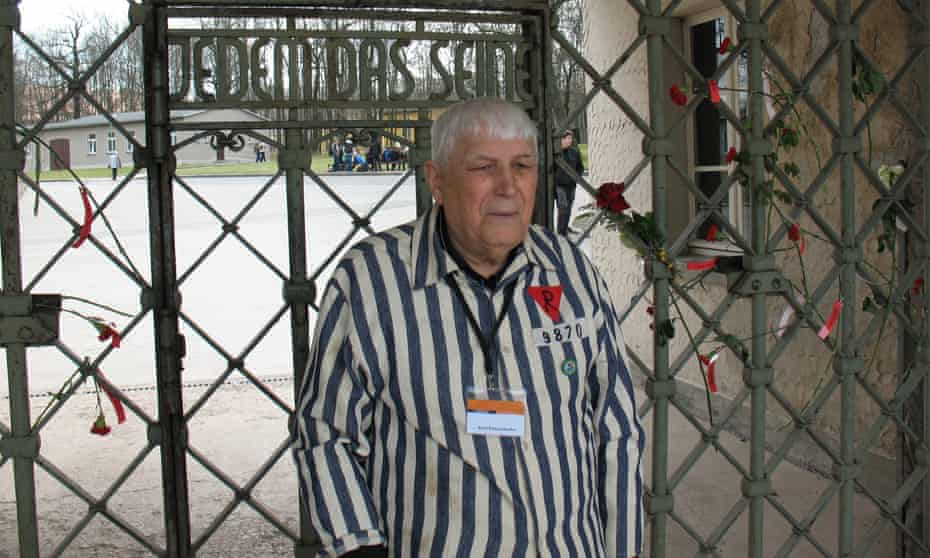
Boris Romanchenko survived four Nazi concentration camps.

He died after rocket hit building where he lived in Ukrainian city

 Photograph: Buchenwald and Mittelbau-Dora Memorials Foundation/Twitter

Philip Oltermann in Berlin
THE GUARDIAN
Mon 21 Mar 2022

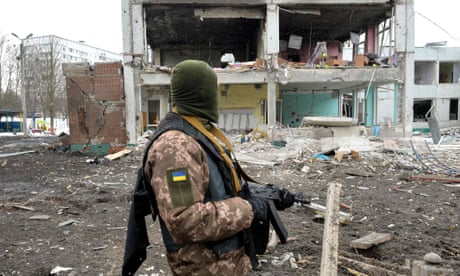
A 96-year-old man who survived a string of Nazi concentration camps including Buchenwald and Bergen-Belsen has been killed by an explosion during the Russian assault on the Ukrainian city of Kharkiv, a spokesperson for the Buchenwald concentration camp memorial foundation has confirmed.

“We are shocked to confirm the violent death of Boris Romanchenko, whose niece informed us on Monday morning that he died last Friday after a bomb or rocket hit the multistorey building where he lived in Kharkiv and his apartment was burned out,” a spokesperson told the Guardian.

According to regional emergency services, more than 500 people have been killed in Kharkiv since Russia launched its invasion of Ukraine on 24 February.

Born in 1926 to a farming family in the village of Bondari outside the city of Sumy in north-eastern Ukraine, Romanchenko was taken as a prisoner of war after the German Nazi regime launched Operation Barbarossa against the Soviet Union in 1941.

“The war had completely surprised us, I wasn’t able to flee,” he recalled in an interview in April 2004.

In 1942, he was deported to Dortmund, in Germany’s industrial Ruhr valley, to work as forced labourer in a mine. After attempting to escape, he was seized just as he was about to board an east-bound train and was then deported to Buchenwald concentration camp in January 1943.

Romanchenko was later moved to Peenemünde on the Baltic Sea island of Usedom, where he was made to work on the V2 rocket programme, as well as Mittelbau-Dora and Bergen-Belsen concentration camps.


Woman who survived siege of Leningrad as a girl now trapped in Kharkiv

Romanchenko said he was liberated from Bergen-Belsen by British and American allied forces on 14 April 1945 just before he and other survivors were due to be killed by being fed poisoned food.

He was enlisted to the Soviet army for five years after the end of the war. Afterwards, he began to play an active part in institutions that commemorate the Holocaust, acting for several years as vice-president for Ukraine on the international committee at the Buchenwald-Doramemorial foundation.

He attended several commemorative events at the camp’s former site and had been invited to attend an event marking the Buchenwald liberation this year.

In 2015, he read out the “Oath of Buchenwald”, a survivors’ pledge dating back to the camp’s liberation, in Russian.

“Our goal is to build a new world of peace and freedom,” he read.

Mariupol: Four reasons the city matters so much to Russia

By Frank Gardner
BBC security correspondent


    IMAGE SOURCE,GETTY IMAGES

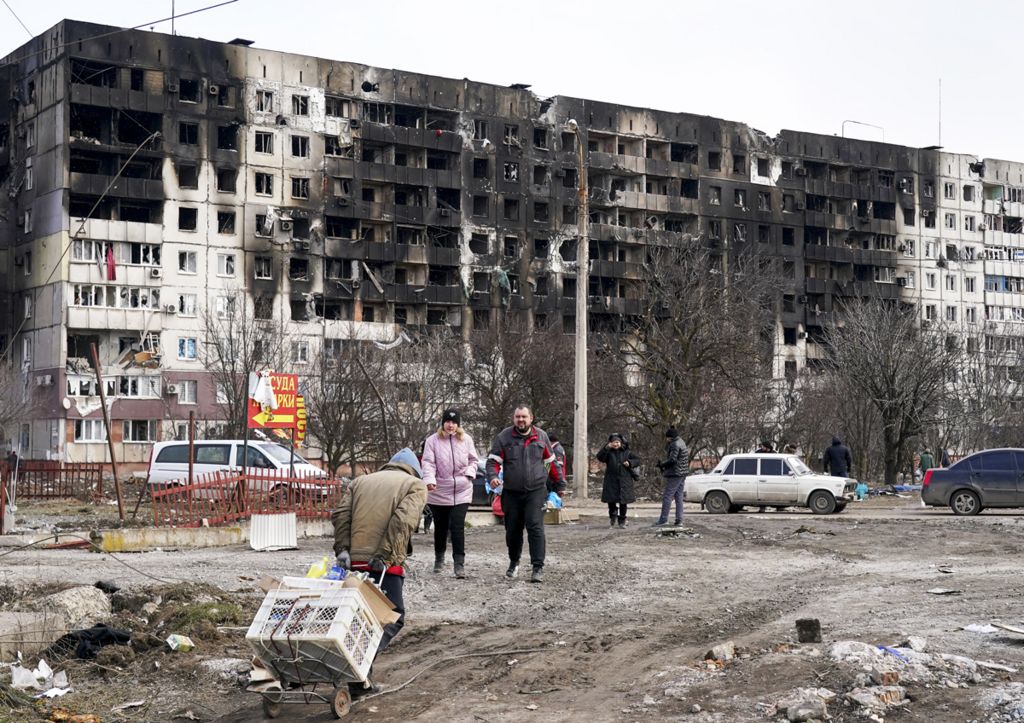
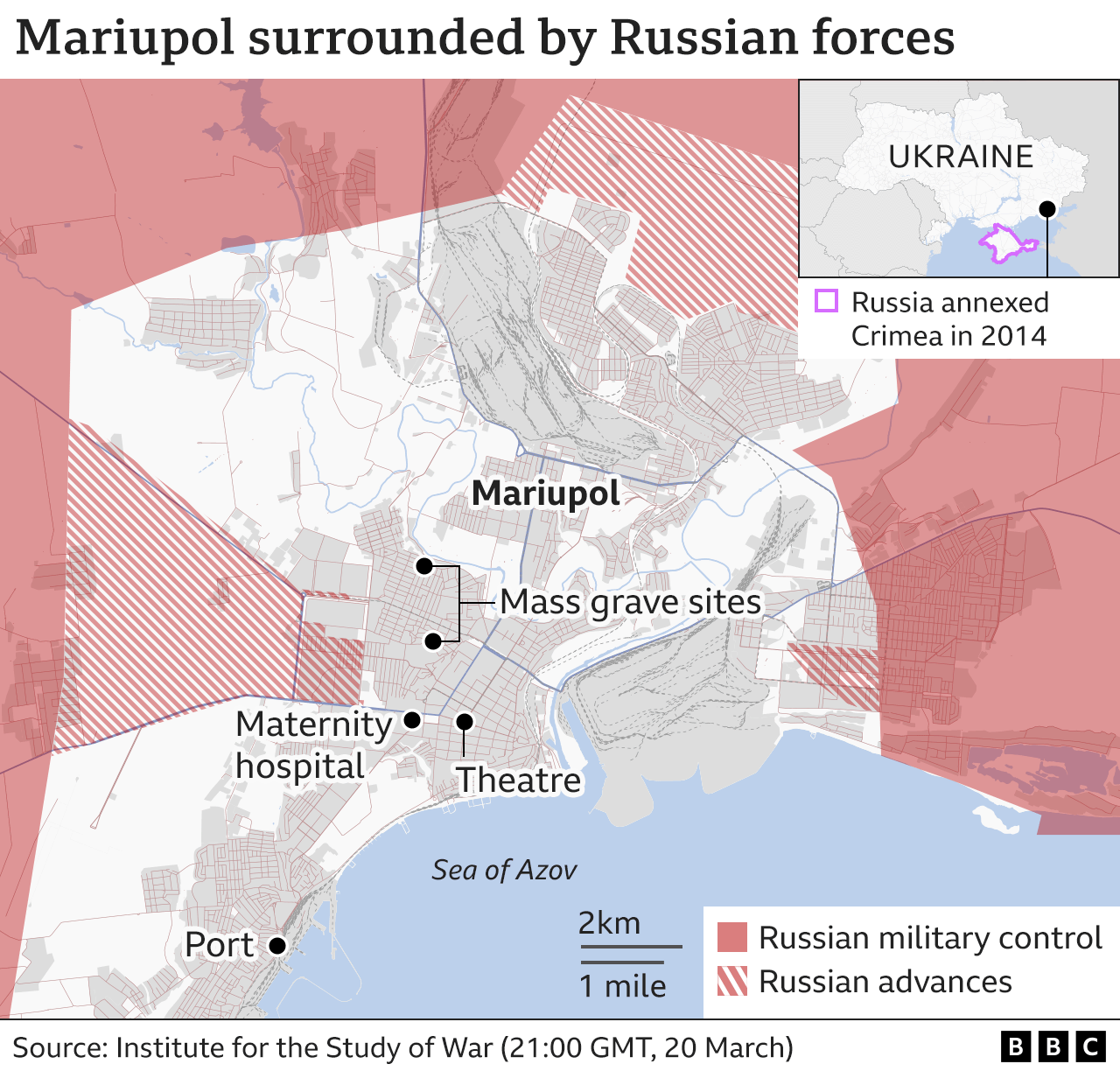
    Mariupol has become the most heavily bombed and damaged city in Ukraine's war with Russia - having suffered the brunt of sustained Russian attacks. It is key to Moscow's military campaign in Ukraine. But why?

    There are four main reasons why taking the port city would be such a strategic win for Russia - and a major blow for Ukraine.

    1. Securing a land corridor between Crimea and Donbas

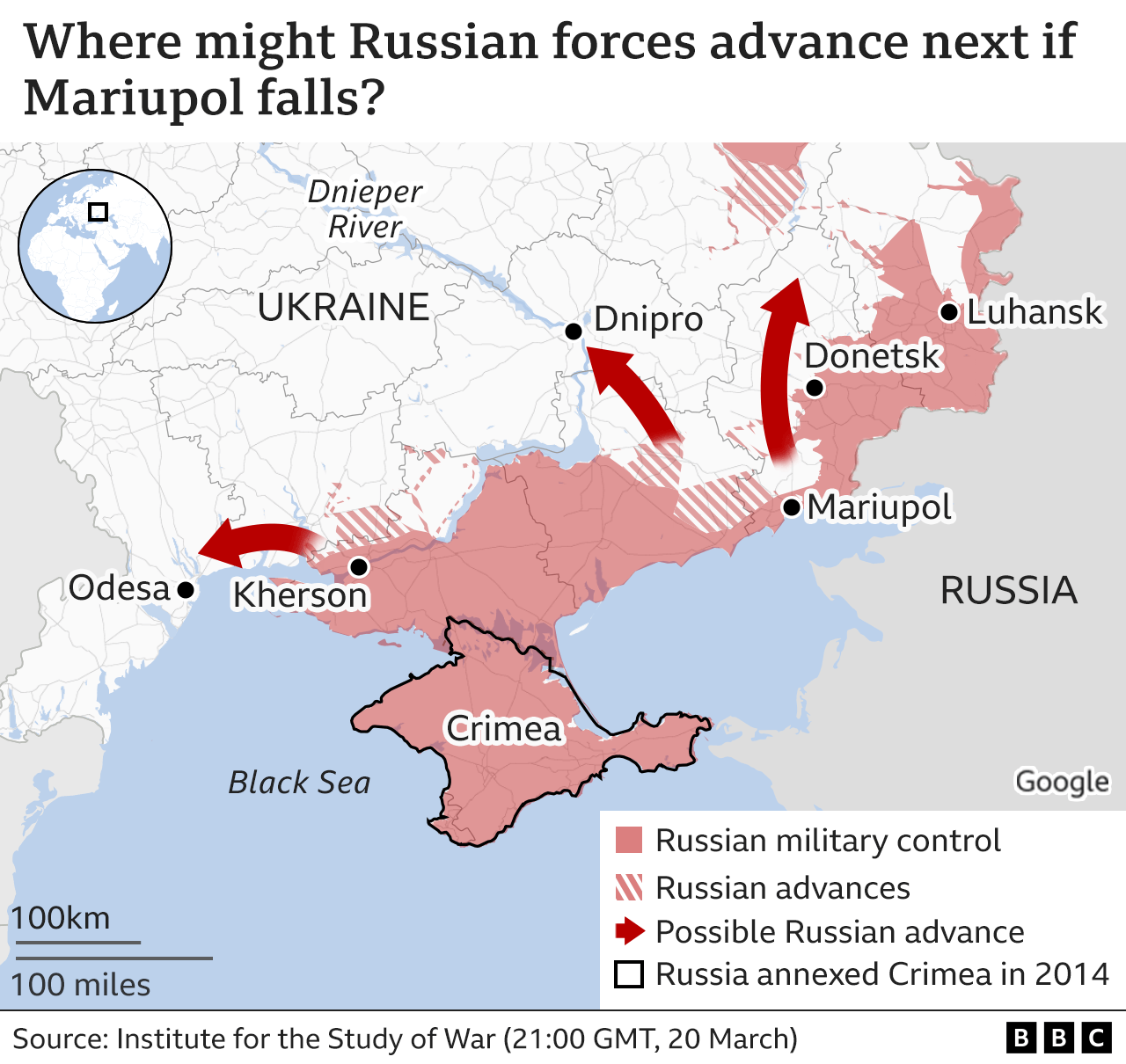
    Geographically, the city of Mariupol occupies only a tiny area on the map but it now stands obstinately in the way of Russian forces who have burst out of the Crimean peninsula.

    They are pushing north-east to try to link up with their comrades and Ukrainian-separatist allies in the Donbas region of eastern Ukraine.

    General Sir Richard Barrons - former commander of UK Joint Forces Command - says capturing Mariupol is vital to Russia's war effort.

    "When the Russians feel they have successfully concluded that battle, they will have completed a land bridge from Russia to Crimea and they will see this as a major strategic success."

    If Mariupol was seized, Russia would also end up with full control of more than 80% of Ukraine's Black Sea coastline - cutting-off its maritime trade and further isolating it from the world.

    By holding out against advancing forces for the past three weeks, the defending Ukrainians have managed to preoccupy a large number of Russian troops. But that failure by Russia to secure a rapid capture of the city, has prompted Russian commanders to resort to a 21st Century version of mediaeval siege tactics.

    They have pummelled Mariupol with artillery, rockets and missiles - damaging or destroying over 90% of the city. They have also cut off access to electricity, heating, fresh water, food and medical supplies - creating a man-made humanitarian catastrophe which Moscow now blames on Ukraine for refusing to surrender by an 05:00 deadline on Monday. A Ukrainian MP has accused Russia of "trying to starve Mariupol into surrender".

    Ukraine has vowed to defend the city down to the last soldier. It may well come to that. Russian troops are slowly pushing into the centre and, in the absence of any kind of workable peace deal, Russia is now likely to intensify its bombardment - drawing little if any distinction between its armed defenders and the beleaguered civilian population which still numbers over 200,000.

    If, and when, Russia takes full control of Mariupol this will free up close to 6,000 of its troops - organised into 1,000-strong battalion tactical groups - to then go and reinforce other Russian fronts around Ukraine.

    There are a number of possibilities as to where they could be redeployed:

    • to the north-east to join the battle to encircle and destroy Ukraine's regular armed forces fighting pro-Kremlin separatists in the Donbas region
    • to the west to push towards Odesa, which would be Ukraine's last remaining major outlet to the Black Sea
    • to the north-west towards the city of Dnipro

    2. Strangling Ukraine's economy

    Mariupol has long-been a strategically important port on the Sea of Azov, part of the Black Sea.

    With its deep berths, it is the biggest port in the Azov Sea region and home to a major iron and steel works. In normal times, Mariupol is a key export hub for Ukraine's steel, coal and corn going to customers in the Middle East and beyond.

    IMAGE SOURCE,GETTY IMAGES
    Image caption,
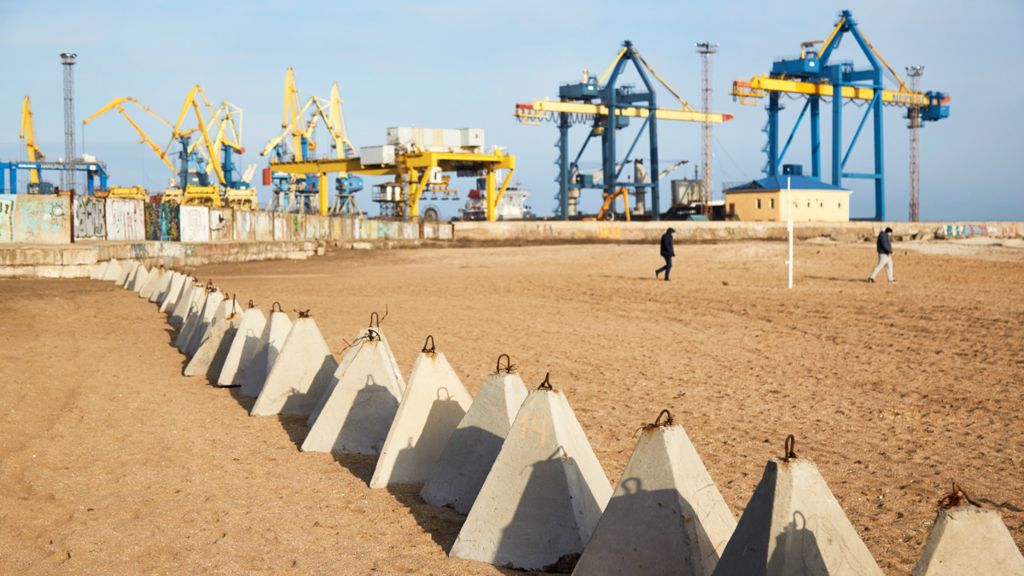
    Ukrainian concrete defences on a beach by Mariupol port, 17 February

    For eight years now, since Moscow's illegal annexation of Crimea in 2014, the city has been sandwiched uncomfortably between Russian forces on that peninsula and the pro-Kremlin separatists in the breakaway self-declared republics of Donetsk and Luhansk.

    Losing Mariupol would be a major blow to what is left of Ukraine's economy.

    3. Propaganda opportunity

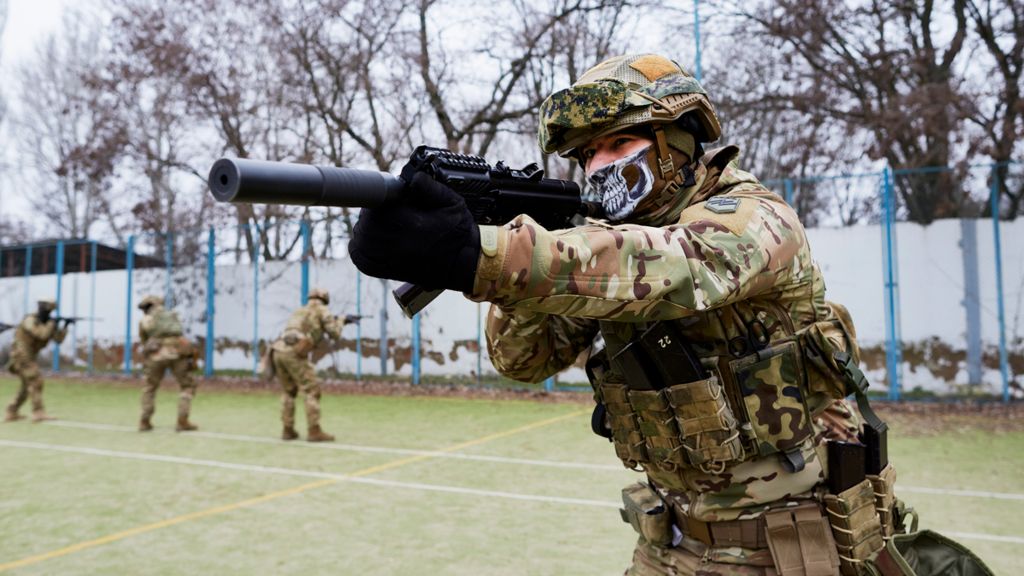
    Mariupol is home to a Ukrainian militia unit called the Azov Brigade, named after the Sea of Azov which links Mariupol to the rest of the Black Sea. The Azov Brigade contains far-right extremists including neo-Nazis.

    Although they form only the tiniest fraction of Ukraine's fighting forces, this has been a useful propaganda tool for Moscow, giving it a pretext for telling Russia's population that the young men it has sent to fight in Ukraine are there to rid their neighbour of neo-Nazis.

    IMAGE SOURCE,GETTY IMAGES
    Image caption,
    Azov Battalion training camp at a former holiday resort near Mariupol, February 2019

    If Russia manages to capture alive significant numbers of Azov Brigade fighters it is likely they will be paraded on Russian state-controlled media as part of the ongoing information war to discredit Ukraine and its government.

    4. Major morale boost

    The capture of Mariupol by Russia, if it happens, will be psychologically significant for both sides in this war.

    A Russian victory in Mariupol would enable the Kremlin to show its population - through state-controlled media - that Russia was achieving its aims and making progress.

    For President Putin, for whom this war appears to be personal, there is a historical significance to all this. He sees Ukraine's Black Sea coastline as belonging to something called Novorossiya (New Russia) - Russian lands that date back to the 18th Century empire.

    Putin wants to revive that concept, "rescuing Russians from the tyranny of a pro-western government in Kyiv" as he sees it. Mariupol currently stands in the way of him achieving that aim.

    But to Ukrainians, the loss of Mariupol would be a major blow - not just militarily and economically - but also to the minds of the men and women fighting on the ground, defending their country. Mariupol would be the first major city to fall to the Russians after Kherson, a strategically much less important city that was barely defended.

    There is another morale aspect here and that is of deterrence.

    IMAGE SOURCE,REUTERS
    Image caption,
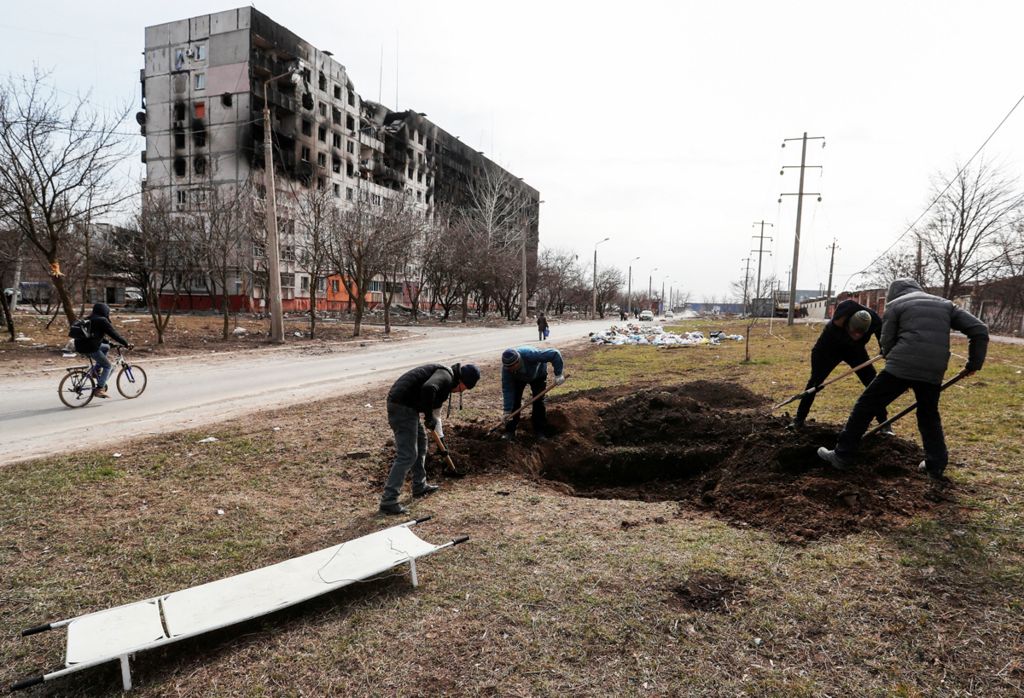
    Digging graves by the roadside in Mariupol, 20 March

    Mariupol has put up fierce resistance - but look at the cost. The city is decimated, it lies largely in ruins. It will go down in history alongside Grozny and Aleppo, places that Russia eventually bombed and shelled into submission, reducing them to rubble. The message to other Ukrainian cities is stark - if you choose to resist like Mariupol did then you can expect the same fate.

    "The Russians couldn't walk into Mariupol," says Gen Sir Richard Barrons, "they couldn't drive in with their tanks, so they've pounded it to rubble. And that's what we should expect to see anywhere else that really matters to them."


    Ukraine says Russian forces violently disperse Kherson protest

    Ukrainian armed forced says Russian troops used stun grenades and gunfire to disperse a crowd of hundreds protesters.

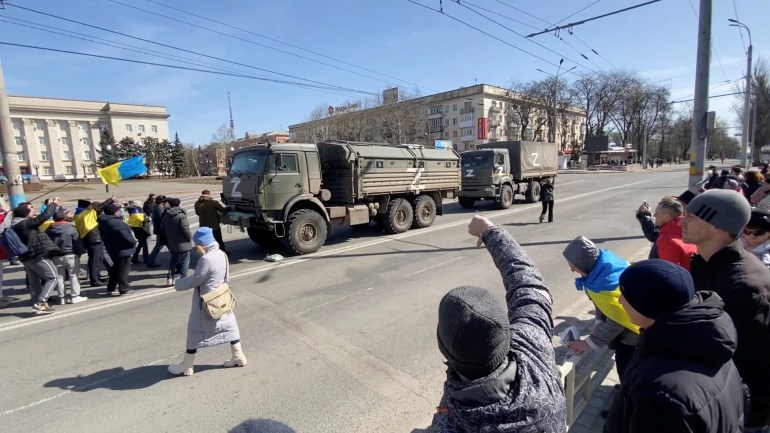
    Demonstrators, some displaying Ukrainian flags, chant "go home" while walking towards retreating Russian military vehicles at a pro-Ukraine rally amid Russia's invasion, in Kherson, Ukraine March 20, 2022
    Demonstrators, some displaying Ukrainian flags, chant 'go home' while walking towards retreating Russian military vehicles at a pro-Ukraine rally in Kherson [Reuters]

    Ukraine’s armed forces have said Russian troops used stun grenades and gunfire to disperse a rally of pro-Ukrainian protesters in the occupied southern city of Kherson.

    Video footage showed several hundred protesters in the city’s Freedom Square on Monday running to escape as projectiles landed around them. Loud bangs can be heard and there are clouds of whitish smoke. Gunfire can also be heard.

    “Russian security forces ran up, started throwing stun grenades into the crowd and shooting,” the Ukrainian armed forces’ news service said in a statement, adding that at least one person was wounded but that it was unclear how they received the injuries.

    CCTV footage appears to show Russian troops (top, near building) firing stun grenades into a crowd of protesters, some with Ukrainian flags, amid the Russian invasion, along Ushakova Avenue in Kherson
    CCTV footage appears to show Russian troops, top, near building, firing stun grenades into a crowd of protesters in Kherson [Reuters]

    Ukrainian Foreign Minister Dmytro Kuleba posted a video on Twitter, showing a man with an armband of the Ukrainian flag wounded by gunfire.

    Continuous shooting could be heard in the video, which showed blood on the ground and people carrying flags running and rushing to help the man. The person taking the video said the man is a pensioner. The video showed some protesters returning to the square. One man in a black hat strolled back, stopped across the road from Russian troops and stood there on his own, holding a small Ukrainian flag above his head.

    Russia did not immediately comment on the incident. Moscow has denied targeting civilians.

    A demonstrator gestures as others, displaying Ukrainian flags, chant "go home" and walk towards Russian military vehicles at a pro-Ukraine rally amid Russia's invasion, in Kherson, Ukraine March 20, 2022
    A demonstrator gestures as others, displaying Ukrainian flags, chant ‘go home’ and walk towards Russian military vehicles [Reuters]

    Kherson, a city of approximately 250,000 people, is situated near Crimea, a peninsula annexed by Russia in 2014 and one of the directions from which Moscow invaded Ukraine late last month.

    It was the first big urban centre to fall to Russian forces, with Moscow capturing it within the first week of its invasion.

    Since then, groups of residents have staged regular rallies in the centre of Kherson, protesting against the occupation and showing their support for the government in Kyiv by waving Ukrainian flags.

    Earlier this month, the Ukrainian authorities said members of Russia’s National Guard had detained more than 400 people in Kherson region for protesting against the occupation. It accused Russia of trying to create a police state there.

    Ukraine's democratic socialists say Western leftists should support sending them weapons to fight Russia's 'imperialist aggression'
    A couple of Ukraine soldiers hold hands as they walk in the streets of Kyiv on March 18, 2022. FADEL SENNA/AFP via Getty Images

    Ukraine's democratic socialists are offering critical support to the centrist Zelenskyy government.

    Vladyslav Starodubcev is one of the leaders of the left-wing party Sotsialniy Rukh.
    The 19-year-old told Insider that he wants the West to provide weapons to Ukraine.

    As a socialist, Vladyslav Starodubcev found plenty to criticize in the "neoliberal" administration of Ukrainian President Volodymyr Zelenskyy, like a proposed reform to the country's labor laws that would have made it easier for employers to fire workers for any reason.

    But speaking from Kyiv, the sound of artillery fire in the background, the 19-year-old Starodubcev — a leader of the left-wing SotsÑ–alniy Rukh, or Social Movement, a small party of democratic socialists that has largely focused on grassroots anti-capitalist actions as opposed to electoral politics — said there was no question which side he and comrades were on once Russia launched "this horrible war" in their country.

    "I took a decision on the first day of the war that I'm staying," he told Insider. His family chose to escape Ukraine's capital, leaving him alone in their apartment, where he seeks refuge in the living room when cruise missiles are hitting the city. "It's hard to sleep because a rocket can just fire on my building and it can happen in any moment."

    But, he added, "I'm staying because I want to take my part in this situation to defend my country, to help people in need. And if Ukraine will be occupied, to resist this occupation."


    For him, resisting Russia's invasion means helping distribute humanitarian aid, such as food and medicine. For other socialists, it's "joining the war effort to support the army." And for now, that means supporting the government, Starodubcev praising Zelenskyy for having "united the country" with his media-savvy defiance.

    'Russian leftists are less pro-Russian than Western leftists'


    Russian Police officers detain a man during an unsanctioned protest rally against the military invasion in Ukraine on March 6, 2022 in Moscow, Russia.
     Vladimir Pesnya/Epsilon/Getty Images

    That doesn't mean there aren't criticisms — in the besieged city of Mariupol, for example, he thinks the state could and should have done more to prepare the population for a Russian attack, the city being an obvious strategic target, and now a humanitarian disaster.

    But he cringes at the response from some on the left, abroad.

    While many left-wing parties have condemned the invasion of Ukraine, that condemnation has often been couched in what he sees as excuse-making — in a belief that the Kremlin's war of aggression was provoked by the West, as opposed to being a product of revanchist Russian nationalism.

    Just before speaking to Insider, Starodubcev was on a call with members of Podemos, the populist left-wing party in Spain and the junior partner in a ruling coalition with the Socialist Party.


    "They pushed this agenda that, 'We're against sending weapons.' They're sabotaging other parties in Spain trying to help Ukrainians — it's just a stupid, very horrific policy," he said.

    "They have this idea that Russia is defending against NATO expansion and they just have their reasons to attack — that's plain wrong and stupid. This idea of not sending weapons because it can prolong war is just misunderstanding Russian policies," he said. "Russia's goal here is to install a puppet government and just destroy Ukraine as something sovereign, doing independent policies from the Kremlin. So their argument is just for occupation."


    Ironically, or perhaps not, "Russian leftists are less pro-Russian than Western leftists, 100%," Starodubcev said. "They understand their government a lot better than DSA or Podemos or Stop the War Coalition in Britain. They're strongly opposing Putin. They're strongly opposing the war — they're trying to sabotage it."

    Socialists in Ukraine are calling for concrete actions, such as canceling the country's foreign debt — now nearly $130 billion, almost 10 times what it was in 2000. That is not controversial among leftists elsewhere.


    But what Ukraine needs now is support for the armed struggle against Russian militarism, Starodubcev said.

    Ukrainians against 'imperialist aggression'

    Iryna Sergeyeva, Ukraine's first female volunteer fighter to get a full military contract of the Territorial Defense Forces of Ukraine holds her Kalashnikov machine-gun as she attends a military training in an underground garage that has been converted into a training and logistics base in Kyiv, on March 11, 2022. SERGEI SUPINSKY/AFP via Getty Images

    "Of course, we are supporting sending arms to Ukrainian resistance and Ukrainian army," he said. "I think that many socialists should push their government to send planes, to send anti-air or anti-tank weapons, to defend the Ukrainian people."

    "It's a war of the Ukrainian people against imperialist aggression," he added. "And it's very strange to me, the response of the Western left, which just ignores the fact Ukrainian people are fighting for their lives — for their independence."

    Outside Ukraine, cable news and leftist discussion groups have spent an inordinate amount of time debating what Starodubcev and the US government alike see as a nonstarter: a no-fly-zone.

    That's a stated demand of Zelenskyy that would entail members of NATO potentially shooting down Russian planes in Ukraine — a direct conflict between nuclear powers.

    "I mostly avoid this debate about no-fly-zone because it's really unreal — it won't be happening," Starodubcev said. It's also not necessary, he added, with Zelenskyy asking for it possibly just as a tactic to get what he really wants: the ability to impose one itself.

    The country does not need any foreign military boots on the ground or NATO planes in the sky. It "needs fighter jets and anti-air equipment to defend its cities from bombs and rockets," Starodubcev said. "I think that Ukraine can hold — if it would have enough guns."

    Staying put to send a message

    A placard honors "the heroes who defended Kyiv in 1941."
     Vladyslav Starodubcev

    In the meantime, he plans to stay put, committed to helping build a socialist Ukraine from the ashes of war.

    The left in Ukraine itself is not particularly strong, even if its policies on healthcare and organized labor are popular, and it was made weaker by its popular association with Russia. When Moscow annexed Crimea in 2014, it did so with the support of Ukraine's Communist Party. And while that party is not particularly progressive — combining social conservatism with nostalgia for Stalinism and a Soviet empire — it tarnished the broader left in the eyes of a population that has embraced Ukrainian identity.

    That, in part, is why Starodubcev is remaining in Kyiv. It's the right thing to do, he believes (though he does not judge those who have left), but it's also a sort of propaganda of the deed: showing that Ukraine's right-wing nationalists — a real problem, he concedes, made worse by war but overblown by Russian propaganda — do not have a monopoly on patriotism in a time of war.


    It's also why he insisted that his real name be published, even if it potentially puts him at risk if Moscow ever does seize the capital.

    "In this situation, for our position to be heard, it's better to use our real names because we are trying to [show] that the left is voting for arms delivery" — and standing against a foreign invasion of Ukraine, he said. Besides, "I don't think there's a lot of risk, because Russian intelligence is pretty stupid, I would say."


    What happens if President Zelenskyy is killed or captured? Ukraine and allies discuss political succession.

    25 Rights NGOs Announce Women's Rights Award Winner: Zarifa Ghafari, Youngest Female Afghan Mayor

    GENEVA, March 21, 2022 – A coalition of 25 human rights organizations announced today that its prestigious women’s rights award will go this year to Zarifa Ghafari, Afghanistan’s youngest female mayor and a survivor of three Taliban assassination attempts.

    Ghafari will receive the Geneva Summit for Human Rights and Democracy's 2022 International Women’s Rights Award at a ceremony on Wednesday, April 6th, where she will address UN diplomats, human rights activists and journalists from around the world attending the 14th annual event.

    Ghafari was chosen for her "fearless defence of women's rights in Afghanistan, a cause for which she sacrificed a great deal, and for being an inspiring example for women and girls around the world,” said Hillel Neuer, executive director of United Nations Watch, a co-organizer of the conference along with Liberal International, Human Rights Foundation, and over 20 other human rights groups.

    “It is an honor to receive this award on behalf of the unspoken people in Afghanistan, the brave women who sacrificed their lives always for the welfare of the country. The women who are unable to leave their homes, not able to work, who are not able to speak out,” Ghafari said.

    “Using this platform I want to spread a message of unity, love and peace to everyone, to the Taliban, to the people and to those who really care about Afghanistan. I want to say please, let's work together, men and women, so we can have a bright today and future,” she continued.

    Ghafari was appointed mayor of Maidan Shahr, a city in conservative Taliban territory, in July 2018. Protests and death threats due to her age and gender–she was just 26–delayed her taking up the post but were ultimately unable to dampen her desire to take office.

    After assuming her duties she was targeted by the Taliban and IS, surviving three assassination attempts. Her father was killed by Taliban gunmen in retaliation at her refusal to step aside.

    As the Taliban swept to power in mid-August, fighters arrived at Ghafari’s home searching for her. She was forced to flee into exile in Germany, describing the moment as “more painful than losing my dad.” She has since bravely returned to Afghanistan to coordinate humanitarian aid efforts.

    Previous laureates of the International Women’s Rights Award include Iranian journalist Masih Alinejad, who fights to liberate women from forced hijab laws; Congolese activist Julienne Lusenge, who combats rape as a weapon of war; and Pakistani campaigner Gulalai Ismail, who trains women in human rights leadership.

    Ghafari will join other courageous champions of human rights from around the world at this year's Geneva Summit, including dissidents, activists, victims, and relatives of political prisoners from Cuba, Russia, China, Saudi Arabia and Nicaragua, who will testify on the human rights situation in their countries.

    The global gathering is acclaimed as a one-stop opportunity to hear from and meet front-line human rights advocates, many of whom have personally suffered imprisonment and torture. “It’s a focal point for dissidents worldwide,” said Neuer.

    The annual conference will be held on the heels of the U.N. Human Rights Council’s main annual session, which includes China, Cuba and Russia as members.

    Videos of past speaker testimonies are available at the Geneva Summit’s YouTube channel.

    Admission to this year’s April 6 Summit is free and open to the public, but registration is mandatory. The conference will also be available via live webcast.

    © Scoop Media