Thursday, June 09, 2022

Global Food Import Bill Set for Record, Taking Toll on Poorest

Megan Durisin
Thu, June 9, 2022,


(Bloomberg) -- The global food import bill is set to reach a fresh record in 2022, but surging prices mean buyers will barely be getting any more for the money.

Food imports are expected to total $1.81 trillion this year, surpassing an all-time high set last year by $51 billion, the United Nations’ Food and Agriculture Organization said in a report Thursday. Almost all of that is because of inflation, which is worsening a cost-of-living crisis in developed nations and deepening hunger in poorer countries.

An FAO index of food prices surged to a record earlier this year as Russia’s invasion of Ukraine curtails shipments from one of the world’s biggest suppliers of vegetable oils and grains. Soaring energy and fertilizer prices are also making it increasingly expensive to produce crops and livestock. That’s raised concerns about global hunger, and the report shows the spike in food costs is already taking a toll on vulnerable areas.


The report showed a growing schism in the diets of rich and poor nations because of the price surge. Developed countries are still bringing in all varieties of food, while emerging regions are expected to increasingly shirk high-value products like meat, oilseeds and beverages to focus on staples, reducing the diversity and quality of diets, it said.

“These are alarming signs from a food security perspective, indicating that importers will find it difficult to finance rising international costs,” the report said. “The year 2022 may usher in an era of lower resilience to higher food prices, notably by the poorer regions of the developing world.”

The bulk of the almost 3% increase in the global import bill is due to rising costs and not because the world is buying more food, the FAO said. Food purchases by least-developed nations will fall by $2.4 billion this year, the report showed.
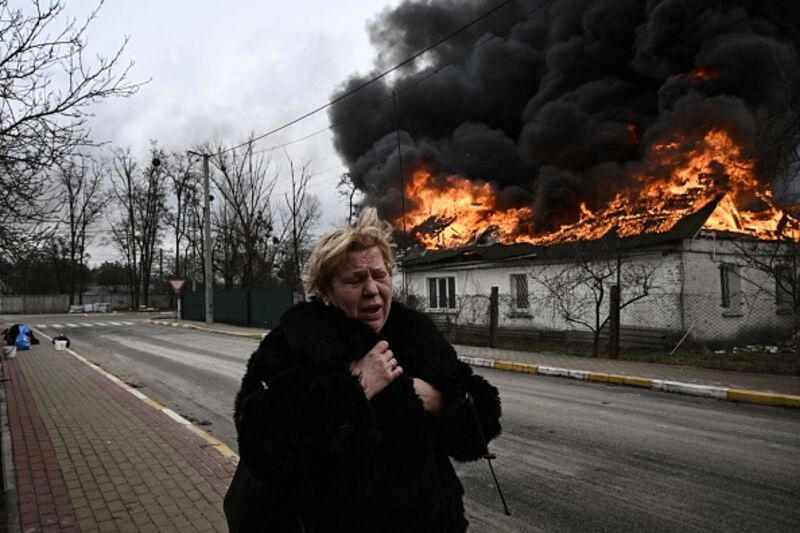
A Long War in Ukraine Could Bring Global Chaos


Kyiv has reason to hope it can prevail, but Vladimir Putin’s efforts to seed global economic trouble could weaken international support.


This could last a long time.
Photographer: Aris Messinis/AFP via Getty Images

By Hal Brands
June 9, 2022,
Hal Brands is a Bloomberg Opinion columnist. The Henry Kissinger Distinguished Professor at Johns Hopkins University’s School of Advanced International Studies, he is co-author, most recently, of "Danger Zone: The Coming Conflict with China."


The war in Ukraine has become a brutal, grinding contest of attrition. As the conflict drags on, the question becomes, which side does time favor? Kyiv is betting that its leverage will increase as an isolated Russia comes face to face with economic and military ruin. Russian President Vladimir Putin’s wager is that he can devastate Ukraine even with a weakened army, while using the threat of global economic chaos to sever Kyiv’s lifeline to the outside world. Each side is trying to bleed and batter the other into submission, a dynamic that will fuel far-reaching instability — and present the US with nasty challenges.

In recent weeks, the fighting has occurred primarily in eastern Ukraine. Russia is using hellacious artillery barrages and methodical attacks to slowly seize more territory, in hopes of fully “liberating” the Donbas region. Ukraine is hanging on, inflicting terrible casualties while also suffering, by President Volodymyr Zelenskiy’s own admission, heavy losses.

Notwithstanding Russian territorial gains, Ukraine still has reason for optimism. Its military power is, in important respects, increasing, as Kyiv receives longer-range artillery and other sophisticated weapons from Western countries. Some of the world’s top intelligence services are also effectively working for Kyiv, providing information that helps Ukrainian military leaders anticipate the enemy’s blows and strike plenty of their own.

Russia’s military power, in contrast, will probably atrophy in a long war, because Russia’s economy and defense industry are subject to harsh sanctions, and the morale of its forces will fade as casualties mount. As long as Ukraine has most of the world’s advanced democracies behind it, it can plausibly hope to weaken and ultimately break the Russian army — and then perhaps recapture some of the territory Moscow has stolen.

Yet there are crucial caveats. One is the threat of “Zelenskiy fatigue” — the danger that Western leaders will tire of Kyiv’s requests for money and guns at a time when their own economies are weakening and their own arsenals are being depleted. A recent $40 billion US support package for Ukraine drew Republican criticism on these grounds. If the costs of the war keep rising, and if Zelenskiy keeps insisting that Ukraine will liberate all the territory Russia has taken since 2014, his foreign backers may come to see him as not an inspiration but a burden.

That prospect will interact with Putin’s strategy, which involves riding out sanctions while turning Ukraine into a disaster zone. The blockade of Ukraine’s Black Sea ports, especially Odesa, is making it prohibitively difficult to export wheat and other goods. The ongoing brutalization of the country has caused a catastrophic economic contraction. Russia may not be able to defeat Ukraine militarily, but it can wreck the economy and force Kyiv to make enormous demands on its international supporters for years to come.

Moreover, Putin is using the prospect of global economic carnage as a means of geopolitical coercion. If Ukraine can’t export wheat, countries around the world will suffer. High energy prices are exacerbating recessionary pressures in developed and developing economies alike. By inflicting enough pain, perhaps Putin can peel away reluctant members, such as Germany, from the democratic coalition and make Ukraine sue for peace. Global chaos could help Putin in other ways, too: The longer the war lasts, the higher the chance a major crisis over Iran or Taiwan will pull US attention elsewhere.

Indeed, whether or not this strategy succeeds, it will test Washington. In response to Moscow’s economic strangulation campaign, the US could use Russian state assets it has frozen to sustain and rebuild Ukraine. Yet that would unavoidably increase global fears about the weaponization of American financial dominance. The US could try to turn the tables on Putin by dialing up economic coercion of Russia. But this would probably require greater use of secondary sanctions — penalizing third parties that do business with Moscow — which would in turn cause greater friction with countries that rely on Russian oil or other exports.

Perhaps most ticklish is the issue of restoring Ukraine’s ability to export (especially wheat) to the world. This is crucial to easing the economic shocks the war has caused. Yet it might require taking steps such as escorting Ukrainian ships, “re-flagging” them as American, or forcibly opening a secure land or maritime corridor — actions that would project US power into the heart of an ongoing war.

Rather than aiming primarily to deter Russia from attacking NATO countries, the US would then be trying to compel Russia to stop impeding Ukraine’s trade with the world. This could lead to a perilous moment, as success in relieving economic pressure from Russia could amount to the failure of Putin’s strategy for winning the war.

The conflict in Ukraine may seem to have settled into a violent equilibrium. But the turmoil that war produces, and the global dilemmas it presents, have only begun.

Activists decry French retailer over Amazon deforestation


By JADE LE DELEY
TODAY


PARIS (AP) — Environmental groups and representatives of Brazil’s Indigenous community are protesting Thursday outside the main Paris courthouse, urging a quick trial for a French supermarket chain accused of selling beef linked to deforestation and land grabs in the Amazon rainforest.

Several leading Indigenous representatives are in Paris and Brussels this month to denounce international threats to their territories and attract public attention to cattle farming practices in the Amazon.

Climate groups and Indigenous activists filed a lawsuit last year against France’s Casino Group, which has supermarkets around the world, accusing it of violating human rights and environmental rules. The company has said it “fights actively against deforestation linked to cattle raising in Brazil and Colombia.” A hearing is scheduled Thursday to set a date for a trial.

For the Indigenous movement, the lawsuit against Casino Group is an attempt to hold someone accountable for buying cattle they say is raised illegally in their territory, with activists warning that far-right Brazilian President Jair Bolsonaro’s government policies are further threatening indigenous lands.

Since taking office in 2019, Bolsonaro has repeatedly said that Indigenous peoples have too much land, saying he would revise demarcations, even though such a move is forbidden by law.

Cattle ranching is one of the main drivers of deforestation in Brazil’s Amazon, with levels reaching record highs earlier this year. More than 1,000 square kilometers (nearly 400 square miles) were deforested in April this year, according to satellite alerts. The biome holds about 57 million hectares (140.8 million acres) of pasture, an area slightly larger than France, according to MapBiomas, a network of nonprofits, universities and technology startups.

___

Fabiano Maisonnave in Rio de Janeiro contributed.

___

Associated Press climate and environmental coverage receives support from several private foundations. See more about AP’s climate initiative here. The AP is solely responsible for all content.
Newly discovered UK dinosaur was a massive cross between T-Rex and great white shark

James Rushton

Is this the biggest land predator of all time?
(Anthony Hutchings/SWNS)

A newly discovered dinosaur - the 'White Rock spinosaurid' - unearthed in the United Kingdom may turn out to be the largest land predator to have ever roamed around the European continent, say scientists.

A member of the spinosaurids group, this particular specimen is a cross between two apex predators in a T-Rex and great white shark and was able to hunt in land and on water. It also borrows some features from a crocodile, with it's long face, razor-edge gnashers and a whip-like tail. As for the size, the dinosaur was huge at over 33 feet long and weighing over five tons.

Sadly, there was a small trade off. Despite all those features, this beast shared the short arms of the T-Rex. That didn't hamper it too much, though. It was able to snap its prey in half with it's huge jaws, and this included other dinosaurs as well as big fish.

The evidence for the existsance of this dinosaur includes a number of fossils dug up on near Compton Chine on the Isle of Wight. These fossils date back 125 million years and include large pelvic bones, tail vertebrae as well as a selection of other pieces.

Lead author Chris Barker, a palaeontology student at the University of Southampton, said this UK monster was a killer of immense proportions.

He explained: "This was a huge animal, exceeding 10 metres (33ft) in length, and judging from some of the dimensions, probably represents the largest predatory dinosaur ever found in Europe. It is just a shame it is only known from such scant material."

The new species was entombed inside a sandstone bed known at a prehistoric graveyard called the Vectis Formation.

It has been unofficially named the 'White Rock spinosaurid' after the geological layer in which it was found.

The isle has been dubbed Dinosaur Island for its treasures - which are on display at a purpose built museum in Sandown.

More dinosaur bones have been dug up there than anywhere else in Europe. Its position at the time was roughly where Gibraltar is now. Most are from the Cretaceous period. But dinosaurs are preserved from more than one section of history - some little understood.

Corresponding author Dr Neil Gostling, a lecturer in evolution at Southampton, said: "Unusually, this specimen eroded out of the Vectis Formation, which is notoriously poor in dinosaur fossils.

"It is likely to be the youngest spinosaur material yet known from the UK."

Marks on the bone showed - even after death - the body of this monster probably supported a range of scavengers and decomposers.

Co author Jeremy Lockwood, a PhD student at the University of Portsmouth, said: "Most of these amazing fossils were found by Nick Chase, one of Britain's most skilled dinosaur hunters, who sadly died just before the Covid epidemic.

"I was searching for remains of this dinosaur with Nick and found a lump of pelvis with tunnels bored into it, each about the size of my index finger.

"We think they were caused by bone eating larvae of a type of scavenging beetle. It is an interesting thought that this giant killer wound up becoming a meal for a host of giant insects."


The researchers now plan to strip thin sections to scan internal properties of the bones to shed light on the animal's growth rate and possible age.

Co author Dr Darren Naish, from Southampton, said: "Because it's only known from fragments at the moment, we haven't given it a formal scientific name. We hope additional remains will turn up in time."

He added: "This new animal bolsters our previous argument - published last year - that spinosaurid dinosaurs originated and diversified in western Europe before becoming more widespread."

In September, the same team announced two other spinosaurs had been discovered nearby.

They named one 'hell heron' - because it hunted like the wading bird. The latest is described in the journal PeerJ.

UK
As a refugee, I know Home Office plans for refugees are dangerous

William Gomes explores the dangers of the government’s plan to send refugees and asylum seekers to Rwanda and shows what kindness can achieve

byWilliam Gomes
06-06-2022 

Home Secretary Priti Patel and Minister Biruta sign the migration and economic development partnership between the UK and Rwanda.

There are increasingly concerning media reports of child refugees disappearing from Home Office hotels in fear that they will be forcibly sent to Rwanda. From my own experience and training, I have some understanding of the difficulties these refugees face.

Rwanda is well known for its human rights violations. According to Human Rights Watch, arbitrary detention, ill-treatment, and torture in official and unofficial detention facilities continues. Fair trial standards have been routinely flouted in many sensitive political cases, in which security-related charges are often used to prosecute prominent government critics.

It is also extremely concerning that there is widespread evidence of ill-treatment and abuse towards the LGBTQ+ community in Rwanda. For instance, Human Rights Watch reported last year that:

“Rwandan authorities rounded up and arbitrarily detained over a dozen gay and transgender people, sex workers, street children, and others in the months before a planned June 2021 high-profile international conference.”

More harm than good

The UK isn’t the first country to explore using Rwanda to host refugees, with Israel and the Democratic Republic of the Congo having sent refugees and asylum seekers there in recent years. However, reports of mistreatment and questions over Rwanda’s suitability or even willingness to host refugees are fuelling fears that those sent there will either end up on the streets or will try to get to Europe using people-smuggling routes.

Those child asylum seekers have experienced many upheavals before arriving in the UK; they have sought asylum in this country but are now faced with hostility. Sadly, their response to this hostility may lead to them being kidnapped by traffickers, exposed to criminals including sex offenders, or harming themselves. Are the Home Office’s safeguarding procedures robust enough to protect them against these threats?

Originally, I come from Bangladesh. I went through the asylum system, was granted refugee status, and am now a British citizen. I have done a master’s degree in refugee care and have worked with refugees and asylum seekers for a renowned international organisation. I have personal experience and professional knowledge and training in this area, so I understand the difficulties these asylum seekers face.


EDUCATION
My road from refugee to university graduate
BYWILLIAM GOMES
29 MAY 2022


My story

I fled Bangladesh to escape persecution because of my journalism and human rights work. I was nominated by the Rory Peck Trust, the committee to protect journalists, the PEN International, and other human rights organisations, for a protective fellowship at the centre for applied human rights at the University of York. I joined the visiting fellowship in 2012, which was a life-changing opportunity. It provided me with a chance to rest and recuperate, which was badly needed, and a chance to heal from trauma; on top of that, it allowed me to learn from world-leading experts in human rights.

I later studied for a degree in counselling, coaching and mentoring at York St John University. The support I received from my lecturers allowed me to learn, flourish and dream big. The course also provided an opportunity to work with vulnerable people who were grieving or facing other complex life problems. After I graduated, I crowdfunded to pay for my masters in refugee care, and many generous, compassionate people helped me. I’m now halfway through my PhD at the University of Essex.

I’m a disabled student and have various health problems; the support of the people I’ve met has enabled me to come so far. I couldn’t have done any of this without the help of York City of Sanctuary and Refugee Action York. As both a city of sanctuary and a UN human rights city, York sets a brilliant example of compassion and continues to provide hope to people from all over the world, most recently those fleeing war and unrest in Ukraine, Afghanistan and Syria.

My experience shows what a difference can be made when asylum seekers are provided with opportunities and treated with kindness, something which seems completely absent from the government’s Rwandan plan.
Home Office plans will undermine human rights

In 2020, the Equality and Human Right Commission reviewed the Home Office’s hostile environment policy and found that it infringed equalities legislation, specifically the Equalities Act 2010. The then home secretary Theresa May implemented the policy as part of an attempt to reduce net migration; her successor Priti Patel has continued this approach, most notably in the recent anti-refugee Nationality and Borders Act.

The actions of this government suggest it is adamantly opposed to human rights and the relevant international human rights conventions and treaties to which it is a signatory. The plan to deport vulnerable asylum seekers to Rwanda is a flagrant violation of their human rights and is already the subject of legal challenge.

A study by the Institute of Public Policy Research in 2020 concluded:

“It is clear that despite the wide-ranging impacts of the hostile environment on individuals and communities, there is no evidence to suggest that it meets its primary objective to increase voluntary returns. The available evidence suggests that the hostile environment forces people into poverty and destitution, denying them rights to essential goods and services, but it does not necessarily encourage them to leave the UK in greater numbers.”

The Home Office continues to demonstrate a lack of awareness and regard for racial issues, as well as the country’s colonial history and institutional racism. If you look closely, many of the individuals seeking refuge in the UK hail from former British colonies or are victims of wars in which the UK was engaged.

It’s time for the government to conduct a review of its hostile environment policies to ensure that they are in compliance with equal opportunity laws, particularly in relation to race.


William Gomes
William is a British Bangladeshi freelance journalist and human rights activist based in York, North Yorkshire. He has previously worked for an international human rights organisation, a news agency, and published in different online and printed media. He has a particular interest in researching racism and forced migration.


Pompeo ordered by Spanish court to explain alleged US government plot to assassinate Julian Assange

Former US secretary of state Mike Pompeo has been summoned by a Spanish court to explain an alleged CIA plot to assassinate Julian Assange

Donald Trump’s former US secretary of state Mike Pompeo has been summoned by a Spanish court to explain an alleged CIA plot to assassinate Julian Assange, according to a Spanish national daily newspaper ABC.

A court is probing whether a Spanish security firm, UC Global spied on Assange in the Ecuadorian embassy during his time there between 2012 and 2019. Pompeo is being asked to testify whether the US received information from the firm.

Pompeo called to give evidence in Assange assassination plot

According to ABC, Pompeo has been called to appear in June. It is not clear whether he will attend in person or via video link. The judge at the National High Court, Santiago Pedraz also summoned former US counterintelligence official William Evaninia as a witness. He is reported to have made statements supporting the assassination reports.

The assassination plot was first revealed by Yahoo News last year and was reported in Yorkshire Bylines in September. Since the revelations were reported, the UK government and intelligence services have refused to comment; failing to confirm or deny their involvement.

Aitor Martinez, a lawyer for Assange, previously claimed in court documents that the alleged spying plot “would have been orchestrated from the United States”.

Assange still awaiting deportation decision

Meanwhile Home Secretary Priti Patel is currently considering Assange’s deportation to the US where he faces trial under the Espionage Act. WikiLeaks stated on Twitter on 5 June that Patel will imminently announce whether she is granting an extradition order. Given the intense hostility of the British government to Assange, many believe that the outcome is all but a formality. On paper, he has one other avenue of appeal within the legal system, but more than a decade of arbitrary attacks on his rights means that even this is not guaranteed.

In Australia, the newly elected Labor government gives the impression that it will do nothing to defend the WikiLeaks publisher, despite Assange being an Australian citizen.

Johnson heads for certain defeat in final showdown over the Northern Ireland protocol

The prime minister's self-made problem over the Northern Ireland protocol is turning into another crisis

byAnthony Robinson
08-06-2022 


For a man still reeling from a body blow delivered by his own side, Boris Johnson seems oblivious to the freight train he is about to stumble headlong into, over plans to unilaterally override parts of the Northern Ireland protocol. It’s hard to know if it’s hubris or if he’s just punch drunk.

Fresh from a humiliatingly narrow win on a vote of no confidence, the crisis-prone prime minister is shortly expected to table what is by all accounts a piece of badly drafted legislation deliberately designed to further antagonise Brussels and what remains of his dwindling supporter base, but which seems doomed to failure before it’s even published.

This is after he told his rebellious MPs on Monday that he had “created a new and friendly relationship with the European Union”, demonstrating a level of personal credulity that is well beyond most ordinary mortals.

Only he could write it with a semi-straight face, perhaps just the faintest trace of his usual smirk betraying some inner amusement.

The proposed UK legislation is ‘unworkable’

According to Tony Connelly, Europe editor at the Irish broadcaster RTE, the new bill will create a “dual regulatory regime” in Northern Ireland, allowing imports from Great Britain to arrive without checks and circulate internally with “robust” in-market surveillance. Incredibly, the plan is to simply “create a high level concept” and then “ask industry stakeholders to come up with ideas as to how it would work which can then be tested and challenged”.

Industry stakeholders seem less than enamoured with the idea, some immediately claiming it would be “unworkable” as reported by The Irish Times. One business figure is quoted as saying, “You cannot produce to two different standards on one farm in Northern Ireland”.

The legislation may not be legal

Attorney General Suella Braverman is said to have offered advice that the government’s plans are legal, but others suggest they are not. Sky News for example claims that First Treasury Counsel Sir James Eadie, the government’s senior independent barrister on nationally important legal issues, has not even been consulted on the question of whether or not plans to override the protocol will break international law.

He is nevertheless understood to have indicated he believes it will be “very hard for the UK to argue it is not breaching international law” if it goes ahead as currently proposed.

It seems to me that the “senior figure” mentioned in this report by Politics Home is probably Sir James who represented the government when the Gina Miller case was argued at the Supreme Court.

In leaked correspondence this person is said hold the view that it cannot be “credibly” argued on legal grounds there is currently no alternative to unilaterally disapplying the treaty, and that it is “very difficult” for the ministers to make that case.

One does not need to ponder very long to understand why he has been left out of the loop.

Parliament may not pass the bill

Many commentators believe it will be very difficult if not impossible to get parliament in its current fractious mood to pass the bill unamended, or even at all. A government source told Sky News that there are now fears there could be “a significant Tory rebellion against any legislation to [unilaterally] change the protocol amongst the 148 who voted no confidence in Mr Johnson”.

Half of the Tory benches seem to be lawyers and the upper House is notoriously picky when it comes to the niceties of international law, choosing usually to stick to the letter of what has been agreed rather than Johnson’s somewhat, shall we say, less-purist view of such matters.

EU preparing to retaliate


A few days ago the EU published a draft proposal to implement legislation enabling retaliation to be taken by the commission if the UK fails to honour the protocol. The draft contains provisions which were set out in the withdrawal and trade agreements and explains that, “the two Agreements allow a Party to take [remedial and rebalancing] measures without having to first resort to the relevant dispute settlement mechanism”.

The draft says the EU may take various remedial, rebalancing, counter and safeguarding measures under the agreements as well as the:

“Suspension of obligations under the Trade and Cooperation Agreement or any supplementing agreement in case of breach of certain provisions of this Agreement or any supplementing agreement or non-fulfilment of certain conditions, in particular with regard to trade in goods, air transport, road transport, fisheries or Union programmes.”

Note the specific reference to air and road transport. Article 1 of the draft proposal says the regulation would apply to a list of the various measures adopted by the Union, including (paragraph 2(d)):

“The refusal, revocation, suspension, limitation of and the imposition of conditions on the operating authorisations of air carriers of the United Kingdom, as well as the refusal, revocation, suspension, limitation of and the imposition of conditions on the operation of those air carriers, as set out in Articles 434(4) and 435(12) of the Trade and Cooperation Agreement.”

The measures, if implemented, look like ones that could seriously damage EU-UK trade at a time when the UK is already in danger of entering a period of stagflation. The timing could hardly be worse.


Lord Frost and the ‘relative weakness’ of the UK


Lord Frost recently wrote a foreword to a report from the right-wing think tank Policy Exchange, in which he criticised the Irish government’s focus on the “all-island” economy, saying that was wrong and had become a political tool. He added:

“And that is what creates the problem – or one of the many problems – with the current Northern Ireland Protocol or indeed its predecessor. Shaped as the Protocol is by relative UK weakness and EU predominance in the Withdrawal Agreement negotiations, it enshrines a concept, the all-island economy, which suits the EU, Ireland, and their allies politically but which does not exist in real life. Hence the grinding tensions, the economic frictions, and the political turbulence caused by the Protocol.”

It is not clear what has changed to alter the UK’s “relative weakness” or the EU’s “predominance” since the protocol was signed in 2019. If anything, we seem to be in a weaker position now. Giving evidence to the public administration and constitutional affairs committee this week he provided a long list of explanations for why the Brexit deal isn’t working, none of which could apparently be attributed to the person who negotiated it.

Horizon Europe research and innovation funding


The continuing row over the Northern Ireland protocol is putting at risk the UK’s participation in Horizon Europe, the EU’s key funding programme for research and innovation with a budget of €95.5bn.

UK universities have benefited disproportionately from Horizon funding in the past and British negotiators in the trade talks pressed for our continued membership.

The EU has not yet ratified British involvement in the programme because of the government’s intransigence in implementing the provisions in the protocol. The Guardian reported recently that the British government is close to giving up on the idea of participation, with representatives of Universities UK (UUK) claiming ministers were “at an advanced stage” of planning a British alternative to Horizon Europe.
The DUP ‘feel no pressure’ to return to Stormont

According to the FT the Democratic Unionist Party (DUP), who have refused to take their place in the power-sharing executive at Stormont following last month’s elections until the protocol is ditched, are unlikely to be persuaded to change their stance.

Northern Ireland minister Brandon Lewis had advised Johnson that tabling legislation would “do the trick” and see the DUP back in Stormont, but the DUP apparently say they feel “no pressure” to move until the bill is enacted and on the statute book, a process that could take months and may never happen at all.
Summary

To summarise, Johnson’s plan probably won’t get through parliament, will be challenged legally if it did, isn’t wanted in Northern Ireland generally, would be unworkable in practise and won’t persuade the DUP to join the power-sharing executive anytime soon. It will infuriate the EU and the USA, trigger trade retaliations and block the UK’s participation in the €95bn Horizon research scheme.

Apart from that, it’s all fine.
WHO warns of 'real' risk that monkeypox will become established outside Africa

Disease experts worry that the window to contain monkeypox in many countries where it's not already endemic is closing, but they said it's not too late.

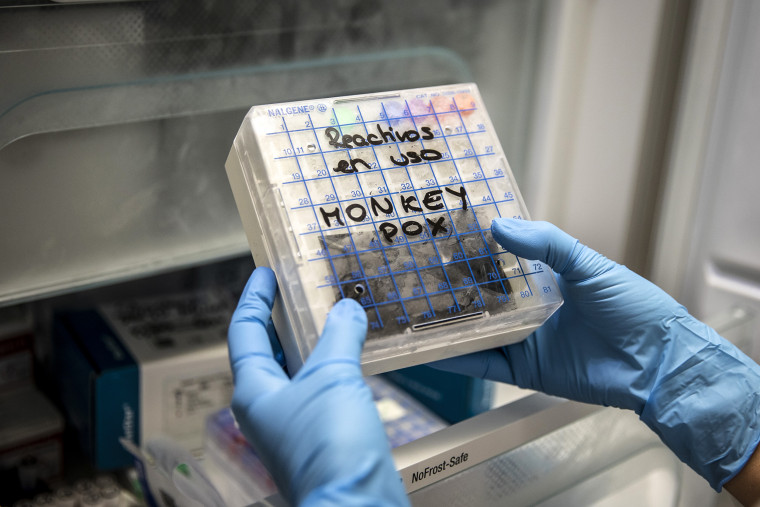
A medical laboratory technician picks up a reactive agent to test suspected monkeypox samples Sunday at the microbiology laboratory of La Paz Hospital in Madrid.Pablo Blazquez Dominguez / Getty Images


June 8, 2022
By Aria Bendix

World Health Organization Director-General Tedros Adhanom Ghebreyesus cautioned Wednesday that the window to contain the global monkeypox outbreak may be narrowing.

"The risk of monkeypox becoming established in non-endemic countries is real," he said at a briefing in Geneva.

Since the start of May, the WHO has confirmed more than 1,000 monkeypox cases across 29 countries outside West and Central Africa, where the virus is endemic.

If outbreaks aren't contained and the virus does gain a foothold in new regions, it could simmer indefinitely at low levels. It's also possible cases would rise to epidemic proportions in some places, meaning large numbers of people would get sick in a short time frame.

"As you keep moving forward into the future and more and more individuals become infected, you do start to worry," said Amira Albert Roess, a professor of global health and epidemiology at George Mason University. "Is this going to become something that is just going to keep on moving from person to person and then we will not be able to control it?"

Multiple epidemics around the world would constitute a pandemic. But experts aren’t betting on that outcome — WHO leaders and disease experts agree it's not too late to reverse the trend.

"There’s still a window of opportunity to prevent the onward spread of monkeypox in those at highest risk right now," Dr. Rosamund Lewis, the WHO's technical lead on monkeypox, said at the briefing.
JUNE 6, 202203:17

Two smallpox vaccines — both approved by the Food and Drug Administration — may be key to the prevention effort. The U.S. government's preferred shot, called Jynneos, is specifically approved for use against monkeypox.

"This is one of the rare diseases in which you can vaccinate somebody after they’ve been infected, before they have symptoms, and block the disease," said Eric Toner, a senior scholar at the Johns Hopkins Center for Health Security.

"We would have to really screw things up not to be able to contain this," he added.
Could monkeypox become endemic in new countries?


Historically, monkeypox hasn’t passed easily from person to person. The largest outbreak in the Western Hemisphere before now was a cluster of 47 U.S. monkeypox cases in 2003. But there was no documented person-to-person transmission that time; everyone infected had been in contact with sick prairie dogs.

In the current outbreak, the primary driver of transmission seems to be skin-to-skin contact between people, often involving exposure to infected people’s rashes or lesions.

"Right now we’re more at risk for the virus maybe becoming endemic due to ongoing human-to-human transmission and our inability to stop the transmission cycle," Roess said.

Several factors are involved in that cycle. For one, some monkeypox cases are hard to identify. Patients develop rashes that can be confused with chickenpox, syphilis or herpes, but in some cases it may be limited to the genital area, making it harder to detect.

Second, disease experts worry that the U.S. isn’t processing tests quickly enough to identify new cases in a timely manner.

"It still does take a few days from the time someone is identified to the time that we can confirm their diagnosis," Roess said.

Dr. Stuart Isaacs, an associate professor of medicine at the University of Pennsylvania, said the virus could have "epidemic potential" in the U.S. — meaning there would be a major surge in cases — if a single infected person spread monkeypox to more than one other person on average. That hasn’t been the case in the past, and the U.S. has recorded fewer than 40 cases thus far.

"We’re still too early to really say definitively that this [outbreak] isn’t going to explode, although the likelihood is still very low," Isaacs said.

"The reason this is endemic in Africa is there’s animal reservoirs," he added. "The virus is propagating and spreading among animals, and then it jumps into humans or nonhuman primates every now and then."
Debates about declaring monkeypox a pandemic


In the past, Roess said, countries outside Africa quickly halted monkeypox outbreaks through testing and contact tracing, but the current outbreak is unprecedentedly large and widespread.

Experts don’t yet know whether its scale is a clue that monkeypox has evolved to get better at human-to-human transmission or whether countries are simply uncovering the extent of an outbreak that went undetected for some time.

Already, the monkeypox outbreak may meet the formal definition of a pandemic: The virus is spreading from person to person in at least two countries, and there are community-level outbreaks in several parts of the world.

"But generally, when we talk about pandemics, we talk about diseases in which everyone is significantly at risk in every country or almost every country," Toner said. "So far, this has not reached that threshold, and I don’t think it ever will."

Roess said the fact that the Covid-19 pandemic isn't over likely makes global health leaders wary of an emergency declaration.

"There’s a lot of hesitation to declare this a pandemic," she said.

A reason for optimism, however, is that this version of monkeypox isn’t usually life-threatening. Although monkeypox rashes can be painful and cause scarring, experts said, doctors know how to treat them with smallpox antivirals and supportive care. No deaths have been reported in non-endemic countries thus far.

"We should be raising alarms and studying this and understanding this," Isaacs said. "But we're not at a panic stage yet."
Aria Bendix
Better pay key to solving NHS staffing crisis

Ministers must do their bit and put NHS pay right


Commenting on the NHS Reality Check report published today (Wednesday) by NHS Providers, looking at the pressures facing trusts as they struggle to provide patient care, UNISON general secretary Christina McAnea said:

“Shortages of staff across the NHS are nothing new. But the pandemic has taken the stress and strain caused by huge vacancy rates to a whole new level.

“Without more midwives, porters, healthcare assistants, paramedics, nurses and other health workers crucial to the NHS, delays to patient treatment, long waits for ambulances and cancelled operations will remain the norm.

“Better pay could stop experienced staff leaving for jobs in hospitality and retail where wages are higher and the work much less stressful.

“The government really should help resolve these shortages. With the pay review body due to hand over its evidence this week, ministers must do their bit and put NHS pay right.

“Otherwise, the staffing crisis continues, and more ​people will be ​anxiously waiting in pain for treatment.”

Notes to editors:
-UNISON is the UK’s largest union with more than 1.3 million members providing public services in education, local government, the NHS, police service and energy. They are employed in the public, voluntary and private sectors.


South Korean truckers' strike enters third day


A rise in fuel costs, disrupting production and slowing activity at ports has prompted thousands of South Korean truckers to go on strike for a third day, posing new risks to a strained global supply chain.