Thursday, June 09, 2022

Pussy Riot activist released from Croatian prison for fear of death penalty

Aysoltan Niyazova

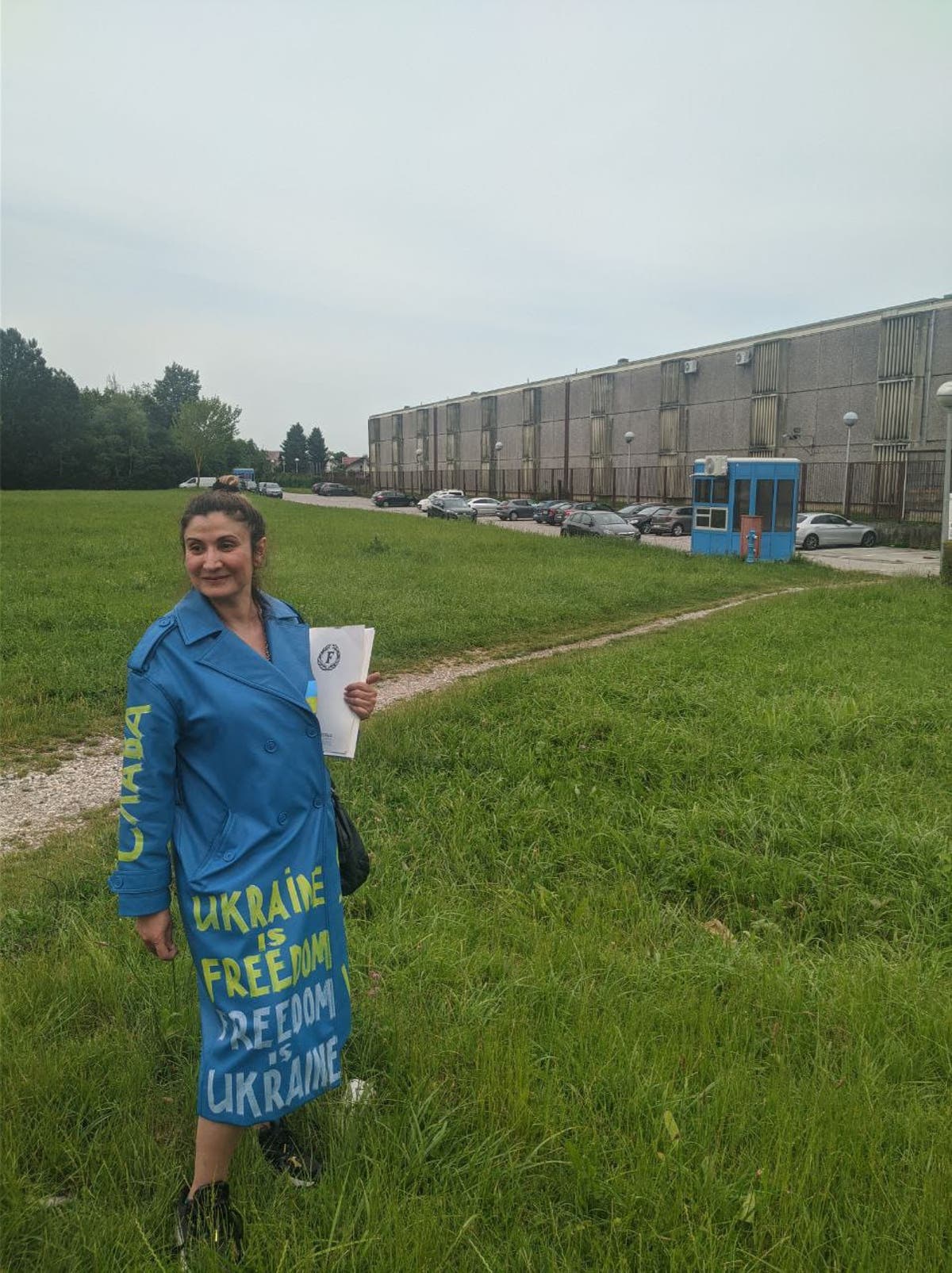
A member and activist of Pussy Riot has been released from prison in Croatia. She was sentenced to death after the group gathered for her release.

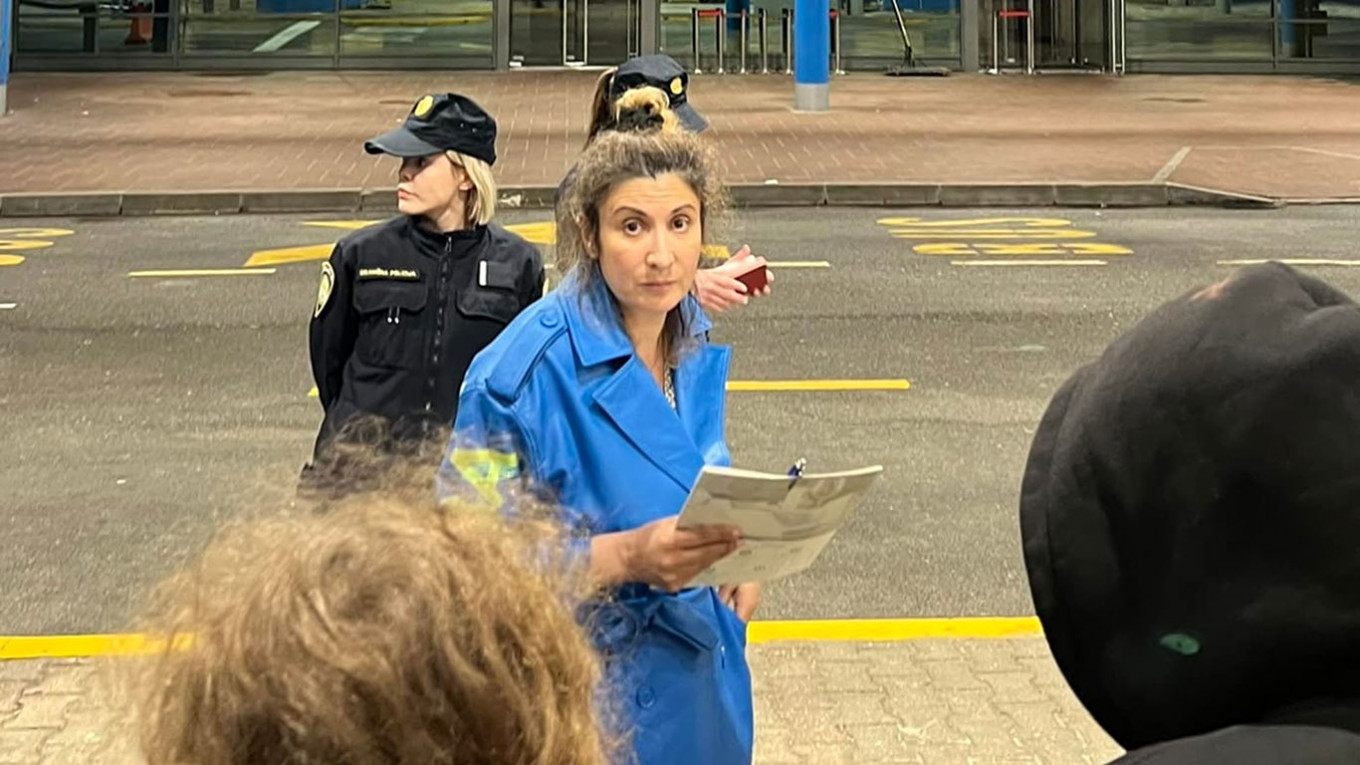
Aysoltan Niyazova, 49, from Turkmenistan, was arrested on May 29, 2022 at the Croatian border.

Since 2011, Ms. Niyazova has been "cut down" for spending $ 20 million from Turkmenistan's central bank, despite having no connection to Turkmenistan.

Ms. Niyazova believes she was targeted after her father was murdered in the 2000s because of opposition to Turkmen President Saparmurat Niyazov.

She became a member of Pussy Riot in prison after she met group member Char Aznable, who was imprisoned for her "punk prayer" performance in 2012.

Aysoltan Niyazova was arrested on the Croatian border on May 29, 2022 and released five days later


After the prison, she came to live in Moscow.

She fled the Russian capital on March 5 after Vladimir Putin invaded Ukraine and went to Switzerland, where her son lives.

After she stayed there for a month and a half, she took a European tour of Pussy Riot. Ms. Alyohina fled Russia after the war began in February, disguised as a food delivery service to cross the border. Pussy Riot went to Berlin in May to perform, and from there to Croatia, where Nyazowa was arrested.

Her detention by authorities was reported on Instagram by Olga Borisowa, a fellow Pussy Riot. He said Ms. Nyazowa was not provided with a lawyer or interpreter for the May 30 trial in Croatia.

"I didn't have enough time to understand what was happening with this arrest," she said. "The only thing I felt was fraud in the whole situation."

Activists were denied the right to receive a single call and were immediately sent to prison by the judge for 40 days. They said.

Prison officials also refused her a parcel and warm clothes for her care.


Pussy Riot played the band Maria (Masha) Aryohina in Berlin last month
(AFP via Getty Images)


"I was not afraid to be banished because I was convinced that Croatia was a country of human rights and democracy.

" But the judge said I was angry that I didn't listen to me. I was in court for only 20 minutes, but no one was with me.

"20 minutes later, I have been imprisoned. "

Since being released from Croatian prison, Ms. Nyazowa has spoken about Croatian women's rights and LGBTQ pride.

She is now moving to Lithuania, where she wants to get a humanitarian visa and stay in the EU.

Croatia Arrests Pussy Riot Activist Sought by Turkmenistan


By AFP
June 2, 2022
Aysoltan Niyazova.Olga Borisova / facebook


Croatian police have arrested a Russian activist linked to protest punk group Pussy Riot, acting on an international warrant issued by Turkmenistan, a member of the group said Wednesday.

Aysoltan Niyazova was arrested on the Croatian border early Monday when she entered the country from Slovenia with the group, Maria Alyokhina told reporters.

Pussy Riot arrived here for a concert in Zagreb as part of its European tour to help Ukraine.

Local media reports say the Turkmen authorities have accused Niyazova of embezzling money from the country's central bank.

But Pussy Riot and Niyazova's lawyer, Lina Budak, say the warrant against her was politically motivated. Local rights activists and Amnesty International have also condemned her detention.

Niyazova was briefly detained in Slovenia on the same arrest warrant issued by Turkmenistan in 2002.

"I want to raise this case just so everyone knows that an innocent person is in prison now and she should be freed," Alyokhina said.

She was addressing reporters in front of the Zagreb prison where Niyazova is being held.

Niyazova's lawyer Budak would not say on what charge she had been arrested.

But she did say her client had already served a six-year jail term in Russia for the offense cited on the Interpol warrant.

"She cannot be tried again, extradited or serve a new sentence," the lawyer said, adding that they were appealing her detention.

Amnesty International joined calls by local rights activists for Niyazova's release.

Zagreb knows that her "activism would put her at great risk of suffering serious abuse, including torture and other ill-treatment, should she be extradited to Turkmenistan," Julia Hall, Amnesty deputy director for Europe, said in a statement.

"Turkmenistan is not a safe country for her or any human rights defender," she added.


Rights group to Croatia: release Pussy Riot member now

Amnesty International is urging Croatia not to extradite to Turkmenistan a member of a Russian music band known for its strident opposition to the policies of Russian President Vladimir Putin

ByThe Associated Press
June 01, 2022, 

ZAGREB, Croatia -- Amnesty International on Wednesday urged Croatia to halt extradition proceedings to Turkmenistan and immediately release a detained member of a Russian music band known for its strident opposition to Russian President Vladimir Putin's policies.

Lawyers for the rights group and the member of the Pussy Riot band said Croatia detained Aysoltan Niyazov on the strength of a 2002 Interpol warrant issued by Turkmenistan for alleged embezzlement. Neighboring Slovenia had previously arrested Niyazov but released her immediately.

Pussy Riot is on a tour in Europe protesting the war in Ukraine and Putin's policies. The band became internationally known after its members were jailed in Russia for their activism.

“Croatian authorities know that Aysoltan Niyazov’s activism would put her at great risk of suffering serious abuse, including torture and other ill-treatment, should she be extradited to Turkmenistan," Amnesty International’s Julia Hall, Deputy Director for Europe, said. “Turkmenistan is not a safe country for her or any human rights defender.”

Niyazov’s lawyer Lina Budak told local Croatian media that authorities have launched a review process for possible extradition to Turkmenistan.

Croatian police have said they were obliged to respond to an outstanding international warrant against Niyazov.

Amnesty International said Interpol warrants have been “notoriously abused by a number of authoritarian regimes and countries with appalling human rights records to try to silence activists and those who speak out about human rights violations."

“Croatia should not be complicit in such practices,” said the group's statement. "Authorities in Zagreb must refuse Turkmenistan’s request for Aysoltan Niyazov’s extradition and immediately release her from detention.”

EU in Kosovo joins Pride Parade

 09.06.2022  
Pristina
 

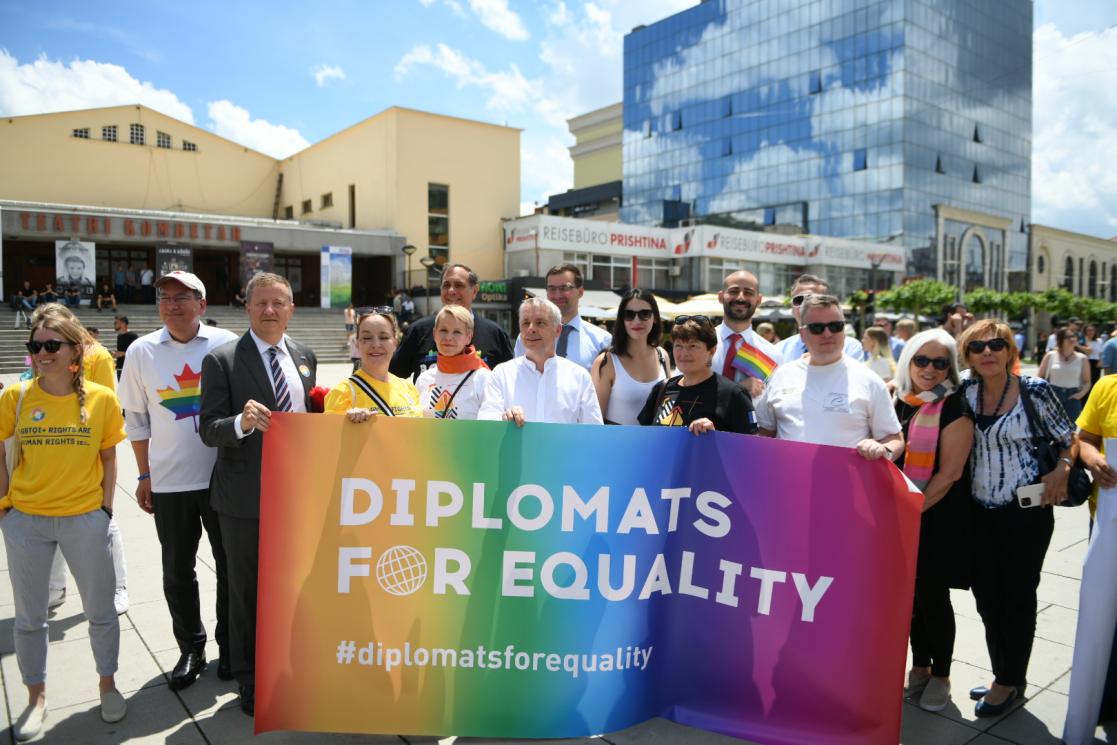
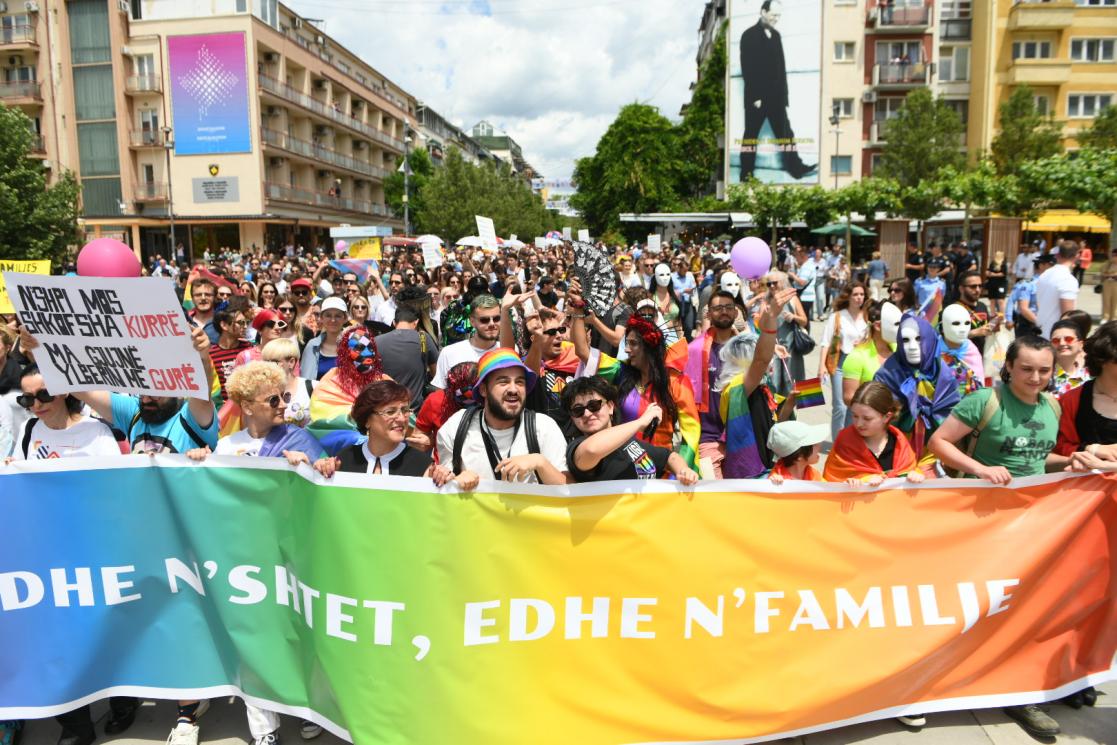
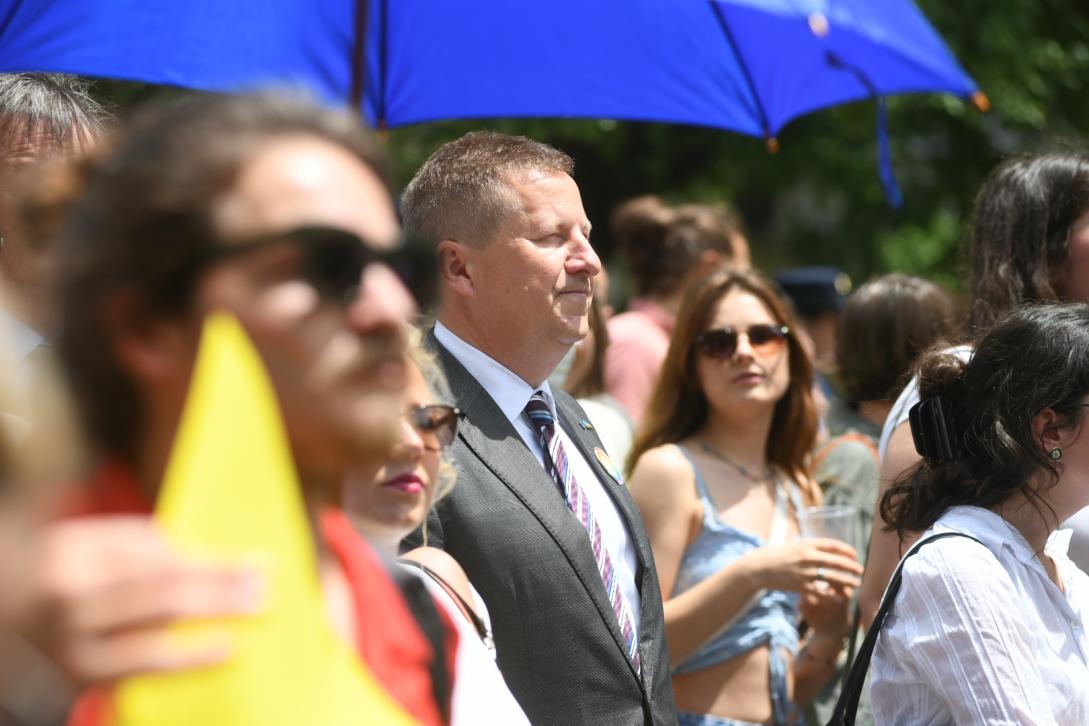
The EU Ambassador in Kosovo, Tomas Szunyog, and the EU in Kosovo team, joined today in Pristina domestic institutions, human rights activists, and diplomatic corps, in a Pride Parade organised by several civil society organisations.

Pride Parade

This year’s slogan of the Pride Week in Kosovo is: We are in the state, we are in the family, and it calls for the respect, acceptance, and inclusion of LGBTIQ persons in both public and private life.

“This is the sixth Pride organised in Kosovo. That sends a very positive message to the members of the LGBTIQ community in Kosovo and beyond. I am proud to be joining the parade alongside LGBTIQ community members, human rights activists, Kosovo institutions, and diplomatic corps,” said Szunyog.


Parade with EU HoMs

"While the annual and uninterrupted holding of Pride Paredes in Kosovo clearly marks the commitment to the protection of human rights and diversity, we must not forget that members of the LGBTIQ community still face discrimination, both in Kosovo and the EU, and that all of us need to work together towards ensuring that LGBTI persons are treated equally.”

Ambassador Szunyog commended human rights activists and the Kosovo Office of Good Governance for all the good work done so far in promoting the rights of the LGBTIQ community and noted that the burden of this work cannot be carried by a select few, but needs to be done also by the opinion and decision-makers on all levels of government.

“I would like to emphasize that the discrimination based on sexual orientation is prohibited by the EU legislation and Kosovo laws, and this provides a sufficient space for us to help root it out,” said Szunyog.

Pride Parade Pristina

The Pride Parade is part of the Pride Week activities. Contributing to the week’s programme, the Ambassador Szunyog will host today a reception for key NGOs and international actors contributing to the promotion and protection of rights of the LGBTIQ community in Kosovo.

RiseUp4Rojava calls for action against imminent Turkish invasion in North-East Syria

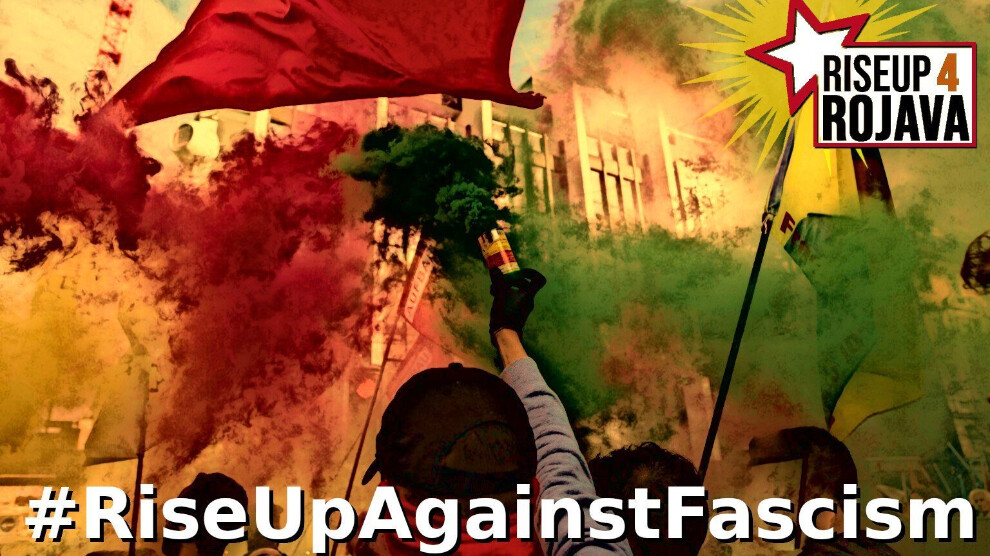
“To give a proper answer to an attack we have to prepare now and be ready to Block, Disturb & Occupy the supporters of Turkish Fascism and to defend the achievements of the Revolution!” appeals RiseUp4Rojava.


ANF
NEWS DESK
Thursday, 9 Jun 2022

In the face of a possible attack by Turkey on the self-governed areas of Rojava/North and East Syria, the international initiative RiseUp4Rojava (R4R) is mobilizing international solidarity in frame of the Day X concept: “We are calling on everyone to prepare for a possible attack in order to put pressure on the supporters of Turkish Fascism in case Day X, the day of yet another attack by Turkey comes. Furthermore, we support the call of Latin-American and European organizations and collectives for an international Day of Action against the attacks on Kurdistan.”

In an evaluation of the current situation regarding a possible attack by Turkey and calling for action, RiseUp4Rojava asks people to help them raise awareness of the cause of the people of the region in order to prevent a humanitarian catastrophe and defend the Project of Grass-roots democracy, ecology and women's liberation.

The RiseUp4Rojava evaluation on the current developments regarding an upcoming Turkish invasion includes the following:

Brief overview of Turkey's current attacks on Kurdistan

After the attack on Afrin (2018) and Serekaniye (2019), Erdogan announced a new military offensive against the Self-Administered Territories of Northern and Eastern Syria (Rojava) 10 days ago. The goal is to expand the 30KM deep "security zone" south of the Turkish state border. The day before yesterday these attack plans were specified: The self-governed area of Sehba, directly adjacent to Afrin and north of Aleppo, with the city of Tel Rifaat and the multi-ethnic, majority Arab major city of Minbic, east of Kobane, were named as targets. Tel Rifaat is home to tens of thousands of people displaced from Afrin. Another Turkish attack means a major humanitarian catastrophe for the region and severe suffering for the population. It implies a definite ethnic cleansing and a consolidation of the Turkish settlement policy. Both areas have already been shelled massively by artillery in recent weeks. The day before yesterday alone, over 300 artillery shells were fired at the Sehba region. In Tel Rifaat, there have been a total of 7 drone attacks this year. Yesterday a gynecology clinic was hit, and in total there have already been over 30 attacks by combat drones on the self-administered areas of northern Syria this year.

Geostrategic Assessment

The two aforementioned areas are controlled exclusively by Russian forces, so Russia must agree to these attacks. Without an agreement with Russia, there would be no new major ground offensive with Turkish air force support. For Turkey, these areas are of strategic importance to connect the areas already occupied in 2018 (Afrin) and 2019 (Serekaniye) and merge them into a contiguous controlled area. The trump card Erdogan holds in a possible agreement with Russia is the VETO against Finland/Sweden joining NATO. This could be the quid pro quo for a green light from Russia for a Turkish offensive. Russia is not expected to give up all territories to Turkey immediately, so Erdogan is now not talking about a general 30KM deep zone, but naming two specific areas. If Russia were to give up Kobane as well, where they are also the protecting power, they would have little bargaining power in hand to sow dissent within NATO later. The question, however, is not if, but when the Turkish army's renewed major offensive will begin. In the long term, Erdogan wants to occupy the entire border strip with Turkey in northern Syria. It remains to be seen how the U.S., as another protective power in Rojava (eastern areas), will behave. Yesterday, the U.S. Ambassador to Turkey and the U.S. Secretary of State Blinken made it exceptionally clear that they reject a renewed Turkish offensive in northern Syria. This shows that they fear a deal between Turkey and Russia and are concerned about the benefits for Russia. Perhaps they will position themselves to offer Erdogan parts of the areas they control east of Til Temir as a protective force to prevent a deal with Russia with Turkey. Turkey is increasingly and confidently representing its own interests as a major power in the Middle East. Military successes in Libya, Syria, Iraq, and Mount Karabakh have made Erdogan a factor in his own right in the region and beyond. Turkey has become a drone power. The Turkish-made TB2 drone has been a key contributor to the difficult course of the war from Russia's perspective in Ukraine. And Erdogan needs this renewed war for domestic political purposes:

Inflation remains high, the lira is weak, the economy is in deep crisis. Elections are coming up in Turkey. With a renewed offensive on northern Syria and the accompanying nationalist mobilization, Erdogan is trying to unify Turkey and rally behind him. War for votes, securing rule through brutal repression and occupation of foreign lands. Since April 2022, the Turkish army has been attacking the Kurdish guerrilla areas, the so-called Medya defense areas, in northern Iraq/Southern Kurdistan with aircraft, drones, helicopters, howitzers and dropping ground troops in violation of international law. Despite the massive deployment of forces and the use of banned chemical weapons, the Turkish army is making slow progress against the guerrillas, who are well prepared with mountain positions, and there are casualties on the side of the Turkish army. Erdogan therefore urgently needs success in the war against the greatest democratic threat to his rule: the Kurdish liberation, women's and democracy movements.

The contradictions between the imperial superpowers Russia and the USA (NATO) are also an opportunity for Rojava to gain diplomatic leeway. The self-government of Rojava has now addressed the world public with its own proposals, which have so far met with little media response. The self-government has proposed a security compromise and the deployment of peacekeeping forces to northern Syria.

Military Assessment

Turkish preparations for war are most likely to be complete. This will be the first Turkish offensive that does not originate on Turkish soil. Neither Sehba nor Minbic directly border Turkish territory. In Sehba, the SDF has been preparing for war for years; it should be well prepared. The area is very hilly. Minbic is a large city with many tall buildings and the SDF are battle-hardened in house-to-house combat in Minbic, through the urban battle against IS in 2016. Turkey has never attacked such a large city in Rojava. The SDF will certainly be ready to defend Rojava sacrificially against another large-scale attack.

DAY X: Turkish invasion likely to start anytime soon

During the last two days, the Turkish Foreign Minister and Minister of Defense met with their Russian counterparts. Among other topics, Turkey's plans to invade further territories of the Autonomous Administration of North and East Syria were discussed. Russian Foreign Minister Lavrov said that Russia is “well aware of the concerns of our friends (Turkey) about the threats posed on their borders by external forces, including by feeding separatist sentiments on the illegally controlled US units in Syria", indicating that Russia may greenlight Turkey's plans to take further steps to occupy a 30-kilometer-deep zone in North- and Eastern Syria. Turkey announced recently that they completed preparations to invade the SDF held areas of Shehba and Tel Rifaat as well as the city of Minbic. Regions with a significant presence of the Russian military.

Furthermore, Turkish officials stated that Turkey has set up military councils responsible for the upcoming invasion which consist of high-ranked members of their Islamist mercenaries familiar with the regions. In the next days, further meetings between Turkish & Russian officials are likely to take place. As of right now, the information available indicates that a Turkish attack could be launched anytime now.

We, as the RiseUp4Rojava campaign, condemn Turkish fascism's aggression which is a threat to all people of the region. We condemn the geopolitical games being played by imperialist NATO as well as Russian Imperialism.

We call on all democrats, antifascists, feminists, the ecological movement and anti-war activists to prepare themselves for Day X; the day of an invasion by Turkey on Rojava and the Autonomous Administration of North and East Syria. In case of an attack, we will give the signal to start acting. To give a proper answer to an attack, we have to prepare now and be ready to Block, Disturb & Occupy the supporters of Turkish Fascism and to defend the achievements of the Revolution!

About the "RiseUp4Rojava - Smash Turkish Fascism Campaign"

Since 2019, we have been organizing international solidarity with the people of Rojava/North- and East Syria.

With this campaign, we aimed to overcome political divisions and to open a second front against the AKP-MHP regime in the western countries that are supporting this regime with weapons, money and diplomacy. Without this support, the Turkish state would not be able to occupy Rojava territory, suppress the civil opposition in Turkey and North Kurdistan and also could not lead the war against the Kurdish freedom movement in the mountains of Kurdistan.

We, as internationalists, see the support of the Revolution and the Kurdish freedom movement as our responsibility and to stop the western countries backing the fascist Erdogan regime.

With the campaign, we are calling for continuing actions of civil disobedience against these weapons companies, financial institutions and places of the political relationship of the countries with the AKP-MHP regime.

In the last 3 years, people and collectives from around the world, from South Africa to Germany, from Brazil to Sweden, from Catalonia to the UK have joined us and formed a divers’ network able to put pressure on the supporters of Turkish Fascism. In the last years, several countries have even stopped supplying weapons to Turkey after large scale protests emerged. This proves once again that solidarity is a powerful weapon.

Turkish army readies for anti-YPG operation in Syria

In collaboration with anti-Assad opposition groups


(ANSAmed) - ISTANBUL, JUNE 9 - The Turkish army has completed its preparations for a military operation against the Kurdish-led People's Protection Units (YPG) in northern Syria, according to the Turkish daily Sabah.

The outlet added that the military are awaiting orders from the Turkish government to begin the operation.

The YPG is the dominant group of the US-backed, Kurdish-led Syrian Democratic Forces (SDF). Many of its leaders spent years in the Kurdistan Workers Party (PKK), which has fought a decades-long war against the Turkish state, prior to forming the YPG. It includes Syrian and Turkish nationals as well as an international brigade with volunteers from a wide variety of Western states.

The PKK is designated a terrorist organisation in the US, EU and Turkey.

The government-linked Sabah said that the military action would be conducted alongside the Syrian National Army, which is backed by Turkey and formed of Syrian fighters who oppose the Bashar al-Assad government in Syria. Many had previously been part of the group known as the Free Syrian Army.

Kurdish leaders of the SDF have said that they are willing to cooperate with the Assad government against any Turkish attack on territories they currently control.

Turkish president Recep Tayyip Erdogan has in recent weeks announced that the aims of the operation will be the Arab-majority areas currently under Kurdish-led SDF control of Tel Rifaat and Manbij, west of the Euphrates River.

On Tuesday, Turkish foreign minister Mevlut Cavusoglu reiterated with his Russian counterpart Sergey Lavrov that Turkey intends to go forward with the operation while asking Moscow - which has a military presence in the area - to honor the 2019 accords according to which the SDF forces in the area were to have already been removed. (ANSAmed).


Turkish Army Completes Preparations for Syria Operation, Awaits Orders


TEHRAN (FNA)- Turkey’s Armed Forces and Turkish-backed fighters have finished preparations and are awaiting orders from Ankara to start a cross-border operation into Northern Syria, Sabah daily reported on Thursday.

The Turkish forces have taken combat positions near the cities of Tell Rifaat and Manbij, opening artillery fire during the nights, according to the paper.

Turkey plans to seize Tabqa Dam, the largest in Syria, to ensure water and electricity supply to Syria’s regions, where Turkey earlier held Euphrates Shield military operation, the newspaper added.

Russia has urged Turkey against launching another incursion into Northern Syria under the pretext of fighting off, what the Turkish government calls, anti-Ankara “terrorists".

“We hope that Ankara will refrain from actions that could lead to a dangerous deterioration of the already difficult situation in Syria,” Foreign Ministry Spokeswoman Maria Zakharova said.

“Such a move, in the absence of the agreement of the legitimate government of the Syrian Arab Republic, would be a direct violation of Syria’s sovereignty and territorial integrity” and would “cause a further escalation of tensions in Syria,” she added.

Turkish President Recep Tayyip Erdogan has warned that the country was to take yet “another step” to “clean up” the Northern Syrian cities of Tal Rifat and Manbij. The Turkish forces would then fan out to other areas in the Arab country, the Turkish head of state added.

Zakharova said, “We understand Turkey’s concerns about threats to national security emanating from the border regions” with Syria.

However, the concerns could also be alleviated if the Syrian military were to be deployed to the areas, she continued.

Turkey has been conducting several incursions against neighboring Syria’s Northern parts since 2016 to fight back against Kurdish militants known as the People’s Protection Units (YPG).

Ankara associates the YPG with the Kurdistan Workers’ Party (PKK) terrorist group, which has been fighting a hugely-deadly separatist war against Turkey for decades.

So far, the Turkish state has deployed thousands of troops in the areas, in what Damascus has decried as, outright violation of its sovereignty.

Educating Journalists about Canada’s Propaganda System an Eyeopener

Propaganda is to a democracy what the bludgeon is to a totalitarian state.
—Noam Chomsky, Media Control:  The Spectacular Achievements of Propaganda, April 1, 1997

 Propaganda isn’t a euphemism for how the other side controls information. Nor is it simply about jailing journalists or shuttering media outlets. A serious discussion of the matter must look at the broader forces shaping information dissemination and suppression.

On May 22 I spoke on a panel at the Canadian Association of Journalists conference titled Censorship, Journalism and War. The Ukraine-focused exchange climaxed with journalist Justin Ling asking if I was “ashamed” for having been interviewed by RT. Nope.

The CEO of Ethnic Channels Group, Slava Levin, launched the discussion by describing how broadcasters Rogers, Bell and Shaw summarily removed RT from their networks. As the distributor of RT and many international channels in Canada, Levin pointed out how the decision subverted the regulatory process.

The broadcasters and Liberals indifference to the regulatory process warrants criticism but I sought to drive the discussion away from RT, Russia, China and authoritarian enemies. Even without formal restrictions, the corporate media (and CBC) permit only a narrow spectrum of opinion regarding Canadian foreign policy, as I detail in my 2016 book A Propaganda System: How Government, Corporations, Media and Academia Sell War and Exploitation. Various internal and external factors explain the media’s biased international coverage. Most importantly, a small number of mega corporations own most of Canada’s media and depend on other large corporations for advertising revenue. Less dependent on advertising, CBC relies on government funds and has long been close to the foreign policy establishment. All major media firms rely on easily accessible information, which is largely generated by US wire services, Global Affairs, DND, internationally focused corporations and a bevy of think tanks and academic departments tied to the military, arms industry and corporate elite. Finally, the military, foreign affairs, organized ethnic lobbies and major corporations have the power to punish media that upset them.

In their coverage of Russia’s war with Ukraine/NATO the Canadian media and RT are the mirror image. They are exceedingly one-sided and their divergent reactions to antiwar disrupters highlight the point.

At the panel, I contrasted the Canadian and Russian ‘propaganda systems’ reaction to my March 21 interruption of foreign affairs minister Melanie Joly on Canada’s role in escalating violence in Ukraine, opposing the Minsk peace accord and promoting NATO expansion. With the exception of a short clip by CTV News World, Canadian media outlets that covered Joly’s speech on Ukraine ignored my intervention.

The Russian media treated the intervention differently. They portrayed me as an important author with a number of the top Russian channels inviting me on to comment. Russian media treated my disruption in a similar way to how the North American media covered Marina Ovsyannikova two weeks earlier. After she held a “no war” sign on Russia’s Channel One the western media hailed Ovsyannikova.

I told the audience that the CBC refuses to offer vital context. Just prior to the Russian invasion I wrote about senior CBC military writer Murray Brewster, who published a slew of reports in the proceeding weeks portraying Canada/US positively and Russia negatively while failing to report information he’d previously revealed that undercuts the notion that Canada is on the side of angels in the Ukraine crisis. In 2015 Brewster revealed that the protesters who overthrew elected President Viktor Yanukovych in 2014 were stationed in the Canadian embassy in Kyiv for a week. That year Brewster also reported that Canadian soldiers trained neo-Nazi political forces in Ukraine and in 2008 that Canada pushed Ukraine’s adhesion to NATO against Russian, French and German objections. These measures increased tensions, led to war in the east part of the Ukraine and helped precipitate Russia’s illegal invasion.

In his intervention senior CBC international correspondent SaÅ¡a Petricic described how in countries with more repressive media climates that an “atmosphere” of self-censorship develops. In response I asked who in the room had heard of the Ottawa Initiative on Haiti?

In 2003 Canadian officials brought together top representatives of the US and French governments to discuss Haiti’s future without inviting anyone from that country’s government. According to the March 15, 2003, issue of L’Actualité (Quebec’s equivalent to Maclean’s), they discussed ousting elected president Jean-Bertrand Aristide, putting Haiti under UN trusteeship and re-creating the disbanded Haitian army. Thirteen months later what was discussed largely transpired yet the dominant media largely ignored the Ottawa Initiative meeting. A Canadian Newsstand search I did in 2016 while writing A Propaganda System found not one single English-language report about the meeting (except for mentions of it by me and two other Haiti solidarity activists in opinion pieces). It wasn’t until 2020 that Radio-Canada’s flagship news program “Enquête” finally reported on the meeting, interviewing the minister responsible for organizing the meeting Denis Paradis.

What type of “atmosphere” exists in the Canadian media that would lead it to ignore this important meeting Haiti solidarity activists raised repeatedly?

I asked the room of 30 journalists if they knew which institution has the largest public relations apparatus in the country. No one answered. The Department of National Defence/Canadian Forces (CF) has the largest PR (propaganda) machine in Canada, employing hundreds of “public relations professionals” to influence the public’s perception of the military. Last fall the military, reported the Ottawa Citizen, established “a new organization that will use propaganda and other techniques to try to influence the attitudes, beliefs and behaviours of Canadians.” Previously the head of CF called for the “weaponization of public affairs”, which proposed a plan to induce positive coverage and deter critical reporting. Journalists producing unflattering stories about the military were to be the target of phone calls to their boss, letters to the editor and other “flack” designed to undercut their credibility in the eyes of readers and their employers.

The editor in chief and executive director of CBC news, Brodie Fenlon, told the room it didn’t matter that DND had the largest PR apparatus in the country since they don’t determine what’s covered. True enough. But historically the public broadcaster’s close ties to the military have made it highly deferential to the CF. According to Mallory Schwartz in War on the Air: CBC-TV and Canada’s Military, 1952-1992, “When CBC-TV produced programs that raised controversial questions about defence policy, the forces or military history, it did so with considerable care. Caution was partly a result of the special relationship between the CBC and those bodies charged with the defence of Canada.” CBC’s ties to DND sometimes translated into formal censorship. After broadcasting The Homeless Ones in 1958 Deputy Federal Civil Defence Co-ordinator Major-General George S. Hatton requested the film’s withdrawal from the NFB Library and the public broadcaster cancelled its planned rebroadcast. Hatton insisted the CBC clear all content on civil defence with his staff.

The public broadcaster’s independence from DND has increased over the years. But since its inception the government has appointed CBC’s board and provided most of its funds.

Another element that helps make sense of Fenlon downplaying the importance of the CF’s PR machine is his (positive) assessment of the institution. But, as I pointed out, the CF is deeply integrated with the biggest purveyor of violence the world has ever seen — US military — and Canada has only fought in one war that could even be argued was morally justifiable. Sudan, South Africa, World War I, Korea, Iraq, Yugoslavia, Afghanistan and Libya were not morally justifiable wars.

Fenlon is, of course, unlikely to have risen to a position of influence within CBC news if he shared my assessment of the Canadian military’s ties to the US Empire.

As I was leaving the room, a young CBC journalist came over to say how much she appreciated my work. She then laughed and said she hoped her boss hadn’t heard her.


Facebook

Yves Engler is the author of 12 books. His latest is Stand on Guard For Whom? — A People’s History of the Canadian Military.  Read other articles by Yves.


For the Peoples of our Region, the Failure of Biden’s Summit of the Americas Would be a Welcome Event


The Summit of the Americas is not the property of the host nation. The U.S. has no right to exclude, Cuba, Nicaragua and Venezuela, but has done so in disregard of their sovereignty. The U.S. is not fit to judge others or to be responsible for bringing nations together. Every leader in the hemisphere should boycott what has become a farcical event.

I applaud the decision by Mexican President Andrés Manuel López Obrador not to attend this week’s so-called Summit of the Americas in Los Angeles and hope that by Wednesday a majority of the nations in our region would have joined him. However, I am hoping that unlike President Lopez Obrador who is still sending the Mexican foreign minister, other nations demonstrate that their dignity cannot be coerced and stay away completely. Why do I take this position?

If the threat by the Biden Administration as host of the Summit not to invite Cuba, Nicaragua and Venezuela, all sovereign nations in the Americas’ region, was not outrageous enough, the announced rationale that the administration did not invite these nations because of their human rights record and authoritarian governance is an absurd indignity that cannot be ignored.

I firmly believe that the U.S. should not be allowed to subvert, degrade, and humiliate nations and the peoples of our region with impunity!  A line of demarcation must be drawn between the nations and peoples who represent democracy and life and the parasitic hegemon to the North which can only offer dependence and death. The U.S. has made its choice that is reflected in its public documents. “Full spectrum dominance,” is its stated goal. In other words – waging war against the peoples of our regions and, indeed, the world to maintain global hegemony. It has chosen war, we must choose resistance – on that, there can be no compromise!

The peoples of our region understand that. It is historically imperative that the representatives of the states in our region come to terms with that and commit to resistance and solidarity with the states that are experiencing the most intense pressure from empire. The rhetorical commitment to Cuba, Nicaragua and Venezuela is not enough. The people want actions that go beyond mere denunciations of imperialism. The people are ready to fight.

And part of this fight includes the ideological war of position. We cannot allow the U.S. to obscure its murderous history by dressing that history up in pretty language about human rights.

The idea that the U.S., or any Western nation for that matter, involved in the ongoing imperialist project, could seriously see itself as a protector of human rights is bizarre and dangerous, and must be countered. The fact that the U.S. will still attempt to advance this fiction reflects either the height of arrogance or a society and administration caught in the grip of a collective national psychosis. I am convinced it is both, but more on that later.

A cognitive rupture from objective reality, the inability to locate oneself in relationship to other human beings individually and collectively in the material world are all symptoms of severe mental derangement. Yet, it appears that this is the condition that structures the psychic make-up of all of the leaders of the U.S. and the collective West.

It is what I have referred to as the psychopathology of white supremacy:

A racialized narcissistic cognitive disorder that centers so-called white people’s and European civilization and renders the afflicted with an inability to perceive objective reality in the same way as others. This affliction is not reducible to the race of so-called whites but can affect all those who have come in contact with the ideological and cultural mechanisms of the Pan-European colonial project.

How else can you explain the self-perceptions of the U.S. and West, responsible for the most horrific crimes against humanity in the annuals of human history from genocide, slavery, world wars, the European, African and Indigenous holocausts, wars and subversion since 1945 that have resulted in over 30 million lives lost – but then assert their innocence, moral superiority and right to define the content and range of human rights?

Aileen Teague of the Quincy Institute points out that the U.S. position on disinviting nations to the Summit of the Americas because of their alleged “authoritarian governance,” is “hypocritical” and “inconsistent,” noting the U.S. historical support for Latin American dictators when convenient for US policy.

Yet is it really hypothetical or inconsistent? I think not. U.S. policymakers are operating from an ethical and philosophical framework that informed Western colonial practice in which racialized humanity became divided between those who were placed into the category of “humans” which was constitutive of the historically expanded category of “white” in relationship to everyone else who was “not white,” and therefore, not fully human.

The “others” during the colonial conquest literally did not have any rights that Europeans were bound to recognize and respect from land rights to their very lives. Consequently, for European colonialists they did not perceive any ethical contradictions in their treatment of the “others” and did not judge themselves as deviating from their principles and values. This is what so many non-Europeans do not understand. When Europeans speak to their “traditional values,” it must be understood that those values mean we – the colonized and exploited non-Europeans are not recognized in our full humanity.

Is there any other way to explain the impressive solidarity among “white peoples” on Ukraine in contrast to the tragedies of Yemen, the six million dead in the Congo, Iraq – the list goes on.

That is why it was so correct for the Black Alliance for Peace (BAP) to call for a boycott of the Summit of the Americas by all of the states in our region. BAP argued that the U.S. had no moral or political standing to host this gathering because it has consistently demonstrated that it did not respect the principles of self-determination and national sovereignty in the region. But even more importantly, it did not respect the lives of the people of this region.

A boycott is only the minimum that should be done. However, we understand it will be difficult because we know the vindictiveness of the gringo hegemon and the lengths it will go to assert its vicious domination. In the arrogance that is typical of the colonial white supremacist mindset, the Biden White House asserts that the “summit will be successful no matter who attends.”

Yet, if Biden is sitting there by himself, no manner of will or the power to define, will avoid the obvious conclusion that the world had changed, and with that change, the balance of power away from the U.S.

And the people say – let it be done!Facebook

Ajamu Baraka is the national organizer of the Black Alliance for Peace and an editor and contributing columnist for the Black Agenda Report. He serves on the Executive Committee of the U.S. Peace Council and leadership body of the U.S. based United National Anti-War Coalition (UNAC) and the steering committee of the Black is Back Coalition. Read other articles by Ajamu, or visit Ajamu's website.

The Man Who Led His Nation to Enlightenment: Kazakhstan Marks 150th Anniversary of Prominent Scholar Akhmet Baitursynov

NUR-SULTAN – From a teaching career to becoming the founder of the first Kazakh alphabet and establishing the first national newspaper, Akhmet Baitursynov left a significant mark in the history of Kazakh literacy and is rightly called Ult Ustazy (Teacher of the Nation). This year Kazakhstan will celebrate Baitursynov’s 150th anniversary which was included in the UNESCO list of anniversaries for 2022-2023.

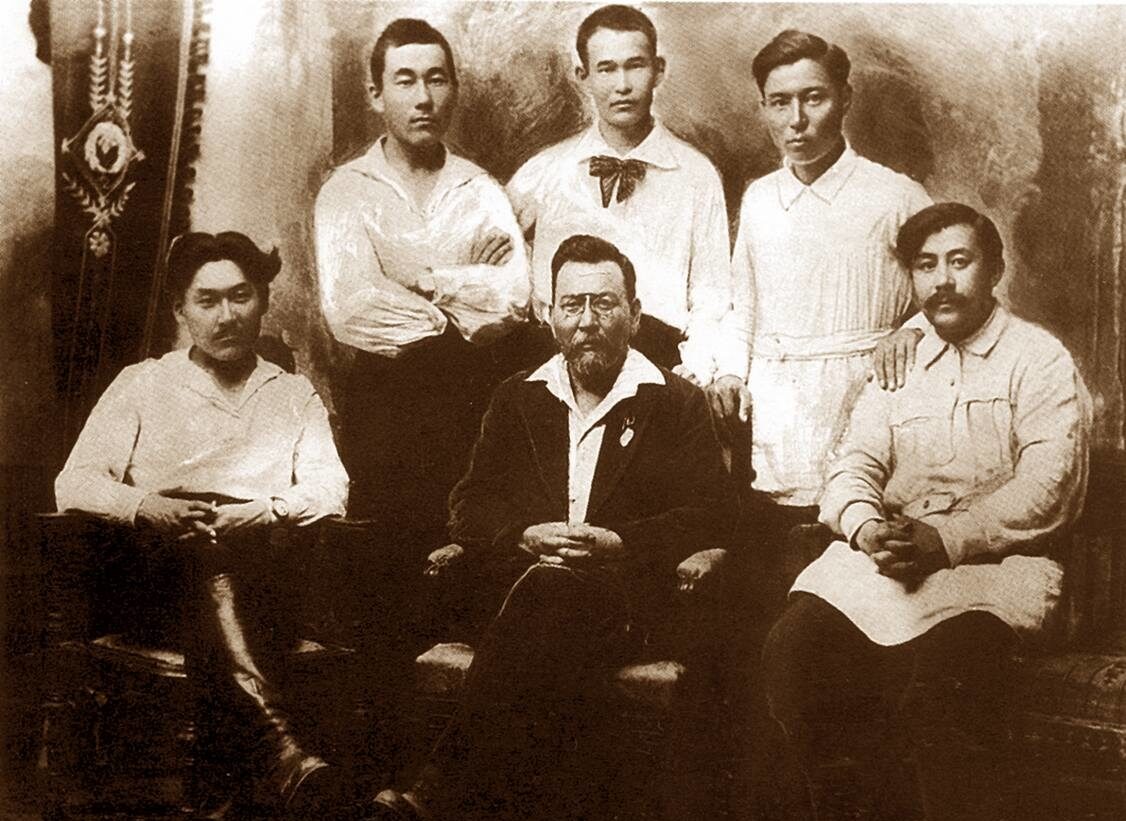
Archive photo of Akhmet Baitursynov (first row in the middle) taken in 1922. Photo credit: e-history.kz

Baitursynov was born in 1872 in a small village in the Kostanai region. He began his teaching career during 1895-1909 in the Russian-Kazakh schools in Aktobe, Kostanai, Karkaralinsk districts, and became a headmaster of the Karkaralinsk city school.

Baitursynov was recognized as the Ult Ustazy (Teacher of the Nation) for a reason. He has done more than any other linguist to develop Kazakh literacy in the 20th century. Throughout his career, developing mass literacy was his major goal. 

Baitursynov’s achievement in this endeavor was the transformation of the Arabic alphabet, which was used for years, to adapt it to the spelling and phonetic peculiarities of the Kazakh language. 

The main reasons to reform the Arabic script were the mismatch of sounds in the Kazakh and Arabic languages and the absence of a universally approved alphabet. For example, one sound could be written with different letters by different teachers. There were not enough letters to mark the vowels. Only three characters (a, y, i) were dedicated to representing nine vowels in the Kazakh language.

Because of this, there were difficulties in distinguishing sounds and reading, and that was an obstacle for mass literacy. Baitursynov decided to reform the Arabic alphabet in accordance with the phonetic laws of the Kazakh language to raise literacy to the national level.

As it is known today Baitursynov’s alphabet came into use in 1912. The new alphabet, called “Zhana Yemle” (New Orthography) had 24 letters and one special mark. He removed redundant letters from the alphabet that do not correspond to the Kazakh language and added letters specific to the Kazakh language. 

Later, in 1926, Baitursynov also discussed the advantages of transitioning to the Latin alphabet.

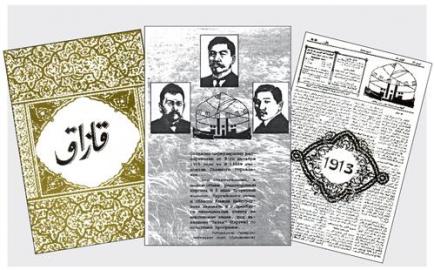
The enormous wish to educate Kazakh people led Baitursynov together with his closest friends and colleagues Alikhan Bokeikhan and Mirzhakyp Dulatuly to establish the first weekly nationwide socio-political and literary newspaper Qazaq, which was published in Kazakh language using the Arabic alphabet from 1913 to 1918.

The first edition of the weekly “Qazaq” newspaper. Photo credit: e-history.kz

In the first issue, Baitursynov described the historical significance of the Qazaq newspaper in the following way: “First of all, the newspaper is the eyes, ears and tongue of the people…People without newspapers are deaf, dumb, and blind. You don’t know what’s going on in the world, you don’t hear what’s being said, you don’t have an opinion.”

The newspaper called on Kazakh people to master art and science and raised the problem of the development of the Kazakh language. It had more than 3,000 subscribers and was read in the Kazakh steppes, China and Russia.

Baitursynov also built a strong and lasting reputation as a poet and translator. In this endeavor, he followed the path of the great Kazakh poet Abai and tried to reach the hearts of the Kazakh people through the translation of the great works of Russian literature, particularly of the Russian poet and fabulist Ivan Krylov. The Kazakh translation of Krylov’s fables was published in St. Petersburg in 1909 under the title “Forty Fables.” The animal stories in fables represented themes of unity, education, spirituality, morality, culture, hard work, and subtle criticism of colonial policy. 

Baitursynov’s own civic dreams and thoughts were published as a separate book under the name “Masa” (Mosquito) in 1911. The opening lines of a same-named poem say:

Flying around those who asleep,

Until the wings are tired.

Won’t it disrupt a little their sleep,

If he buzzes in your ear persistently? (author’s translation)

Those lines from “Masa” describe Baitursynov’s own ambition to awaken society from a passive, lazy, sleepy state to enlightenment through his persistent poetic and educational “buzzing”. The ideological foundation of “Masa” was to invite the public to study art and receive a proper education, to develop culture and a work ethic. Baitursynov skillfully used poetry as a way to awaken people, to influence their minds, hearts and feelings.

Beyond education and literature, Baitursynov actively participated in the formation of the Kazakh national state idea. Baitursynov’s political activity began in 1905. He was one of the authors of the Karkaraly petition, which raised questions regarding local administration, changes in the system of public education, and the adoption of new laws. This activity later led to his first arrest and imprisonment in the Semipalatinsk prison in 1909 for spreading the idea of autonomous self-government and allegedly inciting interethnic hostility.

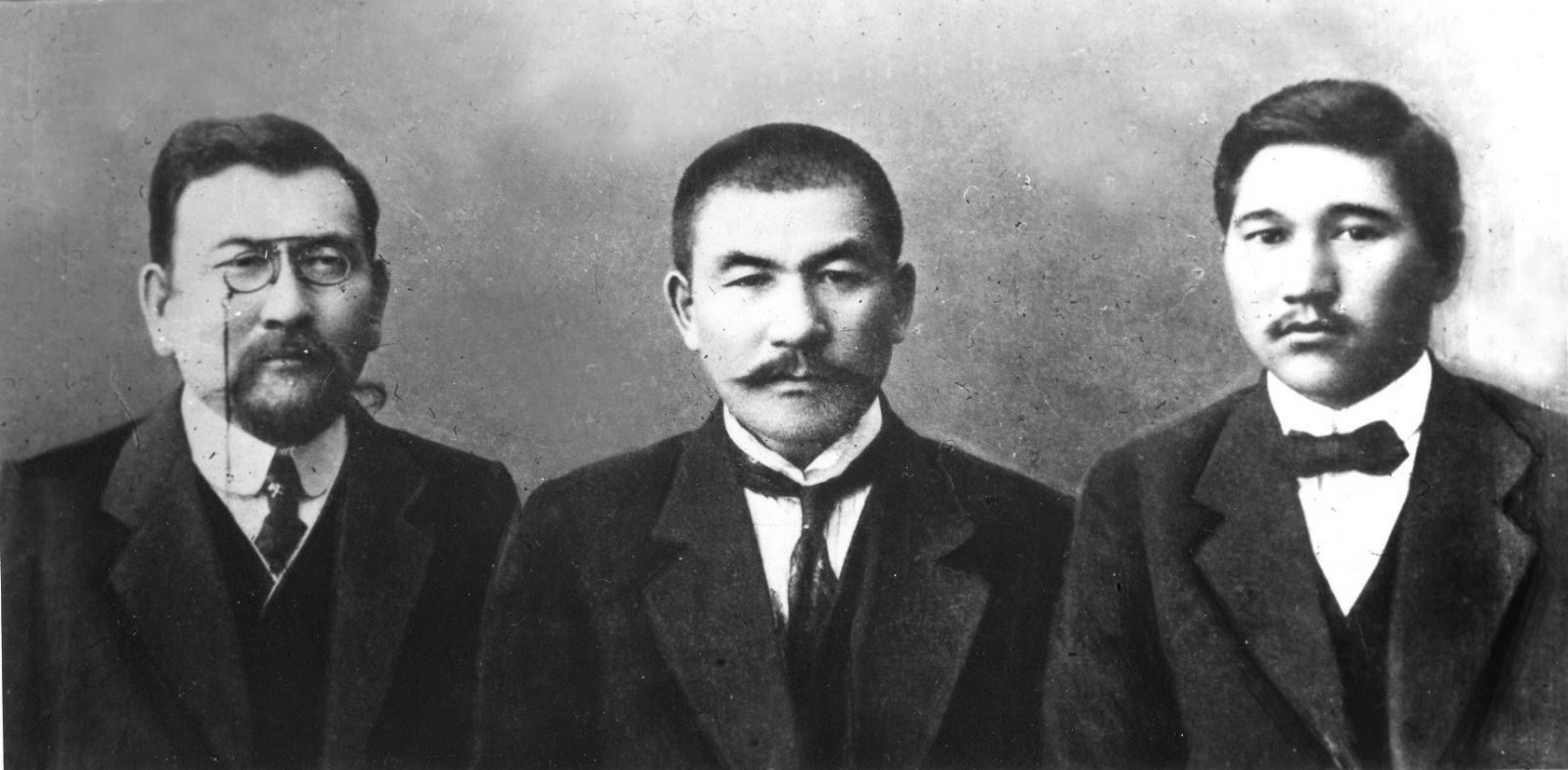
From left to right: Akhmet Baitursynov, Alikhan Bokeikhan, Mirzhakyp Dulatuky. Photo credit: e-history.kz

The October Revolution in 1917, which resulted in the overthrow of the provisional government and the establishment of the power of Soviets, left Baitursynov fearing possible state destabilization, excessive radicalization, and the possible collapse of the country in the absence of reliable authority. Baitursynov, Bokeikhan, and Dulatuly saw that the only way out of the difficult situation was to organize a firm power that would be recognized by the Kazakh people.

As a result, Baitursynov, Bokeikhan and Dulatuly decided to establish the Autonomy of Kazakh areas and to name it Alash. The first political group and movement – the Alash party and the Alashorda government was created.

The centerpiece of the Alashorda was creating a single autonomous state within the democratic federative Russian republic, which would allow for autonomous decisions in the interest of the local population. Baitursynov became the spiritual leader of the intelligentsia behind this effort.

The territory and borders of Kazakhstan were documented and legally confirmed for the first time during this period of Alash governance as well.

Baitursynov, along with many members of the Kazakh intelligentsia, fell victim to Stalinist repression. In 1929 Baitursynov was arrested again with charges of counter-revolutionary activity and preparation of an armed uprising in the Kazakh steppe. He was sentenced to execution, however, in 1931 his sentence was commuted to 10 years in a camp and in 1932 he was exiled to Arkhangelsk and then to Tomsk. 

In 1934, at the request of the International Red Cross, Baitursynov was released and returned to Almaty to reunite with his family. However, starting from 1934 Baitursynov endured the most difficult years of his life. Being the victim of repression, he suffered from the loss of his health and stability in his life. His political “unreliable” background diminished his chances of getting a proper job. The authorities were afraid of his influence and respect among people, so Baitursynov ended up changing his jobs frequently: he worked as a Central Museum curator, as a ticket inspector, and as a hospital attendant in a tuberculosis dispensary.

He was arrested again on Oct. 8, 1937, and shot two months later, in December. In 1988 the scholar was acquitted and given all the recognition that he deserved on a national level.

PATRIARCHY IS FEMICIDE
Where the abused are abused: Welcome to Saudi Arabia's shelters for women and girls


FEATURE 

LONG READ 

Dania Akkad
3 May 2022 

Despite positive reforms for Saudi women, the kingdom's most vulnerable women and girls still find themselves in horrific conditions

First, there is darkness and only the sound of traffic. Then a fluorescent light flickers to reveal the inside of an abandoned security guard’s hut down the street from a luxury mall, Aisha Alnijbany’s home for the past four days.

“I want to ask followers a question,” she says, peering at the screen. "A girl's family abandons her at an orphanage, a women's shelter, wherever. When you leave, is it right for them to expect you to go back to your family? Or does the full responsibility still remain with this government facility?"

Since the start of the year, Aisha, 22, has vlogged from the streets of Riyadh, telling her story and documenting her homelessness over more than 13 hours of footage on Instagram.

At age three, she says, her father left her at a state-run shelter where she spent the next 17 years. When she spoke out about conditions at the shelter, posting photos of locks and chains, using hashtags to draw attention to her case and saying she was imprisoned, she was sent to prison for a year and a half. And then, she was slapped with a 10-year travel ban and released onto the street.

“Are you doing this to me because I demanded my freedom and my rights?” she says.

Her videos have stirred discussion and support among Saudi female activists and observers who say they’ve never seen anything like this - a homeless Saudi woman publicising her own case. She is also perhaps the ultimate example of how the shelters, which are meant to protect the kingdom’s most vulnerable women and girls, are failing.

“These are prisons,” said Saudi activist and journalist Khulud al-Harithi in a Twitter space organised by London-based advocacy group ALQST in April, in which Aisha’s case and others were raised. “It’s as if they punish you because you’ve been abused and you don’t have a family. They don’t deserve to be called shelters.”
'A climate of fear and repression'

There are a variety of reasons a woman or a girl might end up in a state-run shelter in Saudi Arabia. They could be fleeing domestic violence. They may be suspected of committing a crime and be awaiting charges.

But they might also have "disobeyed" their male guardians or tried to run away from home or, like Aisha, be abandoned, said Rothna Begum, women’s rights researcher for the Middle East and North Africa for Human Rights Watch.

“It could be that they protested or they defied the driving ban so they can end up spending some time there,” she said. “It could be that the families have dumped them at a police station and don't want anything to do with them and the police will take them there.”

Once inside, they are locked up until a male guardian, often the same person abusing them, agrees that they can leave; or until a woman agrees to marry and has a new guardian.


'If you speak up, it’s not about your case any more. It’s about the image of a country'
- Hala Dosari, Saudi activist and scholar

Alongside the headline-grabbing reforms for women in Saudi Arabia in the past few years, the shelters where girls and women have committed suicide, rioted for better conditions, attempted escape and been killed by relatives soon after their release, continue to operate without any reforms, say Saudi activists, human rights researchers and women who have stayed in the shelters.

Not only are these state-run shelters still operating, without change, as Saudi Crown Prince Mohammed Bin Salman’s modernising project unfolds, but the situation for the kingdom’s most vulnerable women, they say, is significantly worse in the wake of the high-profile arrest of women’s rights activists in 2018.

Several of the arrested activists were among those who raised a popular petition with King Abdullah in 2014, asking, among other requests, for women to access shelters whenever they needed without having to be investigated by the state and to be able to leave whenever they wanted as well, without having to be in the custody of a male relative.

Unsuccessful in that pursuit, they worked on setting up a nonprofit alternative to the state-run shelters that was to be called Aminah, “safe” in Arabic. They had secured land with the help of a philanthropist, and officials with the Ministry of Social Affairs told organisers they were about to approve their application. Two months later, the activists were arrested.

One of the charges filed against the activists was that they tried to establish an association - which is unnamed - against Saudi regulations. Waleed al-Hathloul, the brother of Loujain al-Hathloul, who was among those picked up, wrote that he believed his sister’s work on Aminah “was one of the main reasons” she was arrested.

For Saudi girls and women trying to flee abuse, the impact of the arrests wasn’t just that Aminah was shelved, activists told MEE. A network of powerful Saudi women who used their positions and wealth to quietly support girls and women stuck between abusers and abusive shelters abruptly stopped offering help as well. And officials in state agencies who had once helped women off the books were summoned for questioning.

“This climate of fear and repression, it killed the urgency of seeking help for those survivors of violence or women being treated unfairly by the legal system,” said Hala Dosari, a prominent Saudi activist and scholar, and one of Aminah’s organisers.

“You can't imagine how disheartened I am when I receive those emails that I used to receive before. I used to refer them to good sources for support. Now there is none, but I get all those emails the same.”

The implicit message to girls and women trying to escape abuse in their homes was to stay quiet. “They are not able to speak up. If you speak up, it’s not about your case any more. It’s about the image of a country. They might treat you exactly like an activist.”
Shelter life

There are several types of state-run shelters in Saudi Arabia, including Dar al-Reaya (The House of Care), a collection of facilities across the kingdom which holds girls and women between the ages of 7 and 30 - and where Aisha was for 17 years.

According to the Ministry of Human Resources and Social Development, which runs Dar al-Reaya, there are only two types of girls and women who turn up at the shelter. There are Saudi girls “who have suffered from bad social and psychological circumstances that force them to stumble and deviate from the straight path” who require “good care, social correction and strengthening of religious faith”. And then there are delinquents.

Both types are to be set back on “the right path”, says the ministry. “If the girl becomes good, the family will be good, and accordingly the society.”

But activists and researchers who have spoken for years to former detainees say the facilities are not the safe havens or places of rehabilitation that the state paints them to be, but instead are lock-ups rife with abuse.

When you arrive, your phone is removed and there are instances of women and girls being strip-searched and even put into solitary confinement before entering the main ward.

According to an ALQST report released last year, women reported that they had been deprived of recreational activities and were unable to continue their studies inside Dar al-Reaya. They also described harsh punishments, including being made to stand for six hours at a time.

The situation is particularly grim for victims of domestic violence. Rather than provide protection, activists and researchers say girls and women trying to escape abuse at home are encouraged to reconcile with their guardians or families and can have their detentions prolonged if they resist.

One woman held inside Dar al-Reaya told Begum that in the facility where she was held, girls and women detained for longer than a month who were resisting reconciliation could be given punishments, including regular floggings and solitary confinement, until they agreed to concede.

Similar punishments, the woman told Begum, were also meted out to detainees deemed to have committed a violation within the shelter, including failing to read the Koran daily or engaging in a sexual relationship with a fellow detainee.

A former inmate who was in Dar al-Reaya after her family filed a case against her for being absent when, in fact, she says she was reporting abuse, told Raseef22 that solitary confinement in the facility where she stayed was “a mattress in the middle of a bathroom” and that cameras were installed everywhere, even in the toilets.


After #WhereisNoof, Qatari women question how safe they really are
Read More »

If a male relative isn’t available or doesn’t agree to sign off on a woman or girl’s release within a couple of months or after a woman turns 30, they are transferred to a Dar al-Theyafa, another type of state-run shelter where they can end up for much longer periods - and may never leave.

“One woman described it as being worse than Dar al-Reaya - which is quite hard to imagine, because when you are hearing about floggings and solitary confinement, how could it be worse?” Begum said. “But what I had heard was that Dar al-Theyafa was more depressing, and that was because it was women there for months and years, really long periods of time.”

As at Dar al-Reaya, the women - who may also have children with them - are restricted from leaving the facility and can only leave if their guardian agrees, or if they marry, which shelter workers frequently coerce the women to do, said Dosari.

“The officials and the social services think of this as making sure that the women are in a safe environment rather than being on her own,” she said.

The men who typically come forward seeking to marry women in the shelter find it challenging to marry in more straightforward circumstances, Begum said. They may be convicted criminals who have been in prison. Or they might be in search of a second or third wife.

Given the precarious situation of the women, said Begum, the men see them as an easier catch: “‘Well, I'm saving her from a life of being imprisoned. So she would be more willing to marry me’,” she said.

It is not surprising that some women choose to return to their homes and or the abusers who sent them fleeing in the first place, said Dosari. “It’s a very weak system. That’s why most of the women are in a loop, basically. They cannot really get out of it,” she said.
Deterrent force

Looking at the numbers alone, the percentage of Saudi girls and women held in state-run care facilities is very small. In 2016, the last time publicly available figures were released, 233 girls and women - out of a population of then over 13 million female Saudis - were held in seven facilities across the kingdom.

Two years later, a Ministry of Human Resources and Social Development official told Saudi news site Al Madina that another five would be rented, in part to provide space to detain women, now driving legally, when they broke traffic laws.

It is unclear whether the kingdom followed through on this plan, how many facilities are operating now and how many girls and women are currently detained in them. Data has not been released since 2016 and Saudi Arabia did not respond to MEE’s request for comment for this story.

What the numbers fail to capture about the care homes, Saudi women told Middle East Eye, is the sheer power of their existence as a deterrent force in a kingdom that continues to be governed by discriminatory and repressive guardianship rules.

'The girls going in there are the ones that are really beat up and abused. If they get out, they will have no means of talking to anyone'
- Thoraya, Saudi woman

To flee or to speak out about one’s abuse in the first place is very rare in Saudi society.

“People won’t be like, ‘Oh, she left her house because her dad is abusing her. Shame on him.’ It will be like, ‘Look at that girl. She went. She left the house because she wanted to live an open life. She will be blamed for stuff that she never thought of,” said Thoraya*, a Saudi woman who spoke on condition of anonymity because she feared repercussions from the government for speaking publicly.

“You are the disobedient child. You are the disobedient wife. You are the woman. You should compromise. You should listen. You should lower your standards. You should give in more. You should be more forgiving.”

Thoraya said her father, who was well-educated and had a professional career, once threatened to send her to Dar al-Reaya. “I remember he said, ‘You marry this guy or I’m going to send you to that place’,” she said.

So the homes serve as a looming threat that keeps girls and women from a range of socioeconomic backgrounds and geographic locations in check under their guardians. Those who end up in them are truly desperate.

“Usually, the girls that are in those positions will never, ever have a voice to speak out. The girls going in there are the ones that are really beat up and abused. If they get out, they will have no means of talking to anyone,” Thoraya said.
Fleeing for freedom

The shelters are just one piece of the kingdom’s guardianship system, a decades-old collection of laws, policies and practices which, like most Gulf countries, require women to get permission from a male guardian for a wide range of activities during their lifetime.

But they are a particularly important piece because they help maintain the system, enabling domestic abuse through their ineffective intervention, Begum said. “The authorities will enforce the male guardianship system by forcing women back into families or to new guardians, but always to keep them in that space,” she said.

Sisters Maha and Wafa al-Subaie outside a safe house for asylum seekers in Georgia, weeks after they pleaded for help on Twitter after fleeing their family (Reuters)

The stark choice facing Saudi women and girls is reflected in a significant increase in those fleeing the kingdom in recent years, including in 2019, dubbed the year of the runaway, when several Saudi women broadcast their escapes publicly on social media in an effort to get to safety.

That January, Rahaf Mohammed barricaded herself in a Thai airport hotel room to avoid being taken back home before she was given refuge in Canada. Then in April, sisters Wafa and Maha al-Subaie pleaded for help from Georgia, where they had fled. In June, Dua and Dalal al-Showaiki asked followers to give them a hand after they escaped their family during a holiday in Turkey.

Of course, Saudis have always lived abroad, but what is different now is that so many that are leaving are seeking asylum. “To seek asylum, it means you’re desperate,” Dosari said. “This is something that never happened in Saudi.”

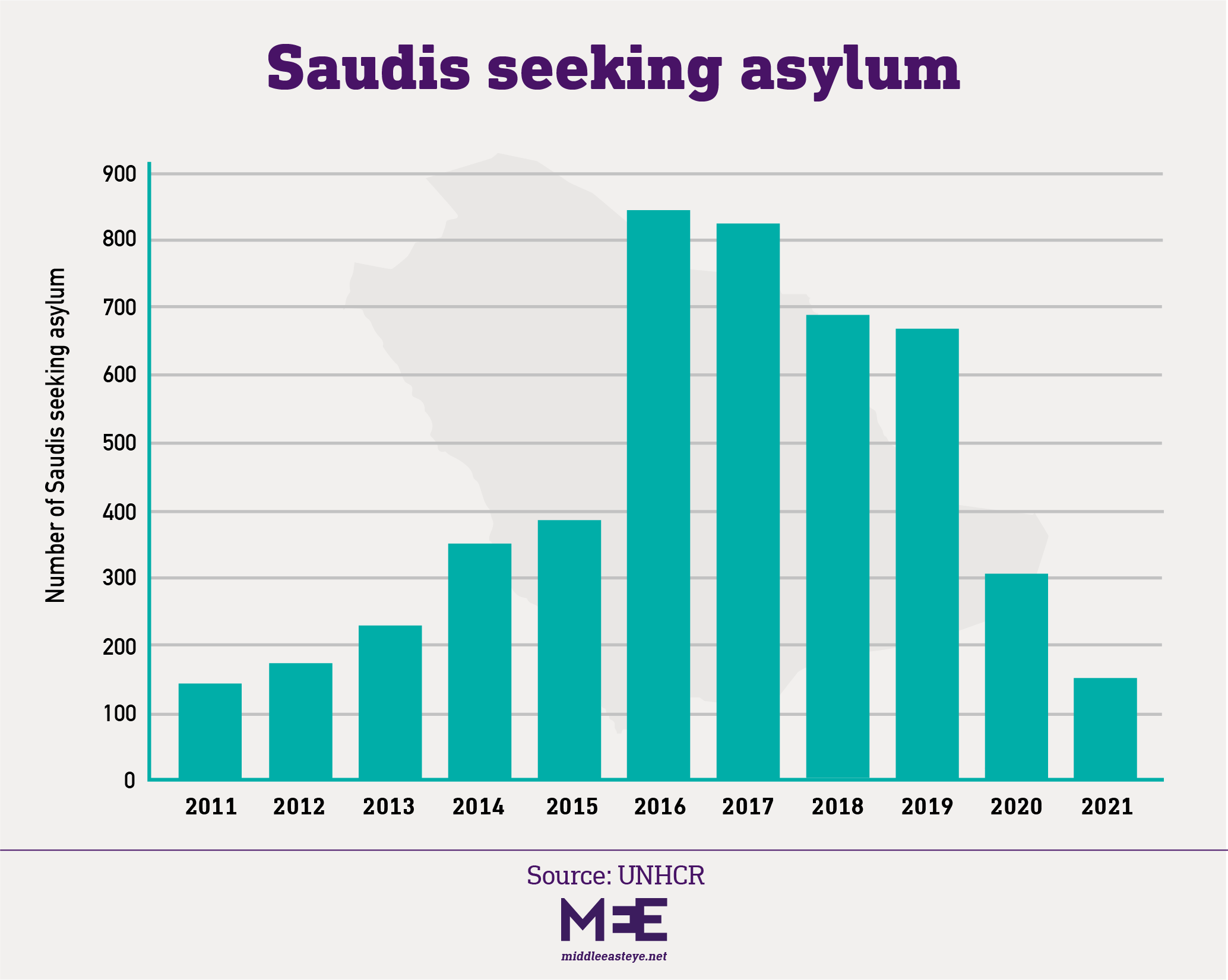
According to UN figures, the number of Saudis seeking asylum rose significantly in 2015, the year King Salman came to power. That year, 395 Saudis fled the country, but every year since - with the exception of 2020 and 2021 during the Covid pandemic - that figure has stayed consistently high.

“It’s a sad thing that we, as Saudi women, the first step we take to protect ourselves is to run away from our country and lose our citizenship,” said Saudi activist and journalist Khulud al-Harithi. “We are from a country where there are no wars or crises that could force a woman to seek asylum. So why do we have to lose our citizenship? What does the government stand by one citizen to the detriment of another just because she’s a woman?”

Dosari is often asked to write expert letters for asylum seekers, requests which have also jumped significantly. “I’m getting more and more of that,” she said. And asylum for Saudi women and girls, despite the clear continued impact of guardianship rules, is not guaranteed.


Bethany al-Hadairi, Saudi case manager at The Freedom Initiative and senior fellow on human trafficking at Human Rights Foundation, which are both in the US, said she knows of several recent Saudi asylum cases in which those applying have struggled to convince judges that returning to the kingdom would be dangerous.

The US, she said, already has one of the worst approval rates for Saudi asylum cases, but it has become even harder, particularly for women.

“I know of a couple of cases - people on their maybe second or third appeal at this point - who are just terrified to return but almost giving up,” said Hadairi. “It’s difficult to explain to a judge in the United States who expects a legal system to be straightforward and as it seems and as it is written. It’s just not the case on the ground [in Saudi].”

It’s been a struggle for Saudis to protect themselves from being returned to dangerous situations as a result of the Saudi public relations drive put in place following the murder of Saudi journalist Jamal Khashoggi, campaigns that "have real damages on the ground in Saudi as well as here for families that are trying to get protection in the US for asylum".

And this, said Dosari, is the power and the impact of silencing the most vulnerable women and girls in the kingdom, who are locked in care homes, while the government is promoting the stories of women who attend concerts, drive cars and hold down jobs.

“There is no counternarrative that really tells you the truth. People aren’t willing to take the risk,” she said. “And it is a risk.”

Perhaps no one knows this better than Aisha Alnijbany who, even now, roams the streets of Riyadh, still speaking out and looking for refuge.

*The name of this source has been changed to protect her identity

This article is available in French on Middle East Eye French edition.