Thursday, June 09, 2022

  • Remote work creating schism as option unavailable to many workers

Employees like Matt Fairbanks are one of the reasons the hospitality and restaurant industry is struggling to find workers even as the pandemic wanes. 

The 34-year-old former bartender has moved from slinging beers in Toronto to selling software to restaurants for a Saskatchewan company — which he does remotely. 

"I was always kind of one foot out of the hospitality industry and the pandemic really showed me how vulnerable the work was and the instability of it all," he said in an interview. 

Gone are the harrowing commutes, while the additional flexibility has improved his work-life balance. Fairbanks's company allows employees to work from out of the country for up to 90 days, take unlimited vacation and travel or work from anywhere in Canada. 

"I've actually encouraged a lot of my friends from the restaurant industry to kind of look at other options and change kind of how they're doing their life, too." 

Remote work flourished during the pandemic as companies temporarily closed their offices, but it has created a schism among Canadian workers. While 40 per cent of work in Canada can be done remotely, experts say, that means 60 per cent of workers are unable to access this benefit because they are required to be on-site. 

And that can create resentment and a backlash from workers viewed as essential, such as nurses, ambulance workers and retail employees, who were applauded during the pandemic but are unable to realize the benefits that come from working remotely, said change management expert Linda Duxbury, a Chancellor’s Professor of management at Carleton University’s Sprott School of Business, who has studied remote work for decades.

"The problem we're going to have here is we're going to create two classes of workers — the haves and the have nots," she said in an interview.

Those who can work remotely, particularly professionals such as accountants, lawyers and tech workers, flourished financially during the lockdowns while those forced to work on-site were often overworked or lost their jobs entirely amid reduced capacity and businesses that shuttered for good. 

That second group was told they were valued and important "and now they don't feel important," Duxbury said. 

The ability to work remotely has been one of the pivotal moments in the history of work, even though its application is generally limited to knowledge workers, said Erica Pimentel, assistant professor of accounting at the Smith School of Business at Queen’s University. 

"So when 60 per cent of the workforce is excluded from this massive change, well that's obviously going to have some implications for society," she said, because it's very inconsistent in how it affects the population at large. 

Duxbury cautions that the jury is still out on remote work, or what she calls "enforced work from home." She constantly hears from businesses seeking best practices and examples of what others are doing. But she said it's too early to assess the work style as everybody is experimenting with different models. 

"Remote work during the pandemic was one big giant experiment. Now we're moving to the second experiment, the follow up, which is hybrid work," she said. 

The appropriateness of remote work is very job dependent. It isn't conducive to brainstorming, socialization, coaching, mentoring, onboarding, team-building and client satisfaction. 

And while people who work from home put in far more hours — estimated at four to 10 additional hours per week — data suggests it hasn't increased productivity, Duxbury said. 

"Just because we worked 100 per cent remote for the last two plus years doesn't mean it's a sustainable model for a lot of people and a lot of jobs moving forward." 

Despite the drawbacks, remote work is being increasingly favoured, especially by generation Z, digital natives who have always had access to the internet and social media, said Pimentel. 

This cohort is coming of age and joining the workforce with new attitudes about employers' duty to them and how different parts of their lives fit together that is different from millennials, generation X and baby boomers, who are in many cases now the bosses.

"And so there's this generational like mismatch between bosses and their employees and everybody is unhappy." 

Many companies would rather have employees return to the office full-time, but are facing stiff opposition from workers who have grown to like working from home, said Duxbury. Faced with record job vacancies amid decades-low unemployment rates and threats of resignations, employers have been forced to be flexible. 

That means employees with a skill that's in demand are able to negotiate better work conditions than somebody without those skills. 

Tech workers, who accounted for most of the three per cent of Canadians who worked remotely before the pandemic, are among those in the driver's seat now.

Demands to work remotely have gone from being the exception to the rule because it's so hard to compete for talent, said Kristina McDougall, founder and president of executive search firm Artemis that specializes in tech employment. 

"Unless there is an absolute reason why you physically need to be present, like you're working on a robot or you need to be in the building, most organizations are having to be flexible," she said. 

The growth in remote work has also transformed where companies source their workforce because people can work anywhere and don't have to be near a company headquarters. That widens the jobs an individual can consider, but it also gives companies a wider pool of candidates as well as increased competition with other potential suitors. 

McDougall believes the movement to remote work is permanent for sectors like technology because the pandemic has proven that organizations can get things built with people working remotely. 

"You can't put the genie back in the bottle. People are now finding it trivial that they might need to go into an office every day." 

CIBC ramps up Big Banks' hunt for staff with wage pledge

Canadian Imperial Bank of Commerce is boosting its minimum wage and pledging to push it even higher in the next few years as tight labor markets force banks into fierce competition for workers.   

The lender’s minimum wage will rise to $20 per hour in Canada and US$20 in the US in July, and the bank is committing to raise those figures to $25 and US$25 by the end of 2025, according to a statement from Chief Executive Officer Victor Dodig on Thursday. The bank is also providing a 3 per cent raise for workers in the six lowest levels of its pay scale next month. 

“These investments build on the steady, strategic targeted investments we have been making as we continue to ensure we pay competitively and recognize the contributions of our team, particularly at a time when the cost of living has been increasing,” Dodig said in the statement.

The bank’s minimum entry wage for merit-based pay team members is currently $17. The 3 per cent increase applies to roles including contact center agents, mobile adviser and investment adviser assistants.

Canada’s banks are boosting pay, especially for employees in the lower tiers of their pay scale, to attract and retain workers in a historically tight labor market. Canada’s unemployment rate hit a low of 5.2 per cent in April -- the lowest in data going back to 1976. 


Royal Bank of Canada said last month that it would spend more than $200 million on pay increases, benefits and other incentives to retain workers. The bank is raising base salaries by 3 per cent in the four lowest levels of its pay scale, accounting for almost half of its workforce. 

Bank of Nova Scotia is raising pay for workers in assistant manager roles and below, representing half of its Canadian employees, by 3 per cent as of June 20. The increase, announced to employees last month, is in addition to regular year-end salary adjustments. 

Bank of Montreal in October said it was raising its minimum wage for US branch and contact-center employees to US$18 an hour, a 20 per cent bump.

CIBC, Canada’s fifth-largest lender by assets, had about 47,800 employees as of the end of its most recent fiscal quarter, according to a company filing.

Molson Canada reaches tentative agreement with striking employees in Montreal

The Canadian Press
06/09/22

Guests walk past tanks at the Molson Coors Canada Fraser Valley Brewery in Chilliwack, British Columbia, Tuesday, Sept. 17, 2019.
Bloomberg/Darryl Dyck

A tentative agreement has been reached between Molson Canada and the union representing some 425 workers in the Montreal area who have been on strike since March.

Both the Teamsters union and the Montreal-based beverage company confirmed the deal today.

Details of the tentative agreement are not being disclosed before they are presented to members.

The dispute has focused particularly on wages amid rampant inflation, along with pension and work scheduling issues.

Local union president Eric Picotte says the three aspects of the dispute "have been addressed to our satisfaction."


Union members went on strike on March 25 and then rejected a company offer. Workers will vote on the agreement-in-principle Friday evening, with approval leading to a return to work next week.

STRIKING MOLSON WORKERS REJECT OFFER AS PICKET LINES STRETCH INTO 11TH WEEK

Hundreds of striking Molson Canada workers have rejected an offer from the beverage company, keeping more than 400 employees on the picket lines and bar owners with less on tap.

Teamsters Canada says the union local last week voted 92.4 per cent against a collective agreement put on the table by the 236-year-old brewery in Montreal.

Teamsters spokeswoman Catherine Cosgrove said concerns over salary remain front and centre amid rampant inflation, on top of pension and work scheduling issues.

"As good as it may seem, the workers have to make sure they are not losing money by accepting the contract as presented," she said. The parties did not sit down to negotiate until May 23, she added.

Molson Coors spokesman François Lefebvre said the rejected deal marks its final offer following the walkout on March 25, with managers now having to deliver beer themselves under a contingency plan.

"This offer was more than generous. And this offer would have made our employees have the highest paying jobs in the beer industry in Quebec," he said in an interview. "The bars are kind of being held hostage."

Renaud Poulin, head of the Quebec bar owners' association, says numerous pubs in more far-flung parts of the province are missing suds due to the 73-day strike.

"It’s pretty tough. Everyone’s missing beer. We don’t have all the brands," he said.

Quebec's labour tribunal issued an interim order last month requiring Molson Canada to stop employing replacement workers until a union complaint can be heard by the quasi-judicial body.

SNC engineers ordered back to office with one business day's notice: Union

A union representing SNC-Lavalin Group Inc. engineers has filed a complaint with the national labour board alleging bad-faith bargaining after a subsidiary ordered workers back to the office full-time with one business day's notice.

On June 2, Candu Energy Inc. mandated all employees to return to the workplace as of last Monday, a requirement the Society of Professional Engineers and Associates (SPEA) says amounts to a negotiating tactic amid a rotating strike launched May 29 at Ontario's Darlington nuclear plant, which Candu is refurbishing.

In a copy of the memo obtained by The Canadian Press, SNC executive vice-president Bill Fox reminds workers that a hybrid work model proposed to start Sept. 12 is "on the table," meaning that the abruptly announced "full-time in-office working policy could change when bargaining concludes."

Union spokesperson Denise Coombs said SNC-Lavalin's sudden move to bring roughly 900 engineers, scientists and technicians back to the office five days a week has sent them scrambling for living arrangements after more than two years of remote work. It amounts to an unfair labour practice given the bargaining context, according to the union's filing to the Canada Labour Relations Board.

"We all knew it would take time for people to reorganize their lives, obtain child care, move back to the city, all those things," Coombs said in an interview.

Both sides had agree on Sept. 12 as a start date for hybrid work, she said. The key points of discussion were whether it should be three days a week or two and a half on average, as well as salary, benefits and whether the union would be allowed to publicize certain internal documents.

The union received an offer for a collective agreement at a June 2 meeting, where the company also gave it a heads-up on its imminent back-to-the-office memo, Coombs said.

"The clear implication was that if SPEA did not accept Candu's June 2nd offer, Candu would retaliate and force employees to return to the office with just over one business day's notice and on a five-day per week basis," the filing states.

"We were gobsmacked," Coombs said.

SNC spokesperson Harold Fortin said the company hopes to reach a "fair, equitable and competitive agreement" with the Candu workers, who have been refurbishing reactors at the Darlington Nuclear Generating Station.

"With changes in provincial restrictions, people are becoming more accustomed to being together in indoor spaces and it is time to return to the physical workplace," he said in an email.

Fortin cited collaboration, training and integration of new hires among the benefits of returning to a shared workspace.

The Montreal-based company declined to comment on negotiations over the collective agreement, which expired Dec. 31.

Tensions between SNC and the union prompted Ontario Power Generation and Bruce Power to warn they will have to consider "alternate arrangements" if the two parties cannot provide "certainty" in their services.

"This letter should not be taken as support for either side as we respect the collective bargaining process, and at the same time expect to be treated as customers, not a negotiation point," OPG CEO Ken Hartwick and Bruce Power CEO Michael Rencheck said in a letter to SNC and the union dated Tuesday and obtained by The Canadian Press.

The provincial Crown corporation owns the Darlington nuclear plant, and SNC provides services to Bruce Power, including ongoing reactor refurbishment at the Bruce Nuclear Generating Station on Lake Huron.

Between 30 and 70 Candu workers daily have been conducting work stoppages out of roughly 700 on a strike rotation, the union said.

“Now we’re preparing for a large dispute," said union spokesperson Michelle Duncan. "We’re planning on a full-blown escalation.”


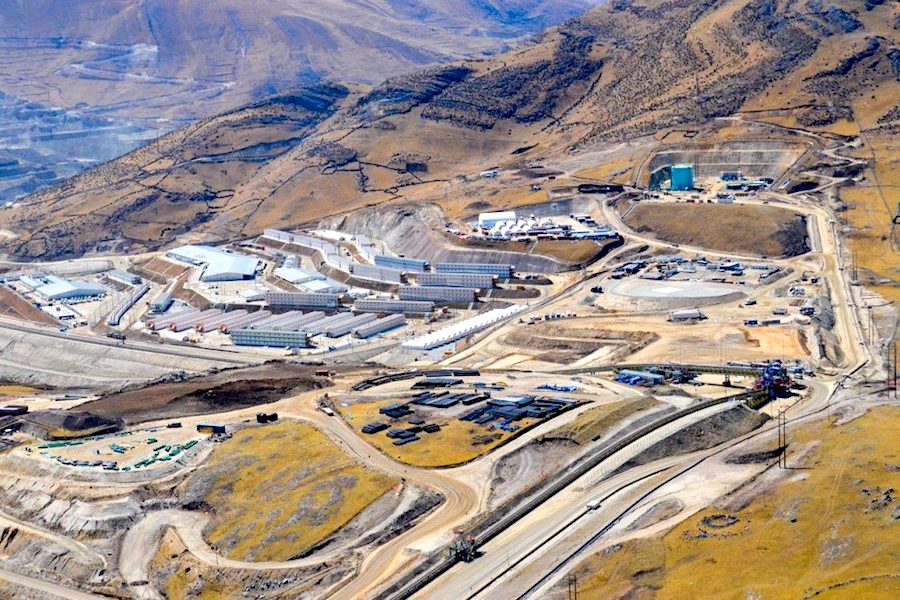
Peru communities to allow Las Bambas copper mine restart after 51-day shutdown

Reuters | June 9, 2022 

Las Bambas is one of the world’s largest copper mines. Credit: MMG.

A group of indigenous Peruvian communities on Thursday agreed to temporarily lift a protest against MMG Ltd’s Las Bambas copper mine that forced the company to halt operations for more than 50 days, the longest in the mine’s history.


According to meeting minutes signed on Thursday afternoon, the truce will last thirty days and the communities and the mine will engage in talks during that time.

Las Bambas will immediately seek to restart copper production, although executives have warned that coming back to full capacity will take days after a prolonged suspension.

Peru is the world’s No. 2 copper producer and Chinese-owned Las Bambas is one of the world’s largest producers of the red metal. The protest and shutdown had caused a major problem for the leftist administration of President Pedro Castillo, who is under pressure to grow the economy and had struggled for weeks to broker a restart deal.

Las Bambas alone accounts for 1% of Peru’s gross domestic product.

The protest was started by the communities of Fuerabamba and Huancuire in mid-April, who say Las Bambas had not honored all of its commitments with them. Both communities sold land to the company to make way for the mine, which opened in 2016 and is notorious for its recurrent social conflicts.

The two communities entered the mine and settled inside, forcing Las Bambas to halt operations. While Fuerabamba was evicted soon after that, Huancuire had managed to remain inside.


Under the agreement, Huancuire will no longer protest inside mine property. During the truce, Las Bambas will also halt construction of its new Chalcobamba open pit mine, set to be located in land formerly owned by Huancuire.

At the meeting, community leaders also demanded jobs for community members and for the reshuffling of top mine executives, who they blame for causing social conflicts.

Las Bambas has agreed to an “evaluation and restructuring of the executives” who participate in negotiations with the local communities.

(By Marcelo Rochabrun; Editing by Mark Porter and David Gregorio)

 Saskatoon

Indigenous scholar says he was rejected by University of Sask. over lack of documentation

Réal Carrière, a northern Saskatchewan man of Cree and 

Métis ancestry, will stay at the University of Manitoba

University of Manitoba professor Réal Carrière said he wanted to work at the University of Saskatchewan, but administrators made excessive demands for documents to prove he's Indigenous. (Submitted by Réal Carrière)

An award-winning Cree-Métis professor who grew up in northern Saskatchewan will not be moving to his home province's university because administrators demanded certain paperwork to prove he's Indigenous.

"I wanted to come to the University of Saskatchewan. This is all pretty disappointing," Réal Carrière said.

Critics say Carrière's ordeal is an example of misguided over-reaction by U of S administrators to an earlier case of an Indigenous identity controversy involving former U of S professor Carrie Bourassa.

Indigenous studies faculty say they're angry about the Carrière situation, but also fear existing staff might soon face these new "colonial" requirements.

"There's a strong stink to all of this. This is a step backwards. I think it's a mistake," said acting Indigenous studies department head Jim Waldram.

Fellow faculty member Winona Wheeler agreed.

"It's really, really sad we weren't able to hire one of our own sons. This is his home territory. He would bring so much to the university [with] his academic background, traditional knowledge and community connections," Wheeler said.

No one from the university's administration was available for an interview, but last month, the U of S announced it would have an Indigenous verification policy in place by fall.

In a written statement to CBC News Thursday morning, U of S interim chief communications officer Heather Persson said the events described by Carrière, Wheeler and Waldram are an "inaccurate depiction of our recruitment process." Persson said privacy rules prohibit officials from giving any further details.

Réal Carrière and his sister, Michela, grew up on the family trap line in northern Saskatchewan's Cumberland Delta. (askiholisticadventures.com)

Carrière's family has lived for generations in and around the Cumberland House Cree Nation and adjacent Métis village more than 400 kilometres northeast of Saskatoon.

His father, Solomon, is a world champion marathon canoeist and trapper while his mother, Renee, is a land-based educator and his sister Michela is a horticulturalist who hosts eco-tours in the Cumberland Delta.

"That's about as Indigenous as you can get," Wheeler said.

Waldram, one of the original faculty members of the the Indigenous studies department nearly 40 years ago, said Carrière was "ideally positioned and would have been a tremendous asset."

Carrière, who speaks Cree, has taught at the University of Manitoba for several years after winning multiple awards for his doctoral thesis entitled Rediscovering the Path: Decolonizing Indigenous Governance.

Late last year, a faculty position was posted by the U of S Indigenous studies department. Carrière said he was happy at the U of M, but jumped at the chance to return "home" to the U of S.

Earlier this year, he was interviewed by a committee including Waldram, Wheeler and five other Indigenous faculty members. It included a lengthy discussion on his Indigenous identity.

Carrière said he was happy to discuss his identity with the hiring committee, who then contacted his family and community members.

Carrière was the unanimous choice of the committee, and a job offer was prepared.

'Our identity has been policed for generations'

But then an extra step was added by high-ranking university administrators, they said. Without consulting the hiring committee, the interim vice-provost called Carrière in for an interview.

Carrière said he was told to submit written documentation proving he's Indigenous. Carrière does not have written documentation of his status because he believes it's a "colonial" method.

"Our identity has been policed for generations. Now we're reducing it to a status card or piece of paper? Is this reconciliation?" Carrière said.

"What about the thousands of non-status people working at various institutions? Are they going to be told they're not valued anymore?"

In a further effort to convince administrators, the hiring committee submitted a letter from an elder, as well as various videos. They say it wasn't enough. Carrière withdrew his name.

"This institution is supposed to be a leader in the community. It would have been great to come back," Carrière said.

Waldram said he feels bad for Carrière, but he's also angry that administrators disrespected the wishes of their expert committee.

"This was an expert group of mainly Indigenous scholars, but we were cut out," Waldram said.

Carrière's ordeal is a direct result of an earlier controversy at the U of S, Waldram and Wheeler said.

Carrie Bourassa recently resigned from the University of Saskatchewan following accusations she made false claims about her Indigenous ancestry. (YouTube)

In a CBC News story late last year, Wheeler and others said professor Carrie Bourassa had made numerous false claims about her Indigenous identity. Bourassa went on unpaid leave from one of her positions and resigned earlier this month from the U of S faculty.

It sparked a national conversation on how to define "Indigenous," particularly for positions reserved for Indigenous people. But little attention was paid to the negative effects of implementing an impersonal, document-based system, say critics.

'Bordering on the paranoid'

Wheeler, Waldram and others say U of S administrators, in a desperate effort to avoid another public scandal, have caused the pendulum to swing too far in the other direction.

"It's bordering on the paranoid," Wheeler said.

"Instead of trying to weed out the frauds, our identity has been problematized and it's up to us to prove who we are."

In the wake of the Bourassa controversy, the U of S and other universities established task forces on the issue of Indigenous identity. A national conference was held in Regina this spring.

Wheeler and Waldram said they hope the U of S task force will come up with more reasonable policies. They also hope that the detailed work of Indigenous scholars such as those on Carrière's hiring committee will be respected in the future.

In the Thursday written statement, Persson said the U of S "respects the principles of sovereignty and self-determination in relation to Indigenous membership and citizenship. The Indigenous membership and citizenship task force is working with Indigenous communities and leaders to identify the appropriate verification information to be required when hiring Indigenous scholars." 

Last month, Angela Jaime, interim vice-provost of Indigenous engagement at the U of S and chair of the task force, said the new policy will involve "creating a space that is meant for Indigenous people, resources that are meant for Indigenous people to make sure that we don't have fraudulent claims going forward.

"We're working to do an even better job going forward in creating that space of funding resources positions [and], senior leadership positions. And we want to be very clear that it's important that Indigenous voices are holding those spaces."

Alberta NDP's best summer ever looms as Jason Kenney fades away

Rachel Notley has time to prepare for 2023 election, but it's tough to size up an unknown rival

Rachel Notley at the 2016 Calgary Stampede, while she was premier. This is her last summer before she bids for a return to the premier's chair in the 2023 provincial election. (Jeff McIntosh/The Canadian Press)

This column is an opinion by campaign strategist Leah Ward, a former aide to Alberta NDP leader Rachel Notley. For more information about CBC's Opinion section, please see the FAQ.

Alberta Premier Jason Kenney's political demise leaves a big opening for NDP Leader Rachel Notley. But a leaderless United Conservative Party creates big unknowns for the NDP's strategic calculus.

If nature abhors a vacuum, so does politics.

The opportunity for Notley's party to fill in this gap is more immediate. Kenney's prolonged departure and a potentially months-long race to replace him means the UCP is sidelining itself during one of the most productive seasons for politics — summer. 

For most politicians, summer is a buffet of opportunity. Unencumbered by legislature sittings, MLAs are released to their home ridings where they can talk to constituents, community leaders, and stakeholders to make and re-make important connections. 'Tis the season of barbecues, Pride parades, fundraisers, and not least of all, the Calgary Stampede. 

Jason Kenney infamously removed nearly all COVID-19 measures in time for last summer's circuit, hoping he would be able to schmooze his way back into popularity after steadily declining poll numbers. But as much as last year failed to bring the best summer ever for the UCP, 2022 could be the best summer for Notley and her party. 

NDP's summer funspot: Calgary

The UCP leadership race means its MLAs and operatives will have to spend much of their summer working on their preferred candidate's campaign. Meanwhile, the NDP will be taking full advantage of a clear runway to continue growing their pre-election ground game and, most importantly, their campaign for Calgary. 

Unquestionably, the next election will be determined by who can win the most seats in Calgary, with Edmonton a lock for the NDP and the rest of Alberta tilted in the UCP's favour. The NDP knows this, and is tackling it head on. A quick glimpse at the social media accounts of any Alberta New Democrat, even the Edmontonians, will reveal a major presence in the city. 

Alberta NDP Leader Rachel Notley has spent more time in Calgary in recent years than she did as premier, given the city's importance as the election battleground, writes former aide Leah Ward. (Alberta NDP )

Contested nominations, packed event halls, and well-attended fundraisers abound. These are prime organizing months in normal times but in the one-year run-up to the election, time spent in the battleground city is crucial and the NDP is taking full advantage. 

The significance of this cannot be overstated. Notley has spent more time in Calgary since 2019 than she did as premier. As public opinion polling points to the possibility of her return to government, demand for face time with her and key senior staff is increasing as quickly as it is made available. 

The NDP has already kicked off its summer with election-style announcements on economic diversification, health-care funding and a curriculum reset. They're also hitting self-induced sore points for the UCP by pledging to cancel the Kananaskis user fee and end coal mining on the eastern slopes.

Notley versus TBD

Insofar as the summer holds the potential for significant gains for the NDP, the fall brings as many challenges. Because until a new UCP leader is chosen, they're shadowboxing an unknown opponent. 

While no date has yet been confirmed by UCP officials, some speculated scenarios push the leadership vote as far out as the end of October — coinciding with an opportunity to present a fiscal update that could forecast a budget surplus north of $10 billion. 

Alberta Premier Jason Kenney applauds after Finance Minister Travis Toews delivered the 2022 budget in February. (Jason Franson/The Canadian Press)

If that comes to pass, a new UCP leader will have more than enough (petty) cash to clean up a number of issues dogging the current premier and party. Without breaking a sweat, they could reindex disability support payments to inflation, restore education funding to match enrolment, and cancel the Kananaskis fee. 

Knocking off a few high-profile problem files could give a new leader the fresh start they'll be looking for. If the UCP can prove itself trustworthy of managing this latest revenue windfall, removing these wedge issues could also suck the wind out of the NDP's sails.

The NDP might anticipate these moves and keep its focus on the UCP's most gaping vulnerability — public trust. The ballot box question in the next election could centre on which party Albertans trust to manage the surplus.

And if top-of-mind issues remain centred on economic diversification, restoring stability in health care and education, and improving affordability, the NDP may be the more appealing option. 

But the failsafe for the NDP is to hold fast to the ground game in Calgary and keep building momentum over the next few months. If they gain enough of it, it may be hard for the UCP to catch up, regardless of who the next leader is. 

On the other hand, if the new UCP leader opts to spend their way out of trouble, billions of dollars in surplus could be enough to fill any vacuum — political or otherwise.


Do you have a strong opinion that could add insight, illuminate an issue in the news, or change how people think about an issue? We want to hear from you. Here's how to pitch to us.

ABOUT THE AUTHOR


Leah Ward

Freelance contributor

Leah Ward is the former director of communications for Rachel Notley and the Alberta NDP caucus, and is currently the director of campaigns for Metric Strategies. Leah worked on the 2019 provincial election campaign as part of the Alberta NDP’s war room and was a senior advisor to former Premier Rachel Notley.

Global labour boss champions social protection for all workers


By Afolake Oyinloye
Last updated: 19/05/22
BUSINESS AFRICA


The Chinese have popularised the belief that every crisis presents an inherent opportunity. In this edition of Business Africa, we find out how workers, businesses and economies are navigating several crises, both local and global.

Protecting workers amidst global crises

Workers all over the world are worried about the repercussions that the ongoing inflation trend may have on their employers and consequently their jobs.

Coming right after the disruptive Coronavirus pandemic, the possibility of company closures, mass lay-offs and abuse of workers’ rights looms large.

We spoke to the new head of the International Labour Organisation, Gilbert F. Houngbo, to find out what can be done to protect workers.

Making DRC’s minerals work for its people

The Democratic Republic of Congo is one of the richest countries in the world in terms of mineral wealth.

And yet, like many other African countries, the majority of the people of DRC live in abject poverty, a stark contrast to their country’s wealth.

As demand for DRC’s minerals like cobalt increases, we explore possible solutions that need to be implemented by African governments to ensure that proceeds from mineral exploitation trickle down to every citizen.

Zambia’s thriving ride-hailing sector

In Zambia, the entry of a new player in the ride-hailing business has caused some disruption.

While the customers are loving the Russian Yango app for its affordability, the home-grown Ulendo which has been a monopoly in the industry for the last 4 years is worried.

We explore the possibilities that competition brings to mobility in this Southern African nation.

VIDEO

https://www.africanews.com/2022/05/19/global-labour-boss-champions-social-protection-for-all-workers-business-africa/?jwsource=cl


Spain, Portugal struggle with extreme drought

Spain and Portugal are grappling with a devastating drought which has left rivers nearly dry, sparked deadly wildfires and devastated crops — and experts warn that prolonged dry spells will become more frequent. Photo: AFP file

MADRID: Spain and Portugal are grappling with a devastating drought which has left rivers nearly dry, sparked deadly wildfires and devastated crops — and experts warn that prolonged dry spells will become more frequent.

The national weather office says 94 percent of Portugal is enduring what it classifies as an “extreme” drought.

“The country has never experienced a drought like this in the sense that it worsened significantly in October, a time of the year when the situation normally improves,” a climatologist with the weather office, Fatima Espirito Santo, told AFP.

Two-thirds of Spain has received considerably less rain during the last three years than it normally does.

“It’s a ruinous situation,” said Jose Ramon Gonzalez, a small rancher in Spain’s normally rainy northwestern region of Galicia.

Due to the scarcity of grass, Gonzalez was forced to spend thousands of euros to buy fodder for his cattle in July, four months earlier than normal.

“There are rivers, springs, which neither I, at the age of 45, nor my parents, nor my grandparents, have seen dry which have dried up,” he said.

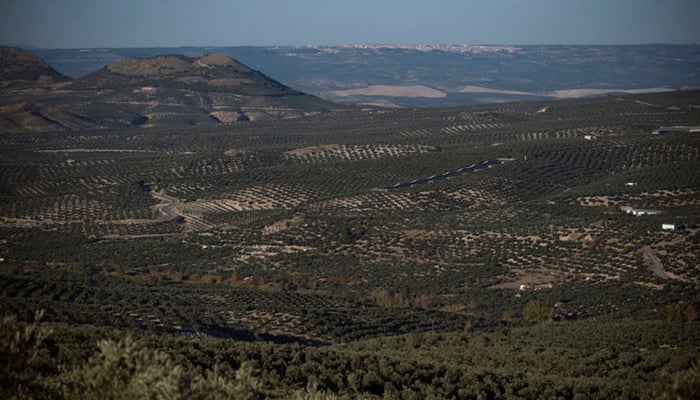
About 1.38 million hectares (3.4 million acres) of grains, sunflowers and olive trees have been affected by drought or frost in Spain as of the end of October, according to Spanish farming insurance agency Agroseguro.

It has dished out more than 200 million euros ($236 million) in compensation this year.

“You feel helpless like when you are sick, you can’t do anything. This sickness is called drought,” said Vicente Ortiz, a farmer and rancher in Spain’s central Castilla-La Mancha region, whose endless plain is depicted in “Don Quixote”, the famous work by Miguel de Cervantes.

Ortiz said his grain harvest has plunged 70 percent from last year and he expects to harvest half as many olives.

The situation is just as dire for farmers across the border in neighbouring Portugal.

“All crops are suffering from this lack of water in our region, from olives to grains and grapes,” said Fremelinda Carvalho, the president of the association of farmers on Portalegre in central Portugal.

The dry fields and forests have fuelled wildfires, which killed 109 people this year in Portugal and five in Galicia, many dying in their cars as they tried to flee the flames.
Water conflicts

Water reservoirs are at abnormally low levels.

In Portugal 28 of the country’s water reservoirs in October were at less than 40 percent of their storage capacity.

This weekend about a hundred fire trucks began transporting water from one dam in northern Portugal to another that is running dry and supplies water to Viseu, a city of around 100,000 residents.

In Spain the water reservoirs along the Tagus River, which empty into the Atlantic near Lisbon, were as of Monday at just 39.3 percent of their capacity.

The levels were even lower in the Douro River further north and the Segura River, which is used to irrigate crops in southeastern Spain.

Spain’s largest power company, Iberdrola, saw its hydroelectric power production plunge 58 percent during the first nine months of the year, compared to the same period last year, pushing up electricity prices.

The drought is also fuelling conflicts among regions over the use of water.

One source of tension is a massive aqueduct built in the 1960s during the Spanish dictatorship of Francisco Franco to siphon off water from the Tagus River to the smaller Segura River.

The Tagus River “can not support” this aqueduct, said Antonio Luengo, head of the agency that regulates water in Spain’s Castilla-La Mancha region.

The water diverted from the Tagus had been used to massively develop fruit and vegetable farms in southeastern Spain and now water from the Mediterranean must be desalinated to support these crops, he said.
Climate risks

Experts warn that droughts are likely to become more frequent and severe in the region.

“Spain has since 1980 shown signs of climate change, which have increased since 2000,” said Jorge Olcina, who heads the University of Alicante’s climate institute.

The country’s climate “tends to have more subtropical characteristics. Higher temperatures and rarer and more intense rains. So climate-related risks — heatwaves and rain and droughts and floods, will increase in the coming decades,” he added.

Spain has managed water “very badly”, said Julio Barea, spokesman for the Spanish branch of Greenpeace.

He cited as examples the use of water to irrigate trees that do not normally need much water, such as olive and almond trees, and the planting of water-intensive crops that are not suited to Spain’s Mediterranean climate.

Both governments have promised financial aid to farmers, who still anxiously wait for rain.

“We are constantly looking at the sky,” said Ortiz, the rancher in Castilla-La Mancha.

97% of Portugal in severe drought, 2,000 Spanish evacuated amid fires

CGTN

The local waterfront in Pampilhosa da Serra, Portugal. 
/Sergio Azenha/CFP


More than 97 percent of Portugal is in "severe drought" after its hottest May in almost a century – while a wildfire in southern Spain has caused the evacuation of thousands.

Portugal's national meteorological office IPMA has reported the country's hottest May since 1931, with rainfall in May "much lower than normal", amounting to just 13 percent of the average for May recorded between 1977 and 2000, the reference period.

As a result, there had been a "very significant spread of severe drought", which now affected 97 percent of the country, the IPMA said. A further 1.4 percent of the country is suffering "extreme drought" – the IPMA's highest classification.

Meanwhile, around 2,000 people were evacuated overnight as a fire raged through a forested area of southern Spain in an area badly hit by wildfires just nine months ago.

The blaze began on Wednesday afternoon in the mountainous Sierra Bermeja area, which lies inland from the resort of Estepona. The region is bracing for a heatwave that is expected to push temperatures above 40 degrees Celsius in the coming days.

"Almost 1,000 people" had been drafted in to help efforts to fight the fire and ensure security in the Pujerra area, the 112 emergency services in the southern Andalusia region said on Twitter. Of that number, around 500 were forest firefighters.

Last September, a huge wildfire raged for seven days in the Sierra Bermeja area, killing a firefighter and forcing 2,600 people from their homes as it burned through some 10,000 hectares of land.

The Iberian peninsula experienced a much drier winter than usual – it was Portugal's driest since 1931, with only 277mm of rainfall from October to mid-March.

It was also Spain's second driest and fourth warmest since 1961, according to the meteorological agency Aemet, with the Spanish mainland receiving only the equivalent of 45 percent of the average rainfall for a normal winter.

Scientists say repeated droughts are a sign of climate change. They are expected to become even more frequent, more prolonged and more intense in the future.

Source(s): AFP ,Reuters
Twice as many Londoners are now working from home as before the pandemic

New research has found that hybrid working is here to stay as people swap the commute for greater flexibility. But London's recovery is lagging behind other big UK cities, so what will that mean for the future of the capital?


Amy Borrett
Data journalist @amy_borrett
Wednesday 8 June 2022


Three-quarters of Londoners worked from home at least one day a week in spring 2022, according to new research from King's College London's Policy Institute and Business School.

This is a marked shift from before COVID-19, when less than half as many Londoners worked from home.

The researchers surveyed more than 2,000 people with a regular workplace in London, including those that live outside the city and commute in for work.

Their findings suggest hybrid working is here to stay and could have a profound impact on the future of London's economy.

Most people think this is the new normal. The survey found that almost three-quarters of London workers think they're never going back to working five days in the office.

This is true at all experience levels and ages, despite most London workers believing that senior managers want people to come in more often.

The capital hasn't returned to normal as quickly as other UK cities.

Data from the Centre for Cities shows that weekday footfall, a measure of activity in city centres, in London is 40% below pre-pandemic levels, while in other major cities it has already recovered.

Mark Kleinman, professor of public policy at King's College London, says that this doesn't reflect a slower economic recovery.

"London looks almost normal in terms of things like the West End, going out to shows and to sporting events, but it's definitely not back to normal in terms of people being in the office," he says.

"This is because London has more people in the kinds of occupations and sectors where it's possible to work from home compared to other cities in the UK, like finance and business services."

Why do people want to work from home?

Unsurprisingly, avoiding the commute was the most common reason for wanting to work from home.

This was closely followed by finding it easier to manage personal responsibilities and being more relaxed when at home.

But most people don't want to work from home all the time.

Almost three-quarters of Londoners would choose hybrid work if given the choice, with the most popular option being three-days a week out of the office.

Professor Kleinman says that this points to a "profound change" in the way the economy works.

"This is going to take a long time to shake out and there is a lot of experimentation going on," he says.

Some companies are trying to mandate a return to the office. But only 16% of people are positive about being forced back, according to the research.

Older people are more likely to be open to the idea. Almost 30% of people aged 50 and over would choose to be in the office full-time, compared to just 14% of 16 to 24-year-olds.

Will this negatively affect our work?

People are more likely to say they perform well when working from home than in the office.

But Londoners are finding it harder to connect with colleagues at home. And four in ten people find it harder to switch off at the end of the day.

There is no consensus about whether working from home will reduce the quality of life and the number of jobs in London.

But over-50s and Conservative voters are the most likely to be pessimistic about the impact on life in the capital.

Prof Kleinman says that there are welfare benefits to working from home, but also points out that communal working is the main driver of growth in cities.

"If people are happier with their working arrangements, then there are probably fewer negative consequences for the economy.

"But cities exist for a reason. Crowding together lots of talent, ideas and institutions is a fundamental driver of economic growth and that hasn't gone away.

"If you have a more dispersed workforce, you're going to lose some of that, which may slow down economic growth in the medium and long term."

Methodology

Researchers from King's College London's Policy Institute and Business School surveyed a representative sample of 2,015 London workers aged 16 and above, as defined by those with a regular workplace in London. This allowed them to capture the views of people who live outside London but would have commuted into the city in the past.

The Data and Forensics team is a multi-skilled unit dedicated to providing transparent journalism from Sky News. We gather, analyse and visualise data to tell data-driven stories. We combine traditional reporting skills with advanced analysis of satellite images, social media and other open source information. Through multimedia storytelling we aim to better explain the world while also showing how our journalism is done.