Wednesday, June 29, 2022

Can beavers catch chronic wasting disease?

beaver
Credit: Pixabay/CC0 Public Domain

Chronic wasting disease (CWD) is an infectious disease that affects the central nervous systems of animals, typically affecting cervids such as deer, elk and moose.

"CWD is always fatal. There's no cure, there are no treatments," says Debbie McKenzie, a professor in the Department of Biological Sciences.

CWD is increasing its geographic range as well as its prevalence. It is affecting populations in a wider range, while animals in areas with a history of CWD are being infected in higher numbers. Gathering data is the first step to stopping the spillover of the disease from cervids to other animals.

Researchers at the U of A examined potential transmission to , and found that they do appear susceptible to chronic  disease, according to a recent study published in Biology.

CWD first began appearing in the 1960s in small areas of Colorado and Wyoming, explains McKenzie. It's now in 30 states in the United States as well as three provinces. The prevalence is skyrocketing, within regions, too. Some areas near the Alberta-Saskatchewan border report rates of infection around 50 percent, and in areas around Swift Current, Sask., 85 percent of mule  bucks test positive for CWD.

"As it expands, more deer are exposed, and more of the landscape becomes contaminated," says McKenzie.

The susceptibility of other animals is important information because they have the potential to spread the disease. For example, if CWD were to jump into caribou populations, the geographical spread would amplify since caribou are migratory.

McKenzie and her team decided to start by examining beavers. "There's a lot of overlap between beavers and deer, particularly at water sources," McKenzie says. Additionally, deer will often rub against or urinate on trees that beavers use, making it likely that beavers could be exposed.

CWD is a , a family of diseases characterized by misfolded proteins. Other prion diseases include bovine spongiform encephalophy (BSE, or ). In collaboration with David Westaway and his team, McKenzie created a beaver analog in a lab model to study how an actual beaver might respond to infection with strains of prion protein from sources such as deer, elk, hamsters and mice. She was able to see which strains were infectious and which left the beaver analog unaffected.

The results were surprising. "We had no idea if CWD or any prion would go into beavers, so we basically took everything we had and tested it," says McKenzie. "We were absolutely astounded that nearly every strain showed infection."

Interspecies transmission complicates matters further, McKenzie explains. For example, there may be a strong species barrier preventing transmission between two particular species, but if a third species were to become infected, those previously unaffected species might become much more susceptible to infection from that third species.

"In terms of managing the disease, that's a critical component because even if you could come up with a strategy to manage CWD in deer, if it's in other species, it's going to make it that much more difficult to control."

As for humans becoming infected, McKenzie says there have been no reported cases of CWD infecting humans. However, she advises that the high prevalence and geographical expansion means that those who hunt may want to take safety measures.

"If you hunt and are going to eat venison, get your animal tested. If it's positive (for CWD), don't eat it, because we just don't know the potential impact," McKenzie says.

Though there are other prion diseases that affect humans, researchers and medical professionals aren't yet familiar with how CWD might present in human populations.

McKenzie and her team are planning to look at susceptibility of transmission into pronghorn antelope populations next. They're also examining environmental factors of CWD. For example, they want to find out whether and how prion proteins can be detected in the soil, and how long these infectious proteins remain in the soil.Breakthrough in chronic wasting disease research reveals distinct deer, elk prion strains

More information: Allen Herbst et al, Susceptibility of Beavers to Chronic Wasting Disease, Biology (2022). DOI: 10.3390/biology11050667

Provided by University of Alberta 
Seismic noise analysis could help monitor potential hazards in active mine

Date: June 28, 2022

Source:
Seismological Society of AmericaSummary:An active underground mine can be a seismically noisy environment, full of signals generated by heavy machinery at work and induced seismicity. Now, researchers working with data from a longwall coal mine demonstrate a way to extract and separate the signals generated from mining activity from the background seismic noise of the area.

FULL STORY

An active underground mine can be a seismically noisy environment, full of signals generated by heavy machinery at work and induced seismicity. Now, researchers working with data from a longwall coal mine demonstrate a way to extract and separate the signals generated from mining activity from the background seismic noise of the area.


This method, described in the Bulletin of the Seismological Society of America, could be useful in monitoring seismic events and the structural integrity of the mine as operations continue, according to Santiago Rabade, a Ph.D. candidate at the University of Utah, and colleagues.

Longwall coal mines are underground mines where a large wall or slice of coal is removed in miles-long panels. The researchers used data collected over one month from a 17-geophone array on the surface one such mine. The array was originally set up to record seismicity of the mine and seismic ambient noise over time, looking for potential subsurface changes.

Rabade and colleagues first used a cross-correlation method, which compares signals from each geophone station against each other within 5-minute windows. They identified two distinct groups of waveforms in the 1-5 Hz frequency range -- one containing strong and coherent signals and one without these signals.

After further analysis, the researchers could separate windows of time characterized by the strong coherent signals from those without the strong signals. They determined that the strong signal time windows were consistent with the progression of mining, while the other windows demonstrate the persistent seismic background noise that was expected for the region.

The researchers then used a location method on the mining-dominated windows to determine their sources. Their results over 24-hour and 5-minute time scales matched well with the position of the overall longwall operations and the location of recorded seismic events. The method makes it possible to "find different sources occurring simultaneously if they are coherent enough," said Rabade.

Rabade said the researchers haven't investigated whether the method could locate different types of individual machinery. "We think the location obtained from the time windows with mining activity is dominated by the signals emerging from the longwall shearing machine."

While the location method they used has been applied previously to track hydrothermal and volcanic tremors, he said the full workflow described in the BSSA study "can be a powerful tool to monitor real-time seismic sources in many active environments, for example, mines, volcanoes, geothermal or hydrothermal systems, fracking or wastewater injection sites, or oil and gas extraction areas."

While the researchers used one month of data to develop and test their method, Rabade said their process could be accelerated in future monitoring applications.

Journal Reference:Santiago Rabade, Sin-Mei Wu, Fan-Chi Lin, Derrick J. A. Chambers. Isolating and Tracking Noise Sources across an Active Longwall Mine Using Seismic Interferometry. Bulletin of the Seismological Society of America, 2022; DOI: 10.1785/0120220031
Rock samples from NASA's Curiosity Mars rover contain key ingredient of life

By Samantha Mathewson 
published about 24 hours ago
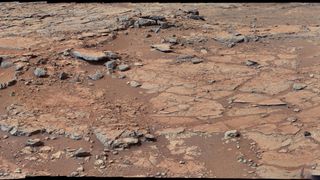
NASA's Mars rover Curiosity collected rock samples from the Yellowknife Bay
 formation of Gale crater. 
(Image credit: NASA/JPL-Caltech/MSSS)

Martian rock samples collected by NASA's Curiosity Mars rover show signs of key ingredients for life as we know it on Earth.

The venerable Curiosity Rover drilled samples from Gale crater, the site of an ancient lake on Mars. Using these samples, scientists were able, for the first time, to measure the total amount of organic carbon in Martian rocks, according to a statement from NASA(opens in new tab).

Organic carbon, which is carbon bound to a hydrogen atom, is a prerequisite for organic molecules created and used by all known forms of life. However, organic carbon can also come from non-living sources, such as meteorites and volcanic eruptions. While previous studies have detected organic carbon in smaller quantities in Martian rock samples, the new measurements provide insight into the total amount of carbon in organic compounds.

 VIDEO https://cdn.jwplayer.com/previews/QDBHjbSW

"Total organic carbon is one of several measurements [or indices] that help us understand how much material is available as feedstock for prebiotic chemistry and potentially biology," Jennifer Stern, lead author of the study and a space scientist at NASA's Goddard Space Flight Center in Greenbelt, Maryland, said in the statement. "We found at least 200 to 273 parts per million of organic carbon. This is comparable to or even more than the amount found in rocks in very low-life places on Earth, such as parts of the Atacama Desert in South America, and more than has been detected in Mars meteorites."

Today, Mars is not a suitable environment for life, but there is evidence to suggest the Red Planet was more Earth-like billions of years ago, with a thicker atmosphere and liquid water on its surface — key ingredients for life as we know it on Earth.

The Martian samples were collected from 3.5-billion-year-old mudstone rocks in the Yellowknife Bay formation of Gale Crater, which Curiosity has been exploring since 2012. Scientists think that the sediment was formed through physical and chemical weathering of volcanic rocks, before settling to the bottom of the lake.

The rover analyzed the fragments using its Sample Analysis at Mars (SAM) instrument, which uses oxygen and high heat to convert the organic carbon in the samples into carbon dioxide. From the amount of carbon dioxide produced, the instrument calculates how much organic carbon was in the original sample and tells the exact isotope ratio, which helps scientists understand the source of the carbon, according to the statement. Isotopes are forms of the same chemical element that differ in the number of neutrons in their cores.

"In this case, the isotopic composition can really only tell us what portion of the total carbon is organic carbon and what portion is mineral carbon," Stern said. "While biology cannot be completely ruled out, isotopes cannot really be used to support a biological origin for this carbon, either, because the range overlaps with igneous (volcanic) carbon and meteoritic organic material, which are most likely to be the source of this organic carbon."

However, in addition to organic carbon, the researchers identified other signs suggesting Gale crater may have once supported life, including the presence of chemical energy sources, and chemical compounds such as oxygen, nitrogen and sulfur and low acidity.

"Basically, this location would have offered a habitable environment for life, if it ever was present," Stern said in the statement.

Their findings were published Monday (June 27) in the Proceedings of the National Academy of Sciences.

RELATED STORIES: 


Contributing Writer
Samantha Mathewson joined Space.com as an intern in the summer of 2016. She received a B.A. in Journalism and Environmental Science at the University of New Haven, in Connecticut. Previously, her work has been published in Nature World News. When not writing or reading about science, Samantha enjoys traveling to new places and taking photos! You can follow her on Twitter @Sam_Ashley13

Identifying bird species by sound, an app opens new avenues for citizen science

Identifying bird species by sound, the BirdNET app opens new avenues for citizen science
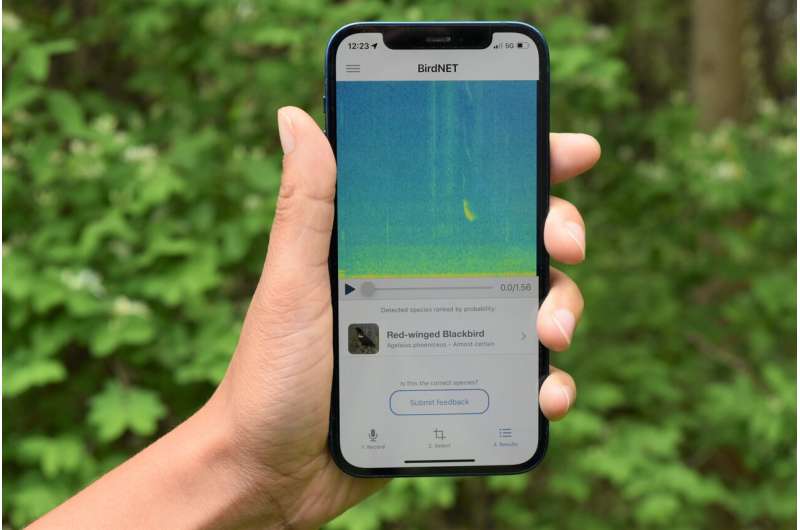
Researchers have developed the BirdNET App, where people can easily participate in bird
 research and conservation. Credit: Ashakur Rahaman, Yang Center/Cornell Lab of
 Ornithology (CC-BY 4.0, creativecommons.org/licenses/by/4.0/)

The BirdNET app, a free machine-learning powered tool that can identify over 3,000 birds by sound alone, generates reliable scientific data and makes it easier for people to contribute citizen-science data on birds by simply recording sounds

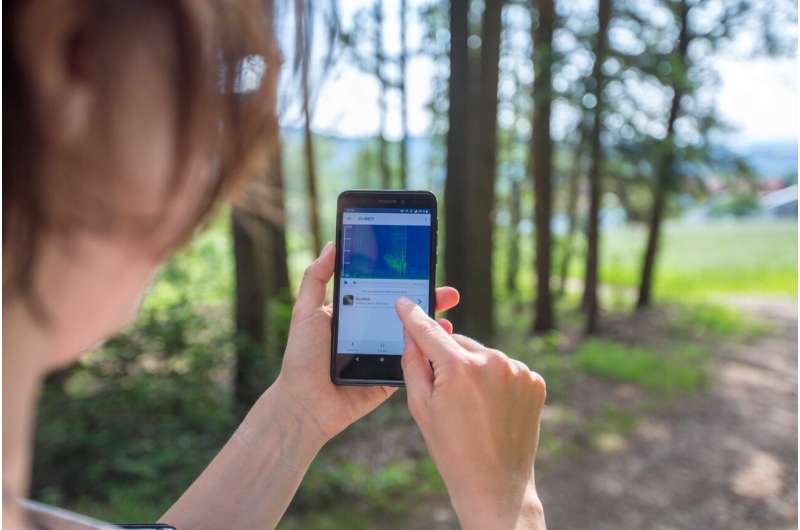
An article publishing June 28 in the open access journal PLOS Biology by Connor Wood and colleagues in the K. Lisa Yang Center for Conservation Bioacoustics at the Cornell Lab of Ornithology, U.S., suggests that the BirdNET app lowers the barrier to citizen science because it doesn't require bird-identification skills to participate. Users simply listen for birds and tap the app to record. BirdNET uses  to automatically identify the species by sound and captures the recording for use in research.

"Our guiding design principles were that we needed an accurate algorithm and a simple user interface," said study co-author Stefan Kahl in the Yang Center at the Cornell Lab, who led the technical development. "Otherwise, users would not return to the app." The results exceeded expectations: Since its launch in 2018, more than 2.2 million people have contributed data.

To test whether the app could generate reliable scientific data, the authors selected four test cases in which conventional research had already provided robust answers. Their results show that BirdNET app data successfully replicated known patterns of song dialects in North American and European songbirds and accurately mapped a  on both continents.

Identifying bird species by sound, the BirdNET app opens new avenues for citizen science
People can easily participate in bird research and conservation through the recently 
developed BirdNET App. Credit: Stefan Kahl, Yang Center/Cornell Lab of Ornithology 
(CC-BY 4.0, creativecommons.org/licenses/by/4.0/)

Validating the reliability of the app data for research purposes was the first step in what they hope will be a long-term, global research effort—not just for birds, but ultimately for all wildlife and indeed entire soundscapes. Data used in the four test cases is publicly available, and the authors are working on making the entire dataset open.

"The most exciting part of this work is how simple it is for people to participate in bird research and conservation," Wood adds. "You don't need to know anything about birds, you just need a , and the BirdNET app can then provide both you and the research team with a prediction for what bird you've heard. This has led to tremendous participation worldwide, which translates to an incredible wealth of data. It's really a testament to an enthusiasm for birds that unites people from all walks of life."

The BirdNET app is part of the Cornell Lab of Ornithology's suite of tools, including the educational Merlin Bird ID app and  apps eBird, NestWatch, and Project FeederWatch, which together have generated more than 1 billion bird observations, sounds, and photos from participants around the world for use in science and conservation.Bird call app downloaded one million times worldwide—now available for IOS devices

More information: The machine learning–powered BirdNET App reduces barriers to global bird research by enabling citizen science participation, PLoS Biology (2022). DOI: 10.1371/journal.pbio.3001670

Journal information: PLoS Biology 

Provided by Public Library of Science 

The youngest Canadian bilinguals are not a monolithic group, new research shows

language
Credit: Pixabay/CC0 Public Domain

A new Concordia study of early childhood bilingualism in Canada reveals a portrait of language acquisition in the home that reflects the country's diversity. Immigration patterns, urban–rural demography and Indigenous populations are some of the main contributing factors to this varied picture

The study, published in the journal Canadian Public Policy, shows that  between the ages of zero to nine years live very different experiences depending on where they grew up, who their parents are and how long their families have been in Canada. The results are based on data from the 2016 census.

The researchers looked at the number of bilingual children in Canada, which  pairs are most common and the predictors of a child growing up bilingual. Krista Byers-Heinlein, a professor of psychology in the Faculty of Arts and Science and one of the paper's authors, says that this study addresses a notable absence of scholarship on the topic.

"There were statistics on rates of bilingualism in adults and adolescents in Canada, but we didn't have clear numbers on the babies, toddlers or even school-age children growing up in bilingual homes across the whole country."

Differences in east versus west, north versus south

The researchers found that 18 percent of children under 10 in Canada use or are exposed to at least two languages at home. Likely more hear one language at home and another language outside the home, a pattern not captured by the census. In , this number rises to 25 percent, with rates highest in Canada's three : in Toronto, 29 percent of children aged zero to nine experience home bilingualism, in Vancouver 27.6 percent and 27 percent in Montreal.

Rates are even higher in Canada's northern territories, where 33.9 percent of young children are hearing and using two languages at home.

"The bilingual language pairs vary across the provinces and territories," explains Esther Schott, the study's lead author and a Ph.D. candidate at Byers-Heinlein's Concordia Infant Research Laboratory.

"In Quebec, for instance, the most common language pair is English-French, held by 40 percent of bilingual children, followed by French-Arabic and French-Spanish. But in British Columbia, the most common is English-Punjabi, held by 13.5 percent of all bilingual children. And in the northern territories, half of bilingual children are raised in a household speaking English and an Indigenous language."

The researchers also identified bilingual exposure and immigration generation as the most important predictors of bilingualism in .

While it is no surprise that children who are exposed to more than one language at home are more likely to be bilingual, they do note that one in two children living with a bilingual adult, and one in three living with two bilingual adults, were not actively bilingual at home.

Furthermore, the researchers show that roughly one in two children born outside of but now living in Canada is bilingual, but only one child in 15 with two parents born in Canada is bilingual. They believe this is the result of immigrant families assimilating into the dominant culture and language.

The authors created an interactive dashboard showing levels of bilingualism across the country with the most common language pairs to illustrate their findings.

Support must be specific

Bilingualism in Canada needs government and societal support to thrive, the researchers believe, and would deliver positive, long-lasting effects to the overall Canadian community.

"When children are supported in both their languages, they experience social, academic and employment benefits down the road," says co-author Lena Kremin, also a Ph.D. candidate at Byers-Heinlein's lab. "But that support needs to be adapted to and meet the different communities' needs. Whether it is through providing library books and story times in different languages, community events or language festivals, that support is going to be a big boost for those bilingual children."Children take longer to learn two languages at once compared to just one—don't fret

More information: Esther Schott et al, The Youngest Bilingual Canadians: Insights from the 2016 Census Regarding Children Aged 0–9 Years, Canadian Public Policy (2022). DOI: 10.3138/cpp.2021-064

Provided by Concordia University 

Children of the 90s study helps scientists pinpoint those most at risk of long COVID

hospital patient
Credit: Pixabay/CC0 Public Domain

A national study published today in Nature Communications suggests that those at greatest risk of long COVID are women, those aged 50–60, people with poor pre-pandemic mental health and those in poor general health, such as anyone with asthma or who is overweight.

Around 2 million people in the UK are affected by long COVID (ONS data, 1 May 2022), enduring symptoms for 12 weeks or more after they've been infected. Whilst the syndrome has been widely reported, the frequency and  for the condition are not well understood.

In order to develop new treatments, Children of the 90s—along with nine other population-based —has helped researchers to understand what causes some people to suffer the condition more than others. In parallel, researchers also utilized data from  collected by Spring 2021 for 1.1 million individuals diagnosed with COVID-19.

The research is part of the CONVALESCENCE study, which is run by University College London and is the first of its kind to look at long COVID.

Using existing studies, such as Children of the 90s where participants are surveyed regularly, allowed researchers to look at people's health before the pandemic, as well as including cases of long COVID that were not reported to the GP.

Children of the 90s' participant Michael from Bristol has been suffering from long COVID since November 2020. He said: "It's just never really gone away. One minute you're doing really fine and the next day you just don't have any energy and struggle to get out of bed…I don't feel I'm living my life as full as I was."

Key risk factors associated with increased risk in long COVID included:

  • age—with 1.2% of 20-year-olds experiencing impacts on , and 4.8% of 60-year-olds. Debilitating symptoms are roughly four times as common in 60-year-olds than 20-year-olds
  • being female
  • having poor pre-pandemic mental health and poor general health
  • having asthma
  • those with overweight or obesity problems.

Professor Nishi Chaturvedi from University College London leads the ongoing CONVALESCENCE study and has featured in a Children of the 90s Discovery film discussing some of the findings around long COVID. She says: "Children of the 90s participants have given scientists really valuable and in-depth information about many aspects of people's lives. Using pre-pandemic information, through clinic attendance and questionnaires, we've come to understand more about long COVID. Further investigations into the cause of long COVID should inform strategies to address the syndrome in the population."

Those suffering with long COVID can access an online public forum, which has been set up by the CONVALESCENCE project team. The aim of the forum is to ensure that a wider cross section of public and patient perspectives is included in discussions about how to define long COVID and in the broader research.Up to 1 in 6 people with COVID-19 report long COVID symptoms


More information: Ellen Thompson, Long COVID burden and risk factors in 10 UK longitudinal studies and electronic health records, Nature Communications (2022). DOI: 10.1038/s41467-022-30836-0www.nature.com/articles/s41467-022-30836-0
Journal information: Nature Communications 
Provided by University of Bristol 

PARALYSED MAN EATS WITH ROBOT HANDS

Fact versus fiction: ‘Forever chemicals’ hazardous substance designation is not a ban


If the Environmental Protection Agency designates the two best studied “forever chemicals” called PFAS as hazardous substances, manufacturers will not be forced to stop using them.

That’s because the relevant law, the Comprehensive Environmental Response, Liability, and Compensation Act, or CERCLA – better known as the Superfund law – doesn’t regulate use. It regulates cleanup. A CERCLA hazardous substance listing does not prevent responsible manufacturers from continuing to use PFAS. Instead, it governs the cleanup of sites contaminated by the release of hazardous substances and allows the EPA to recover costs from responsible polluters.

The need to clean up historic PFAS contamination has never been so urgent. This month, the EPA concluded that PFAS, which have been linked to cancer and other health harms, are far more toxic than previously thought.

Over the more than 40-year history of the Superfund law, designating a chemical a hazardous substance has rarely led manufacturers to stop using it. These hazardous substances are used by manufacturers every day, often in large quantities.

There are about 800 chemicals on the CERCLA hazardous substances list. Almost 700 have been on the list since 1980, when the Superfund law was passed. At least three-quarters, or 599, were likely still in active use as late as 2019, according to an EWG analysis that year. Nearly half, or 339, were not only still in production but also likely produced at high volume. One of the most produced and widely used chemicals in the world – sulfuric acid – has been classified a hazardous substance for more than 40 years.

Many false claims have been thrown around about the terrible consequences of this designation. Some members of Congress, repeating industry talking points, have claimed – incorrectly – that such a designation for PFAS would ground airplanes, end the use of life-saving heart stents and force us to throw out our masks.

For example, one legislator warned that “labeling all PFAS as hazardous poses a direct threat to FDA-approved drugs and devices” and “could lead to lives lost.” At the same hearing, another legislator asked whether the bill under discussion was “proposing to end the use of masks because many of them contain [PFAS].”

For all the doomsday scenarios being bandied about, the reality is quite different. CERCLA hazardous substances are often used in the medical field. Ethylene oxide is used to sterilize medical equipment. Xylene, toluene and formaldehyde help preserve tissue specimens. Dental amalgam fillings contain mercury. Several CERCLA hazardous substances, including arsenic trioxide, chlorambucil, cyclophosphamide, mechlorethamine, melphalan, mitomycin and diethylstilbestrol, are included on a list of hazardous drugs used in health care settings.

The use of these chemicals in drugs and medical devices won’t change if the EPA designates PFOA and PFOS as hazardous substances – because the CERCLA listing would not affect the factors the Food and Drug Administration considers when it makes decisions about which chemicals to allow in drugs and medical devices.

But here’s the most important reason the CERCLA designation does not amount to a ban: Manufacturers have already largely abandoned them because of a 2006 agreement with the EPA. There can be no de facto ban on chemicals that have already mostly been phased out.

The Superfund law distinguishes between chemicals designated hazardous substances and those considered mere “pollutants or contaminants.” The current law considers PFAS chemicals to be pollutants or contaminants, not hazardous substances. Because of this, the EPA and the states are severely constrained in what they can do to clean up PFAS pollution.

There are other important reasons for the designation. When a substance is only classified a pollutant or contaminant, it must be proven an “imminent and substantial danger” to public health before a site can be investigated and cleaned up. Even when the EPA can meet that high standard, it’s hampered in the actions it can take. Perhaps most important, the EPA has no way to make sure the polluters responsible for the contamination pay for the cleanup.

But for any chemical labeled a hazardous substance, releases into the air, land or water above a certain threshold trigger reporting requirements, investigation and potential cleanup.

Designating PFOA and PFOS will give the EPA new tools to address PFAS in thousands of communities across the country and finally hold polluters accountable for decades of contamination.

Engineers studying how PFAS interact with environment

Improved understanding is first step toward remediation


View image credit

By Tamara Dietrich
June 3, 2022

Environmental engineer Detlef Knappe was surveying water quality in North Carolina watersheds in 2013 when his team found something surprising in the Cape Fear River Basin: high levels of a group of human-created chemicals called “PFAS” that are linked to a host of health issues, including cancer.

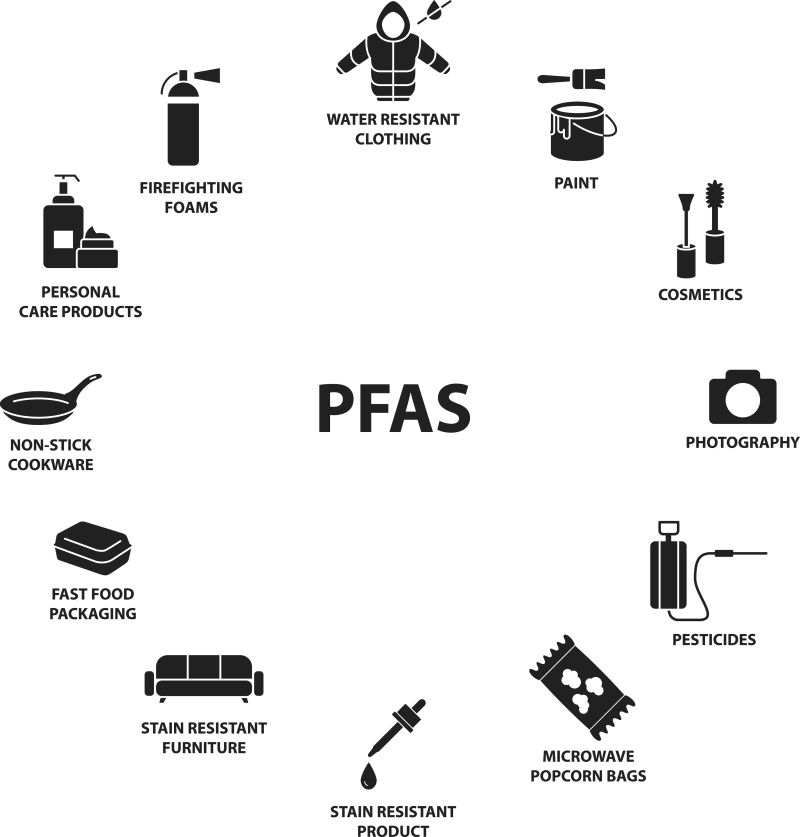
PFAS, or per- and polyfluoroalkyl substances, are a class of chemical compounds that show high chemical stability due to the strong bonds between carbon and fluorine. They have been used worldwide since the 1940s to make a wide range of consumer products, including food packaging, personal care products, nonstick cookware, stain-resistant fabrics and paint. Airports, industrial sites and military installations also contribute to higher PFAS levels in water, soil and air.

 
Products that contain PFAS.
Credit: Shutterstock/Vector Street

The high stability of these chemicals makes them resistant to processes that normally break chemicals down in the environment, which is why they are called “forever chemicals.” They persist and can build up in a person’s bloodstream and organs — by some estimates, everyone in the U.S. has PFAS in their blood.

Research suggests that long-term exposure to high levels of some PFAS can have a range of health impacts. In 2002, the U.S. began phasing out production and use of some PFAS, but thousands of others remain in production, and new ones are still being developed. Even phased-out PFAS can still be found in the environment, and in food and drinking water.
Tracking PFAS in North Carolina

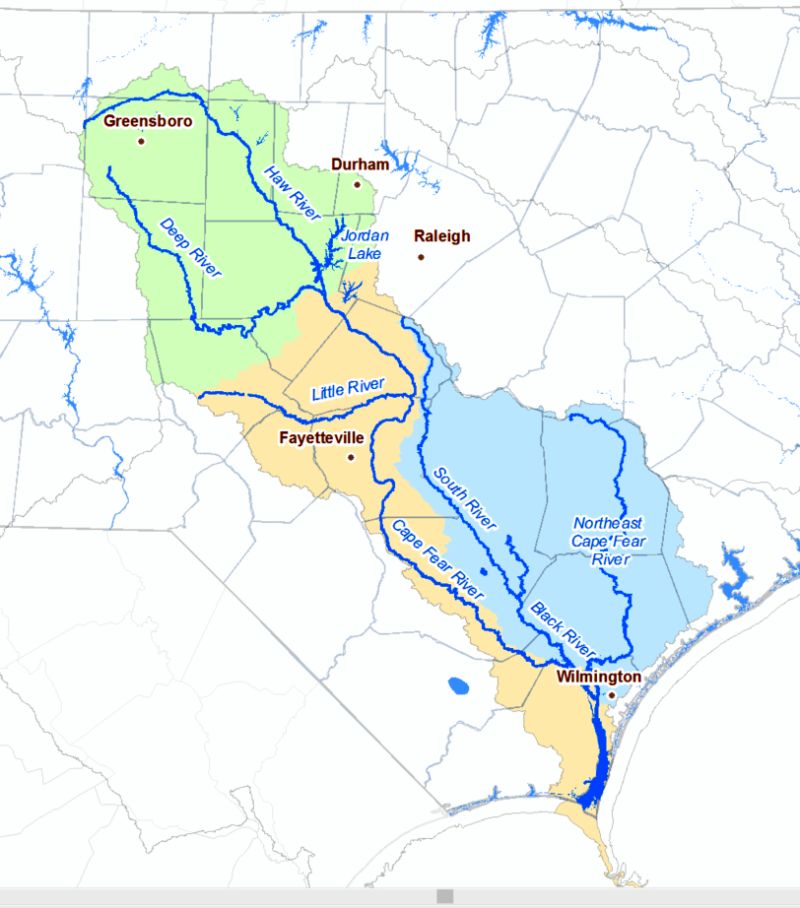
Knappe, a professor at North Carolina State University in Raleigh, and his students, with support from two NSF grants, spent several years investigating PFAS chemicals, including GenX, found in the Cape Fear River Basin, which is used as a drinking water source for up to 1.5 million people in North Carolina. The team wanted to better understand where the chemicals were originating and where the contamination was spreading. Their findings sparked a movement to clean up the Cape Fear River watershed.

 
The Cape Fear River Basin, where NSF-supported researchers found PFAS, 
is the source of drinking water for more than 1 million people in North Carolina.
Credit: N.C. Department of Environmental Quality

“There was a very immediate outcry from public officials and community members,” Knappe said. The N.C. Department of Environmental Quality ordered The Chemours Company, a chemical company spun off from DuPont in 2015, to stop discharging into the river and collect their processed wastewater. As a result, PFAS and GenX levels downstream of the plant have decreased. The state is now monitoring for PFAS and has set goals to limit the amount of chemicals found in drinking water.

Knappe counts NSF’s investments as a big success. “While they were rather small monetarily,” he said, “they were probably the most impactful grants I had in terms of making a difference for the public.”
Reducing contamination from PFAS

“The persistence of PFAs in the environment is the challenge,” said Jeanne VanBriesen, division director of NSF’s Division of Chemical, Bioengineering, Environmental and Transport Systems. “It's one of a class of chemicals that are famous because of how they remain in the environment a long time. Natural processes that would degrade or break down other chemicals don’t work on these. Understanding the fundamental questions of where these chemicals go and what controls their movement can give us insights on effective ways to remove it from our drinking water.”

PFAS are largely impervious to today’s conventional water treatment methods. In the last few years, NSF research has explored development of new filtration systems, including an ongoing material science project involving Knappe to see if a combination of environmentally friendly graphene oxide and cyclodextrin can selectively capture PFAS. The study will contribute to the fundamental understanding of the molecular interactions of PFAS and provide information for the development of sustainable strategies for PFAS remediation.

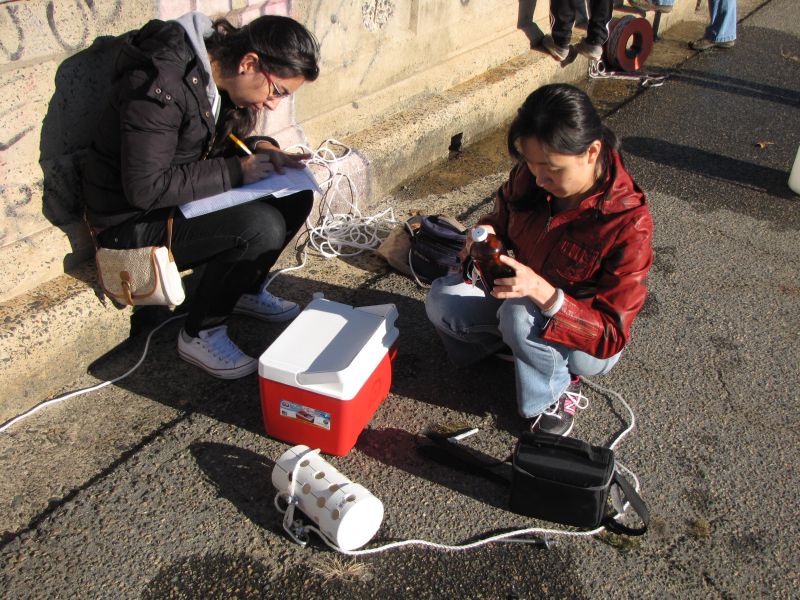
Post docs Mei Sun and Catalina Lopez collect water samples from the Haw River to test for PFAS and other contaminants.
Credit: NC State University

In 2021, NSF invested more than $4.1 million in nine fundamental research projects to create new strategies to remove PFAS from the environment. Researchers are using a range of approaches, from capturing the chemicals to changing them into benign products. This research is co-funded by NSF’s Environmental Engineering program in the Division of Chemical, Bioengineering, Environmental and Transport Systems, and DuPont de Nemours Inc.

“This research investigates how to remove PFAS from water and soil, and how to transform PFAS into chemicals that can be broken down in the environment,” VanBriesen said. “The new remediation methods must be feasible, effective and sustainable.

“What we learn with PFAS may be extended to other chemicals – ones we know about today, and ones we don't know about yet. The new techniques and deeper understanding of these chemicals in the environment should help us in the future.”

About the Author


Tamara Dietrich
Senior Technical Writer/Editor
Tamara Dietrich is a Senior Technical Writer/Editor at NSF in the Office of the Director, Office of Legislative and Public Affairs. She is NSF’s Social Media Writer, with expertise in science and environment writing. Before coming to NSF, Tamara was an award-winning journalist, columnist and editor at numerous daily newspapers. Her work has appeared in The Washington Post, Los Angeles Times, Chicago Tribune, Virginian-Pilot, U.S. News & World Report, phys.org and other publications. She is the author of a novel, “The Hummingbird’s Cage,” published by Penguin Random House in the U.S. and by the Orion Publishing Group in the U.K. The book was optioned by a British film company. She is also lead author of a nonfiction account of the first 100 years of NASA Langley Research Center, “The Unknown and Impossible: How a research facility in Virginia mastered the air and conquered space.” Outside of science, Tamara enjoys photography, poetry, road trips and international travel.
Flat-Earth videos show how conspiracy theories spread, and can help us fight disinformation


Studying how flat Earthers talk about their beliefs, we can learn what makes disinformation spread online.

Carlos Diaz Ruiz

Around the world, and against all scientific evidence, a segment of the population believes that Earth’s round shape is either an unproven theory or an elaborate hoax.

Polls by YouGov America in 2018 and FDU in 2022 found that as many as 11 per cent of Americans believe the Earth might be flat.

It is tempting to dismiss “flat Earthers” as mildly amusing, but we ignore their arguments at our peril.

Polling shows that there is an overlap between conspiracy theories, some of which can act as gateways for radicalisation. QAnon and the great replacement theory, for example, have proved deadly more than once.

By studying how flat Earthers talk about their beliefs, we can learn how they make their arguments engaging to their audience, and in turn, learn what makes disinformation spread online.

In a recent study, my colleague Tomas Nilsson at Linnaeus University and I analysed hundreds of YouTube videos in which people argue that the Earth is flat.

We paid attention to their debating techniques to understand the structure of their arguments and how they make them appear rational.

One strategy they use is to take sides in existing debates.

People who are deeply attached to one side of a culture war are likely to wield any and all arguments (including truths, half-truths and opinions), if it helps them win.

People invest their identity into the group and are more willing to believe fellow allies rather than perceived opponents – a phenomenon that sociologists call neo-tribalism.

The problem arises when people internalise disinformation as part of their identity. News articles can be fact-checked, but personal beliefs cannot. When conspiracy theories are part of someone’s value system or world view, it is difficult to challenge them.


The three themes of the flat-Earth theory

In analysing these videos, we observed that flat Earthers take advantage of ongoing culture wars by inserting their own arguments into the logic of, primarily, three main debates.

These debates are longstanding and can be very personal for participants on either side.

First is the debate about the existence of God, which goes back to antiquity, and is built on reason, rather than observation.

People already debate atheism v faith, evolution v creationism, and Big Bang v intelligent design.

What flat Earthers do is set up their argument within the long-standing struggle of the Christian right, by arguing that atheists use pseudoscience – evolution, the Big Bang and round Earth – to sway people away from God.

A common flat Earther refrain that taps into religious beliefs is that God can inhabit the heavens above us physically only in a flat plane, not a sphere.

As one flat Earther put it: They invented the Big Bang to deny that God created everything, and they invented evolution to convince you that He cares more about monkeys than about you … they invented the round Earth because God cannot be above you if He is also below you, and they invented an infinite universe, to make you believe that God is far away from you.

The second theme is a conspiracy theory that sees ordinary people stand against a ruling elite of corrupt politicians and celebrities.

Knowledge is power, and this theory argues that those in power conspire to keep knowledge for themselves by distorting the basic nature of reality.

The message is that people are easily controlled if they believe what they are told rather than their own eyes.

Indeed, the Earth does appear flat to the naked eye. Flat Earthers see themselves as part of a community of unsung heroes, fighting against the tyranny of an elite who make the public disbelieve what they see.

The third theme is based on the “freethinking” argument, which dates back to the spirited debate about the presence or absence of God in the text of the US constitution.

This secularist view argues that rational people should not believe authority or dogma – instead, they should trust only their own reason and experience.

Freethinkers distrust experts who use “book knowledge” or “nonsense math” that laypeople cannot replicate.

Flat Earthers often use personal observations to test whether the Earth is round, especially through home-made experiments. They see themselves as the visionaries and scientists of yesteryear, like a modern-day Galileo.

Possible counterarguments

Countering disinformation on social media is difficult when people internalise it as a personal belief.

Fact-checking can be ineffective and backfire, because disinformation becomes a personal opinion or value.

Responding to flat Earthers (or other conspiracy theorists) requires understanding the logic that makes their arguments persuasive.

For example, if you know that they find arguments from authority unconvincing, then selecting a government scientist as a spokesperson for a counterargument may be ineffective.

Instead, it may be more appealing to propose a home-made experiment that anyone can replicate.

If you can identify the rationality behind their specific beliefs, then a counterargument can engage that logic.

Insiders of the group are often key to this – only a spokesperson with impeccable credentials as a devout Christian can say that you do not need the flat-Earth beliefs to remain true to your faith.

Overall, beliefs like flat-Earth theory, QAnon and the great replacement theory grow because they appeal to a sense of group identity under attack.

Even far-fetched misinformation and conspiracies can seem rational if they fit into existing grievances.

Since debates on social media require only posting content, participants create a feedback loop that solidifies disinformation as points of view that cannot be fact-checked.

Carlos Diaz Ruiz, assistant professor, Hanken School of Economics

This article is republished from The Conversation under a Creative Commons licence. Read the original article.