Friday, October 14, 2022

CRIMINAL CAPITALI$M; BANK ROBBERY
Wells Fargo profit falls on sales scandal costs, higher reserves

By Lananh Nguyen
and Noor Zainab Hussain
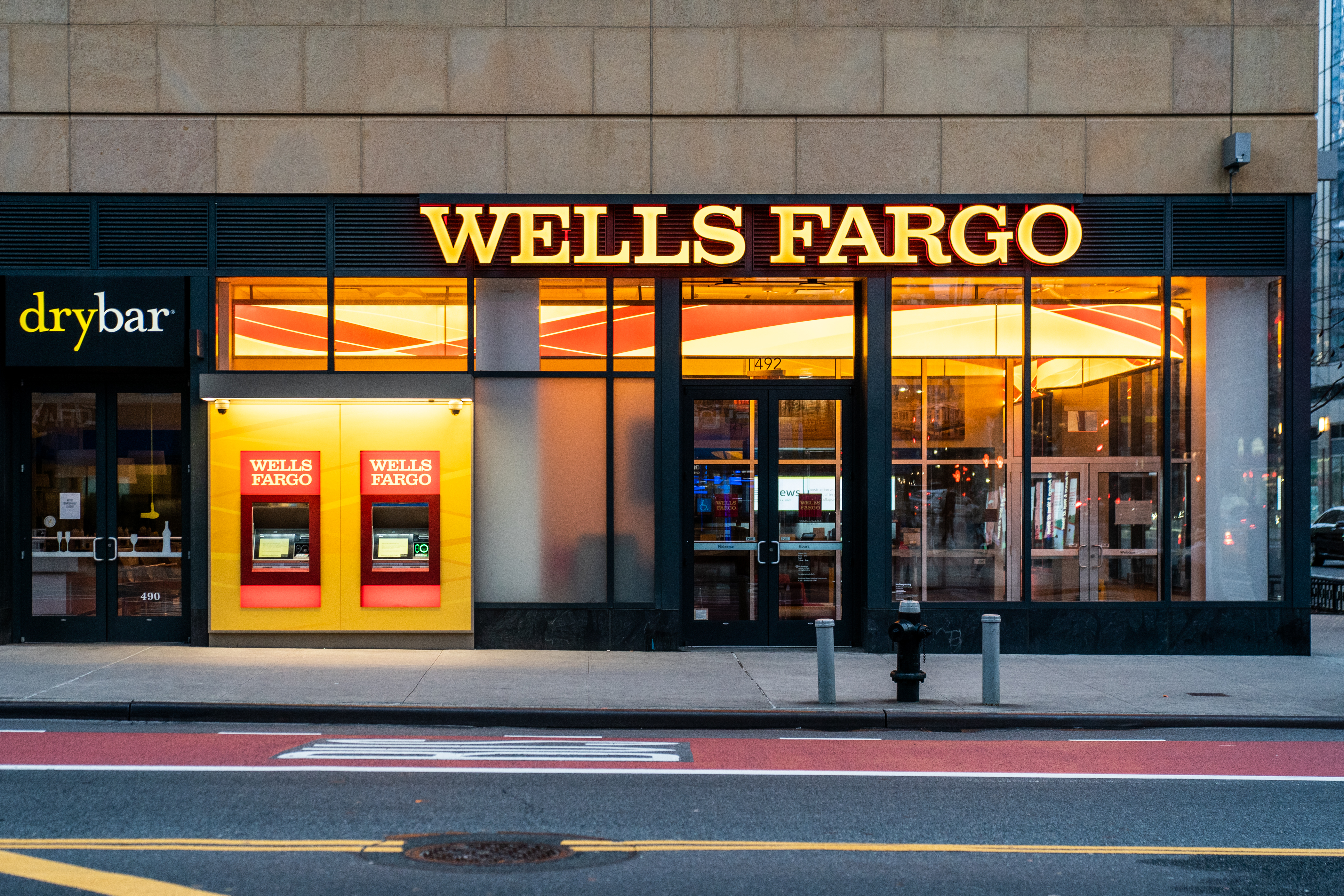

Wells Fargo Bank branch is seen in New York City, U.S., March 17, 2020. 
REUTERS/Jeenah Moon

Oct 14 (Reuters) - Wells Fargo & Co (WFC.N) on Friday reported a 31% decline in third-quarter profit as the bank racked up costs related to a fake accounts scandal and boosted its loan loss reserves in preparation for a potential slowdown.

The bank posted $2 billion in operating losses related to litigation, customer remediation, and regulatory matters associated with the now six-year-old scandal over its sales practices.

"Outstanding litigation, customer remediation and regulatory matters still remain and will likely result in additional expense in the coming quarters, which could be significant," Chief Financial Officer Mike Santomassimo said.

"Our top priority remains strengthening our risk and control infrastructure which includes addressing open historical issues and issues that are identified as we advance this work," Chief Executive Officer Charlie Scharf said in a statement.

"We remain at risk of setbacks as we work to complete the work and put these issues behind us and expenses this quarter reflect our ongoing efforts." Excluding items, the fourth-largest U.S. lender earned $1.30 per share, beating analyst expectations of $1.09 per share, according to Refinitiv IBES data.

Wells Fargo shares rose 4% to $43.99 in afternoon trade. They have dropped around 12% so far this year, as of last close.

Meanwhile, the bank set aside $784 million in the quarter for credit losses, compared with a $1.4 billion release a year earlier, when extraordinary government stimulus helped the economy to rebound from the pandemic hit.

The provisions included a $385 million increase in the allowance for credit losses reflecting loan growth and a less favorable economic environment, the bank said.

Banks are building up rainy day funds again amid worries that aggressive interest rate increases by the Federal Reserve to tame stubbornly high inflation will tip the U.S. economy into a recession.

The outlook has been further clouded by the Russia-Ukraine war and fading stimulus measures. Higher borrowing costs have also shackled demand for mortgages and car loans, crimping banks' revenues.

Non-interest expense rose 8%, while net interest income jumped 36%, primarily due to the impact of higher interest rates and higher loan balances.

The Fed raised interest rates by 150 basis points in the third quarter taking its key rate to the 3.00%-3.25% range, the highest level since 2008, helping banks earn more from loans.

Wells Fargo's average loans rose to $945.5 billion from $854 billion a year earlier.

The bank reported a profit of $3.53 billion, or 85 cents per share, for the quarter ended Sept. 30, compared with $5.12 billion, or $1.17 per share, a year earlier.

Wells Fargo's net interest income will rise 24% this year, up from its previous guidance of 20%, Santomassimo told reporters on a conference call.

"Both consumer and business customers remain in a strong financial condition, and we continue to see historically low delinquencies and high payment rates across our portfolios," Scharf said.

He said the bank was closely monitoring risks related to the continued impact of high inflation, increasing interest rates, as well as the broader geopolitical risks.

"While we do expect to see continued increases in delinquencies and ultimately credit losses, the timing remains unclear," Scharf continued.
Small modular reactors, energy transition key parts of Türkiye-US energy dialogue: Official

Ankara, Washington committed to cooperate on overcoming immediate challenges on gas supply issues, says senior US official

Nuran Erkul Kaya |13.10.2022


ISTANBUL

Türkiye and the US can focus more on small modular reactors in nuclear energy and transitioning from fossil fuels to low-carbon energy sources in their longer-term dialogue, a senior American official said on Thursday.

Besides the immediate challenges of the energy crisis, gas supplies, and Russia's war on Ukraine, the two countries are also committed to “the longer-term issue of transition,” said Geoffrey Pyatt, assistant secretary of state for energy resources, on a three-nation tour to Bulgaria, Romania, and Türkiye.

After meeting with Alparslan Bayraktar, the Turkish deputy minister of energy and natural resources, as well as other officials and energy sector leaders, Pyatt told Anadolu Agency that he had “a very rich round of discussions” in Türkiye, where he was visiting as part of a three-nation tour on Oct. 10-14 that also included Bulgaria and Romania.

“I found a very high degree of agreement with my Turkish counterparts on this visit regarding the importance of stability in the market, importance of our dialogue that we have established between Washington and Ankara on all of the issues around the geopolitics of global energy and energy transition,” the US official said in the exclusive interview on the sidelines of the Atlantic Council's Regional Clean Energy Outlook Conference in Istanbul.

The Turkish government has the understanding that the name of the game is more wind, solar, hydro, and small modular nuclear reactors, he noted, explaining that nuclear power has a critical role in the US, while recent legislation had paved the way to extend the operation of domestic reactors.

Washington supports ongoing discussions in Europe on how to bring new projects to scale and to market as quickly as possible, Pyatt underlined. He also said that small modular nuclear reactors would be part of the solution to the world’s current energy-related conundrums.

"It is a challenge that we are committed to work together on between the US and Türkiye, issues like the regulatory environment for these reactors, in order to ensure and to assure communities that these projects can be rolled out safely. But it also has to make commercial sense," he said, pointing out that there was a clear revival of interest in nuclear power in many parts of the world.

Nuclear accounts for about 20% of the US’ total energy mix as a clean and sustainable power source, Pyatt added.

US companies could invest in LNG infrastructure in Europe

On the current natural gas crisis and its impacts, Pyatt said the current situation was "caused uniquely by (Russian President) Vladimir Putin and the Russian government" which he accused of weaponizing its energy resources.

"That disruption (in gas supplies) is being felt around the world, literally, in every corner of the globe in terms of inflation, commodity prices. Europe is particularly vulnerable because of how Europe over time had evolved its industrial structures to be linked, in particular to Russian gas supplies," Pyatt said.

He pointed out that Europe acknowledges that Russia has been able to take advantage of its position of dependency.

"I am convinced that no one will ever see Russia as a reliable energy supplier, as long as Russia is doing what it is doing to Ukraine today," Pyatt said.

The US has increased its liquified natural gas (LNG) exports to Europe to ease the gas crisis, with 15 billion cubic meters of American LNG earmarked for this year and the country on track to be the world's largest LNG exporter this year, he added.

"We will continue to stay in lockstep with all of our European partners,” said the official, adding that this would also be important to Türkiye, as well as its non-EU neighbors.

The Western Balkans are in a position of “particular vulnerability,” as those countries get “100% of their gas from Russia," Pyatt said, adding that US LNG companies have been successfully working with Türkiye as an LNG buyer.

US companies also have plans to invest in LNG infrastructure in Europe, Pyatt said. "It is not the US government. It is our companies (that) have built the very expensive infrastructure that is required for liquification on the US side and the companies that are involved in the marketing," he explained, pointing out to the importance of building supportive and cooperative infrastructure among countries of the region.

“This is how we can most effectively push back on what Russia has tried to do by weaponizing its energy resources,” Pyatt noted.

‘Unfortunate’ production cut decision by OPEC+

On a recent decision by the Organization of Petroleum Exporting Countries (OPEC) and allies, known as OPEC+, to cut oil output, Pyatt said the US government had made clear at the most senior level, including the national security adviser, how disappointed it was in this decision.

OPEC+ agreed on Wednesday to cut production by 2 million barrels per day (bpd) from the August 2022 required production levels, starting November.

The decision by is a “clear” sign that the bloc is siding with Russia amid a growing power rivalry with the West, the White House said last Wednesday after the announcement of the move.

“How unfortunate we think it is in light of global oil markets and exactly the moment when the international community is trying to grow itself out of the COVID-19 crisis and the economic slowdown that produced and this huge shock caused by Vladimir Putin's invasion of a sovereign Ukraine,” Pyatt said.

He concluded, however, by saying that he did not want to speculate on the Saudi motivation on the decision.

SEE


The Exploited Labor Behind Artificial Intelligence

Supporting transnational worker organizing should be at the center of the fight for “ethical AI.”


Nash Weerasekera for Noema Magazine


OCTOBER 13, 2022
Adrienne Williams and Milagros Miceli are researchers at the Distributed AI Research (DAIR) Institute. Timnit Gebru is the institute’s founder and executive director. She was previously co-lead of the Ethical AI research team at Google.


The public’s understanding of artificial intelligence (AI) is largely shaped by pop culture — by blockbuster movies like “The Terminator” and their doomsday scenarios of machines going rogue and destroying humanity. This kind of AI narrative is also what grabs the attention of news outlets: a Google engineer claiming that its chatbot was sentient was among the most discussed AI-related news in recent months, even reaching Stephen Colbert’s millions of viewers. But the idea of superintelligent machines with their own agency and decision-making power is not only far from reality — it distracts us from the real risks to human lives surrounding the development and deployment of AI systems. While the public is distracted by the specter of nonexistent sentient machines, an army of precarized workers stands behind the supposed accomplishments of artificial intelligence systems today.

Many of these systems are developed by multinational corporations located in Silicon Valley, which have been consolidating power at a scale that, journalist Gideon Lewis-Kraus notes, is likely unprecedented in human history. They are striving to create autonomous systems that can one day perform all of the tasks that people can do and more, without the required salaries, benefits or other costs associated with employing humans. While this corporate executives’ utopia is far from reality, the march to attempt its realization has created a global underclass, performing what anthropologist Mary L. Gray and computational social scientist Siddharth Suri call ghost work: the downplayed human labor driving “AI”.

Tech companies that have branded themselves “AI first” depend on heavily surveilled gig workers like data labelers, delivery drivers and content moderators. Startups are even hiring people to impersonate AI systems like chatbots, due to the pressure by venture capitalists to incorporate so-called AI into their products. In fact, London-based venture capital firm MMC Ventures surveyed 2,830 AI startups in the EU and found that 40% of them didn’t use AI in a meaningful way.

Far from the sophisticated, sentient machines portrayed in media and pop culture, so-called AI systems are fueled by millions of underpaid workers around the world, performing repetitive tasks under precarious labor conditions. And unlike the “AI researchers” paid six-figure salaries in Silicon Valley corporations, these exploited workers are often recruited out of impoverished populations and paid as little as $1.46/hour after tax. Yet despite this, labor exploitation is not central to the discourse surrounding the ethical development and deployment of AI systems. In this article, we give examples of the labor exploitation driving so-called AI systems and argue that supporting transnational worker organizing efforts should be a priority in discussions pertaining to AI ethics.

We write this as people intimately connected to AI-related work. Adrienne is a former Amazon delivery driver and organizer who has experienced the harms of surveillance and unrealistic quotas established by automated systems. Milagros is a researcher who has worked closely with data workers, especially data annotators in Syria, Bulgaria and Argentina. And Timnit is a researcher who has faced retaliation for uncovering and communicating the harms of AI systems.

Treating Workers Like Machines

Much of what is currently described as AI is a system based on statistical machine learning, and more specifically, deep learning via artificial neural networks, a methodology that requires enormous amounts of data to “learn” from. But around 15 years ago, before the proliferation of gig work, deep learning systems were considered merely an academic curiosity, confined to a few interested researchers.

In 2009,however, Jia Deng and his collaborators released the ImageNet dataset, the largest labeled image dataset at the time, consisting of images scraped from the internet and labeled through Amazon’s newly introduced Mechanical Turk platform. Amazon Mechanical Turk, with the motto “artificial artificial intelligence,” popularized the phenomenon of “crowd work”: large volumes of time-consuming work broken down into smaller tasks that can quickly be completed by millions of people around the world. With the introduction of Mechanical Turk, intractable tasks were suddenly made feasible; for example, hand-labeling one million images could be automatically executed by a thousand anonymous people working in parallel, each labeling only a thousand images. What’s more, it was at a price even a university could afford: crowdworkers were paid per task completed, which could amount to merely a few cents.


“So-called AI systems are fueled by millions of underpaid workers around the world, performing repetitive tasks under precarious labor conditions.”


The Image

Net dataset was followed by the ImageNet Large Scale Visual Recognition Challenge, where researchers used the dataset to train and test models performing a variety of tasks like image recognition: annotating an image with the type of object in the image, such as a tree or a cat. While non-deep-learning-based models performed these tasks with the highest accuracy at the time, in 2012, a deep-learning-based architecture informally dubbed AlexNet scored higher than all other models by a wide margin. This catapulted deep-learning-based models into the mainstream, and brought us to today, where models requiring lots of data, labeled by low-wage gig workers around the world, are proliferated by multinational corporations. In addition to labeling data scraped from the internet, some jobs have gig workers supply the data itself, requiring them to upload selfies, pictures of friends and family or images of the objects around them.

Unlike in 2009, when the main crowdworking platform was Amazon’s Mechanical Turk, there is currently an explosion of data labeling companies. These companies are raising tens to hundreds of millions in venture capital funding while the data labelers have been estimated to make an average of $1.77 per task. Data labeling interfaces have evolved to treat crowdworkers like machines, often prescribing them highly repetitive tasks, surveilling their movements and punishing deviation through automated tools. Today, far from an academic challenge, large corporations claiming to be “AI first” are fueled by this army of underpaid gig workers, such as data laborers, content moderators, warehouse workers and delivery drivers.

Content moderators, for example, are responsible for finding and flagging content deemed inappropriate for a given platform. Not only are they essential workers, without whom social media platforms would be completely unusable, their work flagging different types of content is also used to train automated systems aiming to flag texts and imagery containing hate speech, fake news, violence or other types of content that violates platforms’ policies. In spite of the crucial role that content moderators play in both keeping online communities safe and training AI systems, they are often paid miserable wages while working for tech giants and forced to perform traumatic tasks while being closely surveilled.

Every murder, suicide, sexual assault or child abuse video that does not make it onto a platform has been viewed and flagged by a content moderator or an automated system trained by data most likely supplied by a content moderator. Employees performing these tasks suffer from anxiety, depression and post-traumatic stress disorder due to constant exposure to this horrific content.

Besides experiencing a traumatic work environment with nonexistent or insufficient mental health support, these workers are monitored and punished if they deviate from their prescribed repetitive tasks. For instance, Sama content moderators contracted by Meta in Kenya are monitored through surveillance software to ensure that they make decisions about violence in videos within 50 seconds, regardless of the length of the video or how disturbing it is. Some content moderators fear that failure to do so could result in termination after a few violations. “Through its prioritization of speed and efficiency above all else,” Time Magazine reported, “this policy might explain why videos containing hate speech and incitement to violence have remained on Facebook’s platform in Ethiopia.”

Similar to social media platforms which would not function without content moderators, e-commerce conglomerates like Amazon are run by armies of warehouse workers and delivery drivers, among others. Like content moderators, these workers both keep the platforms functional and supply data for AI systems that Amazon may one day use to replace them: robots that stock packages in warehouses and self-driving cars that deliver these packages to customers. In the meantime, these workers must perform repetitive tasks under the pressure of constant surveillance — tasks that, at times, put their lives at risk and often result in serious musculoskeletal injuries.

“Data labeling interfaces have evolved to treat crowdworkers like machines, often prescribing them highly repetitive tasks, surveilling their movements and punishing deviation through automated tools.”


Amazon warehouse employees are tracked via cameras and their inventory scanners, and their performance is measured against the times managers determine every task should take, based on aggregate data from everyone working at the same facility. Time away from their assigned tasks is tracked and used to discipline workers.

Like warehouse workers, Amazon delivery drivers are also monitored through automated surveillance systems: an app called Mentor tallies scores based on so-called violations. Amazon’s unrealistic delivery time expectations push many drivers to take risky measures to ensure that they deliver the number of packages assigned to them for the day. For instance, the time it takes someone to fasten and unfasten their seatbelt some 90-300 times a day is enough to put them behind schedule on their route. Adrienne and many of her colleagues buckled their seat belts behind their backs, so that the surveillance systems registered that they were driving with a belt on, without getting slowed down by actually driving with a belt on.

In 2020, Amazon drivers in the U.S. were injured at a nearly 50% higher rate than their United Parcel Service counterparts. In 2021, Amazon drivers were injured at a rate of 18.3 per 100 drivers, up nearly 40% from the previous year. These conditions aren’t only dangerous for delivery drivers — pedestrians and car passengers have been killed and injured in accidents involving Amazon delivery drivers. Some drivers in Japan recently quit in protest because they say Amazon’s software sent them on “impossible routes,” leading to “unreasonable demands and long hours.” In spite of these clear harms, however, Amazon continues to treat its workers like machines.

In addition to tracking its workers through scanners and cameras, last year, the company required delivery drivers in the U.S. to sign a “biometric consent” form, granting Amazon permission to use AI-powered cameras to monitor drivers’ movements — supposedly to cut down on distracted driving or speeding and ensure seatbelt usage. It’s only reasonable for workers to fear that facial recognition and other biometric data could be used to perfect worker-surveillance tools or further train AI — which could one day replace them. The vague wording in the consent forms leaves the precise purpose open for interpretation, and workers have suspected unwanted uses of their data before (though Amazon denied it).

The “AI” industry runs on the backs of these low-wage workers, who are kept in precarious positions, making it hard, in the absence of unionization, to push back on unethical practices or demand better working conditions for fear of losing jobs they can’t afford to lose. Companies make sure to hire people from poor and underserved communities, such as refugees, incarcerated people and others with few job options, often hiring them through third party firms as contractors rather than as full time employees. While more employers should hire from vulnerable groups like these, it is unacceptable to do it in a predatory manner, with no protections.


“AI ethics researchers should analyze harmful AI systems as both causes and consequences of unjust labor conditions in the industry.”


Data labeling jobs are often performed far from the Silicon Valley headquarters of “AI first” multinational corporations — from Venezuela, where workers label data for the image recognition systems in self-driving vehicles, to Bulgaria, where Syrian refugees fuel facial recognition systems with selfies labeled according to race, gender, and age categories. These tasks are often outsourced to precarious workers in countries like India, Kenya, the Philippines or Mexico. Workers often do not speak English but are provided instructions in English, and face termination or banning from crowdwork platforms if they do not fully understand the rules.

These corporations know that increased worker power would slow down their march toward proliferating “AI” systems requiring vast amounts of data, deployed without adequately studying and mitigating their harms. Talk of sentient machines only distracts us from holding them accountable for the exploitative labor practices that power the “AI” industry.

An Urgent Priority For AI Ethics

While researchers in ethical AI, AI for social good, or human-centered AI have mostly focused on “debiasing” data and fostering transparency and model fairness, here we argue that stopping the exploitation of labor in the AI industry should be at the heart of such initiatives. If corporations are not allowed to exploit labor from Kenya to the U.S., for example, they will not be able to proliferate harmful technologies as quickly — their market calculations would simply dissuade them from doing so.

Thus, we advocate for funding of research and public initiatives that aim to uncover issues at the intersection of labor and AI systems. AI ethics researchers should analyze harmful AI systems as both causes and consequences of unjust labor conditions in the industry. Researchers and practitioners in AI should reflect on their use of crowdworkers to advance their own careers, while the crowdworkers remain in precarious conditions. Instead, the AI ethics community should work on initiatives that shift power into the hands of workers. Examples include co-creating research agendas with workers based on their needs, supporting cross-geographical labor organizing efforts and ensuring that research findings are easily accessed by workers rather than confined to academic publications. The Turkopticon platform created by Lilly Irani and M. Six Silberman, “an activist system that allows workers to publicize and evaluate their relationships with employers,” is a great example of this.

Journalists, artists, and scientists can help by drawing clear the connection between labor exploitation and harmful AI products in our everyday lives, fostering solidarity with and support for gig workers and other vulnerable worker populations. Journalists and commentators can show the general public why they should care about the data annotator in Syria or the hypersurveilled Amazon delivery driver in the U.S. Shame does work in certain circumstances and, for corporations, the public’s sentiment of “shame on you” can sometimes equal a loss in revenue and help move the needle toward accountability.

Supporting transnational worker organizing should be at the center of the fight for “ethical AI.” While each workplace and geographical context has its own idiosyncrasies, knowing how workers in other locations circumvented similar issues can serve as inspiration for local organizing and unionizing efforts. For example, data labelers in Argentina could learn from the recent unionizing efforts of content moderators in Kenya, or Amazon Mechanical Turk workers organizing in the U.S., and vice versa. Furthermore, unionized workers in one geographic location can advocate for their more precarious counterparts in another, as in the case of the Alphabet Workers Union, which includes both high paid employees in Silicon Valley and outsourced low wage contractors in more rural areas.

“This type of solidarity between highly-paid tech workers and their lower-paid counterparts — who vastly outnumber them — is a tech CEO’s nightmare.”

This type of solidarity between highly-paid tech workers and their lower-paid counterparts — who vastly outnumber them — is a tech CEO’s nightmare. While corporations often treat their low-income workers as disposable, they’re more hesitant to lose their high-income employees who can quickly snap up jobs with competitors. Thus, the high-paid employees are allowed a far longer leash when organizing, unionizing, and voicing their disappointment with company culture and policies. They can use this increased security to advocate with their lower-paid counterparts working at warehouses, delivering packages or labeling data. As a result, corporations seem to use every tool at their disposal to isolate these groups from each other.

Emily Cunningham and Maren Costa created the type of cross-worker solidarity that scares tech CEOs. Both women worked as user experience designers at Amazon’s Seattle headquarters cumulatively for 21 years. Along with other Amazon corporate workers, they co-founded the Amazon Employees for Climate Justice (AECJ). In 2019, over 8,700 Amazon workers publicly signed their names to an open letter addressed to Jeff Bezos and the company’s board of directors demanding climate leadership and concrete steps the company needed to implement to be aligned with climate science and protect workers. Later that year, AECJ organized the first walkout of corporate workers in Amazon’s history. The group says over 3,000 Amazon workers walked out across the world in solidarity with a youth-led Global Climate Strike.

Amazon responded by announcing its Climate Pledge, a commitment to achieve net-zero carbon by 2040 — 10 years ahead of the Paris Climate Agreement. Cunningham and Costa say they were both disciplined and threatened with termination after the climate strike — but it wasn’t until AECJ organized actions to foster solidarity with low-wage workers that they were actually fired. Hours after another AECJ member sent out a calendar invite inviting corporate workers to listen to a panel of warehouse workers discussing the dire working conditions they were facing at the beginning of the pandemic, Amazon fired Costa and Cunningham. The National Labor Relations Board found their firings were illegal, and the company later settled with both women for undisclosed amounts. This case illustrates where executives’ fears lie: the unflinching solidarity of high-income employees who see low-income employees as their comrades.

In this light, we urge researchers and journalists to also center low-income workers’ contributions in running the engine of “AI” and to stop misleading the public with narratives of fully autonomous machines with human-like agency. These machines are built by armies of underpaid laborers around the world. With a clear understanding of the labor exploitation behind the current proliferation of harmful AI systems, the public can advocate for stronger labor protections and real consequences for entities who break them.


India watchdogs halt production at plant linked to cough syrup deaths


Oct. 13 (UPI) -- The embattled Maiden Pharmaceuticals in India have been ordered to stop all manufacturing activities on Wednesday at a plant that produced four cough syrups connected with the death of 66 children in the Gambia.

India's Central Drug Standard Control Organization and the Haryana Food and Drug Administration announced the order in a joint statement as a committee was established to look into the production problems at the plant.

"In view of the seriousness of the contraventions observed during the investigation and its potential risk to the quality, safety and efficacy of the drugs being produced, all the manufacturing activities of the firm are being stopped with immediate effect," the two organizations said, according to the Deccan Herald.

The order comes on the heels of the World Health Organization issuing a warning last week against four cold and cough syrups. The organization released the alert for Promethazine Oral Solution, Kofexmalin Baby Cough Syrup, Makoff Baby Cough Syrup and Magrip N Cold Syrup, all made by Maiden Pharmaceuticals Limited in Haryana, India.

The WHO said laboratory analysis of samples of each of the four products confirms that they contain unacceptable amounts of diethylene glycol and ethylene glycol as contaminants.

Diethylene glycol and ethylene glycol are toxic to humans when consumed and can prove fatal. Toxic effects can include abdominal pain, vomiting, diarrhea, inability to pass urine, headache, altered mental state, and acute kidney injury which may lead to death.

For now, all drug production at the Sonepat unit of Maiden Pharmaceuticals has been stopped. Haryana officials have issued a show-cause notice to the company to explain "many contraventions" discovered during a probe by central and state drugs regulators.

FRESHWATER
Alligator caught swimming in the ocean in Florida

Oct. 13 (UPI) -- A wildlife trapper was summoned to a Florida beach to remove a massive alligator spotted taking a swim in the ocean.

The City of Delray Beach said in a Facebook post that a Florida Fish and Wildlife Conservation Commission trapper responded to the shoreline alongside the Delray Beach Police Department and Delray Beach Fire Rescue lifeguards when a large alligator was spotted taking a saltwater swim.

"While the American alligator prefers freshwater lakes, slow-moving rivers, and wetlands, they are occasionally seen in brackish water," the post said. "Alligators can tolerate saltwater for short periods."

The gator was not harmed and was taken to an alligator farm in the area.

Climate activists arrested for defacing Van Gogh painting in London


A handout photo made available by the Just Stop Oil climate activism group shows two protesters who threw Heinz Tomato soup at Vincent Van Gogh's 1888 painting 'Sunflowers' at the National Gallery in London, on Friday. The protesters then knelt down in front of the painting and appeared to glue their hands to the wall beneath it before being arrested. 
Photo courtesy of Just Stop Oil/EPA-EFE


Oct. 14 (UPI) -- British police said Friday they arrested two climate advocates who glued themselves to a wall and vandalized a revered Van Gogh painting at London's National Gallery.

Two advocates with the group Just Stop Oil said Friday that "our heritage is being destroyed by our government's failure to act on the climate and cost of living crisis" before gluing themselves to the wall and throwing what appeared to be tomato soup at Van Gogh's "Sunflowers."

The show of opposition followed a decision from Prime Minister Liz Truss to open the North Sea up to oil and gas drillers and to reconsider a moratorium on hydraulic fracturing, otherwise known as fracking. The Truss government argued the decisions were necessary in light of the energy crisis sparked by Russia's war in Ukraine.

"The 100 proposed oil and gas licenses will destroy all of our culture, along with human civilization as we know it," advocates said from their Twitter account. "Why are we protecting these paintings when we are not protecting the millions of lives that will be lost due to climate and societal collapse?"


British police through their Twitter account said two people were arrested over the incident.

"Specialist officers have now unglued them and they have been taken into custody at a central London police station," Metropolitan Police said. "There is some minor damage to the frame, but the painting is unharmed."

As with a similar incident involving Da Vinci's "Mona Lisa," the Van Gogh painting was protected behind a glass shield and therefore was not damaged by the Just Stop Oil activists.
UK
Royal Mail says it could slash 10,000 jobs by next summer

Royal Mail workers picket outside a delivery office in Huddersfield, West Yorkshire, Britain, on Sept. 8. Royal Mail said it could cut up to 10,000 jobs in 2023. Photo by Adam Vaughan/EPA-EFE

Oct. 14 (UPI) -- Royal Mail, which provides mail collection and delivery services throughout Britain, said on Friday it could cut up to 10,000 jobs by next August, blaming an ongoing strike and a half-year loss of $247.2 million.

The firm said some of the jobs will be cut through "natural attrition" but others will be replaced because of "redundancies."

"We will be starting the process of consulting on rightsizing the business in response to the impact of industrial action, delays in delivering agreed productivity improvements and lower parcel volumes," Royal Mail said in its outlook.

"Short-term cost efficiencies being achieved through an estimated reduction of around 5,000 full-time equivalents operational roles by March 2023 and c.10,000 by end of August 2023 (on a rolling 12-month basis). Based on current estimates, c.5,000-6,000 redundancies may be required by end of August 2023."

Royal Mail said it is expecting to sustain a full-year adjusted operating loss of around $392 million, including the direct, immediate impact of eight days of strikes that have taken place or been notified to Royal Mail.

The Communication Workers Union said, though, that Royal Mail's woes have come from its management failures and not its employees or strikes.

"The announcement is the result of gross mismanagement and a failed business agenda of ending daily deliveries, a wholesale leveling-down of the terms, pay and conditions of postal workers, and turning Royal Mail into a gig economy style parcel courier," CWU's General Secretary Dave Ward said in a statement.

"What the company should be doing is abandoning its asset-stripping strategy and building the future based on utilizing the competitive edge it already has in its deliveries to 32 million addresses across the country."
Beyond Meat to slash 200 jobs, including several top executives, amid declining sales

COO Doug Ramsey, who allegedly bit man's nose at football game last month, is among the departures

Beyond Meat, which sells plant-based meat substitutes, has slashed its revenue expectations and announced it will lay off 20% of its workforce before the end of 2022.
 File Photo by Justin Lane/EPA-EFE

Oct. 14 (UPI) -- Beyond Meat plans to slash nearly 20% of its workforce amid rapidly declining sales, and several of the company's top executives are among the most notable casualties -- including its chief operating officer who is facing assault charges for allegedly biting a man's nose at a college football game in Arkansas last month.

The job cuts, revealed this week in a regulatory filing with the Securities and Exchange Commission, affect about 200 employees altogether and will be carried out through the end of the year.

Headlining the shakeup is a major reshuffling of the company's top brass, with its recently installed COO Doug Ramseystepping down late last week after news of his arrest went public in September, the filing revealed.

Also departing is Chief Growth Officer Deanna Jurgens, whose role was eliminated; and Chief Financial Officer Philip Hardin, who resigned earlier this week to take another job.

The company, which sells plant-based meat substitutes, is betting that the savings gained from the job cuts will create more favorable financial conditions in 2023 after downgrading its fourth-quarter revenue projections.

Only two months ago, the company announced it was laying off 4% of its workers following a disappointing second quarter as consumers turned to cheaper brands at the supermarket amid surging inflation.

The SEC filing also showed Beyond Meat adjusted down its overall revenue expectations for 2022, with analysts predicting revenue of $481 million, down from a previous forecast of $520 million.

The company suspended Ramsey in September when it was revealed that he was arrested in Fayetteville, Ark., for allegedly beating up a driver outside Razorback Stadium after someone ran into his car.

The 53-year-old Ramsey was arrested and charged with making terroristic threats and third-degree battery. Court records say Ramsey punched through the back windshield of a Subaru after it clipped his front tire in a parking garage. From there, Ramsey punched the man and bit his nose, "ripping the flesh on the tip of the nose," police said in the arrest report after they found "two males with bloody faces."

A witness also told police Ramsey threatened to kill the driver

The incident came as a shock as Ramsey had been on the job at Beyond Meat for less than a year, arriving in December after a successful 30-year career at Tyson Foods.

Replacing Ramsey will be Lubi Kutua, who has been appointed to head up the company's finances after previously serving as Beyond Meat's vice president for financial planning and analysis.

Jonathan Nelson, the company's senior vice president of manufacturing and Ramsey's previous interim fill-in, was appointed to oversee Beyond Meat's business operations moving forward.
RELATEDMcDonald's to roll out meatless McPlant burger in 600 new U.S. locations next month

The shakeup sent Beyond Meat's stock tumbling more than 7% during early trading on Friday.


GEMOLOGY
Sotheby's to auction off blue diamonds valued at $70 million

1/5

Sotheby's will auction more than $70 Million of rare blue diamonds through the spring of 2023. 
Photo by John Angelillo/UPI | License Photo

Oct. 13 (UPI) -- Sotheby's will be auctioning off a set of eight rare blue diamonds valued at over $70 million at their Magnificent Jewels Auction in New York, Hong Kong and Geneva in 2022 and 2023. The diamond collection from De Beers is among the most valuable ever to be offered up for auction.

The diamonds were purchased in 2020 by De Beers and Diacore from the Cullinan mine in South Africa, the same mine that was the source of a 15.10-karat Fancy Vivid Blue diamond that sold for $57.5 million in April

"After two years of meticulously perfecting these diamonds, we are incredibly proud and excited to reveal the astonishing De Beers Exceptional Collection, and to join forces once again with De Beers to create and bring to market some of the world's rarest diamonds," said Diacore chairman Nir Livnat.

The first auction will be held in Geneva on Nov. 9, with further auctions held in New York later this year, followed by Hong Kong in the spring of 2023.

"Nearly six months after we set a new benchmark for one of the highest prices achieved for a blue diamond at auction with the $57.5 million sale of the De Beers Blue, we are honored to be entrusted with this superb collection fo Fancy Blue Diamonds," Quig Bruning, the head of Sotheby's Jewels America, said.

Four of the eight blue diamonds were graded by the Gemological Institute of America as "Fancy Vivid," which is the highest color grading for colored diamonds.
U$A
Consumer price index increase slows to 8.2%, still among highest since 1980s


Traders work on the floor of the New York Stock Exchange on Wall Street on Sept. 16. The consumer price index for September topped what Dow Jones economists had predicted on Thursday. 
Photo by John Angelillo/UPI | License Photo

Oct. 13 (UPI) -- The consumer price index increased by 0.4% in September and 8.2% from this time in 2021 while the yearly core rate increased by 6.6% to its highest point since 1982, according to the latest statistics released Thursday.

The year-to-year index, the so-called headline inflation indication, slowed from the 9% increase in June but remained the highest since the early 1980s, the Bureau of Labor Statistics said. It also marked the second monthly increase after falling flat in July.

The "core" CPI, which excludes the volatile food and energy sectors, increased 0.6% in September, above the 0.4% predicted by Dow Jones economists, according to CNBC.

Energy continued to be the main driver of inflation, while dropping 2.1% in September, it remained at 19.8% over last year's index

Food prices increased 0.8% for the second straight month while showing an 11.2% increase over 2021 prices. Food had shown increases of more than 1% in March, May, June and July.

That inflation growth above the expected pace sparked fears that the Federal Reserve will continue to increase rates. In September, the Fed bumped up interest rates by 0.75 percentage points to the range of 3% to 3.25% after it remained near zero as recently as March.

"The Federal Reserve has made it very clear they're committed to price stability, they're committed to reducing the inflationary pressures," said Michelle Meyer, chief U.S. economist at the Mastercard Economics Institute, according to CNBC.

"The more inflation comes in above expectations, the more they're going to have to prove that commitment, which means higher interest rates and cooling in the underlying economy."