Monday, November 14, 2022

Mediterranean countries commit to protect unique deep-sea coral from destructive fishing

ON NOVEMBER 14, 2022
By EU Reporter Correspondent


On 11 November, member countries of the General Fisheries Commission for the Mediterranean (GFCM) agreed to create, in 2023, a new fisheries closure to protect the Cabliers seamount, which harbours a semi-pristine cold-water coral reef - the only one known to be growing in the Mediterranean Sea - from the impact of destructive fishing. Despite efforts by the EU and Morocco, and expectations that an agreement would be reached at this meeting, GFCM countries postponed this decision to 2023, after an international research campaign takes place.

Helena Álvarez, senior marine scientist at Oceana in Europe, said: “We regret the GFCM decision to delay the protection of the Cabliers seamount to next year, despite the strong body of scientific evidence about this exceptional deep-sea biodiversity hotspot. The GFCM has missed an opportunity to act in accordance with the precautionary principle, particularly as some bottom trawlers are fishing in the area, which risks irreversibly damaging the seamount. We call on all Mediterranean countries to adopt, next year, an ambitious first fisheries closure to protect its unique cold-water corals and associated marine life.”

Oceana first investigated the Cabliers seamount via an at-sea expedition in 2010, and research by the Marine Science Institute – Spanish National Research Council (ICM-CSIC) in 2015 further confirmed the uniqueness of the reef. Oceana and the ICM-CSIC officially proposed to create a fisheries restricted area (FRA) around the Cabliers seamount at the GFCM meeting in April 2022.

During its annual meeting, the GFCM also required countries to disclose crucial enforcement information regarding the vessels that would be allowed to fish in FRAs, namely target species, fishing period and area. Further, it agreed to make public the list of vessels that are authorised to fish deep-sea shrimp and hake in the Strait of Sicily. Álvarez added: “this decision is a step forward to improve transparency in the fishing sector, which is especially useful for effective controls, as hake and deep-sea shrimp continue to be overexploited in the Strait of Sicily. Having complete and accurate information on who is authorized to fish what, where and when is essential to tackle illegal fishing in the Mediterranean.”

Background

The GFCM gathers 22 Mediterranean and Black Sea countries and the European Union. The adoption of the Fisheries Restricted Area around the Cabliers seamount would help deliver commitments from the 2017 MedFish4Ever Declaration, as well as the new GFCM 2030 Strategy, adopted by Mediterranean fisheries ministers in 2021.

The Cabliers seamount is home to commercial species, such as blackspot seabream or Norway lobster, and to others that are uncommon in the Mediterranean as a whole but highly abundant in Cabliers, as is the case with the black coral Phanopathes rigida, originally from the Atlantic.

Learn more

Factsheet Protecting Cabliers: Exceptional Mediterranean coral reefs

Video: Protecting the coral reef at Cabliers Bank

Policy Brief: Call for the GFCM to increase transparency and tackle IUU fishing


Fisheries: EU and neighbouring countries agree first-ever joint multiannual management plans in the Mediterranean

Yesterday, for the first time, the EU and neighbouring countries in the Mediterranean agreed on the establishment of five fully-fledged multiannual management plans (MAPs) based on the principles of the Common Fisheries Policy (CFP). It is a key step in improving the environmental and economic sustainability of fishing in the Mediterranean. It is the outcome of the 45th annual meeting of the General Fisheries Commission for the Mediterranean (GFCM). Thanks to the joint efforts of the Commission, Member States and more than 20 other coastal countries, the GFCM unanimously adopted a total of 21 ambitious measures, 19 tabled by the European Union, for the management and control of fisheries, aquaculture and the protection of sensitive habitats. The EU is also supporting the implementation of all the measures and the new GFCM 2030 Strategy with an annual grant of €8 million.

New multiannual management plans for sustainable fisheries management

The five new MAPs will cover key Mediterranean sub-regions: Alboran Sea in the Western Mediterranean, the Strait of Sicily, the Ionian and the Levant Sea. The new MAPs will help strengthen efforts to curb overfishing and improve the state of some of the most valuable fish stocks in the sea basin, such as deep-water shrimps, hake and blackspot seabream. In addition, they will consolidate the legal framework for the sustainable exploitation of the stocks, in order to ensure the profitability of the fishing sector, and a level playing field for the Mediterranean fleets.

Furthermore, the EU, Morocco and Algeria agreed on a roadmap for the establishment of the first shared fisheries restricted area (FRA). The future FRA will cover the waters of Spain, Morocco and Algeria in the Cablier Mound area of the Alboran Sea. It will complement the new Alboran MAP measures for the protection of the blackspot seabream stock, which is in a critical state.

Stronger measures against illegal, unreported and unregulated fishing

To ensure the proper implementation of the management measures under the MAPs and the monitoring of fishing activities, the GFCM adopted, as permanent, the international joint inspection scheme in the Strait of Sicily and, based on its successful implementation, adopted a new joint inspection scheme in the Ionian Sea.

In addition, a general ban on transhipment at sea was also agreed for the first time ever - an essential tool in the fight against illegal, unreported and unregulated (IUU) activities in the Mediterranean and Black Seas.

Protection of sensitive habitats and species

Based on an EU proposal, the GFCM has decided to launch an assessment of the potential impact of changing the depth limits of the existing fishing restrictions established by the GFCM in depths of below 1000 m, with a view to possibly introducing restrictions also in shallower waters. This assessment will require advancing the knowledge on the distribution of vulnerable marine ecosystems (VMEs), the determination of the bottom trawling fishing footprint and potential gear-related management measures. There is also an agreement to establish an observatory on non-indigenous species in the Mediterranean and the Black Sea. As a first step, it will conduct a pilot study on the invasive species threatening marine ecosystems and local fishing communities.

The GFCM also decided to strengthen transitional management measures for the European eel and red coral, as well as the development of measures for small-scale fisheries, essential for the livelihoods of local communities.

Finally, the GCFM took a decision for the management of recreational fisheries, a first for such a decision at a regional level. Managing recreational fisheries is essential for sustainable fisheries management, given their increasing impact on the stocks.

Next steps

The EU will now transpose the fishing opportunities-related measures from all adopted decisions through the 2023 Fishing opportunities regulation for the Mediterranean and the Black Sea to be adopted by EU Fisheries Ministers in December. It will continue working with all the GFCM riparian countries for the implementation of the newly adopted measures in the subregional setting of the MedSea4Fish and BlackSea4Fish projects.

Background

The General Fisheries Commission for the Mediterranean (GFCM) is a regional fisheries management organisation established under the Food and Agriculture Organization of the United Nations. It plays a critical role in fisheries governance, and has the authority to make binding recommendations for fisheries conservation and management and for aquaculture development. Its membership comprises the EU, 19 Mediterranean states and three Black Sea states.

The meeting, which took place 7-11 in Tirana, coincided with the 70th Anniversary of the GFCM. With the political commitment and close cooperation of all parties and stakeholders, and with the EU taking a lead role, the organisation is actively working to strengthen the new fisheries governance, reverse overfishing, ensure the protection of marine ecosystems and the resilience and profitability of the fishing and aquaculture sector.

Quote(s)

Print friendly pdf


What Was Humanity’s First Cultural Revolution?

 
NOVEMBER 14, 2022
Facebook

Stone tool (Oldowan style) from Dmanisi paleontological site (right, 1.8 mya, replica), to be compared with the more “modern” Acheulean style (left) – Photograph Source: Gerbil – CC BY-SA 3.0

We live in a fast-moving, technology-dominated era. Happiness is fleeting, and everything is replaceable or disposable. It is understandable that people are drawn to a utopian vision. Many find refuge in the concept of a “return” to an idealized past—one in which humans were not so numerous, and animals abounded; when the Earth was still clean and pure, and when our ties to nature were unviolated.

But this raises the question: Is this nothing more than a utopian vision? Can we pinpoint a time in our evolutionary trajectory when we wandered from the path of empathy, of compassion and respect for one another and for all forms of life? Or are we nihilistically the victims of our own natural tendencies, and must we continue to live reckless lifestyles, no matter the outcome?

Studying human prehistory enables people to see the world through a long-term lens—across which we can discern tendencies and patterns that can only be identified over time. By adopting an evolutionary outlook, it becomes possible to explain when, how, and why specific human traits and behaviors emerged.

The particularity of human prehistory is that there are no written records, and so we must try to answer our questions using the scant information provided for us by the archeological record.

The Oldowan era that began in East Africa can be seen as the start of a process that would eventually lead to the massive technosocial database that humanity now embraces and that continues to expand ever further in each successive generation, in a spiral of exponential technological and social creativity. The first recognizable Oldowan tool kits start appearing 2.6 million years ago; they contain large pounding implements, alongside small sharp-edged flakes that were certainly useful for, among other things, obtaining viscera and meat resources from animals that were scavenged as hominins (humans and their close extinct ancestors) competed with other large carnivores present in their environments. As hominins began to expand their technological know-how, successful resourcing of such protein-rich food was ideal for feeding the developing and energy-expensive brain.

Stone tool production—and its associated behaviors—grew ever more complex, eventually requiring relatively heavy investments into teaching these technologies to successfully pass them onward into each successive generation. This, in turn, established the foundations for the highly beneficial process of cumulative learning that became coupled with symbolic thought processes such as language, ultimately favoring our capacity for exponential development.

This had huge implications, for example, in terms of the first inklings of what we call “tradition”—ways to make and do things—that are indeed the very building blocks of culture. Underpinning this process, neuroscientific experiments carried out to study the brain synapses and areas involved during toolmaking processes show that at least some basic forms of language were likely needed in order to communicate the technologies required to manufacture the more complex tools of the Acheulian age that commenced in Africa about 1.75 million years ago. Researchers have demonstrated that the areas of the brain activated during toolmaking are the same as those employed for abstract thought processes, including language and volumetric planning.

When we talk about the Acheulian, we are referring to a hugely dense cultural phenomenon occurring in Africa and Eurasia that lasted some 1.4 million years. While it cannot be considered a homogenous occurrence, it does entail a number of behavioral and technosocial elements that prehistorians agree tie it together as a sort of unit.

Globally, the Acheulian technocomplex coincides generally with the appearance of the relatively large-brained hominins attributed to Homo erectus and the African Homo ergaster, as well as Homo heidelbergensis, a wide-ranging hominin identified in Eurasia and known to have successfully adapted to relatively colder climatic conditions. Indeed, it was during the Acheulian that hominins developed fire-making technologies and that the first hearths appear in some sites (especially caves) that also show indications of seasonal or cyclical patterns of use.

In terms of stone tool technologies, Acheulian hominins moved from the nonstandardized tool kits of the Oldowan to innovate new ways to shape stone tools that involved comparatively complex volumetric concepts. This allowed them to produce a wide variety of preconceived flake formats that they proceeded to modify into a range of standardized tool types. Conceptually, this is very significant because it implies that for the first time, stone was being modeled to fit with a predetermined mental image. The bifacial and bilateral symmetry of the emblematic Acheulian tear-shaped handaxes is especially exemplary of this particular hallmark.

The Acheulian archeological record also bears witness to a whole new range of artifacts that were manufactured according to a fixed set of technological notions and newly acquired abilities. To endure, this toolmaking know-how needed to be shared by way of ever more composite and communicative modes of teaching.

We also know that Acheulian hominins were highly mobile since we often find rocks in their tool kits that were imported from considerable distances away. Importantly, as we move through time and space, we observe that some of the tool making techniques actually show special features that can be linked to specific regional contexts. Furthermore, population densities increased significantly throughout the period associated with the later Acheulian phenomenon—roughly from around 1 million to 350,000 years ago—likely as a result of these technological achievements.

Beyond toolmaking, other social and behavioral revolutions are attributed to Acheulian hominins. Fire-making, whose significance as a transformative technosocial tool cannot be overstated, as well as other accomplishments, signal the attainment of new thresholds that were to hugely transform the lives of Acheulian peoples and their descendants. For example, Acheulian sites with evidence of species-specific hunting expeditions and systematized butchery indicate sophisticated organizational capacities and certainly also suggest that these hominins mastered at least some form of gestural—and probably also linguistic—communication.

All of these abilities acquired over thousands of years by Acheulian peoples enabled them not only to settle into new lands situated, for example, in higher latitudes, but also to overcome seasonal climatic stresses and so to thrive within a relatively restricted geographical range. While they were certainly nomadic, they established home-base type living areas to which they returned on a cyclical basis. Thus, the combined phenomena of more standardized and complex culture and regional lifeways led these ancient populations to carve out identities even as they developed idiosyncratic technosocial behaviors that gave them a sense of “belonging” to a particular social unit—living within a definable geographical area. This was the land in which they ranged and into which they deposited their dead (intentional human burials are presently only recognized to have occurred onward from the Middle Paleolithic). To me, the Acheulian represents the first major cultural revolution known to humankind.

So I suggest that it was during the Acheulian era that increased cultural complexity led the peoples of the world to see each other as somehow different, based on variances in their material culture. In the later Acheulian especially, as nomadic groups began to return cyclically to the same dwelling areas, land-linked identities formed that I propose were foundational to the first culturally based geographical borders. Through time, humanity gave more and more credence to such constructs, deepening their significance. This would eventually lead to the founding of modern nationalistic sentiments that presently consolidate identity-based disparity, finally contributing to justifying geographic inequality of wealth and power.

Many of the tough questions about human nature are more easily understood through the prism of prehistory, even as we make new discoveries. Take, for instance, the question of where the modern practice of organized violence emerged from.

Human prehistory, as backed by science, has now clearly demonstrated that there is no basis for dividing peoples based on biological or anatomical aspects and that warlike behaviors involving large numbers of peoples, today having virtually global effects on all human lives, are based on constructed imaginary ideologies. Geographical boundaries, identity-based beliefs, and religion are some of the conceptual constructs commonly used in our world to justify such behaviors. In addition, competition buttressed by concepts of identity is now being accentuated due to the potential and real scarcity of resources resulting from population density, consumptive lifestyles, and now also accelerated climate change.

On the question of whether or not the emergence of warlike behavior was an inevitable outcome, we must observe such tendencies from an evolutionary standpoint. Like other genetic and even technological traits, the human capacity for massive violence exists as a potential response that remains latent within our species until triggered by particular exterior factors. Of course, this species-specific response mode also corresponds with our degree of technological readiness that has enabled us to create the tools of massive destruction that we so aptly manipulate today.

Hierarchized societies formed and evolved throughout the Middle and Late Pleistocene when a range of hominins coevolved with anatomically modern humans that we now know appeared in Africa as early as 300,000 years ago. During the Holocene Epoch, human links to specific regional areas were strengthened even further by the sedentary lifestyles that developed into the Neolithic period, as did the inclination to protect the resources amassed in this context. We can conjecture the emergence of a wide range of sociocultural situations that would have arisen once increasing numbers of individuals were arranged into the larger social units permitted by the capacity to produce, store, and save sizable quantities of foodstuffs and other kinds of goods.

Even among other animals, including primates, increased population densities result in competitive behaviors. In this scenario, that disposition would have been intensified by the idea of accumulated goods belonging, as it were, to the social unit that produced them.

Bringing technology into play, we can clearly see how humans began to transform their know-how into ingenious tools for performing different acts of warfare. In the oldest tool kits known to humankind going back millions of years, we cannot clearly identify any artifacts that appear adequate to be used for large-scale violence. We don’t have evidence of organized violence until millions of years after we started developing tools and intensively modifying the environments around us. As we amplified the land-linked identity-based facet of our social lives, so did we continue to develop ever more efficient technological and social solutions that would increase our capacity for large-scale warfare.

If we can understand how these behaviors emerged, then we can also use our technological skills to get to the root of these problems and employ all we have learned to finally take a better hold of the reins of our future.

This article was produced by Local Peace Economy, a project of the Independent Media Institute.

Gen. John Kelly confirms Trump wanted IRS to audit his foes or have the DOJ investigate them
RAW STORY
November 13, 2022


The New York Times is confirming that Gen. John Kelly confirmed that former President Donald Trump wanted the IRS to audit his foes.

"While in office, President Donald J. Trump repeatedly told John F. Kelly, his second White House chief of staff, that he wanted a number of his perceived political enemies to be investigated by the Internal Revenue Service," the Times said, citing the former general.

Kelly was the chief of staff from July 2017 to the end of 2018, when he and most of his loyalists were shoved out. Trump's children Jared Kushner and Ivanka Trump didn't like that Kelly refused to allow them "walk-in privileges," where they could simply walk into the Oval Office. They've denied any issues they had with Kelly. Reports claimed, however, Ivanka Trump took the lead in firing Kelly.

In a July report, The New York Times revealed that at least two of President Donald Trump's foes were suspiciously targeted by the IRS for extensive and "invasive" audits.

"Trump’s demands were part of a broader pattern of him trying to use the Justice Department and his authority as president against people who had been critical of him, including seeking to revoke the security clearances of former top intelligence officials," the report said.

Trump had frequently complained about people like John Brennan, who he said shouldn't have any kind of security clearance while giving interviews on cable. Trump also wanted to go after Andrew McCabe, who Trump decided he hated because McCabe's wife was running for a local office in Virginia and was a Hillary Clinton supporter. Trump also tried to go after former FBI Director James Comey, who Trump raged about frequently on Twitter. Both McCabe and Comey experienced incredibly invasive audits in 2019, after Kelly was gone.

“The U.S. government, whether it’s the I.R.S. or the Justice Department, should never be weaponized or used to retaliate, and certainly not because someone criticizes you in the press or is your political opponent,” Kelly said when asked about it by the Times. “The average federal employee or F.B.I. agent or I.R.S. agent goes to work and executes the laws and regulations and shouldn’t be put in this position.”

Trump specifically suggested using the IRS and the Justice Department to "investigate the former CIA director John O. Brennan; Hillary Clinton; Jeff Bezos, the founder of Amazon and the owner of The Washington Post." Trump hated his coverage in the Post. He also wanted to go after "Peter Strzok, the lead F.B.I. agent on the Russia investigation; and Lisa Page, an F.B.I. official who exchanged text messages with Mr. Strzok that were critical of Mr. Trump."

Trump's spokesperson denies the claims calling the four-star, marine, general a "psycho."

One of the people who did end up in prison with claims of "tax fraud" was Michael Cohen, Trump's former lawyer. Cohen maintains that he's never not paid his taxes, even when it was in the millions of dollars. He also said that each time his lawyer asks questions about it or asked for information ahead of his charges, they were rebuffed. Instead, he was handed a slate of charges and told he had a weekend to decide whether he was pleading guilty or they told him they would indict his wife.

Read the full report at the New York Times.

Trump sought to have political opponents investigated by IRS: report

By Allie Griffin
November 14, 2022 
John Kelly tells the New York Times about Trump attempting to use the IRS against former FBI director James Comey.

Former President Donald Trump attempted to weaponize the Internal Revenue Service and repeatedly asked his former chief of staff to have the agency investigate his political opponents, a new report found.

Trump’s White House chief of staff, John Kelly, told the New York Times that his one-time boss demanded him to “get the IRS on” former FBI director James Comey and his deputy Andrew McCabe after the men criticized him.

The revelation comes after Comey and McCabe were selected for a rare and intense audit by the IRS in the years following Kelly’s departure, the newspaper reported.

Kelly, who was chief of staff from July 2017 through January 2019, said the requests were in addition to Trump’s more widely-reported attempts to use the Justice Department against his critics.

He said Trump thought he would blindly fulfill the president’s requests and be loyal to him 

.
Kelly tried to explain the morality of the request he was making to the former president.
Getty Images

“I told him we were loyal to our oath to the Constitution,” Kelly told the Times.

Kelly said Trump ignored that belief and continued to push others to take revenge on his critics through their governmental authorities and powers.

“If he told you to slit someone’s throat, he thought you would go out and do it,” Kelly said.

The former chief of staff said he would explain to the president that his requests were morally and legally wrong, but Trump often remained steadfast in his desires to investigate those he believed to have wronged him.

“I would say, ‘It’s inappropriate, it’s illegal, it’s against their integrity and the I.R.S. knows what it’s doing and it’s not a good idea,’” Kelly said he told Trump in the interview.

“Yeah, but they’re writing bad things about me,” Trump reportedly replied.

Trump has been vocal about Kelly’s accusations as being false.Getty Images

After Kelly left the White House and a Trump political appointee was leading the IRS, both Comey and McCabe were informed they were being audited. Comey was informed his 2017 returns were being audited in 2019 and McCabe was informed his 2019 returns were being audited in 2021, according to the Times.

Trump told the outlet that he knows nothing about the audits of Comey’s and McCabe’s taxes. Officials said the two men were chosen randomly, though the IRS has asked its inspector general to investigate.

Comey’s tax return was one of 5,000 tax returns selected for the invasive audit out of 153 million returns filed in 2017. McCabe was one of 8,000 people selected for the audit of 154 million, the Times reported.

Trump retains that Kelly’s allegations are false.

“It’s total fiction created by a psycho, John Kelly, who never said this before, and made it up just because he’s become so irrelevant,” Trump spokeswoman, Liz Harrington, told the Times.

Kelly also revealed the other investigations the former president tried opening up against some of his outspoken critics.
AFP via Getty Images

The former president publicly slammed Comey and McCabe on a regular basis during his term.

Kelly said Trump also sought to have the IRS and Justice Department investigate Hillary Clinton, former CIA director John Brennan, Amazon founder and Washington Post owner Jeff Bezos, lead FBI agent of the Russia investigation Peter Strzok and FBI official Lisa Page.

Executive branch employees, including the president, are breaking federal law if they “request, directly or indirectly” that the IRS conduct an investigation or audit of any taxpayer, according to the Times.

“The U.S. government, whether it’s the I.R.S. or the Justice Department, should never be weaponized or used to retaliate, and certainly not because someone criticizes you in the press or is your political opponent,” Kelly said.
UK
Number of asylum seekers 'in limbo' waiting for Home Office decision almost quadrupled in five years


Monday 14 November 2022 
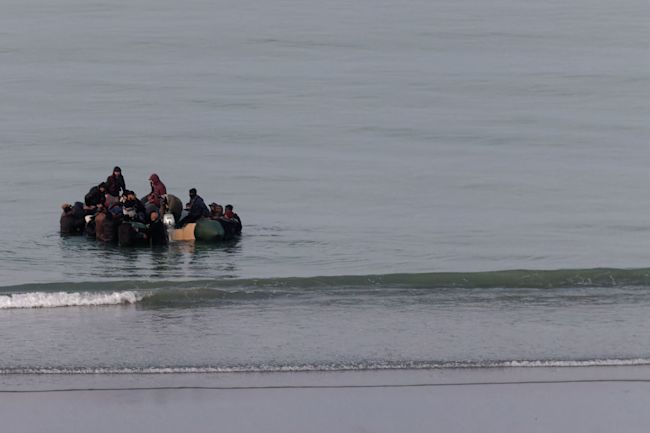
Departure of migrants from Pointe de la Croix in Boulogne on Sunday, November 13.
Credit: Johan BEN AZZOUZ/Maxppp/PA Images


Tens of thousands of migrants are waiting more than a year for a decision on their asylum claim, with hundreds waiting over five years, figures show.

The number of people waiting for an initial decision on their asylum application to the UK almost quadrupled in the last five years from 29,522 in December 2017 to 122,206 in June 2022, according to Home Office data obtained by the Refugee Council under freedom of information laws.

The figure was 64,891 in December 2020, meaning it nearly doubled in 18 months.

A third of the applicants (40,913) have been waiting between one and three years while 725 people, including 155 children, have been "living in limbo waiting for a decision" for more than five years, the charity said.

Home Secretary Suella Braverman has been under increasing pressure to fix the UK's asylum system, which she and her predecessor Priti Patel described as "broken".

The Government is spending £6.8 million a day housing migrants in hotels and Home Office figures published in August showed the cost of the UK's asylum system topped £2 billion a year for the first time, with the highest number of claims for two decades and record delays for people awaiting a decision.

At the time the Home Office announced it was setting up an action group to look at how to speed up the processing of asylum claims in a bid to increase the number of decisions made on cases on a weekly basis.

Enver Solomon, the charity's chief executive, said: "Immediate action should be taken to address the huge backlog of men, women and children stuck in limbo while waiting years for a decision on their asylum claim, costing millions of pounds a day accommodating them in often poor quality hotels.

"These people came to the UK in search of safety, but they are being condemned to years of worry and uncertainty, with a grave toll on their mental health, instead of being able to put down roots in their new community and rebuild their lives."

More than 40,000 migrants have crossed the English Channel to the UK so far this year
.Credit: Johan BEN AZZOUZ/Maxppp/PA Images

The Refugee Council called on ministers to introduce a range of measures to tackle the problem, including:

Establishing a taskforce dedicated to clearing the backlog and setting a target date for when the backlog will be cleared

Providing enough staff to make decisions

Prioritising vulnerable people in the system and those who have waiting for more than two years.

One asylum seeker, known by the pseudonym Abu to protect his identity, who has been in a hotel in Yorkshire for nearly a year said he feels like he is "useless" while awaiting a decision on his asylum claim.

He fled Sudan in October 2021, leaving his family behind, after being arrested when he took part in demonstrations during the military coup to overthrow the Government, the charity said.

Abu said: "I started even questioning, if I am useful person?

"When you... see how they are treating Ukrainian people, compare that, people say that it's because they are European, and we are not European, it make you feel like we are not a priority...

"Should I escape or should I face death back home in Sudan? It's kind of making you question yourself."

Mr Solomon said there are "clear steps this government could take immediately to address this situation - we are keen to work constructively to help it do so", adding that the "untold human misery this situation causes is simply unsustainable" as well as being a huge cost to the public purse.

He warned that without action, next year there is "likely to be another appalling episode" like the overcrowding at the Manston migrant processing centre in Kent, and said: "We urgently need to move to a fair, orderly and compassionate asylum system that always sees the face behind the case and deals with claims in a timely and effective manner."

A Home Office spokesman said: "The number of people arriving in the UK who seek asylum has reached record levels and continues to put our asylum system under incredible pressure.

"We are doing everything we can to address this issue, we have increased the number of caseworkers by 80% to more than 1,000, and a successful pilot scheme has seen the average number of asylum claims processed by caseworkers double, which we are now is being rolling this out across the country.

"We are also working to prioritise applications from children and young people where possible, whilst we increase overall decision maker numbers, improve training and career progression opportunities to aid retention of staff and capacity."

UN climate talks enter home stretch split over money


Marlowe HOOD
AFP
Published November 14, 2022

The COP27 climate conference enters its second week with countries still far apart on key issues - Copyright AFP Sergio Lima


COP27 entered its final week Monday with countries that grew rich burning fossil fuels and developing nations reeling from climate impacts at loggerheads over how to speed and fund reductions in carbon pollution.

Somewhere in the middle, China — accounting for 30 percent of global greenhouse gas emissions, by far the largest share — is feeling pressure from both sides, not only to enhance its carbon cutting goals but to step up as a donor nation, negotiators and analysts say.

At last year’s UN climate summit in Glasgow, nearly 200 countries vowed to “keep alive” the Paris Agreement’s aspirational goal of capping global warming at 1.5 degrees Celsius above pre-industrial levels.

Nearly 1.2C of warming so far has seen a cascade of increasingly severe climate disasters, such as the flooding that left a third of Pakistan under water this summer, claiming at least 1,700 lives and inflicting $30 to $40 billion in damage.

The Glasgow Pact urged nations to ramp up their emissions reduction commitments ahead of this year’s critical summit in the Red Sea resort of Sharm el-Sheikh.

But with the exception of Australia and Mexico, only a handful of smaller economies heeded the call, leaving the world on track to hot up by about 2.5C — enough, scientists say, to trigger dangerous tipping points in Earth’s climate system.

At the COP27’s midpoint, little has changed.

“Parties are basically staring each other down, thinking they have done their part and waiting for the other side to move,” said the head of WWF France, Pierre Canet.

– ‘Make our lives easier’ –


As ministers arrive to cut through political knots above the pay grade of front-line negotiators, focus will turn to a crucial “decisions” document that will reveal the consensus reached — or not.

“All the big political crunch issues are unresolved,” said Alden Meyer, a senior analyst at climate think tank E3G.

To accelerate decarbonisation, many developing nations — including small island states whose very existence is threatened by rising seas — favour a deepened commitment to the 1.5C target, with specific mention of the fossil fuels that drive emissions.

US special envoy for climate John Kerry on Friday called out countries “whose 2030 goals are not yet aligned with the Paris temperature goal,” a thinly veiled allusion to China.

A reality-check report released at COP27 last week showed CO2 emissions — which must decline nearly 50 percent by 2030 to keep the 1.5C target in play — from coal, gas and oil are on track to hit record levels in 2022.

But China and India have objected to such efforts, with Beijing pointing out that the binding target agreed in Paris was “well below” 2C, not 1.5C.

Negotiators in Sharm el-Sheikh will look to a bilateral meeting Monday in Bali between China’s Xi Jinping and US President Joe Biden, along with the communique from a G20 meeting both will subsequently attend, for signals that could break the deadlock in Egypt.

“Confirming the 1.5C goal in Bali would make our lives easier,” a senior negotiator at the climate talks said.

– ‘Polluters must pay’ –


When it comes to money, the spotlight in Egypt is on so-called loss and damage, UN-speak for unavoidable losses — of life, property and cultural heritage — due to climate impacts that have already happened.

Rich nations fearful of creating an open-ended liability regime agreed this year for the first time to include this thorny topic on the formal agenda.

Developing nations are calling for the creation of a separate facility, but the US and the European Union — while not precluding such an outcome — have said they favour using existing financial channels.

“This is the highest profile, most political issue at the COP” said Meyer.

Another track of the talks, meanwhile, has opened on how much money the Global South will get — after current pledges of $100 billion a year expire in 2024 — to help green their economies and prepare for future warming.

As it becomes clear that financial needs will be measured in trillions of dollars rather than billions, other options — some of them in parallel to the UN process — have emerged.

These range from expanding access to IMF and World Bank funds, to broadening the base of donor nations to include China, the United Arab Emirates, Saudi Arabia and other nations.

“China and India are major polluters, and the polluter must pay,” Gaston Browne, Prime Minister of Antigua and Barbuda, said last week during the COP27 summit, speaking for the AOSIS coalition of small island states.

“I don’t think there are free passes for any country.”

4 signs of progress at the UN climate change summit


Developing countries are calling for more funding and for changes at the World Bank. Sean Gallup/Getty Images


Rachel Kyte
THE CONVERSATION
Published: November 14, 2022

Something significant is happening in the desert in Egypt as countries meet at COP27, the United Nations summit on climate change.

Despite frustrating sclerosis in the negotiating halls, the pathway forward for ramping up climate finance to help low-income countries adapt to climate change and transition to clean energy is becoming clearer.

I spent a large part of my career working on international finance at the World Bank and the United Nations and now advise public development and private funds and teach climate diplomacy focusing on finance. Climate finance has been one of the thorniest issues in global climate negotiations for decades, but I’m seeing four promising signs of progress at COP27.

Getting to net zero – without greenwashing


First, the goal – getting the world to net zero greenhouse gas emissions by 2050 to stop global warming – is clearer.

The last climate conference, COP26 in Glasgow, Scotland, nearly fell apart over frustration that international finance wasn’t flowing to developing countries and that corporations and financial institutions were greenwashing – making claims they couldn’t back up. One year on, something is stirring.

In 2021, the financial sector arrived at COP26 in full force for the first time. Private banks, insurers and institutional investors representing US$130 trillion said they would align their investments with the goal of keeping global warming to 1.5 degrees Celsius – a pledge to net zero. That would increase funding for green growth and clean energy transitions, and reduce investments in fossil fuels. It was an apparent breakthrough. But many observers cried foul and accused the financial institutions of greenwashing.

In the year since then, a U.N. commission has put a red line around greenwashing, delineating what a company or institution must do to make a credible claim about its net-zero goals. Its checklist isn’t mandatory, but it sets a high bar based on science and will help hold companies and investors to account.

Reforming international financial institutions

Second, how international financial institutions like the International Monetary Fund and World Bank are working is getting much-needed attention.

Over the past 12 months, frustration has grown with the international financial system, especially with the World Bank Group’s leadership. Low-income countries have long complained about having to borrow to finance resilience to climate impacts they didn’t cause, and they have called for development banks to take more risk and leverage more private investment for much-needed projects, including expanding renewable energy.

That frustration has culminated in pressure for World Bank President David Malpass to step down. Malpass, nominated by the Trump administration in 2019, has clung on for now, but he is under pressure from the U.S., Europe and others to bring forward a new road map for the World Bank’s response to climate change this year.

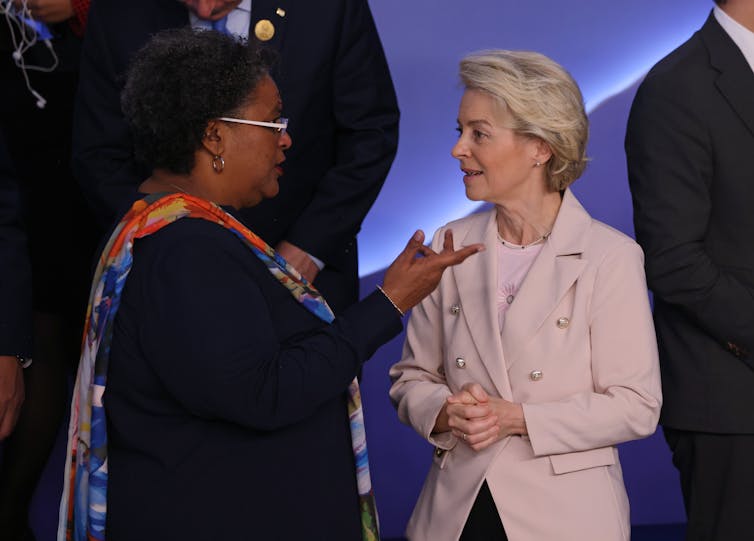
Mia Mottley, prime minister of Barbados and an advocate for international finance reform, speaks with European Commission President Ursula von der Leyen at the climate summit in November 2022. 
Sean Gallup/Getty Images

Barbados Prime Minister Mia Mottley, a leading voice for reform, and others have called for $1 trillion already in the international financial system to be redirected to climate resilience projects to help vulnerable countries protect themselves from future climate disasters.

At COP27, French President Emmanuel Macron supported Mottley’s call for a shake-up in how international finance works, and together they have agreed to set up a group to suggest changes at the next meeting of the IMF and World Bank governors in spring 2023.

Meanwhile, regional development banks have been reinventing themselves to better address their countries’ needs. The Inter-American Development Bank, focused on Latin America and the Caribbean, is considering shifting its business model to take more risk and crowd in more private sector investment. The Asian Development Bank has launched an entirely new operating model designed to achieve greater climate results and leverage private financing more effectively.

Getting private finance flowing


Third, more public-private partnerships are being developed to speed decarbonization and power the clean energy transition.

The first of these “Just Energy Transition Partnerships,” announced in 2021, was designed to support South Africa’s transition away from coal power. It relies on a mix of grants, loans and investments, as well as risk sharing to help bring in more private sector finance. Indonesia expects to announce a similar partnership when it hosts the G-20 summit in late November. Vietnam is working on another, and Egypt announced a major new partnership at COP27.

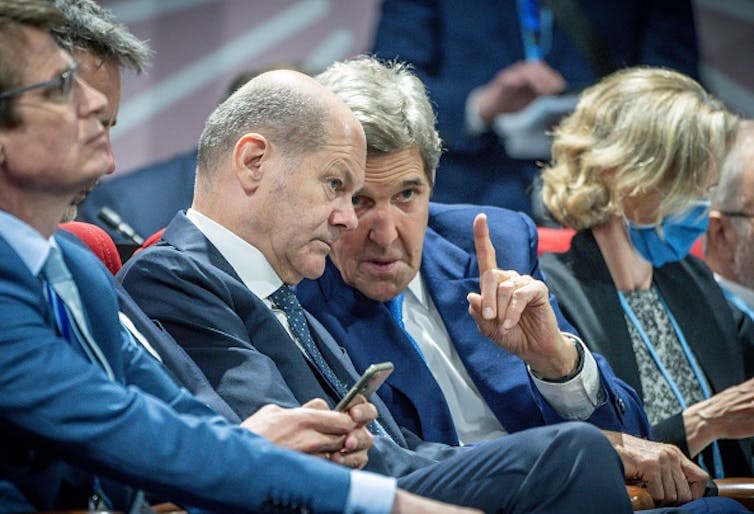
U.S. Special Climate Envoy John Kerry, who proposed new carbon offsets to pay for clean energy, speaks with German Chancellor Olaf Scholz. 
Michael Kappeler/picture alliance via Getty Images

However, the public funding has been hard to lock in. Developed countries’ coffers are dwindling, with governments including the U.S. unable or unwilling to maintain commitments. Now, pressure from the war in Ukraine and economic crises is adding to their problems.

The lack of public funds was the impetus behind U.S. Special Climate Envoy John Kerry’s proposal to use a new form of carbon offsets to pay for green energy investments in countries transitioning from coal. The idea, loosely sketched out, is that countries dependent on coal could sell carbon credits to companies, with the revenue going to fund clean energy projects. The country would speed its exit from coal and lower its emissions, and the private company could then claim that reduction in its own accounting toward net zero emissions.

Globally, voluntary carbon markets for these offsets have grown from $300 million to $2 billion since 2019, but they are still relatively small and fragile and need more robust rules.

Kerry’s proposal drew criticism, pending the fine print, for fear of swamping the market with industrial credits, collapsing prices and potentially allowing companies in the developed world to greenwash their own claims by retiring coal in the developing world.
New rules to strengthen carbon markets

Fourth, new rules are emerging to strengthen those voluntary carbon markets.

A new set of “high-integrity carbon credit principles” is expected in 2023. A code of conduct for how corporations can use voluntary carbon markets to meet their net zero claims has already been issued, and standards for ensuring that a company’s plans meet the Paris Agreement’s goals are evolving.

Incredibly, all this progress is outside the Paris Agreement, which simply calls for governments to make “finance flows consistent with a pathway towards low greenhouse gas emissions and climate-resilient development.”

Negotiators seem reluctant to mention this widespread reform movement in the formal text being negotiated at COP27, but walking through the halls here, they cannot ignore it. It’s been too slow in coming, but change in the financial system is on the way.

Author 
Rachel Kyte
Dean of the Fletcher School, Tufts University
Disclosure statement
Rachel Kyte is co-chair of the Voluntary Markets Integrity Initiative and served in different roles at the World Bank Group from 2000 to 2015.
Partners

COP27: Talks on carbon market rules off to slow start

By Jake Spring, Kate Abnett and Shadia Nasralla - Yesterday 

COP27 climate summit, in Sharm el-Sheikh© Thomson Reuters

SHARM EL-SHEIKH, Egypt (Reuters) - Countries are far from agreeing on technical details for running global trading in carbon offset credits after one week of talks at the COP27 U.N. climate summit in Egypt, according to negotiators and observers, with delays threatening to blow a 2023 deadline.

Carbon offsets allow countries or companies to pay others to cut greenhouse gas emissions to offset their own. While companies are already trading carbon offset credits in private markets, the so-called Article 6 of the Paris Agreement would fix rules enabling countries to partly achieve their national climate targets by buying such credits.

The hope is that international rules backed by the entire world could attract billions of dollars into carbon-cutting projects, but countries have struggled for years to agree on what the rules should look like, what projects should be eligible, and how to ensure they are having a real-world impact.

Countries applauded each other at last year's climate summit in Glasgow for agreeing on broad principles governing carbon markets, breaking six years of stalemate. But that deal pushed trickier technical work to subsequent summits including the current COP27 meeting in Sharm El-Sheikh.

Already at COP27, countries have kicked to 2023 a decision on the rules for which types of projects can produce credits – from solar farms, to projects to avoid deforestation.

Countries will need to decide on those methodologies next year or risk running into a 2023 deadline when carbon-cutting projects registered under old U.N. rules have to apply to be part of the new system.

Applying to join the new system without knowing what rules will govern it would be difficult, said Pedro Martins Barata, a carbon markets expert observing the talks for the non-profit Environmental Defense Fund.

Drafts of the rules being discussed are still riddled with brackets that indicate which sections have yet to be agreed.

"Glasgow was a real breakthrough...it doesn't send a great signal if all the sudden they get caught up on the technical issues," said David Burns, a policy expert and negotiations observer for the non-profit World Resources Institute.

COP27: Global CO2 Emission on Track to Raise 1% This Year

Voluntary carbon offset markets have struggled to gain trust for years. Campaigners including Greenpeace have criticized offsets as a figleaf for polluters who want to avoid cutting emissions.

"The door is still open for countries to meet their climate targets with accounting tricks rather than real action," said Gilles Dufrasne, an expert and observer at the talks at non-profit Carbon Market Watch.

But the nearly 200 countries at the U.N. summit could yet reach a decision on rules for country-to-country offset trades.

Key sticking points also include whether there should be a centralized body where trades are reported, a system the European Union supports. The United States prefers a more diffuse, decentralized system.

PRIVATE MARKETS

As countries struggle to agree, private markets with no global standards are moving forward.

Credits worth $2 billion traded in 2021 - almost four times the previous year - with around 500 million credits representing 500 million tonnes of CO2 equivalent changing hands, according to Ecosystem Marketplace.

How much carbon budget do we have left? 

Private initiatives like the Integrity Council for the Voluntary Carbon Market (ICVCM) and the Carbon Credit Quality Initiative (CCQI) have drafted guidance on what they see as a high-quality carbon offset.

But debates continue on issues such as whether a credit should also take into account biodiversity and human rights.

A consensus at the United Nations would send a strong signal to private markets on what their standards should be, said Barata, who also co-chairs an expert panel for ICVCM.

"At COP27, we need to give companies and countries a clear process for how to implement carbon markets in a way that prioritizes transparency and social and environmental integrity," he said.

While, hundreds of companies and countries are relying on buying offsets to reach pledges to hit "net zero" emissions, a U.N. expert group last week warned that many of those targets rely too heavily on offsets to avoid the harder task of cutting outright emissions.

"Net-zero pledges depend far too heavily on carbon offsetting in either forests or agriculture," said Charles Canham, a senior scientist emeritus at the non-profit Cary Institute of Ecosystem Studies, pointing out those categories are particularly hard to verify.

(Reporting by Jake Spring, Kate Abnett and Shadia Nasralla)


FREE PALESTINE
Palestinians: Israeli forces kill young woman during raid


By Associated Press
November 14, 2022 

TEL AVIV, Israel — Israeli forces shot and killed a 19-year-old Palestinian woman during a raid in the occupied West Bank, the Palestinian Health Ministry said Monday.

The Israeli military said soldiers opened fire on a vehicle that was accelerating toward them after they signaled for it to stop, adding that the incident was under review.

The Palestinian Health Ministry identified the woman as Sanaa al-Tal, 19. The incident occurred in the city of Beitunia, where the military said troops were on an arrest raid.

Palestinians and rights groups accuse Israeli soldiers of using excessive force against Palestinians, without being held accountable. The military says it contends with complex, life-threatening scenarios.

In a separate incident, Israeli police said a soldier shot an Israeli man who he suspected was going to carry out an attack, in the city of Raanana, north of Tel Aviv. Israeli media said the man was later pronounced dead.

Israeli-Palestinian tensions have been high for months, with the Israeli military carrying out nightly raids in the West Bank since the spring, when a spate of attacks against Israelis killed 19 people.

More than 130 Palestinians have been killed in Israeli-Palestinian fighting in the West Bank and east Jerusalem this year, making 2022 the deadliest since 2006. The Israeli army says most of the Palestinians killed have been militants. But stone-throwing youths protesting the incursions and others not involved in confrontations have also been killed.

The military raids have prompted a series of Palestinian shooting attacks, killing at least four more Israelis in recent weeks.


Israel says the raids are meant to dismantle militant networks and thwart future attacks. The Palestinians say the raids are aimed at cementing Israel’s open-ended 55-year-old occupation of lands they want for their hoped-for state.

Israel captured the West Bank in the 1967 Mideast war, along with the Gaza Strip and east Jerusalem. The Palestinians seek all three territories for their future independent state.
SDF denies involvement in Istanbul attack"We affirm that our forces have nothing to do with the Istanbul bombing."
TODAY
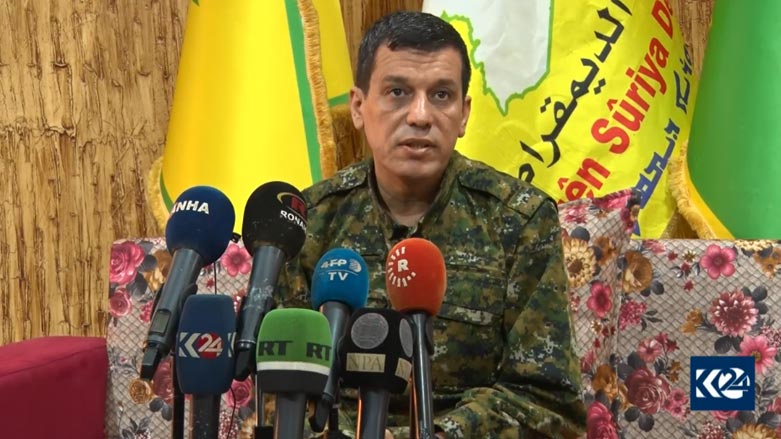
SDF Commander-in-Chief Mazloum Abdi 
(Photo: Kurdistan 24)
Turkey SDF Turkey Istanbul attack PKK


ERBIL (Kurdistan 24) – Syrian Democratic Forces (SDF) Commander-in-Chief Mazloum Abdi on Monday denied SDF involvement in the Istanbul attack.

"We affirm that our forces have nothing to do with the Istanbul bombing, and we reject the allegations accusing our forces of that," he tweeted.

"We express our sincere condolences to the families of victims and the Turkish people, and we wish a speedy recovery for the injured."

The Turkish state-run news agency Anadolu Agency reported that Turkish Interior Minister Suleyman Soylu on early Monday blamed the Kurdistan Workers' Party (PKK) and the People's Protection Units (YPG) and claimed the order was given in the Syrian Kurdish town of Kobani.

“Our assessment is that the order for the deadly terror attack came from Ayn al-Arab (Kobani) in northern Syria, where the PKK/YPG has its Syrian headquarters,” said Soylu.

“We will retaliate against those who are responsible for this heinous terror attack,” he added.

Moreover, the Kurdistan Workers' Party (PKK)-affiliated Headquarters Command of the People’s Defense Center on Monday also rejected involvement in the attack.

The PKK also offered "condolences to the relatives of the victims."

On Sunday, six people were killed in Istanbul’s Istiklal Avenue and 81 were injured in the attack.

One Syrian female suspect Ahlam al-Bashir was arrested by the Turkish security forces.

The Turkish police claimed she entered Turkey through the Kurdish town of Afrin, which has been occupied by Turkish-backed Syrian rebel forces and the Turkish army since 2018.


Turkey blames outlawed Kurdish group PKK for deadly İstanbul blast

November 14, 2022


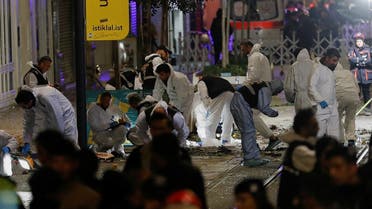
Members of the crime scene investigation police (C) work as Turkish policemen secure the area after a strong explosion of unknown origin shook the busy shopping street of İstiklal in Istanbul, on November 13, 2022. - 

Turkish President condemned the "vile attack" that ripped through central Istanbul, and said it killed six people and wounded over 80 others, on November 13, 2022. (Photo by Yasin AKGUL / AFP)

Turkey’s interior minister accused the outlawed Kurdistan Workers’ Party (PKK) on Monday of responsibility for a bombing in a busy İstanbul street that killed six people and wounded scores, saying more than 20 people have been arrested, Agence France-Presse reported.

Turkish President Recep Tayyip Erdoğan landed in the Indonesian resort island of Bali for a G20 summit of the world’s leading economies shortly after his government accused the PKK of being behind Sunday’s blast, which wounded 81.

He had called the bombing a “vile attack” before leaving for the summit and said it had a “smell of terror.”

The explosion tore through İstiklal Street, a popular shopping destination for locals and tourists, on Sunday afternoon. No individual or group has claimed the attack.

“The person who planted the bomb has been arrested,” interior minister Süleyman Soylu said in a statement broadcast by the official Anadolu news agency in the early hours of Monday.

He added that 21 others were also detained.

“According to our findings, the PKK terrorist organization is responsible,” he said.

The PKK, blacklisted as a terrorist group by Ankara as well as its Western allies, has kept up a deadly insurgency for Kurdish self-rule in southeastern Turkey since the 1980s.

Soylu also accused PKK-affiliated Kurdish militants who control most of northeastern Syria and who are deemed as “terrorists” by Ankara of being responsible for the attack.

“We believe that the order for the attack was given from Kobane,” he said, referring to a city near the Turkish border. It was also the site of a 2015 battle between Kurdish militants and Islamic State of Iraq and the Levant (ISIL) jihadists, who were driven out after more than four months of fighting.

Regularly targeted by Turkish military operations, the PKK is at the heart of a tussle between Sweden and Turkey, which has been blocking Stockholm’s entry into NATO since May, accusing it of leniency towards the group.

“We believe that it is a terrorist act carried out by an attacker, whom we consider to be a woman, exploding the bomb,” Turkey’s vice president Fuat Oktay said.

Justice minister Bekir Bozdağ told Turkish news channel A Haber that a woman “had been sitting on one of the benches for more than 40 minutes, and then she got up,” leaving a bag.

“One or two minutes later, an explosion occurred,” he said.

“There are two possibilities,” he said. “There’s either a mechanism placed in this bag and it explodes, or someone remotely explodes (it).”

“All data on this woman are currently under scrutiny,” he said.

Soylu’s announcement did not add any details about the woman or the suspects arrested.

İstiklal Avenue reopened early on Monday morning.

Mecit Bal, who runs a small shop a few meters from the scene, said his son was working at the time of the blast.

“My son was there. He called me and said an explosion happened. He will not go back to work today. He is psychologically affected,” he told AFP.

Panic, chaos

Turkish cities have been struck by Islamists and other groups in the past.

İstiklal Street was hit during a campaign of attacks in 2015-2016 that targeted İstanbul and other cities, including Ankara.

Those bombings were mostly blamed on the ISIL and outlawed Kurdish militants, and killed nearly 500 people and wounded more than 2,000.

Sunday’s explosion occurred shortly after 4:00 pm (1300 GMT) in the famous shopping street.

Helicopters flew over the city center after the attack. Police established a large security cordon to prevent access to the area for fear of a second explosion.

Images posted on social media showed the explosion was followed by flames and immediately triggered panic, with people running in all directions.

Several bodies were seen lying on the ground nearby.

“I was 50-55 meters away, suddenly there was the noise of an explosion. I saw three or four people on the ground,” witness Cemal Denizci, 57, told AFP.

“People were running in panic. The noise was huge. There was black smoke,” he said.

Condemnation

İstiklal, in the historic district of Beyoğlu, is one of the most famous arteries of İstanbul. It is entirely pedestrianized for 1.4 kilometers, or about a mile.

Criss-crossed by an old tramway and lined with shops and restaurants, it attracts large crowds at the weekend.

Many stores closed early in the neighboring district of Galata, while some passers-by, who came running from the site of the explosion, had tears in their eyes.

A massive deployment of security forces barred all entrances and rescue workers and police could be seen.

Turkey’s radio and television watchdog, RTÜK, placed a ban on broadcasters showing footage of the blast, a measure previously taken in the aftermath of extremist attacks.

Access to social media was also restricted after the attack.

A reaction came quickly from Greece, which “unequivocally” condemned the blast and expressed condolences to the government and people of Turkey.

The United States also denounced it, with White House Press Secretary Karine Jean-Pierre saying: “We stand shoulder-to-shoulder with our NATO Ally Turkey in countering terrorism.”

French President Emmanuel Macron said in a message to the Turks: “We share your pain. We stand with you in the fight against terrorism”.

Ukrainian President Volodymyr Zelensky also tweeted in Turkish: “The pain of the friendly Turkish people is our pain.”

Turkey blames Istanbul blast on Kurdish extremists; 22 held, including bomber


Police members work at the scene after an explosion on busy pedestrian Istiklal street in Istanbul, Turkey, on November 13, 2022. (Reuters)

Reuters, Istanbul
Published: 14 November ,2022:

Turkey’s government blamed Kurdish extremists on Monday for a blast that killed six people in Istanbul’s main shopping street, and said police had detained 22 suspects, including the person who had planted the bomb.

Interior Minister Suleyman Soylu said the order for the attack on Istiklal Avenue was given in Kobani, a city in northern Syria, where Turkish forces have carried out operations against the Syrian Kurdish YPG militia in recent years.

For the latest headlines, follow our Google News channel online or via the app.

Soylu added that the bomber had passed through Afrin, another region in northern Syria.

Six Turkish citizens, two members each of three families, were killed in the attack. No group has claimed responsibility.

Television news reports showed images of a person, who appeared to be a woman, leaving a package below a raised flower
bed on the historic Istiklal Avenue, a popular spot for shoppers and tourists with a tramline running its length.

Fifty people were discharged from hospital after Sunday’s attack, which sparked concerns that Turkey could be hit with more bombings and attacks, like the series that it suffered between mid-2015 and 2017.

Istanbul has been targeted in the past by Kurdish, and leftist extremists. An offshoot of the Kurdistan Workers Party (PKK) claimed twin bombings outside an Istanbul soccer stadium in December 2016 that killed 38 people and wounded 155.

Of those wounded on Sunday, two of the five people being treated in intensive care were in a critical condition, the Istanbul Governor’s office said. They were among the 31 wounded still in hospital.

Echoes of past attacks

Hundreds of people fled the avenue after the blast on Sunday, as ambulances and police raced in. The area, in the Beyoglu district of Turkey’s largest city, had been crowded as usual at the weekend.

Video footage obtained by Reuters showed the moment the explosion occurred at 4.13 p.m. (1313 GMT), sending debris into
the air and leaving several people lying on the ground, while others stumbled away.

Ankara says the YPG, which Washington has supported in the conflict in Syria, is a wing of the PKK.

Turkey has carried out three incursions in northern Syria against the YPG, including in 2019, seizing hundreds of kilometers of land. President Recep Tayyip Erdogan has said this year that Turkey will again target the YPG.

The PKK has led an insurgency against the Turkish state since 1984 and more than 40,000 people have been killed in
clashes. It is considered a terrorist organization by Turkey, the European Union and the United States.

Condemnations of the attack and condolences for the victims poured in from several countries including the United States,
the European Union, Egypt, Ukraine, and Greece.

Turkish authorities linked support for the YPG by Washington and others to the blast.

The presidency’s communications director, Fahrettin Altun, said such attacks “are direct and indirect results of the support some countries give to terrorist organizations.”

Soylu likened the US condolences to “the murderer arriving as one of the first at the scene of the crime.”