Monday, November 14, 2022

Conservative Governance has Undermined U.S. Life Expectancy


NOVEMBER 14, 2022
Facebook

Although, in recent decades, American conservatives have embraced what they call the “Right to Life,” they have certainly done a poor job of sustaining life in the United States. That’s the conclusion that can be drawn from a just-published scientific study, “U.S. state policy contexts and mortality of working-age adults.”

Funded by a grant from the U.S. National Institute on Aging and prepared by a group of U.S. and Canadian researchers, the study found a close relationship, in the period from 1999 to 2019, between the mortality rates of Americans between 20 and 64 years of age and the conservative or liberal control of their state governments.

Specifically, the study concluded that a state’s liberal policies promoting gun safety, environmental protections, labor rights (e.g., minimum wage and paid leave), progressive taxation, and tobacco control lowered mortality rates. By contrast, a state’s conservative policies in these areas increased a state’s death rate. Thus, in 2019, life expectancy in conservative Mississippi stood at 74.4 years; in liberal Hawaii, at 80.9 years.

The authors estimated that if all states had had a maximum liberal orientation in the public policy areas studied, 171,030 working-age lives would have been saved in 2019 alone. On the other hand, if all states had had a maximum conservative orientation that year, an additional 217,635 working-age deaths would have occurred.

Especially strong associations were found between the absence of gun safety and suicide mortality among men, between the absence of labor rights and alcohol-induced mortality, and between the absence of tobacco taxes and economic taxes and cardiovascular mortality.

The association between conservative governance and rising death rates might also explain why, with the growth of rightwing Republican control of many states, the U.S. mortality rate, long on the wane, has been rising dramatically since 2009.

The result, as the authors of the recent scientific study observe, is that in 2019, Americans―who then had a life expectancy of 78.8 years―died 5.7 years earlier than the Japanese, 3.3 years earlier than Canadians, and 2.5 years earlier than the British. In 2020, U.S. life expectancy dropped to 77.0 years. In 2021, to 76.1 years. Although figures on life expectancy vary slightly depending on the survey, the United States, despite its enormous wealth and resources, always ranks remarkably poorly among the nations of the world. A typical survey for 2022 lists it as 66th in life expectancy.

As Americans cast their votes this November, they might want to consider whether these kinds of conservative public policies have served them well in the past and will do so in the future.

Dr. Lawrence Wittner is Professor of History emeritus at SUNY/Albany and the author of Confronting the Bomb (Stanford University Press.)

Join Hands to Tackle the Serious Challenge and Protect the Shared Home of Humanity - China’s actions on climate change

ON NOVEMBER 12, 2022
By Guest Contributor - Opinion


This year marks the 30th anniversary of the United Nations Framework Convention on Climate Change (UNFCCC). This week, representatives from around the world are in Sharm el-Sheikh, Egypt for the 27th session of the Conference of the Parties (COP 27) to the UNFCCC. Upholding “Together for Implementation”, the Conference highlights the issue of “loss and damage” to the concern of developing countries and aims to accelerate global climate action through emissions reduction, adaptation efforts and appropriate finance. It adds new momentum for parties to participate in climate governance, take concerted actions and address the pressing challenge – writes Cao Zhongming, Ambassador of China to Belgium.

China has been resolute in tackling climate change. It is pointed out in the Report to the 20th National Congress of the Communist Party of China that adapting to and protecting nature is essential for building China into a modern socialist country in all respects. The Report also stressed the need to prioritize ecological protection, conserve resources and use them efficiently, pursue green and low-carbon development, work actively and prudently toward the goals of reaching peak carbon emissions and carbon neutrality, and get actively involved in global governance in response to climate change. This speaks volume about China’s firm commitment to green development and harmony between human and nature.

China has been action-oriented in climate governance. China has announced that it will peak carbon emissions before 2030 and achieve carbon neutrality before 2060. It means that China, as a major developing country, will complete the most intensive carbon emissions reduction and realize carbon emissions peak and neutrality within the shortest time in the world. This is a solemn commitment made by a responsible major country to the international community. To achieve the goals of carbon peak and carbon neutrality, China has set up a state-level institution to lead the efforts, put in place a 1+N policy framework, and established the world’s largest carbon market for green house gases. Driven by scientific and technological innovation, China has pursued low-carbon development and stepped up energy conservation and emissions reduction. Between 2012 and 2021, China’s carbon dioxide emissions per unite of GDP was reduced by around 34.4 percent, and energy consumption per unit of GDP fell by 26.4 percent, 1.4 billion tonnes of standard coal equivalent. China has also taken an constructive part in multilateral processes on climate change, actively participated in main-channel climate negotiations, and made historic contribution to reaching and implementing the Paris Agreement.

China has created green wonders. As has been noted by President Xi Jinping, lucid waters and lush mountains are invaluable assets. Over the past decade, advocating a community of humanity and nature, China has made great efforts, sometimes painstaking, to improve the environment. The environment must be protected, even if it means slower economic growth. In the past almost ten years, China has contributed a quarter of the world’s newly added forest areas and put in place the world’s largest clean coal power system. China has made continued efforts to tackle desertification. Reversing the trend of desert encroachment, China has completed the UN’s goal of land degradation neutrality by 2030 ahead of schedule. If you have been to Beijing, you must have found that the clear sky has come back and the days of haze and sand storms are disappearing.

China has made solid efforts to promote green cooperation. Actively promoting cooperation in low-carbon economy, ecological protection, clean energy and other areas, China has become an important link in global industrial and supply chains for green and low-carbon sectors. As the top manufacturer of PV products and a major country in PV application in the world, China has provided over 70 percent of PV modules to the global market. The biggest demand for China’s PV products comes from Europe. With over US$16 billion of solar panels imported by EU countries from China in the first eight months of this year, China has made important contribution to Europe’s pursuant of energy transition and carbon neutrality. China has helped other developing countries to strengthen the capacity to promote green development and respond to climate change with every sincerity. Remote sensing satellite on climate in Africa, low-carbon pilot zones in Southeast Asia and energy efficient lighting in small island countries are examples of the tangible outcomes of South-South cooperation on climate change that China has carried out.

Climate change is a common challenge of humanity. It bears on the future of humankind and requires joint international efforts. From the UNFCCC of 1992 to the Kyoto Protocol and Paris Agreement, the international community has traveled an extraordinary journey of jointly tackling climate change over the past 30 years. Currently, it is particularly important to help developing countries to enhance the capacity to address climate change and step up mutual trust and concerted efforts between the North and South. In this process, it is necessary to increase mutual trust and cooperation on the basis of existing multilateral consensus. It is necessary to deliver on promises and strive for implementation based on national conditions. Developed countries, in particular, need to honor their historical responsibility and due international obligation on climate change. It is also necessary to advance green economic and social development and explore new approaches synergizing development and protection.

Belgium attaches great importance to participating in global climate governance. Prime Minister Alexander De Croo himself led the Belgian delegation to COP 27. China and Belgium have growing common understandings on climate change, and enjoy common interest and broad cooperation prospect in clean energy, circular economy, biodiversity protection and other areas. China will work with other countries to take more concrete actions to protect our mother planet. In the same vein, China will work with Belgium to further tap cooperation potential, benefit the two countries and peoples, and contribute together to responding to climate change and pursuing green development by humanity.
Struggle and Success of Chinese Soft Power: 
The Case of China in South Asia

Ashmita Rana
Download PDF
Nov 14 2022 •
This content was originally written for an undergraduate or Master's program. It is published as part of our mission to showcase peer-leading papers written by students during their studies. This work can be used for background reading and research, but should not be cited as an expert source or used in place of scholarly articles/books.


Picture by PIRO / Pixabay.com

Soft power is a significant attribute for a state that is a great power or that aspires to be one. While hard power is more visible in the international system in the form of military and economic might, it is soft power that often works subtly in the background. Joseph S. Nye defined soft power or the “second face of power” as the ability to get others to want the outcomes one wants using co-option and not coercion” (Nye 2004: 5). Essentially, soft power deals with the ability to shape the preferences of others. In world politics, this can be translated as a state’s ability to shape the international agenda and attract the support of other states without having to threaten them with military force or economic sanctions. Nye pointed out three sources of the soft power of a state—its culture, its political values and its foreign policy (Nye 2004: 11). All these factors determine the attractiveness that a state enjoys in the world, and shapes international politics in ways that even hard power does not. The increasing acknowledgement of the utility of soft power in world politics can be seen in the ways states, especially great powers, have reoriented their international conduct in recent times. Most states today continue to invest in the promotion of their cultures and values. Moreover, these states also more actively seek to justify their actions (whether domestic or international) in a bid to win approval and moral legitimacy in the world.

The rise of China as a great power and its quest to overtake the United States of America is one of the most striking features of the international system in contemporary times. While China has visibly made impressive gains in terms of augmenting its hard power resources, it has also made great efforts in the expansion of its soft power. This paper attempts to present an analysis of China’s notions of soft power, its efforts in increasing its soft power and the success and failure that it encounters in the process. This paper will also seek to analyse the aforementioned concepts using a case study that will revolve around Chinese influence in South Asia.


READ ON 
Why women’s rights matter in COP27

The world must factor in the losses women disproportionately suffer, from education to security, due to climate change.


Sophie Rigg
Senior Climate and Resilience Adviser, ActionAid UK
Published On 14 Nov 2022

Maasai women walk back home from a market near Lake Magadi, in Kenya. Parts of the country have experienced four consecutive seasons with inadequate rain, with dire effects for people and animals [Brian Inganga/AP Photo]

This has been a year of climate catastrophes for every corner of the globe. From floods in Pakistan and Nigeria to the worst droughts on record across the Horn of Africa, no one on the planet is insulated against our rapidly worsening climate. Among the most disproportionately affected are women and girls. Yet their story is all too often just a footnote in the news.

We know about the gendered impact of climate change from our work across the world. We have seen time and time again how women and girls are pushed to drop out of school or marry early to help manage the financial stress that families face during droughts or floods. New ActionAid research in Kenya, Rwanda, Zambia and Nigeria has found that climate change is also increasing gender-based violence and damaging women’s mental health.end of list

As a warming planet leads to a rise in humanitarian emergencies and displacement, women and girls must not be left to pay the steepest price.

In northern Kenya, Rosemary — a former farmer whom ActionAid works with — now needs to walk several miles farther than before to find water. Her community is facing extreme drought after consecutive failed rains, with 90 percent of all open water sources in their area now dry. This increased burden and the distances she has to go put her at greater risk of violence as she needs to travel, often outside daylight hours, to areas where she has no protection.

Meanwhile, the drought and the invasion of a crop-eating worm pest have already destroyed her farm, once her main source of income. This has forced Rosemary into animal husbandry, but she faces the challenges of an unpredictable climate here too. Unable to access water and grassland, two of her cows recently died, pushing her further into financial precarity.

Farmer incomes have dropped sharply in Rosemary’s community because of the failed rains. This is leading to girls being taken out of school — and in some cases married off — to ease family expenditure and help to bring in income. In precarious times of climate stress like this, girls are 20 percent more likely to be married early than in times of stability, putting women’s rights to education and liberty at risk.

But it doesn’t have to be this way. Women and girls on the front line of the climate crisis, like Rosemary, know what actions are needed and are important agents of change. Rosemary leads a local activist network that tackles violence against women and girls and provides guidance to young women on their human rights. This support is key for women and girls navigating the knock-on impacts of climate change and drought.

Women like Rosemary are capable of building communities that are resilient to the challenges of climate change. But they need support to scale up their work and the opportunity to help decide how international, national and local climate finance is spent.

Yet, sadly, we know that the voices of the women on the front lines are not sufficiently heard in the grand halls and behind the closed doors where the big decisions are made, including at the ongoing COP27 climate change conference. This is particularly worrying in 2022 as the impacts of climate change escalate while international support for women like Rosemary remains scarce.

Industrialised nations that have contributed the most to the climate crisis are yet to deliver on their promised — yet inadequate — funding to help mitigate and adapt to the effects of climate change in the future. These failed promises, combined with the lack of finance to support climate impacts now — known as loss and damage finance — means that the odds are loaded against a funding paradigm that accounts for the additional risks and consequences women and girls face.

While the United Kingdom is increasing its financial support for climate adaptation, it has not pledged new and additional loss and damage funding to countries like Kenya, which is battling its worst drought on record

This is unacceptable. Climate finance needs to cover reparations for the lost years of girls’ education, address women’s lost security, and compensate for their failed crop yields. We need progress on these issues at COP27, not yet another year of kicking the can down the road.

World leaders need to pay attention to stories like Rosemary’s. We need less rhetoric and a greater focus on women’s rights and actions to help them thrive and bring their communities out of poverty. Without this, the gendered injustice of climate change and the silent crisis for women and girls will only get worse.

The views expressed in this article are the author’s own and do not necessarily reflect Al Jazeera’s editorial stance

.
Sophie Rigg is ActionAid UK’s Senior Climate and Resilience Adviser and leads their climate policy and research work focusing on the intersection of gender justice and climate justice. She specialises in locally led and gender-just climate adaptation, climate resilience, and loss and damage. She is a board member of the Global Network for Disaster Reduction (GNDR) and on the Steering Committee of CAN-UK. Sophie is also an observer on the Climate Investment Funds.
DECRIMINALIZE DRUGS
Coca chewing gets chic makeover with bubblegum flavour and TikTok fans

NOVEMBER 13, 2022

A demonstrator uses coca leaves during clashes with police 
over a new coca market in La Paz, Bolivia on Aug 8, 2022.
Reuters file

SANTIAGO - With flavours ranging from bubble gum to passion fruit and TikTok stars promoting it, chewing coca has become the latest chic trend in Bolivia.

Andean villagers have chewed coca leaves - the base ingredient of cocaine - for centuries to help ward off the effects of high altitude and hunger.

Consumption of the leaves is legal in Bolivia and coca is considered by many in the region as a sacred plant.

But what was once considered a rural practice is now taking high society in the city of Santa Cruz by storm. To the traditional 'bolo' of coca leaves and baking soda enterprising locals are adding sweeteners and flavouring.

Cristian Ferreira, a businessman in Santa Cruz, says the practice picked up after people saw the energetic and mood altering effects it had on Bolivian agricultural workers.

Businesses are making custom designs, experimenting with new flavours, and, like Luis Alberto Vasquez, delivering to exclusive parties around the city.

"Today, everybody uses it, from doctors to police, it's a natural energiser," Vasquez said.

"It eases stress and takes away tiredness. It helps at work so you can be more relaxed."

Cyclists and other athletes have also gotten into the coca craze, with sports stores and gyms selling pills of concentrated coca known as 'kuka' that have the same effect as a bolo without having to be chewed.

Daniel Novoa, also known as 'Boloman', has racked up more than 31 million views and 200,000 followers on social media video platform TikTok since the start of the pandemic with humorous videos about consuming coca.

"More than anything my TikTok is a work tool," said Novoa, who also sells bolo through his channel.

"I make content that I can get a smile out of while I sell my product."

Coca leaves are classified as a controlled substance by the United Nations Convention on Narcotic Drugs, but Bolivia was able to carve out an exception for its people's long tradition of chewing the leaves.

Drought is such a familiar phenomenon to the pastoralist communities of Northern Kenya that the wells they use, spring water and a rhythmic singing.

(AP Video: Desmond Tiro)  (14 Nov 2022)

Anti-war Russians find a new home in Turkey

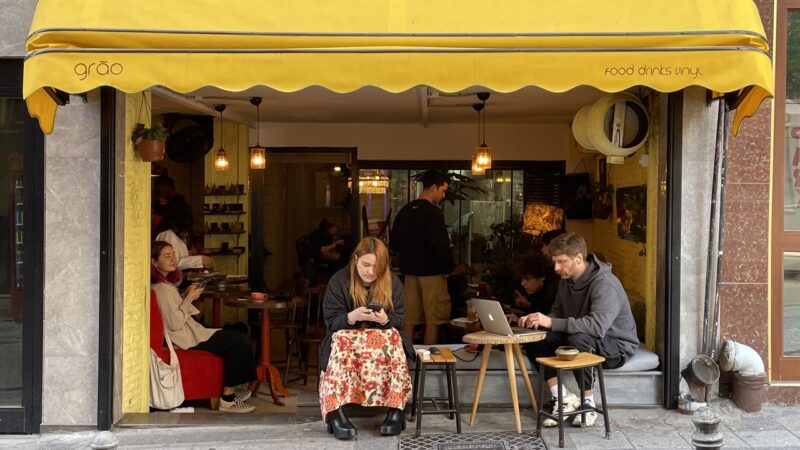
Image by  Arzu Geybullayeva.

In a lively neighborhood of Istanbul's Kadikoy district, Grao Cafeteria is nestled in between local shops and restaurants. Grao's owner is 32-year-old Igor, native of St. Petersburg. He arrived in Istanbul in March 2022 after a year of traveling abroad, visiting India, Nepal and Thailand. After a few months in the city, together with a friend, Igor opened Grao in August. “I like it here,” Igor told Global Voices in an interview, “people are friendly.” But Grao is more than just a cafe. There is a sense of community, perhaps a purpose. It has quickly became a popular hang out spot for newly arrived Russians, and those who have lived here for a few months. The cafe also has a second floor where its owner, together with other community members, holds Turkish language classes once a week, discussions for newcomers about how to obtain a residency permit, apply for a tax number, and understand local cultural nuances. The next event is scheduled for November 12 and is organized by a group called “Station Change” or “станция смена” featuring a diverse group of speakers for the newcomers but also those who have lived in the city and is eager to meet new people. According to the Instagram post:

The long-awaited event in Istanbul for those who have recently relocated or have long lived in Turkey and are looking for new friends 🙌 This month we will gather in Istanbul and share not only the important points of moving to a new country, but also simple human warmth , inspiration and motivation for change 💛 In the program: 🐾Co-founder of the project Nikita Kuimov @nikitakuimov will talk about community and how travel and community help him live his dream life; 🐾 Alena Medvedeva @ale_medvedeva shiftmaker, blogger and YouTube producer will share a checklist for moving to a new country (documents) , useful links and lifehacks, how to set up a routine); 🐾 Shifter Masha @promokash and host of tg-channel about Istanbul will tell you about the features of the city and its diverse districts.

This is not Igor's first visit to Turkey. He has been here three times before. But this trip was different. “I arrived here, to gather information and then decided to open a cafe.” Igor managed a few bars in St. Petersburg so had ample experience in venue management. In his time here, things have generally been working out. “Everything went horizontally,” explains Igor. Through friends and acquaintances they found the space for the cafe, and the flat where he currently lives, not far from the cafe. “Turkey is not that much different from Russia in that sense,” Igor told Global Voices.

What is different however are the people. “I like it here. The simple human interaction — I get greeted every day on my way to work by the neighbors. There is sense of neighborhood. There is a lot of energy and I like that. Even our real estate agent, who speaks no English or Russian is helpful.”

And although it has so far worked out for Igor, the journey was not easy. “Sometimes it feels strange. All of your past experiences, your background that you have accumulated up until now no longer is relevant. So you have to start from scratch. But it is interesting experience. At the age of 32 you are building your own persona anew.”

It is not entirely clear how many Russians have arrived thus far in Turkey since Russia's unprovoked invasion of Ukraine. According to the governor of Antalya province, a popular sea resort destination for Russians, since Putin's announcement of partial mobilization, the daily number of Russians arriving to Antalya has reached 19,000. The Ministry of Tourism indicates that some 800,000 Russian citizens arrived in Turkey in September. According to the Ministry of the Interior, as of data on November 3, 2022, Russian citizens are the second highest number of foreign residents residing in Turkey on long term (115,365) and short term (95,431) residency permits, after Iraqi nationals. According to reporting by Daily Sabah, investment by Russians in the housing market in Turkey increased by 199 percent in the first two quarters of 2022.

The high number of arrivals vs. the lower number of those who are applying for residency is not surprising. “A lot of people have arrived in Turkey since the invasion and after mobilization. But many see it as a temporary location. Just as many who have no idea what to do next,” explained Igor.

Among those who are currently in Turkey are artists too. Some are passing through like rapper Oxxxymiron and Zemfira; others like Evgeny Grinko, who keeps touring Turkey as well as neighboring countries, and Petr Rodionov are choosing to stay. Rodionov recently performed at Piano House. The concert was accompanied by Ivan Chepura of the Maly Drama Theater reading poetry from famous Russian authors. Each of these artists have voiced their criticism of the war. In March, Oxxxymiron in a video message shared via his Instagram, said, “[The war in Ukraine] is a catastrophe. It is a crime. This is why I am postponing all six concerts for an indefinite time. I cannot entertain you while Ukraine is bombed by Russia. While residents in Kiev are forced to hide in shelters, while people are dying.” In October 2022, the rapper's name was added to the infamous list of “foreign agents” in Russia. During his concert, Rodionov played music by Ukrainian composers, bands and musicians.

Back at Grao, customers keep coming with their laptops and tablets, ordering food (mainly breakfast plates for now, including some of the classic staples like crapes, oladushki — Russian pancakes, sirniki — cheese pancakes) and coffee, and catching up with friends, family, and work. “I still have no clue how people hear of Grao. We have an Instagram page, and have been mentioned on various Telegram channels,” explains Igor as the cafe gets more crowded.

Two women walk in speaking Farsi and greeting Igor. Although cafe's clientele is 70 percent Russian, the rest are a mix, Igor says. There are also offers to expand Grao, which means grain in Portuguese. A neighbor next door is offering his space. There are offers to host art projects and film screenings. But Igor is cautious, explaining that the plan is to take things slow for now.

Exiled Uyghurs mark East Turkestan formation, say will strive for freedom from China

Published on Nov 14, 2022 

Uyghurs are a Turkic Muslim minority predominantly in China's northwestern region of Xinjiang, where a recent UN report accused Beijing of committing crimes against humanity.

The meeting attended by 800-900 Uyghurs accused China of carrying out a genocidal policy against the members of the community.
By | Written by Aryan Prakash

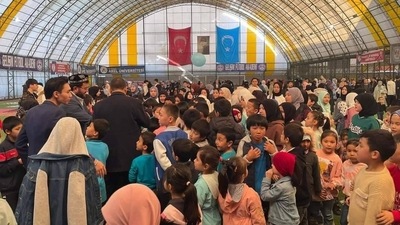
The Uyghur Muslim community living in exile in Turkey celebrated the formation of the two East Turkestan republics, re-affirming their resolve for independence from the People's Republic of China.

The East Turkestan Federation organised a meeting attended by over 2,000 delegates including the NGO representatives and community members. During the event, the Uyghur leaders highlighted ‘hunger genocide’ unleashed in East Turkestan by the Chinese authorities in the garb of implementing the Covid Zero Policy.

The delegates took a vow that East Turkestan is their homeland and that the community will continue to fight for ‘independence’ from China. Another meeting organised by The International Union of East Turkestan NGOs under Hidayetullah Oghuzhan was held in Istanbul, attended by community leaders and Uyghur academics.

The meeting attended by 800-900 Uyghurs accused China of carrying out a genocidal policy against the members of the community. Another meeting was held at Ankara wherein 200 delegates including NGO representatives, academicians and journalists were in attendance.

Uyghurs are a Turkic Muslim minority predominantly in China's northwestern region of Xinjiang, where a recent UN report said Beijing may have committed crimes against humanity.

On November 1, at least 50 countries majorly from the West urged China to implement all recommendations in the UN report which accused the Jinping regime of possible crimes against humanity against Uyghurs and other Muslim ethnic groups. Albania, Andorra, Australia, Austria, Belgium, Belize, Bulgaria, Canada, Czech Republic, Israel, UK and United States are among the countries which signed on the statement.

The human rights groups have accused Beijing of large-scale atrocities against minority groups in mainland China, sweeping a million people from the community into detention camps. The detained prisoners are said to have been tortured, sexually assaulted, and forced to abandon their language and religion.

Palestinian Rights Group Accuses Israel Of 'Mafia Methods' As UN Hearings Open

By Emma Farge
Members of the United Nations Independent International Commission of Inquiry on the Occupied Palestinian Territory, including East Jerusalem, and in Israel, Navanethem Pillay, Miloon Kothari and Chris Sidoti attend a press briefing at the United Nations headquarters in New York, U.S., October 27, 2022. 
Reuters / EDUARDO MUNOZ

APalestinian human rights group told a U.N. panel on Monday it had been subject to threats and "mafia methods" during a campaign of harassment organised by Israel to silence groups documenting alleged Israeli rights violations.

Israel dismissed the process overseen by the panel as a sham while it declined comment on the specific allegations.

The independent Commission of Inquiry, established by the Human Rights Council, the U.N. top human rights body, last year, plans five days of hearings which it says will be impartial and examine the allegations of both Israelis and Palestinians.

In the opening session, the commission heard from representatives of Palestinian organisations shuttered by Israel in August and designated as "terrorist" entities.

Shawan Jabarin, General Director of human rights group Al-Haq, denied the terrorism charge and called the closure an "arbitrary decision", saying Israeli security forces had used "mafia methods" against it in a years-long harassment campaign.

"They used all means, I can say. They used financial means; they used a smear campaign; they used threats," he said, saying his office was sealed with a metal door on Aug. 18.

Asked to detail the threats mentioned to the panel, Jabarin told Reuters after the hearing that he had received a phone call from somebody he identified as being from "Shabak", or the Israel Security Agency, two days after the raid. They threatened him with detention, interrogation or "other means" if he continued his work, he added.

A spokesperson for Israel's diplomatic mission in Geneva declined to comment on the specific testimony. A spokesperson for Israel's foreign ministry declined to comment.

"This (COI) and the convening of these sham trials shame and undermine the Human Rights Council," it said in an earlier statement, saying the commission had an "anti-Israel" agenda.

A U.N. human rights office has previously dismissed allegations of bias and said Israel had not cooperated with the commission's work.

The first set of hearings will next turn to the killing of the Palestinian-American reporter Shireen Abu Akleh in May.

The U.N. rights office has said its findings suggest that she was killed by Israeli forces while an Israeli investigation concluded she was likely unintentionally shot by an Israeli soldier.

Neither the hearings nor the U.N. Human Rights Council have any legal powers. But investigations launched by the council are sometimes used as evidence before national or international courts.

Israel's ally the United States has criticised the U.N. Human Rights Council for what it has described as a "chronic bias" against Israel. It quit the body over this in 2018 and only fully rejoined this year.

The three-member COI was created after the 11-day conflict in May, 2021, during which 250 Gaza Palestinians and 13 people in Israel died. The inquiry mandate includes alleged human rights abuses before and after that and seeks to investigate the root causes of the tensions.
It’s Time to Take the Gloves Off on Myanmar

As the military junta’s atrocities increase, it is high time for the U.S. and like-minded partners to adopt much stronger targeted sanctions.


By Justyna Gudzowska and Yadanar Maung
November 14, 2022

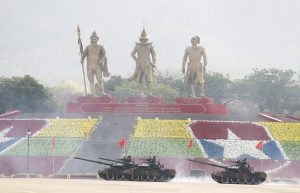
Myanmar military tanks are driven during a parade to commemorate Myanmar’s 77th Armed Forces Day in Naypyidaw, Myanmar, Sunday, March 27, 2022.
Credit: AP Photo/Aung Shine 

When G-20 leaders meet on the resort island of Bali this week, Russia’s war in Ukraine will undoubtedly dominate the conversation. But U.S. President Joe Biden should also use the G-20 to address another conflict unfolding much closer to Bali, as the people of Myanmar valiantly resist an illegitimate junta that is unleashing a campaign of violent repression, including war crimes and crimes against humanity. To date, the United States has taken an equivocal approach to the crisis raging in Myanmar. This visit presents a perfect opportunity to make clear that the U.S. and its international allies support the Myanmar peoples’ struggle for democracy by announcing new financial measures aimed at pressuring the corrupt, criminal junta responsible for these atrocities.

Since the military launched its disastrous coup attempt in February 2021, more than 2,400 civilians have been killed by junta forces. Schools and children have not been exempt from the junta’s war on the people of Myanmar, as recently illustrated by the killing of 11 schoolchildren in a helicopter airstrike. More than 15,000 political activists have been arrested, including elected members of parliament, civil society activists, and journalists. One million people have been displaced internally so far, with humanitarian and economic impacts reverberating throughout the Asian region.

The junta’s corruption, violence, and calamitous policies have caused massive human suffering and economic chaos. Engagement by the United Nations and by the most influential regional institution, the Association of Southeast Asian Nations (ASEAN), has not led to any change in the junta’s behavior. On the contrary, the junta has taunted the international community by executing prominent Myanmar democracy activists, jailing an Australian economist and a former British ambassador to Myanmar, and boasting that increasingly closer ties to Russia and China will help it evade the impact of sanctions.

In the coming months, the junta will seek to cement its power through what are expected to be sham elections in mid-2023 designed to provide the junta with a veneer of legitimacy. As an unprecedented resistance movement has coalesced all across the country, it is time for the U.S. to replace its previously restrained approach with a concerted ratcheting up of targeted sanctions.

For months, there has been a growing chorus of calls by civil society groups, prominent activists, and members of Congress for the U.S. to impose sanctions on the Myanma Oil and Gas Enterprise (MOGE), known to be the junta’s single largest source of foreign currency earnings. The junta has adopted a coercive approach to securing its hold over the financial sector, including seeking every avenue for access to foreign exchange, which it requires to purchase items such as weapons and jet fuel for planes and helicopters that it needs to wage war on its people. The EU has already sanctioned MOGE, but for the sanctions to have a significant impact, given the dominance of the U.S. dollar, the U.S. needs to act as well.

While Washington might want to avoid targeting the energy company so as not to alienate Thailand, which uses Myanmar gas, this concern is outweighed by the need to demonstrate to the junta and its international supporters – particularly China and Russia – that the international community is serious about confronting the junta’s abuses. Other state-owned enterprises benefiting the junta, such as the Myanma Petrochemical Enterprise, should also be sanctioned.

In addition, the U.S. should use network sanctions to target businesses that financially benefit from the political and economic turmoil engendered by the crisis. Shwe Byain Phyu, a Myanmar conglomerate with longstanding links to the military, epitomizes this new group of beneficiaries. The company’s acquisition of a majority stake in the distressed telecommunications business of Norwegian firm Telenor, which recently beat a retreat from the crisis in Myanmar, was endorsed by the junta.

To increase the effectiveness of financial measures and present a united front, the U.S. needs to work more closely with its partners. Coordinating targeted network sanctions with the EU, the United Kingdom, Canada, and Australia will shut down more pathways to the international financial system for junta-linked money, further tightening the screws.

Apart from sanctions, the Biden administration should ask its allies to cut all remaining business ties with the junta and linked entities. For example, Japan, a Quad member, the G-7 chair in 2023, and an incoming non-permanent member of the U.N. Security Council, has suspended the Y Complex mixed development project, which was taking place on land leased from the military and with funding from Japanese government entities. Those ties should not merely be suspended but ended.

The moment has come for the U.S. and its allies to take the gloves off, to support the massive popular resistance movement within Myanmar, and to help unravel the corrupt networks sustaining the junta. This will require commitment to hard-hitting actions and a long-term vision, investing in the organizations and individuals – especially those of Myanmar’s people –that will contribute meaningfully to democracy, sustainable peace, inclusive growth, and responsible business when the reign of terror finally comes to an end.

AUTHORS

Justyna Gudzowska is Director of Illicit Fiance Policy at The Sentry.

Yadanar Maung is a spokesperson for the advocacy group Justice For Myanmar.