Friday, February 17, 2023

TAKE THAT U$A
China to scrutinize Ford-CATL deal to ensure core technology isn’t shared


Bloomberg News | February 16, 2023 

CATL’s newly introduced Long Service Life Pack. Credit: CATL

China will scrutinize Ford Motor Co.’s recent agreement with Contemporary Amperex Technology Co. Ltd. to ensure the Chinese battery giant’s core technology isn’t handed over to the US carmaker, people familiar with the matter said. The move is another sign of heightened US-China geopolitical tensions complicating business deals.


Ford said Monday the tie-up would see CATL’s lithium iron phosphate, or LFP, battery technology licensed for use in a new $3.5 billion electric-vehicle battery plant that Ford will run and control in southwest Michigan.

While Beijing is pleased the deal showcases China’s prowess in the EV battery space, officials are concerned that competitive aspects of CATL’s technology could be given to or accessed by the American automaker, the people said, asking not to be named discussing Chinese government deliberations.

Senior Chinese leaders asked for the extra scrutiny, given the sensitivity of the deal and the current state of tensions between Washington and Beijing, the people said. The findings will be presented to the top leadership, but the format and timeframe for that process isn’t yet known, they added.

One of the people said it’s unlikely to result in the tie-up being blocked.

The plan, which has already been examined by lower-level officials in China, is getting this extra layer of national-level scrutiny because of the significance of the deal and its implications for US-China relations, the people said.

Representatives from China’s Ministry of Commerce, the National Development and Reform Commission and the Ministry of Industry and Information Technology didn’t immediately respond to requests for comment Thursday. Representatives for Ningde, Fujian-based CATL also didn’t reply to a request for comment.

“We are not aware of any outreach by Chinese government officials on this matter,” Ford said in an emailed statement.

Control of key technologies has become a significant front in the standoff between the world’s two biggest economies, with the US moving aggressively to restrict China’s access to chipmaking and other strategic capabilities. President Joe Biden put China’s domination of EV batteries in his sights with his signature climate bill — the Inflation Reduction Act — which means electric cars made with a certain amount of China-linked materials miss out on lucrative consumer tax credits.

The IRA has met with significant pushback from the world’s top battery makers, of which CATL is No. 1. China controls vast swathes of the supply chain for battery materials and CATL is a leader in LFP battery technology and production.

Officials in China will also check that individuals sanctioned by the country as part of its tit-for-tat with the US aren’t involved in the Ford-CATL project, seen as a boost for Michigan’s once-dominant automotive industry. China has sanctioned a range of individuals amid frictions with the US, including former Commerce Secretary Wilbur Ross, a raft of Trump administration staff and top executives at Boeing Co. and defense contractor Raytheon Technologies Corp.

A subsidiary of Raytheon and Lockheed Martin Corp. were sanctioned on Thursday for selling arms to Taiwan.

The Ford plant will be the first in the US to produce LFP batteries, which are less expensive and should make its EVs more affordable, Lisa Drake, Ford’s vice president of EV industrialization, told reporters after the factory announcement earlier this week. CATL will help set up the Michigan plant and have staff there, Drake said.

Criticism of deal


The arrangement is being seen as a possible template for how automakers in the US can still secure tax advantages while benefiting from China’s battery prowess.

It’s drawn criticism in the US at a time of heightened geopolitical tensions with China, inflamed by an alleged Chinese spy balloon that flew over America before being shot down.

Virginia Governor Glenn Youngkin pulled his state from consideration as a location for the factory, calling it a “Trojan horse” for the Chinese Communist Party, while US Senator Marco Rubio has called for a Committee on Foreign Investment in the US (CFIUS) review of the licensing agreement.

China has banned or restricted some military or dual-use technologies from export in the past. But while satellite, pharmaceutical and agricultural tech are covered on an export-ban list, battery making doesn’t appear on it.

More often on the receiving end of bans and restrictions from other countries when it comes to investment and tech use, China has also acted to thwart deals.

Ride-hailing giant Didi was made to delist from the New York Stock Exchange and Tiktok parent Bytedance’s US IPO plans were indefinitely postponed in 2021 after Beijing launched investigations into their data security, including concerns Chinese user and location information could be accessed by foreign entities if overseas investors had a stake in the companies.

(With assistance from Linda Lew, Danny Lee and Keith Naughton)
GLOBALIZATION REDUX
Ghana mining fund mulls multi-million investment in Atlantic Lithium

Cecilia Jamasmie | February 17, 2023 |

Atlantic Lithium has projects in Ghana and Côte d’Ivore. (Image courtesy of Atlantic Lithium.)

Australia’s Atlantic Lithium (LON: ALL) (ASX: A11) said on Friday that is engaged in talks with Ghana’s state-owned Minerals Income Investment Fund (MIIF) for funding of up to $30 million.


The exploration and development company is developing the Ewoyaa project in central Ghana, which would be the country’s first lithium mine.

Atlantic says the operation, which is expected to begin production in the second half of 2024, has the potential to generate nearly $5 billion in revenue over its 12.5-year lifetime.

The MIIF confirmed plans to take an equity stake in Atlantic Lithium and said the company had agreed to list on the Ghana Stock Exchange. Atlantic Lithium said only that discussions were ongoing, adding that there was no certainty an investment will be made.

A resource update for Ewoyaa, released early February, shows a mineral resource estimate (MRE) of 35.3 million tonnes at 1.25% lithium oxide (Li2O), including 28-million tonnes in the measured and indicated categories.

READ NOW: RANKED — World’s largest clay and hard rock lithium projects

That 79% of the resource that now falls within the measured and indicated categories is made up of 3.5-million tonnes at 1.37% Li2O in the measured category and 24.5-million tonnes at 1.25% Li2O in the indicated category.

Ghana, known for its gold and cocoa production, has long sought to diversify its exports, and Atlantic Lithium, previously known as IronRidge Resources, believes that mining the battery metal could be a partial solution.

Prices for the ultra-light metal have surged about 10 times since the start of 2021 to almost $80,000 per tonne, reflecting supply shortages and higher demand from the car industry.

IronRidge changed its name and spinned of its gold assets into a separate company to focus on production of the battery metal, key for the batteries that power EVs and high tech devices.
Teck said to plan coal spinoff to focus on metals

Bloomberg News | February 16, 2023 | 

Greenhills is one of the five steelmaking coal operations Teck Resources has in the Elk Valley, British Columbia. (Image courtesy of Teck Resources.)

Teck Resources Ltd. is planning to separate its multibillion-dollar steelmaking coal business to focus more on industrial metals, according to people familiar with the matter.


The Canadian miner is expected to make an announcement on the spinoff as early as next week, the people said, asking not to be identified as the matter is private. Deliberations are ongoing and no final decision has been made, the people said.

Shares rose 9.9% to C$61.79 at 10:55 a.m. in Toronto before trading was halted. That marks the highest intraday price in 12 years.

Teck has been weighing options for its coal division for over a year in a strategic shift toward mining more of the metals such as copper that are crucial to the global energy transition. Metallurgical coal is used in steelmaking, which is among the most polluting industries and faces significant pressure from policymakers.

The company declined to comment.

Teck, which is scheduled to report earnings next week, is one of the world’s largest exporters of metallurgical coal. The company produced more than 24 million metric tons in 2021 from four different operations in western Canada, according to its filings. The business accounted for 55% of the company’s gross profit.

Teck has been exploring options for the business since at least September 2021, when people familiar with the matter said the business could be worth about $8 billion.

A coal spinoff would leave Teck with a suite of copper and zinc mines across the Americas, including the Quebrada Blanca 2 copper project in Chile that has long been admired by some of its biggest rivals. It also owns a stake in the Antamina copper and zinc operation with BHP Group and Glencore Plc.

The world’s biggest miners are increasingly looking to exit fossil fuels. Rio Tinto Group has exited coal altogether, while Anglo American Plc has sold out of thermal coal. BHP divested some of its thermal coal and quit oil and gas altogether. BHP and Anglo still have large met coal operations, the sort of coal Teck is looking to hive off.

Attractive target

Separating the coal business would likely make Teck an attractive target for large mining companies such as BHP and Rio Tinto that have been hunting for takeovers to expand in industrial metals — providing the family that controls the shares would be willing to sell.

Teck’s standalone base metals business would make a very attractive M&A target should the controllers ever decide to sell, Citibank analyst Alexander Hacking said in a note Thursday.

“The question going forward is whether additional value can be surfaced by splitting the company, at the expense of the diversification and scale benefits,” RBC Capital Markets analyst Sam Crittenden said in a Thursday note. “We don’t see an obvious buyer for the met coal business so this would largely be a standalone met coal business.”

Bloomberg reported last month that the world’s biggest producers have rediscovered an appetite for mega deals, after years of staying on the sidelines.

(By Thomas Biesheuvel, Dinesh Nair and Jacob Lorinc)


Teck, PolyMet launch NewRange Copper 
Nickel JV to advance Minnesota projects

Staff Writer | February 15, 2023 | 

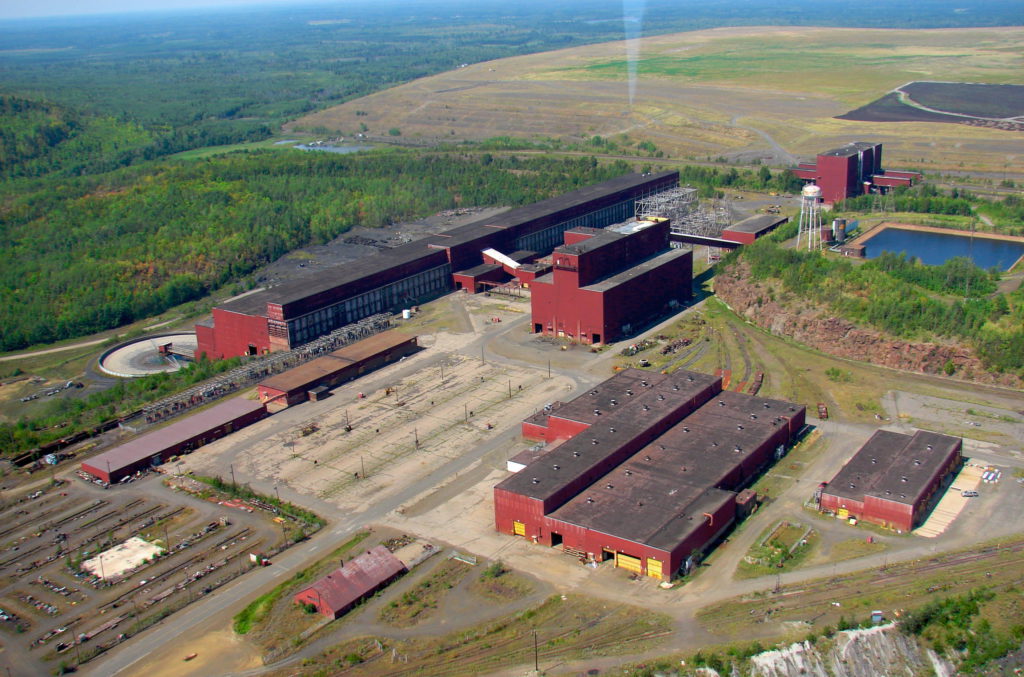
The NorthMet plant site is the former LTV Steel taconite processing site. PolyMet Mining photo

Teck (TSX: TECK.A, TECK.B; NYSE: TECK) and PolyMet (TSX: POM; NYSE: PLM) have launched the NewRange Copper Nickel joint venture with the aim to supply critical minerals for the clean energy transition across North America. Together, they plan to become the second nickel producer in the US.


NewRange holds both the NorthMet and Mesaba copper, nickel, cobalt, and platinum group metal deposits, two significant clean energy critical mineral resources located in northeastern Minnesota.

The two resources contain measured and indicated resources of 637 million tonnes and 2 billion tonnes for NorthMet and Mesaba respectively, and additional inferred resources of 400 million tonnes and 1.3 billion tonnes respectively.

In total, the two assets represent approximately one-half of the known 7.25-billion-tonne Duluth Complex resource in northeastern Minnesota.

NorthMet is expected to produce 29,000 tonnes of ore per day over a 20-year permitted mine life, with first production targeted for 2026. Over its first full five years of operations, it is expected to deliver annual payable production of 30,000 tonnes of copper, 3,600 tonnes of nickel, 58,000 oz. of palladium, and 12,000 oz. of platinum. Estimates for Metsaba are currently unclear.

PolyMet and Teck are responsible for funding their pro rata share of costs related to the NorthMet and Mesaba projects. The owners have committed to an initial work program with an estimated budget of $170 million to maintain permits, update feasibility cost estimates, and undertake detailed engineering to position NorthMet for a development decision following permit clearances, and to advance Mesaba studies.

Glencore has committed to support PolyMet’s respective portion of NewRange’s initial $170 million work program and certain other costs and expenses in the amount of approximately $100 million.

“NewRange Copper Nickel has potential to be a modern, multi-generational operation that will support North America’s acceleration to a carbon-neutral future, build a better quality of life for people, and diversify and create significant economic benefits for northern Minnesota and beyond,” said Tannice McCoy, the newly appointed general manager of NewRange following a 21-year career with Teck.
Peru protests jolt mine activity with Las Bambas, Antapaccay hit hardest

Reuters | February 16, 2023 | 

Las Bambas mine. (Image by MMG).

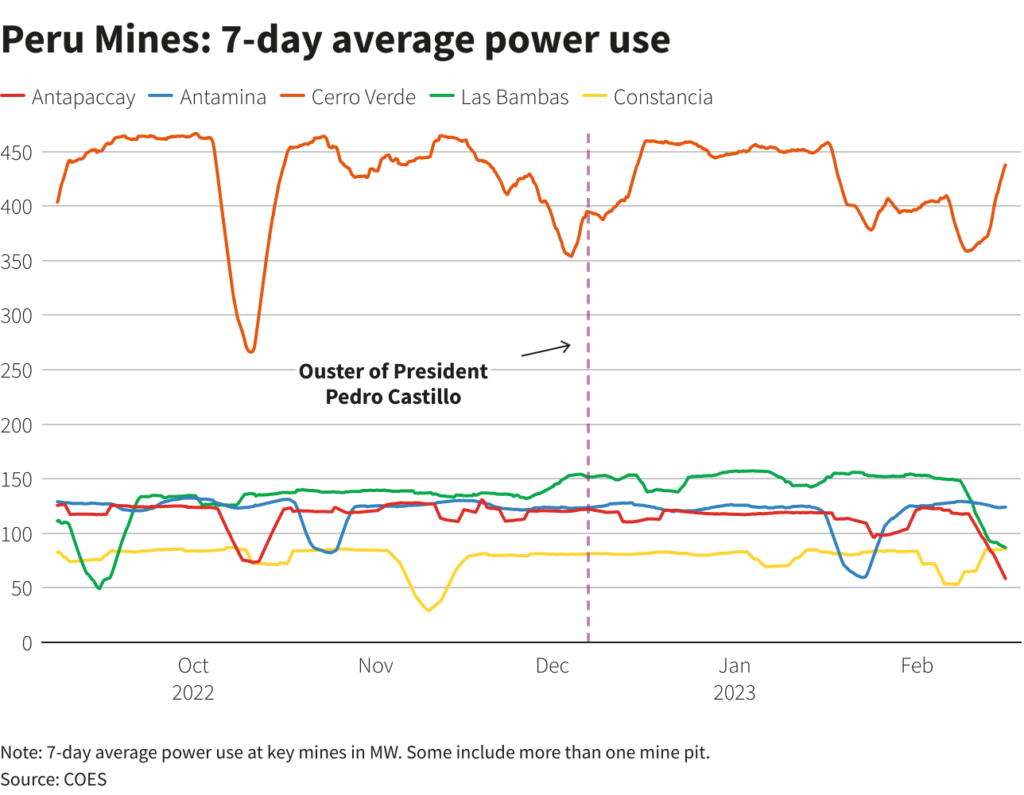
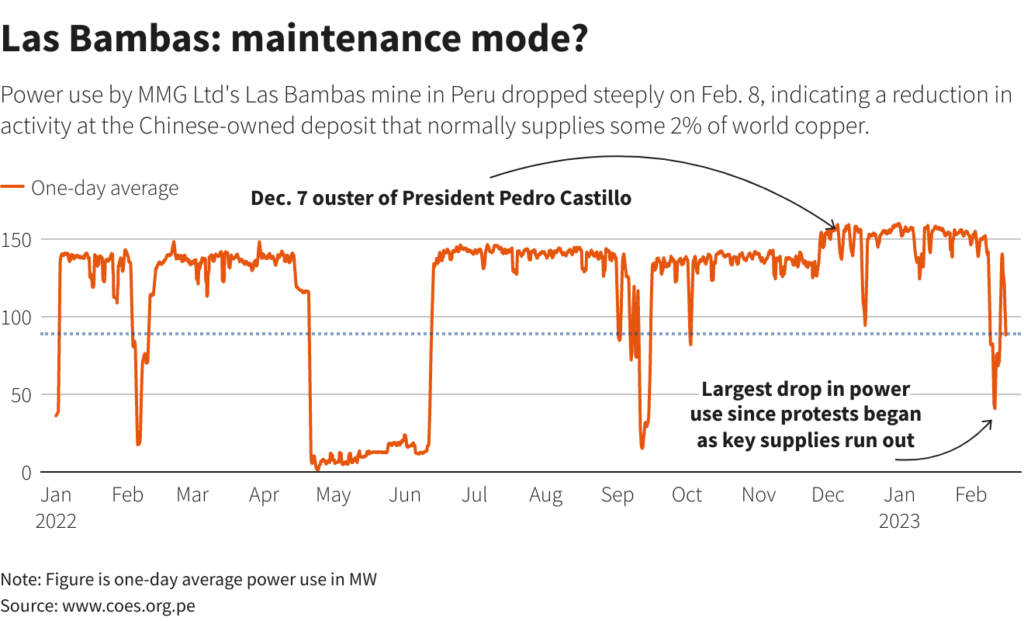
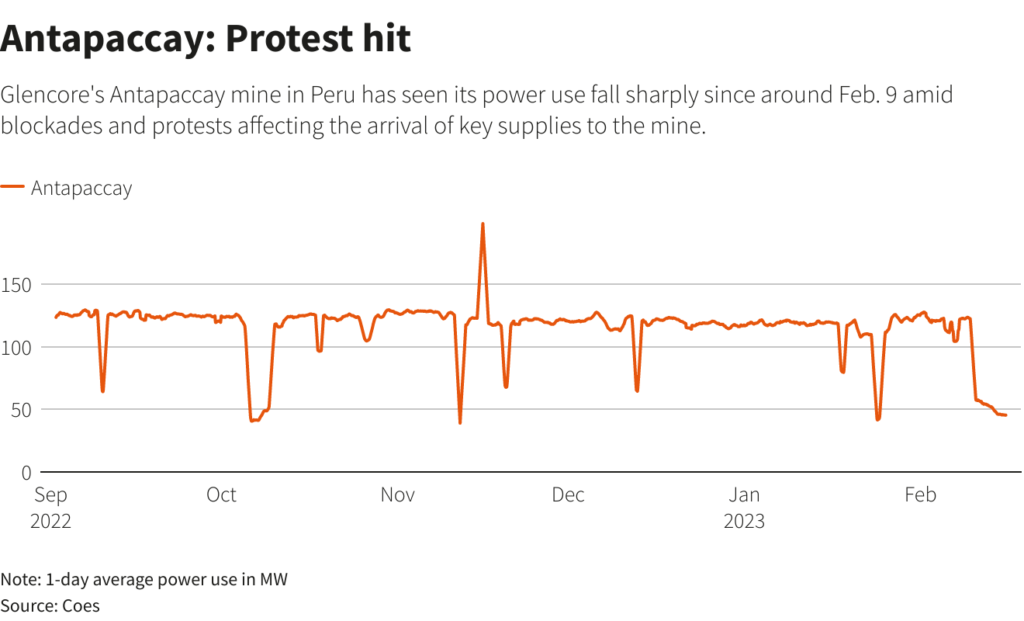
Peru’s top copper mines are starting to see activity hit harder by protests and blockades in the country’s southern Andes, power data reviewed by Reuters shows, with Chinese-owned Las Bambas and Glencore PLC’s Antapaccay currently worst affected.


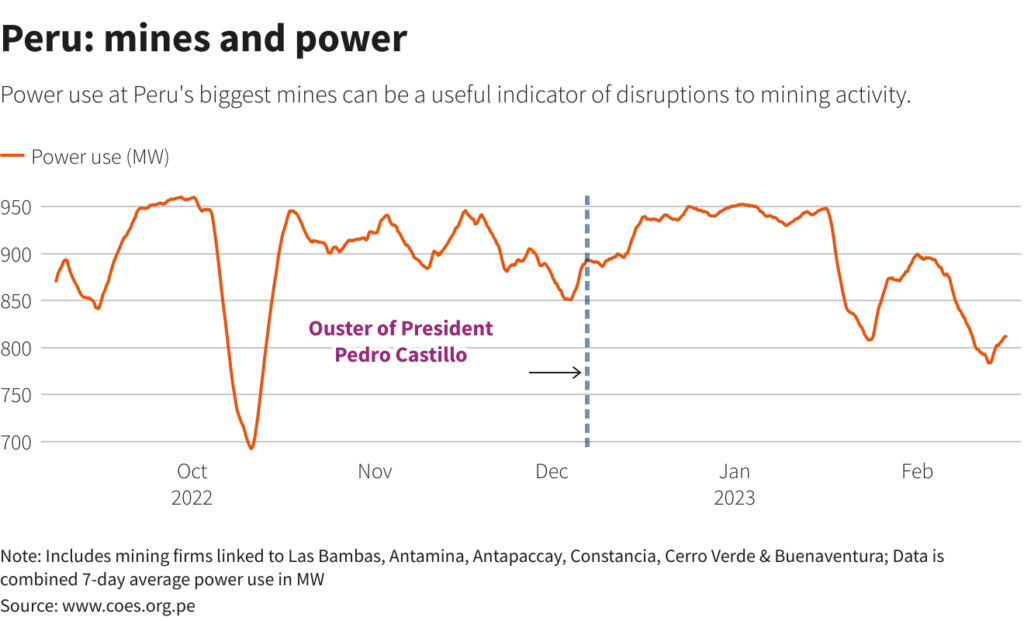
The South American country, the world’s no. 2 producer of the red metal, has been roiled by protests since the Dec. 7 ouster of President Pedro Castillo, though mining operations had generally remained resilient until this month.


However, a Reuters analysis of daily power use data from COES, which represents firms in Peru’s energy sector, shows that at least two key mines are now regularly only drawing half their normal power as key supplies needed for mining operations run out, suggesting they are in ‘care and maintenance’ mode.


Those are MMG’s Las Bambas, Peru’s third largest copper mine, and Glencore’s Antapaccay, which have both been hit by blockades on a key mining corridor highway. Latest data up until Thursday showed both at half normal power usage.

Miners in Peru, however, have a long history of dealing with community protests which have at times caused long shutdowns, something not yet seen in the current nationwide anti-government protests where nearly 50 people have died in clashes.

The data backs this up, suggesting that mines are at times getting some supplies through the blockades, with Las Bambas in recent days see-sawing between full and half power use.


A source familiar with the matter told Reuters on Thursday that protesters had temporarily lifted blockades a day earlier on a key section of the mining corridor in Condoroma, Cusco, used by Las Bambas, Antapaccay and Hudbay’s Constancia.

They were, however, threatening to resume the blockade on Friday, the source added, underscoring the current uncertain environment which has hit the arrival of supplies to mines and transport of copper concentrate for export.

Antapaccay said on Monday that five fuel trucks had been attacked and vandalized while on route to the mine.


Representatives from Las Bambas, Antapaccay and Constancia were not immediately available to comment on whether they were receiving inputs for their operations or sending their concentrates in the two-day window with the blockades eased.

Other key mines including Peru’s largest copper mine Antamina, co-owned by Glencore, BHP Group, Teck Resources Ltd and Mitsubishi Corp, appear to be still drawing near normal levels of power, despite some temporary disruptions in recent months.

An analysis of power use by six key mine operators shows that combined electricity use levels have dropped overall since mid-January, with the biggest slide this month.

“The longer that the supply of raw materials remains hostage to the protests the higher the risk that affected mines either run at limited capacity or halt production entirely,” Capital Economics said in a note this week.

“Anecdotal reports and high frequency data suggest that ongoing civil unrest in Peru is beginning to choke off activity at key copper mines. But, if recent history is anything to go by, output can rebound rapidly so long as closures are brief.”


(By Marco Aquino and Adam Jourdan; Editing by Diane Craft)
Why Pacific Islanders are staying put even as rising seas flood their homes and crops

By Merewalesi Yee, Annah Piggott-McKellar, Celia McMichael and Karen E McNamara
The Conversation

16 February 2023

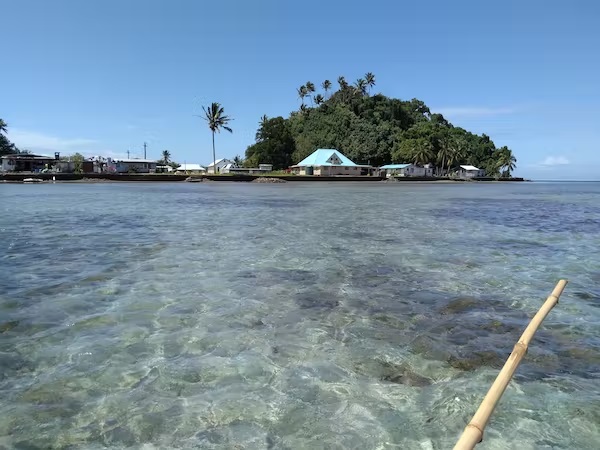
Serua Island residents are choosing to stay put even as rising seas flood their homes and crops as their decision is based on ‘Vanua’, which binds local communities to their land

Climate change is forcing people around the world to abandon their homes. In the Pacific Islands, rising sea levels are leaving communities facing tough decisions about relocation. Some are choosing to stay in high-risk areas.

Our research investigated this phenomenon, known as “voluntary immobility”.

The government of Fiji has identified around 800 communities that may have to relocate due to climate change impacts (six have already been moved). One of these is the village on Serua Island, which was the focus of our study.

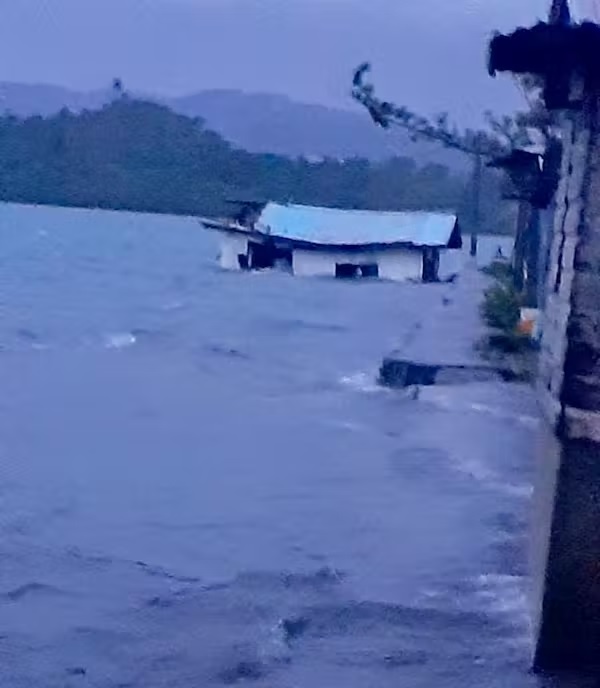
Coastal erosion and flooding have severely damaged the village over the past two decades. Homes have been submerged, seawater has spoiled food crops and the seawall has been destroyed. Despite this, almost all of Serua Island’s residents are choosing to stay.

We found their decision is based on “Vanua”, an Indigenous Fijian word that refers to the interconnectedness of the natural environment, social bonds, ways of being, spirituality and stewardship of place. Vanua binds local communities to their land.


A house on Serua Island is submerged by seawater.

Residents feel an obligation to stay


Serua Island has historical importance. It is the traditional residence of the paramount chief of Serua province.

The island’s residents choose to remain because of their deep-rooted connections, to act as guardians and to meet their customary obligations to sustain a place of profound cultural importance. As one resident explained:

“Our forefathers chose to live and remain on the island just so they could be close to our chief.”


Sau Tabu is the burial site of the paramount chiefs of Serua.

The link to ancestors is a vital part of life on Serua Island. Every family has a foundation stone upon which their ancestors built their house. One resident told us:

“In the past, when a foundation of a home is created, they name it, and that is where our ancestors were buried as well. Their bones, sweat, tears, hard work [are] all buried in the foundation.”

Many believe the disturbance of the foundation stone will bring misfortune to their relatives or to other members of their village.

The ocean that separates Serua Island from Fiji’s main island, Viti Levu, is also part of the identity of men and women of Serua. One man said:

“When you have walked to the island, that means you have finally stepped foot on Serua. Visitors to the island may find this a challenging way to get there. However, for us, travelling this body of water daily is the essence of a being Serua Islander.”

The ocean is a source of food and income, and a place of belonging. One woman said:

“The ocean is part of me and sustains me – we gauge when to go and when to return according to the tide.”


The sea crossing that separates Serua Island from Viti Levu is part of the islanders’ identity.

Serua Islanders are concerned that relocating to Viti Levu would disrupt the bond they have with their chief, sacred sites and the ocean. They fear relocation would lead to loss of their identity, cultural practices and place attachment. As one villager said:

“It may be difficult for an outsider to understand this process because it entails much more than simply giving up material possessions.”

If residents had to relocate due to climate change, it would be a last resort. Residents are keenly aware it would mean disrupting – or losing – not just material assets such as foundation stones, but sacred sites, a way of life and Indigenous knowledge.

Voluntary immobility is a global phenomenon

As climate tipping points are reached and harms escalate, humans must adapt. Yet even in places where relocation is proposed as a last resort, people may prefer to remain.

Voluntary immobility is not unique to Fiji. Around the world, households and communities are choosing to stay where climate risks are increasing or already high. Reasons include access to livelihoods, place-based connections, social bonds and differing risk perceptions.

As Australia faces climate-related hazards and disasters, such as floods and bushfires, people living in places of risk will need to consider whether to remain or move. This decision raises complex legal, financial and logistical issues. As with residents of Serua Island, it also raises important questions about the value that people ascribe to their connections to place.

A decision for communities to make themselves

Relocation and retreat are not a panacea for climate risk in vulnerable locations. In many cases, people prefer to adapt in place and protect at-risk areas.

No climate adaptation policy should be decided without the full and direct participation of the affected local people and communities. Relocation programmes should be culturally appropriate and align with local needs and proceed only with the consent of residents.

In places where residents are unwilling to relocate, it is crucial to acknowledge and, where feasible, support their decision to stay. And people require relevant information on the risks and potential consequences of both staying and relocating.

This can help develop more appropriate adaptation strategies for communities in Fiji and beyond as people move home, but also resist relocation, in a warming world.

This opinion was written by Merewalesi Yee, Annah Piggott-McKellar, Celia McMichael, Karen E McNamara, originally published at The Conversation on 10 January 2023, reposted via PACNEWS.


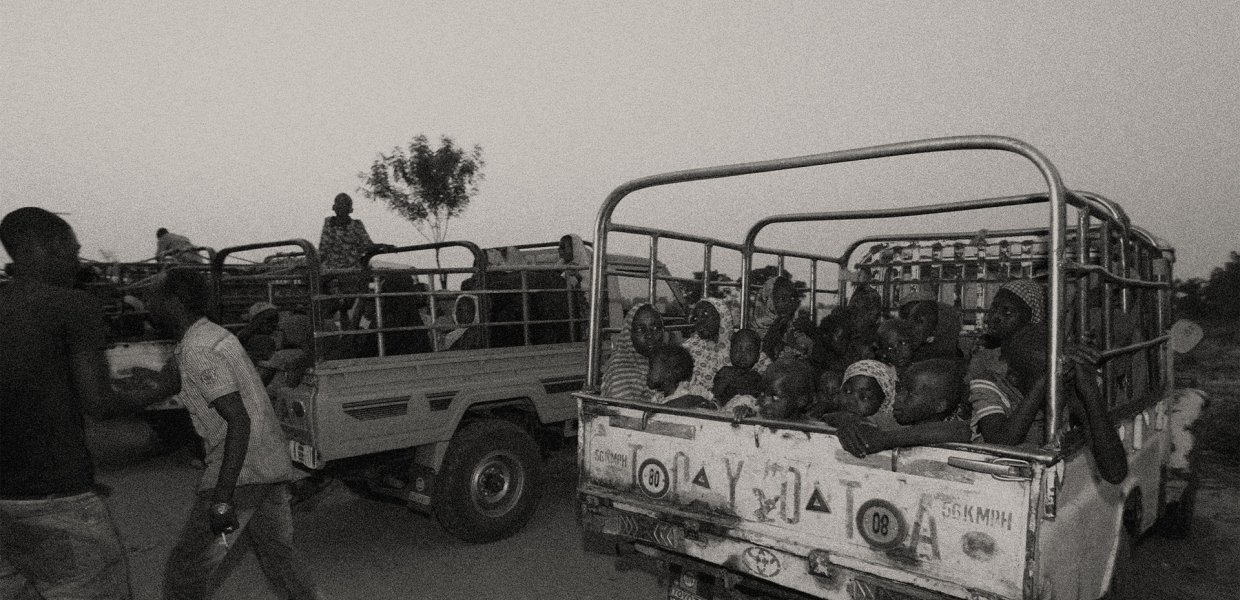
black and white photo of Nigerian women and children scared in back of truck as men walk around guarding

Reuters team wins 2023 Selden Ring Award for ‘Nightmare in Nigeria’

The content of this article includes sensitive topics, including sexual violence, that may be difficult for some people to confront. Some individuals may choose to not proceed.

In 2019, Reuters correspondent Paul Carsten was speaking with a human rights contact about military abuses against civilians in Nigeria’s northeast site of a brutal war against Islamist insurgents. He wondered aloud about the women who had been liberated by the army after being abducted, sexually enslaved and impregnated by insurgents.

“What did the soldiers do with these women,” thought Carsten, “perform abortions?” What happened to their children?

Carsten hit upon what would prove to be an extraordinary story: The army for years had been running a mass, secret abortion program, forcing the termination of at least 10,000 pregnancies among women and girls, many of whom had been abducted and raped by militants.

Carsten — joined by reporters David Lewis, Reade Levinson and Libby George — painstakingly assembled evidence of other horrifying abuses: Children as young as a few months old were being targeted for death. Suspected of being relatives or allies of Boko Haram, minors were regularly murdered by the military — shot, smothered, poisoned — sometimes in front of their mothers.

For their resulting four-part series, “Nightmare in Nigeria,” the Reuters team has won the 2023 Selden Ring Award for Investigative Reporting. The annual award, one of the foremost honors in investigative journalism, has been presented by the USC Annenberg School of Journalism for 34 years. The $50,000 prize honors investigative journalism that informs the public about major problems and corruption and yields concrete results.

“The imperative for ethical, intellectually rigorous, intrepid reporting that surfaces injustice and holds those in power accountable has never been greater,” USC Annenberg Dean Willow Bay said. “We are deeply proud to have partnered with the Ring Foundation to once again recognize the very best in investigative journalism.” 

four photos side by side begining with
From left to right: Paul Carsten, David Lewis, Reade Levinson and Libby George (Photos courtesy of Reuters).

Carsten, Lewis, Levinson and George’s reporting was undertaken at great risk, requiring months and, in some cases years, of trust-building with 33 women and girls who survived abuse, as well as clandestine conversations with healthcare workers, soldiers and armed guards who turned over military documents and hospital records. These witnesses shared their stories despite credible threats of incarceration or violence from the military, profound trauma and practical obstacles such as the need to travel long distances for their meetings. Most will never be recognized for their courage; they felt they could not risk being named.

Drawing on more than 40 witness interviews, satellite imagery and documentation from security-force members, the Reuters team meticulously documented six incidents in which at least 60 children died. The series’ print pieces and videos created a definitive public record of atrocities that might otherwise have gone unacknowledged. 

The coverage also interrogated the role of the international community in facilitating these abuses, particularly the U.S. and U.K. governments, which have provided considerable financial backing to the Nigerian military. The Reuters series’ impact has been profound, generating calls for investigation from the U.S., British and German governments and the U.N. Secretary-General. 

“A prestigious award like the Selden Ring is a great personal honor for our reporters, but it’s also a vehicle to bring attention to their work and amplify its reach and impact,” said Julie Marquis, an investigative editor who co-edited the series. “Calling attention to investigative journalism serves as a reminder to people in power that they can’t assume they can escape scrutiny for their actions, in any corner of the world.”  

The judges commended the series for “creating a space where the voices of families who endured grave harms – perpetrated secretly and systemically by their own government – could be heard.” 

“The judges had a very challenging task and we are beyond grateful for their hard work as they narrowed down a highly competitive collection of 86 entries, representing the very best of investigative journalism over the past year," said Gordon Stables, director of USC Annenberg’s School of Journalism. “Not only are members of the panel accomplished journalists who have made a substantial public impact in their own communities, they are dedicated professionals who continue to demonstrate a commitment to elevating the work of their peers."

Since 1989, the Ring Foundation has partnered with the USC Annenberg School of Journalism to present the Selden Ring Award for Investigative Reporting. The $50,000 annual award was established with the support of Southern California businessman and philanthropist Selden Ring. It underscores the critical importance of investigative journalism in today’s society. 

This year’s judging panel included: 2013 winner Alexandra Zayas, Deputy Managing Editor, ProPublica; returning judges Sewell Chan, Editor in Chief, The Texas Tribune and Pulitzer Prize-winning reporter Wesley Lowery; with first-time judges, Astead Herndon, National Political Reporter, The New York Times; Sarah Stillman, staff writer, The New Yorker; Manny Garcia, Executive Editor, the Austin American-Statesman; and Harriet Ryan, investigative reporter, The Los Angeles Times.

In addition to naming the winner, the panel of judges also recognized the work of two finalists.

New York Times, “How Hasidic Schools Reap Millions But Fail Students

The judges praised the “high degree of difficulty” in this investigation of abject educational failures at taxpayer-funded schools run by the insular and politically powerful Hasidic community in New York State. The series revealed that instruction for the 50,000 students was so lacking — meager English and math, almost no science or social studies — that 99% of those who took state standard tests failed them. Despite these screaming deficiencies, public money — more than $1 billion in the past four years — continued to pour into these institutions. Jurors saw great courage in the decision to tackle a religious and culturally fraught topic on behalf of children when many in the community and government refused to do so. As one judge remarked, “If the New York Times hadn’t done this story, it wouldn’t have been done.”

Los Angeles Times, “Legal Weed, Broken Promises

Of all of the states that could have served as a testing ground for the legalization of marijuana, California, with progressive business practices and a record of regulatory guardrails, might have seemed the safest of bets. And for years, its transition to legal weed was perceived to be a national success. The Los Angeles Times, in a wide-ranging investigation, shattered this fiction from every angle, using technology, lucid writing, and courageous reporting to lay bare a netherworld of off-the-grid grow operations and black market storefronts. Instead of rectifying the ills of the war on drugs and lifting up entrepreneurs, the new system was a boon to corrupt politicians and organized criminals. Honest farmers lived in fear of their outlaw competitors. Dozens of vulnerable workers died. The investigation’s impact was swift and profound: tens of thousands of people who had languished with old marijuana convictions will have their records cleared; regulators intend to crack down on illegal operations with a focus on labor exploitation and human trafficking. Judges commented that the many states that have followed California down the path to legal weed will benefit from this cautionary tale.


IMPERIALISM SPREADS ITS TENTACLES
NATO’s opportunity in the Indo-Pacific
Given the tensions in the Indo-Pacific, a co-operation between South Korea, Japan and NATO sends a message of deterrence and shared liberal values

FOREIGN AND SECURITY POLICY
 06.01.2023 | Taehun Lim

The year 2022 was pivotal for the West and the NATO military alliance. Russia's invasion of Ukraine and China's mounting military threats against Taiwan forced NATO to recalibrate its risk analysis.

The NATO summit in Madrid in June was, therefore, remarkable in that two far-eastern states, South Korea and Japan, were invited. While Japan already has the status of a Western actor within the framework of the G7, the invitation to South Korea to attend the summit was particularly surprising. Although Seoul has been a global partner of NATO since 2006, co-operation to date has been essentially diplomatic. South Korea had already been invited to NATO meetings of foreign ministers several times before, but this had not led to any geopolitical commitment on its part to NATO or Europe. But circumstances have changed. The invitation to the summit was driven by NATO's most important member by far – the US, an ally of South Korea. Does this mean that Japan and South Korea will now take on new significance for Europe and the Far East in terms of security policy?

There was immediate praise for the Indo-Pacific strategy from Washington.

On 28 December, the South Korean government under new President Yoon Suk-yeol published a strategy for the Indo-Pacific region for the first time. It stated that the country's focus should be on promoting freedom, peace and prosperity through the creation of a rules-based order and co-operation on the rule of law and human rights. The 43-page document includes only one paragraph on China, Seoul's largest trading partner and the rival of its most important ally, the US. On taking office in May, Yoon announced a hard line towards China and since then has intensified the security co-operation with the US.

The Indo-Pacific strategy indirectly addresses fears of military action by China against Taiwan and calls for a resumption of the summit meetings between South Korea, Japan and China, the last of which took place in 2019. It states that co-operation with Japan is essential for promoting co-operation and solidarity between like-minded nations in the Indo-Pacific region – a clear indication that Yoon wants to improve relations between these neighbouring countries. Seoul also wants to expand co-operation with the Quad – the Quadrilateral Security Dialogue between Australia, India, Japan and the US – which is seen as a counterweight to China's ambitions in the region. There was immediate praise for the Indo-Pacific strategy from Washington.

Advantages of closer co-operation for NATO


Closer ties between South Korea and Japan and a security partnership with the two East Asian states would have strategic advantages for NATO. With South Korea, it can benefit immediately from the strength of the country’s armed forces, not least in light of China's military build-up in the Indo-Pacific. The South Korean military is well-equipped and combat-ready because of constant North Korean military provocations. Moreover, South Korea holds large-scale joint military exercises with the US every year. Secondly, South Korea can contribute to NATO through co-operation on armaments, and can supply high-quality weapons. The competitiveness of its arms industry is demonstrated, for example, by Poland's purchase of South Korean tanks and howitzers in response to Russia's invasion of Ukraine. Third, as a leader in digital technology, South Korea can strengthen NATO's cybersecurity against Russia and China (and North Korea). Fourth, as a globally important microchip manufacturer, South Korea – along with Japan and Taiwan – is seen by the US as part of a microchip alliance whose task is to isolate China completely from the microchip supply chain. Conversely, South Korea thus serves as a reliable partner in the microchip supply chain for NATO countries.

The current Japanese government under Fumio Kishida wants to raise the country's military spending to two per cent of GDP by 2027 and to acquire 500 Tomahawk cruise missiles. Such an enhancement of Japan's military capabilities would provide NATO with further strategic options in the face of China's military build-up in the Indo-Pacific.

Advantages for South Korea and Japan

From a Far Eastern perspective, a strategic partnership with NATO would help in managing the Chinese military threat. As a first step, joint military exercises involving NATO and East Asian countries could be held in the Indo-Pacific (where the US, France, the UK and Germany already have a military presence) or in Europe, in order to enable, for instance, the defence of free and unfettered trade flows in the South China Sea. As a second step, the Far Eastern countries and NATO could perhaps establish an intelligence alliance comparable to the ‘Five Eyes’ of the Anglo-Saxon powers. This would enable the two sides of the alliance to exchange military intelligence and facilitate the formulation of joint strategies towards China and Russia. As a third step, NATO and the Far Eastern countries could establish an informal military alliance similar to the Quad, which would strengthen collective security on both sides.

Co-operation between South Korea and NATO not only sends a clear message about deterrence but also represents a commitment to the defence across the world of the liberal values that both sides share.

For a successful strategic partnership between NATO and the Far East to develop, relations between South Korea and Japan must improve significantly. The smouldering conflict over how to address the issue of Japan's colonial history stands in the way of close co-operation. The enforced prostitution of Korean women during the colonial period, the visits of Japanese politicians to the Yasukuni Shrine, where Japanese war criminals are buried, and the border dispute over the Liancourt rocks (Dokdo in Korean, Takeshima in Japanese) are some of the unresolved historically controversial issues. This is compounded by the Japanese trade sanctions imposed on South Korea in 2019, which aim to impede the further rise of the South Korean industry. Fortunately, the current South Korean government under Yoon Suk-yeol is keen on significantly improving relations with its neighbour in order to boost a security co-operation between the two sides vis-à-vis China and North Korea. The Japanese government will now have to respond to the signals from Seoul, if necessary also involving the US as a mediator.

NATO's decision in August to accept South Korea's request to designate an embassy to represent the country in dealings with the military alliance bodes well for the development of a close strategic partnership. Given the rising military tensions in the Indo-Pacific and China's military threats against Taiwan, co-operation between South Korea and NATO not only sends a clear message about deterrence (and thus the prevention of war) but also represents a commitment to the defence across the world of the liberal values that both sides share.

Reuters/ Jonathan ErnstPresident Joe Biden, South Korea's President Yoon Suk-yeol and Japanese Prime Minister Fumio Kishida meet during a NATO summit in Madrid.

Joint Statement

Issued on the occasion of the meeting between H.E. Mr Jens Stoltenberg, NATO Secretary General and H.E. Mr Kishida Fumio, Prime Minister of Japan

  • 31 Jan. 2023 -
  • |
  • Last updated: 01 Feb. 2023 11:31

Prime Minister of Japan, KISHIDA Fumio, and Secretary General of the North Atlantic Treaty Organization (NATO), Jens STOLTENBERG, met in Tokyo on 31 January, 2023. Building on Prime Minister Kishida's historical participation in the NATO Summit in 2022 for the first time as Japanese Prime Minister, the two leaders reaffirmed their commitment to deepen cooperation between Japan and NATO, as reliable and natural partners, who share common values of freedom, democracy, human rights, and the rule of law, as well as strategic interests.

Challenging strategic environment at a historical inflection point
The international community is facing changes defining an era. The free and open international order based on the rule of law is at stake, and we are witnessing changes in power balances and intensifying geopolitical competition. The world is at a historical inflection point in the most severe and complex security environment since the end of World War II.

Russia's aggression against Ukraine has shattered peace and shaken the foundation of the rules-based international order. It has gravely altered the security environment in the Euro-Atlantic and beyond. The balance of power is also rapidly shifting in the Indo-Pacific, and we share the view that unilateral change of the status quo by force or coercion is not acceptable anywhere in the world.

We recognise that the security of the Euro-Atlantic and of the Indo- Pacific is closely connected and stress the necessity of further strengthening cooperation between Japan and NATO, in order to respond to the changing strategic environment. Japan welcomes NATO ' s determination to strengthen dialogue and cooperation with partners in the Indo-Pacific. We welcome Japan's vision for realising a "Free and Open Indo-Pacific" (FOIP). We reaffirm our resolve to uphold and strengthen the free and open international order based on the rule of law.

Complex strategic challenges facing the international community
We condemn, in the strongest terms, the unprovoked and unjustifiable war of aggression by Russia against Ukraine. We reiterate our unwavering support for Ukraine ' s independence, sovereignty, and territorial integrity within its internationally recognised borders extending to its territorial waters. We underscore that Russia's irresponsible nuclear rhetoric is unacceptable and that any use of nuclear weapons would meet with unequivocal international condemnation and severe consequences. We reaffirm our unwavering support for and solidarity with Ukraine in the face of the ongoing Russian war of aggression. We highlight with concern Russia's growing military cooperation with China, including through joint operations and drills in the vicinity of Japan.

We strongly oppose any unilateral attempts to change the status quo by force or coercion in the East China Sea.We express serious concern about reports ofmilitarisation, coercion and intimidation in the South China Sea. With regard to China's rapid strengthening of its military capabilities and expansion of military activities, we strongly encourage China to improve transparency and to cooperate constructively with international efforts for arms control, disarmament and non-proliferation. Our basic positions on Taiwan remain unchanged, and we emphasize the importance of peace and stability across the Taiwan Strait as an indispensable element in security and prosperity in the international community. We encourage a peaceful resolution of cross-Strait issues.

We strongly condemn North Korea's ongoing development of nuclear weapons and ballistic missiles including ballistic missile launches over the past year with unprecedented frequency and in an unprecedented manner, and urge North Korea to fully comply with all relevant UN Security Council resolutions and to abandon its nuclear weapons and existing nuclear programs, and any other weapons of mass destruction and ballistic missile programs in a complete, verifiable and irreversible manner. We call on all member states of the United Nations to fully implement relevant UN Security Council resolutions. Furthermore, we also express serious concern on North Korea ' s flagrant violation of human rights and, in particular, strongly urge North Korea to immediately resolve the abductions issue.

Japan-NATO cooperation in the new strategic environment
Japan welcomes the adoption of NATO's 2022 Strategic Concept, which refers to the importance of the Indo-Pacific. We also welcome the adoption of Japan's National Security Strategy, including fundamental reinforcement of its defence capabilities, and its continuous support to Ukraine. In addition, we welcome progress towards the new framework cooperation document between Japan and NATO, the Individually Tailored Partnership Programme (ITPP), in order to elevate current Japan-NATO cooperation to new heights that reflect the challenges of a new era.

We welcome developments in Japan-NATO cooperation in tackling traditional security challenges such as maritime security and arms control, disarmament and non-proliferation. In addition, given the severe international security environment and new security challenges, we reaffirm the importance of cooperation in areas such as cyberspace, outer space, disinformation and strategic communications, countering hybrid challenges, resilience, critical and emerging technologies, and innovation to bolster our capacity to address emerging challenges in new domains. Furthermore, we are exploring expanding cooperation to areas such as defence science and technology including activities with the NATO Science and Technology Organization (STO).

This new cooperation between Japan and NATO will effectively help address emerging threats in new domains such as cyberspace, outer space, cutting edge science and technology, and supply chains, and enhance our resilience to hybrid threats accordingly.We will also reinforce our efforts to promote our fundamental values including through cooperation on gender and human security.

Upgrading Japan-NATO cooperation in a new era
In this context, we are enhancing our strategic coordination on Japan-NATO cooperation, utilizing appropriate frameworks, for the purpose of taking stock of the progress made so far and considering way forward on Japan-NATO cooperation.

We welcome NATO's observation of the Japan-U.S. Joint Field Training Exercise in 2022 (Keen Sword 23) as symbolic cooperation with partners in the Indo-Pacific and a further strengthening of such cooperation.

We are accelerating our efforts to enhance information sharing between Japan and NATO. In addition, we welcome Japan's intention to participate in the North Atlantic Council (NAC) and the NATO Chiefs of Defense meetings on a regular basis.

We are convinced that Japan-NATO cooperationwill demonstrate its value under this severe and complex security environment. Through our staunch partnership, we are determined to contribute to upholding and strengthening the free and open international order based on the rule of law.


UN votes unanimously to extend sanctions on Yemen's Houthis

By Associated Press
February 15, 2023

UNITED NATIONS — The U.N. Security Council voted unanimously Wednesday to extend the arms embargo on Yemen’s Houthi rebels and an asset freeze and travel ban on Houthi leaders and top officials until Nov. 15.


The British-drafted resolution also extends the mandate of the U.N. panel of experts monitoring the sanctions until Dec. 15.


In February 2022, the Security Council expanded an arms embargo on Houthi leaders to include all Houthis, saying they have threatened the peace, security and stability of the war-torn country.


After Wednesday’s vote, the council met behind closed doors to hear briefings by Hans Grundberg, the U.N. special envoy for Yemen, and Joyce Msuya, the assistant secretary-general for humanitarian affairs.


Yemen, the Arab world’s most impoverished country with a population of 26 million, plunged into civil war in 2014 after the Iranian-backed Houthis took over the capital of Sanaa. The internationally recognized government fled and sought support from neighboring Gulf countries.


In March 2015, a Saudi-led military coalition began what turned into a devastating war to restore the government that has killed more than 10,000 people, displaced 2 million and created one of the world’s worst humanitarian disasters. The war has deteriorated largely into a stalemate.


A U.N.-backed truce took effect last April and raised hopes for a longer pause in fighting, but it ended Oct. 2 after just six months.


Grundberg told the council in January that despite the end of the truce, “the overall military situation in Yemen has remained stable.” He said he was encouraged by intensified regional and international diplomatic activity to end the country’s eight-year conflict, and he reportedly followed up on those efforts during Wednesday’s closed council meeting.

How Bosnia’s Rocky Terrain Aided Wartime Massacre Cover-Ups – Analysis

Site of the Korićani Cliffs massacre on Mount Vlašić in central Bosnia and Herzegovina. Photo by Yahadzija, Wikipedia Commons.

By 

Dozens of pits and ravines and in mountainous Bosnia and Herzegovina were used to hide bodies of massacre victims and conceal crimes from outsiders during the 1992-95 war – as they were also used during World War II.

By Hikmet Karcic*

In mid-June 1992, as the war in Bosnia and Herzegovina began in earnest, Bosniak civilians in the town of Visegrad boarded buses in a convoy organised by the local Red Cross. Forced out of their homes by the Bosnian Serb army, they were told that they would be transported to territory controlled by the Bosnian government, where they would be safe.

Several buses, carrying almost 500 civilians in total, passed through the town and headed towards Sarajevo. The Bosniak civilians, who were of all ages, male and female, accepted the offer of transport because it had been organised by their Serb neighbours, who they trusted.

The buses stopped in the town of Sokolac. The Serb soldiers accompanying the convoy started to divide the men from the women. The men, 49 of them, were placed on another bus, whilst the others continued towards Bosnian government-controlled areas.

The men were tied to each other in pairs, their hands bound with wire, and taken into a forest in front of a ravine. Serb soldiers, mainly from Visegrad, started ordering the men, two at time, to the edge of the ravine, where they were shot and fell into the ravine as the next victims looked on.

Too shocked to understand what was happening to them, the victims acted robotically. Their executioners were their former high school classmates, co-workers and friends.

Ferid Spahic, being the last of the captives, the 49th victim in line for execution – an odd number – was not tied to anyone else.

At some point during the massacre, Spahic realised that he could try and escape, since he was not bound to anyone. He used a moment when the guards were not looking and started to run.

The guards fired shots in his direction. The bullets missed him, but Spahic tripped and fell as if hit. The guards thought they had shot him, and left him to lie on the ground.

For the next few hours, Spahic played dead, listening to the executions happening a few hundred metres behind him. The soldiers drank beer, laughed and joked, and to finish everything off, tossed hand grenades into the ravine.

Spahic waited for nightfall and then continued through the forest, searching for help with his hands still bound. He hurried through the woods for a few hours until he came across a Bosniak village where an elderly woman took care of him and from there he managed to get to Bosnian government-held territory.

The usage of the many deep pits and ravines across Bosnia and Herzegovina as places of execution, burial and ultimately concealment is not unique to this tragic incident. In this mountainous country, these natural phenomena are plentiful, and the opportunities to use them have sadly been frequent. However, their use as mass grave sites is under-researched.

Crimes of the past

During the 1990s war, it is estimated that at least 35 pits and ravines were used to conceal massacres. Sites such as the pit in Hrastova Glavica, where there was a massacre on August 5, 1992. The remains of 121 victims were identified; 119 of them came from the Keraterm and Omarska detention camps.

Similar stories can be told from pits throughout the country in places such as Radaca, Lisac and Golubnjaca. Details about these places can be found on BIRN’s Bitter Land database of mass graves.

But hiding bodies in pits and ravines was not unique to this most recent war. During World War II, they were also used to conceal massacres committed against civilians. This was particularly the case with the WWII Croatian Nazi-allied force, the Ustasa, who made extensive ‘use’ of pits high in the karst mountains above the Croatian coast and in the Herzegovina region.

Survivor Slavko Goldstein, a journalist and member of the Yugoslav Partisans, recounts in his book, 1941: The Year That Keeps Returning, how the Ustasa filled these pits with human remains and simply left them to rot. One cave was estimated by the Italians to hold the remains of over 2,000 people, mainly Serbs and Jews of all ages and sexes.

One witness quoted in Goldstein’s book noted how the victims were led to the edge of the pit in twos, bound together by wire.

The World War II crimes against the Serbs contributed to creating an ideology which served as a mobilising factor for nationalists in 1990. Aside from other factors, Serb nationalists came to power on the back of a toxic reanimation of the fears and grievances created by the perceived impunity for World War II crimes.

They also had never had the chance to rebury their dead. One of the leading initiatives by Serb political and religious leaders during the 1980s was to exhume the skeletal remains of victims from ravines throughout Croatia and Bosnia and Herzegovina.

The most notable example was the 1990 exhumation of the Golubinka pit near the village of Surmanci, in western Herzegovina, wherein some 500 Serbs, mostly women and children, were killed by the Ustasa.

Locations kept secret

There is something to learn from the usage of caves, pits and ravines as massacre sites. Firstly, it shows a desire to hide the crime, thus suggesting a certain sense of guilt or at least, a desire to prevent discovery.

Secondly, most of the pits mentioned here are small and only locally known. Ferid Spahic’s captors were locals, and knew both their victims and the best places to hide their bodies.

It was only Spahic’s survival that led to the discovery of the mass grave. The close relationships between members of groups that committed such crimes usually meant that the sites were very difficult to uncover, as these secrets were rarely shared.

Therefore in most cases, the sites were mainly discovered due to the fact that someone managed to either survive or witness the executions from a near distance. As such a long time has now passed since the end of the war, many of the sites that have been discovered in recent years were found because of due to investigative work and insider knowledge from members of the organised criminal group that was responsible for the killings.

The pit from which Spahic managed to escape is called Paklenik. The etymology of the word suggests a connection to the word for ‘hell’ (pakao) in the Bosnian, Croatian and Serbian languages. Spahic’s testimony confirms the aptness of the site’s name for the crime that took place there. It was the final destination for dozens of husbands, fathers, brothers and sons. Some victims who weren’t killed immediately by the bullets lay on the cold stone and bled out in the hours to come.

WWII partisan and poet, the Croat Ivan Goran Kovacic, penned his most famous work ‘Jama’ (‘Pit’) in response to the Ustasa’s massacres of Jews, Serbs, Roma and others at pits in the area around Jadovno and Glina in WWII. Kovacic was killed by Serb nationalist Chetniks in 1943.

His poem’s gruesome first-person depiction of experiencing an Ustasa massacre, being thrown into a pit with the dead and then subsequently fighting his way up and out through the bodies, is possibly one of the only ways that people can start to even begin to comprehend what massacre survivors like Spahic suffered.

*Hikmet Karcic is a genocide scholar at the Institute for Research of Crimes Against Humanity and International Law at the University of Sarajevo.

For detailed information about mass grave sites in Bosnia and Herzegovina and other former Yugoslav states, see BIRN’s database, Bitter Land.


The Balkan Insight (fornerkt the Balkin Investigative Reporting Network, BIRN) is a close group of editors and trainers that enables journalists in the region to produce in-depth analytical and investigative journalism on complex political, economic and social themes. BIRN emerged from the Balkan programme of the Institute for War & Peace Reporting, IWPR, in 2005. The original IWPR Balkans team was mandated to localise that programme and make it sustainable, in light of changing realities in the region and the maturity of the IWPR intervention. Since then, its work in publishing, media training and public debate activities has become synonymous with quality, reliability and impartiality. A fully-independent and local network, it is now developing as an efficient and self-sustainable regional institution to enhance the capacity for journalism that pushes for public debate on European-oriented political and economic reform.