Thursday, April 13, 2023

Americans Are Dying and Dying … and Dying
 
 APRIL 13, 2023
Facebook

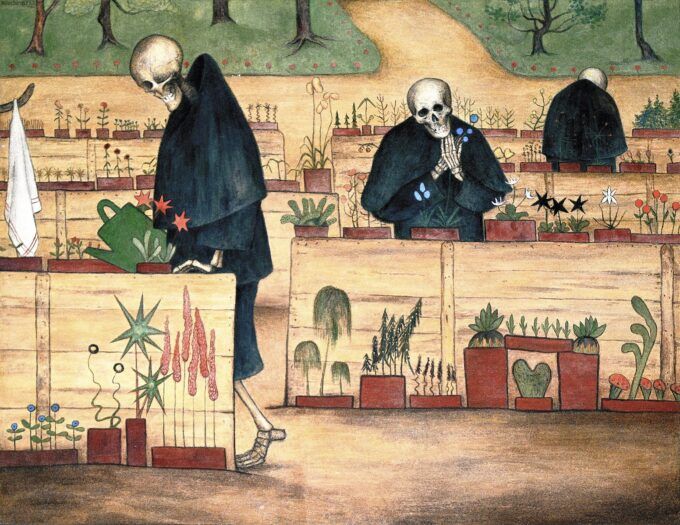
“The Garden of Death” painting exposed at Tampere Cathedral – Finland – Public Domain

Every day one hears about someone dying. It could be a loved one, aging relative or a neighbor; it could be a screaming media headline about the latest mass killing or a hold-up gone wrong; or a stranger killed on the corner by a hit-and-run driver or in a car accident.  And the bodies are piling up.

Over the last century life expectancy in the U.S. has significantly increased.  In 1900, for males it was 46.2 and for females it was 48.3 years. By 1950, life expectancy for males reached 65.3 and for females was 71.1 years.

However, between 2021 and 2022, life expectancy in the U.S. declined from 77.0 to 76.1 years and the CDC’s National Center for Health Statistics (NCHS) reports that this is the lowest level since 1996; for 2022, it increased to 79.05 years.  In 2021, life expectancy for males was 73.2 years and for females 79.9 years, and by 2022, male life expectancy reached 73.9 and for females 79.5.

The Covid pandemic lasted 23 months, from March 2020 to February 2022.  During this period, that nation endured what scholars refer to “excess mortality,” i.e., “the difference between expected and observed mortality in a given period ….”  These scholars estimated there were “1,159,580 excess deaths occurred during the first two years of the pandemic (first: 620,872; second: 538,708).”

Between 2020 and 2021, the NCHS reports, “In 2021, a total of 3,464,231 resident deaths were registered in the United States—80,502 more deaths than in 2020.” In the wake of the Covid-19 pandemic, it reports, “The age-adjusted death rate for the total population increased 5.3% in 2021 from 2020 after an increase of 16.8% from 2019 to 2020.”

Perhaps more alarming, a Yale School of Public Health study found “the excess death rate for Republican voters was 5.4 percentage points, or 76%, higher than the excess death rate for Democratic voters.” It went further, noting, “After COVID-19 vaccines became widely available, the excess death rate gap between Republicans and Democrats widened from 1.6 percentage points to 10.4 percentage points.”

In addition to Covid, the four other leading causes of death were heart disease, cancer, unintentional injuries and stroke.

***

More worrisome than natural causes of death like heart disease, cancer and Covid-19, are social causes of death, the most alarming is gun violence.  The Gun Violence Archive (GVA) reports that in 2022, 44,305 people were killed and another 38,567 were injured by guns. Perhaps most alarming, more Americans died of suicide (24,090) than homicides, murders and unintentional killings.  Worse yet, nearly one thousand children under 11 years were killed (314) and injured (682) by guns – and nearly 5,000 teems (age 12-17) were victims of guns violence with 1,381 killed and 3,803 injured.

The GVA also reports that in 2022 647 people died from “mass shooting” and 36 from “mass murder.”  It advises readers, “Mass Shootings are, for the most part an American phenomenon.”  It adds, a “mass shooting” is based “based ONLY on the numeric value of 4 or more shot or killed, not including the shooter.”

As of April 7, 2023, the GVA reports, 11,129 people died of gun violence, and of these 6,402 died of suicide and 4,727 died from homicides, murders and unintentional killings.  Worse yet, 65 children under 11 years were killed and 149 were injured; and over 1,300 teens (age 12-17) were either killed (385) or injured (933) by gun violence.

A second worrisome cause of deaths is maternal deaths. The World Health Organization defines it as “the death of a woman while pregnant or within 42 days of termination of pregnancy, irrespective of the duration and the site of the pregnancy, from any cause related to or aggravated by the pregnancy or its management, but not from accidental or incidental causes.”

In the U.S., according to Centers for Disease Control and Prevention, maternal mortality rose by 40 percent at the height of the Covid pandemic. In 2021, 33 women died out of every 100,000 live births in the US, up from 23.8 in 2020.  Black mothers were the most affected. The mortality rate among Black women was 2.6 times as much as the rate for white women in 2021, and 30% of maternal deaths were among Black women. Black people make up about 14% of the U.S. population, Census Bureau data show.

And then there is drug overdoses.  In 2020, Forbes announced that the Sackler family, owners of Purdue Pharma, a pharmaceutical company, were America’s “Richest Family” with a net worth of $10.8 billion.  The company’s main product was Oxycontin, an opioid.  In March 2022, the U.S. Dept. of Justice announced a $6 settlement with Purdue Pharma that notes, “the Sackler family to pay $4.325 billion over nine years to the states, municipalities, and plaintiffs that sued the company.”

More troubling, the settlement shields the family from further litigation, though not from any criminal charges — the Sacklers have never faced criminal charges — and have denied any wrongdoing.  However, in June 2022, Connecticut Attorney General William Tong said he’ll ask the state’s top prosecutor to consider criminal charges against members of the Sackler family.

America’s opioid crisis evolved over the last quarter century through three phases and, according to some estimates, there were nearly 500,000 opioid overdose deaths over two decades.  In themid-1990s, Purdue Pharma – with Food and Drug Administration (FDA) approval – introduced OxyContin as a legally prescribe opioid. The crisis deepened as the heroin market began to replace Oxy and, now, a third wave is characterized by the introduction of illegal synthetic opioids with fentanyl.  In 2021, more than 106,000 people died from drug-involved overdose, including illicit drugs and prescription opioids.

Every day, about 32 people in the U.S. die in drunk-driving crashes — that’s one person every 45 minutes. In 2020, 11,654 people died in alcohol-impaired driving traffic deaths — a 14% increase from 2019. These deaths were all preventable.

Sadly, Americans are dying and dying … and will continue dying.

David Rosen is the author of Sex, Sin & Subversion:  The Transformation of 1950s New York’s Forbidden into America’s New Normal (Skyhorse, 2015).  He can be reached at drosennyc@verizon.net; check out www.DavidRosenWrites.com.

Houthis set sights on international recognition as Yemen peace talks progress

Critics say Saudi Arabia and Houthis looking out for own interests as other Yemeni actors are left in the dark on talks


Houthi political leader Mahdi al-Mashat meets with Saudi and Omani delegations at the Republican Palace in Sanaa, Yemen on 9 April 2023 (Reuters)

By Rayhan Uddin
MEE correspondent in Sanaa
Published date: 13 April 2023 

In the Yemeni capital, significant diplomatic activity is afoot: Saudi and Houthi officials are meeting publicly for the first time since the civil war broke out in 2014.

On Sunday, Saudi Arabia’s ambassador to Yemen, Mohammed Al-Jaber, was pictured shaking hands with Houthi political chief Mahdi al-Mashat in Sanaa, ahead of peace talks that also included an Omani delegation.

"The fanfare and attention around the joint Saudi-Omani delegation’s visit to Sanaa underlines... that Yemen’s conflict has reached a crucial inflection point," said Adam Baron, an adviser at the Centre for Humanitarian Dialogue.

"There is a visceral feeling of something jarring in seeing these photos after all that's happened," Baron added, despite the fact that such meetings "have been occurring in private".

One of those present on Sunday, Houthi leader Ali Qarshah, only six years ago had a $5m price tag placed on his head by the Saudis, as part of a list of 40 figures suspected of "terrorist activity".

But after eight years of hostility and devastation, in what has widely been described as the world’s worst humanitarian crisis, momentum is building for a permanent ceasefire.

For the Houthis - the rebel group that seized the capital in 2014 and forced the internationally recognised government to flee to Saudi Arabia - an agreement could set the path to permanent recognition and further territorial gains.
'Saudi surrender'

Houthi fighter Yunis, 22, who fought on the front line in the key strategic city of Marib, is overjoyed at the prospect of a Saudi deal.

"I am happy, and I feel I am living the best days in my life. This development has made thousands of fighters believe they are on the right direction," he told Middle East Eye.

But he struck a warning: "We will continue fighting if this peace effort leads nowhere."

In March 2015, a Saudi-led coalition, which included the United Arab Emirates, intervened on behalf of the Yemeni government to push back the Iran-aligned Houthis after they took control of Sanaa.

Coalition air strikes killed thousands of civilians, according to UN reports, while the Houthis launched missiles and drones at civilian infrastructure in Saudi Arabia and the UAE.

A six-month truce brokered by the UN that ended in October is still mostly holding, giving long-awaited respite to Yemenis.


'We will continue fighting if this peace effort leads nowhere'
- Yunis, Houthi fighter

The Saudi visit to Yemen comes just weeks after a broader reconciliation between Riyadh and Iran, brokered by China.

On Saturday, Saudi officials arrived in Iran to discuss procedures for reopening Riyadh's embassy in Tehran and consulate in Mashhad as a result of the deal.

Yunis believes that Riyadh’s delegation arriving in Sanaa is proof of "Saudi surrender".

"Saudi Arabia and its allies had refused to talk with us directly. They described us as militias and terrorists," he said. "They bombed us mercilessly, thinking they would defeat us."

The talks this week will centre around a timeline for foreign fighters to leave Yemen, the payment of wages for public sector workers, and lifting restrictions on the country’s airports and ports in Houthi-controlled areas.

On Thursday, nearly 900 detainees will be flown between Yemen and Saudi Arabia as part of the largest prisoner exchange between the two countries since October 2020.
Talks 'nothing to do with Yemen'

Nadwa al-Dawsari, a researcher at the Middle East Institute, said that Riyadh and the Houthis, who hold much of Yemen's north, are only looking after their own interests during the discussions.

"These talks have nothing to do with Yemen. These talks are between the Saudis and the Houthis," she told MEE. "They've got nothing to do with the other actors inside Yemen."

Dawsari said Saudi Arabia aims to "wash their hands of Yemen" after years of criticism for waging war on its neighbour.


Sanaa's Old City: A world heritage site threatened by war and neglect
Read More »

"The Houthis' objective is still to seize control over all of Yemen," she said. "Once that deal is signed, well, the Houthis will just march into Marib and will march into the rest of Yemen."

She added that the Houthis have long aimed to establish military power and control over enough of the country to "force the international community" to recognise them politically.

"Now the moment has come," Dawsari said.

Saudi Arabia played a role in re-organising the Aden-based Presidential Leadership Council (PLC), a disparate collection of anti-Houthi forces in the country that serve as the executive body of the internationally recognised government.

The PLC, whose eight members include figures from the separatist Southern Transitional Council and a nephew of former autocrat Ali Abdullah Saleh, have largely been kept in the dark during this week’s discussions.

"The PLC designated the Houthis as a terrorist group and now [they] are forced to sign a deal with the Houthis," said Dawsari. "That can tell you the level to which these groups are involved or not involved in these talks."

The Aden-based government has welcomed the de-escalation talks, despite appearing to be sidelined by its ally, Riyadh.

The fighter Yunis said the Houthis will continue to have the upper hand in Yemen’s north, and would not allow foreign influence

'Iran has won this war… They have empowered their ally in Yemen and they did it without direct intervention'
- Nadwa al-Dawsari, researcher

"Saudi Arabia played a role in appointing Yemeni officials in the Aden-based government in southern Yemen. Such a scenario will not happen in northern Yemen," he said.

There is foreign influence over the Houthis, though, in the form of their ally, Iran.

"Iran has won this war. Iran has done a brilliant job with the Houthis. They have empowered their ally in Yemen and they did it... without direct intervention," said Dawsari.

She also believes that Saudi Arabia is hoping for one of two options in the future: "Either the Houthis will abandon Iran and be friends with the Saudis... or Iran will somehow de-escalate.

"This is just wishful thinking on the Saudi side," she said.

Aaya al-Shamahi contributed to this report

Despite hope, Yemen peace talks are oversold, experts say

Jennifer Holleis
April 13,2023

Neither the ongoing negotiations between Saudi Arabia and the Houthi group, nor the upcoming prisoner swap, are tangible signals for an upcoming end of the war as most Yemeni factions remain excluded.

This week's hearty handshake by the Saudi ambassador to Yemen, Mohammed bin Saeed al-Jaber, and the political head of the Houthi rebels, Mahdi al-Mashat, has kindled a glimmer of hope that there could be an end to the war in Yemen. Since Sunday, Saudi and Houthi delegations have been holding peace talks in the Houthi-controlled capital, Sanaa.

The main topics on the negotiating table are a six-month truce between the two warring parties — the Saudi-backed internationally recognized government and the Iran-aligned Houthis — the reopening of the Houthi-controlled airport in Sanaa and the Red Sea port in Hodeida, the lifting of the Houthi blockade of the government-controlled city of Taiz, the resumption of oil exports from government-held oil fields via Houthi gateways and the consolidation of Yemen's economy.

However, despite the international hope that has accompanied this latest round of talks, there are some doubts peace could be imminent.

One reason is that Yemen's Presidential Council, the executive body of the internationally recognized government, was not included in the negotiations, nor were any other Yemeni parties, such as the separatists of the Southern Transitional Council.

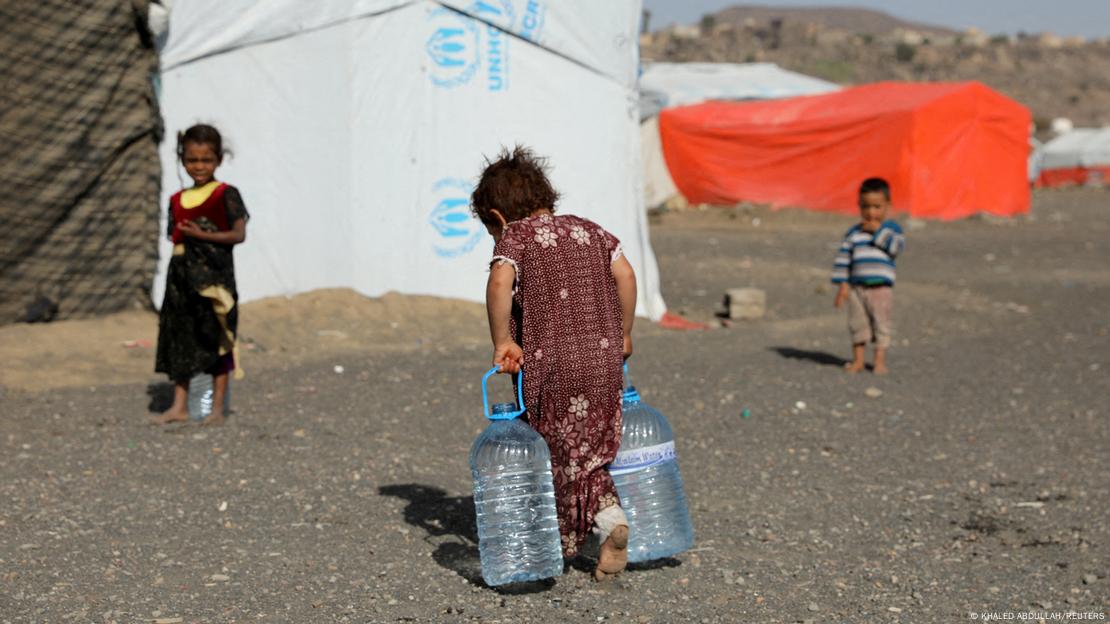
According to official UN figures, millions of Yemenis now depend on international aid for survival
 KHALED ABDULLAH/REUTERS

Yemen's two main political factions, the Houthis and the government, have been at war since 2014 when Iran-backed Houthi rebels seized Sanaa and ousted the government. In 2015, the situation escalated when a Saudi-led coalition of nine countries intervened in an effort to restore the internationally recognized government in the city of Aden, on the Red Sea coast.

The brutal conflict — widely seen as a proxy war between Saudi Arabia and Iran — has caused almost half a million deaths and resulted in the internal displacement of thousands of people. According to the United Nations, at least one-third of the population of 31 million is fully dependent on international aid. The situation in the war-torn country is widely considered one of the world's worst humanitarian crises.


Peace talks 'may even increase the risk of a disintegration'

Marwa Baabbad, director of the Berlin-based think tank Yemen Policy Center Germany, doesn't think the current talks are actually aimed at ending the war. "Major differences between the Yemeni parties must be addressed to open a window for sustainable peace", she told DW.

"Oman's purpose was not to broker a wider Yemen national peace but to convince the Houthis to end their cross-border attacks, and ease the relationship between the Saudis and the Houthis," she said.

The Houthi group could indeed be next on Saudi Arabia's list of efforts to mend ties with regional enemies, after agreeing to reestablish diplomatic relations with archenemy Iran in March after seven years of frozen ties. And it's no secret that Saudi Arabia has become highly interested in exiting the costly proxy war in Yemen.

Abdulghani Al-Iryani, a senior researcher at the Sanaa Center for Strategic Studies, told DW he believed Yemen was being used as a pawn. "Saudi Arabia is pursuing short-term objectives at the expense of its long-term interests in durable stability and security in the region," he said.

"Saudi Arabia has given the Houthis the right to represent Yemen at the expense of all other parties," he added, warning that this, in combination with the Houthis' unwillingness to share political power, could accelerate the destabilization of the country.

"The current talks may even increase the risk of a disintegration of the state, as the other parties will not agree to live under Houthi control," Al-Iryani said.

He referred, above all, to a movement in the country's south that has been following its own agenda since 2017. The separatists of the Southern Transitional Council, or STC, will, in Al-Iryani's view, most likely increase their efforts to declare a unilateral secession.

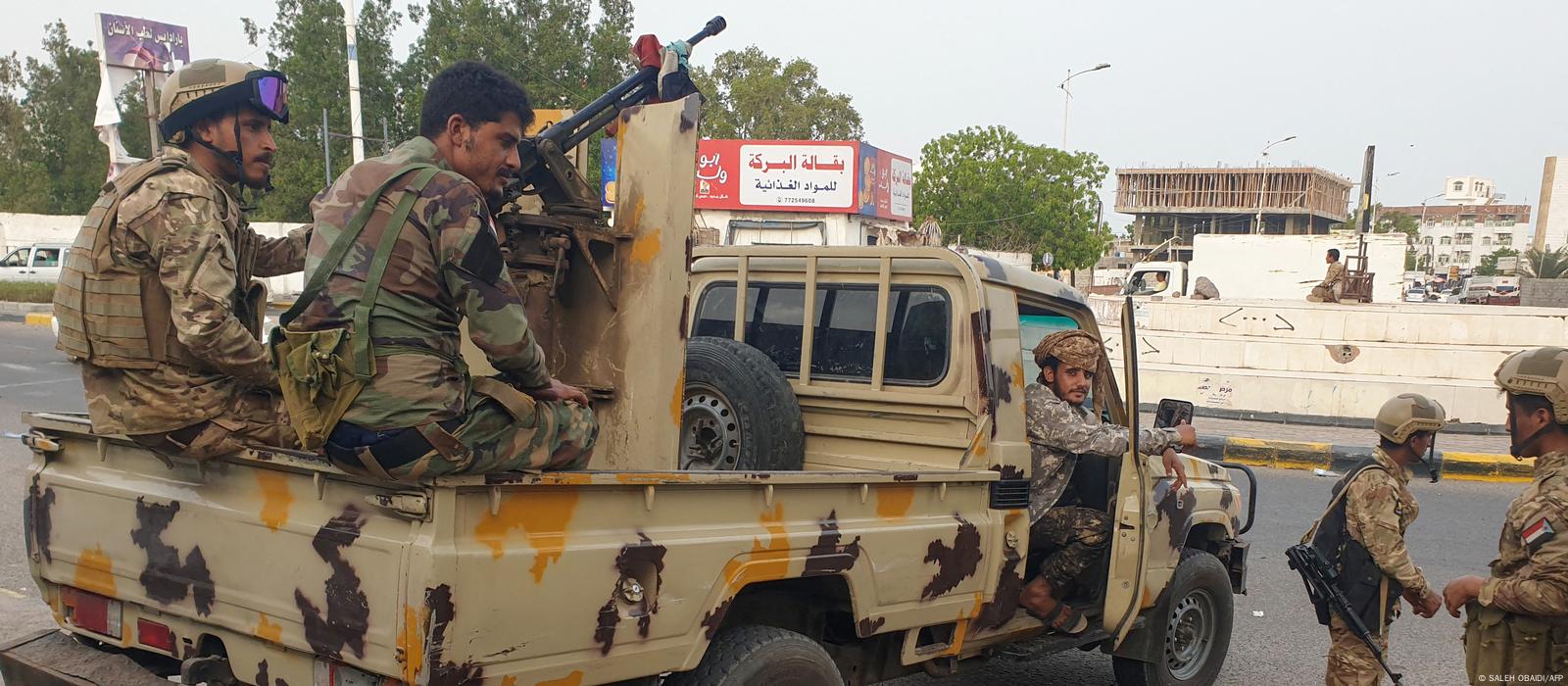
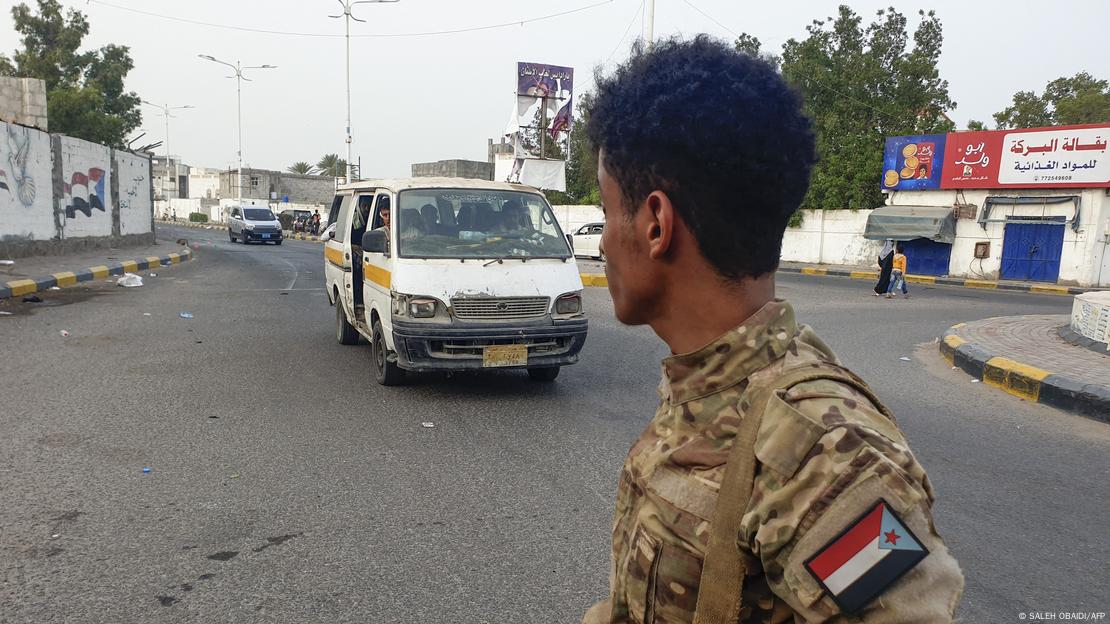
Yemen's Southern Transitional Council might soon ramp up efforts to separate, destabilizing the country even further
SALEH OBAIDI/AFP

This could lead Yemen into further instability. "Neither the STC are ready to control all of the south, nor the Houthis can control all of the north, so we are facing the disintegration of the Yemeni state and not a separation into two states," he said.

He also doubts there would be international recognition for the Houthis or the STC as new governmental bodies.

This would, in turn, negatively affect international investment and could slow down reconstruction once the war ends.
Peace requires reconstruction, reconciliation and economic recovery

Hisham Al-Omeisy, a conflict analyst and senior Yemen adviser at the Brussels-based European Institute of Peace, also doubts that the exclusive peace talks between Saudi Arabia and the Houthis could lead to tangible peace.

"Yemen has 21 governorates with 333 districts, each with its own unique problems. Without inclusivity, without a bottom-up approach in Yemen, any peace process is not going to be sustainable," he told DW.

Al-Omeisy said Yemen needed reconstruction plans, pathways to reconciliation and economic recovery to achieve peace. "And without all of that, and without trust-building measures as well, we are overselling the current peace talks."

The UN-brokered prisoner swap is most likely to start this week, with hundreds of families hoping to be reunited
TWITTER OF ABDULQADER AL-MORTADA/AFP

Meanwhile, hopes are rising that a UN-brokered prisoner swap will actually take place later this week. In March, the Yemeni government promised to release 706 detained Houthis, while Houthi rebels said they would release 181 prisoners in exchange.

As of Thursday morning, the first 14 prisoners had been exchanged, with Majid Fadael, the official spokesman for the government delegation negotiating the exchange, confirming the swap on Twitter.

Edited by: Martin Kuebler
Over a decade later, Syria, Saudi Arabia move toward restoring relations

AP | , Beirut
Apr 13, 202

The announcement followed a visit by Syria's top diplomat to the kingdom, the first since Saudi Arabia cut off diplomatic relations with Syria in 2012.

Syria and Saudi Arabia are moving toward reopening embassies and resuming flights between the two countries for the first time in more than a decade, the countries said on Thursday in a joint statement.


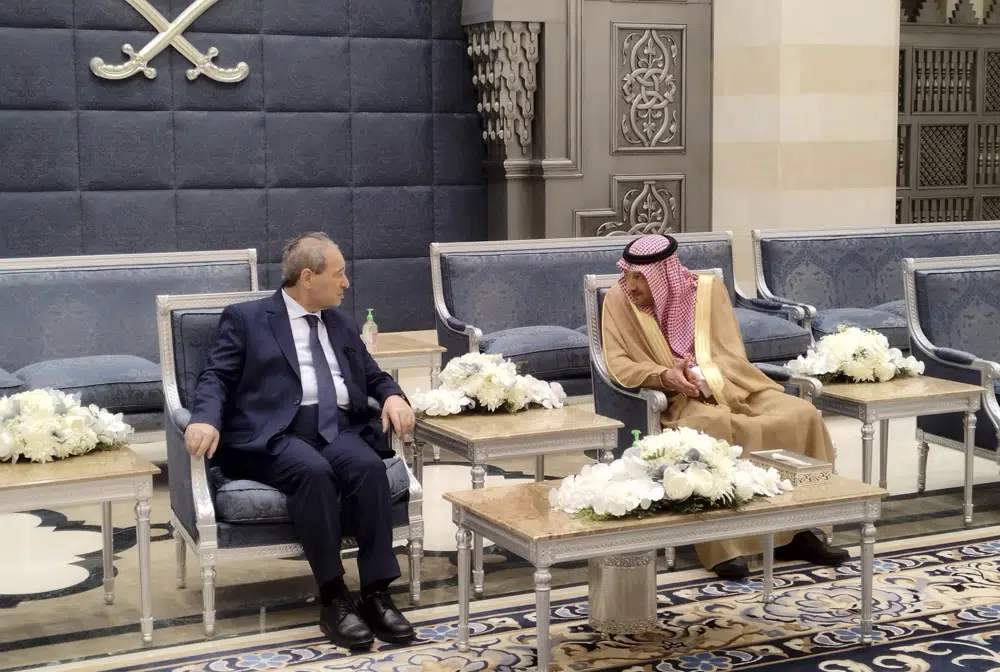
Saudi Foreign Minister Prince Faisal bin Farhan bin Abdullah meets with Syrian Minister of Foreign Affairs and Expatriates Faisal Mekdad in Jeddah, Saudi Arabia, April 12, 2023. (Reuters)

The announcement followed a visit by Syria's top diplomat to the kingdom, the first since Saudi Arabia cut off diplomatic relations with Syria in 2012.

Syria was widely shunned by Arab governments over Syrian President Bashar Assad's brutal crackdown on protesters and later civilians, in an uprising turned civil war that began in 2011.

The breakdown in relations culminated with Syria being ousted from the Arab League.

However, in recent years, as Assad has consolidated control over most of the country, Syria's neighbors have begun to take steps toward rapprochement.

Read Here: In first in decade, Saudi plane carrying quake aid lands in Syria

The overtures have picked up pace since the massive February 6 earthquake in Turkey and Syria, and the Chinese-brokered reestablishment of ties between Saudi Arabia and Iran, regional rivals that had backed opposing sides in the Syrian conflict.
A delegation headed by Syrian Foreign Minister Faisal Mikdad, at the invitation of Saudi Foreign Minister Faisal bin Farhan Al Saud arrived in Saudi Arabia on Wednesday for talks about bilateral relations between the two countries, state media from the two countries reported.

Saudi state media reported that Syrian Foreign Minister Faisal Mikdad was received by the kingdom's Deputy Foreign Minister Waleed Al-Khuraiji.

The meeting focused on the steps needed to reach a “comprehensive political settlement of the Syrian crisis that would ... achieve national reconciliation, and contribute to the return of Syria to its Arab fold," the two countries said in a joint statement.

Saudi Arabia is hosting the next Arab League summit in May, where a restoration of Syria's membership is widely expected to be on the table.

Also Read: Disruptive Saudi prince's political approach marks ‘sea change’ with Iran deal

The two sides also discussed “the importance of enhancing security and combating terrorism in all its forms, and enhancing cooperation in combating drug smuggling and trafficking,” the statement said.

Syria is a primary producer of the amphetamine-based drug Captagon, which is largely smuggled into Gulf markets for sale.

The talks also focused on “the need to support ... the Syrian state to extend its control over its territories to end the presence of armed militias and external interference in the Syrian internal affairs,” as well as on facilitating the delivery of humanitarian aid and the return of Syrian refugees.

The visit to Saudi Arabia came after Syria announced on Wednesday that it will reopen its embassy in Tunisia, which cut off relations in 2012.

Tunisian President Kais Saied announced earlier this month that he had directed the country's foreign ministry to appoint a new ambassador to Syria.

His move was reciprocated by the Syrian government, a joint statement from the two countries' foreign ministries said Wednesday, according to Syrian state news agency SANA.

Syria, Saudi Arabia move toward restoring embassies, flights

By ABBY SEWELL
yesterday

In this photo released by the Syrian official news agency SANA, Saudi Deputy Foreign Minister Waleed Al-Khuraiji, right, meets with Syrian Foreign Minister Faisal Mekdad, upon his arrival at King Abdulaziz International Airport, in Jeddah, Saudi Arabia, Wednesday, April 12, 2023. Syria will reopen its embassy in Tunisia, state media reported Wednesday, as Syria's top diplomat visited Saudi Arabia seeking to restore ties that have been severed for more than a decade. 
(SANA via AP)

BEIRUT (AP) — Syria and Saudi Arabia said Thursday they were moving toward reopening embassies and resuming flights between the two countries for the first time in more than a decade.

The joint statement followed a visit by Syria’s top diplomat to the kingdom, the first since Saudi Arabia cut off diplomatic relations with Syria in 2012.

Syria was widely shunned by Arab governments over Syrian President Bashar Assad’s brutal crackdown on protesters in a 2011 uprising that descended into civil war. The breakdown in relations culminated with Syria being ousted from the Arab League.

However, in recent years, as Assad consolidated control over most of the country, Syria’s neighbors have begun to take steps toward rapprochement. The overtures picked up pace since the massive Feb. 6 earthquake in Turkey and Syria, and the Chinese-brokered reestablishment of ties between Saudi Arabia and Iran, which had backed opposing sides in the Syrian conflict.

Syrian Foreign Minister Faisal Mikdad, at the invitation of Saudi Foreign Minister Faisal bin Farhan Al Saud, arrived in Saudi Arabia on Wednesday for talks about bilateral relations, state media in the two countries reported. Saudi state media said Mikdad was received by the kingdom’s Deputy Foreign Minister Waleed Al-Khuraiji.

Workers at anti-poverty World Bank struggle to pay bills


Guardsman arrested in leak of classified military documents


The meeting focused on the steps needed to reach a “comprehensive political settlement of the Syrian crisis that would ... achieve national reconciliation, and contribute to the return of Syria to its Arab fold,” the joint statement said.

Saudi Arabia is hosting the next Arab League summit in May, when Syria’s membership is widely expected to be on the table. Some members, mainly Qatar, have opposed Damascus’ return to the organization.

Qatar’s prime minister, Sheikh Mohammed bin Abdulrahman Al Thani, reiterated his country’s longstanding position in an interview with state TV late Thursday.

“There were reasons for suspending Syria’s membership in the Arab League and for participating in boycotts of the Syrian regime at that time, and those reasons still exist as far as we are concerned,” he said. “Our decision, as an individual state, has been to not take any steps (toward normalization) without political progress or a political solution to the Syrian crisis.”

But Anna Jacobs, a senior analyst with the International Crisis Group, said she believes “prospects are high that Syria will be readmitted to the Arab League soon,” noting that even Qatar has softened its rhetoric.

“Even if several countries have expressed their opposition to normalization with Assad, it’s not likely that they would go against Riyadh and block Syria’s re-entry,” she said.

The Syrian and Saudi officials also discussed “enhancing security” and ″cooperation in combating drug smuggling and trafficking,” according to the statement. Syria is a primary producer of the amphetamine-based drug Captagon, which is largely smuggled into Gulf Arab markets for sale.

Syria may be hoping the rapprochement with a regional heavyweight will help end its political isolation, improve its flagging economy and potentially bring in reconstruction dollars. Meanwhile, incentives for Saudi Arabia to make a deal are less clear.

Kristian Coates Ulrichsen, a research fellow at Rice University’s Baker Institute, said Saudi Arabia — and specifically Crown Prince Mohammed bin Salman — may be looking for a way to rehabilitate the kingdom’s image. That image was tarnished by the kingdom’s involvement in the war in Yemen and by the 2018 slaying of Washington Post columnist Jamal Khashoggi at the Saudi Consulate in Istanbul, believed by the United States and others to have been at the prince’s orders.

Brokering an Arab consensus on Syria, would feed into Prince Mohammed’s “desire to portray himself as a regional statesman” and “underline the Saudi ability to lead the region,” Ulrichsen said.

Jacobs said the kingdom’s rapprochement with Syria may be part of its strategy on Iran, which is “two-pronged and focused on both containment and diplomacy,” as opposed to the Trump administration’s maximum pressure approach.

As for Syria, Ulrichsen pointed out that U.S. sanctions on Damascus would still stand as an obstacle to any major investments in the Arab country, even with Syria normalizing ties with Saudi Arabia and its readmission to the Arab League.

Mikdad’s visit to Saudi Arabia came after Syria announced on Wednesday that it will reopen its embassy in Tunisia, which cut off relations in 2012. Tunisian President Kais Saied said earlier this month that he had directed the foreign ministry to appoint a new ambassador to Syria.

His move was reciprocated by the Syrian government, according to Syrian state news agency SANA.
Exclusive-To Measure Progress on Sovereign Debt, Look to Actual Deals -World Bank's Malpass

World Bank President David Malpass holds a news conference during the 2023 Spring Meetings of the World Bank Group and the International Monetary Fund in Washington, U.S., April 13, 2023. REUTERS/Elizabeth Frantz


By Reuters
April 13, 2023
By Andrea Shalal

WASHINGTON (Reuters) -World Bank President David Malpass on Thursday said progress on sovereign debt issues would be measured by actual restructuring deals being agreed for Ghana, Ethiopia and Zambia, and said there was still no agreement on his longstanding call for a standstill in debt service payments for countries seeking help.

Speaking a day after the first meeting of a new sovereign debt roundtable, Malpass told Reuters several other issues still needed to be resolved, including China's previous insistence that multilateral development banks also accept losses as part of debt restructuring deals.

"We're pushing along on debt," he said. "Progress in debt restructurings will be measured by actual countries that achieve a restructuring. It's a case-by-case mechanism."

He said the target now was to ensure that Ghana, Ethiopia and Zambia, the three countries seeking debt relief under the Group of 20 common framework, moved forward in their separate debt processes.

Global creditors, debtor nations, international financial institutions and private creditors agreed at the roundtable meeting on Wednesday to take steps to jumpstart and streamline long-stalled debt restructuring efforts, including through improved data sharing.

A joint statement by the World Bank, International Monetary Fund and India, current president of the Group of 20 (G20) major economies, did not mention any specific commitments by China, the world's largest bilateral creditor, to speed the restructuring process.

Reuters reported Beijing was poised to drop its demand that multilateral development banks share in debt restructuring losses, partly in exchange for the IMF and World Bank providing earlier access to their debt sustainability analyses for countries receiving debt treatments.

But the statement only included the institutions' part of that bargain, to share more information more quickly and for multilateral development banks (MDBs) to quantify "net positive flows" of concessional financing in restructuring cases.

IMF strategy chief Ceyla Pazarbasioglu said China and other participants had acknowledged that there are different ways of contributing to a restructuring, and "the best way for MDBs to contribute ... is to provide fresh financing to countries, as much as possible in grant terms."

Malpass said there were still disagreements within China on the issue, with President Xi Jinping and others downplaying the earlier demand and others - who represent individual creditors - still seeing it as an obstacle.

More work would be done on the issue of comparable treatment of various creditors at a workshop to be held in May, he said. No specific date had been set for the meeting, he said.

China had also raised concerns about how to deal with domestic debt restructuring and how to treat project loans and projects with dedicated revenues, he said.

Private sector creditors who also participated in Wednesday's meeting had indicated that they would want to participate in debt restructuring deals as part of their fiduciary responsibility, Malpass said, calling that a positive development.
UN chief 'not surprised' after leaks reportedly revealed US spying on him

Guterres 'not surprised' that 'people are spying on him and listening on his private conversations,' says spokesperson

Rabia Iclal Turan |13.04.2023 


WASHINGTON

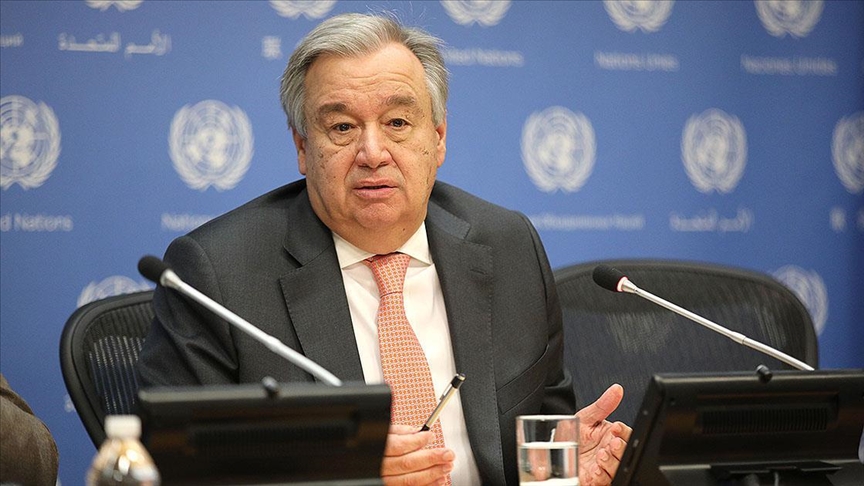
UN Secretary-General Antonio Guterres is "not surprised" following the leaked Pentagon documents that reportedly indicated that the US was spying on his phone.

"The Secretary-General has been at his job for quite some time. He's been in politics and public figure for quite some time. So he's not surprised, I think, by the fact that people are spying on him and listening on his private conversations," his spokesman Stephane Dujarric said in response to a question regarding the Pentagon leaks.

"Unfortunately, you know either through for various reasons, it allows such private conversations to be distorted and made public," he added.

When asked if the UN chief will be protesting to the US, Dujarric responded: "We're not in the habit of revealing his private phone calls with various member states".

Leaked Pentagon classified documents showed that the US was monitoring Guterres because it believed he was too soft on Russia.

It also revealed a private conversation of Guterres and his deputy about the Black Sea grain deal.

Asked about the reports, Dujarric said: "The Secretary-General is not soft on any one country another".

"He has been very clear about the violations of international law, very clear about the violations of the charter. He says the same thing when he's in Moscow, when he's in Kyiv, when he's in New York, and that's in the open record," he said.

"Our efforts, his efforts have been to mitigate the impact of the war on the world's poorest. And that means doing what we can to drive down the price of food and the price of grain and fertilizer worldwide," he added.
Peru politician convicted in reporter's murder 35 years ago

A Peruvian judge has convicted a retired army general and conservative politician Daniel Urresti to 12 years in prison Thursday for his role 35 years ago in the murder of a journalist who covered abuses during Peru’s civil war

Franklin Briceo
April 13,2023

Peru Urresti Convicted
(Copyright 2018 The Associated Press. All rights reserved.)

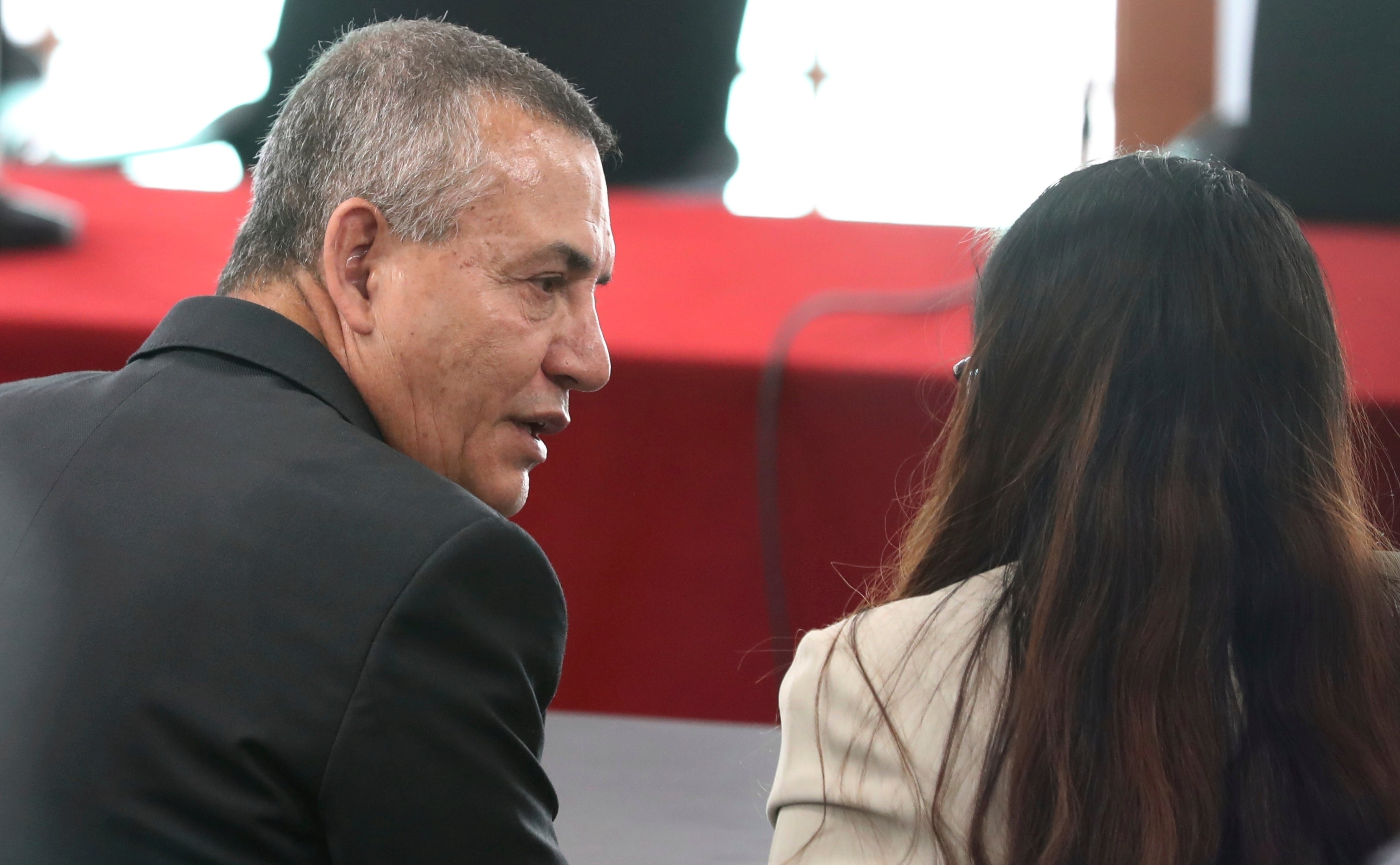
A Peruvian judge convicted retired army general and conservative politician Daniel Urresti and sentenced him to 12 years in prison Thursday for his role 35 years ago in the murder of a journalist who covered abuses during Peru’s civil war.

Hailed by advocates as an overdue but key verdict in upholding accountability and press freedom in Peru, the sentence represented a remarkable turnaround for Urresti, who has been an interior minister, congressman and presidential candidate as well as a frequent political commentator.

Urresti was a military intelligence officer in November 1988 when journalist Hugo Bustíos was machine-gunned and blown up with dynamite in a slaying initially blamed on the communist militant group Shining Path. A fellow journalist with Bustíos survived the attack.

Members of the military later were convicted of carrying out the ambush during a plainclothes patrol in Huanta province to prevent the journalist from covering news of military abuses against civilians in the largely indigenous region. The man who had been the local military commander was convicted in the attack in 2007, and he implicated Urresti as a member of that patrol in 2011.

Judge Juan Santillán issued the sentence Thursday in Lima as Urresti listened along with his wife and daughter, whom he hugged before being taken into custody by the police. Prosecutors had requested 25 years, but said they were satisfied with the decision. Urresti indicated he would appeal.

Sharmelí Bustíos, daughter of the murdered journalist and his late widow, told reporters that after 35 years, “I can tell my parents that they can finally rest in peace.”

The National Association of Journalists said in statements on social media that the verdict was restitution both for the family of Bustíos and for journalism. “It is an important step towards justice and the defense of press freedom in Peru,” the group said.

Urresti was a popular interior minister in 2014-15 under President Ollanta Humala, with a reputation for being outspoken and taking a hard line against crime. He served in Peru’s Congress in 2020-21.

The conviction against the politician came only after a second trial. He initially was acquitted in a verdict that was annulled in 2019 by the Supreme Court, which ordered a new trial saying that the previous process had been riddled with errors.

The Huanta province capital, also called Huanta, about 370 miles (600 kilometers) southeast of Lima, was one of the most violent cities during the war that raged between the Peruvian military and the Shining Path from 1980 to 2000.

Herminia Oré, who represents disappeared and tortured people of that city, told a journalist from The Associated Press in 2015 that there was an atmosphere of paranoia in Huanta during the conflict. “A candle lit in your house at night was a reason for the military to arrest you,” she said.

The civil war left an estimated 70,000 people dead, the majority of them in rural areas where the predominant languages were Quechua and Ashaninka

AP
Ecuador’s crime wave and its link to Albania


By Latin America News
April 13, 2023

Even in a region known for record-setting violence, Ecuador’s recent spiral of lawlessness and bloodshed stands out.

Deadly crime in the Andean nation is now at an all-time high.

The national murder rate exceeds that of Brazil and Mexico, which have long been among the most murderous countries in Latin America.

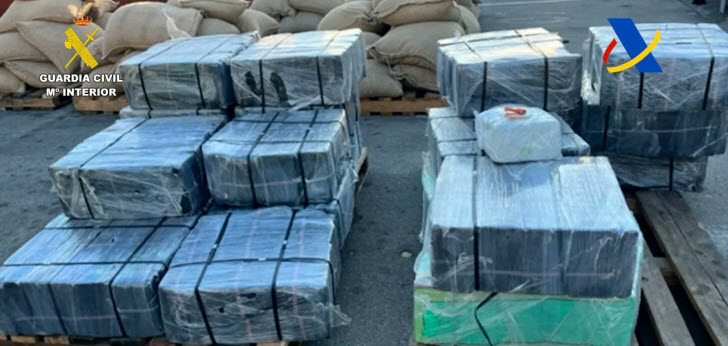
At the heart of Ecuador’s problems is the insatiable global demand for cocaine (Photo: Guardia Civil)

No wonder President Guillermo Lasso’s approval ratings have plummeted, and calls have been made for his impeachment – sparked by corruption allegations linking the president’s brother-in-law to drug traffickers.

Lasso and his brother-in-law have denied the allegations.

At the heart of Ecuador’s problems is the insatiable global demand for cocaine.

Thanks in part to Balkan gangs, Ecuador now serves as a transshipment point and export center for cocaine from Colombia and Peru.

The crisis is acute in Esmeraldas, on the Colombian border, and especially in the port city of Guayaquil, the country’s gateway to the world.

Ecuador’s richest city hosts five of the country’s eight shipping terminals and is also one of the 25 most dangerous cities in the world.

Last year, Guayaquil recorded 47.7 homicides per 100,000 inhabitants, a seven-fold increase in five years.

The chaos continues even though a state of emergency has been declared seven times since mid-2021.

Last week, President Lasso authorized civilian gun use “for personal defense,” a move that smacks more of desperation than command and control.

Once lauded for its strategy to curb deadly drug gangs, Ecuador now seems firmly in their grip.

The rise in violence is closely linked to a sharp increase in deadly confrontations between organized groups vying for dominance in Ecuador’s burgeoning cocaine trade, which has repercussions far beyond the country of 18 million people.

Emerging criminal networks with global reach and ambition drive the deadly drug trade.

Only a renewed commitment by local, national, and regional authorities to promote interagency cooperation, cross-border collaboration, data-driven strategies, and intelligence can prevent Ecuador’s security crisis from becoming a regional emergency.

EUROPEAN CONNECTION

Albanian organized crime began migrating to Ecuador in the 1990s, lured by the prospect of joining flourishing local cartels and by relatively lax border controls.

Until recently, Albanians could enter Ecuador freely and without visas.

This laissez-faire turnstile policy ended when Ecuador introduced stricter visa requirements in 2020.

Some 33% of cocaine seized in Ecuador was destined for the European market in 2021, compared to just 9% in 2019.

The Balkans, in particular, is a major new hub in this lucrative intercontinental trade (worth US$10 billion in 2017), with Albanian gangs playing an increasingly important role on both sides of the equator.

After record arrests in 2021, Ecuador currently ranks third in cocaine seizures (6.5% of global seizures), surpassed only by Colombia (41%), where the coca crop is booming, and the United States (11%), despite pandemic interdictions.

Of the 210 tonnes of cocaine seized by Ecuador in 2021, Guayaquil accounted for about 96.

Most cocaine is hidden in shipping containers, of which only about 8% to 10% is controlled.

As counternarcotics efforts pressure Brazil, Colombia, and Peru, Ecuador has become a preferred destination for foreign smugglers.

Dollarization and corruption facilitate the purchase of counterfeit documents such as identity cards, passports, and export permits.

Most known Albanian criminals reside in Guayaquil, often under false identities.

The Balkan media did not spare details about how Albanian, Colombian, Mexican, and even Russian cartels fight for Guayaquil’s control.

At least six Albanians have been executed in gang-related ways in the last decade.

According to some Ecuadorian intelligence sources, the Albanians recruit dominant local gangs as “preferred partners,” while other sources say the Albanians ultimately want to control the entire supply chain.

The Albanian mafia resorts to various tricks to move drugs, from using front companies to hide cocaine in shipments of bananas, tea, and shrimp to cloning customs seals to disguise breached containers.

Little of this would be possible without a wink and a nod from officials in power.

Ecuadorian intelligence has long targeted the Albanian mafia. In 2014’s “Operation Balkans,” they found that two alpha crime syndicates – the Azemi and Rexhepi gangs – were infiltrating port operations to obtain packing lists and select containers for Europe.

Albanians arrested in the operation were also identified as financiers and administrators of the scheme.

Operation Balkans ended with the arrest of Remzi Azemi, the ring’s leader, and 11 other gang members, including Albanian and Ecuadorian nationals.

Ecuadorian police and prosecutors accused the organization of storing cocaine in Guayaquil for transport to Europe.

Azemi escaped custody a month later, resurfaced in Europe in 2017, and was later arrested in Germany.

Azemi is still being prosecuted in Ecuador, including for the murder of his Ecuadorian wife and Albanian-Montenegrin refugee Fadil Kacanic.

Ecuadorian authorities have not yet disclosed their findings in this case or even acknowledged the presence of foreigners with ties to the brutal Balkan mafia.

Two different intelligence sources go so far as to speak of “high-level” collusion between Ecuadorian police and the Albanian mafia, one of whose gang members reportedly died at the hands of police.

While these reports remain unconfirmed, they leave little doubt that law, order, and public safety are at stake in Ecuador and beyond.
Prosecutor seeks prison terms for alleged PKK members on trial in Paris


A man holds a Kurdistan Workers' Party (PKK) at a demonstration at Paris' Place de la Republique, 24 December 2022. © Sarah Meyssonnier/Reuters

Text by: RFI
Issued on: 13/04/2023 - 

The prosecution has asked for up to six years in prison for some of the 11 alleged members of the Kurdistan Worker’s Party (PKK) on trial in Paris, accused of extortion and financing terrorism.

In court Wednesday, anti-terrorism prosecutor Xavier Laurent asked for between three years of suspended sentence to six years in prison for the 11 alleged PKK members on trial – most of whom are Kurds from Turkey who have all denied membership in the group, which has long fought Turkey for greater autonomy for the Kurdish minority, and which the European Union, the United States and Turkey have labelled a terrorist organisation.

Laurent did not ask for the deportation or ban from France of any of the defendants, which is common in terrorist-related cases – a sign of the complexity of this trial, as many of the men received asylum in France and the “danger they face in Turkey” has been proven.

However, the prosecutor said he was not convinced by the dissuasive measure of the potential sentences, given the “degree of engagement” of most of the defendants.

Since the start of the trial, the defense has questioned calling the PKK a terrorist organisation, and it has argued that the PKK has no presence in France.

But investigators believe that France, and some EU neighbours, serves as a staging ground for the group.

Questioning terrorist label

The defense has denounced what it has called France’s “ambiguity” towards the Kurds, who it says are allies when they fight the Islamic State armed group in Syria, but are terrorists when they fight Turkey.

Laurent insisted the trial was not about determining “who is the good guy and who is the bad, it’s about the law”.

He reminded the court that while Turkey may have committed crimes against the Kurdish people, the PKK continues to use means “that are always those of a terrorist organisation”.

The defendants, who are accused of strong-armed recruitment tactics and harassment and extortion in the collection of a form of community tax known as "kampanya" that funds the PKK, denied being members of the PKK, all while expressing their sympathy for the group.

They have denied the accusations of extortion, even in the face of extensive testimony and phone taps of members of the Kurdish diaspora in France.Kurds travel from across Europe to pay tribute to comrades murdered in Paris

The trial continues Thursday with the defense presenting its case.

(with AFP)
TURKIYE
Kılıçdaroğlu determined to resolve Kurdish issue through democratic means


ByTurkish Minute
April 13, 2023

Turkey’s main opposition leader and presidential candidate Kemal KılıçdaroÄŸlu has stated in the foreword of a book authored by a lawmaker from his party that they are determined to resolve the Kurdish issue through democratic means, pointing to the Turkish parliament as the place for talks to that end, the ANKA news agency reported on Thursday.

The Kurdish issue, a term prevalent in Turkey’s public discourse, refers to the demand for equal rights by the country’s Kurdish population and their struggle for recognition.

“We are resolute, just as we were yesterday, in resolving the Kurdish issue through democratic means [and] putting an end to terrorism,” the Republican People’s Party (CHP) leader said in the foreword of MP Sezgin Tanrıkulu’s book, titled “Hear [this] from me, too. What Did the CHP Say about the Solution to the Kurdish Issue?”

Tanrıkulu is also a human rights lawyer known for his defense of the rights of Kurdish citizens.

KılıçdaroÄŸlu also accused Turkish President Recep Tayyip ErdoÄŸan of “exploiting” the settlement process solely to protect his political position and making the citizens pay its heavy costs.

The settlement process, which refers to talks between the ruling Justice and Development Party (AKP) government and the leadership of the outlawed Kurdistan Workers’ Party (PKK) to resolve the Kurdish issue, began in 2012 and ended after two police officers were executed in southeastern Åžanlıurfa province in June 2015.

KılıçdaroÄŸlu added that the Kurdish issue could be resolved through political and societal consensus at the Turkish parliament and not “behind closed doors,” since it is not only a concern for Kurdish citizens but also a common issue for all of Turkey.

Over the past years Kılıçdaroğlu has expressed his desire to resolve the Kurdish issue multiple times, criticizing the ruling AKP for conducting direct talks with Abdullah Öcalan, the jailed leader of the PKK, which is listed as a terrorist organization by Turkey and much of the international community.

The CHP leader has argued that a legitimate interlocutor such as the pro-Kurdish Peoples’ Democratic Party (HDP) – parliament’s second-largest opposition group – is needed to solve the Kurdish issue, instead of Öcalan, who he said was an illegitimate actor.

The so-called Kurdish issue is entrenched in Turkey and is characterized by never-ending clashes between the PKK and Turkish security forces. More than 40,000 people, including 5,500 security force members, have been killed in four decades of fighting between the Turkish state and the PKK.


Jailed Kurdish leader promises to work towards ending armed conflict with PKK

ByTurkish Minute
April 13, 2023


Jailed Kurdish politician Selahattin DemirtaÅŸ

Jailed Kurdish leader Selahattin DemirtaÅŸ, a former co-chair of the pro-Kurdish Peoples’ Democratic Party (HDP), has promised to work towards ending the armed conflict in Turkey with the outlawed Kurdistan Workers’ Party (PKK) after the current government led by President Recep Tayyip ErdoÄŸan is no longer in power.

Arrested on Nov. 4, 2016 on terrorism-related charges, DemirtaÅŸ has since then remained in prison despite two European Court of Human Rights (ECtHR) rulings in 2018 and 2020 that said DemirtaÅŸ was imprisoned for “political” reasons and not for “legal” reasons, ordering his “immediate release.”

In a series of tweets DemirtaÅŸ accused ErdoÄŸan of feeding on conflict and preventing efforts at peace. He also criticized the government’s crackdown on pro-Kurdish politicians, including imprisoning those who advocated for peace and appointing trustees to their municipalities.

“We could have done this already, but ErdoÄŸan imprisoned those who wanted peace, put them in isolation, tried to close down their parties, appointed trustees to their municipalities, fueled the conflict with provocations and tried to scare the people with the discourse of ‘terror’ to get votes. And they’re still doing this,” DemirtaÅŸ tweeted.

Despite these challenges, DemirtaÅŸ said peace and tranquillity are possible. However, he warned of persistent provocations and the risk of bloodshed before upcoming elections.

“We will be careful together and we will not be tricked. Please remember, we want peace and democracy. We want to live together equally and fraternally,” he said.

DemirtaÅŸ also said the Green Left Party (YSP) would work towards achieving peace as its primary goal.

The YSP is the party under whose banner the HDP decided to run in the parliamentary elections slated for May 14 in a bid to circumvent the risks that could emerge from its possible closure ahead of the elections.

The HDP is facing a closure case on terrorism charges that was filed in March 2021 and could be concluded before the elections since the Constitutional Court, which is hearing the case, has rejected the HDP’s request to delay the verdict until after the elections.

“Trust us, not the liars and frauds who provoke people for votes. We will win together, and we will surely win,” he said.

DemirtaÅŸ has been in prison since 2016 on terrorism-related charges, which he denies. His imprisonment has been widely criticized by human rights organizations and Western governments, who see it as politically motivated.

Yavuz: Our goal in Istanbul is to win 20 deputies and double our votes

Speaking about the election work, the Green Left Party Istanbul Election Commission Co-Spokesperson Ramazan Yavuz said: "Our goal in Istanbul is to win 20 deputies and double our votes."


ANF
ISTANBUL
Thursday, 13 Apr 2023

The Green Left Party continues to open its election offices in Istanbul, where it aims at increasing the number of deputies.

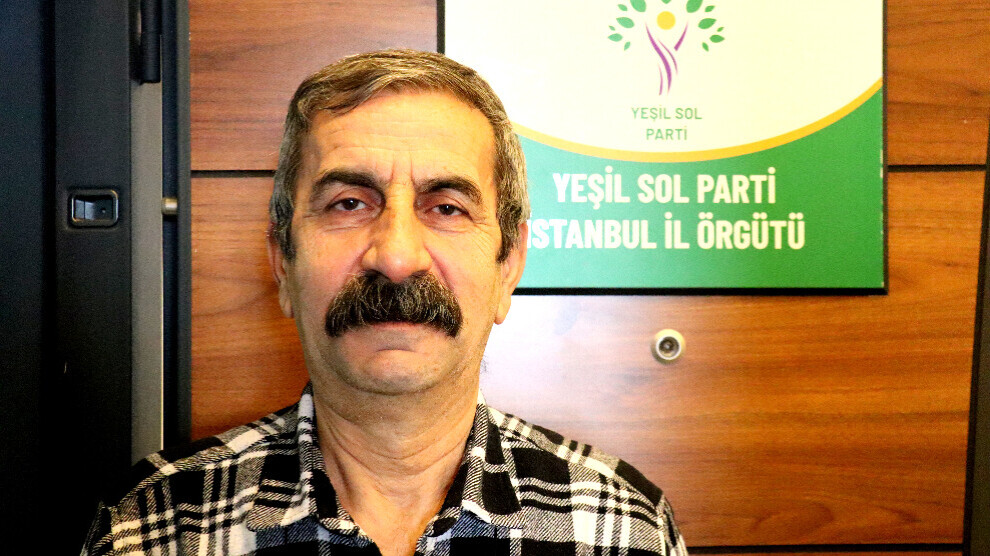
Green Left Party Istanbul Election Commission Co-Spokesperson Ramazan Yavuz told ANF about the work and goals of the party in Istanbul.

It is expected that 31,864 ballot boxes will be set up in approximately 1,917 schools in the elections in Istanbul, and the Green Left Party plans to appoint approximately 70,000 observers to these ballot boxes, to assign 4,000 responsible, and to appoint 2,000 lawyers to the schools. The Green Left Party plans to open a total of 150 election offices in Istanbul.

Yavuz stated that the people in Istanbul have got to know the Green Left Party for about a year and a half. “Let me tell you this. As you know, the HDP will not appear on the list. Since it did not enter the election, its logo will not appear on the lists. What will be on the list is the Green Left Party and its logo.”

Yavuz added that ballot boxes will be set up in 191 schools in Istanbul, and that they will work for the security of each ballot box with nearly 70,000 observers throughout the province. He added that they plan to assign a lawyer to each school. The party also prepared a video to explain to observers what to look out for when at the polling stations.

Referring to the attacks against the election offices, Yavuz said that they were even considering monitoring the offices with the camera system and they were discussing how to take precautions for the safety of their officers.

Yavuz stated that they are considering opening an average of 150 election offices, and that they plan to open 2 offices in some districts and 5 in others. However, when they tell landlords that the offices are for the Green Left Party, they encounter exorbitant rents in some places.

Yavuz said: "We always say that Istanbul is the biggest city of Kurdistan, that's why our goal in Istanbul is to win 20 deputies and to double our votes."
DECOLONIZING DIEGO GARCIA: A BOON FOR INDIA?


BY SAMUEL BASHFIELD | APRIL 13, 2023

India has invested significant sums and resources in constructing and negotiating its military footprint in the Indian Ocean. Delhi has expanded its presence in the Andaman Islands and developed Mauritius’ Agaléga into a base. However, despite its tacit support spanning decades, one key island has remained off limits to Indian military planners: Diego Garcia.

Despite India signing a Logistics Exchange Memorandum of Agreement (LEMOA) with the United States in 2016, Indian military use of Diego Garcia remained too politically fraught. Dating back to the 1980s, Mauritius and the United Kingdom have sparred over sovereignty of the Chagos, an archipelago Britain illegally dismembered from the Colony of Mauritius in 1965, so the United States could build a Cold War military facility. Today, the base on Diego Garcia is an anchor of U.S. predominance in not just the Indian Ocean, but also Africa, the Middle East and South Asia. India – a founding Non-Aligned Movement member and self-professed champion of the Global South – has abstained from utilizing Diego Garcia. Taking advantage of Diego Garcia, a base associated with colonial injustice, would open India to accusations of double standards, and upset close relations with Mauritius. Analyst Abhijit Singh in 2020 characterised India’s Diego Garcia conundrum as “a predicament with no easy answers.”


However, news in November 2022 that the United Kingdom and Mauritius will open negotiations for the Chagos, aiming at an agreement in early-2023, should alter India’s strategic calculations. Britain intends to conclude an “agreement on the basis of international law to resolve all outstanding issues,” which strongly hints at a sovereignty transfer to Mauritius in line with the 2019 International Court of Justice advisory opinion on the Chagos.

Such an agreement would partly remove India’s self-imposed pretext for shirking Diego Garcia. Indeed, on announcing upcoming negotiations, UK Secretary of State for Foreign, Commonwealth and Development Affairs James Cleverly stated that Britain “recognize[s] the United States’ and India’s interests and will keep them informed of progress.”

There remain more questions than answers about how the dispute will be settled. Will Mauritius attain sovereignty over the entire Chagos? Will some sort of joint management be implemented over Diego Garcia? What of the outer islands? How will Mauritius manage American nuclear armed and nuclear-powered visiting ships and aircraft? And, when will the forcibly displaced Chagossians be allowed to return?

Despite these uncertainties, settling the Chagos dispute would be a windfall for Indian planners, and could open a world of opportunities for closer collaboration with the United States and Australia in the Indian Ocean Region.

Diego Garcia’s long runway would provide an excellent staging facility for India’s growing fleet of Boeing P-8I maritime surveillance aircraft. Located in the centre of the Indian Ocean, Diego Garcia’s proximity to major shipping routes provides an unparalleled location from which to surveil large swaths of the Indian Ocean from above.

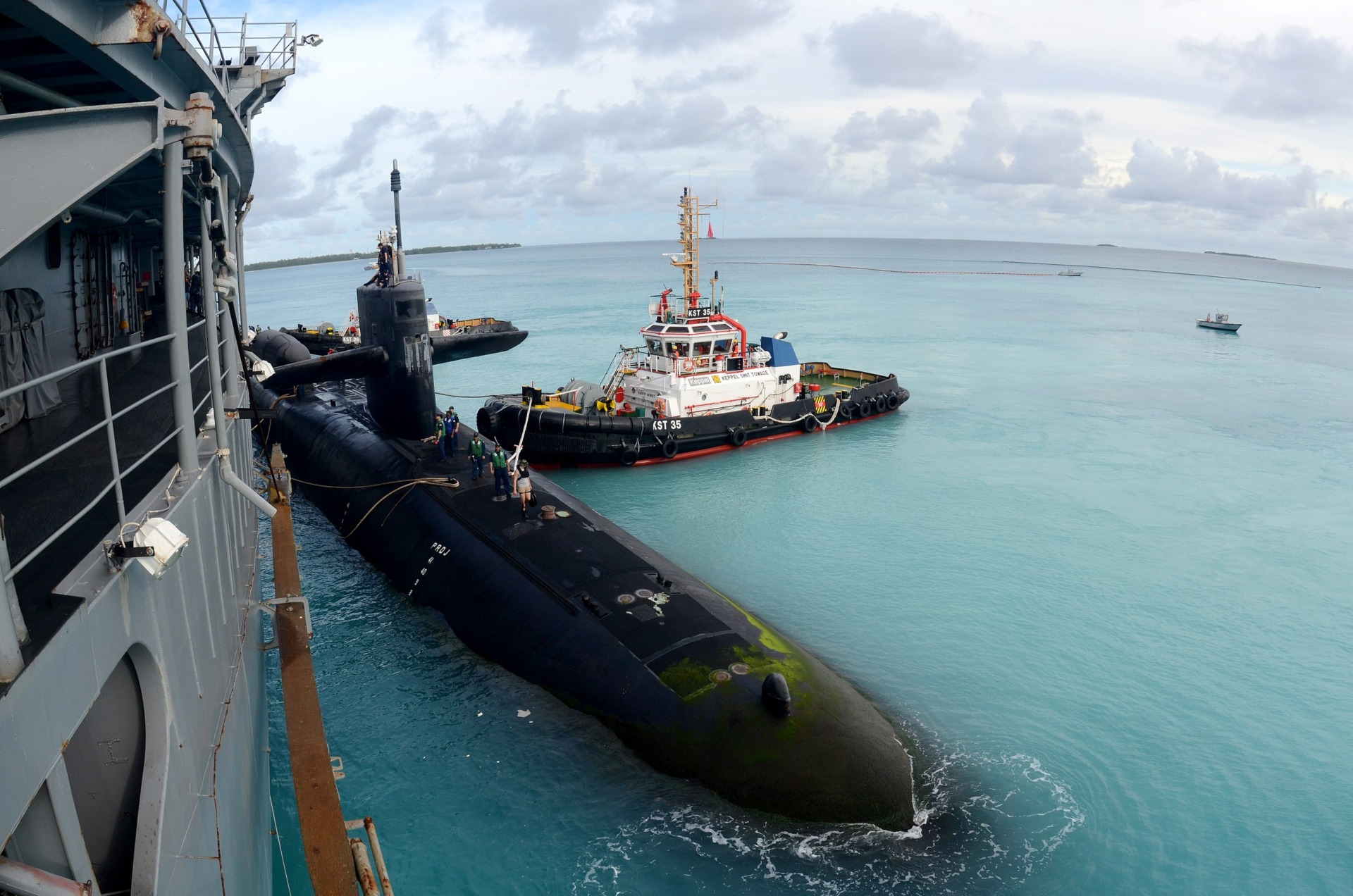
Diego Garcia’s utility is in part due to its large, deep lagoon, which can accommodate America’s largest warships and submarines. This protected anchorage, unlike the facility India is building in Agaléga, could provide India a safe harbor in the center of the Indian Ocean from which to launch operations, tend to ships and support other logistics needs.

India could also plug into elements of Diego Garcia’s intelligence collection apparatus, to better surveil the Indian Ocean and its myriad users. For example, India could establish a node of its Integrated Coastal Surveillance System on Diego Garcia, or one of the Chagos’ outer islands.


However, even when Mauritius regains the Chagos, Indian planners will still face political barriers in cooperating with the United States and Australia on Diego Garcia. For instance, the United States may request reciprocal arrangements at Indian facilities, such as the Andaman Islands, which India has been reluctant to allow. For the first time ever in September 2020, a U.S. P-8 refuelled in Port Blair, but such access is rare.

Perhaps more significantly, Indian use of Diego Garcia would more closely align its Indian Ocean operations with the United States to a degree unpalatable to some in Delhi. Should India rely on the U.S. Diego Garcia facility, rather than develop its own, India’s “strategic autonomy” could be perceive to be undermined.

Conversely, scholar Yogesh Joshi points out the “strength of the realpolitik tradition” in India’s Indian Ocean defence and security policies. India’s policies have historically been highly pragmatic, including when it comes to Diego Garcia. As China expands its Indian Ocean presence in the coming years, these reservations against using Diego Garcia may pale in comparison to the benefits Diego Garcia grants. Until then, Indian policymakers may remain hesitant to fully utilize Diego Garcia’s unique offering.

Decolonizing Diego Garcia could open a multitude of opportunities for India to secure the Indian Ocean in concert with its Quad partners, and at a fraction of the cost of going it alone. The dismantling of the final vestiges of Britain’s bygone colonial empire in the Indian Ocean and Mauritian consent over the administration of Naval Support Facility Diego Garcia would offer India the opportunity to cooperate more comprehensively with the United States and Australia in the emerging Indian Ocean security order.


Samuel Bashfield is Defence Researcher at the Australia India Institute, Non-Residential Fellow at the Royal Australian Navy’s Sea Power Centre and PhD Candidate at the Australian National University’s National Security College.