Thursday, April 13, 2023

From Forever War to Eternal War


 APRIL 13, 2023
Facebook

“It is time,” President Biden announced in April 2021, “to end the forever war” that started with the invasion of Afghanistan soon after the tragic terror attacks on this country on September 11, 2001. Indeed, that August, amid chaos and disaster, the president did finally pull the last remaining U.S. forces out of that country.

A year and a half later, it’s worth reflecting on where the United States stands when it comes to both that forever war against terrorism and war generally. As it happens, the war on terror is anything but ended, even if it’s been overshadowed by the war in Ukraine and simmering conflicts around the globe, all too often involving the United States. In fact, it now seems as if this country is moving at breakneck speed out of the era of Forever War and into what might be thought of as the era of Eternal War.

Granted, it’s hard even to keep track of the potential powder kegs that seem all too ready to explode across the globe and are likely to involve the U.S. military in some fashion. Still, at this moment, perhaps it’s worth running through the most likely spots for future conflict.

Russia and China

In Ukraine, as each week passes, the United States only seems to ramp up its commitment to war with Russia, moving the slim line of proxy warfare ever closer to a head-to-head confrontation between the planet’s two great military powers. Although the plan to avoid a direct confrontation with Russia clearly remains in effect, once taboo forms of support for Ukraine have over time become more acceptable.

As of early March, the United States, one of more than 50 countries offering some form of support, had allocated aid to Ukraine on 33 separate occasions, amounting to more than $113 billion worth of humanitarian, military, and financial assistance. In the process, the Biden administration has agreed to provide increasingly lethal weaponry, including Bradley fighting vehicles, Patriot missile batteries, and Abrams tanks, while pressure for even more powerful weaponry like Army Tactical Missile Systems (ATACMs) and F-16s is only growing. As a recent Council on Foreign Relations report noted, Washington’s aid to Ukraine “far exceeds” that of any other country.

In recent weeks, the theater of tension with Russia has expanded beyond Ukraine, notably to the Arctic, where some experts see potential for direct conflict between Russia and the U.S., branding that region a “future flashpoint.” Meanwhile, Russian President Vladimir Putin recently raised the possibility of storing tactical nuclear weapons in neighboring Belarus, perhaps more of a taunt than a meaningful gesture, but nonetheless another point of tension between the two countries.

Leaving Ukraine aside, China’s presence looms large when it comes to predictions of future war with Washington.  On more than one occasion, Biden has stated publicly that the United States would intervene if China were to launch an invasion of the island of Taiwan. Tellingly, efforts to fortify the U.S. military presence in the Asia-Pacific region have ratcheted up in recent months.

In February, for example, Washington unveiled plans to strengthen its military presence in the Philippines by occupying bases in the part of that country nearest to Taiwan. All too ominously, four-star Air Force General Mike Minihan went so far as to suggest that this country might soon be at war with China. “I hope I am wrong. My gut tells me [we] will fight in 2025,” he wrote in a memo to the officers he commands in anticipation of a future Chinese move on Taiwan. He also outlined a series of aggressive tactics and weapons training maneuvers in preparation for that day. And the Marines have been outfitting three regiments for a possible future island campaign in the Pacific, while war-gaming such battles in Southern California.

North Korea, Iran, and the War on Terror

North Korea and Iran are also perceived in Washington as simmering threats.

For months now, North Korea and the U.S. have been playing a game of nuclear chicken in parallel shows of missile strength and submarine maneuvers, including the North’s mid-March launch of an intercontinental ballistic missile capable of carrying a nuclear warhead and, at least theoretically, reaching the U.S. mainland. In its leader Kim Jong-un’s words, it was intended to “strike fear into the enemies” of his country. In the last days of March, his military even launched a reputed underwater nuclear-capable drone, taking the confrontation one step further. Meanwhile, Washington has been intensifying its security commitments to South Korea and Japan, flexing its muscles in the region, and upping the ante with the biggest joint military drillsinvolving the South Korean armed forces in years.

As for Iran, it’s increasingly cooperating with an embattled Russia when it comes both to sending drones there and receiving cyberweapons from that country. And since Donald Trump pulled the United States out of the JCPOA nuclear treaty with Iran in May 2018, tensions between Washington and Teheran have only intensified. International monitors have recently concluded that Iran may indeed be approaching the brink of being able to produce nuclear-grade enriched uranium. At the same time, Israel has been ramping up its threats to attack Iran and draw the United States into such a crisis.

Meanwhile, smaller conflicts are sizzling around the globe, many seemingly tempting Washington to engage more actively. On President Biden’s agenda in his recent meeting with Canadian Prime Minister Justin Trudeau, for instance, was the possibility of deploying a Canadian-led multinational force to Haiti to help quell the devastating gang violence ravaging that country. “We believe that the situation on the ground will not improve without armed security assistance from international partners,” a National Security Council official told NPR’s Morning Edition ahead of the summit. Trudeau, however, backed away from accepting such a role. What Washington will now do — fearing a wave of new immigrants — remains to be seen.

And don’t forget that the forever war on terror persists, even if in a somewhat different and more muted form.  Although the U.S. has left Afghanistan, for instance, it still retains the right to conduct “over the horizon” air strikes there. And to this day, it continues to launch targeted strikes against the al-Shabaab terror group in Somalia, even if in far lower numbers than during the Trump years when drone strikes reachedan all-time high of more than 200. So far, the Biden administration has launched 29 such strikes in the last two years.

American drone attacks persist in Syria as well. Only recently, in retaliation for a drone attack against U.S. troops there that killed an American contractor and wounded another, as well as five soldiers, the Biden administration carried out strikesagainst Iranian-backed militias. According to National Security Council spokesperson John Kirby, President Biden has still not ruled out further retaliatory acts there. As he told Margaret Brennan on Face the Nation at the end of March, referring to ISIS in Syria, “We have under 1,000 troops [there] that are going after that network, which is, while greatly diminished, still viable, and still critical. So we’re going to stay at that task.”

Other than Syria and Iraq (where the U.S. still has 2,500 troops), the war on terror is now particularly focused on Africa. In the Sahel region, the swath of that continent just below the Sahara Desert, including Chad, Niger, Nigeria, Mauritania, and Sudan, among other countries, the legacies of past terrorism and the war in Ukraine have reportedly converged, creating devastatingly unstable and violent conditions, exacerbating what USAID official Robert Jenkins has called “decades of undelivered promises.”

As journalist Walter Pincus put it recently, “With little public notice, the two-decades-long U.S. war on terrorism continues in the Sahel.” According to the 2023 Global Index for Terrorism, that region is now the “epicenter of terrorism.” The largest U.S. presence in West Africa is in Niger, which, as Nick Turse reports, “hosts the largest and most expensive drone bases run by the U.S. military,” intended primarily to counter terrorist groups like Boko Haram, al-Qaeda, and the Islamic State. Weapons from the war in Ukraine have found their way to such terrorist groups, while climate-change induced weather nightmares, deepening food insecurity, and ever more dislocated populations have led to an increasingly unstable situation in the region. Complicating things further, the Wagner group, the Russian mercenary paramilitary outfit, has been offering security assistance to countries in the Sahel, intensifying the potential for violence. U.S. military forces and bases in the region have grown apace as the war on terror in Africa intensifies.

Legislative Support for Eternal Warfare

Legislative moves in Congress unabashedly reflect this country’s pivot to Eternal War. Admittedly, the push for an ever-expanding battlefield didn’t start with the great-power conflicts leading today’s headlines. The 2001 congressional Authorization for the Use of Military Force (AUMF), which paved the way for the invasion of Afghanistan, gave the president essentially unlimited authority to take offensive action in the name of countering terrorism by not naming an enemy or providing any geographical or time limits. Since the fall of 2001, just as Representative Barbara Lee(D-CA) predicted while casting the only vote against it, that AUMF has served as a presidential “blank check” when it comes to authorizing the use of force more or less anywhere.

Former State Department lawyer Brian Finucane has pointed out that the perpetuation of “much of the legal, institutional, and physical infrastructure that underpin this decades-long” war on terror is now being extended to the Sahel, no matter the predictable results. As Soufan Group terrorism expert Colin Clarke told me, “A global war on terrorism has never been winnable. Terrorism is a tactic. It can’t be fully defeated, just mitigated and managed.”

Nevertheless, the 2001 AUMF remains on the books, available to be tapped in ever-expansive ways globally. Only this month, Congress once again voted against its repeal.

Admittedly, the Senate did recently repeal the 1991 and 2002 authorizations for the use of force that undergirded the Iraq War of 1991 and the 2002 invasion of that country. Notably, a new amendment proposed by Senator Lindsey Graham (R-SC) to also create an AUMF against Iran-backed militias in the region was defeated. As recent military engagements in Syria have shown, new authorizations have proven unnecessary.

Congress seems to be seconding the move from Forever War to Eternal War without significant opposition. In fact, when it comes to funding such a future, its members have been all too enthusiastic. As potential future war scenarios have expanded, so has the Pentagon budget which has grown astronomically over the past two years. In December, President Biden signed the 2023 National Defense Authorization Act, which granted the Pentagon an unprecedented $816.7 billion, 8% more than the year before (with Congress upping the White House’s suggested funding by $45 billion).

And the requests for the 2024 budget are now in. As Pentagon expert William Hartung reports, at $886 billion dollars, $69 billion more than this year’s budget, Congress is on a path to enacting “the first $1 trillion package ever,” a development he labels “madness.” “An open-ended strategy,” Hartung explains, “that seeks to develop capabilities to win a war with Russia or China, fight regional wars against Iran or North Korea, and sustain a global war on terror that includes operations in at least 85 countries is a recipe for endless conflict.”

Whatever Happened to the Idea of Peace?

When it comes to the war in Ukraine, there is a widely shared sense that it’s going to last and last — and last some more. Certain experts see nothing short of years of fighting still on the horizon, especially since there seems to be little appetite for peace among American officials.

While French President Emmanuel Macron and German Chancellor Olaf Scholz have reportedly urged Ukrainian President Volodymyr Zelensky to consider peace talks, they seem to have few illusions about how long the war is likely to go on. For his part, Zelensky has made it clear that, when it comes to Russia, “there is nothing to talk about and nobody to talk about over there.” According to Alexander Gabuev, a senior fellow at the Carnegie Endowment for International Peace, the mood in both Moscow and Kyiv could be summed up as “give war a chance.”

China is, it seems, an outlier when it comes to accepting a long-term war in Ukraine. Even prior to his visit to Russia in late March, President Xi Jinping offered to broker a ceasefire, while releasing a position paper on the perils of continued warfare and what a negotiated peace might aim to secure, including supply-chain stability, nuclear power plant safety, and the easing of war-caused global humanitarian crises. Reportedly, the summit between Xi and Putin made little headway on any of this.

Here in the U.S., calls for peace talks have been minimal. Admittedly, last November, Chairman of the Joint Chiefs of Staff Mark Milley reportedly told the Economic Club of New York, “When there’s an opportunity to negotiate, when peace can be achieved, seize it. Seize the moment.” But there has been no obvious drive for diplomatic negotiations of any sort in Washington. In fact, John Kirby, the National Security Council spokesperson, responded to President Xi’s proposal this way: “We don’t support calls for a ceasefire right now.” The Russians, he claimed, would take such an opportunity “to only further entrench their positions in Ukraine… [and] rebuild, refit, and refresh their forces so that they can restart attacks on Ukraine at a time of their choosing.”

Disturbingly, American calls for peace and diplomacy have tended to further embrace the ongoing war. The New York Times editorial board, while plugging future peace diplomacy, suggested that only continued warfare could get us to such a place: “[S]erious diplomacy has a chance only if Russia accepts that it cannot bring Ukraine to its knees. And for that to happen, the United States and its allies cannot waver in their support [of Ukraine].” More war and nothing else, the argument goes, will bring peace. The pressure to provide ever more powerful weapons to Ukraine remains constant on both sides of the aisle. As Robert Wicker, the top Republican on the Senate Armed Services Committee put it, “[T]his approach of ‘more, better, faster’ would give the Ukrainians a real shot at victory.”

Whether in Ukraine, in the brewing tensions of what’s being called a “new cold war” in Asia, or in this country’s never-ending version of the war on terror, we now live in a world where war is ever more accepted as a permanent condition.  On the legal, legislative, and military fronts, it has become a mainstay for what passes as national security activity. Some of this, as many critics contend, is driven by economic incentives like lining the pockets of the giant weapons-making corporations to the tune of multibillions of dollars annually; some by what passes for ideological fervor with democracy pitched against autocracy; some by the seemingly never-ending legacy of the war on terror.

Sadly enough, all of this prioritizes killing and destruction over life and true security. In none of it do our leaders seem to be able to imagine reaching any kind of peace without yet more weapons, more violence, more conflicts, and more death.

Who even remembers when the First World War was known as “the war to end all wars”? Sadly, it seems that the era of Eternal War is now upon us. We should at least acknowledge that reality.

This first appeared on TomDispatch.

The Similarity of Russian and American Torture

 
APRIL 13, 2023
Facebook

In the context of Russia’s arrest of Wall Street Journal reporter Evan Gershkovich, I wrote about the similarities between Russia’s criminal-justice system and the Pentagon’s criminal-justice system in Cuba. I also pointed out that as the Russian prosecution of Gershkovich unfolds, it will provide valuable lessons for Americans about what the Pentagon has done to pervert long-established principles of criminal justice in American law. 

After I posted my article, the Journal published an article about the jail in which Gershkovich is being held. It is an infamous and sinister prison called LeFortovo, which has been used since at least the Stalinist era.

According to former prisoners of the jail who were interviewed by the Journal, the treatment of prisoners revolves around the concept of isolation. The official prison policy is to subject prisoners to the maximum isolation possible. For example, when a prisoner is being transferred from his cell to an interrogation room, the guards ensure that he will not see anyone on the way to the interrogation room.

As mental-health experts have long attested, isolation is a form of torture that produces severe and permanent mental damage. But the advantage of this type of torture from the standpoint of the torturer is that it leaves no physical marks. It’s what can be called “touchless” torture.

Guess what! The Pentagon wields the same power to inflict touchless torture that the Russian authorities wield. Moreover, the Pentagon’s power to torture extends not just to foreign citizens but also to American citizens. 

That was what the Jose Padilla case was all about. Padilla was an American citizen. The Pentagon subjected him to the same isolation-type torture to which Evan Gershkovich is being subjected. Padilla sued the Pentagon in federal court, claiming that the U.S. Constitution prohibited the Pentagon from inflicting cruel and unusual punishments on him, including isolation. 

The federal Court of Appeals upheld the power of the Pentagon to torture American citizens. It was truly a phenomenal development in the history of American criminal-justice jurisprudence. Since the founding of the United States until that judicial decision, the federal government was precluded from torturing people, both citizens and non-citizens alike. With the Padilla ruling, the Pentagon, as well as the CIA, now wield the same power that Russian officials wield to torture citizens and non-citizens alike.

Why did the federal Court of Appeals buckle to the demands of the Pentagon? It buckled for the same reason the federal judiciary has always deferred to the national-security establishment from the time that the conversion of the federal government to a national-security state occurred. The federal judiciary fully understands the omnipotent power that the national-security branch of the federal government wields. The judiciary knows that if the Pentagon, the CIA, or the NSA were to disobey a court order, there is nothing the court could do to enforce its order. Therefore, rather than expose the impotence of the federal judiciary in the face of omnipotent power, the judiciary has long chosen to simply defer to whatever the national-security establishment wants and to come up with judicial rationalizations for its deference.

That’s why, for example, the federal judiciary has deferred to the omnipotent power of the Pentagon and the CIA to assassinate people. The judiciary is fully aware that the Fifth Amendment expressly prohibits federal officials, including the Pentagon and the CIA, from killing anyone without due process of law. But they also know that the Pentagon and the CIA would never comply with a ruling declaring state-sponsored assassinations illegal under our form of constitutional government. So, the judiciary has chosen to simply defer to the omnipotent power of Pentagon and the CIA and, in the process, come up with ridiculous rationalizations to justify its deference to such power.

There is something important to note about the power to torture and, for that matter, the power to assassinate. Simply because such powers are not being currently exercised in a major way doesn’t mean that the American people are now living in a free society. A free society turns on the lack of power to do such things, not on the “benevolent” nature of how such power is being exercised. If the right “emergency” arises, make no mistake about it: the Pentagon and the CIA will remove their torture and assassination swords from their sheaths and show no hesitation or mercy in using them. 

Isn’t it ironic that the Russian treatment of Evan Gershkovich is showing us what has happened to our nation?

This originally appeared on Hornberger’s Explore Freedom blog.

Jacob G. Hornberger is founder and president of The Future of Freedom Foundation.

KAZAKHSTAN
Police break up oil worker demo in Astana
Unemployed people in Zhanaozen seen delivering demands in a screenshot of a video message filmed some weeks after last year's "Bloody January" unrest was put down. 
/ RFE/RL, screenshot

By bne IntelIiNews 
April 12, 2023

Police in Astana on April 11 detained more than 80 oil workers from Kazakhstan’s volatile southwestern town of Zhanaozen, who journeyed to the capital to demand jobs.

The workers organised the protest after their company lost an oil tender in the energy-rich western region of Mangystau that would have provided work. Officials in Kazakhstan are still very much on edge about demonstrations and any sign of wider unrest following the “Bloody January” events of last year in which at least 238 people were killed. That unrest was triggered by initial demonstrations in the town of Zhanaozen over a fuel price hike. Zhanaozen is also known for its December 2011 oil workers’ strike, which led to the “Zhanaozen massacre”, with at least 14 of the workers killed by police who opened fire in the city square.

Prior to the arrests in Astana, workers demanded jobs at OzenMunaiGaz, a subsidiary of state energy giant KazMunaiGaz.

Artur Alkhasov of the Kazakh Bureau of Human Rights and Rule of Law told RFE/RL that more than 80 former workers of BerAli Manghystau Company were detained after they spent a night in front of the energy ministry.

Last week, dozens of women in Zhanaozen staged a protest demanding permanent jobs for their sons and husbands, while hundreds of former oil industry employees gathered in front of OzenMunaiGaz offices to demand employment.

Following the April 11 police crackdown on the protest in Astana, Eurasianet reported that anger over the authorities’ response spread quickly in Mangystau, with workers at several oil companies declaring wildcat strikes and spontaneous marches taking place in the city of Aktau and Zhanaozen. In Zhanaozen, large numbers of local people were said to have assembled in front of the city hall to call for the release of picketers detained in Astana.

Mangystau governor Nurlan Nogayev issued a late-night address to urge the public not to engage in any activities that might cause instability.

“We must understand that this situation must be resolved within the framework of the law. We all want stability and certainty in the future,” Nogayev said.

Internet and phone signals were reportedly patchy in Zhanaozen. Observers took that as a sign that the authorities were anxious that protests could escalate and spread.
CENTRAL ASIA BLOG: Turkmenistan, undisputed heavyweight champion of the world for methane emissions
East of Hazar, Turkmenistan, a port city on the Caspian Sea, 12 plumes of methane stream westward. The plumes were detected by NASA’s Earth Surface Mineral Dust Source Investigation mission. / NASA/JPL-Caltech

By Aida Kadyrzhanova in Almaty March 29, 2023

Turkmenistan, methane emissions champion of the world. It’s quite some anti-award for a little-known, remote country of 6mn in Central Asia that many would struggle to pinpoint on a map.

For those struggling to believe it, further data from ‘satellite detectives’ has confirmed that when it comes to fossil fuel facility “methane super-emitter sites”, Turkmenistan is top of the table, ahead of big emitters such as the US and Russia. Its biggest satellite-tracked event was a leak of 427 tonnes an hour last August near a major pipeline by Turkmenistan’s Caspian Sea coast. That single leak was equivalent to the rate of emissions from 67mn cars, or the hourly national emissions of France.

Satellite data analysed by the French climate tech company Kayrros identified 1,005 methane super-emitter events worldwide in 2022, with 559 from oil and gas fields, 105 from coal mines and 340 from waste sites such as landfills. The events can last from a few hours to several months.

Turkmenistan had the highest number of super-emitting events – 184.

“They vent like crazy,” Christian Lelong at Kayrros recently told the Guardian.

In terms of Turkmenistan, the bad news, unfortunately, does not end with super-emitter events.

Scientists have also revealed 55 “methane bombs” around the world, namely fossil fuel extraction sites where gas leaks from future production would emit methane levels equivalent to 30 years of all US greenhouse gas (GHG) emissions. Turkmenistan, which has the sixth-highest gas reserves in the world, is home to one of these major bombs (Yolotan South), giving it a place in a top 10 that also includes Texas, Louisiana, Canada, Russia (with three major methane bombs) and Qatar.

Now for some good news. No, Turkmenistan’s totalitarian rulers did not voluntarily all of a sudden get on the phone to the UN climate change supremos to volunteer immediate action against their methane leaks. However, persuading the country’s reclusive autocrats to fix the emissions should not be an impossible ask, especially given that for 80% of oil and gas sites, and 98% of coal mines, measures to plug methane leaks and end deliberate venting would pay for themselves. That’s because, according to the UN, the extra gas captured could be sold, and plugging projects could be implemented at low net cost.

Outside experts are yet to get an on-the-ground look at secretive Turkmenistan’s outsized methane emissions. The speculation says the leaks are caused by ageing Soviet-era equipment or stem from attempts to avoid scrutiny that would be caused by the easily visible flames of flaring, where vented gas is ignited to create less damaging CO2.

Getting Turkmenistan’s Berdimuhamedov administration to sign up to the global methane pledge that requires signatories to cut human-caused emissions by 30% by 2030 would be the logical next move. Some 150 nations now back the pledge, though there remain some big non-signatories alongside Turkmenistan, including Russia, China, Iran and India.

Kayrros is signed up to provide methane leak data to the UN Environment Programme’s new methane alert and response project. The programme will use the near-real-time satellite data to pinpoint super-emitting polluters. They can then be pressed to address the leaks.

* Note: The full list of methane bombs and information on the methodology for defining them is here. Methane bomb analysis is based on 2020 information on gas-rich fields from industry data provider Rystad Energy and builds on the research published in the journal Energy Policy on carbon bombs by Kühne and colleagues.
Russia is world’s second-biggest cryptocurrency miner


Russia has overtaken Kazakhstan to become the biggest cryptocurrency miner in the world behind only the US, as the Kremlin looks for ways to dodge sanctions on international money transfers. / bne IntelliNews

By bne IntelliNews April 13, 2023

Russia has overtaken Kazakhstan to become the world's second-largest cryptocurrency mining country in 2023, Kommersant reports on April 12.

Bitriver, Russia's largest bitcoin mining provider, says that Russia's coin generating capacity had reached 1 GW in January-March this year, second only to the US with a capacity of 3-4 GW.

Cut off from the international payments system following the imposition of the SWIFT sanctions shortly after the start of the war a year ago, Russia has accelerated its plans for digital currencies, which operate outside the control of international regulators. The Central Bank of Russia (CBR) has already launched a pilot programme to test the use of a state-backed digital ruble.

Bitcoin and other cryptocurrencies are already being widely used by the population to get around the restrictions on transferring money to the EU. And Russian companies are investing in developing new cryptocurrencies.

Russia has achieved significant progress in the crypto mining industry in recent years. In contrast, Kazakhstan has slipped down to ninth position due to its restrictions on crypto mining activities in 2022, due to its drain on the power sector and unlicensed activity.

As reported by bne IntelliNews, the Kazakh Financial Monitoring Agency (FMA) shut down ABS Change, a cryptocurrency trading platform that was operating illegally without a licence since 2021. Three people were arrested and $342,000 and KZT7mn ($16,000) in cash were seized during a raid in the company's headquarters in Astana. Additionally, ABS Change had $23,000 worth of crypto assets in two wallets on Binance, which was temporarily restricted.

Kazakhstan, which attracted many cryptocurrency miners with its cheap electricity following China's move to put in place a crypto industry ban, has taken steps to regulate the sector, including laws restricting mining farms' access to low-cost power, and introduced licences for miners. Kazakhstan suffered multiple power outages across 2021 and 2022 due to the surge in crypto-mining operations.

Inhabitants of Ekibastuz in the north-eastern Kazakhstan’s Pavlodar Region were left without heating during the freezing winter days this year after cryptocurrency miners drained the local utility of power, until authorities shut down their operations.

China has been implementing a similar crackdown since 2021 and also did not make it to Bitriver's top ten list. China banned crypto mining in 2021.

However, bitcoin use is limited in Russia due to restrictive laws on cryptocurrencies, including President Vladimir Putin's 2020 law on digital financial assets. Although the law legalised cryptocurrencies, it banned their use to pay for goods and services. The CBR’s compromise has been to propose a regulated digital ruble, which is not a true cryptocurrency, as the regulator controls the supply of the coins and hence can fulfil a central bank’s traditional role of controlling the money supply.

After initially rejecting the idea of cryptocurrencies, the famously conservative Central Bank of Russia (CBR) has more recently softened its stance on the potential use of cryptocurrency as recognised means of payment. Deputy Head of the CBR Xenia Yudaeva said the regulator was toying with the idea of allowing the use of crypto for international payments and signalled a more lax stance on crypto-mining in June last year.

“We have changed our position on mining, and we [could] allow the use of crypto-currency in foreign trade and outside of the country,” Yudaeva said in June 2022.

However, Yudaeva reiterated the regulator’s position that crypto was a highly speculative instrument that is actually a ponzi scheme. She warned that legalising crypto in Russia could boost illegal activity and tax evasion.

In search of solutions to avoid sanctions restrictions, Russian Prime Minister Mikhail Mishustin added his name to the roster of Russian high officials endorsing the use of digital money to settle international trade deals in September.

The US, aware that the unregulated and decentralised cryptocurrencies represent a threat to the effectiveness of the SWIFT sanctions on Russia’s ability to make international payments, has already started to try to close the loopholes. The US has already blacklisted a bitcoin and an ether address in February, suspecting their involvement in Russian defence equipment sales abroad, and is examining various crypto-exchanges for their role in sanctions busting.

One of the largest crypto-currency exchange platforms, Binance, announced last April that following the EU’s fifth sanction package it is “required to limit services for Russian nationals or natural persons residing in Russia, or legal entities established in Russia, that have crypto-assets exceeding the value of €10,000”. Another exchange, Coinbase, also warned Russian users that their accounts will be blocked on May 31.

Additionally, the European Union imposed a total ban on carrying out cryptocurrency transactions with Russian citizens and anyone residing in the country as part of its eighth round of sanctions introduced last summer. The US Treasury Department also targeted Swiss-based Russian crypto-currency mining holding BitRiver in September.

But Russia has taken the first step towards international crypto-payment when the Russian Ministry of Industry and the Central Bank of Iran agreed that imports could in theory be processed using crypto-currencies last August.

Iran is another cryptocurrency hotspot, accounting for 4.5% of the global coin mining, according to a study made last year, partly because of the country's cheap electricity.

If it happens, Russia’s use of cryptocurrencies to settle international trade deals won’t happen soon. In May 2022 Moody’s Investor Service warned that crypto-currencies will not help Russia bypass sanctions due to the limited market size and payment-tracing mechanisms. Moody’s believes that the low liquidity of the ruble/bitcoin pair of about $0.2mn makes crypto-currency an unlikely instrument to cover $46bn of daily transactions of Russian financial institutions for the foreseeable future.
'We were lucky' says governor of quake-hit PNG province

13 April 2023
Caleb Fotheringham, RNZ Pacific Journalist

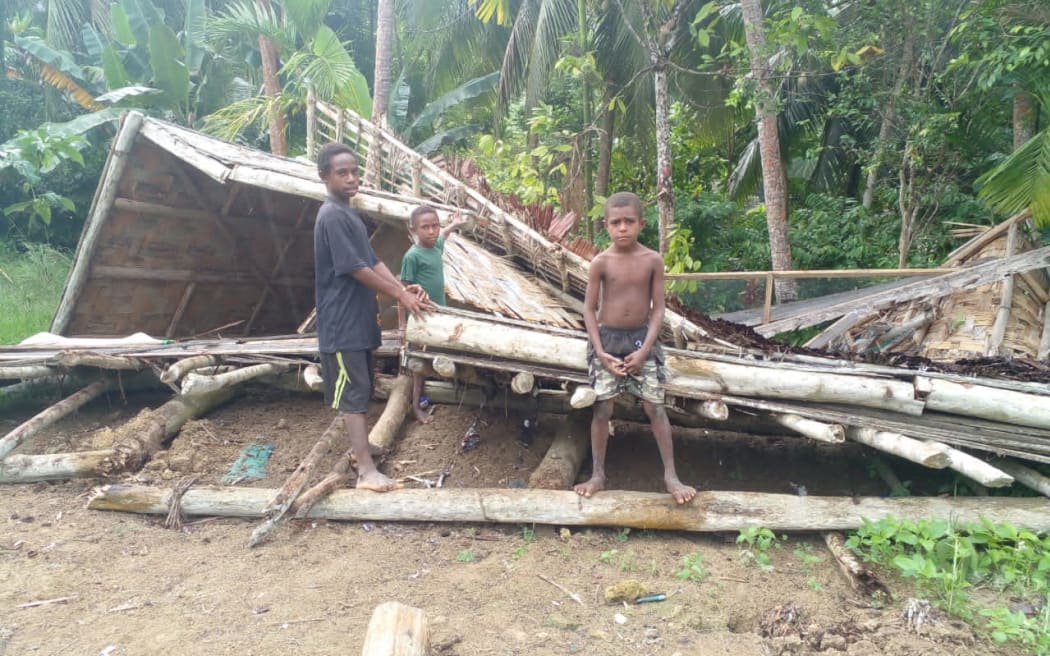
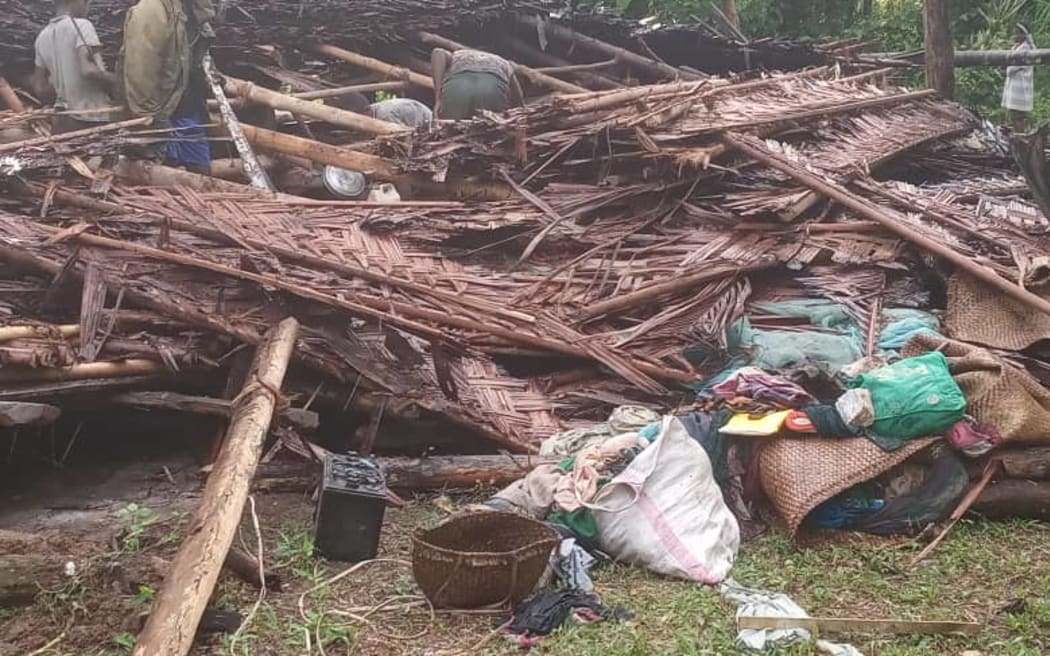
Over 800 houses were destroyed after a magnitude-7.0 earthquake struck Papua New Guinea's East Sepik province on April 4. 
Photo: NBC East Sepik / Edward Hagoria

The governor of the Papua New Guinea province worst-hit by last week's earthquake feared the death toll was going to be much higher.

Eight people are confirmed dead after the magnitude 7.0 earthquake struck East Sepik at around 4am on Monday last week.

The epicentre hit Chambri Lake, about 100km south-west of Wewak at a depth of 60km.

An assessment report from the East Sepik Provincial Disaster and Emergency office said over 800 houses were destroyed.

In the district of Angoram alone 542 houses were lost.

East Sepik's Governor Allan Bird said he initially thought the loss of lives and damage was going to be much greater.

"We felt we were lucky," he said.


"It was eight lives lost which is obviously sad, you don't want to lose anyone, but I guess from a response standpoint we were fairly relieved that it wasn't worse."

Bird said people built their homes in swampy places in the Karawari area of Angoram.

"They actually build their homes on peat and it's not a very stable material," Bird said.

"I think almost 300 homes collapsed in that particular area."

Bird said the government was providing help with basic tools, nails and tarpaulin to support the rebuild. Also being provided was clothing, mosquito nets, water containers and fishing nets.

He estimated the overall cost to rebuild would be about $2 million Kina, or around $US500,000.

"We think we will be spending about 1000 Kina ($US280) to re-equip a family so they can get back to normal.

"Then another 1000 Kina, for logistics to get the help out there, because these places are really far flung and isolated. You need a helicopter to reach them or go by road and then by speedboat."
Too scared to search for food and water

The report from the East Sepik Provincial Disaster and Emergency office said for most people they had never felt an earthquake of such magnitude and would take time to "absorb the realities of such extreme natural hazards".

Luke Baskam, from Wewak, where there was one death, said people in the area normally went out to catch fish and collect sago but were not doing it now out of fear of aftershocks.

"Right now they are scared of the earthquake and they're staying at home," Baskam said.

"They can't move to find food or water. They're scared an earthquake will come and kill them, that's why they're scared of moving."

Baskam said there had been not much support from the government despite hearing on the radio that help was coming.

"They're not doing it fast, they're very slow at moving things."


Photo: NBC East Sepik / Edward Hagoria

Malawi: Health Authorities Fear Maburg Virus Disease Presence in North Malawi

13 APRIL 2023

Health authorities say there is another suspected case of the Marburg virus disease at Songwe border in Karonga.

According to Ministry of Health spokesperson Adrian Chikumbe, samples taken from the individual have been sent to South Africa to determine whether or not the symptoms he has shown are of the disease.

Last week, Mzuzu Central Hospital isolated five people who presented symptoms similar to those of the virus but were later cleared.

The five people presented symptoms similar to those of the virus but they all tested negative.

An internal memo signed by the hospital's director Ted Bandawe said out of the five patients, two were being treated for typhoid fever while the other three are being treated for adult measles.

Mzuzu Central Hospital spokesperson Arnold Kayira said all precautionary measures were being taken as the team from the Public Health Institute of Malawi was on the ground investigating the cases.

Marburg virus disease is a rare with severe haemorrhagic fever which affects both people and non-human primates.

But Kayira said the public should not panic following the Marbug scare.

He said there were no no confirmed Marburg virus case at the hospital.

Dr Kayira said the leaked memo was meant to notify members of staff about the five cases and was not meant for the public.

"The five cases are being treated in an isolation unit and are responding well to treatment," said Dr Kayira.

He said samples were being handled by the Public Health Institute of Malawi PHIM and have been sent to South Africa for testing.

Universities and the AUKUS Military-Industrial Complex


 APRIL 13, 2023
Facebook

Photograph Source: U.S. Secretary of Defense – CC BY 2.0

Here they go.  Vice-chancellors, university managers, and creatures with titles unmentionable and meaningless (deputies, semi-deputies, sub-deputies), a whole cavalcade of parasitic creatures in need of neutering, keen to pursue another daft idea.  Australian universities do not want to miss out on the military-industrial-education complex, whatever its imperilling dangers.  With the war inspired AUKUS security pact, which promises the stripping of the Australian budget to the tune of $AUD 368 billion over the course of three decades, a corrupt establishment promises to get worse.

The AUKUS distraction could not have come at a better time.  The tertiary sector in Australia is becoming increasingly cadaverous, marked by cost-cutting, rampant casualisation and heavy teaching and workloads for those battling away in the pedagogical trenches.

In a recent piece by Guardian Australia’s higher education reporter, an academic, who preferred to remain anonymous fearing institutional retribution, likened the modern Australian university to a supermarket.  Students were the customers filing through the self-checkout counters; the staff, increasingly rendered irrelevant, were readily disposable.

The stories have been familiar for years, even as the offending by university management continues unabated: tutors being paid insufficiently to read and grade work adequately; virtually non-existent job security; the suppression of academic freedom and criticism of ghastly management practices.  Given the pathological secrecy under which universities work under, essential data shedding light on class sizes, staff-student ratios, and contracts with private business interests, is virtually impossible to attain.

But despite the Australian university sector proving unsustainable, unprincipled, and ungainly, individuals such as Catriona Jackson, the CEO of Universities Australia, is on the hunt for new frontiers.  Last year, the submission of Universities Australia to the Defence Strategic Review was almost begging to link universities with the defence needs of the country.  All the Defence Department and Australian Defence Forces needed to do was ask.

As the Australian Financial Review reported at the time, “The universities need to be prepared to respond in an adaptable and efficient manner to a clear demand signal from defence in terms of workforce needs – both skills and numbers – as well as technology and hardware needs.”

How fortunate, then, that AUKUS came bumbling along.  For Jackson, principles in education are less important than inflated commercial opportunities or, to use her lingo, commercialisation.  Distant from the process of learning itself, unaware of the delivery of courses and the classroom, she sees this war making security pact as packed with promise.  “It’s workforce, workforce, workforce,” she sloganeered to her Sky News host Kieran Gilbert.  “It’s not just nuclear physicists we need, although we do need some of those and it’s a very specialist profession.  Almost every area of human endeavour we need a capacity uplift, so engineers, doctors, nurses, psychologists, pretty much everyone.”

Evidently hearing the war jingles around the corner, Jackson is journeying to Washington for meetings with national security officials from the US State Department and National Science Foundation.  It is her hope that the number of Australian university partnerships will be expanded, “with more than 10,000 formal partnerships already in place with fellow institutions around the world.”  The message she takes to the US capital will, however, be focused on “developing the capability [of Australian universities] to deliver the project, including through the provision of skilled workers and world-class research and development.”

Certain publications have also exuded jingoistic cheer on the new role of Australia’s tertiary sector.  The Australian, one of Rupert Murdoch’s premier rags of froth and bile, is ever reliable in this respect.  The paper’s higher education editor, Tim Dodd, in a March contribution, posed two questions to those in the university sector: Had Australian universities ever played such a vital role in national defence as they would be likely to do over the next two decades in building nuclear-powered submarines?  Would they even want to be involved?

Throughout his piece, Dodd seems to think that a university system untethered to the defence establishment is a morally questionable thing. In doing so, he betrays his ignorance of those wise words from US Democratic Senator J. William Fulbright, who warned that “in lending itself too much to the purposes of government, a university fails its higher purposes”.

Dodd can merely observe that, “In the post-war period universities were still not critical to defence programs.”  AUKUS and the nuclear submarine program had changed matters.  “Australia is now embarking on an enormous program to build, operate and maintain nuclear-powered submarines and a clear goal is sovereign capability.”  All in all, it was “a critical national priority that universities are right to give their full support to. Their backing is critical.”

Leaving aside such platitudinous nonsense as “sovereign capability” – the technology, expertise, control and guidance over this new promised machinery will always be directed from Washington – the sentiments are clear.  The military-industrial-university complex is a matter to be celebrated.  There are, for instance, “other parts of AUKUS” that will involve “our top universities” in such areas as “advanced research cyber security, artificial intelligence and quantum technologies.”

Bizarrely, Dodd gets the question about academic freedom the wrong way around: that expressing a choice in favour of the blatant war drumming of AUKUS is something that should be one for academics.  If he had any idea about despotic university environments, he would be aware that academics, whatever they agree with, will have little say in the matter.  Distant, estranged managements, unaccountably enthroned in administrative towers, will be making such decisions for them; the only real free expression will be exercised by those opposing the measure.

Binoy Kampmark was a Commonwealth Scholar at Selwyn College, Cambridge. He lectures at RMIT University, Melbourne. Email: bkampmark@gmail.com