Tuesday, August 08, 2023

RIP

Francis Ford Coppola hails William Friedkin as ‘a deep-feeling giant of a man’
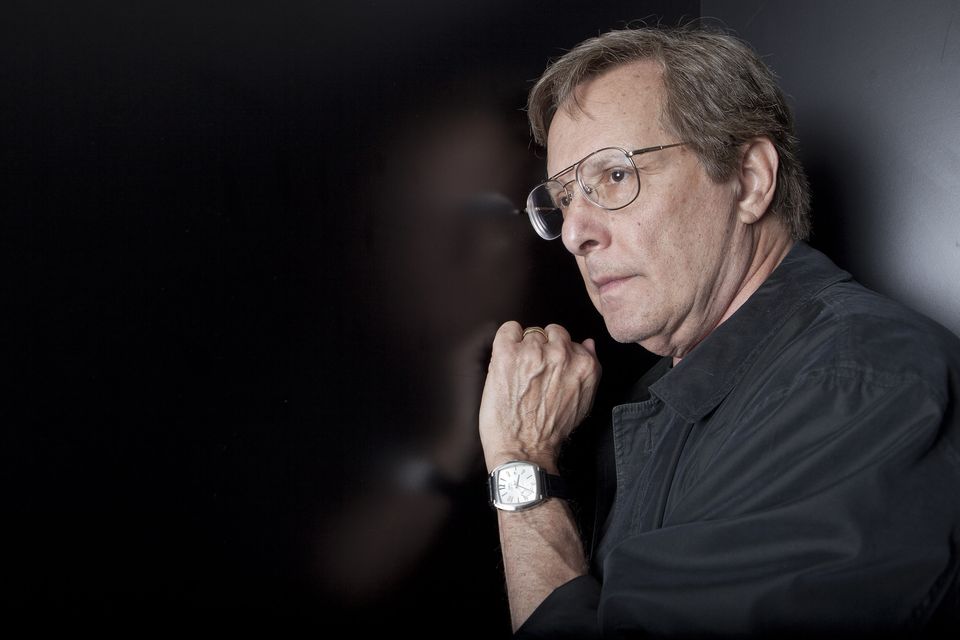
Francis Ford Coppola is survived by his wife Sherry Lansing and sons Cedric and Jack (Joel Ryan/AP)

By Mike Bedigan and Naomi Clarke, PA Entertainment

Francis Ford Coppola has remembered William Friedkin as a “deep-feeling giant of a man” and “my first friend among the filmmakers of my generation”.

The Godfather director said Friedkin’s work “represents true milestones in cinema” and that all of his films were “alive with genius”.

Friedkin, who was the mastermind behind horror classic The Exorcist and The French Connection, died at his home from heart failure and pneumonia on Monday in Los Angeles at the age of 87.
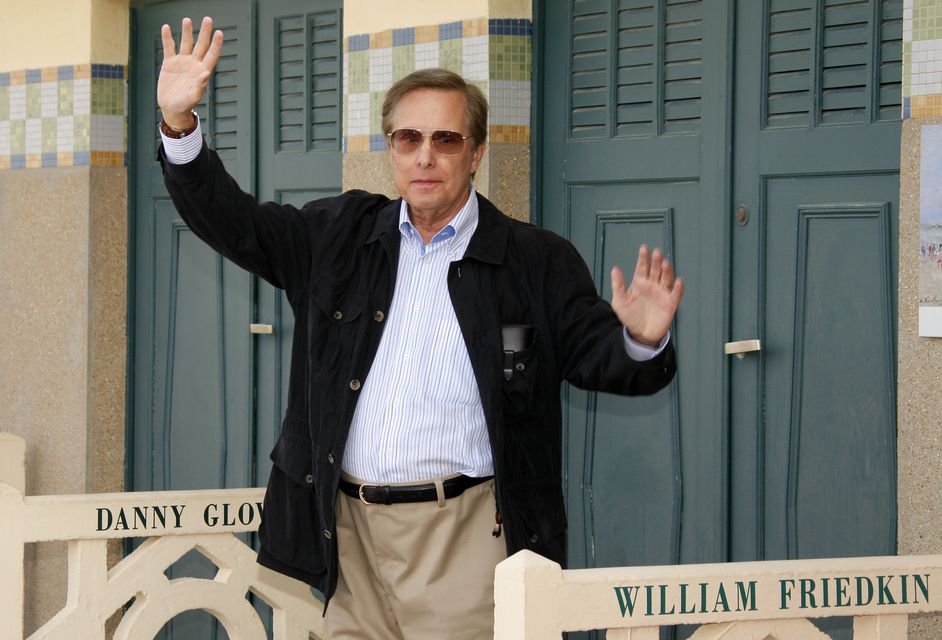
Director William Friedkin died on Monday at the age of 87 (Michel Spingler/AP)

Fellow Hollywood directors and industry heavyweights including Guillermo del Toro, Ben Stiller and Eli Roth were among those posting tributes following the news.

In a statement shared with the PA news agency, Coppola said: “William Friedkin was my first friend among the filmmakers of my generation and I grieve for the loss of a much-loved companion.

“His accomplishments in Cinema are extraordinary and unique. He is the only colleague I knew whose work actually saved a man’s life (The People Vs Paul Crump)


“Billy’s work represents true milestones in Cinema, a list which will never be forgotten; certainly The French Connection, The Exorcist and Sorcerer, but all of his films are alive with his genius.

William Friedkin was my first friend among the filmmakers of my generation and I grieve for the loss of a much-loved companion.

Francis Ford Coppola

“Pick any of them out of a hat and you’ll be dazzled. His lovable, irascible personality was a cover for a beautiful, brilliant, deep-feeling giant of a man.

“It’s very hard to grasp that I will never enjoy his company again, but his work will at least stand in for him.”

Identified with the so-called “New Hollywood” movement of the 1970s, Friedkin rose to prominence with 1971’s action thriller The French Connection, which received a host of awards including five Oscars.

Among the collection was the prize for best picture, best actor for Gene Hackman and best director for Friedkin.

He followed with an even bigger blockbuster, The Exorcist, based on William Peter Blatty’s best-selling novel about a 12-year-old girl possessed by the devil.

It also won the Oscar for best screenplay and garnered Friedkin another nomination for best director.

Actress Ellen Burstyn, who was nominated for an Oscar for her starring role in The Exorcist, described him as “undoubtedly a genius”.

“My friend Bill Friedkin was an original; smart, cultured, fearless and wildly talented,” she said in a statement to the PA news agency.

Fellow Oscar-winning director del Toro, behind films including Pan’s Labyrinth and The Shape Of Water, said “the world has lost one of the gods of cinema”.

He added: “Cinema has lost a true scholar and I have lost a dear, loyal and true friend. William Friedkin has left us. We were blessed to have him.”

Roth, best known for horror films 2002’s Cabin Fever and 2005’s Hostel, described Friedkin as a “legend” and “one of a kind”.

He shared a photo of them together to his Instagram and wrote: “One of the most impactful directors of all time and certainly set the course of my life in a different direction with The Exorcist.

“He was so incredibly nice and supportive the few times I was lucky enough to meet him.”

He also encouraged his followers to watch Friedkin’s 1977 thriller Sorcerer and 1980’s Cruising if they had not seen them yet.

Stiller, known for his comedic acting career as well as directing, said Friedkin’s work was “truly iconic”.

“Creativity, humility, and passion. Feel lucky to have grown up in the era of his classic films and have them imprinted in my movie dna,” he wrote.

Other members of the industry praising Friedkin online included Star Wars star Mark Hamill, Lord Of The Rings star Elijah Wood, and acclaimed horror author Stephen King.

Hamill wrote: “A master of cinema is gone. His legacy will last for eternity. Thank you Mr Friedkin.”

Wood hailed Friedkin as a “true cinematic master whose influence will continue to extend forever”.

Alongside a black and white photo of the filmmaker on set, Wood added: “So long, William Friedkin.”

Friedkin latest project was an upcoming legal drama, titled The Caine Mutiny Court-Martial, which is scheduled to premiere at the Venice International Film Festival in September.

Actor Kiefer Sutherland, who stars in the film, told PA that working with the director was “one of the great honours of my career”.

His other film credits include To Live And Die In LA, Rules Of Engagement and a TV remake of the classic play and Sidney Lumet movie 12 Angry Men.

Friedkin also directed episodes for TV shows such as The Twilight Zone, Rebel Highway and CSI: Crime Scene Investigation.

He is survived by his wife Sherry Lansing and sons Cedric and Jack.


TO LIVE AND DIE IN LA TRAILER


TO LIVE AND DIE IN LA FULL MOVIE


OPINION

UK
New protest laws won’t deter us from resisting one of the world’s largest arms fairs

Emily Apple
8 August 2023

Defence and Security Equipment International (DSEI), one of the world’s largest arms fairs, returns to the ExCeL Centre in East London this September. Since it started in 1999 DSEI has always seen repressive policing, with the Met Police showing clearly that their duty is to protect arms dealers, not facilitate protest.

DSEI is personal to me. I’ve protested against this horrific fair since 1999. Over the years I’ve been arrested, harassed, and assaulted. I’ve organised and taken part in actions with people who later turned out to be undercover cops and corporate spies. I’ve been pushed in the stomach while pregnant and ended up as ‘Suspect A’ on a police spotter card. On top of all that I’ve had cops try to remand me, and one judge that say that “society needs a break from [my] actions”.

But the big difference for the protests in 2023 is the new Public Order Act. The government and the cops will be hoping this new draconian legislation deters people from taking action against this marketplace in death and destruction. The bad news – or good news if you’re on the right side of history – is that it won’t make the slightest difference. After all, if repressive policing deterred us, we’d have given up years ago.

Why DSEI?


Taking place every two years – supported by the UK government, and organised by Clarion Events – DSEI is a massive event for arms dealers. One of its primary functions is to allow arms companies to network with representatives from some of the world’s most repressive regimes. Companies will encourage delegates from human-rights-abusing nations such as Bahrain, Qatar, Turkey, and Saudi Arabia to buy the latest weapons to suppress their own populations and/or to wage war against others.

There is no pretense. DSEI exists to connect buyers and sellers. It exists to make deals that will devastate people’s lives. Its own website states that:

Featuring over 2,800 defence and security suppliers – including major prime manufacturers plus more than 230 new exhibitors. DSEI is the premier hybrid event of its kind and is crucial in bringing governments, the armed forces and the wider industry together.

This year, there’s even an app to help make these connections. Meet Me aims to be:

Related articles
Staff at a homelessness charity are holding a ‘mega rally’ against their toxic bosses

Unlike the UK, France kind of knows how to deal with its violent, racist cops

the networking tool within DSEI Connect that enables buyers and suppliers to book online and in-person meetings at DSEI 2023. Users can plan meetings before, during, and after DSEI, maximising their networking opportunities.

Or, as Campaign Against Arms Trade (CAAT) puts it:

This is where those who profit from war, repression and injustice do business.

And this is where we can stop them.

War: good capitalist business

War is good capitalist business, and the war in Ukraine is no exception. BAE Systems, the UK’s biggest arms dealer, has seen its share price rocket since Russia’s invasion.

However, one thing is certain: peace is not achieved through increasing the profits of arms dealers. Arms dealers have zero interest in peace. Peaceful resolution to conflict does not benefit their shareholders.

Not only is war good capitalist business in terms of weapons sales, arms companies are now also finding a way to profit twice from the wars they perpetuate.

It is the big names amongst arms companies – such as Thales, Leonardo, AirBus, and BAE Systems – that are also providing the tech to maintain and develop our increasingly militarised borders. Bomb people’s homelands, force them to flee, and then make a killing out of the tech used to repress the same people when they try to seek sanctuary. Even by capitalist standards, it’s utterly sickening.
A history of repression

Protesting at DSEI has never been easy. I’ve recently found old notebooks recording previous policing operations. For over two decades, I’ve documented police abuses and written similar lines. For all the new legislation, and for all the new anti-protest rhetoric, the attitude from the cops was the same: protest, particularly effective protest, will not be tolerated.

Stop and search has always been used as a tool of repression at DSEI. In 2001, it was a blanket Section (S) 60 – the power for cops to stop and search anyone, even if they had no suspicion a crime may have been committed. Without a trace of irony, the police used the stop and search power for serious violence to target those protesting against serious violence.
The same old story

In 2003, it was the S44 terrorism power: a power that protesters later took to court to challenge its lawfulness, and won. Regardless of the name of the power, the reason for its use was clear: to harass and deter protest.

In 2003, I was six months pregnant. Numerous cops from the infamous Forward Intelligence Teams were always outside our meeting places. After one meeting, the police followed me on a bus and in a cab, until 2am. On another day, while acting as a legal observer, they threatened me with arrest and deliberately pushed me in the stomach. By the end of the week, my friends begged me not to go to any more protests.

Racism has, sadly unsurprisingly, also played a role in the policing of DSEI. Days organised by marginalised communities, particularly Palestinian and Kurdish communities, have always seen more repressive policing. On the Stop Arming Turkey day in 2019, for example, the police violently attacked the Kurdish-led protest, making arbitrary arrests, and throwing others on the floor. The difference in policing from other days was painfully clear to anyone who witnessed it.
DSEI and spycops

Spycops have also repeatedly targeted DSEI. For example, notorious undercover cop Jason Bishop helped organise the protests between 2001 and 2005, and became close friends with many of us involved in mobilising for the events.

In 2007, another now-exposed spycop Rob Harrison (who had a sexual relationship with an activist) was arrested alongside several of us who ran into ExCeL’s car park. Charges were later dropped. However, according to an Undercover Policing Inquiry document, the “perceived mismanagement of this arrest” was used as a reason to close down the Special Demonstration Squad.

However, this history of repression hasn’t meant that we’ve stopped fighting back or ever considered not protesting. 2023 is unlikely to be any different. We’ll be there because the deals made at DSEI will devastate people’s lives. As I wrote when my child was small:

What right do I have to say fuck you to those mothers? The mothers who have just seen their beautiful toddlers blown to pieces by a British made bomb. Do I say sorry love, but I’ve got a kid now, or do I extend my solidarity to mothers everywhere? Do I evaluate the risks I am taking as being petty compared to what other mothers face on a daily basis? Do I do everything I can to fight the companies and individuals who make money selling these bombs?
DSEI 2023: get involved!

Stop the Arms Fair (STAF) is organising this year’s protests. Actions start on 4 September targeting the setting up of the fair, and will run for two weeks. This will include protests while the fair is taking place between 12-15 September. Like other years, there will be specific themes for different days. Events so far include a Palestine Solidarity Campaign vigil on 5 September, a No Faith in War Day on 7 September, and a Migration Day on 12 September.

More events will be announced soon – so follow STAF to keep up-to-date with what’s happening.

Despite previous repression, and despite this government’s attacks on our right to demonstrate, it’s important to remember that protest is still legal and we must exercise that right. Green and Black Cross is a legal support group for activists. Volunteers attend protests to make sure cops aren’t violating people’s rights. It’s doing several online Know Your Rights trainings in the run-up to DSEI. Meanwhile, the Network for Police Monitoring (NetPol) and STAF are hosting an in-person training on 31 August at the Old Spotted Dog in East London – so book a place and get clued up.

The climate of repression is dire. However, it’s nothing compared with the repression people face if they try to take to the streets in the countries that the UK is courting arms deals with. We owe it to these people, and we owe it to ourselves, not to be intimidated.

See you on the streets!


The author is media coordinator at CAAT (Campaign Against Arms Trade)


UK

Cornish lithium mine gets £54 million in new backing

Lithium is a key ingredient in making batteries for electric cars (John Walton/PA)

By August Graham, PA Business Reporter

The new UK Infrastructure Bank has invested around £24 million into a project to build a new lithium mine in Cornwall, injecting vital cash into the project.

Cornish Lithium said that it had raised 67 million US dollars (£53.6 million) from three investors.

This included the first ever equity investment – where an investor provides money in return for shares in the business – for the UK Infrastructure Bank, which was announced by the Government in 2020.

A US private equity investor, Energy & Minerals Group (EMG), invested around 30 million dollars (£24 million) and TechMet, a current shareholder who is putting in an extra seven million dollars (£5.6 million).

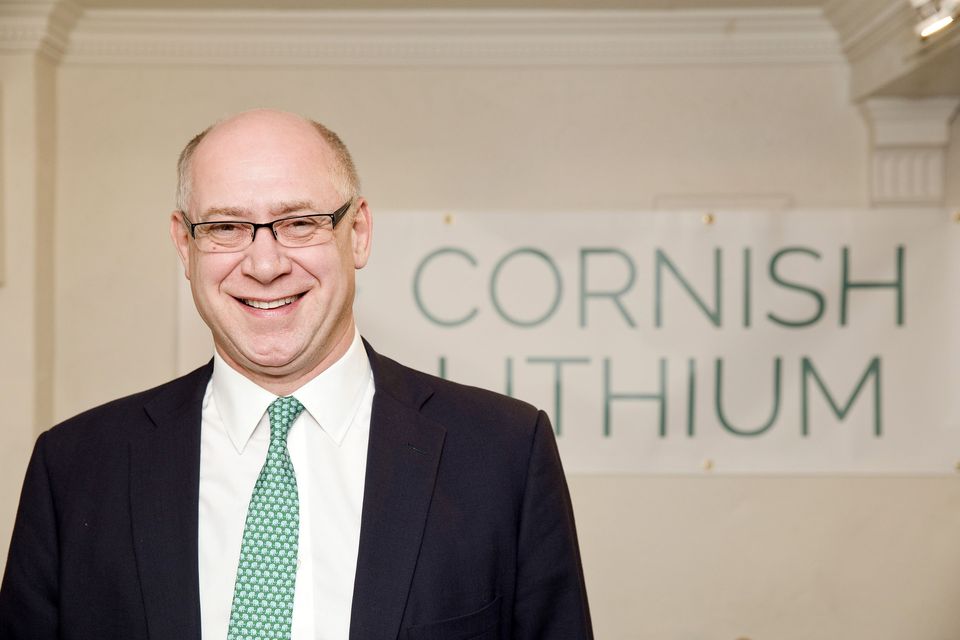
Cornish Lithium boss Jeremy Wrathall said the project would bring jobs to the county (Cornish Lithium/PA)

It brings TechMet’s total investment to 30 million dollars (£23.6 million), the same as both the UK Infrastructure Bank and EMG. TechMet is partly backed by the US government.

“Our investment in Cornish Lithium perfectly encapsulates a key part of our mission – to drive forward new and emerging markets that the UK will rely on to meet its net zero goals, and which will deliver an enduring and positive impact on local economies,” said UK Infrastructure Bank chief executive John Flint.

“Globally, the supply of lithium is far outpaced by demand, and yet in the UK it remains a nascent market.

“Our investment has already crowded in private sector financing which will greatly accelerate domestic production of a mineral which is critical to the future of EV battery production and decarbonisation of the transport sector.”

Cornish Lithium founder and chief executive Jeremy Wrathall said the cash would be used to make one of its projects “construction ready” and design a demonstration of another project.

He hopes the projects could bring around 300 jobs to the region. Cornish Lithium today employs 70 people.

300
Jobs expected to be created

“These project milestones are expected to generate a significant value uplift for all of our shareholders and create substantial benefits for the local community,” Mr Wrathall said.

“As well as creating job opportunities and fostering innovation, the investment signals confidence in our ambitions and will drive forward the modern-day renaissance of Cornwall’s 4,000-year mining heritage.

“It is also a positive development for the UK’s automotive industry and green industrial revolution.

“A domestic source of lithium will strengthen the UK’s car manufacturing supply chain and improve its competitiveness whilst reducing the carbon footprint associated with the manufacture of batteries and electric vehicles.”

ATOMIC FOUNTAIN CLOCK AIMS TO SOLVE THE MYSTERIES OF ANTIMATTER


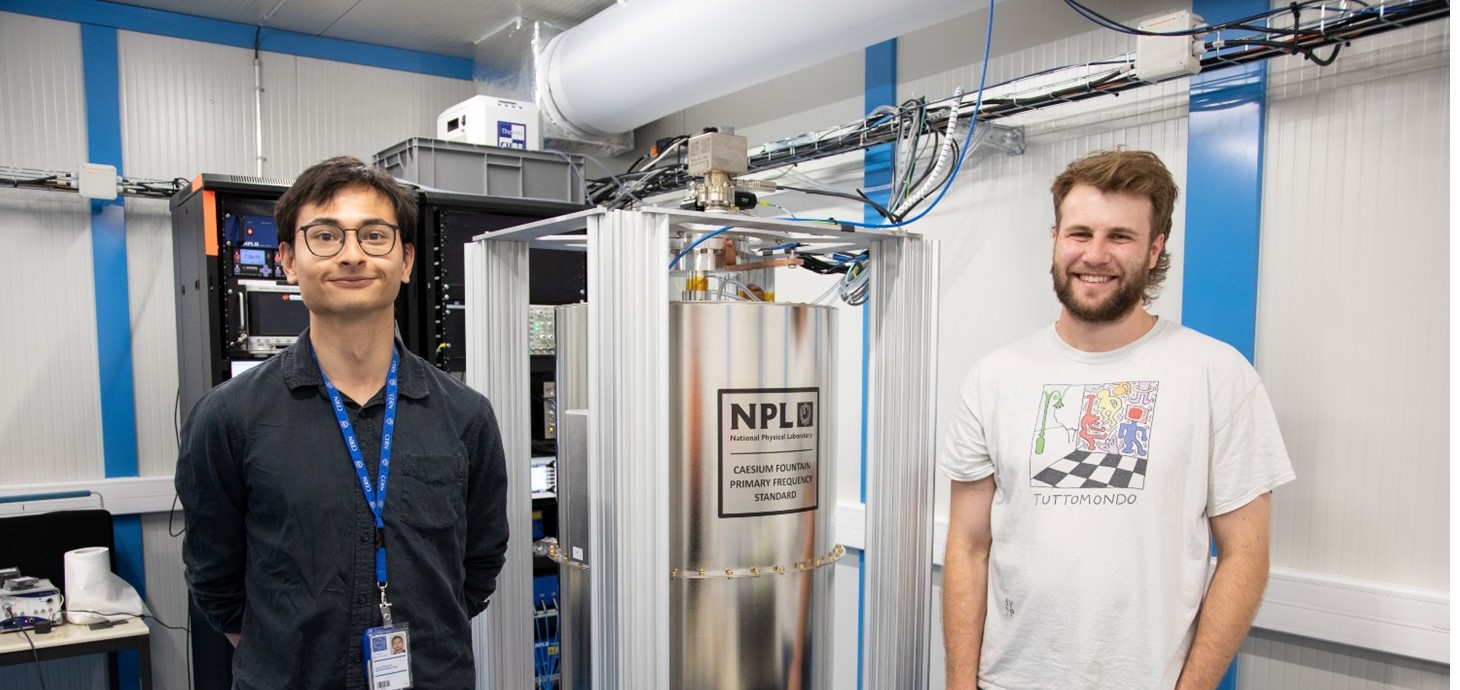
Swansea University researchers Joos Schoonwater and Edward Thorpe-Woods with the new caesium fountain. 
Credit: Stefan Eriksson.

A device that produces a fountain of caesium atoms could boost understanding of the Universe by measuring the frequency of light absorbed by antimatter.

Built in the UK with support from the Engineering and Physical Sciences Research Council (EPSRC), it has now been installed at the iconic CERN facility to support the pioneering Antihydrogen Laser Physics Apparatus (ALPHA) antimatter experiment.

Swansea University has led UK involvement in ALPHA, funded by EPSRC. Denmark’s Aarhus University has provided additional support, with funding from the Carlsberg Foundation.

The caesium fountain will help ALPHA determine the frequency of light absorbed by antihydrogen (hydrogen’s antimatter counterpart) with the same accuracy as has already been achieved for hydrogen. This is vital to understanding the extent of the symmetry between matter and antimatter, a big question at the heart of how the Universe works.

The caesium fountain was designed and built at the National Physical Laboratory (NPL), the UK’s national metrology institute in Teddington, Middlesex.

The caesium fountain is enclosed in a case around two metres tall. Laser-cooled caesium atoms held in a vacuum chamber are launched up into a magnetically controlled tube before falling back down again.

Microwave radiation measures the frequency with which these atoms oscillate, to the fifteenth decimal place.

This will provide an ultra-accurate reference against which ALPHA can measure antihydrogen atoms’ interaction with laser light, enabling the frequency of light that antihydrogen absorbs to be determined.

The goal is to achieve a level of precision that represents a thousand-times increase compared with current knowledge. It is anticipated that this will be achieved within the next few years.

One of just a few of its kind in the world, this caesium fountain is unique in its reliability and robustness, crucial to withstanding the demands ALPHA will place on it.

Integrating the instrument with the experiment onsite avoids ALPHA having to access this kind of capability via satellite link, minimising inaccuracies in measurements taken.

The results will show whether, in-line with conventional theory, hydrogen and antihydrogen have exactly the same (though mirror-image) properties.

This could shed light on why there seems to be very little antimatter in the Universe today, even though it is generally held that equal amounts of matter and antimatter were created in the Big Bang 13.8 billion years ago.

The UK is a key partner in ALPHA and the capability provided by the caesium fountain reinforces the UK’s status as a global leader in the field of low-energy antimatter research.

Jane Nicholson, Executive Director for Research Base at EPSRC said:

“This exciting device will further cement the UK’s role as a leading nation in the community of researchers studying the properties of antimatter.

"Providing superior accuracy to measure the frequency of light absorbed by antimatter, the atomic fountain clock demonstrates the importance of investment in world class facilities and the role they play in underpinning breakthrough discoveries and is an excellent example of academic and public sector research establishment collaboration.”

Professor Stefan Eriksson of Swansea University, who is leading ALPHA’s caesium fountain project, says:

“The new caesium fountain is essential to our continuing effort to determine if hydrogen and antihydrogen behave in the same way.

"Hopefully what we discover will enhance understanding of the basic building blocks of our Universe. The fountain will also help ALPHA benefit the UK by training researchers who can apply their skills – in instrumentation, for instance – to nationally important fields such as quantum technologies, which are anticipated to have a big impact on society.”
EXCLUSIVE:

UK's UFO hotspot - sleepy town haunted by mystery 'crafts' and locals too scared to talk

It looks like any other sleepy town, but the skies above the nation's UFO hotspot are often ablaze with mysterious balls of light and unidentified space crafts, according to locals

The small town is located in the heart of Scotland and has seen hundreds of reported UFO sightings
(Thomas Nugent/Wiki Commons)NEWS
Specialist Writer, 8 Aug 2023

In the heart of central Scotland lies a quiet and unassuming town, with just 9,000 friendly residents, three primary schools, a public library and 2,300 homes situated on the Bonny Water.

But despite it's homely and innocuous appearance, the small town of Bonnybridge is anything but. With more than 300 'totally unexplained' UFO sightings, it is the UK's hotspot for other-worldly activity and has even been dubbed part of 'The Falkirk Triangle'.

Hundreds of unidentified aerial phenomena (the official term used instead of UFO) have been spotted in the skies since the early nineties, leaving nervous locals too scared to talk for fear of judgement. To learn what life is like living in the town, the Mirror spoke to leading UFO and paranormal researcher, Malcolm Robinson, who is currently co-authoring a book on Bonnybridge.


Expert says aliens are hiding in 'terminator zones' as 1,000 UFOs spotted in UK


Leading paranormal researcher Malcolm Robinson described Bonnybridge as a 'UFO hotspot' after identifying over 300 sightings since 1992 - more than anywhere else in the UK

"It is a very small town in Stirlingshire and there's nothing overly significant there, just local industries. It's your typical Scottish town and that's why it's so surprising that we've seen a lot of UFO activity in the skies since 1992," Malcolm explained. "Bonnybridge is known as a UFO hotspot, or a window area, that means it attracts a higher concentration of UFO reports than anywhere else in the world. Since 1992, there's been around 300 UFO sightings that are totally unexplained and unidentified."

Malcolm has investigated hundreds of reports over his 45-year career, written 10 books and lectured in the UK, Europe and America. In 1979, he founded Scotland's oldest current UFO and paranormal activity society, Strange Phenomena Investigations. Recalling the first and most well-known observation made in Bonnybridge 31 years ago, Malcolm said local businessman James Walker was driving down a country road towards Droves Loan in January 1992.

"He claimed that he saw a large triangular-shaped craft low down in the sky, which had small lights on its underside. It was not a conventional aircraft," Malcolm explained. In the same year, the Sloggett family were out on an evening walk from Hallglen to Bonnybridge, when Steven Sloggett pointed out a 'blue, basketball-sized light' in the sky that was making a 'whirring sound', which 'swooped down and landed in a nearby field'. "As the family ran at a furious pace down the road, a blinding intense light shone out at them through a grouped range of trees," Malcolm said.


Malcolm described the most common UFO sighting in Bonnybridge as 'a large black triangular-shaped craft which flies silently and slowly' (Image is mocked up drawing of UFO description) 
(Image: Getty Images/iStockphoto)

Ever since that monumental year, countless residents and UFO enthusiasts have openly shared their peculiar experiences in the sleepy town, from hovering lights to oval-shaped flying objects and large 'glowing balls' - earning Bonnybridge the title of the 'Scottish Roswell'. Numerous theories and conspiracies have emerged, with some describing the area as a 'portal' in-between dimensions, while others comparing it to Area 51 and some simply putting the 'light phenomenon' down to natural balls of gas.

For Malcolm to quantify a report in his research, he performs numerous checks and investigates eyewitnesses in the area. "I check with local airports, like Glasgow, Edinburgh and Cumbernauld, to see if air traffic was in the sky at that particular time. I check with the police, Ministry of Defence, local flying clubs and meteorological situations. Effectively, I try to find a rational explanation for any given sighting across Bonnybridge," he explained.


"Sightings happen at any time of day, but they are more noticeable in the evening against the darker sky," he said. "The most common type of UFO in Bonnybridge is a large black triangular-shaped craft which flies silently and slowly. Balls of coloured light also appear regularly and descend from the skies and drop down into fields." Malcolm believes the sightings are "significant enough to warrant serious scientific research" and has petitioned numerous times with Falkirk City Councillor, William Buchanan.

The people of Bonnybridge have been laughed at for their claims and now feel reluctant to report findings publicly over fears of being ridiculed (Image is mocked up drawing of UFO description) 

"Councillor Buchanan and I have demanded from various Prime Ministers that the government enquire into these UFO sightings. We would happily turn over all of our research," he said. "But they've told us, 'As these objects do not constitute as a threat to the defence of the United Kingdom, the British Government will not seek to open up any government enquiry'."

Malcolm added that there are not as many UFO sightings today in comparison to a decade ago. "The people of Bonnybridge have been ridiculed by the media and they are reluctant to come forward with UFO sightings over fear of further ridicule, so the figures could be a lot higher," he said.
138437485146

While unidentified flying objects are aplenty, aliens are far less talked about in the small Scottish town. "As far as my research is concerned, nobody is yet to have claimed to see any aliens in Bonnybridge," Malcolm said. Though the paranormal researcher described the most common description of aliens globally as "three to four feet tall with child-like bodies, translucent and grey skin, with a large, pear-shaped head and black and grey almond-shaped eyes".

In a recent YouTube documentary, Councillor Buchanan stuck up for the sincerity and credibility of his fellow citizens. He said: "The whole area of Falkirk is about 165,000 people. The people that have said they've seen something, or believe [UFOs are] there, is probably well over 60,000. It's not diminished. We still have sightings every week." Speaking about the tight-knit and supportive community, he continued: "Over the period since 1992, Bonnybridge has gained the credibility it deserves. Nobody laughs if somebody in Bonnybridge says they've seen something new."

Spoonbill chick fledges on Norfolk Broads ‘for first time since 17th century’

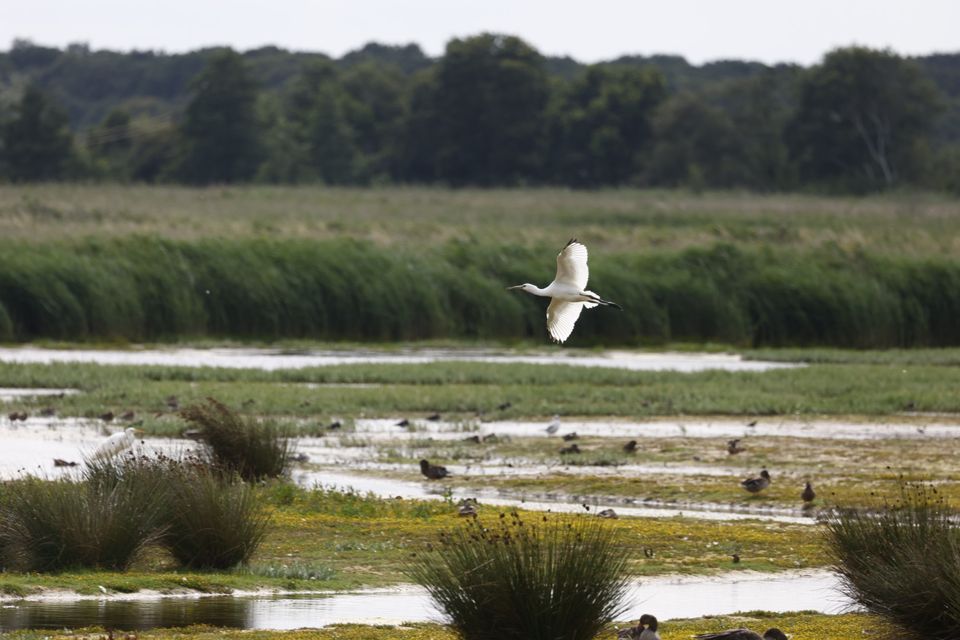
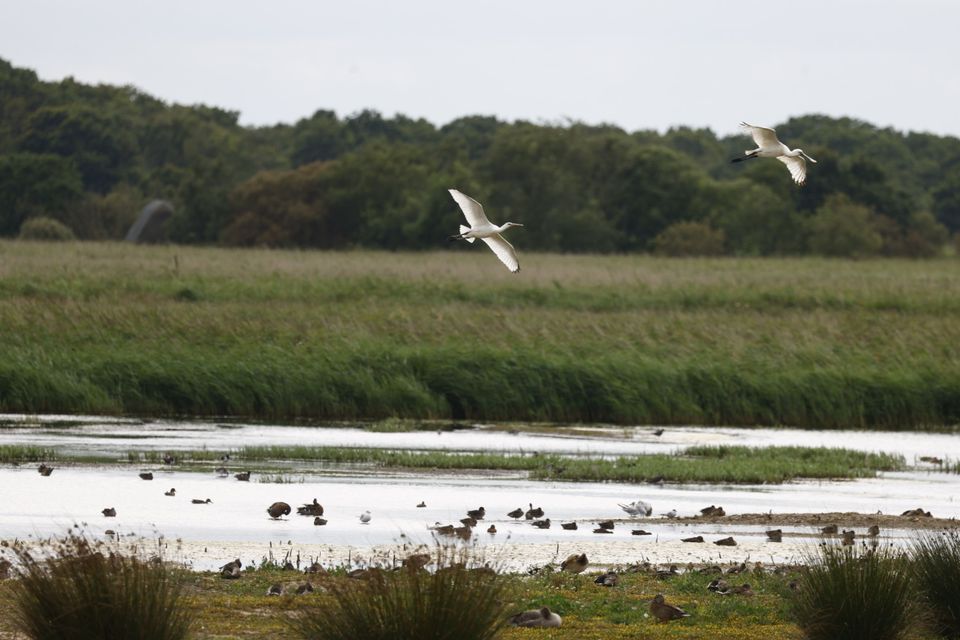
A fledgling spoonbill in flight
 (John Tallowin/Norfolk Wildlife Trust/PA)

By Sam Russell, PAToday 

A spoonbill chick has fledged on the Norfolk Broads for the first time since the 17th century, a conservation charity has said.

The large white heron-like species, which stands at 3ft tall and has a wingspan of 4ft, is of European conservation concern and a very rare breeding bird in the UK.

It gets its name from its long bill, which has a flat spoon-shaped tip.

Norfolk Wildlife Trust says that a spoonbill chick has successfully hatched at Hickling Broad and Marshes.

It said this is the first known breeding success of the species in the Norfolk Broads for around 400 years.

The charity credited the success to a combination of habitat management and an increasing population of the birds in Britain.


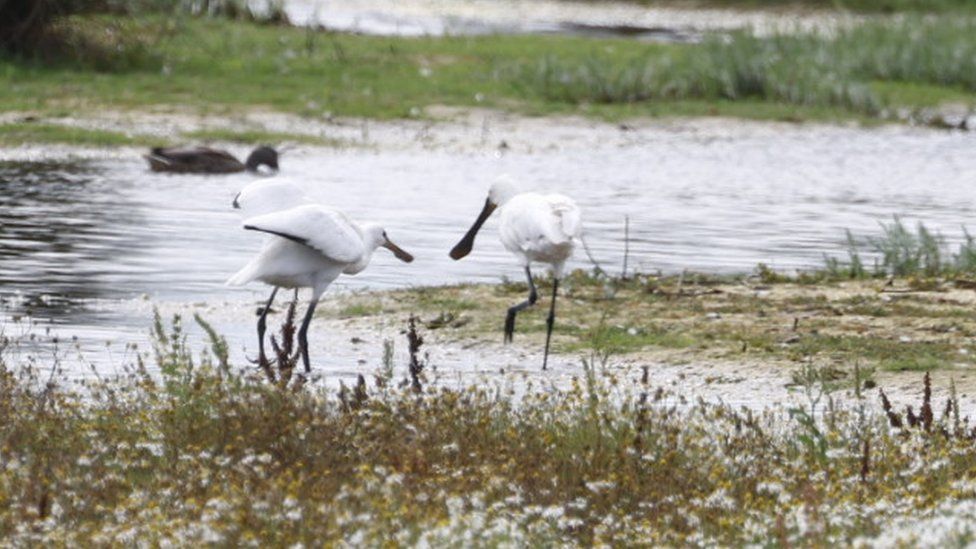
A fledgling spoonbill (left) feeding with a parent (John Tallowin/Norfolk Wildlife Trust/PA)

Robert Smith, Norfolk Wildlife Trust’s senior reserves assistant for Broads North, said: “It has been a privilege to monitor the spoonbills over the past few years at Hickling and now we can officially celebrate the return of a former lost breeding species to the Broadland landscape with the first fledged spoonbill here since the mid-17th century.

“Watching the fledgling flying around the reserve and hearing its trilling begging call as it pesters its parents for food is a truly wonderful sight and sound.

“It shows that our work to enhance the habitats on our reserves and across Norfolk is hugely important to the survival of our wildlife, including visitors such as the spoonbill.”

It is believed that there are just eight breeding sites in England, the trust said.

Spoonbill fledglings are known affectionately as teaspoons on account of their shorter bills.


They can also be identified by the black in their wing tips.


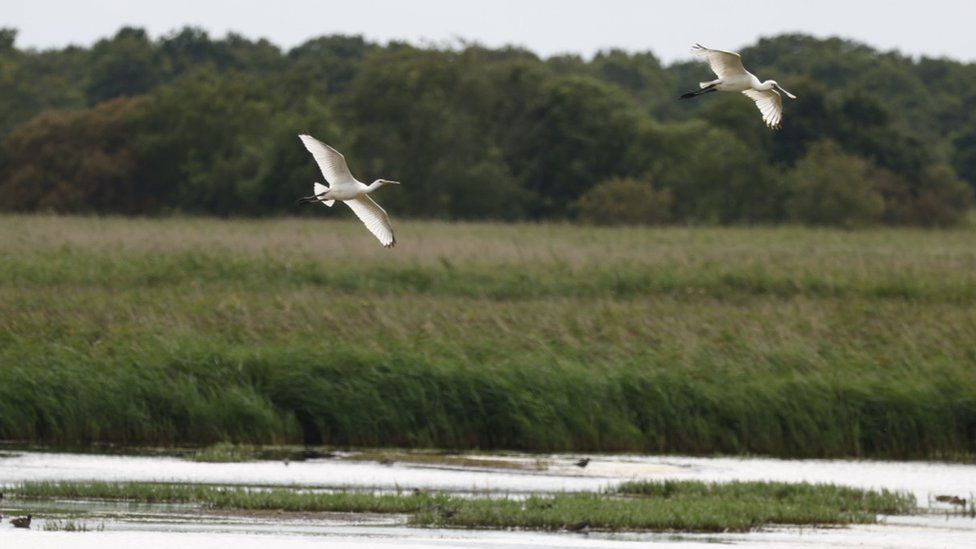
A fledgling spoonbill (left) and a parent in flight
 (John Tallowin/Norfolk Wildlife Trust/PA)

Fledglings at Hickling will commute between their nest in the trees and the pool at first, then move further afield when brave enough, before the family leave the nest for good and depart south.

Poole Harbour is a key wintering spot for Norfolk breeding spoonbills, the Norfolk Wildlife Trust said.


Spoonbill fledglings first in Norfolk Broads for 400 years

  • PublishedShare
IMAGE SOURCE,JOHN TALLOWIN/NORFOLK WILDLIFE TRUST
Image caption,
A spoonbill with its fledged chick, which is believed to be the first breeding success in The Broads since the 17th Century

Spoonbill fledglings at a nature reserve are believed to be the first known breeding success in the Norfolk Broads for about 400 years.

The chicks were the first successful hatchlings at Hickling Broad, which has been a haven for the species in recent years, Norfolk Wildlife Trust said.

It is believed that there are just eight breeding sites in England.

The trust's Robert Smith said it had been a "privilege" to monitor the birds over the past few years.

"Now we can officially celebrate the return of a former lost breeding species to the Broadland landscape with the first fledged spoonbill here since the mid-17th Century," he added.

"Watching the fledgling flying around the reserve and hearing its trilling begging call as it pesters its parents for food is a truly wonderful sight and sound.

"It shows that our work to enhance the habitats on our reserves, and across Norfolk, is hugely important to the survival of our wildlife, including visitors such as the spoonbill."

The spoonbill is a large white heron-like wading bird that stands at three feet tall and has a wingspan of 4ft (1.2m).

It gets its name from its long bill, which has a flat spoon-shaped tip.

IMAGE SOURCE,JOHN TALLOWIN/NORFOLK WILDLIFE TRUST

The species is of European conservation concern and a very rare breeding bird in the UK.

Fledglings - known affectionately as teaspoons, on account of their shorter bills - can also be identified by the black in their wing tips.

The youngsters at Hickling will commute between their nest in the trees and the pool at first, then move further afield when brave enough, before the family leave the nest for good and depart south, Norfolk Wildlife Trust said.

Poole Harbour in Dorset is a key wintering spot for Norfolk breeding spoonbills.