Tuesday, August 08, 2023

B.C. port workers ratify deal, ends months-long labour dispute

British Columbia's port workers have voted almost 75 per cent in favour of accepting a contract offer, ending weeks of turbulent job action that stopped billions of dollars' worth of goods from being shipped.

In a statement on the International Longshore and Warehouse Union Canada website, president Rob Ashton says the results of the latest ratification vote came in 74.66 per cent in favour of the agreement.

The results come after two days of voting this week by full union membership, following the ILWU and the BC Maritime Employers Association jointly announcing a tentative agreement last Sunday night.

The approval of the contract, which covers about 7,400 workers, comes after the union rejected a mediated settlement twice in July — once through the group's leadership caucus, another by full membership.

The last full membership vote rejecting a deal on July 28 led to federal Labour Minister Seamus O'Regan directing the Canada Industrial Relations Board to assess if a negotiated deal was still possible, and if not, the board was directed to impose a new deal or binding arbitration.

The union and the employers said in their joint statement last week that the industrial relations board helped both parties reach the latest agreement that has now been ratified by both sides.

This report by The Canadian Press was first published Aug. 4, 2023.

Even Zoom is calling employees back to the office as remote work era ends

Zoom

Zoom Video Communications Inc., a one-time darling of the work-from-home era, is calling workers back to the office. 

Employees who live near a Zoom location must be on-site two days a week, a company spokesperson said. A “hybrid approach” is most effective for Zoom, she said, because it will be in “a better position to use our own technologies, continue to innovate and support our global customers.”

The company’s eponymous video-conferencing software was a breakout hit of the pandemic as entire industries were forced to communicate virtually. Since then, companies as varied as Amazon.com Inc., Chipotle Mexican Grill Inc. and BlackRock Inc. have increased the amount of time employees must spend on site.

Still, many offices remain lightly used, and there are signs that some roles may remain remote. Offices in the Northeast were only at peak capacity 24% of the time in the first half of the year, according to data from Basking.io, a workplace-occupancy analytics company. Listings for remote jobs have also trended up in many cities. 

Zoom itself has struggled to keep growing in a post-pandemic world. While its share price quintupled from March to October 2020, the stock has since retreated to pre-pandemic levels. In an effort to resuscitate growth, Zoom is developing a wider suite of software tools for big businesses, including in-office collaboration products. It has invested in startup Anthropic to include artificial intelligence in its software for managing and automating customer service requests. 

Insider earlier reported Zoom’s new office policy.

While many chief executives want employees back five days a week, “I think the hybrid work is going to stay,” Chief Executive Officer Eric Yuan said during a May earnings call. “I think hybrid work does bring another kind of huge opportunity to us.”

With assistance from Matthew Boyle and Alex Tanzi.

NO MENTION OF THAMES WATER

Canada’s Omers pulls its venture capital arm from Europe

Omers Ventures, the venture capital arm of the Canadian pension plan, is pulling out of Europe, marking a prominent global departure from the continent as EU technology investing dwindles.

The venture unit had set up a US$332 million fund in 2019 to focus on European startups. A spokesperson for the Ontario Municipal Employees Retirement System confirmed the plans to exit the region, noting that its team had decided to focus on North America.

“Decisions to say goodbye to valued colleagues and friends are difficult, but we prioritize all our investment decisions to deliver on our pension promise, and doing what we believe to be in the best interest of our plan members,” the spokesperson wrote in an email.

The pension plan said its commitment to early-stage venture investing “remains strong” and it has invested $1.86 billion into young companies.

Launched in 2011, Omers Ventures has backed several notable Canadian tech companies, including Shopify Inc. and Hootsuite Inc. Bloomberg News reported in 2019 that the fund had invested €76 million into European companies. Omers had hired European investors from Balderton Capital and Uber Technologies Inc.


In 2019, European tech investing was soaring, thanks in part to an influx of funds from the U.S., Canada and Asia. It has since slowed dramatically. Venture financing into startups during the second quarter fell about 60 per cent in Europe to €12.3 billion from a year earlier, according to data from PitchBook. 


Six water companies to face legal action over alleged underreporting of pollution incidents


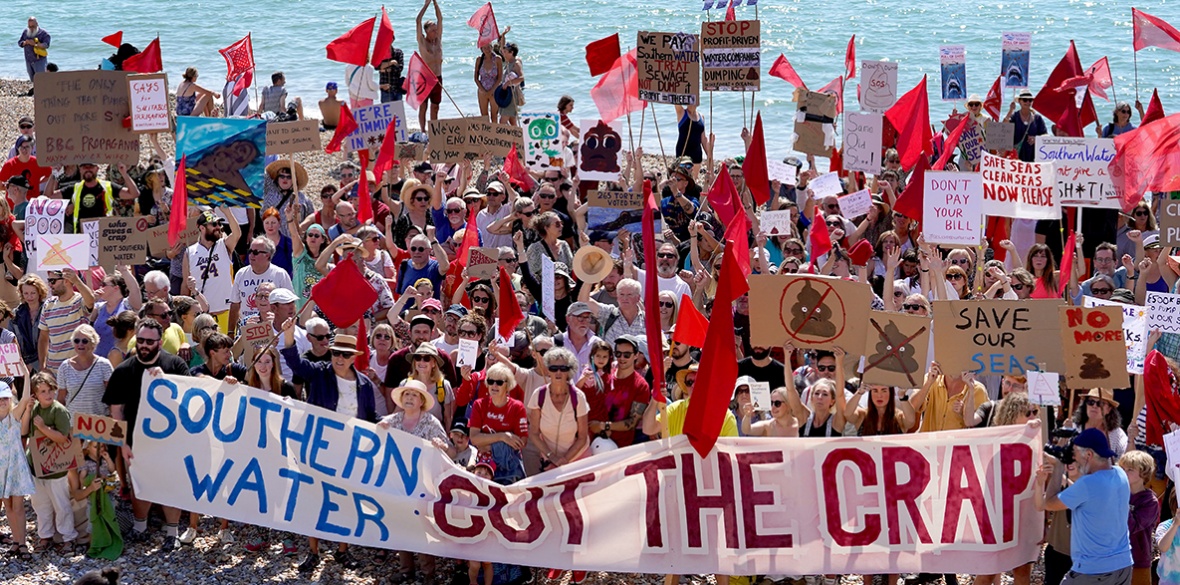
Members of the public and campaigners from Hastings and St Leonards Clean Water Action, protest against raw sewage release incidents on the beach in St Leonards, Sussex, August 26, 2022

SIX private water companies across England are facing landmark legal action over allegations of under-reporting pollution incidents and overcharging customers.

Severn Trent Water, Thames Water, United Utilities, Anglian Water, Yorkshire Water and Northumbrian Water could end up forking out more than £800 million in compensation to over 20 million customers if the cases are successful.

Environmental and water consultant Professor Carolyn Roberts, who is being represented by Leigh Day Solicitors, claimed that the firms have broken competition laws by misleading the Environment Agency and regulator Ofwat.

She alleges they have been under-reporting the number of sewage discharges, resulting in customers being “unfairly overcharged” for wastewater services, and that had sewage discharge reporting been accurate it would have lowered customer bills.

Prof Roberts said: “Like many others across the country, I have viewed with horror the escalating number of stories in the media regarding the volume of sewage discharged into our waterways and on to our beaches.

“The population has a right to expect that our rivers, lakes and seas will generally be clean, except under exceptional circumstances.

“It appears that because of the serial and serious under-reporting at the heart of these claims, water companies have avoided being penalised — I believe this has resulted in consumers being unfairly overcharged for sewage services.”

Anyone who has paid a water bill to one or more of these companies from April 2020 — or April 2017 for Severn Trent Water customers — may be entitled to compensation if the claims succeed.

Leigh Day, which said the move is the first environmental collective action case of its kind, is seeking money for customers on an opt-out basis, meaning people only have to come forward to claim compensation if the case is successful.

It is bringing Severn Trent Water to a competition appeal tribunal and will issue five further claims against the other water companies over the coming months.

Leigh Day partner Zoe Mernick-Levene hailed the “hugely significant” claims.

“Not only is compensation being sought for millions of customers who have and continue to pay higher water bills, but we hope that it will also send a message to water companies that they cannot unlawfully pollute waterways and mislead their regulators without consequence.”

THAMES WATER MAJOR INVESTOR IS OMERS
ONTARIO MUNICIPAL EMPLOYEES RETIREMENT SYSTEM

Glencore holds back US$2B for Teck Resources as payouts drop

A monkey could be the CEO of Glencore and the company would make money: Activist investor 

Glencore Plc underlined its continued interest in a deal with Teck Resources Ltd. by holding back US$2 billion for a potential purchase of the Canadian miner’s coal business — cash it would otherwise have returned to shareholders.

Glencore disclosed the new deals war chest in its first-half results Tuesday, as it joined rival miners in reporting a steep drop in profits after a retreat in commodity prices combined with a return to more normal trading conditions, following 2022’s wild swings.

The Swiss company earlier this year made an unsolicited offer to buy all of Teck and then split their combined metals and coal businesses, which was repeatedly rejected. In June, it proposed buying Teck’s steelmaking coal business for about $8 billion as an alternative to its full takeover bid — still with the intention of spinning off the merged coal operations within a year or two.

The takeover fight with Teck has marked the first time that Glencore — one of the world’s biggest coal producers — has explicitly opened the door to exiting the business in the short term. It’s also representative of a wider return to merger and acquisition activity across the industry, as mega miners seek to expand in the metals needed for the shift to clean energy.

Glencore also has been busy with smaller deals beyond Teck, announcing deals to add aluminum and copper assets as well as secure lithium offtake for its trading business.


But Glencore made clear on Tuesday that it’s still very interested in the deal with Teck, in which it is seeking to combine the Canadian company’s steelmaking coal business with its own thermal coal mines.

“In the calculation of ‘top-up’ shareholder returns for the current period, we positioned for an amount of $2.0 billion towards such potential transaction, as a reasonable balance between rewarding shareholders today, and ensuring that the company is appropriately capitalized,” Chief Executive Officer Gary Nagle said in the report.

COAL QUESTIONS

Nagle repeated previous comments that Glencore isn’t considering an exit from coal separately from the Teck bid. The spinoff plan has raised questions about Glencore’s future producing the most-polluting fuel — the company had until now said it would keep running its mines until they are depleted by 2050. 

“We have a terrific coal business, a world-class business steam coal business, and spinning it out by itself, our shareholders at this stage don’t want us to do that,” Nagle said. “They do see, that if we combine it with Teck’s met coal business we have an even bigger and even better coal business. They see that as something that is value accretive to them and are supportive of a spinout.”

Glencore also laid out some new details about what its remaining metals business would look like if the Teck coal plan succeeds, including that its net debt cap would drop from the current $10 billion to $5 billion. The debt cap is a crucial determiner of its dividend payments.

Glencore’s pursuit of Teck is coming as the mining industry battles with falling prices, higher and inflation and the looming threat of problems with China’s crucial property sector.

Glencore reported first-half core earnings of $9.4 billion, half the record number it posted a year ago, though still one of its best-ever performances, and said it would top up its dividend by $1 billion and buy back a further $1.2 billion of its own stock. A year earlier, it announced combined top-up dividends and buybacks of $4.5 billion.

After years of fixing balance sheets and showering returns to shareholders, the biggest miners have returned to growth in the past year. BHP Group and Rio Tinto Group have recently completed their biggest deals in a decade, to gain more exposure to copper.

--With assistance from Mark Burton.

Canada 'Millet King' plans to use the grain to make his own cereal, beer

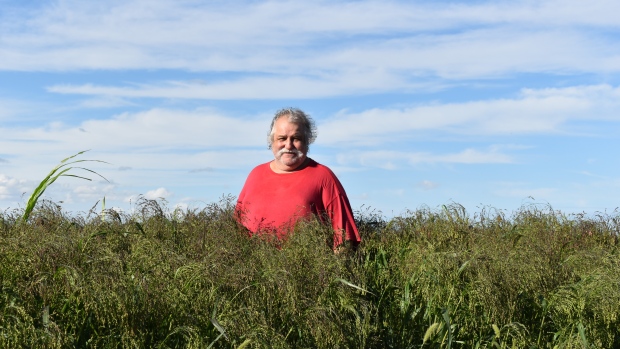
Reynald Gauthier

It’s known as a healthy and nutritious super-grain in many parts of the world, but in Canada, millets are often thought of as animal feed or bird seed.

Reynald Gauthier, aka “The Millet King,” a Manitoba farmer who has been growing millets for over three decades, is hoping this will be the breakthrough year for the grain in Canada, even as 2023 is being observed as the International Year of Millets by the United Nations.

Gauthier is gearing up to launch an all-Canadian breakfast cereal called Millet King Krunchies, made from millets, and coated with maple syrup from Quebec. He has developed and tested the product in partnership with the Manitoba Food Development Centre in Portage La Prairie. He plans to process and package the cereal in Toronto, and sell it through his website, milletking.com.  

Millets are small-seeded grasses rich in protein, fibre and essential minerals. They are warm weather crops with low fertilizer and irrigation needs. Over 30 million tonnes of millets are produced annually worldwide, with Canada currently accounting for a negligible amount of this production, where it is grown mostly in the Prairies and in Ontario.

When Gauthier bought his first farm in St. Claude, Man., in 1991, millets were a crop of convenience, not choice.

“With the high interest rates of the 1980s, people were still hurting,” he recalled. “I didn’t have much money to work with, so I seeded millets on my farm because it was the cheapest crop to grow.”

After selling millets from his farm as bird food for the first 10 years, he decided to switch to selling millet seeds after prices crashed to about six cents per pound after 2000. He set up Millet King Seeds in 2004, and six years later it became Millet King Foods, as Gauthier’s ambitions for the grain grew.

“When I sold it for bird food, I made nothing. It was too cheap and that’s why I decided to sell to the farmers towards planting seed because then it’s worth five times more. And then going into a food product, it’s worth about 20 times the bird food price,” Gauthier explained. Millet seed now fetches about $0.65 per pound.

Gauthier’s farmland has tripled from a little over 200 acres at the beginning, and his net harvest amounts to 1,600 pounds per acre in a good year. Even as he plans to add more acreage, he has stayed loyal to his first crop rather than switching to other major Canadian crops like wheat or canola.

“Oh, I just love the millet crop,” Gauthier said. He added, “You seed it later in the year and you can work your land and you’re killing any diseases that’s in it. My ground is so rich by seeding millets over the years, it’s just incredible. My ground is very healthy right now.”

The farmer has even bigger plans for his millets, including setting up a brewery to make his millet-based beer that has previously won a prize at the Great Manitoba Food Fight, just like his cereal. Gauthier said,

“I’m selling millet flour online. I want to start building my brewery. I’ve got six products right now and I’m hoping that five years from now I’ll have a hundred products being sold online. I’m looking at having our own little stores, and also opening up donut shops where the donuts will be made with millet flour.”

India, which produces over 12 million tonnes annually, making up over 40 per cent of global output, is by far the world’s biggest millet grower, and was the driving force behind designating this year as the International Year of Millets.

Several countries in Africa, and China, are also big cultivators. According to Agriculture and Agri-Food Canada, researchers here are working on projects locally and with partners in India, to study various varieties of millets and their uses, which include human consumption, carbon capture and biofuels.

CANADA/QUEBEC 1%

POWER CORP.

Billionaire Desmarais family quietly reshapes a financial empire

The Desmarais clan is back in dealmaking mode. Only this time, it’s not simply to expand their empire — it’s to fix it.

Inside a narrow gray stone building just off Montreal’s main business district, the family and their key lieutenants are reshaping Power Corp. of Canada, the publicly traded holding company that’s the primary source of a fortune worth at least US$4.5 billion.

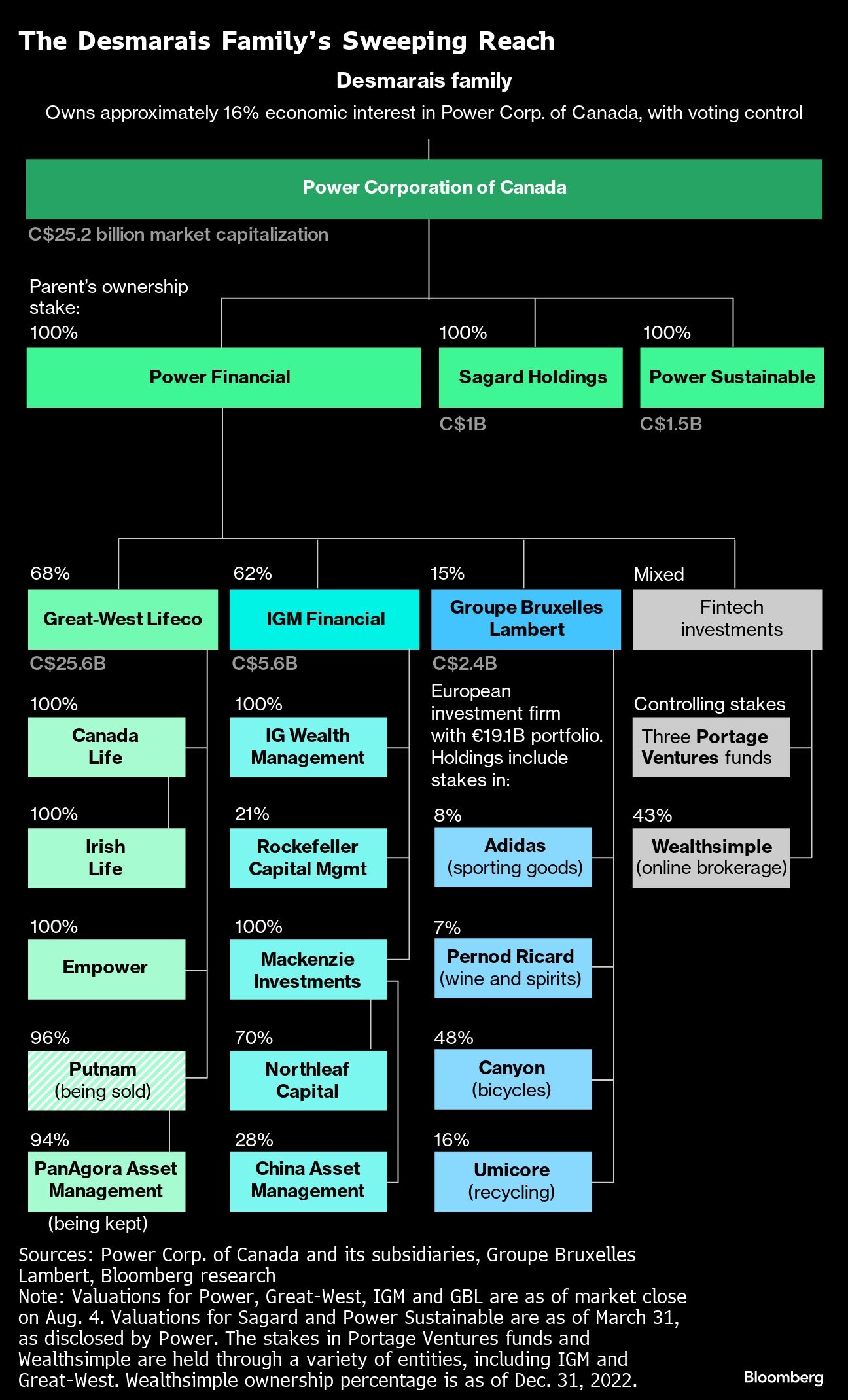
They’re jettisoning Putnam Investments — selling the Boston-based fund manager at a huge loss in a deal that stands to make them one of the largest outside shareholders in Franklin Templeton’s parent company. They’ve lured cash from Abu Dhabi’s sovereign wealth fund to juice growth in their private equity group, and bought a big stake in a New York wealth manager that sprung from the Rockefellers’ family office. And that’s just in the past five months.

It’s all part of the most ambitious remaking of Power since the death of the patriarch, Paul Desmarais Sr., almost a decade ago. The sprawling entity, with businesses from mutual funds in China to life insurance in Ireland to 401(k) plans in the U.S., has seen its growth slow and its returns lag as it was surpassed by Brookfield Corp. as the standard-bearer in Canadian asset management. Two generations of Desmaraises, alongside an executive team led by Chief Executive Officer Jeffrey Orr, are now trying to modernize the firm, one transaction at a time.

The aim is to gain greater exposure to higher-growth areas of financial services, including managing money for Americans from the ultra-rich to the middle class, while cutting loose some legacy assets accumulated in past deals. “We were getting the message from many people that they didn’t understand what we were doing,” Orr said in an interview. “We would go out and talk to investors previously and they would say, ‘You’re too complicated.’”


An appetite for M&A has been a part of the Desmarais formula ever since Paul Sr. began his business career by taking over, and turning around, a nearly-bankrupt bus line. In the 1970s, he became one of Canada’s leading men of finance after acquiring control of Power and using it to accumulate wealth, influence, and ownership stakes in some of the country’s most coveted asset management and insurance firms.

He courted powerful friends and politicians from Beijing to Paris to Ottawa and splashed the Desmarais name on university buildings, foundations and one of Canada’s finest art galleries. When Paul Sr. died, his funeral was attended by former French President Nicolas Sarkozy and four Canadian prime ministers.

His sons, Paul Desmarais Jr. and Andre Desmarais, ran the company as co-CEOs for almost 25 years and pulled off a series of major deals of their own, while keeping a close grip on a control of the firm — via a special class of shares — and cultivating a royal mystique, rarely speaking in public.
Embedded Image

Orr, 64, has been in the family’s orbit for decades and took over the CEO role in February 2020, becoming the first non-Desmarais in 50 years to lead Power. All signs pointed to this being an interregnum before the inevitable handover to another line of Desmarais men. Orr himself, speaking in a corporate video in 2019 said: “Everything I see is that we’re going to do the same thing into the third generation.” The career development of Paul Desmarais III and Olivier Desmarais, cousins who are now 41 years old, “is not being left to chance.”

Investors and analysts can’t help but speculate whether, or when, a Desmarais will occupy the top job again. CEO succession is “a decision for the future” because Orr doesn’t plan on retiring soon, according to General Counsel Stephane Lemay. Paul III currently runs a fast-growing fintech unit of the company, while Olivier helms a sustainability venture. However, it would be a mistake to assume that a Desmarais will be the successor, Lemay told Bloomberg.

“The Desmarais family’s current thinking is that the next generation of Desmarais would play active leadership and stewardship roles at the Power Corp. and main subsidiaries board of directors level, and not at the management level,” he said. Members of the Desmarais family declined to speak to Bloomberg for this story.

For now, it’s Orr’s job to prepare the company, which has about $2 trillion in assets under management and administration through its many divisions, for whoever comes next.

As a Bank of Montreal executive, Orr helped the Desmarais family reel in a number of acquisition targets before they persuaded him, in 2001, to join the firm. Ever since, he’s had a guiding hand in the company’s two most important businesses: IGM Financial Inc., one of Canada’s largest sellers of mutual funds and the 28 per cent owner of China Asset Management Co.; and Great-West Lifeco Inc., an insurance and benefits firm that owns Empower, the second-biggest provider of employee retirement plans in the U.S. after Fidelity Investments.

Both companies have faltered as the rise of passive investing hurt old-line asset managers offering traditional stock and bond portfolios at relatively high prices. At IGM, earnings grew an average of just 2 per cent a year over the past decade. Putnam, acquired for $3 billion in 2007 as a turnaround play after a mutual-fund scandal, went on to lose more assets. In the May deal with Franklin Templeton, Power agreed to offload most of the company for an initial $925 million, with the possibility of further payments based on results.

“We struggled financially and economically to make a profit at it,” Orr said after the deal was announced. “Putnam had a great performance, but when the market is not purchasing active funds, it did not translate into positive flows.”


Other deals have been designed to boost the firm’s exposure to trendier areas of asset management, including private equity and private credit, which have exploded in the past 15 years to total almost $10 trillion, according to financial-data provider Preqin. It’s one reason Power bought a 70 per cent stake in Toronto-based Northleaf Capital, a manager of private funds, and began offering those products to customers of IGM and Great-West.

The quest for new growth avenues guided Power to take a 20.5 per cent interest in Rockefeller Capital Management, the wealth and investment advisory firm with $105 billion in client assets that arose from the Rockefellers’ family office. “We wanted to have a presence in the wealth management business and in the high-net-worth business in a bigger way,” Orr said.

The deal, which was done through IGM, underscored that, whatever their recent challenges, the Desmarais clan still travels in the gilded of circles in finance. Andre Desmarais had a close relationship with the late David Rockefeller Sr., who acted as a mentor, according to Rockefeller Capital CEO Greg Fleming.

Rockefeller, in turn, hopes to exploit its Canadian partner’s extensive overseas connections. “Over time, we will look to build outside the U.S., and Power and the Desmaraises have a lot of history and some powerful footprints and contacts in other parts of the world, including Europe and China,” said Fleming, the former president of Morgan Stanley’s wealth-management unit.

While their global business connections endure, the Desmarais’ quiet political influence has waned, according to a number of people close to the situation.

In Paul Desmarais Sr.’s day, the family and the company used their control of media outlets – particularly La Presse, an influential Montreal newspaper — to fight surging separatist politicians in the French-speaking province.

Major policy decisions around Canada’s financial sector tended to go their way. In the 1990s and early 2000s, Canada’s largest banks made a push for mergers and liberalized rules that would make it easier for them to sell insurance through their branches. Their ambitions were mostly foiled in Ottawa, to the benefit of insurance companies such as Great-West. A freeze on mergers among Canada’s largest banks and life insurers has remained de facto government policy for more than 20 years.

But politics and media are radically different now. Quebec’s independence movement has faded; La Presse published its final print edition in 2017 and the family gave it up (it’s now an online publication run by a nonprofit trust).

The days of Prime Minister Jean Chretien, who’s Andre Desmarais’ father-in-law, and Paul Martin, a former Power executive who succeeded Chretien in Canada’s highest political office, are long gone. Justin Trudeau’s government isn’t as tight with the business community.

You can still find Power people inside organizations that try to shape the policy agenda: Olivier Desmarais, for example, is chair of the Canada China Business Council, a group that Power helped launch in the 1970s to forge closer commercial ties between the two nations. But it seems unlikely the company will be able to do any significant new ventures in China, given the countries’ fractious relationship.

FINTECH BETS

The pace of Power’s recent dealmaking is reminiscent of Paul Sr.’s early days. But there’s still a long way to go before investors will be fully convinced of the strategy. Power’s share price trades at about a 25 per cent discount to the net asset value of what it owns, according to Barclays analyst John Aiken. A discount isn’t uncommon for complex holding companies, and reducing it is something of an obsession inside Power.

“They’ve done a fair amount of work to try to unlock value, and the market is not giving them full credit for it,” Aiken said, though the discount has narrowed somewhat in recent years.

Of greater long-term consequence, perhaps, is whether Power will be able to build a profitable new line of business in managing private equity, venture capital and credit funds. It’s here that the third generation of the Desmarais family is trying to make its mark.

Paul Desmarais III, who spent five years at Goldman Sachs Group Inc. after graduating from Harvard University, was given the reins of Sagard Holdings in 2016 with a mandate to expand it globally. It’s been a mixed success with the collapse of private tech company valuations in 2022 and the scarcity of third-party capital.

Sagard puts a heavy emphasis on financial technology companies, a strategy that led Power into a major victory when it funded and acquired control of Wealthsimple Financial Corp., an online investment service that was briefly valued at $4 billion two years ago. Sagard is into everything from money transfer apps in Mexico, to online insurance sales in France, to investing apps for young Australians.

“We like finding sectors that are niche and where sector expertise matters,” Paul III said on a podcast last year. In the financial sector, “we have a real right to win, as long as we build the expertise and we build the networks that are required to win.”

Those networks may need to include rich investors from the Middle East and Asia, if Sagard is to have any hope of playing against global alternative-asset managers. Within Sagard and its sister company, Power Sustainable — which is run by Olivier — there’s less than $15 billion of outside capital as of March. Within Power itself, that’s a rounding error, and both firms run at a small loss.

In July, Bank of Montreal and the Abu Dhabi sovereign wealth fund ADQ bought minority equity stakes in Sagard and committed, along with Great-West, to invest about $2 billion collectively in its funds, according to a person familiar with the details of the transaction.

Sagard’s emphasis on financial technology is also kind of a hedge for the parent. If you’re going to run a lumbering insurance giant, you might want to own some startups that would otherwise try to disrupt your business, or have interesting technology you can use.

“It’s an adventure in fintech,” Paul Desmarais III once said, because “we have no idea where it’s going to end.” The clash with the old world of Canadian finance, once ruled by his grandfather, couldn’t be more apparent.

With assistance from Devon Pendleton.


Trudeau urged to move quickly on carbon pricing backstop

Business and environmental groups are pushing Prime Minister Justin Trudeau’s government to quickly enact a program to guarantee carbon pricing revenue, or else lose out on the investments needed to reach Canada’s climate goals.

In a letter to Finance Minister Chrystia Freeland, they asked the government to open up access to the program — known as “contracts for difference” — as widely as possible, instead of doing individual deals with companies.

Carbon contracts for difference are effectively a public backstop for Canada’s carbon pricing regime. The contracts might be used to guarantee a floor price for carbon credits or to lock in the scheduled increase to the carbon price over the next decade, regardless of future government decisions.

The purpose is to give companies some long-term certainty about the economics of curbing emissions so they can make decisions involving billions of dollars in capital projects — such as installing equipment that captures greenhouse gas emissions before they escape to the atmosphere.

The letter is another sign of the pressure on the Canadian government to keep up with the U.S., its largest trading partner, which is providing lucrative tax credits for green manufacturing through the Inflation Reduction Act. 

Business groups have also been pushing Trudeau and Freeland to speed up the launch of clean-energy tax credits that were promised in this year’s federal budget.

“The risk of taking too long is capital fleeing Canada,” said Etienne Rainville, director of government relations with Clean Prosperity, a group that advocates market-based climate programs and led the effort to send the letter.

The signatories range from the cement industry to fuel producers to environmental groups such as the Pembina Institute.

2030 GOALS

Given how long it takes to build these projects, the government can’t afford to drag its feet on getting the program in place, Rainville said.

“The decisions that are being made today are ultimately the ones that will be coming online just before 2030,” he said, referring to Canada’s goal of reducing emissions by 40 to 45 per cent below 2005 levels by the end of this decade.

Larger carbon capture projects, for example, need to be developed soon to achieve emissions targets, said Chris Hooper, vice president of capital markets for Entropy Inc. His firm, which signed the letter, has built a carbon capture and sequestration project at Alberta’s Glacier gas plant, but has other projects waiting on government policy for final investment decisions.

“Carbon price uncertainty is a significant barrier to the deployment of private capital,” Hooper said by email. “The federal government is best positioned to underwrite the federal policy risk associated with carbon price.”

The signatories make four recommendations: make the program as broad-based as possible, get it in place quickly, use clear eligibility criteria and ensure that a floor price for carbon credits is included.

This year’s federal budget pledged to launch consultations on designing contracts for difference, but so far there has been no update on doing so. The groups want details announced before the end of the year.

Freeland is still committed “to consulting on the development of a broad-based approach,” her office said in a statement, though it did not provide a timeline for doing so. The office has seen the letter and is “in close contact with a number of these organizations,” said spokesperson Katherine Cuplinskas.

There has been some movement on the clean-energy tax credits. On Friday, Freeland’s department circulated draft proposals for public feedback, including a long-promised tax credit for carbon capture systems. It also pledged to “soon release details” on a tax credit for hydrogen fuel production.

Feds try to reclaim $347 million insurance payout to Suncor linked to Libya unrest

The federal government is trying to reclaim nearly $350 million in insurance paid to Suncor Energy Inc. in the wake of political unrest in Libya.

The oil giant claimed $300 million in risk mitigation payments for losses linked to Libyan energy assets after fighting between rival political factions spread to the country's oil crescent region in 2015, a Federal Court judge said in a ruling this week.

The total — $347 million with interest — was determined by an arbitrator in 2019.

But Export Development Canada, which insures against losses caused by political violence, argues that Suncor's oil production facilities still deliver returns for the Calgary-based company.

"According to EDC’s May 15, 2022, notice of arbitration, the Libyan assets continue to have significant value and generate revenue for Suncor and its subsidiaries. EDC seeks to recover the amounts realized in connection with the assets until the $347 million has been repaid in full," judge Christine Pallotta wrote in the decision Monday.

Suncor, which did not respond to a request for comment, says on its website that operations there continue to be impacted by political upheaval.

"As of the end of 2015, production in Libya remains substantially shut-in given the political unrest. The timing of a return to normal operations remains uncertain," the site states.

Suncor also froze exploration in the oil-rich country in 2011 after civil war broke out, culminating in the capture and killing of president Muammar Gaddafi. "The period of force majeure under its contractual obligations has since ended in Libya, and Suncor has restarted exploration activities," the site says.

Suncor first built up its presence in Libya through Harouge Oil Operations, a joint venture with the state oil company in which Suncor has a 49 per cent stake dating back to 2008.

With the two main parties in the court standoff unable to agree on an arbitrator, the judge on Monday appointed one to handle the insurance case and denied a request from four Suncor subsidiaries to be removed from it.

The insurance claim was paid under a policy underwritten by Export Development Canada for Petro-Canada in 2006, which Suncor then came into following their merger in 2009.

"The relevant claim related to Suncor’s oil operations in Libya was received following the Arab Spring movement that began in the early 2010s," the Export Development Canada spokeswoman Jessica Draker said in an email Wednesday.

"As EDC and Suncor are in active legal proceedings, we are limited in what we can share. The ongoing arbitration between EDC and Suncor is a private process and is therefore confidential." 

By the end of 2022, the exposure of the Crown corporation's political risk insurance portfolio sat at $359 million, down from $2.81 billion in 2015, according to its annual reports.

"We stopped issuing new policies within this program in 2020," the latest one states.

About 57 per cent of the portfolio lay in the Africa and Middle East region, a far higher share than any other area.

The oil giant claimed $300 million in risk mitigation payments for losses linked to Libyan energy assets after fighting between rival political factions spread to the country's oil crescent region in 2015, a Federal Court judge said in a ruling this week.

The total — $347 million with interest — was determined by an arbitrator in 2019.

But Export Development Canada, which insures against losses caused by political violence, argues that Suncor's oil production facilities still deliver returns for the Calgary-based company.

"According to EDC’s May 15, 2022, notice of arbitration, the Libyan assets continue to have significant value and generate revenue for Suncor and its subsidiaries. EDC seeks to recover the amounts realized in connection with the assets until the $347 million has been repaid in full," judge Christine Pallotta wrote in the decision Monday.

Suncor, which did not respond to a request for comment, says on its website that operations there continue to be impacted by political upheaval.

"As of the end of 2015, production in Libya remains substantially shut-in given the political unrest. The timing of a return to normal operations remains uncertain," the site states.

Suncor also froze exploration in the oil-rich country in 2011 after civil war broke out, culminating in the capture and killing of president Muammar Gaddafi. "The period of force majeure under its contractual obligations has since ended in Libya, and Suncor has restarted exploration activities," the site says.

Suncor first built up its presence in Libya through Harouge Oil Operations, a joint venture with the state oil company in which Suncor has a 49 per cent stake dating back to 2008.

With the two main parties in the court standoff unable to agree on an arbitrator, the judge on Monday appointed one to handle the insurance case and denied a request from four Suncor subsidiaries to be removed from it.

The insurance claim was paid under a policy underwritten by Export Development Canada for Petro-Canada in 2006, which Suncor then came into following their merger in 2009.

"The relevant claim related to Suncor’s oil operations in Libya was received following the Arab Spring movement that began in the early 2010s," the Export Development Canada spokeswoman Jessica Draker said in an email Wednesday.

"As EDC and Suncor are in active legal proceedings, we are limited in what we can share. The ongoing arbitration between EDC and Suncor is a private process and is therefore confidential." 

By the end of 2022, the exposure of the Crown corporation's political risk insurance portfolio sat at $359 million, down from $2.81 billion in 2015, according to its annual reports.

"We stopped issuing new policies within this program in 2020," the latest one states.

About 57 per cent of the portfolio lay in the Africa and Middle East region, a far higher share than any other area.


Elizabeth Warren Presses Goldman Sachs to Name Bankers on Silicon Valley Bank Deal

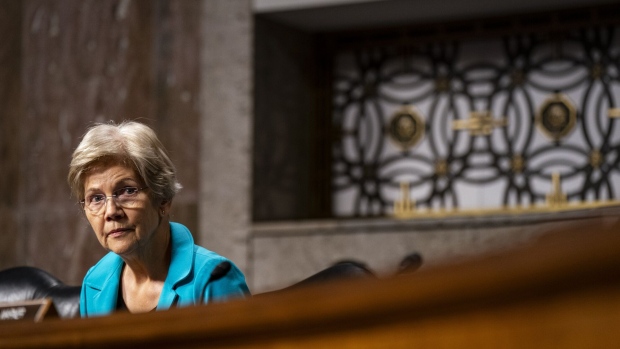
Senator Elizabeth Warren, a Democrat from Massachusetts, during a Senate Banking, Housing, and Urban Affairs Committee hearing in Washington, DC, US, on Thursday, May 18, 2023. Two senators on the committee say they have found flaws in regulators' oversight reviews before some of the recent bank failures, and are asking the president to appoint an independent investigator.

(Bloomberg) -- Progressive Senator Elizabeth Warren wants Goldman Sachs to name employees involved in its dealings with Silicon Valley Bank ahead of the financial institution’s failure and disclose whether they communicated with each other.

Warren’s requests, made in a letter dated Monday, ratchets up congressional scrutiny of the dual roles Goldman played in the days leading up to SVB’s failure, as its investment bankers advised the company on raising capital and its trading division purchased a $24 billion loan portfolio from the bank at a discount. Warren is a member of the Senate Banking Committee.

Justice Department officials and investigators for the Securities and Exchange Commission also have queried Goldman about its role in SVB’s attempts to raise funds, according to a person familiar with the matter. Those queries are part of a broader review of the failed bank’s final days. SVB was taken over by the Federal Deposit Insurance Corporation, triggering a banking crisis that also toppled Signature Bank and First Republic.

Read More: Warren Asks Goldman Sachs to Detail Profits in Collapse of SVB

Warren, a Massachusetts Democrat, asked that Goldman name individual employees involved in advising SVB on its attempt to raise capital, the employees involved in the debt purchase, and whether they communicated during the weeks before SVB’s failure. 

Warren said Goldman expects to make a profit of about $60 million on the purchase and subsequent sales of the SVB debt portfolio, citing an estimate Goldman provided her last month.

Goldman spokeswoman Sophia Anthony said in an emailed statement that the banks clients often request multiple financial services and that it has procedures to address potential conflicts of interest. Anthony said Goldman informed SVB in writing it was not acting as an adviser on the portfolio sale and that SVB should seek guidance from a third party.

The Wall Street Journal previously reported Warren’s letter.

--With assistance from Sridhar Natarajan.

©2023 Bloomberg L.P.

Hundreds of Scholars Denounce Israeli Apartheid Regime

by M.Y | DOP
August 8, 2023
in News, BDS, International Solidarity


A group of more than 400 prominent academics and public figures from Israel, Palestine and the Jewish community have signed an open letter that criticizes the Israeli government’s proposed judicial overhaul and its occupation of Palestinian territories. The letter, published on Tuesday, calls for the Jewish community in the US to break its “silence” and engage in meaningful discourse on the issue.

The signatories of the letter, which include foundation leaders, scholars, rabbis and educators, say that the judicial overhaul is aimed at “tightening restrictions on Gaza, depriving Palestinians of equal rights both beyond the Green Line and within it, annexing more land, and ethnically cleansing all territories under Israeli rule of their Palestinian population.”

They also stress that equal rights for all citizens are essential for any political solution, whether it is one state, two states, or other possibilities. They warn that without equal rights, there is always a danger of dictatorship. They accuse Israel of operating “a regime of apartheid” and ignoring the plight of the Palestinians, who face constant violence, demolition and dispossession.

The letter urges the Jewish community to support Israel’s ongoing protest movement, which has been challenging Prime Minister Benjamin Netanyahu’s corruption charges. However, it also insists on the imperative of equality for Jews and Palestinians within both the Green Line and the Occupied Palestinian Territories (OPT).

The letter also advocates for backing human rights organizations and promoting their work within communities, as well as endorsing education curricula that provide an honest portrayal of Israel’s historical and contemporary context. It also presses the Jewish community to urge its representatives to work towards ending the occupation and curtailing military aid being used in the OPT. It also calls for a halt to Israeli impunity in international organizations such as the United Nations.

Among the signatories are over 100 academics affiliated with Israeli universities, including notable figures such as former Jewish Agency head and Knesset member Avraham Burg. In 2021, Burg said that Israel has little to do with the essence of Judaism.

The open letter is a resounding call to action that establishes a “direct link” between the Israeli government’s ongoing judicial overhaul and its occupation of Palestinian territories. It reflects the growing discontent and dissent among various sectors of Israeli society and the Jewish diaspora over Israel’s policies and practices towards the Palestinians.