Tuesday, August 08, 2023


Floating Solar Has Vast Potential Near the Equator, Away From Storms
Floating solar
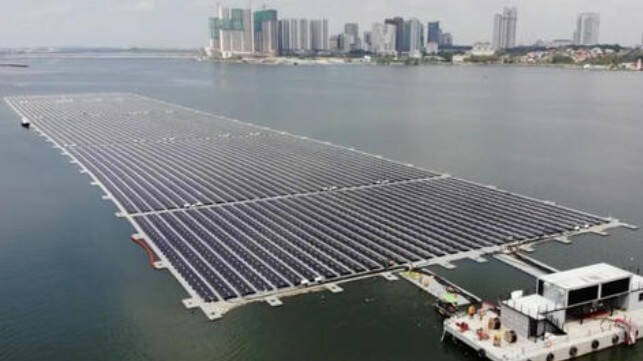
File image courtesy Sunseap

PUBLISHED AUG 6, 2023 12:54 PM BY THE CONVERSATION


[By Andrew Blakers and David Firnando Silalahi]

Vast arrays of solar panels floating on calm seas near the Equator could provide effectively unlimited solar energy to densely populated countries in Southeast Asia and West Africa.

Our new research shows offshore solar in Indonesia alone could generate about 35,000 terawatt-hours (TWh) of solar energy a year, which is similar to current global electricity production (30,000TWh per year).

And while most of the world’s oceans experience storms, some regions at the Equator are relatively still and peaceful. So relatively inexpensive engineering structures could suffice to protect offshore floating solar panels.

Our high-resolution global heat maps show the Indonesian archipelago and equatorial West Africa near Nigeria have the greatest potential for offshore floating solar arrays.
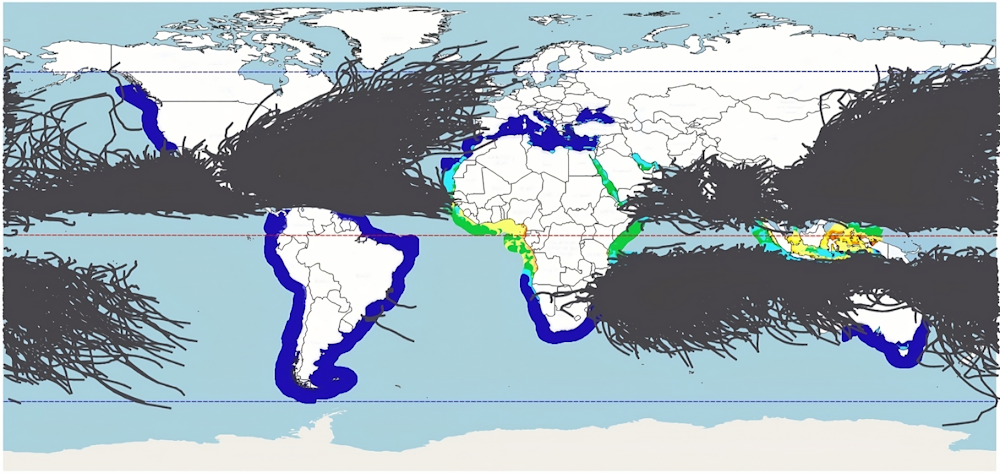
Heatmap for offshore floating solar panels. Red areas are best, followed by yellow, green and dark blue. The grey lines show tropical storm tracks. Author-supplied, using OpenStreetMap base, CC BY-ND

Solar power rules by mid-century

On current trends, the global economy will be largely decarbonised and electrified by 2050, supported by vast amounts of solar and wind energy.

About 70 square kilometres of solar panels can provide all the energy requirements of a million affluent people in a zero-carbon economy. The panels can be placed on rooftops, in arid areas, colocated with agriculture, or floated on water bodies.

But countries with high population densities, such as Nigeria and Indonesia, will have limited space for solar energy harvesting.

Their tropical location in the so-called “doldrum” latitudes also means wind resources are poor. Fortunately, these countries – and their neighbours – can harvest effectively unlimited energy from solar panels floating on calm equatorial seas.

Floating solar panels can also be placed on inland lakes and reservoirs. Inland floating solar has large potential and is already growing rapidly.

Our recently released paper surveys the global oceans to find regions that didn’t experience large waves or strong winds over the past 40 years. Floating solar panels in such regions do not require strong and expensive engineering defences.

Regions that don’t experience waves larger than 6 metres nor winds stronger than 15m per second could generate up to one million TWh per year. That’s about five times more annual energy than is needed for a fully decarbonised global economy supporting 10 billion affluent people.

Most of the good sites are close to the Equator, in and around Indonesia and equatorial west Africa. These are regions of high population growth and high environmental values. Marine floating solar panels could help resolve land use conflict.

Indonesia has vast solar energy potential

Indonesia is a densely populated country, particularly on the islands of Java, Bali and Sumatra. By mid-century, Indonesia’s population may exceed 315 million people.

Fortunately, Indonesia has vast solar energy potential and also vast pumped hydro energy storage potential to store the solar energy overnight.

About 25,000 square km of solar panels would be required to support an affluent Indonesia after full decarbonisation of the economy using solar power.

Indonesia has the option of floating vast numbers of solar panels on its calm inland seas. The region has about 140,000 square km of seascape that has not experienced waves larger than 4m – nor winds stronger than 10m per second – in the past 40 years.

Indonesia’s maritime area of 6.4 million square km is 200 times larger than required if Indonesia’s entire future energy needs were met from offshore floating solar panels.
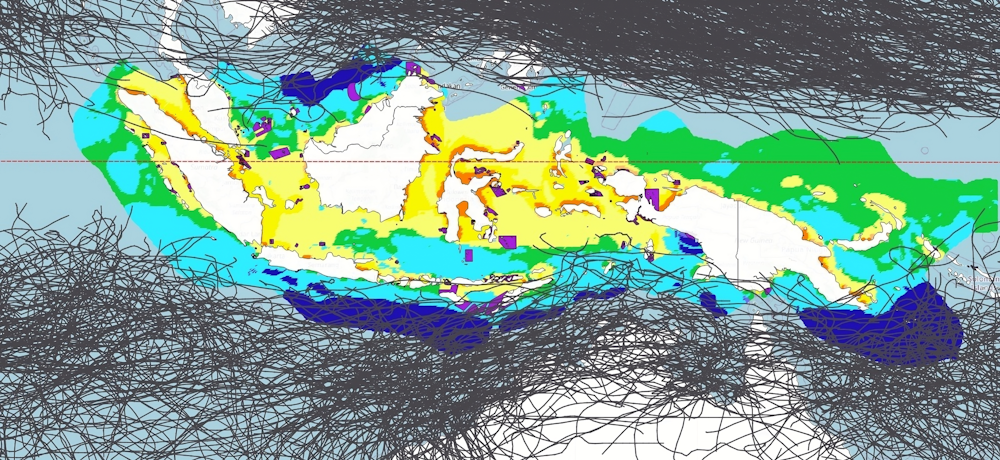
Heatmap for offshore floating solar panels in Indonesia. Red areas are best, followed by yellow, green and dark blue. The grey lines show tropical storm tracks. Author-supplied, using OpenStreetMap base, CC BY-ND

The future for offshore floating solar

Most of the global seascape experiences waves larger than 10m and winds stronger than 20m per second. Several companies are working to develop engineering defences so offshore floating panels can tolerate storms. In contrast, benign maritime environments along the equator require much less robust and expensive defences.

We have found the most suitable regions cluster within 5–12 degrees of latitude of the Equator, principally in and around the Indonesian archipelago and in the Gulf of Guinea near Nigeria. These regions have low potential for wind generation, high population density, rapid growth (in both population and energy consumption) and substantial intact ecosystems that should not be cleared for solar farms. Tropical storms rarely impact equatorial regions.

The offshore floating solar industry is in its infancy. Offshore solar panels do have downsides compared with onshore panels, including salt corrosion and marine fouling. Shallow seas are preferred for anchoring the panels to the seabed. And careful attention must be paid to minimising damage to the marine environment and fishing. Global warming may also alter wind and wave patterns. Despite these challenges, we believe offshore floating panels will provide a large component of the energy mix for countries with access to calm equatorial seas. By mid-century, about a billion people in these countries will rely mostly on solar energy, which is causing the fastest energy change in history.

Andrew Blakers is a Professor of Engineering at Australian National University

David Firnando Silalahi is a Phd candidate at the School of Engineering at Australian National University.

This article appears courtesy of The Conversation and may be found in its original form here


AI and Amateur Photos Spot the Decline of China's White Dolphins

shantou dolphins
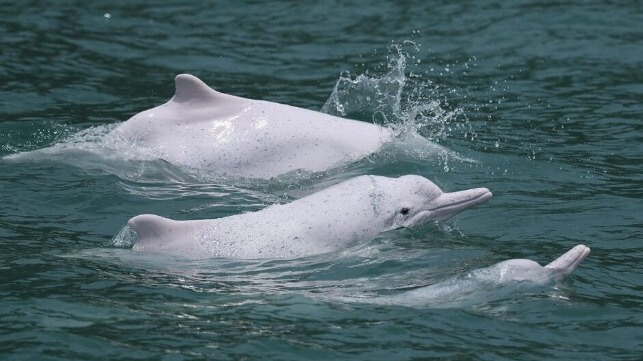
Zheng Ruiqiang thinks the complete loss of Shantou’s 13 dolphins, including these three, is inevitable (Image: Zheng Ruiqiang)

PUBLISHED AUG 6, 2023 7:05 PM BY CHINA DIALOGUE OCEAN


[By Niu Yuhan]

On 5 March 2022, Yu Wenlin of Shantou, Guangdong shot some aerial footage of an endangered group of Chinese white dolphins near the island of Nan’ao, off the coast of south-east China. One of the dolphins was carrying a dead finless porpoise on its back.

Yu shared the footage with the ChinaBlue Sustainability Institute (ChinaBlue), where researchers added the evidence of unusual behaviour to their database. As a finless porpoise resembles a newborn white dolphin, the researchers theorised the dolphin may have been trying to help the porpoise breathe. They named the dolphin YWL, after Yu Wenlin.

ChinaBlue’s database is integrated into iDolphin, a citizen science “mini-app” available on the popular messaging service Weixin. iDolphin’s mission is to crowdsource conservation research, helping to overcome data barriers and centralise white dolphin information. It aims to mobilise all layers of society, including the general public, to help protect the animal. This kind of action may ease the neglect of China’s smallest families of white dolphins, and other small populations of threatened species.

About 6,000 Chinese white dolphins – also known as Indo-Pacific humpbacked dolphins – remain in the world, according to a 2017 Ministry of Agriculture estimate. Most of these animals (4,000–5,000) live in China’s south-eastern waters, across eight locations. The mouth of the Pearl River is home to the largest population, of over 2,000. In the one off the coast of Shantou, meanwhile, only 13 animals survive.

Source: Bingyao Chen et al (2018)

The predicament of the white dolphin has earned it the moniker “panda of the seas” in China. In fact, it is the only cetacean to have national Class I protection status – the highest China provides. Meanwhile, the species is classified as “vulnerable” on the IUCN (International Union for Conservation of Nature) Red List of Threatened Species.

Following the publication of a 2017–2026 conservation action plan for the white dolphin, a Ministry of Agriculture notice called for “a better understanding of [the] numbers, distribution, seasonal changes, habitat use, range and behavioural characteristics of Chinese white dolphin populations; and creation of files on each animal, with photographs for identification.”

Zheng Ruiqiang is ChinaBlue’s science chief and the founder of iDolphin. He says that citizen science and data visualisation tools give an overview of white dolphin populations, which then serves as the basis for government policymaking and builds public support. “Even if smaller populations are doomed, we shouldn’t abandon them,” Zheng says.

AI dolphin-recognition technology

Individual Chinese white dolphins can be identified by the shape of their dorsal fin. In the past, scientists would take photographs from a boat and manually compare these to images stored in databases.

The time-consuming nature of that process means researchers cannot conduct daily monitoring over extended periods. But local people and fishers can. Getting more of them involved in monitoring would enhance the data available for researchers to analyse, and support more effective policymaking.

Individual animals can be identified by the shape of their dorsal fins, and thus a population can be counted (Image: Zheng Ruiqiang)

Enter Zheng and his team, who harnessed AI to make iDolphin possible. It can identify an individual dolphin from a photograph in only 10 seconds and is 93% accurate, Zheng says.

To date, iDolphin has processed 34,816 photographs and identified 2,688 individual dolphins, helping to centralise and democratise data that would otherwise be scattered between scientists, research institutions and citizens. In 2021, the app was selected as one of the “100+ Biodiversity-positive practices and actions around the world” for the COP15 UN biodiversity talks.

The team has been able to map and visualise data on five populations: three small ones – in Sanniang Bay, Xiamen–Jinmen and Shantou – and two relatively large ones – at the mouth of the Pearl River and Leizhou Bay.

Data is key

Alongside facilitating crowdsourcing, iDolphin also aims to break down data barriers. Zheng says there are problems with the data available on the white dolphin: monitoring methodologies aren’t standardised, data isn’t joined up across regions, and government data isn’t accessible. For example, when surveying population numbers, some researchers identify individuals from photographs, while others run a transect survey; the data produced can vary greatly.

Last year, one expert claimed that the population of Chinese white dolphins in the Beibu Gulf, where the Sanniang Bay population is located, had increased from less than 100 in 2004 to 300 in 2022. Crediting cooperation between research institutes, NGOs and the government, the expert claimed that 70% of the group were of a viable breeding size, giving it a healthy age structure. Zheng and his team’s photograph-based surveys came to a different conclusion, however. They found the population to have shrunk from 156 to 102 between 2015 and 2019.

Zheng says inaccurate or inaccessible data leads to misguided policy. This in turn reduces the efficacy of conservation efforts and means the best opportunities are missed.

Zheng is working on data cooperation with other research bodies in order to break down barriers, helping both government and research institutes. It isn’t easy, he says. Species data should be public, he thinks, but some has become the “private property” of researchers or organisations.

“If gathering of the data has been supported by government funds or charity, then it should be as openly available as possible. After all, that’s easily done with current copyright protections and data-protection measures,” says Zheng.

The plight of small populations

China has established seven nature reserves to protect the Chinese white dolphin and its habitat: four county- and city-level reserves, one provincial reserve, and two national reserves in Xiamen and the Pearl River Estuary.

Two white dolphins near the bridge between Shantou and Nan’ao Island (Image: Zheng Ruiqiang)

When construction of the Hong Kong–Zhuhai–Macau Bridge started in 2009, a series of measures were taken to protect the white dolphins in the Pearl River Estuary. For example, the construction team built artificial reefs to allow shrimps and small fish to thrive, providing dolphins with a richer source of food. Moreover, the construction team cannot carry out large-scale excavation work from April to August, the peak breeding season for white dolphins.

Li Songhai is a researcher with the Chinese Academy of Sciences’ Institute of Deep-sea Science and Engineering. In 2022, Songhai told the media that while the IUCN’s Red List classes the white dolphin as a vulnerable species, certain populations are in fact endangered, some critically so.

This is to do with the white dolphins‘ habit of living in groups, in relatively fixed locations. They tend to be found in shallow waters, where large freshwater rivers meet the saltwater of the sea. Occasionally, they swim up the river itself.

Historically, one large population stretched across a wider area of Chinese waters. But ongoing land reclamation and coastal construction projects have caused habitats to shrink and fragment, and populations to fall. Zheng describes the groups living in Sanniang Bay, in the waters off Xiamen and Jinmen Island, and off Shantou, as particularly small.

Isolated habitats and shrinking populations mean there is no evidence of individual dolphins moving between the Xiamen, Shantou and Pearl River populations. That lack of interaction puts smaller groups of dolphins at even higher risk of local extinction.

In 2012, a research paper estimated the dolphin population at the mouth of the Pearl River to be shrinking by 2.46% a year. Meanwhile, Zheng says the small group off the coast of Shantou has shrunk by 38% over the past decade, and a 2022 paper that he co-authored found the Sanniang Bay group to be 35% smaller in 2015 than in 2019.

A lack of interaction between the remaining populations of dolphins puts smaller groups at higher risk of extinction (Image: Zheng Ruiqiang)
Zheng thinks the complete loss of Shantou’s 13 dolphins is inevitable. In 2018, a calf was born in the group but died within a week. The past decade has seen only three births in the group and none has survived. When a population of mammals reaches this size, there is usually only one outcome: local extinction.

“We often think of rarer objects being more valuable, but in conservation it’s not the whole story,” says Zheng. He says it’s a numbers problem: small populations tend to be ignored when there are other larger, more viable populations of the same species. Therefore, as a population gets smaller, the funding shrinks, researchers lose interest and the public stops paying attention. Finally, conservation efforts drop off and that population is at even greater risk.

While working to save small populations, Zheng has found that some conservation bodies focus only on overall numbers, not the risk of separate populations being wiped out. He is often questioned on the logic of protecting these seemingly doomed populations, to which he retorts: “If we can’t save the 13 dolphins off Shantou, will the 50 off Xiamen be next? And then the 100 at Qinzhou, and ultimately the biggest population at the mouth of the Pearl River?”

Researching the causes of the loss of small populations and gaining experience in conservation – particularly solutions for data transparency and crowdsourcing conservation – can help create better policies and approaches for larger populations of the same species, and for other, less-vulnerable species.

Attempts to conserve smaller populations of the Chinese white dolphin can also provide an alternative to the existing narrative of “success” and encourage more people to help protect the species. “Everyone wants to hear of animals being saved. But we need to face up to the fact that some populations are being lost,” says Zheng.

As a “flagship” species, the health of Chinese white dolphin populations reflects the health of their coastal ecosystems; conserving small populations of the dolphin will improve the coastal environment and benefit local communities. “If the Chinese white dolphin is thriving,” Zheng says, “then humans can thrive too.”

Niu Yuhan is Assistant Editor at China Dialogue. She previously worked for The Paper and WWF-UK. She holds a Bachelor’s degree in Journalism from Shih Hsin University and a Master’s in International Relations from King’s College London.

This article appears courtesy of China Dialogue Ocean and may be found in its original form here


Construction Begins on First Mini-Crew Transfer Vessel for US Offshore Wind

mini-crew transfer vessel
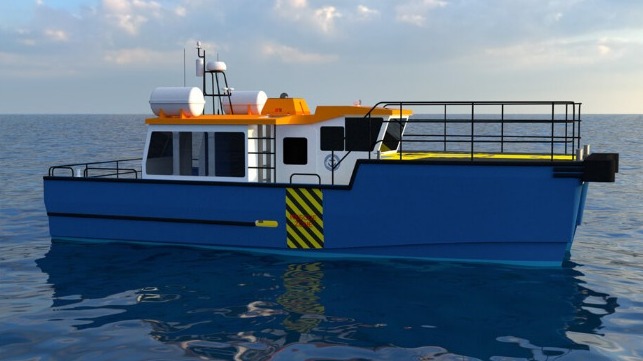
Mini-crew transfer vessel isthe first-of-its-kind being built in the U.S. (Edison Chouest Offshore)

PUBLISHED AUG 7, 2023 5:57 PM BY THE MARITIME EXECUTIVE


The development of the U.S. offshore wind energy industry continues to contribute to the supporting industries with shipbuilding being one of the sectors to benefit. U.S. shipbuilder Edison Chouest is highlighting that work has begun on another first-of-its-kind vessel for the U.S. industry, a mini-crew transfer vessel. 

Work began in July for the 39-foot vessel which will be a daughter craft working in conjunction with the service operation vessel (SOV) that Chouest is also building. Both vessels are due to enter service in 2024. Designed by the UK’s Chartwell Marine, the vessel supplies another critical piece of the maintenance and operations aspect required for offshore wind farms. The vessel will operate for joint-venture partners Ørsted and Eversource to service their three wind farms Revolution Wind, South Fork Wind, and Sunrise Wind in the Northeast U.S.

Chartwell’s managing director Andy Page highlights while the vessel is small it is essential in the chain connecting the SOVs and turbines. With a capacity of up to 12 personnel, the mini-crew transfer vessel is designed to be deployed from the SOV during extended offshore stays. As a daughter craft, its role is to transfer staff including engineers and maintenance personnel from the SOV to turbines, vessels, and other critical project infrastructure.

The vessel was customized to the U.S. market and the needs the joint venture partners anticipate for their three sites. Chartwell conducted model testing in January 2023 to simulate and adapt to the specifications of the wind turbines that will be installed at the Northeast US project sites. According to Chartwell and Edison Chouest Offshore, the design responds to the increasing demand in the U.S. offshore wind market for low-emissions, cost-effective support vessels, with the catamaran’s optimized hull form offering efficient fuel use as well as stability and maneuverability in choppy waters. 

Among the features, and a first for this vessel type, is the Volvo Penta IPS (integrated propulsion system) which will provide high power. The system allows for a wide number of optional features and functions, featuring forward-facing, twin counter-rotating propellers with an individually steerable IPS under the hull. The design also was adapted to use a motion-compensated hoist solution that will enable the technician to “walk to work” between the small vessel and the offshore wind turbines.


UK's New Plan to "Max Out" Offshore Oil and Gas Could Impact MPAs

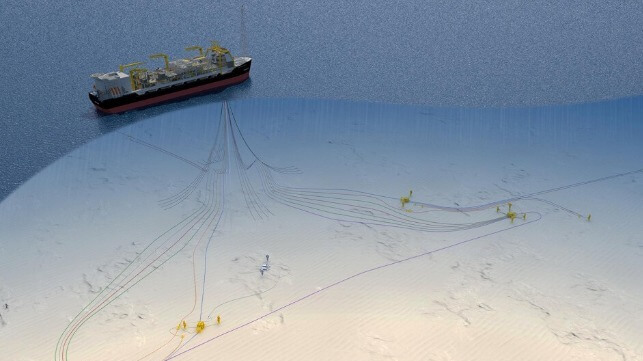
Rosebank field (Chevron illustration)
The controversial Rosebank field development plan could be among the licenses approved (illustration courtesy Chevron)

PUBLISHED AUG 6, 2023 1:05 PM BY THE MARITIME EXECUTIVE


A week after the UK government announced plans to "max out" new oil and gas licenses in the North Sea, a group of environmental activists want the decision to be reconsidered because of its potential impact on local marine life. 

In an open letter sent to Prime Minister Rishi Sunak on Friday, a group of environmental NGOs said granting the oil and gas licenses would obliterate the UK’s climate commitments, as well as exacerbate harmful impacts in the UK’s own seas. The group included over 30 organizations led by NGOs Oceana, Uplift and Blue Marine Foundation, among others.

“Approximately 40 percent of the area under consideration (96 of the areas within the 115 licenses) sit either partially or completely within Special Protected Areas. To license these would make a mockery of the concept of ‘marine protected areas’ at its basic level and undermine efforts to make these sites genuinely of benefit to marine conservation,” noted the letter to the Prime Minister.

In addition, the UK is party to the Kunming-Montreal agreement adopted last year, which calls for protection of at least 30 percent of the land and ocean by 2030. Allowing additional oil and gas licenses would undermine the UK’s lead position in the march towards a carbon neutral future, according to the environmental campaigners.

Rishi Sunak has defended his backing for the North Sea Oil and gas industry, arguing it is part of his efforts to make Britain more energy independent.

“Even when we’ve reached net zero in 2050, a quarter of our energy needs will come from oil and gas. We’re choosing to power up Britain from Britain and invest in crucial industries such as carbon capture and storage, rather than depend on overseas gas imports,” said the Prime Minister.

While the UK government is convinced that new oil and gas fields will deliver energy security, some experts believe it will have a minimal impact.

A recent analysis of government data by the environmental campaign group Uplift found that new fields would supply at most an additional three weeks of gas a year to the UK, from 2024 to 2050, even if none of the gas was exported.

Over the same period, new oilfields would supply at most about five years of oil demand, if none was exported. But in reality, UK currently exports about 80 percent of the oil produced in the North Sea.

“The licensing of new oil and gas fields in and around marine protected areas is a wanton act of environmental vandalism, ignoring both the government’s commitment to tackle climate change and protect nature,” said Hugo Tagholm,” Vice President of Oceana in the UK.

Some of the Marine Protected Areas (MPA) that could be impacted by the new fields include the North Norfolk Coast Special Protected Area, the Foula MPA off the coast of Shetland and the Southern North Sea MPA.

Activists Climb UK Prime Minister's House to Protest Offshore Drilling

Greenpeace mansion climbing
Courtesy Greenpeace UK

PUBLISHED AUG 4, 2023 12:25 AM BY THE MARITIME EXECUTIVE


On Thursday morning, activists with Greenpeace climbed onto the roof of UK Prime Minister Rishi Sunak's house in protest of his decision to "max out" oil and gas leasing on the UK continental shelf. 

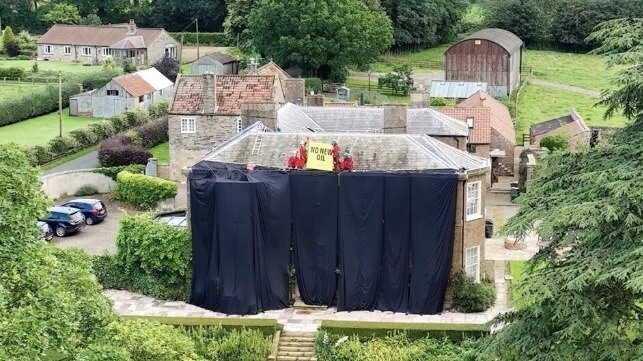
The team of four protesters went to Sunak's private home in North Yorkshire and scaled the exterior, perching on the slate roof with a sign calling for "no new oil." They draped the front facade of the house in black fabric and stayed for hours before the local police came to arrest them. The activists were detained and may face charges for the episode. 

Sunak lives in London at 10 Downing Street, the prime minister's residence, and was on vacation in the U.S. with his family at the time of the action. 

“It really was about this image of pouring oil all over the prime minister's house,” Greenpeace campaigner Ami McCarthy told the New York Times. She added that the team had encountered no security presence at Sunak's $2 million home and simply walked onto the property. 

Last week, Sunak announced plans to approve more than 100 new offshore oil and gas licenses as part of a policy of "maxing out" Britain's energy reserves. He said that the license approvals would include a green light for the controversial Rosebank oil field, which has been targeted by environmental campaigners. Sunak asserted that the new oil and gas license activity would be consistent with the UK's net-zero commitments.

"My view is we should max out the opportunities that we have here in the North Sea, because that’s good for our energy security," Sunak said. "It’s also good for the climate because the alternative is shipping energy here from halfway around the world."

UPDATED

Video: Explosion Rips Through Turkish Grain Port

Derince port explosion
Explosion seen on the port's TV cameras (YouTube)

PUBLISHED AUG 7, 2023 1:00 PM BY THE MARITIME EXECUTIVE


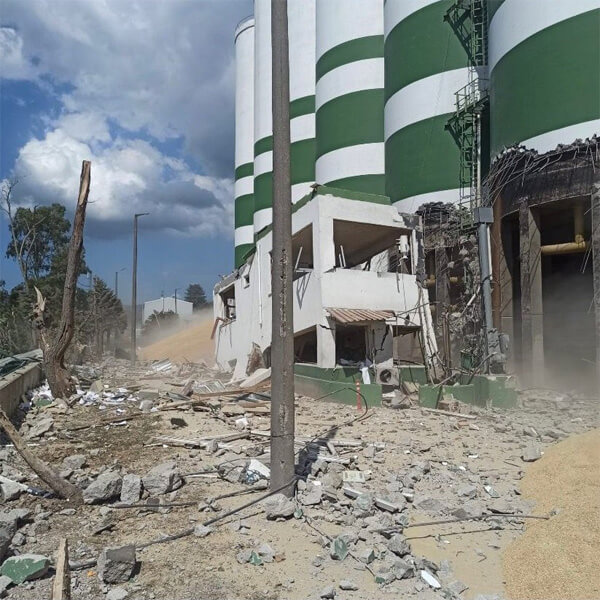
An explosion rocked the western Turkish port of Derince this afternoon injuring at least a dozen people in the port and causing extensive damage to the grain transfer and storage facility. Turkish officials were quick to announce they believed it was an industrial accident to allay fears of another earthquake or possibly an attack on the large facility located about 55 miles to the east of Istanbul operated by the government of Turkey.

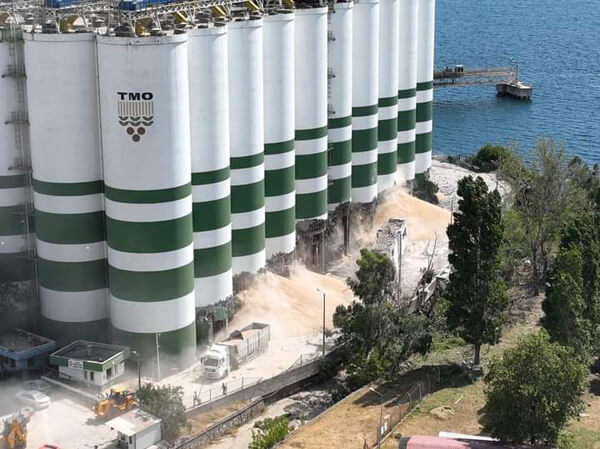
Video images from the port camera show normal operations when at 2:40 p.m. local time the port was rocked by the explosion, which was followed by a large cloud of dust. Reports are saying as many as three of the grain silos appeared to explode with the shockwave shaking buildings more than a mile away from the port. Residents immediately feared an earthquake in a region that has experienced several large quakes. 

People from across the bay began posting pictures on social media of the large explosion and resulting cloud over the port. Images released by the government showed multiple grain silos damaged and their contents spilling out. 


"Initial evaluations show that an explosion occurred due to wheat dust compression during the transfer of wheat from a ship to the silo," the governor of the region Seddar Yavuz later told reporters. “We were told that it is technically possible that a blast could occur due to compression of wheat dust, but we are investigating every possible reason."

Emergency workers are reporting that at least a dozen people were transported to hospitals. Three people are reported to be more severely injured.

The facility is operated by the Turkish Grain Board. Officials said that they believed no one was killed or trapped and later that they had been able to account for everyone working in the port.  They said a total of 13 silos and buildings were heavily damaged with reports of broken windows elsewhere in the surrounding area.

The police have launched an investigation into the explosion and activity in the port.


Local Government Files Lawsuit to Block New Port NOLA Container Terminal 

Louisiana Container Terminal
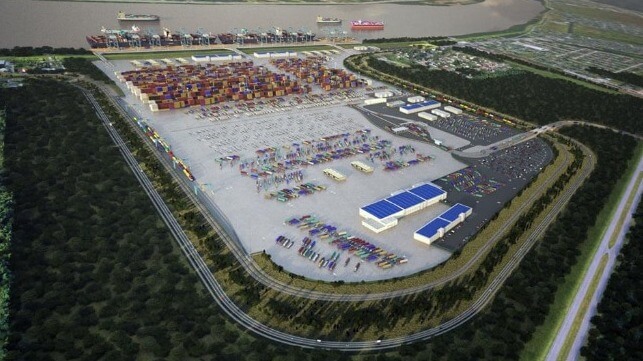
Preliminary design rendering of the new Port of New Orleans container terminal (Port NOLA)

PUBLISHED AUG 8, 2023 12:50 PM BY THE MARITIME EXECUTIVE


Efforts to develop a large new container terminal to expand the import and export capacity of the Port of New Orleans and Louisiana continue to face local opposition. In the latest development in the politically-charged debate over the new terminal, the District Attorney for St. Bernard Parish where the facility would be located filed a lawsuit attempting to block the development. 

Plans for the Louisiana International Terminal began in 2018 and advanced in 2020 when the Port of New Orleans purchased 1,200 acres of land in Violet, on the Mississippi River in a neighboring, independent parish below the city. The plan calls for a terminal that would when completed be able to handle two million TEU annually providing a significant expansion to the region’s capabilities. Port officials highlight that the location would take full advantage of the deeper 50-foot level of the Lower Mississippi River Ship Channel and would avoid the height restrictions from the Mississippi River bridges further upriver. In the selected location, the terminal would be able to handle ships of all sizes and also address capacity constraints at the current terminal.

Port NOLA entered into an agreement with The St. Bernard Port Authority for the rights to operate the facility. District Attorney Perry Nicosia in filing the suit questions The St. Bernard Port Authority’s legal right to assign rights to Port NOLA. The independence of the parish was confirmed by law they argue in 1992. They are seeking to have the agreement for the operations, known as the Cooperative Endeavor Agreement, to be declared null and void under Louisiana law.

The lawsuit is “preposterous” and “election-year theatrics” Brandy Christian, Port Nola CEO told a reporter from the Associated Press.

Last year, Governor John Bel Edwards said the project had the potential to become one of the most impactful economic development projects in Louisiana’s history. He was speaking as he announced an agreement with MSC’s Terminal Investment Limited (TIL) and Ports America committing to an $800 million investment in the project. The two leading terminal operators agreed to join with the state and Port NOLA investing in the construction of the terminal as well as to operate the terminal once construction is completed.

The lawsuit continues one of the several tactics used by the critics to oppose the project. They raised the same questions over jurisdiction in January 2022 when the purchase of the land and the cooperation agreement was finalized.

Port NOLA highlights that it is working with the local community and government officials to address concerns as the design is developed for the terminal. Critics have raised concerns about the traffic and trucking servicing the port as well as drainage and other environmental issues along the river.  

The design was developed Port NOLA highlights to include a natural buffer for the nearby community and with elements such as the St. Bernard Transportation Corridor, among other roadway improvements, specifically designed to address community concerns. As part of the project, port officials have promised to address the need to replace an elementary school and baseball field that would be impacted by the development.

The project continues to be in the design and permitting review phase, which includes the U.S. Army Corps of Engineers’ environmental review process. Government and port officials have slated the construction start for 2025 and the first berth to open in 2028.


Someone is Paying to Refit a Detained Russian Megayacht Worth $700M

Scheherazade
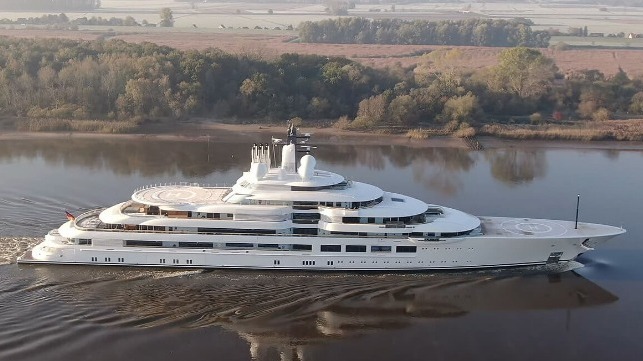
Scheherazade under way on sea trials, 2019 (file image courtesy DrDuu / CC BY SA 4.0)

PUBLISHED AUG 7, 2023 10:46 PM BY THE MARITIME EXECUTIVE


The Russian megayacht Scheherazade had the misfortune to be caught in a European shipyard when Russia invaded Ukraine in February 2022. Unlike the many Russian yachts that slipped their lines and got under way, she was immobile and within reach of EU sanctions. The authorities ordered her detained on suspicion of connections to a sanctioned individual. 

That detention came with a big silver lining. Sheherazade has the good fortune to be trapped at a top-tier Italian yacht yard, where she can be maintained by expert staff. While other Russian ultraluxury yacht owners must make do without Europe's world-class repair yards, Scheherazade has everything she needs, and perhaps more. 

The shipyard in question, Italian Sea Group, told the FT that the vessel is not only being maintained - the owner is paying for the refit to continue. In keeping with the standards of the trade, the yard did not name the owner. 

The identity of Scheherazade's beneficial owner is a matter of debate. According to the U.S. Federal Bureau of Investigation, the vessel's ownership is obscured beneath multiple layers of offshore trust arrangements, as is common for vessels of this class. At the bottom of this structure, the FBI uncovered the name of a former president of state oil and gas company Rosneft, an unsanctioned oligarch named Eduard Khudainatov - who is also the listed beneficial owner of the Russian megayacht Amadea

Betweem Scheherazade and Amadea, Khudainatov would be responsible for $1 billion worth of megayachts and about $100 million a year in upkeep, and the FBI does not believe it. Khudainatov's reported net worth is below the top ranks of Russia's wealthiest businessmen. In court filings in May 2022, federal agents argued he is acting on behalf of someone bigger.

“The fact that Khudainatov is being held out as the owner of two of the largest superyachts on record, both linked to sanctioned individuals, suggests that Khudainatov is being used as a clean, unsanctioned straw owner to conceal the true beneficial owners of these vessels,” FBI agents suggested in a filing related to the Amadea.

The FBI has some ideas about who the real owner might be, and so do independent researchers. In the two years leading up to the invasion, the Scheherazade's pattern of port calls in the Black Sea aligned with Russian President Vladimir Putin's travel itinerary, according to the New York Times. In addition, a Russian political opposition group claims that half of Scheherazade's crew were employed by Putin's personal security service, the FSO. Flight records show that these personnel regularly rotated between Russia and Italy. "We can’t think of better proof that this yacht belongs to Putin. Even in Italy, thousands of kilometers from Moscow, people are working on it who are officially listed as Putin’s bodyguards and personal staff,” investigator Maria Pevchikh said.

Under EU law, Italy is responsible for enforcing EU sanctions within its borders. The Italian authorities have agreed to allow the refit work on Scheherazade to continue, according to the FT, but will not disclose who is paying for the work. Italy's Finance Ministry acknowledged last year that the vessel has "significant" links to "prominent elements of the Russian government."


India Plans for its First Polar Research Vessel

Vasily Golovnin
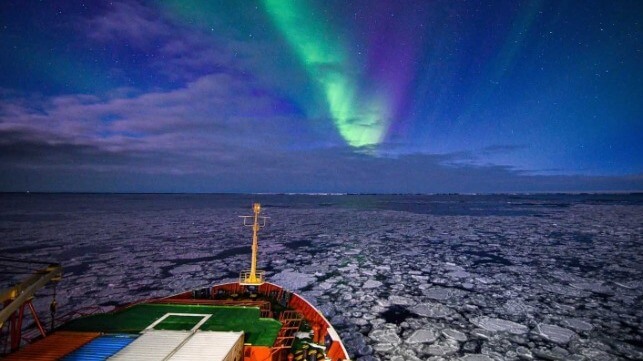
Chartered icebreaking cargo ship Vasily Golovnin arrives at India Bay, Antarctica, March 2023. India currently charters foreign vessels for its high-latitude science (NCPOR Goa)

PUBLISHED AUG 6, 2023 10:26 PM BY THE MARITIME EXECUTIVE


As countries become increasingly interested in polar research due to climate change concerns, India is on course to have its first polar research vessel in the next five years. India’s Minister of Earth Sciences Kiren Rijiju made this revelation last week while responding to a query in the Rajya Sabha, the upper house of India’s parliament.

India currently runs three research stations in Antarctica, and a polar research vessel would be used for logistics and resupply missions. Minister Kiren revealed the vessel will also be used as a platform for research, specifically in the Southern Ocean.

According to the Minister, the proposal regarding the ship order is expected to go for cabinet approval during this current financial year. The estimated cost of the vessel is $310 million.

“While the government is in talks with other countries which have expertise in making such ships, we would like to build the vessel in India,” added Rijiju.

Earlier in 2014, the Indian Cabinet had approved over $120 million for acquiring a similar ship. However, the tender was later dropped.

Last year, India’s lower house (Lok Sabha) passed the Indian Antarctic Bill, 2022, partly aimed at regulating the country’s research activities in the South Pole. The legislation came 41 years after India’s first expedition to the Antarctic in 1981.

Meanwhile, Rijiju also apprised legislators on the progress of India’s ambitious Samudrayaan project. Scheduled for 2026, the project is aimed at exploring the deep ocean and its resources. It is being designed and implemented by the National Institute of Ocean Technology (NIOT) in Chennai.

The minister said three personnel will be sent to a depth of 6000 meters in a submersible named MATSYA 6000. It has endurance of 12 hours under normal operation and 96 hours in case of an emergency.

With the Samudrayaan Project, a first of its kind in India’s ocean exploration history, the country hopes to join the elite group of countries with specialized capacity to conduct deep ocean research.