It’s possible that I shall make an ass of myself. But in that case one can always get out of it with a little dialectic. I have, of course, so worded my proposition as to be right either way (K.Marx, Letter to F.Engels on the Indian Mutiny)
Tuesday, August 08, 2023
THE WAGNER CODE Mali adopts new mining code that boosts state interests
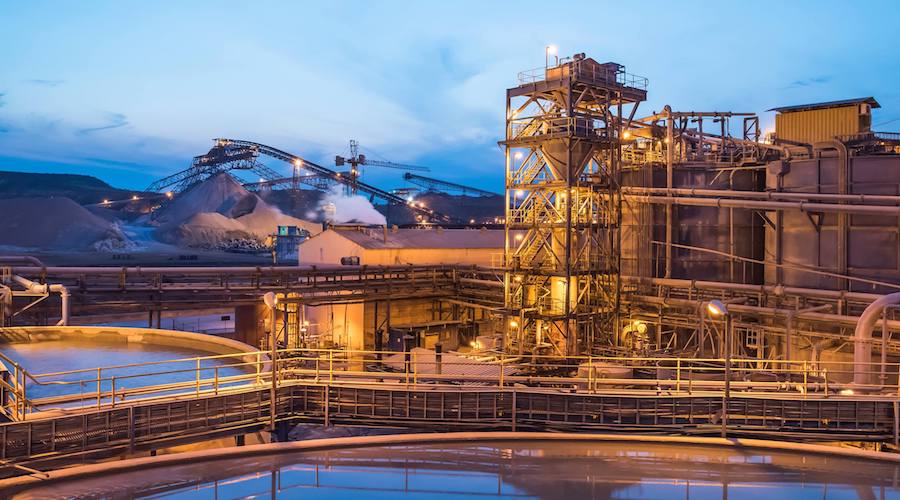
Reuters | August 8, 2023 | Mali-based Loulo-Gounkoto complex. (Reference image by Barrick Gold.)
Mali adopted a new mining code on Tuesday that mining sector officials said would channel a greater share of revenue to state coffers and increase state and private Malian interests in new projects.
The government announced the review of the mining code in January after it said an internal audit had shown that Mali, one of Africa’s biggest gold producers, was not receiving a fair slice of profits while granting too many tax breaks.
The new code now allows the government to take a 10% stake in mining projects and the option to buy an additional 20% within the first two years of commercial production, mining commission chairman Assane Sidibe told reporters.
A further 5% stake could be ceded to locals, taking state and private Malian interests in new projects to 35%, from up to 20% today.
Meanwhile certain tax exemptions have been abolished, Sidibe said.
International miners in July said they were in talks with the government over new rules for the sector that has remained attractive despite coups and a deadly Islamist insurgency.
The approved code would generate an additional 500 billion CFA francs ($803 million) per year for the state and increase the mining sector’s contribution to the economy by up to 20% of gross domestic product, from the current 9%, Economy Minister Alousseni Sanou and Mines Minister Amadou Keita said.
Barrick Gold, the world’s No. 2 gold miner, and Canadian rival B2Gold are among the biggest producers and have been expanding output in Mali, even amid frequent changes in government and rising insecurity.
($1 = 622.7300 CFA francs)
(By Tiemoko Diallo, Sofia Christensen and Alessandra Prentice; Editing by Alex Richardson)
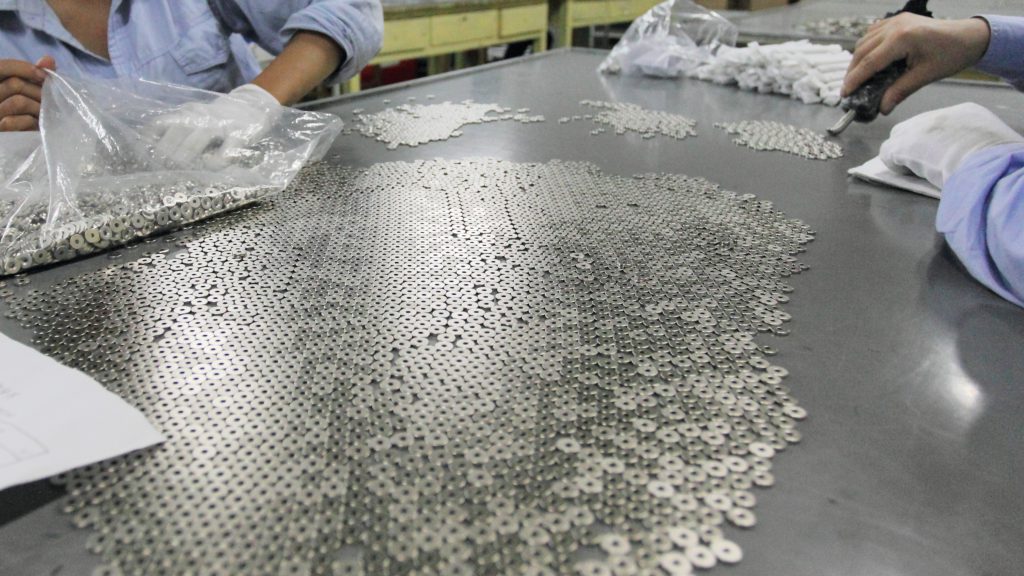
Japan signs deal with Namibia to explore for rare earth minerals Reuters | August 8, 2023 | Workers manufacturing industrial magnet parts. (Stock Image)
Japan on Tuesday signed an agreement with Namibia to jointly explore for rare earth minerals as part of its broader plan to develop supply chains for cobalt and other minerals used in making electric vehicle batteries.
The Japan Organization for Metals and Energy Security (JOGMEC) will collaborate with Namibia’s state-owned mining firm Epangelo, a Namibia mines and energy ministry official said on the sidelines of the signing ceremony in Windhoek.
Details of the agreement were not immediately available.
Yasutoshi Nishimura, Japan’s minister for economy, trade and industry is visiting five countries with significant deposits of rare earths, including Namibia, Zambia and Democratic Republic of Congo to try to build an African supply chain of critical minerals.
Japan, like other advanced economies, is seeking to be less reliant on China, which has dominated supplies of battery minerals.
JOGMEC is already partnering with Namibia Critical Metals Inc. in developing the Lofdal deposit, rich in yttrium, in north-western Namibia, which is the country’s most advanced rare earth project.
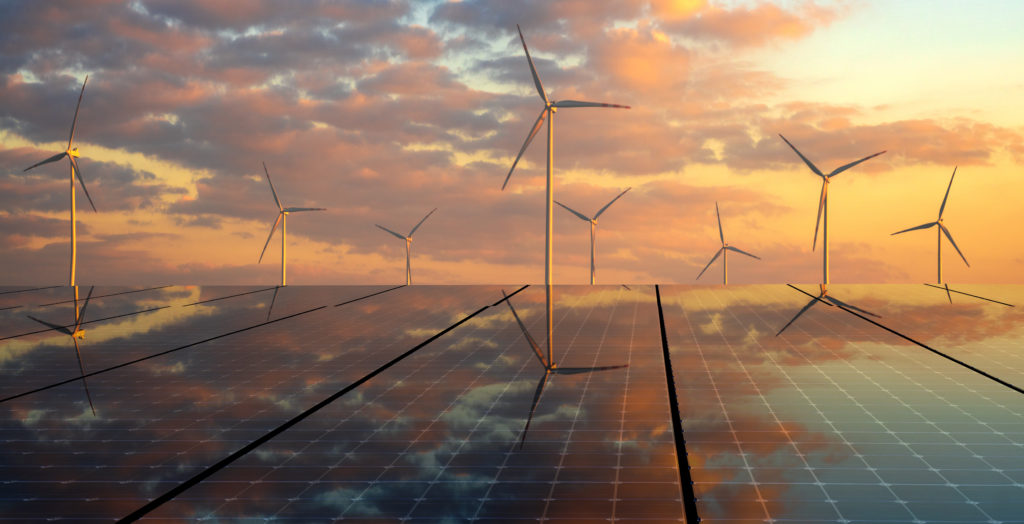
In addition to yttrium, used in alloys, the Lofdal deposit has the potential for significant production of dysprosium and terbium, two of the most valuable heavy rare earth elements, used in permanent magnets in the batteries of electric cars and in wind turbines.
In 2022, Namibia signed an agreement to supply rare earth minerals to the European Union.
(By Nyasha Nyaungwa; Editing by Nelson Banya and Barbara Lewis)
How a mining standoff in Saskatchewan can be a boon to both reconciliation and the economy
Ken Coates is a senior fellow at the Macdonald-Laurier Institute
(CONSERVATIVE THINK TANK)
and a faculty member at Yukon University.
Mining has become one of Canada’s frontlines in terms of reconciliation. After feeling excluded from earlier resource booms, First Nations and Métis want in on the modern-day gold rush that is the quest for lithium, cobalt, uranium and other critical minerals, and are rightly demanding hard equity from lucrative resource projects on their traditional lands.
And the potential rewards are high. Globally, Chinese-based interests own or control many of these resources essential for manufacturing EV batteries, solar panels, smartphones and other products in a world hooked on technology. As mining companies scour the planet for new deposits, seeking to bring more of these resources into production, it’s become a race where the first mines into production will secure large contracts. (The urgency sires many scenarios, from companies returning to reprocess old tailing ponds, to illegal mining that has devastated African landscapes.)
In Canada, such haste is not a common characteristic when it comes to economic development. Canadian firms are among the most technologically capable in the world, and Canada provides substantial financing for mining exploration and production, exporting both its expertise and its experience with community engagement. But domestically, the country’s environmental and social assessment policies invariably slow the journey from discovery to commercial production.
The province of Saskatchewan, however, has nurtured one of the world’s more receptive mining environments, as evidenced by its successful potash and uranium mines. The business community is technologically sophisticated and highly responsive, and several properties – particularly those run by Cameco and Areva in northern Saskatchewan – maintain impressive collaboration with regional First Nations and Métis communities. Saskatchewan’s economy, too, has become largely supported by oil, gas, uranium and potash.
But now a potential political storm looms there, with Indigenous people and their leaders – who have an assured place in Canadian mining, based on treaties and Supreme Court decisions on the duty to consult and accommodate – saying that the transfer of control over natural resources via the 1930 Natural Resources Transfer Act ignored treaty rights and other legitimate Indigenous interests.
The provincial government says that it and the mining companies are bound by existing laws. In Saskatchewan, this has come to mean that Indigenous “engagement” commences when a promising property has been identified and a company wishes to move toward production. This, they argue would bring communities benefits including employment, training, business opportunities and other collaborative possibilities.
Indigenous leaders want more than “token” jobs or support contracts at billion-dollar operations on treaty lands – they want in on mineral development, and on their terms. They want full life-cycle engagement, from permits through approvals to operations; they want investments in the companies and projects themselves, and legitimate financial returns. In short, they’re talking about parity and shared ownership of the resources themselves, and in this boom, First Nations and Métis leaders have made clear that their expectations are immovable.
“We are willing partners, willing to do business. We aren’t the boogeyman. But we won’t sit back,” Thunderchild First Nation Chief Delbert Wapass, the only North American First Nations leader invited to last month’s critical minerals roundtable in Washington, told the CBC. “This new gold rush will not happen without us.”
The 21st-century economy needs a rapid infusion of critical minerals, and an increase from our current production; it will also require a concerted effort to break China’s near-monopoly on these resources. Indigenous people need to be part of that effort. Done properly, a renewed approach could accelerate development, providing stability for companies, solid returns for government and a realistic shot at long-term prosperity for Indigenous peoples.
Importantly, there is a dialogue taking place to try to make this possible. Indigenous peoples are not trying to derail successful development or stop substantial returns from going to the provincial treasury. Mining companies and the Mining Association of Canada have demonstrated their support for Indigenous aspirations, including a commitment to the United Nations Declaration on the Rights of Indigenous Peoples.
This has been a long time coming, and the Saskatchewan government would do well to embrace this opportunity for collaboration and accept the offer of partnership extended by Indigenous leaders. Resisting this outreach will only lead to greater conflict, delays and lost opportunities for all of Saskatchewan and Canada.
An inconvenient truth… there’s not enough critical metals to reach net zero
I’ve taken the title for this article from the 2006 documentary film directed by Davis Guggenheim about former United States Vice President Al Gore’s campaign to educate people about global warming…
It was called An Inconvenient Truth.
So today, we’re going to deliver you perhaps a more pressing ‘inconvenient truth,’ one that’s set to undo our multi-generation assumption that energy supplies would remain cheap and abundant.
I set the scene back in June showing you why this energy crisis is being born out of years of under investment in the oil and gas industry.
If you haven’t already, I suggest you read that here.
Its why I believe storm clouds are approaching for global energy security…. The fossil fuel industry is running on empty.
It means we need to come up with an alternative base load energy source far earlier than the 2030 or 2050 targets mandated by western leaders.
Yet these governments have told us that renewables will naturally take up the slack from declining oil and gas output.
But dive into the data and it seems we’ve made a gross miscalculation on our ability to achieve net zero. Why?
It centres around the lack of metal supplies sitting in the ground… Also known as mineral reserves.
That’s what the research from Associate Professor Simon Micheaux has uncovered.
Micheaux was engaged by the Geological Survey of Finland to calculate the entire volume of metals needed to bring one-generation of solar panels, windfarms, and EV’s into our energy mix.
Now, when Micheaux explains ‘one-generation’ this means the volume of raw materials needed to entirely replace fossil fuel reliance with renewables.
According to his research, these renewable energy sources have a service life of around 15-20 years.
Once that’s complete we’ll need to re-start and build the next generation all over again!
So how much metal do we actually need to create just that first round of renewables?
This is the part that will make most politicians shift uneasily in their seats…
Based on current annual output, Micheaux’s peer reviewed studies indicate we’ll need a staggering…
· 9,920 years’ worth of Lithium production
· 1,733 years’ worth of Cobalt production
· 3,287 years’ worth of Graphite production
· 189 years’ worth of Copper production
· 400 years’ worth of Nickel production
All condensed into 20-30 years!
But as I explained last month, thanks to a stranglehold on oil and gas development we’ll need to transition far earlier.
But as Micheaux’s data highlights, the crux of the problem is not so much the enormous increase in output but the fact we don’t actually have the metal in the ground to begin with. Staggering!
Using data from the US Geological Survey, Micheaux discovered global copper reserves will fall short by 80%, global nickel reserves by 90%, and cobalt by around 96%.
Simply put, of all the cobalt we know that exists in the ground today, if we were to mine all of it then we’d have just 4% of the cobalt needed to achieve net zero.
It highlights a gross miscalculation by political leaders in their assumption that renewables would naturally pick up the slack from declining oil and gas output.
A problem they have created by penalising investment into fossil fuel industries.
It also points toward a disturbingly high probability of global energy shortages… This is backed up by Goehring & Rozencwajg’s recent report predicting multi-fold increases to energy prices set to manifest by the mid-2020’s.
This is as a complex problem that has the potential to erode global standards of living.
It’s also highly inflationary.
For over a century we have taken for granted uninterrupted access to abundant energy that has enabled technological innovation and improved standards of living.
But the seeds have been sown… An end to civilisations ‘era of abundance’ is fast approaching.
While this is set to be a monumental miscalculation with potentially dire consequences for the global economy…
There are perhaps a few key areas for investors to take shelter from a looming energy crisis.
The first and most obvious solution is gaining broad exposure through a highly liquid oil and gas ETF.
The iShares U.S. Oil & Gas Exploration & Production ETF (IEO) offers a market-cap-weighted ETF with exposure to companies engaged in the exploration, production, and distribution of oil and gas.
Assets under management stand at around $1.3 billion… The ETF also offers investors a 1.96% annual dividend yield.
With leverage to rising oil and gas prices it also enables investors to capture upside from future discovery.
Given the impetus to find more oil after a decade-long slump, holding exposure to both production and exploration should serve investors well.
However, the service-side of the oil and gas business is also set to capitalise on future energy volatility.
It offers investors a strategy for de-risking their exposure to production shortfalls and declining output among those companies that have chosen not to invest in future supply thanks to government net-zero mandates.
Should the global economy look to re-align itself with stabilising energy supply then capex spending will be enormous… Service companies will benefit the most.
The VanEck Oil Services ETF (NYSE: OIH) tracks the world’s largest O&G service companies… Including big names like Schlumberger (NYSE:SLB), Halliburton (NYSE: HAL) and Baker Hughes (NYSE: BKR).
These are multi-national companies with a global reach.
That limits jurisdictional risk… Something that hangs over producers operating in countries committed to ending oil and gas licenses and development applications.
Another angle to this investment theme is to focus on mining stocks.
Despite the seemingly impossible task in finding enough critical metals, governments will continue to push the net zero mandate.
It means they’ll be abundant opportunities to gain upside from explorers and developers focussed on critical metals.
But the most important point to understand is this…
Our modern economy has been built on decades of abundance… Cheap and plentiful supplies of energy.
But poor planning and lack of investment is steering the global economy toward a much more difficult future… One that will be mired in scarcity and far higher energy costs.
It’s why commodity stocks… From oil, gas, nickel, rare earths to copper, offer enormous long term upside for investors able to look beyond these short term market pressures.
Given this sector has endured heavy selling in 2023 investors are well placed to snap up bargains before this long term theme gains momentum.
James Cooper is a commodities analyst and geologist.
WTF! Western Australia to scrap 2021 Aboriginal heritage protection laws
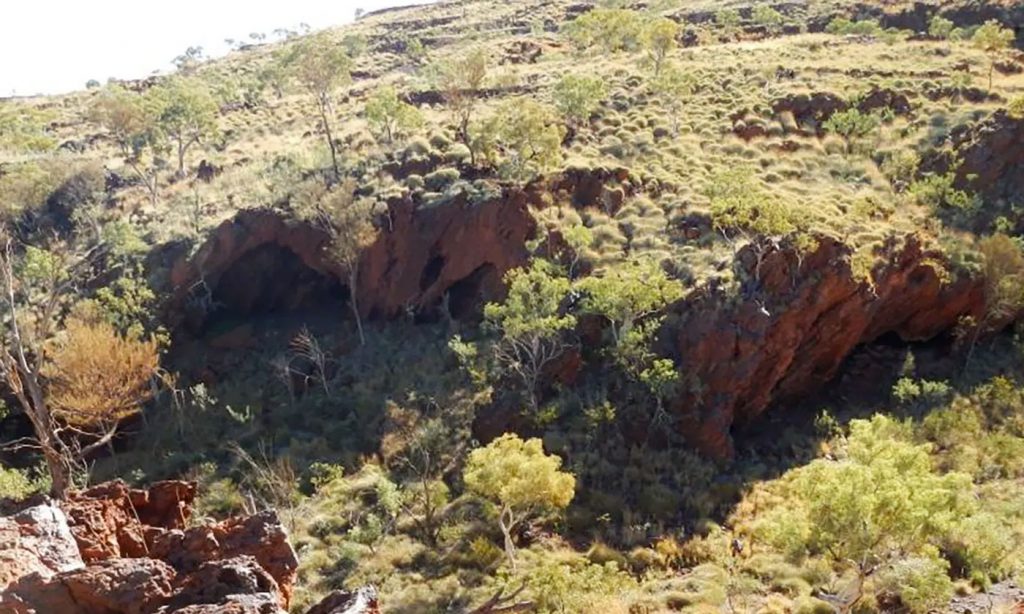
THAT DID NOT TAKE LONG Reuters | August 8, 2023 The Juukan 2 cave destroyed during works with explosives.
Photo: The Puutu Kunti Kurrama and Pinikura Aboriginal Corporation Western Australia will overturn its 2021 Aboriginal cultural heritage protection laws, introduced after the destruction of the ancient Juukan Gorge rock shelters, in response to opposition from landowners, the state’s premier said on Tuesday.
The Indigenous group whose shelters were legally destroyed by Rio Tinto in 2020 said it was outraged by the decision to scrap the protection. The rock shelters had shown human habitation stretching back 46,000 years. State Premier Roger Cook said the 2021 legislation would be dropped after widespread opposition from farmers and pastoralists. Instead, a 1972 law would be restored and amended to ensure the protection of important sites.
“The Juukan Gorge tragedy was a global embarrassment but our response was wrong, we took it too far, unintentionally causing stress, confusion and division in our community,” Cook said.
The amendments to the 1972 law were “simple and effective” and would prevent another Juukan Gorge from happening, he said.
Landowners have been up in arms over what they said was onerous and costly regulation set down in the 2021 law.
But the Puutu Kunti Kurrama and Pinikura Aboriginal Corporation (PKKP) condemned the decision, saying it had lost faith in the state government to protect Aboriginal cultural heritage and the return of sections of the old 1972 law was a disgrace.
“The PKKP are outraged that they, and Traditional Owners in Western Australia are back to square one, and the Cook government is reverting to laws that allowed the destruction of Juukan Gorge,” the group said in a statement,
The change, which comes after the legislation had been in place for just five weeks, may temper rising angst in the state over Indigenous rights.
Support has been falling nationally for Federal government-backed plans to establish an Indigenous advisory body in parliament that Australians will vote on in a referendum later this year.
‘Unworkable’
The destruction of Western Australia’s Juukan Gorge rock shelters for an iron ore mine caused deep distress to Indigenous groups and a global outcry that eventually cost Rio’s chief executive, chair and senior executives their jobs.
It sparked a national inquiry, forced miners to overhaul their practices and brought stricter governance requirements from investors.
The PKKP said at the weekend that the 2021 law, while not perfect, was an improvement on the 1972 regulations.
Rio Tinto sent a letter to Aboriginal groups, including the PKKP, assuring them of its commitment to protecting cultural heritage, according to a copy seen by Reuters.
The miner said in a statement it would continue to engage with the state government to advocate for increased protection of Aboriginal cultural heritage.
The CEO of WAfarmers Trevor Whittington told Reuters the 2021 legislation was not fit for purpose and his group was waiting to see what the amendments entailed.
“Every new farming activity that we undertook would require a new heritage survey,” he said of the 2021 legislation.
“It was unworkable.”
Cook, however, dismissed those assertions saying the only obligations for farmers or other landowners to undertake a heritage survey under the 2021 legislation was if they planned activity that would impact a known cultural heritage site.
One of the key grievances that Aboriginal groups had with the new act was that they had no right of veto and the ultimate decision maker over heritage destruction was a government minister. In the 1972 legislation, which governed development until June, miners or landowners could appeal a minister’s decision but Indigenous groups could not.
“We will make sure they have a right of appeal in the event a decision is made,” Cook said.
(By Melanie Burton; Editing by Kim Coghill and Robert Birsel)
Graves a barrier for Jindal’s $2 billion South African iron mine
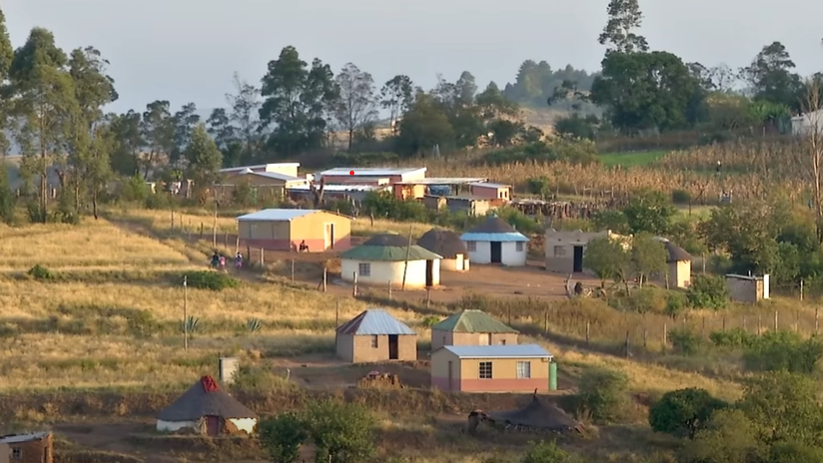
Bloomberg News | August 8, 2023 Residents say an assessment of the area that Jindal wants to mine shows it could lead to more than 3,000 households and 3,000 graves being moved. (Image: Plexus Films)
A plan by Jindal Steel & Power Ltd. to develop an up-to $2 billion iron-ore mine in South Africa is facing opposition from communities who say the operation would require thousands of homes and graves to be relocated.
The proposed mine in Melmoth, in the eastern KwaZulu-Natal province, would dwarf recent investments in South Africa’s mining industry. It could produce 32 million tons of magnetite ore a year by 2031 after starting production in 2027, the company said in an emailed response to questions. Jindal is controlled by Asia’s richest woman, Savitri Jindal, and family.
“Our community of Makhasaneni has been fighting Indian giant mining company, Jindal Mine, who for years have been intruding with their plans to dig up iron ore in the lush hills that we have called home for generations,” community members said in a petition signed by more than 6,700 people. Jindal says a minority of residents oppose the project.
The obstacles faced by the company highlight the challenges of investing in South African mining, where decades of violations of environmental and social rights under apartheid eroded trust. At the same time, chronic unemployment and poverty in one of the world’s most unequal nations often pits people against each other when projects offer the prospects of work and business opportunities for some.
The Entembeni Crisis Forum, the group that organized the petition, said an assessment of the area that Jindal wants to mine shows it could lead to more than 3,000 households and 3,000 graves being moved. According to the firm, about 350 homes would be impacted, subject to a final determination, for the first stage of mining. That could take about 15 years, while the number of graves that would need to be relocated is yet to be assessed.
“All resettlement decisions will be made in consultation with affected households,” Jindal said. “If graves are to be exhumed, the exhumation of graves will follow the legal requirements.”
The forum said it’s also concerned about the potential for environmental harm and the loss of agricultural land.
The mine lies about 70 kilometers (44 miles) from the port of Richards Bay and the ore, which has a grade of about 26%, could be exported for use by Jindal’s steel mills in Oman or India or sold, the company said. It expects to get a mining license next year and a processing plant will take two-and-a-half years to construct. It will be the second-biggest operation of its kind in South Africa after Kumba Iron Ore Ltd.’s Sishen.
Jindal also mines anthracite in South Africa and metallurgical coal in Mozambique. It signed a contract on July 25 to dig a coal mine and build power plants to supply Botswana with 600 megawatts of electricity. That project will start with construction of a 300 megawatt plant, according to the government.
(By Antony Sguazzin, with assistance from Mbongeni Mguni and Swansy Afonso)
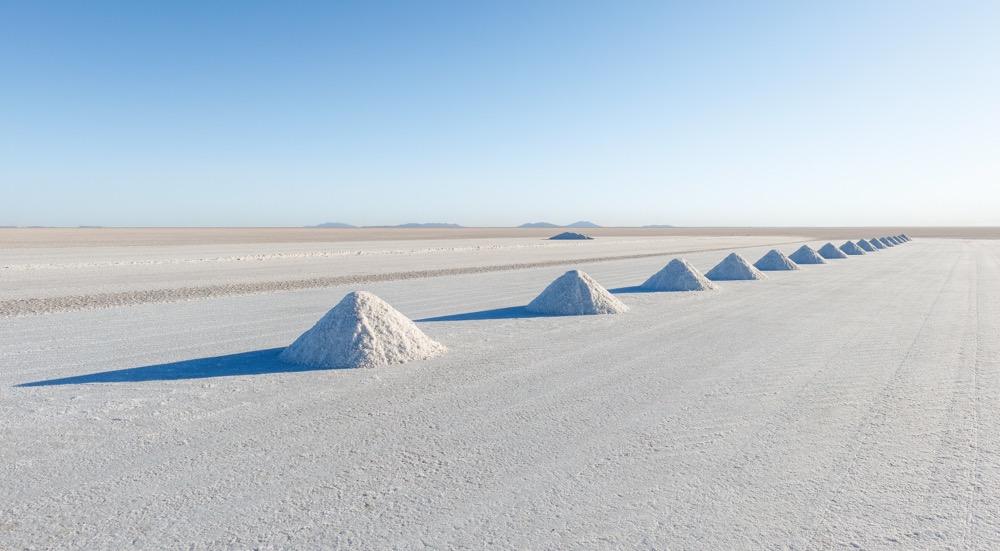
Bolivia eyes lithium mining investment from Brazil’s Petrobras Reuters | August 8, 2023 | Salar de Uyuni, Bolivia. Stock image
Brazil’s state-run oil giant Petrobras has signaled interest in possibly investing in Bolivia’s lithium-rich salt flats with an eye toward industrial-scale projects, the country’s top energy official said on Tuesday.
Energy Minister Franklin Molina spoke in an interview with state-owned Bolivia TV on the same day that Bolivian President Luis Arce met with the Petrobras chief executive on the sidelines of an Amazon rainforest summit in Belem, Brazil.
“They also showed an interest in visiting Bolivian salt flats and were motivated by our industrialization projects,” said Molina.
“(Petrobras) is showing an interest in this country that’s migrating toward electric vehicles and the production of batteries,” he added, emphasizing that Bolivia’s government is keen to advance on lithium.
Later on Tuesday, Petrobras confirmed the meeting between Arce and Petrobras CEO Jean Paul Prates in a statement.
It described the meeting as focused on evaluating “potential alliances and joint projects” in oil and gas, fertilizers, as well as “energy transition” projects, which is sometimes used to describe those involving key battery metals like lithium.
Bolivia boasts massive lithium resources in sprawling salt flats, but the landlocked South American nation has yet to translate the potential into commercial-scale production. A partnership with Chinese battery giant CATL is still in an early phase.
Molina also asserted that Petrobras is interested in investing in Bolivian natural gas, the country’s main fossil fuel business.
“They’re not just talking about the continuity in exports of gas to Brazil, but also in developing future investments in new exploration projects to increase production,” said Molina.
The minister noted that in a couple weeks a high-level Petrobras delegation with a focus on natural gas projects will travel to Bolivia, but he did not elaborate.
In its statement, Petrobras said it expects a company visit to Bolivia in September.
(By Daniel Ramos, Carolina Pulice and David Alire Garcia; Editing by Richard Chang)
Piedmont Lithium’s plans to supply Tesla face skeptical North Carolina officials
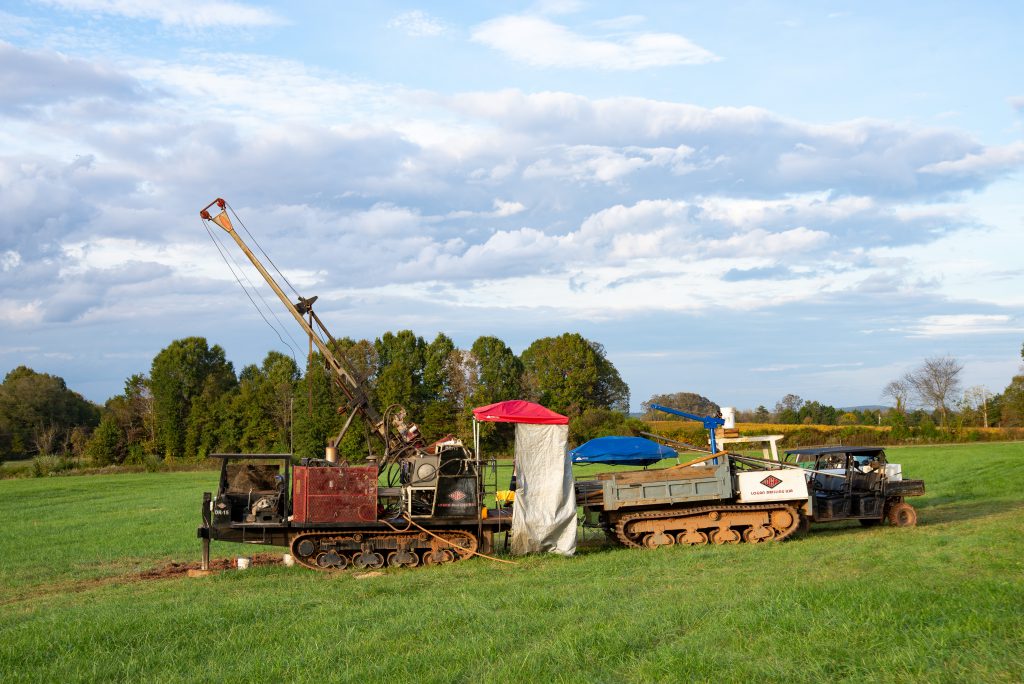
Reuters | August 8, 2023 | Piedmont lithium project, North Carolina. Image from Piedmont.
Piedmont Lithium on Tuesday drew skepticism and anger at a key meeting with local North Carolina officials about its plans for a lithium mine that would supply the electric vehicle battery metal to Tesla.
The open-pit mine, if approved, would be one of the few lithium-producing sites in the United States, but there has been little progress in gaining approvals for the project, which the company has been trying to get up and running for more than two years.
At the public meeting with the Gaston County Board of Commissioners, which controls zoning changes, officials were irked that Piedmont CEO Keith Phillips did not attend and expressed concern that the mine could cause wells in the area, which many residents rely on, to run dry.
Piedmont said it does not expect “widespread drying up of wells,” although it admitted at least 10 of its neighbors could run out of water.
“I don’t want to see any of our citizens ever be put in that position,” Commissioner Allen Fraley said at the meeting, which was webcast. “How would you like to wake up one morning and your well’s dry?”
Piedmont said it would be open to helping its neighbors in those situations dig deeper wells or connect to municipal water supplies.
Piedmont said Phillips did not attend because its technical experts did instead. The company brought staff focused on environmental and legal issues, as well as experts on blasting, water and other technical areas.
The project, which has divided the county of roughly 230,000 just east of Charlotte, underscores broader tension in the US as those who are resistant to living near a mine clash with those who believe the United States must lessen its dependence on China for lithium and other strategic minerals to cope with climate change.
Piedmont first signed a deal to supply lithium to Tesla in 2021 from North Carolina. That deal was paused before being renegotiated in January after Piedmont found a temporary source for the metal from a Quebec lithium mine in which it has an investment.
Piedmont will need the board to approve a zoning variance before it can build the project, which would include an open-air pit more than 500 feet (152 m) deep and production facilities.
The board has said it will not consider such a change until the company receives a state mining permit. Piedmont has been seeking a permit for nearly two years and in May asked for a third extension to file the necessary paperwork.
Piedmont officials said they were open to financially assisting homeowners not able to sell their land because of the mine project and that the company would aim to not discharge processed water into local waterways.
In response to concerns from commissioners that the company could be sold amid rampant global demand for lithium, they said that steps had been taken to “make it difficult” for the company to be sold, without elaborating.
They added that Piedmont was also open to funding a surety bond for mine reclamation “much larger” than the $1 million required by state regulations in case the company failed, though they did not provide a specific amount.
Multiple residents spoke against the proposed mine. None spoke for it. Some said Piedmont, which moved its headquarters to Gaston County in 2021 from Australia, has done little to share project details with them.
“We’ve not heard from Piedmont Lithium in over two years,” said Warren Snowdon, whose land shares an 8,000-foot-border with the proposed site. “So I don’t know if they don’t care and I don’t know if they’re concerned about us.”
(By Ernest Scheyder; Editing by Edwina Gibbs)
Barrick open to Saudi wealth fund buying stake in Pakistan’s Reko Diq project
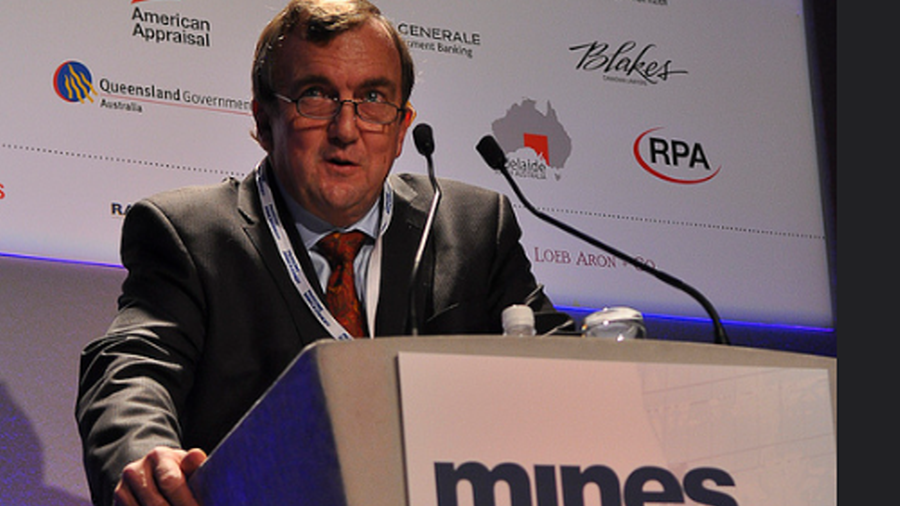
Barrick Gold Corp is open to bringing in Saudi Arabia’s wealth fund as one of its partners in Pakistan’s Reko Diq gold and copper mine, Barrick CEO Mark Bristow told Reuters in an interview on Tuesday.
He also dismissed a June media report that Barrick was in talks with fellow Canadian miner First Quantum Minerals on a possible acquisition as a “rumour”.
Barrick Gold owns a 50% stake in Pakistan’s Reko Diq mine, with the remaining 50% owned by the governments of Pakistan and the province of Balochistan. Barrick considers the mine one of the world’s largest underdeveloped copper-gold areas.
Bristow said Barrick won’t be diluting its equity in the project but “will not mind” if Saudi Arabia’s Public Investment Fund (PIF) wants to buy out the equity of the Pakistan government.
“There is a strong relationship between Saudi and Pakistan and since we control the project we have the first right of refusal,” Bristow added.
He said that Barrick will support PIF coming into the mine through Pakistan’s 25% equity stake.
Pakistan has not publicly stated that it is considering selling.
Earlier this month Pakistan hosted officials from Saudi Arabia in a mining conference in its capital Islamabad where officials of Barrick was also present. Barrick and Saudi’s state-owned mining company Ma’aden jointly operate a copper project in Jeddah.
PIF has been looking to invest in copper projects across the world as part of its drive towards funding energy transition projects. Earlier this month, PIF agreed to acquire a 10% stake in Brazilian mining company Vale base metals business.
Barrick, the world’s No.2 gold producer, considers sovereign wealth funds from the Middle East as “serious”,long-term investors to whom the company can sell its long term vision of growing its copper and gold business.
Asked about the company’s interest in First Quantum Minerals, Bristow said Barrick will stick to growing its production organically and that its acquisition strategy would be “measured.”
“We have people suggesting us First Quantum… but our shareholders are gold bulls,” Bristow said. “So I don’t know where that rumour came from, it was definitely not us, but that certainly helped lift their shares up.”
(By Divya Rajagopal; Editing by Mark Porter and Conor Humphries)
Insurers Pull Back After Strikes on Ukraine's Danube Grain Ports
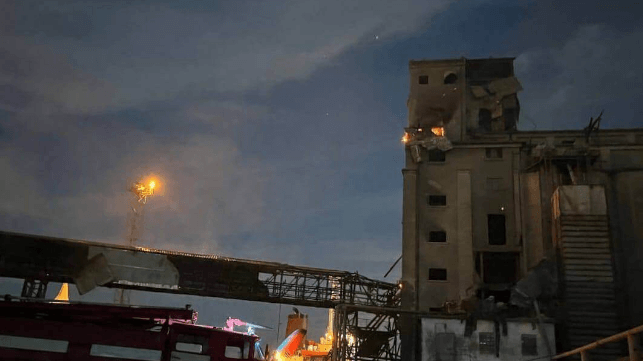
Damaged grain elevator at Port of Izmail after a Russian drone strike, Aug. 2 (Operational Command South)
Ukraine's Danube River ports are a lifeline for the nation's grain export trade, but persistent Russian drone attacks have put their future into question. A strike on Izmail this week caused extensive infrastructure damage, and marine insurers are beginning to back out of the region, which was until recently perceived as relatively low-risk.
On Tuesday night, Russian forces conducted a large-scale suicide drone strike on the port of Izmail, damaging 40,000 tonnes of stored grain, according to Ukraine's defense ministry. Photos from the scene suggest that silos and grain elevators were directly targeted. Izmail is just across the Danube from Romania, and video taken from the Romanian side showed explosions and fires burning in multiple parts of the seaport. Romania is a NATO member, and Russia's willingness to use aerial strikes so close to NATO territory has raised concerns about an escalation of the conflict.
Despite the airstrikes, the repeated Russian threats, recent intelligence warnings of new naval mine emplacements and the presence of Russian warships near Ukraine's sea lanes, the risks are not yet high enough to fully deter foreign-flag shipping. Three vessels transited the route from the Bosporus to the Danube this week, and Romanian authorities say that they expect to accommodate 30 more Ukraine-bound river transits this month.
However, there are clouds on the horizon. At least two marine insurers have decided to cease offering coverage for Ukraine's Danube waterway, according to Reuters. All insurance cover for the Ukrainian Black Sea coastline - including the larger ports previously covered by the Black Sea Grain Initiative - has been suspended. The Ukrainian government has signaled plans to launch its own insurance cover for shipping, but admits that any (new) Russian strikes on foreign-flag vessels would complicate its efforts.
If the Danube route shuts down, Ukraine's only remaining option will be overland exports through the European Union, either for onward transit to an EU port for export or for local sale within Europe. This too faces complications. Poland and other bordering states have protested the surplus of Ukrainian grain on their domestic markets: Local sales have reportedly depressed prices for Polish farmers, leading to intense political pressure to ban Ukrainian grain. Poland plans to suspend imports of Ukrainian agricultural goods on September 15, whether or not it has EU support for the move, Polish Minister of Agriculture Robert Telus said Thursday.
The only way to fully restore export capacity is to reopen the large seaport terminals around Odesa, according to International efforts to convince Russia not to attack Ukraine's food exports continue, led by Turkish President Recep Tayyip Erdogan. Russia has refused to allow Ukrainian grain to cross the Black Sea unless a sanctioned government bank is reconnected to the global interbank messaging network, SWIFT - an arrangement that the West has so far refused to allow.
Russia's blockade has attracted criticism from many corners of the globe. As of Wednesday, about 90 nations have signed a request calling for a cessation of "the use of famine, starvation, and food as weapons of war." On Sunday, Pope Francis described attacks on Ukrainian grain as a "grave offense against God, for grain is his gift to feed humanity." And China - which is both Russia's most powerful ally and the largest buyer of Ukrainian grain - has called for the corridor to reopen immediately. Over the last year, Chinese buyers purchased 25 percent of all Ukrainian grain on the Black Sea route, including six million tonnes of corn and wheat. This amounts to roughly one fifth of all Chinese imports of these two staples over the same period - and the supply will now have to come from somewhere else.
"With the breakdown of the Black Sea Grain Initiative, the pressures on Beijing are going to be extreme in terms of food price inflation,” David Riedel of the Riedel Research Group told CNBC.