Monday, August 21, 2023

ESG
A new approach to environmental, social and governance policies is needed before it's too late


Daniel Tsai, Lecturer in Business and Law, University of Toronto
Peer Zumbansen, Professor of Business Law, McGill University
Sun, August 20, 2023 
THE CONVERSATION

We are facing a crisis on a planetary scale and it requires immediate political, social and economic action. (Shutterstock)

This summer has proven how destructive climate change can be. We have been plagued by harrowing images of Maui, Hawaii in ashes, news about wildfires spreading smoke across Canada and the United States and record-breaking heat waves worldwide.

It’s clear we are facing a crisis on a planetary scale, requiring immediate political, social and economic action.

Corporations and governments have rushed to declare their commitment to environmental, social and governance (ESG) principles in response to the climate crisis. One of the issues with ESG is how difficult it is for investors, consumers and the public to assess how effectively companies have implemented it.

In addition, the lack of government leadership and the fragmentation of the ESG landscape has created uncertainty about its future. Many firms don’t know if they should lead by example or wait to follow the pack.

Read more: ESG investing has made little impact on the green energy transition so far. Why is that?

Several large investors and corporations in the U.S. — most notably BlackRock — have recently become targets of the “anti-woke” movement, adding further uncertainty and hesitancy to committing to ESG.

The public debate around ESG, stakeholder governance, sustainability and responsible investment continues to gain momentum in the midst of all this.

In response, McGill University’s CIBC Office of Sustainable Finance hosted academics and experts from 11 countries to confront the issues of ESG, climate change governance and democratic politics. The resulting impact paper proposes several policy recommendations for governments and corporations to work together to transform ESG standards into practice.
Increased transparency and accountability

Despite recurring financial crises and staggering socio-economic inequality, corporations find themselves conflicted by the need to maximize profits with ESG. But profit can still coexist alongside a significant business and investment shift towards sustainability.

A fully transparent and publicly available ESG and sustainability index for financial institutions and corporations would improve transparency, accountability and address the demand for ESG.

If large public corporations were required to report universal ESG metrics, it would lead to healthy competition among corporations to go above and beyond the minimum index requirements. This would allow investors and consumers to see how companies are actually implementing ESG policies, leading to increased transparency.

Meaningful disclosure will ultimately lead to a transformation of a company’s buying, production, selling and investing practices.

The BlackRock investment company in the Hudson Yards neighbourhood of New York City on March 14, 2023. (AP Photo/Ted Shaffrey)

Corporations and influential asset managers — such as BlackRock, State Street or Vanguard — must address stakeholder interests in ESG by changing their governance and investment practices in relation to their position of global power and influence.

A public index would provide a reference point for public and private behaviour to effectively address the causes of disastrous climate change. It would go beyond empty social media posts and corporate website statements by exposing companies’ shortcomings in across-the-board implementation of ESG policies.

Increased transparency would also help prevent companies from greenwashing by boosting their ESG ratings before quarterly or semiannual public disclosures.

In addition, a shared public commitment would not kill profits, as some have argued. Instead, it can mobilize people to think differently about gains, growth and what it means to run a successful business.

This forward momentum can lead to the integration of sustainability officers, who play a key role in ensuring effective ESG implementation, into businesses and organizations.
Incentivizing green investment

Another recommendation is for governments worldwide to offer incentives for green and purpose-driven investments, as Canada has done with green tax credits that were unveiled in the 2023 budget.

But these tax credits need to go further. For example, the government could provide tax credits to the oil, gas and mining sectors for investing in renewable energies. The government could also allow investors to deduct related corporate losses against their personal income.

That will help spur economic growth, investment and development in beneficial industries and technologies, as we have seen with the rise of the electric vehicle industry.


The West Pubnico Point Wind Farm is seen in Lower West Pubnico, N.S. in August 2021.
THE CANADIAN PRESS/Andrew Vaughan

The goal should be to encourage corporations to better integrate sustainable practices within their business models and create targeted investment that favours socially responsible investment. That way, governments can use their tax systems to support technologies and business models that address climate change.
The bigger picture

Governments need to take a longer view on the development of sustainability policies and push back against short-term criticism. One way world governments can do this is by publicly endorsing ESG initiatives. Government officials should also do more to promote ESG.

Governments can also help make the financial sector sustainable by providing favourable loans and financing for greener investment portfolios.

Governments, central banks and banking regulators can create regulations that require financial institutions to implement sustainability into their underwriting policies. This would involve placing higher interest costs on loans with poor ESG outcomes to encourage industries to invest in better ESG.

By setting transparent standards for ESG accountability, requiring corporations to participate in sustainability indexes and standards and offering economic incentives through tax reform, governments can have a transformative effect on businesses through ESG. But it requires effective leadership.

This article is republished from The Conversation, an independent nonprofit news site dedicated to sharing ideas from academic experts. 

UK
National Trust resists pressure to ditch Barclays over environmental concerns

Anna Isaac
THE GUARDIAN
Sun, 20 August 2023 

Photograph: The National Trust Photolibrary/Alamy

One of Britain’s most powerful charities, the National Trust, has hit back at pressure to cut ties with Barclays bank over environmental concerns.

The trust, which acts to conserve more than 780 miles of coastline and 500 historic properties, claims that it can wield influence within the banking sector as a whole and does not need to ditch the global bank as a supplier.

An attempt to stop the charity from banking with Barclays failed after losing a vote at its annual general meeting, but a grandson of one of the trust’s largest donors has doubled down on the campaign.

Dominic Acland said his environmentalist grandfather, who donated the family’s 7,000-hectare (17,000-acre) estates in Devon and Somerset to the charity in 1944, would be “horrified that the National Trust is banking with Barclays”, according to correspondence between Acland and the charity seen by the Financial Times.

Related: Celebrities call on Wimbledon to drop Barclays sponsorship

He further claimed in the correspondence that the charity’s approach of seeking to leverage its position as a client of Barclays to halt investment in fossil fuel exploration and other climate commitments was “not working”.

“It seems completely out of kilter to be banking with Barclays … when they [the National Trust] are an organisation that cares so deeply about nature and the environment,” Acland told the FT.

The National Trust is the ninth-biggest charity in the UK by expenditure, pumping half-a-billion pounds into its activities each year, according to data gathered by the Charity Commission, which governs the sector.

The charity has already ceased new investments into fossil fuels, but still banks with Barclays, which does directly invest in new fossil fuel projects. While Lloyds, HSBC and NatWest have said they will stop directly funding fresh fossil fuel extraction, Barclays has not made a similar pledge.

Barclays’ stance on the fossil fuel industry has come under growing scrutiny in recent years. Since November last year, a group called Christian Climate Action has put pressure on a range of charities, including the National Trust, to quit Barclays.

In May, the bank’s annual general meeting was disrupted by protesters who had reworked lyrics of a hit Spice Girls song to underline the bank’s role as one of Europe’s largest funders of fossil fuels.

In July, fellow charity Christian Aid switched its banking activities from Barclays to Lloyds. Martin Birch, chief operating officer for Christian Aid, said in a statement last month that the bank’s “record on fossil-fuel finance, and their weak commitment to future improvements in this area meant that we had to seek a more suitable provider”.

Last month celebrities including the film director Richard Curtis, the actor Emma Thompson and the entrepreneur Deborah Meaden also called on Wimbledon to end its new partnership with Barclays over the bank’s support for fossil fuel projects. They claimed that the sponsorship deal, reportedly worth £20m a year, was harmful to the tennis club’s reputation.

A Barclays spokespersonsaid the bank believes it can “make the greatest difference as a bank by working with customers and clients as they transition to a low-carbon business model”. These customers include “many oil and gas companies that are critical to the transition, and have committed significant resources and expertise to renewable energy”.

The spokesperson added: “Where companies are unwilling to reduce their emissions consistent with internationally accepted pathways, they may find it difficult to access financing, including from Barclays,” , noting that the bank has committed to become net zero by 2050.

The National Trust told the Guardian that it works with “partners and suppliers who are committed to reducing their climate impact” as part of its sustainability goals, which includes a commitment for the charity to become carbon net zero by 2030.

“We are clear that banks, including Barclays, need to do much more to address the financing of the fossil fuel industry,” it said, adding: “As a big charity, we know we can help influence change within the banking sector.”
UK
Over 700,000 households missed out on ‘flawed’ energy support scheme – charity

Aine Fox, PA Social Affairs Correspondent
Fri, 18 August 2023 


Hundreds of thousands of older people missed out on financial support for soaring fuel bills after a Government scheme “flopped”, a charity has claimed.

Age UK said some 735,240 households missed out on support under the Energy Bills Support Scheme (EBSS) Alternative Fund amounting to almost £3 million.

That fund – for households without a direct relationship to a domestic energy supplier, such as those in park homes or living on boats – has already faced criticism from the Public Accounts Committee (PAC).


The MPs said, in a June report, that many such households only became eligible for funding at the end of February, almost five months after consumers began receiving discounts on the main scheme.

Now Age UK has said Freedom of Information data requested on its behalf showed that, of the Government’s estimated 883,000 eligible UK households with atypical supply arrangements, only around 17% – equivalent to about 150,000 – were actually awarded the £400 of energy support available this year.

The charity said many of those who missed out were older people living in park homes and care homes.

It said its analysis of figures from the Department of Energy, Security and Net Zero also showed that households in areas of the country with higher levels of fuel poverty appeared less likely to have accessed the funding.

It said that while more than a fifth (22%) of eligible households in the South East, where fuel poverty is lowest, got funding, this compared to 13% of eligible households in the North East and London.

In terms of who was able to successfully access the funding, Age UK said eligible care home residents were least likely to have done so, with only around one in 14 of them (7%) receiving the £400 energy help.

This compared to around a third of park home and houseboat residents (35%) and over half of eligible heat network users (58%).

The Government said it had spent billions to protect families from price rises last winter and had used various ways to “communicate the scheme with as many eligible households as possible”.

But the charity said the findings showed the scheme for these users had “completely flopped” – blaming a “time-consuming, complicated” application process that it said had not been well enough publicised.

The organisation said it was calling for the unused money to be “recommitted to the scheme and for the process of applying for it to be made more straightforward, thereby increasing take-up”.

Caroline Abrahams, Age UK’s charity director, said: “The process designed by the Government to distribute the funding was flawed so we’re not surprised the scheme has flopped, but rather than siphoning off the unspent £300 million for other purposes, we call on the Government to do the right thing and improve the scheme so these older people get the money they are due.

“After all, with energy bills expected to stay high this winter, they are going to need all the financial help they can get.

“More than half-a-million households have missed out on this financial support as a result of the fund’s failure, many of them older and living in park homes and care homes.

“We know the fees have gone up substantially in care homes because of rising costs for everything from energy to food, so the extra £400 could have really helped some residents to continue to make ends meet.

“The responsibility on ministers to resurrect and improve this funding scheme is surely all the greater when you consider that some of the areas with the biggest concentrations of older people who have missed out on the funding also have above average levels of fuel poverty.”

A Government spokesperson said: “We spent billions to protect families when prices rose over winter, covering nearly half a typical household’s energy bill – this includes more than £60 million supporting over 140,000 households without a domestic electricity supplier.

“We used a range of methods to communicate the scheme with as many eligible households as possible, so they could apply to access this vital energy bills support – including a contact centre and requesting councils to write to eligible care homes and park home sites.

“We recommend that any household that did not apply should visit our webpage to view what other support they may be eligible to receive.”
ECOCIDE
Oily water visible near Lake Ontario amid clean-up efforts from Etobicoke industrial fire

CityNews
Aug 17, 2023
An oily sheen is visible around the mouth of Mimico creek as clean-up continues from last Friday's industrial fire in Etobicoke. Shauna Hunt with the efforts underway to contain the toxic sludge from seeping into Lake Ontario.


Runoff from Etobicoke chemical fire reaches Mimico Creek and Humber Creek as cleanup continues

Aug 17, 2023

Runoff from a massive fire at a chemical distribution company in Etobicoke last week continues to impact nearby waterways, with the Toronto Wildlife Centre (TWC) saying that at least 82 birds have been rescued from the area.

The six-alarm fire broke out at Brenntag Canada, a chemical distribution company located at 35 Vulcan Street, at about 1:15 a.m. on Aug. 11.

The cause of the fire has yet to be determined, however officials said there was possibly an explosion in an adjacent tractor-trailer.


Mimico Creek chemical cleanup underway

CityNews
Aug 13, 2023
After a large fire destroyed a chemical plant in Toronto, a cleanup is now underway in local waterways to remove a spilled industrial product before it reaches Lake Ontario. David Zura explains.


Massive fire breaks out at Toronto chemical plant

Global News

  Aug 11, 2023  #GlobalNews #fire #toronto

A massive six-alarm fire broke out early Friday morning at an industrial chemical facility in Etobicoke, where petroleum-based fluids and chemicals are stored.

More than 100 firefighters, police and paramedics assisted with controlling the fire.

“It’s one of the most significant fires that we have seen in the city in the last number of years,” Deputy Fire Chief Jim Jessop said.

All businesses in the area were closed or evacuated by Toronto police though no injuries were reported.

Brittany Rosen has the latest on the investigation.


GEMOLOGY
Jewelry worth up to $63,000 was stolen from one of the world's top museums and sold on eBay for as little as $50, report says

Alia Shoaib
Sat, August 19, 2023 


Several jewelry items worth up to $63,000 were stolen from the British Museum in London.

Items later appeared on eBay, priced for as little as $50.

A museum curator suspected of being behind the thefts was fired, and police are investigating.

A curator has been fired from the British Museum in London after stolen jewelry was found being sold cheaply on eBay, a report says.

Some of the items were worth up to £50,000, or approximately $63,000, and were listed on eBay for as little as £40, or $50, according to British newspaper The Telegraph.

An antiquities expert reported suspicion that a staff member was stealing from secure vaults at the museum in 2013, and the missing items began turning up on eBay three years later.

Peter Higgs, 56, who held the position of curator of Mediterranean cultures at the museum for over three decades, was fired after an internal investigation.

Higgs' 21-year-old son Greg maintained that his father is innocent.

"He's not done anything," Greg Higgs said, per The Times of London. "He's not happy about it at all. He's lost his job and his reputation and I don't think it was fair."

"He's devastated about it, because it's his life's work, basically. I've never known somebody who's so passionate about what he did."

The museum said on Wednesday that several items of jewelry made of gold, semi-precious stones, and glass, dating from between 1,500 BC and the 19th century AD, were among those missing, The Telegraph reported. Other items had been damaged.

One piece of ancient Roman jewelry made from onyx – that a dealer said was valued between £25,000 and £50,000, or $32,000 and $63,000 – was listed on eBay with a minimum price of £40, or around $50, in 2016. Nobody made a bid for the treasure, however, The Telegraph reported.

The police are now investigating the thefts.

The museum has not properly cataloged all eight million items in its collection, which makes it easier for thefts to go undetected, sources told The Telegraph.

"Major things do get cataloged. There are a lot of minor things which are not, or which are all lumped together," Professor Martin Henig, a Roman art expert at the University of Oxford, told the paper.

An independent review is underway to establish what is missing, attempting to recover the missing items and preventing future thefts.

A spokesman for the British Museum told the paper: "We have conducted a thorough investigation, identified the person we believe to be responsible, and that person has been dismissed. We are also taking further robust action to ensure this can never happen again."

"The whole question of thefts at the museum is now subject to a criminal investigation, so we cannot comment further."

What was stolen from the British Museum? All we know so far


Lola Christina Alao
Mon, 21 August 2023

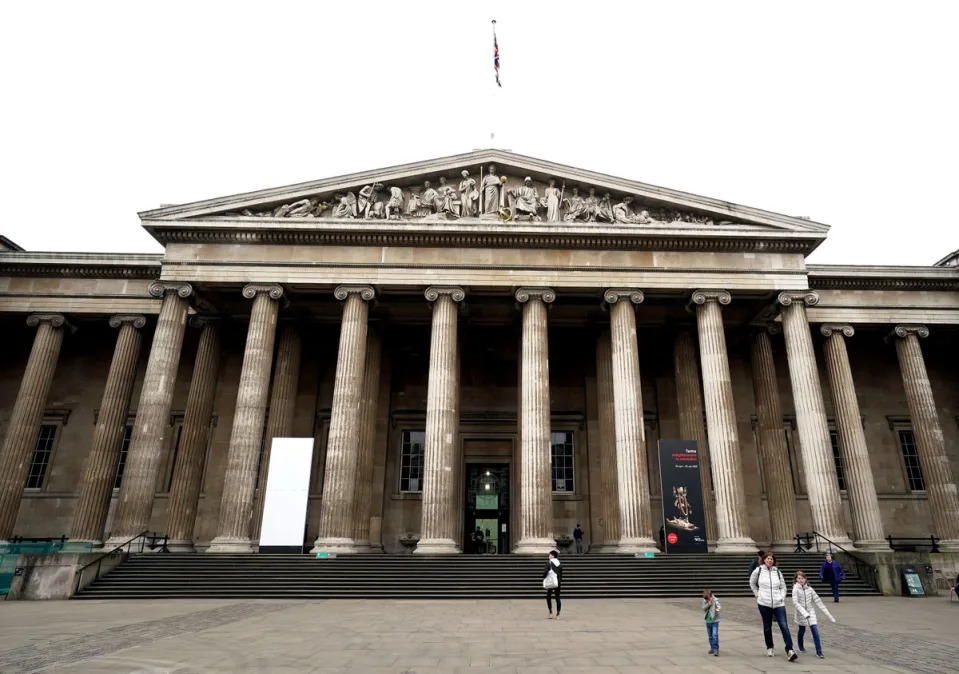
British Museum (John Walton / PA Wire)

Police are currently investigating the theft of antiquities from the British Museum.

The British Museum, a public collection dedicated to human history, art, and culture, is home to millions of valuable objects.

It has a permanent display of eight million works, which is said to be the largest in the world. Ranked third in the list of most-visited art museums in the world, the British Museum was established in 1753 and first opened to the public in 1759.

As the investigation unfolds, here’s what we know about what has happened so far.

What has been stolen from the British Museum?

The items include gold, jewellery, and gems of semi-precious stones that date from the 15th century BC to the 19th century AD.

Former trustee Sir Nigel Boardman and Lucy D’Orsi, the chief constable of the British Transport Police, will lead an independent review for the museum and make recommendations on future security arrangements. It will also “kickstart a vigorous programme to recover the missing items”, the museum said.

A spokesperson for the Met said: “We have been working alongside the British Museum. There is currently an ongoing investigation – there is no arrest and inquiries continue. We will not be providing any further information at this time.”

How has the museum responded?

The British Museum has sacked a member of staff after artefacts, some nearly 3,500 years old, were reported “missing, stolen, or damaged”.

Most of the missing items were small pieces kept in a storeroom belonging to one of the museum’s collections. None had recently been on public display, and they were kept primarily for academic and research purposes.

​​George Osborne, the museum’s chair, said: “The trustees of the British Museum were extremely concerned when we learned earlier this year that items of the collection had been stolen.

“The trustees have taken decisive action to deal with the situation, working with the team at the museum. We called in the police, imposed emergency measures to increase security, set up an independent review into what happened and lessons to learn, and used all the disciplinary powers available to us to deal with the individual we believe to be responsible.

“Our priority is now threefold: first, to recover the stolen items; second, to find out what, if anything, could have been done to stop this; and third, to do whatever it takes, with investment in security and collection records, to make sure this doesn’t happen again.

“This incident only reinforces the case for the reimagination of the museum we have embarked upon. It’s a sad day for all who love our British Museum, but we’re determined to right the wrongs and use the experience to build a stronger museum.”

Hartwig Fischer, the museum’s director, said: “This is a highly unusual incident. We take the safeguarding of all the items in our care extremely seriously.

“The museum apologises for what has happened, but we have now brought an end to this – and we are determined to put things right.

“We have already tightened our security arrangements and we are working alongside outside experts to complete a definitive account of what is missing, damaged, and stolen. This will allow us to throw our efforts into the recovery of objects.”

Boardman said: “The British Museum has been the victim of theft and we are absolutely determined to use our review in order to get to the bottom of what happened, and ensure lessons are learned. We are working alongside the Metropolitan Police in the interest of criminal justice to support any investigations.

“Furthermore, the recovery programme will work to ensure the stolen items are returned to the museum. It will be a painstaking job, involving internal and external experts, but this is an absolute priority – however long it takes – and we are grateful for the help we have already received.”

The museum will not be commenting further while the investigation is ongoing.

Who has been blamed for the theft?

Peter John Higgs, 56, was revealed by his son as the staff member sacked from his role.

Mr Higgs is a senior curator who worked at the British Museum for 30 years. Legal action is being taken against Mr Higgs and the matter is also being investigated by the economic crime command of the Metropolitan police. However, he has not been arrested and maintains his innocence.

Mr Higgs’s son Greg on Thursday told The Times that his father’s dismissal had come as a shock.

“He’s not done anything,” he said. “He’s not happy about it at all. He’s lost his job and his reputation and I don’t think it was fair. It couldn’t have been [him]. I don’t think there is even anything missing as far as I’m aware.

“He worked there for what, 35 years without any incidents. They relied on him for so much stuff. And then, yeah, I don’t know what changed.

“He’s devastated about it, because it’s his life’s work, basically. I’ve never known somebody who’s so passionate about what he did. I mean, he’s a world expert in his field.”

Why won’t the British Museum return stolen artefacts?


More than half of the UK public would like to see the Elgin Marbles repatriated to Greece (PA Archive)

The British Museum has been under fire to return artefacts that it has taken from other countries.

For instance, British Museum director Hartwig Fischer has defended the act, stating that Elgin’s removal of sculptures from the Parthenon in the early 1800s was a “creative act”, and reiterated that the museum’s trustees would not support repatriating them to Athens.

This has provoked an international backlash, and more than half of the British public would like to see them returned to Greece.

The museum’s deaccessioning policy forbids the return of any object in the British Museum’s collection unless it is a duplicate, physically damaged, or “unfit to be retained in the collection” and no longer of public interest.

The British Museum Act of 1963 also prohibits the institution from returning works. Though, as public pressure continues to grow, the future of the British Museum’s repatriation policy may be in jeopardy.

Railway ticket office closures protest heading for Downing Street

Alan Jones, PA Industrial Correspondent
Sat, 19 August 2023


A protest against railway ticket office closures is to be held on the final day of consultation on the controversial plans.

The Rail, Maritime and Transport union (RMT) said it will take the fight for the future of ticket offices to the doorstep of Downing Street on August 31.

A mass rally will see RMT members, trades unionists and campaigners tell the Government “in no uncertain terms” that ticket offices must be saved.

The consultation on the future of ticket offices, which has received nearly 400,000 responses, will close on September 1 and the union is encouraging everyone to take part.

The union said the plans to close up to 1,000 ticket offices will threaten 2,300 station staff job losses.

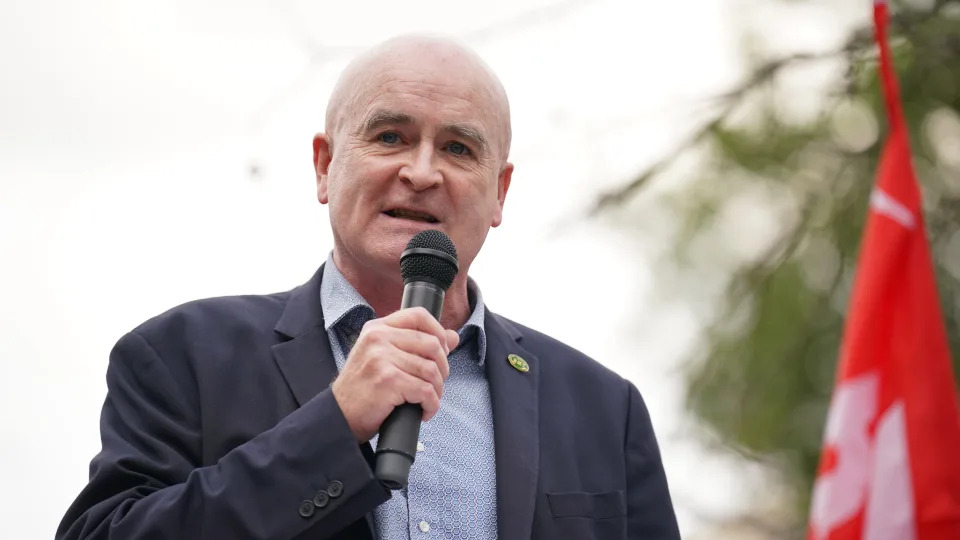
RMT general secretary Mick Lynch said: “The public response to the Government wanting to shut every ticket office in Britain has been very encouraging.

“People from different walks of life recognise the value of ticket offices and the station staff that support passengers on their journeys.

“Rail companies and their masters in government, do not care one jot about disabled people, vulnerable passengers and those travelling alone who welcome a human presence on our railways.

“These plans lock in age and disability discrimination and if they are carried out, it will mean many vulnerable passengers will not feel safe using the network.

“I urge everyone to take part in the consultation but our campaign will continue after the closing date of September 1.

“We will be lobbying MPs, several of whom from across the political spectrum have been supportive of our campaign, and RMT will increase the pressure on the government to abandon its increasingly unpopular policy.”

UK
Aslef union train drivers to strike again over pay

Alan Jones, PA Industrial Correspondent
Fri, 18 August 2023 

Train drivers are to stage a fresh strike in the long-running dispute over pay, threatening more travel chaos for passengers.

Members of Aslef will walk out on September 1 and will ban overtime on September 2, the same day as a strike by the Rail, Maritime and Transport union (RMT).

Aslef said its strike will force train companies across England to cancel all services, while the ban on overtime will “seriously disrupt” the network.

The union maintains that none of the privatised train-operating companies employs enough drivers to provide a “proper service” without drivers working on their days off.

The companies affected are Avanti West Coast; Chiltern Railways; c2c; CrossCountry; East Midlands Railway; Greater Anglia; GTR Great Northern Thameslink; Great Western Railway; Island Line; LNER; Northern Trains; Southeastern; Southern/Gatwick Express; South Western Railway; TransPennine Express; and West Midlands Trains.

Mick Whelan, Aslef general secretary, said: “We don’t want to take this action but the train companies, and the Government which stands behind them, have forced us into this place because they refuse to sit down and talk to us and have not made a fair and sensible pay offer to train drivers who have not had one for four years – since 2019 – while prices have soared in that time by more than 12%.

“The Government appears happy to let passengers – and businesses – suffer in the mistaken belief that they can bully us into submission.

“They don’t care about passengers, or Britain’s railway, but they will not break us.

“Train drivers at these companies have not had a pay rise for four years, since 2019, while inflation has rocketed,

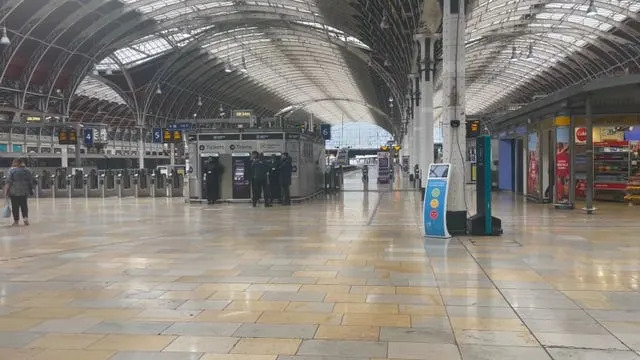
A near-empty concourse at Paddington station in central London during an earlier Aslef strike day (PA)

“We haven’t heard a word from the employers – we haven’t had a meeting, a phone call, a text message, or an email – since April 26 and we haven’t had any contact with the government since January 6.

“This shows how the contempt in which the companies, and the government, hold passengers and staff and public transport in Britain.

“They are happy to let this drift on and on, but we are determined to get a fair pay rise for men and women who haven’t had one for four years while inflation has reached double figures.

“Our members, perfectly reasonably, want to be able to buy now what they could buy back in 2019.

It will be the 12th one-day strike by Aslef members since the dispute started over a year ago.

Mr Whelan warned of further industrial action if the deadlocked row continues, saying Aslef members were pressing the union to go “harder and faster.”

The RMT is also striking on August 26 in its dispute over pay, jobs and conditions.

The Rail Delivery Group advised passengers that due to the RMT strikes there will be reduced services across the rail network on August 26 and September 2.

A statement said: “Train companies are doing all they can to keep passengers moving, but those travelling during that period are advised to plan ahead and check before they travel.

“RMT union members such as station staff, train managers, and catering staff will participate in the strikes, causing some disruption to travel plans.

“As the level of disruption will vary across the country, passengers are advised to check their travel arrangements in advance. We expect that more than half of the service will be running across the country.”

The strikes are likely to see trains start later and finish much earlier than usual, with only around half of services in some areas, while other parts of the country will have fewer or no services at all.

It is likely that evening services on some lines will be affected on the days before each strike and on the mornings after strike days.

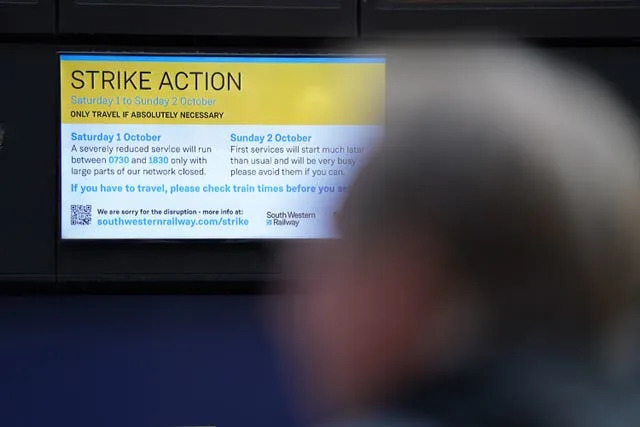
A sign warning passengers at Waterloo Station in London, of planned strikes (PA)

A Rail Delivery Group spokesperson said: ”Further strike action by the Aslef leadership is unnecessary and will cause more disruption to passengers looking to enjoy various sporting events and the end of the summer holidays.

“The union leadership has its head in the sand and refuses to put our fair and reasonable offer to their members.

“The offer would increase the average driver base salary for a four-day week without overtime from £60,000 to nearly £65,000 by the end of 2023.

“We want to give our staff a pay increase, but it has always been linked to implementing necessary, sensible reforms that would enhance services for our customers.

“We urge the Aslef leadership to acknowledge the substantial financial challenges facing the rail industry and work with us to achieve a more dependable and robust railway system for the future.”

The rail unions are also campaigning against controversial plans to close most railway ticket offices.

More than 300,000 people have responded to a consultation, which ends on September 1.

A Department for Transport spokesperson said: “The Government has played its part to try and end these disputes by facilitating fair and reasonable pay offers, taking train drivers’ average salaries from £60,000 to £65,000, but union leaders refuse to give their members a vote.

“Aslef and the RMT are coordinating their strikes to try and cause as much disruption as they can, deliberately targeting the Bank Holiday weekend – which for many, is the last weekend of the school summer holidays.”
UK
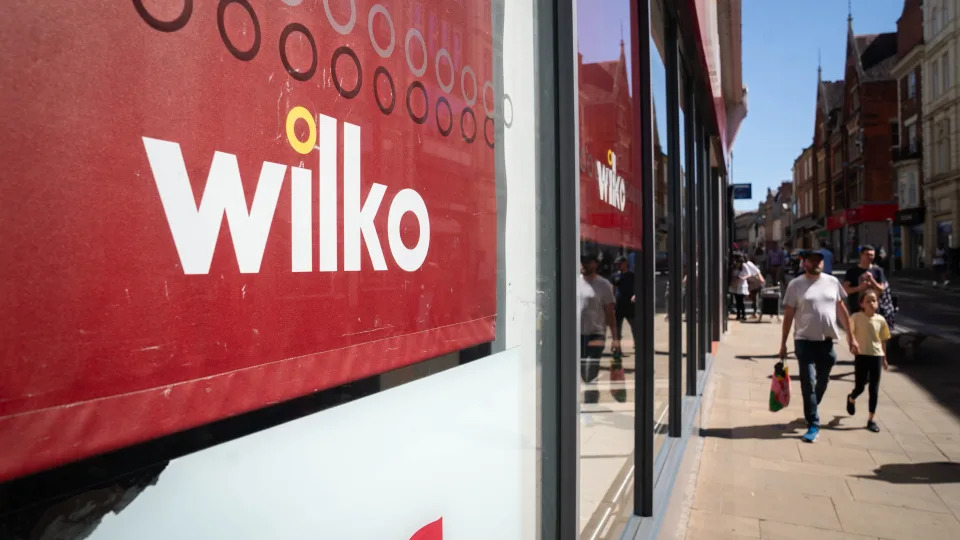
‘Genuine grounds for hope’ for Wilko as bidders circle, says union

Henry Saker-Clark, PA Deputy Business Editor
Fri, 18 August 2023


There are “genuine grounds for hope” over the future of stricken retailer Wilko after interest from potential suitors, the GMB union has said.

The retailer tumbled into administration last week, putting the future of its 400 shops and 12,500 workers at risk.

Administrators from PwC swiftly sought offers from potentially interested firms which could save jobs and stores.

It is understood that bidders were set a deadline of Wednesday to register their interest but the insolvency process is continuing as PwC assesses options for the retailer and its assets.

GMB, which has met the company and its administrators as part of the consultation process, indicated that a deal could be struck.

Andy Prendergast, GMB national secretary, said: “We can confirm there have been expressions of interest from organisations who are considering taking over at least some parts of the business.

“These are still at an early stage, but means there are genuine grounds for hope.

“Whilst this process continues staff will continue to be paid and kept on. All stores are continuing to trade, and deliveries of new stock will continue.”

The administration process means that bidders are not expected to take on all the company’s liabilities, such as costly debts, as part of any deal.

Rivals Poundland, B&M, The Range and Home Bargains are reportedly among the firms interested in snapping up the business or some parts, according to The Sun newspaper.

On Friday, Wilko also launched a new sale offering significant reductions to shoppers as it continues to trade and work through existing and new stock.

Union for Philadelphia Orchestra musicians authorize strike if talks break down


Sun, August 20, 2023

SARATOGA SPRINGS, N.Y. (AP) — Musicians authorized a strike against the Philadelphia Orchestra if bargaining breaks down for an agreement to replace the four-year deal that expires on Sept. 10.

Local 77 of the American Federation of Musicians said Sunday that 95% of voting members approved the strike authorization a day earlier. In addition to an agreement on compensation and benefits, the union said it wants 15 vacant positions filled.

Base salary in 2022-23 was $152,256, including electronic media agreement wages, the union said. Each musician received a supplemental payment of $750 or $1,500 in each year of the contract.

“We are disappointed in the decision by AFM Local 77 and the musicians of the Philadelphia Orchestra to authorize a strike,” management said in a statement. “We will continue to negotiate in good faith towards a fiscally responsible agreement that ensures the musicians’ economic and artistic future.”

The orchestra completed its summer residency at the Saratoga Performing Arts Center on Saturday. Music director Yannick Nézet-Séguin wore a blue T-shirt supporting the union during an open rehearsal at Saratoga on Aug. 11.

The 2023-24 season at Philadelphia's Verizon Hall at the Kimmel Cultural Campus is scheduled to open Sept. 28 with Nézet-Séguin conducting a program that includes cellist Yo-Yo Ma.

The orchestra filed for bankruptcy in 2011 and emerged a year later. Musicians struck on Sept. 30, 2016, causing cancellation of that season's opening night, then announced an agreement two days later.

The orchestra last month canceled a four-concert California tour with principal guest conductor Nathalie Stutzmann scheduled for March and was replaced by the Atlanta Symphony Orchestra, whose music director is Stutzmann.

The Associated Press
1/3 OF THE WORLDS LNG
Australian LNG Workers Give Woodside Ultimatum on Strike Action


Amy Bainbridge and Stephen Stapczynski
Sat, August 19, 2023


(Bloomberg) -- Workers at one of Australia’s key liquefied natural gas facilities will take strike action if they cannot reach an agreement with Woodside Energy Group Ltd. by Wednesday, in the latest escalation over pay and conditions

The Offshore Alliance, a group representing two major labor unions, said in a social media post Sunday workers had “unanimously endorsed” giving Woodside seven working days to take industrial action if enterprise bargaining claims “are not resolved” by close of business Wednesday, when Woodside and officials representing workers intend to hold new talks.

If a notice is issued, strike action could begin as early as Sept. 2, the alliance said in a statement Sunday. Workers’ groups are required to give seven days’ notice before industrial action begins.

Woodside said last week that it continues to “engage actively and constructively in the bargaining process” and that “positive progress is being made.” A spokeswoman for the company said Sunday that the situation was unchanged from that statement.

LNG Turmoil Endures as Unions Begin Australia Strike Votes

Unions have been locked in discussions with Woodside Energy over demands around pay and other conditions by staff at offshore platforms that feed the North West Shelf liquefied natural gas export facility in Western Australia.

The threat of strikes in Australia has rocked the global gas market, sending prices higher in Europe and Asia over the last few weeks. LNG buyers are holding back purchases and requesting looser delivery terms to avoid any potential impact.

In a ballot earlier this month, about 150 Woodside workers voted for potential action that would include stoppages of between 30 minutes and four hours, and actions such as refusing to unload cargo other than food, water or medical supplies. They would also stop restarting gas compressors or generators, and wouldn’t facilitate helicopter landings.

Workers at Chevron Corp.’s key LNG plants in Australia began voting on industrial action on Friday. Outages at Woodside and Chevron sites could put as much as 10% of global LNG supply in jeopardy, according to Goldman Sachs Group Inc.

--With assistance from Ainsley Thomson.

©2023 Bloomberg L.P.