Monday, August 21, 2023

‘Fired on like rain’: Saudi border guards accused of mass killings of Ethiopians

Peter Beaumont
Sun, 20 August 2023

Photograph: Nariman El-Mofty/AP

Saudi border guards have been accused of killing hundreds of Ethiopians using small arms and explosive weapons in a targeted campaign that rights advocates suggest may amount to a crime against humanity.

The shocking claims are made in a detailed investigation by Human Rights Watch, which interviewed dozens of Ethiopian people who said they were attacked by border guards while they tried to cross into Saudi Arabia from Yemen.

Last week Downing Street confirmed that Rishi Sunak plans to welcome Saudi Arabia’s crown prince Mohammed bin Salman to London “at the earliest opportunity”. It would be the first visit since the death in 2018 of the Saudi dissident Jamal Khashoggi, who US intelligence believe was murdered and dismembered by Saudi agents in Istanbul on the orders of Prince Mohammed.

Using satellite imaging, photographs of fatalities from more than 20 incidents, witness testimony by survivors and forensic experts’ examination of survivors’ wounds, HRW has built up a compelling and horrific picture of an escalating campaign of extreme violence aimed at people trying to cross the border.

Witness testimony describes mass fatality events involving significant numbers of women and children killed in shelling, with dead people and body parts spread along trails.

“I saw people killed in a way I have never imagined,” Hamdiya, a 14-year-old girl who crossed the border in a group of 60 in February, told researchers. “I saw 30 killed people on the spot.”

HRW’s lead researcher on the report, Nadia Hardman, described the findings as “obscene”.

“I cover violence at borders, but I have never come across something of this nature, the use of explosive weapons including against women and children,” Hardman said.

The report builds on a mounting body of evidence of extremely serious human rights violations on the Saudi-Yemen border. Last year UN Special Rapporteurs wrote to the Saudi government with allegations about the killing of hundreds of migrants.

In June the International Organization for Migration’s Missing Migrant Project issued its own estimate of fatalities on the Saudi border. It said that at least 795 people, “believed to be mostly Ethiopians”, had died.

The Guardian has contacted the Saudi ministry of foreign affairs and Saudi embassy in London for comment.

In March the Saudi government “categorically denied” claims from the UN rapporteurs of an apparent “systematic pattern of large-scale, indiscriminate cross-border killings by Saudi security forces against migrants, including refugees and asylum seekers, and victims of trafficking”.

The latest investigation into abuses in an area largely shut off to foreign journalists and aid workers is the most detailed picture yet of what is happening at the border.

Among the most shocking claims are that:

Saudi border forces shelled a group of people who had been arrested, detained and expelled even as they attempted to cross the border back into Yemen.


Saudi border forces forced a young person who had survived an attack to rape another survivor under threat of execution.

People detained after crossing the border were shot at close quarters, and survivors were told by border forces to choose a limb to be shot in.

Hundreds of thousands of Ethiopians live and work in Saudi Arabia. Many migrate for economic reasons but some have been driven to leave by rights abuses in Ethiopia, including during the recent brutal war in the north of the country.

The alleged killings have occurred on a major migration transit route used by people traffickers and smugglers between Al Jawf in Saudi Arabia and Sa’dah in Yemen, a region controlled by the Houthi Ansar Allah movement that borders Saudi Arabia’s Jizan province.Interactive

HRW’s researchers interviewed 42 Ethiopian people who had tried to cross into Saudi Arabia from Yemen, or the friends and relatives of those who tried to cross, and analysed more than 350 videos and photographs posted to social media or gathered from other sources filmed between 12 May 2021 and 18 July 2023.

These included pictures of dead and wounded people scattered along trails used by people-trafficking groups, as well as injured survivors in camps and medical facilities, some with horrific injuries consistent with shrapnel from mortars and similar weapons.

“Saudi border guards have used explosive weapons and shot people at close range, including women and children, in a pattern that is widespread and systematic,” HRW’s report says. “If committed as part of a Saudi government policy to murder migrants, these killings would be a crime against humanity. In some instances, Saudi border guards first asked survivors in which limb of their body they preferred to be shot, before shooting them at close range.

“While Human Rights Watch has previously documented killings of migrants at the border with Yemen and Saudi Arabia since 2014, the killings documented in this report appear to be a deliberate escalation in both the number and manner of targeted killings.”

Shown video and photographs of injuries sustained in the attacks, the Independent Forensic Expert Group (IFEG) of the International Rehabilitation Council for Torture Victims, an international group of forensic experts, concluded that injuries were consistent with small arms fire and explosive weapons.

IFEG’s report for HRW describes 22 images of sufficient quality to analyse. “A range of weaponry appear to have been used,” it says. “Some injuries have characteristics consistent with gunshot wounds, while others exhibit clear patterns consistent with the explosion of artefacts with capacity to produce heat and shrapnel.”

The estimated scale of the killings was provided by witnesses.

In one of the incidents, a survivor said that from his group of 170 people, “I know 90 people were killed, because some returned to that place to pick up the dead bodies – they counted [about] 90 dead bodies.”

Those killed and injured set off from two camps run by people smugglers and controlled by Houthi forces close to the Saudi border – Al Thabit migrant camp located in a wadi about 4 km (2½ miles) from the border and Al Raqw, a tented encampment 17km (10 miles) south of Al Thabit, also located on the border.

In one alleged incident from early June interviewees said Saudi border guards fired explosive weapons on a group of people who were preparing to re-enter Yemen having just been released from Saudi detention.

Munira, a 20-year-old-survivor who suffered facial injuries consistent with shrapnel during the alleged incident, said it happened after the group was put on a minibus heading back towards the border.

“When they released us, they created a kind of chaos; they screamed at us to get out of the car and get away,” she said.

“When we were 1km away, the border guards could see us. We were resting together after running a lot … and that’s when they fired mortars on our group. Directly at us.

“There were 20 in our group and only 10 survived. Some of the mortars hit the rocks and then the [fragments of the] rock hit us … The weapon looks like a rocket launcher, it had six ‘mouths’, six holes from where they fire and it was fired from the back of a vehicle – it fires several at the same time. They fired on us like rain.”


British aircraft maker behind Islander plane hit by winding-up petition


Howard Mustoe
Sun, 20 August 2023 

Britten-Norman’s success is built on its Islander aircraft which first flew in 1965
 - Universal Images Group Editorial

A British manufacturer that builds aircraft used by MI5 is scrambling to get its finances in order after it was hit with a winding-up petition.

Britten-Norman’s 69-year existence was recently under threat as the Civil Aviation Authority (CAA) made an attempt to recoup unpaid debts through the High Court.

The CAA launched a winding-up petition against the Isle of Wight-based company earlier this month, but it is understood this has now been withdrawn.

Britten-Norman’s bosses insisted the legal action was due to an “error”.

However, winding-up proceedings, which can lead to a company’s assets being seized, are typically used by creditors as a last resort to recover cash.

Legal papers show Britten-Norman owed the regulator £36,577 for invoices relating to design approvals, airworthiness and noise certification.

“The petitioner has provided the company with multiple opportunities to make payment in line with an arranged payment plan,” said the CAA’s court filing, dated Aug 11. “Despite this, the company has failed to pay the agreed instalments or meet the demanded payments.”

The CAA declined to comment.

A Britten-Norman spokesman said: “This is an error which is being amended.”

Britten-Norman’s success is built on its nine-seat, twin-engined Islander aircraft which first flew in 1965.

Popular as an air ambulance and short-haul travel, around 1,300 have been built to date.

The British Army and Royal Air Force used Britten-Norman’s camera-equipped Islanders for domestic surveillance over a 30-year period, including missions over Northern Ireland during the Troubles to feed vital intelligence to MI5 agents.

The last Britten-Norman Defenders, as the military called their Islander aircraft, were withdrawn in 2021.

Companies House records show that the aeroplane manufacturer and its owner are also late in filing their annual accounts.

Britten-Norman and its parent company B-N Group Ltd are both overdue by more than six weeks.

B-N Group’s last accounts for 2021 show an £80,000 profit, down from £462,000 in 2020.

The winding-up petition comes months after Britten-Norman unveiled ambitious plans to merge with Cranfield Aerospace Solutions to begin making a hydrogen-fuelled version of its aircraft.

The company has also set out plans to bring production back to the Isle of Wight after offshoring the majority of its work to Romania six decades ago.

While plenty of military jets and helicopters are made in the UK, civil aerospace manufacturing is mostly limited to building parts.

Airbus makes wings and other components in Britain, while Rolls-Royce makes jet engines.

The Isle of Wight is also home to Airframe Assemblies, a specialist aerospace company that rebuilds Spitfires from salvaged wrecks back to flying condition.

Britten-Norman was founded by engineers John Britten and Desmond Norman in 1954 to build a small commuter aeroplane.

They diversified into crop-spraying aircraft and also ventured into hovercraft under the Cushioncraft name.

The success of the Islander led the company to farm out production, handing a contract to Intreprinderea de Reparatii Material Aeronautic in Romania.
DEI/SPAIN HAD MORE COLOUR
England Lionesses team 'looks blonde, blue-eyed' and lacks diversity, says TV commentator

Ellen Manning
Mon, 21 August 2023

England's Lionesses were beaten in the final by Spain. (Getty Images)

An entrepreneur has commented on the ethnic make-up of the England's Lionesses squad - who narrowly missed out on World Cup victory on Sunday - commenting that it "isn't that diverse".

Wilfred Emmanuel-Jones MBE's comments came ahead of the Women's World Cup final, which saw England lose 1-0 to Spain.

Despite the defeat, the Lionesses have been praised for inspiring millions and doing "fantastic" work to promote the women's game.


The Prince of Wales, who faced criticism ahead of the game for not attending in person, tweeted a personal message to the squad after the match saying their “spirit and drive have inspired so many people".

Read more: England v Spain: Women's World Cup Final in pictures


Wilfred Emmanuel-Jones MBE has been criticised for his comments. (Alamy)

Speaking on Sky News ahead of the match, Wilfred Emmanuel-Jones MBE - who describes himself as food industry diversity advocate The Black Farmer - said the women's squad lacked diversity, describing them as "blonde, blue-eyed".

During a discussion of the newspaper front pages, he said: "I don't want to pour boiling water on it but it isn't that diverse".

"It really sticks out at you. They look blonde, blue-eyed. If it was the men's World Cup it would be very representative of the Britain that we're in and very, very diverse."

He went on: "I'm going to be watching it and I'm going to be supporting it and I don't want to be seen as pouring cold water on but there is something we need to look at."

Read more: England coach Sarina Wiegman aims for 'new moments' with defeated Lionesses

An FA spokesperson said: "We have publicly committed to improving the diversity within our England pathway but also within the wider game as a whole.

"That includes working with government so every girl can have the chance to play in school. We have also completely restructured our talent pathway so more young girls from all backgrounds can find a local place to play and we are then ensuring it is possible for the very best talent to be identified.

"Of course, while progress is being made, there is always more to do."

Questions have been asked previously about how to improve diversity within the Lionesses squad. (Getty)

The issue of diversity in the Lionesses has been raised previously, with key figures saying work is underway, but change will be gradual.

In the Euro 2022 tournament, the BBC received 222 complaints after a report from Alex Scott looked into diversity in women's football.

The presenter’s investigation was aired during half-time of the Denmark vs Finland match in the tournament, with broadcaster Eilidh Barbour saying that England’s all-white Lionesses highlighted a lack of diversity in the sport.

She commented that all starting 11 players and five substitutes who came on to the pitch were white, saying: "that does point towards a lack of diversity in the women’s game in England".

Read more: Girls' football now so popular clubs 'can't form teams fast enough'

Commenting on suggestions that professional women’s football in England remains a middle-class sport in February this year, England manager Sarina Wiegman said: "You’re not going to change things overnight.

"Over the last weeks the FA and Kay Cossington [the FA’s women’s technical director] launched an improved pathway, which is really about performance, but also inclusivity, diversity and accessibility.

“Hopefully in the future, and I don’t know how long it will take, we will get very, very good players we can start with, but also [players] that represents more the diversity of our community."

The issue re-emerged as the Lionesses squad for the FIFA Women's World Cup in Australia came under scrutiny, with some pointing out that only two of the 23-player squad are black.

Again, Wiegman said change was underway but would not happen "overnight".

Jess Carter, one of two Black players in the World Cup squad along with Lauren James, has also previously addressed the lack of diversity in the elite squad.

“I think it comes from the same place. It’s about recognising what the demographic in whatever area needs. With equal access will come more diversity in the sport," she told Vogue.

Opinion

England's World Cup Lionesses bring home something far more valuable than a trophy - a sporting legacy that shall endure


The Yorkshire Post
Updated Mon, 21 August 2023 

Mary Earps of England is congratulated by Millie Bright after saving the penalty taken by Jennifer Hermoso of Spain (not pictured) during the FIFA Women's World Cup Australia & New Zealand 2023 Final match between Spain and England at Stadium Australia on August 20, 2023 in Sydney, Australia. (Photo by Catherine Ivill/Getty Images)

And it isn’t unusual for city squares, town and village halls and community centres to bring people together to watch important football matches.

We are a nation well-versed in supporting the national team, people in their millions wearing three lions on their chest with pride, cheering on England with a collective spirit that sport in this country has a habit of bringing out in us all.

But what is unusual is for all of that to be brought about by women’s football, and yet, as England set about yesterday’s World Cup Final against their ultimately victorious opponents Spain, the fizz that has for years bubbled up around the country was there.

Social media awash with anticipation, messages of support for this England team, who went yet again in search of glory having been crowned European champions just last year.

The front pages of our national newspapers carried in unison headlines screaming support for our Lionesses, news broadcasts on television and radio led with the football. And so even though that coveted trophy will not be ‘coming home’, to borrow a little bit of footballing parlance, a sporting legacy that will prevail forever is heading home.

Because what our national team has done in the last year or so, not just for the so-called women’s game – football belongs to us all – but for sport in general and for wider society should not be underestimated.

In the years to come, certainly in this country, the likes of Yorkshire’s Millie Bright, Rachel Daly, Bethany England, Ellie Roebuck and Esme Morgan will be able to count as their legacy leading women’s football into the mainstream.

Opinion

Powerless in the face of Britain’s crises, Rishi Sunak has now entered his self-pitying era


Nesrine Malik
THE GUARDIAN
Sun, 20 August 2023

In this article:

Nesrine Malik
Sudanese-born journalist and author

We are used to the fact that Rishi Sunak only has two speeds: blandly repeating his five political “priorities” and dutifully affirming the nastiest of his party’s rhetoric. When he’s not answering questions by reciting the five pledges, he’s attacking lefty lawyers, “woke nonsense” or inventing cruel ways to detain and deport asylum seekers. Both, to a certain extent, are performances: the robotic recitations to make clear that, after a series of reckless Tory prime ministers, a grownup is back in charge. The rightwing populist setting, meanwhile, is designed for his own party and the Tory press.

But sometimes another Sunak appears in flashes in a third speed: the self-pitying and frustrated prime minister. One who seems to say: look, you don’t understand how much I’m sacrificing for you people.

Just last week, the prime minister told ITV News that he is enduring political pain in the cause of bringing down inflation. His argument seemed to be that by not doing what people want – increasing government spending to mitigate the cost of living – he is serving the long-term good. “It might make everyone feel better in the short term to borrow lots of money to do lots of things,” he told political editor Robert Peston. “I’m not going to do that.” It is now a familiar piece of Sunak rhetoric. Earlier this year, he justified his refusal to give what he termed a “massive” pay rise to nurses in England on similar grounds. He even spoke of not making his “life easier” during the Conservative party leadership contest against Liz Truss last year. It seems a surprise to him, or at least something that has not yet sunk in, that being prime minister is not about his own personal martyrdom.

On some level, Sunak’s pained parent doling out hard truths persona is familiar from Thatcherite ideology: a morality tale in which self-sacrifice pays out. But Sunak delivers it with condescending impatience rather than sobriety, revealing something deeper about himself. It is hard to avoid the impression that here is a man who has eschewed a peaceful private life making even more exorbitant sums of money in finance in order to publicly serve – and is now annoyed that it’s all a bit more of a pain than he frankly has the patience for. The British people are not shareholders who he can placate with a PowerPoint presentation spelling out the financial picture, but people who have pesky feelings about being able to eat and house themselves, who are rightly making demands about an economic system that has failed them.

Some of this is personality. It is now abundantly clear that Sunak is increasingly impatient with – and distant from – a public that just doesn’t grasp how much he and his government are doing for them. Last week, the Liberal Democrats accused Sunak of being “woefully out of touch” when he appeared to tell people struggling with high energy bills that they don’t quite understand that, sure, bills are high, but they could be even higher. “A typical family will have had about half their energy bills paid for by the government over the past several months,” he said. “Now you wouldn’t have quite seen that because you would have still just got your energy bill, it would have been very high and you’d have been: ‘Oh my gosh, what’s going on?’ but what you wouldn’t have realised, maybe, is that before that even happened, £1,500 had been lopped off, and the government had covered it.” In other words, the public would do better to see the numbers that are not on their bill rather than those that are actually on it, and stop asking so many silly questions of this very busy man.

What’s more, last month, he got testy when a radio interviewer pressed him on his use of jets and helicopters to get around, saying it was “an efficient use of time” for someone so busy, and rounded on the interviewer with one hell of a strawman, accusing him of thinking “that the answer to climate change is getting people to ban everything that they’re doing, to stop people flying, to stop people going on holiday. I mean, I think that’s absolutely the wrong approach”.

There is an argument that these are inevitable PR glitches on the part of someone under constant scrutiny. I am sometimes told by Sunak supporters that he is just not good with the media; he is genuinely hard-working and liked by his team. But these tetchy statements betray a real sense of powerlessness, misdirected at the public and the media. He is indeed backed into a corner, not just by his own limitations, but by his party and ideological positions. Those Thatcherite convictions are either already played out – there is little left to privatise – or preventing him from actually fixing the ailing British economy. He will not raise taxes on assets or capital gains, or genuinely consider price controls to keep inflation in check, or contemplate, Maggie forbid, borrowing to invest in the sort of green tech or insulation that liberates consumers from the gouging of energy companies and the whims of distant warmongering strongmen. What is exposed is an isolated man who is out of moves.

He is restrained even further by his own fractious party. There is no amount of hard graft that will vanquish the troublesome Johnsonites, Brexit obsessives and loudmouths who say refugees should “fuck off back to France”. They can only be appeased and domesticated with jobs in cabinet. And so he is stuck, unable to look inward and admit Tory policies are the problem, or outward to confront his own party’s excesses. He is a man, to adapt the words of the comedian Stewart Lee, “trapped between two different forms of cowardice”.

But I don’t want to spend too much time picking on Sunak. After all, his style of political petulance isn’t confined to him: it is a feature of a dead-end consensus in Westminster. It is echoed in Keir Starmer’s scolding about all the “tough” and “hard” decisions that he has to make when pressed on the pledges he has watered down or abandoned. Both party leaders agree that people’s expectations must be tempered, horizons narrowed. It speaks volumes about the direction of British politics that, as a general election looms, their job is finding more ways to promise nothing.

Nesrine Malik is a Guardian columnist
UK
LONDON
Bidding war for Labour insiders as City prepares for red shift RED TORIES

Melissa Lawford
TORY TELEGRAPH 
LOVES CONSERVATIVE LABOUR LEADER SIR KEIR
Sun, 20 August 2023 

Labour’s lead over the Tories has prompted a scramble among companies to hire those in the know - Leon Neal/Getty Images Europe

After 13 years of Tory government, business leaders are facing up to the fact that a new party may be in Downing Street next year – one that many have no experience of working with.

With Labour enjoying a 17-point lead over the Tories, Sir Keir Starmer looks increasingly likely to sweep to power. That prospect is sparking a scramble to figure out how to deal with the government in waiting.

“Public affairs and comms consultancies are getting CEOs asking them what are we doing in preparation for this potential change, do we have the right contacts and connections?” says Lucy Cairncross, managing director at VMA Group, a recruiter that specialises in public affairs.


“We didn’t hear those kinds of conversations happening in 2019. It wasn’t high up on their agenda because they would have thought it’s not going to happen. This time, clearly, there is a shift.”

PR firms and City advisors are rushing to hire current or former Labour insiders who know how the party works and can help get things done.

“We made a conscious decision at the start of the year to hire senior people with a background in centre-Left politics. The value of their stock is currently climbing,” Nick Faith, director of WPI Strategy, says.

“We work with organisations from pretty much every sector of the economy and they are all gearing up for the possibility of a potential change of government.”

City firms are rapidly undergoing a facelift – and they are trying to look like Keir Starmer.

Perhaps the clearest example of the shift is Hanbury Strategy.

The London-based lobbying and communications company has close ties to the Tory party and was set up by a former close ally of Dominic Cummings, Paul Stephenson, who ran PR for the Vote Leave campaign. However, Chris Ward, Sir Keir’s former deputy chief of staff, joined Hanbury last year and launched a new Labour Unit in September.

“Every business and every trade body in the country is making a contingency plan at the moment for a Labour government,” says Alec Zetter, a public affairs headhunter at recruiter Ellwood Atfield.

It is an increasingly expensive procedure: there is a shortage of talent, meaning companies must pay a premium to attract those with real insight.

Labour has been out of power for more than a decade, and many of those who worked under the party’s last leader have been written off.

“There aren’t that many credible people from the Corbyn period because so many of them were avowedly anti-business and of course it’s a long time since Labour were in government, so there aren’t that many Labour advisers who also have government experience,” says Nick King, managing director of Henham Strategy.

One senior public affairs figure says: “Clients are more and more likely to want a Labour offering, and in a classic case of supply and demand, given there is not a lot of supply, Labour people are definitely attracting higher salaries now.”

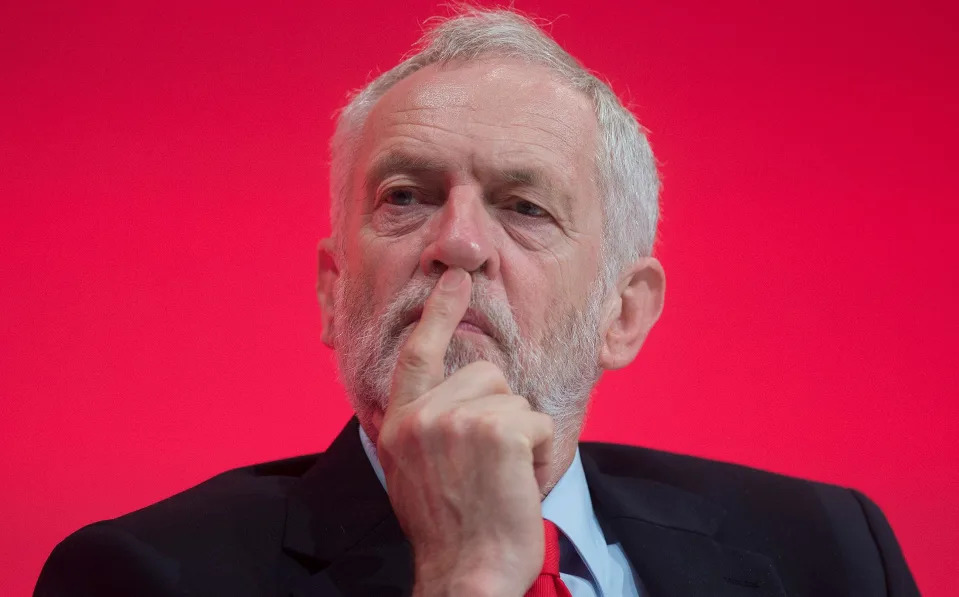
Many of those who served under the Labour Party’s last leader, Jeremy Corbyn, have been written off - Eddie Mulholland

Former MPs are in particular demand. Luciana Berger, who quit Labour in protest in 2019 before later rejoining briefly, joined iNHouse Communications last year and became a senior adviser this summer.

Anna Turley, who served in Corbyn’s shadow cabinet, has joined Arden Strategies, as has the party’s former head of business relations, Ellie Miller.

Instinctif, the City advisor to several FTSE companies, took on former Labour shadow minister Tom Harris in July 2023 to expand its Navigating Labour Unit.

Former shadow deputy leader of the House of Commons Melanie Onn, who left the Commons in 2019, has joined Blakeney Communications.

“For good people who are able to do the role really well and have really good contacts, there is always going to be a bit of a war for that talent,” says Cairncross.

If it becomes even more clear that Labour could win the next general election, there could be a “tipping point of going hell for leather” in throwing money at Labour-connected people, she adds.

Consultancies that have sold themselves for years on having expertise dealing with the Conservative Party know that their currency will slide fast if Labour win the next election.

A current Labour source says: “I get some kind of call probably once a month. It started last year when the Tories properly began to implode.”

Those who have worked with Starmer, the shadow chancellor Rachel Reeves or the shadow business secretary John Reynolds are most in demand.

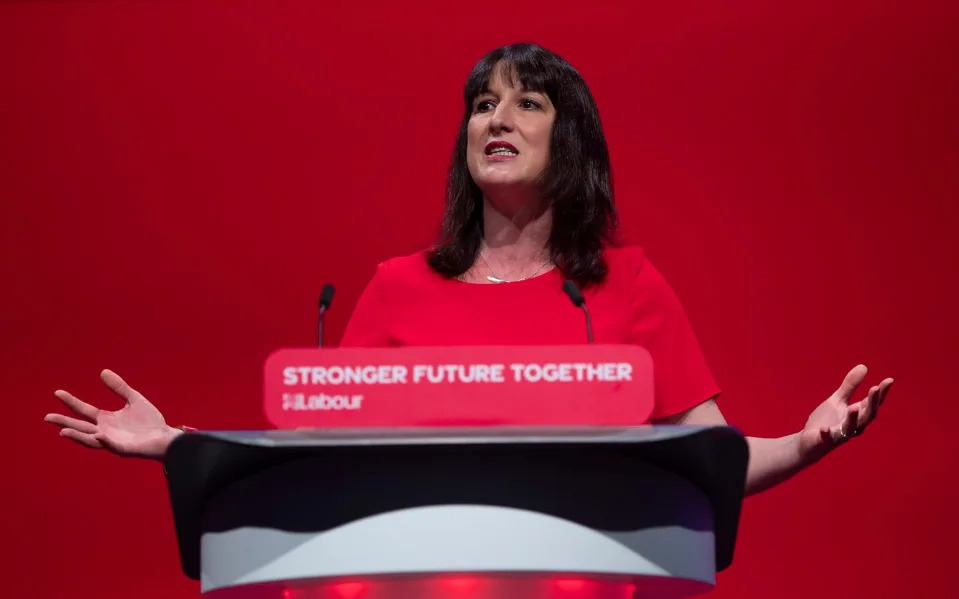
Firms are seeking people who have worked with key figures in the shadow cabinet such as Rachel Reeves - Eddie Mulholland

However, many of those working for Labour now won’t consider a move because they know they may get their first opportunity to work within government, says Faith.

The public affairs sector is also losing staff to Labour, as people return to the party ahead of the election. “I know loads of people seconding jobs into Labour from business,” says Ward.

Demand for Labour expertise is strongest in finance, tech and net zero adjacent industries.

“Any industry that is under particular pressure from a net zero agenda, for example, they are absolutely trying to talk to what they perceive will be the next government around what their responsibilities and contributions will be,” says Zetter.

Ward adds: “Then you also get very large employers who are asking: what is Labour going to do on employment rights and taxation for large companies?”

Labour are happy to answer these questions. When Starmer launched his “Prawn Cocktail Offensive 2.0” last autumn, it marked the second phase of a long push to try and woo businesses to the Left.

“The first phase was basically decontamination – basically trying to convince people that the party is no longer Jeremy Corbyn,” says Ward. “The second phase is carpet bombing – meeting every business or anyone who will meet you. That is what they are doing now and have been for the last year or so.”

The third phase will be a calculated, targeted programme of engagement with a much smaller group of businesses that Labour can trust, he says.

As the circle gets smaller and the election draws nearer, the value of insiders will only go up.
UK
Sunak to spend £100m of taxpayer cash on AI chips in global race for computer power


James Titcomb
Sat, 19 August 2023 

Rishi Sunak

Rishi Sunak is to spend up to £100m of taxpayer money on thousands of high-powered artificial intelligence chips in an effort to catch up in a global race for computing power.

Government officials have been in discussions with IT giants Nvidia, AMD and Intel about procuring equipment for a national “AI Research Resource” as part of Rishi Sunak’s ambitions to make Britain a global leader in the field.

The effort, led by science funding body UK Research and Innovation, is believed to be in advanced stages of an order of up to 5,000 graphics processing units (GPUs) from Nvidia, whose chips power AI models such as ChatGPT.


£100m has been allocated to the project. However, it is believed that the outlay is seen as insufficient to match the Government’s artificial intelligence ambitions, with civil servants pushing Jeremy Hunt to allocate far more funds in the coming months.

GPUs are the critical components in building artificial intelligence systems such as ChatGPT, whose latest version was trained on as many as 25,000 Nvidia chips.

Nvidia’s chips power AI models such as ChatGPT - I-Hwa Cheng/Bloomberg

Mr Sunak has outlined plans for Britain to be an AI superpower but the UK severely lags the US and Europe in the computing resources needed to train, test and operate sophisticated models.

A Government review published this year criticised the lack of a “dedicated AI compute resource” with fewer than 1,000 high-end Nvidia chips available to researchers.

It recommended that at least 3,000 “top-spec” GPUs be made available as soon as possible.

Mr Hunt set aside £900m for computing resources in March, although the majority of that is expected to be spent on a traditional “exascale” supercomputer.

It is believed that slightly more than £50m was assigned to AI resources, but that the bill is expected to rise to between £70m and £100m amid a global race for the chips powering AI.

Officials are likely to press for more funding to be released in the Autumn Statement, which could take place around an AI safety summit in November.

Last week The Financial Times reported that Saudi Arabia had bought at least 3,000 Nvidia H100 processors, the company’s $40,000 high-end component for training AI.

Tech giants such as Microsoft, Amazon and Google are also racing to secure tens of thousands of the in-demand chips, while Joe Biden has blocked Nvidia from selling them in China under national security powers.

It was not clear what types of chips Britain is in talks to buy.

GPUs will be used to construct an AI Research Resource that the Government hopes will be operational by next summer.

Funds for the project are separate from a £100m taskforce that will conduct safety research into AI systems such as ChatGPT and Google Bard.

Officials have also been weighing up the merits of a “sovereign chatbot” – a publicly-funded language model similar to ChatGPT – and finding ways of boosting AI’s deployment in public services such as the NHS.

The Government has been in discussions with multiple microchip companies although Nvidia, whose chips are widely used to train AI, is seen as the clear frontrunner.

Mr Sunak is pushing for the UK to become a hub for setting global standards for the safe development of AI. He has spearheaded plans for the AI safety summit, expected to take place at the World War II codebreaking hub of Bletchley Park.

It is hoped the event will lead to international agreements between governments and top AI companies on developing the technology.

A Government spokesman said: “We are committed to supporting a thriving environment for compute in the UK which maintains our position as a global leader across science, innovation and technology.”

Nvidia did not comment.
UK
WORKERS CAPITAL
Women born in 1950s die while waiting for pension payouts

Lauren Almeida
Fri, 18 August 2023 

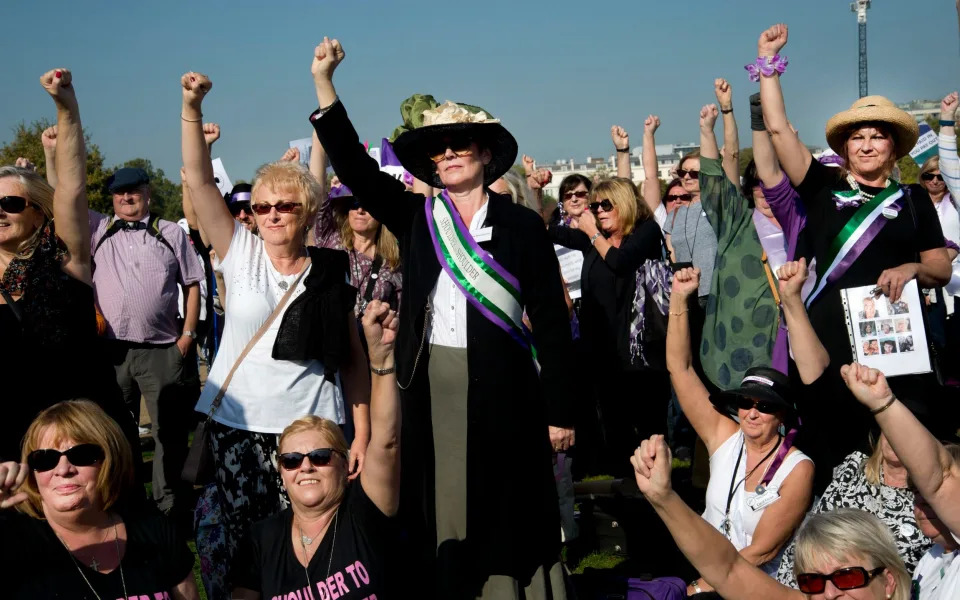
Women affected by the increase in state pension age have been protesting for years - Jenny Matthews/Getty Images Contributor

More than 250,000 women born in the 1950s have died while waiting for state pension payouts in a draw-out campaign, it is claimed.

Until 2010, women were entitled to receive the state pension from the age of 60. The Government announced in 1995 that this would gradually increase to the age of 65 to bring it into line with men. Both ages now rise in tandem.

However, campaigners have argued women born in the 1950s, who were most affected by the change to when they could retire, were not given enough notice or detail.

Campaigners say around four million women were pushed into financial hardship as their retirement plans were knocked off course.

More than two-fifths of women in this generation have struggled to pay essential bills in the last year, the Women Against State Pension Inequality, or “Waspi”, group said.

The Parliamentary Ombudsman, the Government watchdog, ruled in 2021 that the Department for Work and Pensions had failed to provide clear communication around state pension age changes. However, it is yet to publish any recommendations for redress.

Angela Madden, who leads the “Waspi” campaign, said: “For the 250,000 women who have died while waiting for this issue to be resolved, justice delayed is truly justice denied.”

This equates to around 100 deaths per day, the campaign group said.

Ms Madden added: “The Ombudsman’s investigation has been going on for five long years, and it is two years since he confirmed the DWP was guilty of maladministration.

“To keep women waiting a single further day for a proper offer of compensation just shows an appalling disregard for all of us.”

Susan Taylor, a 65-year-old woman affected by the state pension age rise, said: “Both my sister and I were born in the 1950s and had our retirement plans completely devastated by the state pension age fiasco.

“I lost her at 59 to cancer and was diagnosed myself with lung cancer at 62. I have no quality of life and the financial pressures I face are immense. Some days it’s extremely hard to see anything but a miserable end to a lifetime of hard work as the fight for justice for so many women continues.

The Parliamentary Ombudsman was expected to publish the second stage of its investigation by the end of March this year, but was delayed indefinitely after a legal challenge to its original draft.

The final stage three of its report is expected to recommend possible solutions, however the High Court ruled in 2019 that the Government was right to correct “historic direct discrimination against men” and underlined that the ombudsman cannot reimburse “lost” pensions.

A spokesman for the Government said: “We support millions of people every year and our priority is ensuring they get the help and support to which they are entitled.

“The Government decided over 25 years ago it was going to make the state pension age the same for men and women. Both the High Court and Court of Appeal have supported the actions of the DWP under successive governments dating back to 1995 and the Supreme Court refused the claimants permission to appeal.”

A spokesman for the Parliamentary Ombudsman said: “We are confident that we have completed a fair and impartial investigation. As an independent ombudsman, our duty is to provide the right outcome for all involved and make sure justice is achieved.

“We hope this cooperative approach will provide the quickest route to remedy for those affected and reduce the delay to the publication of our final report.”

The state pension may no longer exist for these retirees


Lauren Almeida
Fri, 18 August 2023

gen z money

If you are under 40, the state pension will probably look very different by the time you retire. In fact, there is no guarantee that it will even exist.

Civil servants, industry experts and even some pensioners have been shouting for years: the state pension system is just too expensive for the Treasury to keep up. With ever larger payments to an ever growing number of pensioners, costs are spiralling out of control – and fast.

No political party wants to upset its oldest voters, but experts have warned the Government will have to change the way the system is set up or face a fiscal crisis.


In just 50 years, one in every four Britons will be pensioner age. That’s more than three times the current population of Scotland. And with birth rates in decline, less than two-thirds will be of a working age.

This is a problem because the state pension is a “pay as you go” scheme, which is fueled by general taxation. If there are more retirees and fewer workers, the system becomes more and more fragile.

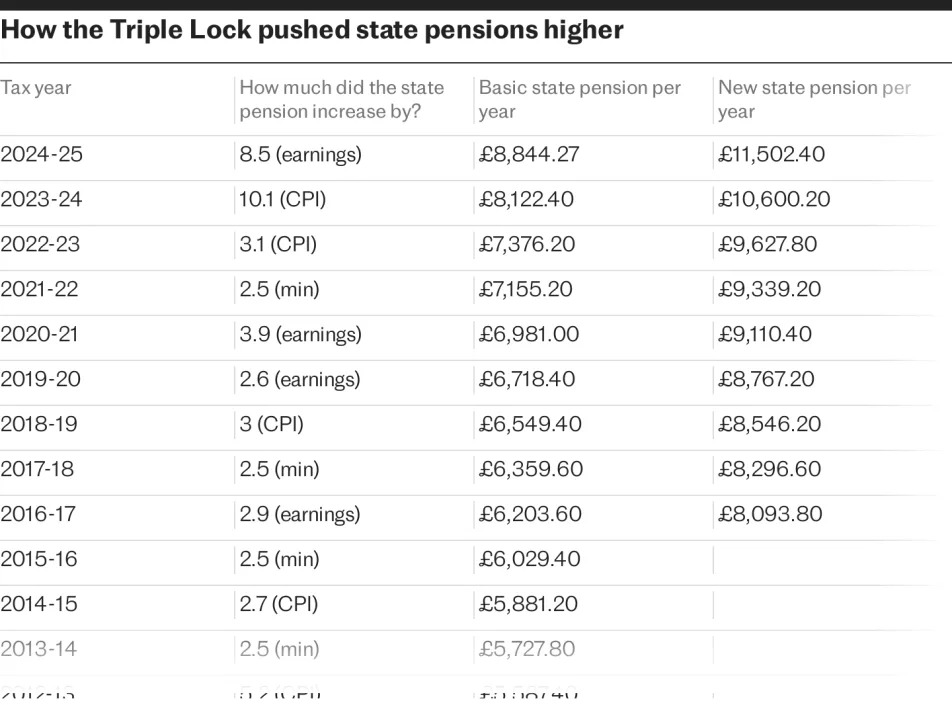
This is complicated further by the Conservative’s triple lock policy. It promises that state pension payments increase each year in line with the highest of the previous September’s inflation, wage growth or 2.5pc.

It meant this year the new state pension jumped by a record 10.1pc, surpassing £10,000 for the first time. Record wage growth is paving the way for yet another bumper pay rise next year, and will probably push it beyond £11,000 a year per person.

At some point, this will become unsustainable, but warning signs are ignored time and again. Even the Government’s own accountant warned that the “fund” that measures Britain’s state pension payments will hit zero in just two decades unless the Government acts.

The “National Insurance Fund” records workers’ and employers’ National Insurance contributions, as well as how much the Government spends on various benefits, including the state pension.

This “fund” is theoretical, as the Government can effectively deploy its financial resources as it sees fit. But it serves as a further alarm bell that while improving longevity is welcome, it is straining public finances.

Sir Steve Webb, a former pensions minister and now a partner at the consultancy LCP, said increasing the state pension age was a key “lever” the Government could pull to control spending.

“If you pay the state pension age later, then it pushes down costs,” he said. “This is a lever that the Government has pulled before and almost certainly will again.”

However, history suggests that increases to the state pension age would likely deepen social inequality. This is because there are stark regional variations in life expectancy, and poorer people typically have fewer private pension savings to fall back on and no choice but to stay in work for longer.

When the state pension age increased from 65 to 66, one in seven 65-year-olds were pushed into income poverty as a result, the Institute for Fiscal Studies found.

And while the Government typically waits for an increase in life expectancy to ramp up the state pension age, this does not necessarily correspond with an increase in healthy life expectancy.

Government expenditure on healthcare has been steadily climbing for almost a decade and the bulk of it goes towards curative and rehabilitative care, according to the Office for National Statistics. In just five decades, state pensions, pensioner benefits and health and adult social care spending will be worth 27pc of GDP, IFS analysis of official data found.

Maxwell Marlow, of the Adam Smith Institute, a think tank, said: “Young people are often criticised as wasting our money on avocados or Netflix. But the reality is that most of our taxes go towards spending on the elderly.

“The unfunded state pension system is shocking. It is a ponzi scheme grand enough to make Bernie Madoff blush.”

Around one in four pensioners are millionaires, so the idea of a means-tested state pension has gained popularity quickly. This could make for more targeted support for the vulnerable. Inequality in this group is stark, with around half of retirees also relying on the state pension as their main source of income.

Anyone who has more than £1m in assets should not receive a state pension, the Adam Smith Institute has suggested. “The triple lock is unfit for purpose,” its researchers wrote in a report last year.

“This ratchet spending is becoming unsustainable and unjustifiable, and exposes the Government to large state pension payouts which outstrip the growth of the economy that underwrites them.

“An increasingly large divide has opened up in British society between generations in which the young lose out, while the elderly benefit.”

According to the think tank’s calculations, the Government could save the taxpayer £25bn a year if it stopped offering the state pension to those with assets worth over £1m.

It said an alternative was to means-test pensions for higher-rate taxpayers – those with a salary of more than £50,270 – to avoid the “difficult politics” of testing those on lower incomes.

Sate pension increase

While scrapping the state pension completely may sound like the simplest solution, this too would require decades of advance planning, as well as warning for those who it would affect first.

But Sir Steve acknowledged that removing the state pension could become a more feasible option in the very long-term, after there had been a generation that had enjoyed the full benefit of “auto-enrolment”.

The policy, which obliges employers to automatically enrol their staff into a pension savings scheme, was only enacted around a decade ago.

“You would still need a safety net however for those who auto-enrolment had missed,” he said. “Across the world, you would be surprised about how many countries offer something that can be recognised as a type of state pension – even the land of the free has got it.”

But until we reach crisis point, it is unlikely that the Government will be spurred into action, Mr Marlow added.

“We are in a gerontocracy,” he said. “The civil service, the Treasury, the DWP – they all need to talk about these costs. The Government will not act until they are pinned to the wall.”

A government spokesman said there was currently a surplus of funds in the National Insurance Fund, and it would be able to top up its balance if needed in the future. They added it was committed to the triple lock and as is the usual process, would conduct an annual review of benefits and state pensions in the autumn.

Britain’s largest pension scheme to invest billions in private companies in boost for savers

Nest to invest up to a fifth of pension pots into high-growth businesses over next decade

Jeremy Hunt put pension reform at the heart of his Mansion House speech in July
 CREDIT: Aaron Chown/PA

Britain’s largest pension scheme will start investing billions of pounds in private companies in a boost to Jeremy Hunt’s plans to deliver higher returns for savers.

The National Employment Savings Trust (Nest), which looks after the retirement funds of a third of the British workforce, said it will invest up to a fifth of pension pots into high growth companies over the next decade.

Writing in The Telegraph, Mark Fawcett, Nest’s chief investment officer, said the move will offer most of its 12 million members the chance to enjoy “significantly higher” returns, with the risk spread over several decades.

He said: “We plan to step up our investment into private markets over the coming years, including more money into unlisted equities.

“Our view is simple – we don’t want Nest members missing out on an asset class which is so highly sought after.”

Mr Fawcett said Nest, the UK’s largest workplace pension scheme by members, would invest up to a fifth of younger members’ pension pots in private companies, which typically carry greater investment risk but can generate higher returns than publicly listed equities.

The policy is a significant vote of confidence in the Chancellor’s ambition to ramp up risk taking by pension funds to boost future retirement incomes.

Mr Hunt put pension reform at the heart of his Mansion House speech in July. The Chancellor wants the UK to rival countries including Australia and Canada that are home to huge pension schemes that invest in illiquid assets around the world, including in British infrastructure.

The risk-taking has led to higher rewards. Average annual pension fund returns in the UK were 9.5pc in 2021, according to Moneyfacts. This compares with a 20.4pc gain by the Canada Pension Plan Investment Board and 22.3pc increase delivered by AustralianSuper for the same year.

Defined contribution (DC) schemes like Nest promise a pension income based on the performance of stocks, bonds and other investments rather than a promise from an employer to sustain a certain level of income in retirement.

In July the Chancellor told an audience of bankers and finance bosses at the annual Mansion House dinner that nine of Britain’s biggest DC providers had signed a compact committing to invest at least 5pc of assets in unlisted equities by 2030.

Nest’s ambition to commit up to a fifth of assets for younger savers goes well beyond this. Mr Fawcett said there was “an especially large capacity to invest in these asset classes for our younger members,” who are decades away from retirement.

He said: “Those members have much greater ability to hold long-term illiquid assets compared to members approaching retirement, particularly when there are some assets which can be held in portfolios for decades.”

He added that “in the not-so-distant future” this could mean “a Nest member 40 years from retirement could have up to 20pc of their pension pot invested in unlisted equities”.

It is understood that Nest’s overall investment in unlisted equities, including private equity and infrastructure, will climb to at least 10pc of its portfolio by the end of the decade, potentially funnelling an extra £10bn into high growth assets.

Nest, which is publicly owned but operationally independent currently manages just over £30bn in retirement pots. This is forecast to balloon to £100bn by 2030. Mr Fawcett said this would give Nest the “size and scale to negotiate great deals” across a range of asset classes.

Mr Hunt has claimed that his compact with pension funds could help to boost retirement incomes by over £1,000 a year for a typical earner over the course of their career.

The Chancellor said: “British pensioners should benefit from British business success.

“This also means more investment in our most promising companies, driving growth in the UK.”

However, the Government’s own internal modelling suggests the very high fees charged by private equity firms could erase returns for pension savers.

High performance fees could even leave savers who invest in private companies £1,300 worse off, Department for Work and Pensions analysis showed.

Mr Fawcett insisted Nest did not pay performance fees “as a point of principle”.

He added: “All investment fits within our existing fee structure. This competitive fee structure also increases the probability that any net investment returns will meet our objectives.”


Why we’re investing Britain’s pension pots in solar farms and fish and chip shops

By Mark Fawcett, chief investment officer of National Employment Savings Trust (Nest)

The Chancellor’s Mansion House speech back in July generated a lot of interest within the pensions industry. Particularly the signing of the Compact by major UK defined contribution (DC) investors to commit 5pc of their portfolios to investing in unlisted equities.

There are questions from some quarters about whether UK DC schemes could, or even should, be investing in unlisted equities.

As a signatory to the Compact, our view is simple – we don’t want Nest members missing out on an asset class which is so highly sought after.

There’s a good reason private equity features in large pension schemes around the world. Average historic returns in private equity, broadly speaking, have been significantly higher than for listed equity over most time horizons.

At Nest, we’ve considered a wide range of factors and data to support our decision to invest in private equity because clearly, if we can achieve at least the average return, this will enhance the scheme’s total returns.

We’ve focused on growth-stage firms, as well as small and mid-cap buyouts, as these are the areas which we believe will deliver the highest risk-adjusted returns.

Since 2022, when we started investing in private equity, we’ve put money into a range of companies across industries.

One example is Captain D’s, a chain of seafood restaurants bringing a soul food take on the British classic of fish and chips for its American culinary audience. It’s been operating for 50 years but last year looked for further investment to help continue expanding its business.

Another deal Nest entered is in Sekhmet, the Indian pharmaceutical company, which is one of the world’s largest suppliers of generic drugs. Both very different companies, but both exciting investment opportunities.

Private equity assets bring an attractive combination of less volatile valuations and higher expected returns than their liquid counterparts. This combination is naturally desirable for any long-term, institutional investor.

We’ve also used our size and scale to negotiate great deals. As a point of principle, we don’t pay performance fees and all investment fits within our existing fee structure. This competitive fee structure also increases the probability that any net investment returns will meet our objectives.

The only difference our members should notice, now we’re investing their money into unlisted equities, are better risk-adjusted returns over the long term.

That’s why the debate of whether DC schemes should be investing in unlisted equities is somewhat over, or should be, provided those schemes have the scale and expertise to access good deals. The path ahead for growing UK DC pension schemes includes illiquids.

The conversation should be moving on to how best to include unlisted equities within a portfolio.

Having access to private assets is one thing, but can investment strategies be designed to maximise the benefit passed onto our members? Asset classes like private equity are still more expensive than their public market equivalents and it’s essential to select the right asset managers to ensure we generate value for money.

We think there’s an especially large capacity to invest in these asset classes for our younger members. Those members have much greater ability to hold long-term illiquid assets compared to members approaching retirement, particularly when there are some assets which can be held in portfolios for decades.

That opportunity is not just limited to unlisted equity. We think there are opportunities in other unlisted assets like infrastructure, not just in being hugely exciting investment assets but in how we can use them to connect with our membership.

Imagine telling a 22-year-old, who may be contributing into a pension for the first time, that when they start saving their money could be invested in infrastructure projects, like renewable energy – tangible assets they can see in the countryside around their home or just off the coast – for decades to come.

What a great message we can share with younger savers. That renewable energy will be powering their pension throughout their savings journey. A limitless source of energy making them money, while also increasing in value as we transition to low carbon economies.

Nest has recently updated its investment objectives and approach to strategic asset allocation. Within this is a new approach to better incorporate illiquids into our portfolio. We’ve evolved our investment glide pathway so younger savers have the highest percentage exposure, which then rebalances as they continue to save with Nest.

What does this look like in practice? That in the not-so-distant future, a Nest member 40 years from retirement could have up to 20pc of their pension pot invested in unlisted equities.

We plan to step up our investment into private markets over the coming years, including more money into unlisted equities. With our new investment objectives in place, we feel confident we can create the best outcomes for our 12 million (and growing) members.