Monday, August 21, 2023

GENDERFUCK

'He didn't want to be pinned down': Layton Williams will perform in a dress on Strictly Come Dancing


BANG Showbiz
Sun, 20 August 2023 

Layton Williams will perform in a dress on 'Strictly Come Dancing' credit:Bang Showbiz

Layton Williams will become the first male 'Strictly Come Dancing' contestant to dance in a dress.

The 28-year-old star is planning to break new ground on the hit BBC show and has asked to be partnered with a male professional when the programme launches next month.

A source told the Sunday Mirror newspaper: "Layton made it clear very early on that he didn't want to be pinned down to just wearing male costumes.

"He wanted his Strictly outfits to reflect different sides of his personality and everyone fully supports him on that. So he will have a chance to wear Strictly dresses, as well as the men's sharp suits, when he performs. There are some really exciting looks in there. Layton can't wait to get started."

The 'Bad Education' star feels that he can "go the distance" on the show after previous same-sex couples - including Nicola Adams and Katya Jones as well as Richie Anderson and Giovanni Pernice - were voted off in the early weeks.

An insider told the Daily Mirror newspaper: "This year, everyone is hoping for a same-sex couple who can go the distance.

"Layton is a phenomenal performer and the pros will probably queue up to work with him."

The West End star's participation on 'Strictly' is said to have "ruffled a few feathers" as he is "professionally trained" in dance and was cast in the stage version of ‘Billy Elliot’ at the age of 12.

A source told the MailOnline: “He is professionally trained and has extensive experience with learning difficult choreography, which many of the contestants, especially those from a sporting or political background, will at first find impossible.

"The show has been criticised in the past for recruiting contestants with a background in dance and this year will be no different as Layton is a star in his own right and known for being an impeccable dancer on stage."
Caster Semenya wins appeal over ‘discrimination’ at European Court of Human Rights


Tom Davidson and Jeremy Ullmann
Fri, 18 August 2023

Caster Semenya was discriminated against by the introduction of rules forcing her to lower her testosterone levels in order to continue competing, according to a judgment from the European Court of Human Rights.


The 32-year-old, a two-time 800 metres Olympic champion, was legally identified as female at birth but has a condition which means her body naturally produces higher levels of testosterone than women without the condition.

She has been unable to compete at her favoured distance since the introduction of limits on testosterone levels which would have forced her to use medication.

Previous legal challenges to the Court of Arbitration for Sport and the Swiss Federal Supreme Court were rejected, but the ECHR found her human rights had been violated.

A release issued by the court stated: “The Court found in particular that the applicant had not been afforded sufficient institutional and procedural safeguards in Switzerland to allow her to have her complaints examined effectively, especially since her complaints concerned substantiated and credible claims of discrimination as a result of her increased testosterone level caused by differences of sex development (DSD).”

The release on the judgement said the ECHR chamber was a majority decision, with four of the seven representatives finding that Semenya’s rights under Articles 13 and 14 of the European Convention on Human Rights had been violated.

The chamber judgement is not final and can be referred to a Grand Chamber of the court for further consideration if a request is made.

A statement from World Athletics read: “World Athletics notes the judgment of the deeply divided Chamber of the European Court of Human Rights (ECHR).

“We remain of the view that the DSD regulations are a necessary, reasonable and proportionate means of protecting fair competition in the female category as the Court of Arbitration for Sport and Swiss Federal Tribunal both found, after a detailed and expert assessment of the evidence.

“The case was filed against the state of Switzerland, rather than World Athletics.

“We will liaise with the Swiss Government on the next steps and, given the strong dissenting views in the decision, we will be encouraging them to seek referral of the case to the ECHR Grand Chamber for a final and definitive decision.

“In the meantime, the current DSD regulations, approved by the World Athletics Council in March 2023, will remain in place.”
George Soros foundation’s retreat from Europe could ‘turn off the lights’ for human rights

Philip Oltermann in Berlin
THE GUARDIAN
Sat, 19 August 2023 


He survived the Nazi occupation of his native Hungary, made a fortune on Wall Street and became one of the most steadfast backers of democracy and human rights in the eastern bloc.

But human rights activists and independent media fear the legacy of billionaire philanthropist George Soros, 93, could be about to be undone in his homelands, as his donor network announced it will curb its activities across the EU from 2024.

Several beneficiaries of Soros’s Open Society Foundations (OSF), chaired since the start of this year by his son Alex, told the Observer they would struggle without its support amid an authoritarian rollback.


“When the Open Society Foundations left Budapest under severe political pressure in 2018, they said they would lose their physical presence but not their focus on the region,” said Márta Pardavi, co-chair of the Hungarian Helsinki Committee, a Budapest human rights NGO supported by the foundations.

But she added: “Has there really been such a positive shift in Europe over the last five years that that promise has become less relevant?”

In a July email to staff, the OSF management announced a “radical redesign to help us deliver more effectively on our mission”. “Ultimately, the new approved strategic direction provides for withdrawal and termination of large parts of our current work within the European Union, shifting our focus and allocation of resources to other parts of the world,” it said.

While 40% of the charity’s global staff will be laid off, cuts will be severest in Europe, with the 180 headcount at its Berlin headquarters cut by 80%. Staff remaining in the German capital will mainly administer the foundation’s funds in Switzerland.

Its Brussels offices will be downsized, while a branch in Barcelona will be closed by the end of the year. Of an erstwhile seven branches in the post-Soviet area only three remain in Kyrgyzstan, Ukraine and Moldova.

Soros emigrated to Britain in 1947 and later the US. As a hedge fund tycoon, he became known as “the man who broke the Bank of England” in 1992 after making $1bn betting against the pound.

In 1984, Soros started channelling his immense fortune into foundations that advanced the idea of the “open society”, with an initial focus on Hungary and other totalitarian societies in the Soviet sphere of influence.

Many European NGOs, thinktanks and research groups working on issues ranging from media freedom and migrants’ rights to state surveillance and digital regulation rely on the foundations, which spent $1.5bn on philanthropic causes in 2021.

As traditional European media outlets have struggled to live up to their role amid a drop in advertising revenue, OSF has stepped in to support independent news projects including the Organized Crime and Corruption Reporting Project (OCCRP), London-based Bureau of Investigative Journalism and Forbidden Stories, an encrypted online platform that allows threatened journalists to securely upload their work and be continued by others.

Soros-backed funds swooped when independent media institutions were under threat from state-linked takeovers, buying an 11.2% share in the publisher of Gazeta Wyborcza after Poland’s governing PiS party launched legal proceedings against the centre-left newspaper and ordered state-owned companies to cancel their advertising. The Guardian too receives OSF funding on specific reporting projects.

But as the OSF influence has grown, so has their unwieldy bureaucratic structure. Under the leadership of Alex Soros, 37, elected to take over as chair from his father George last December, the foundations want to shift their focus to grants “organised around specific opportunities for impact”, a spokesperson said.

Alex Soros, who grew up and was educated in the US, said: “The Open Society Foundations is changing the way we work, but my family and OSF have long supported, and remain steadfastly committed to the European project.”

The foundations say they will continue support for European Roma communities. Even critical employees expressed confidence the foundations could commit more to longer-term projects, just fewer of them.

Yet while a profound change to the structure of the organisation has long been signalled by Soros senior, the decision to achieve this via drastically reducing its headcount seems to have only emerged has been a priority under its new board of directors. Once jokingly referred to by employees as Soros’s “reading group”, the board has been slimmed down to a tighter unit dominated by family members since the baton was passed to Soros junior.

In an interview with the Wall Street Journal, Alex Soros said that while he shared his father’s values, he was “more political”. Staffers and grantees said they have been left guessing what that means for the organisation.

Eyebrows have been raised at the Berkeley history PhD’s Instagram account, which shows him with the Pope, Bill Clinton, Kamala Harris or his “brother from another [mother]”, Edi Rama, Albania’s prime minister.

“I am ignoring it for the sake of my own sanity,” said a foundations official, who asked to remain anonymous. Another staffer invited comparisons to Succession’s Roman Roy.

While western European grantees, such as the Bureau of Investigative Journalism, are used to juggling donors on a project-by-project basis, organisations in eastern Europe have fewer options.

NGOs working in areas where human rights and technology overlap, such as digital surveillance, cannot rely on funding from governments that may have a conflict of interest.

“The OSF is one of the few bodies that hand out unrestricted core funding,” said one grantee, who asked to remain anonymous amid uncertainty over the foundation’s future strategy. “It’s what keeps the light on for human rights defenders in Europe.”

Berlin has been the hub of the foundations’ European operations after the 2018 closure of the Budapest branch under pressure from the government of strongman Viktor Orbán, once a recipient of Soros’s support.

Last week the Hungarian prime minister’s political director Balázs Orbán (no relation) posted a message on social network X, formerly known as Twitter, in which he called the Open Society Foundation “the Soros empire”. “We only truly believe that the occupying troops are leaving the continent when the last Soros soldier has left Europe and Hungary,” he said.

“If you invest in democracy, you can never expect it to yield quick returns,” Márta Pardavi said. “The need for democracy-building never really goes away. And I think George Soros knew that.”


NOT GREEN BUT BLUE H2
Ex-SAS mercenary to chair start-up turning plastic into hydrogen

Jonathan Leake
Sun, 20 August 2023

After a long history in the oil and gas industry, Simon Mann says that he has ‘turned green’ - Geoff Pugh

A former SAS mercenary once jailed for participating in a failed African coup has been appointed to lead a green energy start-up.

Simon Mann is to become chairman of Hydrogen Utopia International (HUI), a UK company that plans to create a European network of plants that will turn waste plastic into hydrogen.

It marks a turnaround for Mr Mann, who after a long history in the oil and gas industry, has said he has “turned green”.

However, his past outside the City is far more colourful.

Back in 2004, Mr Mann tried to lead a team of 60 battle-hardened mercenaries into oil-rich Equatorial Guinea to overthrow its president.

The attempted coup ended when he and his team were arrested as they transited through Zimbabwe’s Harare airport.

Mr Mann, an Old Etonian, initially said he was providing security for a mining operation in the Democratic Republic of Congo but later confirmed plans to depose the president of Equatorial Guinea, Teodoro Obiang Nguema.

The failed regime change became known as the “wonga coup” for its hugely lucrative ambitions. Mann allegedly stood to gain £9m if the coup had succeeded.


Simon Mann, accused of masterminding a failed coup plot, is escorted by a guard as he arrives for the start of his trial - Matias Esono/AP

Also implicated was Sir Mark Thatcher, son of former Prime Minister Margaret Thatcher, who was subsequently given a suspended sentence and fined $500,000 (£392,000) by a South African court.

Mr Mann was jailed in Zimbabwe, then extradited to Equatorial Guinea and sentenced to another 34 years in prison. He was pardoned in 2009 by President Obiang.

Now 71, Mr Mann has since built a City career focused on companies involved in mining, oil and gas.

However, in his new role, Mr Mann will be promoting HUI’s “pyrolysis” technology, which uses heat to break plastics down into hydrogen and methane.

Mr Mann said that, given his background in oil and gas, it may seem surprising he has “now turned green”.

“However, HUI is part of that same cycle,” he said. “Waste plastics, with which the world is awash, come from oil in the first place. Our technology will turn that waste plastic back into usable fuel.”

Waging war on plastic waste is a huge but potentially profitable challenge. In 2020, Europe produced 55 million tonnes of plastics of which only a third was recycled.

The rest was sent to landfill, or burnt for energy recovery.

Some plastics are hard to recycle, including thin films, black plastics and anything contaminated with food. These are the plastics HUI’s technology will target.

It uses pyrolysis, a known technology where substances are heated to temperatures as high as 900C.

The process is oxygen-free so the plastics cannot burn. Instead, they break down to produce a mix of gases, mainly methane and hydrogen, known as syngas.

The hydrogen can then be purified and sold as fuel while the remaining syngas can be used for heating or making chemicals.

Howard White, executive director of Hydrogen Utopia International, said: “Hydrogen is already powering buses and other vehicles across the world and we believe it is the fuel of the future.”

Our technology turns plastics and other waste materials that are currently incinerated or placed in landfill sites into an energy source that is environmentally friendly and efficient.”

Meanwhile, in Equatorial Guinea, President Obiang, now 81, remains in the post he has held since 1979. Last November he won a sixth term of office in non-competitive elections – making him the world’s longest-serving ruler.


Rudderless EY gripped by soul searching as private equity circles

FORMERLY KNOWN AS ERNST AND YOUNG


Matt Oliver
Sun, 20 August 2023 

EY

EY’s staff could reasonably ask: who’s steering this ship?

Having tumbled from the lofty heights of “Project Everest” – a plan to break the business in two that collapsed after internal disagreement – bosses at Ernst & Young (EY) are asking searching questions about their future.

“We will inevitably, in the next year or so, go through a strategic review,” says Hywel Ball, chairman of EY’s UK arm and a partner of more than 25 years.


“One of the things they’ll look at is the dynamics that made us think about this transaction [Project Everest], what’s right, what’s wrong, and what lessons we need to learn… because we’ve obviously learned a lot.”

The soul searching must be put on hold for now. The Big Four consultant has been forced to fend off interest from private equity and must contend with a global downturn that has seen fees dry up just as the bill for its costly break-up plan comes due.

It has triggered a fresh round of belt-tightening, with British staff told this week that some jobs are at risk. Those who stay will see their bonuses shrink.

The gloomy outlook is par for the course as a weak global economy dents fees across the industry. But the situation at EY is more challenging given its botched demerger has left it rudderless in the storm.

Carmine Di Sibio, EY’s global chair who unsuccessfully spearheaded Project Everest, is preparing to retire next year, creating a power vacuum and an extended succession battle.

Carmine Di Sibio is set to leave the firm after his plan to split its consulting and accountancy arms fell apart - News Scan

At the same time, EY now faces a bill that reportedly runs to hundreds of millions of dollars for the work done on the abandoned deal.

Insiders are questioning which direction the business should go in next and how it should tackle everything from artificial intelligence (AI) to more humdrum regulatory issues.

Project Everest was a plan to split its consulting business from its auditing operations. A major aim was to unleash the full potential of EY’s consulting and other non-audit services, which are the most profitable and fastest-growing parts of the business.

Fast growth in the firm’s consulting businesses helped boost average pay for UK partners to a record £803,000 in 2022.

However, conflict of interest regulations in many countries prevent EY from providing both audit and non-audit services to the same client.

This means a multinational company doing a global IT project may want to work with the firm’s consultants across the world – but cannot do in certain jurisdictions if it already uses EY’s auditors there.

The rules are in place to remove the incentive for auditors to “go easy” on clients that a firm wants to sell further non-audit services to.

EY’s complicated global structure – a network of affiliated partnerships, rather than a single, unified corporate structure – also makes working on international projects more complicated than bosses would like.

To address these issues, Project Everest would have completely separated the operations into a standalone audit business and a new consultancy business that would have been listed on the stock market – potentially with a value north of $100bn (£79bn).

The consulting “Newco” would have boasted $25bn in annual sales and 7,000 partners, with the auditing side representing $20bn and 6,000 partners.

Their separation would have cleared the way for consultants to take on more work, unencumbered by worries about conflicts.

Partners also stood to make large gains. Under the scheme, partners who stayed at the audit business would receive payouts for their shares in the advisory business worth up to four times their annual salary.

At the same time, the newly-separated advisory business would be listed on the stock market and partners handed equity worth up to nine times their salaries.

But the offer met stiff resistance from EY’s US office, led by Julie Boland, which represents 40pc of the firm’s global revenues.

Julia Boland abruptly announced in April that she was shelving Project Everest following opposition from other US partners - LinkedIn

The Americans were concerned that the split would leave either one side or the other with less in-house expertise on a vitally important (and highly lucrative) topic: tax.

Boland abruptly announced in April that she was shelving work on the demerger, following opposition from other US partners, in a move that stunned international colleagues and eventually forced Di Sibio to follow suit – killing off the deal.

But with the split plans abandoned, EY still faces the same dilemmas.

“You have challenged the status quo, you can’t stay the same, so what is your plan B?” one partner told Financial News earlier this year.

Somewhat understatedly, Ball says: “Once a global chairman gets elected, they need to review the global strategy.”

There is continuing debate about whether to pursue a separation by other means. Supporters argue that the rationale for the deal still holds.

TPG, a private equity firm, recently offered to take a stake in a separated consulting business, the Financial Times reported last week. EY’s bosses have so far rebuffed the bid.

For now, the most pressing question is who will take charge and set the tone for the sprawling giant.

Having dealt the fatal blow to Project Everest – a move that reportedly left some colleagues “livid” – Boland is not expected to put herself forward as Di Sibio’s replacement though she may play a kingmaker role.

That could prove troublesome for Andy Baldwin, EY’s global managing partner and a Brit, who is seen as the leading candidate to take on the global chairman position but may be seen as tarnished by his prominent role pushing the demerger plan.

EY Canadian chairman Jad Shimaly is seen as a potential unity candidate. Marie-Laure Delarue, who leads the global assurance practice, has also been touted as a contender.

Other names floated as potential runners include Janet Truncale, boss of EY’s American financial services business, Ryan Burke, its head of private client business, and Julie Teigland, the firm’s head of Europe, the Middle East, India, and Africa, according to reports.

Ball, EY’s UK chairman, rules himself out but says the potential candidates “are all great alternatives, and they are very talented people”.


For now, the most pressing question is who will take charge and set the tone for the sprawling giant - Simon Dawson/Bloomberg

Whoever emerges victorious, the process will take time. Ball says: “Partnerships are all about collaboration… We don’t just anoint leaders. We have to go through a process to make sure that there’s broad backing.”

EY’s network structure also means the new leader will not be able to decisively push through big changes without building broad support first, something that eluded Di Sibio to his cost.

For UK chairman Ball, an urgent issue the new global chief will have to address is what to do about circle private equity funds.

San Francisco-based TPG’s recent approach – which did not put a value on EY’s consultancy business – may have been rejected but it is unlikely to dampen broader interest in the sector.

Ball says that his rivals will “be getting similar approaches for some of their businesses and, as you know, private equity can be quite a big disrupter of a sector once they think there are opportunities there”.

“We’ll need to come to a view now – what will this private equity interest mean?”

KPMG and Deloitte have both sold restructuring businesses to private equity, while PwC offloaded its global mobility business.

In the background, the issue of what to do about conflicts between auditing and far more lucrative consulting work remains.

“In some ways, what we were trying to do with [Project Everest] was address some of these questions upfront, to be in control of our own destiny,” Ball argues.

“They do need to be addressed, in some shape or form. I think everyone agrees it doesn’t have to be now.

“But that will need to be addressed at some point. And that’s probably a challenge not just for EY but for the whole profession.”

With Di Sipio’s successor not expected to be chosen until November, however, partners across EY’s offices face an uncertain few months yet.

CRIMINAL CAPITALI$M

Sec.gov

https://www.sec.gov/news/press-release/2021-144

Aug 2, 2021 ... The Securities and Exchange Commission today charged accounting firm Ernst & Young LLP (EY), one of its partners, and two of its former ...


World’s first wind-powered freighter sets off on maiden voyage


Sarah Knapton
Mon, 21 August 2023 

Pyxis Ocean left Singapore en route to Paranagua in Brazil in first major test to see if technology will work on a real voyage

It may not have the romance of the billowing multi-masted clippers, but the world’s first wind-powered freighter has embarked on her maiden voyage.

Mitsubishi’s Pyxis Ocean bulk carrier has been fitted with giant “wings” ushering in a new era of cargo-ladened sailing boats, borne to their destination on favourable tradewinds.

Although the sails are designed to work alongside the engine, engineers were delighted to find that during initial sea trials, the bulk carrier began to sail on wind power alone – reaching more than five and a half knots, before the crew intervened to bring her back under engine control.


Last week Pyxis Ocean – chartered by Cargill – left Singapore en route to the port of Paranagua in Brazil in the first major test to see if the technology will work on a real voyage.

If successful hundreds more ships will be retrofitted with the wings.

The revolutionary fibreglass aerofoils – which loom 123ft above deck – have been designed by engineers at BAR Technologies, a spin-off of Ben Ainslie Racing, the British team formed by the Olympic gold medalist.

Digital projections show they should deliver enough propulsion to cut the ship’s fuel use by at least three tonnes per day – about 30 per cent – helping to decarbonize the shipping industry without having to scrap existing vessels.
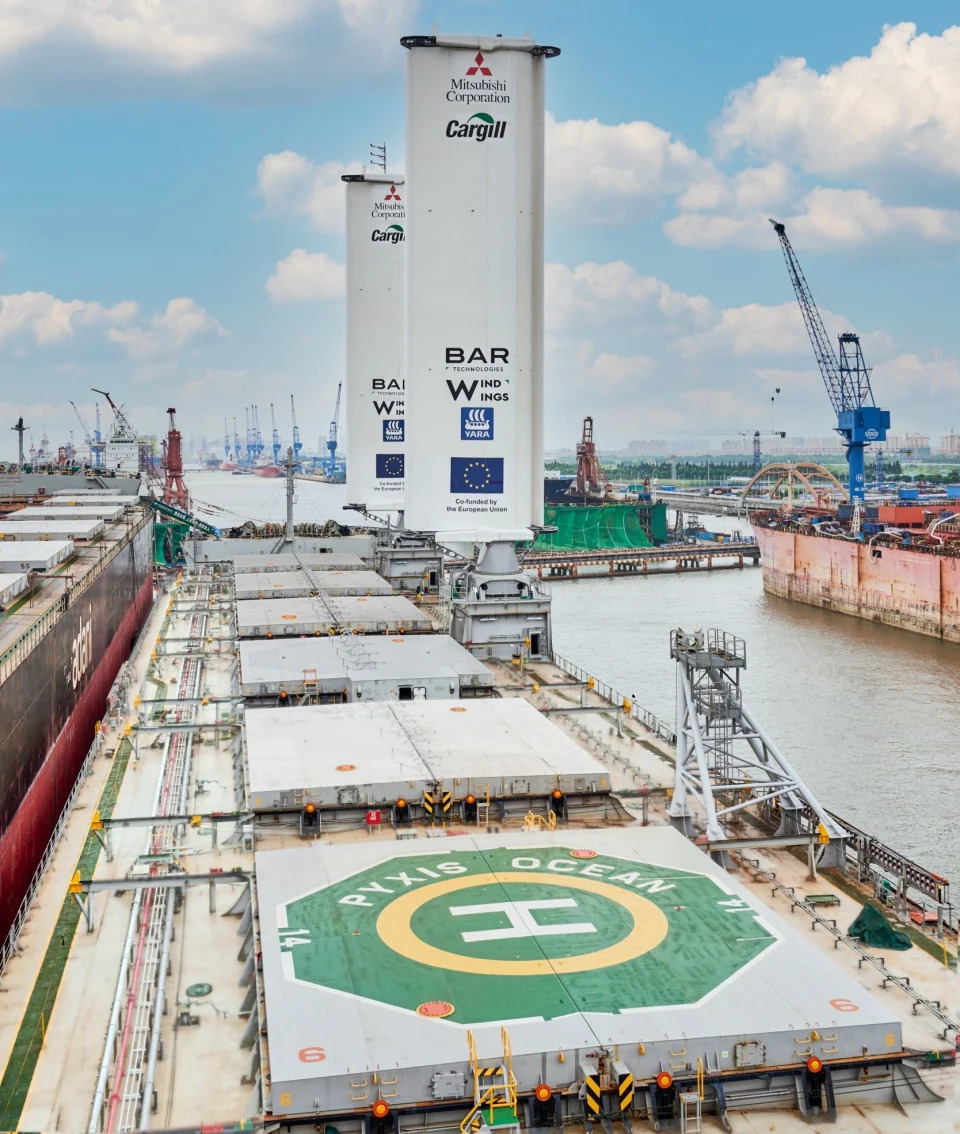

WindWings being retrofitted on Pyxis Ocean at the COSCO shipyard in Shanghai, China.

“I’m super excited about this,” said Jan Dieleman, president of Cargill’s Ocean transportation business. “We’re finally at the point where this ship is going to be on the water.

“We need to find out if everything is going to function. Is it safe? Is it going to work? Are the wings able to move as they should, can they fold? Does this actually work in port and then are we actually getting the fuel savings?

“It’s a huge project. This has never been done before. But you have to be willing to take some risks otherwise everything continues to be a theoretical exercise, so it’s time to showcase what is possible.”

The technology could change current shipping routes, making it more profitable to follow the old trading routes with favourable winds, rather than travelling in the straight lines most cargo ships do today.

Mr Dielman added: “We’ve always been working on the assumption that going from A to B is the quickest way, but we might need to deviate because there is more wind in certain areas, or you might get better returns at different times of year.

“We need to think differently to what we’ve done traditionally.”

Getting to the first voyage has not been easy. Cargill initially trialled kites but found they simply did not work and subsequently joined forces with Portsmouth-based BAR Technologies for the WindWings project.

That too has not been plain sailing.

Hampered visibility from the bridge

Placing the huge cambered aerofoils on the deck hampered visibility from the bridge, forcing the team to install cameras to see ahead. They also needed to build in a tilting mechanism that enabled the sails to be stowed during dockside operations, when passing under structures, or in stormy sea conditions.

In yachting, the size of the sail can be made smaller to cope with heavy weather, so engineers had to come up with a similar way of depowering the wings in case of a sudden storm.

As well as being able to pivot, each wing has three moveable elements that can be adjusted to spill the wind or exploit its power, in the same way that an aircraft wing changes its shape during take-off and landing.

Wind sensors on board pick up wind angle and speed, automatically reorienting the sail in the event of unexpected gusts. Above 40 knots – gale force conditions – the wings can be folded onto the deck.

There are also sensors which detect the lean – or heel – of the ship, how far it is drifting off the set course and the rudder angle.

“We don’t have Ben on board, so it has to be automatic,” said John Cooper, the CEO of BAR Technologies.

“If we see excess rudder angle, or leeway or heel, then the wings start, taking them out of a camber shape and pushing them into the wind angle.”
‘Sail away without the engine on’

So far, early sea trials have surpassed all expectations.

Mr Cooper added: “My senior engineer, who is normally very serious, phoned me up on the sea trials giggling like a 10-year-old and actually explaining they had just free-sailed.

“We’re all about wind-assisted propulsion, but it was super cool to lift the anchor and sail away without the engine on.

“And that’s only with two sails, we’ve got one right behind it with four sails on. They are still calculating it but we were well over five and half knots before we decided to stop acceleration, that was not terminal velocity, and we had an 18 knot wind not the strongest, so we know we can free-sail pretty damn well.”

The whole project was tested on a “digital twin” inside a computer before the wings were built by Yara Marine Technologies.

If the Pyxis Ocean’s journey is a success the team plan to test the wings on a Newcastlemax bulk carrier – one of the world’s largest cargo ships which is used to transport coal, iron ore, and grain across the world’s oceans.
ICYMI
Mysterious hidden ‘structures’ hundreds of metres deep discovered on dark side of moon


Vishwam Sankaran
Mon, 21 August 2023 

Mysterious hidden ‘structures’ hundreds of metres deep discovered on dark side of moon

China’s Chang’e-4 mission rover has helped scientists visualise “hidden” structures deep below the surface of the moon’s far side – an advance that reveals billions of years of lunar history.

The Yutu-2 rover helped make the discovery through its Lunar Penetrating Radar (LPR) that imaged deep into the moon’s surface by listening to echoes of sound that bounced back off structures under the lunar surface and hidden from view.

The same rover and the mission’s lander had made history in 2019 as the first human objects to land on the far side of the moon – the side that faces away from the Earth.

Scientists had previously used the rover’s ground penetrating radar (GPR), but those earlier efforts could help map only the top 40m, or about 130ft, of the moon’s surface. This new discovery has found the “hidden” structures at depths of about 300m (984ft).

The new data suggests the first 130ft under the lunar surface is made up of layers of dust, soil, and rocks.

Radar analysis also revealed the presence of a buried crater that formed when a large object slammed into the lunar surface as well as helped map ancient lava flows under the moon.

“The GPR sends electromagnetic pulses into the lunar interior and receives echoes from subsurface layers. We use the high-frequency channel data to detect the structure of the upper 40 m along the rover’s path, primarily consisting of rock debris and soil,” researchers explained in the study.

Scientists speculate that the broken rocks surrounding this formation was likely debris produced by the impact.

“Through this investigation, we have discovered multiple layers in the upper 300 m, which likely indicate a series of basalt eruptions that occurred billions of years ago,” they wrote.

The new study, published recently in the Journal of Geophysical Research: Planets, revealed lunar lava likely flowed across the landscape in this part of the moon billions of years ago.

Researchers found volcanic rock layers are thinner the closer they are to the lunar surface.

“The thickness variation of these lava flows suggests a decrease in eruption scale over time,” they noted.

Based on this evidence, they said the lunar volcanic activity cooled gradually since the moon’s formation over 4.5 billion years ago, when a Mars-sized object slammed onto Earth and broke off a chunk that eventually coalesced into the moon.

“The thickness of the strata decreases with the decreasing depth, suggesting a progressively smaller lava effusion rate over time,” scientists concluded.
Russia's first robotic moon mission in nearly 50 years ends in failure

Story by William Harwood •8h

Russia's Luna-25 probe crashed Saturday on the moon after a thruster firing went awry, cutting off communications and putting the spacecraft in the wrong orbit, the Russian space agency announced Sunday.

The misfire followed problems with an earlier orbit adjustment "burn," but this time around, contact was lost and flight controllers were unable to re-establish communications. Roscosmos, the Russian federal space agency, announced the failure via the Telegram social media platform.

"Due to the deviation of the actual parameters of the impulse (rocket firing) from the calculated ones, the device (spacecraft) switched to an off-design orbit and ceased to exist as a result of a collision with the lunar surface," the Russian-language post said, according to Google Translate.


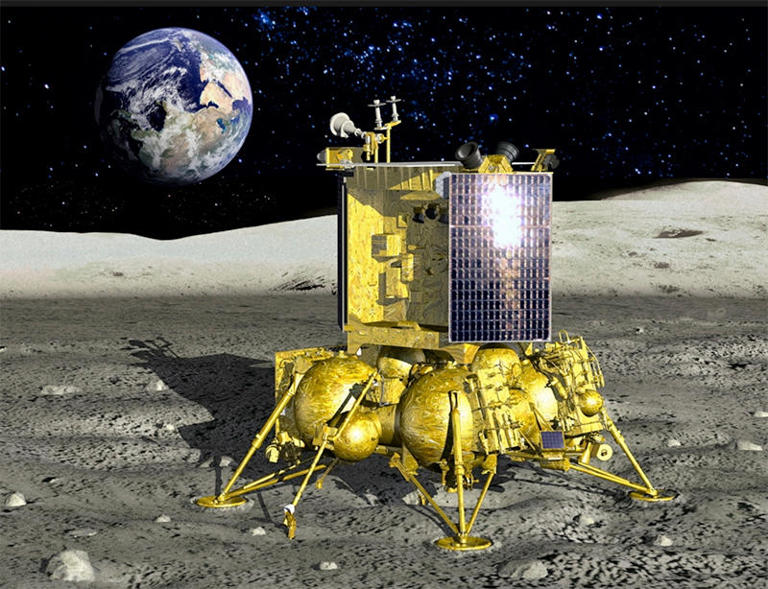
An artist's impression of Russia's Luna-25 spacecraft on the surface of the moon. The probe crashed into the moon after an orbit-adjustment rocket firing went awry. / Credit: NASA© Provided by CBS News

The failure was a major disappointment for the Russian space program, which was attempting to up its game amid renewed interest in the moon's south polar region where ice deposits may exist in permanently shadowed craters. Ice offers a potential in situ source of air, water and even hydrogen rocket fuel for future astronauts.

NASA's Artemis program plans to send astronauts to the south polar region in the next few years and China is working on plans to launch its own astronauts, or "taikonauts," to the moon's south pole around the end of the decade.

India also has ambitious plans. It's Chandrayaan-3 spacecraft, consisting of a robotic lander named Vikram and a small rover named Pragyan, is in orbit around the moon and on track to touch down on the lunar surface Wednesday. The mission is a follow-up to Chandrayaan-2, which crashed to the moon in 2019 because of a software error.


Luna-25 was launched from the Vostochny Cosmodrome atop a Soyuz 2.1b rocket on August 10. It enter lunar orbit six days later, targeting a landing Monday, beating Chandrayaan-3 to the surface by two days. But it was not to be.


An image of the moon snapped by a camera on the Luna-25 probe after it reached lunar orbit shows off the power clarity of its imaging system. / Credit: Roscosmos© Provided by CBS News

The Russians have had little success with planetary exploration since the Luna-24 robot landed on the moon in 1976, scooped up about six ounces of lunar soil and returned it to Earth. That was Russia's third successful robotic lunar sample return mission.


Twelve NASA astronauts walked on the moon a half century ago in the agency's Apollo program, but no Russian cosmonauts ever made the trip. Russia's only previous post-Soviet deep space robotic missions, both targeting Mars, ended in failure.

Luna-25 was an attempt to pick up the torch, putting Russia back in a new space race of sorts as the United States, China, India, Japan and the private sector are planning multiple moon missions that could lay the foundations for lunar bases and eventual flights to Mars.

The next U.S. flight to the moon is a commercial mission funded by NASA. Intuitive Machines' Nova-C lander could launch atop a SpaceX Falcon 9 rocket late this year. Another commercial lander, Astrobotic's Peregrine, will launch atop a new Vulcan rocket late this year or early next.

The next piloted flight to the moon, Artemis 2, is scheduled for launch late next year, sending four astronauts on a looping trajectory around the moon and back.

The first Artemis moon landing, putting two astronauts on the surface near the lunar south pole, is officially planned for late 2025, but time needed to build and test the SpaceX lunar lander threatens to push the flight into the 2026-27 timeframe.

Russian scientist who worked on Putin’s failed moon mission rushed to hospital


Namita Singh
Mon, 21 August 2023 


A leading physicist and astronomer who served as a key consultant in Vladimir Putin’s moon mission was hospitalised in Moscow after Russia’s first lunar expedition in 47 years failed.

Mikhail Marov, 90, was rushed to hospital following a “sharp deterioration” in his health after Luna-25 spacecraft spun out of control and crashed into the moon.

"It is so sad that it was not possible to land the apparatus," he said after the failure of Luna-25 was announced.

Russia’s state space corporation Roskosmos said it lost contact with the craft at 11.57am (GMT) on Saturday after a problem as the craft was shunted into pre-landing orbit. A soft landing had been planned for Monday.

"The apparatus moved into an unpredictable orbit and ceased to exist as a result of a collision with the surface of the Moon," Roskosmos said in a statement.

It said a special inter-departmental commission had been formed to investigate the reasons behind the loss of the Luna-25 craft, whose mission had raised hopes in Moscow that Russia was returning to the big power moon race.

Mr Marov told the Moskovsky Komsomolets newspaper that he hoped the reasons behind the crash would be discussed and examined rigorously.

"This was perhaps the last hope for me to see a revival of our lunar programme," he said, according to Reuters.

“There was a mistake in the algorithms for launching into near-lunar orbit,’ he was quoted as saying by the Daily Mail. “It must be found.”


A picture taken from the camera of the lunar landing spacecraft Luna-25 during its flight to the moon (Reuters)

“For the specialists who will be involved in the work of the commission, this will not be a big problem. I think the answer will be found in the foreseeable future.”

Sharing details on his medical condition, he told the outlet that he is currently “under observation” as he shared his exasperation over the failure of the mission.

“How can I not worry? This has been very much a matter of my life. It’s all very hard.”

The failure of Luna-25 underscored the decline of Russia’s space power since the glory days of Cold War competition when Moscow was the first to launch a satellite to orbit the Earth – Sputnik 1, in 1957 – and Soviet cosmonaut Yuri Gagarin became the first man to travel into space in 1961.


A Soyuz-2.1b rocket booster with a Fregat upper stage and the lunar landing spacecraft Luna-25 blasts off from a launchpad at the Vostochny Cosmodrome in the far eastern Amur region, Russia (Reuters)


It also comes as Russia’s $2 trillion economy faces its biggest external challenge for decades: the pressure of both Western sanctions and fighting the biggest land war in Europe since World War Two.

Though moon missions are fiendishly difficult, and many US and Soviet attempts have failed, Russia had not attempted a moon mission since Luna-24 in 1976, when Communist leader Leonid Brezhnev ruled the Kremlin.

Russia has been racing against India, whose Chandrayaan-3 spacecraft is scheduled to land on the moon’s south pole this week, and more broadly against China and the United States which both have advanced lunar ambitions.

Russian officials had hoped that the Luna-25 mission would show Russia can compete with the superpowers in space despite its post-Soviet decline and the vast cost of the Ukraine war.

Additional reporting by agencies
Astronauts are banned from drinking alcohol at work, but this hasn't stopped them sneaking everything from communion wine to cognac into space

Sawdah Bhaimiya
Sat, August 19, 2023

Buzz Aldrin held a secret communion service on the moon and consumed wine and bread.
NASA/Getty Images

NASA and other space agencies have banned alcohol in space because it can damage equipment.


But astronauts have found ways around this and smuggled alcohol onto spacecrafts for decades.


Russian cosmonauts have even hidden bottles of alcohol in their spacesuits and hollowed-out books.


Space agencies have, understandably, banned the consumption of alcohol in space, but astronauts have been finding ways around this for decades by smuggling booze onto spacecrafts and getting drunk.

NASA specifically prohibits alcohol and any product that contains it like mouthwash, perfume, or aftershave because it contains chemicals like ethanol that can damage equipment.

"Use of alcohol and other volatile compounds are controlled on ISS due to impacts their compounds can have on the station's water recovery system," Daniel G Huot, a spokesperson for NASA's Johnson Space Center told BBC Future in 2017.

But alcohol actually made it into space during the first moon landing in 1969 when Buzz Aldrin administered a secret communion service, The Guardian reported.

Aldrin had brought along a plastic container of wine and some bread from Webster Presbyterian Church near Houston where he was an elder. He consumed both.

Aldrin described the ceremony in a 1970 copy of Guideposts magazine, per The Guardian: "I poured the wine into the chalice our church had given me. In the one-sixth gravity of the moon the wine curled slowly and gracefully up the side of the cup. It was interesting to think that the very first liquid ever poured on the moon, and the first food eaten there, were communion elements."

Aldrin had intended to share the event publicly over the radio, but NASA kept it hushed up because it was tackling a lawsuit from an atheist Madalyn Murray O'Hair who was trying to prevent the practicing of religion on earth, in space, and even in or around the moon, according to The Guardian.

NASA then officially clamped down on booze in space in 1972, but there have been at least two incidents where astronauts were cleared to fly with booze in their systems after consuming alcohol 12 hours before the flight, a 2007 review found.

The space agency has since banned astronauts from drinking 12 hours before they fly.

Russian space agencies have similar policies, but cosmonauts still found creative ways to hide contraband and sneak it onto spacecraft, Russia Beyond reported in 2017.

In 1971, one cosmonaut's birthday would occur whilst he was in orbit to the Salyut-7 space station. His friends decided to hide a bottle of Armenian cognac in a wristband used for measuring blood pressure before launch.

In 1984, cosmonaut Igor Volk lost two kilograms of weight a week before the launch of the Soyuz, so that he could hide pickled cucumbers and a bottle of cognac in his space suit, and avoid exceeding weight requirements.

Others would hide alcohol in thick books that were hollowed out by removing the pages inside.

One image posted by the Metro shows Russian crew members having a 'cognac party' aboard the Mir space station in 1997 just hours after a flash fire nearly resulted in disaster.
Beloved orca dies ahead of planned release from captivity

Story by By JERUSALEM POST STAFF AND REUTERS •1d

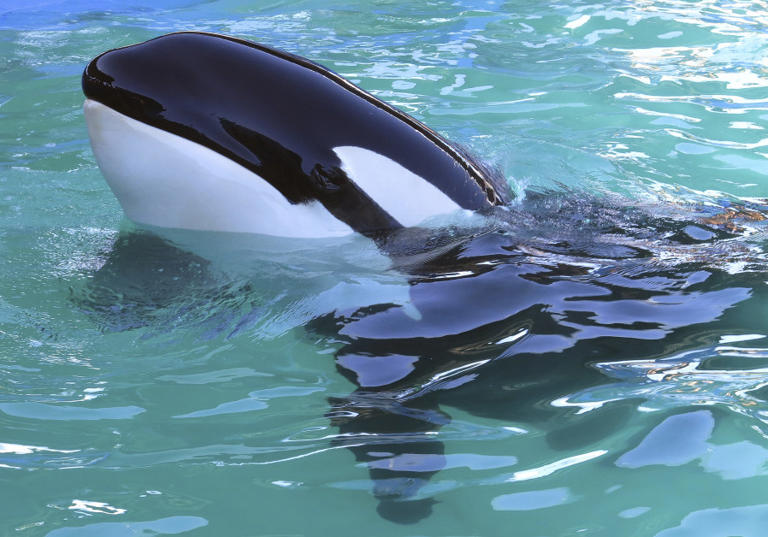
Lolita the Killer Whale is seen between shows at the Miami Seaquarium 
in Miami January 21, 2015.© (photo credit: ANDREW INNERARITY / REUTERS)

Lolita the orca, also known as Toki, died at the Miami Seaquarium on Friday, just months after a deal was reached to release her to an ocean habitat after over 50 years in captivity.

"Over the last two days, Toki started exhibiting serious signs of discomfort, which her full Miami Seaquarium and Friends of Toki medical team began treating immediately and aggressively," said the Seaquarium on Saturday. "Despite receiving the best possible medical care, she passed away Friday afternoon from what is believed to be a renal condition."


"Toki was an inspiration to all who had the fortune to hear her story and especially to the Lummi nation that considered her family. Those of us who have had the honor and privilege to spend time with her will forever remember her beautiful spirit," added the Seaquarium.

The Seaquarium was closed on Saturday to give the staff at the park time "to reflect on Lolita’s life and legacy."


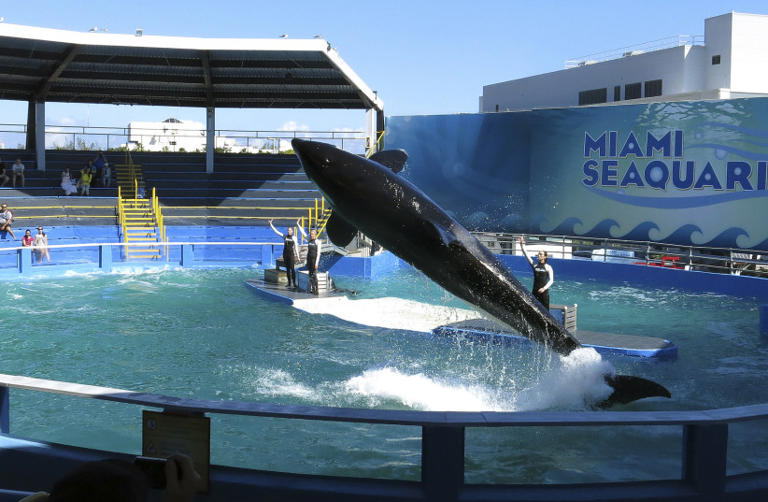
Lolita the Killer Whale performs during a show at the Miami Seaquarium in Miami January 21, 2015. (credit: ANDREW INNERARITY / REUTERS)© Provided by The Jerusalem PostLolita the Killer Whale performs during a show at the Miami Seaquarium in Miami January 21, 2015. (credit: ANDREW INNERARITY / REUTERS)

Eduardo Albor, CEO of The Dolphin Company which owns the aquarium, tweeted "Not a single effort we made to give Lolita an opportunity was a waste of time and money. My heart is truly broken. Lolita captured me since [the] first day. Love at first sight. Thank you for making believe in what we do. The care team leaded by Mike Partica and Dr. Reiderson are true heroes."

Related video: Lolita, beloved orca held in captivity, dies at age 57 before planned release to sanctuary (NBC News)   Tonight, outside the Miami Seaquarium activist voicing their anger 
Duration 2:09   View on Watch


Indianapolis Colts owner Jim Irsay, who had helped fund efforts to release Lolita, responded to the death as well on Saturday, tweeting "I am heartbroken that Toki has left us. Her story captured my heart, just as it did millions of others. I was honored to be part of the team working to return her to her indigenous home, and I take solace in knowing that we significantly improved her living conditions this past year. Her spirit and grace have touched so many. Rest in peace, dear Toki."


Lolita was set to be freed to ocean habitat

In March, the Miami Seaquarium said it had reached a "binding agreement" with nonprofit Friends of Lolita to return the whale, who recently retired from performances, to an ocean habitat in the Pacific Northwest within two years.

Lolita, a 57-year-old orca captured in 1970 in a cove off Seattle, was also known as Toki, a name that is short for the whale's Native American name of Tokitae, the Miami Herald reported at the time. The plan to return Lolita to her natural habitat required federal approval, according to the newspaper.

The process to return Lolita to her "home waters" was years in the making, beginning with the transfer of the aquarium's ownership to The Dolphin Co, Miami-Dade County Mayor Daniella Levine Cava said at a news conference. The company later partnered with the nonprofit to provide medical care to the whale.

The Seaquarium's previous owner, SeaWorld Entertainment, phased out killer whale shows in 2016. Lolita, once a top attraction at Seaquarium, retired from shows in March 2022 after management changed hands.

The push to free Lolita gained momentum after the 2013 documentary Blackfish highlighted the captivity of orcas.

Animal rights advocates for years fought unsuccessfully in court to obtain Lolita's freedom after the National Oceanic and Atmospheric Administration added orcas to the endangered species list in 2015.

Killer whales are highly social mammals that have no natural predators and can live up to 80 years.

https://libcom.org/article/beasts-burden-antagonism-and-practical-history

An attempt to rethink the separation between animal liberationist and communist politics. (Published 1999).