Tuesday, August 22, 2023

US airline pilots fight their unions to increase retirement age


Pilots from United Airlines take part in an informational picket at Newark Liberty International Airport in Newark

By Rajesh Kumar Singh and Allison Lampert

(Reuters) - Bo Ellis has been a devoted member of the Air Line Pilots Association (ALPA) for nearly four decades, but the 64-year-old is waging a campaign against the union to extend his flying career.

ALPA and other pilot unions oppose a bill in the U.S. Congress that seeks to raise the retirement age for commercial airline pilots to 67 from 65, arguing it will "introduce new risk" into the aviation system as no safety agency has studied its implications.

The measure, however, is estimated to provide 5,000 pilots like Ellis the option to continue working over the next two years, according to the Regional Airline Association (RAA).

Increasing the age limit by two years would also align pilot retirement with the minimum federal retirement age, allowing them to receive full social security benefits.

Ellis, a head pilot at a U.S. carrier, said senior pilots are "by far much safer" due to experience, accusing ALPA of "politicizing" safety.

"My own union is being discriminatory against me," he said.

PILOTS LOBBY LAWMAKERS

Ellis has co-founded a coalition of thousands of pilots at carriers including Delta, United, American and Southwest Airlines to lobby for the legislation and has contacted over 200 lawmakers.

In a statement, ALPA said it "carefully" considered and its elected representatives voted "unanimously" last October to reaffirm its opposition to an "arbitrary change" in the retirement age.

"America did not establish the aviation safety gold standard by cutting corners when making significant changes to our complex, global aviation system," ALPA said.

Rick Redfern, a Mesa Air pilot who was present at ALPA's October meeting, said the union's board merely approved its strategic plan which contains its position on age. But the specific question of increasing the retirement age to 67 was never brought to the floor for a vote. Two other pilots, present at the meeting, confirmed Redfern's account.

Internal emails reviewed by Reuters and interviews with a dozen pilots show members are divided over the age issue. Some of the pilots asked not to have their employers identified due to the risk of losing their jobs.

In previously unreported developments, a proposal by Mesa pilots seeking a vote on the age limit is expected to be discussed at ALPA's national executive council in September, said Redfern.

ALPA needs to "get the pulse of the community," said Redfern, an ALPA representative for MESA pilots.

Similarly, ALPA's unit at United Airlines is polling pilots on the issue for the first time in 16 years.

"We are fully aware of the passion raised over the issue," ALPA said in an Aug. 3 memo to United pilots that was seen by Reuters.

The measure, expected to be taken up by the U.S. Senate in September after its approval in the House of Representatives last month, can mitigate staffing gaps at carriers that have led to a reduction in air service to more than 300 U.S. airports.

"It will provide some much-needed relief," said airline stocks analyst Savanthi Syth of Raymond James.

JUNIOR VERSUS SENIOR PILOTS

All airline pilots are required to pass medical tests every six months and those older than 40 must undergo ECG heart screening annually. Additionally, all pilots have their skills regularly evaluated in flight simulators to ensure proficiency.

Advocates of the measure said advancements in medical science have led to a better understanding of pilot incapacitation. They point to Canada, Japan and Australia, countries with either higher or no age limit for pilots.

Also, pilots are allowed to fly corporate and charter jets beyond the age of 65.

Take Dan Carr, a former Mesa captain who turned 66 this month and flies business jets. If he was allowed to retire at 67, Carr said he would have never left Mesa.

"I feel like I'm at the pinnacle of my ability," he said.

Some older pilots want to work longer to benefit from salary increases after enduring economic losses in the coronavirus pandemic during 2020-2021 and various airline bankruptcies.

They accused union leaders of pandering to junior pilots, who outnumber senior aviators and fear a higher retirement age would hurt their career progression. "This is a coup by junior pilots against senior pilots," said Allen Baker, who retired as a United Airlines pilot in June.

ALPA said its stand on age is the result of a "democratic process" and reflects "the will" of its members.

Baker, 65, shared an email with Reuters which he wrote to ALPA leadership at United weeks before his retirement, complaining about a "slander campaign" by junior pilots against senior members like him.

Dennis Tajer, a spokesman for American Airlines pilots union, said pilots seeking higher retirement age want to keep earning longer.

DIVIDED AIRLINES

ALPA said changes to aviation policy should not be done "in the backrooms of Congress or at the behest of moneyed special interests." It has warned the move could cause airline scheduling and pilot training issues, and require reopening pilot contracts as current international rules would still prevent pilots older than 65 from flying internationally.

In an interview, ALPA head Jason Ambrosi said the measure would drive up airline costs and ticket prices for customers. He, however, did not provide any specific data to back his argument.

Like pilots, airlines are also split. Frontier Airlines CEO Barry Biffle said pilots should be allowed to fly as long as they clear their medical tests, joining the global airline trade group, International Air Transport Association and the RAA, in supporting the legislation.

But United Airlines CEO Scott Kirby has said lifting the retirement age would not solve the pilot shortage. Last year, he said 36% of the company's pilots aged 64 were out on sick, long-term, or short-term medical leave.

Mesa's CEO Jonathan Ornstein said he would love to have pilots like former Mesa employee Carr fly longer. The airline's operations are suffering as it has lost 37% of its captains due to retirement and attrition since early 2022.

"If the regulations permitted, I'd take them all back," he said.

(Reporting by Rajesh Kumar Singh in Chicago and Allison Lampert in Montreal; editing by Ben Klayman and Grant McCool)


Prime Minister Justin Trudeau slams Facebook for blocking Canada wildfire news

ROB GILLIES
Mon, August 21, 2023 


Thick smoke from the Lower East Adams Lake wildfire fills the air around a Canadian flag fluttering in the wind as Royal Canadian Mounted Police officers on a boat patrol Shuswap Lake, in Scotch Creek, British Columbia, on Sunday, Aug. 20, 2023. 
(Darryl Dyck/The Canadian Press via AP)

TORONTO (AP) — Canadian Prime Minister Justin Trudeau accused Facebook on Monday of putting profits over people’s safety during the emergencies created by Canada’s record wildfire season.

Meta, the parent company of Facebook and Instagram, announced earlier this summer it would keep its promise to block news content from Canada on its platforms because of a new law that requires tech giants to pay publishers for linking to or otherwise repurposing their content online.

Fires raging in Canada have pushed tens of thousands of people from their homes and threatened cities such as Yellowknife, the capital of the Northwest Territories. About 30,000 people were under evacuation orders in British Columbia.

“Right now, in an emergency situation where up to date local information is more important than ever, Facebook is putting corporate profits ahead of people's safety,” Trudeau said at a news conference in Cornwall on Prince Edward Island.

“It is so inconceivable that a company like Facebook is choosing to put corporate profits ahead of insuring that local news organizations can get up to date information to Canadians,” the prime minister said.

Government ministers called on Meta on Friday to lift its Canada news ban, which applies to local outlets as well as national media such as the Canadian Broadcasting Corporation.

The company, which is headquartered in Northern California, stood by its decision and said in a statement about the wildfires that people in Canada can continue to use Instagram and Facebook “to connect with their communities and access reputable information, including content from official government agencies, emergency services and non-governmental organizations.”

The country's residents and visitors are not able to view or share news on the Meta-owned social networks, including news articles, videos and audio posted by outlets inside or outside of Canada.

Meta has been alone in its action. Google’s owner, Alphabet, also said it planned to remove Canadian news links in response to the new law, although it hasn’t followed through yet. The Online News Act, passed in late June after lengthy debate, is set to take effect later this year.

“This is Facebook’s choice," Trudeau said. “In a democracy, quality local journalism matters, and it matters now more than ever before when people are worried about their homes, worried about their communities, worried about the worst summer for extreme events that we’ve had in a very long time.”

Meta took similar steps in the past. In 2021, it briefly blocked news from its platform in Australia after the country passed legislation that would compel tech companies to pay publishers for using their news stories. It later struck deals with Australian publishers.
Northvolt Raises $1.2 Billion Amid Canada Battery Factory Plans

Rafaela Lindeberg
Tue, August 22, 2023 


(Bloomberg) -- Northvolt AB raised $1.2 billion from North American investors including BlackRock Inc. and CCP Investments as the Swedish battery maker is said to be in talks to 

Northvolt extended last year’s $1.1 billion convertible note to $2.3 billion to finance an expansion of its production capabilities in Europe and North America, the company said Tuesday. Ontario’s public-sector investment vehicle and its pension fund also invested.

The battery maker has raised more than $9 billion in equity and debt in the past six years, bolstered by over $55 billion in orders from automotive clients including BMW, Volvo Cars and Volkswagen. The company has said it plans to eventually go public.

Bloomberg reported in June that Northvolt is close to a deal to build a battery plant near Montreal, a project that’s expected to be worth about C$7 billion ($5.2 billion). Earlier this year, the company also confirmed it was moving forward with a plant in Germany after Berlin pledged roughly €1 billion ($1.1 billion) in aid.

Meanwhile, Northvolt said that its factory in Gdansk, Poland, has assembled first energy storage system products, with deliveries expected to start later this year.

Bloomberg Businessweek

Exclusive-Northvolt raises $1.2 billion in latest funding round for factory build out - CFO


Supantha Mukherjee and Simon Jessop
Tue, August 22, 2023 


STOCKHOLM/LONDON (Reuters) - Swedish lithium-ion battery producer Northvolt has raised $1.2 billion from investors including BlackRock and several Canadian pension plans as it prepares to build new factories in Europe and North America, its finance chief told Reuters.

The fresh funding, through a convertible note, comes as investor demand for companies set to benefit from the move to a low-carbon economy picks up pace, aided by policy initiatives in both regions to accelerate the transition.

"It's a very capital intensive industry... finding the right mix is always hard in this new greenfield kind of transitional projects," Chief Financial Officer Alexander Hartman said in an interview.

Leading the round alongside BlackRock, the world's biggest asset manager, were Canada Pension Plan, Ontario Municipal Employees Retirement System and, as previously reported, pension investor Investment Management Corporation of Ontario.

"The battery manufacturing sector has attractive growth potential driven by the accelerating adoption of battery storage and electric vehicles," said David Giordano, global head of climate infrastructure at BlackRock.

"As a leading investor in the energy transition, we look forward to supporting their continued growth."

Other investors to take part included Goldman Sachs, Volkswagen, Baillie Gifford, Swedbank Robur, Singapore's GIC and Hong Kong-based Chow Tai Fook Enterprises.


A number of funds to invest in the note were classed as 'dark green' under the European Union's sustainable finance framework, a stamp of environmental approval that bodes well for future interest in the company, which ultimately hopes to list, Hartman said.

The fresh funds will help the firm expand its factory footprint, Hartman said. The firm currently has several factories across Europe with the latest a 600 million euros ($654 million) investment to build a plant in Germany, announced in May.

While the company has a facility in the United States, sources said the company is close to finalising plans to build a multibillion-dollar battery factory in Canada that will be announced later this year.

Northvolt declined to comment on the factory plans.

With the latest round, Northvolt has raised more than $9 billion in debt and equity since 2017 in its bid to become Europe's biggest battery manufacturer, including $1.1 billion in convertible notes last year from multiple investors.

It has secured orders of over $55 billion from customers such as BMW, Fluence, Scania, Volvo Cars and Volkswagen.

Separately, Northvolt has assembled its first energy storage system products in Poland and expects to start customer deliveries from later this year.

"We have a business plan... we always want to make sure we have access to the markets," Hartman said.

He declined to comment on whether the company was preparing to go public.

Reuters has previously reported, citing sources, that Northvolt was preparing for an initial public offering that could value the company at more than $20 billion.

($1 = 0.9176 euros)

(Reporting by Supantha Mukherjee in Stockholm and Simon Jessop in London; editing by Mark Potter)

Swedish EV battery maker raises $1.2B to expand to North America


Rebecca Bellan
Tue, August 22, 2023 

Image Credits: Getty Images

Northvolt, a Swedish producer of lithium-ion batteries, has raised around $1.2 billion from BlackRock and various Canadian pension plans to build new factories in North America and Europe, according to report from Reuters.

Tuesday's announcement signals the first time Northvolt has shared concrete plans to build in North America. If Northvolt builds in the U.S., it'll be able to take advantage of government incentives featured in President Joe Biden's Inflation Reduction Act (IRA). A range of automakers and battery makers — from Hyundai and Stellantis to Panasonic and SK Innovation — have in the last two years announced plans to build EV battery factories in the U.S. or Canada.

The U.S.'s landmark climate legislation has created an arms race with the European Union, as many companies choose the U.S.'s carrots over the EU's sticks and invest in battery production across the pond.

Northvolt didn't say where it will build in North America, but sources told Reuters the company is close to finalizing plans to build a multi-billion dollar factory in Canada, which will be announced later this year. The company already has a facility in California, where it is developing next-generation lithium-metal cell technology to power electric aviation.

Northvolt did not respond to TechCrunch to confirm its factory plans in North America, nor its intentions for expansion in Europe.

Most of Northvolt's activity has been in Sweden — the company has a gigafactory in SkellefteĆ„ and is building another in Gothenburg in partnership with Volvo. The battery maker is also building a battery plant in Germany and an energy storage factory in Poland.

BlackRock was joined in leading the $1.2 billion convertible note round by Canada Pension Plan, Ontario Municipal Employees Retirement System and pension investor Investment Management Corporation of Ontario, which had invested $400 million in Northvolt in June.


Participants in the round included Goldman Sachs, Volkswagen, Baillie Gifford, Swedbank Robur, Singapore's GIC and Hong Kong-based Chow Tai Fook Enterprises.


The latest round brings Northvolt's total funding to $9 billion in debt and equity since 2017, including $1.1 billion in convertible notes last year. The company has also secured over $55 billion in orders from customers like BMW, Fluence, Scania, Volvo and Volkswagen.

Convertible notes can convert into equity at a later date, and many companies raise this type of short-term debt before filing for an initial public offering. The strong interest from heavy-hitter investors suggests a confidence in Northvolt's potential to grow and eventually go public at a high valuation.

While Northvolt has not shared plans to go public, Reuters reported in February, citing sources, that the company was indeed preparing for an IPO at a $20 billion valuation.

Tracking the EV battery factory construction boom across North America


Overseas Bond Sellers Kick Tires in Canada Mortgage Plan Shadow


Esteban Duarte
Tue, August 22, 2023 


(Bloomberg) -- A state-owned German bank tapped loonie bond investors, potentially encouraging other top-rated issuers to follow suit just as Prime Minister Justin Trudeau’s government mulls canceling Canada’s mortgage bond program.

Germany’s L-Bank sold C$300 million of AAA-rated bonds in its first widely marketed Canadian dollar deal. Other supranational and international government-related issuers, known as SSAs, are also weighing debt sales, according to Sven Lautenschlaeger, international funding officer at the lender.

The bank decided to go ahead with the transaction after investors said they want to see more highly rated international issuers in the so-called maple bond market, given the uncertain future of Canada’s C$260 billion ($192.3 billion) mortgage bond program, Lautenschlaeger said.

“I’ve already received questions from other issuers and they are also monitoring the market,” Lautenschlaeger said in an interview. “We’ll try over time to be a more regular issuer” in Canadian dollars.

Canada mortgage bonds, known as CMBs, are priced with extra yield over federal government debt, even though they are guaranteed by Ottawa and rated AAA. Trudeau’s government is deciding whether to wind down that operation by merging it into its main borrowing program in an effort to reduce costs.

But the proposal has come under fire from market participants, who have argued that it might have unintended consequences. They warn that money that would otherwise flow into CMBs may end up going elsewhere rather than into Canadian government debt, driving up yields for government and corporate borrowers. The country’s finance department recently finished a consultation on the plan.

After the L-Bank transaction, Canadian-dollar denominated bonds issued by supranational and international government-related issuers have reached over C$7.2 billion so far this year, up from almost C$6.2 billion for all of 2022, according to data compiled by Bloomberg.

L-Bank is short for Landeskreditbank Baden-Wuerttemberg Foerderbank.

L-Bank’s bonds are guaranteed by German state of Baden—Wuerttemberg, and garner top investment grades by Moody’s Investors Service and Fitch Ratings and one level lower by S&P. Its three-year bond offering was priced on Aug. 17 to yield 4.868%. The Karlsruhe, Germany-based institution’s 4.85% notes were quoted Tuesday at a spread of around 42 basis points over the Canada government yield curve compared with around 22 basis points for a similar-maturity Canada mortgage bond, according to Bloomberg indicative bid prices.

Royal Bank of Canada, Bank of Montreal and Toronto-Dominion Bank, which arranged the L-Bank transaction, also collectively put in orders totaling C$62 million, Lautenschlaeger said. Central banks and official institutions took 44% of the transaction, while banks took the remaining 56%. Investors in Europe, the Middle East and Africa bought 52%, while 48% was purchased by Canadian investors, he said.

“We are very pleased about the outcome and about the strong support from on the one hand from our loyal investors and on the other hand for the strong support from our three leads,” said Lautenschlaeger. “When you come for the first time to the market, it’s always a challenge, and it has definitely been a challenge to get it done.”

Highly rated securities in Canadian dollars benefit from international demand from reserve managers such as central banks, which at the end of first quarter had $270.75 billion of assets denominated in loonies, according to International Monetary Fund data. Around 40% of the CMB program is placed with international investors, according to a letter sent to the government by the Investment Industry Association of Canada.

“The attractiveness of Government of Canada offerings to both foreign and domestic investors is evidenced by the depth of the Canadian market and investors’ confidence in Canada’s financial ecosystem,” an official with the Canadian finance department said by email.

Most Read from Bloomberg Businessweek


Improving EV batteries with real-world driving data

Improving EV batteries with real-world driving data
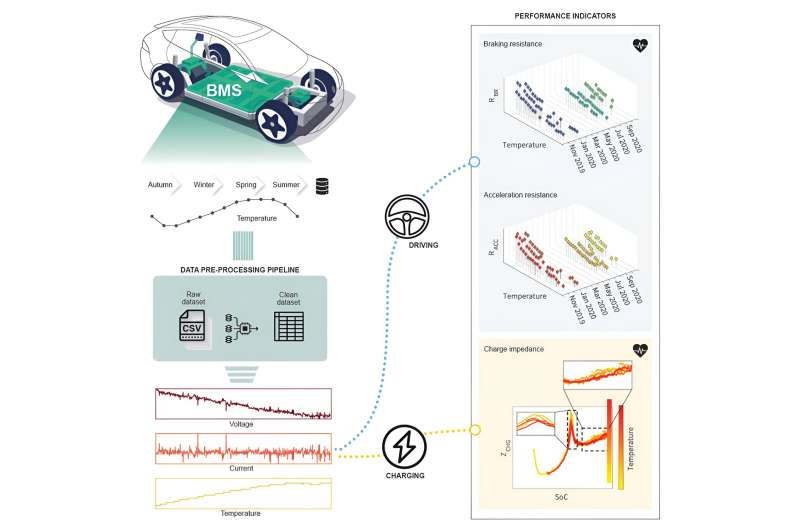
Graphical abstract. Credit: Joule (2023). DOI: 10.1016/j.joule.2023.07.018

Most electric vehicles are equipped with an electronic brain that manages day-to-day battery performance and safety. This battery management system, or BMS, includes software that uses algorithms to monitor the overall health of the powerful lithium-ion battery pack.

"The  tells you things like if your battery is doing OK, or how far you can drive before you need to recharge," said Simona Onori, an assistant professor of energy science and engineering in the Stanford Doerr School of Sustainability. "The problem is that BMS algorithms are designed in ideal laboratory conditions that do not reflect what a  sees in the real world."

To demonstrate the gap between controlled laboratory testing and actual road experience, Onori and colleagues at Stanford collaborated with researchers at the Volkswagen Innovation and Engineering Center located near the university campus. Their results are published Aug. 18 in Joule.

"Algorithms based on unrealistic driving data are likely to be inaccurate in the field," said Onori, lead author of the study. "Our goal is to increase the longevity of the battery pack by designing algorithms trained from real-world data."

Driving styles

Battery management systems in  on the road today routinely record data during braking, acceleration, deceleration, and charging.

"Real-world driving is driver specific," said study co-author Gabriele Pozzato, a Stanford research engineer. "You might be an aggressive driver, or someone who only partially charges their car. Different styles of driving and charging will result in different trajectories of battery degradation. However, that kind of field data is not included in conventional battery algorithms."

For the study, Volkswagen provided the Stanford team about 3,750 hours of BMS driving data collected from an all-electric Audi e-tron SUV driven in the San Francisco Bay Area for one year, from November 2019 to October 2020 (Audi is a subsidiary of Volkswagen).

Energy and power

Using the Audi field data, the Stanford team calculated the  in the battery pack over the one-year period. These calculations enabled the team to assess two key battery metrics: energy and power.

"Energy gives you the range, or how many miles you can drive with a fully charged battery," Pozzato explained. "Power is the ability to extract energy quickly. When you accelerate, you want to get access to energy and discharge the battery very fast. The less electrical resistance you have in the battery, the more power you have."

To calculate resistance, the researchers measured abrupt changes in current and voltage in the battery pack using data from 529 acceleration events and 392 braking events during the year. They also calculated impedance—a measure of resistance during battery charging—by analyzing 53 charging sessions.

"Impedance and resistance are typically considered metrics of battery health," Onori said. "The more you drive, the more resistance increases. This usually translates into less available power from the battery pack, but that's not what we saw."

A more complex pattern emerged when the researchers added seasonal weather data to the mix. They discovered that electrical resistance decreased in cooler months and steadily increased in spring and summer, an indication that battery health improves as temperatures rise.

"Higher temperatures raise battery capacity, so you have this feeling that the car has more energy and that you can drive more miles," Onori said. "But if you keep using the battery at high temperatures, it will degrade faster. Those are very tricky factors that affect performance. Next year we'll expand our dataset to a fleet of vehicles to determine exactly how temperature and aging affect each other."

The lab vs. the road

Automakers rely on conventional BMS algorithms designed in pristine laboratory conditions. Using machine learning, these algorithms typically monitor performance data from a single 4-volt battery cell that continuously charges and discharges at a constant temperature until it dies. But the Audi field data was collected from a 396-volt battery pack powered by 384 cells.

"New algorithms should focus on the entire battery pack and not individual cells," Onori said. "We want to design algorithms that educate drivers on how to increase the life of the  pack, which is the most expensive component of the vehicle. For example, you could alert drivers if they are fast-charging too much or accelerating too aggressively. So much can be learned from field data to make BMS algorithms more robust."

More information: Gabriele Pozzato et al, Analysis and key findings from real-world electric vehicle field data, Joule (2023). DOI: 10.1016/j.joule.2023.07.018


Journal information: Joule 


Provided by Stanford University 

Batteries in electric vehicles have more mileage in city driving rather than highway driving


Hopes fade for 'room temperature superconductor' LK-99, but quantum zero-resistance research continues

Hopes fade for 'room temperature superconductor' LK-99, but quantum zero-resistance research continues
Credit: Hyun-Tak Kim

The past few weeks have seen a huge surge of interest among scientists and the public in a material called LK-99 after it was claimed to be a superconductor at room temperature and ambient pressure.

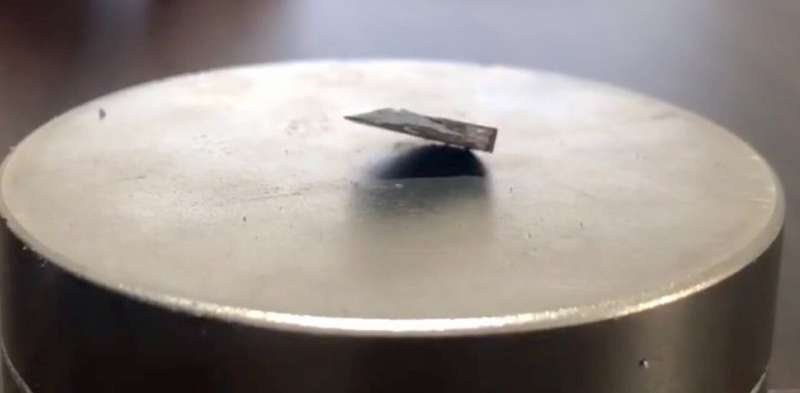
LK-99 garnered attention after South Korean researchers posted two papers about it on arXiv, a non-peer-reviewed repository for scientific reports, on July 22. The researchers reported possible indicators of superconductivity in LK-99, including unexpectedly low  and partial levitation in a magnetic field.

The potential discovery drew enthusiasm on social media and was widely reported in traditional media too. As a physicist working on quantum phenomena in materials, I was gratified to see the interest in superconductivity, and I shared in the excitement about the report. But I also approached the results with skepticism, especially since many previous reports of  superconductivity have failed to be reproduced.

Now, after follow-up experiments by scientists around the world, it seems LK-99 is not so special after all. However, while this particular avenue of research may be a dead end, the dream of a room-temperature superconductor is still very much alive.

What is a superconductor, and why are they useful?

You're probably familiar with ordinary conductors, like metals, in which  can move fairly easily through the "crystal lattice" of atoms that makes up the material. This means an  can flow—but the electrons are jostled around a bit as they move, so they lose energy as they travel. (This jostling is called electrical .)

In a superconductor, there is zero resistance and an  can flow perfectly smoothly without losing any energy. Many metals become superconductors at very low temperatures.

Superconductivity occurs when the electrons slightly distort the crystal lattice of the metal in a way that makes them team up into "Cooper pairs." These pairs of electrons then "condense" into a superfluid, a state of matter that can flow without friction.

Superconductors are very useful. They can be used to create extremely powerful electromagnets, such as those in MRI scanners, particle accelerators, fusion reactors and maglev trains.

Current superconductors work only at ultra-cold temperatures, so they require expensive refrigeration. A material that superconducts at everyday temperature and pressure could be used much more widely.

Currently, the highest superconducting temperatures at  are around –138℃ (135 Kelvin), found in "cuprate" superconductors, a family of copper-containing compounds discovered unexpectedly in 1986. Electron pairing in the cuprates appears to involve a different mechanism than interaction with the lattice.

However, while our understanding of such exotic superconductors has improved, we still can't yet predict with any certainty new materials which could superconduct at even higher temperature. Still, there is no reason to think this can't be achieved. Moreover, many if not most superconducting materials are discovered serendipitously—so a claimed discovery of an unexpected room-temperature superconductor can't be dismissed out of hand.

So what about LK-99?

LK-99 is a compound containing oxygen, phosphorus, lead and copper. Little was known about the material when the papers claiming superconductivity emerged. For example, it wasn't even known whether it should conduct electricity at all.

The report of superconductivity at ambient conditions sparked a crash effort from researchers around the world to understand the material and reproduce the results. While it is still early days, and neither the initial report nor the follow-ups have been peer-reviewed, a picture has started to emerge that the LK-99 compound described by the authors is not a superconductor, and not even a metal.

So if it's not a superconductor, why did the original researchers think it was? One study has pointed out that an impurity in the initial LK-99 samples, cuprous sulfide, could explain some of what they saw.

Cuprous sulfide experiences a sudden, large change in resistance at a temperature of around 127℃ (400K). The first researchers saw this drop in resistance and attributed it to superconductivity in LK-99, but it is more likely explained by very low (not zero) resistance in the cuprous sulfide impurity.

The partial levitation of LK-99, which might have indicated a property of superconductors called "magnetic flux pinning," seems to be caused by ferromagnetism, a familiar effect that occurs in iron and many other materials.

So while nobody has proven the LK-99 samples studied in the original reports don't superconduct, the balance of evidence right now is strongly in favor of other explanations. Most scientists studying superconductivity don't see much reason to continue looking at LK-99.

Excitons and beyond

What's next for superconductivity research? Well, we can cross LK-99 off the list of materials to study, but the search goes on.

In fact, there has been a lot of progress in the past few years towards creating zero resistance under ordinary conditions.

Making electrons pair together is the key to , but this is hard to do as they naturally repel each other. However, it's possible to make an electron pair up with a "hole" in a material—a gap where an electron should be.

These electron–hole pairs are called excitons, and they can be combined with light to form a frictionless superfluid at room temperature. This superfluid doesn't carry an electrical current (because the charges of the electron and the hole cancel out), but separating the electron and hole might allow supercurrents without resistance.

Topological insulators

An alternate route to zero resistance at room temperature has been found in so-called topological insulators. These are materials that only allow electrons to move along their edges or surfaces, in some cases with no resistance.

Graphene, a material made of sheets of carbon only a single atom thick, can be turned into a topological insulator in a strong magnetic field. But the required magnetic field is so extreme it can only be realized in a few laboratories in the world.

Hopes fade for 'room temperature superconductor' LK-99, but quantum zero-resistance research continues
Typical superconductors only function at extremely low temperatures.
 Credit: Michelmond / Shutterstock

There are also other types of topological insulators that work without an externally applied . Current versions of these materials show  only at very low temperatures, but there appears to be no reason they couldn't work at room .

Unfortunately superfluid excitons and  can only carry a limited amount of current, and are probably not useful for creating powerful magnets. But they could still be useful for transmitting the tiny electrical signals used in computer chips, and my colleagues and I are using them to create low-power electronic and computing technologies.

Journal information: arXiv 

This article is republished from The Conversation under a Creative Commons license. Read the original article.The Conversation

Viral room-temperature superconductor claims spark excitement—and skepticism

Want to find UFOs? That's a job for machine learning

Want to find UFOs? That's a job for machine learning
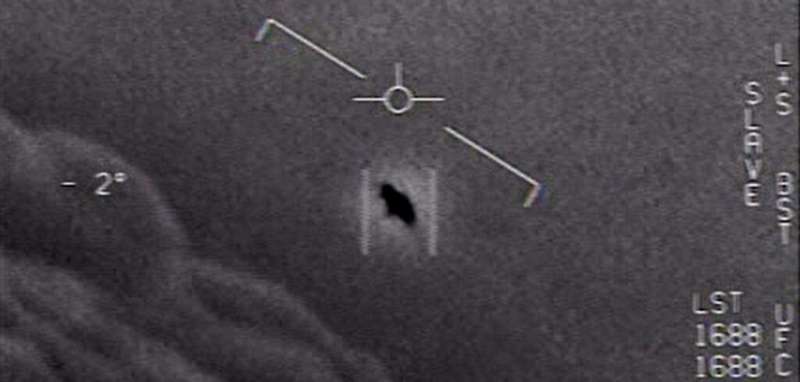
Cockpit video shows an anomalous aerial encounter in 2015. Credit: U.S Navy Video

In 2017, humanity got its first glimpse of an interstellar object (ISO), known as 1I/"Oumuamua, which buzzed our planet on its way out of the solar system. Speculation abound as to what this object could be because, based on the limited data collected, it was clear that it was like nothing astronomers had ever seen. A controversial suggestion was that it might have been an extraterrestrial probe (or a piece of a derelict spacecraft) passing through our system.

Public fascination with the possibility of "alien visitors" was also bolstered in 2021 with the release of the UFO Report by the ODNI.

This move effectively made the study of unidentified aerial phenomena (UAP) a scientific pursuit rather than a clandestine affair overseen by government agencies. With one eye on the skies and the other on orbital objects, scientists are proposing how recent advances in computing, AI, and instrumentation can be used to assist in the detection of possible "visitors." This includes a recent study by a team from the University of Strathclyde that examines how  paired with machine learning can create an advanced data pipeline.

The team was led by Massimiliano Vasile, a professor of mechanical and , and was composed of researchers from the schools of Mechanical and Aerospace Engineering and Electronic and Electrical Engineering at the University of Strathclyde and the Fraunhofer Center for Applied Photonics in Glasgow.

A preprint of their paper, titled "Space Object Identification and Classification from Hyperspectral Material Analysis," is available online via the pre-print server arXiv and is being reviewed for publication in Scientific Reports.

This study is the latest in a series that addresses applications for hyperspectral imaging for activities in space. The first paper, "Intelligent characterization of space objects with hyperspectral imaging," appeared in Acta Astronautica in February 2023 and was part of the Hyperspectral Imager for Space Surveillance and Tracking (HyperSST) project. This was one of 13 debris mitigation concepts selected by the UK Space Agency (UKSA) for funding last year and is the precursor to the ESA's Hyperspectral space debris Classification (HyperClass) project.

Their latest paper explored how this same imaging technique could be used in the growing field of UAP identification. This process consists of collecting and processing data from across the  from single pixels, typically to identify different objects or materials captured in images. As Vasile explained to Universe Today via email, hyperspectral imaging paired with machine learning has the potential for narrowing the search for possible technosignatures by eliminating false positives caused by human-made debris objects (spent stages, defunct satellites, etc.):

"If UAP are space objects, then what we can do by analyzing the spectra is to understand the material composition even from a single pixel. We can also understand the attitude motion by analyzing the time variation of the spectra. Both things are very important because we can identify object by their spectral signature and understand their motion with minimal optical requirements."

Want to find UFOs? That's a job for machine learning
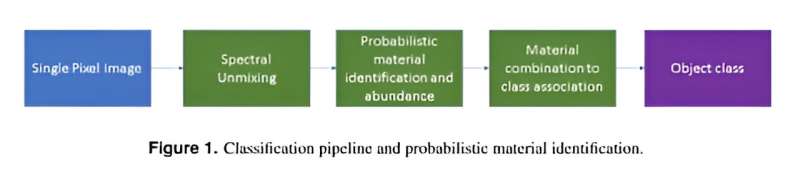
Credit: Vasile, M. et al. (2023)

Vasile and his colleagues propose the creation of a data processing pipeline for processing UAP images using machine learning algorithms. As a first step, they explained how a dataset of time-series spectra of space objects is needed for the pipeline, including satellites and other objects in orbit. This includes debris objects, which means incorporating data from NASA's Orbital Debris Program Office (ODPO), the ESA's Space Debris Office, and other national and international bodies. This dataset must be diverse and include orbital scenarios, trajectories, illumination conditions, and precise data on the geometry, material distribution, and attitude motion of all orbiting objects at all times.

In short, scientists would need a robust database of all human-made objects in space for comparison to eliminate false positives. Since much of this data is unavailable, Vasile and his team created numerical physics simulation software to produce training data for the machine learning models. The next step involved a two-pronged approach to associate a spectrum to a set of materials generating it, one based on machine learning and one based on a more traditional mathematical regression analysis used to determine the line of best fit for a set of data (aka. least square method).

They then used a -based classification system to associate the probability of detecting a combination of materials with a particular class. With the pipeline complete, said Vasile, the next step was to run a series of tests, which provided encouraging data:

"We ran three tests: one in a laboratory with a mockup of a satellite made of known materials. These tests were very positive. Then we created a high-fidelity simulator to simulate real observation of objects in orbit. Test were positive and we learnt a lot. Finally we used a telescope and we observed a number of satellites and the  station. In this case, some tests were good some less good because our material database is currently rather small."

In their next paper, Vasile and his colleagues will present the attitude reconstruction part of their pipeline, which they hope to present at the upcoming AIAA Science and Technology Forum and Exposition (2024 SciTech) from January 8th to 12th in Orlando, Florida.

More information: Massimiliano Vasile et al, Space Object Identification and Classification from Hyperspectral Material Analysis, arXiv (2023). DOI: 10.48550/arxiv.2308.07481


Floating seismometers could help peer into the core of Venus

Floating seismometers could help peer into the core of venus
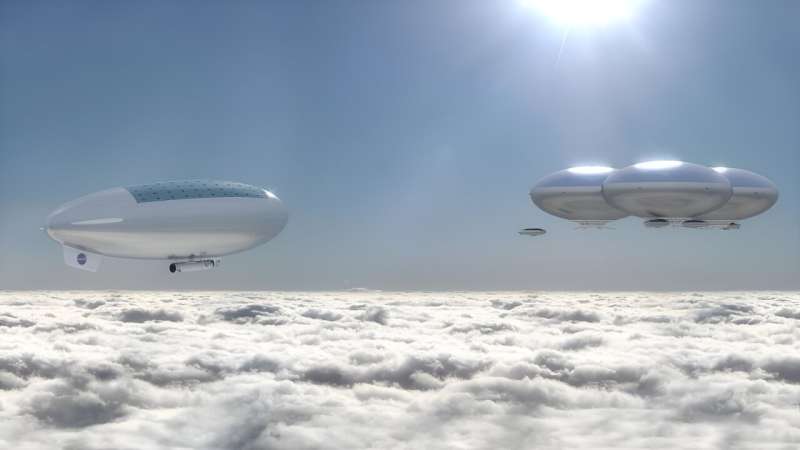
Artist’s depiction of a series of balloons on Venus. Credit: NASA

Seismology has been ubiquitous on Earth for decades, and missions such as InSight have recently provided the same data for the inside of Mars. Understanding a planet's inner workings is key to understanding its geology and climate.

However, the inner workings of Venus, arguably our closest sister planet, have remained a mystery. The sulfuric acid cloud and scorching  probably don't help. But Siddharth Krishnamoorthy from NASA's Jet Propulsion Laboratory and Daniel Bowman of Sandia National Laboratory think they have a solution—use seismometers hanging from balloons.

As reported previously, the idea has been around for a while. However, it might seem counter-intuitive—don't seismometers usually have to sit on the ground to detect something? Typical seismometers do, yes. However, another type of seismometer is only now becoming more accepted. An infrasound  monitors infrasound pressure waves created by seismic activity transmitted through a medium other than the ground—like an atmosphere.

Venus has plenty of atmosphere to go around, so it sounds like an ideal place to use the technology. Even better, high up in its cloud layer is one of the places in the  most like the environment on Earth hence why there have been plenty of ideas to form "cloud cities" on Venus. The work is published in the journal Geophysical Research Letters.

It's unnecessary to build an entire city simply to host some sensors collecting infrasound data, so a high-altitude balloon would serve the purpose nicely. That solves one of the most difficult challenges of exploring Venus—developing materials that can survive on its surface.

NASA has spent millions of dollars developing radiation-hardened sensors that can withstand the extraordinary pressure and temperatures on the surface. But even they are relatively simplistic, so a sensor held aloft at a reasonable temperature and pressure wouldn't require any additional development efforts for that specific use case.

Floating seismometers could help peer into the core of venus
Artist’s depiction of a balloon with sensor in Venus’ atmosphere. Credit: NASA / JPL-Caltech

This begs the obvious question—how will the signal get from the ground to the sensors floating in the atmosphere? Earthquakes (or venusquakes, as in this case) cause deafening sounds, which are then transmitted through the atmosphere at low frequencies. Sensitive microphones, like the ones aloft in the balloon, could read these signals.

Such an experiment was recently carried out on Earth, where an infrasound microphone could pick up signals from two earthquakes of magnitude 7.3 and 7.5, despite being 3,000 km away from the epicenter of the earthquakes up in the stratosphere.

Using this experiment as a template, researchers could develop a similar system for use on Venus, with the associated changes necessary for that particular planet's environment. Also, it was much farther away than previous experiments done with infrasound seimometers, and much closer to the actual distance any such sensor would be in from the epicenter of a venusquake.

There are still plenty of challenges, though. One is that we haven't been able to successfully launch a balloon mission to Venus at all, let alone one with sensitive seismometers on it. Second is that, in the case of the Earth experiment, we had a "ground truth," i.e., the researchers knew from other sources there was an earthquake happening when they received the signal.

Since there are no other sensors capable of providing that validation on Venus, researchers would likely have to speculate on what caused a particular pattern in the data—it could be a venusquake, or maybe the balloon was jostled in a certain way.

In addition, earthquakes with magnitudes above seven are considered large here on Earth, and it's unclear if the seismometers could pick up smaller quakes, even here on our home planet. Venus might have the same range of resultant , or it could be even more active but with less intensity, making the detection of less powerful quakes a priority. The JPL team has picked up aftershocks as low as magnitude 4.2, however the balloon as that point was much closer than a few thousand kilometers away.

Using technologies developed on Earth in  is always a good idea, and this seems to be a novel way of using these seismometers in a novel way.

However, as of now, there are no plans for a mission utilizing these features, despite almost a dozen planned missions to Venus in the near future. For now, understanding the interior workings of our nearest sister planet will have to wait.

More information: Siddharth Krishnamoorthy et al, A "Floatilla" of Airborne Seismometers for Venus, Geophysical Research Letters (2022). DOI: 10.1029/2022GL100978


Scientists introduce the design and application prospect of China's Tiangong space station

by Beijing Institute of Technology Press Co., Ltd
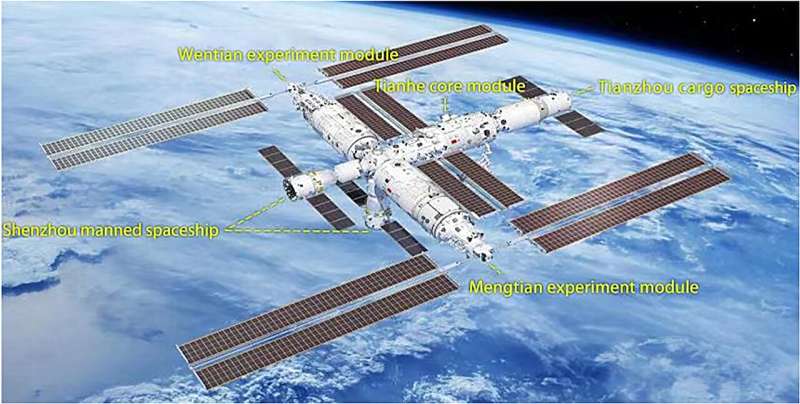
Configuration diagram of Tiangong space station. Credit: Space: Science & Technology

China's manned space project was approved in 1992 with a three-step strategic plan, and building a space station is the final goal of this plan.

In September 2010, China's manned space station project was officially established. On April 29, 2021, the Tianhe core module was successfully launched into orbit by the carrier rocket Long March-5B at the Wenchang Spacecraft Launch Site in Hainan.

As planned, by 11 launches and on-orbit missions, China has completed the assembly and started the official operation of the space station. With the completion and operation of the Tiangong space station, China will become the third country able to build and operate space stations independently after the Soviet Union and the United States.

In a research paper published in Space: Science & Technology, specialists from Institute of Spacecraft System Engineering, China Academy of Space Technology introduce the design of the Tiangong space station, summarize the technical characteristics of the Tiangong space station, and discuss the future application and development of the space station.

First, authors introduce the system scheme design of Tiangong space station. Overall, the Tiangong space station shows a T-shaped configuration, with the Tianhe core module in the middle and two experiment modules, namely Wentian and Mengtian, being assembled on the two sides respectively.

Configuration diagram of Wentian experiment module. Credit: Space: Science & Technology
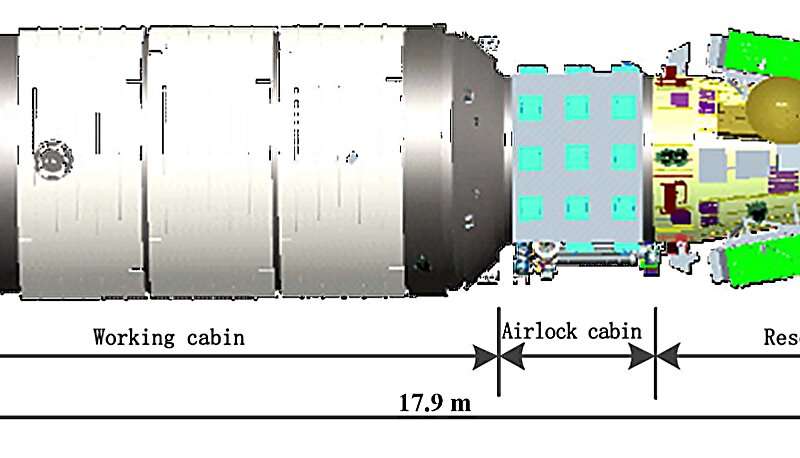
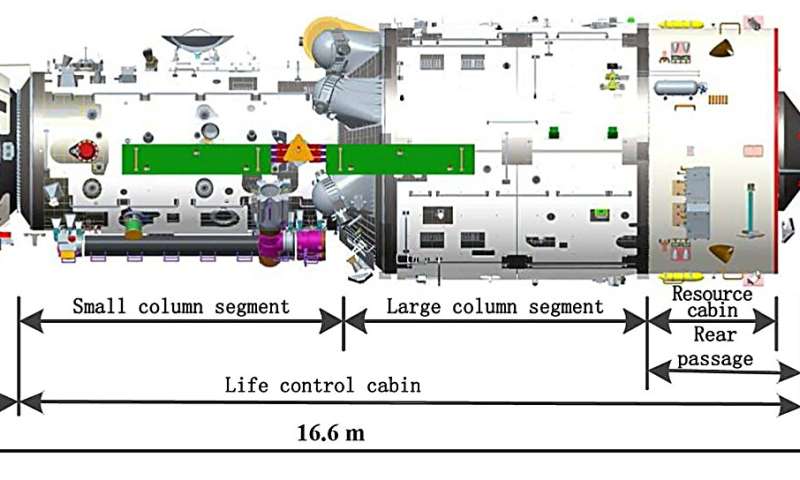
Configuration diagram of Tianhe core module. Credit: Space: Science & Technology

The Tianhe core module consists of three parts: a node cabin, a life control cabin, and a resource cabin. It has a total axial length of 16.6 m and a maximum diameter of 4.2 m. The Wentian experiment module consists of three parts: a working cabin, an airlock cabin, and a resource cabin. It has an axial length of 17.9 m and a maximum diameter of 4.2 m.

In addition, a small robotic arm, an experimental platform, and a truss structure are arranged outside the module. The Mengtian experiment module consists of four parts: a working cabin, a cargo airlock cabin, a load cabin, and a resource cabin. It has an axial length of 17.9 m and a maximum diameter of 4.2 m.

Two deployable platforms for exposed payloads are installed outside the load cabin, unfolding in orbit after launch. Moreover, the Tiangong space station has three docking hatches: forward (mainly for docking with manned spaceship and the Xuntian space telescope), backward (mainly for docking with cargo spaceship), and radial ones (mainly for docking with manned spaceship).

As for the system function design, the control and propulsion system includes control moment gyros, a reaction control system, a propellant refueling system, and the Hall electric propulsion system. The energy system is equipped with a large area of flexible solar arrays. The manned environment system possesses complete regenerative and non-regenerative life-support systems.

The robotic arms are the large seven-degree-of-freedom robotic arm and the small seven-degree-of-freedom robotic arm, with rich sensors of visual measurement, joint torque, and end-effector force. The extravehicular activities are supported by both the node cabin of the Tianhe core module and the airlock cabin of the Wentian experiment module. The crew's residence is provided with an activity space of no less than 110 m3.

The authors then summarize technical characteristics of advanced nature. Generally, the technical characteristics of the Tiangong space station are mainly reflected in four aspects:The advanced design concept.

China adopts a unified design framework and technical system for the Tiangong space station, under which the GNC, energy, information, thermal control, and manned environment systems of all the three modules will be interconnected to work together. And, the space station integrates intermodule resources efficiently, thus improving its overall capacity and system reliability.

The high proportion of new technology.


Space robotic arms, physicochemically regenerative life support, and the large-area flexible solar arrays of this space station are all brand-new technologies applied in orbit for the first time in China with high application difficulty and development risk. Additionally, the Tiangong space station embodies a high degree of intelligence from both equipment and system levels.
The excellent cost-effectiveness ratio.

In line with China's national conditions and practical needs in terms of building costs and application benefits, the Tiangong space station is designed to be moderate scale, relative to the ISS and Mir. Moreover, having more economical and reasonable construction and operation, it will be superior in some aspects, such as the power generation efficiency, application support capability, building ways, replenishment demand.
The safe and efficient residence.

The Tiangong space station is designed in line with the human-oriented concept. The design not only ensures the safety and comfort of the crew in orbit but also focuses on supporting the effective exertion by the crew's intelligence.

More information: Xiang Wang et al, Design and Application Prospect of China's Tiangong Space Station, Space: Science & Technology (2023). DOI: 10.34133/space.0035

Provided by Beijing Institute of Technology Press Co., Ltd