Friday, September 08, 2023


Positive trends continue for global nuclear fuel cycle

07 September 2023


As uranium markets begin to recover from their long-term contraction, all projections in the latest edition of the World Nuclear Association's flagship fuel cycle report show an increase in global nuclear generating capacity over the next two decades - with knock-on effects for the entire fuel cycle.
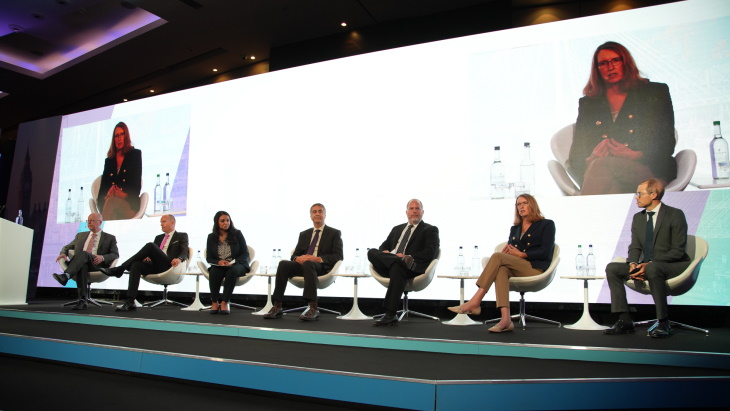
The panel (Image: World Nuclear Association)

Geopolitical instability since the last edition of the report was published in 2021 - notably resulting from the Russia-Ukraine war - has led to increased interest in nuclear power for energy security and sovereignty, as well as having significant implications for the globalised market for nuclear fuel services.

Released at World Nuclear Symposium 2023 in London, The Nuclear Fuel Report: Global Scenarios for Demand and Supply Availability 2023-2040 sets out three scenarios for future nuclear generating capacity: the Reference Scenario, which is informed by government and utility targets and objectives; the Lower Scenario, which assumes delays to the implementation of these plans; and the Upper Scenario, which considers the potential developments if more favourable conditions are applied.

Launching the report, ConverDyn CEO Malcolm Critchley, a co-chair of the working group responsible for drafting the report, said the nuclear sector has "almost overnight" seen a complete revival. "There's a growing acceptance that nuclear power has got to be part of the solution for climate change," he said.

"The inventory overhang that was so damaging to the market for almost a decade has been largely consumed, and going forward, we're going to have an increasing reliance on primary supply."

Under the Reference Scenario, nuclear capacity is expected to grow from 391 GWe (from 437 units) at the end of June this year to 444 GWe by 2030 and 686 GWe by 2040. The Upper Scenario sees 490 GWe in 2030 and 931 GWe by 2040, while the Lower Scenario sees capacity increasing to 409 GWe by 2030 and 487 GWe by 2040.

All three scenarios envisage capacity from small modular reactors (SMRs) accounting for part of the 2040 nuclear generation, with 35 GWe of generic SMR capacity included in the 2040 Reference Scenario, 83 GWe in the Upper Scenario and 2 GWe in the Lower Scenario. The scale of SMR deployment will depend on the success of delivering first-of-a-kind construction, demonstrating cogeneration capabilities, and establishing an industrialised and modularised supply chain - but "hundreds of billions of dollars" of investment could be channelled into these technologies every year from the second half of the current decade.

Another positive change compared with previous editions of the report is the move towards extended operating lifetimes. Upwards of 140 reactors could be subject to extended operation in the period to 2040, driven by economics, emissions reduction targets, as well as security of supply, the report finds.

Fuelling growth


The increased interest in nuclear power means that overall projections for uranium reactor requirements are higher than the same scenarios in the 2021 edition of the report (although the Upper Scenario does see requirements fall slightly in the period to 2030 compared with the previous projections). Current world reactor requirements are estimated to be around 65,650 tU per year. This would increase to 83,840 tU by 2030 and almost 130,000 tU by 2040 under the Reference Scenario. However, primary uranium production has dropped considerably in recent years.

Production volumes for existing mines are projected to remain fairly stable until 2030 in all three scenarios, before decreasing still further over the decade to 2040. "To meet the Reference Scenario requirements from early in the next decade, in addition to restarted idled mines, mines under development, planned mines and prospective mines, other new projects will need to be brought into production. Considerable exploration, innovative techniques and timely investment will be required to turn these resources into refined uranium ready for nuclear fuel production within this timeframe," the report notes.

Future demand cannot be met from identified supply sources, and from the beginning of the next decade, planned mines and prospective mines - as well as increasing amounts of so-called unspecified supply - will need to come into production to meet requirements under the Reference Scenario. "It takes 8-15 years to reach production after first discovery of a resource, and intense development of new projects will be needed in the current decade to avoid potential future supply disruptions," the report says.

For the conversion sector, the situation has dramatically changed since the oversupply which characterised the market in the decade up to 2018. Pointing to the restart of production and ramp-up at two primary Western convertors - ConverDyn and Orano - the report says this deficit can be met in the near term, but in the medium term, convertors will need to operate at "near to maximum" levels. In the long term, new conversion capacity will be needed in both the Reference and Upper Scenarios.

The situation has also changed for enrichment, with primary Western enrichers expected to expand capacity. Fuel fabrication capacity, while sufficient to cover anticipated demand, could also experience bottlenecks.

Recovery


There is "no doubt" that sufficient uranium resources exist to meet future needs, but producers have been waiting for the market to rebalance before starting to invest in new capacity and bringing idled capacity back into operation. This is now happening, the report says.

"With changes to individual governmental policies on nuclear power for various reasons, the uranium market has begun to recover," it says. "Additional conversion and enrichment capacities are also likely to be needed".

Researched and written by World Nuclear News


Centrus brings forward HALEU production date

07 September 2023


US nuclear fuel and services company Centrus Energy Corp announced that it expects to begin first-of-a-kind production of high-assay low-enriched uranium (HALEU) at the American Centrifuge Plant in Piketon, Ohio, in October - about two months ahead of schedule.

The Piketon centrifuge cascade (Image: Centrus)

HALEU fuel contains uranium enriched to between 5% and 20% uranium-235 - higher than the uranium fuel used in light-water reactors currently in operation, which typically contains up to 5% uranium-235. It will be needed by most of the advanced reactor designs being developed under the US Department of Energy's (DOE's) Advanced Reactor Demonstration Program. But the lack of a commercial supply chain to support these reactors has prompted the DOE to launch a programme to stimulate the development of a domestic source of HALEU.

Centrus began construction of the demonstration cascade of 16 centrifuges in 2019 under contract with the DOE, and last year secured a further USD150 million of cost-shared funding to finish the cascade, complete final regulatory steps, begin operating the cascade, and produce up to 20 kg of HALEU by the end of this year.

In June, Centrus announced it had successfully completed its operational readiness reviews with the US Nuclear Regulatory Commission (NRC) and received NRC approval to possess uranium at the Piketon site - the last major regulatory hurdle prior to beginning production.

Centrus is now conducting final system tests and other preparations so that production can begin in October.

"This will be the first new US-owned uranium enrichment plant to begin production since 1954," said Centrus President and CEO Daniel Poneman. "What better way to commemorate the 70th anniversary of President Eisenhower's historic Atoms for Peace initiative than to restore a domestic uranium enrichment capability that will support our energy security and clean power needs, enable long-term national security and non-proliferation goals, and generate great new jobs for American workers."

Centrus said the capacity of the 16-centrifuge cascade will be modest - about 900 kilograms of HALEU per year - but with sufficient funding and offtake commitments, the company could significantly expand production. It says a full-scale HALEU cascade, consisting of 120 centrifuge machines, with a combined capacity to produce approximately 6000 kilograms of HALEU per year, could be brought online within about 42 months of securing the necessary funding. Centrus said it could add an additional HALEU cascade every six months after that.

Researched and written by World Nuclear News

 WHO OWNS WHO

Chubu to take stake in SMR developer

07 September 2023


Chubu Electric Power Co has announced it is to invest in US small modular reactor (SMR) developer NuScale Power.

(Image: Chubu)

The Japanese company says it has entered into an agreement to acquire issued shares in NuScale from Japan Bank for International Cooperation (JBIC), subject to regulatory approvals.

NuScale's pressurised water reactor with all the components for steam generation and heat exchange incorporated into a single integrated unit is the only SMR design which has to date been certified by the US Nuclear Regulatory Commission. It is being considered in more than 10 countries around the world, Chubu noted. The first NuScale VOYGR SMR plant in the USA is expected to begin operating at a site at Idaho National Laboratory in 2029. With the US Department of Energy providing more than USD1.3 billion in financial support for the first deployment of the NuScale VOYGR SMR power plant, "it can be said that NuScale is the frontrunner in SMR development", the company added.

"Through our investment in NuScale, we aim to earn revenue from NuScale's future business expansion," Hiroki Sato, CEO of Chubu's Global Business Division, said. "In addition, it is important to secure all options for the sustainable use of nuclear power generation, which is indispensable for realising a decarbonised society and we will continue to promote social implementation of innovative technologies to enhance our corporate value."

According to Reuters, Sato told journalists that, as an equity owner, the company is investing in NuScale to expand its revenue base. He said it would be "difficult" to deploy SMRs in Japan "anytime soon... but we have high expectations for the future development of next-generation reactors in Japan".

JBIC made a strategic investment of USD110 million in NuScale in 2022, through a purchase of equity from NuScale majority owner Fluor Corporation. The bank's investment was via a special-purpose company established by Japanese engineering companies JGC Corporation and IHI Corporation to make equity investments in NuScale, Japan NuScale Innovation LLC.

Chubu owns the Hamaoka nuclear power plant in Shizuoka prefecture. The three operable units (Hamaoka 3 and 4 are boiling water reactors, Hamaoka unit 5 is an advanced boiling water reactor, or ABWR) are all in the process of seeking clearance to restart after the introduction of new regulatory requirements in 2013 by Japan's Nuclear Regulation Authority.

Researched and written by World Nuclear News

SCI-FI-TEK

Germany stepping up investment in fusion

07 September 2023


Germany will invest more than EUR1 billion (USD1.1 billion) in fusion research over the next five years, Federal Research Minister Bettina Stark-Watzinger announced.

LIKE CARBON CAPTURE ANOTHER WASTE OF $$$

Federal Research Minister Bettina Stark-Watzinger (Image: BMBF/Hans-Joachim Rickel)

The minister announced that she would significantly increase research funding for fusion with an additional EUR370 million over the next five years. Together with funds already earmarked for research institutions, the Federal Ministry of Education and Research (BMBF) will provide more than one billion euros for fusion research by 2028.

The new funding programme strengthens the ongoing activities of the BMBF at the Institute for Plasma Physics (IPP), the Karlsruhe Institute of Technology (KIT) and the Research Center Jülich (FZJ).

In December 2022, BMBF set up a commission of experts to take stock of the field of laser fusion, which has so far been little researched in Germany. In May this year, Stark-Watzinger accepted a memorandum from the commission. The memorandum describes the potential of Germany as an industrial and research location with a view to laser fusion and defines needs for further research on the way to a first fusion power plant.

Building on this, the BMBF published a position paper on fusion research in June. This describes the framework conditions with which a fusion power plant becomes reality as quickly as possible. It is the basis for the new funding programme.

"The energy crisis has shown us how essential a clean, reliable and affordable energy supply is," Stark-Watzinger said. "Fusion is the huge opportunity to solve all of our energy problems. With our new funding programme, we want to invest massively and in a technology-neutral way in fusion - a total of over one billion euros in the next five years. And create a fusion ecosystem with industry so that a fusion power plant in Germany becomes a reality as quickly as possible."

Magnetic and laser fusion are equally promoted under the research programme. Industry and research institutions will be expected to work together to address the technological challenges so that a fusion power plant can be realised.

Among other things, cooperation with the private sector is planned to develop infrastructure for laser-driven fusion. For this purpose, the BMBF will establish the Pulsed Light Technologies GmbH subsidiary through the Federal Agency for Disruptive Innovation SPRIND, through which up to EUR90 million will be invested over the next five years.

In August 2011, the 13th amendment of the Nuclear Power Act came into effect, which underlined the political will to phase out fission nuclear power in Germany. As a result, eight units were closed down immediately: Biblis A and B, Brunsbüttel, Isar 1, Krümmel, Neckarwestheim 1, Phillipsburg 1 and Unterweser. The Brokdorf, Grohnde and Gundremmingen C plants were permanently shut down at the end of December 2021. The country's final three units - Emsland, Isar 2 and Neckarwestheim 2 - shut down in April this year.

Researched and written by World Nuclear News


US furthers overseas support for coal-to-SMR projects

08 September 2023


Proposals from the Czech Republic, Poland and Slovakia have been selected to receive US support for coal-to-small modular reactor (SMR) feasibility studies under Project Phoenix. The USA is also to set up a 'one-stop shop' to support countries in Europe and Eurasia that are approaching SMR deployment decisions.

Kerry made the announcements at the summit in Bucharest (Image: @ClimateEnvoy)

Project Phoenix, announced by US Special Presidential Envoy for Climate John Kerry at the COP27 climate conference last year, aims to support energy security and climate goals by creating pathways for coal-to-SMR power plant conversions while retaining local jobs through workforce retraining. The successful proposals receiving a share of USD8 million of US government support were selected through a competitive process open to 17 central and eastern European countries. Kerry announced the recipients of the awards in a side event to the Three Seas Initiative Summit in Bucharest on 6 September.

The successful grant application lodged by a partnership including Slovak utility Slovenské elektrárne proposed five Slovak sites for consideration SMR feasibility studies: the Jaslovské Bohunice and Mochovce nuclear power plant sites; the Nováky and Vojany thermal power plant sites; and the site of the US Steel steel plant in eastern Slovakia. The feasibility study will assess several aspects and select the most suitable sites for the possible future construction of small modular reactors, Slovenské elektrárne said.

Slovak Minister of Economy Peter Dovhun said the success of Slovakia's Phoenix application was "excellent news" for the country. "It confirms that we have a lot to offer our partners thanks to our long experience in the nuclear power industry, and it also gives us the opportunity to accelerate the preparation of new projects that are important for the success of our energy transformation," he said.

Slovenské elektrárne Chairman and CEO Branislav Strýček said the support from the Phoenix project means Slovakia is "one step closer" to building an SMR. "We believe that the implementation of new technologies, including small modular reactors, is part of the solution to our energy needs. Small modular reactors are not intended to replace existing nuclear or renewable sources. Instead they complement our energy mix to ensure sufficient energy and protect the environment," he said.

Polish company Orlen Synthos Green Energy (OSGE) said it will use the funds it has been awarded under the Phoenix project to study a site at Ostrołęka. Ostrołęka is one of seven locations shortlisted earlier this year by OSGE for further geological surveys to host SMR plants based on GE Hitachi Nuclear Energy's BWRX-300, for which it holds the exclusive right in Poland.

Kerry also launched the Nuclear Expediting the Energy Transition (NEXT) One Stop Shop for SMR Support, to provide countries in Europe and Eurasia that are approaching SMR deployment decisions a virtual centre access to a suite of project preparation tools and services. These may include in-person technical, financial, and regulatory consultancies and advisory services; study tours US nuclear facilities, national laboratories, and universities; competitively selected provision of an SMR simulator to support workforce development as a regional training hub; and university-to-university partnerships for curricula development and educational exchanges.

Project Phoenix and the NEXT One Stop Shop are subprogrammes of the US Department of State’s Foundational Infrastructure for the Responsible Use of Small Modular Reactor Technology (FIRST) Program.

Researched and written by World Nuclear News


Bruce 6 back on the grid after refurbishment

08 September 2023


The unit has been reconnected to Ontario's grid following a successful Major Component Replacement (MCR) outage that was completed ahead of schedule and on budget.

Bruce Power staff carried out the grid synchronisation on 8 September (Image: Bruce Power)
Beginning its MCR outage in January 2020, Bruce 6 is the first of six units to undergo the refurbishment process under Bruce Power's Life Extension Program, extending their operation to 2064 and beyond. According to Bruce Power, the programme is Ontario's largest clean-energy initiative and one of Canada's largest private sector infrastructure projects, funded by private-sector investors.

Bruce Power President and CEO Mike Rencheck expressed the company's pride in the people and partners, including suppliers and trades unions, who have contributed to the project. "As one of the largest nuclear operators in the world, refurbishing our units is key to providing clean, reliable energy to the people of Ontario well into the future. We have shown strong performance and we’ve committed to providing the lowest-cost nuclear energy in Ontario and to bettering our performance in each successive MCR outage," he said.

The company also thanked Ontario Power Generation (OPG) for sharing lessons learned and operating experience. OPG has completed the refurbishment of the first two of four units at its Darlington site in a ten-year programme that will enable the plant to continue operations until 2055.

Bruce 3 - which began its MCR outage earlier this year - is reaping the benefits of lessons learned in Unit 6 to achieve time and cost savings, the company said. Innovations realised in Bruce 6's refurbishment will be carried forward to improve performance and quality in subsequent MCR outages, including tooling and inspection automation and robotics, and advanced modelling and training.

Hundreds of companies, and thousands of tradespeople, are involved in each MCR. The refurbishment includes replacing and upgrading key equipment - 480 fuel channels, 960 feeders and eight team generators - in addition to thousands of other modifications and tasks, before 5,760 new fuel bundles are loaded into the reactor core.

Researched and written by World Nuclear News


Nuclear industry urged 'take advantage of window of opportunity'

08 September 2023


The current favourable attitude of many policymakers, much of the public, and the financial community means that the nuclear industry "needs to have the courage, be brave and believe in what we are doing" the closing session of World Nuclear Symposium 2023 was told.

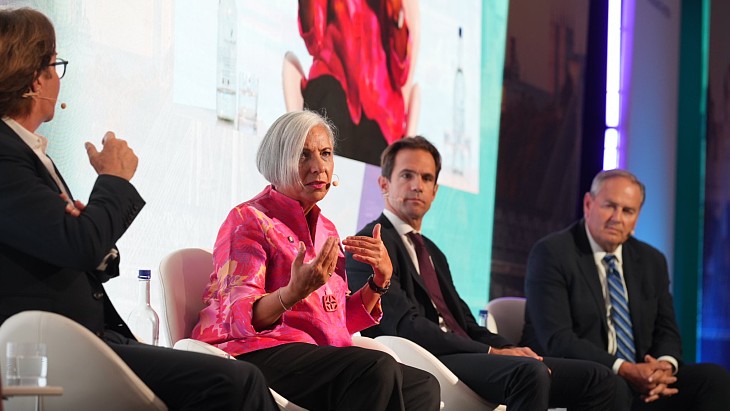
Rumina Velshi, centre, with Thomas Branche and Tim Gitzel, right (Image: World Nuclear Association)

Cameco CEO and President Tim Gitzel said that the need to tackle climate change had provided tailwinds for nuclear in recent years, with energy security now also driving the positive setting for the nuclear industry, saying "we have a good product, the window is open and we have to deliver ... let's get going".

Rumina Velshi, President and CEO, Canadian Nuclear Safety Commission, said that continuing collaboration was key within the industry and between regulators. She said that scale and speed were needed, to match the sense of urgency people have about needing to tackle climate change.

Sophie MacFarlane-Smith, Head of Customer Engagement, Rolls-Royce SMR, said the "drive, not just for Net Zero, but also energy security is massive" but she warned there was still a cautiousness in government and so "we need to do what we say ... deliver on our promises, not over-promise", so government, other stakeholders and the public know that "nuclear can be trusted to deliver and nuclear can make a real contribution to the fight against climate change and energy security".

Thomas Branche, Executive Vice President, Assystem, said that things had moved on from five years ago when the wish would have been for a clear vision from governments. He said it was time to be "construction-oriented". He also highlighted that there were different issues and attitudes in different countries, but it was always important to get support from people living in the locality of proposed sites.

Architect Erick van Egeraat urged the nuclear industry to not see itself as a special case, saying that he had worked on many large-scale projects, and said it was the nature of them that they take a long time to deliver. He also noted that the aesthetics of a nuclear plant could help public acceptance.


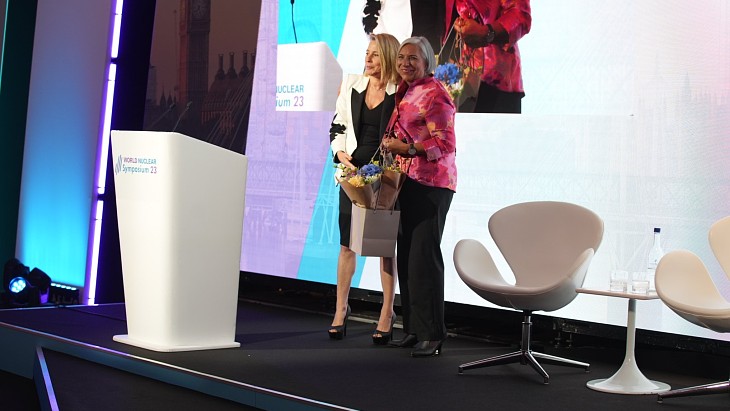
Sama Bilbao y León paid tribute to the contribution Rumina Valshi had made in her regulatory role as well as her broader championing of a better gender balance (Image: World Nuclear Association)
The session was the final one of the two day gathering of more than 700 people from the global nuclear sector, where the discussion has covered issues ranging from financing new nuclear, to how the industry will be able to recruit and train enough staff for the proposed expansion of nuclear energy in the years ahead.

To close World Nuclear Symposium, World Nuclear Association Director General Sama Bilbao y León said "we have the recognition of the policymakers, we have the attention of the finance community - now we are ready to get our act together and deliver ... and make the most of the huge opportunity that we have".

The challenge of recruiting a rapidly growing nuclear workforce

08 September 2023


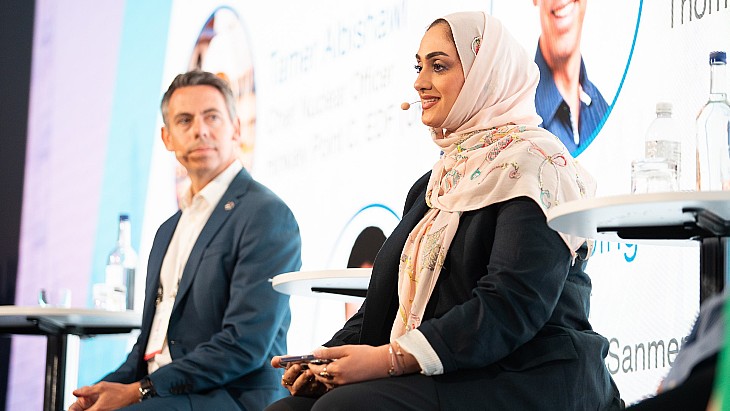
The planned expansion of nuclear energy across the world means many more workers will be needed in the sector. Panellists at World Nuclear Symposium gave their views on the best ways to recruit staff, and a new mentoring initiative was announced.

(Image: World Nuclear Association)

The session heard from moderator, Tamer Albishawi, chief nuclear officer at Hinkley Point C in the UK, that a recent report had forecast that the current 64,000-strong nuclear workforce in the UK would need to more than treble to around 200,000 people in the next five years. "So there is a gap, and my honest opinion is that maybe there is a bigger gap than some of us can see," he said.

Shaima Al Mansoori, director, Education & Training, UAE Federal Authority for Nuclear Regulation (FANR), said there was a similar picture in other countries reflecting a need to expand recruitment across the world. She broke down the competencies into three categories beyond general attributes - such as integrity - that would be wanted from all recruits. The three categories were firstly, the generic skills from university graduates, the second was specialisation within the nuclear-related field, for example in the regulatory field. The final category, which might not yet be for large numbers, but which are required now, are skills related to new types of reactors and small modular reactors with "most countries going in that direction".


Shaima Al Mansoori, right, and Callum Thomas (Image: World Nuclear Association)

Callum Thomas, the founder and CEO of Thomas Thor Associates, a recruitment, executive search and HR consulting organisation for the nuclear industry, said a one-size-fits-all recruitment policy did not work and "you need to look at different target audiences ... looking at what motivates people". For example, he said, people beginning their career were especially motivated "by the purpose, meaningfulness of the industry, so with nuclear, they resonate really strongly with climate change and energy security". With mid-career people flexibility - in terms of location and hours, especially since the pandemic - was often important, while the "fairly new" late-career demographic of people who could have retired, often place extra value on the flexibility to work part-time while also being motivated by the idea of making a meaningful contribution.


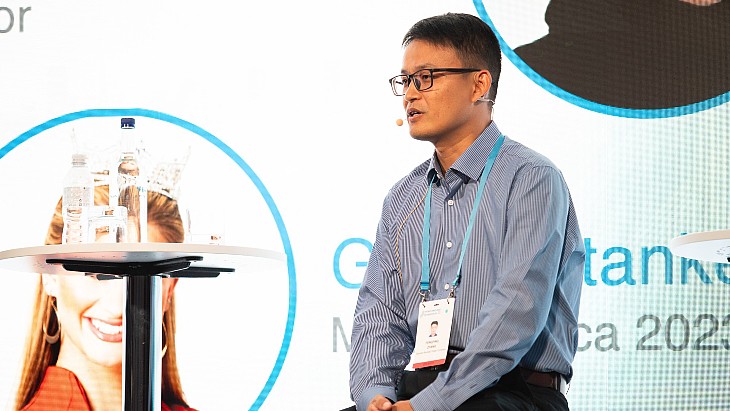
Zhang Fengping (Image: World Nuclear Association)

Zhang Fengping, Deputy Director of the Maintenance Department, Sanmen Nuclear Power Company, said that in China there were currently 24 units under construction with 6 to 8 units set to be approved per year in the next decade so there will be a continuing large demand for more human resources in the years ahead. He highlighted the use of emerging technology - such as automation and automated wireless radiation monitoring - and how it could bring extra safety and efficiency. He added that there was a focus on training and retraining with the new technologies and he did not see it as being a problem for the modern generation.

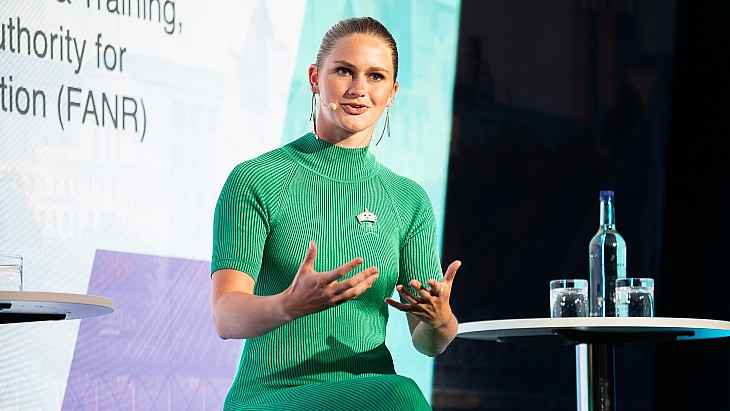
Grace Stanke, who is a nuclear engineering student and, as Miss America 2023, has been an advocate for nuclear, said that emerging technologies "add that excitement and that interest" for younger people who "just want to do good, they want to do better - I think the resounding theme is that we're very mission-oriented ... one of the most important things to me is what does that company actually do? What is the end goal? How are they making the world a better place?


Grace Stanke gave the views of young people considering career options (Image: World Nuclear Association)

Albishawi recalled that when he had joined the industry he was told that it was a "job for life ... but now if you said that, I think it would scare people". Fellow panelists agreed, with Stanke saying that her contemporaries going through recruitment processes now do not want to become "just another cog, they want to be heard and listened to".

The session also saw the announcement of a new global mentoring initiative which is due to be formally launched by Women in Nuclear Global (WIN-Global) in November. Thomas said that it was open to everyone in the sector, regardless of level or gender, and "this is a first call to the industry to attract mentors and mentees". Anyone interested can sign up to become a WIN-Global member, for free, and will be sent information on the mentoring programme.

Researched and written by World Nuclear News

CRIMINAL CAPITALI$M
Vedanta ran “covert” lobbying campaign in India to weaken environment regulations: report

A report by the OCCRP reveals how the law in India was bypassed to loosen environmental regulations that benefit corporates.
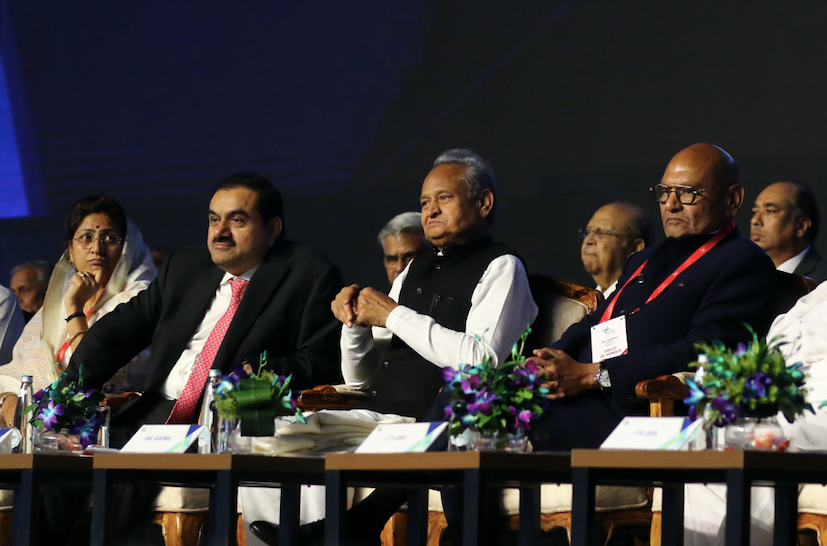
Chairman of Vedanta Resources Anil Agarwal (right), along with Rajasthan Chief Minister Ashok Gehlot (centre) and Adani group chairman Gautam Adani (left) at the Invest Rajasthan Summit in 2022. 
Credit: Vishal Bhatnagar/NurPhoto via Getty Images.

London-based mining and oil giant Vedanta ran a “covert” lobbying campaign in India to weaken environmental regulations during the pandemic, according to a new report by the Organised Crime and Corruption Reporting Project (OCCRP).

In 2021, Vedanta’s chairman, Anil Agarwal, wrote a letter to the then Environment Minister of India, Prakash Javedkar, saying the government could add “impetus” to India’s “rapid” economic recovery by allowing mining companies to boost production by up to 50% without having to secure new environmental clearances. According to the OCCRP report, Agarwal further recommended that the change could be made with “a simple notification”.

By early 2022, the Ministry of Environment, Forest and Climate Change loosened the regulations to allow mining companies to increase production by up to 50% without holding public hearings for the same.

Such a move would mean the mining industry would not require new environmental approvals when increasing production. Further, doing away with public consultations also meant silencing the only recourse for local people to raise concerns about expansion and the consequent impact on their livelihoods.

The report also reveals minutes from an internal meeting in 2021 that show officials raising concerns that loosening the rules would break the law and give a free pass to unrestrained mining in ecologically sensitive areas. However, by April 2022, the Environment Ministry published a memo that scrapped all requirements for miners to hold public consultations when expanding production by up to 40%, requiring only written feedback up to 50%.
Benefits to Vedanta’s oil and gas subsidiary

The favours to Vedanta allegedly extended beyond the mining industry to benefit one of company’s subsidiaries, Cairn Oil and Gas. In 2021, Cairn lobbied to scrap public hearings for oil exploration projects.

As the government quietly followed the course of amending law without public consultation, Cairn received six oil projects in the northern deserts of Rajasthan to date. The OCCRP’s analysis of official data shows Vedanta was a key benefactor of the government’s push to boost domestic oil exploration, gaining rights to 62 of the total of 220 blocks put up for sale across the country between 2018 and 2022.

Vedanta told the OCCRP that as “one of the leading natural resources organisations in India”, the company operated “with an objective of import substitution by enhancing domestic production in a sustainable manner”.

Vedanta’s operations in India contributed more than $18bn (£14.26bn) in revenues in 2022. Despite the country’s climate and sustainability pledges to reach net zero and reduce carbon emissions, the report says that “experts who reviewed OCCRP’s findings say they show his [Narendra Modi] government has prioritised the interests of oil and mining companies over the fight against climate change”.

Vedanta was earlier also caught up in the Niyamgiri land conflict in India’s Odisha state, where thousands of indigenous people prevented the company from destroying their sacred land.
CRIMINAL CAPITALI$M
Diamond-mining magnate detained in Cyprus over Romanian land rights


Beny Steinmetz is being held on an international arrest warrant.

By Florence Jones
French-Israeli diamond magnate Beny Steinmetz. 
Credit: Fabrice Coffrini via Getty Images.

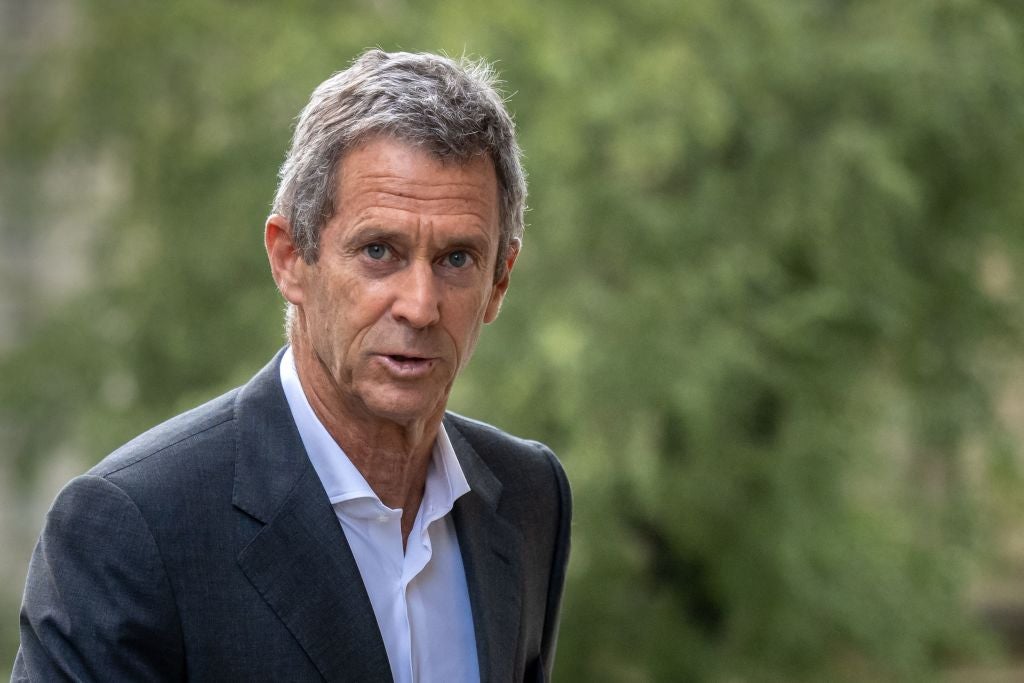
French-Israeli mining magnate Beny Steinmetz has been detained in Cyprus on a Romanian-issued warrant. Steinmetz was detained on his arrival into Larnaca airport on 31 August.

The mining tycoon is being held for allegedly being involved with a group trying to illegally secure land rights in Romania. The case dates back several years and he has already faced arrest in some other European countries on the same warrant but was cleared.

Steinmetz is the owner of BSG Resources (BSGR). The company is under investigation in several countries, including the US, for alleged violation of the Foreign Corrupt Practices Act. The company denies these allegations.

Steinmetz is also involved in a separate legal battle in Switzerland where he has been found guilty of corruption. The case involves the exploitation of iron ore deposits in Guinea.

Romanian authorities convicted Steinmetz for real estate fraud in abstensia in 2020, for which he was sentenced to five years in prison. He was then issued a European arrest warrant. In March 2022, Grecian officials rejected the Romanian arrest order. Italian leadership has also ruled against carrying it out.

“Beny Steinmetz welcomes the opportunity to be vindicated in one more European State, against Romania, a country infamous for its disrespect to human rights,” Steinmetz’s spokesperson told reporters in a statement.

International NGO Global Witness has previously accused BSGR of bribing the wife of a Guinean president to ensure parts of the Simandou iron ore deposit. The company has denied the allegations.

Steinmetz was sentenced to jail in Switzerland in January 2021 for having bribed his way to controlling the Simandou iron ore deposit. The Geneva Court of Appeal rejected his plea to have the conviction overturned earlier this year.

Cypriot police have made no comment, as is common practice for extradition requests.
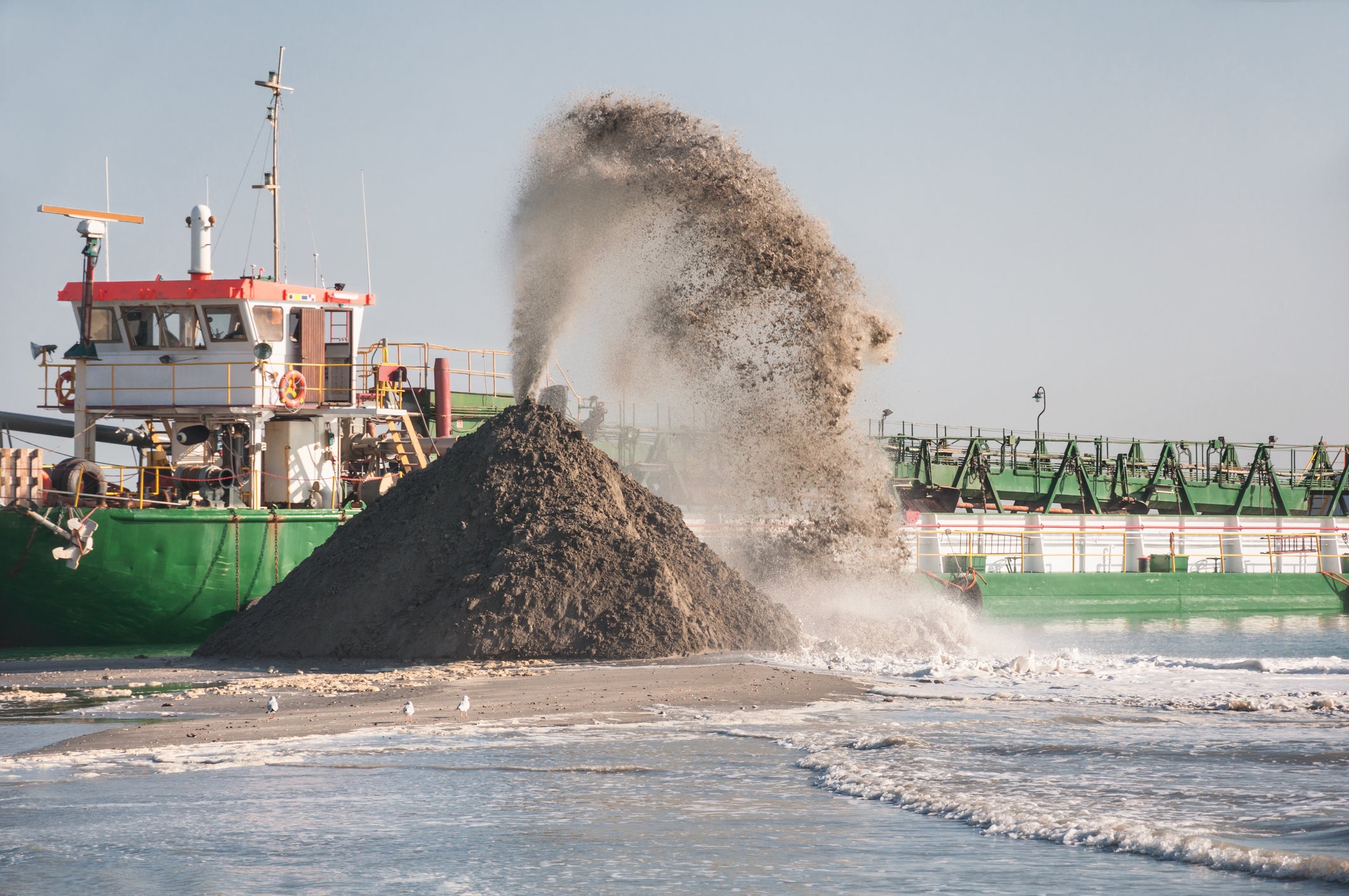
UN warns against the environmental impact of sand dredging

Around six billion tonnes of sand are dredged from the world’s oceans every year.


According to the UNEP, sand dredging could increase flooding in coastal communities. Credit: orestegaspari via Getty Images.

Around six billion tonnes of sand are dredged from the world’s ocean floor every year, according to new data from the UN.

According to the data published by the Centre for Analytics within the UN Environment Programme (UNEP), sand is the most exploited natural resource globally after water. Sand is used to produce concrete, glass and technology such as solar panels.

The Marine Sand Watch data shows that the rate of dredging is growing and approaching the natural replenishment rate of 10–16 billion tonnes.

The group estimates that around 50 billion tonnes of sand and gravel are used across the world annually, with six billion tonnes coming from the world’s oceans and seas.

Sand dredging can have significant impacts on biodiversity and coastal communities. In the face of rising sea levels and extreme weather such as storms, coastal communities will rely on sand to build coastal defences.

Sufficient sand levels also support the offshore energy industry, including the construction of wind and wave turbines, according to the UNEP.

“The scale of environmental impacts of shallow sea mining activities and dredging is alarming, including biodiversity, water turbidity and noise impacts on marine mammals,” said Pascal Peduzzi, director of GRID-Geneva, a partnership between the UNEP, the Swiss Federal Office for the Environment and the University of Geneva.

“This data signals the urgent need for better management of marine sand resources and to reduce the impacts of shallow sea mining,” he added.

The UNEP has called on the sand mining industry to consider sand a “strategic material” and to “engage in talks on how to improve dredging standards around the world”. It also recommended that sand dredging be banned in certain areas of protected coastline.

Researchers found that in certain areas, sand dredging vessels act as a kind of vacuum cleaner, dredging sand along with numerous microorganisms that fish feed on. They also concluded that the South China Sea, the North Sea and the US East Coast are among the areas where the most dredging has occurred.