It’s possible that I shall make an ass of myself. But in that case one can always get out of it with a little dialectic. I have, of course, so worded my proposition as to be right either way (K.Marx, Letter to F.Engels on the Indian Mutiny)
Thursday, September 21, 2023
Citizen Science receives a significant boost
Despite the increasing worldwide interest in citizen science, research into the concept itself remains limited. This is the issue a new professorship, possibly the first of its kind worldwide, aims to address
IMAGE: ANDERS P. TØTTRUP, AN ASSOCIATE PROFESSOR AT THE NATURAL HISTORY MUSEUM OF DENMARK, MIGHT BECOME THE WORLD'S FIRST PROFESSOR IN CITIZEN SCIENCE.view more
CREDIT: BIRGITTE RUBÆK, NATURAL HISTORY MUSEUM OF DENMARK
There is a growing interest in incorporating assistance from private citizens into scientific projects globally. Nonetheless, it seems that Anders P. Tøttrup, an Associate Professor at the Natural History Museum of Denmark, might become the world's first professor in Citizen Science.
Anders P. Tøttrup is a trained biologist and leads the section for Citizen Science projects at the Natural History Museum of Denmark. These projects involve scientific endeavours in which citizens are invited to assist in collecting and analyzing data. Now, the Museum is taking a step further as Anders P. Tøttrup enters a 'professor track.' The goal is to establish a new professorship in Citizen Science at the museum.
Peter C. Kjærgaard, Director of the Natural History Museum of Denmark, sees this as an important step in creating better conditions for an increasingly important aspect of scientific work.
"Citizen Science plays an expanding role in numerous projects. When students, associations, and nature enthusiasts collect data year-round across the country, scientists gain unique knowledge that would be otherwise unattainable. This is crucial, especially today, as the climate crisis and human impact bring about significant changes in nature. Additionally, it democratizes our research efforts. That's why we've chosen to make Citizen Science an even more central part of our science by establishing a professorship that focuses on how best to utilize the valuable resources provided by fellow citizens," says Peter C. Kjærgaard. The Museum has actively engaged in Citizen Science for many years, and Anders P. Tøttrup's section has led numerous projects that have expanded the horizons of what scientists can achieve, including collaborations with citizens, primary and high school students, and associations.
"I am very pleased with the opportunity to place extra emphasis on Citizen Science. I will work on developing new projects as well as 'the Science of Citizen Science.' This entails researching how we can create frameworks that appeal to an even more diverse range of groups interested in assisting us with research, as well as ensuring that the data we collect is of high quality and is made accessible to other scientists," says Anders P. Tøttrup.
He sees significant potential in opening universities to Citizen Science, as it yields better results for science itself. Furthermore, participation in projects increases public trust in science and the results produced by scientists. When the public assists the scientists, entirely new research opportunities emerge, fostering greater interest in science and providing a stronger defense against 'fake news.'
"This is an important factor because we are increasingly surrounded by misinformation that manipulates attitudes and trends in society. Citizen Science contributes to establishing a strong foundation of trust in science. Simultaneously, we can see that those who participate in the projects develop a greater interest in natural science. This is especially important among young people, who are expected to be the next generation of researchers," says Anders P. Tøttrup.
It is not just researchers who recognize the great potential of having citizens help collect important knowledge. Anders P. Tøttrup has seen a growing interest in supporting these projects from many private foundations in the field of natural science.
"Many Danish private foundations are very progressive, and they have recognized that the projects are deeply serious, and the results we achieve are completely central when we need to collect and examine large amounts of material. At the same time, we are also forming closer collaborations with associations and environmental organizations, which see an opportunity to provide their members with a good experience while contributing to a better understanding of the state of nature. We have only scratched the surface of possibilities, so I am very much looking forward to continuing the work in an incredibly exciting scientific area," concludes Anders P. Tøttrup.
10.000 high school students have participated in the project DNA & Life.
Photo: Christian Mailand
There is a growing interest in incorporating assistance from private citizens into scientific projects globally. Thousands of primary school pupils have taken part in the Mass Experiment project.
CREDIT
Photo: Thomas Evaldsen
Nobel Prize winners inspire young minds in new scientific articles for kids
Frontiers for Young Minds launches third volume of Nobel Collection articles for young readers
IMAGE: FRONTIERS FOR YOUNG MINDS NOBEL COLLECTION VOLUME 3view more
CREDIT: FRONTIERS
Frontiers for Young Minds, an award-winning, non-profit, open-access scientific journal for kids, has released the third volume of its Nobel Collection today. The new volume features five articles on topics from using a glowing protein found in jellyfish to understand cell function to studying the smallest units of matter. Prior to publication, the distinguished scientists worked with young reviewers aged 8-15 to ensure their articles were interesting and understandable for young readers.
Launched in 2013, Frontiers for Young Minds inspires the next generation of scientists by making science accessible and engaging for young people. It provides reliable and up-to-date information on various topics in science, technology, engineering, mathematics, and medicine (STEMM). Through a unique review process, kids engage in dialogue with leading researchers worldwide, empowering the young reviewers with a better understanding not only of the science of the article, but of the scientific process and the importance of validating information. While learning about the world around them, young reviewers develop confidence, critical thinking, and communication skills.
The Nobel Collection is a special series of articles by Nobel Laureates. This third volume of the collection is an exciting new, educational installment for children and adults alike. The first and second volumes of the collection consist of 10 articles each, covering topics from discovering life on other planets to superfluids that defy gravity.
In this latest release, the scientists share their insights on the following topics:
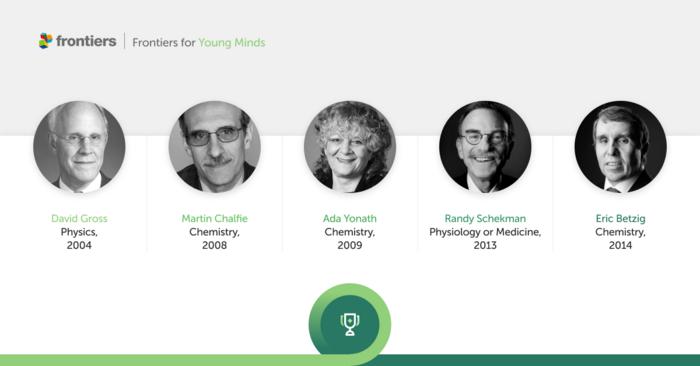
The Quirky Lives of Quarks: A Close Look into Matter, written by David Gross, awarded the Nobel Prize in Physics in 2004. Atoms are small units of matter that create everything we see. Inside atoms there are subatomic particles such as protons and neutrons, which compose the nucleus of the atom. Protons and neutrons are themselves composed of even smaller units called quarks. David Gross discovered how these quarks interact, explaining why the attraction force between them gets weaker as they get closer together and stronger as they move further apart.
Molecular Flashlights that Light Up Science, written by Martin Chalfie, awarded the Nobel Prize in Chemistry in 2008. Green fluorescent protein (GPF) is a tiny glowing molecule that was originally found in glowing jellyfish. Martin Chalfie developed a way to use GFP as a marker that scientists can use to learn what is going on inside cells and organisms. Since his breakthrough, GFP was used in many different studies, helping scientists understand how cells work, how certain viruses cause diseases, and how proteins fold.
The Ribosome – The Factory for Protein Production According to the Genetic Code, written by Ada Yonath, awarded the Nobel Prize in Chemistry in 2009. Proteins are small biological machines that work in our bodies as well as in the bodies of all animals, plants, viruses, and bacteria. They are produced by a protein production ‘factory’ in cells called the ribosome. Ada Yonath developed a method for studying the structure and function of ribosomes. This method could be used to study how antibiotics work and improve them.
The Secrets of Secretion: Protein Transport in Cells, written by Randy Schekman, awarded the Nobel Prize in Physiology or Medicine in 2013. Cells release substances to the blood and to other cells via a process called secretion. For a substance to be secreted, it needs to travel between different stations within the cell and then cross the outer envelope of the cell called a membrane. This travel of a substance within and outside a cell is performed by small carriers called vesicles, which are like little cars that take a passenger substance to its destination. Randy Schekman identified different stations that this ‘car’ goes through within the cell, and significantly contributed to understanding the whole pathway of this fundamental process of secretion.
Seeing Beyond the Limits with Super-Resolution Microscopy, written by Eric Betzig, awarded the Nobel Prize in Chemistry in 2014. Scientists often want to look at very small objects in order to study them. For many years it was believed that we cannot look with visible light on objects that are smaller than a fundamental property of light called its wavelength (the distance between two peaks in the light wave). Eric Betzig was able to break that limit using a method based on glowing molecules that are attached to the object scientists want to study. This paved the way for scientists to look at objects they could never see before.
The third volume will expand with more Nobel Laureate authors later this year, providing young readers the opportunity to learn even more about important discoveries.
Commenting on the new volume, Frontiers for Young Minds head of programLaura Hendersonsays: “It's wonderful to now have three volumes of our Nobel collection and so many Nobelist authors joining us to provide kids with access to their work. We want to ensure all science enthusiasts can read Nobel Prize-winning scientific concepts. With over 1.5 million reads and downloads of the articles in volumes one and two, I can't wait to see volume three inspire our young readers even more."
IMAGE: GRAPHS SHOWING EFFECT OF 12 HOUR + SHIFTS ON PATIENT INCIDENTS FROM PAPER, 'NURSING 12-HOUR SHIFTS AND PATIENT INCIDENTS IN MENTAL HEALTH AND COMMUNITY HOSPITALS: A LONGITUDINAL STUDY USING ROUTINELY COLLECTED DATA'view more
CREDIT: UNIVERSITY OF SOUTHAMPTON
A study conducted at the University of Southampton has shown a significant increase in the risk of patient incidents in mental health and community wards when the majority of shifts in a ward-day are 12 hours or longer.
The new research found that as the proportion of nursing staff on a ward working 12 hour plus shifts rose above 70 percent daily, the number of incidents of self-harm, threatening behaviour and violence against staff on that same day increased significantly.
The study was funded by the National Institute for Health and Care Research Applied Research Collaboration Wessex (NIHR ARC Wessex) which runs a research theme around Workforce and Health Systems. Findings are published in the Journal of Nursing Management.
Researchers looked at records from mental health and community hospitals in Hampshire, in what is the first study of its kind in England. Incident data recorded by two NHS trusts was matched with the records of nursing staff shift patterns over a three-year period.
Dr Chiara Dall’Ora, an Associate Professor in Health Workforce in the School of Health Sciences at the University of Southampton, who led the study, comments: “The consequences of patient incidents such as self-injury and disruptive behaviour are serious, and using high proportions of long shifts is associated with higher risk rates of such incidents in mental health and community hospitals.
“Nurse managers and those in charge of creating rotas for nursing staff should avoid implementing 12 plus hour shifts as a blanket intervention for all staff.”
Previously Dr Dall’Ora worked to examine the impact of longer nursing shifts and staff burn-out in NHS hospital settings. In a previous publication she found that limited choice around working hours, short staffing and lack of breaks were a factor in nursing staff exhaustion and burn out.
The work of Dr Dall’Ora, Dr Zoé Ejebu and Professor Peter Griffiths from the University of Southampton is part of a focus on creating safer patient care and improving working conditions for nursing staff in the NHS.
Professor Peter Griffiths has recently published a study looking at recommended NHS staffing levels and patients’ safety. It has led to a change in advice for staffing by NHS England.
He says: “We know that the health workforce are an asset and in short supply. As part of our ARC research we are looking at the best ways for staff to work - for example where and when. We also want to improve conditions - in part by ensuring they have time to do the jobs we are asking them to do.”
Ends
Notes to editors
For more information or to arrange an interview contact:
Peter Franklin, Media Manager, University of Southampton. 07748 321087 press@soton.ac.uk
NIHR Applied Research Collaboration (ARC) Wessex, conducts applied health research and care with our partners and others in the health and care sector, alongside patients and members of the public.
Applied health and care research aims to address the immediate issues facing the health and social care system. We also help bring research evidence into practice and provide training for the local workforce.
NIHR Applied Research Collaborations (ARCs) support applied health and care research that responds to, and meets, the needs of local populations and local health and care systems.
The NIHR ARC Wessex is one of 15 ARCs across England, part of a £135 million investment by the NIHR to improve the health and care of patients and the public.
The University of Southampton drives original thinking, turns knowledge into action and impact, and creates solutions to the world’s challenges. We are among the top 100 institutions globally (QS World University Rankings 2024). Our academics are leaders in their fields, forging links with high-profile international businesses and organisations, and inspiring a 22,000-strong community of exceptional students, from over 135 countries worldwide. Through our high-quality education, the University helps students on a journey of discovery to realise their potential and join our global network of over 200,000 alumni. www.southampton.ac.uk
Plants are often attributed with abilities similar to those known in the animal or human world. Trees are said to have feelings and can therefore care for their offspring, like mothers. In an article in the review journal Trends in Plant Science, 32 international plant and forest researchers followed up on such assertions. Led by Prof. David G. Robinson, professor emeritus for cell biology at the Centre for Organismal Studies (COS) of Heidelberg University, the researchers analysed the claims in two popular publications on forests and reached the conclusion that conjecture is equated with fact. They warn against “anthropomorphising” plants.
The article scrutinised the assertions in two widely received books about the hidden life of trees and the search for the so-called “mother tree”. The researchers report that in those works, trees are attributed with human characteristics and behaviours, including the ability to feel pain and pleasure, to communicate with one another, and to act altruistically. Based on existing research literature, Prof. Robinson and his co-authors provide detailed evidence that the main assertions are scientifically untenable. The Heidelberg researcher points out that numerous research papers on the significance of intraspecies competition clearly contradict the contention that trees of a single species support one another and keep each other alive.
According to Prof. Robinson and his colleagues, newer studies also render the “mother tree concept” untenable. Many publications based on this concept that presume to substantiate a targeted transfer of carbon from older to younger trees via networked fungi – the mycorrhizae – are flawed due to a lack of control variants. “And where the data does actually suggest such a transfer, the quantity of carbon transferred is so small that it is physiologically completely irrelevant for the recipient tree”, states Prof. Robinson. The researchers also criticise that both books cite evidentiary sources that were not peer-reviewed.
Finally, the authors point out the fatal consequences such claims could have for the adaptation of forests to climate change if political decisions are “based on pleasant-sounding but false messages” rather than scientific fact, adds Robinson. The article's authors included researchers from the University of Göttingen as well as from Austria, Canada, Chile, Great Britain, Ireland, Israel, Spain, Sweden, Switzerland, and the USA. They represent the fields of biology, forestry, and plant science.
Mother trees, altruistic fungi, and the perils of plant personification
ARTICLE PUBLICATION DATE
19-Sep-2023
From 'Money Heist' to 'Squid Game': the glocal strategy that keeps Netflix afloat
Non-English-language series accounted for 38% of the series with the most accumulated viewing hours in more than fifty countries between June 2021 and December 2022
Money Heist is the most watched Spanish series of all time thanks to Netflix, which launched it internationally after purchasing it from Atresmedia. The last episode premiered in autumn 2021, a few weeks after the North American company began broadcasting Squid Game, the South Korean series that became the most viewed content on the platform. These successes are no coincidence. "It's not that a series suddenly greatly appeals to people. It's the result of a meticulous strategy involving recommendations, dubbing, highly engaging marketing, and serving up the content in a thousand ways so that you end up watching it."
That is the explanation given by the researcher and member of the GAME group, Elena Neira, a course instructor in the Faculty of Information and Communication Sciences at the Universitat Oberta de Catalunya (UOC), and the co-author of a research article published this summer that focuses on Netflix's "glocal" strategy. To put it another way, this is the company's commitment to producing and offering non-English-language content created outside the United States. According to the article, series in languages other than English accounted for 38% of the series with the most accumulated viewing hours on the platform in more than fifty countries between June 2021 and December 2022.
The research, co-authored with the UOC faculty members Judith Clares Gavilán and Jordi Sánchez Navarro, focuses on the key factors in the delocalization of the company's productions at a time when, in the wake of the pandemic bubble, Netflix is the only streaming video platform that is not losing money.
According to Neira, who is a specialist in new audiovisual distribution models, Netflix's glocal strategy is a response to the need to be more profitable, since production is much cheaper in Spain or South Korea, for example. This strategy also reinforces its brand image. At the same time, it enables it to comply with the European directive that stipulates that 30% of the content of catalogues must be created in Europe.
The three UOC experts used the data published by the company on the Netflix Top 10 and Netflix TechBlog websites in order to understand how all this non-English content is produced and broadcast. This information is not comprehensive, but according to Neira, Netflix is the platform that offers the most information, in an environment in which transparency is conspicuous by its absence: "The platforms are under increasing pressure to be more transparent, because a lack of information leads to an abuse of a dominant position." The researchers also interviewed workers at the company, and used other sources of specialized information.
Big data and meticulous initiatives
According to the authors of the article, Netflix has been able to boost the success of series such as Money Heist and Squid Game thanks, above all, to content indexing and monitoring users' preferences. "Netflix is not a media company. It's a tech company. Its management already started storing information and learning things back when it was a DVD rental company. When they launched their streaming business in 2007, they had a great deal of information, and they integrated all these technological aspects into their work," Neira said.
In specific terms, Netflix uses its ability to handle big data to determine and successfully classify all the content it offers, as well as its users' tastes. As a result, it offers recommendations aimed at convincing its viewers based on no less than eighty thousand microgenres "that expand people's points of contact with the content," she explained.
"If Netflix knows that you don't like political drama, but you do like empowered women, it can recommend you watch House of Cards for the second reason," she said by way of an example. Similarly, the platform can recommend non-English-language content to someone for many reasons, based on their viewing history and algorithmic calculations, regardless of where that content has been produced. "It's like creating revolving doors, in which each person connects with different aspects of the content. And that applies to both US and local content," she concluded.
Furthermore, the success of Netflix's glocal strategy is also due to a series of very meticulous initiatives, on both a global and local scale, to carry out projects, classify audiences and encourage people to talk about its content.
Strengths and weaknesses
"The strength of this glocal strategy is that it has removed the barriers that used to exist in the market and which made it very difficult to buy foreign products," said Neira, who provided the example of the company's production centre in Madrid, which has become the largest Netflix production hub in Europe, and has created many jobs.
However, she pointed out that employment by the platforms is creating job insecurity, and its sustainability is uncertain: "The filming takes place very quickly. We are producing hours and hours of content that has a very short shelf life. Content is increasingly short-lived, and that leaves an economic, personal and environmental footprint."
This type of audiovisual production and consumption also tends to homogenize content, and thereby diminishes the character of what we used to call European cinema. "We are producing a lot here in Spain, but ultimately, we are producing content here with distinctive features that aren't European in the strict sense of the word," she said.
Neira also highlighted what has been termed cultural conformism: "The active search threshold is lowered considerably. I always tell people that when they decide to watch something on Netflix, they shouldn't decide what they're going to watch in Netflix itself, but instead find out about things first, away from the platform."
In any event, these are not placid times for streaming companies. Netflix is the only one that is not losing money, but it has announced lower levels of investment for this year. Neira's prediction is that "the key to the future lies in looking at the past, trying to make the content more sustainable and longer-lasting." Meanwhile, December sees the premiere of Berlin, the long-awaited prequel to Money Heist.
This research by the UOC supports Sustainable Development Goals (SDG) 9, Industry, Innovation and Infrastructure.
Article reference:
Neira, Elena; Clares-Gavilán, Judith; Sánchez-Navarro, Jordi (2023). “Standing up to Hollywood: the Netflixglocal strategy for popularising non-English-language series worldwide”. Profesional de la información, v. 32, n. 4, e320409. https://doi.org/10.3145/epi.2023.jul.09
In cloud computing, commercial providers make computing resources available on demand to their customers over the Internet. This service is partly offered "serverless", that is, without servers. How can that work? Computing resources without a server, isn't that like a restaurant without a kitchen?
"The term is misleading," says computer science Professor Samuel Kounev from Julius-Maximilians-Universität (JMU) Würzburg in Bavaria, Germany. Because even serverless cloud services don't get by without servers.
In classical cloud computing, for example, a web shop rents computing resources from a cloud provider in the form of virtual machines (VMs). However, the shop itself remains responsible for the management of "its" servers, that is, the VMs. It has to take care of security aspects as well as the avoidance of overload situations or the recovery from system failures.
The situation is different with serverless computing. Here, the cloud provider takes over responsibility for the complete server management. The cloud users can no longer even access the server, it remains hidden from them – hence the term "serverless".
Research article in ACM’s "Communications of the ACM” magazine
"The basic idea of serverless computing has been around since the beginning of cloud computing. However, it has not become widely accepted," explains Samuel Kounev, who heads the JMU Chair of Computer Science II (Software Engineering). But a shift can currently be observed in the industry and in science, the focus is increasingly moving towards serverless computing.
A recent article in the Communications of the ACM magazine of the Association for Computing Machinery (ACM) deals with the history, status and potential of serverless computing. Among the authors are Samuel Kounev and Dr. Nikolas Herbst, who heads the JMU research group "Data Analytics Clouds". ACM has also produced a video with Professor Samuel Kounev to accompany the publication: https://vimeo.com/849237573
The origins of the research article lie two years back. In 2021, around 50 international experts in serverless computing met at a seminar at Schloss Dagstuhl – Leibniz Centre for Informatics.
"We discussed the most important developments and research questions there and found out that many of us define serverless computing differently and that contradictions sometimes arise," Kounev recounts. This is not unusual in science, he says, when a paradigm shift emerges.
In order to create clarity, a small group of researchers got together. Together, they tried to define serverless computing precisely after the seminar. Exactly this circle of people has now published the article in the renowned CACM magazine; it also includes Ian Foster, a prominent pioneer of cloud computing from the USA.
Two key principles defined
The team has defined two principles that characterise serverless computing. "NoOps" is the first, which stands for "no operations". This means, as described above, that the technical server management, including the hardware and software layers, is completely in the responsibility of the cloud provider.
The second principle is "utilisation-based billing", which means that only the time during which the customer actively uses the allocated computing resources is billed. With classic cloud services, on the other hand, a fee is paid for the entire time during which the respective cloud resources were rented.
Projects at the Chair of Samuel Kounev
At JMU, the computer scientists in Samuel Kounev's team are working, for example, on the elasticity of cloud services, especially the autoscaling of computing resources. The goal here is that the amount of computing resources allocated to a cloud application automatically adapt to increasing or decreasing demand over time.
A long-term project that Kounev's team wants to realise in the coming years is a serverless cloud platform for large workflows in Earth observation. The focus is on climate research with satellite data. Scientists should be able to use the platform to study various global effects of climate change easily, quickly and efficiently. These include changes in forests, snow cover in mountains, or biodiversity.
In this field, Kounev's team is cooperating with the JMU Chair of Remote Sensing, the German Aerospace Center (DLR), the Leibniz Computing Centre of the Bavarian Academy of Sciences and Humanities and the Max Planck Institute for Behavioural Biology (Radolfzell / Konstanz), among others.
The world’s first study of the increase in pollution from landscape fires across the globe over the past two decades reveals that over 2 billion people are exposed to at least one day of potentially health-impacting environmental hazard annually – a figure that has increased by 6.8 per cent in the last ten years.
The study highlights the severity and scale of the landscape fire-sourced air pollution, its increased impact on the world’s population and associated rise in public health risk. Exposure to fire-sourced air pollution has many adverse health impacts, including increased mortality and morbidity and a global worsening of cardiorespiratory conditions and mental health.
The study, published today (20 September) in Nature led by Australian scientists, estimated the global daily air pollution from all fires from 2000 to 2019 – finding that 2.18 billion people were exposed to at least one day of substantial landscape fire air pollution in each year, with each person in the world having on average 9.9 days of exposure per year, an increase of 2.1 per cent in the last decade. It also found that exposure levels in low-income countries were about four-fold higher than in high income countries.
Led by Professors Yuming Guo and Shanshan Li, from Monash University’s School of Population Health and Preventive Medicine, the study also found that the exposure levels of PM2.5 were particularly high in Central Africa, Southeast Asia, South America and Siberia. The study also looked at global landscape fire-sourced ozone, an important fire-related pollutant has only been estimated for United States.
In the study, landscape fires refer to any fires burning in natural and cultural landscapes, e.g. natural and planted forest, shrub, grass, pastures, agricultural lands and peri-urban areas, including both planned or controlled fires (e.g., prescribed burns, agricultural fires) and wildfires (defined as uncontrolled or unplanned fires burning in wildland vegetation).
The comprehensive assessment of the global population exposures to fire-sourced PM2.5 and ozone during 2000-2019 was calculated using a machine learning approach with inputs from chemical transport models, ground-based monitoring stations, and gridded weather data.
The recent pollution from the Canadian wildfires that spread smoke across North America highlighted the increase in severity and frequency of landscape fires due to climate change. According to Professor Guo, no study to date has looked at the long-range effect of this increase in landscape fires globally and wildfires often impact remote areas where there are few or no air quality monitoring stations. In addition, in many low-income countries, there are no air quality monitoring stations even in urban areas.
“The exposure to air pollution caused by landscape fire smoke travelling hundreds and sometimes even thousands of kilometres can affect much larger populations, and cause much larger public health risks,” he said.
“Mapping and tracking the population exposure to landscape fire-sourced air pollution are essential for monitoring and managing its health impacts, implementing targeted prevention and interventions, and strengthening arguments for mitigation of climate change.”