Wednesday, October 18, 2023

WORD OF THE DAY
We Have Banjaxed the Climate So Badly That a Lack of Air Pollution Is Now a Threat

Charles P. Pierce
ESQUIRE
Mon, October 16, 2023 

A Lack of Air Pollution Is Now a ThreatAthanasios Gioumpasis - Getty Images


The Washington Post has an interesting — and a little terrifying — account of a new report from the National Oceanic and Atmospheric Administration about how September got so warm so suddenly that nobody can figure out why.

A National Oceanic and Atmospheric Administration analysis released Friday further cemented what several other data sets had already affirmed: September was not just the globe’s warmest on record, but its most atypically warm month in nearly two centuries of observations. It was 0.83 degrees above the old record for the month, a staggering departure from what was already extreme. No single factor — not human-caused global warming, not a burgeoning El Niño weather pattern — can immediately assume credit for such a drastic diversion from anything humans have ever seen before, scientists said. It is so far outside the realm of what has occurred, it creates a new conundrum that will take time for research to unpack.

There are a number of reasons proposed for this spike in the planet's peril, everything from an El Niño event to the massive eruption of an undersea volcano so powerful that it blasted water vapor into the upper atmosphere. (Evidently, and somewhat counterintuitively, water vapor exacerbates the warming process.) And then there's the threat posed by cleaner air.

At the same time, the absence of another substance in the atmosphere could be increasing global heat, he added: Air pollution. Like particles of volcanic ash, pollutants such as sulfur dioxide act to block sunlight and, in effect, cool the planet. But those particles have been declining in recent decades, and in recent years, have especially diminished over the oceans. That is thought to be because of new limits on sulfur emissions from shipping liners imposed in 2020. While those trends are seen as a win for global public health, they are expected to add to global warming over time.

Yes, we have banjaxed the climate so badly that the threat is now freakishly exacerbated by a lack of, say, sulfur dioxide in the air that we breathe.

All of those factors add to the biggest one observed over decades: Ever-rising levels of carbon dioxide and other greenhouse gases in the atmosphere, the result of fossil fuel combustion. That has allowed global temperatures to rise by about 0.4 degrees each decade, or more than 2 degrees in all since the Industrial Revolution. That has raised the floor, and the ceiling, for what effect natural fluctuations can have on planetary warmth. “On top of this slow trend, there is tremendous interannual variability which could cause wide swings in global mean surface temperatures from one year to the other,” Bala said.

The threat posed by cleaner air?

We are a helluva species, we are.

India’s top court declines to legalize same-sex marriage in landmark LGBTQ ruling

Rhea Mogul, Manveena Suri, Vedika Sud, Sania Farooqui and Tanushree Pandey, CNN
Tue, October 17, 2023 

India’s top court has declined to legally recognize same-sex unions in a landmark ruling that also emphasized the rights of the LGBTQ community to be free of prejudice and discrimination.

Campaigners had sought to obtain the right to marry under Indian law, giving them access to the same privileges extended to heterosexual couples, but while that was denied they welcomed the court’s recognition of their relationships.

A five-judge constitution bench led by India’s chief justice delivered the much-anticipated verdict on Tuesday, streamed live across the nation and to crowds outside the court who gathered to watch on their cellphones.


During the two-hour ruling, Chief Justice D. Y. Chandrachud said queerness is a “natural phenomenon,” and told the government to ensure the “queer community is not discriminated against because of their gender identity or sexual orientation.”

Justice S. Ravindra Bhat said the right of LGBTQ couples to choose their partners was not contested, and they were entitled to celebrate their commitment to each other “in whichever way they wish within the social realm.”

However, he added: “This does not extend the right to claim any legal entitlement to any legal status for the same union or relationship.”

A member of LGBTQ community reacts on the day of the verdict on same-sex marriage by the Supreme Court in New Delhi, India, October 17, 2023. - Anushree Fadnavis/Reuters

Bhat called for a “high-powered committee” to be formed to evaluate laws that indirectly discriminate against LGBTQ couples by denying them “compensatory benefits or social welfare entitlements” that usually come with being legally married.

“This court cannot within the judicial framework engage in this complex task, the state has to study the impact of these policies and entitlements,” he said.

India’s marriage laws bar millions of LGBTQ couples from accessing legal benefits attached to matrimony in relation to matters including adoption, insurance and inheritance.

More than a dozen petitioners had challenged the law, taking their case to the Supreme Court, which heard their arguments during hearings in April and May.

Susan Dias, one of the petitioners in the case, said she, along with her partner were “disappointed” with the verdict.

“We were hopeful that it would go a little more positively,” she said. “We filed the petition with the hope that we’d leave with some rights. So, definitely disappointment but I don’t think we’ve taken any steps back.”

The ruling government of the Bharatiya Janata Party (BJP) had opposed calls to legalize the unions.

In a submission to the court earlier this year, lawyer for the government, Solicitor Tushar Mehta, called same-sex marriage an “urban” and “elitist” concept – one that is “far removed from the social ethos of the country.”
‘It’s not a loss’

Dozens of LGBTQ activists gathered outside the Supreme Court in the Indian capital New Delhi while the verdict was being read.

Some welcomed the judgment as a progressive move, while others said it wasn’t good enough.

Pranav Grover, 20, said it was a “diplomatic” verdict. “It came in perspective with keeping both parties happy,” he said, adding: “Let’s start to focus on the positive.”

Another bystander, Faraz, said he was a little disappointed.

“When we got to know of the privileges, it is definitely a good thing,” he said.”It is not a loss.”

Amrita awaits the verdict at the Supreme Court of India on October 17, 2023. - Sania Farooqui/CNN

Amrita, who goes by the pronouns she/they, said while it was “very nice to be recognized by the justices,” it was time to “get a move on.”

They added: “This level of indifference was not expected after waiting for so many months.”

Celebrity chef and LGBTQ activist Suvir Saran said while the Supreme Court “didn’t give us the right to marry, it has used the bench as a classroom for educating the legislators and the citizens about homosexuality and the other.”

Amrita watches the verdict on their phone at the Supreme Court of India on October 17, 2023. - Tanushree Pandy/CNN

A complicated history

India has a large LGBTQ community and celebrates gay pride in cities across the country but attitudes toward same-sex relationships have been complicated.

Hindu mythology dating back centuries features men transforming into women and holy texts include third gender characters. But same-sex intercourse was criminalized and marriage rights limited to heterosexual couples under a penal code introduced by India’s British former colonial rulers in 1860.

During nearly a decade in power, Indian leader Narendra Modi and his ruling BJP party have been keen to shake off India’s colonial baggage, renaming streets and cities and championing an India in charge of its own destiny. But Victorian laws governing same-sex marriage are one throwback to the colonial past his party has fought to retain.

An activist displays a tattoo reading "Born this way" in the courtyard of India's Supreme Court in New Delhi on October 17, 2023. - Sajjad Hussain/AFP/Getty Images

Campaigners in India have said the law doesn’t only trap members of the LGBTQ community in the closet, but also invites other forms of discrimination and provides a cover for blackmail and harassment.

After a decade-long battle in 2018, the Supreme Court struck down the colonial-era law that criminalized same-sex intercourse – though it left intact the legislation limiting marriage to heterosexual couples.

Since then, surveys have shown that acceptance of homosexuality has grown.

According to a Pew survey published in June, 53% people believed homosexuality should be accepted – a 38% increase from 2014.

Yet, despite this larger embrace, conservatives within India have been opposed to same-sex unions.

Top leaders from the country’s various religious organizations came together earlier this year to say marriage “is for procreation, not recreation.”


India's Supreme Court refuses to legalize same-sex marriage, saying it's up to Parliament

KRUTIKA PATHI
Updated Tue, October 17, 2023 


2 / 14

India Same Sex Marriage
LGBTQ community supporters and members hold each other hand as they watch the Supreme Court verdict on petitions that seek the legalization of same-sex marriage, in Mumbai, India, Tuesday, Oct. 17, 2023. According to a Pew survey, acceptance of homosexuality in India increased by 22 percentage points to 37% between 2013 and 2019. 
(AP Photo/Rafiq Maqbool)


NEW DELHI (AP) — India’s top court on Tuesday refused to legalize same-sex marriages, passing the responsibility back to Parliament in a ruling that disappointed campaigners for LGBTQ+ rights in the world's most populous country.

Chief Justice DY Chandrachud also urged the government to uphold the rights of the queer community and end discrimination against them.

Earlier this year, the five-judge bench heard 21 petitions that sought to legalize same-sex marriage.

Chandrachud said there were degrees of agreement and disagreement among the justices “on how far we have to go” on same-sex marriages, but the judges unanimously agreed that the court can't grant LGBTQ+ people the right to marry because that is a legislative function.

“This court can’t make law. It can only interpret it and give effect to it,” the chief justice said, reiterating that it was up to Parliament to decide whether it could expand marriage laws to include queer unions.

One of the petitioners, Mario da Penha, said it was “a day to be disappointed, but not to lose hope.”

“There's been tremendous work that has gone into these petitions, and many hopes and dreams of the queer community attached to them — to lead lives that most other Indians take for granted. The fact that the dream could not come to fruition today is a disappointment for all of us,” he said.

He added that it wasn't yet clear if the court had set a mandate or timeline for Parliament to act.

“Without that mandate, there is no pressure on Parliament to enact any legislation," he said.

“There are queer couples today that are already families and in relationships, and are pillars of society. That they are not afforded the dignity and rights that they are due is deeply disappointing,” said Karuna Nundy, one of the lawyers representing the petitioners.

Legal rights for LGBTQ+ people in India have been expanding over the past decade, mostly as a result of the Supreme Court’s intervention.

In 2018, the top court struck down a colonial-era law that had made gay sex punishable by up to 10 years in prison and expanded constitutional rights for the gay community.

The decision was seen as a historic victory for LGBTQ+ rights, with one judge saying it would “pave the way for a better future."

Despite this progress, Prime Minister Narendra Modi’s government resisted the legal recognition of same-sex marriage and rejected several petitions in favor.

During the hearings, the government argued that a marriage is only between a biological male and a biological woman, adding that same-sex marriages went against religious values and that the petitions reflected only “urban elitist views.” Religious groups too had opposed same-sex unions, saying they went against Indian culture.

Adish Aggarwala, the president of the Supreme Court bar association, said the court had done the right thing by recognizing that this was a job for Parliament, an argument the government also made during the hearings.

Lawyers for the petitioners argued that marriage is between two people, not just a man and woman. They said concepts of marriage have gradually changed with time and laws should acknowledge that.

By not recognizing such unions, the government was depriving same-sex couples of their right to equality enshrined in the constitution and rights enjoyed by married heterosexual couples, from adoption and medical insurance to pensions and inheritance, they argued.

“This court needs to push society to acknowledge same-sex marriage,” one of the lawyers said.

Petitioners were hopeful that the Supreme Court could challenge the government’s position.

Some of the justices urged the state to make sure queer couples don’t face harassment or discrimination in accessing basic needs, like opening a joint bank account. They called for steps to raise awareness among the public about queer identity, establish hotlines and safe houses available for those in the queer community who are facing violence.

The chief justice also rejected the government's assertion that being queer was an “urban” concept, saying it's not just “an English-speaking man” or a “white-collar man” who can claim to be queer, but equally, “a woman working in an agricultural job in a village.”

But overall, all five judges stopped short of granting legal recognition to same-sex unions.

Instead, the court accepted the government's offer to set up a special panel that will explore granting social and legal benefits to same-sex couples.

Homosexuality has long carried a stigma in India’s traditional society, even though there has been a shift in attitudes toward same-sex couples in recent years. India now has openly gay celebrities and some high-profile Bollywood films have dealt with gay issues. According to a Pew survey, acceptance of homosexuality in India increased by 22 percentage points to 37% between 2013 and 2019.

But same-sex couples often face harassment in many Indian communities, whether Hindu, Muslim or Christian.

India is estimated to have at least 2.5 million LGBTQ+ people, according to government figures from 2012. However, gay rights activists and global estimates believe they number at least 10% of the population, or more than 135 million.

In May, Taiwan became the first jurisdiction in Asia to recognize same-sex marriages. In July, Nepal's Supreme Court issued an interim order enabling the registration of same-sex marriages for the first time. It's still not clear when the court would make its final decision on the case.


India's Supreme Court Has Declined to Legalize Same-Sex Marriage

Abby Monteil
Tue, October 17, 2023


Dipa Chakraborty/Eyepix Group/Future Publishing via Getty Images

India’s Supreme Court declined to legalize same-sex marriages on Tuesday (October 17), dashing the hopes of the country’s millions of LGBTQ+ people.

In the ruling, Chief Justice DY Chanrachud said that the five-judge bench could not make same-sex marriage legal because “this court can’t make law. It can only interpret it and give effect to it,” The chief justice explained that it was up to Parliament to grant the legal right of marriage to same-sex unions. According to NBC, Chief Justice Chanrachud urged the government to end discrimination against queer Indians.

In April and May, India’s Supreme Court heard 21 petitions from LGBTQ+ activists and couples, who pointed out that without legal recognition of their relationships, they didn’t have access to the rights attached to marriage. Indian common property and inheritance laws don’t apply to LGBTQ+ couples, who are also barred from having children with the help of a surrogate, according to the Los Angeles Times. Although individuals can apply to adopt children, LGBTQ+ couples cannot adopt as a couple.

The petitioners had suggested that the court replace the words “man” and “woman” with “spouse” in the country’s Special Marriage Act, which permits marriage between people from different religions, countries, and castes.

Instead of legalizing same-sex marriage, the BBC reports that the Supreme Court judges accepted a proposal from Solicitor General Tushar Mehta that the government set up a committee to consider granting LGBTQ+ couples the rights and privileges afforded to their straight counterparts.

Surveys show that acceptance of the LGBTQ+ community has grown within India. According to a Pew Research Center survey published in June, 53% of citizens believe that homosexuality should be accepted, marking a 38% increase from 2014. Activists have estimated that queer and trans people could make up at least 10% of the population, or over 135 million people, per the Indian Express.

During petitions in the case earlier this year, the current ruling Hindu nationalist Bharatiya Janata party government opposed the legalization of same-sex marriage, stating that these unions were “not comparable with the Indian family unit concept of a husband, a wife, and children,” and describing the arguments in the petitions as “urban elitist views.”

Over the past decade, legal rights for queer and trans Indians have made significant strides forward. In 2014, India’s Supreme Court recognized the country’s trans community as a “third gender.” This afforded trans people legal protections under Article 15 of India’s Constitution, which states that no state can discriminate against citizens on the basis of race, sex, caste, or religion.

In 2018, the Supreme Court struck down a law criminalizing gay sex, a remnant of a penal code introduced by British colonizers in 1860. However, that penal code also limited marriage rights to heterosexual couples.

Needless to say, this isn’t the end of LGBTQ+ citizens’ fight for equality. One of the petitioners, Maria da Penha, told the Associated Press that today is “a day to be disappointed, but not to lose hope.”

“There’s been tremendous work that has gone into these petitions, and many hopes and dreams of the queer community attached to them — to lead lives that most other Indians take for granted,” he said. “The fact that the dream could not come to fruition today is a disappointment for all of us.”

Get the best of what’s queer. Sign up for Them’s weekly newsletter here.

Originally Appeared on them.


India’s Top Court Rejects Bid to Legalize Same-Sex Marriage

Shruti Mahajan
Tue, October 17, 2023 


(Bloomberg) -- Sign up for the India Edition newsletter by Menaka Doshi – an insider's guide to the emerging economic powerhouse, and the billionaires and businesses behind its rise, delivered weekly.

India’s Supreme Court refused to legalize same-sex marriage, saying it’s an issue for Parliament, a disappointing outcome for millions of LGBTQ couples seeking equal rights.

The five-judge bench unanimously agreed that marriage isn’t a fundamental right, according to a ruling handed down in New Delhi on Tuesday. Reading his opinion on the case, Chief Justice D.Y. Chandrachud said the court doesn’t have the jurisdiction to recognize LGBTQ marriage and the change in law is in the hands of lawmakers.

India decriminalized homosexuality in 2018 but has yet to extend marriage rights to the LGBTQ community. Fewer than 40 countries recognize same sex marriage, including just two places in Asia — Taiwan and Nepal. India’s case was closely watched across the region, including in Thailand and South Korea, which are considering similar measures.

India’s chief justice said the institution of marriage doesn’t stay static or stagnant, but the court can’t make the law. “It can only interpret it and give effect to it,” he said.

The Supreme Court called on the government to set up a committee to look into the rights and entitlements of LGBTQ people, including assessing rules around medical rights and financial benefits — some of the issues that had been highlighted by petitioners in the case.

“This is very disappointing,” said Anjali Gopalan, activist and executive director of Naz Foundation. “We are back to where we began.” The Naz Foundation filed a Public Interest Litigation in 2001 to decriminalize homosexuality and were finally handed a victory by the Supreme Court in 2018.

During the court’s hearings earlier this year, the federal government opposed legalization, saying the legislature should decide the issue. It also argued that same-sex marriage is opposed to Indian values.

Marriage is governed under various codes in India, including the Special Marriage Act, a secular law that previously legalized intercaste and inter-religious unions. Lawyers for the petitioners — a diverse group of couples — pushed the court to extend the Special Marriage Act to same-sex marriage.

In its ruling, the apex court also held that transgender persons in heterosexual relationships have the right to marry under the existing laws. Two of the judges also were of the view that queer couples should have the right to adopt.

Bloomberg reached out to some of the petitioners, who declined to comment till they had read the judgment.

The main opposition party said that it would issue a detailed response after studying the judgment. “Indian National Congress has always stood with all our citizens to protect their freedoms, choices, liberties and rights. We, as a party of inclusion, firmly believe in non discriminatory processes — judicial, social, and political,” Jairam Ramesh, a leader of the Congress party said on X, formerly known as Twitter.

The petitioners argued that blocking them from marriage violated their rights under India’s constitution and created difficulties around inheritance and adoption. During the hearings, India’s government offered to set up a panel to look into those issues, but skirted the marriage topic. Government panels are often slow in enacting change.

“I was expecting some civil rights. I did not think they would give full marriage rights but I was expecting some civil rights for sure,” said Gopalan.

--With assistance from Swati Gupta, Bibhudatta Pradhan, Ruchi Bhatia and Anup Roy.


India's Supreme Court rejects legalization of gay marriage

Ryan General
Tue, October 17, 2023

[Source]

India's Supreme Court has declined to grant legal recognition to same-sex marriages in the country, stating that the matter should be decided by the parliament.

A divided verdict: The five-judge bench of the Supreme Court, led by Chief Justice D. Y. Chandrachud, handed the divided verdict on Oct 17. While two judges supported same-sex civil unions, the majority verdict ruled against legalizing same-sex marriages. The decision comes five years after the decriminalization of homosexuality in India in 2018.

In the ruling, Chief Justice Chandrachud emphasized that LGBTQ+ individuals should have the right to choose their partners and cohabit without facing discrimination. He instructed the government to form a high-level committee to examine the concerns and rights of same-sex couples, highlighting that queerness is not confined to urban elites.

A disappointed community: Campaigners and petitioners, including dozens of LGBTQ+ couples and activists, expressed their disappointment at the verdict. Ankita Khanna, one of the petitioners, described it as a "deeply divided judgment," according to The Guardian. Emphasizing the resilience of the queer community, Khanna stated that they would continue to move forward in solidarity.

More from NextShark: S. Korean politician in hot water for resurfaced fanfic featuring K-pop star IU

"I didn't expect it would be a very good judgment but it feels much worse than expected," Uday Raj Anand, a petitioner in the case, told Reuters. "What I had thought was that at least the court would make its stand clear, say that it is not in a position to make or change law but they would certainly direct the government to do it."

A complicated history: India's LGBTQ+ community, which celebrates gay pride and has a deep historical connection to gender diversity, has long faced challenges due to colonial-era laws that criminalized same-sex relations. While the Supreme Court struck down these laws in 2018, attitudes towards LGBTQ+ rights remain complex, with conservative viewpoints persisting amid growing public acceptance.

A call for legislative action: The ruling Bharatiya Janata Party government argued through its lawyer Solicitor General Tushar Mehta that same-sex marriages were an “urban” and “elitist” concept and not in line with the traditional Indian family unit concept, according to CNN.

More from NextShark: Malaysian Producer Sparks Outrage for Using Blackface to 'Glorify' Dark Skin

The government maintained that instead of the courts, the issue of same-sex unions in India should be decided by parliament, not the courts. In effect, this decision has now placed the responsibility to address the matter to the legislature.


India’s top court refuses to legalise same-sex marriage

THE TELEGRAPH
Our Foreign Staff
Tue, October 17, 2023 

Supporters of same-sex marriage were left disappointed when watching a live streaming of the verdict at the Humsafar Trust office in Mumbai - Shutterstock/Divyakant Solanki

India’s supreme court has declined to legalise same-sex marriage, passing the decision back to parliament in a blow to LGBTQ campaigners across the country.

Tuesday’s order by a five-judge bench in the world’s most populous country came five years after the top court scrapped a colonial-era ban on gay sex.

“This court can’t make law. It can only interpret it and give effect to it,” chief justice DY Chandrachud said, reiterating that it was up to parliament to decide whether it could expand marriage laws to include same-sex unions.

There was no immediate response from the government to the court ruling but prime minister Narendra Modi’s nationalist Bharatiya Janata Party (BJP) administration had opposed petitions to the court on the issue.

It had argued that same-sex marriage is not “comparable with the Indian family unit concept of a husband, a wife and children” and that parliament was the right forum to rule on the contentious issue.

India would be only the second country in Asia to recognise same-sex marriage were it do so, after Taiwan took the step in 2019.

Justice Chandrachud said there was a degree of “agreement and a degree of disagreement on how far we have to go” on same-sex marriage, adding that four of the five judges had written separate judgements, reflecting the complexity of the case.

But he rejected the government argument that being gay is “urban or elite”.

India would have been only the second country in Asia to legalise same-sex marriage - Reuters/Anushree Fadnavis

Karuna Nundy, one of the lawyers representing the petitioners, said: “There are queer couples today that are already families and in relationships, and are pillars of society.

“That they are not afforded the dignity and rights that they are due is deeply disappointing.”

Legal rights for LGBTQ+ people in India have been expanding over the past decade, mostly as a result of the Supreme Court’s intervention.

In 2018, the top court struck down a colonial-era law that had made gay sex punishable by up to 10 years in prison and expanded constitutional rights for the gay community.

The decision was seen as a historic victory for LGBTQ+ rights, with one judge saying it would “pave the way for a better future.”

Despite this progress, however, Mr Modi’s government has repeatedly resisted the legal recognition of same-sex marriage. Religious groups have also opposed same-sex unions, arguing they go against Indian culture.

In Tuesday’s verdict, chief justice Chandrachud and Sanjay Kishan Kaul, the second most-senior judge on the bench, said that it was the government’s duty to provide LGBTQ+ people “a bouquet of rights and privileges” that are available to heterosexual couples. But Justice Bhat disagreed, saying the “state cannot be obligated” to do that.

The chief justice also rejected the government’s assertion that being homosexual was an “urban” concept, saying it’s not just “an English-speaking man” or a “white-collar man” who can claim to be gay, but equally, “a woman working in an agricultural job in a village.”
Shift in attitudes towards same-sex marriage

But overall, all five judges stopped short of granting legal recognition to same-sex unions. Instead, the court accepted the government’s offer to set up a special panel that will explore granting social and legal benefits to same-sex couples, such as joint accounts in banks, from which they are currently barred.

Homosexuality has long carried a stigma in Indian society, even though there has been a shift in attitudes toward same-sex couples over recent years.

India now has openly gay celebrities and some high-profile Bollywood films have dealt with gay issues.

According to a Pew survey, acceptance of homosexuality in India increased by 22 percentage points to 37 per cent between 2013 and 2019.

But same-sex couples often face harassment in many Indian communities, whether Hindu, Muslim or Christian.

India is estimated to have at least 2.5 million LGBTQ+ people, according to government figures from 2012. However, gay rights activists and global estimates believe they number at least 10 per cent of the population, or more than 135 million.

India’s Supreme Court refuses to allow same-sex marriage in landmark verdict

Namita Singh
Tue, October 17, 2023 

India’s Supreme Court refuses to allow same-sex marriage in landmark verdict

India’s top court has rejected a landmark petition seeking the recognition of same-sex marriage in the country, a blow for the queer community that denies tens of millions of LGBT+ couples the right to marry their partners.

In a lengthy judgement, the Supreme Court of India urged the government to create legal recognition for same-sex couples so that they do not face discrimination but stopped short of including such couples within the existing legal framework of marriage.

The case involved 21 separate petitions from members of the LGBT+ community who argued that not being able to marry violated their constitutional rights, making them “second-class citizens”.

The government contested the petitions, which came just five years after India decriminalised gay sex, arguing that marriage is exclusively an institution between a man and a woman and that those seeking marriage equality represented an “urban elitist view for the purpose of social acceptance”.

The case was overseen by the country’s most senior judge, chief justice Dhananjaya Yeshwant Chandrachud, as well as four other Supreme Court justices. It held hearings up until 11 May this year and had been deliberating its verdict for more than five months since then.

Giving his judgment, Mr Justice Chandrachud said marriages were clearly defined as being between a man and a woman in India’s Special Marriages Act (SMA), under which weddings outside of the scope of traditional religious ceremonies such as interfaith and intercaste marriage are registered. The petitioners had asked that the SMA be interpreted to also cover same-sex marriage.

Mr Justice Chandrachud said the role of the court was not to make laws but only to interpret them, adding that reading words into the SMA would “be redrafting the law”.

Despite Mr Justice Chandrachud speaking in favour of allowing same-sex and unmarried couples to adopt children, the court also ruled by three judges to two against expanding the definition of adoption laws to permit this.

However, he also argued that the “failure of the state to recognise the bouquet of rights flowing from a queer relationship amounts to discrimination”.

The chief justice rejected the government’s submission that the push for same-sex marriage was only an “urban and elitist” concept.

The judges differed over whether the court should recognise the right to form same-sex civil unions (AP Photo/Rafiq Maqbool)

“Homosexuality or queerness is not limited to urban and affluent spaces,” the chief justice said. “To imagine that queer people only exist in urban centres is to erase them [where they exist elsewhere]. People may be queer regardless of whether they are from villages or small towns and regardless of caste or economic location.”

The chief justice concluded that “there is no universal conception of the institution of marriage and that it lies within the domain of parliament and state legislatures to enact laws recognising and regulating queer marriage”.

“This court cannot either strike down the constitutional validity of the Special Marriage Act or read words into the Special Marriage Act because of its institutional limitations.

“The court, in the exercise of the power of judicial review, must steer clear of matters, particularly those impinging on policy, which falls in the legislative domain,” a view also concurred to by Justice Sanjay Kishan Kaul and Justice Shripathi Ravindra Bhat in their own judgments.


An activist displays a tattoo reading ‘Born this way’ in the courtyard of India’s Supreme Court in New Delhi on 17 October 2023 (Sajjad HUSSAIN/AFP via Getty)

The judges differed over whether the court should recognise the right to form same-sex civil unions. While Mr Justice Chandrachud and Mr Justice Kaul ruled in favour, Mr Justice Bhat, Justice Hima Kohli and Justice Pamidighantam Sri Narasimha emphasised that there was no unqualified right to marriage under the Indian constitution.

Mr Justice Bhat said that though people have the right to choose their partners, “If it is agreed that marriage is a social institution, does it mean that any section of the society which wishes for the creation of a like institution, can seek relief by court?”

The court accepted the government’s proposal to set up an expert panel looking into the package of rights and privileges that can be extended to same-sex couples, short of permitting them to marry.

India’s government had earlier indicated its willingness to extend some social benefits to same-sex couples, though what form the recognition of such couples would take remains unclear.

The committee, headed by the cabinet secretary, will look into the “administrative steps” that the government can consider for ensuring social security and other welfare benefits, solicitor general Tushar Mehta informed the court in May.

Uday Raj Anand, a Delhi-based businessman and one of the petitioners in the case, expressed his disappointment with the verdict, saying he had waited anxiously in the court since 9am in the morning and had been “cautiously optimistic” when the judges finally emerged just before 11am. Describing his mood after hearing the judgements, he told The Independent: “Unfortunately, at the moment, it is not really celebratory.

“I was looking for some kind of concrete relief but unfortunately, that’s not really come.”

Maps showing criminalisation of same sex relations around the world (International Lesbian, Gay, Bisexual, Trans and Intersex Association)

Last updated in March 2023, this map shows the countries that recognise marriage equality. Nepal’s top court has since issued an order de facto legalising same-sex marriage (International Lesbian, Gay, Bisexual, Trans and Intersex Association)

Another petitioner, Mario da Penha, said it was “a day to be disappointed but not to lose hope”.

“There’s been tremendous work that has gone into these petitions, and many hopes and dreams of the queer community attached to them – to lead lives that most other Indians take for granted.

“The fact that the dream could not come to fruition today is a disappointment for all of us,” he said.

He expressed concern that it was not yet clear from the spoken judgements whether the court had set a mandate or timeline for parliament to act. “Without that mandate, there is no pressure on parliament to enact any legislation,” he said.

Karuna Nundy, one of the lawyers representing the petitioners, said: “There are queer couples today that are already families and in relationships, and are pillars of society. That they are not afforded the dignity and rights that they are due is deeply disappointing.”

An activist holds a rainbow flag in the courtyard of India’s Supreme Court in New Delhi on 17 October 2023 (AFP via Getty)

Mr Anand, who has two children with his partner Parth Phiroze Mehrotra, shares his anguish at not being seen as a family unit. Despite raising them as a couple, on paper, the children have only one parent, he says, as he raises concerns about not being able to share joint custody of his children with his partner.

“I mean, if you want to travel abroad, one of the fathers (who is not named as a guardian on paper) can’t really just take a minor child and travel abroad with him,” he explains.

“If one father who is not on the legal papers wants to transfer money to the child for his school or for his college education or while he’s living in another town wants to transfer money to him, he can’t do that without attracting income tax questions.

“The school can declare only one parent, despite having two. It is bad psychologically for the child in every way.”

While, legal rights for the queer community in India have been expanding over the past decade, mostly as a result of the Supreme Court’s intervention, the latest ruling leaves Taiwan and Nepal as the only Asian jurisdictions among 34 nations that permit same-sex marriage.

In 2018, India’s top court struck down a colonial-era law that had made gay sex punishable by up to 10 years in prison and expanded constitutional rights for the gay community. The decision was seen as a historic victory for LGBT+ rights, with one judge saying it would “pave the way for a better future”.


LGTB+ activist Shivangi Sharma speaks with the media at the courtyard of India’s Supreme Court (Sajjad HUSSAIN / AFP)

Expressing her deep anguish at the judgment from the apex court, Shrushti Mane, a queer woman residing in Mumbai, said it feels “like a betrayal of the most fundamental principles of fairness and acceptance”.

“I’m quite disappointed by the judges’ stance again,” she tells The Independent. “Despite a hearing that ostensibly addressed discrimination and social acceptance, the judges chose to evade delivering a direct judgment in our favour.

“The judges surely didn’t pass a single judgment in our name, at least not directly. The hearing, instead of being a beacon of hope, felt like a rehearsed script where existing rights were merely sugarcoated without genuine advocacy for LGBTQIA+ rights.

“It’s as though we’ve been given a foot in the door, but the path to LGBTQ+ rights remains obstructed. I am reminded again that hope is more the consequence of action than its cause.”

Same-sex marriage: India awaits historic Supreme Court verdict

Geeta Pandey - BBC News, Delhi
Mon, October 16, 2023 

The top court's judgement is being keenly awaited

On Tuesday, India's Supreme Court is set to give a ruling on petitions seeking to legalise same-sex marriage.

The petitioners say not being able to marry violates their constitutional rights and makes them "second-class citizens".

The government and religious leaders have strongly opposed same-sex unions, saying they are against Indian culture.

If the court okays marriage equality, it will give India's tens of millions of LGBTQ+ people the right to marry.

It would also set off momentous changes in Indian society as a lot of other laws, such as those governing adoption, divorce and inheritance, will have to be reimagined.

A five-judge constitution bench - which is set up to consider important questions of law - heard the case in April and May. Chief Justice DY Chandrachud, who is heading the bench, called it "a matter of seminal importance" and the deliberations were "livestreamed in public interest". The court reserved its order on 12 May.

Justice Chandrachud had said they would not interfere with religious personal laws but look at whether a special law - that governs inter-caste and inter-faith marriages - could be amended to include LGBTQ+ people.

The debate is important in a country which is home to an estimated tens of millions of LGBTQ+ people. In 2012, the Indian government put their population at 2.5 million, but calculations using global estimates believe it to be at least 10% of the entire population - or more than 135 million.
Who are the petitioners and what do they want?

The court heard 21 petitions filed by same-sex couples - including some who are raising children together - LGBTQ+activists and organisations.

Lawyers for the petitioners have argued that marriage is a union of two people, not just a man and woman. They say that laws should be changed to reflect changing concepts of marriage over time and that same-sex couples also desire the respectability of marriage.

The Indian constitution, the petitioners have repeatedly insisted in court, gives all citizens the right to marry a person of their choice and prohibits discrimination on the basis of sexual orientation.

Same-sex couples say not being able to marry means they can't hold joint bank accounts or co-own a house

They point out that not being able to marry means they can't hold joint bank accounts, co-own a house or adopt children together.

During the hearing, the judges appeared sympathetic to the concerns of same-sex couples and asked the government what it intended to do to address them.

Lively debate during historic India same-sex marriage hearing


The lesbian activist seeking marriage equality in India


Click here to watch the BBC's film on LGBTQ allies

What did the government say?

The government began by questioning the court's right to hear the matter at all, saying it was an issue that only parliament could decide.

Solicitor General Tushar Mehta, who represented the government, urged the top court to reject the petitions, saying that a marriage could take place only between a man and a woman who were heterosexual.

The authorities also criticised the same-sex petitioners, saying that they "merely reflect urban elitist views".

In a rare show of unity, leaders from all of India's main religions also opposed same-sex unions, with some insisting that marriage "is for procreation, not recreation".

Disregarding the opposition from the government and religious leaders, the judges decided to take on the case.

They said they would not wade into religious personal laws but look at whether the Special Marriage Act (SMA) of 1954 could be tweaked to include LGBTQ+ people.
What is the Special Marriage Act?

In India, an overwhelming majority of marriages are held under religious personal laws such as the Muslim Marriage Act and the Hindu Marriage Act.

But they recognise weddings only between couples from their religion or caste. So, earlier if a Hindu and a Muslim wanted to marry, one of them had to convert to the other's religion.

"This was a very problematic concept," says lawyer Akshat Bajpai, "as it defeated the concept of personal liberty - that includes the right to practise your religion - guaranteed by the Indian constitution."

So, after independence, the government decided to bring in a legal mechanism for inter-faith or inter-caste marriages.

"The Special Marriage Act 1954, introduced by an act of parliament, de-hyphenated marriage with religion. It underlined that one wouldn't have to abandon their religion in order to marry," Mr Bajpai says. "This was a great step for personal liberty."

Attitudes to sex and sexuality remain largely conservative in India

In the court, the petitioners argued that replacing "man" and "woman" with "spouse" in the Act could do the trick and give them marriage equality.

But as the hearings progressed, it became clear that tweaking this one law may not be enough as there are dozens of laws that govern divorce, adoption, succession, maintenance and other related issues which mostly come under the ambit of religious personal laws.

"It's an unprecedented situation. It requires the highest levels of statesmanship to craft this judgement," says lawyer Akshat Bajpai.

What are the other options before the court?

It's hard to second-guess what the judges would say in court, but one thing that is widely expected is that they would grant same-sex couples certain social and legal rights, such as allowing them to open joint bank accounts, nominate each other in their insurance policies and co-own property.

Solicitor General Mehta has also said in court that the government would be willing to look at giving same-sex couples these rights.

During the hearing, some of the judges spoke of "incremental changes", saying sometimes they worked better for issues that concerned the wider society.

With the government vehemently opposing the petitions, Mr Bajpai says "the judges have to walk a tightrope" in a country where "marriage and family are at the heart of any religion".

The top court's judgement is being keenly awaited in a country which has around 140 million LGBTQ+ people according to globally accepted estimates.

Recent surveys have shown that acceptance of homosexuality has grown, especially since September 2018 when the Supreme Court decriminalised gay sex.

A Pew survey in 2020 had 37% people saying homosexuality should be accepted - an increase of 22% from 15% in 2014, the first time the question was asked in the country. And the latest Pew survey in June had 53% of Indian adults saying same-sex marriage should be legal, while only 43% opposed it.

The man who could be India's first gay judge

Reunited India lesbian couple still fear families

But despite the change, attitudes to sex and sexuality remain largely conservative and activists say the community continues to face stigma and discrimination.

During the hearing, Mukul Rohatgi, one of the lawyers representing the petitioners, said society sometimes needed a nudge to accept LGBTQ+ people as equals under the constitution and if the top court legalised same-sex marriage, it would drive acceptance of the group.
DETROIT
Thousands of casino workers launch strike for better pay and benefits

Kate Gibson
Tue, October 17, 2023 

Unite Here Local 24

Thousands of casino workers in Detroit walked off the job Tuesday, calling their first strike since the MGM Grand, MotorCity Casino Hotel and Hollywood Casino at Greektown opened their doors in the city about a quarter of a century ago.

The push for better wages by dealers, valets, housekeepers, and food and beverage workers came after negotiators for the three casinos and unions representing 3,700 workers failed to reach agreement by a noon deadline. The contract had been set to lapse 12 hours earlier, but was extended by half a day as talks continued.

Casino workers had been working under a three-year extension to a five-year contract from 2015, and in 2020 accepted small pay increases due to the pandemic's impact on business, according to the Detroit Casino Council, which represents workers from five unions. But Since 2020, Detroit casino workers have received only 3% raises, while local inflation has risen 20%, the group said.

"After we helped Detroit's gaming industry get back on its feet, business is booming, but the people who make the casinos run are still struggling," Nia Winston, president of Unite Here Local 24, one of the unions representing the striking workers, in a statement emailed by the coalition.

MGM Grand Detroit and Hollywood Casino at Greektown said they would remain open during the strike; MotorCity did not respond to a request for comment.

"We will continue to offer employees work, and to the extent employees represented by the union choose to participate in the strike, we will take whatever lawful action is necessary to fill shifts and continue to provide our customers with entertainment and service," Matt Buckley, president and chief operating officer of MGM Resorts' Midwest Group, told employees in a letter on Tuesday.

In a statement, Hollywood Casino at Greektown expressed disappointment that what it called its "generous, progressive settlement offers" had been rejected, but said it would continue talks to resolve the labor dispute "as soon as possible," according to CBS News Detroit.

Hollywood Casino's self-parking garages and self-serve beverage stations are open, along with slot machines and table games, although "certain services may be limited," the gambling venue stated on its website. Valet services and the casino's restaurants may not be available, but dining vouchers can be redeemed at nearby eateries, including Dunkin Donuts and Detroit Taco, it added.

The casino workers' strike comes amid a rash of other major strikes and labor unrest, including a walkout by 34,000 members of teh United Auto Workers at Ford, Motor, General Motors and Stellantis (which owns domestic auto brands Chrysler, Dodge, Jeep and Ram). Film and television actors also remain off the job after talks with the entertainment studios broke down last week.

Detroit casino workers go on strike as unions seek better wages, benefits


JC Reindl, Detroit Free Press
Tue, October 17, 2023 

Thousands of Detroit casino workers went on strike Tuesday after negotiations between the three casinos and unions representing the workers failed to reach a new labor agreement by a noon deadline.

The strike is the first at the Detroit casinos — MGM Grand, MotorCity and Hollywood Casino at Greektown — since they opened in the late 1990s and 2000.

The Detroit Casino Council, which represents 3,700 casino workers across five unions, has been seeking better wages and benefits in negotiations with the casinos that started in early September.

The council and unions have shared few details about their specific wage requests, citing the wide variety of job types in casinos and the attached hotels, other than to say workers need big raises to keep up with inflation.

On the benefits front, the unions say casino management wants workers to pay significantly more for health care, which they are opposed to.

Jamie Johnson, 27, of Sterling Heights, center, a banquet server at MGM Grand Detroit, marches with others on the picket line on Tuesday, Oct. 17, 2023.

"The company, in my opinion, is not coming back with anything that is even close to fair," said Johanna Lams, who works as a table games dealer at MGM Grand Detroit and is also a local UAW chairperson. “When you start talking about inflation and start talking about pay rate, you’ve got to at least be close, and we're not right now."

She added, “You’ve got people here working at MGM who don’t even make enough to have apartments. They are sleeping in their cars.”

The casino workers had been under a three-year extension to a five-year contract that was originally set to expire at 11:59 p.m. Monday, but was extended 12 hours until noon on Tuesday.

The casino council agreed in 2020 to minimal wage increases — 3% in total over three years — to help the casinos amid the COVID-19 pandemic and government-mandated shutdowns.

The unions represent most, although not all, workers in the casinos, including those on the gaming floor, serving food and drinks and working in the casinos' hotels.

All three casinos remained open Tuesday afternoon amid the strike and active picket lines.

Strikers march and protest in front of MGM Grand Detroit on Tuesday, Oct. 17, 2023. Workers at all three of Detroit’s casinos, including the Motor City Casino Hotel and the Hollywood Casino at Greektown, went on strike at noon.

“They have, from my understanding, a lot of the supervisors spread out around the casino working six days a week and 10-hour days," Lams said. “Hopefully, there will be nobody in there."

At MGM Grand, vehicles passed dozens of loud strikers on the picket line to enter the casino's parking deck in the early afternoon.

Inside, the slot machines were working and many patrons seemed oblivious to the strike.

"Are they on strike? Oh wow, glad I'm getting out now," one man said while leaving the casino and heading to the parking deck.

Another patron was well aware that a strike was underway as she walked inside at about 1 p.m.

"You see what they're doing out there? Making me feel real, real bad," the woman, with a smile on her face, said to a security guard.

MGM Grand Detroit has said it plans to stay open throughout the strike.

More: Detroit casino workers could be headed for strike if no deal reached by midnight

"We will take whatever lawful action is necessary to fill shifts and continue providing our customers with entertainment and service," an MGM Grand executive, Matt Buckley, told casino employees in a letter Tuesday morning.

While the Detroit casinos are seeing fewer visitors and less in-person revenue compared with 2019, the unions have pointed to new revenue streams that opened with the January 2021 start of legal online gaming and sports gaming in Michigan. The unions also claim the casinos are collectively operating with 1,500 fewer workers now than before the pandemic.


Chanett Watson, foreground, chants "If we don't get it, shut it down" with Terri Smith, left, and Demetra Montague, right, while on strike with coworkers outside of the Greektown Casino in downtown Detroit on Tuesday, Oct. 17, 2023.

The Detroit Casino Council is composed of five unions: UNITE HERE Local 24, UAW, Teamsters Local 1038, Operating Engineers Local 324 and the Michigan Regional Council of Carpenters.

Casino workers in the UAW will receive $500 per week in strike pay, an official said, although strike pay amounts for the other four unions may vary.

Negotiations between the council and the casinos continued right up to the noon deadline for the strike, according to Meghan Cohorst, a spokesperson for UNITE HERE.

"I think workers are ready to strike as long as it takes to get a deal," she said.

The unions are encouraging the public to not visit the casinos during the strike.

"There are workers on strike, they should honor the picket line," Cohorst said. "Don’t play, don’t stay, don’t cross the line. Support the workers who help make them run.”

Workers go on strike outside of the Hollywood Casino at Greektown in downtown Detroit on Tuesday, Oct. 17, 2023.

An executive with PENN Entertainment, the owner of Hollywood Casino at Greektown, said they were disappointed by the casino council's decision to strike.

"We have made generous, progressive settlement offers that position our team members and business for sustainable success," Jeff Morris, vice president for public affairs, said in a statement. "We will remain open for business to serve our customers and are committed to continued good-faith bargaining with the Detroit Casino Council to resolve the issues at hand as soon as possible.”

The casino workers' strike comes at a time when about 34,000 UAW members are on strike in Michigan and other states, as well as another 1,000-plus UAW members employed with Blue Cross Blue Shield of Michigan.

This article originally appeared on Detroit Free Press

Detroit casino workers go on strike after failed talks

Tue, October 17, 2023

MGM Resorts shuts down some computer systems after a cyber attack

By Doyinsola Oladipo

NEW YORK (Reuters) -Thousands of hospitality workers in Detroit walked off the job on Tuesday after unions called for strikes at casinos MGM Grand Detroit operated by MGM Resorts International ; Hollywood Casino at Greektown operated by Penn Entertainment; and MotorCity Casino.

The Detroit Casino Council (DCC) called the first strike in its history after negotiations which began in the summer did not yield a new contract. The workers are seeking better wages to keep up with inflation, workload reduction as well as improved healthcare and retirement benefits.

"They are not budging on a fair wage," said Gwen Mills, Secretary-Treasurer of Unite Here, one of the unions involved in negotiations. "We took almost flat wages through the pandemic and now expect to share in the prosperity that they're experiencing."

On Sept. 29, 99% of voting workers from all unionized groups at the three Detroit casinos voted to authorize the DCC to call a strike if negotiations weren't progressing.

The DCC negotiating committee is made up of five unions including Unite Here Local 24, United Auto Workers (UAW), Teamsters Local 1038, Operating Engineers Local 324, and the Michigan Regional Council of Carpenters representing 3,700 casino employees.

The committee estimates the strike would risk a total of $3.4 million in operator revenue per day, with the greatest impact on MGM Grand Detroit at $1.7 million per day.

MGM, in a statement, said it will continue to operate during the strike. "We've made six proposals to the union and our current offer includes the single largest pay increase in the history of MGM Grand Detroit," the company said.

Penn Entertainment and MotorCity did not immediately respond to requests for comment.

When casinos struggled during the pandemic, the DCC in 2020 agreed to a three-year contract extension with 3% annual raises but inflation in Detroit has risen 20% since then, according to a DCC statement issued on Monday.

Industry gaming revenues have surpassed pre-pandemic levels, with the Detroit casino industry generating $2.27 billion in 2022, according to the DCC negotiating committee.

MGM shares rose fractionally on Tuesday. Penn Entertainment shares were up 3.4%.

for a new contract as unions across a range of industries in the United States bargain for better working conditions. In Las Vegas, the unions represent about 40,000 workers employed at casinos including those operated by MGM, Caesars Entertainment and Wynn Resorts.

(Reporting by Doyinsola Oladipo in New York; additional reporting by Ananta Agarwal in Bangalore; Editing by David Gregorio)


Researchers measuring city landfill emissions, climate impacts of waste

Story by Anika Beaudry •1d

 CaptiWhen we talk about climate change and greenhouse gases, carbon dioxide (CO2) is the first thing that comes to mind for most. We see it all the time: “We need to reduce our CO2 emissions to mitigate climate change.” And while, yes, this is true, carbon dioxide is just one of many greenhouse gases contributing to climate change—and it isn’t even the most potent.

Methane (CH4) is the second leading greenhouse gas contributing to climate change. It is 80 times more potent than carbon dioxide, but is often overlooked because it breaks down in the atmosphere much faster. So while carbon dioxide is potent in long-term atmospheric warming, methane is the most potent in the short-term.

Methane, like carbon dioxide, is also a naturally occurring gas whose production has been accelerated by human activity. It naturally occurs in wetlands and fire, but human-led fossil fuel production and agriculture amplify emissions. Another, perhaps surprising, source of methane are landfills, as anything that decomposes also produces the potent gas.

In 2019, landfills were reported by Environment and Climate Change Canada (ECCC) to be responsible for over 85 per cent of the country’s annual methane emissions.

Currently, the largest landfills are required to have infrastructure that captures methane and converts it into carbon dioxide through combustion, which can then be used as energy. This infrastructure was incredibly successful at reducing methane emissions from landfills for the first 30 years of its use but has since stalled.

Methane produced by landfills is captured and either burned off or generated into usable energy. (City of London)

ECCC reports that in 2019, 112 landfills were equipped with methane-capture infrastructure. However, only one-third of methane emissions from the sites were actually captured.

Researchers at Western University’s Institute for Earth and Space Exploration in London, Ont., have partnered with the City of London, as well as GHGSat and Concord Environmental, to lead a new project surveying the amount of methane emissions from London’s dump.

SEE MORE: Upcycling reduces Canada's waste by giving leftovers a second life

The landfill site being used in the project, the London W12a Landfill, is one of the landfills in Canada that uses methane capture infrastructure. Dr. Sarah Gallagher, director of the Institute for Earth and Space Exploration at Western University and team lead for the project, says one of the objectives of this project is to measure how much methane the current infrastructure is capturing.

“So they know how much methane they're capturing, but they don't know if that's all of the methane,” Dr. Gallagher said. “The city has a model for how much methane is being emitted but they don't know how accurate it is. So that's one of our objectives, to figure out how accurate that model is because we'll be able to measure the methane emissions on the ground from a drone from space and capture how much is being emitted.”

“The other thing about it is so they can also see, for example, if there's leaks that they're not capturing,” she added.


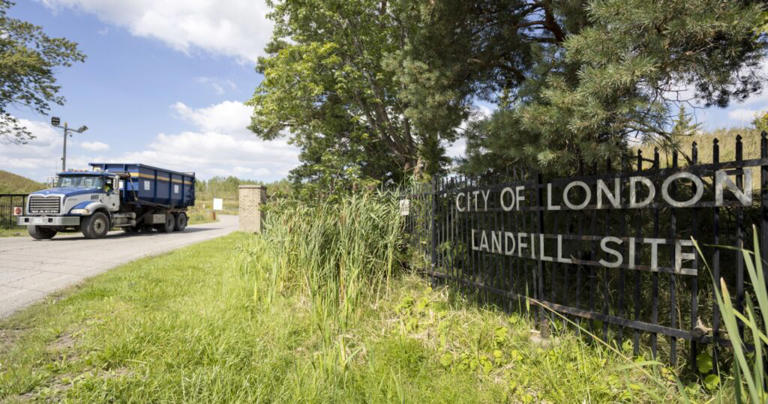
The W12a landfill in London, Ont. will be the site of the upcoming project. (City of London)

Taking different approaches

To measure methane emissions from the landfill, the team will be using four different approaches to carry out their surveys, each with their own advantages and disadvantages.

One approach is measuring methane from the ground level using continuous monitoring systems made by engineers in Western’s faculty of engineering.

“It's continuous, which is wonderful because you have that beautiful time record, but it's only four locations. So that's the weakness of it,” Dr. Gallagher stated.

Another approach that still uses ground measurements is having a team go out on foot four times per year with a detector to manually survey the entire landfill in what is referred to as ‘ground sweeping’.

“It's quite accurate because the person's carrying the detector and walking over the whole landfill so that you're right at the ground. But it only happens four times a year, and also, it's not that nice; it's not the best job.”

The team will also be taking their surveys to the sky, using drones equipped with the same detectors as those used by persons on the ground and using satellite imagery.

When describing the drone approach, Dr. Gallagher said, “It will have very high spatial resolution. But there's a bit of uncertainty when you're measuring something above the ground about if you're really capturing everything, because it really matters. For example, if there's swirling winds in the landfill, then that can affect how well you're capturing everything.”

SEE ALSO: Are you an 'aspirational recycler'? See if you're using the blue bin correctly

Satellite imagery will be able to fill the gaps the drone has by being able to capture the full extent of the methane plumes, from the ground into space.

These surveys will be conducted over the course of one year, not only to test the effectiveness of each approach but also to see if there is any seasonal variability in methane emissions.

As for what will happen once the project is completed, “We want to be able to give information to the city so they can figure out the best monitoring protocol for managing the landfill effectively,” Dr. Gallagher said.

“We have that tight connection to the City because ultimately we want to do something useful so that they can do the best job managing the landfill.”

Beyond London

The information gathered from this project will not only be useful to London but to other municipalities across Canada as well. Dr. Gallagher stated that the team will share their findings with other municipalities to help them make their own informed protocols for landfill management. She also said these findings could even extend to other sectors and industries that are major producers of methane emissions. “That's another point of sharing research: that often, when you do your research to solve a specific problem, it can turn out that it can solve other problems as well.”

“We're just really fortunate that we have all this expertise at Western so that we can bring together this team and they can all apply their techniques to this problem in order to figure out the best way to manage the landfill.”

Thumbnail image of a dumpsite under the clear sky from Emmet/Pexels. File photo used for illustration purposes only.