Saturday, December 23, 2023

Ten Victories for the U$ Working Class in

 2023


 DECEMBER 22, 202Facebook

Sarah Anderson directs the Global Economy Project at the Institute for Policy Studies.

These Are the Major Organized Labor Fights to Watch Out for in U$A 2024


Major strikes and worker victories in 2023 have set the stage for a potentially monumental year of labor action.
December 22, 2023

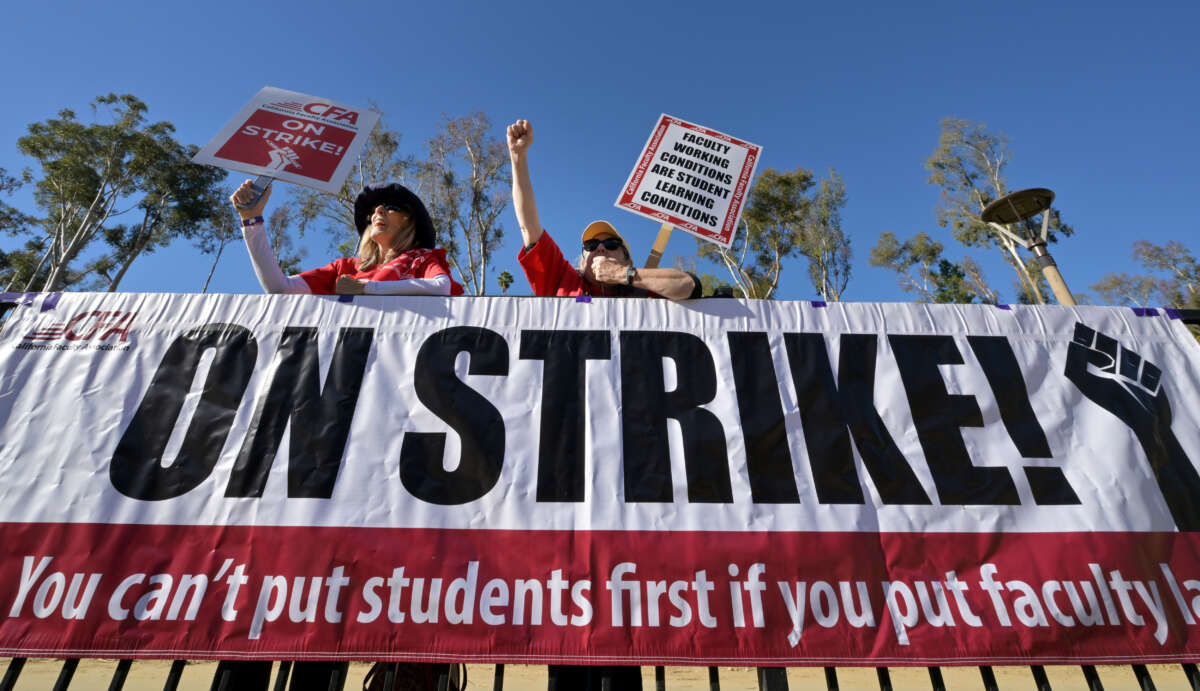
The California Faculty Association rallies during a week of strikes at the Cal State LA campus in Los Angeles, on December 6, 2023
.BRITTANY MURRAY / MEDIANEWS GROUP / LONG BEACH PRESS-TELEGRAM VIA GETTY IMAGES


This story was originally published by Labor Notes.

Major contract fights in 2023 at UPS, the Big 3 automakers, and Hollywood studios set the tone for next year’s contract campaigns. Impressive gains and increased transparency got members of other unions asking, “Why can’t my union be like that?”

The bar will be high. Many of the contracts expiring next year date from before the pandemic, and before inflation started taking a bite out of paychecks. Some unions took concessions, like creating lower wage and benefit tiers, that members are ready to fight to undo this time around.

AT&T

Two contracts covering 25,000 AT&T wireline workers expire in 2024. One, covering 9,000 Communications Workers (CWA) members in California and Nevada, is up April 6; the other, covering 16,000 workers in nine Southeastern states from Florida to Kentucky, expires August 3. The union hopes to improve conditions for the second-tier workforce of installation technicians who earn lower wages and have worse work rules, such as mandatory weekend overtime.

AT&T workers in the Southeast struck for five days in 2019, their first time since a national strike in 1983. “When we bargained it, it was actually a good contract,” said Chris Walterson, president of CWA Local 3122 in Miami. But with inflation ballooning in the meantime, “we actually lost money because we did a five-year deal.” He said members will be looking to make up for what they lost in wages, and fighting AT&T’s ongoing efforts to make workers pay more health insurance costs.

A separate contract expires February 23 for 7,000 CWA members at AT&T Mobility (wireless) in the Southwest.


The International Labor Movement Is Mobilizing for a Free Palestine
Global labor unions are responding to Palestinian workers’ calls for solidarity and demanding an immediate ceasefire.

By Shane Burley ,
November 29, 2023


Boeing

The contract covering 30,000 Boeing Machinists (IAM) in Washington state expires September 12. Members are still fuming over the mid-contract concessions that Boeing demanded — and got — a decade ago by abruptly threatening to move production of its new plane, the 777X, elsewhere. In response, the IAM’s national leadership reopened bargaining — with no ability to strike — and agreed to give up the pension and allow a big shift in health care costs from the company to the workers.

Members voted that deal down the first time, but a revised version squeaked by with 51 percent on January 3, 2014, locking in the concessions for 10 years. (Many veteran union members were on holiday break and missed the vote.)

Furious members passed an amendment to the IAM constitution in 2016 requiring that the union conduct a vote of the local membership before engaging in any more mid-contract talks.

This time around, workers hope the tight labor market gives them the upper hand. The company is still recovering from the 737 MAX scandal when faulty design caused two deadly crashes. “Boeing’s not really in any position right now to play games with us,” said airframe mechanic and steward Patric Boone. “The 777X is so far behind, and they’ve got all these promises to deliver in 2024.”

One consultant told the Seattle Times the union could be seeking 40 percent wage increases over four years, “the market rate” in aviation following big wage increases for American, Delta, and United pilots. Machinists at Spirit Aerosystems, a key Boeing supplier in Wichita, Kansas, struck for six days in June and won a 31.5 percent increase over four years plus cost-of-living adjustments.

Many members want to restore the pension and end weekend mandatory overtime. The union is also seeking a commitment from Boeing to build its next jet locally.

Critically, the union will finally have the ability to strike again. District 751 even set up a special payroll deduction in 2019 — five years before expiration — encouraging members to set aside $50 per paycheck in individual strike funds.

The union will hold a “prepare to strike” rally and strike authorization vote July 17 at the Seattle Mariners’ stadium.

(For a thorough overview, see the article by Dominic Gates in the Seattle Times, As Boeing Machinists contract talks near, union savors new labor power.”)

Flight Attendants

American Airlines flight attendants are still negotiating; their contract expired in 2019. The 26,000 members of the Association of Professional Flight Attendants have seen no raises since before the pandemic. At the end of August they voted to strike by 99.47 percent.

Meanwhile 19,000 Southwest flight attendants, represented by Transport Workers (TWU) Local 556, voted down a December contract offer that included an immediate 20 percent wage increase. They’ve been negotiating for five years.

“Flight attendants are letting managements know that they are not going to take what management could have gotten away with in the past,” said APFA President Julie Hedrick. The union is demanding a 33 percent raise; American has offered 11.

United and Alaska flight attendants, members of the Association of Flight Attendants (CWA), are also in negotiations.

Daimler Truck

The master contract covering 7,000 Auto Workers members at Daimler Truck North America expires April 26.

The contract includes three North Carolina Freightliner plants where workers assemble and make parts for semis and medium-duty trucks. It also covers the largest school bus manufacturing site in North America: 1,700 workers at Thomas Built Buses in High Point, North Carolina.

North Carolina is in the midst of an industrial boom, with construction underway on Toyota’s flagship North American electric vehicle battery plant; an EV assembly and battery plant owned by Vietnamese carmaker VinFast that’s set to employ 7,000; a Boom Supersonic jet factory in Greensboro; and more.

School districts are ramping up their use of electric buses (an increasing focus of Thomas), encouraged by subsidies in the infrastructure bill. “The question for us is, what is the company going to do to retain labor and make it worthwhile for us to stay?” said one UAW member at Thomas.

Production workers there start between $18 and $21 an hour, with top pay $24-$27 ($29 for skilled trades). The Freightliner scale is slightly higher.

For Freightliner truck workers, another big issue is job security. Daimler Truck has two big assembly plants in Mexico, and has wrenched past concessions by threatening to move more work there. The UAW won the right to strike over plant closures at the Big 3 and over investment commitments at General Motors and Stellantis; could the union win similar or better language at Daimler Truck?

IATSE


The two main pattern-setting contracts covering 60,000 film and television crew workers expire on July 31.

Members of the Theatrical Stage Employees (IATSE) came close to striking in October 2021 over dangerously long hours and low pay. At the time, a majority voted against the union’s largest contract, the Hollywood Basic Agreement, but it passed thanks to an electoral-college-style ratification procedure.

Members frustrated with that outcome recently launched the Caucus of Rank-and-File Entertainment Workers (CREW), pushing for a stronger contract fight and one-member-one-vote union elections.

The writers and actors strikes put IATSE members out of work for four months in 2023, which could make it hard to strike — though the studios will also want to avoid another stoppage, giving the union leverage.

The contract covering thousands of TV and film musicians (AFM) expires in May.

East Coast Longshore

The six-year master contract between the International Longshoremen’s Association and the alliance of ocean carriers and terminal operators (USMX), covering 17,000 East and Gulf Coast dockworkers, expires on September 30.

President Harold Daggett — one of the highest-paid union leaders in the U.S., pulling in $800,000 as head of the ILA and “president emeritus” of Local 1804-1 — has vowed not to extend the contract past that date. He told members to prepare for a potential coastwide strike for big wage increases and to fend off automation. He’s also telling members they need to work faster to thwart automation, telling a meeting of local officers in November, “I need the bosses of this union to be bosses and stress to your locals that if you want a good contract, you have to get 32 moves per hour.” That’s the level Daggett said the union has promised USMX.

There has not been a strike on the East and Gulf coasts since 1977. Last year, West Coast longshore workers (ILWU) won 30 percent over six years plus a big bonus package. The ILA’s wage scale and pension payments are much lower than their West Coast counterparts’.

Postal


Two big contracts are up in 2024: the Postal Workers (APWU) agreement covering 220,000 postal clerks, maintenance workers, drivers, and retirees expires September 20, and the contract covering 100,000 Rural Letter Carriers (NRLCA) expires May 20.

New tech is an issue. APWU has won important job protections such as a no-layoff guarantee for anyone with six years’ seniority­ — they also cannot be forced to move more than 50 miles if their job is cut. But the Postal Service is pushing consolidation and automation, which could threaten jobs, even if it’s by attrition. “We’re facing a new generation of high-speed, highly capable parcel-sorting machines,” said Seattle APWU member David Yao.

For the rural letter carriers, a big issue is a new route evaluation system that cut pay for many. Rural carriers are salaried, not hourly, with their pay based on how long a route is supposed to take — often a bewildering underestimate. “It feels like you need a degree in engineering to figure out the numbers — it’s all these algorithms,” said Dave Staiger in Kalamazoo, Michigan. The hours have gotten longer as the job leans towards more packages, fewer letters.

The city Letter Carriers union (NALC) is still in negotiations, and the contract may be headed for arbitration. Acute understaffing and the low-paid entry-level tier are big issues.

Postal strikes are illegal, though it took 200,000 workers breaking that law in 1970 to win the right to collective bargaining.

Grocery

A strike is “on the table more so than in the past” for 28,000 workers at Michigan grocery chain Meijer, says UFCW Local 951 President John Cakmakci. Their current deal expires February 24. Workers want wage increases, additional paid time off, and an affordable medical plan.

“I’ve been doing this as a full-time representative for almost 40 years,” Cakmakci told Crain’s. “It’s never been quite this optimistic for labor.”

Anheuser-Busch

The Teamsters’ five-year contract with Budweiser brewer Anheuser-Busch expires February 29. In negotiations so far, the union has already notched two big wins: forcing the company to restore retiree health benefits and end a two-tier health insurance system imposed during the last round of bargaining. The contract covers 5,000 Teamsters at 12 breweries.

Teachers

Two big teachers union contracts expire next year: Chicago (25,000 members) on June 30 and Philadelphia (13,000) on August 31. The Caucus of Working Educators, a reform group within the Philly union, is demanding paid parental leave and an end to punishing workers for using their earned sick time.

Retail Janitors


The contract covering 700 janitors who clean Target, Best Buy, and other big stores in the Minneapolis-St. Paul area expires February 28. Workers are pushing for eight paid holidays (they currently get none) and more vacation time.

The janitors’ union, Service Employees Local 26, has lined up its other contracts to expire early next year as well, including ones covering 1,000 airport workers, 4,000 commercial office janitors, and 2,500 security guards. Several other Twin Cities locals are also working under expired deals or have agreements that will expire by the spring; among them are teachers and support staff in Minneapolis and St. Paul schools and Metro Transit bus drivers.

First Contract Fights

In addition to all the expiring collective bargaining agreements, workers who have organized unions at companies including Starbucks, Amazon, Trader Joe’s, and Chipotle continue their fights for a first contract in the face of ongoing stalling and lawbreaking by their employers.

Have a contract expiring in 2024 (or 2025) you want to tell us about? Write to dan@labornotes.org.

DAN DIMAGGIO 
is an assistant editor at Labor Notes. He joined Labor Notes in 2015 after working as a researcher for the Operating Engineers in Miami. He covers telecom workers, airline workers, the building trades, and health and safety. He works out of Labor Notes’ East coast office in Brooklyn.
Biden Is Paying Growers to Replace Farmworkers With Bracero Contract Labor

Under the new visa pilot program, the administration is prioritizing growers’ profits over farmworkers’ rights.
December 21, 2023
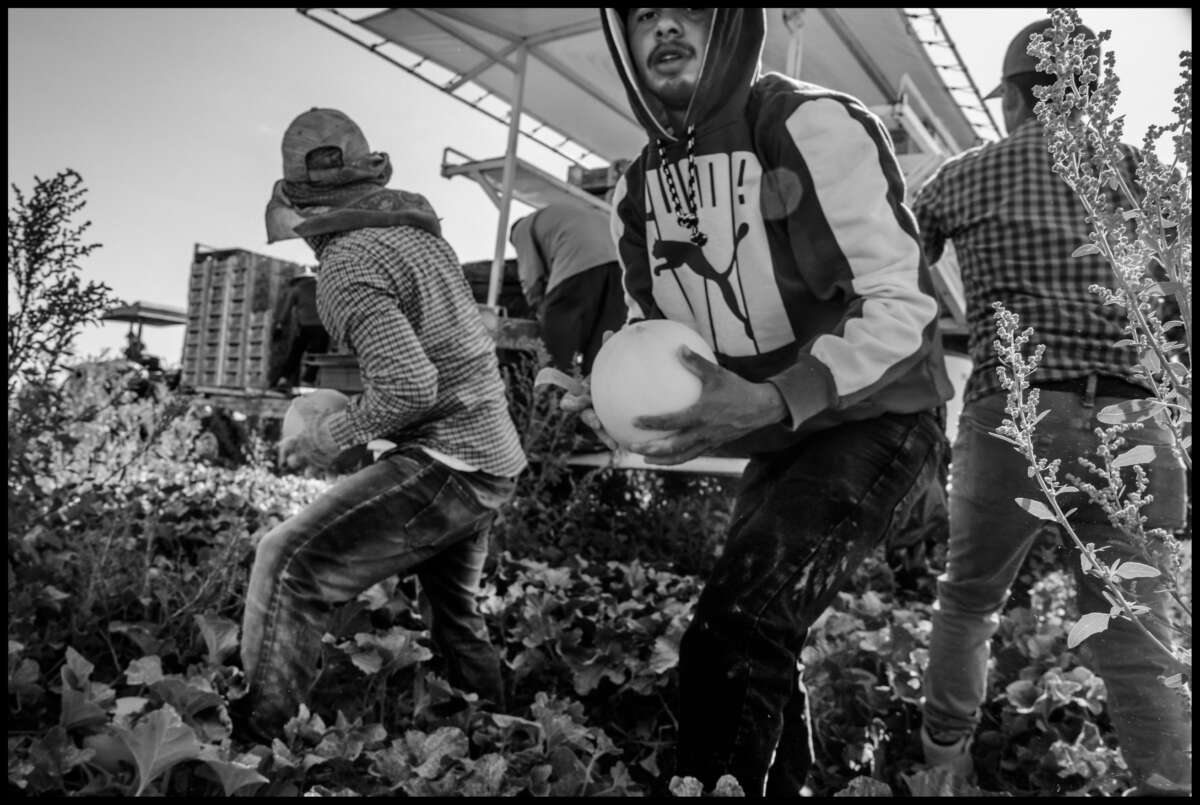
Farmworkers brought to the U.S. in the H-2A visa program harvest melons early in the morning in a field near Firebaugh, in California’s San Joaquin Valley. 
DAVID BACON

On September 22, 2023, the U.S. Department of Agriculture (USDA) announced it would begin paying growers to use the notorious H-2A contract foreign labor (or guestworker) program. Tapping into $65 million from the American Rescue Act, the USDA will pay between $25,000 and $2 million per application to defray the expenses of recruiting migrant workers from three Central American countries — Guatemala, Honduras and El Salvador — transporting them to the U.S., housing and feeding them while they’re here, and even subsidizing part of their wages. Labor contractors, who compete with each other to sell migrant farm labor to growers at low wages, will be eligible as well as growers themselves.

The H-2A program is the modern version of the old bracero scheme, under which growers brought Mexicans to work in U.S. fields from 1942 to 1964. Workers had to pay bribes to come, were kept separate from the local workforce, and deported if they protested or went on strike. Because of widespread abuse of the workers who came through the program, and growers’ use of bracero labor to prevent farmworkers from organizing, the program was abolished — one of the main achievements of the Chicano civil rights movement. But even at its height, the U.S. government never actually paid growers to bring in workers. Now, the Biden administration is doing just that.

The H-2A program allows growers to recruit workers, who today mostly come from Mexico. They can and do discriminate, hiring almost entirely young men and then pressuring them with production quotas to work as fast as possible. Workers have an H-2A visa, which allows them to stay only for the length of their contract — less than a year — and they cannot legally work for anyone other than the grower or labor contractor who recruits them. They can be fired for any reason, from protesting to working too slowly, and once they are terminated, they lose their visa and must leave the country. Recruiters maintain blacklists of workers fired for those reasons, and especially for striking and organizing, refusing to rehire them in future seasons.

Although the bracero program had ended in 1965, the H-2A visa category reestablished a contract labor program, in the Immigration Reform and Control Act of 1986. The program remained relatively small until it began to mushroom during the Bush and Obama administrations. The Biden administration is now expanding it even further by subsidizing growers who use it.

The Biden administration’s purpose for its subsidy program, called the Farm Labor Stabilization and Protection Pilot Program (FLSPPP), is political. In announcing it, the USDA lists three goals. The first, “addressing current labor shortages in agriculture,” means not just giving growers a government-sponsored labor recruitment system, but even paying them to use it. While growers complain about labor shortages, unemployment in farmworker communities is higher than in urban areas. Agribusiness has been intent, however, on keeping wages extremely low. Many growers were Donald Trump supporters, and the rural areas of California and Washington State are still littered with old Trump signs from the 2020 campaign. But hope dies hard. The Biden campaign would welcome whatever support it can get from agribusiness in the tight 2024 election to come.

NEWS |
Many farmworkers are still out of work and struggling to afford food in the wake of California’s disastrous floods.
By Leanna First-Arai , TRUTHOUTJanuary 30, 2023

Samantha Power, administrator of the U.S. Agency for International Development, held a meeting with growers at the USDA in September 2022. She thanked them for working with the administration on “a critical priority — expanding the pool of H-2A farmworkers from Central America, specifically from El Salvador, Guatemala, and Honduras.” “We have got your back,” she promised them. “We are committed to helping maintain a strong pipeline of experienced farmworkers to support you.”


It is no coincidence that a work visa program is being unveiled as Biden negotiates with Republicans over measures to make the asylum process basically unavailable to those same migrants fleeing poverty and repression.

The second stated goal of the pilot program is to “reduce irregular migration from Northern Central America through the expansion of regular pathways.” As Republicans attack the president for being “soft” on immigration, the Biden administration hopes to forestall caravans arriving at the border by channeling thousands of potential migrants into work visa programs. The FLSPPP does nothing to change the conditions that produce migration, nor does it allow migrants to access the asylum system and become U.S. residents. In fact, it is no coincidence that a work visa program is being unveiled as Biden negotiates with Republicans over measures to make the asylum process basically unavailable to those same migrants fleeing poverty and repression.

The third goal, “improving the working conditions for all farmworkers,” is political theater. Applicants for subsidies under the pilot program are required to provide H-2A workers with living wages, overtime pay, workers’ rights training, health and safety protections, and no retaliation if they try to organize a union. These protections and benefits — in many cases, simply the base legal requirement — don’t even exist on paper for almost all farmworkers who are already living in the U.S. And because, according to the National Agricultural Workers Survey, about 44 percent of all farmworkers are undocumented, it’s difficult for them to use what legal protections exist. However, instead of pushing for immigration reform that would provide them with legal status, the Biden administration is helping growers bring in H-2A workers to replace them.

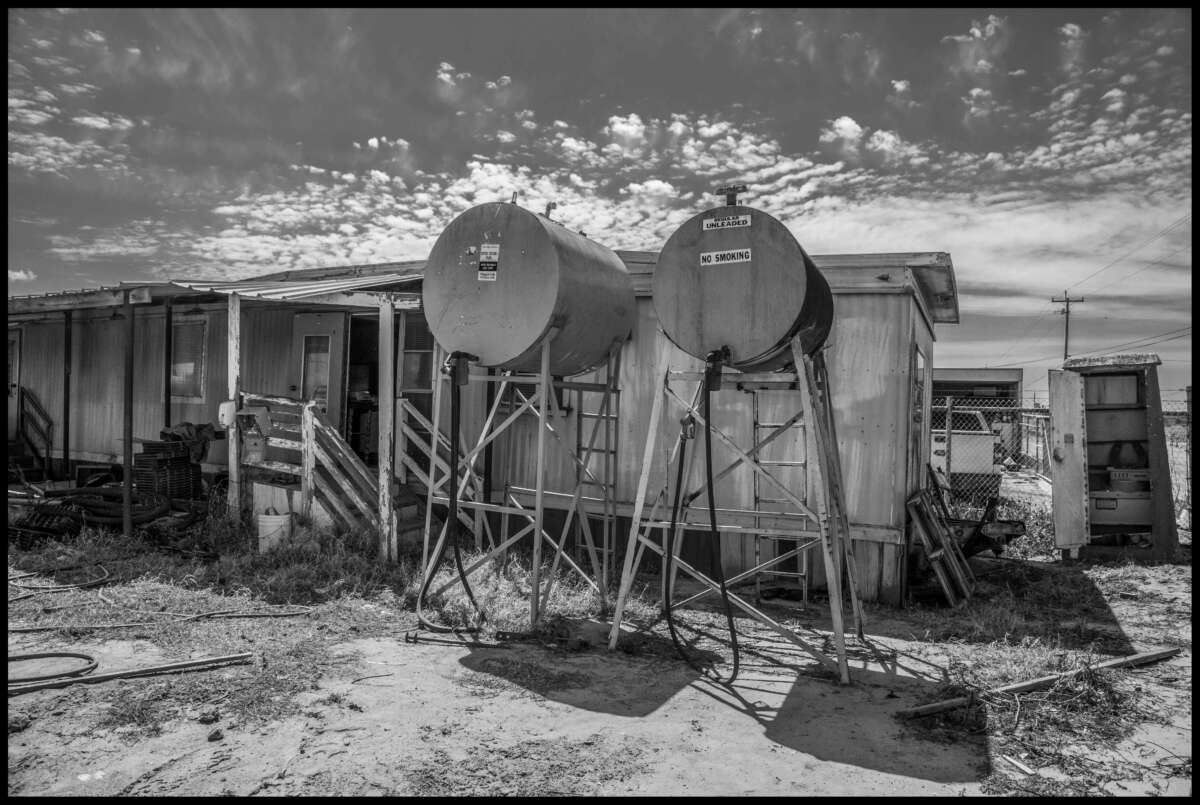
This trailer, at 1340 Prell Rd., in Santa Maria, California, was listed as the housing for six H-2A workers by La Fuente Farming, Inc.
DAVID BACON

With weak enforcement on the ground, it’s unlikely that H-2A workers would get these benefits either. Violations of the rights and minimum standards for both H-2A and resident farmworkers are endemic in U.S. agriculture. The program contains no funding for even a minimal increase in Department of Labor (DoL) investigations of existing violations, much less those to come.

The proposal shocked many farmworker advocates and organizers. A number of them sent a letter of protest to the Biden administration, which I also signed as a fellow of the Oakland Institute. “As farmers, farmworkers, and their advocates, we are writing to express our indignation that USDA is committing $65 million of public money to pay farm employers, including Farm Labor Contractors, to raise wages, improve housing or other adjustments for H-2A workers before making any significant changes in the conditions of the millions of farmworkers already in this country,” the letter read.

Documentation of worker abuse in the H-2A program goes back decades, and many farmworker advocates and unions doubt it can be reformed. “Because of its record of abuse of both H-2A workers and local farmworkers,” the protest letter stated, “we have called for the abolition of the H-2A program for many years.” Sarait Martinez, director of the Binational Center for Oaxacan Indigenous Development, which organizes farmworkers against wage theft and other abuse, told Truthout, “This program pits resident farmworkers against contract workers recruited by growers, and makes it impossible to end the poverty in farmworker communities, treating it as normal and unalterable.”

“This program pits resident farmworkers against contract workers recruited by growers, and makes it impossible to end the poverty in farmworker communities, treating it as normal and unalterable.”

At the same time that USDA is handing out subsidies, the enforcement system that should protect farmworkers from wage theft, illegal wages, and other violations of workplace standards and rights is in freefall. A 2023 study by the Economic Policy Institute found that investigations by the Department of Labor’s Wage and Hour Division (WHD) have plummeted by over 60 percent — from a high of 2,431 in 2000 to only 879 in 2022. The department has only 810 investigators for the nation’s 164.3 million workers, or one inspector per 202,824 workers. As a result, the DoL only investigates fewer than 1 out of every 100 agricultural employers each year, although, notes the study, “when WHD does investigate an agricultural employer, 70 percent of the time, WHD detects wage and hour violations.”

From 2000 to 2022, violations of the H-2A visa program accounted for roughly half of the few cases in which employers were forced to pay back wages and civil penalties, rising to nearly three-fourths during the Biden administration. Because enforcement is weak, cases of employers and labor contractors using H-2A workers to replace local workers, and cheating those H-2A workers, are multiplying.

One example of cheating occurred with notorious labor violator Sierra del Tigre Farms in Santa Maria, California. In September 2023, more than 100 workers were terminated before their work contracts had ended and told to go back to Mexico. The company then refused to pay them the legally required wages they would have earned. Its alter ego, Savino Farms, had already been fined for the same violation four years earlier, an indication that the profits of labor violations outweigh the small penalties.

One worker, Felipe Ramos, was owed more than $2,600. “It was very hard,” he remembers. “I have a wife and baby girl, and they survive because I send money home every week. Everyone else was like that too. The company had problems finding buyers, and too many workers.” In fall 2023, Rancho Nuevo Harvesting, Inc., another labor contractor, was forced by the Department of Labor to pay $1 million in penalties and back wages to workers it had cheated in a similar case. The frequency and seriousness of these cases in one relatively small valley alone indicate that the problems with the program are fundamental, structural and widespread.

As the USDA “pilot” subsidy program is being rolled out, the U.S. Department of Labor has proposed a set of reforms it says may reduce the long-documented abuse of H-2A farmworkers. Yet even in the published text of the proposed reforms, the DoL staff who drafted it summarize the structural reasons that make the impact of reforms so doubtful:


Over the past decade, use of the H-2A program has grown dramatically while overall agricultural employment in the United States has remained stable, meaning that fewer domestic workers are employed as farmworkers. … Some of the characteristics of the H-2A program, including the temporary nature of the work, frequent geographic isolation of the workers, and dependency on a single employer, create a vulnerable population of workers for whom it is uniquely difficult to advocate or organize to seek better working conditions. … This lack of sufficient protections adversely affects the ability of domestic workers to advocate for acceptable working conditions, leading to reduced worker bargaining power and, ultimately, deterioration of working conditions in agricultural employment.

The existing local farmworker workforce suffers from the conditions the Department of Labor describes. In another wage theft claim in July 2023, a group of resident workers charged that high-end winery J. Lohr conspired with a group of labor contractors to pay less than the minimum wage, while hiding records of the violation. The Binational Center for Indigenous Community Development, which brought the suit, has fought five similar cases in the last year.


There is no requirement from the USDA that employers of local workers implement any of the pilot program’s conditions, and no additional resources are destined for defending the existing farmworker workforce.

Instead of spending its limited resources to protect and advance the wages and job rights of the farmworkers who live and work in the U.S. (68 percent of whom are immigrants themselves), the Biden administration is making it more attractive for growers to bring in guest workers to replace them. This gives growers a workforce that is easier to control, and who leave the country when the work is done. It continues a policy that extends back through the Trump, Obama, Bush and Clinton presidencies.

About 2 million workers labor in U.S. fields. Last year, the Department of Labor gave growers permission to bring 371,619 H-2A workers — or about a sixth of the entire U.S. farm labor workforce — an increase from 98,813 in 2012. Employing such a large quantity of H-2A labor cannot be done, as the DoL admits, without displacing domestic workers, who continue to endure extensive wage theft and an average family income of $20,000 per year.

Employers who hire local workers are ineligible for the pilot program subsidies unless they recruit H-2A workers — essentially bribing them to use H-2A workers to replace residents. There is no requirement from the USDA that employers of local workers implement any of the pilot program’s conditions, and no additional resources are destined for defending the existing farmworker workforce. This will directly hit farmworker families and communities across the country.

The Biden administration’s political calculations could prove disastrous as well. By doubling down on the program, it is essentially telling farmworkers and their advocates, in an election year, that the administration is solely concerned with the welfare of growers. Yet almost all farmworker unions and communities campaigned heavily against Trump in 2020. They were often Biden’s main support in rural areas where growers were solidly in the Republican camp.

“By implementing this pilot program, the Department of Agriculture has failed miserably to engage with us or hear our arguments,” the protest letter concluded. “We call upon USDA to cancel it and redirect the $65 million to a campaign to rebuild the domestic farm labor force.”

DAVID BACON is a writer and photographer, and former union organizer. He is the author of several books on labor, migration and the global economy, including In the Fields of the North / En los campos del norte, The Children of NAFTA, Communities Without Borders, Illegal People and The Right to Stay Home. His photographs and stories can be found at here and here.