Saturday, December 23, 2023

No sheep’s clothing needed: Colorado reintroduces five gray wolves

Wolves are the first part of a plan to reintroduce the endangered species into the state after it was eradicated in the region

In an effort to restore an endangered species, Colorado just released five gray wolves in the western part of the state.
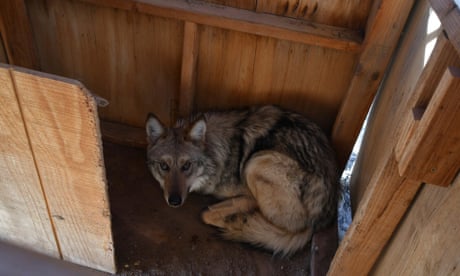
On Monday, Colorado parks and wildlife released two female and three male wolves on to remote public land. The predators were captured and brought over from Oregon, after Wyoming, Idaho and Montana refused to share their wolves citing interstate migration and financial concerns.

In a 2020 ballot measure, Colorado residents voted to reintroduce the species after it was eradicated due to government-funded killing programs.

“For the first time since the 1940s, the howl of wolves will officially return to western Colorado,” Governor Jared Polis said in a statement.

The plan to restore the endangered population was met with support from conservationists but opposition from ranchers and rural communities, who see wolves as a threat to livestock and hunting.

“Most ranchers won’t experience direct conflict with wolves, but some will,” said Kevin Crooks, director of the Center for Human-Carnivore Coexistence at Colorado State University, in a statement to the Guardian. “For those individual ranchers, when wolves kill, chase, or stress their livestock, the economic and emotional impacts can be considerable, affecting their livelihood and well-being. It is important to work with residents in the state to help them prepare for living with wolves.”

The state will compensate ranchers with up to $15,000 for every domesticated animal lost to wolves. Gray wolves are federally protected under the Endangered Species Act in Colorado, but only as an “experimental population”. This allows wildlife officials to kill wolves that threaten livestock.

“We’ll continue releasing animals based on our plan to have wolves not just survive but thrive in Colorado as they did a century ago,” said Jeff Davis, director of Colorado parks and wildlife in a statement.

Five more wolves are set to be released in the same area of Colorado’s western slope in the coming months. The repopulation plan calls for 30 to 50 wolves to be reintroduced in the next five years.

“This event is historic not just because of its ecological and conservation significance, but also because it marks the first time voters decided to reintroduce a native species,” said Becky Niemiec, director of the Animal-Human Policy Center at Colorado State University, in a statement to the Guardian. “Wolf reintroduction in Colorado is happening because many Colorado voters want wolves on the landscape – they want wolves as part of the ecosystem and have strong emotional and cultural connections to this species.”

Last week, two ranching groups filed lawsuits in an attempt to halt the release of gray wolves. On Friday, a federal judge voted to go forward with the reintroduction plan.

Efforts to restore the gray wolf population come amid the accelerating extinction crisis and wildlife loss. This October, the US Fish and Wildlife Service removed 21 species from the endangered list due to extinction. Most of the lost species are Hawaiian birds that couldn’t withstand diseases carried by invasive mosquitoes.


Colorado releases first 5 wolves in reintroduction plan approved by voters to chagrin of ranchers

Wildlife officials released five gray wolves into a remote forest in Colorado’s Rocky Mountains on Monday to kick off a voter-approved reintroduction program that was embraced in the state’s mostly Democratic urban corridor but staunchly opposed in conservative rural areas where ranchers worry about attacks on livestock. 


BY JESSE BEDAYN
 December 18, 2023

GRAND COUNTY, Colorado (AP) — Somewhere on a remote mountainside in Colorado’s Rockies, a latch flipped on a crate and a wolf bounded out, heading toward the tree line. Then it stopped short.

For a moment, the young female looked back at it’s audience of roughly 45 people who stared on in reverential silence. Then she disappeared into the forest.

She was one of five gray wolves Wildlife officials released in a remote part of Colorado’s Rocky Mountains on Monday to kick off a voter-approved reintroduction program that was embraced in the state’s mostly Democratic urban corridor but staunchly opposed in conservative rural areas where ranchers worry about attacks on livestock.

The wolves were set free from crates in a Grand County location that state officials kept undisclosed to protect the predators.


RELATED STORIES


Federal judge denies cattle industry’s request to temporarily halt wolf reintroduction in Colorado


Judge denies cattle industry’s request to temporarily halt wolf reintroduction in Colorado


US wildlife managers capture wandering Mexican wolf, attempt dating game ahead of breeding season

It marked the start of the most ambitious wolf reintroduction effort in the U.S. in almost three decades and a sharp departure from aggressive efforts by Republican-led states to cull wolf packs. A judge on Friday night had denied a request from the state’s cattle industry for a temporary delay to the release.

The group watched as the first two wolves — 1-year-old male and female siblings with gray fur — were set free. The male bolted up the golden grass, running partially sideways to keep an eye on everyone behind, then turning left into the trees.

The crowd watched in silence, then some hugged each other and low murmurs started up

When the latch on the second crate flipped, the wolf didn’t budge. Everyone waited as Colorado Gov. Jared Polis peeked into the cage.

After roughly 30 seconds, those around the crates stepped back, giving the wolf space. The female slowly rose then bounded up a snowy divot in the dirt road, looking back before disappearing into an aspen grove.

Wolves “have larger-than-life places in human imagination, in the stories we all grew up with and tell each other,” said Polis. “To see them in their natural habitat, and turn around look curiously at us ... is really, really a special moment that I will treasure for my entire life.”

The other three wolves released were another pair of 1-year-old male and female siblings, as well a 2-year-old male. The wolves were all caught in Oregon on Sunday.

When the final crate opened, the 2-year-old male with a black coat immediately darted out, making a sharp right past onlookers and dashing into the trees. He didn’t look back once.

When it all ended, a small round of applause broke out.

Colorado officials anticipate releasing 30 to 50 wolves within the next five years in hopes the program starts to fill in one of the last remaining major gaps in the western U.S. for the species. Gray wolves historically ranged from northern Canada to the desert southwest.

The carnivores’ planned release in Colorado, voted for in a 2020 ballot measure, has sharpened divides between rural and urban residents. City and suburb dwellers largely voted to reintroduce the apex predators into the rural areas where prey can include livestock that help drive local economies and big game such as elk that are prized by hunters.

The reintroduction, starting with the release of up to 10 wolves in coming months, emerged as a political wedge issue when GOP-dominated Wyoming, Idaho and Montana refused to share their wolves for the effort. Colorado officials ultimately turned to another Democratic state — Oregon — to secure wolves.

Excited wildlife advocates have started a wolf-naming contest, but ranchers in the Rocky Mountains where the releases will occur are anxious. They’ve seen glimpses of what the future could hold as a handful of wolves that wandered down from Wyoming over the past two years killed livestock.

The fear is such attacks will worsen, adding to a spate of perceived assaults on western Colorado’s rural communities as the state’s liberal leaders embrace clean energy and tourism, eclipsing economic mainstays such as fossil fuel extraction and agriculture.

To allay livestock industry fears, ranchers who lose livestock or herding and guard animals to wolf attacks will be paid fair market value, up to $15,000 per animal.

Hunting groups also have raised concerns that wolves will reduce the size of elk herds and other big game animals that the predators eat.

Meanwhile, Colorado residents who backed the reintroduction are going to have to get used to wildlife agents killing wolves that prey on livestock.

Some wolves were already killed when they crossed from Colorado into Wyoming, which has a “predatory” zone for wolves covering most of the state in which they can be shot on sight.

Joanna Lambert, professor of wildlife ecology and conservation biology at the University of Colorado at Boulder, said she lost her breath when she saw the wolves gallop into the woods on Monday.

For years, Lambert and wolf advocates have been working to get wolf “paws on the ground” and “all the sudden, it happened.”

“This is a moment of rewilding,” Lambert said, “of doing something to stave off the biodiversity extinction crisis we are living in.”
Interview: Escalating tensions in South China Sea hurts interests of Filipino people, says expert

Source: Xinhua
Editor: huaxia
2023-12-23 

BEIJING, Dec. 23 (Xinhua) -- Certain Philippine politicians' attempt to manipulate the South China Sea issue by fomenting anti-China sentiment goes against the interests of the Filipino people, said a Chinese expert during an interview with Xinhua.

"Those Philippine politicians' move primarily serves their political self-interests, all at the expense of the well-being of the Filipino people," said Yang Xiao, deputy director of the Institute of Maritime Strategy Studies at China Institutes of Contemporary International Relations.

"The Philippine politicians' deliberate escalation and disruptive actions jeopardize peace, development, stability, sustainability, and prosperity in the region," he said.

Their actions have "damaged regional peace and stability, and hindered regional development," he added.

The locals could have benefited from cooperation in fisheries, oil, and gas production, he said, adding that escalating tensions in the South China Sea is harmful to realizing regional prosperity in the long term.

The regional security situation had been relatively stable, but the Philippines' recent moves have broken the trajectory, Yang said.

"The Philippines' intention is clear -- to build permanent military facilities on Ren'ai Jiao, a move disrupting the regional status quo, leading to militarization in the South China Sea," he said.

The Philippines has gravely breached its own pledge, as outlined in the Declaration on the Conduct of Parties in the South China Sea, to exercise self-restraint in activities that could complicate or escalate disputes, said Yang.

"To realize peace, stability, prosperity and development in the South China Sea region is the shared aspiration and responsibility of China and ASEAN member states, and serves the common interests of all countries," he said.

Yang also expressed regret about the fact that certain Philippine politicians are willing to become pawns of the United States.

"Given the Philippines' proximity to China, heightened tensions between the two nations could increase not only China's but also the Philippines' security expenditure," he said, adding that the United States, driven by geopolitical objectives and its so-called commitment to safeguarding allies' security, also finds itself ensnared in the provocative actions of the Philippines.

China maintains that peace and stability in the South China Sea should be jointly upheld by China and ASEAN member states, he said.

China has actively provided international public goods and made every effort to provide services so as to uphold and promote the safety of sea lanes in the South China Sea, he said.

"However, the irresponsible behaviors of the Philippines pose a security threat to Chinese fishermen and law enforcement personnel," he said. ■
Despite anti-subsidy probe, China-Europe EV cooperation is expanding


Source: Xinhua
Editor: huaxia
2023-12-23 

BEIJING, Dec. 23 (Xinhua) -- At SAIC-Volkswagen ID. Store X, located in Beijing SOLANA Lifestyle Shopping Park, sales managers are busy introducing various models of electric vehicles (EV), such as models ID.6X, ID.4X, and ID.3, to customers. Among them, the ID.3 is popular with its excellent performance price ratio.

SAIC-Volkswagen is not the sole EV brand preferred by Chinese consumers. In the nation's streets, one can observe the presence of domestic brands like BYD and XPENG, as well as numerous Western EVs, including Volkswagen, Audi, and Tesla, all of which hold appeal for Chinese consumers.

According to the European Automobile Manufacturers' Association, China is the third largest market for European Union (EU) EV exports after Britain and the United States.

European EV purchases are increasing in China. However, this fact illustrated by the figures and the cooperation between the China-EU EV industries was ignored. In October, the European Commission launched an anti-subsidy probe into Chinese EVs, claiming to protect EU producers against cheaper Chinese EV imports which are said to be benefiting from state subsidies.

Such claims are not substantiated. Multiple studies and market surveys indicate that the pricing strategy of new energy vehicle models exported from China to Europe is comparable to those of local European models and is often higher than prices in the domestic Chinese market.

Germany, the automotive leader in Europe, vehemently opposes the investigation. According to the German Association of the Automotive Industry, relying solely on anti-subsidy inquiries fails to tackle the urgent competitiveness challenges faced by Europe.

In the global market, commercial competition is inevitable, but proper and reasonable competition would contribute to technological progress so that consumers can enjoy better service.

Certain reports from Western media concerning the expansion of Chinese EVs in the European market may not offer a comprehensive view of the industry. They frequently overlook the broader reality that manufacturers are actively pursuing collaboration with China, offering global automakers access to component production and complete vehicles. Tesla, for instance, has established a factory in Shanghai.

In addition to those "Made in China," Western EV manufacturers also purchase various raw materials and components from China, the most important of which is the battery, reputed to be the heart of an EV. Nowadays, of the top 10 power battery sellers in the world, more than half of them come from China.

During an automotive conference in October in the city of Changchun in northeastern China, Professor Ferdinand Dudenhoffer from the German Automotive Research Center said that there was a very big demand for Chinese battery technology in Europe and that car companies such as Mercedes-Benz, BMW, and Volkswagen all needed batteries made in China.

Chinese EV manufacturers have established an increasingly close partnership with Europe. BYD, a Chinese EV manufacturer, set up an electric bus factory in the northern Hungarian city of Komarom in 2017, which is the first EV factory that BYD has invested in Europe, whose products are mainly electric buses and tourist coaches.

In the field of EV batteries, China-EU cooperation is being closely carried out. Stellantis, the world's fourth largest automotive group and Chinese battery manufacturer Contemporary Amperex Technology, a global leader of new energy innovative technologies, announced the signing of a non-binding Memorandum of Understanding for the local supply of lithium iron phosphate battery cells and modules to power Stellantis' electric vehicle production in Europe.

Chinese media reports indicate that numerous battery factories, including Gotion High-tech, China Innovation Aviation, and EVE Energy, have established a presence in Europe. Concurrently, European automakers are exploring the establishment of electrification facilities in China. BMW, for example, has invested in the sixth generation of power battery projects in Shenyang, Liaoning Province, and the main construction has been completed.

European EV customers, manufacturers, and officials are showing their admiration for Chinese EV enterprises. The anti-subsidy investigation is unlikely to yield tangible advantages, and there is a growing trend of cooperation between China and the EU in the EV sector.

Besides, the EU has experienced positive outcomes from engaging with China's EV industry chain, benefiting both in terms of EV sales and advancements in the EV field.

In 2023, the BYD ATTO 3 was awarded the prestigious title of "Electric Car of the Year" by News UK, whose Chinese producer has now partnered with UK electric bus manufacturers to promote green transport in this country. "China has a very powerful electric car industry. I'd much rather they made great cars in the UK that we could then capitalize from and export," said Dominic Johnson, minister of state in the UK Department for Business and Trade. ■

Ukraine war: What’s the impact of cyber guerrillas?
DW
17 hours ago

In response to Russia's invasion, Ukraine called for support from volunteers operating in cyberspace. Since then, hackers have helped Kyiv's war effort. But this new phenomenon also draws criticism.


On a website, the Ukrainian government gives instructions on how to attack pro-Russian targets in cyberspace.
Image: DW


Hackers shut down internet connections in Russian-occupied parts of eastern Ukraine in late October. In some areas, it took Russian telecom providers days to restore connectivity.

Soon after, the IT Army of Ukraine took credit for the cyberattack. The hacker group is the most prominent example of several volunteer "hackivist" groups that have mobilized to support Ukraine in cyberspace.

The covert nature of their operations, many of which are illegal, makes it impossible to fully assess the scope of such groups. But cybersecurity researchers agree that their activities have impacted the war since Russia began its full-scale invasion in February 2022.

"The aim is to discredit the Russian state, to show that it can't protect the services of Russian businesses," said Stefan Soesanto, the head of the cyberdefense project at the Center for Security Studies at ETH Zürich, a Swiss university. "In that sense, they have a real impact, in particular on the psyche of people in Russia."

He added that throughout the war, the activities of groups like the IT Army have become more sophisticated, shifting their focus to fewer but more targeted operations.


Ukraine's Ministry of Digital Transformation, which coordinates the efforts of the IT Army through a website and a Telegram group, confirmed that "in 2023, the IT Army shifted its strategy to target fewer entities but maximize impact, focusing on major players in the finance and infrastructure sectors and indirectly affecting military components."

This year, with around 130 attacks that have been made public, the group has disrupted the operations of more than 400 pro-Russian targets, a spokesperson told DW in an email.

"There is also a similar number of operations that IT Army hasn't disclosed for various reasons," she wrote.

Causing confusion and economic damage


On February 26, 2022, two days after Russian tanks began rolling into Ukraine, Ukraine's Minister of Digital Transformation, Mykhailo Fedorov, called on volunteers around the world to launch cyberattacks on pro-Russian targets.

It was considered the first time a country under attack had openly issued such a call – and it was answered by thousands of cyber guerrillas worldwide.
Ukraine's Minister of Digital Transformation, Mykhailo Fedorov, has called for hackers around the world to volunteer their expertise
 Ivan Lyubysh-Kirdey/REUTERS

The early days of the IT Army were characterized by fairly crude and uncoordinated operations. Since then, the group has evolved into an organized entity with close ties to the Ukrainian government, according to researcher Soesanto.

Its attacks have both inflicted significant economic damage on Russian businesses and sown chaos among the Russian public, Soesanto told DW.

In May 2022, for example, an attack claimed by the IT Army shut down Russia's Chestny Znak supply chain monitoring system which tracks and traces products in the Russian market to guarantee the authenticity and quality of the goods sold in Russia.

In February 2023, the group claimed responsibility for bringing down Russian state media websites during a parliamentary address by President Vladimir Putin.
A range of hacker groups

With such operations, the IT Army has emerged as the most influential pro-Ukrainian actor in the ongoing cyber-guerrilla war.

But it's not the only one: Other hacking groups, some of them interconnected, have also launched cyberattacks against pro-Russian targets.

In October, a group called the Ukrainian Cyber Alliance said it had shut down a website run by a ransomware group with links to Russia. That same month, two other pro-Ukrainian collectives claimed to have broken into the systems of Russia's largest private bank, Alfa-Bank, and obtained internal documents.

Recently, another Ukrainian volunteer hacker group told US radio station NPR that it had organized an online contest focused on gathering open-source information about Russian officials that it would share with partners in Ukraine's government.


Legal uncharted territory

Such links between hackers and the Ukrainian government have drawn criticism for bluring the lines between state and non-state actors in cyber warfare.

Without specifically mentioning Ukraine, the International Committee of the Red Cross (ICRC) has called the increasing involvement of civilian hackers in military conflicts a "worrying trend," warning that it could undermine the distinction between combatants and civilians during war.

The organization also warned that the unprecedented phenomenon could lead to a spiral of escalation. "The more civilians take part in military operations, … the greater the risk of civilians and civilian infrastructure being targeted," Veronique Christory, the ICRC's senior arms adviser, said in mid-December.

To resolve legal ambiguity over its IT Army, Ukraine is reportedly preparing legislation to integrate members into the reserve section of the armed forces. The spokesperson for Ukraine's Ministry of Digital Transformation declined to comment on the progress of these initiatives.

At the same time, Stas Yurasov, CEO of the Ukrainian technology publication dev.ua, warned that the efforts of pro-Ukrainian online guerrillas, however well intentioned, would not be enough to protect the country from Russia's efforts to weaken Ukraine through cyberattacks.

"Volunteers are just that, volunteers," Yurasov told DW. "Imagine our army fighting the ground war with only volunteers."

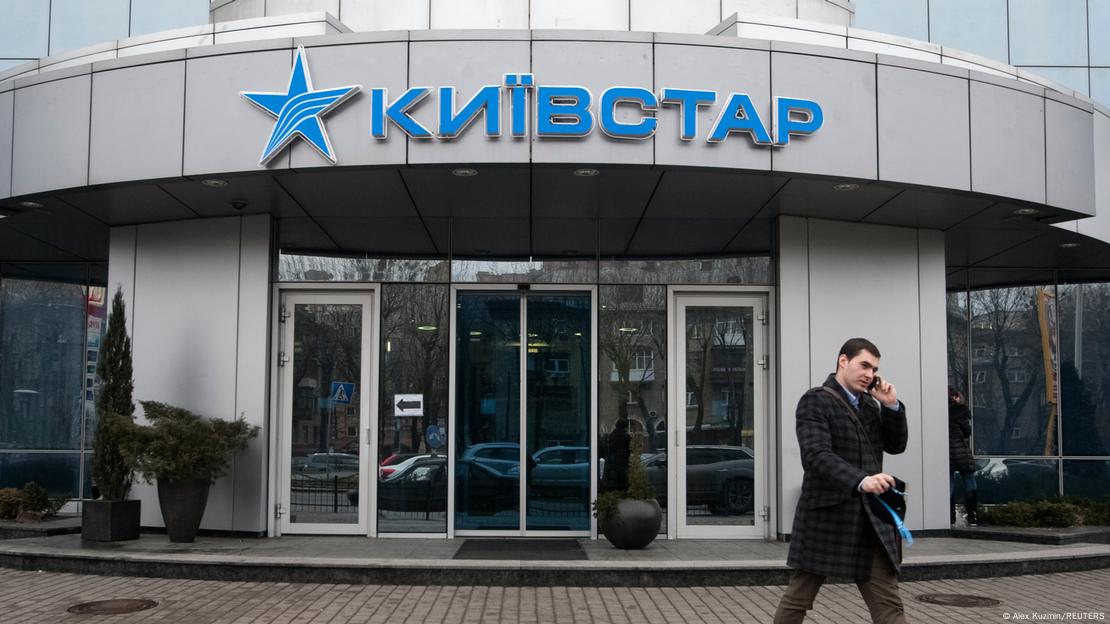
In mid-December, Ukraine's biggest mobile operator Kyivstar was hit by a mass cyberattack
 Alex Kuzmin/REUTERS

A recent large-scale attack on Ukraine's largest mobile operator, Kyivstar, which damaged IT infrastructure and disrupted services across the country, showed that Ukraine had done too little to strengthen its official cyber capabilities and protect the country's critical digital infrastructure, he said.
A new chapter in digital warfare

Nearly two years into Russia's full-scale invasion, many details cyber volunteers' activities remain unclear.

What is becoming increasingly clear, however, is that "we have entered an era where hacking is becoming a core part of military conflicts," said cybercrime and IT law expert Vasileios Karagiannopoulos from the UK's University of Portsmouth.

He is convinced that the phenomenon of hackers taking sides in military conflicts is here to stay.

In the coming years, "the engagement of those non-military actors is going to become much more prominent," Karagiannopoulos told DW.

Igor Burdyga contributed reporting from Ukraine's capital, Kyiv.


Edited by: Rina Goldenberg

Janosch Delcker is based in Berlin and covers the intersection of politics and technology.@JanoschDelcker

Clean Up Your Mess, Kids! The Toy Industry Tries To Go Green

Manufacturers of toys are now finally working to reduce the environmental impact of their products, using more eco-friendly materials and promoting recycling and repairs. But are parents ready to buy second-hand toys or pay more for an eco-designed product? And do kids actually care?

Should toys say goodbye to plastic?

ENGLISH EDITION • WORLDCRUNCH


PARIS — In shop windows, life-size dolls and teddy bears abound beneath glaring spotlights. Christmas is fast approaching, and toy shops are packed. But the enchantment of the festive season comes at a cost.

According to Ademe, the French Environment and Energy Management Agency, nearly 100,000 tons of Christmas toys and games are thrown away every year.

In Feb. 2020, Agec, a new law aiming to fight against waste and encourage the circular economy tackled the problem head-on by setting up a toy recycling scheme. Since Jan. 1 2022, the sector has been encouraged to reduce tons of waste by collecting used toys, repairing and reusing them.

Farmers, schoolteachers, pirates or explorers: since the 1970s, these little plastic characters have been passed down from generation to generation.

“I've lost count of the number of grandparents who come and tell me they keep these toys for their grandchildren," says Bruno Bérard, Playmobil's Managing Director. “These figures stay in people's hearts for a very long time.”

Reuse, a priority

But not all toys follow the same fate as our Playmobil. According to Ecomaison, the government-approved organisation responsible for collecting, reusing and recycling toys, "Half of them end up in household waste, around 45% are collected at public recycling centres and less than 5% are reused."

In 2023, the watchword was to optimise the re-use of toys, through donation or resale. Five thousand collection points have been set up across the country at associations, waste collection centres and the shops themselves. The aim now is to triple the number of toys reused by 2027.

But many retailers did not wait for the Agec law to roll up their sleeves.

“We weren't starting from scratch," says Jean Kimpe, General Delegate of the Federation of Specialist Retailers of Toys and Children's Products (FCJPE). “Above all, the law has enabled us to coordinate and develop pre-existing initiatives," Kimpe says.

In 2011, Oxybul launched IDTroc, collection points for customers' used toys.

Ecodesign is undoubtedly the most complicated issue today.

“Sustainability and responsibility have been part of our brand DNA from the outset," says Anne Fauveau, Product Director at Oxybul Eveil et Jeux. “Our toys are as eco-friendly as possible so that they last over time."

The brand is determined to avoid fashion trends, instead preferring timeless designs and colour schemes to ensure that its toys last.

In spring 2021, King Jouet followed suit by launching its King Okaz stores. There are now around 10 throughout France. The toys are taken back in exchange for a voucher valid in all the chain's shops.

“We can see that we're meeting a real demand," says Coralie Gueydon, the group's corporate social responsibility manager. “Unlike platforms such as Vinted, we provide a guarantee of quality. Not only are the objects guaranteed to be bought back, but they are also cleaned, repaired and checked before being put back into circulation.”

But while the retailers promise to offer better quality and safer re-use than the second-hand platforms, the latter still enjoy a certain level of success, Gueydon admits.

"We've just entered a market where specialist retailers didn't necessarily have a place,” she said. “For the moment, our shops operate largely by word of mouth. The brand also offers a repair service, while Playmobil is currently offering 20,000 spare parts to help its products last longer.

The great challenge of recycling

With its solar panels and bicycle characters, Playmobil's ecological farm doesn't hesitate to play with the codes of a more sustainable society. Above all, like the Wiltopia collection launched in 2022, the product is made from over 80% recycled or bio-sourced materials. Most of these come from recycled refrigerators.

"Three more ranges will be designed in this way in 2024," says Bruno Bérard, who points out that the German group's objective is to be climate neutral by 2027.

Generally speaking, toys made from recycled plastics are still struggling to make their mark. Often less solid and dull, they are difficult to reuse to make new toys. Lego quickly realised this.

“So far, we've tested over 300 alternative materials for our famous brick," explains Sylvain Bouchès, Lego France Marketing Director. “Some have been successful, like bio-PE, and we're proud to have been able to develop this first alternative. Other materials have shown their potential, but have not met our requirements in terms of quality, safety and durability, or helped to reduce our carbon footprint. That's the difficulty."

Last September, the brand announced that it was abandoning the use of recycled PET because it would have resulted in higher carbon emissions over the product's lifetime.

"When we use recycled materials, the range of colors we can produce is not as rich as when we use raw materials derived directly from petroleum products," admits Bruno Bérard. “There are technical challenges to be resolved. We can't come up with a pastel red fire engine tomorrow."

For a product to be recyclable, ideally, it should be simple and made of as few materials as possible. But toys are generally made up of many materials to engage the senses of the youngest children.


In France, the aim is to triple the number of toys reused by 2027. 

Oxybul/Facebook

What will happen to toys in a plastic-free world?

All of this research takes time. Most producers agree that the organization of recycling channels in France still has a long way to go."It's all the more complicated because safety standards for children's toys are very demanding, particularly at the European level," adds Gueydon.

So should we say goodbye to plastic? Not necessarily, says Fauveau, who laments the lack of information on the subject.

“Disposable plastic is no good," she explains. "But durable plastic, which is passed down from generation to generation and is ten times stronger than wood, is not necessarily bad for the environment. Oxybul has therefore decided to favor wood only when it can replace the virtues of plastic. There is no ideal solution," Fauveau says.

“For example, biosourced plastic is interesting because it doesn't use petroleum, but it is sometimes manufactured in South America, to the detriment of local populations. Ecodesign is undoubtedly the most complicated issue today.”

Designing differently

While more and more tests are being carried out to recycle plastic, others are looking for alternative materials. In 2018, Lego launched the first elements made from sugarcane waste in its game boxes to make elements such as leaves, trees and accessories.

"While we began by making botanical elements from this plant-based plastic, we have since extended its use to more than 200 parts, almost half of our products," explains Sylvain Bouchès. The tree house comprises 180 plant-based plastic components. Today, more than 50% of the brand's products contain components made from bio-sourced materials.

The toy market is not yet mature in terms of eco-responsibility.

In terms of eco-design, Oxybul has been at the forefront for many years. Every month, all the brand's teams take part in a meeting on the issue. The brand is multiplying its alternatives through the use of FSC-labelled (Forest Stewardship Council) wood, water-based paint and recycled polyester. This year, it has co-created with Thai brand Plan Toys a range of wooden toys suitable for children aged 12 months and over.

“Plan Toys was one of the first suppliers to set up self-managed forests," explains Fauveau. “They work with rubberwood, a plant that grows back very quickly. This avoids the problem of deforestation."

The chain has also been a pioneer in reducing its packaging. In 2017, the teams decided to adapt packaging to the size of the products.

“At the time, this wasn't necessarily in the interests of business," admits Fauveau. “Suppliers generally prefer to have large boxes so that they are clearly visible on the shelves. In the early days, this even led to a drop in sales for some products, which meant we had to get in touch with customers to explain our approach.”

Signs of progress

Now, 80% of the brand's packaging is plastic-free, replaced by materials such as cardboard and paper. These are intended to be reused as storage boxes for children's toys.

Since then, the idea has caught on.

"Ecodesign is not just about products," insists Bouchès. Today, 93% of Lego packaging is made from cardboard or paper-based materials. Single-use plastic bags are gradually being replaced by recyclable paper bags certified by the Forest Stewardship Council. The worldwide roll-out of new boxes for the mystery minifigures, which began in August, should enable the group to save around 30 tons of single-use plastic a year.

And the work of the designers and engineers is far from simple.

“Paper has to be able to withstand transport as well as the manufacturing process in all our plants," explains Bouchès. “Paper is more sensitive than plastic to variations in humidity and temperature. The development of these alternative production and packaging methods means that our processes will have to be radically transformed.”

Nearly 70 different papers and formats had to be tested. “This requires a lot of research and innovation," confirms Fauveau. “It's important that we can share best practice between brands and be good competitors on this issue, because the solutions will tend to be found by the big players.”

Some toy companies have decided to favor wood instead of plastic.

Jerry Wang/Unsplash

Products that are more local... and transparent

At a time when almost 90% of toys are imported, local products are making a comeback.

“Since the 2020 limitations, the place where toys are made has become a key issue for customers," observes Gueydon. “There has been a major new attraction for Made in France.”

Ecoiffier has been operating in France since 1945. At Playmobil , almost all its products are made in Europe.

"From the company's inception, this was a strategic move, to control our manufacturing, but also an economic one, to reduce costs," explains Bruno Bérard. Recently, the seven Maltese production sites were grouped together to avoid having to travel between different areas. “This factory operates in daylight, which means it consumes less electricity," explains the Managing Director. The heat generated by the machines is recovered for heating when necessary, and the site has a water recovery system.” For the company, local production goes hand in hand with saving resource

Consumer education in a tough market

In response to this demand for transparency and sustainability, King Jouet recently launched the Jouet Score to help consumers make the right choices.

“The toy market is not yet mature in terms of eco-responsibility," explains Gueydon.” But even though we're starting from a very long way off, we felt it was important to highlight the initiatives that have been put in place in the sector.”

Based on the Nutriscore rating system, now well known to the general public, the Jouet Score applies a rating system between 0 and 5. It is based on three criteria: the place of manufacture, the efforts made in terms of packaging and the materials used to make the toy. With the help of Ecomaison, the company has chosen to promote products made from FSC wood and recycled materials.

There's still a lot of education to be done.

The Jouet Score has been in place in all King Jouet shops and on their websites since October, and has been applied to all the toys in the Christmas catalogue. Out of 1,600 products, around 450 have a score of 2 out of 5 or higher. Bioviva, known for its nature-based board games, received the highest score. The brand is closely followed by Smoby, which manufactures its toys in France from easily recyclable plastic.

"By 2025, the aim is for 50% of our toys to have genuine eco-design features, and for the criteria to be raised," says Gueydon.

The Jouet Score also aims to encourage the industry to redouble its efforts to produce more eco-responsible toys.

“Many suppliers come to us to ask how they can improve," says Gueydon. “Others help us to rethink our criteria. The indicator is designed to evolve thanks to both suppliers and customers.”

Raising consumer awareness

So, is Christmas 2023 going to be all about eco-responsibility? Not necessarily, say the retailers.

“We don't expect consumer habits to really change at Christmas," admits Gueydon. “It's usually the children who choose the toys from the catalogue, so the eco-responsibility criterion is not taken into account.”

For the festive season, buying second-hand may also remain a barrier, even though brands are observing that this reluctance is tending to ease in society.

“There's still a lot of education to be done, whether on the realities of Made in France or recycled products," observes Fauveau. “And consumers are not necessarily prepared to pay more for an eco-designed product.” At a time when inflation is weighing heavily on consumers' shopping baskets, Oxybul has decided not to pass on the cost of its research to its sales prices.

“The Agec law has revolutionized a lot of things in the industry," says Gueydon. “It has made distributors and suppliers realize that we need to think beyond the life of the toy.”

In fact, Lego is preparing to triple its spending on sustainable development initiatives to $1.4 billion until 2025. “Every year, we receive hundreds of letters from children sharing their ideas on how we can move forward," says Sylvain Bouchès. “Having a positive impact on society and the planet, and playing a part in building a sustainable future, is a major challenge for the group.”

At the same time, Playmobil has stated that it intends to pursue a socially responsible approach. The company still belongs to a private foundation, set up by its late founder, which works for the development and protection of children. As well as offering products that illustrate a more eco-responsible society, the brand also takes into account issues of representativeness and diversity. Equipped with a green roof, the school of the famous figurines is also fitted out to facilitate access for pupils with reduced mobility.

“We're not here to preach," insists Bérard. "But we can help to raise children's awareness of issues<