Wednesday, February 28, 2024

British Columbia

Environmentalists celebrate surrender of offshore oil permits in B.C.

Chevron Canada voluntarily relinquished the last oil and gas development licences off Canada's Pacific Coast

The exterior of a Chevron building.
Chevron Canada surrendered its final oil and gas exploration permits that previously covered the coast of British Columbia earlier this month. (David Bell/CBC)

Environmental groups that have been fighting for the end of offshore oil and gas development in British Columbia are celebrating victory after the federal government announced the last remaining permits for Pacific Ocean exploration had voluntarily been surrendered.

Federal Energy and Natural Resources Minister Jonathan Wilkinson said Wednesday that Chevron, the last corporation to hold the permits, had voluntarily relinquished them as of Feb. 9.

Jay Ritchlin, the David Suzuki Foundation's director general of B.C., said he welcomed the news.

"I've been working on this for 20  years.... Offshore oil and gas drilling doesn't have a place in the future."

Permits date back to 1960s

Originally issued in the late 1960s and early '70s, permits were grandfathered in through policy reforms that were created to better protect delicate marine ecosystems.

In July 2022, Ecojustice Canada, on behalf of the David Suzuki Foundation and World Wildlife Fund, filed an application in Federal Court aiming to extinguish all existing permits, which fell within the Scott Islands Protected Marine Area and the Hecate Strait/Queen Charlotte Sound Glass Sponge Reefs Marine Protected Area.

The environmental groups claimed in court that the indefinite extensions of the terms of those permits are unlawful and contravene the Canada Petroleum Resources Act.

"Both protected areas are of outstanding ecological value and vulnerable to damage from human impacts, including oil and gas activities,'' the court application stated.

Gregor Craigie spoke with Jay Ritchlin, Director General of BC and the west for the David Suzuki Foundation.

When the rules changed, permit holders like Chevron and ExxonMobil were supposed to negotiate with the minister of natural resources to convert them into exploration licences "within a prescribed time," but "did not do so," the groups claimed.

Those claims were never challenged as permit holders voluntarily surrendered their licences, resulting in the legal challenge being discontinued last year.

Fossil fuels 'a losing bet': Suzuki Foundation

Wilkinson said in an interview with CBC News that his government had made it "pretty clear that we're not interested in seeing oil and gas developments off our coast."

Ritchlin also credited the victory to First Nations opposed to possible exploration, and said he hoped years of advocacy from groups like his "added some pressure."

And, he said, he hoped it would be a sign of more steps taken to wean Canada off of the extraction of polluting natural resources.

"I think the writing hopefully is clearly on the wall ... these are losing bets if we continue to extract and produce, ship and burn fossil fuels." 

Let’s Set a Maximum Wage for the Rich

According to ‘Limitarianism,’ no one deserves to be a billionaire. Not even Taylor Swift
.

Crawford Kilian 
26 Feb 2024
The Tyee
Imagine a world where Taylor Swift made just $1 million a year and saw most of her wealth taxed away to the benefit of people like the Swifties who splurge on tickets to see her perform. Would we have a more just society? 
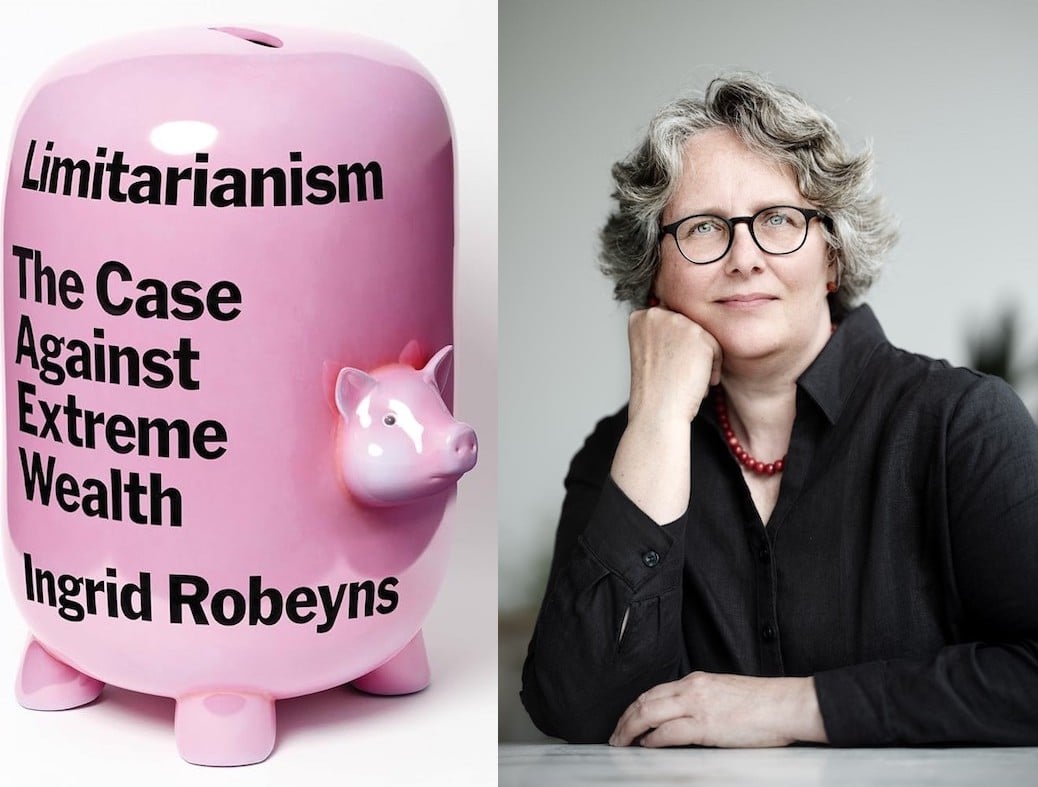
Photo by Shanna Madison, Chicago Tribune, via ZUMA Press Wire Service.

Limitarianism: The Case Against Extreme Wealth
Ingrid Robeyns
Penguin Random House (2024)


“Eat the rich” may be an attractive idea to some, but let’s face it: the rich are just too few to go around. Their wealth, on the other hand, offers plenty for all.

Instead of fretting about a minimum wage for the poor, let’s set a maximum wage for the rich. Call it a million dollars a year, salary or investment income, with any excess income going straight into tax revenues.

It’s a sign of our oligarchs’ power that such an idea is almost unthinkable. But Ingrid Robeyns, a philosopher and economist at Utrecht University in the Netherlands, explores in detail the idea of limiting private wealth. In her new book Limitarianism: The Case Against Extreme Wealth, she makes a persuasive case and raises some very serious moral, political and economic problems.

Philosopher and economist Ingrid Robeyns argues that no one needs or deserves more than enough income to live comfortably. 
Author photo by Keke Keukelaar.

The idea of limitarianism, as Robeyns defines it, is that no one needs or deserves more than enough income to live comfortably and securely. At present, she estimates, the local equivalent of a million dollars, pounds or euros should be plenty. Moreover, those making much less than a million would still live quite well thanks to social programs funded by taxing the super-rich.

In fact, such taxation would be simply retrieving the money the super-rich have stolen from us since the 1970s. “Trickle-down” economics actually pumped trillions of dollars out of the working and middle classes and up into the bank accounts of the 0.1 per cent.

Rich, thanks to dumb luck

The neoliberal takeover that began 50 years ago has now instilled in us the false idea that our personal success or failure should be measured in wealth, and derives from our own hard work or the lack of it. Robeyns argues that sheer luck determines wealth or poverty. Put Jeff Bezos and Elon Musk on a desert island, and they’ll be lucky just to survive. Put them in North America in the 1990s, when the taxpayer-funded internet has just gone commercial, and they’ll become billionaires.

Much great wealth has been dubiously acquired. Even under today’s laws, Robeyns says, much of the billionaires’ money is dirty — the proceeds of tax evasion, tax avoidance and plain crime. For example, an international tech corporation may make huge profits in Canada but pay nothing if it declares those profits in Bermuda, which has no corporate tax.

But it might be hard to find the line between dirty and clean money. Robeyns doesn’t mention the wealth gained by tobacco and alcohol corporations, or the makers of ultra-processed foods, or the fossil fuel corporations. She does mention the Sackler family, who gave the world OxyContin and the ensuing opioid disaster. Robeyns argues that the Sacklers should not have kept a single dollar made from such opioids.

Similarly, Robeyns says the bankers who caused the 2008 financial crash should not have been rescued by the taxpayers to the tune of $500 billion: “As the saying goes,” she observes, “‘socialism for the rich and capitalism for the poor.’”

“Capitalism for the poor” also means the poor pay far more than their fair share of taxes. And since the rich are taxed so lightly, governments find they must cut back on social services like health care, public education and environmental services... until they can be outsourced to the private sector, which can make easy profits from diverted tax revenues.


How to acquire $84 trillion without working

The situation is likely to get even worse. Robeyns cites an American financial advice service that predicts “that, among high-net-worth individuals (those with more than $5 million available for investments), a staggering $84 trillion will be transferred to the next generation by 2045. This massive transfer of assets from one generation to the next will see wealth inequality increase significantly in the decades to come.”

She then cites D.W. Haslett, a philosopher who said that if we have abolished the inheritance of political power, it makes sense to abolish the inheritance of economic power as well.

Ordinary people really have no concept of how rich the super-rich are. Robeyns cites Sir Leonard Blavatnik, who in 2021 was ranked the richest man in the United Kingdom thanks to his total wealth of £23 billion. Robeyns offers a thought experiment: “Suppose you work 50 hours a week, between the ages of 20 and 65 — week in, week out; year in, year out. How much would your hourly wage need to be so that, by the end, you’d have amassed £23 billion? The answer is £196,581 [C$334,056] for every working hour for 45 years.”

Robeyns offers a very useful explanation for the super-rich: the wealth defence industry. It was originally defined as a body of well-paid accountants and tax lawyers, dedicated to protecting and increasing the wealth of the top 0.1 per cent (and being very well paid for their efforts).

But the wealth defence industry also includes most political parties, media corporations, think tanks and even the justices of the U.S. Supreme Court who accept gifts and vacations from billionaires. Thanks to wealth defence, the ultra-rich can minimize their taxes (or pay none at all). Deprived of much of the tax revenue they should have, governments even lack the resources to go after tax cheats, much less provide good health care and education.

Wealth defence has effectively moved the Overton window of political discourse and economic policy far to the right. What was perfectly good politics in the 1960s, like Medicare or affordable post-secondary education, now looks politically impossible because the cost would fall on the long-suffering taxpayer — not on the super-rich.

It’s easy to dismiss limitarianism because the super-rich and their money are highly mobile, so they can avoid serious taxation. Elon Musk didn’t like a Delaware court ruling that cost him a $56-billion pay package, so he’s moving his companies to Texas and Nevada. He could move a lot farther, to Bermuda or the Cayman Islands or Liechtenstein, if such tax havens beckoned.

Robeyns is very aware of that, and offers no promises of sudden global transformation. Instead, she suggests reform would be a “patchwork” of steps where a particular country might boost taxes, bring in extra tax revenue and start building up social services. Even that would take careful preparation. “The first and perhaps most important action limitarianism requires,” she writes, “... is to dismantle neoliberal ideology, because it is at the heart of the problems we are facing.”

Many of the super-rich are already demanding to be taxed more, and those who fled to tax havens would be stigmatized (and boycotted) as tax dodgers. They could also suffer the kind of sanctions we now impose on Russian oligarchs, or even see their property nationalized by unsympathetic governments.

Born with a savings account

A universal basic income is one way we might redistribute taxes on the super-rich, but Robeyns points to other possibilities. If all Americans paid the taxes they should pay, she says, “it would mean that the government’s budget would increase by $470 billion. Or, with just above 74 million children currently under the age of 18, it would mean that the U.S. government could open a savings account for each child, and deposit $6,350 in it every year. Each American child would find about $115,000, plus interest, in their account on the day they turned 18.”

So equipped, young people could afford college or trade school, or start a business, or become artists. Employers would have to boost wages or otherwise improve the dull, low-paying jobs young people are now stuck with. (Robeyns says unions should be encouraged, and union-busting be made a criminal offence.)

Another option would be a year of paid national service for everyone, perhaps on high school graduation. It would enable young people to see new parts of the country and to mingle with people unlike themselves. The rich especially live sealed off from the rest of their fellow citizens, and it would do them good to meet some poor ones — at least until inheritance taxes and universal basic income end class segregation.

“In a limitarian society,” Robeyns says, “you would still have the opportunity to be CEO of a major international company, but you could no longer earn millions on a yearly basis.... But this is the price we pay for the massive opening up of opportunities for all other groups, and for making our societies more just.”


The Tyee Reader on Inequality
READ MORE

The rewards of such high-ranking positions would not be measured in income or amassed wealth, but in status: tech bros would brag about the vast sums they’d created for the public, not just for investors. Similarly, Taylor Swift, who currently earns $150 million a year and has a net worth of $1.1 billion, would make just a million a year and would see most of her wealth taxed away — much of it to the benefit of Swifties. Her artistic success would be measured by record sales and concert attendance, not by the $150 million worth of real estate she owns.

“The question we should be asking,” Robeyns writes, “is not whether we should have capitalism or socialism. It is, rather, which specific mix of markets, regulation, distribution, government ownership, private ownership and collective ownership should we have? Making the decision to move towards a new economic system means choosing a new set of rules and institutions. It is essentially a political decision. Choosing these rules and institutions can only be done once we have determined what our collective wants and needs will be.”

Seen through Ingrid Robeyns’ eyes, wealth is a public good, like clean water. In times of drought, we don’t let some people die of thirst so others can fill their swimming pools. Similarly, we could share out the money we make so everyone has enough, and no one goes without. Not even Elon Musk. 


Crawford Kilian is a contributing editor of The Tyee.
If the feds are serious about fighting climate change, they should tackle transit: Report

ANALYSIS: A new report from Environmental Defence argues that the lack of consistent, reliable operations funding is also sabotaging Canada’s climate ambitions


Written by John Michael McGrath
Feb 27, 2024

Minister of Environment and Climate Change Steven Guilbeault makes a funding announcement in Ottawa on February 14. (Patrick Doyle/CP)

One of the oldest complaints around Toronto city hall is that, even when the higher orders of government (the province and feds) can be bargained into eventually, often begrudgingly, showing up to help fund major transit projects, the costs of operating those projects over the long term is left to the municipality. This leaves the most basic question of transit operations — will a bus or train actually show up when we need it? — at the mercy of municipal budgets and, by extension, the often toxic politics of property-tax increases.

A new report from Environmental Defence argues that the lack of consistent, reliable operations funding from the governments that can best afford it is also sabotaging Canada’s climate ambitions.


“Due to infrequent and unreliable public transit, the majority of Canadians are forced to drive cars,” says Nate Wallace, clean-transportation program manager at the environmental-advocacy group. “Canada can actually catch up with our peer countries and double transit ridership by 2035.”

Transportation is the second-biggest source of greenhouse-gas pollution nationwide. And, in Ontario, (courtesy of a largely decarbonized electricity system) it’s actually the biggest, period. According to the federally collected national-emissions inventory, Ontario’s emissions from light passenger vehicles alone — cars, trucks, and motorcycles — are almost as high as the emissions from all of the province’s heavy industry (26.7 megatonnes of carbon dioxide equivalent for drivers versus 27.6 for industry.)

“The question isn’t should the federal government be involved in transit funding, because it already is. The question that’s more important is: Is the current policy approach succeeding and driving the changes we need to combat climate change? The answer, based on the data, is no,” Wallace says.

The good news is that the emissions from these trips can be avoided if there’s a concerted effort to replace car and SUV trips with transit.

Environmental Defence has proposed a plan that features several major pillars, including consistent federal and provincial funding to improve service levels for existing transit (simply reactivating the buses currently idle from post-COVID service declines would be a good start, but adding service during off-peak hours is also important) and a major push to expand rapid bus lanes in Canadian cities; major planning reforms to ensure that people can move to the places where transit would enable them to live car-free or car-light lives; policies to make zero-emissions public transit (particularly electric buses) a core part of transit planning; and an overall target geared toward reducing the vehicle-kilometres travelled in Canada by 35 per cent by 2035, shifting individual commutes to transit.


How much would it cost higher levels of government to fund this kind of major shift? The report estimates the federal government would have to provide $1.6 billion in 2025; the number would climb to $4 billion by 2035. In Ontario, the report projects the provincial cost would be $1 billion in 2025 and $2.5 billion by 2035.

Environmental Defence estimates that the cumulative emissions reductions could add up to 65 million megatonnes nationwide by 2035. That would amount to more the double all of Ontario’s transportation emissions — or a bit less than half of Alberta’s oil and gas emissions. The vast majority of those emissions would come from people changing their behaviour as transit became more accessible and reliable in their neighbourhoods and from neighbourhoods changing through more transit-oriented planning.

“When someone ditches the car and relies more on transit, they don’t just make the same trips by bus — they make different trips,” says Wallace. “They’re more likely to walk to the local grocery store instead of driving to Costco.”

Notably, this magnitude of GHG reduction would also be bigger than what the federal government is projecting from its policies on electric-vehicle adoption: even when the industry starts selling only zero-emissions new cars, it will still take years, if not decades, for emissions to fall to zero, as cars have long afterlives in the used-car market.

Convincing government to pursue the plan would be an uphill battle — the feds are currently facing numerous expensive demands, and Canada’s finance ministry is trying to work down the massive deficits incurred in recent years. It might be even tougher to win over Conservatives, who’ve historically been skeptical of federal intervention in areas of local and provincial jurisdiction: for months, polling has showed that Conservative leader Pierre Poilievre is heavily favoured to win the next election, which means any transit plan that needs to survive until 2035 would also need to survive a potential Conservative election win. Wallace says a big push on transit would offer substantive climate policy not entangled with the federal carbon tax Poilievre has pledged to abolish.

“For Conservatives, I would say, they need to have a credible climate plan. If they don’t believe in carbon pricing, they need to replace that with something that fills in that gap,” Wallace says. “You’ve got to come up with at least something.”


John Michael McGrath is a staff writer at TVO.org covering provincial politics and policy.@jm_mcgrath


NDP’s Singh questions provinces mulling pharmacare opt-out

By Sean Previl Global News
February 27, 2024 


WATCH: Singh brushes off possible pharmacare opt-outs by some provinces


NDP Leader Jagmeet Singh says he believes provinces voicing plans to opt out of a national pharmacare plan will likely opt in eventually, noting similar sentiments were seen when universal health care became law in Canada.

“What happened was provinces had universal health care in some places, and people said, ‘Well, we’re getting our coverage,’ and then people said, ‘Well, why aren’t we getting our coverage,'” he told reporters Monday.

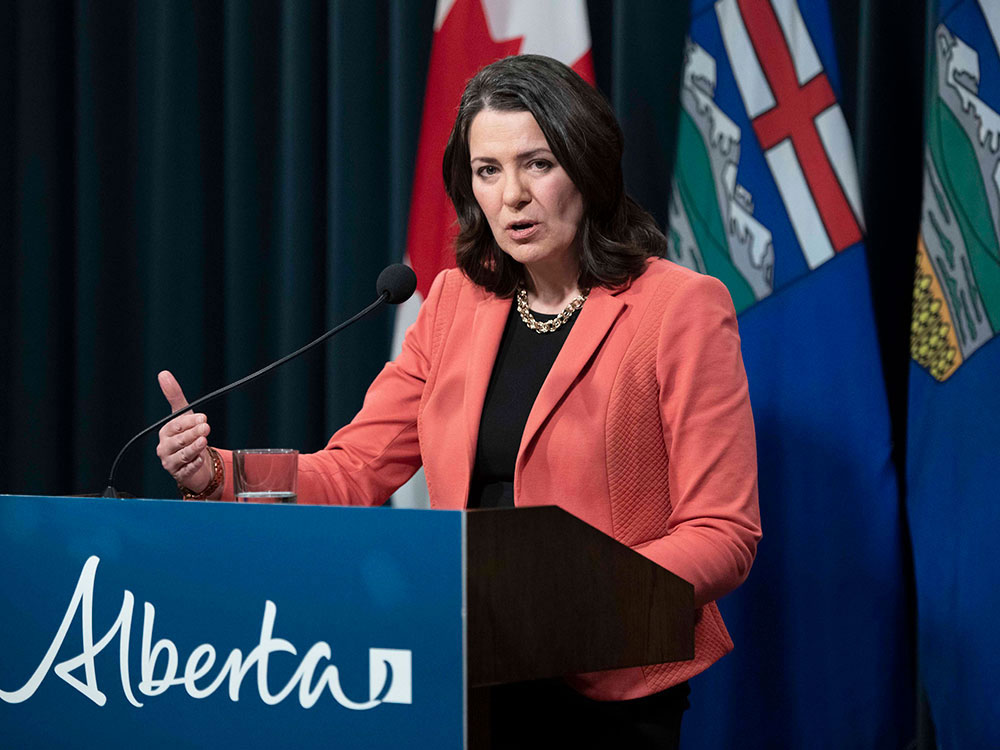
His comments came one day after Alberta Health Minister Adriana LaGrange wrote in an email to Global News that if the federal government pursues a national pharmacare program, the province intends to opt out and would seek a per-capita share of the funding.


2:06 Alberta says it’ll opt-out of national pharmacare deal


A spokesperson from her office said Alberta was not consulted on the national pharmacare plan, “and there are limitations in the initial analysis and assumptions, including start-up investment and administrative costs to implement a cost-sharing model, that were not taken into consideration that add costs for the provinces.”

The spokesperson said the vast majority of Albertans have access to contraceptives through employer or government health care insurance plans.

However, Dr. Rupindeer Toor told Global News not all programs are available to residents and can be patchy and difficult to access.


1:20  NDP’s Singh ‘not surprised’ Alberta intends to opt out of national pharmacare plan

Ontario provides many contraceptives for people under the age of 25 who don’t have private insurance. Manitoba’s government has already pledged to do so as well.
The latest health and medical news emailed to you every Sunday.

The New Democrats said birth control coverage will help millions of women and gender-diverse people.

Singh questioned the move, saying Premier Danielle Smith could face questions if the province moved forward with its decision to opt out.

“I think it will be very difficult for the premier in Alberta to explain to people in Alberta who can’t afford their diabetes medication why they’re turning down an investment that would cover everyone in that province for their insulin and for their medical devices necessary for diabetes,” Singh said.

Diabetes medication is one of two specific categories of drugs that would be covered in the deal, with insulin for Type 1 and Type 2 diabetes, as well as additional diabetes drugs to see full coverage.

The deal also includes coverage for contraceptives similar to British Columbia, which includes birth control pills, IUDs and emergency contraception.

The deal also puts forward a fund to help provinces cover the cost of insulin pumps for diabetes patients, for which the NDP wanted maximum coverage, a source told Global News.


1:57 NDP reaches national pharmacare deal with Liberals. Here’s what it will cover

But Alberta is not the only province voicing concerns, with Quebec also previously having said — before the deal was reached Friday — it would opt out if the option is there.

Asked by reporters if an option to opt out would be included, Singh appeared to sidestep, saying the plan was to negotiate to provide single-payer public funding to make sure people can access medication.

The NDP leader went on to say there are still further steps to come with pharmacare, including discussions on all the medication that will be covered as well as determining how medication can be purchased in bulk.

He was also questioned on why contraceptives and diabetes medications were advocated for, to which Singh said the party had to fight for these drugs to be included, pegging the election of more NDP MPs as what will be needed to get more classes of drugs added.

“If we want to complete the work of pharmacare, the Liberals are not going to do it,” he said.

3:48 Bloc Québécois MP questions whether Quebec can opt out of pharmacare plan


If the federal government moves towards fully implementing national pharmacare, that wider program is expected to cost roughly $40 billion a year in total, the parliamentary budget officer said in a report last fall. The report said the incremental cost to the public sector, including federal and provincial governments, would rise from $11.2 billion in 2024-25 to $13.4 billion in 2027-28.

However, such a program was also estimated to lead to cost savings on drug expenditures of $1.4 billion in 2024-25, with that figure increasing to $2.2 billion by 2027-28.

A source close to the pharmacare talks told the Canadian Press the Liberals made it clear they had about $800 million to spend for an initial program, and over the weekend Finance Minister Chrystia Freeland said the plan would need to be “fiscally responsible.”

— with files from Global News’ David Baxter and Carolyn Kury de Castillo and The Canadian Press

Singh and Trudeau Celebrate Pharmacare Deal. Smith Says No Way

Alberta plays politics and rejects the agreement before any details are known.


Premier Danielle Smith’s government doesn’t know what the NDP-Liberal pharmacare plan is. But she’s against it. 
Photo by Chris Schwarz via the Alberta government.

David Climenhaga Yesterday
Alberta Politics

No sooner did the federal Liberal and New Democratic parties say they’d reached a deal on a national pharmacare program, than Alberta’s United Conservative Party government insisted it wanted no part of the plan.

Never mind that the Liberals and NDP said the details of the plan they’ve agreed to will be made public this week.

As Chris Gallaway, director of Alberta’s Friends of Medicare, said in a statement Monday morning, “by pre-empting their decision on pharmacare even before the federal announcement is made, Danielle Smith’s government has made it clear they would rather play politics than get things done to help Albertans.”

Physician Luanne Metz, the NDP’s health critic, observed that “instead of embracing the new program, Danielle Smith has predictably rejected it out of hand, before understanding any details.”

“Instead of welcoming assistance for Albertans who are suffering from the affordability crisis, the UCP has continued its schoolyard scrap with the federal government and is bowing to pressure from lobbyists,” Metz, the MLA for Calgary-Varsity, said in a news releas

Both observations seem fair, since the UCP position, as far as anyone can understand it, is just send us the money and we’ll… do something with it. This is predicated, presumably, on the desire not to give the Trudeau government credit for anything, no matter how helpful.

While it may not be not entirely clear from what the UCP had to say, it’s pretty easy to put together a number of reasons the Smith government might object to a national plan that would save lives, make life easier for Canadians with medical needs, and save taxpayers billions of dollars on pharmaceutical costs.

According to a Global News story, one of Alberta Health Minister Adriana LaGrange’s media minions complained that Alberta wasn’t consulted about the national drug coverage plan and “there are limitations in the initial analysis and assumptions, including startup investment and administrative costs to implement a cost-sharing model, that were not taken into consideration that add costs for the provinces.”

But what does that even mean? It’s certainly not clear what the limitations the government has in mind might be, especially since we don’t yet know the nitty-gritty details of the plan.

As for not sharing the details with Alberta, those details were subject to negotiation between the federal Liberals and NDP until last week. And all the Alberta government would have done anyway, as its uninformative statement shows, is try to throw a spanner in the works.

The statement from the health minister’s office, according to Global, also says that “all Albertans already have access to government-sponsored health benefit plans, which include drug coverage.

That’s pretty cheeky when so many don’t. Or, as Gallaway put it, it’s “deliberately misleading” and “belies the fact that one in five Canadian households still cannot afford to fill their prescriptions.”

“To claim that all Albertans have access to drug coverage because they can buy a benefit plan if they can afford one is… beyond offensive,” he said.

“Canada currently pays some of the highest drug costs in the world, and millions are struggling to afford the medications that they need,” Gallaway explained. “It is well-documented that moving to a national, single-payer pharmacare plan would save governments, employers, Albertans and our provincial health-care systems billions of dollars per year. And most importantly it would save countless lives.”

“Removing barriers to access these medications will not only help individuals but also reduce the health-care costs that we all pay,” the NDP’s Metz observed. “Drug costs will be reduced through massive national buying power.”

All true, but there are doubtless other reasons for the UCP recalcitrance as well.

After all, the Smith government is actively campaigning to get a Pierre Pollievre government elected in Ottawa, and anything that makes the Liberals and the NDP look good with voters concerned about the cost of living in 21st-century Canada is bound to be resisted by the UCP.

This is especially so as the agreement on pharmacare meets the March 1 deadline to table legislation and allows the supply and confidence agreement between the two parties that is propping up the Liberal minority to survive.

Remember, Poilievre, the eminently dislikable federal Conservative leader, is likely to see his lead in the polls shrink as time goes on. Whether or not it shrinks enough to change the Conservatives’ chances of forming a majority government, which seems likely now, is of course a question that obsesses political analysts of all stripes.

Then there is the matter of the UCP’s (and the federal Conservative party’s) social conservative base, rife with opposition to women’s reproductive rights, populated by men who think a woman’s place is pregnant and in the kitchen, and suspicious of any program that would redistribute wealth in any way.


Debunking Big Pharma’s Myths about Pharmacare
READ MORE

The fact the program would cover the cost of birth control medication, in addition to diabetes treatments and equipment, is hardly a selling point in modern Canadian Conservative circles.

Finally, if past practice is anything to go by, the Smith government is listening carefully to what lobbyists want — and Big Pharma most definitely doesn’t want pharmacare.

So it was inevitable the UCP would drag its feet in hopes of scuttling the plan, or at least delaying it until a Poilievre government could be sworn in to do the scuttling for it.

“Once again, the UCP has proven that they do not take women’s health seriously by opposing a national pharmacare program that would ensure access to contraception,” said NDP status of women critic and Calgary-Edgemont MLA Julia Hayter. “In the midst of the worst affordability crisis we have faced in a generation, one that disproportionately impacts women, the UCP has dug in its heels on a program that would help.”

As for what Alberta would do with the money if the feds were so foolish as to just fork it over, it is profoundly to be hoped that will remain a mystery. 


David J. Climenhaga is an award-winning journalist, author, post-secondary teacher, poet and trade union communicator. He blogs at AlbertaPolitics.ca. Follow him on X at @djclimenhaga.

'Jumping the gun': Federal minister calls Alberta's decision to dismiss pharmacare program premature

The program would offer free coverage of diabetes and contraceptive medication, and could be the first step in encompassing a much broader variety of drugs

Author of the article: Hiren Mansukhani
Published Feb 27, 2024 •
Mark Holland, Canada's Minister of Health makes a health-care funding announcement in Calgary on Thursday, December 21, 2023. 
Gavin Young/Postmedia
Article content

Alberta is “jumping the gun” by vowing to opt out of a proposed national pharmacare program before knowing the details, a federal minister said Tuesday.

“For provinces to say whether or not they’re going to participate in something when they don’t even know what it is, is a little premature,” Health Minister Mark Holland told media following a cabinet meeting Tuesday.

The program would offer free coverage of diabetes and contraceptive medication, and could be the first step in encompassing a much broader variety of drugs. The legislation, part of a supply-and-confidence agreement between the Liberals and NDP, is scheduled to be tabled in parliament by March 1.

Alberta Health Minister Adriana LaGrange said Monday that the province will opt out of the program if it is passed due to a lack of consultation by the federal government and questions about costs.

She also said despite her positive relationship with Holland, she wasn’t informed of the plan. “We continue to text and speak to each other on a regular basis — I was quite surprised that I had no contact prior to this pharmacare program coming forward,” LaGrange said during a news conference Monday.

Holland told reporters on Tuesday that he heard from the provincial ministers about their concerns while co-ordinating with the NDP in crafting the plan and added he’ll engage with his provincial counterparts after the details of the deal are officially announced.

LaGrange on Tuesday stressed that health care falls under provincial jurisdiction, and the federal program would add additional layers of bureaucracy to a slate of existing subsidies.

“All we need is the federal government to provide those dollars to us and we will make sure that we enhance the programs, because we do have . . . a very robust pharmacare program here in Alberta,” LaGrange said in an unrelated news conference Tuesday.

On Monday, LaGrange called the plan “a hastily arranged, politically motivated program.”

Adriana LaGrange, Minister of Health for Alberta.
 Gavin Young/Postmedia

Christopher Aoun, press secretary for the federal Ministry of Health, told Postmedia in an emailed statement that “Our government has been working hard on pharmacare, including advancing a national strategy for rare diseases to improve access to new and emerging drugs.”

‘Absurd to play politics’: advocates

Alberta’s announcement has drawn criticism from advocacy groups and medical associations across the province. The Edmonton Zone Medical Staff Association stated that its members were “outraged” by the provincial announcement.

“It is absurd to play politics with the health of our patients and deny Albertans this groundbreaking program,” the statement read.

The statement said access to contraceptive drugs is prohibitive despite Alberta government claims to the contrary.

For instance, 16.8 per cent of Albertan women, whose median income is $36,900, do not have a government, employer or association insurance plan, and struggle to buy birth control and menstrual products when their household earns less than $40,000 per year.

A hormonal IUD surrounded by birth control pills.

The association also said Alberta’s two major subsidy programs — Alberta Adult Health Benefit and Alberta Child Health Benefit — for low-income prescription drugs are insufficient. They require a maximum income of $16,580 for a single adult household to $46,932 for a couple with four children to be eligible.

Chris Gallaway, executive director of Friends of Medicare — a non-profit supporting a universal public health system — said that by dismissing the federal program, Alberta is “playing politics.”

“They are siding with the profits of big pharmaceutical and insurance corporations over the health and well-being of Albertans,” said Gallaway.

The NDP says it has reached a deal with the governing Liberals to introduce the first piece of a national pharmacare program that includes coverage for birth control and diabetes medication. Allison Nimlos, of Minnesota, holds up her American bottle of NovoLog insulin and a Canadian box of NovoRapid, which she picked up at a Walmart pharmacy in London, Ont.
. Geoff Robins/The Canadian Press


Chambers of Commerce say plan could benefit economy


Support for Ottawa’s plan also came from the Calgary and Edmonton Chambers of Commerce, which issued a joint statement asking the province to discuss the viability of the federal plan in Alberta.

“With the ongoing labour shortage and need to attract talent, and the cost to employers for providing health-related benefits along with the financial benefit of pooling resources across provinces, a national pharmacare program, if developed well, could benefit Alberta’s economy,” the statement read.

“While more details are required to better understand the implications and potential benefits of a national program, we encourage the Alberta government to evaluate its feasibility and work with the federal government to explore whether it meets the needs of Albertans.”

Braid: Premier Smith blasts David Parker of TBA for attacks on Poilievre and wife

This is the first time Smith has uttered a word of criticism about Parker

Article content

Well, finally.

Premier Danielle Smith tore into Take Back Alberta Leader David Parker Tuesday, urging him to “get some help.”

Article content

She condemned his “bullying” comments about Conservative Leader Pierre Poilievre and his wife Anaida.

“I just don’t want to be associated with that kind of commentary and I don’t want to be associated with that kind of personal attack and bullying,” she said at a news conference.

Advertisement 2

“Yes, I told him to delete his X (formerly Twitter) account and get some help.

“I want nothing to do with any kind of comments that are personal in nature, that are bullying in nature. We just should not be putting up with that in the public square.”

This is the first time Smith has uttered a word of criticism about Parker. She knows him well and attended his wedding.

But politically, Parker has worried Smith and her people for a long time. Now he’s gone too far even for the libertarian premier.

Appearing to respond to public comments that Parker controls her, Smith said, “I have to be absolutely clear that nobody tells me what to do as premier. The people I take my marching orders from are Albertans.

Parker says Smith urged him not to appear on a podcast Monday (available on Dean Blundell’s YouTube channel).

Many other people told him the same thing, but he went on anyway — and escalated his earlier remarks.

Parker continued to insult Conservative consultant Jenni Byrne, one of Poilievre’s key strategists, calling her an incompetent loser.

In the initial tweet that started this bonfire, Parker said Poilievre and Byrne were once in a relationship (hardly a secret in Ottawa).

Professing sympathy for Anaida, Parker said the leader should not be working today with somebody he used to sleep with.

On the podcast Parker revealed a motive far beyond sympathy.

“That (tweet) could be construed as me attacking Anaida to get to Pierre, but that’s not happening,” he said.

“What’s happening is that Anaida is a ruthless political operative in her own right.

“Which is part of why she married Pierre Poilievre, and she has been actively going around blackballing me and telling people not to work with me.

“The reason I sent that tweet is to send a message to Anaida that I punch back, and if you continue going around trying to hurt me and the people I care about, punch back again.”

Byrne and Poilievre’s office both say there will be no comment for now.

In the end, this uproar seems to be about complaints that he was pushed into junior roles during his years in Ottawa.

Conservative Leader Pierre Poilievre and his wife Anaida
Conservative Leader Pierre Poilievre and his wife Anaida wave to delegates at the Conservative Party Convention on Friday, September 8, 2023 in Quebec City. Jacques Boissinot/The Canadian Press

Parker built the Take Back Alberta movement that is often said to have great influence over the governing UCP.

Delegates sympathetic to his causes completely ruled policy decisions at last November’s UCP convention.

Now he spews political poison that makes many loyalists hope he vanishes down some remote gopher hole. The nearly universal outrage shows he has alienated his own base.

Advertisement 4
Article content

Parker said everyone he knows tried to steer him away from the podcast — friends, adherents, colleagues, even his wife and parents.

“Nobody in my life is currently supportive of me appearing on this show,” Parker said.

“In fact, I’ve had old mentors send texts that I should never contact them again. There’s been a lot of pushback on me doing this.

“But I feel that it is absolutely the right thing to do. And I’m following my conviction in that regard, despite the intense pressure to do otherwise.”

That makes it easier for Smith to finally criticize him despite his lavish praise for her actions in government.

“She actively asked me to not do this interview,” he said.

“She told me she thinks I need to seek help for doing this interview, that I’ve gone insane.

“She’s not the first premier to say I’m insane . . . but I really feel like I need to do this. It’s my moral duty.”

David Parker Take Back Alberta
David Parker is shown at the UCP Annual General Meeting in Calgary on Saturday, November 4, 2023. Jim Wells/Postmedia

Parker also claimed Prime Minister Justin Trudeau watched the podcast.

“I’ve been told by a number of people, actually dozens of people, that (he) will be watching this episode.”

Parker praised Trudeau’s campaigning skills — “genius,” he called them — and then graciously forgave his sins.

“I have a very specific message that I’d like to convey to Justin Trudeau before I continue this interview, and it’s that I forgive you,” Parker said.

Trudeau’s actions are still wrong, Parker continued, “but I want you to know that the hate in my heart is gone. I have forgiven you.

“And I hope that the people of Canada will also forgive you, because I believe that it’s actually their hate that fuels you to keep going.”

For Poilievre’s Conservatives, some good may yet come of this. Trudeau could die laughing.

Don Braid’s column appears regularly in the Herald

X: @DonBraid


RECOMMENDED FROM EDITORIAL

Braid: Now TBA's Parker insults Poilievre. Will Premier Smith ever disown him?


Braid: Parker's ugly attack on Nenshi, and the politics of personal insult

Braid: After huge meeting, social conservatives completely control Danielle Smith's party