Wednesday, February 28, 2024

Seismic threats: Are earthquakes becoming more common and deadly in the Middle East?

Seismologists say while earthquakes are not increasing in frequency, they are becoming more deadly due to densely packed populations, poor infrastructure, and a lack of enforced earthquake-protected building codes
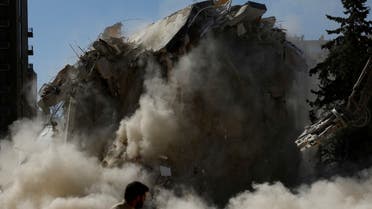

A damaged building gets knocked down in the aftermath of a deadly earthquake in Adana, Turkey, March 6, 2023. (Reuters)

Jennifer Bell, Al Arabiya English
Published: 26 January ,2024

After some of the most devastating earthquakes to decimate the region in recent years, some may fear quakes and seismic shocks are becoming a more common occurrence around the world.

Tremors have ripped apart communities across Afghanistan, Morocco, Turkey and Syria in the past 18 months.

Seismologists and geologists, however, have told Al Arabiya English that while shocks that cause such devastating damage are not increasing in frequency, they are nonetheless becoming more deadly due to densely packed populations, poor infrastructure, and a lack of earthquake-protected building codes to keep up with rampant population growth.
Turkey-Syria devastation, one year on

Almost a year has passed since the devastating and powerful earthquake that struck Turkey and Syria on February 6, 2023, claiming more than 60,000 lives and causing widespread destruction.
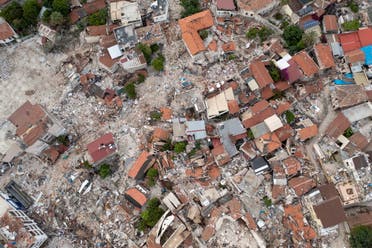

An aerial view shows Antakya's historical city center, the worst hit in an earthquake which killed more than 50,000 people in Turkey and leaving millions homeless, in Hatay province, Turkey May 5, 2023.

The 7.8-magnitude quake, followed by a second earthquake that notched up a 7.5 on the Richter Scale, was among the strongest ever recorded in the region, with hundreds of thousands more injured and scores of buildings leveled.

Other violent seismic shocks have since been reported across the Middle East and the wider world.

On September 8, 2023, a strong earthquake struck Morocco, killing more than 2,900 and leaving 5,500 injured. The 6.8 magnitude quake struck 72 kilometers southwest of Marrakech and leveled housing blocks.
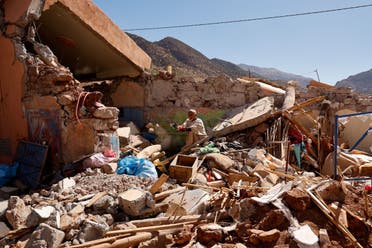

Ait Abdellah Brahim, 86, gestures among rubble, in the aftermath of a deadly earthquake, in Talat N'Yaaqoub, Morocco, September 16, 2023. (Reuters)

Afghanistan is also frequently hit by earthquakes, especially in the Hindu Kush Mountain range, near the junction of the Eurasian and Indian tectonic plates. In October 2023, around 1,000 people were killed when a series of quakes with magnitudes measuring between 4.2 and 6.3 jolted western Afghanistan.

Speaking to Al Arabiya English, Suzan van der Lee, a professor in Earth and Planetary Sciences at Northwestern University, US, said each year, worldwide, there are about a dozen earthquakes with magnitudes of at least seven on the Richter scale, ten times more of magnitudes of at least 6, 100 times more of magnitudes of at least 5, and many more minor tremors across the globe.

“If one of these occurs near dense population and infrastructure and is unanticipated, then it can have devastating consequences,” said Van der Lee, who co-developed Earthtunes. In her research, she applies data science to millions of records of seismic waves in order to decode seismic signals, which hold vital information about the Earth’s interior dynamics.

Judith Hubbard, a Harvard graduate and earthquake scientist in the US, told Al Arabiya English that hundreds of thousands of earthquakes are recorded each year, but most of them are either too small or too far away from human habitation to cause any damage.

In most years, she says, there are more than 150 earthquakes with a magnitude of 6 on the Richter Scale, 10-15 with a magnitude of more than seven and up to four magnitude 8+ earthquakes.
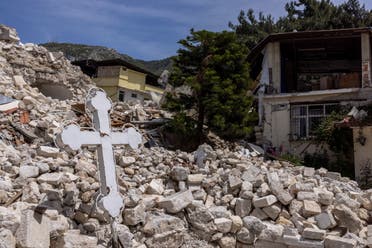
A cross is seen on the wreckage of Greek Orthodox Church at Antakya's historical city center, the worst hit in an earthquake which killed more than 50,000 people in Turkey and leaving millions homeless, in Hatay province, Turkey May 4, 2023. (Reuters)

“Whether or not these cause damage really depends on where they occur: Whether they are close to population centers, and shallow or deep.”
What causes earthquakes, and how common are they?

The majority of earthquakes occur in the vicinity of tectonic plate boundaries, where large sections of the Earth’s crust and the uppermost portion of the mantle, situated directly beneath the crust, converge.

Van der Lee says in the Middle East and Asia, several belts of heightened seismic activity are associated with the present-day Eurasian, Arabian, Somalian, and Nubian tectonic plates. Additionally, a past plate boundary that subducted the Tethys Ocean contributes to seismicity in the region.

“They are associated with present or past tectonic plate boundaries. There may only be a few of the strongest earthquakes in a certain place in a given millennium. So, compared to human lifetimes, they are not frequent,” Van der Lee reasoned.

Hubbard said the Middle East lies along a boundary between colliding tectonic plates, and the whole region is deforming as a result.

“A large number of active faults have formed to accommodate that deformation, including the Dead Sea Fault (which runs through Syria, Lebanon and Israel), the East Anatolian Fault and North Anatolian Fault in Turkey, the various faults on the Zagros Thrust Belt in Iran, and many more.”
Are more earthquakes being detected?
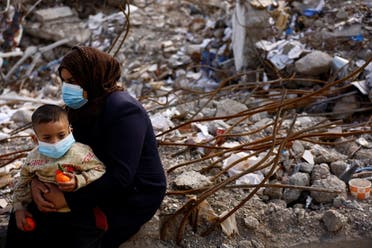
Vefa Abdullah holds her nephew Ali Sulo, 3, as they sit in the rubble of what used to be their home in the aftermath of a deadly earthquake in Kahramanmaras, Turkey, March 9, 2023.

Van der Lee said experts have only been counting earthquakes for precisely half a century, “which is very short from a geological perspective.”

“In that context, most unexpected events are the results of typical statistical fluctuations (they are the result of chance) rather than systematic global trends, Van der Lee said, adding: “However, if one happens in our lifetimes, followed by a typical sequence of aftershocks, then it sure seems like earthquakes are becoming more frequent. Of course, they are more frequent during any aftershock sequence, but on a timescale of decades, the occurrences of these earthquakes are typical.”

However, the world “should expect more” of the types of earthquakes seen in Turkey and Syria, she said.

According to Hubbard, there has not been any significant change in earthquake patterns worldwide in recent years. “Earthquake patterns are by their nature irregular, so each year we see a different set of events,” she said. “However, there are no global trends in

the fundamental tectonics. There are, however, trends in how and where people live and their exposure to earthquake hazards.”

Hubbard said this also holds for the Middle East.

“People naturally focus on recent events, but the Middle East has always suffered periodic damaging earthquakes,” she said. “The February 6, 2023, earthquakes in Turkey were terrible, but so was the 1999 Izmit earthquake (17,000 deaths) and the 1939 Erzincan earthquake (32,000 deaths), among others.”

Hubbard said the 2022 earthquake in Kabul killed more than 1,000 people. The more recent October 2023 earthquakes near Herat killed more than 2,500. The 2003 earthquake in Bam, Iran, killed 26,000.

“Some of these extremely damaging earthquakes were not even that large by global standards. Their high death tolls reflect their location (close to people) and the vulnerability of the populations living near them (buildings that are not resistant to earthquakes).”
Denser populations lead to higher death tolls

Dr. Brian Baptie, a seismologist with the British Geographical Survey, told Al Arabiya English that more reportage of such natural disasters – and news shared on social media channels – can lead to the assumption that more earthquakes are happening, though that is not the case.

“I mean, all these devastating earthquakes that occurred do definitely give you the impression that there are more earthquakes and that they didn’t happen before. However, if you actually look back at the average statistics over the last 30 or even 100 years or so, on an average, the number of earthquakes is pretty much the same, or at least the average of the number of big earthquakes a year is the same,” he reasoned.

However, while the frequency of earthquakes is not changing, the scale of their devastation is, said Baptie, because global population is increasing, with many living in densely built-up areas. That includes areas such as Turkey in the Middle East and regions in India and Pakistan.

Eduardo Kausel, professor at the Massachusetts Institute of Technology, also told Al Arabiya English that earthquakes have produced more damage in recent decades “mainly because of the explosive rise in population and the fast growth of the built environment, but measured over millennia, quakes are surely not more intense or more frequent.”
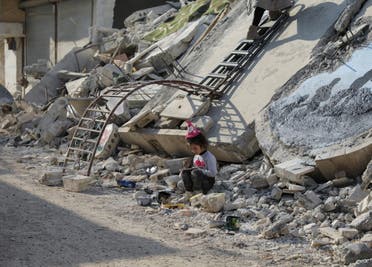
Syrian artist Salam Hamed's daughter Sima sits in the rubble of damaged buildings in the rebel-held town of Jandaris, in the aftermath of a deadly earthquake, in Syria February 22, 2023.

Kausel added: “The known, historic seismic activity in that area of the world stretches back thousands of years. Although the activity itself hasn’t increased over the centuries, its reporting has increased, given that there are many more witnesses and people affected, not to mention modern media.”
Where do earthquakes most commonly occur?

Earthquakes predominantly strike in three major zones globally. The circum-Pacific seismic belt, known as the “Ring of Fire,” encircles the Pacific Ocean, hosting 81 percent of the world’s largest earthquakes. This belt thrives along tectonic plate boundaries, where plates subduct, causing slips and ruptures. Examples include the powerful M9.5 Chilean Earthquake (1960) and the M9.2 Alaska Earthquake (1964).

The Alpide earthquake belt spans Java to Sumatra, through the Himalayas, the Mediterranean, and the Atlantic, contributing to 17 percent of major earthquakes. Notably, the 2005 M7.6 Pakistan quake claimed over 80,000 lives, and the 2004 M9.1 Indonesia earthquake triggered a tsunami that killed over 230,000.

The third significant belt aligns with the submerged mid-Atlantic Ridge, a divergent plate boundary. While mostly underwater, Iceland, directly above this Ridge, has witnessed earthquakes up to at least M6.9. Though most seismic activity occurs in these belts, damaging earthquakes can still surprise outside these regions.

Hubbard also says most earthquakes occur along plate boundaries. Some places that are particularly prone to damaging earthquakes are the west coast of the Americas, the borders of Southeast Asia, the Philippines/Taiwan/Japan, eastern Africa, and the wide zone of collision between Eurasia and Africa/Arabia/India.

“This collisional belt, in particular, is especially hazardous,” she said. “It is more than 10,000 km long, reaching from North Africa and Spain in the west to India and China in the east. Deformation occurs at shallow depth over a very broad area, in some places more than 2,000 km wide. A huge number of countries are impacted by this

system, including parts of southern Europe, North Africa, the Middle

East, and South and East Asia.”
Deadliest earthquakes in history

In recent memory, the colossal Indian Ocean earthquake on December 26, 2004, stands as a stark reminder of nature’s destructive force. Recorded as the fifth deadliest earthquake in history, its epicenter was off the west coast of Sumatra in Indonesia. Ranging from 9.1 to 9.3 in magnitude, the earthquake occurred as the Indian Plate was subducted by the Burma Plate. Following the seismic shock, a series of deadly tsunamis swept through, eradicating everything in the path of the colossal waves. Indonesia bore the brunt of the disaster, followed by Sri Lanka, India, and Thailand. The US Geological Survey reported a staggering total of 227,898 casualties.
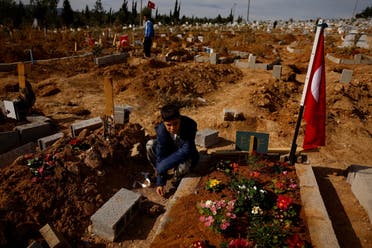
Salih Dogru, 12, and his cousin Eren Dogru, 14, visit earthquake victims' graves at Cankaya cemetery, where they moved to in the aftermath of a deadly earthquake in Iskenderun, Turkey, March 12, 2023. Last month's devastating earthquakes killed more than 54,000 people in Turkey and Syria and left millions homeless. Shortly after the first earthquake struck on Feb. 6, Salih’s uncle, undertaker Ali Dogru, 46, moved his family to the cemetery. They have been living there since (Reuters)

The Tangshan earthquake, another catastrophic event etched in history, struck Tangshan in Hebei, China, on July 28, 1976. This industrial city, home to about one million residents, faced unprecedented devastation, resulting in the loss of approximately 240,000 lives and severe injuries to an additional 164,000 people.

More recently, Hubbard said, the Turkey-Syria earthquakes were notable because of their magnitudes and the fact that there were two of them – the first a magnitude of 7.8 on the Richter Scale and the second a magnitude of 7.7 – occurring about nine hours after the first on a different Faultline, in addition to the usual aftershocks.

“Shaking intensities were very high along the faults that slipped,” she explained. “In the first earthquake, three-quarters of a million people experienced intense shaking ... we saw widespread building damage, including the collapse of a number of tall apartment complexes.”

In comparison, the 2022 earthquake in Afghanistan’s Kabul was much smaller.

“The October 2023 earthquakes in Afghanistan caused significant damage – a series of four M6.3 events over a series of about a week. The 2002 Bam earthquake in Iran was particularly damaging,” she further said.
Are climate change and human activity the factors?

Significantly, contrary to popular perception, Van der Lee says climate change is not a factor in earthquakes. “Most effects of climate or weather on seismic activity are small at best and only manifest in regions undergoing rapid melting of ice caps, for example. It is very unlikely that the seismicity in the Middle East is influenced by climate change,” she said.

However, human activities such as mining, reservoir-induced seismicity, or oil-and-gas extraction can contribute to seismic events in the Middle East, she added. “Human activities like that have induced and triggered small to moderate-magnitude earthquakes in several places around the world, so I wouldn’t be surprised if this included the Middle East.”

Hubbard also said there is no evidence linking climate change to seismic activity in the Middle East – or anywhere else – but agreed that “human activities can indeed cause earthquakes.” She pointed to reservoir-triggered seismicity, which has been observed near dams during construction, impoundment, and cyclic filling in many parts of the Earth, including Turkey.

“Occasional moderate earthquakes have been linked to reservoirs. For instance, the Atatürk Dam in Turkey has been linked to several (seismic) events,” Hubbard further said.

“It is well known that the oil-and-gas extraction process can trigger seismicity (especially the process of injecting wastewater back into the Earth). This has definitely been implicated in parts of the US.

Moreover, groundwater extraction has also been observed to be linked to earthquakes in some parts of the Middle East – for instance, along the Dead Sea Fault in Jordan at the Wadi Al-Arab basin.”

Shaking events associated with mining are regularly detected, said Hubbard.

“These are mostly detections of actual blasting and are not considered ‘earthquakes’ in the traditional sense, in that they don’t involve slip-on faults in the Earth. (In contrast, wastewater injection weakens faults, allowing them to slip.) Some forms of mining do involve injecting water into the subsurface, in which case they can

trigger earthquakes. However, thus far, the largest and most damaging earthquakes have not been linked to anthropogenic activities,” Hubbard further explained.
Monitoring earthquakes

Van de Lee said there is more that could be done to forewarn and forearm countries ahead of earthquakes.
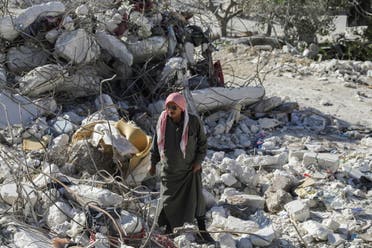
Fadel El Jaber, stands on rubble of the building his son lived with his family, that collapsed from last month's deadly earthquake in the town of Salqin, Syria March 10, 2023.

“Earthquake monitoring has improved with humanity having expanded its instrumental sensing and recording activities, as well as methodologies for analyzing seismic data,” she said.

However, to date, no one is able to predict earthquakes accurately, she added. “The best we can do is anticipate and be prepared for them.”

That, she says, means early-warning systems in place to alert the public during any seismic activity.

Van der Lee says building codes in earthquake-prone countries are also key in order for new or existing buildings to meet the structural standards to cope with seismic disturbances. These ratings are instrumental in gauging a structure’s ability to withstand tremors, providing crucial insights into potential risks.
Building codes are key

A building, or specific sections of it, earns the ominous label of “earthquake-prone” if it is projected to surpass its ultimate capacity during a moderate earthquake. The implications are dire, as such structures, if they were to collapse, pose a significant threat of causing injury or even death to individuals within or near the building. Additionally, the collateral damage extends to adjacent properties, intensifying the urgency for comprehensive seismic assessments and mitigation strategies.

“Turkey, for example, has building codes,” said Van der Lee. “These codes need to be regularly reviewed and, updated and adhered to. This can really help prevent devastation. Most risks are posed by the built environment.”

Measures to mitigate earthquake damage include incorporation of comprehensive geoscience education into the national curriculum, the establishment of local earthquake centers to enhance monitoring and research, and effective science communication to dispel misinformation.

Development of an “earthquake culture” is the central theme, encouraging a collective consciousness about earthquakes through initiatives that promote memory, awareness, and community engagement.

Baptie also said there are ways the world can mitigate the impact of earthquakes – and making sure buildings are safer is priority number one.

“We cannot predict earthquakes, but we do have a pretty good idea of where most of those earthquakes occur, so we can establish where they’re likely to occur.”

Many countries that are in areas of high earthquake hazard activity said Baptie, have building codes, and that’s true in countries like Turkey and Iran.

The crucial thing is that building codes need to be enforced. He said it was “pretty clear” in the Turkey earthquakes last year that there were a lot of modern buildings that were recently constructed, after a time when other buildings had been strengthened following the major earthquakes in Turkey in 1999.
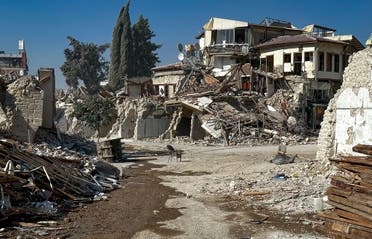
The remains of buildings destroyed during the earthquake are pictured in Antakya, southeastern Turkey Saturday, Aug. 5, 2023.

“The other things we can do is retrofit existing buildings, so we can do things to our buildings to make them stronger,” Baptie added.

The problem is that in many earthquake-sensitive areas, there are still large numbers of people living in quite vulnerable buildings.

“In places like Afghanistan, there are a lot of people who are living in just un-reinforced brick buildings. These are very, very vulnerable to earthquake shaking and that’s a major problem,” Baptie added.

Hubbard said the “only truly useful approach” to mitigating the impact of potential earthquakes is to build resilient buildings.
Effective disaster management

Another key step in minimizing the devastation from future earthquakes is by ensuring international coordination, said Van der Lee. “Every earthquake reveals new information that, after analysis and related research, helps us better understand earthquakes in general,” she said.

“Seismology has a long tradition of international collaboration that can and should be further strengthened. The power of the Earth and earthquakes surpasses humanity’s combined powers. We should, therefore, be united in learning to understand them and how to minimize the devastation that might result from some of them.”

Hubbard agrees.

“Earthquake prediction remains impossible,” she said. “Instead, we rely on earthquake forecasting (i.e. detecting zones that could be impacted by earthquakes on nearby active faults), aftershock forecasting (understanding the risk of continued events after a large earthquake), and earthquake early warning (detecting an earthquake early and sending a warning signal to nearby phones to alert people to incoming shaking, giving tens of seconds of warning time).”

Seismometer networks in the Middle East vary from country to country, said Hubbard. For instance, she says, Turkey has “excellent networks”, but some nearby countries have few seismometers.

Some countries in the Middle East are part of the EMSC (European-Mediterranean Seismological Centre) and report their data to that group – but not all, said Hubbard.

“The EMSC also operates a novel system that uses human responses to detect earthquakes, which really helps in areas where there are not so many seismometers.”

Hubbard said it was very clear following the February 2023 Turkey-Syria earthquakes that the world’s ability to “see” earthquakes was very regional.

“For instance, many people in Syria and Lebanon reported feeling aftershocks that were not detected by global seismological networks. In contrast, reports of shaking in Turkey were almost always matched to a detected event.”
International collaboration

Hubbard also stressed the importance of international collaboration to understanding earthquakes.

“Earthquakes are global phenomena. There are many cases where we know comparatively little about what happened in an earthquake because it occurred in an area without good instrumentation or a good understanding of the geology of a region. I have found that in most cases, scientists are willing to collaborate across political borders, but they are sometimes held up by regulations that prevent easy or effective collaboration,” she said.

“More work on building international links through science and hazard mitigation could strengthen existing relationships and help vulnerable communities,” Hubbard added.
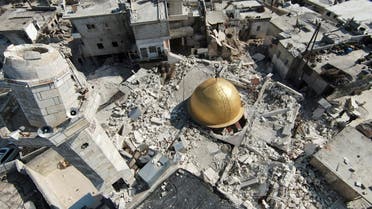
A general view shows a damaged mosque in the aftermath of a deadly earthquake, in rebel-held al-Maland village, in Idlib province, Syria February 24, 2023. (Reuters)
Can AI future-predict earthquakes?

Baptie said, going forward, the use of artificial intelligence (AI) may be an incredibly helpful tool for earth scientists and geologists in earthquake mitigation and management.

“What we are interested in now is using AI to first detect and characterize earthquakes,” he said. “There have been big advances in this over the last four or five years.”

“AI at the moment is incredibly good at finding patterns. It can detect really small earthquakes that some of our other systems can’t. So, what it means is that we can get very data-rich catalogs of information that can help us understand the hazards a little better,” Baptie added.

“The next step is probably to try and use AI knowledge systems to try and make forecasts of earthquakes and to try and make short-term forecasts about earthquakes. That is still pretty much a work in progress. But it has potential.”

So, could one day earthquakes be predicted?

“That is the holy grail,” said Baptie.
Ireland’s Senate unanimously calls for sanctions against Israel


Ireland’s Senate has unanimously called for sanctions against Israel, including an international arms embargo and preventing the passage of US weapons to Israel from passing through Irish airspace and seaports, in the wake of Israeli military operation in Gaza.
 (File photo: Reuters)


Yusra Asif, Al Arabiya English
Published: 28 February ,2024: 

Ireland’s Senate has unanimously called for sanctions against Israel, including an international arms embargo and preventing the passage of US weapons to Israel from passing through Irish airspace and seaports, in the wake of Israeli military operation in Gaza.

The motion by Senators Frances Black, Lynne Ruane, Alice Mary Higgins, and Eileen Flynn called on the Irish government to impose restrictions against Israel and urge the international community for an immediate ceasefire in Gaza.

According to the motion, Ireland must impose sanctions on Israel, ban imported goods and services from Israeli settlements, divest from companies in these settlements, prevent US weapons from passing through Ireland, and push for an international arms embargo on Tel Aviv.

In the document, Senators expressed regret over the “failure of many in the international community to hold Israel to account for their actions in breach of international law and the unwillingness of many countries, including the United States, the United Kingdom and the Council of European Union to call for an immediate ceasefire or stop weapons sale to Israel.”


Countries such as the US, UK, and Germany have continued to supply weapons to Israel to aid its military operation in Gaza, often citing that Tel Aviv has a right to defend itself after the October 7 Hamas attack, which killed 1,200 Israelis and saw 253 taken hostages, according to Israel’s tally.

Israel’s air and ground offensive has since devastated much of Gaza, killing 29,878 Palestinians, mostly civilians, and injuring over 70,000, according to the latest numbers from Gaza’s health ministry.


UN experts and aid agencies have said arms export to Israel must be stopped immediately, adding that weapons or ammunition sent to be deployed in Gaza are likely to violate international humanitarian law.

Several countries have halted arms exports to Israel after the International Court of Justice (ICJ) ruling in January, which ordered Israeli forces to take measures to prevent any actions that may be characterized as genocide.

Countries including Spain, Italy, Belgium, Netherlands, and Japan’s Itochu corporation suspended weapons transfer to Israel.

Meanwhile, the US Senate approved a bill to send $14 billion in military aid to Israel on February 13.

The UK has, since 2015, licensed at least $599 million worth of military exports to Israel, including components for combat aircraft, missiles, tanks, technology, small arms, and ammunition, according to Human Rights Watch.

The UK provides approximately 15 percent of the components in the F-35 stealth bomber aircraft currently used in Gaza.

Germany exported more than $379 million worth of military equipment and arms to Israel last year, a 10-fold increase since 2022.

After the October 7 Hamas attack, Germany approved 185 additional licenses – 28 percent of Israel’s weapons imports come from Germany.

The Irish motion said the European Union has “failed to be consistent in seeking application of international law and by its double standards has engaged in acts of gross hypocrisy and moral failure.”

“While all this slaughter is happening, the EU is dithering and playing political games with the lives of the people of Palestine,” Irish Senator Lynn Boylan said.

“Instead of spending serious time and effort calling for a ceasefire, we have seen the President of the European Commission give unconditional and unqualified support to Netanyahu’s genocidal onslaught.”

The motion denounced Israel’s disregard for the International Court of Justice, which in January, ordered Israeli forces to take measures to prevent any actions that may be characterized as genocide. It also expressed concerns over the “unacceptably slow pace” of the International Criminal Court’s investigation into potential war crimes committed by Israel.

The motion would have to pass through the Irish Parliament, which is directly elected, and a more powerful chamber to come into effect.

Ireland was the first EU country to declare Israel’s illegal settlements to be “de facto annexation” of Palestinian land. In 1980, the government made history by becoming the first EU member to officially call for the establishment of a Palestinian state.


Tech activists write new code to save migrants in the Mediterranean

Nearly 28,000 people have died or gone missing trying to cross the Mediterranean to reach Europe since 2015.
Wednesday 28/02/2024
Migrants wait to disembark from a fiber boat after being rescued by a Spanish coast guard vessel in the port of Arguineguin, Spain, February 3, 2024. (Reuters)
Migrants wait to disembark from a fiber boat after being rescued by a Spanish coast guard vessel in the port of Arguineguin, Spain, February 3, 2024. (Reuters) By Iman Zayat • News •0


When a migrant rescue non-profit asked Nik Zemke if he could design an app to pinpoint ships in distress in the Mediterranean, the German web developer headed to a hackers’ convention to look for like-minded volunteers.

He found help among the hordes of tech hobbyists huddled over their laptops at the Chaos Computer Club’s annual gathering in the northern city of Hamburg, a mecca for hackers and activists intent on using their coding skills for social good.

“It’s a lot of nice people who are really fed up with certain events in the world and are into awesome ways of trying to change that,” Zemke, 32, said.

After five years of late nights and coding sessions in their spare time, Zemke said his team’s One Fleet app would soon be rolled out on search-and-rescue vessels operated by non-governmental organisations (NGOs) operating in the Mediterranean.

Nearly 28,000 people have died or gone missing trying to cross the Mediterranean to reach Europe since 2015, according to the UN refugee agency, making it one of the deadliest routes for migrants and refugees fleeing conflict, persecution or poverty.

Last year, the number of people attempting to reach Europe by land and sea rose by 70 percent compared with 2022 and the number who died or went missing rose to the highest level since 2017.

In one of Europe’s deadliest shipping disasters in recent years, hundreds of migrants drowned after an overloaded boat sank off the Greek town of Pylos in June 2023.

Migrant rescue NGOs hope the One Fleet app, along with drones and vessel auto-detection tools in development, will make it easier for them to find and respond to boats in peril.

Search and rescue (SAR) ships using One Fleet will be able to log the coordinates of emergency mobile or satellite phone calls made from vessels in distress to help identify which response team is closest.

“It will at least make the life of the coordinators easier,” Zemke said.

Drones, phones and algorithms

Under international law, EU member states and ships are required to rescue people in distress at sea, and hundreds of thousands have been rescued in recent years in the Mediterranean by EU ships and NGOs.

But since more than one million refugees and migrants made it to Europe during a 2015 crisis, the EU and member states have scaled back maritime patrols, instead boosting air patrols and coordination with Libya to deter people-smugglers.

NGOs involved in SAR missions say they are trying to fill the gap.

“But it’s obvious with our capacities we cannot do that,” said Oliver Kulikowski, a spokesperson for the German NGO Sea-Watch, which started operating in 2015 after Italy retired its SAR ship Mare Nostrum.

Unable to afford the drones and thermal cameras used by the European border agency Frontex, which has a budget of 859 million euros for 2024, he said Sea-Watch had started looking for more affordable options, leading it to approach Zemke.

“We just have to try everything we can,” he said.

Sea-Watch, which is among several NGOs that plan to use the One Fleet app, currently locates distressed migrant vessels by using radars, patrolling the sea with binoculars or tracking Frontex drones.

Volunteers are also working on projects involving drones, image detection, drift-pattern prediction and thermal-imaging cameras that often utilise open-source data, which makes them more affordable.

German space engineer Steffen Merseburg said he is one of very few people updating 60-year-old image-detection algorithms to improve their function so they can be used to identify small boats from publicly available satellite imagery.

Working with a group of six volunteers, he is developing the technology for Space-Eye, a project founded by another German rescue organisation, Sea-Eye.

So far, they have trained their model to analyse one image in less than 10 minutes, but it can still take hours for images to download from the satellite.

“It’s a lot of work,” Merseburg said. “(But) I keep doing this because this is what I’ve learned to do and this is how I can contribute.”

Data sovereignty

NGOs are also eager to develop their own tech tools as a way to accurately document their rescue missions, building a body of potential evidence as they face legal challenges over their rescue activities. One Fleet will be used to create such an archive.

Ten of 18 civil society SAR vessels active in the Mediterranean in 2023 have faced legal action, according to data from the European Union Agency for Fundamental Rights, an EU body.

Some of the cases have cited breaches of safety or navigation rules, while others stem from an EU law that punishes facilitating the unauthorised entry of a non-EU national unless it is for humanitarian reasons, migration experts say.

When authorities detain a ship or restrict a group’s operations, having a wide range of tech tools on hand can help keep search and rescue work going, said Luca Kunz, an oceanographer based in Germany who is volunteering with the Civil Maritime Rescue Coordination Centre, a network of SARs working in the Mediterranean.

“If you have a diverse toolkit, your operation can go on,” said Kunz, 31, who is helping to develop an app that predicts where a floating vessel may end up, based on drift patterns.

Like the other tech-minded volunteers, Kunz said the goal of saving lives spurred him on.

“Spending lots of hours or nights on coding is worth it if I can contribute to the rescue of even one person,” he said.


Oil spills pile on pressure for Iraq’s farmers, authorities blame ISIS

Oil spills in Iraq, a country ravaged by decades of conflict, corruption and decaying infrastructure, have contaminated farmland in the northern province, especially during the winter rains.
Tuesday 27/02/2024
An Iraqi farmer squats and checks an oil spill into an agricultural land in the region of Hamrin, north of Tikrit, in the province of Salaheddin. AFP

BAGHDAD


Iraq enjoys tremendous oil wealth but many hard-scrabble farmers in the north say crude spills have contaminated their lands, piling on pressure as they already battle drought.

Amid the hills of Salaheddin province, puddles of the viscous black liquid pollute the otherwise fertile and green fields, rendering vast swathes of farmland barren.

“The oil has damaged all that the land can give,” said one farmer, Abdel Majid Said, 62, who owns six hectares in the village of Al-Meaibdi.

“Every planted seed is ruined. This land has become useless.”

Oil spills in Iraq, a country ravaged by decades of conflict, corruption and decaying infrastructure, have contaminated farmland in the northern province, especially during the winter rains.

Authorities blame the jihadists of the Islamic State (ISIS) extremist group who overran large swathes of Iraq and Syria in 2014 and were only defeated in Iraq three years later.

The ISIS group blew up oil pipelines and wells and also dug primitive oil storage pits, causing crude to seep into the ground, from where annual rains wash it out again.

But the local farmers also complain that the state has been too slow to clean up the mess.

In Al-Meaibdi and the nearby hills of Hamrin, authorities are struggling to find a sustainable solution to the problem, which adds to a litany of environmental challenges.

Iraq, also battered by blistering summer heat and severe drought, is ranked by the United Nations as one of the five countries most vulnerable to key impacts of climate change.

In Hamrin, layers of sludge pile up as excavators build up dirt barriers, a temporary measure to stem the flow of contaminated water onto farmland below.

The oil not only damages the soil and crops but can also pollute groundwater in the water-scarce country.

Said, the farmer, said “the soil is no longer fertile, we have not been able to cultivate it since 2016”.

Some other farmers had already abandoned their lands, he added.

He pointed to a green plot of land so far untouched by the spills and said: “Look how the crops have grown there, but not even a grain has sprouted here.”

Oil spills have contaminated 500 hectares of wheat and barley fields in Salaheddin, said Mohamed Hamad from the environment department in the province.

Hamad pointed to the reign of ISIS, which collected revenues from oil production and smuggling by building makeshift refineries and digging primitive oil storage pits.

He said the group blew up the pipelines and wells of the oil fields of Ajil and Alas, causing crude oil to flood and collect in the Hamrin hills’ natural caves.

Earlier this month, due to heavy rain, oil remnants again poured into agricultural lands, Hamad said, and “unfortunately, the leak damaged land and crops”.

Authorities have buried IS’s makeshift storage pits, Amer al-Meheiri, the head of the oil department in Salaheddin province, told Iraq’s official news agency INA last year.

Yet during the heavy rains, the oil continues to seep out.

  • Economic losses

Iraq’s crude oil sales make up 90 percent of budget revenues as the country recovers from years of war and political upheaval, leaving it overly reliant on the sector.

The country boasts 145 billion barrels of proven oil reserves, amounting to 96 years’ worth of production at the current rate, according to the World Bank.

But for many farmers, oil has been a scourge.

Abbas Taha, an agriculture official in Salaheddin, said “oil spills have been occurring frequently since 2016”.

“Farmers suffer a great loss because they no longer benefit from the winter season to grow wheat,” he said.

Some farmers have filed complaints against the state demanding compensation, only to find themselves lost in Iraq’s labyrinthine judicial system, tossed from one court to another.

But Taha insists that authorities plan to compensate those affected in a country where agricultural lands are shrinking as farmers are abandoning unprofitable plots hit by drought.

Due to the severe water scarcity, authorities are drastically reducing farm activity to ensure sufficient drinking water for Iraq’s 43 million people.

Hamad said his department had contacted the relevant authorities to remove oil remnants that would eventually seep through the soil to contaminate groundwater and wells.

The soil also needs to be treated by removing the top layer and replacing it, he said.

“We urged the prime minister, the agriculture minister and the oil minister to compensate the farmers suffering from this environmental disaster,” said 53-year-old farmer Ahmed Shalash.

“But nothing has happened.”


Concern in Oman over Gaza war’s boost to Brotherhood and jihadist ideas

Criticism has in many cases focused on the positions of the mufti of the sultanate, Sheikh Ahmed Al-Khalili.
Wednesday 28/02/2024
A 2014 file picture shows Hamas leader Khaled Meshaal (C) sitting between Ali Moheiddin al-Qaradaghi (L), Secretary-General of the International Union for Muslim Scholars and Sheikh Ahmed bin Hamad Al-Khalili (R), Grand Mufti of the Sultanate of Oman, during a meeting at the International Union for Muslim Scholars in the Qatari capital Doha. AFP
A 2014 file picture shows Hamas leader Khaled Meshaal (C) sitting between Ali Moheiddin al-Qaradaghi (L), Secretary-General of the International Union for Muslim Scholars and Sheikh Ahmed bin Hamad Al-Khalili (R), Grand Mufti of the Sultanate of Oman, dur

Muscat, Oman

Political activists and opinion leaders in Oman are warning that public sympathy with the Palestinian population in Gaza in the face of the Israeli military onslaught is morphing into support for the Palestinian Islamist movement and other radical groups in a way that could threaten Oman’s future stability.

The analysts are wary of the wave of support turning into a breeding ground for Muslim Brotherhood and jihadist organisations among Oman’s majority young population traditionally inclined towards peaceful and moderate values.
They also fear the authorities may be underestimating the effects of the public opinion trends and the risks of infiltration of official bodies by radical thought.

Criticism has in many cases focused on the approach of the mufti of the sultanate, Sheikh Ahmed Al-Khalili whose enthusiasm for Gaza’s population has pushed him to ignore the official line of conduct to which he is supposed to adhere as a top religious official.

The fatwa office in Oman, headed by the mufti, is affiliated with the ministry of endowments and religious affairs, whose duties include supervising mosques, directing the preaching and religious guidance and monitoring religious productions and publications.

Omani observers have recently noted that some of the sultanate’s mosques have turned into pulpits for Hamas propaganda and jihadist rhetoric.

Video footage circulating on social media shows groups of worshippers in some Omani mosques listening in reverence to the military statements of “Abu Ubaida,” the official spokesman for the Al-Qassam Brigades, the military wing of the Hamas movement, as if they were religious sermons.

Furthermore, the appearance of the sultanate’s mufti in one of these videos has sparked a huge controversy in the country.
The main concern now among officials is that religious platforms in Oman could turn into a Muslim Brotherhood propaganda and recruitment outlet, especially because Hamas is part of this international Islamist organisation.
Brotherhood infiltration of state institutions could undermine Oman’s stability as its effect could outlast the war in Gaza, say Arab Gulf experts.

The mufti of Oman had earlier voiced his support for Houthi threats to maritime shipping in the Red Sea, Bab al-Mandab and the Gulf of Aden. Through a post on his official website, he welcomed the group’s seizure of a cargo ship. He called on “the entire brotherly people of Yemen to rally behind the great religious principle of support to the oppressed and the persecuted among our brothers”.

REVIEW

Bedeviled: Jinn Doppelgangers in Islam & Akbarian Sufism


Book Author(s): Dunja Rasic
Published Date: March 2024
Publisher: State University of New York Press
Hardback:220 pages
ISBN-13:9781438496894
February 19, 2024 

Doppelgangers are the stuff of fantasy, folklore and tradition and are an integral part of popular culture; one only has to think of Jake Gyllenhaal’s 2014 film, Enemy, where a depressed history teacher discovers he has an exact look-alike who works as an extra in films, to see how doppelgangers capture our imaginations today. The main definition of doppelganger seems to be a biologically unrelated exact look-alike of a person, or the double of a living person. Outside of the West, there is also a tradition of doppelgangers and, in the Islamicate, they are associated with jinns. Dunja Rasic’s Bedeviled: Jinn Doppelgangers in Islam & Akbarian Sufism explores the world of doppelganger jinn in medieval Islam and the writings of thirteenth-century Sufi mystic, traveller, scholar and poet, Ibn Arabi. Devotees of Ibn Arabi, who follow the Akbari Sufi order, not only continue to pore over his works for wisdom, they also preserve and pass down some of our understanding of doppelganger jinns. Who the jinn are and what their significance is has long been debated but, broadly, they are understood to be beings who are neither human nor angels, who exist between worlds and can influence humans.

REVIEW: The City in Arabic Literature

Doppelganger jinn, known as qarin (pl. qurana) or qarina, were the subject of lively debate in the medieval period. In Islamic tradition, “a qarin was generally understood to be a jinni companion and a doppelganger of human beings. Each qarin was thought to be conceived at the same time as its human. When a child is born, a qarin enters its heart.” Qurana are usually evil or mischievous beings who whisper to humans to tempt them to either follow whims and passions, or to do bad things. While we find jinns discussed in the Quran and a collection of prophetic narrations known as hadiths, the concept of jinns predates Islam and has strong ties to pre-Islamic Arabian folklore traditions. In different regions, local oral traditions make their way into Islamic debates about jinn, including qarin. In Palestinian oral tradition, the idea of evil doppelgangers may have given rise to tales of a female demoness, Qarina, who was a succubus, seductress and murderer of pregnant women and children. The belief in Qarina was likely inspired by tales of Lilith, the first wife of Adam, who, like Qarina, became a succubus, seduced men and harmed children. Qarina could appear as a beautiful woman and, in the Iraqi tradition, we encounter stories of men marrying her. But does this disqualify her from being classed as a jinn? As Rasic observers, “the main difference between a qarin and Qarina is reflected in the fact that Qarina’s cruelty is not reserved for a single person. Jinn are disgusted with menstrual blood which seems to attract Qarina.” What these discussions highlight is a concern with identifying boundaries and categorising jinn by medieval thinkers.

For Ibn Arabi, he saw qarin as “a devil within the blood and hearts of humans”. For the Sufi mystic, both jinn and qarin were not only supernatural entities, they were also ways of probing theological issues and problems in society. Through writing about them, Ibn Arabi not only tried to make sense of evil, but also, “to show how humans, jinn and, even the Devil himself, might be saved from it.” Indeed spiritual self work was key for all humans, “Sufi works often made no distinction between the act of taming a qarin and the purification of the lower soul.” Given how closely tied qarin were to humans, advice on how to deal with them often meant advice on how to deal with the individual self. A righteous human being who resists temptation offered by qarin could actually convert the qarin to Islam, as they will follow the piety and good actions of the person they are tied to.

Bedeviled offers a niche and exciting exploration of Jinn doppelgangers in Islamic thought; it lays out both clearly and concisely debates Ibn Arabi and others were having about the qarin and gives the read an excellent introduction into the world of jinn studies. In both medieval and contemporary societies in the Middle East, jinns are an active part of how people interpret the world around them and, while there is a lot of complexity and nuance in how people interact with these ideas, to imagine a world in which jinns are not part of the cultural landscape in the Islamicate would be hard to fathom. Both medieval and contemporary debates about jinn are not merely about exchanging scary stories, as we have become accustomed to doing with ghost stories, but are about grappling with moral issues, boundaries, religious obligations and the edge of human knowledge. While reading Bedeviled, I got a sense of a whole range of issues confronting society in the time of Ibn Arabi and the book provides an important window into it. Rasic’s book will surely not only be of interest to those who are interested in jinns, but also to those who are interested in the concept of doppelgangers and how different cultures think about them.

REVIEW: Sufis in Medieval Baghdad


OPINION

Climate change confined to mere annex in draft WTO deal

February 28, 2024 

An aerial view of ice cuticles after TUBİTAK MAM Polar Research Institute conducts a research showing ice cuticles, sized as much as Turkiye, have melted due to the effects of climate change in Antarctica, which is described as the coldest and driest continent of the planet on February 8, 2024 [Şebnem Coşkun – Anadolu Agency]

by Reuters

The World Trade Organisation’s chief is on a mission to put climate change at the heart of its work as part of an effort she is leading to get the watchdog to square up to some of the world’s most pressing challenges.

But at a biennial WTO meeting in Abu Dhabi, where negotiators hope to fix new rules for global commerce, the sole paragraph in a 56-page draft agreement that explicitly addresses the topic is stuck in an annex – with an explanatory note referring to “deep divergences” among members.

At first blush, it’s hard for an outsider to tell what is so controversial, since the section merely pledges to “promote cooperation on environmental aspects of trade” and mandates a WTO committee to offer recommendations by the next major meeting in two years.

In a rare move, Director-General, Ngozi Okonjo-Iweala, has intervened to propose alternative language in the draft Abu Dhabi agreement and negotiations continue.

A commitment to sustainable trade is in the WTO’s 30-year-old founding document, with members aspiring to “protect and preserve the environment and to enhance the means for doing so”.

READ: Carbon emissions and climate costs of Israel war on Gaza

Yet, while it hosts brainstorming sessions among some groups of countries on climate change, it has no global negotiating stream on it.

Okonjo-Iweala, who recently appointed a special adviser on climate change, wants to confront the view of some ecologists that free trade is part of the climate problem because it generates transport emissions and can help drive carbon-intensive economic growth.

Instead, she argues the body can be part of the solution: by tackling fossil fuel subsidies, harmonising carbon price policies to prevent emissions merely being displaced to other countries or tackling import tariffs for low-carbon goods like electric cars, which tend to be higher than for combustion ones.

But some countries, like India, say the issue has no place on a WTO agenda it wants confined to pure trade matters.

“WTO should not negotiate rules on non-trade related subjects like climate change, gender, labour, etc. Rather, they should be addressed in respective inter-governmental organisations,” said India’s Commerce Minister, Piyush Goyal, voicing a reticence felt by other developing countries.

Meanwhile, some wealthier states would prefer to go it alone with their own policies, trade experts say.

“They believe they have enough flexibility under the rules as they are, and that a big multilateral negotiation on new rules would not be helpful, and could even constrain some of their future environmental measures,” said Dmitry Grozoubinski, Executive Director of trade policy think tank, the Geneva Trade Platform.
Internal battles

The debate over the climate change paragraph illustrates the difficulties Okonjo-Iweala has sometimes faced in prioritising the topic within an organisation that is supposed to be led by its members – all 164 of whom must agree by consensus.

Okonjo-Iweala, a former Nigerian finance minister, has warned about trade policy fragmentation if the WTO does not step in, citing the example of more than 70 existing carbon price schemes in the world.

But a presentation by the WTO’s Secretariat on a proposed global carbon price methodology last year in Geneva received a lukewarm reception, according to trade delegates who attended.

Jean-Marie Paugam, WTO Deputy Director-General, acknowledged that there were “different visions” on carbon pricing but that a WTO-led task force was making progress on the topic.

Overall, Okonjo-Iweala’s ideas on the WTO’s role in climate change have been well received, he said. “There is recognition of the DG’s leadership in terms of trade and climate,” he said.

OPINION: Applying climate justice for young generations – COP28 and Middle East and energy transition

An area of hope is that, since 2020, groups of countries keen to make progress on environmental topics are discussing ideas, such as new rules constraining fossil fuel subsidies or bans on trade in some plastic goods.

“Now we are having a discussion on these issues; three years ago this would have been impossible,” said Carolyn Deere Birkbeck, Executive Director of the Forum on Trade, Environment and the SDGs (Sustainable Development Goals).

One day, these talks known as “plurilaterals” may form the basis for broader negotiations on new rules binding for all countries, the trade experts say.

“This work is really foundational to inform what the membership may wish to do at the WTO,” said Canada’s Trade Minister, Mary Ng. If the second part of a deal on cutting subsidies that lead to over-fishing is agreed in Abu Dhabi after more than 20 years of talks, this could spur more progress.

Many developing states fear that countries’ new policies in this area, such as the EU’s carbon border tax, will place them at a trade disadvantage, since they have fewer resources to decarbonise their industries.

The EU has said the tax is in line with WTO rules, affecting both domestic and foreign producers. It has proactively engaged with partners and made presentations at the WTO to explain its policies, an EU spokesperson said.

But, for some, discussions around such tensions are exactly the right place for the WTO to start.

“What we do not want is a new form of protectionism to arise. But these are things that can only be treated if you are at the table engaging in the give and take,” said Kerrie Symmonds, Minister of Foreign Affairs and Trade for Barbados.

“We believe strongly the WTO has the convening power to host these types of discussions and facilitate them.”
BOWING TO THE KULAKS
European parliament votes for watered-down law to restore nature

EU target aims to restore at least 20% of land and sea ecosystems by 2030 despite farmers’ protests and rightwing opposition


Ajit Niranjan
Tue 27 Feb 2024 

The European parliament has given the green light to a watered-down law to restore nature, after weeks of fierce protests from farmers and a last-ditch attempt from rightwing parties threatened to sink the deal.

“Today is an important day for Europe as we move from protecting and conserving nature to restoring it,” said César Luena, a Spanish MEP from the centre-left Socialist and Democrats, who led negotiations on the proposal.

The new law – a key pillar of the EU’s contested green deal – sets a target for the EU to restore at least 20% of its land and sea by the end of the decade. By 2050, that should rise to cover all ecosystems in need of restoration.

“This law is not about restoring nature for the sake of nature,” said the EU environment commissioner, Virginijus Sinkevičius. “It is about ensuring a habitable environment where the wellbeing of current and future generations is ensured.”

The centre-right European People’s party (EPP), the biggest group in the parliament, joined far-right lawmakers in voting against the law on Tuesday. It argued that its rules placed too big a burden on farmers but welcomed that the text, which it pushed to weaken last year, “bears little resemblance” to the original proposal.

“We do not want new and more forms of bureaucracy and reporting obligations for farmers,” said Siegfried Mureșan, a Romanian MEP from the EPP, before the vote. “Let farmers farm.”

The EU and its member states have rowed back on several plans to protect the environment as farmers’ protests have spread across the continent and in some cases turned violent. In a clash with riot police on Monday, farmers set fire to tyres, sprayed police with liquid manure, and drove tractors through blockades in the European quarter of Brussels where agriculture ministers were meeting.
Farmers set fire to tyres in Brussels as EU officials meet to address concerns – video

The nature restoration law, which must be approved by the EU Council before it comes into force, calls on member states to restore at least 30% of drained peatland by 2030 and make progress on indicators of agriculture biodiversity that include increasing the number of grassland butterflies and farmland birds.

Environmental groups praised the outcome of the vote, which passed with the support of 329 lawmakers and was opposed by 275.

A coalition made up of BirdLife Europe, ClientEarth, European Environment Bureau and WWF EU said: “We are relieved that MEPs listened to facts and science, and did not give in to populism and fear-mongering. Now, we urge member states to follow suit and deliver this much-needed law to bring back nature in Europe.”

Nature is dying faster than humans have ever observed, according to a review of the research from the Intergovernmental Science-Policy platform on Biodiversity and Ecosystem Services (Ipbes). In Europe, where 81% of habitats are in poor shape, the destruction of wildlife is set to cost farms and ecosystems as pollinators die out, soils degrade and extreme weather grows more violent.

The nature restoration law was subject to an intense and negative media campaign before a key vote last year. In an open letter, 6,000 scientists criticised opponents of the law for spreading misinformation.

Since then, farmers have loudly protested against a range of policies to protect wildlife and cut pollution, which they say they cannot afford, as well as opposing trade deals with South America and grain imports from Ukraine.

Luena said: “I would like to thank scientists for providing the scientific evidence and fighting climate denial, and young people for reminding us that there is no planet B, nor plan B.”

MEPs approve Nature Restoration Law amid right-wing opposition and farmer protests


By Jorge Liboreiro & Marta Pacheco

The European Parliament gave on Tuesday the green-light to the Nature Restoration Law, defying a conservative push to bring down the bill.

The law received 329 votes in favour, 275 against and 24 abstentions, a margin larger than initially expected. The outcome prompted applause and cheers from socialists and green MEPs as their right-wing colleagues stood quiet.

The vote was closely watched as it took place amid farmer protests, who have made the European Green Deal one of its main objects of criticism.

Still, the law approved on Tuesday had been heavily watered down during negotiations and lacks the ambition of the original proposal. The text will now go to the Council, where member states will hold the final vot

The Nature Restoration Law aims at rehabilitating at least 20% of the European Union's land and sea areas by 2030 and all degraded ecosystems by 2050. It establishes obligations and targets on different fields of action, such as farmlands, pollinators, rivers, forests and urban areas, to gradually reverse the environmental damage caused by climate change and unchecked human activity.

First presented by the European Commission in June 2022, it gained further significance after the landmark biodiversity agreement sealed at COP15.

But last year, the law became the target of a fierce opposition campaign by conservatives, particularly by the European People's Party (EPP), the Parliament's largest formation. The EPP repeatedly claimed the bill would threaten the livelihoods of European farmers, disrupt long-established supply chains, decrease food production, push prices up for consumers and even wipe out urban areas to make way for green spaces.

The arguments were strongly contested by left-wing groups, the European Commission, dozens of NGOs, thousands of climate scientists, the renewable industry and big businesses like IKEA, H&M, Iberdrola, Unilever, Nestlé and Danone, all of whom insisted the goal of restoring nature was compatible with economic activity and essential to ensure the long-term viability of European soils.

The EPP-led push to derail the Parliament's common position failed in July after a handful of conservatives rebelled and broke ranks to vote in favour of the draft law. This allowed MEPs to enter negotiations with the Council and reach a provisional agreement in November, which was expected to be rubber-stamped by both institutions.

However, the eruption in January of Europe-wide farmer protests reinvigorated the backlash against the Green Deal, as the agriculture sector directly blamed the bloc's environmental regulations as a reason for excessive bureaucratic burden.

The Nature Restoration Law, which had largely faded into the background, was once again thrust to the centre of the political storm. In the lead-up to the June elections, the EPP has positioned itself as the pro-farmers party.

"We still believe the Nature Restoration Law is badly drafted and was never up to the task in front of us," Manfred Weber, the EPP's chairman, said on Tuesday ahead of the vote.

"Inflation is today driven by the rise of food prices in supermarkets. We have to ask our farmers to produce more and not less to stabilise inflation."

Pedro Marques, from the Socialists and Democrats (S&D), struck back against the conservatives' claims and accused them of spreading "disinformation."

"This idea they're voting [against the law] because they care for the farmers. This is absolutely unacceptable. This is just populistic. This is misleading the Europeans and certainly our farmers," Marques said. "Denying the Green Deal, denying the climate emergency is certainly not the way to solve our problems."

Terry Reintke, co-president of the Greens, hailed Tuesday's vote as a "success" for biodiversity preservation, climate protection, farmers and food safety in the EU.

"It is a victory for the many environmental organisations and businesses that have been fighting for the Nature Restoration Law for months," Reintke told Euronews.

The German lawmaker noted the importance of making "the Green Deal future-proof for the next legislative period" and expressed hope that "Weber and his EPP group" would show that they stand behind the Green Deal "instead of looking to the far-right."

Manon Aubry, from The Left, said the positive outcome was a "huge relief" despite the "weakened" text. "The passage of the Nature Restoration Law is proof that the right/far-right alliance to defeat all green legislation is not strong enough against all those who defend the biodiversity and the planet," Aubry said in a statement.

Environmental NGOs, who had stepped up their outreach activities to counter the EPP's talking points, also welcomed the news.

"We are relieved that MEPs listened to facts and science, and did not give in to populism and fear-mongering," WWF, BirdLife Europe, the European Environment Bureau (EEB) and ClientEarth said in a joint statement. "Now, we urge member states to follow suit and deliver this much-needed law to bring back nature in Europe."

By contrast, the European Conservatives and Reformists (ECR) group, who had tabled a motion to dismiss the bill in its entirety, spoke of a "very unfortunate decision" that would entail "drastic consequences for rural areas and high economic risks and administrative burden for agriculture."

The survival of the law represents a brief respite for the Green Deal, which is under growing pressure from right-wing and liberal parties, the agriculture sector and industry associations. Earlier this month, the European Commission decided to withdraw a contentious bill designed to reduce by half the use and risks of pesticides by 2030.

This piece has been updated with more information about the vote.


Nature restoration: Parliament adopts law to restore 20% of EU’s land and sea

EU PARLIMENT
Press Releases 
PLENARY SESSION
Yesterday

EU countries must restore at least 30% of habitats in poor condition by 2030, 60% by 2040, and 90% by 2050

Provisions for agricultural ecosystems can be temporarily suspended under exceptional circumstances

Over 80% of Europea
n habitats are in poor shape


Photo caption: Parliament has adopted the first EU law to restore degraded ecosystems across the EU © Arnau / Adobe Stock

The new law sets a target for the EU to restore at least 20% of the EU’s land and sea areas by 2030 and all ecosystems in need of restoration by 2050.

The EU nature restoration law, agreed with member states, will restore degraded ecosystems in all member states, help achieve the EU’s climate and biodiversity objectives and enhance food security.

To reach the overall EU targets, member states must restore at least 30% of habitats covered by the new law (from forests, grasslands and wetlands to rivers, lakes and coral beds) from a poor to a good condition by 2030, increasing to 60% by 2040, and 90% by 2050. In line with Parliament’s position, EU countries should give priority to Natura 2000 areas until 2030. Once in a good condition, EU countries shall ensure an area does not significantly deteriorate. Member states will also have to adopt national restoration plans detailing how they intend to achieve these targets.

Agriculture ecosystems

To improve biodiversity in agricultural ecosystems, EU countries will have to make progress in two of the following three indicators: the grassland butterfly index; the share of agricultural land with high-diversity landscape features; the stock of organic carbon in cropland mineral soil. Measures to increase the common farmland bird index must also be taken as birds are good indicators of the overall state of biodiversity.

As restoring drained peatlands is one of the most cost-effective ways to reduce emissions in the agricultural sector, EU countries must restore at least 30% of drained peatlands by 2030 (at least a quarter shall be rewetted), 40% by 2040 and 50% by 2050 (where at least one-third shall be rewetted). Rewetting will remain voluntary for farmers and private landowners.

The law provides for an emergency brake, as requested by Parliament, so targets for agricultural ecosystems can be suspended under exceptional circumstances if they severely reduce the land needed for sufficient food production for EU consumption.

Other ecosystems

The law also demands a positive trend in several indicators in forest ecosystems and an additional three billion trees to be planted. Member states will also have to restore at least 25 000 km of rivers into free-flowing rivers and ensure there is no net loss in the total national area of urban green space and of urban tree canopy cover.

Quote

After the vote, rapporteur César Luena (S&D, ES), said: “Today is an important day for Europe, as we move from protecting and conserving nature to restoring it. The new law will also help us to fulfil many of our international environmental commitments. The regulation will restore degraded ecosystems while respecting the agricultural sector by giving flexibility to member states. I would like to thank scientists for providing the scientific evidence and fighting climate denial and young people for reminding us that there is no planet B, nor plan B.”

Next steps

The deal agreed with member states was adopted with 329 votes in favour, 275 against and 24 abstentions.

It now also has to be adopted by Council, before being published in the EU Official Journal and entering into force 20 days later.

Background

Over 80% of European habitats are in poor shape. The Commission proposed on 22 June 2022 a nature restoration law to contribute to the long-term recovery of damaged nature across the EU’s land and sea areas, to achieve EU climate and biodiversity objectives and to reach the EU’s international commitments, in particular the UN Kunming-Montreal Global Biodiversity frameworkAccording to the Commission, the new law would bring significant economic benefits, as every euro invested would result in at least 8 euro in benefits.

This legislation is responding to citizens' expectations concerning the protection and restoration of biodiversity, the landscape and oceans as expressed in proposals 2(1), 2(3), 2(4) and 2(5) of the conclusions of the Conference on the Future of Europe.