Saturday, April 27, 2024


Asia’s Largest Offshore Wind Farm Commissioned by Ørsted in Taiwan
Taiwan offshore wind farm
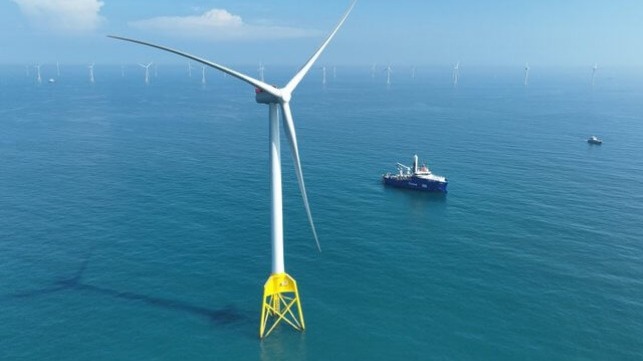
Two sections of the massive Greater Changhua wind farm are now operating, becoming the largest in Asia (Orsted)

PUBLISHED APR 25, 2024 8:31 PM BY THE MARITIME EXECUTIVE


Ørsted along with officials of the government of Taiwan gathered today to celebrate the commission of the first sections of the Greater Changhau offshore wind farms. In addition to being the largest of its kind in Asia, the wind farm doubled Taiwan’s offshore wind energy capacity and it is Ørsted’s first gigawatt-scale offshore wind farm outside of Europe.

"It took us eight years to turn the words 'energy transition' in our policy papers into actual wind farms in operation,” said Taiwan’s President Tsai Ing-wen. “Taiwan now has Asia-Pacific's largest offshore wind farm and our own offshore wind supply chain."

They gathered at the operations and maintenance hub located at the Port of Taichung, in the northwest of Taiwan and along the Taiwan Strait. The commissioning marked the official completion of the Changhau 1 & 2a sections of the massive project, which combined provide 900 NW of capacity. Ørsted is already working on the next phases, 2b and 4, which combine will add another 920 MW when they are commissioned.

“Greater Changhua 1 and 2a is a flagship project of historic significance,” said Per Mejnert Kristensen, CEO of Region APAC at Ørsted. “This project has spearheaded the establishment of the local offshore wind industry as well as contributed significantly to Taiwan’s energy transition and net-zero goals.”

Ørsted began offshore construction in March 2021 and recently announced the successful installation of all 111 Siemens Gamesa SG 8.0-167 DD wind turbines, which are now supplying renewable energy to Taiwan’s electricity grid. The 605.2 MW offshore wind farm Greater Changhua 1 is co-owned by Ørsted (50 percent) and Mercury Taiwan Holdings, a consortium of CDPQ, a global investment group, and Cathay PE, with a combined ownership stake of 50 percent. The 294.8 MW Greater Changhua 2a is 100 percent owned by Ørsted.

The company received the award in April 2018 for the first portions of the area. The first power from the site was generated two years ago in April 2022. It is also Taiwan's farthest offshore site located between 22 and 37 miles from the coast.

Officials noted that Ørsted is playing a leading role in Taiwan’s energy transition. The company arrived in the country as co-owner of Taiwan’s first commercial-scale offshore wind project, Formosa 1. It was extended from a capacity of just 8 MW to 128 MW in 2019.

The next phase is 2b and 4 which are expected to be completed before the end of 2025. The company was awarded the extension in June 2018 and in 2020 entered into a power purchase agreement with Taiwan Semiconductor Manufacturing Company.

Worldwide, Ørsted currently has 7.6 GW of offshore wind projects under construction. This includes the 920 MW in the next phases of Greater Changhua.

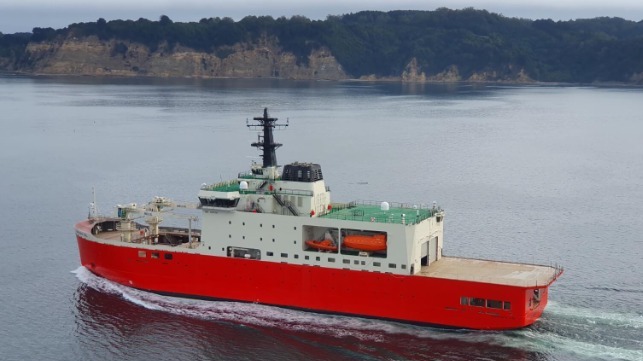
 

Chile’s New Icebreaker Prepares to Enter into Service

Almirante Viel
Courtesy Armada de Chile

PUBLISHED APR 24, 2024 11:43 PM BY THE MARITIME EXECUTIVE


Last week, Chile completed the first round of sea trials for its new polar icebreaker, Almirante Viel. The Chilean government of  President Gabriel Boric lauded the milestone, especially the fact that the icebreaker was built entirely in the country.

The vessel was built by state-owned ASMAR Shipyard based on a VARD design, and is estimated to have cost over $200 million. It is scheduled to be delivered to the Chilean Navy in the last quarter of this year, and is designed to support scientific research in the Antarctic region.

The Navy said that the sea trials proved the success of the project, with all aspects of the icebreaker’s performance evaluated including maneuverability, structural strength and energy efficiency.

“We are happy about this stage after a long period of construction and design. We are working towards this ship being able to reach the cold waters of the white continent and contribute to national development, science and protection of the aquatic environment,” said Rear Admiral, Rodrigo Peñaranda, Chilean Navy Director for Programs, Research and Development.

The 10,500-ton Almirante Viel is a Polar Class 5 icebreaker, capable of breaking one meter of ice at a speed of three knots. It is designed to accommodate 30 researchers, and is equipped with microbiology, hydrography and chemistry laboratories. The vessel has been a source of national pride in Chile, as it is the biggest icebreaking ship ever built in South America.

The icebreaker will replace the previous vessel of the same name, which was in operation from 1995 to 2019. It was acquired as a second-hand icebreaker from the Canadian Coast Guard, and was built in 1969 at Vickers-Armstrong Shipyard in Montreal.

Based on its proximity to Antarctica, Chile wants to play a leading role in the research and conservation through its 12 research stations in the region. Chile has also been at the forefront of supporting international missions to the frozen continent, with 22 countries using the Chilean Magallanes region as port of entry to Antarctica. Chile’s navy believes that the new icebreaker will strengthen its position in Antarctica’s scientific exploration and maritime security.


West P&I: Smugglers are Hiding Cocaine in Cargoes of Coal

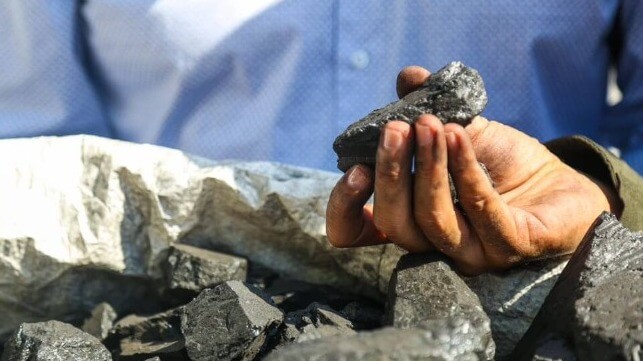
Coal-shaped cocaine from the Gulf Cartel, Baranquilla, 2023 (Policia Nacional)
Coal-shaped cocaine belonging to the Gulf Cartel, Baranquilla, 2023 (Policia Nacional)

PUBLISHED APR 25, 2024 10:16 PM BY THE MARITIME EXECUTIVE


West P&I has released a new report on the state of cocaine smuggling in Colombia, an ever-growing liability for shipping interests. Colombia's cocaine production hit a new record high last year, and smugglers are more aggressive and inventive than ever. Their criminal activity can have significant repercussions for innocent vessel operators who get caught in the middle, Wedst warned. 

Colombia's Dirección Nacional Marítima (DIMAR) reports that smugglers are diversifying in their cargo targets. Reefer containers of bananas are a perennial favorite, but over the last two years, criminal gangs have developed new techniques for disguising cocaine in bulk cargoes. Displaying little concern for the health of their customers, some smugglers are shipping cocaine as "fake coal" hidden within consignments of real coal.

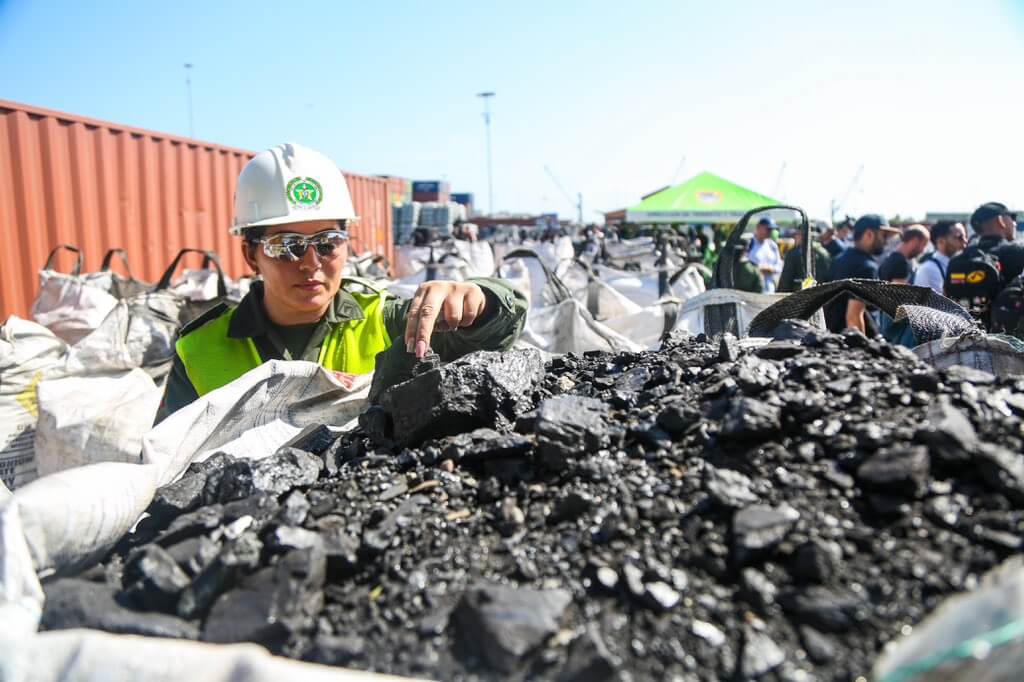
"Coal" shipment at Baranquilla, 2023 (Policia Nacional)

"Drug dealers develop new methods to camouflage drugs within these cargoes every day, managing even to simulate coal texture and shape to traffic drugs without been noticed by security officers or crews," said West's correspondent in Colombia, A&A Multiprime.

Bribery, extortion and corruption go hand-in-hand with smuggling operations, and West warns that port personnel and crewmembers can fall prey to these techniques. The acquiescence or assistance of these insiders is essential to the drug-running enterprise: port personnel can help smugglers access containers, and corrupt seafarers can haul aboard and stow away drugs. The latest trend appears to be for smugglers to stockpile drugs at a safehouse close to a terminal, then collaborate with port personnel to bring the contraband into the facility, often at night. 

Common concealment strategies include stuffing small amounts of cocaine into tucked-away hiding spaces within the ship, sometimes with the help of the crew; burying cocaine packages in bulk cargo; and attaching bundles to the hull or sea chest (though better security measures are discouraging this practice). 

West advises bringing extra security guards on board, keeping a searchlight on at night, checking the hull with a dive team before departure, and searching everyone who comes on board (including the extra security guards). 

The potential repercussions for the operator are significant. An administrative investigation could result in fines up to $50,000. A criminal investigation could result in detention of the ship and crew. Crewmembers could be subject to imprisonment of 8-20 years if found guilty of smuggling.


South Africa Calls for Private Partner for Cape Town’s Liquid Bulk Terminal

Cape Town
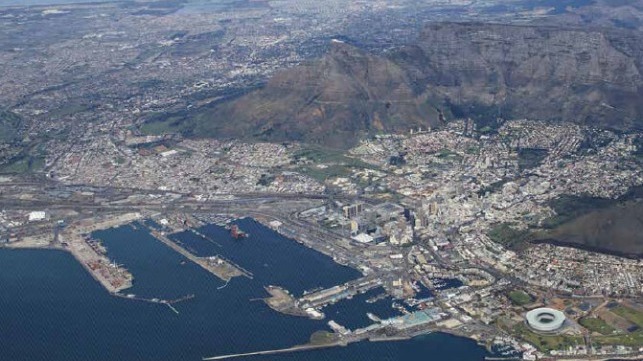
RFP calls for a private partner to develop a brownfield site for liquid bulk in Cape Town (Transnet National Ports Authority)

PUBLISHED APR 25, 2024 9:09 PM BY THE MARITIME EXECUTIVE


The efforts to modernize and improve the operations of South Africa’s port operations are continuing. Transnet National Ports Authority announced that it is beginning an RFP process for the privatization of the operations of the liquid bulk terminal in Cape Town.

Transnet, a government-controlled company, has been under increasing pressure including criticisms from the country’s president due to the poor track record of operations. President Cyril Ramaphosa last year promised quick and meaningful reforms at the company after South Africa experienced massive port congestion and labor unrest. Many of the problems were blamed on poor management and a long-term lack of investment.

The City of Cape Town and the Western Cape provincial government have long been calling for private investment and participation to help solve the port’s problems. Cape Town is one of eight commercial ports managed by Transnet National Ports Authority. The company operates a total of 13 liquid-bulk berths as well as terminals for dry bulk, break bulk, and containers.

The RFP explains that the proposed facility in Cape Town is a brownfield site linked to the Eastern Mole and Tanker Basin berths within Cape Town’s Liquid Bulk Precinct. The port is a major portion of the country’s import and export facility for gas, oil, and chemicals. It is responsible for the efficient movement of liquified cargo across South Africa and for ensuring the security of supply for the country. The new area is approximately 19,000 square meters (4.6 acres).

Transnet is proposing a 25-year concession. The successful bidder will be chosen in a phased project and ultimately responsible to acquire, operate, maintain, refurbish, or construct and transfer a liquid bulk terminal at the Port of Cape Town.  Bids in the first phase of the RFP are due by July 15, 2024.

The launch of the RFP comes as Transnet is still struggling to complete its first privatization program. In a process launched in 2021, Transnet in July 2023 announced it had selected Philippines-based International Container Terminal Services (ICTSI) as the preferred bidder for the privatization of Durban’s container terminal on Pier 2. The awarding of the contract was opposed by factions inside the country and earlier this month it was reported that APM Terminals, the port operator subsidiary of AP Moller-Maersk, was also opposing the completion of the award. APM was passed over as one of the 18 companies that expressed interest in the Durban concession. 

APM is continuing to argue that it would be a better partner and has the broad resources that will be required to modernize the operations in Durban. DCT Pier 2 is viewed as the most critical part of South Africa’s supply chain. It handles nearly three-quarters of Durban port’s traffic and nearly half of South Africa’s container volume for imports and exports. It has long been plagued by delays, congestion, and operating problems.

Transnet looks to move forward with additional privatization partnerships to address the problems in the ports. They are also preparing an RFP for the RoRo terminal in Port Elizabeth.


Red Sea Diversions are Overloading Mediterranean Transshipment Ports

Mediterranean transshipment ports
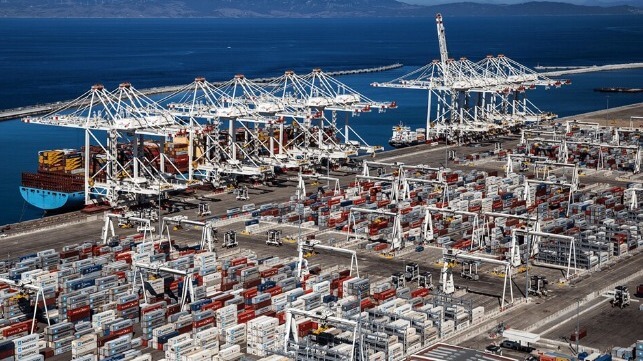
Western Mediterranean transshipment ports are struggling with volume increases due to Red Sea diversions (Tangier Med seaport photo)

PUBLISHED APR 23, 2024 8:37 PM BY THE MARITIME EXECUTIVE


Europe’s transship ports serving the Mediterranean have become the latest to feel the repercussions of the diversions from the Red Sea with many of the ports warning of crowing and lack of capacity as well as longer them normal wait times. In a new report by the Financial Times, they cite overflowing storage yards and severe port congestion which they warn is the latest threat to supply chains.

Experts had previously predicted that the popular transshipment ports including Tangier-Med in Morocco and Algeciras in Spain were likely to experience increased traffic and volumes as carriers began to adjust schedules in 2024 after the introduction of the EU carbon charges. The FuelEU Maritime Regulation known as Fit for 55 was expected to increase the volume of transshipped cargo and the use of feeder vessels. Likely transshipment ports were identified for special consideration in the legislation as sponsored projected carriers would increase transshipments.

The Financial Times is quoting executives from the container terminals in the Western Mediterranean as saying they were all experiencing increases in volumes in 2024 attributed to the vessels diverting from Red Sea – Suez Canal routes to voyages around Africa. 

“Many vessels are dropping off containers at ports on the western side of the Mediterranean such as Algeciras and Tangier,” writes the Financial Times. They are quoting analysts saying it has caused disruptions as critical ports struggle with sharp volume increases. As an example, they cite a 17 percent year-over-year increase in container volumes at Barcelona in February 2024.

Early in April, Maersk warned customers in its European Market Update that it was taking steps including “a number of omissions, diversions, and flow adjustments,” to mitigate the pressures of high yard densities. Specifically, Maersk said it was monitoring yard density levels, especially in Barcelona, Tangier, and Algeciras.

“Due to a congested line-up and increased waiting times at the Port of Barcelona, yard density has increased, and customers are kindly asked to pick up both their import units and empty containers as early as possible. In Algeciras and Tangier, adverse weather conditions and flow delays have contributed to a similar outcome,” Maersk advised its customers.

Executives in Algeciras told the Financial Times that their facility was “quite full” and warned that “capacity is very limited.” They told the reporters the terminal was restricting the amount of business it was accepting to avoid severe congestion. 

Executives in Tangier echoed a similar sentiment saying their yard is “nearly full,” the Financial Times writes. The newspaper’s analysis also showed the vessels are regularly waiting for berths at these ports.

By optimizing connections and reducing transshipment moves as well as obtaining addition moves, Maersk said its teams are working on improving the density levels. They told customers these steps were expected to result in reduced density levels over the next few weeks. 

Analysts however warn the overall pressures are likely to continue due to the combination of the new EU rules along with the expectation that containerships scheduled to service the Mediterranean on routes through the Suez Canal will continue diversions in the near term.


Damen Launches Pilot Project for Green Shipbreaking Under EU Rules

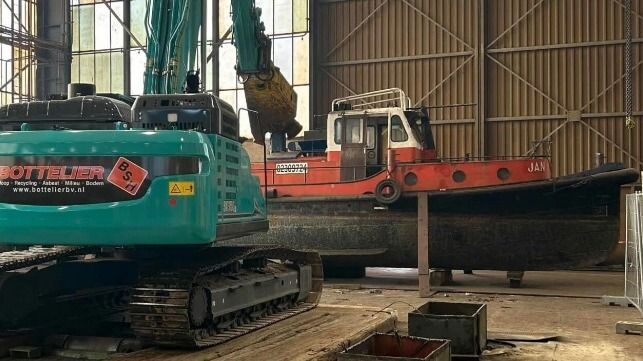
tug dismantling
Damen is running a pilot project dismantling a 1927-built tug (Damen)

PUBLISHED APR 26, 2024 11:11 AM BY THE MARITIME EXECUTIVE


Damen Shipyards Group, best known as a designer and builder of ships, is launching a pilot project exploring the circular approach to retiring and recycling end-of-life vessels. The project will serve as a trial, after which it expects the approach of “green ship dismantling and recycling” will be made commercially available.

“This pilot project fits in perfectly with our ambitions to become the most sustainable shipbuilder in the world,” explains Arnout Damen, the CEO of Damen Shipyards Group. “The question is not just how we design, build, maintain and refit our ships, but also, and precisely, how we dismantle them at the end of their lifespan and, most importantly: recycling.”

The test project involves a small tug that will be dismantled at Damen Shiprepair Rotterdam’s Botlek site. Damen is working with a fully certified specialist in circular demolition called Bottelier Slooptechniek. The partner in the alliance is responsible for the dismantling and sorting work. At the end of the project, it will provide complete transparency about the amount of dismantled materials and how they have been reused, recycled, or disposed of following the rules.

Damen Shiprepair Rotterdam’s Botlek site is one of the few sites in the Netherlands on the EU list of certified Ship Recycling Facilities meaning all of the work will be conducted to meet the EU standards.

The tugboat, which was named Jan, was built in 1927 and was operating from Amsterdam recently. She is 50 feet (15.4 meters) in length. 

“We identify all the materials from the Jan and assess their potential for reuse,” says Nick van Egten, commercial director and co-owner of the Bottelier Group. “In that way, the maximum environmental and economic return can be generated from the materials in their residual life.”

One of the challenges facing the shipping industry is a lack of certified locations capable of undertaking this type of recycling work. Damen reports an approach has already been drafted for the commercialization and financing of circular ship dismantling projects in the future. Damen Financial Services is working in this area with Offshore Ship Recycling Rotterdam and they believe there will be an opportunity to expand the offering to larger ships.


UK Sends Royal Navy Auxiliary Ship to Aid Effort to Build Gaza Pier

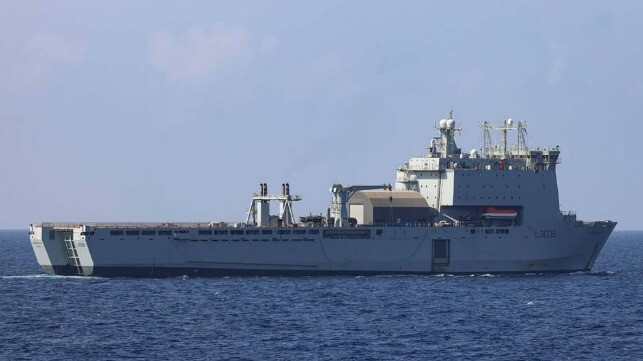
Royal Navy auxiliary ship
RFA Cardigan Bay departed Cyprus to support the effort to build the pier in Gaza (Royal Navy)

PUBLISHED APR 26, 2024 2:05 PM BY THE MARITIME EXECUTIVE


The Royal Navy reported today that its support ship RFA Cardigan Bay is sailing from Cyprus to provide support to an international effort to build a temporary pier for the delivery of humanitarian aid to Gaza. The vessel has been in the region on long-term deployment and was positioned in the Middle East last November as part of the UK's increased presence after the Hamas attack on Israel and war in Gaza began.

RFA Cardigan Bay entered service in 2006 and has been deployed to the Persian Gulf region for more than a decade except for a period of maintenance. She is an amphibious ship designed to carry and offload troops and their equipment through a floodable dock at the stern and a large flight deck. The ship, which is nearly 177 meters long and 16,160 dwt, can also carry “mexeflotes,” 120-foot-long powered pontoons (rafts) that can be used to ferry equipment ashore. She is one of two Bay Class support ships the UK sent to the region.

“RFA Cardigan Bay has shown her flexibility and agility by reconfiguring her role as an Afloat Forward Support Base for MCM Operations, to being ready to support the international effort to construct a temporary pier to expand the flow of aid to Gaza via a sea route,” said Commanding Officer, Captain Simon Herbert RFA. “Over the past few days, we have embarked personnel from the U.S. Army and Navy as well as UK specialist teams to facilitate the construction and operation of the pier, and to operate as a command and control platform.”

The Royal Navy reports the ship will provide accommodation for hundreds of U.S. sailors and soldiers working to establish the pier in Gaza. Specialist British military planning teams were reported to have been embedded with the U.S. operational HQ in Tampa, Florida, as well as in Cyprus to jointly develop the maritime route. The UK Hydrographic Office has also shared an analysis of the Gazan shore with U.S. planners to develop the pier.

UK Defence Secretary Grant Shapps said it is critical to establish more routes for humanitarian aid and that the UK would continue to contribute. He highlights that the UK increased its humanitarian funding and in recent weeks the Royal Air Force has conducted nine airdrops along the coastline of Gaza. Yesterday, the RAF delivered more than 85 tonnes of food supplies, including water and flour.

U.S. ships and personnel have already begun construction of the temporary floating pier as part of ongoing work to significantly expand the delivery of lifesaving aid into Gaza. Earlier this week it was reported that the efforts onshore had come under mortar fire from Palestinian militants.

The pier will initially facilitate the delivery of 90 truckloads of international aid into Gaza and scale to up to 150 truckloads once fully operational, according to U.S. estimates. Critics however point out that international aid workers have called for a volume of 500 truckers per day. 

OOP'S

Updated: Houthi Missile Damages Shadow Tanker Carrying Russian Oil

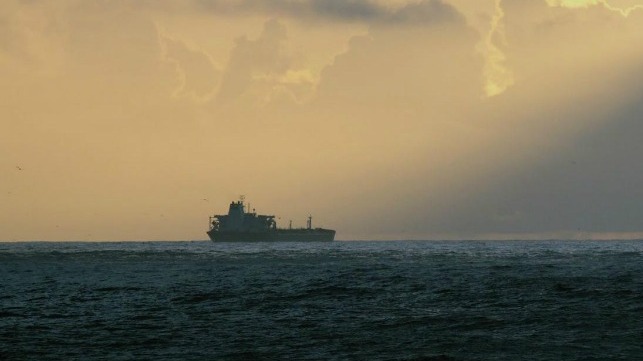
Yemen Red Sea
Reports confirm minor damage on a tanker during two attacks today in the Red Sea

PUBLISHED APR 26, 2024 9:30 PM BY THE MARITIME EXECUTIVE


A tanker traveling in the Red Sea was damaged when the Houthis launched two attacks today. It is the third consecutive day in which they have launched new attacks after a nearly two-week pause. The Houthi missile hit a tanker operating in the so-called shadow fleet and late today U.S. Central Command confirmed two tankers had been targeted.

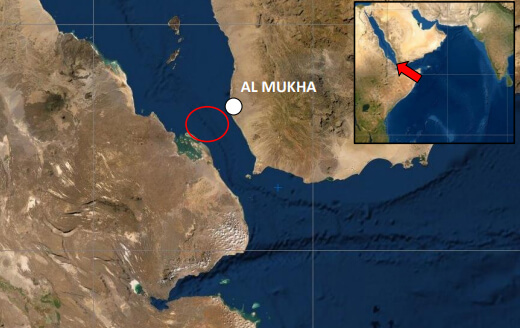
The monitoring operation UK Maritime Trade Organizations confirmed receiving a report of an incident approximately 14 nautical miles southwest of Al Mukha, Yemen. It placed the vessel near the northern reaches of the Bab el-Mandeb strait.

The master of the tanker named Andromeda Star reported two attacks at an interval. CENTCOM is saying the Andromeda Star (registered in Panama) was one of the targeted vessels. The other which was not hit was the Maisha (81,270 dwt) Antiqua/Barbados flagged and heading to the Suez Canal after departing India. It is unclear if either vessel had escorts from any of the naval forces in the region.

The first missile is believed to have exploded very close to the Maisha. The master said the repercussions were felt by the crew on the ship.

The second attack, which may have consisted of two missiles, targeted the Andromeda Star and is reported to have caused minor damage. The vessel was transmitting its AIS signal and was posting messages of no contact with Israel and that it was sailing Russia to India. According to the U.S. report, none of the crew were injured and the vessel continued on its voyage to India.

Ownership and management details on both vessels are somewhat murky. British security consultants Ambrey said that the Andromeda Star had been previously owned by UK interests, but they believe it was sold a few months ago. They reported that the owners are now registered in the Seychelles after a sale in November 2023. The well-known Equasis database after a March incident with the tanker updated information for the vessel also reporting the sale and listing it as managed from Goa, India. CENTCOM repeated a Houthi contention that the vessel's ultimate owner remains in the UK. Ownership of the Maisha is also unclear.


(UKMTO)


Late today a Houthi spokesperson claimed responsibility for an attack only on the Andromeda Star (115,600 dwt). The vessel is a 15-year-old tanker that in March was involved in a collision off Denmark. Bloomberg reported earlier today that the tanker had presented false insurance documents to the Danish authorities and that it was unclear if it was traveling with valid insurance. The Houthi however are calling the vessel a "British oil ship," which is consistent with their previous use of outdated data for some of their targeting.

The Houthi are also claiming to have downed an American MQ-9 Reaper (sometimes called Predator B) unmanned aerial vehicle yesterday over Yemen. CENTCOM did not acknowledge the loss of one of its spy drones, although media reports are saying the drone crashed and it was the third U.S. has lost since the start of the hostilities in November 2023.

Today’s attack follows the targeting of MSC and Maersk containerships over the past two days as the Houthis resumed their targeting of merchant ships. The EU operation and the UK’s Royal Navy reported each had downed assaults from the Houthi. Yesterday, U.S. forces also destroyed one unmanned surface vessel and one unmanned aerial vehicle according to a report from U.S. Central Command.


EU Warns of Continued Piracy Danger After Several Suspicious Approaches

piracy
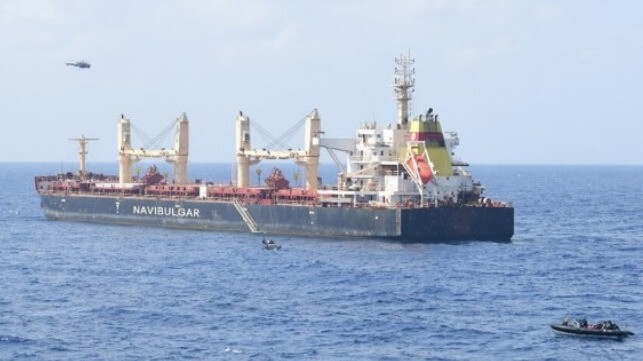
Indian Navy rescued the Bulgarian-owned bulker Ruen last month after being held for months by pirates (Indian Navy)

PUBLISHED APR 26, 2024 2:53 PM BY THE MARITIME EXECUTIVE


The maritime security effort to protect against piracy along the Horn of Africa issued an update warning calling for ships to maintain a heightened state of vigilance in light of the recent escalation in piracy threats. Data from the EU NAVFOR Atalanta shows two suspicious approaches coming a day apart in the past week in the Gulf of Sudan region and the western Indian Ocean.

The warning highlights an area within 700 nautical miles of the Somali coast, and specifically the 500 nautical miles east of Socotra, as the highest level of danger. They estimate that two pirate action groups or more, remain active in the area. 

The Danish-registered product tanker Torm Australia reported a suspicious approach on April 20 while underway from India to South Africa. The master of the 50,000 dwt tanker saw three skiffs in the vicinity of a green trawler approaching while they were 530 nautical miles east of Socotra. Similarly, eleven days earlier, the Singapore-registered product tanker Hafnia Caterina (50,000 dwt) reported two skiffs also with a green fishing dhow approached while they were 480 nautical miles east of Socotra and south of the position of the Torm vessel.

The day after the Torm tanker reported the suspicious approach, the Panama-flagged MSC Diego (56,000 dwt) reported an approach while it was 50 miles southeast of Socotra on April 21. The containership was heading toward the Persian Gulf with scheduled stops in Abu Dhabi and Saudi Arabia. In that incident, three skiffs made a suspicious approach.

Data shows there were also two suspicious approaches in late March. The Yamilah III, a 74,800 dwt crude oil tanker registered in Liberia reported it as an attempted attack. A total of three vessels were assaulted and three more approached in the past 30 days.

The warning states that the payment of ransom could create a new wave of dhow hijackings that could be used to attack merchant ships. The Bangladeshi-owned bulker Abdulla was released on April 12 after ransom was paid. The vessel with its 23 crew reached the Al Hamriya Port in Dubai on April 21.

EU NAVFOR Atalanta also notes that the conclusion of the monsoon period could further facilitate piracy activity in the region.

Currently, they have no ongoing cases after the release of the Abdullah and the rescue of the Ruen by the Indian Navy. However, Atalanta continues to assess the threat as “moderate,” saying that an attack is a “realistic possibility” off the Somalia coast.


Fire on Bulker Temporarily Suspends Traffic on the Dardanelles

bulker fire
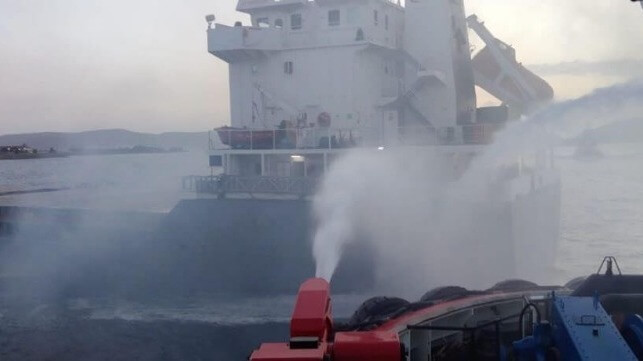
Turkish rescue boats responding to the fire on a bulker that closed the Dardanelles (KEGM)

PUBLISHED APR 26, 2024 11:46 AM BY THE MARITIME EXECUTIVE


Turkey’s Directorate General of Coastal Safety reported that traffic on the strategic Dardanelles Strait was temporarily suspended during the response to an engine room fire on a bulker. The AK Discovery (7,500 dwt) was inbound to the Black Sea and the Bulgarian port of Varna when she reported a fire aboard.

The vessel built in 2001 is registered in Barbados and was coming from Egypt. She is owned and managed from Greece.


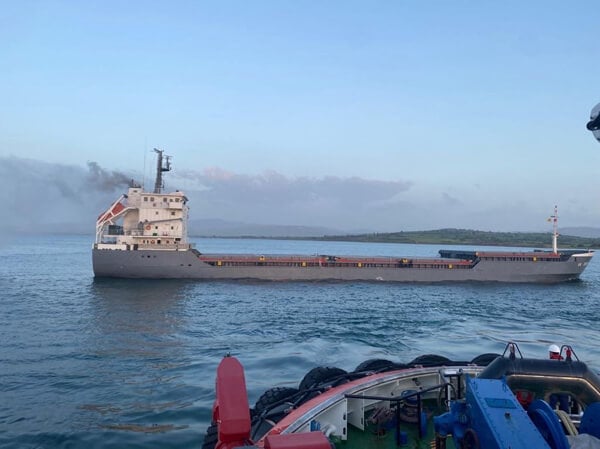
The fire was believed to have begun in the engine room. Smoke could be seen coming from the 352-foot (107.5-meter) vessel which was stopped in the critical waterway.


Bulker drifting in the Dardanelles caused the authorities to suspend traffic in both directions (KEGM)


The Turkish authorities reported that two rescue boats, a fast response vessel, and a pilot boat were all dispatched to the disabled bulker. Images show the rescue boats spraying water on the funnel and stern area of the vessel. The fire was later reported extinguished while the rescue boats continued to cool the area of the ship. 

Once it was determined safe, Rescue-13 was assigned to tow the bulker into a safe anchorage. Traffic was then resumed on the Dardanelles.

The Turkish Coast Guard is investigating the origins of the fire and to ensure the safety of the waterway. The AK Discovery had been cited during a Port State Inspection in Egypt at the beginning of April for issues with its auxiliary engine which was deemed to be "not as required." The vessel, however, was not detained during the inspection.