Saturday, April 27, 2024

Ottawa says pharmacare is coming — here's what you need to know

CBC
Fri, April 26, 2024 

Prescription drugs on shelves at a pharmacy in Montreal. (Ryan Remiorz/Canadian Press - image credit)


The federal government's latest budget sets aside $1.5 billion to implement pharmacare — a major financial commitment with the potential for a wide-ranging impact on the country's health-care system.

The program, long demanded by the government's supply-and-confidence partners in the NDP, will start small by covering just two categories of drugs.

For the program to get off the ground, the provinces and territories also will have to be on board.


Ottawa has made a commitment to expand pharmacare — it's standing up a panel of experts to provide advice on how best to implement a universal, single-payer program sometime in the future.

CBC News has received a number of questions about the program. Here are some answers.

What is pharmacare?

The Pharmacare Act proposes a publicly-funded, nationwide health-care insurance program to subsidize the cost of prescription drugs in Canada.

The stated purpose of the act is to improve the accessibility and affordability of prescription drugs for all Canadians, with a goal of eventually introducing a national, universal pharmacare program.

Canada is the only country in the developed world with a universal health-care program that does not include universal coverage for prescription drugs. Instead, we have a mix of private, public and out-of-pocket insurance plans.

According to the Parliamentary Budget Office (PBO), total prescription drug spending in Canada in 2021-22 amounted to roughly $36.6 billion. Of that total, 46 per cent was covered by public sources, 40 per cent was covered by private insurance, and 14 per cent was paid for out-of-pocket.

Legislation has been laying the groundwork a pharmacare-type program for decades.

The Medical Care Act, passed into law in 1966 but not fully implemented until 1972, established a cost-sharing arrangement between the federal government and the provinces to ensure universal public health insurance for hospitals and physician services.

The Canada Health Act, passed in 1984, enshrined in law the core principles of the public health-care system — that it be publicly administered, comprehensive, universal, portable and accessible to all.

The missing piece — universal prescription drug coverage — is what pharmacare is meant to provide.

What's in Bill C-64, the Pharmacare Act?

In its current form, the proposed legislation would provide universal access to a wide variety of contraceptives and diabetes medication.

If C-64 passes Parliament, Health Minister Mark Holland will begin negotiating with the provinces and territories on a funding commitment that would cover the cost of providing these medications to people for free.

Federal Health Minister Mark Holland speaks about new national pharmacare legislation during a press conference in Ottawa on Thursday, Feb. 29, 2024.

Federal Health Minister Mark Holland speaks about new national pharmacare legislation during a press conference in Ottawa on Thursday, Feb. 29, 2024. (Patrick Doyle/The Canadian Press)

According to Health Canada, nearly 10 per cent of the population lives with diagnosed diabetes. A quarter of those diabetics say their treatment plans are affected by the cost of drugs.

Bill C-64 would subsidize access to diabetes medications that lower blood glucose levels, such as insulin and metformin.

The full list of diabetes medications the government is suggesting will be covered can be found here. They include Glulisine, Detemir, Saxagliptin and metformin, among others.

The bill also would cover access to contraceptives for roughly nine million Canadians of reproductive age. The federal government says the coverage will reduce unplanned pregnancies and lower costs for health-care systems nationwide.

The full list of contraceptives to be covered can be found here. They include a variety of oral birth control pills, copper and hormonal IUDs and emergency contraceptives.

That's it for now. The federal government says it's planning to introduce universal pharmacare incrementally. This first phase will be evaluated before the government looks to expand to a nationwide single-payer model.

When will Canadians get access to pharmacare?

The short answer is ... it depends.

Holland has said he hopes to have the first phase implemented with the provinces by the end of the year. That timeline depends on the federal government reaching agreements with the provinces.

That means residents of some provinces might have access to pharmacare sooner than others.

If the bill passes, the Canadian Drug Agency will then develop a national purchasing plan and a national formulary of prescription drugs.

It's not clear how this process might affect the federal government's timeline.

What are the provinces saying?

So far, both Alberta and Quebec have said they plan to opt out of pharmacare if it's enacted. Both provinces say they want to invest their share of the program's funding in their own health systems.
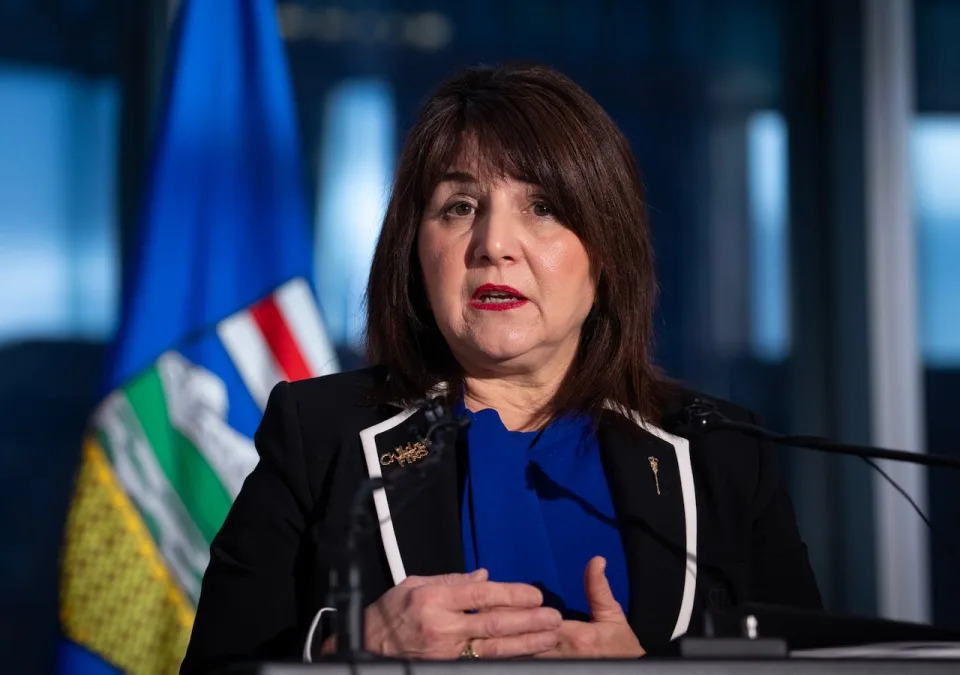
Adriana LaGrange, Minister of Health for Alberta, makes a health care announcement in Calgary on Thursday, Dec. 21, 2023. THE CANADIAN PRESS/Todd Korol

Adriana LaGrange, minister of health for Alberta, makes a health care announcement in Calgary on Thursday, Dec. 21, 2023. (Todd Korol/The Canadian Press)

The Ontario government has yet to commit and has said it wants to see more details before backing the legislation. The government of B.C. has reacted favourably to the legislation.

The other provinces and territories have signalled they are open to taking part in the program but want to see more details before committing.

The pharmacare pitch comes after the federal government last year offered the provinces and territories $196 billion over 10 years for their health systems — $46 billion of which is new spending.

How much is this going to cost?

Federal officials have yet to confirm the exact cost of the first phase of the pharmacare program.

Without finalized agreements with the provinces, it's hard to say exactly how much the program will cost. Estimates released in the federal budget indicate that the first phase will cost $1.5 billion over five years.

The cost of a fully implemented, universal, nationwide, single-payer prescription drug program is estimated at $33.2 billion in fiscal 2024-25, climbing to $38.9 billion in fiscal 2027-28, according to the PBO.

The projected cost to the federal government would range from $11.2 billion in 2024-25 to $13.4 billion in 2027-28.

Despite expected growth in prescription drug use, the PBO predicts that lower drug prices would help contribute to economy-wide savings of about $1.4 billion in 2024-25, incrementally rising to $2.2 billion in 2027-28.

What are pro-pharmacare advocates saying?

According to Statistics Canada data, one in five Canadians "remain uninsured and pay out-of-pocket for prescription medications."

Pharmacare advocates also note that Canadians pay some of the highest individual prescription drug prices among OECD countries.

Nikolas Barry-Shaw of the Council of Canadians, an independent progressive advocacy group, said the cost of the "status quo" is more than the cost of a national universal prescription drug program.

Barry-Shaw said that such a program would help reduce the strain on hospitals — because if more people have access to prescription drugs, fewer of them are likely to be hospitalized.

What are others saying?

Critics of pharmacare claim the program would reduce the variety of drugs available to Canadians and say the funding could be put to better use elsewhere in the health-care system.

Dr. Bettina Hamelin, president of Innovative Medicines Canada — which represents pharmaceutical companies — said that "moving provinces and territories towards a single-payer pharmacare system would ultimately reduce the quality of drug coverage for most Canadians."

Opponents of the legislation point to the wide range of coverage already available to the vast majority of Canadians. Roughly 88 per cent of Canadians already have comprehensive prescription drug coverage.

The Canadian Association of Pharmacists, which represents over 45,000 pharmacists across Canada, is calling for a mixed-payer model that builds on public and private insurance programs.

What does the future look like?

Assuming the bill passes through Parliament, much depends on whether the federal government can get enough support from the provinces. And there's a federal election coming next year.

Conservative Leader Pierre Poilievre has not said whether he would scrap pharmacare. He has criticized the idea by suggesting that it would "ban" private insurance plans. (The proposed legislation would not ban private plans.)
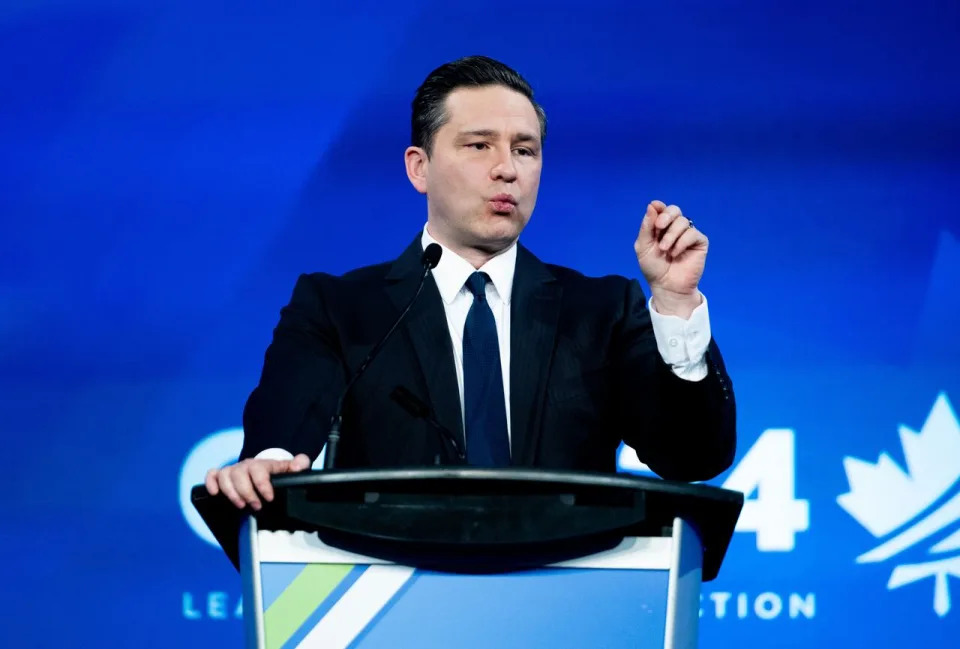
Conservative Leader Pierre Poilievre speaks during a Canada Strong and Free Network event in Ottawa, on Thursday, April 11, 2024.

Conservative Leader Pierre Poilievre speaks during a Canada Strong and Free Network event in Ottawa on Thursday, April 11, 2024. (Spencer Colby/The Canadian Press)

Poilievre also has hammered the Liberals over their deficit spending, casting doubt on the future of new Liberal social programs under a government led by him.

"It is imperative for this to get rolled out as quickly as possible," said Barry-Shaw.
CRYPTOZOOLOGY
Ocean predator missing since 1800s appears in fishers’ net in Chile. Take a look

Irene Wright
Fri, April 26, 2024 

Artisanal fishers on the coast of Chile were on the hunt for bony fishes when they dropped their gillnets into the water.

Pulling the nets through the water, something much bigger — and important — landed in the hands of the fishers.

It was a missing species.

In 1887, a researcher published the description of a Chilean angel shark, a small, ray-like shark that lives in shallow coastal waters, but it was incomplete and lacked accuracy, according to an April 25 study published in the European Journal of Taxonomy.


Angel sharks are bottom-dwelling sharks that ambush their prey as they swim overhead.
Discover more new species

Thousands of new species are found each year. Here are three of our most eye-catching stories from the past week.

The study author in 1887 supplied only a few body measurements, hardly enough to differentiate the specimen from other closely related species, the researchers said.

Then, the holotype, or collected animal, was lost, and the scientific record of Chilean angel sharks was left empty, according to the study.

A few times through history the sharks appeared in bycatch, or accidentally caught, by fisheries, helping to update some of the basic information about the species, the researchers said, but a complete description of the species was missing.

Then the sharks landed — literally — right in their hands.


The angel sharks have small “hook-like” thorns on the top of their head and bodies, researchers said.

Two full sharks and one head of a third were captured by the fishers and frozen, then brought to the National Museum of Natural History in Santiago, Chile, according to the study.

There, the researchers confirmed they were looking at two Squantina armata, or Angelote in Spanish and Chilean angel shark in English.

The sharks are a little more than 3 feet long and have flat bodies that look more like rays than sharks, according to the study.

The sharks also have “enlarged dorsal thorns,” meaning small, sharp “hook-shaped” growths on the top of their heads and on their backs, the researchers said.


The thorny species is critically endangered as their habitat dwindles, researchers said.

Very little is known about the Chilean angel shark, and because of a lack of research and sightings, the species is listed as “critically endangered” by the International Union for Conservation of Nature Red List.

Other angel sharks, like the common angel shark, are ambush predators who lie in wait for small fish, crustaceans, mollusks and cephalopods to pass overhead before they attack, according to the National Ocean and Atmospheric Administration.

They are “nocturnal bottom-dwellers,” NOAA says, and spend most of their life buried in the sand and mud of coastal sediment.

The researchers say understanding and identifying the species is “indispensable” for their conservation, as they are threatened by coastal development, habitat degradation and fishing, according to the study.

“Recent taxonomic studies on angel sharks … with this updated morphological characterization of the Chilean angel shark, questions on geographic range, estimations of abundance, and real incidence in landings can be clarified to ultimately inform better conservation practices of this critically endangered species and other angel sharks on the Pacific coast of America,” the researchers said.

The sharks were caught near Playa Seremeño in northern Chile on the Pacific coast.
New Brunswick to mourn those who never returned from work

APRIL 28 DAY OF MOURNING

CBC
Sat, April 27, 2024 

Moncton's commemoration ceremony for workers will take place on Sunday at noon at the cenotaph in Bore Park. (Melissa Brown - image credit)


Melissa Brown tells the story of a woman who set the breakfast table in anticipation of her husband's return. But it never happened because of a workplace accident.

"She was six months pregnant with her first child and her 27-year-old husband didn't make it home," said Brown, the president of the Moncton & District Labour Council.

Brown said that woman will share her story Sunday afternoon during an event at Moncton's Bore Park to mark a national day of mourning.


Melissa Brown, president of Moncton & District Labour Council, said workplace accidents can impact several lives and those attending Sunday's Moncton gathering will hear the story from a victim's family.


Melissa Brown is the president of Moncton & District Labour Council. (Melissa Brown)

April 28 commemorates workers who have lost their lives, faced injuries or suffered illnesses due to their work, according to a Government of Canada news release.

"I can't imagine what these families go through," Brown said.

Daniel Légère, president of New Brunswick Federation of Labour, said these kinds of accidents are preventable if employers provide proper training and make sure that their workplaces and equipment meet safety standards.

He said 14 New Brunswickers didn't come home from their work shifts in 2023.

Légère said many working as fishermen, hydro workers, construction workers, and in several other industries have been victims of workplace accidents.

He said the federation encourages workers to participate in their workplace health and safety committees to ensure that their workplaces have the most up-to-date first-aid kits and trained first-aid providers.

He said he has witnessed cases where employers have walked away with fines and without being criminally charged while a worker has lost their life due to a workplace safety issue.

(Left to right) Bryan Harris, vice president of the Moncton & District Labour Council, Melissa Brown, president of the Moncton & District Labour Council, and Daniel Légère, president of New Brunswick Federation of Labour, at the national day of mourning ceremony 2023.

Bryan Harris, left, vice-president of the Moncton & District Labour Council, Melissa Brown, centre, the president of the Moncton & District Labour Council, and Daniel Légère, president of New Brunswick Federation of Labour, are shown at the national day of mourning ceremony in 2023. (Melissa Brown)

Légère said criminal charges in some cases "would certainly send a message to all employers that health and safety is a priority and every worker that goes to work … should come back home to his family."


Serge Plourde, president of Bathurst & District Labour council said there should be stricter actions taken against employers not ensuring workplace safety standards.

Serge Plourde is the president of Bathurst & District Labour Council. (Serge Plourde)

Serge Plourde, president of Bathurst & District Labour council, echoed Légère's words.

Plourde said the companies should be criminally charged if they don't provide their workers with proper supervision and training.

He said he would also like to see more detailed, area-specific reports about how many workers get ill, injured or lose their lives across New Brunswick.

"According to the Association of Workers' Compensation Boards of Canada (AWCBC), in 2022, there were 993 workplace fatalities recorded in Canada, 33 of which were young workers aged 15-24," according to the Government of Canada release.

Several gatherings to mark the day of mourning will be held across the province on Sunday.


IN CANADA IT'S THE LAW 


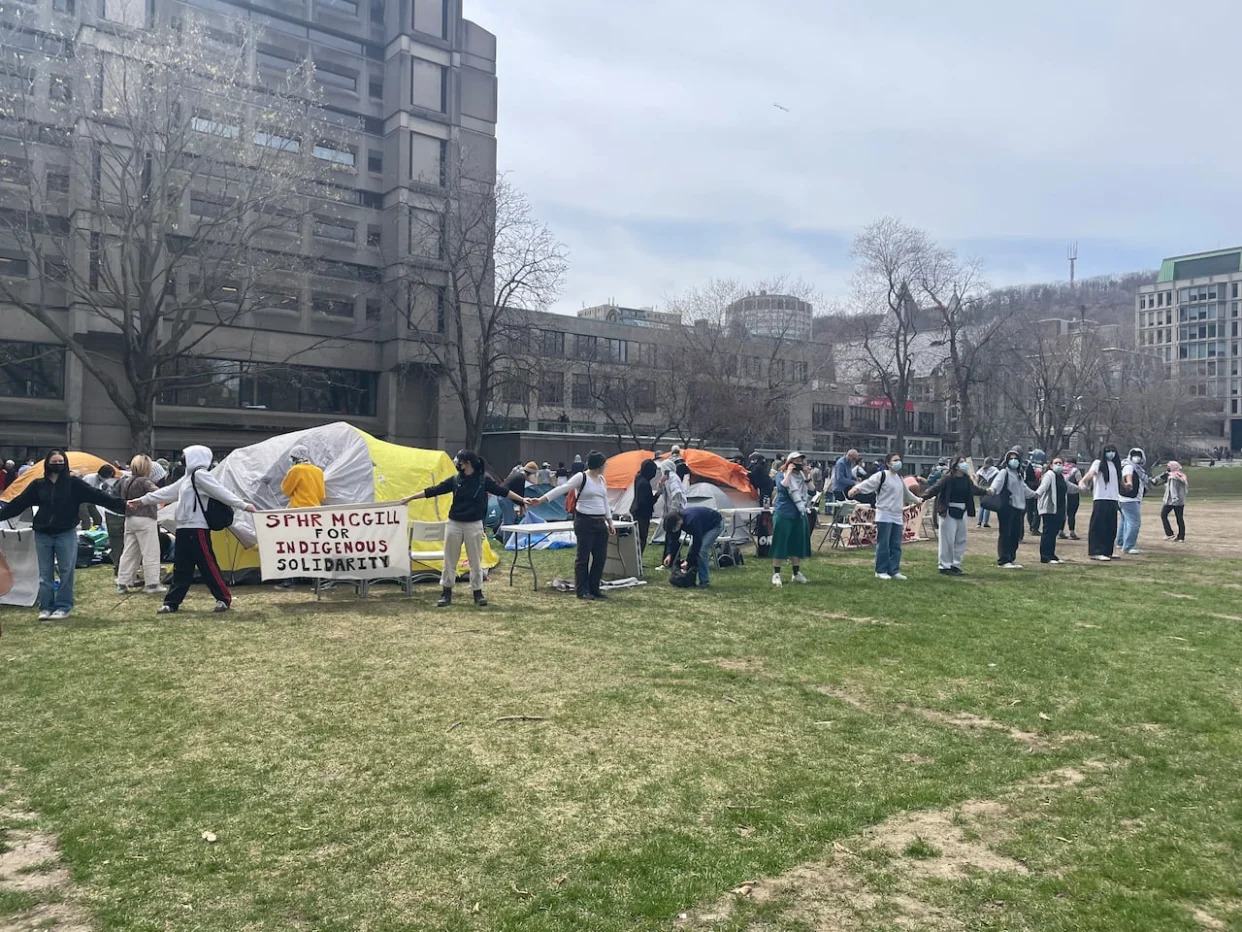
Students set up indefinite pro-Palestinian encampment at McGill University

CBC
Sat, April 27, 2024 

The indefinite encampment went up around 1:30 p.m. Saturday. (Jennifer Yoon/CBC - image credit)

About a dozen tents have gone up on McGill's downtown campus in what students are calling an act of solidarity with the Palestinian cause, joining a wave of similar protests taking place across U.S. campuses.

Protestors are demanding McGill and Concordia universities "divest from funds implicated in the Zionist state as well as [cut] ties with Zionist academic institutions," according to a statement sent to CBC News by Zaynab Ali, a McGill student participating in the protest.

The Montreal chapter of the Palestinian Youth Movement called the encampment "indefinite," adding that it refuses to let universities "be complicit in genocide," in a social media post on Instagram.


Another student group, Solidarité pour les droits humains des Palestiniennes et Palestiniens also urged UQAM's students and personnel to join in as well, in a post to Facebook.

In an email to CBC News, McGill University says it's aware the encampment is happening and it supports the right of its students to freedom of expression and freedom of assembly within the bounds of the university's policies and law. It says its security officers are on site.

Pro-Palestine protesters march through downtown State College, demanding Penn State changes

Halie Kines, Josh Moyer
Sat, April 27, 2024 

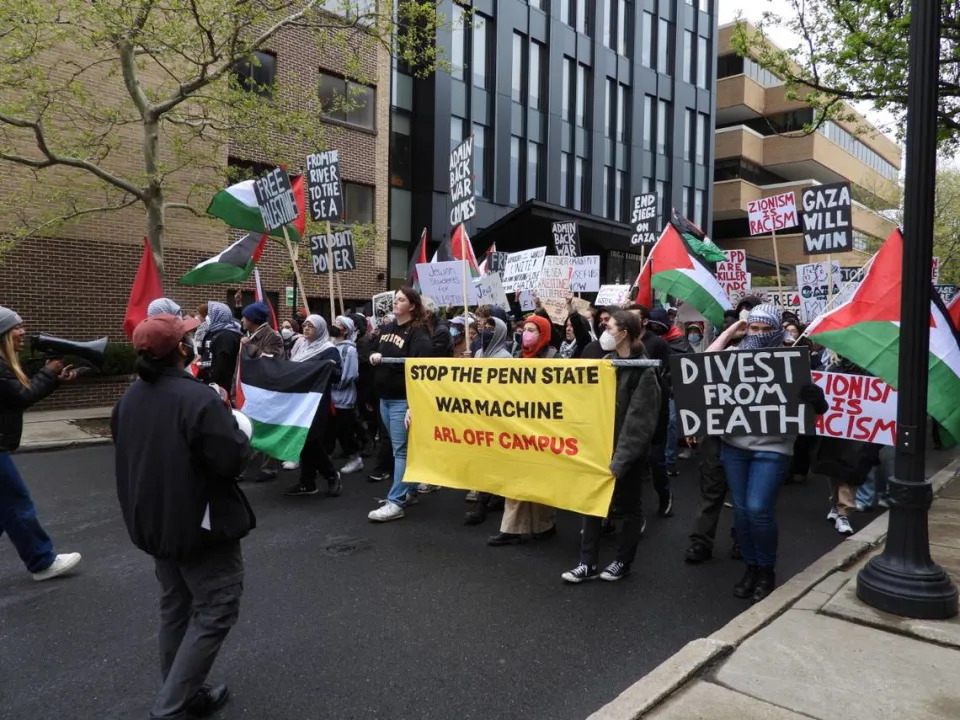
Two days after rallying in front of Old Main on the Penn State campus, about 200 pro-Palestine protesters marched through downtown State College on Saturday afternoon, blocking traffic as a few police trailed closely behind.

Protesters chanted many of the same demands they made Thursday — including for Penn State to divest from Israel and to free Palestine. The protest was held in recognition of the upcoming International Workers Day because, organizers said on Instagram, workers’ struggles against oppressors aren’t unlike those facing the people of Palestine.

The march was also held on a day the university expected plenty of visitors, with its first outdoor concert at Beaver Stadium in seven years scheduled for 5:45 p.m. Saturday.


The protest began at the Allen Street gates at 2 p.m. Saturday, before marching through parts of Beaver and College avenues, along with Burrowes Street, Fraser Street, and others. Protesters also made stops at Old Main and Penn State’s Applied Research Laboratory, which is affiliated with the U.S. Department of Defense.

Pro-Palestine protesters march through downtown State College and the Penn State campus on Saturday afternoon for many of the same demands they made during a Thursday protest — including for Penn State to divest from Israel and to free Palestine.

A handful of police officers stood in front of the ARL’s door, and the march appeared to remain peaceful.

“We are here today as part of a movement,” said Roua Daas, of Penn State Students for Justice in Palestine, “as part of a movement of students, of community members, of Palestinians, of Black and Brown people everywhere that are saying, ‘We will not do this anymore.’ ...

“We will not stop. We will not stop until Penn State has divested. We will not stop until there is a ceasefire.”

Saturday’s march ended shortly after 5 p.m. Saturday, after protesters returned to campus and spent some time in front of Old Main.

The State College Police patrol officer in charge Saturday, Ken Shaffer, told the CDT that police were aware of the possibility of a march.

“It is a criminal violation to block a roadway like that, but we do give some leeway at times as long as no one is being hurt,” Shaffer added. “I’m not sure if that’ll be the case moving forward here, and that’s a decision that’s made every time by our administration.”

Penn State is the latest campus to see these types of recent events, joining other protests across the nation including University of Maryland, American University and Purdue University. Other colleges, like Harvard, Brown University and Michigan State University, have seen protesters set up encampments on campus. More than 400 arrests have been made across many campuses, according to the New York Times.

State College Police did not arrest anyone in connection with Saturday’s protest, as of late Saturday afternoon, and no damage had been reported, Shaffer said.

Pro-Palestine protesters march through downtown State College and the Penn State campus on Saturday afternoon for many of the same demands they made during a Thursday protest — including for Penn State to divest from Israel and to free Palestine

UNC students camped out to protest Israel-Hamas war say: ‘We will not be leaving.’

Korie Dean
Fri, April 26, 2024 at 11:29 a.m. MDT·5 min read


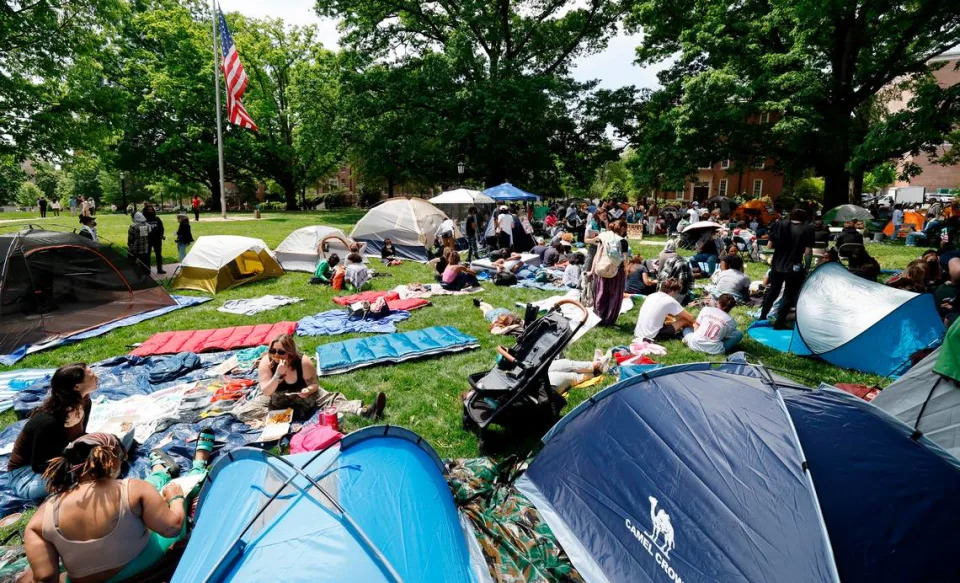
Students and others pitched tents on the campus of UNC-Chapel Hill Friday, calling on the university “to divest from the ongoing genocide in Gaza” and forming an encampment similar to others on college campuses nationwide.

The event, which began around 10 a.m., was organized by the UNC chapter of Students for Justice in Palestine, which has held protests and other events on campus this academic year to support Palestinians as the Israel-Hamas war continues.

“We emphasize that this encampment serves to show solidarity with Gaza, which now has no more universities due to Israeli massacres with US-made bombs. We stand in solidarity with our comrades at Columbia and across the US who have been repressed, arrested, and physically attacked,” the group said in a news release Friday morning, referencing the ongoing protests at Columbia University that have become a flashpoint of pro-Palestinian student activism in recent weeks.

Protesters gather amongst their tents as part of a Gaza Solidarity Encampment at Polk Place on the campus of UNC-Chapel Hill on Friday afternoon, April 26, 2024.

“The central purpose, however, of this encampment is to meet the demands of the present moment, and to center Palestine and call attention to the university’s participation in the genocide in Gaza,” the release stated.

More than a dozen tents and over 100 people filled the middle of Polk Place, the central quad on the main part of campus. The tents were decorated with signs reading “Gaza solidarity encampment” and “free Palestine,” among other sayings.

Friday marked the second time in a week that the group has formed a tent encampment on campus to call attention to their demands. A week earlier on April 19, the group formed a similar encampment before being told by administrators that setting up temporary structures, including tents, on university grounds is prohibited unless approved in advance.

Protesters set up a tent as part of a Gaza Solidarity Encampment at Polk Place on the campus of UNC-Chapel Hill on early Friday afternoon, April 26, 2024.

Students on Friday were seen speaking with university administrators Christi Hurt and Desirée Rieckenberg — interim Chancellor Lee Roberts’ chief of staff and the dean of students, respectively — throughout the afternoon, appearing to negotiate terms that would allow the group to remain protesting but to take down their tents.

Friday around 1 p.m., a student organizer announced to the encampment that they had reached an agreement with the administrators to take the tents down by 1:45. The group, which removed the poles from the tents but left the fabric remaining on the ground, planned to remain on the quad at least throughout the afternoon — but likely much longer.

“I just want to say loud and clear, that even though we take the poles out of our tents, we will remain here,” the student organizer said around 1 p.m. “We will not be leaving until the university divests.”

An evening Shabbat service, hosted by Jewish community groups in collaboration with the encampment, was planned for 7:30.
What the students want from administrators

In an Instagram post Friday, UNC SJP outlined its four demands for the university: to “acknowledge the ongoing genocide in Palestine,” to provide “full transparency of UNC investments,” to divest “from companies complicit in this genocide” and to end university study abroad programs to Israel.

UNC SJP said in its news release that students have, since the war began, “asked to meet university administrators to discuss the communities’ demands for disclosing UNC investments and to demand divestment from companies that benefit from Israeli Apartheid and the ongoing genocide in Gaza.”

Sylvie, a UNC SJP member who identified themselves as a graduate student at the university but who did not provide their last name, told The News & Observer that the group has not received such a meeting.

“We have communicated our demands, which have not changed since October, to the administration, who has met us with not only ignorance and negligence, but also, as of recently, threats, discrimination and punishment, which we see as deeply concerning, and reflective of their ideological commitment to upholding the genocidal status quo,” Sylvie said.

At committee meetings of the university Board of Trustees last month, SJP members disrupted the proceedings multiple times with pro-Palestinian chants before being told, including by trustee Dave Boliek, that additional disruptions would result in their arrest. Under state law, anyone “who willfully interrupts, disturbs, or disrupts an official meeting and who, upon being directed to leave the meeting by the presiding officer, willfully refuses to leave the meeting is guilty of a Class 2 misdemeanor.”

At the full-board meeting the next day, Roberts invited the group to nominate a representative to address the trustees and list their concerns. The group nominated Sylvie, who spoke for roughly three minutes. Later, the group again began to chant over the meeting and were escorted out by university police.

Roberts said after the meeting that he “certainly” understands and appreciates the group’s “desire to be heard.”

“Peaceful protest has a long, noble tradition on this campus, on other college campuses in our country, across Western liberal democracies,” Roberts said.

Sylvie said Friday that they didn’t understand the administration’s “strategy” in allowing the group to speak.

“But it didn’t work,” they said. “Because we’re here now.”

The agreement reached between administrators and protesters Friday included only the decision to remove the tents, and did not result in a meeting with Roberts, Sylvie said.

Friday’s events were peaceful, with members of the encampment sharing meals, playing music and gathering for prayer. A group of about 15 to 20 counter-protesters arrived around 2:30 p.m. Several left quickly after speaking with UNC police chief Brian James, while others remained on the quad but at a distance from the encampment.

After the counter-protesters arrived, the members of the encampment began playing music and chanting phrases including “From the river to the sea, Palestine will be free.”

That chant has been a common rallying cry, but the Anti-Defamation League considers it an antisemitic phrase seeking the elimination of Israel and the removal of Jewish people from the area.

Mendy Heber, a rabbi, said he came to campus Friday to support Jewish students.

“I think the Jewish kids need support. I think they feel threatened and I think that [they] feel under siege,” Heber said.

Heber said he believes that the encampment at UNC and the similar ones at universities across the country are “a pretty organized effort to create havoc and make chaos all over,” which he believes protesters could use “as a leveraging point” to get government bodies and other agencies to meet their demands.

Sylvie said of the rally: “This is about freedom. This is about Palestine.”

“This is about humanity and people with consciences who believe that humanity deserves dignity.”


Students and others pitched tents on the campus of UNC-Chapel Hill Friday, protesting Israel’s actions in the Gaza Strip and forming an encampment similar to others formed on college campuses nationwide.


City College of New York becomes latest site of heated pro-Palestinian demonstrations

Roni Jacobson, Elizabeth Keogh and Cayla Bamberger, New York Daily News
Thu, April 25, 2024 


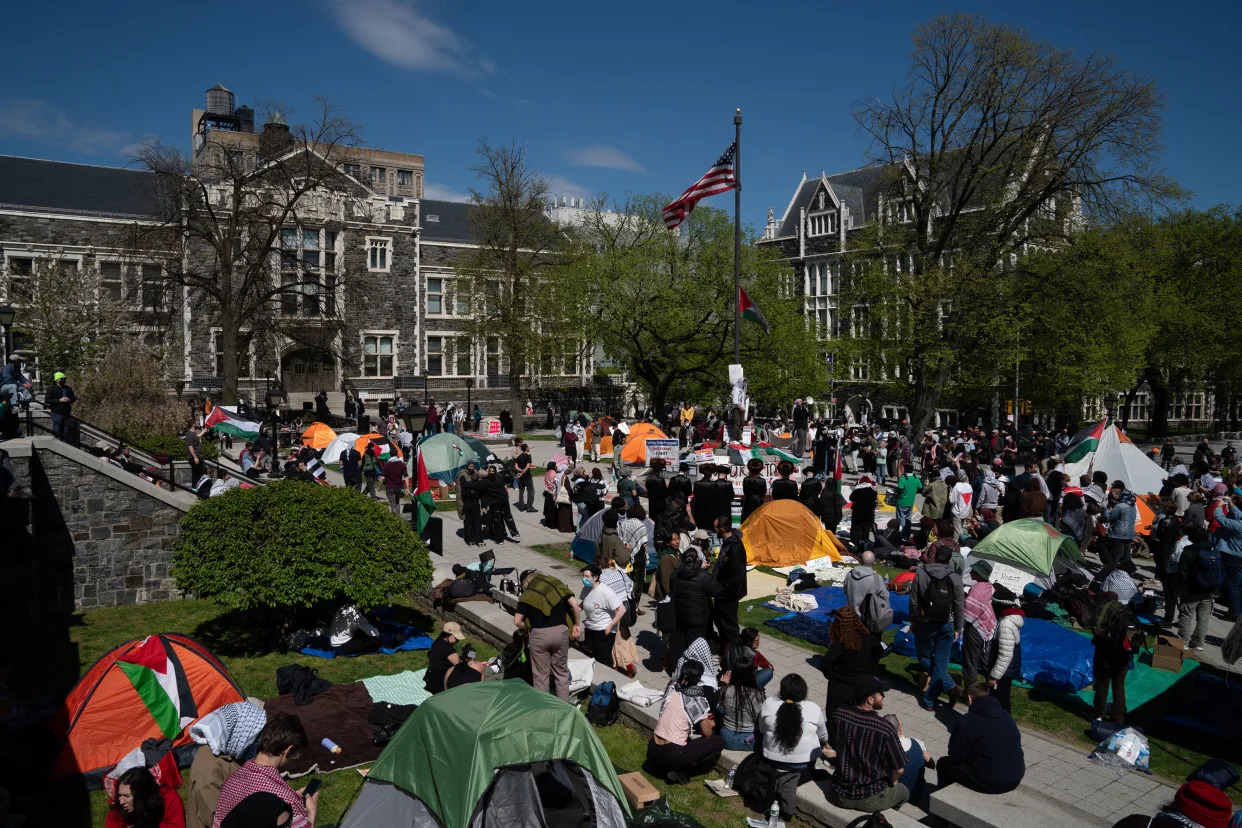
NEW YORK — Students set up a pro-Palestinian encampment Thursday at City College of New York, with one passerby being driven away when a protester claimed she could “smell” he was a “Zionist.”

Concern about antisemitism at protests sweeping campuses around the nation has grown in recent days, sparking demands for university officials to act more decisively to dismantle the demos.

Protests at Columbia University and New York University have led to the arrests of more than 200. The State University of New York’s Fashion Institute of Technology saw a small pro-Palestinian encampment pop up Thursday, following a similar demonstration at The New School.

At City College in Harlem, students have erected dozens of colorful tents around an American flagpole, where they also hung a Palestinian flag. “CUNY Students Resist Zionism” and “BY ANY MEANS NECESSARY,” signs read.

On Thursday night, protesters at the campus were seen booing a passerby and driving him away from the demonstration.

“I can sniff you, we can all sniff you,” one protester sneered at the man. “We can smell the Zionist on you.”

The protester told the New York Daily News the person she’d targeted was “frowning and recording” as he passed.

“I just could tell he was a Zionist,” said the woman. “They victimize themselves so quickly.”

CNN initially reported that university officials had been in touch with the NYPD, with plans to clear the encampment at about 5 p.m., but posted an update citing an unnamed law enforcement official saying “no action is imminent.” A call to the NYPD seeking clarification was not immediately returned.

“In solidarity with Palestine, while following the legacy of the CUNY student organizers that came before us, we have established the CUNY GAZA Solidarity Encampment at City College, the oldest campus from the City University of New York,” students wrote on Instagram.

CUNY students are calling for the university system to divest from Israel, ban partnerships and trips to Israel such as Birthright and Fulbright programs, reverse student and faculty disciplinary action related to pro-Palestinian activism and remove police from campus.

They also called on CUNY to release a statement “affirming the right of the Palestinian people to national liberation and the right of return,” and to make CUNY tuition-free.

“We demand a fully-funded, free CUNY that is not beholden to zionist and imperialist private donors,” the students wrote.

Throughout the afternoon, students shouted chants like, “Disclose, divest, we will not stop, we will not rest.” Some of them were skipping their plans for spring break, which runs through Tuesday, to be at the encampment.

“Frankly, I can’t really relax in a time like this,” said Andrew Shapiro, a PhD sociology candidate at the CUNY Graduate Center and part-time faculty member at Hunter College, who is Jewish. “I have not felt like I could relax comfortably, like I can be a student normally. Nothing feels normal as an ongoing genocide is happening, allegedly in my name.”

“People were away and they flew back in,” said Hadeeqa Arzoo, a student at City College. “They flew from home to be here, and I think that speaks volumes to what this means for many people.”

Arzoo, who’s majoring in political science and international relations, said the encampment at Columbia “really lit a fire under us” that could not be delayed until after the break. CUNY officials had not engaged in any negotiations as of Thursday afternoon, she noted.

“As of right now, we’re seeing what happens,” Arzoo said. “Because we’re not moving. We’re not gonna be intimidated into silence. We’re here.”

Meanwhile in Chelsea, students set up a similar encampment inside the Fashion Institute of Technology.

Demonstrators stormed into The Museum at FIT on W. 27th St. and Seventh Ave., Fox News reported. Video shows scores of people pushing through the doors, where a security guard worked to pull them closed but was overtaken.

“Free, free, free Palestine,” protesters shouted as they took over the lobby of the on-campus museum.

By early Thursday evening, about 60 protesters remained in the lobby, where tents and a sign stating “FIT Gaza Solidarity Encampment” were set up.

A student group said in a statement they’re calling on FIT to divest from Israel and provide amnesty from disciplinary action. Encampment rules include: “Do not under ANY circumstances talk with NYPD or media.”

The NYPD had not responded to the site as of Thursday evening.

“We are monitoring and managing the situation to ensure the safety of the entire FIT community, which remains our highest priority,” a FIT spokesperson said in a statement.

At City College, a spokesperson said it was in the process of determining if the protesters were affiliated with CUNY.

“While The City College of New York is strongly committed to the principles of freedom of speech and expression on campus, it is mindful of any action that may cause disruption to our community in any way,” the spokesperson said in a statement.

“CCNY’s longstanding position is that any legitimate protest — by any group that is part of our community — must be peaceful, respectful, nonthreatening, and devoid of any hatred or intimidation. It must also not interfere with any activities on campus.”

The encampment included a poster to “Support the Five Demands Viva Palestina,” resembling similar signage to “Support the Five Demands Viva Harlem U” in April 1969, when a group of Black and brown students set up a tent demonstration to promote racial equity.

____

Columbia University president Minouche Shafik in hot water for handling of pro-Palestinian protests

Mariamne EVERETT
AFP
Fri, April 26, 2024 


As pro-Palestinian student protests at Columbia University continue, university president Minouche Shafik finds herself under fire from all sides as politicians, students and faculty all call for her to resign over her handling of the sit-ins. Columbia's university senate is scheduled to meet on Friday to vote on a resolution that would express displeasure with her decision to summon police to arrest protesting students on campus.

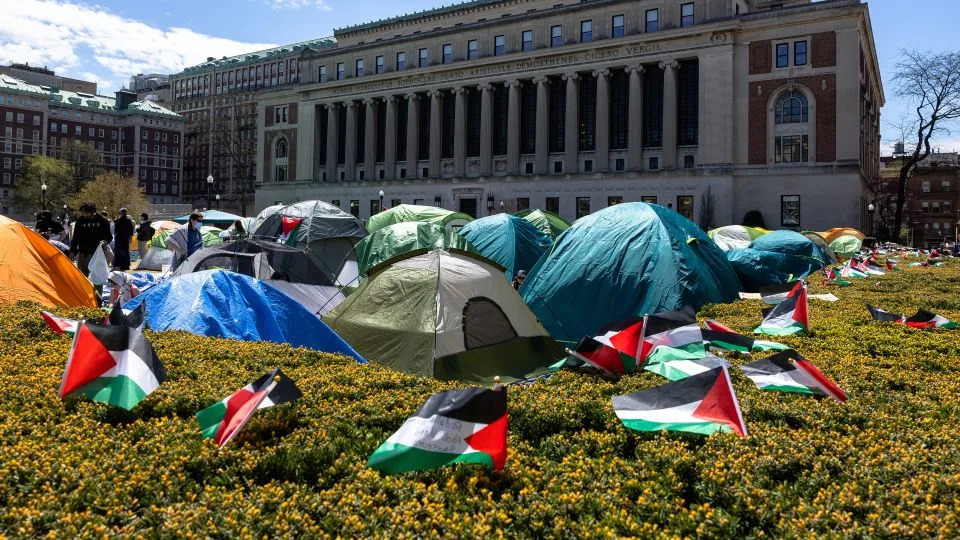
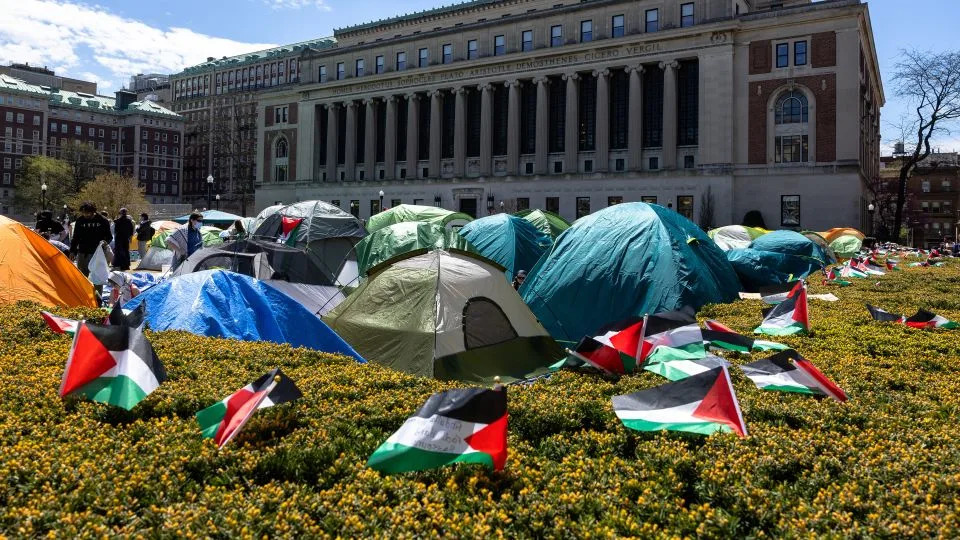
Shortly after the Israel-Hamas war entered its six month, pro-Palestinian students at Columbia University established an on-campus encampment on April 17 of approximately 50 tents, called the Gaza Solidarity Encampment, to put pressure on the elite Ivy League university to cut ties with Israeli academic institutions and divest from Israel.

The encampment was forcibly dismantled the following day when Shafik called on the New York City Police Department to intervene, resulting in the arrests of more than 100 protesters on suspicion of criminal trespassing. Columbia also suspended students participating in the protest encampment. After these mass arrests, demonstrators quickly regrouped and other students across the United States started organising their own sit-ins, including at universities in Los Angeles, Boston and Austin, Texas.

Many Columbia students also want Shafik to resign.


Pro-Palestinian student protests highlight lessons learned from past demonstrations
Lexi Lonas

Fri, April 26, 2024 


The pro-Palestinian protesters making themselves heard at universities across the country see their demonstrations as part of a tradition of anti-war activism on campus.

Hundreds of students have been arrested after setting up encampments on school grounds and demanding their institutions call for a cease-fire in Gaza and divest their endowments away from companies associated with Israel.

While universities and police have made changes over the decades in their handling of student protests, experts are pointing to similarities with years past on the activists’ demands and public perception.

“They are pretty similar in a number of important ways and also some of the responses that campuses took during that era echo some of the kinds of issues that are facing law enforcement and campus administrators now,” said Robert Corn-Revere, chief counsel for the Foundation for Individual Rights and Expression (FIRE).

Corn-Revere pointed to the free speech protests and anti-Vietnam War demonstrations of the 1960s, which also saw a “demand for many universities to take positions on the pressing issues of the day.”

“The same kinds of issues led Yale to consider how to handle free expression, and they issued what was called the Woodward Report in 1974. There’s sort of traced backgrounds of the kinds of disputes that had happened on Yale’s campus through the ’60s and into the ’70s and how to deal with those things,” Corn-Revere said.

The Woodward Report, which became Yale’s official guiding document for its free expression policies on campus, defends “the right to think the unthinkable, discuss the unmentionable, and challenge the unchallengeable.”

Corn-Revere said, “The same considerations of how to balance the need for preserving a wide space for freedom of expression and, at the same time, not to tolerate violence or disruption — it’s that same balance is what we’re facing today.”

In an Instagram post, the Students for Justice in Palestine chapter at Columbia University, where the current batch of pro-Palestinian protests began, showed an image likening the current demonstration to a protest at the school against the Vietnam War.

The post shows an image of Columbia students in 1968 protesting with a banner that says “Liberated Zone.” Another image on the same post shows pro-Palestinian protesters on campus with a banner that says the same thing.

As in the past, those willing to protest anti-war efforts believe the risk of school discipline pales in comparison to the cause they are fighting for.

“What we’re putting on the line is so minimal in risk, compared to what Gazans are going through,” Niyanta Nepal, a student at Brown University, told The New York Times. “This is the least we can be doing, as youth in a privileged situation, to take ownership of the situation.”

The biggest decision schools face in the short term is how to respond to the demonstrations. Columbia has seen multiple arrests, but school officials have attempted to negotiate with student leaders. While the encampment there that activists set up was supposed to be torn down Tuesday, the administration extended the timeline due to advances in talks with the demonstrators.

That move to talk with activists for a more peaceful resolution has not always been the go-to for schools.

Fifty and 60 years ago, “the campuses responded to them usually pretty heavy-handedly. I mean, the most important ones are the most infamous ones at Berkeley, and Wisconsin, and of course, also here in Ohio State,” said history professor David Steigerwald. “Authorities were called in on different levels. National Guard, local police, state police, typically in a pretty heavy-handed way in those most famous instances.”

At Kent State in 1970, four students were killed and nine were injured after the Ohio National Guard opened fire on a crowd protesting the Vietnam War. At the University of California, Berkeley, more than 800 students were arrested.

This week, the University of Texas at Austin vowed there would not be disruptions on campus, and state police made dozens of arrests Wednesday within hours of protesters leaving their classes to demonstrate.

Those arrests have sparked backlash from numerous free speech experts, as violence was not reported at the demonstration.

“The image I’ve seen from the University of Texas appears to be a disproportionate response to what the images suggest were a peaceful protest. And when you’re using preemptive government force against people who are protesting and not engaging in violence, then you err on the wrong side,” Corn-Revere said.

Experts say institutions today are more sensitive specifically to protests that disrupt student learning, which could make them more quick to try to shut down an event.

Robert Cohen, professor of social studies at New York University, noted that at Columbia in the 1960s, it took students occupying the inside of five buildings before the police were called.

“What’s different now is that at Columbia or here at NYU, the protests were not disruptive in any kind of way to the educational system,” Cohen said, adding the protests were outside on the lawn of the schools, where demonstrations have commonly taken place on campuses for decades.

However, many schools say that without proper permission, students cannot set up tents and stay on the premises overnight, and others say the behavior and rhetoric of the activists has crossed the line into antisemitism, creating an unsafe atmosphere for Jewish students even when actual classes aren’t being impeded.

Reports of antisemitism at the protests have been condemned by the White House, and Education Secretary Miguel Cardona said his department is following “reports about protests—including very alarming reports of antisemitism—on and around college campuses across the country. This Department of Education won’t tolerate hate, discrimination, and threats of violence that target students because of who they are.”

“If there are some incidents, then you go after the person who committed the harassment,” Cohen said. “It’s like, if the people in the apartment building — if there’s a crime, you don’t evict everybody, every apartment. You find out who did the crime, right?”

One thing the protesters definitely share with their anti-Vietnam predecessors: Public sentiment does not appear to be on their side.

Protests back in the 1960s and 1970s, “generally speaking, didn’t generate a whole lot of sympathy for the students’ positions,” Steigerwald said.

Corn-Revere argues colleges and governments have learned a lot about how to balance the line between free expression and violence, but implementing solutions is a more difficult task.

“The idea, at least from my perspective, is you err on the side of protecting free speech, you try to make clear that crossing the line into violence will not be tolerated. And that it is the government’s responsibility,” he said. “Sometimes the government, through the administration of the school, take steps to try and allow speech while preventing violence. Now the problem is, it’s a hard decision to make and we see people erring on
one side or the other in different situations.”


What the pro-Palestinian protesters on college campuses actually want
Matt Egan and Ramishah Maruf, CNN
Fri, April 26, 2024 


What the pro-Palestinian protesters on college campuses actually want


College campuses across America have been shaken by unrest that has resulted in clashes with police, shut down some classrooms and captured the attention of the nation.

Although much of the initial focus has been on antisemitic incidents and how university officials and police are responding to the demonstrations, all of this raises a fundamental question: What do the pro-Palestinian protesters actually want?

The specific demands of the protesters vary somewhat from school to school yet the central demand is that universities divest from companies linked to Israel or businesses that are profiting off its war with Hamas. Universities have largely refused to budge on this demand, and experts say divestment may not have a significant impact on the companies themselves.

Other common threads include demanding universities disclose their investments, sever academic ties with Israeli universities and support a ceasefire in Gaza.

“We asked that Columbia University pull all investments away from companies that profit off of the genocide of Palestinians or Israeli companies that profit off of the oppression of Palestinians,” Althea, a student protester at Columbia, told CNN. Althea asked for her last name not to be used for privacy reasons.

Student demonstrators occupy the pro-Palestinian "Gaza Solidarity Encampment" on the West Lawn of Columbia University on April 24, 2024 in New York City. - Michael M. Santiago/Getty Images

Protest movements at some universities are also calling for school officials to protect free speech and spare students from being punished for participating in the protests.

At the University of Southern California, where dozens were arrested on Wednesday, protesters are demanding “full amnesty” for those brought into custody and that there be “no policing on campus.”

At Princeton University, protesters are demanding, among other things, that the Ivy League school end research on weapons of war “used to enable genocide,” according to a flyer at a campus demonstration on Thursday.

Some demands are local.

At Columbia University, where the pro-Palestinian protest movement started last week, protesters are demanding support for low-income Harlem residents, including housing and reparations, according to Columbia University Apartheid Divest, the student group responsible for organizing the encampment.

The Columbia protesters are also calling for the university to “disclose and sever all ties” with the New York Police Department.

Students are also calling for an academic boycott from Israeli universities. For example, Columbia protesters want the university to sever ties with the school’s center in Tel Aviv and a dual degree program with Tel Aviv University. New York University protesters use the school’s Tel Aviv center as a rallying cry as well.

unknown content item

-
Is it possible to divest?

Still, divestment is at the top of the list of demands from protesters and the one they mention most often.

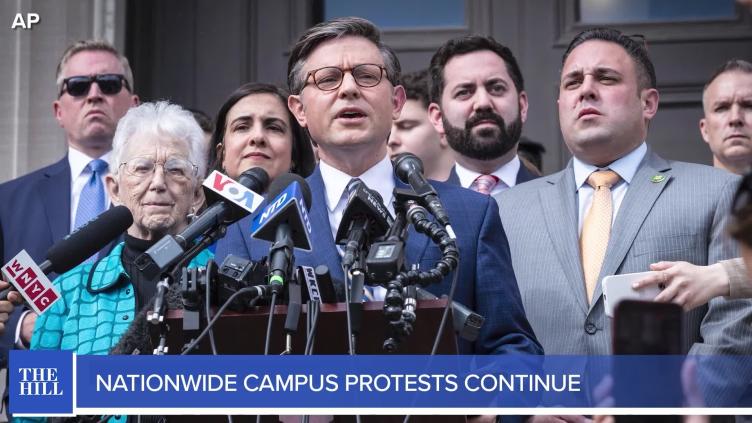
As Republican House Speaker Mike Johnson addressed students at Columbia on Wednesday, students chanted: “Disclose, divest, we will not stop we will not rest.”

Like many major universities, Columbia has a massive endowment. It was valued at $13.6 billion, as of mid-2023.

And there is a history of student activists targeting endowments during demonstrations. In the 1980s, students successfully persuaded Columbia to divest from apartheid South Africa.

More recently, Columbia and other universities have divested from fossil fuels and private prisons.

Charlie Eaton, assistant professor of sociology at the University of California, Merced and author of “Bankers in the Ivory Tower,” said Columbia can “absolutely” make the choice to divest from Israel-linked investments.

“It’s not unreasonable practice for schools to make decisions about how they invest based not just on maximizing investment returns, but also around principles of equity and justice in what they invest in,” he said.

But Mark Yudof, chairman of the Academic Engagement Network, which opposes campus antisemitism, said it’s not a simple solution to implement.

“The truth is it’s sometimes murky to figure out who is doing business in Israel and what the relationship is to the war,” Yudof said.

Yudof, the former president of the University of California, said he’s not aware of a single university that has divested from Israel despite years of pressure to do so.

“I don’t think it will happen,” he said.
‘Hostile and threatening’

However, none of the universities have announced plans to divest from Israel-linked investments and some experts say they will be very reluctant to accept this demand.

“A significant obstacle to divestment is that any university supporting divestment would be sending a clear signal that they either: (a) acquiesce in; or (b) support the destruction of the State of Israel and its citizens,” said Jonathan Macey, a professor at Yale Law School.

Macey said that while such a move may be supported by protesters, it would be “viewed as hostile and threatening to many students, faculty and staff.”

Lauren Post, an analyst at the Anti-Defamation League, said the push for divestment is related to the Boycott, Divestment and Sanctions (BDS) movement.

Although Post acknowledged that some individuals may be pushing for divestment as a way to hold Israel accountable, she said the ADL views the goals of BDS as antisemitic.

“The goal – ultimately dismantling the state of Israel, is antisemitic,” said Post.

Yudof, the former University of California president, said he also feels it is antisemitic.

“It smacks of a double standard. Why is it only Israel?” He criticized protesting college students for focusing on Israel instead of undemocratic regimes around the world, including Iran and Russia.

It’s worth noting, however, that the student protests don’t directly say they are affiliated with BDS.

“We are not going anywhere until our demands are met,” Khymani James, a student at Columbia University, said during a news briefing Wednesday.

James, a student activist associated with the Columbia University Apartheid Divest (CUAD) coalition, has since apologized for saying on video that “Zionists don’t deserve to live.”

James acknowledged the statement in a post on X, saying it was from an Instagram Live video in January. “I misspoke in the heat of the moment, for which I apologize.”

The apology came early Friday morning, hours after an interview with CNN at Columbia where James repeatedly declined to apologize for the video, saying that the focus should be on Palestinian liberation.
Universities don’t own that much stock

There is also a debate over how effective divestment campaigns are.

One issue is that selling stock in a company means the university would give up its influence over the company.

“Be careful what you ask for. If you sell your stock, someone else will buy it and they may be less concerned about the issue you care about,” said Cary Krosinsky, a lecturer at Yale who has advised university endowments.

Another issue is that while university endowments are large, public companies are much bigger. If a university divests, many companies would not even notice it.

University endowments own approximately 0.1% of public companies, according to research by Krosinsky.

“0.1% is not going to move the needle very much. Someone else will buy the stock and life will go on,” he said.

Most university funds are invested with private equity funds and hedge funds, rather than broad-ranging mutual or index funds.

Of course, the divestment push is about more than directly punishing companies. It’s about a desire to send a message and raise awareness.

More than wanting to take down defense contractors like Lockheed Martin and Raytheon, protesters would view divestment as a symbolic victory for justice and equality.

Students are “complicit in what this institution does,” graduate student Basil Rodriguez said to CNN Wednesday, noting that students pay tuition.

Rodriguez is Palestinian herself, and said her family members have been “murdered and executed” and displaced.

Student protesters say the demands to disclose and to divest are interconnected.

Protesters argue that many of the financial interests of universities are opaque and the links to Israel may be even greater than officials realize.

“At the same time, this is only the tip of the iceberg,” Rodriguez said. “We demand full financial transparency.”

This story has been updated to include James’ apology for statements James made in a video shared online.

CNN’s John Towfighi contributed to this report.

For more CNN news and newsletters create an account at CNN.com
Here's What Parents Need To Know About The "Manosphere" Of Far-Right Content Targeting Boys Online

BuzzFeed
Thu, April 25, 2024 


Here's What Parents Need To Know About The "Manosphere" Of Far-Right Content Targeting Boys Online


Recently, people have been talking a lot about a growing political divide that's splitting Gen Z along gender lines. Research suggests that around the world, women are becoming increasingly progressive while men are leaning more conservative — and some people say it's made dating even more nightmarish than usual.


Twitter: @jburnmurdoch

A few different theories could explain this ideological gender gap. Some think that young men are growing more conservative in response to the #MeToo Movement that empowered young women to speak out about sexual violence and inequality. Others suggest that right-wing attacks on women's rights, like the Dobbs decision that struck down Roe vs. Wade, have motivated women to move further left.

Then there's the theory that algorithmic filter bubbles split young men and women into distinct online environments that encourage political polarization. Personally, I think this theory makes a lot of sense because of the specific kinds of content that algorithms tend to surface to boys and young men.

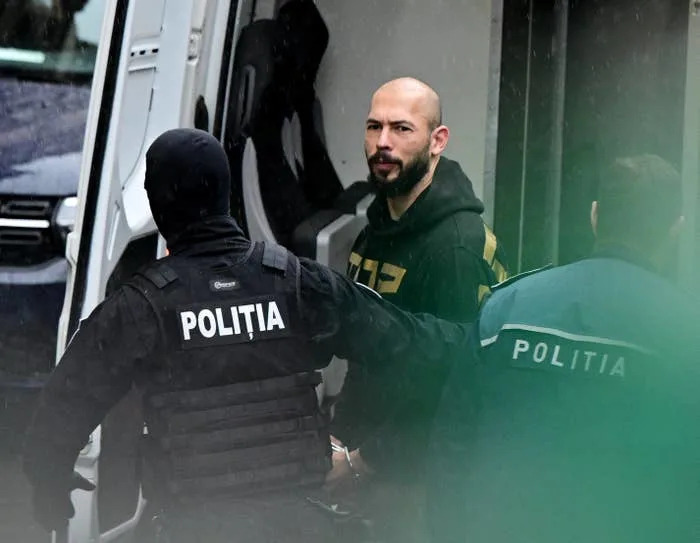
Enter the "manosphere." The manosphere consists of a network of influencers (sometimes called "manfluencers") who target boys and young men online, often espousing misogynistic, anti-LGBT, and racist views. You've probably heard of one the most influential manosphere figures, Andrew Tate, who has been indicted on charges of sexual assault and human trafficking.


Boys don't have to do much to stumble upon this content. Recently, researchers at the Anti-Bullying Centre at Dublin City University set up accounts registered for boys aged 16 and 18. They found that both TikTok and YouTube Shorts suggested manosphere content to these brand-new accounts within the first half-hour of scrolling, in one case, as quickly as after just two minutes.Daniel Mihailescu / AFP via Getty ImagesMore

I'm curious about how parents of boys can have conversations with their sons about this divisive content, so I asked members of the BuzzFeed Community to share their experiences. I heard from a couple of parents and older siblings, and a number of Andrew Tate fans who called my question "garbage" (among other things I won't repeat). Then, Kaitlynn Mendes reached out.

Mendes is an Associate Professor of Sociology at Western University in Canada and the Canada Research Chair in Inequality and Gender. She's currently part of a team of researchers who are talking with teen boys about their experiences online, and she sat down for a call with me to tell me what she's learned from her studies and what parents need to know.

Mendes says that a lot of manosphere content centers on common anxieties among adolescent boys. It draws them in by presenting "easy" answers to complex problems like how to attract a mate. Mendes explains, "If you're a teenage boy, this is a really big time of change. You're feeling quite insecure about yourself, and you want to know how you can be sexually successful, romantically successful."


"And then you have these guys who are offering simple solutions. And some of the solutions are actually not terrible. They talk abut taking care of yourself, taking care of your body, taking pride in things like: make your bed, stand up straight. And I think those messages on their own are not bad messages."Ojos De Hojalata / Getty ImagesMore

Unfortunately, these initial, helpful messages lead to more harmful ideas. In particular, these creators endorse strict, traditional gender norms that can make young people feel like there's only one "right way" to be a man. Mendes explained, saying, "They seem to offer simple solutions for how to make a girl want you: Men are just this way, and women are just this way. If you really want to be successful, you have to act like the 'alpha man.' And if you want a 'high-value woman,' these are things that you have to do."

According to Mendes, the message can boil down to, "Forget about women as individuals. Treat all women as though they're they're the same. It also really paints them in quite a bad light. You know, like women are shallow, women are genetically disposed to seek out 'high-value men,' and they want the 'alpha men.'"

Manosphere creators often legitimize their beliefs about gender by couching them in scientific-sounding language, talking about "alpha males," "bonding theory," and other jargon. Mendes says, "They're drawing on scientific concepts that are real, but just not necessarily in the context of human relationships. So, it sounds convincing, and it sounds smart. Sometimes, they reference real academic publications or studies. It's just that they misconstrue what the study is actually about or what it's showing."


When it comes to the "alpha male" ideal, it should be noted that the concept of alpha males originated from a decades-old study of wolves in captivity. That study has since been discredited because wild wolves don't form that type of hierarchy and instead live in family units. So it turns out that one of the manosphere's favorite scientific-sounding ideas isn't even considered good science anymore.Maskot / Getty Images/MaskotMore

Still, manosphere influencers use this veneer of scientific certainty to present attraction as a one-size-fits-all formula, telling young men that the best way to attract a woman is to have a particular body fat percentage and use pickup artist techniques like negging — aka giving women backhanded compliments designed to make us feel insecure and thus crave male approval (massive eye roll). But the thing is, attraction is never this simple.


Twitter: @michelle_byoung

I have thought about this viral tweet about Jack Black just about every day since I first saw it because it's so true. And to her point, some of the things that men think make them more attractive to women can even be turn-offs (see: negging).

I asked Mendes if she thinks that manfluencers are giving bad advice about how to attract women, which keeps viewers wanting more. She responded, "I think you're right. I think the trick, though, is that they have to have enough things that may be working to keep them coming back." So the helpful "make your bed" type of advice normalizes the unhelpful stuff like "be mean to women and they'll like you for some reason," and it keeps boys coming back for another video or podcast or tweet.

In addition to science-y sounding words, manosphere creators also use particular slang. They talk about being "red-pilled," of high-value "Staceys" and "Chads," and denigrate men they deem to be not manly enough as "soyboys," "betas," and "cucks." Mendes also pointed out that many terms commonly used online today, like "snowflake" and "social justice warrior" have their roots in the manosphere.

She says, "Parents may hear it and think, 'Oh, it's just like the way that young people talk.' But it does come from these kinds of manosphere communities."

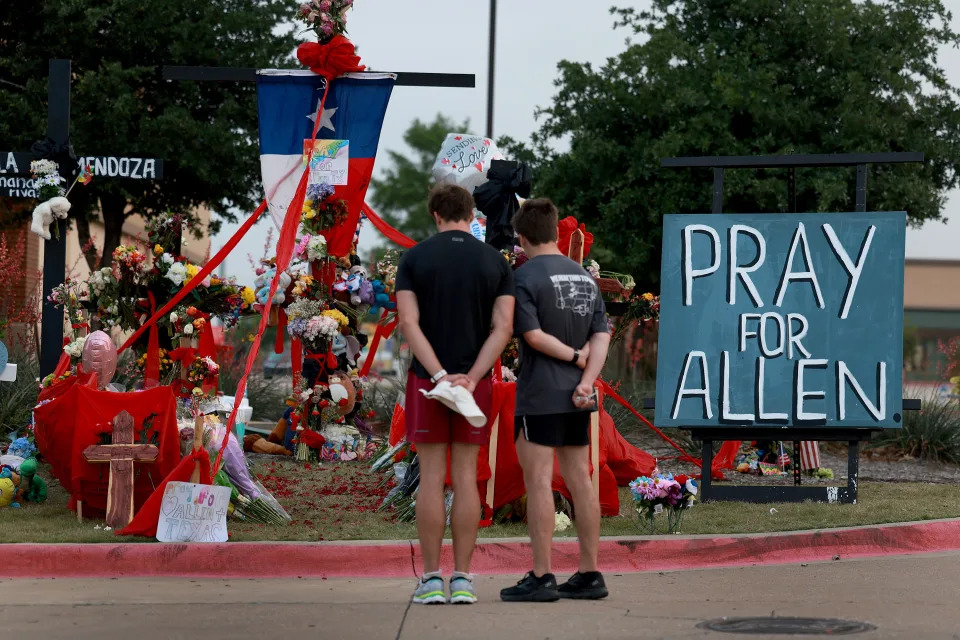
And the problem goes much deeper than people saying offensive things online. Tragically, this kind of rhetoric has been associated with real-life violence against women, as in the recent stabbings of six people in a mall in Sydney, Australia, where the killer's father told the media that his son was frustrated that he couldn't get a girlfriend. And in the case of a mass shooting last year at an Allen, Texas mall where the perpetrator was found to have posted far-right and incel content online prior to the attack. And in countless other instances of violence against women, trans people, and racial minorities.


Mendes says, "We have these people out there telling boys, 'These are the six steps you need to follow, and if you follow them, you'll be successful.' And so boys and men are following them. And then when they're not successful, they are angry. They're upset. They're confused. They don't understand. And in our society, we've taught men that anger and violence are like a legitimate way to prove your manhood or get what you want. And so it's no surprise that they're reacting in this way. It's very, very worrying."Joe Raedle / Getty ImagesMore

For parents who are concerned about what their sons see online, it's not enough to warn them about certain popular male-supremacy influencers. Mendes says, "It's not just the big-name people. There are lots of people every day who are trying to capitalize on some of these trends. This kind of content is everywhere. So it's not enough to just say, 'Well, I won't search for Andrew Tate,' because you can get this kind of advice through so many different influencers or content creators online."

And despite certain creators being occasionally deplatformed, Mendes doesn't have much faith in social media companies swooping in to remove problematic content. "Social media companies fundamentally are just trying to do whatever they can to keep people on their apps as long as possible. And so any kind of content that makes you feel something, whether it's intrigued or angry or excited, they're going to keep pushing that. Because as much as they say they care about us, they don't give a shit about us. They don't care about our mental health. They don't really care if there is extremist content out there as long as it's generating profit."

And according to Mendes, boys are being exposed to a lot of stuff on social media that might make them feel uncomfortable, but because of the way boys are socialized, it can be much harder for them to talk about it. She says, "Girls, for example, are quite happy to tell us about all the dick pics that they get sent from 40-year-old men that they don't ask for, and they're like, 'Oh, it's gross. It's disgusting.' Boys equally get sent a whole lot of unwanted nude images, but it's often from porn bots or people trying to catfish them. I do think boys have a harder time expressing disgust because they're not 'supposed' to. If you're supposed to be like 'a real man,' you're supposed to want to see sex and sexy images."


She says that boys also report routinely being shown videos of violent acts like animals being harmed and people being shot or hit by cars. In her research, girls don't report being shown this kind of violent content. She shares, "There was one focus group we did where one of the boys was talking about how he often sees videos of people getting shot and he's like, 'Yeah, you just get used to it.'"Isabel Pavia / Getty ImagesMore

So she suggests parents start conversations with their sons, but not by asking them if they've been exposed to harmful content. Instead, she says, "Ask them, 'What are you seeing that's weird, or that's strange?' Because some of what they're seeing is so normalized, they don't associate it as harmful." She says that, in her experience, boys are much more likely to describe toxic content as weird or strange than as upsetting.

"Then you can ask them, 'Do you know how to change the algorithm? If that's content that you don't want to see, what would you do? Do you know what to do?' And it might be different on different platforms. Ask, 'Is it something that you think is worth reporting?'" She also notes that this approach requires parents to really understand how social media works, which can be an obstacle for some but one that parents must overcome.

She also gives some examples of how she talks with her own sons about what they see online. "I have three boys, so I get them to show me the kind of stuff that they're watching, and then we talk about it. And it doesn't all have to be bad stuff. I might say, 'Hey, what are some followers that you like?'"

She also suggests keeping resources handy so kids know they can also call a hotline like Kids Help Phone or Kids in Crisis in case something comes up that they don't want to talk about with their parents.

Finally, Mendes warns that tech-based parental controls can't take the place of talking with your kids and helping them unpack what they're seeing online. "There is no one filter that you can put on your kids' phones to keep them safe. You have to recognize that when they're using social media, they're going to be exposed to certain risks. And I think the best thing you can do is equip them with skills and resilience to overcome the harm or the risks that they're seeing."


"Kids are really good at avoiding surveillance. They're good at bypassing parental filters and controls. When I was in the UK, I did a study with almost 600 teens. Over 40% of them told us they knew how to bypass all the parental filters and controls their parents put on their devices."Maskot / Getty Images/MaskotMore

For an example of what these conversations can look like, one parent in the BuzzFeed Community shared this story:

"I saw Andrew Tate's face on my 11-year-old son's YouTube once. He's a genuinely sweet and empathetic kid, so I wasn't super worried, but I asked what the video was. I remember it was something actually criticizing Tate. I asked my son if he's watched videos with him, and he said he's pretty much just occasionally seen his face. I told him not to listen to anything Tate said or watch him and that he's a horrible person. My son asked why. I don't really believe in lying to my kids, even at young ages, so I gently told him that Tate was the kinda guy who would lock women up at his house and not let them leave.

'Ohhh,' He said, 'like for sex stuff?'"Yeah, buddy, but you don't need more details than that, and it's time to change the subject. Just don't watch him or at least know better than to believe anything he says about women.'"

—Anonymous

Another parent shared:

"My wife and I are very certain our 8th and 9th grade boys have no real understanding of the manosphere, and that is completely intentional. They are exposed to very traditional gender role stereotypes (uncles who work construction jobs, aunts who are nurses and receptionists), but they are also equally exposed to very non-traditional gender roles by those same people and us. We are fortunate they seem grounded and are learning independence instead of feminine dependence and weaponized incompetence. I’m hopeful my 7th-grade daughter sees that and looks for a person to be equitable to her should she want a long-term relationship when she’s older."

avidbuzzfeedreader

And an older sibling gave their perspective too:

"Not my son but my younger brother who I’ve looked after for a while. My brother grew up with a large group of friends that he regularly hung out with. Very suddenly, he stopped hanging out with them. I asked him why his friends hadn’t been around, and he told me they were now Andrew Tate supporters and would send him extremely misogynistic content. When they hung out in person, it wasn’t much better. His friends would joke that women belong in the kitchen, amongst other gross stereotypes. My younger brother told me he couldn’t be friends with them anymore after this. I feel extremely sad for him; the boys he considered brothers he can’t even recognize now, but I’m also proud of him for cutting toxic people out of his life."

—Anonymous

Now I'm curious: do you talk with the boys or young men in your life about what they see online? Share your experiences in the comments below!
2024 Hot Docs 'An Unfinished Journey': 4 women leaders who fled Afghanistan fighting against gender apartheid

"They're basically being erased from public spaces and this is really dangerous," co-director Aeyliya Husain said

Elisabetta Bianchini
Updated Fri, April 26, 2024


After the Taliban took over in Afghanistan in 2021, four women — parliamentarians, ministers and journalists — were stripped of their positions of power. Resettling in Canada, the documentary An Unfinished Journey (part of the 2024 Hot Docs Festival in Toronto) documents their continued fight for freedom for women, women's right to education, and pressuring international power to force the Taliban to reverse gender apartheid policies.

Co-director Amie Williams has been living in Greece since 2018 and found out that a group of women airlifted out of Kabul were set to arrive in Athens. She met them through the Melissa Network, an organization for migrant and refugee women in Greece.

"We heard that these women were coming and we discussed, maybe this would be a really good opportunity to go meet them, see what's happened, talk to them, break bread with them, try to give them some solidarity," Williams told Yahoo Canada.

Moving the production to Canada, following three women on their journey, eventually adding a fourth in Canada, Toronto-based co-director Aeyliya Husain was particularly attracted to telling this story.

"I'm interested in women's issues that show my cultural background and about women that shatter the stereotypes and tropes of Muslim women," Husain said. "I met with the women as they started to come here to Canada, ... and then we eventually started filming with them."

Homaira Ayubi served four terms in Afghan parliament and we see her attending protests and meeting politicians in Canada. Zefnoon Safi, from Laghman Province, has a 20-year political career, but had to come to Canada without two of her daughters, who remain trapped in Afghanistan. Nargis Nehan was a minister who worked closely with Afghanistan’s ousted president Ashraf Ghani. Journalist Nilofar Moradi had openly criticized the Taliban in her work, and resettled in Ottawa with her husband, six-year-old son and seven-month-old daughter.

Throughout An Unfinished Journey, we see these women mobilize a community, crafting a real call to action for women, and governments, all over the world.

"We wanted to highlight everything that the women have accomplished and that they are still accomplishing and doing," Husain said. "They have to have hope, right, in order to carry on, in order to connect."

"They were powerhouse heroines in their own right, in Afghanistan. They overcame incredible obstacles to get to where they were," Williams added. "I just felt like the world needs to know this, that these are hopeful stories, these are stories of incredible strength that all women can benefit from hearing."


(Left to Right) Ayubi, Nehan and Moradi in An Unfinished Journey
'As long as Afghan girls can't go to school, no woman should ever think her life is free'

In terms of creating an environment where all these women felt comfortable to open up to the filmmakers, Williams stressed that they never pushed for their participation, originally in Greece.

"I think they appreciated us visiting them, there was a group of them that were living far from the city and in a rundown hotel, and they were getting quite bored, I think, and just waiting around for the next big bureaucratic hurdle they had to overcome to get their paperwork to Canada," Williams said.

"They also had a lot to protect. ... It's forced migration, they didn't want to be there. The last thing they probably wanted to do was be in a film or talk to a journalist, or a reporter. But it was me and young Afghan and Iranian refugees. So I think we came across very differently than say a CNN crew. It took time and certainly when they got to Canada, it helped that Aeyliya's from a similar cultural background. And it took a lot of time in Canada. It took us over two years to make this film."

"You're building a relationship with them, ... you start off slowly and you start talking to them, and you're open and transparent," Husain added. "You're trying to involve them in the process of what will we film and trying to get them engaged in it."

At the core of this film is that this isn't a story that only impacts Afghan women, it's really a message for all women around the world.

"A lot the women, in even in the film, say, we're not just fighting for rights for women in Afghanistan, but for women all over the world," Husain said. "We need to fight for returning education to young girls, allowing women to go out of their homes, they're basically being erased from public spaces and this is really dangerous."

"We need to look at it as a global community and go, we cannot allow this to happen here, because we cannot allow this to spread and happen to other countries in the world."

Women's rights have been under attack in recent years, including, but certainly not limited to, abortion rights in the U.S.

"It's really terrifying to watch what's happening in the United States from afar and I do think that ... as long as Afghan girls can't go to school, no woman should ever think her life is free," Williams said.

"This isn't just not going to school, it means you can't leave your home. So they're being erased from public view. And I don't see how any woman anywhere can watch this happen and not want to do something."

Homaira Ayubi at Toronto protest of school closures in An Unfinished Journey

The filmmakers highlighted that part of creating this project was also to establish an impact campaign.

"We want to get countries like Canada, that has a feminist foreign policy, to make a statement about gender apartheid, and to get it codified in international law," Husain said. "There are a number of senators who are working on this, and we had a screening and Parliament Hill, ... to push them to actually make a statement and to define what gender apartheid is too."

Upcoming screening of An Unfinished Journey in the 2024 Hot Docs Festival is on April 27 at 10:00 a.m. ET at the Hot Docs Ted Rogers Cinema in Toronto


Portugal's government rejects paying reparations for colonial, slavery legacy

Updated Sat, April 27, 2024 

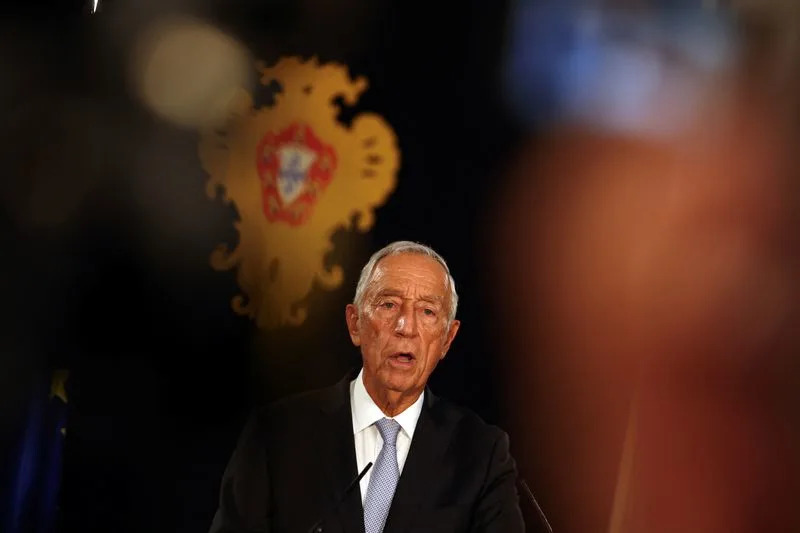
Portugal's President de Sousa addresses the nation from Belem Palace to announce his decision to dissolve parliament, in Lisbon

By Sergio Goncalves

LISBON (Reuters) -Portugal's government said on Saturday it refuses to initiate any process to pay reparations for atrocities committed during transatlantic slavery and the colonial era, contrary to earlier comments from President Marcelo Rebelo de Sousa.

From the 15th to the 19th century, 6 million Africans were kidnapped and forcibly transported across the Atlantic by Portuguese vessels and sold into slavery, primarily in Brazil.

Rebelo de Sousa had said on Saturday Portugal could use several methods to pay reparations, such as cancelling the debt of former colonies and providing financing.

The government said in a statement sent to the Portuguese news agency Lusa it wants to "deepen mutual relations, respect for historical truth and increasingly intense and close cooperation, based on the reconciliation of brotherly peoples".

But it added it had "no process or program of specific actions" for paying reparations, noting this line was followed by previous governments.

It called relations with former colonies "truly excellent" and cited cooperation in areas such as education, language, culture, health, in addition to financial, budgetary and economic cooperation.

On Tuesday, the president suggested a need for reparations, sparking strong criticism from right-wing parties, including the junior partner of the Democratic Alliance government coalition, CDS-Popular Party, and the far-right Chega.

"We cannot put this under the carpet or in a drawer. We have an obligation to pilot, to lead this process (of reparations)", the president told reporters on Saturday.

Portugal's colonial era lasted more than five centuries, with Angola, Mozambique, Brazil, Cape Verde, Sao Tome and Principe, East Timor and some territories in Asia subject to Portuguese rule.

Decolonisation of the African countries and the end of empire in Africa only happened months after Portugal's "Carnation Revolution" on April 25, 1974, toppled the longest fascist dictatorship in Europe and ushered in democracy.

(Reporting by Sergio Goncalves; editing by David Evans and David Gregorio)

Iraq criminalises same-sex relationships with maximum 15 years in prison

DOES THAT INCLUDE LGBTQ US TROOPS

Reuters
Updated Sat, April 27, 2024 


General view of the Iraqi parliament in Baghdad

BAGHDAD (Reuters) - Iraq's parliament passed a law criminalising same-sex relationships with a maximum 15-year prison sentence on Saturday, in a move it said aimed to uphold religious values but was condemned by rights advocates as the latest attack on the LGBT community in Iraq.

The law aims to "protect Iraqi society from moral depravity and the calls for homosexuality that have overtaken the world," according to a copy of the law seen by Reuters.

It was backed mainly by conservative Shi'ite Muslim parties who form the largest coalition in mainly Muslim Iraq's parliament.

The Law on Combating Prostitution and Homosexuality bans same-sex relations with at least 10 years and a maximum of 15 years in prison, and mandates at least seven years in prison for anybody who promotes homosexuality or prostitution.

It also imposes between one and three years in prison for anyone who changes their "biological gender" or wilfully dresses in an effeminate manner.

The bill had initially included the death penalty for same-sex acts but was amended before being passed after strong opposition from the United States and European nations.

Until Saturday, Iraq didn't explicitly criminalise gay sex, though loosely defined morality clauses in its penal code had been used to target LGBT people, and members of the community have also been killed by armed groups and individuals.

"The Iraqi parliament’s passage of the anti-LGBT law rubber-stamps Iraq's appalling record of rights violations against LGBT people and is a serious blow to fundamental human rights," Rasha Younes, deputy director of the LGBT rights programme at Human Rights Watch, told Reuters.

Iraqi officials who oversee human rights could not immediately be reached for comment.

Major Iraqi parties have in the past year stepped up criticism of LGBT rights, with rainbow flags frequently being burned in protests by both ruling and opposition conservative Shi'ite Muslim factions last year.

More than 60 countries criminalise gay sex, while same-sex sexual acts are legal in more than 130 countries, according to Our World in Data.

(Reporting by Timour Azhari and Ahmed Rasheed in Baghdad; Editing by David Holmes)