Friday, November 29, 2024

Thanksgiving Myths Aim to Silence Indigenous Voices. We Won’t Be Silent.


Let’s reject all settlers myths this Thanksgiving and honor Indigenous resistance.
November 28, 2024

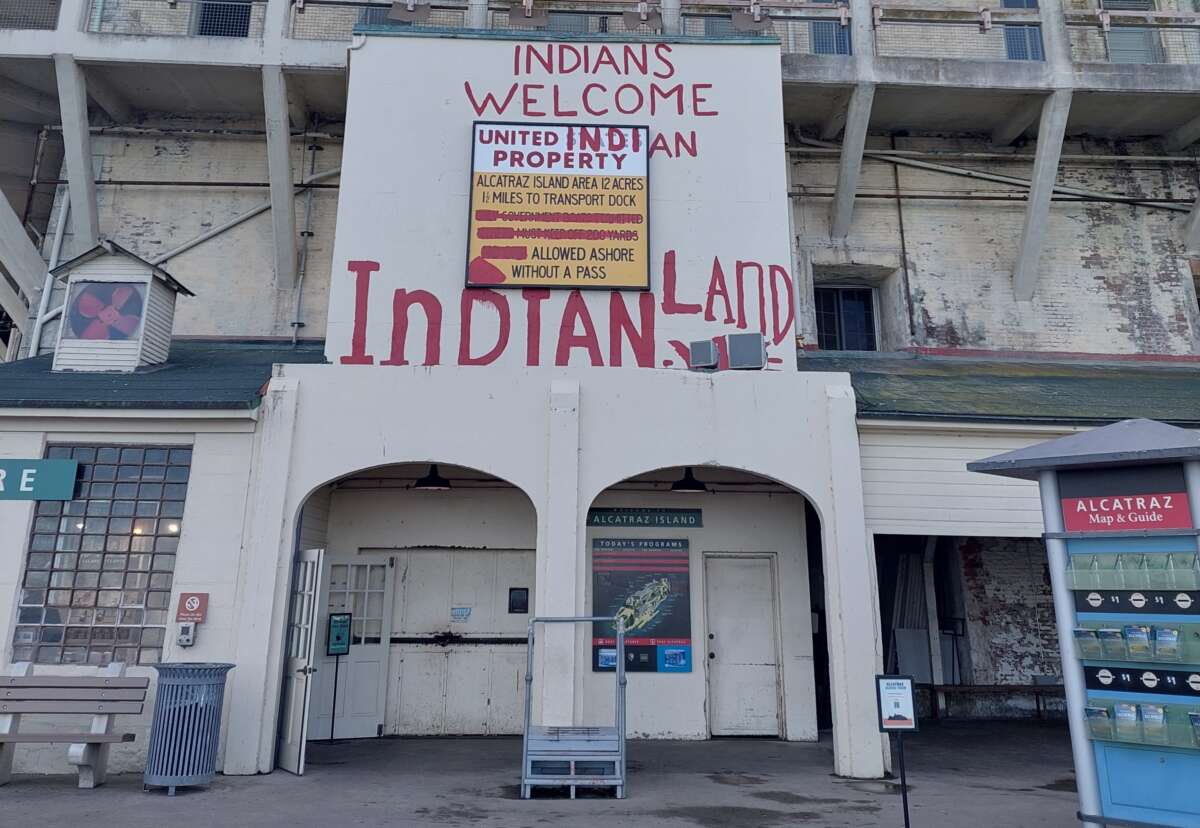
The Barracks on Alcatraz Island greets you with a welcome that has remained since the occupation in 1969.Johnnie Jae


Truthout is an indispensable resource for activists, movement leaders and workers everywhere. Please make this work possible with a quick donation.

For many Americans, Thanksgiving is a time to gather with loved ones, share a meal, watch football and express gratitude. Some Native Americans celebrate Thanksgiving this way as well, because feasting is Indigenous — we also love eating and watching football.

Still, the holiday carries a much heavier weight: It is a stark reminder of the violent colonization that began with the arrival of European settlers. The idyllic myths surrounding Thanksgiving align with broader strategies of historical revisionism used to justify settler colonialism by distorting and erasing histories of violence, exploitation and resistance. They reinforce settler identity and national pride and discourage critical engagement in our complex histories. These strategies serve to normalize colonization, valorize settlers and silence Indigenous voices.

Yet, even in the shadow of these painful histories, Native communities have found ways to challenge the sanitized myths of Thanksgiving and call for a reckoning with the true history of the United States, encouraging reflection, accountability and action to support Indigenous rights and justice. At the same time, the holiday serves as an opportunity to reclaim whitewashed narratives and assert Indigenous presence, reminding the world of the unbroken spirit of Native nations.
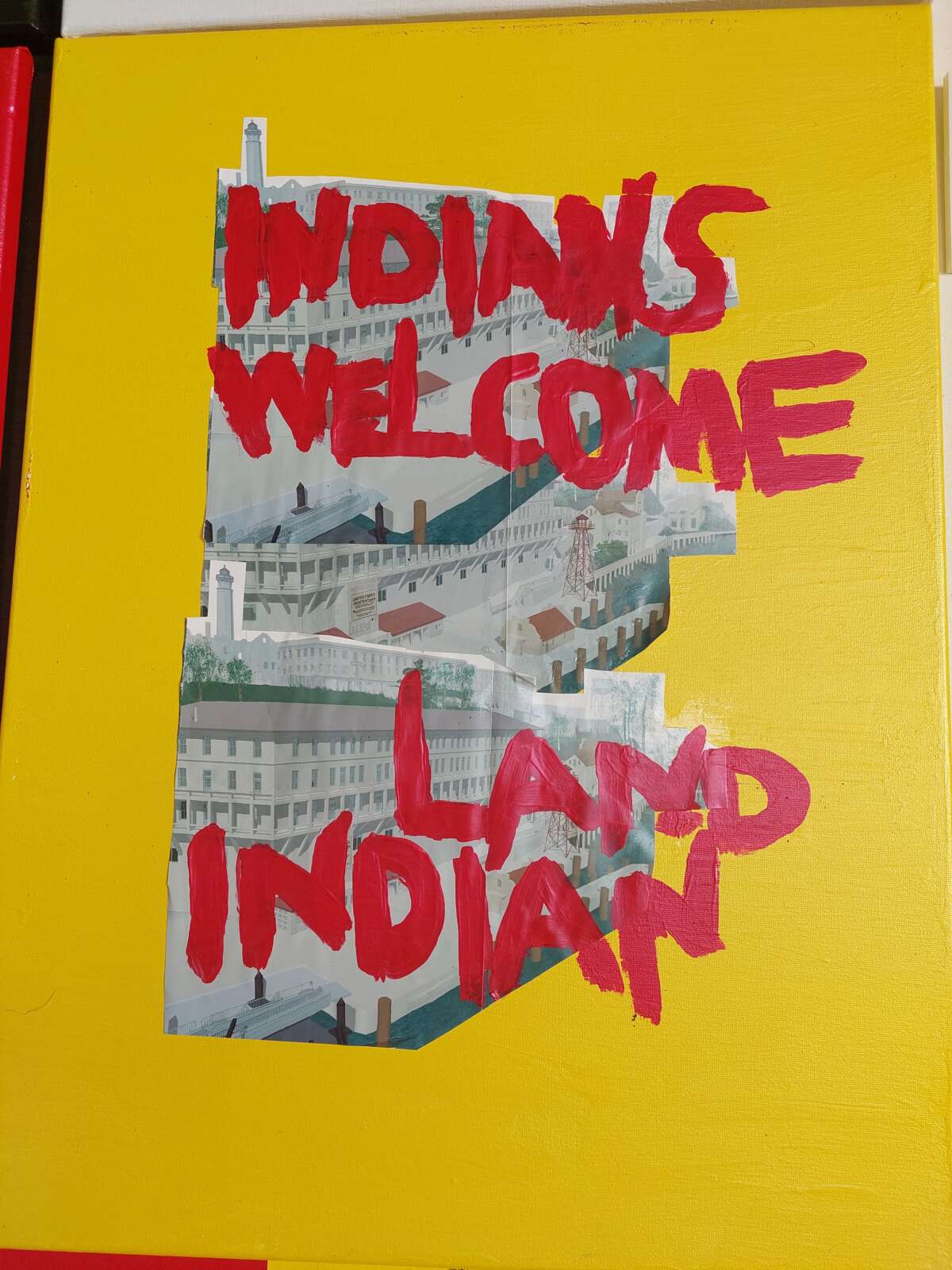
A collage featured in the Red Power on Alcatraz Perspectives 50 years Later exhibit.Johnnie Jae.

In November 1969, a group of young Native activists, who became known as “Indians of All Tribes,” sought to draw attention to the federal government’s failure to honor treaties, the dire conditions on reservations, and the systemic erasure of Indigenous cultures by occupying Alcatraz Island after a fire destroyed the American Indian Center in San Francisco. From November 20, 1969, to June 11, 1971, activists took control of the island, citing the Treaty of Fort Laramie (1868), which they argued gave them the right to claim unused federal land.

During their 19-month occupation, they transformed Alcatraz into a symbolic space of resistance, using it as a platform to advocate for sovereignty, education and cultural renewal. Though the protest ended when federal authorities forcibly removed the occupiers, it was a pivotal moment that reinvigorated the Indigenous rights movement.

Op-Ed |
Racial Justice
Thanksgiving Can Never Be Redeemed From Its Colonial Past. Let’s Abolish It.
The work of decolonization means refusing the banal evil of Thanksgiving.
By Amrah Salomón , Truthout November 24, 2022


In the spirit of the Alcatraz occupation, Unthanksgiving Day, also known as the Indigenous Peoples Sunrise Ceremony, has been organized by the International Indian Treaty Council and held annually on Alcatraz Island since 1975. The Unthanksgiving sunrise ceremony honors the legacy of the Natives who occupied Alcatraz and fosters solidarity among Natives and non-Natives. It serves as a celebration of Indigenous survival and the ongoing fight for justice.


Native communities have found ways to challenge the sanitized myths of Thanksgiving and call for a reckoning with the true history of the United States.

In 1970, while the occupation of Alcatraz was ongoing in San Francisco, across the country on the East Coast, the United American Indians of New England established the Day of Mourning. The Day of Mourning held every year in Plymouth, Massachusetts, includes a march through Plymouth’s historic district to Cole’s Hill, where invited speakers speak about Native histories and the struggles taking place in our communities and beyond. The event was conceived after Wamsutta, an Aquinnah Wampanoag leader, was invited to speak at the commemoration of the 350th anniversary of the arrival of the pilgrims in Plymouth, Massachusetts. After his planned speech — which criticized the glorification of the whitewashed Thanksgiving narrative and detailed the atrocities committed against Indigenous peoples — was censored, he and other Indigenous activists gathered to mark the first Day of Mourning.

One of the most poignant moments in the speech that Wamsutta had planned was a reminder of our humanity:


History wants us to believe that the Indian was a savage, illiterate, uncivilized animal. A history that was written by an organized, disciplined people, to expose us as an unorganized and undisciplined entity. Two distinctly different cultures met. One thought they must control life; the other believed life was to be enjoyed, because nature decreed it. Let us remember, the Indian is and was just as human as the white man. The Indian feels pain, gets hurt, and becomes defensive, has dreams, bears tragedy and failure, suffers from loneliness, needs to cry as well as laugh. He, too, is often misunderstood.

While the Day of Mourning acknowledges the historical injustices and mourns the loss of our ancestors, it is also a celebration of Indigenous survival, resilience and identity. Participants honor their ancestors through prayer and fasting while raising awareness about land sovereignty, environmental justice and the rights of Native people.


Indigenous peoples in the United States and Palestinians in Gaza have faced similar patterns of land dispossession and territorial fragmentation under settler-colonial systems.

The Day of Mourning also connects struggles faced by Indigenous peoples worldwide, highlighting the shared impacts of colonization and the need for collective resistance, which weighs heavily on Native communities as we bear witness to Israel’s war on Gaza.

Across continents and centuries, Indigenous peoples in the United States and Palestinians in Gaza have faced similar patterns of land dispossession and territorial fragmentation under settler-colonial systems. In the U.S., policies like the Indian Removal Act forcibly displaced Indigenous nations from their ancestral lands and pushed them onto reservations often located on economically and ecologically marginal terrain. The Dawes Act compounded this dispossession by fragmenting tribal territories and reducing Indigenous landholdings by millions of acres.

Likewise, Palestinians faced mass displacement during the Nakba in 1948, with thousands forced into refugee camps. This dispossession continues today through land confiscations and expansion of Israeli settlements in the West Bank. Meanwhile, Gaza remains isolated under a blockade that restricts movement and access, further severing Palestinians from their homelands

.
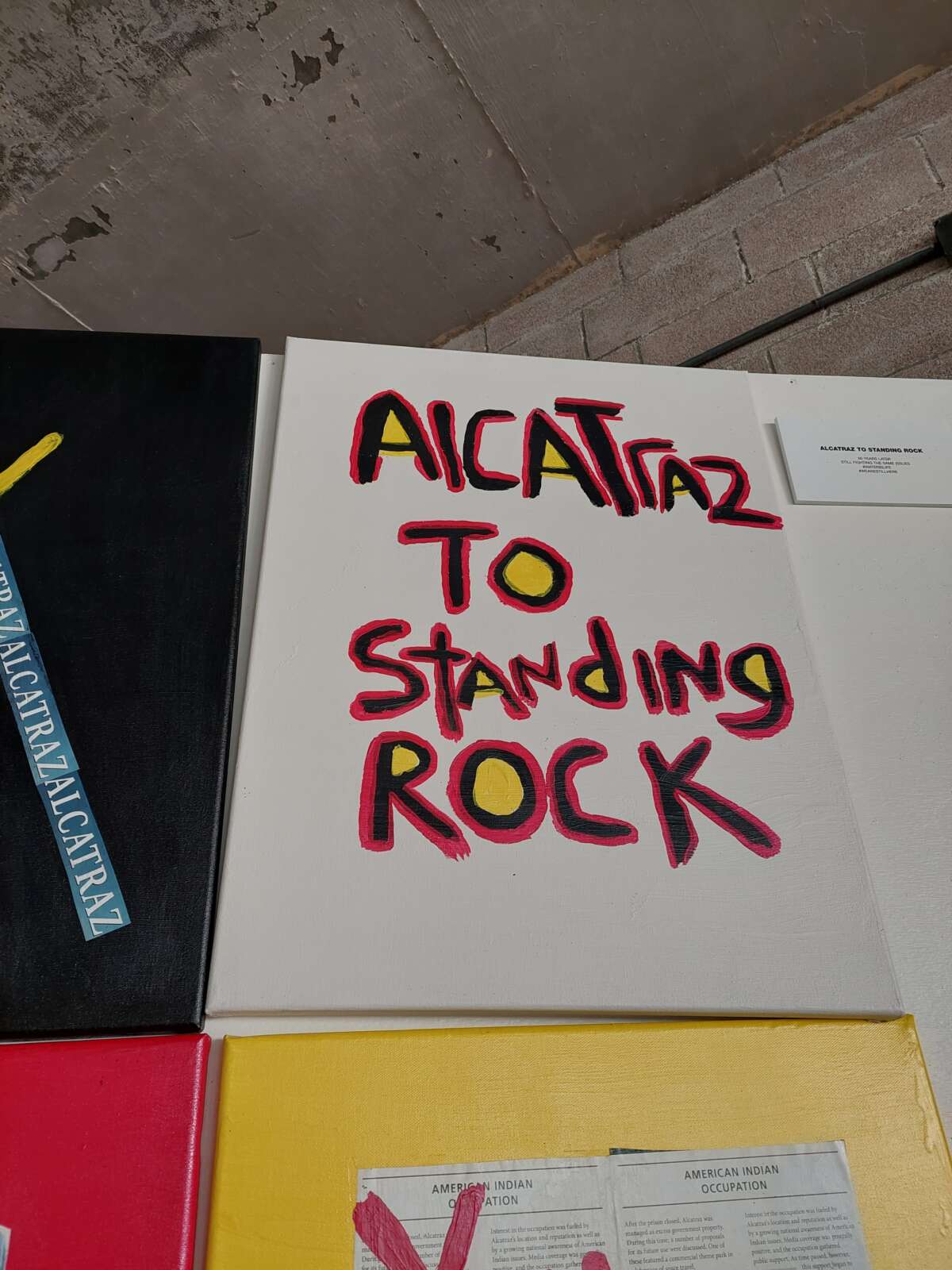
A sign reading From Alcatraz to Standing Rock is featured in the Red Power on Alcatraz Perspectives 50 years Later. Johnnie Jae

The erosion of sovereignty has been a central tool of oppression for both Indigenous peoples in the United States and Palestinians in Gaza. In the U.S., federal policies undermined the rights of tribal nations to self-determination by replacing traditional governance systems with federal oversight and forcing assimilation through initiatives like the Indian boarding school system, which sought to eradicate Native identities and sever the connection of Native youth to their communities.

These efforts to subjugate Native communities are not confined to the past.

On October 27, 2016, about 200 police in riot gear, along with soldiers from the National Guard, carried out a midday raid on a protest encampment at Standing Rock, where Water Protectors had gathered to block construction of the Dakota Access Pipeline. Over 140 people were arrested on charges, including criminal trespassing, rioting and endangerment by fire, the last stemming from vehicles allegedly set ablaze during the confrontation. The militarized response exemplified the lengths to which authorities go to protect corporate interests over Native lives and environmental justice.


The myths of Thanksgiving perpetuate a sanitized narrative of harmony and gratitude that erases the violent historical and contemporary realities of settler colonialism.

Meanwhile, Palestinians in Gaza face severe restrictions on self-governance, with Israel exerting control over borders, airspace and access to essential resources. The Oslo Accords further fragmented Palestinian governance, fostering dependence on international aid while denying meaningful autonomy. Palestinians also encounter systemic efforts to crush resistance through militarized surveillance, airstrikes and blockades to maintain Israel’s hold on the region.

For Native peoples, the destruction and suffering in Gaza are hauntingly familiar because they mirror the aftermath of tragedies like the Massacre of Wounded Knee and violent police attacks on Water Protectors at Standing Rock. These shared experiences highlight the devastating consequences of colonizers wielding violence to suppress resistance. However, while these tragic circumstances remind us of our shared history of violence, they also remind us that our people have a shared spirit of resilience and survival.

It’s important to understand these histories and the parallels that exist because crimes against humanity have a strange way of becoming pillars of American exceptionalism, “necessary evils” for the sake of “progress” and “manifest destiny” that, over time, become mythologized and celebrated as holidays — see Columbus Day, Independence Day and Presidents’ Day. Thanksgiving is no exception. I dread the possibility that someday a similar holiday could be invented to reframe Israel’s war on Gaza as a benevolent and just occurrence that should be celebrated.

The myths of Thanksgiving perpetuate a sanitized narrative of harmony and gratitude that erases the violent historical and contemporary realities of settler colonialism. By glorifying the arrival of European settlers and ignoring the intentional eradication and oppression of Indigenous peoples, Thanksgiving becomes less about gratitude and more of a tool for perpetuating historical erasure and distraction, further marginalizing Indigenous voices and struggles.

As Thanksgiving myths continue to shape public consciousness, there is a pressing need to disrupt those narratives and center the voices of those who have been silenced. By addressing the uncensored history of colonization and its ongoing impacts, we can encourage action toward Indigenous sovereignty, environmental justice and human rights on a global scale.

Thanksgiving, filtered through a Native lens of truth and resistance, can become a moment of reckoning — a time to give thanks for our survival, resistance and commitment to dismantling the structures of oppression that have persisted for centuries.


This article is licensed under Creative Commons (CC BY-NC-ND 4.0), and you are free to share and republish under the terms of the license.

Johnnie Jae is an Otoe-Missouria and Choctaw journalist, speaker, podcaster, technologist, advocate, community builder and entrepreneur who loves empowering others to follow their passions and create for healing and positive change in the world. She is the founder of “A Tribe Called Geek,” an award-winning media platform for Indigenous Geek Culture and STEM as well as #Indigenerds4Hope, a suicide prevention initiative designed to educate, encourage and empower Native Youth who are or know someone struggling with bullying, mental illness and suicide. She is also the host of the “Indigenous Flame” and “A Tribe Called Geek” podcasts that originated on the Success Native Style Radio Network.


Nick Estes on Thanksgiving, Settler Colonialism & Continuing Indigenous Resistance

November 28, 2024
Source: Democracy Now!

Lakota historian Nick Estes talks about the violent origins of Thanksgiving and his book Our History Is the Future. “This history … is a continuing history of genocide, of settler colonialism and, basically, the founding myths of this country,” says Estes, who is a co-founder of the Indigenous resistance group The Red Nation and a citizen of the Lower Brule Sioux Tribe.


Transcript

This is a rush transcript. Copy may not be in its final form.

AMY GOODMAN: In this special broadcast, we begin the show with the Indigenous scholar and activist Nick Estes. He’s co-founder of the Indigenous resistance group The Red Nation and a citizen of the Lower Brule Sioux Tribe. His books include Our History Is the Future, which tells the history of Indigenous resistance over two centuries, offering a road map for collective liberation and a guide to fighting life-threatening climate change. Estes centers this history in the historic fight against the Dakota Access pipeline at Standing Rock. I asked him to talk about the two Thanksgiving stories he writes about at the beginning of his book.


NICK ESTES: So, the first Thanksgiving story is — begins with the Pequot massacre by members of the Massachusetts Bay Colony, which really marks sort of — in my opinion, marks sort of the mythology of the United States as a settler-colonial country founded on sort of genocide to create, ironically, peace. And then I begin with another story of a prayer march that we led in the Bismarck mall in Bismarck, North Dakota, to kind of bring attention to the Standing Rock struggle during a Black Friday shopping event, which was met by police armed with AR-15s, who then began punching and kicking water protectors who were holding a prayer in the Bismarck mall.


And I thought it was a really kind of jarring sort of contrast between, you know, the past and the present, to say that while there are sort of differences between the massacre of Pequots in Massachusetts to the contemporary sort of fight against an oil pipeline, nonetheless, you know, Bismarck, North Dakota, is a 90% white community that originally the Dakota Access pipeline was supposed to go upriver from, but then was rerouted downriver to disproportionately affect the Standing Rock Sioux Tribe. And “disproportionate” is the language that the Army Corps of Engineers used, as if there’s ever a proportionate risk to environmental issues and water contamination. So, at this particular moment, there weren’t any actions that were happening in the camps, and it was largely at a standstill. And I think that Thanksgiving weekend, there was an Unthanksgiving feast that was held in the camps, and it was actually the highest point of the camps themselves, in the sense that there were the most sort of water protectors had showed up. So, I thought it was a good kind of contrast to show that this history, you know, is a continuing history of genocide, of settler colonialism and, basically, the founding myths of this country.


AMY GOODMAN: Your book’s last words are, “[W]e are challenged not just to imagine, but to demand the emancipation of earth from capital. For the earth to live, capitalism must die.” Explain.


NICK ESTES: So, that line is part of this longer section on liberation. And I think when we think about climate change, oftentimes the question of climate change really centers on market-driven solutions, such as, you know, green capitalism, and how do we create markets that sort of incentivize transition to sustainable economies, right? And I think, really, what we’re kind of like beating around the bush is, is that it’s the system of capitalism that led us into this economic crisis to begin with. It’s the sort of designation of certain populations in certain territories as disposable, that has led us into our current epoch of global climate change. And so, when we talk about who’s going to bear the most burden when we transition, you know, out of the carbon economy, it most likely is going to be those populations that have historically been colonized, you know.


And, you know, what’s happening in southeast Africa is a perfect example of why we need to transition away from not just the carbon economy, but capitalist economies in general, because if we look at the history of how Africa has been a resource colony for Europe and for North America, we can look internally in the United States and understand that Indigenous nations continue to serve as resource colonies for the United States, whether it’s the Navajo Nation, where I’m living right now, that is producing oil and coal to generate electricity for the Southwest region, or whether it’s the Fort Berthold Reservation up in North Dakota, that is, you know, ground zero for oil and gas development in the Bakken region. We have to understand that Indigenous nations have largely been turned into resource colonies and sites of sacrifice for not just the United States, but for the oil and gas industry.


And so we need to not just think beyond climate change and putting carbon into the atmosphere, but we actually need to think about the system, the social system — right? — that created those conditions in the first place. And so, capitalism is fundamentally a social relation. It’s a profit-driven system, whereas Indigenous sort of ways of relating is one about reciprocity and a mutual sort of respect, not just with the human, but also with the nonhuman world. And we’re undergoing, you know, the sixth mass — sixth massive extinction event, which is caused by not just climate change, but is caused by capitalist sort of systems and the profit-driven sort of motive of our current economic and social system.


AMY GOODMAN: Nick Estes, you focus on seven historical moments of resistance in your new book, Our History Is the Future. You say they form a historical road map for collective liberation. How did you choose these histories? Just quickly take us through them.


NICK ESTES: Sure. So, I begin at the camps. I begin in the present, you know, at Standing Rock. And then I go to the fur trade with the first U.S. invasion, which was Lewis and Clark, who came through — who trespassed through our territory and were stopped by our leadership. And then I go through the Indian Wars of the 19th century and the buffalo genocide. And then I go into talking about the damming of the Missouri River in the mid-20th century, and then looking at Red Power in the 1960s and in the 1970s and how all of these Indigenous people, who were relocated because their lands were flooded by these dams, eventually found themselves and created sort of the modern Indigenous movement, known as Red Power, and then looking — going back and ending actually at Standing Rock in 1974, with the creation of the International Indian Treaty Council, which really coalesced these generations of Indigenous resistance and took the treaties, the 1868 Fort Laramie Treaty, to the world and to the United Nations. And to do that, they looked to Palestinians, they looked to the South African anti-apartheid movement, who provided the mechanisms for recognition of Indigenous rights at the United Nations. And that all resulted, over four decades, in the touchstone document, the United Nations Declaration on the Rights of Indigenous Peoples, which was passed by the U.N. in 2007.


And so, in many ways, when we look at Standing Rock, and we look at — if we go down flag row and we see the hundreds of tribal nation flags that were represented in 2016 and 2017, we also saw the Palestinian flag that was there, kind of hearkening back to that international solidarity with movements of the Global South, and specifically our Palestinian relatives, who, you know, today are still facing — much like us, are still facing the brunt and the brutality of settler colonialism, whether it’s, you know, the United States recognizing the annexation of the Golan Heights or whether it’s, you know, here in North America and the continued dispossession of Indigenous territory and rights. We can see that settler colonialism in Israel — or, in Palestine, is really an extension of settler colonialism in North America.


And so — and then I end, you know, with — back at the camps and looking at how these camps really provided — you know, I actually look at a physical map that was handed out to water protectors who came to the camp. And on that map there was, you know, where to find food, where to find the clinics — right? — and where to find the security, and all the camps that were represented at Standing Rock. And, to me, that provided, you know, a kind of interesting parallel to the world that surrounded the camps, which was 90 — you know, some 92 different law enforcement jurisdictions. You had the North Dakota National Guard, the world of cops, the world of the militarized sort of police state. And in the camps themselves you had sort of the primordial sort of beginnings of what a world premised on Indigenous justice might look like. And in that world, you know, everyone got free food. There was a place for everyone. You know, the housing, obviously, was transient housing and teepees and things like that, but then also there was health clinics to provide healthcare, alternative forms of healthcare, to everyone. And so, if we look at that, it’s housing, education — all for free, right? — a strong sense of community. And for a short time, there was free education at the camps, right? Those are things that most poor communities in the United States don’t have access to, and especially reservation communities.


But given the opportunity to create a new world in that camp, centered on Indigenous justice and treaty rights, society organized itself according to need and not to profit. And so, where there was, you know, the world of settlers, settler colonialism, that surrounded us, there was the world of Indigenous justice that existed for a brief moment in time. And in that world, instead of doing to settler society what they did to us — genociding, removing, excluding — there’s a capaciousness to Indigenous resistance movements that welcomes in non-Indigenous peoples into our struggle, because that’s our primary strength, is one of relationality, one of making kin, right?


AMY GOODMAN: Nick, explain your title, Our History Is the Future.


NICK ESTES: So, that has two meanings. The first meaning is sort of a negative meaning, in the sense that the Oceti Sakowin, the Great Sioux Nation, has undergone several apocalypses. Going back to the fur trade and the annihilation of fur-bearing animals in our region, going back to the annihilation of the buffalo to take the land and to starve us into surrender, going back to the mid-20th century damming of the Missouri River, and now the North American sort of oil boom, these are different rounds of dispossession that we see in a long continuum, right? And while history doesn’t necessarily repeat itself, there’s echoes, that the United States has bailed itself out largely at the expense of Indigenous peoples and Indigenous lands. And so, in many ways, what we’re trying to prevent is that history in the future.


But the other, more sort of positive and generative aspect of that is, our history is the future in the sense that we have a long tradition of resistance to these sort of U.S.-imposed climate catastrophes on our own community. And we draw from the resistance movements, going back to the first time we halted the trespass of Lewis and Clark through our territories and said, “No, we are a sovereign nation. We have protection — we are the protectors of the Missouri River,” going back to the 19th century Indian Wars. And then, you know, my grandparents were water protectors in their own right, because they fought for and tried to defend the Missouri River by preventing the construction of the Pick-Sloan dams in the 1950s and the 1960s. And so, in many ways, I am just a product of my ancestors’ resistance. They were water protectors before. And we have a new generation of water protectors now.

AMY GOODMAN: Nick Estes, Indigenous scholar and activist, speaking in 2019. His books include Our History Is the Future. He’s co-founder of the Indigenous resistance group The Red Nation and a citizen of the Lower Brule Sioux Tribe.






A Green New Deal From Below

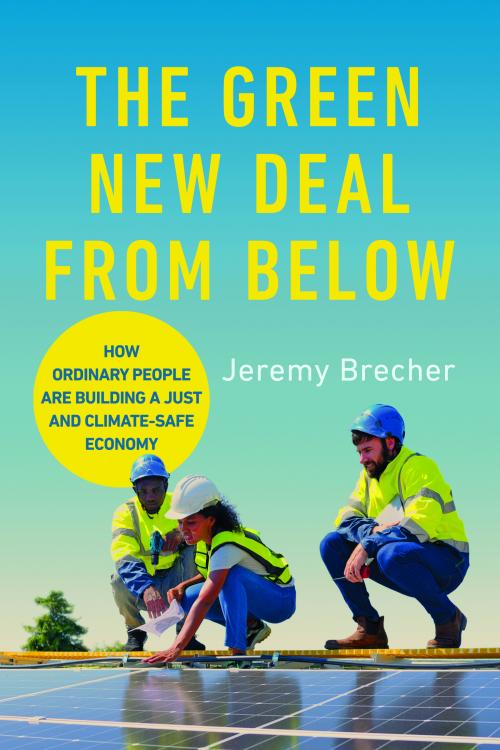
By Jeremy Brecher
November 28, 2024
Source: Counterpunch


Our Green New Deal campaigns are all about saying ‘yes’ to the healthy climate future we need. We build power for solutions like green affordable housing, upgrading buildings for clean energy, climate resilience hubs, solar-powered schools, walkable neighborhoods and more. 
Image credit: 350 Seattle

To resist and eventually overcome the looming authoritarian national government, we need to create bastions of what the Polish activists who overthrew their country’s dictatorship called “social self-defense.” That will involve many methods, including mutual aid, on-the-ground protection of those under attack, intelligence sharing, and many other forms of solidarity. For the past five years, I have been studying initiatives that are realizing the principles and policies of the Green New Deal—what I have called “The Green New Deal from Below.” I believe these Green New Deal from Below initiatives can be a critical component of our social self-defense.

The Green New Deal is a visionary program designed to protect the earth’s climate while creating good jobs, reducing injustice, and eliminating poverty. Its core principle is to unite the necessity for climate protection with the goals of full employment and social justice.

The Green New Deal erupted into public attention as a proposal for national legislation. But there has also emerged a little-noticed wave of initiatives from community groups, unions, city and state governments, tribes, and other nonfederal actors designed to contribute to the climate protection and social justice goals of the Green New Deal. Rep. Alexandria Ocasio- Cortez (AOC), who helped initiate the campaign for a Green New Deal, has called it “a Green New Deal from Below.”

The purpose of this book is to provide an overview of Green New Deal from Below initiatives in many different arenas and locations. These initiatives encompass a broad range of the programs already under way and in development. The projects of Green New Dealers recounted here should provide inspiration for thousands more that can create the foundation for local, national, and even global mobilization—and reconstruction.

The Green New Deal is happening, and whatever happens is possible. The Green New Deal is not an impossible leftist fantasy, or something that could never win popular support, or a dream that couldn’t possibly be realized in practice, or something that would bring disaster if it were realized. The Green New Deal is being created right now by flesh-and- blood people under real-life conditions. It is being created in communities, cities, states, and regions—from below.

Of course, only a limited proportion of US geographies and institutions have fully developed Green New Deals. But efforts to create Green New Deals are ubiquitous; an article in Popular Science magazine soon after the first Green New Deal proposal in Congress found that plans and first steps to realize Green New Deals were happening in every state in the union. Today the Green New Deal from Below, dispersed throughout the United States, is transforming the realities where it is—and creating models for broader transformation everywhere.

Green New Deals in cities like Boston and Los Angeles are reducing the greenhouse gases that are destroying our climate. They are creating jobs that protect the climate and training workers to fill them. They are mobilizing city resources to reduce poverty. They are investing in climate- protecting buildings and technologies in low-income neighborhoods. They are expanding cheap or free public transit to reconnect isolated neighborhoods, provide people who lack cars with access to jobs, and reduce greenhouse gas pollution.


In states like Illinois, California, and New York, Green New Deal–style programs are shifting major resources to climate-safe energy development. They are setting targets for greenhouse gas reduction and schedules for shutting down fossil fuel–producing and –using facilities—and implementing them. They are reducing fossil fuel use by increasing the energy efficiency of buildings, transportation, agriculture, and other energy users. They are investing in infrastructure to correct historical injustices like polluting facilities concentrated in poor communities. They are creating jobs in the green economy with high labor rights and standards and providing job training, jobs, and job ladders for people who have been marginalized in the labor market.

Unions like the IBEW are promoting programs to expand renewable energy production, building coalitions to support them, training the workers needed to realize them, and monitoring the results to ensure that they produce good union jobs. Unions of educators and nurses are fighting for—and winning—green schools and hospitals.

The Green New Deal from Below is showing that it is possible to challenge the powers that are imposing climate change, inequality, and oppression. That it is possible to formulate realistic alternatives. And that those alternatives can actually be implemented.

Perhaps someone could look at the diverse projects, programs, and initiatives of the Green New Deal from Below and see them as simply scattered, unconnected, one-off phenomena. But that would be like saying, I see the students, the classrooms, and the football field, but where is the university? The Green New Deal from Below is indeed composed of many parts, but that does not prevent it from being a real entity as a whole.

The Green New Deal transformed America’s political imagination. It transgressed the neoliberal, market-only assumptions that dominated public discourse for four decades. It proposed the long-disparaged notion of using government to solve problems. It refused to accept the growing inequality that had reshaped American society. It advocated tackling rather than ignoring the climate emergency. To paraphrase Green New Deal mayor Michelle Wu of Boston, it shifted “the sense of what was possible.” It thereby expanded the limits of what was possible.

This transformation flows from the core concepts of the Green New Deal. These core concepts integrate multiple concerns rather than addressing them in separate “silos” or adding them together in “laundry lists.” They unite the urgent and universal need for climate protection with the economic and social needs of disadvantaged groups and of working people. They do so by articulating a strategy for rapid greenhouse gas reduction that prioritizes programs that create jobs and reduce injustice. This strategy provides a new way of integrating the interests of previously disconnected or antagonistic constituencies.

The Green New Deal is not just a slogan, a list of demands, or a menu of policies. The Green New Deal provides a framework for moving beyond piecemeal policies to a set of integrated strategies. Like the original New Deal, it makes seemingly antagonistic policies and constituencies complementary by transcending the limitations of established assumptions. It pro- poses a set of changes in the social framework that meet both the common and the distinct needs of those affected. It thereby constructs a common interest that incorporates the particular interests of different groups. This allows needs and interests that may currently appear incompatible—for example, between jobs and environment—to become compatible or even synergistic.

The Green New Deal integrates such distinct elements in two ways. First, it integrates different kinds of needs and their solutions. Front and center is its integration of the need for climate protection, the need for good jobs, and the need for greater equality. But it integrates other needs as well. For example, it combines policies that attack entrenched forms of discrimination and injustice with ones that increase the power of workers on the job by strengthening their right to organize and engage in concerted action. Legislation in Connecticut and other states exemplifies this by requiring that offshore wind clean energy projects provide both project labor agreements ensuring union wage standards and conditions and community benefit agreements providing access to jobs for communities and demographics often deprived of that access.

Second, the Green New Deal integrates the needs of different constituencies. For example, two separate coalitions backing different bills developed in Illinois to shape climate legislation. One, the Illinois Clean Jobs coalition, was rooted in the environmental movement and local social justice organizations. The other, the Climate Jobs Illinois coalition, was based in the state’s labor unions. After considerable tension and extended negotiations, the two united on a common program that included the demands of each—laying the basis for the Climate and Equitable Jobs Act, described by one journalist as a “Green New Deal” for Illinois.

Integrating programs and integrating people go hand in hand. For example, the Green New Deal tames the purported conflict between employment and climate protection. It challenges the “jobs vs. environment” frame. At a local and state level, the Green New Deal from Below has therefore been able to unite often-divided labor, environmental, and climate justice advocates.

The Green New Deal is driven by a sense of urgency. There is the urgency of the climate emergency. There is also the urgency of people who are suffering and even dying as a result of injustice. The original Green New Deal proposal responded to this urgency by calling for a ten-year mobilization that would reconstruct American society and economy as dramatically as the New Deal and mobilization for World War II.

The Green New Deal arose in a sea of hopelessness and despair. It pointed the way toward viable alternatives to realities that evoked that hopelessness and despair. The Green New Deal from Below provides people a way to start building those alternatives day by day where they live and work.

The world historian Arnold Toynbee once delineated how great civilizational changes occur. Existing leaders of existing institutions face new challenges—but fail to change to meet them. Their civilizations thereby become vulnerable to collapse. In such a setting, however, a creative minority may arise that proposes—and begins to implement—new solutions. Surely climate change represents such a civilizational challenge, and just as surely our existing institutions and their leaders are failing to make the changes it requires. But at the grassroots a creative minority is at work establishing new solutions that are reconstructing society on new principles. Their work is manifested in the Green New Deal from Below.


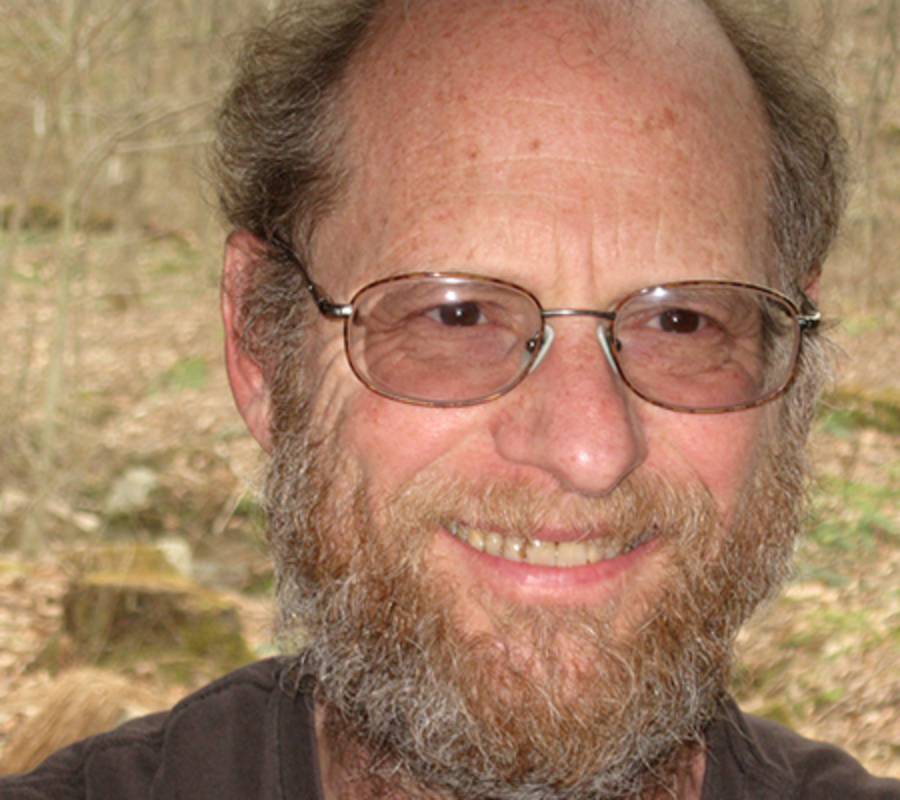
Jeremy Brecher  is a historian, author, and co-founder of the Labor Network for Sustainability. He has been active in peace, labor, environmental, and other social movements for more than half a century. Brecher is the author of more than a dozen books on labor and social movements, including Strike! and Global Village or Global Pillage and the winner of five regional Emmy awards for his documentary movie work.
Turning Kazakhstan Into a Beef-Producing Machine, the American Way

The vast central Asian country has millions of acres of pastureland. Can it produce steaks and burgers that offset emissions—and earn carbon credits for them?
November 29, 2024


LONG READ

A young cow grazes near a stack of hay at KazBeef's cow-calf operation near the village of Mamay, Kazakhstan.

The highway running north toward the Russian border is long and straight, a black line streaking across a snowy flatness. A clutch of pine trees, a row of utility poles, a small flock of crows taking flight. These are the few dark features in a landscape with no horizon, only varying definitions of white.

In the coming months this vast steppe will explode into life with green grass and wild tulips. For now, at the end of a long winter, it is a disorienting place.

Few people live out here. Villages are just clusters of disheveled cinder-block houses that look drawn onto the white in graphite. Horses, with their bones nearly poking through shaggy winter coats, plod across the snow, unfenced. Historically Kazakhs were nomads who relied on horses for transportation, labor, milk and meat. Now the animals mainly provide the latter. Most villages have a butcher, someone who knows how to use a knife in the yard behind their house.

Kazakhstan is the world’s largest landlocked country, the ninth largest overall—and young, having only emerged from the USSR as an independent nation 33 years ago. The street signs are still mostly in Russian and a Soviet spell hovers over everything. So it’s startling when something distinctively American comes into view: Thousands of black cattle, penned into a neat grid of metal corrals, with tags on their ears—an American-style feedlot.

Twenty-five years ago the new Kazakh government decided to kick-start the country’s moribund cattle industry, spending an initial $50 million to replicate the speed and efficiency of the quick-fattening American production system. One of its first moves was getting in touch with an amiable fourth-generation North Dakota cattle rancher and investor named Bill Price to ask for his help. The climate in the northern Great Plains, the Kazakh officials figured, was similar to Kazakhstan’s. If cattle could endure North Dakota’s winters, they could survive on the Kazakh steppe.

“They came to us and said: ‘Would you give us a tour of your feed yard and beef operation?” Price recalled recently. “We said: First of all, we don’t even know where your country is.” But soon after, Price’s brother and business partner, Daniel, flew to Kazakhstan to scope out partnership possibilities, returning home with this report: “It’s just like North Dakota. It gets cold. People are friendly.”

In October of 2010, the Prices loaded the first herd of Angus and Hereford cows into crates and onto a 747 at Hector International Airport in Fargo for a 22-hour flight to Astana, the Kazakh capital. Eleven more flights followed over the next several months, each carrying about 170 cows.

Now, 15 years later the progeny of those airlifted cows number in the thousands. They jostle for grain at metal troughs in icy mud up to their knees, most of them outlasting the deep freeze of Kazakh winter, and they graze the sprawling grasslands under the unabating heat of summer. After 20 months of life, give or take, they are shipped to Kazakhstan’s first state-of-the-art abattoir, slaughtered, expertly portioned and shrink-wrapped in plastic.

They are the property of a company called KazBeef and its hopes for achieving “net zero” emissions.

The world’s livestock, mostly cows, are one of the biggest global sources of methane, an especially potent greenhouse gas. Research, including from the United Nations, has argued that slowing the world’s consumption of livestock-based foods, largely beef and dairy, is critical for meeting global greenhouse gas targets. Instead, as the planet’s population hurtles toward 10 billion, demand is expected to rise—and greenhouse gas emissions along with it.
A worker at KazBeef’s slaughterhouse displays the final product, ready to be shipped.

The livestock industry is poised to expand on the world’s growing appetite for beef. But a small number of producers are making a bid to produce steaks and burgers without adding greenhouse gases to the atmosphere—or, rather, to effectively cancel out the industry’s greenhouse gas pollution with “regenerative grazing” practices.

Some of these producers are aiming to go one step further by earning carbon credits for those practices, which they can sell to polluters seeking to offset their own emissions.

KazBeef is one of them, at the vanguard of an emerging trend.

Critics say it’s impossible to raise livestock without greenhouse gas emissions and that significantly expanding the world’s livestock herds is tantamount to laying more oil pipelines or building more coal-fired power plants—a path to climate catastrophe. Regenerative grazing, they say, may have benefits for the soil, like improving water retention and microbial activity, but it does little to address methane emissions, which come mostly from cow burps. Measuring soil carbon in pasture is especially tricky, and many calculations fail to measure how much carbon would have remained in the soil without the cows grazing on it.

This, among other challenges, makes it difficult to verify a legitimate and saleable grazing-based credit.

“In order to attribute the greenhouse gas removal to the cows, you need to control for the presence of cows, versus no cows,” said Matthew Hayek, a professor of environmental studies at New York University who studies livestock impacts on the climate. “This is apart from the methane concerns.”

Initially a joint venture between Price’s company, Global Beef Consultants, and the Kazakh government, KazBeef has since evolved into a division of Singapore-based Kusto Group, a conglomerate of disparate businesses run by the Kazakh billionaire Yerkin Tatishev. Tatishev’s interests range from oil production to construction supplies to agriculture, with a business footprint that reaches from Israel to Vietnam to Canada. He has also wagered big on fast food: Kusto Group recently announced plans to open 55 Wendy’s restaurants across Kazakhstan and neighboring Uzbekistan within five years. Tatishev has made KazBeef’s agricultural ambitions clear: The company will turn the seemingly endless grasslands of this huge Central Asian nation into a beef-producing powerhouse.

At the 2023 United Nations conference on climate change, held in glittering, oil-rich Dubai, KazBeef announced it would begin producing “climate smart” beef. The company’s timing was strategic: The conference organizers had put agriculture prominently on the formal agenda, explicitly acknowledging that emissions from livestock agriculture need to be slashed in order to curb global warming. Though the number is debated, emissions from livestock account for as much as 37 percent of the world’s methane emissions.


KazBeef, the company said, would work with another Price enterprise, EcoBalance Global, and a Kazakh-based company called rTek to launch a cattle-raising system that will “show the world that the livestock and farming industry can be part of the net-zero solution.” The idea, the companies announced, is to graze cattle on Kazakh grasslands, moving the herds strategically so that grasses recover in such a way that the soil is better able to store carbon. This stored carbon will be tracked using blockchain technology, providing a verified carbon credit that, in principle, cancels out some of the company’s livestock emissions.

As the world’s most carbon-intensive industries—including energy generation, transportation and agriculture—continue to release record amounts of greenhouse gas emissions, pushing global climate goals further from reach, some climate experts suggest that removing carbon from the atmosphere is the only way to reach net-negative emissions. Carbon markets, whether voluntary or mandatory, as in the European Union, play a role by putting a value on that removal.

These markets represent a relatively small piece of the climate solutions puzzle, and most of them, so far, are voluntary. But the financial prospects are alluringly huge: The value of the voluntary carbon market reached $2 billion in 2021, and experts project it could reach $40 billion by 2030.

For farmers, these markets have become especially appealing. They’re in possession of one of the most potent tools for storing greenhouse gas emissions: the soil under their feet, which is the biggest reservoir of carbon after the world’s oceans. In the past few years, “carbon farming” has become a tantalizing idea, not only because of the potential to store significant amounts of carbon—though the amount is debated and depends on environmental conditions—but because it’s a potential money maker. Even the American farm lobby, which played a pivotal role in derailing a mandatory carbon trading program in the United States and had long denied the scientific consensus of climate change, has embraced the idea.

Wittingly or not, taxpayers have, too. The U.S. Department of Agriculture (USDA) has funneled at least $3 billion toward building markets for agricultural practices deemed “climate friendly” and $165 million to encourage participation in voluntary carbon markets based on those practices, an agency spokesperson said. The agency has directed at least $80 million to develop carbon markets based on livestock and grazing specifically.

But carbon markets and offsets face some major challenges, whether they involve agriculture or not. As more companies have bought into these markets to offset their emissions, studies have challenged the validity of those offsets or credits—based on reforestation or renewable energy projects or any other carbon removal effort.

Yet companies and countries, eager to burnish their net-zero credentials or meet their commitments to reduce climate-warming emissions under the Paris climate agreement, have poured into the market. Along with this developing market, a slate of registries, standard-setting organizations and verification programs have popped up, creating a confusing, unwieldy patchwork of rules.

“It’s the wild west and we have no firm oversight over what’s going on,” said Jason Rowntree, a professor of animal science at Michigan State University and a top expert of livestock and carbon storage.

Research, published in Nature Communications this month, found that only 16 percent of carbon credits resulted in actual emissions reductions.

Grazing-based carbon credits raise yet more hurdles and questions: Can a livestock producer, who trades in a major source of greenhouse gas emissions, legitimately cancel out those emissions from their own supply chain—a process known as “insetting”? Or can they generate a saleable credit that promises a reduction in emissions—an “offset” purchased by other companies—from creatures that belch millions of tons of methane?

The idea of grazing-based credits is so new that many carbon accounting experts interviewed for this story had yet to hear of them, and many who had heard of them were skeptical. Some were blunt.

“I would say it’s outside the bounds of probability,” said Peter Smith, a climate scientist at the University of Aberdeen who has written about the limitations of carbon sequestration from grazing livestock. “It’s being used as a smokescreen by the livestock industry. It’s greenwashing.”

Global appetites for beef have more than doubled since 1960, and overall meat consumption is projected to keep rising by 50 percent within 25 years. Along with that increase will come more planet-warming emissions. Researchers have determined that, without major changes, emissions from food production, largely from meat, will rise 60 percent by 2050, making global climate goals impossible even if the world were to stop burning fossil fuels today.

More cows could blow through the atmosphere’s limits—“climate friendly” or not.

But the team behind KazBeef doesn’t see the future that way.
Deeply Rooted

The iced-over mud track leading to KazBeef’s grazing operation outside the village of Mamay, about 165 miles north of Astana, passes a handful of small houses that look bleached from winter and baked from summer, victims of temperatures that swing from 40 below Celsius to 40 above.

There is nothing else around for miles, except a handful of metal-clad buildings that constitute KazBeef’s local headquarters. Inside one of the larger buildings, Yespol Aisabayev, KazBeef’s manager here, has arranged for breakfast—a table-wide spread of nuts, fruit, beef topped with raw onions, fried dough and the ever-present Kazakh tea, which he pours into ceramic bowls.

Yespol Aisabayev, KazBeef’s cow-calf operation manager, stands in an icy field.

Your cup is never empty in Kazakhstan—of tea, water, wine or whisky. “It’s steppe here,” Aisabayev said. “It’s in our roots.”

For centuries, Kazakhstan’s nomadic people moved south for pasture in winter, then north again in summer, with their horses, sheep and cattle. Their settlements were impermanent. When visitors came, they were—and still are—given everything. This was in part because another human brought a crackle of excitement into a remote and solitary life. It was also strategic. Strangers brought news from afar.

“Things have changed,” Aisabayev said, holding his cell phone. “We can afford to be in one place.”

Aisabayev is wearing jeans and a down vest bearing the KazBeef logo. His hair is neatly cut and an eye-wrinkling smile often breaks across his face. He points to certificates, hanging on the wall behind him, from the American Hereford and Angus associations, which have each certified KazBeef as a member.

When the first cows arrived in Kazakhstan from North Dakota, they were sent here, to the outskirts of this village, surrounded by plentiful grasslands that stretch in all directions. This was the beginning of KazBeef’s bid to build a cattle empire in what was once the hinterlands of the USSR. The company controls nearly 250,000 acres in this area alone and employs 80 people, many from the village, where work prospects are otherwise dismal to nonexistent.

KazBeef hired Aisabayev to oversee the operation. His family lives nearly 600 miles away— “close by,” he joked. Like the other men whom KazBeef has placed in its outposts across the northern part of this country, he endures the isolation because he’s a believer, and like most of his fellow Kazakhs he wants to reclaim his country from a complicated, repressed past.

During the Soviet era, Kazakhstan’s nomadic culture came under a collective agricultural system that never really fit the landscape and severely damaged as much as one-quarter of its grasslands. Under this system, which started in the 1920s, Kazakhstan lost half of its households, 80 percent of its livestock and its nomadic ways of life. Many people here consider the seven decades of Soviet rule a kind of agricultural genocide.

“The Soviet Union was opposed to nomadic farming ideologically,” said Susanne Wengle, a political scientist at the University of Notre Dame who studies Soviet and post-Soviet agriculture.

Now Kazahks want to start over on their own terms, and, at least for beef production, those terms are American.

“This whole place was built on the American system,” Aisabayev says, of the operation he oversees

.
Yespol Aisabayev points to a map of KazBeef’s grazing lands.

After KazBeef’s forerunners contacted the Prices, they set up the cow-calf operation in Mamay. A cow-calf operation is the first step in the beef production system, where cows give birth to calves, which are then grazed for four or five months before being shipped off to the feedlot to be fattened.

The whole process of setting up the new KazBeef operation—from cow-calf to slaughterhouse— took about six years, Price said. The Kazakh government hired not only Price’s team, but advisors from the Arkansas-based meat processing giant Tyson and the USDA. One advisor, from a Canadian company called Feedlot Health Management Services, lived on the Mamay ranch for two years.

After some experimentation, the team found that the hardiest animals are cross-breeds between Angus or Herefords, which have been bred over generations to fatten quickly, and the breeds native to the steppe, which don’t produce as much lucrative meat, but can endure the tough conditions. The timing is critical. The calves need to be born in the winter so they’re old enough to graze on the spring and summer grass before the winter sets in again—even if that means losing babies to the winter cold.

“It’s better they’re ready for the grass in May,” Aisabayev says. “The weakest will die in the winter anyway. They’re making their children strong. That’s the way we make our natural selection. The strongest will live.”

After grazing for the summer, the animals are sent to a feedlot where they live the rest of their lives before slaughter. KazBeef’s biggest of these is about 140 miles north of Astana near the village of Malik Gabdullin.

KazBeef hired Makhsat Kuralbekovich, a friendly one-time restaurant owner, taxi co-op overseer and government crisis manager, for the job of running it.

The corrals, packed with cattle, sit against a sloping hillside covered with pine trees. “We were looking for a place protected from the wind,” Kuralbekovich says, his close-shorn head topped with a New York Yankees cap. “We have insane winds here. It can reach 30 meters a second, so it’s very difficult, these weather conditions, if we add wind to negative 35.”

The cold freezes the muddy feedlots so quickly sometimes that the animals’ hooves get stuck. Their legs snap. This sometimes kills them before the cold can.

After a tour of the feedlot and its automated feeding systems, which draw from massive mountains of grain covered with tarps held down by tires, Kuralbekovich sits at a table, heaping with Mongolian camel milk chocolates and blonde biscuits. An oil painting of a heifer and her calf hangs on the wall between windows that are dressed with gold, pom pom-trimmed curtains.

The sun has not yet set, but Kuralbekovich brings out a bottle of Irish whiskey. He insists that everyone have some
.
Olzhas Shayakhmetov (left), KazBeef’s chief marketing officer, and Makhsat Kuralbekovich, who runs a KazBeef feedlot, discuss operations inside the company’s offices.

Livestock, he explains, are a Kazakh person’s wealth, embedded in their psyche. “Richness is animals,” he says. “In case of the apocalypse, paper won’t mean anything.”

Like many KazBeef managers, Kuralbekovich’s family lives hundreds of miles away, in a city with better schools and more life. But the isolation suits him, he says. He misses the animals when he’s gone. “When I go back to Almaty, I only last five days,” he says, of the country’s biggest city. “I have work I love.”

So, like his KazBeef colleagues, he leaves his family behind and returns here, to this country’s new beef frontier.
Taking Credit

A few years ago, Bill Price, the North Dakota rancher and investor, struck up a conversation with Jim Arthaud, an oil and gas developer who owns a 22,000-acre cattle ranch that straddles the border of Montana and North Dakota.

Price, with his ranching background, and Arthaud, with his ties to energy development, got to talking about the growing market for carbon credits and how together they might develop a program to generate these credits from the grasslands of the Dakotas.

Three years later, a seafood company hoping to underwrite the carbon neutrality of the 2023 Pac-12 men’s basketball tournament championship bought credits generated by Arthaud’s cattle—a first-of-its-kind transaction and the beginning of an improbable path that led from North Dakota to Kazakhstan.
The progeny of Angus cows shipped from North Dakota in 2010 at KazBeef’s feedlot near Shchuchinsk.


When Price and Arthaud started their conversation, agriculture-based carbon credits were mostly based on croplands: A corn or soy farmer, for example, might take certain steps to improve the quality of their soils, like refraining from tillage, making that soil better able to hold carbon. That stored carbon, in turn, generates a credit or offset that can be bought through an exchange or marketplace, by a company seeking to lower its own carbon footprint.

Price and Arthaud wondered how to enlist the vast rangelands of the Dakotas in a similar type of arrangement—but with grazing animals. Eventually, the conversation turned into EcoBalance Global and its grazing-based system.

EcoBalance soon developed a rotational grazing method it calls “twice-over grazing” where the animals are grazed in one area, moved to another, and then within a certain timeframe moved back to the first area.

“When they go across it the first time, they clip the top of the grass and then you move them,” explained Tellan Steffan, a North Dakota rancher and now the CEO of EcoBalance. “Then we give that grass a recovery period before those animals come back and graze that grass again. What that does is it keeps the grass in a vegetative state for a longer period of time.” That, Steffan explained, keeps more leafy matter on the grass, allowing it to pull carbon dioxide out of the air. “Microbes come up and they exchange that carbon dioxide for nitrogen and sugars, and they take the carbon dioxide down to the soil with them and that’s where the permanent storage happens.”

Beginning in 2022, workers at Arthaud’s Open A Angus Ranch placed GPS tags on calves, digitally tracking them as they moved across the ranch and over the course of their lives. EcoBalance ultimately tracked 904 cattle at the ranch. During that year, soil scientists took samples at different depths, determining a carbon baseline. In the following years, they took more samples and sent them to a lab for analysis. “We do the same process in the same way,” Steffan explained, “and that gives us the true amount of carbon that we have sequestered.”

In March 2023, a Houston-based carbon registry called BCarbon verified that this twice-over grazing process resulted in legitimately stored soil carbon and issued the first carbon credits generated on Arthaud’s ranch. BCarbon then sold those credits, including to a company called Pacific Seafood, which paid to offset the carbon emissions of the Pac-12 Conference basketball championship that year. (Pacific Seafood bought credits from multiple carbon storage projects, not just from EcoBalance.)

In January, BCarbon issued another 4,364 credits and in March, another 6,817 based on the grazing operations at Arthaud’s ranch, with the ranch keeping 80 percent of the sale proceeds.

Steffan says this is just the beginning—that the twice-over grazing system can revolutionize how cattle are raised and how carbon is stored. He noted additional benefits: healthier animals, better water infiltration, more biodiversity, more forage production. Grasslands all over the world could benefit from this approach while providing protein at the same time.

In December 2023, at the COP in Dubai, EcoBalance unveiled its next venture—this one with KazBeef and Almaty-based rTek, a company that specializes in remote sensing and geographic data mapping.

The partnership, the companies said, would launch the “first-ever pilot ranch outside the United States that will deliver the world’s first climate smart beef, using carbon insets, backed by 3rd party validation and blockchain technology.”
To Inset or Offset

rTek’s offices are tucked off Dostyk Avenue, a boulevard lined with stolid government buildings that runs through Almaty, Kazakhstan’s mountain-fringed metropolis. Abstract paintings sit against the walls, yet to be hung.

Stuart Bowlin is one of rTek’s co-founders. Originally from Seattle and wearing hobnailed boots and a fleece jacket, he looks like he could be a barista back home. But he’s lived in Kazakhstan for a dozen years—so long now that he’s started to drop the “the’s” from his speech. The only interruption in Bowlin’s Kazakh tenure was a two-year break when he returned to Washington after a potash business he helped launch went belly up. Back in Washington he got his commercial pilot’s license, which turned out to be useful. Now he flies drones over Kazakh rangelands to help determine where cattle should graze for optimal carbon storage.

Bowlin has become an expert in the soils of his adopted home. He knows how a history of overgrazing has damaged them and how overuse of water drained the Aral Sea. (A Soviet nuclear test site in northern Kazakhstan destroyed millions of acres of arable land, which didn’t help.) He believes that better grazing can restore the health of the country’s grasslands.

A woman adjusts horse meat sausages inside Almaty’s main public market.

The twice-over system, he explained, solves a problem of size. When animals have to move long distances for water and forage, they trample a lot of land. The trampled land becomes more prone to invasive grasses, dehydration and erosion.

The strategy now, though, is to split up tracts of land into 20 paddocks, each cordoned off with moveable electric fencing and equipped with a watering point, run off a solar panel. The animals are moved from paddock to paddock after Bowlin determines, via remote sensing, if the grasses have rested for enough time. “The point is to reduce grazing pressure overall,” he explains. “That keeps the grass at an optimal length to increase root growth and productivity of the grass.”

Then comes a critical step. “We’ll measure the carbon directly in the soil before and after, every year at a minimum to start with,” Bowlin says. “And as we get a handle on the rates of soil sequestration—there are many soil types in Kazakhstan—we’ll do this many times in many places.”

rTek will then send the results of all the tests to BCarbon in Houston, which will verify the results. But, unlike the Open A offset credits, the ones generated by KazBeef will be “inset” credits—another emerging, voluntary approach companies are using to reduce their carbon impacts.

Offsets work when one company or government entity buys a credit from another company that engages in a carbon-storing project, like reforestation or a solar facility. The trade happens outside the purchasing company or government entity’s supply chain.

With insetting, a company that wants to reduce its carbon footprint engages in a carbon-reduction project within its own supply chain. (Supply chain emissions account for about 75 percent of the average company’s emissions. In food-related industries, the percentage is closer to 90 percent.) There is no “trade” between companies or entities. Rather, a company that invests in reducing carbon in its own supply chain, in turn markets that reduction to climate-conscious customers who might be compelled to buy their product over another.

In the case of KazBeef or Open A, the reductions happen, in theory, in the soils of grazing lands. But companies of all types increasingly have been pursuing them.

“There’s been a lot of interest in insetting as opposed to offsetting,” said Georgine Yorgey, an agricultural researcher and associate director at the Center for Sustaining Agriculture and Natural Resources at Washington State University. “Things in the U.S. are moving toward insetting, especially in the food and beverage sector. The reasons for that, broadly, is that consumers care about the footprint of their food choices—an important set of consumers.”

Wealthy steak lovers in Middle Eastern petrostates, for example.

Earlier this year, an influential Dubai-based British chef named Robert Rathbone sampled the carbon-neutral inset beef produced by EcoBalance and decided he loved it. In April, more than 3,300 pounds of “carbon-neutral” inset beef from Open A Angus Ranch were flown to Dubai and served in Rathbone’s restaurants. KazBeef has also supplied Rathbone’s restaurants and plans to fly one load of beef from Astana to Dubai every week.

The beef will be sold to consumers as “climate smart” even though it was flown thousands of miles. The carbon emissions from the flights will not be factored into the math.

Boxed up and ready to be shipped, KazBeef’s products are sent across the country and to Dubai, where the beef is sold as climate friendly or net-zero.


A Need for Speed and a Lack of Answers

As the market for offsets has grown, so has the scrutiny. Multiple academic and media investigations have found problems of double counting—where both companies involved in a trade count the carbon reduction in their tallies—or of “additionality,” where one company pays for a carbon project that would have happened without the trade.

In May of this year, the Biden White House, along with the treasury, agriculture and energy departments, issued a joint statement saying carbon markets have huge potential for “accelerating emissions reductions,” but acknowledged that credits need to be measured and verified in systematic and accurate ways. (One analysis found there are at least a dozen different protocols for measuring, reporting and verifying soil carbon from agricultural practices on cropland alone.)

“Unlike what happens with commodities that can be sampled or measured on delivery, such as soybeans or nickel, a credit buyer cannot consistently and easily ascertain quality through examination of physically delivered emissions reductions or removals,” the report said.

Earlier this year, Stanford University published a report which noted that, despite $20 billion being directed toward “climate smart” agriculture under the Biden administration’s signature climate legislation, the Inflation Reduction Act, there are major data gaps that prevent accurate measurement and verification of carbon reductions from agricultural practices.

“We’re trying to push this so fast,” Rowntree, of Michigan State, said. “But scientifically we don’t have all the answers.”

These concerns apply to offsets as well as insets.

“The same things still matter,” Yorgey said. “Additionality still matters, double counting still matters, where you draw the boundaries still matters. Making sure [the credits] are above and beyond business-as-usual matters, too.”

That’s especially true with grazing-based credits.

Paige Stanley is a research scientist with Colorado State University who studies carbon sequestration in rangelands. She’s noticed an uptick in interest in grazing-based credits—and with it, some emerging questions.

“The voluntary carbon market space is moving into grazing, rather than just croplands. But there are different challenges that the space needs to contend with,” Stanley said. “There’s so much inherent variability in the landscape. It’s a little bit like finding a needle in a haystack.”

Stanley published a paper last year based on research she did into California rangelands, which documented problems with the accuracy and reliability of soil carbon measurements from grazed areas. The differences in soil types across rangelands presents a big challenge, but Stanley also found that sample sizes were generally too small to reliably measure changes in the soil carbon and that statistical methods were uneven.


“We’re trying to push this so fast, but scientifically we don’t have all the answers.”Jason Rowntree, Michigan State University professor of animal science

Some researchers and experts who reviewed EcoBalance’s methodology pointed out that KazBeef aims to store carbon for a 10-year period—not nearly long enough.

“They say it is a 10-year contract of non-disturbance. But if the carbon can be released through disturbance after 10 years, we’ve lost all the value,” said Ben Lilliston, the director of rural strategies and climate change at the Minnesota-based Institute for Agriculture and Trade Policy. “A principle of high integrity credits is that they are permanent.”

Even Bowlin acknowledges the limitations. “Twice-over grazing is a short-term solution. We don’t know how many decades it will contribute to soil health, but we know it helps now,” he said. “It’s more permanent than some credits out there, but it’s less permanent than carbon capture and storage, where you’re literally taking the carbon and putting it in a brick or something.”

Even if it were permanent, though, EcoBalance’s grazing-based approach doesn’t account for methane emitted from cows—only for carbon in the soil.

Jim Blackburn, who runs the BCarbon registry and verifies the credits for EcoBalance, acknowledges as much. (BCarbon had only issued credits for Open A Angus at the time of publication, not KazBeef.)

“We believe that if you can prove that you’re adding carbon to the ground or the trees, then you can sell those credits,” Blackburn said. “We are basically measuring the soil. Our certification is limited to that … We do not consider the methane emissions in the issuance.”

Given that cattle are responsible for so much of the world’s methane emissions, that’s a major oversight.

“There’s very little science here, and the omissions are glaring,” explained Hayek, of New York University. “Nothing about methane emissions or any other [greenhouse gas] fluxes besides soil carbon. Nothing about whether their study site would be taking up carbon anyway if the cows weren’t there. These are fundamental conditions that need to be met to show any additional benefit that carbon credits would need to make.”

In the emerging world of carbon markets, there are a handful of verification companies and registries considered to be certifiers of “high integrity,” credible carbon credits, according to the Integrity Council for the Voluntary Carbon Market. These are ACR, Climate Action Reserve, Gold Standard and Verra, which earlier this year were deemed eligible by the council to label certain credits as adhering to its “Core Carbon Principles” methodology—its most robust standard. These credits, so far, have come only from projects involving natural gas pipelines, landfills and discarded equipment that generates ozone and refrigerants.

The council has not yet approved any agricultural methods in this high-level category, and only one of these major certifiers—Verra—has a protocol related to grazing.

New research published last year found that it would be basically impossible for the livestock industry to cancel out its emissions through improved grazing methods on grasslands. “Solely relying on carbon sequestration in grasslands to offset [the] warming effect of emissions for current ruminant systems is not feasible,” the authors concluded, noting that carbon in the soil would have to increase by somewhere between 25 percent and 2,000 percent.

“Estimating a change in cropland is really difficult. Assessment in a grassland is almost impossible,” said Smith, of Aberdeen, a co-author of the research. “Even if you’re not claiming carbon credits, the justification for expanding livestock production is incredibly counter-productive for climate change. And then when you throw in the claim that they’re trying to improve climate benefits, that just seems entirely implausible.”
A Different Approach

Jamila Jaxaliyeva is a former professional golfer—Kazakhstan’s first—now a graduate student, studying forestry at Yale University, and an aspiring Kazakh cattle rancher.

Though she was raised in Germany, she was born in Almaty and her family has lived in western Kazakhstan for generations. That’s where she hopes to resurrect her family’s cattle business and raise cows, though not the way KazBeef does.

“Trying to copy the American system in Kazakhstan is just so stupid,” she says, in a customarily direct manner. “We’re nomadic. We don’t have fences in Kazakhstan.”

And that’s only the first problem, she says.

Nomads relied on horses to move across the harsh landscape of the steppe, not just because they provided better transportation than other animals, but because they could survive. Horses know how to dig through the snow to find grass in the winter. Cows, especially the Angus and Hereford breeds brought to the country by KazBeef, don’t. Without human-fed grain, they would die. “These are stupid cattle,” Jaxaliyeva says.

In the U.S. and other major beef producing countries corn is a mainstay of a cow-fattening diet, and heavily subsidized. Roughly 40 percent of U.S.-grown corn, the most heavily subsidized crop in the country, goes to livestock.

But Kazakhstan’s agricultural system doesn’t support corn in the same way. The country grew about 1.2 million metric tons last year, compared to 390 million in the U.S. and 290 million in China, the next biggest producer.

“We should use grass. You make the cows do what they’re born to do, which is graze,” Jaxaliyeva says. “Grass to beef—just one step.” Not grass, to grain, to beef.

A cow’s heart rests on a spike at the KazBeef slaughterhouse.

Kazakhs eat a lot of meat, both from horses and cows. But the native steppe breeds don’t produce as much meat in this grass-to-beef system as the imported ones do when they’re fed grain. That means they’re not as lucrative.

The leaner meat of the steppe breeds is just fine with most Kazakhs, Jaxaliyeva says. “In Kazakhstan, because we boil meat, we don’t need marbling. We don’t care about steaks.”

But the world’s premier consumers have learned to want fatty, marbled meat—the kind produced by the Angus and Hereford cows that have been bred over decades to get bigger and fatter, fast.

“Marbling is fake,” Jaxaliyeva says, expressing a strong preference for lean, native beef. “It’s just marketing.”

Jaxaliyeva thinks native breeds that can survive the conditions in Kazakhstan better suit the country’s appetites and environment. She plans to use those breeds in her operation.

“You need cattle that are more adapted, and that’s huge for climate change,” she says. “Your Angus is not going to survive the extremes.”

Nor is it going to create the kind of economic conditions that will help more Kazakhs. Replicating the American system will lead to more consolidation in the industry, as it has in the rest of the world, shutting out more Kazakh farmers, Jaxaliyeva fears.

“My vision is to give them the opportunity to raise their own animals. Provide them with the right tools and the right breed that graze wherever they want to,” Jaxaliyeva says. “Then everyone has a job. We would revive old traditions and communities. These bleak conditions at a feedlot—that’s not life. We need to do it our way, not the American way.”
Reviving a Depressed Land

Murat Yuldashev is a managing partner at Kusto Group, KazBeef’s parent company, where he is in charge of overseeing the company’s carbon credits programs. During the late Soviet era, Yuldashev was a nuclear scientist, but the collapse of the Soviet Union changed his trajectory.

Sitting in a traditional Kazakh restaurant on Dostyk Avenue he wears his career switch expertly.

“When the Soviet Union crashed it was not so easy to cover my expenses for my family, so I changed. I became a financial guy,” he says.

And for KazBeef carbon credits have become a financial matter.


“We would like to be part of this green world, to be carbon zero,” he says. “And from another hand, it will be a more sustainable business. Carbon credits are like a bonus—an additional revenue stream.”

Yuldashev notes that Kazakhstan’s grazing lands are massive: The country has nearly 460 million acres of pastureland, the fifth most in the world. “The potential is enormous,” he says.

Sitting next to Yuldashev is KazBeef’s chief marketing officer Olzhas Shayakhmetov, a slight, cautious man and a father of two young children, who frequently lights up e-cigarettes. Shayakhmetov, like Yuldashev—like every Kazakh of a certain age—has memories of emerging from the Soviet Union. He remembers his parents, a school teacher and a doctor, not getting paid for three years.

Murat Yuldashev is the managing partner at Kusto Group, KazBeef’s parent company.Murat Yuldashev is the managing partner at Kusto Group, KazBeef’s parent company.

Driving around his hometown of Shchuchinsk, in the far north of the country, Shayakhmetov points out the modest building where his parents still live. A complex of ski jumps rises at the edge of town, where the first Kazakh champion trained—perhaps the town’s only claim to fame. Women shove prams across wedges of dirty snow. Nothing new has been built here since the early 1980s, except a hospital. Vape shops line the streets.

“It is very depressed here,” Shayakhmetov says, dragging again on his e-cigarette.

In the south of the country and in the west, near the Caspian Sea, Kazakhstan’s oil fields produce massive amounts of oil, making the country the world’s 12th largest producer. Oil is its biggest financial engine. Around Shchuchinsk, though, there’s nothing but barley and grasslands. That’s where Shayakhmetov, KazBeef’s evangelistic messenger, believes his country’s new promise lies.

A view of KazBeef’s slaughterhouse near Shchuchinsk.

About an hour outside of town, KazBeef’s slaughter facilities are ringed by a fence and guarded. In an upstairs office, Azamat Orumbayev, the facility’s chief, sits behind a desk, wearing jeans and a KazBeef jacket. A clock in the shape of a steak hangs on the wall; a steak calendar sits on the desk. Snow-blinding sun slices into the room through the windows.

Shayakhmetov translates Orumbayev’s Russian to English.


Orumbayev, who once ran a butcher shop, has huge hopes for KazBeef, though he acknowledges some hurdles, including the fact that some big markets don’t yet accept beef imports from Kazakhstan.

“We can, as a country, be the biggest supplier of the region,” he says.

He sees the American method of cattle production as a way to economically boost the country’s farming industry. “The difference between a farmer in Kazakhstan and in the U.S. is the farmer in Kazakhstan has a poor belief in his future. In the U.S., he’s rich and respected.”
Azamat Orumbayev, who runs KazBeef’s slaughterhouse, sits at his desk in February.

For him, the carbon credits are secondary. “We’re just providing the land,” he says.
Believe In It

Below Orumbayev’s office, KazBeef’s operations flow with mechanized, antiseptic precision—the antithesis of the makeshift backyard slaughtering that dominates most of the country.

The temperature in the processing rooms remains a constant 2 degrees Celsius. Each person, dressed in a white lab-like coat and helmet, has their own knife that is switched out every 30 minutes. Every two hours, all the knives are disinfected—a process that takes 10 or 15 minutes, providing workers a window for their coffee breaks. Random shapes of gristle and fat fill plastic crates around the room.

“We can trace which cut of beef is cut with which knife,” Shayakhmetov says.

The facility has a computerized grader—the only one in Kazakhstan—to rate the percentage of marbled fat that international buyers have come to expect. At the end of the day, the facility has processed 10 tons of highly marbled meat, all of which gets boxed up and stored in a shockingly cold and massive walk-in cooler, ready for consumers in far-away places.

On the slaughtering side of the KazBeef operation, everyone wears maroon lab coats rather than white ones. Workers enter through a door that leads onto a platform where they pause as a machine applies disinfectant to their rubber boots. The air is warm and fleshy, smelling of wet fur and animal.

Above, 2,000-pound carcasses hang on hooks, moving slowly along a conveyor, appearing in reverse stages of recognition, from meat to animal: A headless carcass stripped of its hide and organs. A carcass still with its head and organs, but no hide or limbs. An animal with its hide and organs, but horns sawed off, its tongue flopping out of its head. An animal, hanging upside down by one chained leg—electrically stunned just seconds before—still breathing, thrashing against gravity.

Workers at KazBeef’s slaughterhouse near Shchuchinsk process one of the 35 cows slaughtered at the facility each day.
Workers on the line at KazBeef’s state-of-the-art slaughterhouse where knives are tracked and sanitized on a rigid schedule.

At the beginning of this procession from creature to food is an animal, taken minutes ago from an outdoor corral, confused by the transition from sunlight to darkness, from herd to isolation. Its hooves are slipping on the wet concrete and its eyes are rolling in their sockets, straining to see over the walls of the chute where he now waits. The dim, sweaty room is aware of his presence — of a life about to end. Then, moments later, with an electric jolt, a collapse, a swift heave into the air and a swipe of electric teeth across the neck, it does.

Blood drains onto the floor as the conveyor moves the animal’s massive body along. Within the day, dozens of hands will process the animal’s flesh into a package that will bear an audacious claim, for which consumers eventually will pay a premium. It will say the animal was good for the future.

In KazBeef’s facility 35 animals are slaughtered this way every day, a fraction of the number processed in giant American facilities. (Islam still dominates the culture of eating in Kazakhstan and under halal rules, the animal’s throat must be cut while it is still alive, slowing down the process.) But as KazBeef breeds more cows, and more cows graze the country’s grassland, and more consumers get to know the product, that number will rise. At least that’s the hope.

KazBeef’s managers and workers are proud of their work—proud to display it to a reporter. No American or multinational livestock company would ever allow a journalist in to see its operations, from start to finish, the way KazBeef has.

“Everyone who works in this company believes in it,” Shayakhmetov says. “It’s not about KazBeef. It’s about Kazakh protein.”

Shayakhmetov becomes lyrically emphatic after a whisky. “We have all this beautiful land. All this space,” he says. “We see this country as a beef-producing country that will feed the world. We believe in it. I believe in it.”

“We can be known for more than oil,” he adds, with hope and without irony. “We will do it somehow.”


Georgina Gustin is a journalist with Inside Climate News, and has reported on the intersections of farming, food systems and the environment for much of her journalism career. Her work has won numerous awards, including the John B. Oakes Award for Distinguished Environmental Journalism and the Glenn Cunningham Agricultural Journalist of the Year, which she shared with Inside Climate News colleagues.

Are Iraq’s Oil Flows Through Kurdistan To Turkey Set To Resume?

By Simon Watkins - Nov 25, 2024,

Oil flows from Kurdistan to Turkey were halted due to legal disputes over unauthorized exports.

Russia's heavy involvement in Kurdistan's oil sector and Baghdad's push to integrate Kurdistan into a unified Iraq complicate the chances of a balanced resolution.

Baghdad appears intent on centralizing oil governance under a unified oil law, reducing Kurdistan's autonomy.


The resumption of oil exports from Iraq’s semi-autonomous region of Kurdistan through the Iraq-Turkey Pipeline (ITP) to the Turkish port of Ceyhan was discussed in detail last week by Iraqi Oil Minister Hayan Abdul-Ghani and the country’s Parliamentary Finance Committee, a senior energy sector source who works closely with the Oil Ministry told OilPrice.com. These flows were stopped on 25 March 2023 after the International Chamber of Commerce (ICC) ordered Turkey to pay the Federal Government of Iraq (FGI) in Baghdad damages of US$1.5 billion for unauthorised oil exports organised by the Kurdistan Regional Government (KRG) in Erbil. The ICC had ruled that Turkey had broken the terms of a 1973 agreement by allowing the oil exports from the Iraqi Kurdistan region without the consent of the FGI. “However, some big issues remain between the two sides [the FGI and the KRG], and restoring the oil flows [through Kurdistan to Turkey] depends on how these are dealt with in the coming days,” he added.

At the heart of any new agreement between the FGI and KRG is precisely the same basic trade-off that underpinned the original November 2014 deal struck between the two sides. This involved the Iraqi Kurdistan region effectively transferring oil produced in its region to the Iraqi government’s State Oil Marketing Organization (SOMO) for onward export as it saw fit, in exchange for which the Iraqi government would send the Iraqi Kurdistan a monthly dispersal of funds from the central Iraq government budget. Specifically, for the first year of the deal taking effect (2014), 17 percent of the FGI’s budget after sovereign expenses (around US$500 million at that time) was to be dispersed over the year on a monthly basis in exchange for the KRG organising the export up to 550,000 barrels per day (bpd) of oil from the Iraqi Kurdistan oil fields and Kirkuk to SOMO. This time around, the FGI Cabinet ordered the KRG on 5 November to immediately transfer its oil output to SOMO in one part of the new iteration of the old deal. On the other part of it, the Cabinet announced that it had approved a budget measure to pay the KRG for production and transport costs incurred in this process and had set a US$16 per barrel rate for international oil companies (IOCs) operating in Iraqi Kurdistan.

The devil is in such details and the scene is set for a repeat performance of the long-running saga of the failure of the previous deal of 2014. Barely three months into that agreement, and accusations began from both sides, with the KRG accusing the FGI of not paying the full amount promised, and the FGI accusing the KRG of not supplying the full amount of oil agreed. After that, matters between the two sides became progressively worse, and took a nosedive in 2017 after two seismic developments in the country. The first was the huge vote in favour of Kurdish independence in September, as analysed in full in my latest book on the new global oil market order. After this, the very basis of the deal became null and void when FGI and Iranian forces took back control of the oilfields in Kurdistan, including the major oil sites around Kirkuk. The FGI argued that the Kirkuk fields had been occupied illegally in the first place, having been under Kurdish control only since 2014 when the Iraqi army collapsed in the face of Islamic State. From that point onwards, the starting point of any negotiations for the FGI in Baghdad over budget disbursements to the KRG was that they should accord with the percentage share of the Kurdistan population in the overall population of Iraq. This, according to the FGI, was 12.67 percent – a long way from the 17 percent of the federal budget after sovereign expenses that had been the cornerstone assumption of the November 2014 deal.

The second huge event was Russia’s subsequent insertion of itself between the KRG and FGI, having effectively taking over Iraqi Kurdistan’s oil sector in late 2017 through three main means, as also detailed in my latest book. Russia provided the KRG with US$1.5 billion in financing through forward oil sales payable in the next three to five years. Second, it took an 80 percent working interest in five potentially major oil blocks in the region. And third, it established 60 percent ownership of the vital KRG pipeline by dint of a commitment to invest US$1.8 billion to increase its capacity to one million barrels per day. Consequently, Moscow considered itself well-placed at that point to leverage this presence into a similarly powerful position in the south of the country, particularly by striking new oil and gas field exploration and development deals with Baghdad as part of Russia’s role in intermediating in the perennial dispute over the November 2014 budget disbursements-for-oil deal. Russia not only challenged the percentage involved in the budget payments but also insisted through the KRG that oil flows that had been suspended in Iraqi Kurdistan following the September 2017 Referendum result would not restart fully until pipeline transit fees and pumping tariffs were paid to the Russian oil giant, Rosneft. By that time, the firm had a 60 percent stake in the Kirkuk-Ceyhan pipeline. Moscow also wanted the FGI to look again at its decision to deem ‘invalid’ the assignment to Rosneft by the KRG of the five exploration blocks in Kurdish territory in which it had secured an 80 percent stake. These were estimated to have aggregate 3P reserves of 670 million barrels.

None of these key parameters for the 2014 were ever fully and finally agreed by both sides, which is one reason why the FGI looks to have definitively shifted its focus to a different resolution of its ‘Kurdish problem’ – removing its last vestige of independence and rolling into a unified Iraq as just another province. The other reason is that neither of Baghdad’s two key sponsors – Russia or China – want a fractious semi-independent region that had close ties to the West disrupting their plans for Iraq. Ultimately, these plans are to maintain a client state in the very heart of the Middle East that together with neighbouring Iraq has the world’s biggest oil and gas reserves and considerable influence over the Shia Islamic states of the globe. This is why so many of the key questions surrounding the possible new deal between the FGI and KRG remain unanswered, despite last week’s long meeting on the subject in Baghdad. The main concern for any who think a workable resolution to the current oil export impasse is likely any time soon is the wording of the amendment to the Budget Law announced on 5 November that deals with compensating the KRG. It states clearly that, “Production and transportation costs for each field will be estimated fairly by an internationally specialized consulting entity, as agreed upon by the Federal Ministry of Oil and the KRG’s Ministry of Natural Resources, within 60 days of the law’s enactment.” Crucially though, it adds, “If no agreement is reached within this period, the Iraqi cabinet will select an international consultancy party without returning to the Kurdish authorities.”

Ultimately, according to the Iraq source spoken to by OilPrice.com last week, the FGI has no interest whatsoever in agreeing to any deal that empowers Iraqi Kurdistan in any way at all. “On the one hand, independent oil sales by the region jeopardise the oil flows that are meant to be sent to Baghdad to sell, and there is no upside to that for the FGI,” he said. “On the other hand, Baghdad does not want to send money to the region either as this will delay its being rolled into a unified Iraq,” he added. This longer-term intention was more than hinted at on 3 August last year, when Iraqi Prime Minister, Mohammed Al-Sudani, clear stated that the new unified oil law -- run, in every way that matters, out of Baghdad -- will govern all oil and gas production and investments in both Iraq and the Kurdistan region and will constitute “a strong factor for Iraq’s unity”.

By Simon Watkins for Oilprice.com


KURDISTAN IN TURKIYE

DEM Party-CHP meeting marked by messages for a ‘solution’

DEM Party co-chairs Tülay Hatimoğulları and Tuncer Bakırhan met with CHP Chairman Özgür Özel. During the meeting, messages were given for a solution to the Kurdish question.


ANF
ANKARA
Friday, 29 November 2024, 15:28


The Peoples' Equality and Democracy Party (DEM Party) co-chairs Tülay Hatimoğulları and Tuncer Bakırhan met with Republican People's Party (CHP) Chairman Özgür Özel in Ankara on Friday.

After the meeting, a joint press conference was held at the CHP Headquarters where the meeting took place.

Speaking here, Bakırhan stated that the CHP is the founding party of Turkey and a party with a very deep-rooted history, tradition and heritage: “Turks, Kurds and other peoples made great efforts, fought great struggles and formed an alliance in the founding of the Republic of Turkey. The 1920 Parliamentary Assembly was already diverse, reflecting this alliance. It included all the colours. The 1921 Constitution was also in line with this historical alliance. But over time, both that constituent assembly, the historical Kurdish-Turkish alliance and the inclusive understanding in the 1921 Constitution were denied and rejected. The problem has come to the present day, but no one has benefited. Both the economy and energy of the country are flowing into other channels due to the Kurdish issue that has not been resolved for a century.”

Bakırhan continued: “The CHP can play a very important role in a solution to the Kurdish issue not only by speaking and contributing, but also through its past experience and knowledge. We are sure it will. Today, we focused on how we can increase the common grounds, what we can do for the democratisation of Turkey, what we can do for the formation of a democratic ground together with the circles both in the opposition and in the social opposition. It was valuable and important. Another agenda was the appointment of trustees to municipalities. Trusteeship is slowly moving towards an administrative regime in Turkey. Previously, trustees were appointed only to DEM Party municipalities, now trustees are being appointed to CHP municipalities as well.”

Özgür Özel also spoke out against the usurpation of municipalities through the appointment of trustees by the government.

Özel said: “I express this once again; we think that a process based on transparent and sincere social consensus should be carried out, that this should be done in the Grand National Assembly of Turkey, and that it should not exclude any party, any segment of society. In the construction of a social consensus, the most vulnerable segments of society should be taken into consideration.

Should the process be sincere and transparent, Turkey as one and as a whole can transform a process that it has not been able to solve for 40 years and that has cost Turkey a lot, that has caused us all a lot of pain, both morally and materially, into a social peace process with a social consensus. This would benefit everyone in Turkey. It would save Turkey from many risks in the region in which it finds itself in international relations. In this respect, nothing has changed in our stance on the first day. We want a country where everyone resident feels equal, sees themselves as equal and lives equally within this equality. We are ready to take all steps for this.

I hope that we would like to live together in a process where all political parties can establish dialogue with each other on appropriate grounds, where no one marginalizes or demonizes anyone else, and where the word has value.”