Thursday, December 05, 2024


Tunley Environmental Helps Port of Detroit in Clean Ports Funding

Tunley Environmental
Robert Moorcroft - Tunley

Published Dec 5, 2024 7:45 AM by The Maritime Executive


[By: Tunley Environmental]

Leading sustainability consultancy Tunley Environmental is hailing the award of $24.9 million to the Port of Detroit for electric equipment and air quality and climate planning projects as a remarkable milestone in the drive to clean up America’s ports.

“Tunley Environmental played an instrumental role in Detroit’s success in securing this funding from the Environmental Protection Agency,” said Tunley Principal Consultant Dr. Robert Moorcroft, who led the project to develop a comprehensive decarbonization and air quality improvement plan with specific reduction targets.

“By conducting a thorough emissions baseline analysis, we identified the most impactful areas for carbon reduction and sustainability improvements. This plan helped to lay the groundwork for decarbonization at the Port of Detroit, and made clear to the EPA how the grant application feeds into the wider air quality improvement and decarbonization goals at the port.”

The aim of the multi-billion dollar EPA funding is to help ports across the nation implement advanced, cleaner technologies such as electric cargo handling equipment, shore power for docked ships, and infrastructure upgrades.

“The Port of Detroit’s funding allocation is a remarkable milestone for the region, as it is among the most ambitious port projects to be supported by the EPA initiative. It will deliver significant environmental and economic benefits, serving as a model for sustainable port development,” said Dr. Moorcroft. 

“Some $3m is earmarked to develop plans to transition fuel for port operations to hydrogen and green methanol and to study the feasibility of a zero-emission fuel cell barge to power docked ships, to be led by the American Bureau of Shipping. The other $21.9m is for the practical steps to reduce emissions by introducing mobile electric equipment such as forklift trucks, cranes and rail car movers as well as the installation of charging equipment and solar panels.”

The transformation will lead to: 

  • Improving air quality through reduced pollutants such as particulate matter – fumes, smoke, dust 
  • Greater operational efficiency with electrified equipment and other energy-efficient technologies streamlining port operations, cutting fuel and maintenance costs 
  • Job creation and economic growth by attracting more eco-conscious investors, who will help create jobs and contribute to the local economy.

The Port of Detroit’s success in securing $24.9m in EPA funding is a significant step towards achieving net zero emissions and improving air quality for local communities,” added Dr. Moorcroft. “By having a plan in place before submitting the grant application put Detroit in a strong position for success, and this achievement highlights the importance of emissions inventories, and having a net zero plan in place”. 

The equipment grant will benefit primarily three privately owned port terminals:

  • Nicholson Terminal and Dock Company will receive six battery-electric forklift trucks that will be used to move steel coils weighing up to 60,000 pounds
  • Waterfront Petroleum Terminal Company will receive a range of electric port equipment, including a rail car mover and a mobile gantry crane
  • Holcim will acquire electric vehicle equipment to be used at the Detroit terminal to replace diesel powered equipment.

In addition, the grant funds will support the installation of DC fast chargers and related electrical infrastructure at each site. The City of Detroit’s Harbormaster and the Wayne County Sheriff Marine Division will also each receive a new electric patrol boat and four outboard motors – all electric.

The products and services herein described in this press release are not endorsed by The Maritime Executive.


 

Poor Maintenance & Crew Training Result in Ballast Water Compliance Failure

BIO-UV Group
Charlène Ceresola, BIO-UV Group’s BWT Project Manager, participating at MEPC 82, as a member of the French Delegation to the IMO Ballast Water Review Group

Published Dec 5, 2024 8:05 AM by The Maritime Executive


[By: BIO-UV Group]

Over 30% of all installed ballast water treatment systems fail Port State Control D-2 compliance inspections despite 95% of systems having successfully passed commissioning tests.

Information submitted by Global TestNet to the International Maritime Organization’s Marine Environment Protection Committee MEPC82, which took place in October 2024, revealed that 29% to 44% of operational systems are failing to remove invasive species in the >50µm range, with more than 100 organisms of this size routinely found in every 1m3 of treated water.

The D-2 standard of the BWM Convention, which entered fully into force on 8 September, requires ships to discharge ballast water with fewer than 10 viable organisms per 1m3 that are at least 50µm in size.

Global TestNet – an association of testing organisations set up in 2010 under the GloBallast Partnership – also reported instances where more organisms were found in discharged water than in inlet water.

According to the findings, the most common reasons for non-compliance were contamination of the ballast water tank from mixing treated and untreated waters or improperly opening/closing valves; organism regrowth due to insufficient and infrequent cleaning of the ballast water tanks; and human error due to insufficient system knowledge, maintenance, and training.

“These results show that even if a vessel with a type-approved ballast water treatment system passes initial commissioning tests, the BWM system alone cannot assure against non-compliance,” said Charlène Ceresola, BIO-UV Group’s BWT Project Manager, who is currently participating in the BWM Convention Review as a Member of the French Delegation to the IMO Ballast Water Review Group.

“When a BWMS is properly installed, a high efficacy in removing organisms is achieved (99,9%) but IMO MEPC reports have acknowledged that this efficacy may not be sufficient to constantly meet the D-2 discharge standard. Compliance tests often fail due to the presence of organisms in the tank or water contamination. If operators do not fully understand the impacts of Ballast Water Management on board, and if bypassing cleaning procedures for ballast tanks occurs frequently, non-compliance will be unavoidable,” she stated.

The most frequent deficiencies reported by the Paris Memorandum of Understanding on Port State control also related to poor ballast water record book-keeping, inadequate crew training, system unfamiliarity, and invalid or missing certificates.

Of the 907 ballast water non-compliance deficiencies reported by the Paris MoU in 2023,760 related to record-keeping and administration (58%), BWTS system and system knowledge (16%), and certification (16.9%), resulting in 33 ship detention. This year to date, 505 ballast water management deficiencies have been reported, resulting in 17 ship detentions.

Regarding the record-keeping and reporting to administrations, BIO-UV Group is now advising ship operators that IMO has updated Appendix II of the BWM Convention (form of BWRB) to clarify entries to be recorded.

“We are encouraging BIO-SEA system operators to refer to the new guidance on ballast water record-keeping and reporting (due to enter into force on 1 February 2025), published in BWM.2/Circ. 80 to safeguard against port delays and detentions,” said Ceresola. “While there remains a two-year grace period for treatment performance issues, ships can still be delayed for poor administration.

Maintenance and crew training are also areas where ships can be detained. “There is certainly a need for strengthening maintenance and system knowledge, and this will be part of the package of amendments IMO is preparing. Shipowners want their systems to be in good working order but how do you ensure this once the manufacturer has installed the system and left the ship, or is no longer in the market?

“Fit and forget is certainly not a BIO-UV Group policy, of course,” she added. “But there is agreement amongst ship operators and regulators that routine compliance checks are required. It is essential to assess whether systems efficiently prevent harmful aquatic organisms and pathogens from being discharged into the oceans.”

The IMO’s Convention Review Plan for the BWMS experience-building phase aims to address the 13 priority issues identified at MEPC80. The amendments package is expected to be completed by the end of 2026, with implementation taking place 12 to 18 months afterward. The primary focus areas include BTWS maintenance, crew training, and addressing challenging water conditions.

The products and services herein described in this press release are not endorsed by The Maritime Executive.

 

GAO: Half of the U.S. Navy's Amphibs Have Serious Maintenance Problems

Two sailors make minor repairs aboard USS Boxer while under way in the Pacific (USN, 2024)

Published Dec 4, 2024 3:04 PM by The Maritime Executive


The U.S. Government Accountability Office has released a long-expected report on the U.S. Navy's amphibious assault vessel fleet, and the findings are dire. The amphib fleet's material readiness is in decline, and some ships have been out of service for years at a time - most notoriously USS Boxer, which underwent a series of failed repairs, missed most of a scheduled deployment and is now back in the U.S. for more repairs. 

GAO concluded that if something does not change, the Navy is "likely to face difficulties" maintaining a legally-required minimum of 31 amphibious ships to support Marine Corps deployments. The Marine Corps' leaders have been warning of this looming problem for years: while the troops are ready, the ships to get them to the fight are increasingly unavailable, leading to gaps in Marine Corps availability for combatant commanders. 

GAO found that the Navy's decision to cancel maintenance for soon-to-decommission ships, ship system reliability shortcomings, and problems finding spare parts were all contributing to declining material condition. The Navy says that it now intends to fully fund maintenance for the ships that it plans to retire soon, but GAO expressed concern that the service has yet to update its policies to reflect that change. 

Major service life extensions may be required to keep the fleet up to the 31-hull minimum that Congress expects. In the years to come, up to half a dozen ships might need to be overhauled and extended in order to fill gaps and keep the fleet at the right size, at a cost of $1 billion-plus each. 

"To avoid a sustained drop in fleet size, the Navy will need to keep nearly all its legacy amphibious assault ships in service past their expected service lives while it waits for new ships," GAO said. 

As of March 2024, the Navy’s surface maintenance program ranked 16 of the Navy’s 32 amphibious warfare ships in "unsatisfactory condition." This category means that the ships are in such bad shape that they may not make it to the end of their expected service lives. According to GAO, these ships are primarily the oldest in the amphibious fleet. Recognizing these maintenance problems, in 2022 the Navy tried to divest all of its Whidbey Island-class and Harpers Ferry-class Landing Ship - Dock (LSD) vessels, a total of ten ships and a third of the entire amphib fleet. The Marine Corps objected and Congress blocked the move, but the Navy had already shut down all major maintenance for all 10 vessels. Though the ships remain in commission, they have been plagued by engine problems and ballast system issues caused by the intentionally-deferred maintenance. 

"The Navy would better position amphibious warfare ships to meet their expected service lives if it updates its maintenance policy to reflect that maintenance should not be canceled on ships proposed for divestment prior to completing the waiver process," concluded GAO. 

Obsolete steam plants

Seven of the Navy's amphibs - the capable Wasp-class "big decks," which are as large as escort carriers - run on non-nuclear steam propulsion, a technology that is no longer used in new construction. Steam plants require specific expertise to maintain and operate, and most of the engineers and tradesmen who could work on these systems have long since retired. Finding spare parts is also increasingly difficult, and recent Wasp-class repair periods have been delayed and fraught with problems. These will have to be resolved, because the Wasp-class are an essential part of the fleet and will likely be extended well beyond their original service lives. 

A persistent failure to properly oversee repair contractors and perform quality control has made these problems worse, GAO said. "The Navy’s lack of progress toward implementing solutions in identified areas for improvement allows for these maintenance challenges to persist," the service concluded. 


Salvors Complete Transfer of Oil from Tanker Damaged by Houthis

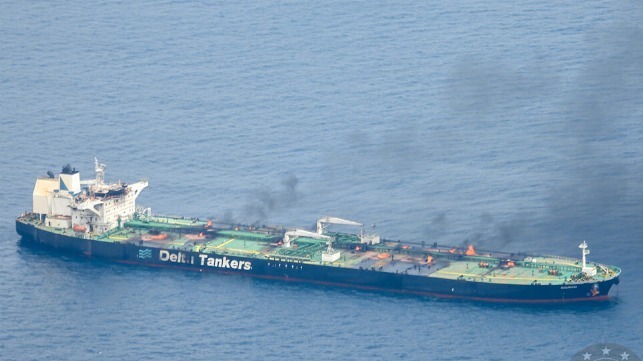
burning tanker
Sounion in late August after the Houthi attacks (EU NAVFOR Aspites)

Published Dec 4, 2024 1:48 PM by The Maritime Executive


More than three months after the Houthi attack on the laden tanker Sounion had threatened the worst oil spill in history the damaged tanker has been successfully unloaded. The threat of the spill is over, but the tanker is heavily damaged and the attack raised new concerns of the scope of the Houthi efforts.

Officials from Greece’s Ministry of Maritime Affairs and Island Policy confirmed the removal of the oil has been completed at the anchorage south of the Suez Canal. The operators of the tanker, Delta Tankers of Greece, had sent another vessel, Delta Blue, to receive the oil. One of her AIS signals suggests the tanker might as early as today be moving into the queue to begin the northbound transit of the Suez Canal.

The Ministry said the salvage operation had been underway since October 7 when a specialized team of 27 people began work to stop 18 fires set by the Houthis after the vessel was abandoned. They emphasized the operation was made more challenging because the fires which had been burning for more than a month had “fatigued” the metal plates of the tanker. 

In addition, there is no power aboard the Sounion. The initial Houthi attack on August 21 had damaged the engine room of the tanker and left it disabled. The subsequent effort at setting off explosives on the vessel also destroyed the navigation bridge and possibly other control areas. The salvage team had to use portable pumps.


The Sounion was towed in mid-September from the location in Red Sea where it was disabled and after the fires were extinguished the Egyptians agreed to receive the vessel for the next phase of the salvage operation. The Delta Blue reached the Suez Anchorage on October 29 having been sent from Piraeus. 

The pumping operation began in early November after the vessel was stabilized. Egyptian officials estimated it would take three to four weeks to fully offload 150,000 tons of crude loaded in Iraq from the Sounion.


HII Expands Shipbuilding Capacity Acquiring South Carolina Metal Fabricator

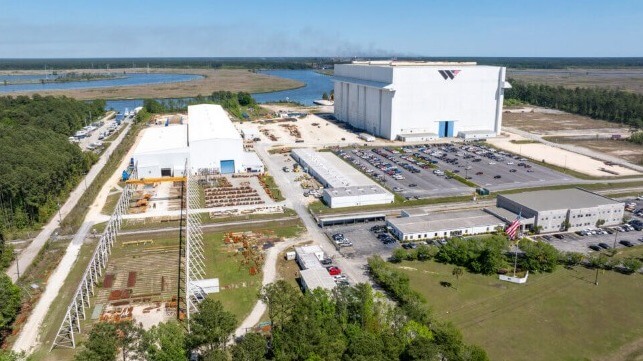
metal fabricator for shipbuilding
HII acquired the fabricator to expand its shipbuilding capacity for the U.S. Navy (W International)

Published Dec 4, 2024 5:21 PM by The Maritime Executive


To further expand production capacity and meet increased demands from the U.S. Navy, HII reported it has entered into a definitive agreement to acquire substantially all the assets of W International SC and Vivid Empire SC. The deal had been rumored for weeks as the shipbuilder looks to expand its fabrication capacity to support the Navy’s newbuild program.

The operation which goes by the name W International has a manufacturing facility approximately 400 miles south of the Newport News Shipbuilding facilities and specializes in the manufacture of shipbuilding structures, modules, and assemblies. The manufacturing facility in Goose Creek, South Carolina, will operate within HII’s Newport News Shipbuilding division as Newport News Shipbuilding – Charleston Operations.

“HII is committed to increasing build rates for our Navy customer, and this investment in capacity alongside the Navy will help us do that,” said HII President and CEO Chris Kastner. “It lets us efficiently add trained talent and state-of-the-art manufacturing capabilities to the urgent job of building ships, making it a unique opportunity to accelerate throughput at Newport News Shipbuilding in support of the Navy and AUKUS.”

According to the company, the newly acquired facility will support the construction of nuclear-powered submarine and aircraft carrier modules and structures for U.S. Navy programs. Substantially all current employees will be offered positions with HII to continue to work on-site.

Jennifer Boykin, the current president of Newport News SB highlighted the priority is the submarine program. She reported demand for submarines has increased by up to five times versus a decade ago. She also anticipates the facility could be used for components of the new aircraft carriers building at Newport News. The company recently highlighted that it expects to begin simultaneous assembly of two Ford-class carriers in 2025.

The Navy has been supporting the shipbuilders in expanding their capabilities, including Austal’s recently announced deal to expand its submarine component efforts into a neighboring space at its yard in Mobile, Alabama. Austal is growing its business of supplying components to General Dynamics Electric Boat.

HII said the acquired assets include advanced production facilities with state-of-the-art equipment, tooling, and infrastructure used to fabricate complex metal modules and structures, and are located on a leased 45-acre site with more than 480,000 square feet of manufacturing space. The site has barge and rail access and is strategically located near Charleston, in a region with a rapidly growing shipbuilding ecosystem and highly skilled trades workforce.

NNS Vice President and Chief Transformation Officer Matt Needy has been named to become general manager of the new operation. The transaction is expected to close in the fourth quarter of 2024.


Two Crewmembers From Carrier USS George Washington Found Dead

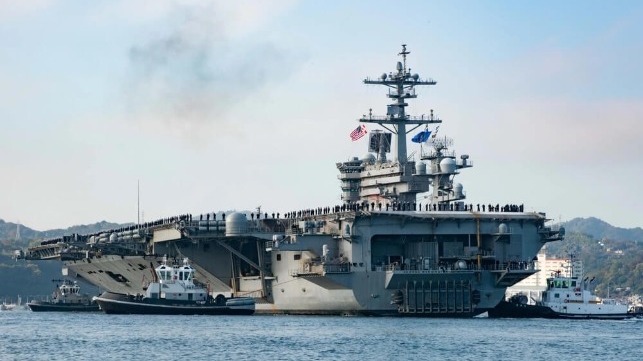
USS George Washington

Published Dec 4, 2024 4:53 PM by The Maritime Executive


Two more crewmembers from the carrier USS George Washington have died while ashore, both within days of arriving at the vessel's homeport in Yokosuka. 

USS George Washington gained notoriety in 2022 for a string of three back-to-back suicides, all in one week. The ship was in the middle of a protracted six-year drydocking, and a command investigation found that the ship's crew experienced unacceptable onboard living and working conditions during the yard period, driving down morale; the findings informed a series of service-wide reforms for sailors performing duties during long shipyard periods. 

The carrier returned to service in 2023, and she replaced USS Ronald Reagan as the forward-deployed carrier in U.S. 7th Fleet earlier this year.

On Nov. 22, the day that USS George Washington arrived at her new home port in Yokosuka, electrician's mate nuclear PO2 Cuyler Burnett Condon was found unresponsive in an on-base hotel room. He was pronounced dead at the scene. 

On November 25, electrician's mate fireman Seaman Dimitri Morales was found unresponsive at an off-base hotel in Yokosuka, and local authorities pronounced him dead on scene. 

"Grief counseling and support services are available as we focus on providing appropriate resources following the ship’s arrival to Japan," Navy officials said in a statement. "Our thoughts and prayers are with USS George Washington’s crewmembers and families following the loss of our Sailors."

The Naval Criminal Investigative Service is investigating both deaths. 

For now, USS George Washington's crewmembers have been temporarily ordered not to drink alcohol, whether on-base or off-base, according to Stars & Stripes. 


NATO Wants to Use Drone Boats for Maritime Security in the Baltic

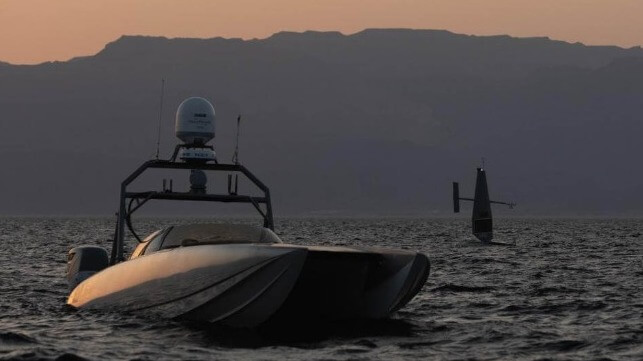
A T-38 Devil Ray (left) and a Saildrone (right) in the U.S. 5th Fleet area of responsibility (Task Force 59)

Published Dec 4, 2024 6:42 PM by The Maritime Executive


NATO's maritime forces may soon deploy unmanned systems for surveillance purposes in the Baltic, where member states have serious concerns about subsea infrastructure security. 

Adm. Pierre Vandier (Marine Nationale), former chief of staff of the French Navy, heads up naval transformation for NATO. He recently told Defense News that unmanned systems could provide a "CCTV" surveillance network for maritime security hotspots, much like security systems used by police forces for shoreside law enforcement. 

This concept was inspired by U.S. 5th Fleet's Task Force 59, which uses unmanned platforms to keep an eye on Iranian movements in the Persian Gulf and Strait of Hormuz. Systems like the unarmed Saildrone surveillance platform and the armed T-38 Devil Ray unmanned surface vessel have given Task Force 59 a meaningful demonstration-scale capability in the calm waters of the Middle East. Those demonstrations have informed Navy planning for full-scale unmanned deployment, which is now beginning in 5th Fleet with a manned-unmanned teaming "Task Group" trained by Task Force 59. U.S. Indo-Pacific Command has high hopes for unmanned systems in the Taiwan Strait, and the Pentagon is underwriting the rollout with its much-publicized "Project Replicator." 

The need for maritime domain surveillance in the Baltic is urgent. Twice in the last two years, Chinese ships have destroyed subsea cables and other infrastructure in the Baltic by simply dragging anchor under power, plowing the bottom for dozens (or even hundreds) of miles. In 2022, unknown actors destroyed three out of the four pipes in the Nord Stream gas pipeline complex using explosives, and multiple investigations suggest that the attack was carried out by a small dive team using a recreational sailboat as a platform. 

Finding these kinds of threats requires granular on-scene surveillance, starting with surface activity. "The technology is there to make this street-lighting with USVs," Adm. Vandier told Navy Times. He said that the idea has considerable support from NATO's maritime forces command, and could draw on proven platforms used by Task Force 59. 


Report: Russian Vessel Shot Signal Flare at German Helicopter

German military helicopter
Reports indicate the signal flare was fired at the helicopter on patrol (Björn Wilke photo courtesy of Bundeswehr)

Published Dec 4, 2024 3:09 PM by The Maritime Executive


German media is widely reporting an incident in the Baltic between an unnamed Russian ship and a German military helicopter on patrol. Deutsche Presse-Agentur (DPA) broke the story today, December 4, based on comments from Germany’s Foreign Minister on the sidelines of the NATO meeting in Brussels which the organization says was designed to “chart a way forward in addressing Russian sabotage.”

According to DPA, the Minister mentioned that a Russian ship in the Baltic had targeted a German helicopter without supplying any specific details. The vessel, which in some reports is said to be a tanker, fired a signal flare at the German helicopter. It is unclear if the helicopter had taken any actions toward the tanker to provoke a response.

The German Defense Ministry later refused to confirm the report. However, Minister Annalena Baerbock cited it as an example of Russian and Chinese efforts in the region. She also pointed to the recent damage to two undersea data cables believed to have been caused by a Chinese cargo ship. Last year, another Chinese vessel was suspected of dragging and losing its anchor in the Baltic which resulted in damage to gas lines. The Minister also cited the jamming of GPS systems while saying NATO and the EU needed to do more to monitor and protect pipelines, data cables, and other critical infrastructure assets.

Baerbock according to DPA also referenced the volume of shadow tankers operating in the Baltic circumventing the Western sanctions on Russian oil. It is unclear from the report if it was a shadow tanker that fired the flare but Denmark and other nations have long worried about the dangers of the shadow tanker fleet.

Hours after the report of the incident with the German helicopter, NATO Foreign Ministers announced a new agreement among NATO and its allies to protect critical infrastructure. NATO General Secretary Mark Rutte said they were working to counter Russia’s actions against NATO citing acts of sabotage carried out by both Russians and the Chinese. 

“NATO will work closely together with the EU on these issues,” Rutte said in a statement at the end of the two days of meetings. He reported agreement among the ministers for a set of measures to counter Russia’s hostile and cyber activities.

Among the steps that NATO reports the members agreed to are enhanced intelligence exchange, more exercises, better protection of critical infrastructure, and improved cyber defense. He also said they would take “tougher action against Russia’s ‘shadow fleet’ of oil exporting ships.” 

Rutte noted that continued support for Ukraine is a priority for NATO. He said it is ensuring that, when the time comes, Ukraine can negotiate peace from a position of strength. He further highlighted how NATO is delivering on its commitments and will increase efforts to protect European interests.


UK-Sanctioned Dark Fleet Tanker Cancels Detour Around Britain

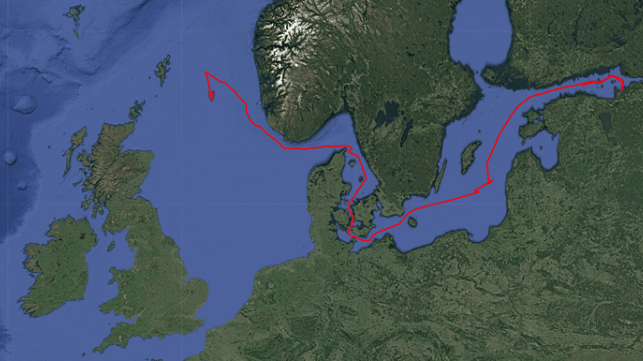
Attica's unusual route would have taken her north of the Shetlands (Pole Star)

Published Dec 4, 2024 8:54 PM by The Maritime Executive


This week, a newly-sanctioned tanker from the Russian dark fleet appeared to choose the long way around the British Isles, dodging any risk of UK enforcement actions. It was a rare detour away from the English Channel, adding to the length of the vessel's commercial voyage - but after attracting publicity with her unusual movements, Attica altered course and returned to the normal southerly route. 

Last week, the British government sanctioned 30 tankers involved in the Russian oil trade, which helps finance the Kremlin's ongoing war in Ukraine. Because of the G7 price cap on Russian oil, these vessels do not have access to UK-based insurance markets, and most operate with questionable liability cover, particularly for oil spill risks. The UK has announced its intention to challenge vessels with uncertain insurance cover if they cross through British waters. 

The tanker Attica (IMO 9436942) - one of the newly-sanctioned dark fleet vessels - appeared to be taking an unusual route around Scotland, according to Bloomberg. The vessel loaded at the Ust-Luga oil terminal near St. Petersburg in mid-November and got under way for a voyage out of the Baltic on Nov. 23. After a few stops and starts, she exited the Kattegat and entered the North Sea on December 2 - but instead of turning south for the English Channel, she settled on a northwesterly course that would take her north of the Shetland Islands.

Late on December 3, after Western media detected the unusual diversion, Attica turned due south, appearing to return towards a more traditional route. As of the early hours of Thursday morning, she was in the North Sea off Denmark, headed south towards the Channel. 

According to her AIS signal, Attica is headed for Port Said, then likely onwards to India via the Suez Canal. Attica is owned and commercially managed by a holding company in the Seychelles, and its third-party shipmanager is headquartered in Shandong, China. 


Latin America’s First Electric Tug is Launched at Sanmar Yard in Turkey

electric tugboat
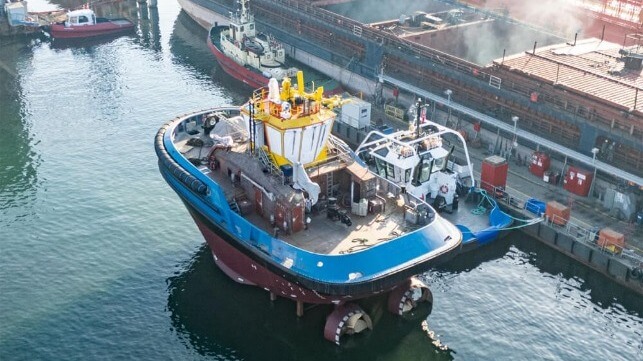
Latin America's first tug was launched at the Sanmar Shipyard in Turkey (SAAM)

Published Dec 4, 2024 7:06 PM by The Maritime Executive


Latin America’s first electric tug was launched with Sanmar and the operating partnership between Enap and SAAM celebrated the event on December 3. It comes as Sanmar is moving forward aggressively to build its leadership in electric tugs and battery-powered tugs are growing rapidly in the industry.

Designed by Robert Allan Ltd. and built at the Sanmar shipyard in Tuzla Bay, Istanbul, the vessel will operate in Puerto Chacabuco, in the Aysén Region of Chile, providing berthing and unberthing services. Empresa Nacional del Petróleo (Enap) and SAAM signed a service agreement in January 2024 to launch this service.

The electric-powered tug measures 82 feet (25 meters) in length and is nearly 43 feet (13 meters) wide (beam). The tug will have a maximum bollard pull of over 70 metric tons. The vessel will complete outfitting and conduct sea trials before being shipped to Chile. It is scheduled to arrive in South America in the first half of 2025.

Enap’s Corporate Supply Chain Manager, Mauricio Naveas, commented that “this project is relevant for our company not only because it will allow us to meet the service needs of Puerto Chacabuco, but also because it is a step forward in reducing both carbon emissions and environmental and underwater noise in our logistics chain, an effort that is in line with having increasingly sustainable processes.”

SAAM Towage highlights it will be the company’s third electric vessel as it looks to expand its sustainable operations profile.

Sanmar is building its role in the sector as part of its ongoing collaboration with Robert Allan Ltd. and Corvus Energy to build low and no-emission tugs utilizing alternative fuels and innovative technological advances. The yard recently began construction on four more electric battery-powered tugs for Turkey’s state-owned BOTA? Petroleum Pipeline Corporation. Each of these tugs will have battery banks producing 5,085 kWh, a top speed of 12 knots, and 70 tonnes of bollard pull ahead.

The shipbuilder is offering a number of different models of battery-powered tugs. Earlier in the year it delivered its sixth tug to Norway. A smaller model it has 1.718 kWh of battery power and can achieve a bollard pull ahead of 45 tons and a speed of 12 knots.

In addition to Norway, Sanmar has also built electric tugs for use in Vancouver, Canada. In March the company also launched the first electric tug for its fleet, highlighting it would be the seventh electric tug delivered in a year. This vessel was built to provide towage, ship assist, and escorting services at six ports around Turkey.


Study: Just-in-Time Arrival Could Improve Fuel Efficiency 10-25 Percent

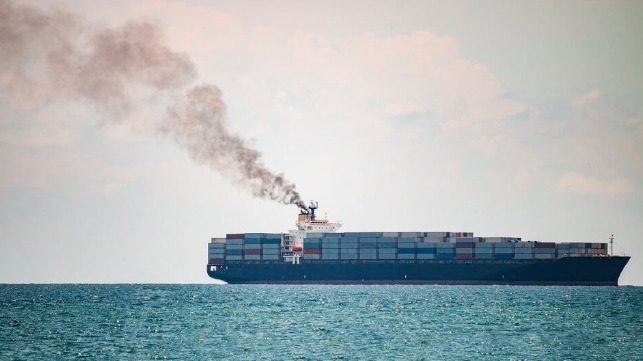
Total fuel savings would be greatest for container ships, the vessel class consuming the largest share of fuel (iStock)
Total bunker savings would be greatest for container ships (iStock)

Published Dec 4, 2024 9:41 PM by The Maritime Executive


A new study from the UCL Bartlett Energy Institute and UMAS has hard numbers for the energy savings that shipping could achieve through just-in-time arrival, the ever-elusive practice of optimizing voyage speed to match berth availability. The potential fuel savings are substantial, comparable to installing wind-assisted propulsion or an air lubrication system - but without any capital expense.  

Ships spend up to six percent of their operating lives at anchor while waiting to berth, running their auxiliary engines the whole time and generating emissions - and the percentage is on the rise. There are business reasons for this inefficiency: there are contractual incentives for "sail fast and wait" operating practices in many charter parties, and at some seaports, terminals operate on a first-come/first-served basis. In these cases, it may pay financial dividends to speed up, arrive early, then wait longer.

By slowing down mid-voyage and arriving on time to proceed straight to berth, "just-in-time" vessels increase efficiency through slow steaming and through the avoidance of auxiliary engine runtime at anchor. The savings, according to the UCL/UMAS study, can be significant: about 10 percent for bulkers and boxships, 16 percent for oil tankers and an astonishing 25 percent for chemical tankers.  

Changing the incentive structure to favor just-in-time arrival will take cooperation among multiple parties, including charterers, who might normally be more focused on their commercial and operational needs than on the emissions of the vessel. The study's authors suggested that the IMO could push just-in-time efficiencies forward by including in-port emissions in the CII regulation. If the CII is limited only to the underway voyage, waiting times would remain an unaddressed part of shipping's carbon output. 

"Our analysis highlights that the no-value-add emissions associated with port waiting times are a current and growing issue across the shipping sector," said UMAS consultant Dr. Haydn Francis. "By targeting these idle periods, the IMO can help unlock significant emissions reductions while also driving broader improvements in voyage optimization and overall operational efficiency."

The potential industry-wide savings are greatest for container ships, amounting to nearly six million tonnes of CO2 per year. Oil and chemical tankers (taken together) would contribute another six million tonnes. In financial terms, this would equate to global bunker fuel savings worth billions of dollars. 

ALT. FUELS

GCMD Finds a Test for the True Origins of Biofuel Blends

Gas chromatography setup
Courtesy GCMD

Published Dec 4, 2024 11:33 PM by The Maritime Executive


The Global Centre for Maritime Decarbonization (GCMD) is working on a protocol to figure out if a biofuel blend is sustainably sourced or not, using the same equipment that would be found in any bunker fuel quality testing lab. This is a growing compliance issue for the industry because of increasing volumes of Chinese-made FAME fuels (biodiesel) on the market, which may or may not be made from legitimately sustainable feedstock. 

FAME (fatty acid methyl esters) can be made from any natural fat, including animal fat, vegetable oils and used cooking oils. Better known as biodiesel, it is a standard ingredient in over-the-road diesel fuel in the United States and Europe. 

FAME's main ingredient is natural, but its environmental impact depends on how it is sourced. Palm oil is the lowest-cost fat on the market, but comes with significant environmental baggage, including deforestation and associated emissions. By contrast, mill waste from palm oil production would normally be thrown away, so it is considered a low-emissions feedstock. Used cooking oil is also considered a low-carbon source.

Like conventional fuels, different sources of biodiesel can be hard to tell apart. Environmental advocates have warned for years that Chinese suppliers may be selling a sustainable "used cooking oil methyl esters" product that is actually made with virgin palm oil, a less expensive and more environmentally problematic substitute. Chinese exports of "used cooking oil" biodiesel began to flood into the EU in 2022, prompting a steep drop in price. A 13 percent Chinese government export subsidy underwrote the cost of these sales. 

This past summer, the EU imposed a steep 36 percent anti-dumping tariff on imported Chinese biodiesel. Amidst allegations of fraud, Beijing suspended the export subsidy on December 1. These actions will reduce China's "sustainable" biodiesel exports for over-the-road markets, and exports to Europe have reportedly plummeted. 

A share of the Chinese FAME export volume is making its way into biofuel bunker blends for shipping, and this may increase over time. Shipowners need a way to find out if their bio-blends will meet EU emissions standards, since virgin palm oil-based fuel would not be as helpful with compliance. This is where GCMD's researchers come in: using a standard gas chromatography setup - a piece of chemistry equipment that vaporizes a sample and separates the resulting molecules for measurement - GCMD has cataloged "fingerprints" for different forms of FAME. The Singapore-based center's team collected 16 FAME samples from various suppliers and tested them to determine the feedstock. They tested known samples from virgin oils and a variety of stocks labeled as "used cooking oil." Almost all of the used-oil samples came back as palm oil-derived - as expected, since palm oil is a dominant source of cooking oil in Asia. 

In six samples, the testing found higher levels of linoleic acid, a telltale signature that the feedstock had been heated. This is a sign of legitimate used cooking oil in the supply, and could be developed into a quick test for authentic sustainable FAME, GCMD said. The test was also able to determine the relative amount of fossil diesel in the blend, so that the shipowner can ensure that the bunker supplier is indeed providing a FAME-containing fuel.  

On its own, this test can't tell the difference between virgin palm oil and palm mill effluent, since both come from the same plant and have the same makeup. But the mill effluent feedstock should contain higher levels of metals, and with further study, testing for elevated amounts of iron and zinc might reveal the true nature of a "mill effluent"-based product.