Thursday, January 02, 2025

In Egypt, Men and Boys Stand Firm Against Female Genital Mutilation


A blade used to perform female genital mutilation.

Upper Egypt, Egypt — "People tell me we inherited this practice - that they're doing it because their neighbours are doing it," Georgi Wahba told UNFPA, the United Nations sexual and reproductive health agency.

In his village in the Minya Governorate of Upper Egypt, Mr. Wahba, 53, has become well known for his advocacy against female genital mutilation - a practice that although outlawed in the country, remains widespread. An estimated 86 per cent of ever-married women, aged 15 to 49, in Egypt have undergone some form of the procedure, rising to 96 per cent in Upper Egypt.

"I ask what they gain out of subjecting girls to this," Mr. Wahba said of the awareness-raising sessions he holds with families, couples and communities. "If you are about to get married, why would you need this woman to have been subjected to female genital mutilation? Isn't it more important to agree on other things, to build a life together?"

He began organizing the sessions as part of UNFPA's 'Generation Dialogues' - a project that aims to shift perspectives on harmful practices by encouraging communities to act as agents of change and, like Mr. Wahba, to learn how to bridge the gap between generations when it comes to unequal social norms and traditions.

Engaging in dialogue

To tackle the taboos that often cloud conversations around the topic, Mr. Wahba aims to ensure that the learning experience is enjoyable and inclusive for everyone. "We bring together entire families - a husband and wife and their daughters, and spend the day with them" he said.

The project, which is funded by the Government of Norway, also offers training on how to communicate about harmful practices with fellow community members. Since its inception in 2021, over 350 community members have participated and, like Mr. Wahba, have become "Dialogue Champions".

For Mr. Wahba, it was important to learn how to speak about the issue in a way that felt natural. He didn't want others to simply agree with him without understanding why; instead, he was eager for each person to come to their own conclusions based on the facts they had learned. When community members refused to attend the sessions, he had patience - encouraging them to think for themselves and not to take the customs they had grown up with for granted.

Now a trusted voice on the matter, Mr. Wahba is the person his neighbours contact when they hear someone is at risk of being subjected to female genital mutilation. It is progress like this that makes him hopeful for the future. He believes that people in his community are more educated about the issue than ever before, and knows that open, honest conversations are the way forward.

"Engaging in dialogue among families, friends and communities is the most important step."

Taking a stand

Although female genital mutilation is often seen as a patriarchal norm upheld to oppress women and girls, boys and men from practising communities are in fact at least as likely to oppose it as women and girls are. The attitudes of parents, including the fathers of young girls, are particularly important.

But while taking a stand for their own daughters is an important step, advocating for the elimination of the practice is an even more powerful way for men to effect change. Fathers like Zanaty El-Sawy, from the Asyut Governorate of Upper Egypt, have seen first-hand how fulfilling that role can be. Mr. El-Sawy's journey began one day when he arrived home and told his wife that he needed to discuss something important.

"I am always interested in educating myself and expanding my horizons," he explained. "I have daughters, so I decided to research the topic of female genital mutilation."

This led him to attend a four-day workshop on the practice and other forms of violence against women, led by UNFPA together with the NGO Care

"I learned about the harmful impact of female genital mutilation on women and girls, and that it has no religious or medical foundation," he said. "I found out it is not a necessary practice at all."

At the workshop, participants like Mr. El-Sawy engage with a curriculum specifically designed to engage men and boys. Although there's a special focus on female genital mutilation, the sessions also cover topics such as self-image and identity, gendered power dynamics and gender-based violence.

While at first he found it difficult to relinquish the customs he had grown up with, Mr. El-Sawy now considers himself an ally in the fight against female genital mutilation and feels compelled to share what he has learned. He believes that men bear a special responsibility to discuss the topic with their peers.

"Women have rights just like men - they should have a say just like men."

AUSTRALIA

Study exposes gender gap in foreign affairs reporting

Not only with male reporters, but the experts likely to be quoted or appear on opinion pages.


Foreign affairs and international security is one area where men dominate news and opinion coverage (David Gray/AFP via Getty Images)


Andrea Carson
2 Jan 2025 Australia
Sex and Gender Follow @andrea_carson

We are featuring a series of highlights from across the year, with normal publishing to resume 6 January 2025. This article first appeared on 11 November 202
4.


The latest findings from Australia’s largest-ever study on the representation of women in the media exposes a persistent gender gap – one that affects both who reports on the top stories of the day and who gets quoted in them.

The sixth edition of the Women for Media report identifies foreign affairs and international security as one area where men dominate news and opinion coverage.

Across the news landscape – radio, print, online, and TV – men account for 60 per cent of foreign affairs reportage. The study, which brings together political scientists and media scholars, reveals that the gender divide is most pronounced in front-page foreign affairs stories and opinion articles.

Men write 73 per cent of these articles – 13 points higher than the overall share of male bylines across all front-page stories. The gap expands even further on the opinion pages, where men account for a staggering 86 per cent of contributors on these issues – 15 points higher than the share of male bylines in all opinion pieces.

While the report is uncomfortable reading for editors and journalists trying to narrow the gender gap, the findings are not surprising and remain consistent with past studies. Since 2012, when the Women Leadership Institute Australia (WLIA) founded the series, “hard news” areas, such as foreign affairs, have remained overwhelmingly male-dominated.

In comparison, women are over represented in “soft news” such as stories on well-being, lifestyle, celebrity and the arts.


The 2024 report is based on an analysis of over 200,000 news stories across print, broadcast and online news from April 2023 to March 2024, with deeper dives in to front page and opinion page coverage of Australia’s 30 top news outlets during March 2024. It uses both computational and manual coding to combine these different data sources with expert interviews with editors. Together, the report captures women’s representation in the media, both as producers of news and as expert sources.

It finds gender inequality remains prevalent in Australian news media, despite the similar numbers of male (2,604) and female journalists (2,423) in the year’s sample. Tabloids, with their focus on crime, disasters, and lifestyle, feature more women bylines in these areas. In contrast, broadsheets, covering business and foreign affairs, are predominantly male authored.

During the study period, opinion pieces on foreign relations were exclusively written by men in three publications: The Sydney Morning Herald, News Corp’s Courier-Mail, and its tabloid, the Adelaide Advertiser.

This disparity extends to the representation of quoted sources and the perception of who is considered as expert. In areas already male dominated with expert commentary such as diplomacy and foreign affairs, this is a problem because it means that as a society the public get a narrower perspective of world views than what they otherwise might if women and others’ perspectives were regularly included in the news mix. In other words, consistent gender bias in foreign affairs normalises male perspectives.

“The unfortunate reality is that women’s perspectives are being overshadowed, as men’s voices and images continue to dominate the media landscape. The result is that we all miss out on ideas and solutions that benefit everyone,” says WLIA chair, and report founder, Carol Schwartz.

Second to politics, “foreign affairs and international security” was the next most popular subject area for commissioning opinion articles in the Australian media. While there are indications that the gender gap in political coverage has narrowed, the same is not true for foreign affairs. Of the ten topics studied, the gender gap was largest overall for foreign affairs coverage, especially in the opinion pages.

But results were mixed across mastheads. During the study period, opinion pieces on foreign relations were exclusively written by men in three publications: The Sydney Morning Herald, News Corp’s Courier-Mail, and its tabloid, the Adelaide Advertiser. While still falling short of gender equality across its opinion bylines, the Australian Financial Review had made some efforts to include perspectives from both in-house and external women on international politics.

“I think gender balance in opinion is a big challenge,” Australian Financial Review editor Cosimar Marriner told the study authors. “I really think it requires extreme focus to make it happen. It is one of my biggest challenges because it’s so visible, it gets brought up by everyone and I see it every day when I look on our website.”

On the other end of the spectrum, the Canberra Times was the only publication in which women exclusively authored opinion articles discussing foreign relations, during the time of analysis.

The gender gap in foreign affairs reporting also persists in journalists’ choices of quoted sources, with journalists profiling men’s opinions (and not women’s) seven times out of ten. While certain news events, such as a story involving a male prime minister, will influence who is quoted and when, the data still reveals that men journalists are more likely to quote male sources compared to their women colleagues who quote women sources more frequently.

This suggests that some journalistic discretion is exercised and that the gender gap in foreign affairs reporting will not narrow unless reporters and editors make conscious efforts to overcome gender bias in their coverage when they have discretion to do so.

“There is no doubt that media organisations are facing tough times, with business models under pressure, increasing news avoidance, and the rise of disinformation on social media,” says Schwartz.

“Despite these challenges, it is crucial that we continue to prioritise diverse voices in our news coverage. The stories we see, the voices we consider authoritative, and the narratives we embrace all determine the future we build.”

The full report is available here: An Unfinished Story: Understanding Gender Bias in Australian Newsrooms.

IRONIC

Iran summons Saudi ambassador over executions

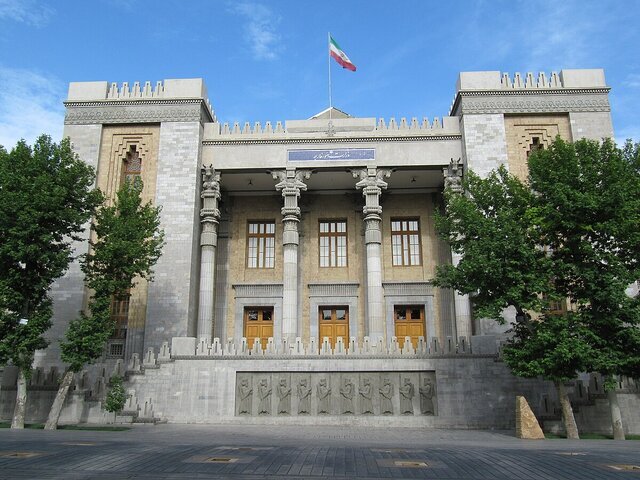
TEHRAN, Jan. 01 (MNA) – The Iranian foreign ministry has summoned the Saudi Ambassador to Tehran after it was reported on Wednesday six Iranian nationals were executed by Saudi judicial authorities over drug trafficking.

Karimi Shasati, Director General of the Consular Affairs Office at the Iranian Ministry of Foreign Affairs, reacted to the news of the execution of six Iranian nationals imprisoned in Saudi Arabia on charges of drug trafficking, expressing the Iranian ministry's strong protest against the action.

"These individuals had been sentenced to death by the Saudi Arabian judiciary several years ago on charges of drug trafficking, and during this time the Ministry of Foreign Affairs had made constant efforts to provide them with consular services and reduce their sentences. However, carrying out death sentences without prior notification to the embassy is unacceptable and violates the rules and regulations of international law, including the Convention on Consular Relations," the Iranian diplomat told the Saudi ambassador in a meeting on Wednesday at the foreign ministry's compound. 

"In this regard, the Saudi Arabian ambassador to Tehran was summoned to the Ministry of Foreign Affairs and a memorandum was sent to him, informing him of the Islamic Republic of Iran's strong objections and the inconsistency of this action with the overall trend of judicial cooperation between the two countries and stressing the need to provide the necessary explanation in this regard on the part of the Saudi Arabia," Karimi Shasati said.

A legal-consular delegation from the Ministry of Foreign Affairs is also scheduled to depart for Riyadh to follow up on the issue.

MNA

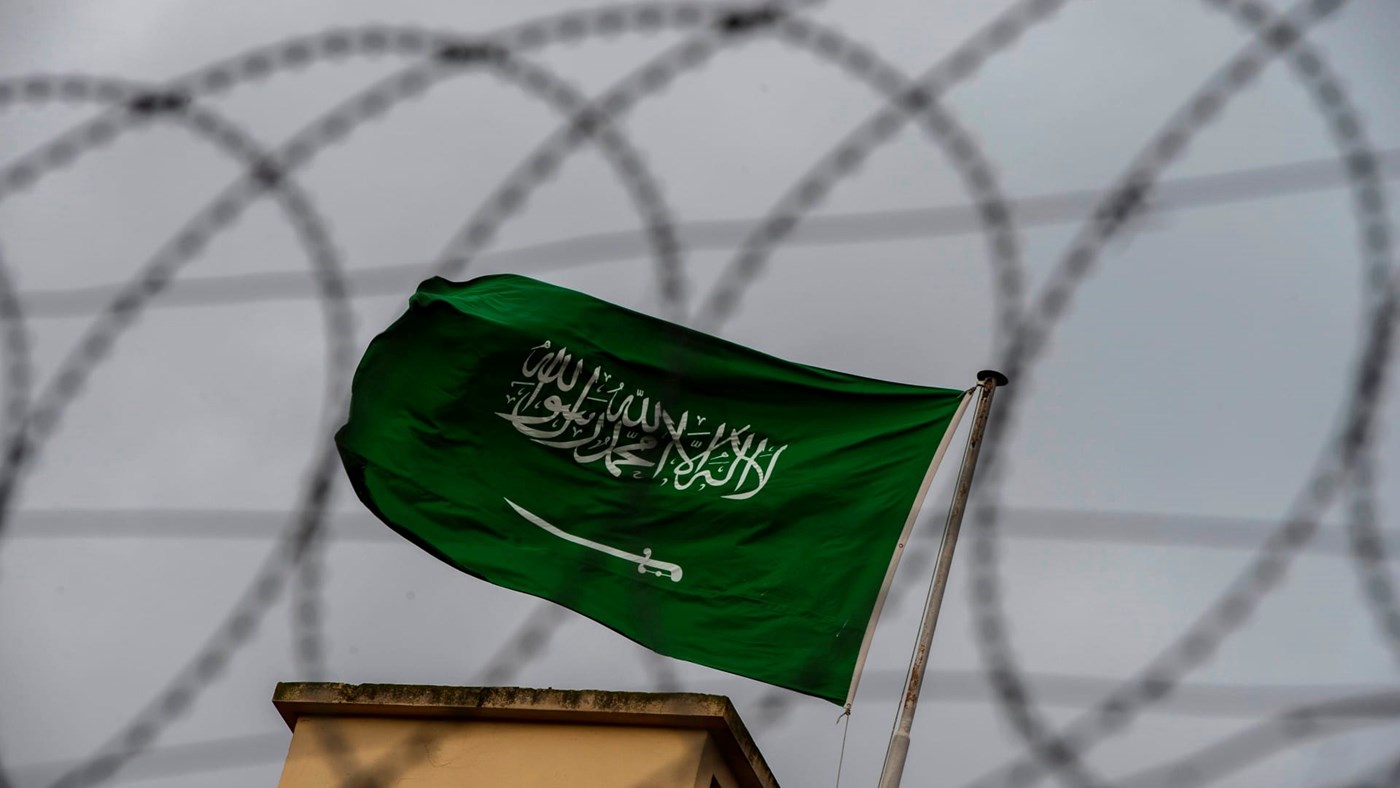
Saudi Arabia executes 6 Iranians for drug trafficking

Saudi Arabia executes 6 Iranians for drug trafficking2025-01-01 

Shafaq News/ Saudi Arabia's Ministry of Interior announced, on Wednesday, the execution of several Iranian nationals convicted of drug trafficking into the kingdom.

In a statement, the ministry confirmed that six Iranian nationals were convicted of "smuggling hashish into Saudi Arabia," noting that their execution took place in the Eastern Province.

The ministry did not specify the date of the execution.

In 2024, Saudi Arabia executed at least 330 people, the highest number in decades, despite Crown Prince Mohammed bin Salman's 2022 pledge to abolish the death penalty, except for cases of retribution, as part of his vision for a “new and open” kingdom.
New signs of Bangladesh interim government softening stance on extradition of Sheikh Hasina

Hossain’s comment assumed significance as it signalled a sense of pragmatism on Dhaka’s part in dealing with the extradition of Hasina even as a section of Bangladesh’s civil society, which played a role in the regime change, questioning the Yunus
 government’s commitment in bringing her back

Devadeep Purohit Published 02.01.25

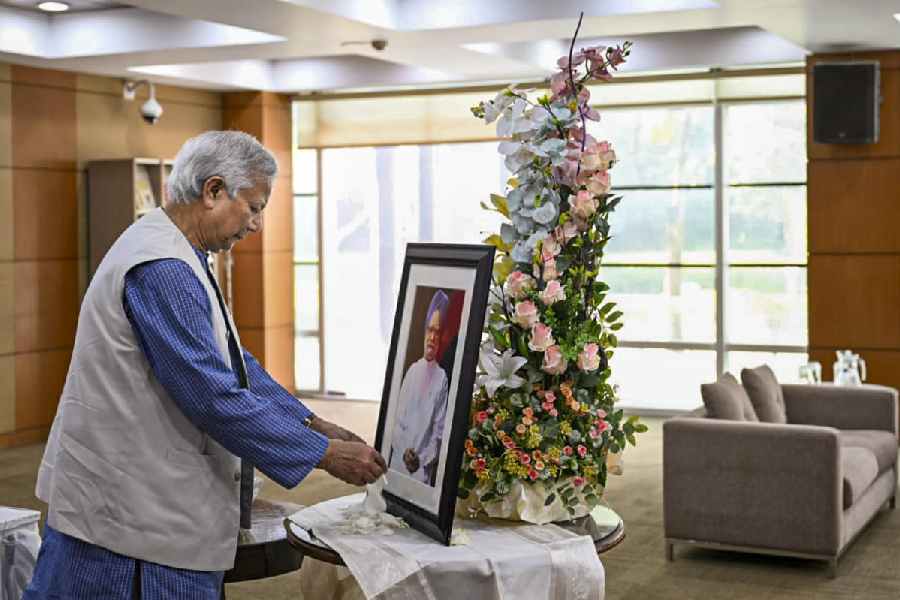
Chief Adviser of Bangladesh Muhammad Yunus pays tribute to former Indian prime minister Manmohan Singh.
PTI picture

The relationship between Bangladesh and India will not be adversely affected even if New Delhi does not respond to Dhaka’s request for extradition of deposed Prime Minister Sheikh Hasina, Touhid Hossain — foreign affairs adviser to the Muhammad Yunus-led interim government — said on Wednesday.

“This is one of the issues and the two countries have many bilateral issues,” Hossain was quoted by Bangladeshi media.

“I think both will continue simultaneously. We have many issues of mutual interest. We will advance with all these issues side by side,” the adviser added in response to a question on the likely impact on the ties if the Narendra Modi government doesn’t hand over Hasina, who has taken refuge in India after she fled the country on August 5.

He also said that maintaining good relations with India, the US and China would be among the top priorities of the government in 2025.

Multiple sources in Dhaka said that the interim government was expecting a reply from India regarding its request for Hasina’s extradition and was under pressure from the leaders of the anti-discrimination students’ movement and parties like the BNP and Jamaat-e-Islami to send a reminder after “a certain period” if no reply is received from New Delhi. The students were at the forefront of the protests that led to Hasina’s downfall.

Hossain’s comment assumed significance as it signalled a sense of pragmatism on Dhaka’s part in dealing with the extradition of Hasina even as a section of Bangladesh’s civil society, which played a role in the regime change, questioning the Yunus government’s commitment in bringing her back.

“It’s a tricky matter, both at domestic and bilateral level.... They seem to be pitching it cleverly and not making it a major issue so that it boomerangs on them,” said a former Indian diplomat.

According to the source, the interim government cannot afford to make Hasina’s extradition a “major issue” as it is also aware that India is under no obligation to hand over the deposed Prime Minister.

“They don’t want to raise the pitch as it will be difficult for them to deal with their hardline Islamist constituents once it becomes apparent that Hasina’s extradition is not feasible...,” said the source.

At a time when Bangladesh is battling runaway inflation because of supply bottlenecks, raising the pitch to return Hasina beyond a moderate level runs the risk of complicating ties with India, the major exporter of essential items to Bangladesh.

Echoing the retired Indian diplomat, a source in the foreign affairs ministry said that Bangladesh’s note verbale to India regarding Hasina’s extradition was an attempt to keep the hardliners happy for the time being.

Hossain’s comment on Hasina’s extradition, a source said, is the second instance of Dhaka’s shift to a “pragmatic approach” in dealing with India.

“On Tuesday, Professor Yunus broke all protocols, visited the Indian high commission in Dhaka, placed a floral wreath at the portrait of Manmohan Singh and wrote a condolence message.... There seems to be a pragmatic approach and a reachout message,” said a source in Dhaka.

A source in New Delhi said that the sound bytes and visuals from Dhaka may be encouraging, but it is too early to reach a conclusion about the Yunus regime’s true intent.

“They are yet to address our main concerns like ensuring safety and security of minorities, keeping the terror elements and radical Islamists under check and establishing rule of law... We have to wait and see how they handle these issues,” said the strategic affairs expert.
Pakistan Begins Tenure As Non-Permanent Member Of UNSC For Two Years

In June, Pakistan was elected to the council with a massive majority as a non-permanent member, polling 182 votes in the 193-member General Assembly — far more than the required 124 votes representing a two-thirds majority.


PTI
Updated on: 1 January 2025 


Representative image Photo: PTI

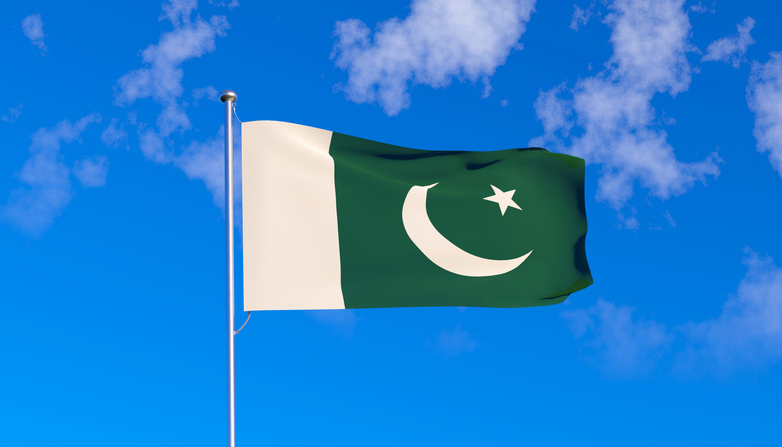
Pakistan began its two-year tenure as a non-permanent member of the United Nations Security Council (UNSC) on Wednesday, with Ambassador Munir Akram saying that the Pakistani delegation will play an “active and constructive” role in addressing key challenges facing the world.

“Our presence will be felt in the Security Council,” Ambassador Akram, Pakistan’s top diplomat at the UN, told state-run APP (Associated Press of Pakistan) news agency.

Pakistan will sit in the Security Council for the 2025-26 term as a non-permanent member — the eighth time that the country has had a seat on the 15-member body’s horseshoe table.

In June, Pakistan was elected to the council with a massive majority as a non-permanent member, polling 182 votes in the 193-member General Assembly — far more than the required 124 votes representing a two-thirds majority.

“We enter the council at a time of great geopolitical turbulence, intense competition between the two largest powers, raging wars in Europe, the Middle East, Africa and elsewhere and a sharply escalating and multi-dimensional arms race,” Akram said.

“As a responsible State — the fifth largest by population — Pakistan will play an active and constructive role, in accordance with the UN Charter, to halt wars, promote the pacific settlement of disputes and contain the negative impacts of great power rivalries, the arms race, new weapons and domains of conflict as well as the spreading scourge of terrorism,” he said.

Deputy Prime Minister and Minister for Foreign Affairs Ishaq Dar said that Pakistan begins its term as a non-permanent member of the UNSC with a rich legacy of experience and commitment to the principles and purposes of the UN Charter.

He was addressing a reception hosted at the Ministry of Foreign Affairs, the Foreign Office said in a statement.

The event was attended by the heads of resident missions of the UN Security Council Member States in Islamabad and senior officials of the Ministry of Foreign Affairs.

Dar highlighted Pakistan’s contributions to international peace and security, especially through its active role in UN peacekeeping and peacebuilding endeavours around the world.

Dar said that Pakistan looked forward to “seeking just and peaceful resolution of situations on the agenda of the UN Security Council”.

“As a member of the council, Pakistan will continue to oppose the unilateral and illegal use or threat of force; combat terrorism in all its forms and manifestations; and support effective UN peacekeeping, and peacebuilding efforts,” he said.

Pakistan replaced Japan, which currently occupies the Asian seat in the Security Council, a primary instrument for establishing and maintaining international peace.

Pakistan’s earlier terms on the council were in 2012-13, 2003-04, 1993-94, 1983-84, 1976-77, 1968-69 and 1952-53.

In the June election in the General Assembly, Pakistan was elected along with Denmark, Greece, Panama and Somalia — to replace Japan, Ecuador, Malta, Mozambique and Switzerland whose terms end on December 31, 2024.

The new members join the five veto-wielding permanent members the United States, Russia, China, United Kingdom and France and the five countries elected as non-permanent members last year Algeria, Guyana, South Korea, Sierra Leone and Slovenia.
Analysis: Can Pakistan stem the tide of terror resurgence?


Ismail Khan
January 2, 2025 
DAWN

THERE has been a whopping 279.8 per cent increase in the number of terrorist incidents; from 572 in the year 2021 to 2,173 in 2024.—AFP/file

• ‘Own losses’ far outstrip the dent IBOs and other kinetic actions have put in militants’ operational ability
• Need to revisit the existing anti-terror strategies is apparent, but lack of political will and ‘Afghanistan factor’ complicate the quagmire

STANDING before a select audience in a small but imposing auditorium at the headquarters of Pakistan’s premier intelligence agency, the now-reviled former spymaster, Gen Faiz Hameed flashed slide after slide on two giant LCDs to establish that the Afghan Taliban insurgency — then just weeks away from capturing Kabul — was in fact a ‘Pashtun nationalist uprising’.

Shortly before wrapping up his monologue and opening the floor to questions, Faiz said something diametrically opposite to his long presentation on the rise of the Taliban in Afghanistan: “Not many people agree with me, but I do believe that the Tehreek-i-Taliban Pakistan (TTP) and the Afghan Taliban are two faces of the same coin.”

Weeks later, the beaming former ISI chief stood in the lobby of an iconic Kabul hotel, sipping coffee as he waited to meet Afghanistan’s new rulers — the Taliban. “Don’t worry, everything will be okay,” he famously told Channel 4 News’ Lindsey Hilsum.

Now holed up in his interrogation cell, facing a military trial over political meddling, the beleaguered general must be wondering how under his watch, Pakistan’s top spy agency — which has been overseeing so many other complex and complicated issues — got the Afghan Taliban-TTP nexus so horribly wrong.

With terror incidents rising and casualty figures mounting year-on-year since August 2021, his brief repartee with Lindsey will probably haunt him forever — a reversal of the hard-fought gains against militants in successive military operations in Pakistan’s troubled border regions.

A simple chart showing Khyber Pakhtunkhwa’s descent into violence since the Taliban’s rise to power in Kabul would be enough to illustrate how quickly Pakistan’s optimism over the Afghan Taliban’s ability to rein in the TTP turned into a nightmare.

If the sharp spike doesn’t explain the trajectory of violent incidents and fatalities that has befallen KP, consider the percentage. There has been a whopping 279.8 per cent increase in the number of terrorist incidents from 2021’s 572 to 2,173 in 2024. Likewise, casualty figures shot up by a staggering 231pc, from 238 in 2021 to 788 in 2024.

Similarly, compared to 2023, the number of terrorist incidents in KP shot up by 54.89pc while casualties increased by 11.9pc. On average, the province lost two men per day, including personnel from the security forces, civilian law enforcement and ordinary citizens.

Overall, KP’s south remains quite troubled, with spikes in attacks in the two Waziristans, Dera Ismail Khan, Tank, Lakki Marwat and Karak. The Malakand and Hazara regions, meanwhile, have remained relatively peaceful — with a major exception being the attack on Chinese workers in Bisham, Shangla in March, 2024. Kurram, together with Khyber’s scenic Tirah Valley, saw a resurgence of militants, bringing renewed threats to the provincial capital Peshawar.

Contrast this with the security situation in Afghanistan in the period before and after the return of the Taliban. The Brussels-based International Crisis Group (ICG), in its August 2022 report, while acknowledging the “dramatic shifts in the security situation”, noted five-fold decrease in the rate of battles, explosions and other forms of violence per week during the first ten months of the Taliban rule, compared to the same period during Ashraf Ghani’s regime.

IBOs

Amid mounting concerns over the escalating attacks across KP, the military launched small-scale operations and intelligence-based operations (IBOs).

At a media briefing last week, the head of the military’s media department said that over 59,000 IBOs were conducted across Pakistan in 2024 — an average of 161 operations per day. Although KP-specific IBO figures were not available, official statistics suggest that a total of 384 militants were killed over the course of the year.

Meanwhile, the proportion of “own” casualties versus militant losses is huge.

This gap between the effort to hunt down militants and the damage they have sustained may be explained by the complex nature of guerilla warfare, but while the TTP and its affiliates have not been able to find a permanent foothold, their spread and presence has increased manifold.

“Clearly, the existing strategy is working to cause a significant dent. This is not sustainable. We need deliberations to take stock of the situation and frame a new strategy to overcome the problem,” an insider said, pointedly.

Opinions vary as to why, despite a huge effort, Pakistan’s counter-terrorism campaign has not been able to overcome its security challenges and cause a significant dent in the rise of militancy.

According to background discussions with security officials, there are many factors that have contributed to this.

Afghanistan

Pakistan’s western neighbour continues to be a problem. In recent diplomatic engagements, credible sources say the ruling Taliban have again sought time to fix the TTP issue, referring to their efforts to relocate militants and their families away from the border to Ghazni province in central Afghanistan.

The cost of construction of houses and relocation to the tune of seven digits in dollar terms, according to the source, was borne by a friendly state.

Islamabad has conveyed to the interim Taliban regime that it must control and rein in the TTP. Kabul, on its part, has sought some concessions in trade and visa regimes, and some agreements are ready to be signed.

But Islamabad has told the Taliban leadership it would evaluate Kabul’s response to its concerns in the coming weeks, before it contemplates delivering on the promises.

Pakistan has also urged the Afghan Taliban to recover sophisticated American weaponry from the TTP, discourage them from crossing the border and arrest those who do that.

Government officials continue to complain that the Afghans allow free cross-border movement and no punitive action is taken against those doing it.

Political ownership

The issue of political ownership of the ‘fight against terror’, or lack thereof, was hotly debated at one of the recent apex committee meetings, amid the provincial government’s ambivalent attitude. It was made clear to the KP chief minister, according to a senior official, that the armed forces were in the province at the request of the provincial government under Article 245 of the Constitution, and that it should step up and take full ownership and responsibility.

Besides, the government was urged to spare more resources to enable the Counter Terrorism Department to fight an enemy that was better armed and equipped with advanced US weaponry.

Owing to their grievances against the establishment, almost all political parties in KP are reluctant to lend support to large-scale military operations, while at the same time expressing concerns over the deteriorating security situation in the province.

Complicating the fight further is the overall political polarisation at the national level, which has not only impacted the political mood in KP, but has also brought about an informal alliance of divergent political views to oppose military operations, even in hotbed areas.

Clearance vs containment

Adding to the complexity of the challenges, the TTP has been able to successfully adopt the Afghan Taliban playbook by declaring it would only target men in uniform and avoid targeting civilians in an attempt to drive a wedge between the security forces and the citizenry. This is largely in line with group leader Mufti Noor Wali’s own strategy, outlined in a booklet he had authored before he became its head.

Officials and analysts believe that much of the state’s efforts were focused on containment rather than clearance, and that the issue could be sufficiently addressed if forces are deployed in sufficient number.

But while there is a general agreement to undertake military operations in a couple of regions in a phased manner, the lack of public and political support, and appetite for another round of displacement, is complicating the issue.

Officials and analysts believe it is time to re-visit the counter-terrorism strategy, and focus more on the use of technology to track, monitor, surveil and strike, coupled with a whole set of political, legal and administrative reforms.

Published in Dawn, January 2nd, 2025

Peace deal reached in Pakistan's Kurram district after weeks of sectarian clashes

PTI |
Jan 01, 2025 

Peshawar, A peace agreement was reached between two warring parties in northwest Pakistan's restive Kurram district after more than three weeks of efforts to broker a ceasefire amid sectarian violence, officials said on Wednesday.

Representatives from the Alizai and Bagan tribes signed the 14-point agreement, agreeing to demolish all private bunkers and surrender heavy arms to the administration, said Barrister Muhammad Ali Saif, spokesperson for the Khyber Pakhtunkhwa government.

Sectarian clashes between the two tribes resulted in the killing of 133 people between November 21 and December 2.

Tribal council member Malik Sawab Khan confirmed that 45 representatives from both sides signed the agreement, which included a ceasefire, commitments to dismantle fortifications and surrender their weapons.

One party signed the peace pact few days ago while the other party signed it on Wednesday, Saif said.

"We congratulate the people of Kurram on the signing of the peace agreement," he said, noting that it would soon fully restore normalcy to daily life in the district.

"The peace agreement will usher in a new era of peace and prosperity in Kurram," Saif said.

He added that the grand jirga was working towards a peace accord that would lead to the reopening of roads in the restive district.


Khyber Pakhtunkhwa Chief Minister Ali Amin Khan Gandapur welcomed the agreement's signing, stating that the provincial government's efforts for a peaceful resolution yielded fruitful results.

He called it a significant step toward a sustainable solution in Kurram.

"I welcome this important development and congratulate all stakeholders," Gandapur said in a special statement issued on Wednesday, expressing hope that the agreement would lay a strong foundation for lasting resolution.

He added that it paved the way for reopening Kurram’s land route, and said that by signing the agreement both parties have played a constructive role in establishing peace in the region.

Gandapur urged both parties to reject elements spreading hatred and foster unity, and said that the agreement is a clear message that the region's people desire peace.

He stressed that fighting and violence are not solutions, and disputes must be resolved through dialogue.

"Our efforts and wish are for the speedy resolution of the issues faced by the people of Kurram and the restoration of normalcy in the region," he said.

He assured the people of Kurram that their challenges are well understood and that all possible measures will be taken to alleviate them.

Stemming from decades-old land disputes, the clashes led to weeks-long road blockades, during which food and medicine shortages were reported in the district.

Tribal council member Khan said that planning was underway to reopen routes and establish lasting peace.

He added that those violating the agreement would be handed over to the authorities and efforts to maintain law and order would be carried out in coordination with law enforcement agencies.

The clashes between the two tribes started on November 22, after an attack on a convoy of passenger vans near Parachinar in which 47 people were killed.

Several passengers who had sustained grave injuries succumbed later, raising the toll in the convoy killing to 57.


Report claims India behind ‘methodical’ assassination campaign deep inside Pakistan

Research and Analysis Wing RAW IndiaA NEW REPORT IN The Washington Post newspaper claims that the Indian government is behind a “methodical assassination program” that has been targeting individuals deep inside India’s nuclear arch-rival Pakistan. According to the report, which was published on Tuesday, the covert assassination program is the work of the Research and Analysis Wing (RAW), India’s primary external intelligence agency. It was allegedly authorized by India’s popular and controversial Prime Minister Narendra Modi, who has also been overseeing its implementation since he was re-elected to office in 2021.
Since 2023, intelNews has covered/ the high-level dispute between India and Canada, after Ottawa uncovered an extensive Indian assassination program targeting Sikh separatist leaders on Canadian soil. Last month, intelNews guest editor Dr. Stephan Blancke analyzed the mounting concern across the European Union about Indian covert activities that target members of the Indian expatriate community on European soil. But The Washington Post report touches on a potentially new dimension of India’s assassination program, which focuses on Pakistan.

According to the report, Prime Minister Modi has been fully supporting RAW’s targeted killings program since at least 2021. In the ensuing years there have been six assassinations inside Pakistan that bear the hallmarks of RAW operations. These operations have been carried out through a “sophisticated network” of intermediaries in the Middle East —particularly in Dubai— who command compartmented teams of surveillance operatives, hitmen, as well as logisticians. Payments are allegedly facilitated through informal hawala networks managed by Middle Easterners, Afghans, and others.

Many of those killed have been current and former members of militant Pakistani-aided groups like Jaish-e-Muhammad and Lashkar-e-Taiba, who have been designated terrorist organizations by most Western nations. For this reason, the West, including the United States, have been hesitant to accuse India of breaking international law. The Washington Post report claims that the Pakistanis have expressed their frustration to the United States, through Nadeem Anjum, director general of the Inter Services Intelligence (ISI) Directorate, Pakistan’s primary intelligence agency. In 2022, Anjum reportedly informed William Burns, director of the United States’ Central Intelligence Agency, about the Indian assassination program. However, no notable action was taken by the United States in response to Anjum’s revelations, the article claims.

► Author: Joseph Fitsanakis | Date: 02 January 2025 | Permalink

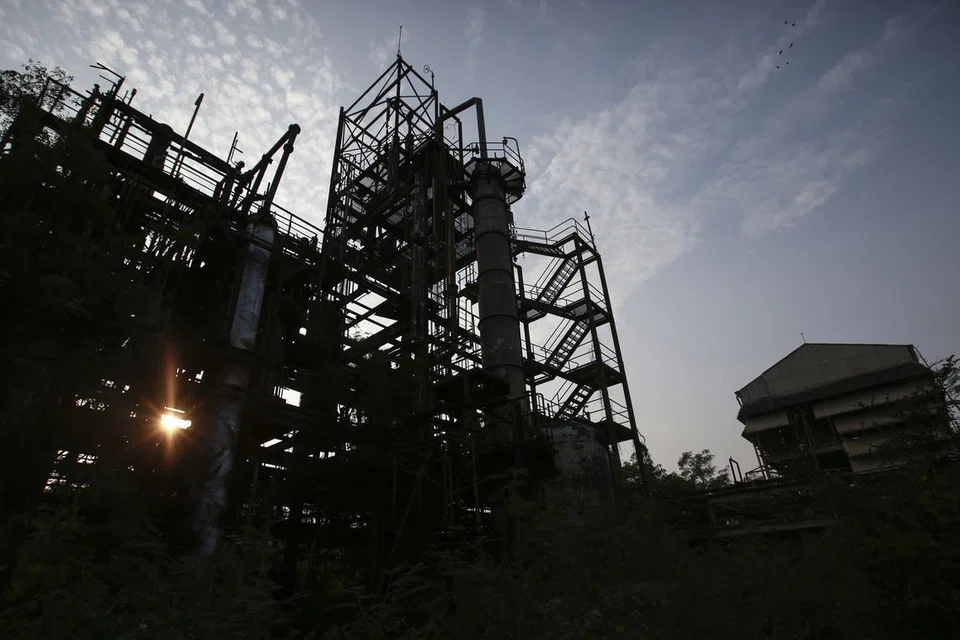
Toxic waste from India's 1984 Bhopal gas tragedy site moved for disposal after 40 years


FILE PHOTO: The sun sets behind the abandoned former Union Carbide pesticide plant in Bhopal November 11, 2014. REUTERS/Danish Siddiqui/File Photo

UPDATED Jan 02, 2025

BHUBANESHWAR, India - Indian authorities said on Thursday they had completed moving toxic waste from the site of the 1984 Bhopal gas leak disaster, which killed more than 5,000 people, to a disposal facility where it will take three to nine months to incinerate.

In the early hours of Dec. 3, 1984, methyl isocyanate gas leaked from a pesticide factory owned by American Union Carbide Corporation poisoning more than half a million people in Bhopal, capital of the Indian state of Madhya Pradesh.

Twelve leak-free containers carrying 337 metric tons of toxic waste for incineration reached the Pithampur plant 230 kms (142 miles) from Bhopal on Thursday amid heavy security, Swatantra Kumar Singh, the director of Bhopal gas tragedy relief and rehabilitation department, told Reuters.

A trial run for the disposal of 10 metric tons of waste was conducted in 2015 and the disposal of the remaining 337 metric tons will be completed within three to nine months, the state government said in a statement.

Singh said the trial run for the disposal of waste conducted by the federal pollution control agency found emission standards to be in accordance with prescribed national standards.

Singh said the process of disposal is environmentally safe and will be done in a manner which cannot harm the environment of the local ecosystem.

However, Rachna Dhingra, a Bhopal-based activist who has worked with survivors of the tragedy, said the solid waste after incineration would be buried in a landfill and will cause water contamination and result in environmental concerns.

"Why is the polluter Union Carbide and Dow Chemical not being compelled to clean up its toxic waste in Bhopal," Dhingra said.

Built in 1969, the Union Carbide plant, which is now owned by Dow Chemical, was seen as a symbol of industrialisation in India, generating thousands of jobs for the poor and, at the same time, manufacturing cheap pesticides for millions of farmers. 

REUTERS

Pakistan: Lahore ranked world’s most polluted city as air quality hits hazardous levels

Lahore has been declared the world’s most polluted city, with an alarming Air Quality Index (AQI) score of 354, marking it as “Hazardous,” according to IQAir’s latest rankings. Karachi, another major city in Pakistan, ranks 13th on the list, with an AQI of 164, categorizing it as “Unhealthy.”

The dire air quality poses significant public health risks for the residents of both cities, with Lahore, home to over 11 million people, bearing the brunt of the crisis. Factors such as vehicular emissions, industrial activities, and crop burning have long contributed to Lahore’s poor air quality, intensifying during winter when smog envelops the region.

The health impact has been severe. In the past month alone, nearly 1.9 million people in Lahore have fallen ill due to smog-related issues, with over 129,000 seeking hospital treatment for respiratory ailments. Additionally, more than six million people have been diagnosed with cardiothoracic conditions linked to air pollution, while an average of 69,000 individuals report daily symptoms such as chest pain, strokes, and other respiratory problems.

Karachi, Pakistan’s largest city, faces similar challenges. Its busy port, heavy traffic, and sprawling industrial zones contribute significantly to its deteriorating air quality.

(Inputs from ANI)


Why Does the Canadian Military Help Bomb Yemen?


Israeli and US aggression against Yemen is escalating. And Canada is participating in this effort to insulate Israel from pressure to stop killing Palestinians.

In recent days Israel has launched multiple strikes on Yemen’s electricity, port and other infrastructure. On Thursday they bombed the Sana’a airport in a strike that nearly killed the director general of the World Health Organization Tedros Adhanom Ghebreyesus. Israel destroyed the air traffic control facility and killed a few people at the airport. The UN humanitarian coordinator in Yemen, Julien Harneis, criticized the strikes, saying the airport “is a civilian location that is used by the United Nations.”

For his part, Prime Minister Benjamin Netanyahu told Israeli TV “we are just getting started with them [Ansarallah/Houthis]”. On Monday Israel’s ambassador to the UN Danny Danon repeated that government’s threat to assassinate Ansarallah’s leaders, as they’ve done with Hamas and Hezbollah. Israel’s strikes are purportedly a response to ballistic missiles fired from Yemen.

The US and UK have also bombed Yemen. They hit Sana’a on Friday and over the past year those two countries have dropped hundreds of bombs on various targets in Yemen.

On Saturday Yemen released images of its forces blowing up a $30 million MQ-9 US Reaper drone and two days earlier Yemen’s Defense Ministry said one of its drones forced the USS Harry S. Truman aircraft carrier to retreat. Ansarallah also recently claimed to have downed a US F/A-18 over the Red Sea. For its part, US Central Command (CENTCOM) said its fighter jet was downed by “friendly fire.” Another friendly fire incident nearly destroyed a second US Navy fighter jet over the Red Sea.

As per usual when the US and Israel kill, Canada assists. In defence of Israel’s right to slaughter Palestinians without restraint, Ottawa listed Ansarallah as a terrorist organization three weeks ago. “Since November 2023,” noted the release effectively banning Canadians from assisting Yemen’s government, “Ansarallah has contributed to unrest in the Middle East through numerous attacks targeting civilian and naval vessels on the Red Sea and other waterways, as well as those against Israel.”

In solidarity with the Palestinian people being brutalized, the Houthis began seizing tanker ships connected to Israel traveling through the Red Sea. When they launched their solidarity actions Ansarallah announced they’d stop if Israel’s “crimes in Gaza stop.”

To deter Ansarallah’s attacks in the Red Sea, Canada joined the US-led Operation Prosperity Guardian. Alongside Australia, Bahrain, Denmark, Netherlands and New Zealand, Canada has formally assisted the US/UK bombing that began a year ago. In response to the first wave of strikes in mid-January foreign minister Mélanie Joly and defence minister Bill Blair noted: “Canadian Armed Forces personnel deployed with US Central Command supported the precisely targeted strikes undertaken yesterday by the armed forces of the United States and United Kingdom, as did Australia, Bahrain and the Netherlands, against Houthi-controlled areas of Yemen.” The next month they released a similar statement defending US-UK violence following another round of bombings.

At least some Canadian troops are coordinating US-UK strikes. In January three Canadian officers were formally added to the US-led Operation Prosperity Guardian. Other Canadians soldiers – deployed at Canada’s base in Kuwait and US bases nearby – are also likely assisting. Through NORAD hundreds of Canadian soldiers assist the US with monitoring West Asia.

The Canadian navy has also assisted US forces in the region. Through Operation ARTEMIS hundreds of Canadian personnel have been contributing to the Bahrain-based Combined Maritime Forces (CMF), a United States-led naval coalition of 44 member nations to monitor the region. From January 17 to July 22 Canada led the multinational Combined Task Force 150 expedition patrolling the “Red Sea, Gulf of Aden, Indian Ocean and Gulf of Oman.” HMCS Montreal also transited through the Red Sea in the Spring.

With Ansarallah seeking to stop the holocaust in Gaza, assisting attacks against Yemen is yet another way of Canada abetting Israeli violence against Palestinians.

Yves Engler’s latest book is Canada’s Long Fight Against Democracy.

ANTIWAR.COM