Friday, January 17, 2025


$5 million to improve testing, durability and noise levels of wave energy devices, offshore wind


The research could make offshore renewable energy more reliable and a better neighbor to marine life, also enabling laboratory testing of larger prototypes


University of Michigan


Image

Devices that create electricity from wave motion and offshore winds could become sturdier, quieter and easier to test at near-ocean-ready sizes, with four new grants to the University of Michigan. 

The new funding from the U.S. Department of Energy totals around $5 million, which will be used to develop:

  • Shock absorbers that allow mooring lines to last longer and power sensors that monitor the device

  • Curtains of balloons and arrays of metal poles in the seabed that mitigate wildlife-disturbing noise produced by offshore wind turbines

  • Combinations of hardware and software—called hardware-in-loop platforms—that will enable laboratory testing of ocean-scale wave energy devices by mimicking the power produced by ocean waves

  • Standardized testing and a publicly accessible database of the performance of power takeoffs, the components of wave energy devices that convert motion to power


Researchers at Pacific Northwest National Laboratory, the National Renewable Energy Laboratory, Sandia National Labs, the American Bureau of Shipping and Virginia Tech will also contribute to these projects.

Ocean waves and offshore winds could be a vast energy source. The total available power in ocean waves in the United States is equivalent to nearly 60% of the electricity currently produced in the country. Global offshore wind energy can be 18 times the world's electricity needs.

Despite its potential, marine energy is still not as widely deployed as solar panels and land turbines. One reason the technology lags behind other renewables is because they don't survive rough waters. Waves can be strong enough to break mooring lines and leave wave energy devices lost at sea. 

The shock absorbers designed in the first project could ensure that mooring lines don't break or weaken to the point that the attached devices can move in ways that prevent them from efficiently generating electricity. The motion of the shock absorbers will also be used to generate a small amount of electricity to power other electronics on the device, such as sensors that monitor the health of the device.

"It can cost around two million dollars to fix a mooring line that is only 30 to 80 meters deep," said Lei Zuo, the Herbet C. Sadler Collegiate Professor of Engineering and each project's principal investigator. "It's best to create as robust a system as possible."

Another limit to marine energy deployment are its environmental impacts. Some regulators and biologists fear that noisy offshore wind turbines could interfere with marine life by drowning out the sounds they use to communicate and navigate. These concerns will be addressed with the balloon curtains, which prevent sound waves produced by wind turbines from moving through the water column, and the metal poles, which stop them in the seabed.

The final two grants will enable easier and more rapid testing of prototype wave energy converters and their components. Today, engineers have to build smaller scale versions of their prototypes to test them in wave tanks, because testing at full-scales in real ocean environments can be expensive and risky—especially if a large wave breaks a mooring line. But the amount of power produced by wave energy converters scales exponentially with the device's size. As a result, components within the prototype device are exposed to uncharacteristically low amounts of power during smaller scale tests.

"Ideally, we would build and fully test a device that is half or one-third the size of an ocean-scale device before we'd deploy it in the ocean," said Zuo, who is also a professor of naval architecture and marine engineering and mechanical engineering. "For our tests in wave tanks, we are limited to prototypes that are 10 to 20 times smaller than ocean-scale devices, which reduces the power by a factor of 3,000 to 35,000."

That scaling problem can leave engineers less certain that their designs will function as expected and survive in expensive field trials. The hardware-in-loop platforms will enable engineers to comprehensively evaluate how well a variety of different power takeoff systems perform under more realistic levels of wave power before conducting any tests in the real ocean. The data that Zuo's team will create from their testing platforms will also be compiled into a standardized dataset for the research community to benchmark their prototypes against.

Other collaborators include Xiaofan Li, a former research scientist of naval architecture and marine engineering at U-M who is now at the University of Hong Kong, and David Dowling, the ABS Professor of Marine and Offshore Design Performance.

Evaluation of influence of offshore wind farm noise on fishes and dolphins


Offshore Wonders

A new generation of offshore wind service vessels is turin heads.
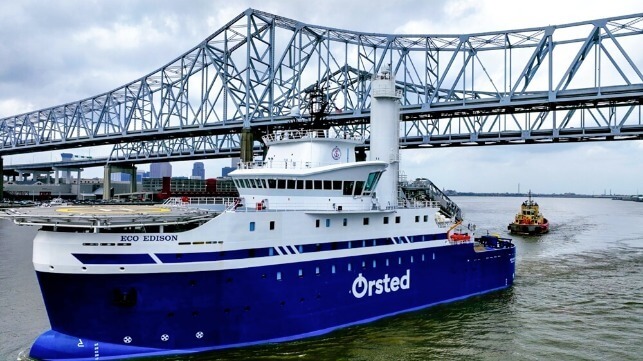

Eco Edison
Eco Edison (Edison Chouest)

Published Jan 16, 2025 11:54 PM by Sean Hogue


(Article originally published in Nov/Dec 2024 edition.)


What a year for boats!

As many Maritime Executive readers no doubt realize, I consider myself a boat nerd. Having run away to sea at 18, I discovered both a wide world and the best way to get around it.

I’ve sailed, shipped and even steamed on waters near and far, and despite many differences the one constant was a capable vessel under my feet.

Even after I “came ashore,” I’ve kept close to the water and have had the pleasure of surveying a huge variety of vessels. There are very few newbuild vessels in the U.S. Gulf of Mexico, for example, that I haven’t been on, and I write these words onboard a specialized heavy-lift cargo vessel in the Caribbean during a break in the project due to afternoon rains.

All that is to say I love boats, their design, capabilities and potential. The offshore renewables market is especially innovative, and it’s with great pleasure that I recap some of the noteworthy newbuilds and soon-to-launch vessels of the year.

ECO Edison

First up is the first Jones Act-compliant service operations vessel (SOV), ECO Edison.

Built at Edison Chouest Offshore’s (ECO) in-house shipyards in Louisiana, Mississippi and Florida with components sourced from 34 states, the ECO Edison was constructed by more than 600 workers completing nearly one million working hours. The state-of-the-art, 262-foot-long vessel immediately went to work for Ørsted, serving as a floating, year-round home base for 60 of the first American offshore wind turbine technicians, who are servicing and maintaining the massive offshore turbines off the U.S. East Coast. 

It includes special features like an Ulmatec 47-inch-wide, walk-to-work, motion-compensated gangway, which includes an Alimak elevator with 4,400-pound lifting capacity that allows technicians to easily and safely cross up to 60 feet of water to access the wind turbines. A smaller daughter craft on board can be deployed to efficiently move crew within the field.

Providing power are four Caterpillar 3512E, 1,700kW generators that meet stringent EPA Tier IV emission standards. In a departure from the azimuth thrusters most often seen in the U.S. offshore, the ECO Edison instead uses twin Voith Schneider propellers. This cyclorotor design (think eggbeaters under the ship) can provide instantaneous thrust in any direction and is known for its extreme maneuverability.

Three Brunvoll tunnel thrusters at 1,250kW each complete the propulsion package forward.

“You can make the boat do whatever you want it to do,” Captain Taylor Apollonio says. “It takes the environmental conditions out of the equation because it has so much power.”

Purus Chinook

Across the ocean in Norway another groundbreaking vessel is nearing completion.

The Purus Chinook is a Vard-designed C/SOV (construction service operations vessel) that has already landed a multiyear contract with Vestas that will begin as soon as the vessel is launched early next year.

The cutting-edge design ensures it will meet the highest industry standards for offshore service, safety and hybrid battery technology to lower emissions and reduce engine hours. The Purus Chinook has the capacity to house up to 120 people at industry leading comfort-class and sea-keeping standards and also offers an all-electric gangway, 18-meter helideck, 5+ ton 3D motion-compensated crane and next-generation Chartwell 12 passenger daughter craft. 

And just this past month Purus began cutting steel on the Purus Coriolis, which will be the second C/SOV in the expanding fleet. This one is scheduled for delivery in 2026 and should boast a similar set of amenities to the Chinook.

Both vessels are optioned with dual-fuel, methanol-ready propulsion systems, targeted for potential implementation starting in 2027.

WindServe CTVs from Senesco Marine

Another type of boat of key importance to the offshore wind industry is the crew transfer vessel (CTV).

These are fast and sleek. Typically constructed from aluminum using a catamaran hull design, they require extensive investment in tooling and technology and specialized experience to build. In the U.S. market, Senesco Marine brings this experience to the forefront.

Operating from a World War II Naval Air Station, the New England-based shipyard features a 1,200'x 80' pier with a depth of 28', originally designed to berth aircraft carriers, plus the only two drydocks in Rhode Island.

The yard recently completed the last CTV of a six-vessel package for WindServe Marine, which will provide crew transfer support to East Coast wind projects.

The first four builds all measured in at 88.6' x 29.5' x 5.6' and can carry up to 24 offshore technicians. They’re fitted with Volvo Penta D13 main engines, each rated 690 hp at 2,300 rpm, and a Volvo Penta IPS 900 propulsion system. This allows for a service speed of 24 knots and a top speed of 27 knots.

The final two CTVs received an additional six feet to accommodate “hybrid-ready” battery capabilities.

Senesco President Ted Williams (recently interviewed in the May/June issue of The Maritime Executive) is committed to further investment in the yard’s technological capabilities, such as those recently made to support advanced aluminum fabrication techniques, which will further allow them to support “…more complex builds (including Department of Defense work) as well as future technologies such as composite materials and alternative energy propulsions systems.”

The yard also recently delivered the first-ever hybrid ferries in New England, further cementing its commitment to sustainable shipping and environmental stewardship.

“Senesco has become a national leader in green and blue energy builds as well as in developing a robust deck barge fleet in the near future,” says Williams. “We look forward to 2025 and beyond for the increased opportunities coming to the region.”

GLDD and the SRI Acadia

While SOVs and CTVs house and transport crew to the wind turbines, what goes on under the water is equally as important.

Scour protection is a vital part of offshore construction. It consists of strategic rock placement which protects against “scour” – water-powered erosion around the base of subsea structures such as offshore turbines. This stabilizes the seafloor and ensures the full service life of the asset.

Great Lakes Dredge & Dock (GLDD), the leading provider of dredging services in the U.S., is currently building the first U.S.-flagged, Jones Act-compliant, subsea rock installation vessel (SRI) at Philly Shipyards in Philadelphia.

The Ulstein-designed SRI Acadia will carry a SUSTAIN-2 ABS notation, which recognizes adherence to U.S. Sustainable Development goals related to vessel design, outfitting and layout. It will further be fitted with state-of-the-art technology including a Battery Energy Storage System to reduce emissions, biofuel ready engines and a shore power connection allowing the vessel to be plugged in while in port to achieve full zero emissions.

Other design features include Work-Class ROV capabilities, a loading capacity of 20,000mT (2 x 10,000mT bins), DP-2 control system, advanced multi-beam sonar and a heave-compensated fall pipe for rock placement operations.

The vessel represents part of a critical advance in building the future of U.S. offshore wind that includes establishing a U.S.-based rock supply network spanning eastern seaboard states with active offshore wind leases, which is expected to spur additional job growth and regional economic opportunities.

It should also be noted that GLDD recently received the prestigious 2024 Significant Boat of the Year Award at the International WorkBoat Show for its newly launched Multi Cat dredge support vessels, Cape Hatteras and Cape Canaveral. The award underscores the company’s commitment to safety, innovation and operational excellence in the dredging and maritime sectors as well as its commitment to building world-class vessels.

With the construction of the Acadia, GLDD is literally helping to build the foundation for U.S. offshore wind.

Damn Fine Boats

The offshore wind sector can only be as successful as the vessels and crews that build and service it.

The examples here showcase the innovation and aspirations of both new and established market entrants utilizing the latest technology to achieve operational success while aggressively d

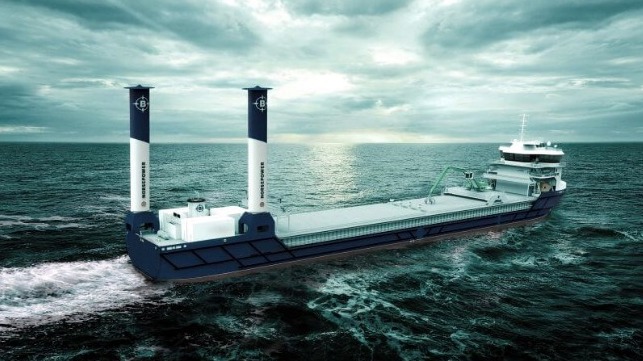
GREEN SHIPPING

Battery-Powered Bulkers to Use Wind Rotors Optimized for Harsh Conditions

zero emission bulker with rotor sails
Rotor sails optimized for harsh weather conditions on the Norwegian coast will contribute to the zero-emission bulkers (Berge Rederi)

Published Jan 15, 2025 7:56 PM by The Maritime Executive


Berge Rederi will incorporate two specially designed wind rotor sails from Norsepower into its innovative zero-emission bulk carriers now building in Nanjing, China. The company reports the vessels expected to launch starting late this year will be the world’s largest battery-powered bulk carriers and far surpass the current longest voyages for battery-electric ferries.

The two cutting-edge general cargo ships are designed to operate entirely without emissions while transporting marble from Brønnøy and Visnes along the Norwegian Sea coast of Norway to the Omya Hustadmarmor production plant in Elnesvågen to be processed into calcium carbonate. Each of the vessels, which will be 13,250 dwt and 426 feet (129.9 meters) in length will sail a distance of approximately 230 nautical miles. According to Berge, this will set a record compared to the current longest battery-ferry route of just 15 nautical miles.

The vessel’s propulsion system is powered by a 23.5 MWh battery package which will be supplemented with shaft generators and two fixed 24 x 4 meter (79 x 13 foot) Norsepower Rotor Sails. Norsepower highlights the rotors are being specially optimized for the harsh conditions, including snow, ice, rain, and high winds, often encountered along the Norwegian Sea route.

“This project was designed for the extreme conditions of the Northen Sea, and we are proud that Berge Rederi chose Norsepower as their partner,” said Marcus Sannholm, Head of Sales at Norsepower. “Our product has been in use at tough sea conditions for more than a decade now, which enables us to create these kinds of partnerships with innovative, market-leading companies. By working with Berge Rederi and MDC from the design phase, we’ve ensured that these vessels will set a new benchmark for sustainability and efficiency in their class.”

Norsepower is collaborating with Berge Rederi and the Norwegian ship designer Marine Design and Consulting for the development of the systems. Through extensive hydrodynamic and structural studies, the teams optimized the vessels’ performance and ensured that the Norsepower Rotor Sails would deliver maximum savings and reliability. The latest high-tech materials will ensure reliable operation for the rotors in the rough sea conditions.

“We’re excited to partner with Norsepower and MDC on this transformative project,” said Magne Berge, owner of Berge Rederi. “The combination of hybrid propulsion and Norsepower Rotor Sails aligns perfectly with our mission to minimize our environmental footprint while maintaining the highest standards of operational efficiency.”

The vessels are being built by Jiangsu SOHO Marine Heavy Industry Co. with the first one scheduled to be delivered with the rotor sails installed by the end of 2025. Supporting the operation will be charging stations at the ports in Remman (Brønnøy) and Elnesvågen. Additionally, an electric excavator and shore power connections will be used at both ports to maintain fully emission-free cargo operations.

Berge reports that the rotor sails are expected to contribute to an average power savings of 339 kW per voyage. Each vessel is expected to annually cut CO2 emissions by around 9,000 tons and NOx emissions by 200 tons.

Based in Hitra, Norway, Berge Rederi operates a fleet of nine self-discharging bulk cargo vessels ranging from 2,700 to 13,000 dwt. 

The project has received backing from the Norwegian NOx Fund and Enova, and the development process has been guided by the GSP Service Centre for Green Fleet Renewal.


UK Launches Next Clean Maritime Competition with $37M in Funding

wind-assisted propulsion
AirWings which will be demonstrated this year are one of the technologies funding in the prior rounds (GT Wings)

Published Jan 16, 2025 7:37 PM by The Maritime Executive


The UK government has begun the sixth round of its Clean Maritime Demonstration Competition promising to provide a total of nearly $37 million to advance decarbonization in the industry. The program is designed to support clean maritime technologies including electric, hydrogen, ammonia, methanol, wind power, and more.

“CMDC round 6 is a great opportunity for UK innovators to take part in a world-renowned maritime transport R&D grant funding program,” said Mike Biddle, executive director of Net Zero at Innovate UK, a non-departmental agency that works as part of the UK Research & Innovation organization. “The competition focuses on the ever-more prevalent issue of decarbonization within the industry and we’re looking forward to seeing participation from across the maritime transport sector and beyond, focusing on physical, digital, system, and skills-based innovation.”

The program encourages innovators to form partnerships drawing from different sectors including the operating maritime companies to demonstrate unique new approaches and technologies. They promote the program as demonstrating the power of collaboration between leading British companies and it supports the efforts turning innovative ideas into real solutions. As part of the program, companies develop working demonstrations of their technologies.

With the sixth round of funding, the UK government highlights it has invested a total of £159 million ($195 million) to accelerate green maritime projects and support new jobs. The next round was announced today, January 16, and will officially open on January 24. Applications are due by April 16, 2025. Previous rounds have provided funding to over 300 organizations.

“I’m proud to see this funding boost growth and create jobs throughout the UK, as well as ushering in an era of zero-emission shipping,” said Maritime Minister Mike Kane.

Among the projects they are highlighting from prior rounds are the installation of Britain’s first electric chargepoint networks across the ports in the South West, the largest retrofit of a hydrogen research vessel in Wales, and the installation of a carbon capture system on a vessel.

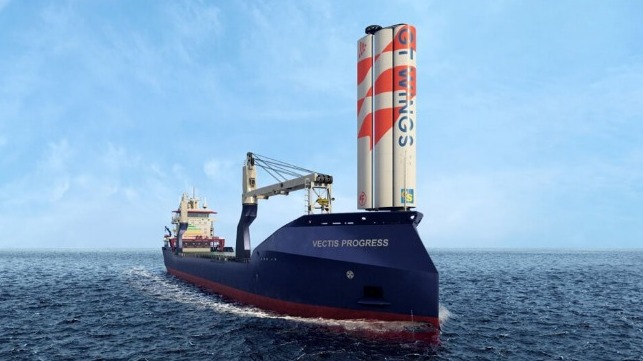
The Maritime Minister also visited Hull in England yesterday, January 15, to see the construction of the first AirWing from GT Wings which received a £225,000 (US$275,000) grant from the Department for Transport. In collaboration with the University of Bath and Carisbrooke Shipping, they are currently building the AirWing which will be demonstrated during the first quarter of 2025. The foil is made of composite materials and has a smaller footprint while expected to produce up to a 30 percent fuel savings without impacting cargo operations.

The first installation of the AirWing will take place on a Carisbrooke Shipping 407-foot (124-meter) general cargo vessel.


Germany’s First Fully Electric Seagoing Vessel Completes Trials

electric ferry
e_Kat will operate entirely on battery power becoming Germany's first electric seagoing vessel (Norden-Frisia)

Published Jan 16, 2025 8:28 PM by The Maritime Executive


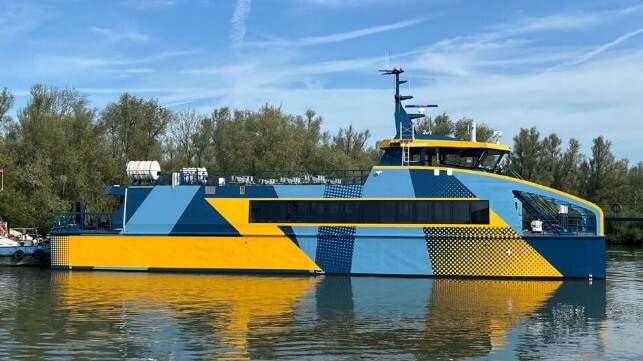
The first fully electric seagoing vessel in Germany, a catamaran ferry, has completed its acceptance trials and is preparing to be deployed. It joins a growing number of battery-powered ferries that are demonstrating the growing opportunities for electric power.

The vessel, E-Kat, designed and built by Damen Group was launched on June 29 in Gorinchem, Netherlands. It was expected to make its first test runs during the summer as outfitting was being completed. Slightly behind schedule, the owner of the vessel AG Reederei Norden-Frisa reports the acceptance trials were completed on January 15. They said that means the necessary permits, insurance, and official approvals have been completed ahead of the beginning of service.

The company also reports that the charging infrastructure of the battery power system with a maximum capacity of 1,800 kW has also been largely installed. They have also completed full power charging tests at the pier.

"All formalities have been completed," says Michael Garrelts, technical inspector at AG Reederei Norden-Frisia. "If the weather plays along, the E-Kat will arrive in Norddeich in January."

The ferry is built of aluminum with a length of approximately 106 feet (32.3 meters) and a capacity for up to 150 passengers. It has a payload of 11,250 kg.

The first-of-its-kind ferry for Germany will operate at speeds of 16 knots (19 maximum capability) between Norddeich in western Germany on the North Sea and the Norderney, one of the East Frisian Islands. That will make it possible to reduce the travel time by almost half to just 30 minutes. They expect to make up to eight trips a day.

Propulsion is two propellers driven by electric motors each with 600 kW and two 75 kW electric bow trusters. The battery and power system was developed by a Dutch company EST-Floattech which provided its Octopus High Energy battery system. 

Once docked in Norddeich, the E-Kat will be recharged using the shore power connections. A full charge will take approximately 28 minutes and will give the ferry power for the round trip. The distance between the port and the island is approximately 11 km (7 miles).

"Our long-term goal is to create a closed cycle of electricity production and electricity consumption," says shipping company board member Cal-Ulfert Stegmann. He notes that they have already installed photovoltaic systems at the company’s buildings in the port and on the island. It is also providing charging stations for electric vehicles.


Crew Walk to Safety After Survey Vessel Grounds on a Pebble Beach in UK

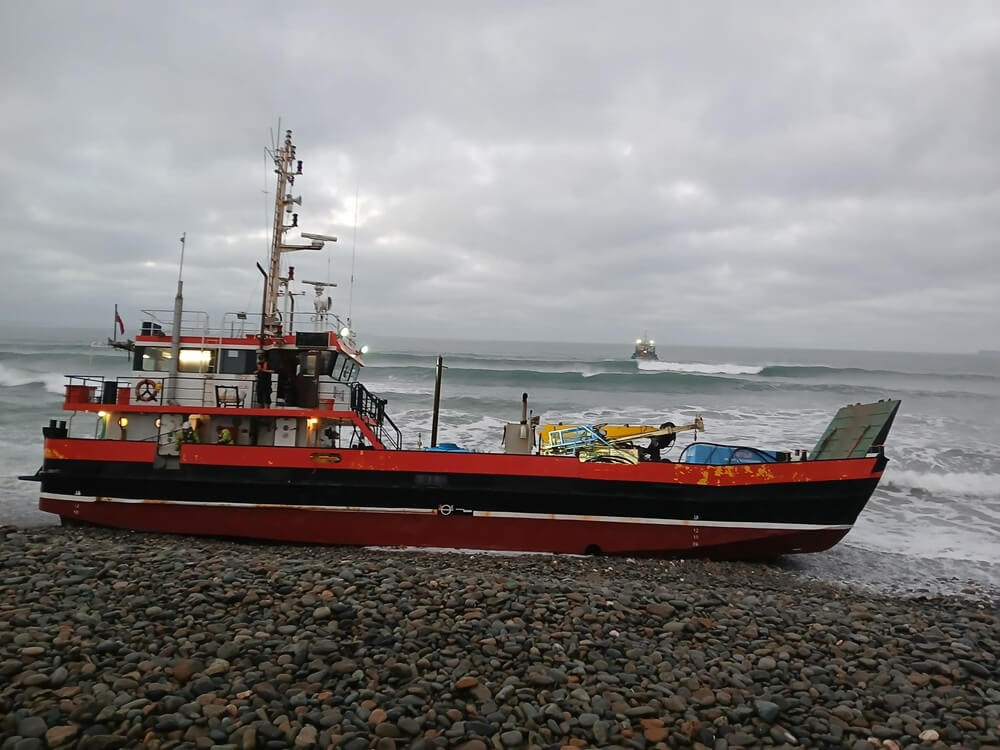
Terramare aground on Wednesday night (St Davids RNLI)

Published Jan 16, 2025 5:03 PM by The Maritime Executive


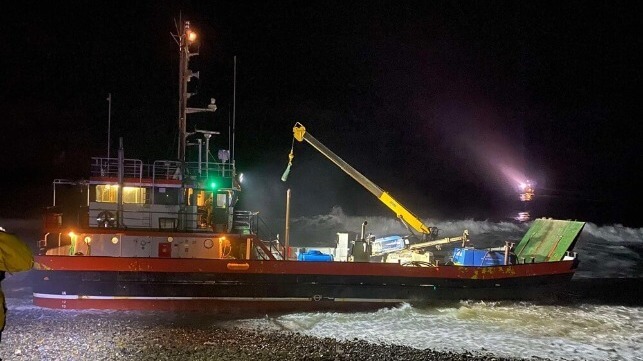
On Tuesday night, a small survey vessel ran aground off the coast of Newgale, UK while working on a telecom line project, forcing the crew to abandon ship onto the beach. 

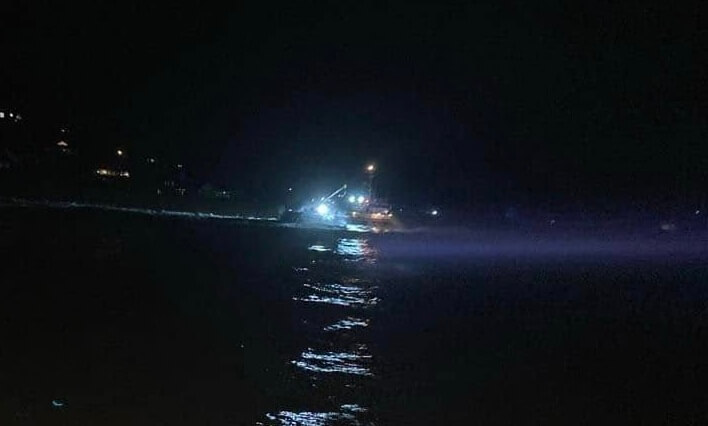
At about 1830 hours Tuesday, HM Coastguard received a distress call from the landing / survey craft MTS Terramare, which was in distress off Newgale. The vessel had lost power in one engine while operating close to the beach, and in rough surf, it could not maintain its heading. It ran aground broadside to the shore, and waves began washing over the working deck. Bright arcs from an apparent electrical short on deck were reported by bystanders. 

Courtesy St Davids RNLI

The St. Davids RNLI lifeboat was dispatched to assist, and it made top speed to Newgale. The crew of the Terramare requested salvage pumps to dewater their vessel, but in the rough surf there was no way to carry out a transfer, even with smaller launches. The responders considered running a towline, but because of the relative size of the Terramare compared to the RNLI response boats and the hazards of the situation, they decided not to attempt a salvage tow. 

The vessel’s crew were unharmed, and since the Terramare was nearly high and dry, they were able to step down onto the pebble beach and walk away. At this point the RNLI responders concluded their mission and returned to station, arriving at berth after 2000 hours. 

"The RNLI mission is to save lives at sea, and we endeavor to save boats if possible, but it is beyond our remit to salvage," said Will Chant, coxswain for the St Davids RNLI lifeboat. "In this instance, the size of vessel and its position broadside to the beach compromised a tow, therefore once assured the crew were safe ashore, there was nothing further our lifeboats could do."

Courtesy RNLI


Good Samaritans Rescue Crew of Fishing Vessel in Gulf of Alaska

Tanusha
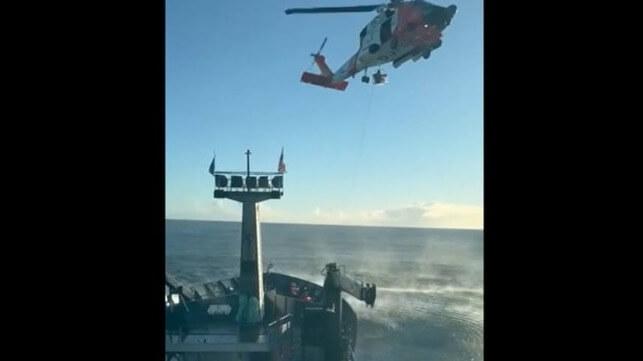
Courtesy USCG

Published Jan 16, 2025 2:24 PM by The Maritime Executive


A good Samaritan vessel has rescued two fishermen from the cold waters of the Gulf of Alaska after a fishing vessel capsized off the coast of Kodiak, the U.S. Coast Guard said Thursday. 

At about 0945 hours on Wednesday morning, Coast Guard 17th District received a distress alert from the fishing vessel Tanusha's EPIRB, located about 20 nautical miles southeast of Kodiak. In response, the command center dispatched a helicopter aircrew from Air Station Kodiak to the scene and made a VHF call to nearby shipping to request assistance. 

The fishing vessel Victory received the call and diverted to Tanusha's last known location. The lost boat had begun taking water and had capsized, and the two crewmembers aboard had successfully abandoned ship. The crew of the Victory soon spotted the two survivors, who were drifting in a life raft near the upturned hull of their boat. One of them had a head injury and was showing signs of hypothermia. 

Both fishermen were taken safely aboard the Victory, and the Coast Guard helicopter aircrew arrived to airlift them for a medevac, with assistance from a patrol boat operated by the Alaska State Troopers. 

"The use of a functioning and properly registered EPIRB means quite literally the difference between life and death," said Petty Officer 3rd Class Sean Streyle of Coast Guard Sector Western Alaska. "In this case, it was our only notification that the crew of Tanusha needed assistance."


Germany Detains Tanker for Customs and Seaworthiness Inspections

Tanker detained in Germany
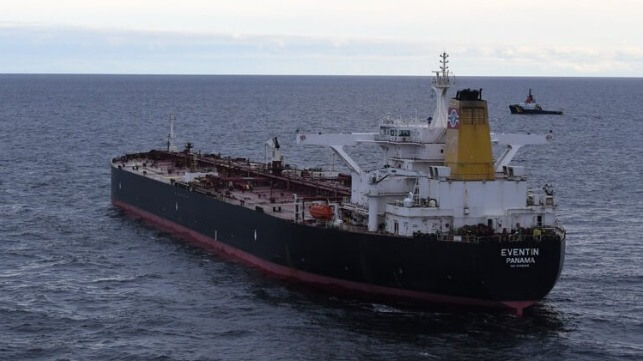
Tanker is being detained for possible sanctions violations and repairs (Havariekommando)

Published Jan 16, 2025 1:29 PM by The Maritime Executive


German authorities confirmed they are continuing to detain the Panama-flagged tanker Eventin (152,000 dwt) after the vessel’s blackout and rescue from the Baltic on January 10. In addition to waiting for confirmation from the vessel’s classification society of the repairs and seaworthiness of the ship, the authorities confirmed Customs inspectors have boarded the vessel.

The General Customs Inspection Office reported that its inspectors were aboard checking the vessel’s paperwork on Tuesday and Wednesday. They also sampled the 100,000 tons of oil aboard and have submitted it for testing. They are seeking to confirm the validity of the papers and exploring if the cargo is a violation of the EU bans imposed after the Russian invasion of Ukraine. A spokesperson for Customs said the process is expected to take several more days.

The captain of the vessel has reportedly filed for permission to depart Germany after the Federal Ministry of Transport was informed the engine has been repaired. The Eventin was towed by the German rescue services on January 10 into the anchorage at Sassnitz after it blacked out during a storm in the Baltic. The original plan called for the vessel to be moved to Denmark on Monday, but the German authorities issued a detention order.

The vessel, which was built in 2006 has been registered since 2022 in Panama. Databases list DNV as its class society. Ownership and management of the vessel have changed annually in the past few years according to the databases and it was renamed Eventin in June 2024. The ship has been listed in the EU sanctions and cited for its involvement in the Russian oil trade.

The Federal Ministry of Transport confirmed that class inspectors had been aboard. It said it was waiting for the results of its tests before determining when the tanker would be permitted to depart.

The tanker’s AIS signal shows it departed the Russian terminal at Ust-luga on January 7 bound for Port Said. Media reports indicate its destination was India. 

Customs checks of the cargo aboard a vessel have become a more common cause for vessels to be detained since the institution of the sanctions against Russia. Last year, Germany held a general cargo ship transporting lumber from Russia and Finland has also been checking the cargo of the tanker Eagle S after the tanker was detained for damaging the undersea cables in the Baltic. Finnish Customs announced today it would not be pursuing charges of sanctions violations for bringing banned oil products into Finland aboard the Eagle S. The authorities determined the crew was not responsible as the Finnish authorities had ordered the vessel to Finnish territorial waters. The tanker however remains detained in Finland due to the other ongoing investigation.


NRL oceanographers receive NASA Group Achievement Award


Naval Research Laboratory
NRL Oceanographers Receive NASA Group Achievement Award 

image: 

U.S. Naval Research Laboratory (NRL), Stennis Space Center Oceanographers received NASA Letters of Achievement for their collaboration with NASA’s Sub-Mesoscale Ocean Dynamics Experiment (S-MODE). NRL and NAVO provided the NASA science team with gliders and floats and real-time ocean model forecasts for several observational campaign. From left to right- Jay Shriver, Ph.D., Joseph D’Addezio, Ph.D., and Gregg Jacobs, Ph.D. (U.S. Navy photo)

view more 

Credit: U.S. Navy photo


WASHINGTON - U.S. Naval Research Laboratory (NRL) oceanographers and the Naval Oceanographic Office (NAVO) received a Group Achievement Award from NASA for their collaboration with NASA’s Sub-Mesoscale Ocean Dynamics Experiment (S-MODE). NRL and NAVO provided the NASA science team with gliders and floats and real-time ocean model forecasts for several observational campaigns.

NRL’s Joseph D’Addezio, Ph.D., Gregg A. Jacobs, Ph.D., and Jay. F. Shriver, Ph.D. used Office of Naval Research’s (ONR) Physical Oceanography Program funding to provide S-MODE with daily, real-time ocean model forecasts during three S-MODE’s observational campaigns. Aided by the real-time model simulations, NRL also provided real-time glider movement guidance using NRL’s Guidance of Heterogeneous Observation Systems-GHOST technology.

“S-MODE was a scientific campaign initiated to observe, for the first time, ocean features that are too small to see from space and too large to see with isolated measurements,” said D’Addezio, “These ocean features are uniquely important because they allow the ocean and atmosphere to ‘breathe’ between one another. This makes them essential for understanding the current and future evolution of the global earth system.”

Because these features are difficult to see from space, numerical prediction models provide a way to forecast where they might occur in abundance, allowing the ship-based campaign to target certain geographic locations. The numerical model is also robust in its representation of fields in space and time, allowing scientists to study these difficult to observe features in a more complete way. NRL provided real time forecasts of the ocean off the west coast of the United States in order to aid the ship-based campaigns and the scientific evaluation of these unique ocean features. NRL deployed new prediction capabilities and demonstrated their efficacy in operational settings for the first time ever. S-MODE has proven to be a highly successful scientific endeavor for all involved.

Both the ocean model simulations and glider guidance used novel methodologies that had not yet been tested in operational environments. The ocean model was corrected every day using a new assimilation technology, whereby the horizontal scales of the model corrections were directly a function of the observation spatial density. The traditional GHOST glider guidance was augmented using the real-time ocean model fields, whereby gliders were forced to sample regions that had not been recently observed, thereby significantly reducing the redundancy of observations collected by the gliders. “Each new methodology was tested in real-time during the S-MODE campaigns and were shown to significantly increase ocean model forecast skill” said Jacobs, Ph. D., “Both technologies are now moving towards Navy transition. Overall, the NRL/NASA collaboration proved fruitful for both government agencies.”

During each S-MODE observational campaign, NAVO donated gliders and floats for S-MODE to deploy and use. During the first two experiments, NAVO donated 20 gliders. During the final experiment, NAVO donated 5 gliders and 10 floats. S-MODE successfully used these observations for their science goals and Ocean and Predictions Branch was also able to utilize the observations for Navy-oriented goals.

“Both S-MODE and NRL are extremely grateful for NAVO’s participation in the exercises.” said Shriver, Ph.D.

D’Addezio is an oceanographer in NRL’s Ocean Dynamics and Prediction Branch at Stennis Space Center, Mississippi. He received Bachelor of Science degrees in meteorology and oceanography at North Caroline State University in 2012, his Master of Science degree in physical oceanography at the University of North Carolina at Wilmington in 2014, and his Doctoral degree in physical oceanography at the University of South Carolina in 2016. His work focuses on research and development for the Navy’s ocean models, with a specific focus on data assimilation: the process by which the ocean model is updated to include information from recently taken observations. He began working with NRL in 2016.

Jacobs is head of NRL’s Ocean Dynamics and Prediction Branch. He received his Bachelor of Science degree in Aerospace Engineering at the University of Colorado in Boulder, CO in 1986, his Master of Science degree in physical oceanography from Oregon State University in 1988 and Doctoral degree in Aerospace Engineering at the University of Colorado in Boulder, CO in 1991. Jacobs has over 100 refereed journal publications, 5 book chapters and 6 patents awarded.

His recent work has focused on ocean circulation predictability into submesoscale ocean processes by exploiting new high-resolution observations such as the Surface Water and Ocean Topography mission and ocean circulation and processes controlling sound channels throughout the globe with specific focus on the North Atlantic and North Pacific oceans.

Shriver is an oceanographer also with NRL’s Ocean Dynamics and Prediction Branch. He received his Bachelor of Science degree in mathematics and meteorology from SUNY Brockport in 1987, his Master of Science degree in 1989 and Doctoral degree in 1993 in dynamic meteorology from Florida State University. Shriver has published over 55 refereed publications on a wide range of topics and has played an integral role in the transition of multiple global ocean prediction systems to the U.S. Navy for operational applications. His research interests include ocean analysis and forecasting, oceanic tides and nonlinear ocean dynamics.

Their research group has transitioned systems to operational use for real time observation processing, global and high-resolution prediction systems, and many associated applications. In recent years in collaboration with the NRL Marine Meteorology Division, the groups have transitioned global and high-resolution Earth System Prediction Capability forecasts to operations. These systems now regularly provide skillful forecasts out to 45 days.

The Ocean Dynamics and Predictions branch research focus includes basic understanding of physics of ocean circulation wave and ice processes, remote and in situ sensing systems, demonstration of predictability, and transitioning ocean forecast systems to production centers within the Navy and other national agencies. Stationed at NASA’s Stennis Space Center in southern Mississippi, it is known primarily as a test site for NASA rocket engines.


###

About the U.S. Naval Research Laboratory

NRL is a scientific and engineering command dedicated to research that drives innovative advances for the U.S. Navy and Marine Corps from the seafloor to space and in the information domain. NRL is located in Washington, D.C. with major field sites in Stennis Space Center, Mississippi; Key West, Florida; Monterey, California, and employs approximately 3,000 civilian scientists, engineers and support personnel.

For more information, contact NRL Corporate Communications at (202) 480-3746 or nrlpao@us.navy.mil


New West Health-Gallup survey finds incoming Trump administration faces high public skepticism over plans to lower healthcare costs


Nearly half of Americans (46%) think the country is headed in the wrong direction when it comes to the incoming president’s policies to lower healthcare costs, while 31% say it’s on the right track, according to the latest West Health-Gallup survey.


West Health Institute


WASHINGTON, D.C. — Weddnesday, Jan. 15, 2025  Nearly half of Americans (46%) think the country is headed in the wrong direction when it comes to the incoming president’s policies to lower healthcare costs, while 31% say it’s on the right track, according to the latest West Health-Gallup survey released today.

When viewed through a political lens, only Republicans are more positive than negative about the future of healthcare costs under the Trump administration; nearly three-quarters (73%) think the incoming administration’s healthcare policies are headed in the right direction. In contrast, 24% of independents and 3% of Democrats say the same. Democrats overwhelmingly think the yet-to-be-detailed policies are going in the wrong direction (84%), and nearly half of political independents (48%) agree.

Findings on prescription drug prices fall along similar party lines, but Americans are generally more negative than positive on Trump's policies to bring prices down (41% vs. 34%).

“The survey reflects a deep divide across party affiliation about the future of healthcare policy,” said Timothy Lash, president, West Health Policy Center — a nonpartisan, nonprofit organization focused on healthcare and aging. “Political independents, however, remain highly pessimistic, which may better reflect the realities and consequences of a high-priced healthcare system more than the politics or personalities behind it.”

Political independents comprise approximately four in 10 U.S. adults, ahead of Republicans (30%) and Democrats (26%).

Low Confidence in Policy Action

Only one-third of Americans are optimistic that the incoming Trump administration’s policies will bring down the cost of healthcare (32%) or prescription drugs (34%). When asked about specific healthcare priorities — including lowering drug costs, protecting Medicare and Social Security, capping insulin prices, and addressing mental health within the U.S. healthcare system — overall, majorities of Americans express doubt that these issues would be prioritized in Trump’s second term.

  • 57% do not believe the administration will prioritize lowering prescription drug costs.
  • 58% do not think capping insulin for everyone at $35 will be a priority.
  • 56% do not think protecting Medicare and Social Security will be a priority.
  • 60% say they do not think the new administration will expand Medicare negotiation.
  • 63% say expanding access to mental healthcare is unlikely to be prioritized.

Americans United in Concern Over Healthcare Costs

Americans across the political spectrum share concerns about healthcare affordability. Prior West Health-Gallup polling shows that a third or more of Republicans, Democrats and independents are concerned they will be unable to pay for needed healthcare. Other recent West Health-Gallup research also found that only about half or less of Democrats and Republicans rate U.S. healthcare quality as excellent or good, an all-time low.

“As Americans navigate an evolving political landscape, the data continue to show a clear and unified desire for meaningful policies that address the rising cost of care and the difficulty many have obtaining access,” said Gallup senior researcher Sarah Fioroni.

Methodology

The West Health-Gallup Survey was conducted via web Nov. 11-18, 2024, with a nationally representative sample of 3,583 U.S. adults aged 18 and older. The margin of sampling error is ±2.1 percentage points at the 95% confidence level.

About West Health
Solely funded by philanthropists Gary and Mary West, West Health is a family of nonprofit and nonpartisan organizations including the Gary and Mary West Foundation and Gary and Mary West Health Institute in San Diego, and the Gary and Mary West Health Policy Center in Washington, D.C. West Health is dedicated to lowering healthcare costs to enable seniors to successfully age in place with access to high-quality, affordable health and support services that preserve and protect their dignity, quality of life and independence. Learn more at westhealth.org and follow @westhealth.

About Gallup
Gallup delivers analytics and advice to help leaders and organizations solve their most pressing problems. Combining more than 80 years of experience with its global reach, Gallup knows more about the attitudes and behaviors of employees, customers, students and citizens than any other organization in the world.

###

 NATIONALIZE LONG TERM CARE HOMES

UC Irvine-led study shows crucial role of staffing instability in nursing home ratings


Researchers recommend adding metric to CMS quality-of-care evaluation measures


University of California - Irvine


Irvine, Calif., Jan. 14, 2025 — A study led by the University of California, Irvine has revealed the significant impact of staffing instability on nursing home quality across the country, as reflected in the Five-Star Quality Rating System published by the Centers for Medicare & Medicaid Services. Families and prospective residents often rely on these care assessments when choosing a nursing home.


Research findings, recently published online in the journal Health Affairs Scholar, showed that nursing homes either gained or lost a quality star when the staffing instability measure was included in the Five-Star metric.


“The choice of a nursing home is one of the most emotional and profound decisions a family makes. Adding staffing instability to the Five-Star ratings would empower consumers to make more informed decisions, while encouraging facilities to prioritize consistent staffing,” said corresponding author Dana Mukamel, UC Irvine Distinguished Professor of medicine. “After all, consistent, adequate staffing is vital to ensuring the health and well-being of residents.”


Currently, the CMS evaluates staffing using two key metrics: the average number of hours per resident per day and turnover rates. Staffing instability refers to daily fluctuations – from fully staffed to struggling to cover shifts – capturing the inconsistency that might not be obvious when only looking at averages. Day-to-day variations can directly impact residents, affecting everything from timely meals to essential care.


Using data from more than 13,600 nursing homes during the third quarter of 2023, researchers tested several scenarios of staffing instability relative to other measures in the ratings. They applied CMS methodologies and discovered that on a conservative 5-to-50-point basis, 21 percent of nursing homes experienced a change in their quality star rating. Under a less conservative 10-to-100-point basis, the number jumped to 40 percent.


“The Five-Star rating system serves as a vital tool for families and caregivers making critical decisions about long-term care options, and adding this measure will ensure that ratings more accurately reflect the quality they can expect,” Mukamel said. “This information would also encourage nursing home operators to focus on staffing consistency, leading to better resident outcomes.”


The CMS has been updating its nursing home quality measures over the past 20 years to adapt to changing standards and as new data becomes available. The study’s authors strongly recommend that staffing instability be incorporated into the Five-Star ratings.


“This change would not upend the entire rating system. Our findings offer the CMS a clear pathway to push the needle on quality care forward, making a real difference in the lives of nursing home residents and their families,” Mukamel said.


The team included Heather Ladd, a research associate in UC Irvine’s Department of Medicine; Dr. Debra Saliba, UCLA professor of medicine; and R. Tamara Konetzka, Louis Block Professor of Public Health Sciences and professor of medicine at the University of Chicago.


This work was supported by the National Institutes of Health’s National Institute on Aging under award number R01AG066742.


About the University of California, Irvine: Founded in 1965, UC Irvine is a member of the prestigious Association of American Universities and is ranked among the nation’s top 10 public universities by U.S. News & World Report. The campus has produced five Nobel laureates and is known for its academic achievement, premier research, innovation and anteater mascot. Led by Chancellor Howard Gillman, UC Irvine has more than 36,000 students and offers 224 degree programs. It’s located in one of the world’s safest and most economically vibrant communities and is Orange County’s second-largest employer, contributing $7 billion annually to the local economy and $8 billion statewide. For more on UC Irvine, visit www.uci.edu.


Media access: Radio programs/stations may, for a fee, use an on-campus studio with a Comrex IP audio codec to interview UC Irvine faculty and experts, subject to availability and university approval. For more UC Irvine news, visit news.uci.edu. Additional resources for journalists may be found at https://news.uci.edu/media-resources.


Tree crops crucial for sustainable development


Research team emphasize global importance for biodiversity, economy and climate


University of Göttingen

Tree crops such as cacao offer important sources of income for local people and can - with sustainable strategies - protect biodiversity. 

image: 

Cacao plantation in the project: ‘Ecological intensification and multifunctionality of genetically diverse cocoa agroforestry systems in Peruvian landscapes (Eco-Cacao)’. Tree crops such as these offer important sources of income for local people and can - with sustainable strategies - protect biodiversity.

view more 

Credit: Blanca Ivañez-Ballesteros


Tree crops – for example, apple, cherry, olives, nuts, coffee, and cacao – cover more than 183 million hectares worldwide, yet remain largely overlooked in agricultural policies, despite their critical role in achieving the United Nation’s Sustainable Development Goals (SDGs). An international research team, with the participation of Göttingen University, highlight how these crops are not only essential to feed the world and for global economies, but also hold immense potential for protecting biodiversity and the climate, as well as improving livelihoods for millions of people worldwide. The findings were published in a Perspectives article in Nature Sustainability.


The study’s findings urge policymakers to develop specific agendas to promote sustainable practices in tree crop agriculture. Agricultural policies typically focus on annual crops – such as wheat, sunflowers or rice – which have much shorter life cycles, from germination to harvest in just one year. While fostering sustainable practices in crops like wheat is also important, the ecological benefits of these systems are often limited due to their simpler vegetation and shorter harvest cycle. Tree crops, by contrast, are more complex, including several layers of vegetation – herbaceous, shrubs, trees – and provide stable habitats that can support biodiversity when managed sustainably.


With their permanent root systems and extensive leaf litter, tree crops also prevent soil erosion, enhance its fertility, and provide habitats for many species year-round. They contribute to greenhouse gas reduction through carbon sequestration, improve habitat connectivity for fragmented ecosystems, and buffer protected areas from the impacts of intensive agriculture. Tree crops tend to be less mechanized and require more manual labour, offering vital employment opportunities, particularly in low- and middle-income countries where these crops are widespread.


The researchers call for the implementation of regulations, financial incentives, and supportive policies aimed at improving agricultural practices for tree crops to maximize their contribution to global sustainability. “Tree cropping areas overlap with most of the world’s biodiversity rich areas, making them key to conservation. However, local practices and landscape-scale measures adapted to different contexts are needed. We call for tailored policies and further research to ensure sustainable management of tree crops,” explains co-author Dr Elena Velado-Alonso, at Göttingen University’s Functional Agrobiodiversity and Agroecology Group.


“We’re missing an opportunity to leverage tree crops to address some of the biggest environmental and social challenges of our time,” says Dr Carlos Martínez-Núñez, researcher at the Doñana Biological Station and coordinator of the study. “When managed properly, these agricultural systems can be a powerful tool for biodiversity conservation, climate change mitigation, and rural poverty alleviation, in addition to producing around 1,000 million metric tons of food annually.”


“This call to action represents a crucial step in rethinking agriculture’s role in building a fairer, more sustainable future,” adds Velado-Alonso.


Original publicationCarlos Martinez-Nuñez et al, “Tailored policies for perennial woody crops are crucial to advance Sustainable Development." Nature Sustainability 2024. Doi: 10.1038/s41893-024-01483-8


Red admiral butterfly in a meadow orchard in Germany

Credit

Guy Peer


Contact:

www.uni-goettingen.de/de/683286.html