Friday, January 17, 2025


China Begins Patrolling Boundary of its "Nine-Dash Line" Claim
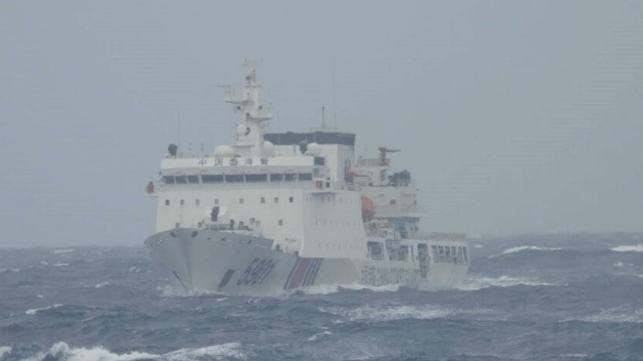
CCG 5901, the world's largest cutter, under way off Luzon on Jan. 12 (PCG)

Published Jan 12, 2025 10:19 PM by The Maritime Executive


For the first time, China's coast guard has begun patrolling a section of the country's "nine-dash line" - the loosely-defined boundary of Beijing's unilateral claim to the South China Sea, including international waters and other states' exclusive economic zones. 

Since the beginning of the new year, a group of large China Coast Guard cutters have been rotating through patrol duty in an area just off Zambales, Luzon. At closest approach, the patrols have come within about 55 nautical miles of Philippine shores. 

One of the deployed vessels is CCG 5901, the largest armed law enforcement vessel in the world at 12,000 tonnes displacement. Over VHF, its crew has informed the Philippine Coast Guard that the CCG is enforcing Chinese law in Chinese waters, even when 100 nautical miles inside the Philippine exclusive economic zone. 

The Philippine Coast Guard has dispatched the offshore patrol vessel BRP Teresa Magbanua to monitor the Chinese presence and push back on these sovereignty claims. Despite rough weather conditions, the crew of the Magbanua have kept watch and demonstrated continued Philippine presence. 

While monitoring the Chinese flotilla, the Philippine Coast Guard noticed a pattern that may explain the China Coast Guard's new behavior. The CCG cutters have been patrolling a north-south racetrack off Luzon's coast, and the tracklines align well with a segment of the "nine-dash line," which was invalidated by the Permanent Court of Arbitration in the Hague in 2016.
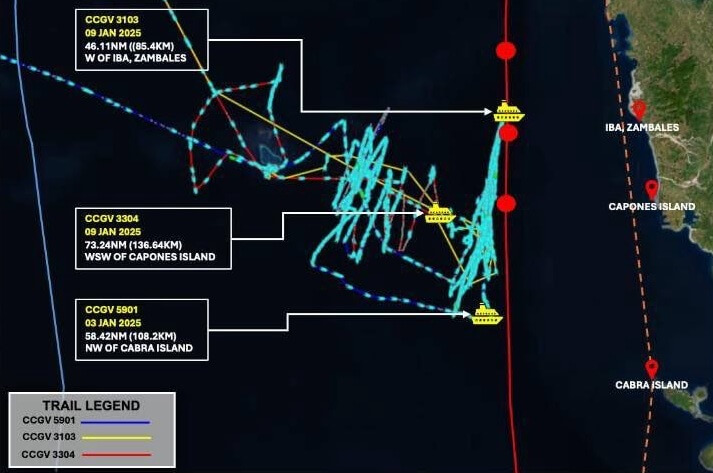
Courtesy PCG 

"Their goal is to normalize such deployments, and if these actions go unnoticed and unchallenged, it will enable them to alter the existing status quo. This strategy of normalization, followed by altering the status quo and ultimately operationalizing their illegal narrative, has consistently been part of the Chinese playbook," said PCG spokesman Jay Tarriela. "This is why it is important for the Philippine Coast Guard to actively expose these unlawful deployments of Chinese vessels to the global community, ensuring that such actions are not normalized and that this bullying behavior does not succeed."

Tarriela warned that if China does not get pushed back, it could begin conducting the same patrols in other nations' exclusive economic zones, since the "nine-dash line" affects all of the coastal states of the South China Sea. This includes waters administered by Vietnam, Brunei, Malaysia and Indonesia.

To the north, South Korea's government is eyeing new Chinese activity in a contested part of the Yellow Sea. The so-called Provisional Measures Zone is claimed by both sides, and all activities within it are banned except for navigating and fishing. Construction is specifically disallowed - but China has been installing large metal structures in the zone, which it describes as "fishing support facilities." Another structure recently went in the water, South Korean officials reported January 9. 

East Asian defense analysts have noted that China pursued a similar incremental strategy with its island-building campaign in the South China Sea - creating nominally civilian structures, militarizing them over time, and then using them to support political claims of sovereignty.

“China is not only installing structures but also conducting military exercises in the region, signaling its ambitions to establish effective control over the West Sea,” Lee Dong-gyu, a research fellow at the Asan Institute for Policy Studies, told Chosun Daily. “These actions aim to gain leverage in future negotiations with South Korea.”


White House Formally Blames China for "Unreasonable" Maritime Subsidies
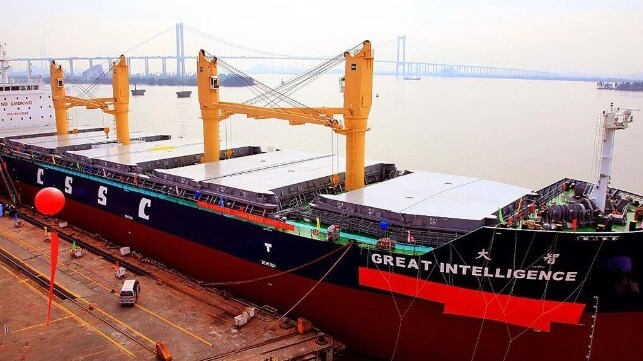
State-owned, state-built, state-subsidized: CSSC is the world's largest shipbuilder (CSSC file image)

Published Jan 16, 2025 7:49 PM by The Maritime Executive


China is by far the world's dominant shipbuilding nation, and the latest numbers from its industry ministry show that the lead has only widened. About 56 percent of all tonnage delivered worldwide came from China last year. Amidst a global boom, China now holds about 63 percent of the world orderbook, and its yards raked in an astonishing 74 percent of new orders over the course of the year. By certain measures, China also leads in ownership: about 19 percent of the global fleet is now Chinese-owned (and growing). 

This has not gone unnoticed in Washington, and awareness of the strategic risk of a Chinese-controlled maritime transportation system has risen in Congress and in the White House. On Thursday, four days before President-elect Donald Trump's inauguration, the Biden administration formally announced that Chinese dominance in the maritime industry "is unreasonable and burdens or restricts U.S. commerce," leaving it subject to action under Section 301 of the Trade Act. The announcement was widely expected and provides leverage for Trump to negotiate with Beijing as soon as he enters the White House. 

"Today, the U.S. ranks 19th in the world in commercial shipbuilding, and we build less than five ships each year, while the PRC is building more than 1,700 ships," said U.S. Trade Representative Ambassador Katherine Tai in a statement. "Beijing’s targeted dominance of these sectors undermines fair, market-oriented competition, increases economic security risks, and is the greatest barrier to revitalization of U.S. industries."  

In a comprehensive report, the office of the USTR laid out how Beijing's intention to create a dominant maritime sector is "unreasonable." The office argues that the Chinese government has extraordinary control over investment decisions with Chinese bankers and lead players in Chinese shipping, like state-owned COSCO and CSSC, the world's largest shipowner and largest shipbuilder (respectively). USTR argues that this control is used to subsidize state shipping enterprises, estimated by independent studies as somewhere in the range of $11-16 billion per year in 2006-18.  

The exact scale of China's government subsidies are hard to determine, USTR found, because of opaque relationships between firms in the Chinese state's giant business portfolio. "This opaqueness allows for China to hide the true extent of government support to the maritime, logistics, and shipbuilding sectors," USTR concluded. 

According to USTR, China's subsidies are intended to create global market dominance in shipping, shipbuilding and logistics. As a result, U.S. trade is "carried out on vessels made in China, financed by state-owned Chinese institutions, owned by Chinese shipping companies, and reliant on a global maritime and logistics infrastructure increasingly dominated by China."

In addition to the Chinese maritime enterprises who are direct recipients of aid, the ultimate beneficiaries include Chinese manufacturers and exporters, who have enjoyed subsidized freight rates that give them an extra competitive edge.  The Chinese government's runaway success in this endeavor "deprives market-oriented businesses and their workers of commercial opportunities, and lessens competition and creates dependencies on the PRC, increasing risk and reducing supply chain resilience," USTR concluded. 

America's allies have also felt the impact. One study examined by USTR concluded that shipbuilding subsidies enacted in 2006 accounted for the entire price advantage that Chinese shipyards held over Japanese and South Korean yards in the years thereafter. 

Five American unions had petitioned USTR to take action, and in a statement they issued their thanks. 

"By targeting global maritime, shipbuilding and logistics sectors, the Chinese Communist Party has systematically – and publicly – worked to dominate this vital sector, leaving us increasingly dependent on the PRC and its industries to meet our economic and national security needs," said United Steel Workers President David McCall in a statement. "Now, we have the opportunity to turn the tide, create good, community-supporting jobs across the commercial shipbuilding supply chain and restore American maritime capacity and power."


Chinese Nationals Charged With Smuggling "Pink Cocaine" to Australia
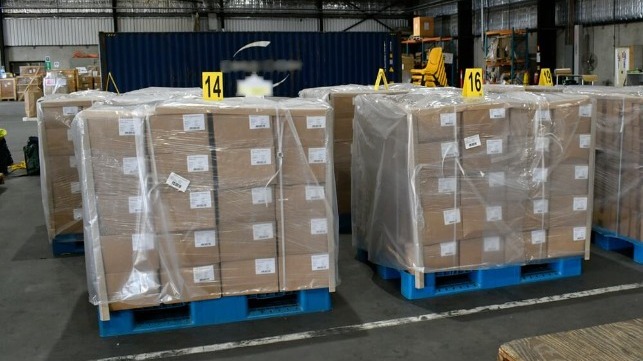
Pink cocaine seizure
Courtesy AFP

Published Jan 16, 2025 6:26 PM by The Maritime Executive


Australia's federal police force has charged a group of Chinese nationals with attempting to import more than half a tonne of illegal drugs through the Port of Melbourne, disguised within a consignment of industrial goods. The shipment allegedly included a large quantity of "pink cocaine," a designer mixture of the club drug MDMA and the tranquilizer ketamine. 

According to the Australian Federal Police, five men - four Chinese nationals and one Sydney resident - were arrested Wednesday in connection with the scheme. Three were charged with alleged involvement in smuggling the drug consignment into the country, and two were charged with possessing precursors for making methamphetamine. 

The bust started last year when AFP authorities intercepted a cargo from Italy at the Port of Melbourne. Concealed inside a containerized shipment of galvanized hooks, they found 420 kilos of MDMA pills, 120 kilo blocks of a suspected drug mixture and 80 kilos of methamphetamine. 

The mixed substance tested positive for MDMA and ketamine, consistent with the ingredients of a valuable designer drug sold as "Tusi" or "pink cocaine." Further testing is planned to determine the nature of the substance, which is a niche product and may be worth as much as $100,000 per kilo on the Australian market. 

Taken altogether, the estimated street value of the combined shipment was in excess of US$70 million.  

The shipment was seized and swapped with inert substitutes to mimic the appearance of the illicit import, and the consignment was allowed to continue delivery. The goods (and the fake drugs) were delivered to an address in Brooklyn, Australia; the police allege that the consignment was later taken and moved to a facility near Sydney.

“Importing nearly half a tonne of MDMA into Australia is a significant criminal endeavor and demonstrates the insatiable appetite for illicit drugs in our country, and the lucrative market through which organized criminals seek to earn significant profit," AFP Commander Raegan Stewart said in a statement. 

The other two Chinese nationals were identified during the investigation of the drug smuggling scheme. They were arrested in Sydney on Wednesday, and were charged with possessing methamphetamine precursors. One of them faces an additional charge of allegedly interfering with access to electronic records during an investigation.  


Hapag-Lloyd Marks Milestone with Largest Fleet in 178-Year History

containership
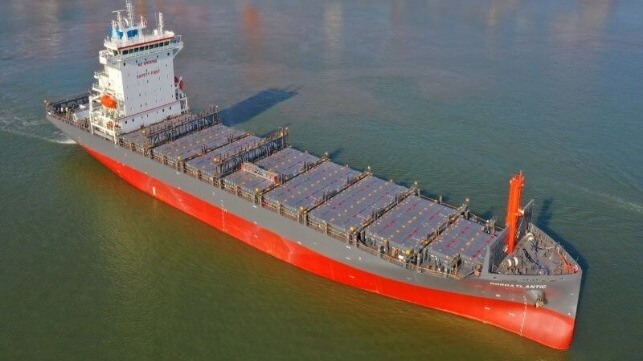
Chartered Nordatlantic becomes the 300th ship in Hapag's current fleet (Hapag-Lloyd)

Published Jan 16, 2025 6:21 PM by The Maritime Executive


Hapag-Lloyd is marking a milestone in the long and storied history of the carrier which is today the fifth largest in the container shipping segment. The company took delivery of a chartered vessel which becomes the 300th it is currently operating, making the fleet the largest in the history of the company which traces its origins to 1847.

“Today, we’re celebrating a significant milestone that will be making waves - quite literally! With the launch and delivery of the charter vessel Nordatlantic, Hapag-Lloyd AG now operates more ships than ever before,” the company wrote in a social media posting.

The 24,480 dwt vessel, which is under charter from Reederei NORD Group, is far from the largest in the fleet but it becomes number 300 with its sister ships, Nordbaltic and Nordpuma, to follow in service for Hapag-Lloyd. The vessels are being built by HuangPu Wenchong Shipbuilding Co., a division of China State Shipbuilding Corporation (CSSC). Each measures 564 feet (172 meters) with a capacity of 1,930 TEU including 313 FEU reefer containers. Hapag says they will be used to strengthen its intra-Asia feeder services and support its broader fleet upgrade.

“This milestone reflects not only the growth of our fleet but the dedication of our teams and the trust of our partners worldwide,” writes Hapag. “According to Hansa Online, Hapag-Lloyd’s capacity grew by an impressive 18.7 percent in 2024, reaching a total of 2.3 million TEU – a testament to our continued focus on connecting global trade.”

In its 2023 annual report, the company said it had 260 container vessels with a capacity of approximately 2 million TEU. It was up from 2020 when it reported 237 vessels and a shipping capacity of 1.7 million TEU.


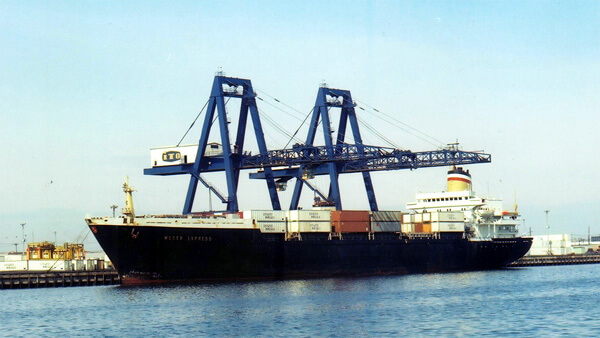
Hapag's first containership, Weser Express, started service in 1968 with a capacity of 728 TEU (Hapag-Lloyd)


It is less than 60 years since Hapag entered the container segment. They note in the company history that Sealand’s first container vessel arrived in Hamburg in 1966 and was viewed with skepticism. However, just two years later, Hapag-Lloyd Container Linien, a cooperation between Hapag and North German Lloyd inaugurated the Weser Express (728 TEU) from Bremen, the first European full container service to New York followed just two weeks later by the Elbe Express from Hamburg.

The unthinkable happened in 1970 when long-time German rivals HAPAG (Hamburg-Amerikanische Packetfahrt-Actien-Gesellschaft) and North German Lloyd (NDL)  merged. At the time, the combined fleet was 112 ocean-going vessels.

The current fleet consists of 129 owned vessels and 171 on charter with a total capacity of 2.34 million TEU placing the company fifth in Alphaliner’s ranking of the largest carriers. They calculate the company has 37 vessels on order with a total capacity of 468,000 TEU.

This year also marks a milestone for Hapag as its new cooperation with Maersk, Gemini, is due to start in February 2025. It looks for continued growth and fleet expansion as it pursues the opportunity of the new operating agreement.


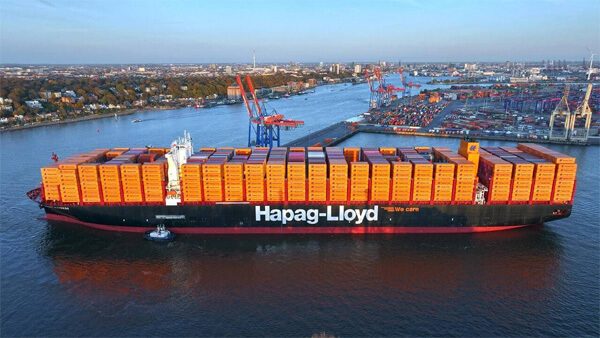
Hamburg Express introduced in 2024 is part of the company's new LNG fleet with a capacity of 23,660 TEU (Hapag-Lloyd)


Owner of Suspected Sabotage Ship Loses Bid to Get Anchor Back From Police

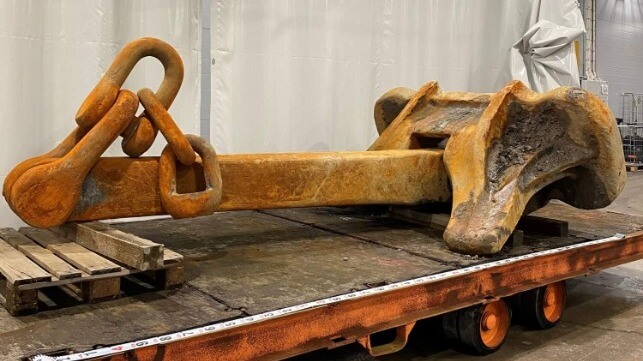
The owner of the Eagle S has lost a custody battle for the ship's anchor, which has been held as evidence (Finnish Border Guard)
The owner of the Eagle S has lost a custody battle over the ship's anchor, which has been held as evidence (Finnish Border Guard)

Published Jan 16, 2025 11:41 PM by The Maritime Executive


Earlier this month, the owner of the "shadow fleet" tanker Eagle S lost a court appeal to regain the freedom of their vessel, which has been held in Finland for an investigation into suspected cable sabotage. On Wednesday, the shipowner also lost a bid to take back the ship's anchor, which Finnish authorities found on the seabed near the cable breaks.

Finland's National Bureau of Investigation believes that it has evidence connecting Eagle S to the outage. On December 25, when  Fingrid's EstLink 2 power transmission cable and four subsea telecom cables suddenly shut down, government responders quickly linked the breaks to the position of Eagle S, an LR1 that had just departed the Russian port of Ust-Luga. The tanker was boarded, ordered to raise its anchor, diverted to Finnish waters and detained; Finnish President Alexander Stubb told reporters this week that the vessel would have caused more cable damage within 12 minutes if it had not been stopped. Possible additional targets could have included the Estlink 1 subsea cable and the Balticconnector gas pipeline, which was previously hit by an anchor-drag incident in 2023.

Eagle S was missing an anchor when detained, and attention immediately turned to whether it had cut cables by dragging anchor under power, as suspected in the previous Newnew Polar Bear and Yi Peng 3 incidents. A Finnish-Swedish team located the anchor on the bottom, near the end of a 50-nautical-mile drag track. Photos released to the public show that the anchor has a crack in its crown, and its flukes are much shorter than would be expected of a working vessel's anchor. Photos of the vessel from years past, when it operated under earlier ownership, show that it once carried normal Hall- or Speck-type anchors.

The anchor was recovered and brought ashore for forensic analysis. Shortly after, the vessel's attorney filed a court appeal to force the police to release it to the shipowner, UAE-based Caravella LLC FZ.   

Herman Ljungberg, counsel for Caravella, told YLE that Finnish police had no jurisdiction over the vessel or her anchor. Since both were in international waters at the time they were taken into custody, he asserted, Finland's law enforcement reach did not extend to either. 

The court disagreed with this interpretation and ruled in favor of the NBI, and the anchor will remain in custody. The bureau's attorneys argued successfully that Finnish law gives them jurisdiction when international acts target Finland - for example, when a ship cuts an international cable that connects to Finnish soil. 

Ljungberg said that he would appeal the matter to the Court of Appeal and attempt to regain full control of the ship and the lost anchor. If the legal process takes too long, Eagle S may get trapped in the Baltic Sea's ice season, and would be exposed to conditions for which the vessel was not designed; given that the ship costs about $15,000 per day in upkeep, he said, the anonymous single-ship holding company may simply abandon her and walk away. 

Even if the owner leaves the ship behind and stops paying for wages and operating expenses, the nine crewmembers who are suspected of involvement in the cable incident must remain. They are confined to the ship and are under a travel ban to prevent them from leaving the country while the inquiry continues. 


$5 million to improve testing, durability and noise levels of wave energy devices, offshore wind


The research could make offshore renewable energy more reliable and a better neighbor to marine life, also enabling laboratory testing of larger prototypes


University of Michigan


Image

Devices that create electricity from wave motion and offshore winds could become sturdier, quieter and easier to test at near-ocean-ready sizes, with four new grants to the University of Michigan. 

The new funding from the U.S. Department of Energy totals around $5 million, which will be used to develop:

  • Shock absorbers that allow mooring lines to last longer and power sensors that monitor the device

  • Curtains of balloons and arrays of metal poles in the seabed that mitigate wildlife-disturbing noise produced by offshore wind turbines

  • Combinations of hardware and software—called hardware-in-loop platforms—that will enable laboratory testing of ocean-scale wave energy devices by mimicking the power produced by ocean waves

  • Standardized testing and a publicly accessible database of the performance of power takeoffs, the components of wave energy devices that convert motion to power


Researchers at Pacific Northwest National Laboratory, the National Renewable Energy Laboratory, Sandia National Labs, the American Bureau of Shipping and Virginia Tech will also contribute to these projects.

Ocean waves and offshore winds could be a vast energy source. The total available power in ocean waves in the United States is equivalent to nearly 60% of the electricity currently produced in the country. Global offshore wind energy can be 18 times the world's electricity needs.

Despite its potential, marine energy is still not as widely deployed as solar panels and land turbines. One reason the technology lags behind other renewables is because they don't survive rough waters. Waves can be strong enough to break mooring lines and leave wave energy devices lost at sea. 

The shock absorbers designed in the first project could ensure that mooring lines don't break or weaken to the point that the attached devices can move in ways that prevent them from efficiently generating electricity. The motion of the shock absorbers will also be used to generate a small amount of electricity to power other electronics on the device, such as sensors that monitor the health of the device.

"It can cost around two million dollars to fix a mooring line that is only 30 to 80 meters deep," said Lei Zuo, the Herbet C. Sadler Collegiate Professor of Engineering and each project's principal investigator. "It's best to create as robust a system as possible."

Another limit to marine energy deployment are its environmental impacts. Some regulators and biologists fear that noisy offshore wind turbines could interfere with marine life by drowning out the sounds they use to communicate and navigate. These concerns will be addressed with the balloon curtains, which prevent sound waves produced by wind turbines from moving through the water column, and the metal poles, which stop them in the seabed.

The final two grants will enable easier and more rapid testing of prototype wave energy converters and their components. Today, engineers have to build smaller scale versions of their prototypes to test them in wave tanks, because testing at full-scales in real ocean environments can be expensive and risky—especially if a large wave breaks a mooring line. But the amount of power produced by wave energy converters scales exponentially with the device's size. As a result, components within the prototype device are exposed to uncharacteristically low amounts of power during smaller scale tests.

"Ideally, we would build and fully test a device that is half or one-third the size of an ocean-scale device before we'd deploy it in the ocean," said Zuo, who is also a professor of naval architecture and marine engineering and mechanical engineering. "For our tests in wave tanks, we are limited to prototypes that are 10 to 20 times smaller than ocean-scale devices, which reduces the power by a factor of 3,000 to 35,000."

That scaling problem can leave engineers less certain that their designs will function as expected and survive in expensive field trials. The hardware-in-loop platforms will enable engineers to comprehensively evaluate how well a variety of different power takeoff systems perform under more realistic levels of wave power before conducting any tests in the real ocean. The data that Zuo's team will create from their testing platforms will also be compiled into a standardized dataset for the research community to benchmark their prototypes against.

Other collaborators include Xiaofan Li, a former research scientist of naval architecture and marine engineering at U-M who is now at the University of Hong Kong, and David Dowling, the ABS Professor of Marine and Offshore Design Performance.

Evaluation of influence of offshore wind farm noise on fishes and dolphins


Offshore Wonders

A new generation of offshore wind service vessels is turin heads.


Eco Edison
Eco Edison (Edison Chouest)

Published Jan 16, 2025 11:54 PM by Sean Hogue


(Article originally published in Nov/Dec 2024 edition.)


What a year for boats!

As many Maritime Executive readers no doubt realize, I consider myself a boat nerd. Having run away to sea at 18, I discovered both a wide world and the best way to get around it.

I’ve sailed, shipped and even steamed on waters near and far, and despite many differences the one constant was a capable vessel under my feet.

Even after I “came ashore,” I’ve kept close to the water and have had the pleasure of surveying a huge variety of vessels. There are very few newbuild vessels in the U.S. Gulf of Mexico, for example, that I haven’t been on, and I write these words onboard a specialized heavy-lift cargo vessel in the Caribbean during a break in the project due to afternoon rains.

All that is to say I love boats, their design, capabilities and potential. The offshore renewables market is especially innovative, and it’s with great pleasure that I recap some of the noteworthy newbuilds and soon-to-launch vessels of the year.

ECO Edison

First up is the first Jones Act-compliant service operations vessel (SOV), ECO Edison.

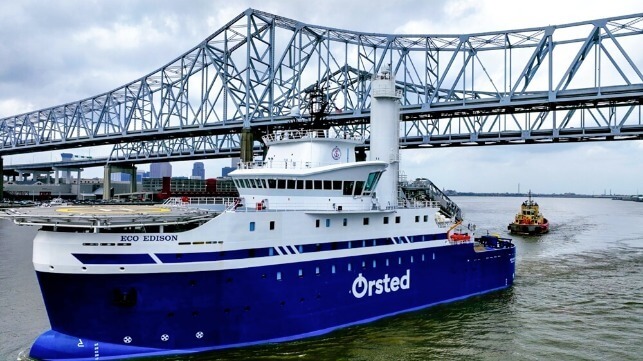
Built at Edison Chouest Offshore’s (ECO) in-house shipyards in Louisiana, Mississippi and Florida with components sourced from 34 states, the ECO Edison was constructed by more than 600 workers completing nearly one million working hours. The state-of-the-art, 262-foot-long vessel immediately went to work for Ørsted, serving as a floating, year-round home base for 60 of the first American offshore wind turbine technicians, who are servicing and maintaining the massive offshore turbines off the U.S. East Coast. 

It includes special features like an Ulmatec 47-inch-wide, walk-to-work, motion-compensated gangway, which includes an Alimak elevator with 4,400-pound lifting capacity that allows technicians to easily and safely cross up to 60 feet of water to access the wind turbines. A smaller daughter craft on board can be deployed to efficiently move crew within the field.

Providing power are four Caterpillar 3512E, 1,700kW generators that meet stringent EPA Tier IV emission standards. In a departure from the azimuth thrusters most often seen in the U.S. offshore, the ECO Edison instead uses twin Voith Schneider propellers. This cyclorotor design (think eggbeaters under the ship) can provide instantaneous thrust in any direction and is known for its extreme maneuverability.

Three Brunvoll tunnel thrusters at 1,250kW each complete the propulsion package forward.

“You can make the boat do whatever you want it to do,” Captain Taylor Apollonio says. “It takes the environmental conditions out of the equation because it has so much power.”

Purus Chinook

Across the ocean in Norway another groundbreaking vessel is nearing completion.

The Purus Chinook is a Vard-designed C/SOV (construction service operations vessel) that has already landed a multiyear contract with Vestas that will begin as soon as the vessel is launched early next year.

The cutting-edge design ensures it will meet the highest industry standards for offshore service, safety and hybrid battery technology to lower emissions and reduce engine hours. The Purus Chinook has the capacity to house up to 120 people at industry leading comfort-class and sea-keeping standards and also offers an all-electric gangway, 18-meter helideck, 5+ ton 3D motion-compensated crane and next-generation Chartwell 12 passenger daughter craft. 

And just this past month Purus began cutting steel on the Purus Coriolis, which will be the second C/SOV in the expanding fleet. This one is scheduled for delivery in 2026 and should boast a similar set of amenities to the Chinook.

Both vessels are optioned with dual-fuel, methanol-ready propulsion systems, targeted for potential implementation starting in 2027.

WindServe CTVs from Senesco Marine

Another type of boat of key importance to the offshore wind industry is the crew transfer vessel (CTV).

These are fast and sleek. Typically constructed from aluminum using a catamaran hull design, they require extensive investment in tooling and technology and specialized experience to build. In the U.S. market, Senesco Marine brings this experience to the forefront.

Operating from a World War II Naval Air Station, the New England-based shipyard features a 1,200'x 80' pier with a depth of 28', originally designed to berth aircraft carriers, plus the only two drydocks in Rhode Island.

The yard recently completed the last CTV of a six-vessel package for WindServe Marine, which will provide crew transfer support to East Coast wind projects.

The first four builds all measured in at 88.6' x 29.5' x 5.6' and can carry up to 24 offshore technicians. They’re fitted with Volvo Penta D13 main engines, each rated 690 hp at 2,300 rpm, and a Volvo Penta IPS 900 propulsion system. This allows for a service speed of 24 knots and a top speed of 27 knots.

The final two CTVs received an additional six feet to accommodate “hybrid-ready” battery capabilities.

Senesco President Ted Williams (recently interviewed in the May/June issue of The Maritime Executive) is committed to further investment in the yard’s technological capabilities, such as those recently made to support advanced aluminum fabrication techniques, which will further allow them to support “…more complex builds (including Department of Defense work) as well as future technologies such as composite materials and alternative energy propulsions systems.”

The yard also recently delivered the first-ever hybrid ferries in New England, further cementing its commitment to sustainable shipping and environmental stewardship.

“Senesco has become a national leader in green and blue energy builds as well as in developing a robust deck barge fleet in the near future,” says Williams. “We look forward to 2025 and beyond for the increased opportunities coming to the region.”

GLDD and the SRI Acadia

While SOVs and CTVs house and transport crew to the wind turbines, what goes on under the water is equally as important.

Scour protection is a vital part of offshore construction. It consists of strategic rock placement which protects against “scour” – water-powered erosion around the base of subsea structures such as offshore turbines. This stabilizes the seafloor and ensures the full service life of the asset.

Great Lakes Dredge & Dock (GLDD), the leading provider of dredging services in the U.S., is currently building the first U.S.-flagged, Jones Act-compliant, subsea rock installation vessel (SRI) at Philly Shipyards in Philadelphia.

The Ulstein-designed SRI Acadia will carry a SUSTAIN-2 ABS notation, which recognizes adherence to U.S. Sustainable Development goals related to vessel design, outfitting and layout. It will further be fitted with state-of-the-art technology including a Battery Energy Storage System to reduce emissions, biofuel ready engines and a shore power connection allowing the vessel to be plugged in while in port to achieve full zero emissions.

Other design features include Work-Class ROV capabilities, a loading capacity of 20,000mT (2 x 10,000mT bins), DP-2 control system, advanced multi-beam sonar and a heave-compensated fall pipe for rock placement operations.

The vessel represents part of a critical advance in building the future of U.S. offshore wind that includes establishing a U.S.-based rock supply network spanning eastern seaboard states with active offshore wind leases, which is expected to spur additional job growth and regional economic opportunities.

It should also be noted that GLDD recently received the prestigious 2024 Significant Boat of the Year Award at the International WorkBoat Show for its newly launched Multi Cat dredge support vessels, Cape Hatteras and Cape Canaveral. The award underscores the company’s commitment to safety, innovation and operational excellence in the dredging and maritime sectors as well as its commitment to building world-class vessels.

With the construction of the Acadia, GLDD is literally helping to build the foundation for U.S. offshore wind.

Damn Fine Boats

The offshore wind sector can only be as successful as the vessels and crews that build and service it.

The examples here showcase the innovation and aspirations of both new and established market entrants utilizing the latest technology to achieve operational success while aggressively d

GREEN SHIPPING

Battery-Powered Bulkers to Use Wind Rotors Optimized for Harsh Conditions

zero emission bulker with rotor sails
Rotor sails optimized for harsh weather conditions on the Norwegian coast will contribute to the zero-emission bulkers (Berge Rederi)

Published Jan 15, 2025 7:56 PM by The Maritime Executive


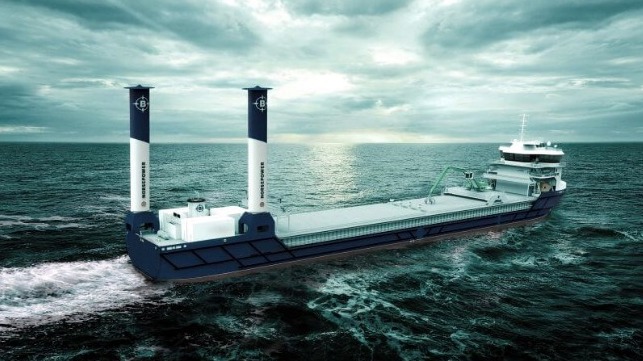
Berge Rederi will incorporate two specially designed wind rotor sails from Norsepower into its innovative zero-emission bulk carriers now building in Nanjing, China. The company reports the vessels expected to launch starting late this year will be the world’s largest battery-powered bulk carriers and far surpass the current longest voyages for battery-electric ferries.

The two cutting-edge general cargo ships are designed to operate entirely without emissions while transporting marble from Brønnøy and Visnes along the Norwegian Sea coast of Norway to the Omya Hustadmarmor production plant in Elnesvågen to be processed into calcium carbonate. Each of the vessels, which will be 13,250 dwt and 426 feet (129.9 meters) in length will sail a distance of approximately 230 nautical miles. According to Berge, this will set a record compared to the current longest battery-ferry route of just 15 nautical miles.

The vessel’s propulsion system is powered by a 23.5 MWh battery package which will be supplemented with shaft generators and two fixed 24 x 4 meter (79 x 13 foot) Norsepower Rotor Sails. Norsepower highlights the rotors are being specially optimized for the harsh conditions, including snow, ice, rain, and high winds, often encountered along the Norwegian Sea route.

“This project was designed for the extreme conditions of the Northen Sea, and we are proud that Berge Rederi chose Norsepower as their partner,” said Marcus Sannholm, Head of Sales at Norsepower. “Our product has been in use at tough sea conditions for more than a decade now, which enables us to create these kinds of partnerships with innovative, market-leading companies. By working with Berge Rederi and MDC from the design phase, we’ve ensured that these vessels will set a new benchmark for sustainability and efficiency in their class.”

Norsepower is collaborating with Berge Rederi and the Norwegian ship designer Marine Design and Consulting for the development of the systems. Through extensive hydrodynamic and structural studies, the teams optimized the vessels’ performance and ensured that the Norsepower Rotor Sails would deliver maximum savings and reliability. The latest high-tech materials will ensure reliable operation for the rotors in the rough sea conditions.

“We’re excited to partner with Norsepower and MDC on this transformative project,” said Magne Berge, owner of Berge Rederi. “The combination of hybrid propulsion and Norsepower Rotor Sails aligns perfectly with our mission to minimize our environmental footprint while maintaining the highest standards of operational efficiency.”

The vessels are being built by Jiangsu SOHO Marine Heavy Industry Co. with the first one scheduled to be delivered with the rotor sails installed by the end of 2025. Supporting the operation will be charging stations at the ports in Remman (Brønnøy) and Elnesvågen. Additionally, an electric excavator and shore power connections will be used at both ports to maintain fully emission-free cargo operations.

Berge reports that the rotor sails are expected to contribute to an average power savings of 339 kW per voyage. Each vessel is expected to annually cut CO2 emissions by around 9,000 tons and NOx emissions by 200 tons.

Based in Hitra, Norway, Berge Rederi operates a fleet of nine self-discharging bulk cargo vessels ranging from 2,700 to 13,000 dwt. 

The project has received backing from the Norwegian NOx Fund and Enova, and the development process has been guided by the GSP Service Centre for Green Fleet Renewal.


UK Launches Next Clean Maritime Competition with $37M in Funding

wind-assisted propulsion
AirWings which will be demonstrated this year are one of the technologies funding in the prior rounds (GT Wings)

Published Jan 16, 2025 7:37 PM by The Maritime Executive


The UK government has begun the sixth round of its Clean Maritime Demonstration Competition promising to provide a total of nearly $37 million to advance decarbonization in the industry. The program is designed to support clean maritime technologies including electric, hydrogen, ammonia, methanol, wind power, and more.

“CMDC round 6 is a great opportunity for UK innovators to take part in a world-renowned maritime transport R&D grant funding program,” said Mike Biddle, executive director of Net Zero at Innovate UK, a non-departmental agency that works as part of the UK Research & Innovation organization. “The competition focuses on the ever-more prevalent issue of decarbonization within the industry and we’re looking forward to seeing participation from across the maritime transport sector and beyond, focusing on physical, digital, system, and skills-based innovation.”

The program encourages innovators to form partnerships drawing from different sectors including the operating maritime companies to demonstrate unique new approaches and technologies. They promote the program as demonstrating the power of collaboration between leading British companies and it supports the efforts turning innovative ideas into real solutions. As part of the program, companies develop working demonstrations of their technologies.

With the sixth round of funding, the UK government highlights it has invested a total of £159 million ($195 million) to accelerate green maritime projects and support new jobs. The next round was announced today, January 16, and will officially open on January 24. Applications are due by April 16, 2025. Previous rounds have provided funding to over 300 organizations.

“I’m proud to see this funding boost growth and create jobs throughout the UK, as well as ushering in an era of zero-emission shipping,” said Maritime Minister Mike Kane.

Among the projects they are highlighting from prior rounds are the installation of Britain’s first electric chargepoint networks across the ports in the South West, the largest retrofit of a hydrogen research vessel in Wales, and the installation of a carbon capture system on a vessel.

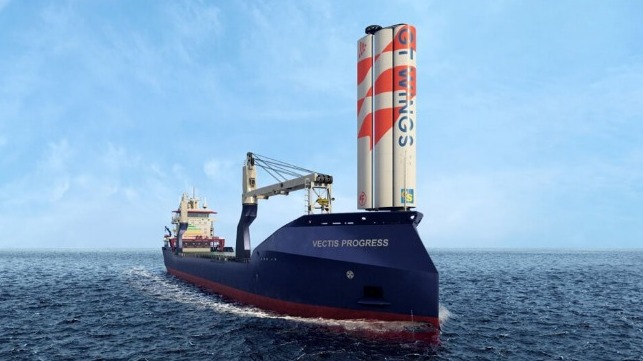
The Maritime Minister also visited Hull in England yesterday, January 15, to see the construction of the first AirWing from GT Wings which received a £225,000 (US$275,000) grant from the Department for Transport. In collaboration with the University of Bath and Carisbrooke Shipping, they are currently building the AirWing which will be demonstrated during the first quarter of 2025. The foil is made of composite materials and has a smaller footprint while expected to produce up to a 30 percent fuel savings without impacting cargo operations.

The first installation of the AirWing will take place on a Carisbrooke Shipping 407-foot (124-meter) general cargo vessel.


Germany’s First Fully Electric Seagoing Vessel Completes Trials

electric ferry
e_Kat will operate entirely on battery power becoming Germany's first electric seagoing vessel (Norden-Frisia)

Published Jan 16, 2025 8:28 PM by The Maritime Executive


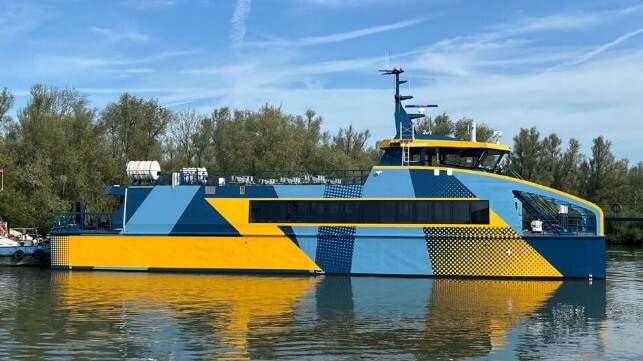
The first fully electric seagoing vessel in Germany, a catamaran ferry, has completed its acceptance trials and is preparing to be deployed. It joins a growing number of battery-powered ferries that are demonstrating the growing opportunities for electric power.

The vessel, E-Kat, designed and built by Damen Group was launched on June 29 in Gorinchem, Netherlands. It was expected to make its first test runs during the summer as outfitting was being completed. Slightly behind schedule, the owner of the vessel AG Reederei Norden-Frisa reports the acceptance trials were completed on January 15. They said that means the necessary permits, insurance, and official approvals have been completed ahead of the beginning of service.

The company also reports that the charging infrastructure of the battery power system with a maximum capacity of 1,800 kW has also been largely installed. They have also completed full power charging tests at the pier.

"All formalities have been completed," says Michael Garrelts, technical inspector at AG Reederei Norden-Frisia. "If the weather plays along, the E-Kat will arrive in Norddeich in January."

The ferry is built of aluminum with a length of approximately 106 feet (32.3 meters) and a capacity for up to 150 passengers. It has a payload of 11,250 kg.

The first-of-its-kind ferry for Germany will operate at speeds of 16 knots (19 maximum capability) between Norddeich in western Germany on the North Sea and the Norderney, one of the East Frisian Islands. That will make it possible to reduce the travel time by almost half to just 30 minutes. They expect to make up to eight trips a day.

Propulsion is two propellers driven by electric motors each with 600 kW and two 75 kW electric bow trusters. The battery and power system was developed by a Dutch company EST-Floattech which provided its Octopus High Energy battery system. 

Once docked in Norddeich, the E-Kat will be recharged using the shore power connections. A full charge will take approximately 28 minutes and will give the ferry power for the round trip. The distance between the port and the island is approximately 11 km (7 miles).

"Our long-term goal is to create a closed cycle of electricity production and electricity consumption," says shipping company board member Cal-Ulfert Stegmann. He notes that they have already installed photovoltaic systems at the company’s buildings in the port and on the island. It is also providing charging stations for electric vehicles.