It’s possible that I shall make an ass of myself. But in that case one can always get out of it with a little dialectic. I have, of course, so worded my proposition as to be right either way (K.Marx, Letter to F.Engels on the Indian Mutiny)
Friday, January 17, 2025
Private firefighters highlight wealth divide in ruined Los Angeles
Private firefighters stand watch at property opwned by billionaire developer Rick Caruso - Copyright AFP JUNG YEON-JE
Romain FONSEGRIVES
On one side of the street lie the ashes of ruined houses, lost to the huge blazes that defeated Los Angeles firefighters when hydrants ran dry.
On the other side, a small village of shops is still intact, watched over by tanker trucks and an army of private firemen.
More than a week after enormous blazes spread unchecked through swathes of America’s second largest metropolis, questions are being asked about how some of the city’s super-rich seem to have survived almost unscathed.
“All I can say is that we got hired and we have been ordered to stay here. I’m not allowed to tell you more than that.” a man in a yellow and green uniform told AFP in front of the commercial development.
The men, along with their pick-up trucks with Oregon license plates, were stationed at property owned by billionaire developer Rick Caruso.
Their presence — protecting stores hawking luxury brands like Yves Saint-Laurent, Isabel Marant and Erewhon — jars in a city where more than two dozen people have died and thousands of people have lost their homes.
“It sucks that there’s a lot of politics involved,” says another of the men. “We just want to do the job and help however we can.”
Caruso, who ran unsuccessfully for mayor of Los Angeles in 2022, did not respond to AFP requests for comment.
But in Pacific Palisades, a haunt of Hollywood celebrities and the ultra-rich, he is not the only one apparently using his wealth to protect his property.
Other private firefighters stand guard in front of some of the untouched princely villas that dot the hillsides. – ‘Will pay any amount’ –
The sector made headlines in 2018 when Kim Kardashian and her then-husband Kanye West hired private firefighters to protect their lavish pad in the affluent community of Hidden Hills, north of the city.
The profiles of the two distinct areas that were hit by last week’s blazes — wealthy Pacific Palisades and the more mixed Altadena — have already served to put a spotlight on economic divisions in the United States.
The disparity was further highlighted in the immediate aftermath of the fires when real estate developer Keith Wasserman attracted an avalanche of criticism after a social media post.
“Does anyone have access to private firefighters to protect our home?” he wrote in the now-deleted post.
“Need to act fast here. All neighbors houses burning. Will pay any amount.”
Such services can cost between $2,000 and $15,000 per day, US media has reported, citing local companies.
But even for those with the means, calling on private firefighters is not always simple — most firms are contracted by cities, government departments or insurance companies.
In California, a law passed in 2018 limits how they can operate.
They are not allowed to use flashing lights or badges similar to those of public firefighters, and are required to coordinate with them.
Since this legislation came into force some companies have refused to serve individuals.
– Whose water? –
Private or public, firefighters all have the same mission: “protecting our community,” said Jake Heflin, a firefighter from the publicly funded Long Beach Fire Department.
“If it’s done correctly and done in partnership and in concert together, it can be very effective,” Heflin said.
But it can also create problems.
Taxpayer-funded services should not have to focus “resources on taking care of them, because either they’re ill-equipped or ill-prepared and they’ve gotten themselves into a difficult situation,” he said.
Firefighters “want to have those conversations well ahead of the event.”
How much coordination there was before the catastrophe in Pacific Palisades, where hydrants ran dry and some houses were effectively left to burn, is unclear.
For Jeff Ridgway, a 67-year-old Pacific Palisades resident who resorted to scooping buckets out of a swimming pool when the mains supply petered out, that is a key question.
“It will be very interesting to know if they used these fire hydrants,” Ridgway told AFP.
“I really hope they brought their own water.”
Musk backing for European far right ‘endangers democracy’: Scholz
Musk's support for the far right across Europe 'is completely unacceptable' said Scholz - Copyright AFP Nicolas TUCAT
German Chancellor Olaf Scholz on Friday said US tech billionaire Elon Musk is threatening European democracy with his attacks on political leaders and support for the far right.
“He supports the far right across Europe — in the UK, Germany and many other countries. This is something that is completely unacceptable, that endangers the democratic development of Europe,” Scholz said.
Musk, the world’s richest man, has provoked fury across Europe with a string of attacks on the continent’s leaders, including Scholz and British Prime Minister Keir Starmer.
Musk, who used his influence and vast wealth to help propel Donald Trump to victory in the White House race, has also been vocal in his support for Germany’s far-right AfD before snap elections in Germany on February 23.
Musk earlier this month hosted Alice Weidel, the AfD’s candidate to be the German chancellor, for a wide-ranging livestream on his X social media platform.
He also boosted the livestream of an AfD congress by sharing it on his own X account, helping it gain a worldwide audience.
Dozens of EU lawmakers this week expressed “deep concern” over Musk’s interference in European politics in a letter to European Commission President Ursula von der Leyen.
Scholz on Friday said he was not criticising the fact that “a billionaire from another country is speaking his mind in a global world”.
But “his partisanship for the extreme right, whether out of business interests or for reasons that have something to do with his own political stance, that is unacceptable”, Scholz said.
Canada vows 'Trump tax' on US in response to tariffs: minister
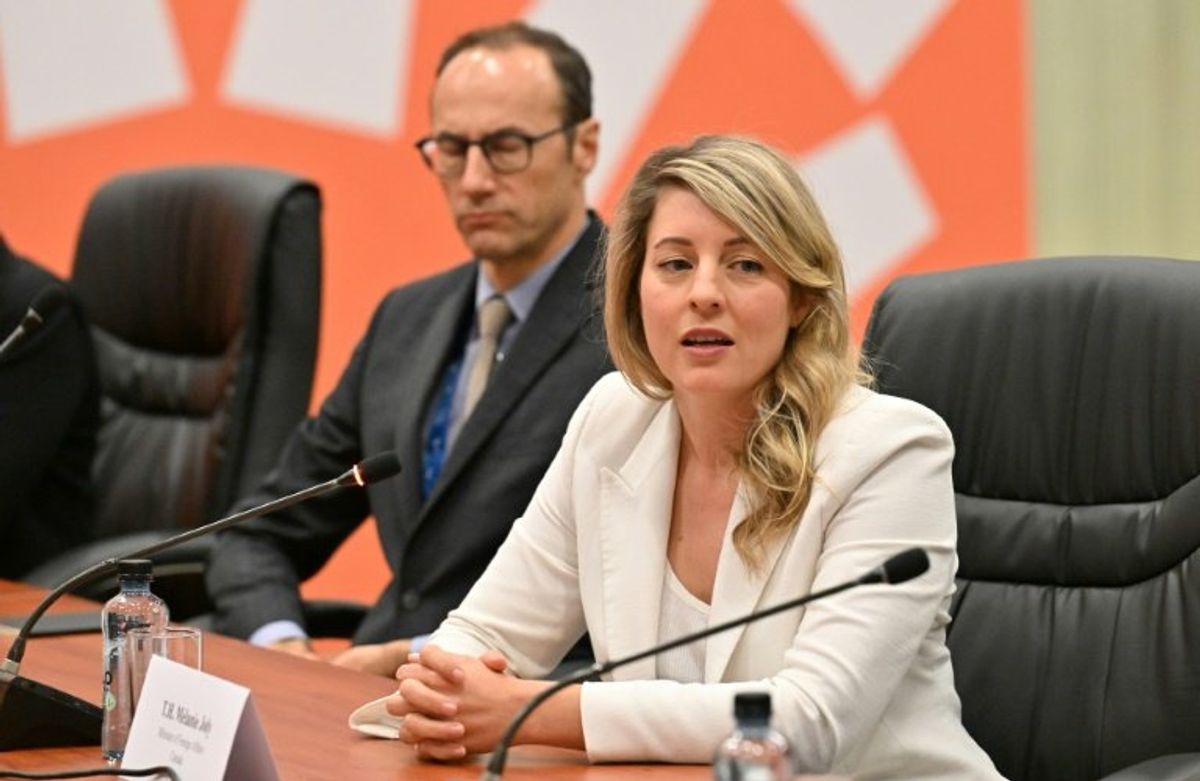
Americans will be hit by a "Trump tariffs tax" if the US president-elect increases customs duties on Canadian products, the Canadian foreign minister said Friday, pledging a hard-hitting response in any trade war.
Donald Trump, who returns to the White House next week, has said he plans to slap 25 percent tariffs on Canadian imports as part of his economic and foreign policy plans that also target Mexico, China and other trade partners.
"This would be the biggest trade war between Canada and the US in decades," Foreign Minister Melanie Joly said. "The Americans would be starting a trade war against us.
"We are ready to put maximum pressure," she said at a press conference in Washington, adding that Canada has a series of measures prepared if Trump carries out his threat, which would have a major impact on Canadian consumers and jobs.
A government source told AFP that Ottawa is considering higher duties on goods from the United States including steel products, ceramics like toilets and sinks, glassware and orange juice -- in a first phase of tariffs that could be extended.
"We will be strong and unequivocal in our defense of Canada and Canadians," said outgoing Prime Minister Justin Trudeau.
"The proposed tariffs would put American jobs at risk, raise prices for American consumers, put our collective security at risk and raise costs all across the continent."
One scenario from Scotiabank suggests that a trade war could cause Canadian GDP to fall by more than five percent, increase unemployment significantly and fuel inflation.
'Financial pain': Canadian official warns US gas prices will skyrocket under Trump tariffs
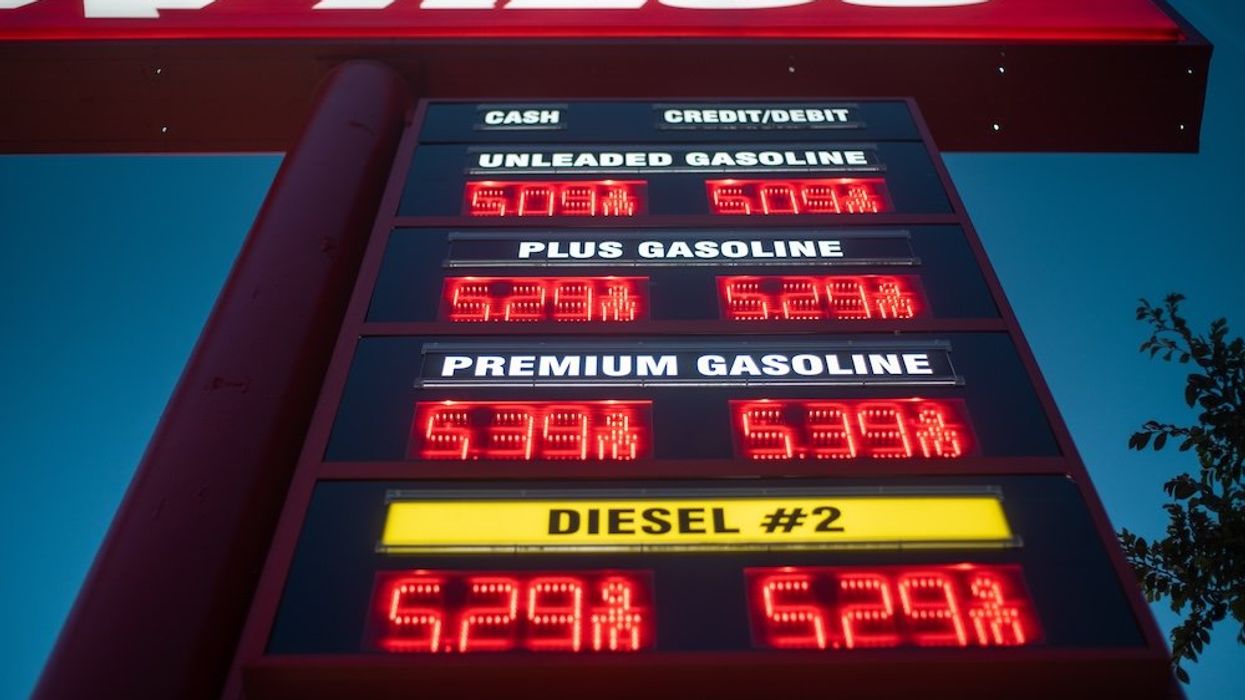
Prices at a gas station in Los Angeles, California on April 9, 2024 (Image: Shutterstock)
Americans may be in for a nasty surprise at the pump when filling up their cars, should President-elect Donald Trump follow through on a key campaign promise.
Trump has pledged to impose a 25% tariff on goods brought in from Canada, as well as 25% for Mexican goods and 10% for Chinese imports. But the Canadian tariff in particular could result in a big hit to Americans' wallets should Trump make good on his tariff threat, according to a recent report in the Canadian Globe and Mail.
“The imposition of tariffs against the U.S.’s closest friend and economic partner will cause financial pain for Canadian families, no doubt,” Canadian Natural Resources Minister Jonathan Wilkinson said during a panel discussion at the Woodrow Wilson International Center for Scholars. “But it will also increase prices of energy and food for American consumers.”
Data from Trading Economics shows that Canada exported more than $131 billion worth of "mineral fuels, oils and distillation products" in 2023 alone. Wilkinson said that a 25% import tax on Canadian oil could mean that gas prices for Midwestern customers could jump by as much as 75 cents per gallon.
"For Midwestern U.S. refineries there are no real economically viable alternatives," Wilkinson said, adding that the U.S. imports roughly four million barrels of Canadian oil each day. "And for U.S. Gulf refineries, the alternative is to purchase from Venezuela – hardly a friendly or stable partner."
Rather than tariffs that could lead to a costly trade war between the U.S. and its northern neighbor, Wilkinson is instead proposing a closer alliance between the United States and Canada particularly focused on petroleum products (including both crude oil and natural gas). He argued that this would help reduce reliance on countries like China and Russia, especially in regions of the U.S. where there are no resources to extract locally.
"Canadian gas supplies parts of the U.S. where local supply does not exist, such as in the Pacific Northwest and California," WIlkinson said during the panel discussion.
In addition to fossil fuels, Canada also supplies the U.S. with uranium exports, which are used for nuclear power plants. According to Wilkinson, this is all the more reason for an energy-specific trade agreement with the U.S. and Canada given that the only other parts of the world where uranium can be obtained have an adversarial relationship with the United States. He added that this arrangement could also be economically beneficial for the U.S. in the long term.
"The U.S. leverages the resource abundance that Canada possesses for energy and minerals that its economy requires," Wilkinson argued. "And it obtains low-cost energy and low-cost minerals, which allows the U.S. to access energy at a discount, then thousands of American workers refine or transform it, and sell it at a higher price to the rest of the world."
Click here to read the Globe and Mail's report in full (subscription required).
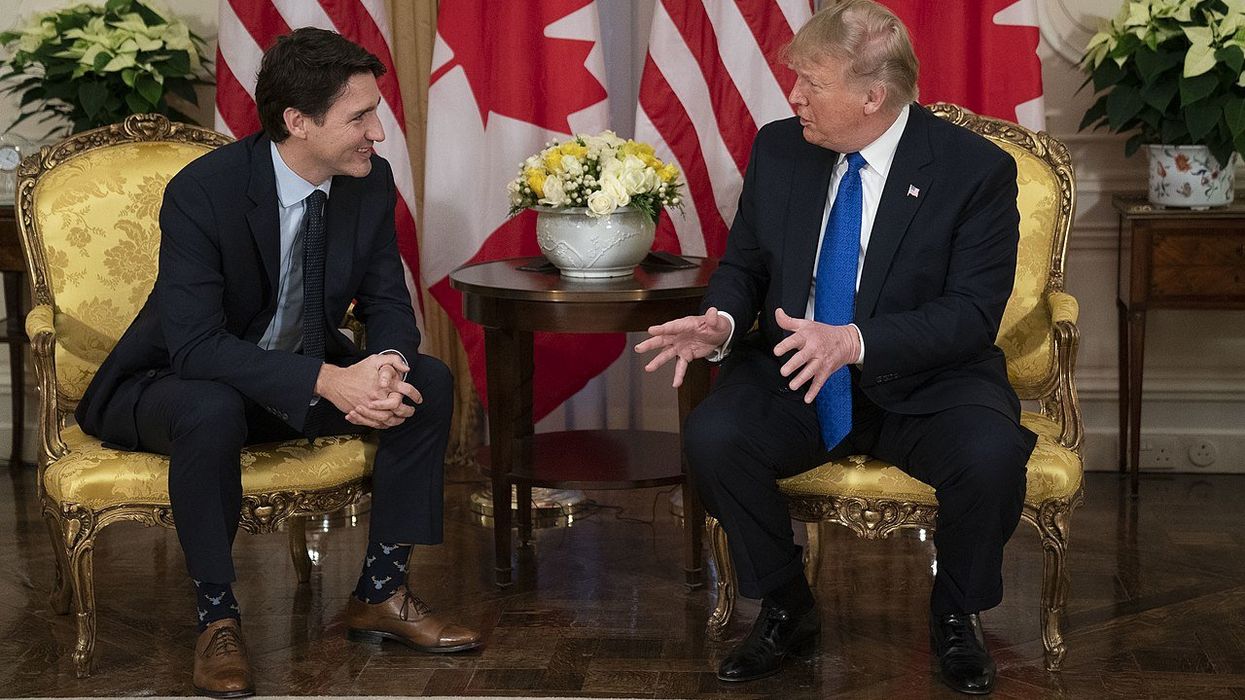
] Donald Trump with Canadian Prime Minister Justin Trudeau in London on December 3, 2019 (Wikimedia Commons)
Gitane is a thought leader in Digital Journal’s Insight Forum (become a member).
We are just days away from President-elect Trump’s second term in office. With the rhetoric ratcheting up by the day, it can be hard to separate fact from fiction or wishes from reality.
One thing is for sure: President-elect Trump will take office on January 20, 2025. Regardless of your views of him or his policies, the second Trump Administration is coming and it is best to be prepared.
Thinking you won’t be impacted is not an option. The magnitude of the Canada-U.S. relationship is such that even if you don’t do business with the U.S., you will still feel the effects of any trade wars or border closures.
The numbers on tariffs are sobering. Canada’s trade with the U.S. represents more than 75% of our exports, accounting for 20% of our GDP. A proposed 10% tariff on imports into the U.S., as analyzed by Scotiabank, could lead to a 3.6% decline in Canadian GDP.
So what can we do?
Be informed
Many people are saying that we survived the first Trump Administration and the second one “won’t be that bad.” Except that I expect this time to be completely different. Trump is prepared, he has a professional team around him and he is appointing people to key positions. He also controls the White House, Senate and House of Representatives, and inherits a conservative-dominated Supreme Court. Believe him when he says he plans to take action on day one, and don’t expect too many checks and balances on implementing his agenda. And also don’t assume that everything he is pushing for is wrong. Asking Canada to pull its own weight on defence and security matters is a reasonable request, even if the methods are unorthodox. Be pragmatic
One of my best friends is a psychologist who likes to remind me that in certain situations, you can be right or you can be happy. Sometimes, the person you are dealing with isn’t interested in the facts. You can spend your time arguing every point until you are blue in the face, or you can focus on the few things that really matter and get to yes on those. Canada and the U.S. are neighbours, for better or for worse. The fact that the relationship is asymmetrical doesn’t mean that Canada doesn’t have any levers. We will find a way to work together, not only because we matter deeply to each other, but because we have to. Be engaged
Like a garden, relationships need tending. It’s unfair to expect the federal government to “fix this.” Democracy is a sport that requires the active participation of its citizens. Engage with your elected officials, business associations, U.S. colleagues, and others in this sphere to advocate for Canada’s interests and support efforts to find solutions instead of simply criticizing from the sidelines.
The next few months are bound to be bumpy, but if we are smart and strategic, we will come out smarter, maybe a bit leaner, and definitely a lot stronger.
Written By Gitane De Silva Gitane is the Founder and Principal of the consulting firm, GDStrategic. She previously served as the CEO of the Canada Energy Regulator and as Alberta’s Deputy Minister for International and Intergovernmental Relations. Gitane is also a seasoned diplomat and a specialist in Canada-U.S. relations, having served as Alberta’s Senior Representative in Washington, DC, and Canada’s Consul General in Chicago, among other roles. A respected public policy leader, Gitane is a Special Advisor at Blue Rock Law, a Global Fellow with the Canada Institute at the Wilson Center in Washington, DC, and a Board Member with the Public Policy Forum. Gitane is a member of Digital Journal's Insight Forum
Residents of Canada, US border towns fear Trump creating divisions
A border post marks the boundary between Derby Line in the US state of Vermont and its twin town of Stanstead in the Canadian province of Quebec
- Copyright Parco Archeologico di Pompei press office/AFP Handout
Anne-Marie PROVOST
A shared library, sports fields and fire stations. The American border town of Derby Line and its Canadian twin Stanstead have been living in harmony for more than two centuries, but their bonds are being tested by US President-elect Donald Trump.
“There is uncertainty. Are we going to maintain our good relations?” says Jody Stone, the mayor of Stanstead, Quebec.
A black line that runs across the floor of the Haskell Library, which also serves as a concert hall, marks the US-Canada border.
The front door is on the American side, but Canadians don’t need to go through a customs checkpoint to gain access. Inside, Americans and Canadians regularly cross paths as they browse the library stacks.
“We have very, very strong ties,” says Sylvie Boudreau, president of the library’s board of trustees who lives in Stanstead, adding that Trump taking office on January 20 could bring uncertainty to the
Since they were founded in the late 18th century, the twin towns have relied on each other.
The Canadian town of 3,000 residents would get help from Derby Line’s fire department in emergencies, and similarly would offer help to its American neighbors when needed. They also share water and sewage, an ice rink and basketball courts, and American educators teach Canadian schoolchildren.
But everyone has been on edge since Trump’s election win in November, and even more so after his comments about tightening security at the border to stop illicit drugs and migrants from crossing into the United States, and slapping punishing tariffs on Canadian imports.
– ‘I like Canada’ –
The latter is a real concern for businesses in the region, particularly quarries and companies that sell granite, as well as finished countertops and tombstones to the United States.
Mayor Stone, who owns a distribution company, is preparing for the possibility of Canadian retaliatory duties on American imports.
“I’m preparing myself, I’m making sure to buy as much as possible in Canada because if there’s ever a problem with the Americans, I have to be able to supply my customers in Quebec,” he explains.
On the US side of the border, Trump’s remarks are also disconcerting to Americans, who consider the ties forged since the two towns’ founding to be more important than politics.
Trump’s trolling of Canada, including calling it America’s 51st state, does not make the United States a good neighbor, says Derby Line resident Rachel McDowell.
“I like Canada. I like going there. I don’t have any problems with Canada,” says McDowell, 27, adding that she fears Trump’s polarizing rhetoric will only create divisions.
Canadian Guy Lemay, a 71-year-old retired police officer, is in favor of strengthening the border as requested by the American president-elect. Ottawa has announced a Can$1.3 billion (US$900 million) plan to beef up patrols with helicopters and drones, and deploy more border agents.
But Lemay, who frequently goes to the United States to fill up with gasoline since it is cheaper there, says he is against imposing tariffs.
“It’s going to be rough,” he says. “And it’s the citizens who are going to pay, on both sides.”
'Puzzled' Panamanian officials scramble to make sense of Trump’s canal 'fixation'
Panamanian President José Raúl Mulino in July 2024 (Wikimedia Commons)
After President Jimmy Carter's death at the age of 100 on December 29, 2024, President-elect Donald Trump argued that one of Carter's biggest mistakes was giving the Panama Canal to Panama back in 1977.
The Panama Canal, opened in 1914, is an artificially created waterway linking the Caribbean Sea with the Pacific Ocean. And it is now managed by the Panama Canal Authority, which is owned by the Panamanian government.
But Trump believes the Panama Canal should revert to full U.S. control.
CNN journalists Phil Mattingly and Andrew Seger, in an article published on January 17, stress that some Panamanian officials are puzzled by Trump's desire to retake the Panama Canal — as they thought the matter was settled long ago. And they are struggling to understand Trump's motivations.
Jorge Eduardo Ritter, Panama's former minister of foreign affairs, told CNN, "I don't like to disregard what President Trump says, because when he says something, he might not mean exactly what he is saying, but he is looking for something…. This fixation with Panama — I sense that something is going to happen. I don't think it's going to be a military invasion or he will take over the Canal, but something is going to happen."
According to Mattingly and Seger, one of the things current and past Panamanian officials find puzzling about Trump's interest in Panama is that he "paid little attention to the country in his first term."
Trump, they note, never nominated a U.S. ambassador to Panama during his first administration and instead, relied on a "holdover" from the Barack Obama years.
Ilya Espinosa de Marotta, the Panama Canal Authority's deputy administrator, told CNN, "Why now? Hong Kong has been here since '97. We’ve been running the canal for 25 years. We've been very transparent — you can know this is run 100 percent by Panamanians, so why now? It puzzles me." Read the full CNN article at this link.
‘Homeless people given free lunch’ to attend Trump Jr event in Greenland
People in Maga hats at meal last week did not know Donald Trump’s son and were invited off the street, hotel boss says
A group of Greenlanders who attended a lunch hosted by Donald Trump Jr wearing Make America Great Again caps were not dedicated supporters of the US president-elect but homeless people enticed by the prospect of free food, it has been claimed.
Trump Jr visited the Greenlandic capital, Nuuk, last week, shortly after his father declared it was an “absolute necessity” for the US to take control of the semi-autonomous Danish territory.
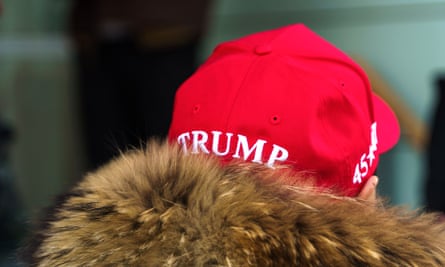
During his visit, Trump Jr went to the Hotel Hans Egede for lunch with a group of people wearing Maga hats and put his father on speakerphone. The president-elect told them: “We’re going to treat you well.”
But Jørgen Bay-Kastrup, the hotel’s chief executive, said many of his guests were not Trump supporters but people his team had met on the street who found out only later who Trump Jr was.
Describing many of the group as homeless people, he said Trump Jr “had just met them in the street and invited them for lunch, or his staff did. But I don’t think they knew who they were inviting”.
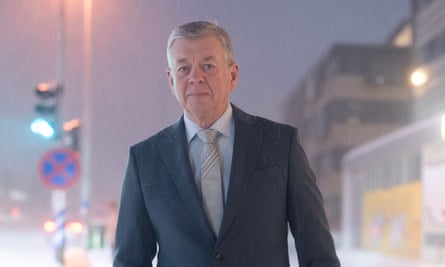
View image in fullscreenJørgen Bay-Kastrup, the chief executive of the Hotel Hans Egede. Photograph: Juliette Pavy/The Guardian
“That of course was a little bit strange to us because we saw guests that we have never seen in our hotel before – and will probably never see again because it’s out of their economical means.”
The group of about 15 people ate a traditional Greenlandic lunch including fish and caribou. They were not, Bay-Kastrup added, Trump supporters. “They were just, ‘hey, somebody invited us for lunch, let’s go and join him’. I think they found out later who it was.”
A spokesperson for Trump Jr denied the claims, describing them as “beyond the pale ridiculous”.
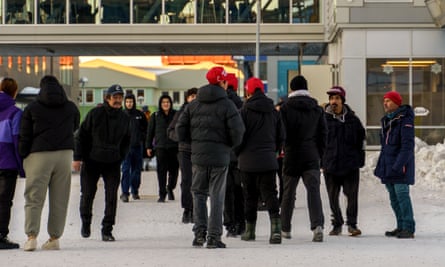
People outside the Hotel Hans Egede last week when Trump Jr visited Nuuk.
A person wearing a Maga hat during Trump Jr’s visit last week. Photograph: Daniel L Johnsen/EPAPhotograph: Daniel L Johnsen/EPA
Republicans in the House of Representatives have published a draft bill called the Make Greenland Great Again Act, which would allow the Trump administration, which takes office on Monday, to hold talks to attempt to purchase the territory.
Asked about Trump’s interest in Greenland, Bay-Kastrup, who is Danish, said: “We are not a trade, we are not something for sale. We would like to cooperate, but we are not for sale.”
Since Trump Jr’s visit, people dressed in Maga caps and American flags have reportedly been distributing $100 bills and filming it outside the supermarket opposite.
One man, Jacob Nordstrøm, was quoted in the Greenlandic newspaper Sermitsiaq as saying his son, 11, had come home with a $100 bill. He told the paper, which described those handing out the money as Canadian-American influencers: “It’s really borderline shocking to find out that my 11-year-old son has received money from an adult he doesn’t know.”
Bay-Kastrup, who has witnessed the scenes from his office, said he thought most people probably found the stunt amusing, but that he had seen one person take a Maga cap and stamp on it.
In response to the Guardian’s request for comment about Trump Jr’s lunch guests, Arthur Schwartz, a political operative and friend of the president-elect’s son, said: “Do you think Donald Trump Jr was wandering around Greenland inviting homeless people … to lunch, or do you realise that the suggestion sounds so beyond the pale ridiculous that you should feel stupid even asking the question?
“There were cameras following him around from the second he got there to the second he left. Did they miss him recruiting homeless people … to his homeless person … lunch?”
Will Indonesia shut the nickel spigot to spur prices?
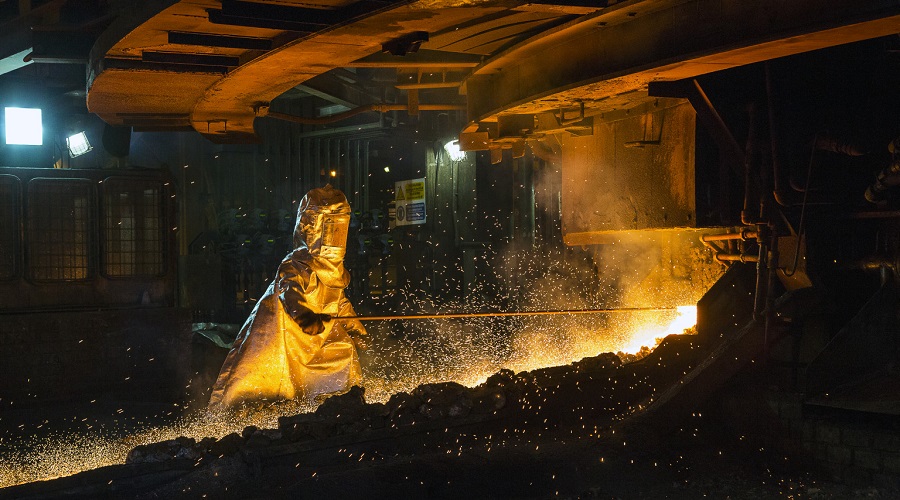
Nickel smelter in Sorowako, Indonesia. Credit: Marcelo Coelho, courtesy of Vale
Indonesia’s clout in the global nickel market rivals OPEC’s in oil.
The Southeast Asian nation — an archipelago of more than 17,000 islands straddling the Indian and Pacific oceans — holds the largest nickel reserves on the planet. It’s the world’s largest nickel producer and second-largest stainless-steel producer.
Last year the country produced 63% of the world’s nickel, up from 28% in 2020, and that share could easily rise to 75% within the next three to five years, according to Jim Lennon, a London-based managing director of commodities at Australia’s Macquarie Group.
“It’s the only place with the huge reserve base, the only place with available capital deployed by Chinese banks to finance projects,” Lennon said by videophone. “In the rest of the world, producers are struggling to get off the ground.”
Between 2020 and 2024, Indonesia added 1.5 million tonnes of new supply to the market. Last year it churned out 2.25 million tonnes of nickel (finished and intermediates), a 16% year-on-year increase, weakening prices and triggering mine closures in other countries.
“The nickel market has been in large oversupply for the last three years,” Lennon said. “Enormous growth in Indonesia has killed the nickel price.”
Last year the annual average LME price for the silvery-white metal plunged 22% year-on-year from $21,492 per tonne to $16,812 per tonne. In early January, the price was down to $15,482 per tonne.
The only other base metal that fell last year was lead, and by comparison, the lead price dropped by just 3%.
Operations suspended
Lower metal prices, combined with significant cost inflation across the mining sector, have forced many producers outside Indonesia to suspend operations. Macquarie estimates that over the last four years miners removed 500,000 tonnes of non-Indonesian supply from the market.
BHP (LSE: BHP; NYSE: BHP; ASX: BHP) put its Australian nickel operations on care and maintenance in October. The move, which may last until February 2027, nixes 90,000 tonnes of capacity a year from the market.
Recently France’s Eramet (ERA: EPA) and German chemical producer BASF (LSE: BASF) cancelled plans to develop a $2.6 billion nickel-cobalt refinery in Indonesia, claiming there was already an adequate supply of battery grade nickel. Western refiners also must compete with cheaper Chinese refiners that dominate nickel processing in Southeast Asia’s largest economy.
“You’ve seen the closure of the bulk of Australian nickel capacity, and all the guys who had plans to expand production have been driven out of the market,” Lennon said. “Even the big guys like BHP, Glencore (LSE: GLEN) and Vale (NYSE: VALE) have been struggling to break even in this environment.”
Half of the industry is cash flow negative, while Canadian projects and juniors are having trouble raising money and even considering to start production, he said. Government policy
For its part, Indonesia recognizes it needs higher prices in the $16,000 to $18,000 per tonne range to sustain its revenue base. The main lever it has is to restrict its three-year permits, also known as RKABs, an Indonesian acronym that in English means work plan and budget. They were introduced in 2023 to crack down on illegal mining and improve the industry’s ESG standards. Among the new requirements is an environmental audit.
There have been press reports citing a government minister that the country could limit RKABs to as low as 150 million tonnes this year.
Removing 100 million tonnes of ore out of Macquarie’s base case ore production of 250 million tonnes would reduce Indonesian finished nickel production by around 900,000 tonnes, taking 35% off global 2025 supply, according to Lennon.
“But my feeling is they won’t do that, and the market doesn’t believe they’re going to do it because the price of nickel is near a 12-month low so it’s not responding.”
Government delays issuing RKABs last year meant that actual 2024 production of around 200 million to 210 million tonnes was below consumption of 235 million tonnes. The shortfall was met by destocking and by importing about 10 million tonnes of ore from the Philippines.
“It was a small amount, but it was a turning point in the dynamics of the ore market,” Lennon said.
For this year, Macquarie projects a 60,000-tonne nickel surplus, down from a surplus of 195,000 tonnes in 2024.
Price forecasts
Macquarie forecasts LME cash prices will average $16,500 per tonne this year, rising to $18,000 next year, $19,000 in 2027 and to $20,000 in 2028.
Others are slightly more optimistic.
Mark Selby, CEO of junior developer Canada Nickel (TSXV: CNC; US-OTC: CNIKF), predicts the metal will reach $20,000 per tonne by year-end, but that higher cost producers won’t rejoin the market until prices are even higher.
“Most of that stuff is not coming back until we see prices higher than $22,000,” he said during a recent presentation at the Mining Research Analyst Group’s annual forecast luncheon in Toronto. “That gives Indonesia a lot more room to basically push prices up without seeing a lot of that supply come back into the market.”
He forecasts a $20,000 to $22,000 range over the next few years.
Selby, who prior to Canada Nickel raised $100 million to advance RNC Minerals’ Dumont nickel-cobalt project in Quebec from initial resource to a fully permitted construction-ready project, predicts that 2025 “is really going to be a pivotal year because this is where Indonesia really flexes its muscles.”
The country has gone from trade and current account deficits to surpluses because of its leading exports, nickel and stainless steel, he said.
“Those numbers look way better at $20,000 a tonne nickel than they do at $15,000 a tonne. So, you’re going to see a lot of flex this year in terms of what’s going to happen with mine supply growth,” he said.” Indonesians will want to see a market deficit to see prices go higher.”
Wherefore demand
In terms of demand growth, nickel isn’t faring too badly. Total nickel demand continues to grow at around 5-7% a year, Lennon noted, adding that “copper would die for that kind of growth rate.”
Even with the slowdown last year, nickel demand has grown at nearly 9% a year since 2020, Selby said. Annual battery plant demand in North America alone will reach as much as 300,000 tonnes of nickel in the 2030s, he said.
“As the EV market shifts more to the US and Europe and away from China, most of the battery plants, all but one, being built in North America, are making high-nickel batteries,” he said. “They don’t want to depend on China or Indonesia for all that nickel.”
Stainless steel — the mainstay of the nickel market—dominated growth in nickel use last year, rising 4.8% year-on-year.
Nickel use in batteries hardly grew last year despite 25.4% growth in global EV sales. That’s largely because about 80% of Chinese EV batteries now contain no nickel, Lennon said.
But most analysts anticipate battery demand growth to return this year. Stricter carbon dioxide standards in the European Union and Britain, and the region’s absolute ban on all new internal combustion engine vehicles by 2035 should build momentum for EV adoption.
For the 2023-2030 period, Macquarie estimates a trend growth of 5% for nickel in stainless-steel production, 13% a year for batteries and 6.6% a year overall. Grades risk
While Indonesia has a stranglehold on supply, Selby warns there are geological limits to the country’s reserves.
“These laterite deposits are basically big piles of soggy dirt five- to 50-metres thick and extend over a huge area,” he said. “You can go and pull the hills down, or valleys and certain ridges, for the highest-grade material. They’ve been doing that for 15 years now and they’re hitting the wall on multiple dimensions, which is really having an impact on grade.”
Macquarie estimates that average Indonesian grades have declined to about 1.6% nickel from a range of 1.8% to 1.9% previously and contain a lot more impurities. By contrast, Philippine ore is low in silica and magnesia.
“If you blend that with some of the ore in Indonesia you get productivity in the furnace,” Lennon said.
At the same time as grades are falling, there have been very few discoveries to rival the last million-tonne high-grade discovery in 1992 at Voisey’s Bay, NL.
“There’s almost no Western supply in the pipeline,” says Selby, whose Canada Nickel is advancing the Crawford nickel project in Ontario towards likely permits this year.
“I’ve been going at this now in Canada for six years and worrying about someone drilling a Voisey’s Bay — not happened,” and the amount of nickel exploration has fallen, he said. “Nickel is a 3.4-million-tonne market and it’s going to be over a 5-million-tonne market by 2030.”
South Africa mine rescue ends, anger rises over 78 deaths in police siege
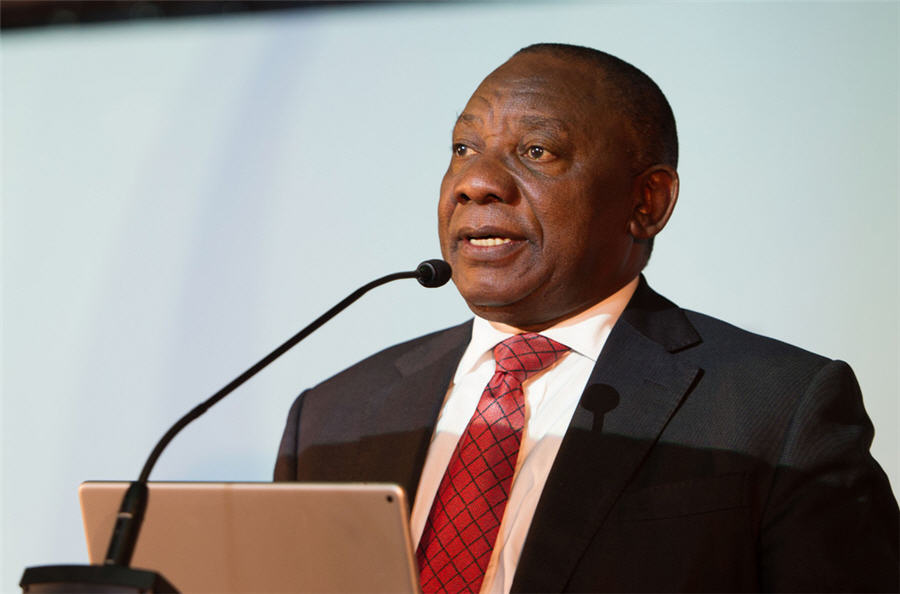
Reuters | January 16, 2025 | South African President Cyril Ramaphosa (Image: GCIS)
South African rescuers ended their attempts on Thursday to find anyone left in an illegal gold mine where at least 78 people died during a police siege, as a local volunteer described the horror of extracting their bodies from deep underground.
Police had encircled the mine since August and cut off food and water supplies to try to force the miners out so they could be arrested, resulting in what the GIWASU labour union called the worst state-sponsored massacre since the end of apartheid.
Since Monday, rescuers have used a cylindrical metal cage to pull up 78 bodies and 246 survivors, some of them emaciated and disorientated, in a court-ordered operation at the mine near the town of Stilfontein, southwest of Johannesburg.
The survivors, who are mostly from Mozambique, Zimbabwe and Lesotho, have been arrested and charged with illegal immigration, trespass, illegal mining and other offences.
The police have said they were enforcing a government crackdown on illegal mining and that to have allowed food and water down during the siege would have meant “allowing criminality to thrive”.
Mzwandile Mkwayi, 36, was one of two volunteers from the local township of Khuma, where most of the miners lived, who spent three days going up and down in the cage to bring out the corpses and survivors.
“I was scared. Those people were happy to see us, they were very happy. We told them ‘we are here to help you, please don’t die’,” he told Reuters on Thursday near the opening of the mine shaft.
“I put the bodies in the bags with my own hands. It was my first time to see a pile of dead. It will traumatize me for the rest of my life.”
Asked why he had volunteered, Mkwayi said: “Those people are our brothers. We’re living with them.”
On Thursday morning, the cage was sent down one last time, with a camera inside, which police described as a way of verifying information from volunteers who went down on Wednesday evening and said they could see no one left in the mine.
Reuters reporters at the scene saw the cage being lifted out empty and being driven away in a truck.
Mannas Fourie, the CEO of a rescue company involved in the operation, said it was possible some of the dead had been left in the vast network of deep tunnels and would never be found.
“If somebody got lost, you will never know whether somebody got left behind,” he told Reuters.
Abandoned mines
Illegal mining cost South Africa over $3 billion last year, according to the mining minister. Typically, undocumented miners move into mines abandoned by commercial miners and seek to extract whatever is left. Some are under the control of violent criminal gangs.
Ministers have consistently described the Stilfontein miners as criminals and one spoke of the need to “smoke them out”.
But local community members, civil society groups and labour unions have denounced the Stilfontein crackdown, with GIWASU condemning what it called “the dehumanization and criminalization of these poor, desperate miners”.
Thembile Botman, a community leader in Khuma, said local residents had been saying for months that people would die, and the deaths could have been averted had the rescue operation taken place sooner.
“The minister said they were going to smoke them out and they did. Congratulations,” he said, speaking with bitter anger.
Throughout the rescue operation, police and contractors operating the cage have not been going down themselves but rather have relied on local volunteers.
Police have not explained why they were not going down themselves but Fourie said it was better for the volunteers to go because they knew the miners and could gain their trust.
During the siege, police removed a pulley system the miners had previously been using to get in and out and waited outside the opening for them to come out, but community leaders and lawyers have alleged there was no way for them to climb out.
The pulley was later restored and removed several times during months of negotiations and legal action, according to civil society advocates and community members involved in supporting the miners.
The police have denied blocking the miners’ exit and said more than 1,500 miners did get out by their own means between the start of the siege in August and the rescue operation, which began on Monday.
(By Nellie Peyton, Xolani Nhlapo, Tim Cocks, Siyabonga Sighi, Tannur Anders, Bhargav Acharya, Sfundo Parakozov, Estelle Shirbon and Alexander Winning, Editing by Angus MacSwan and Alison Williams)
China Begins Patrolling Boundary of its "Nine-Dash Line" Claim
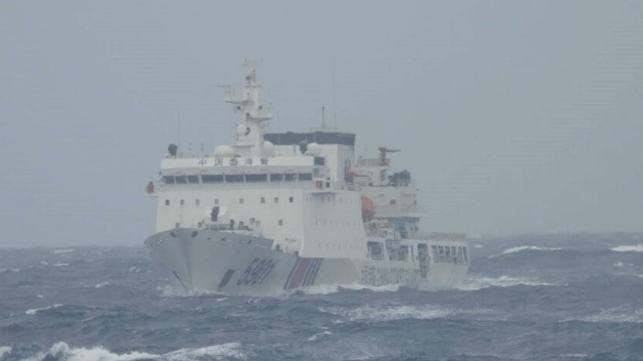
CCG 5901, the world's largest cutter, under way off Luzon on Jan. 12 (PCG)
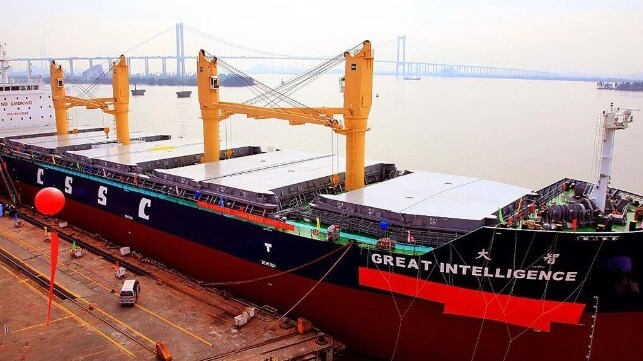
For the first time, China's coast guard has begun patrolling a section of the country's "nine-dash line" - the loosely-defined boundary of Beijing's unilateral claim to the South China Sea, including international waters and other states' exclusive economic zones.
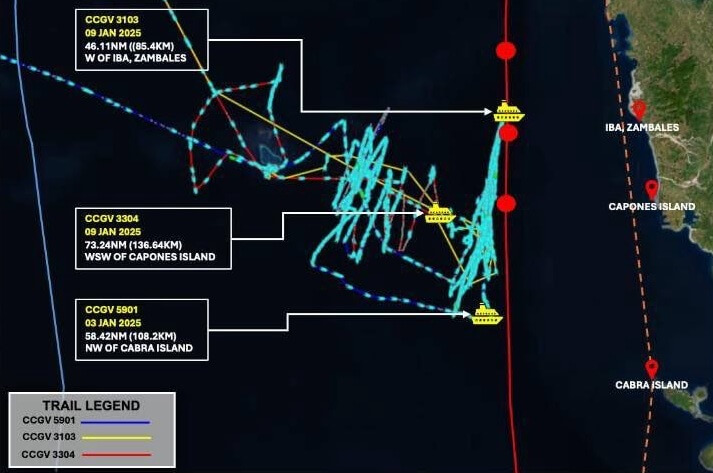
Since the beginning of the new year, a group of large China Coast Guard cutters have been rotating through patrol duty in an area just off Zambales, Luzon. At closest approach, the patrols have come within about 55 nautical miles of Philippine shores.
One of the deployed vessels is CCG 5901, the largest armed law enforcement vessel in the world at 12,000 tonnes displacement. Over VHF, its crew has informed the Philippine Coast Guard that the CCG is enforcing Chinese law in Chinese waters, even when 100 nautical miles inside the Philippine exclusive economic zone.
The Philippine Coast Guard has dispatched the offshore patrol vessel BRP Teresa Magbanua to monitor the Chinese presence and push back on these sovereignty claims. Despite rough weather conditions, the crew of the Magbanua have kept watch and demonstrated continued Philippine presence.
While monitoring the Chinese flotilla, the Philippine Coast Guard noticed a pattern that may explain the China Coast Guard's new behavior. The CCG cutters have been patrolling a north-south racetrack off Luzon's coast, and the tracklines align well with a segment of the "nine-dash line," which was invalidated by the Permanent Court of Arbitration in the Hague in 2016.
Courtesy PCG
"Their goal is to normalize such deployments, and if these actions go unnoticed and unchallenged, it will enable them to alter the existing status quo. This strategy of normalization, followed by altering the status quo and ultimately operationalizing their illegal narrative, has consistently been part of the Chinese playbook," said PCG spokesman Jay Tarriela. "This is why it is important for the Philippine Coast Guard to actively expose these unlawful deployments of Chinese vessels to the global community, ensuring that such actions are not normalized and that this bullying behavior does not succeed."
Tarriela warned that if China does not get pushed back, it could begin conducting the same patrols in other nations' exclusive economic zones, since the "nine-dash line" affects all of the coastal states of the South China Sea. This includes waters administered by Vietnam, Brunei, Malaysia and Indonesia.
To the north, South Korea's government is eyeing new Chinese activity in a contested part of the Yellow Sea. The so-called Provisional Measures Zone is claimed by both sides, and all activities within it are banned except for navigating and fishing. Construction is specifically disallowed - but China has been installing large metal structures in the zone, which it describes as "fishing support facilities." Another structure recently went in the water, South Korean officials reported January 9.
East Asian defense analysts have noted that China pursued a similar incremental strategy with its island-building campaign in the South China Sea - creating nominally civilian structures, militarizing them over time, and then using them to support political claims of sovereignty.
“China is not only installing structures but also conducting military exercises in the region, signaling its ambitions to establish effective control over the West Sea,” Lee Dong-gyu, a research fellow at the Asan Institute for Policy Studies, told Chosun Daily. “These actions aim to gain leverage in future negotiations with South Korea.”
White House Formally Blames China for "Unreasonable" Maritime Subsidies
State-owned, state-built, state-subsidized: CSSC is the world's largest shipbuilder (CSSC file image)
China is by far the world's dominant shipbuilding nation, and the latest numbers from its industry ministry show that the lead has only widened. About 56 percent of all tonnage delivered worldwide came from China last year. Amidst a global boom, China now holds about 63 percent of the world orderbook, and its yards raked in an astonishing 74 percent of new orders over the course of the year. By certain measures, China also leads in ownership: about 19 percent of the global fleet is now Chinese-owned (and growing).
This has not gone unnoticed in Washington, and awareness of the strategic risk of a Chinese-controlled maritime transportation system has risen in Congress and in the White House. On Thursday, four days before President-elect Donald Trump's inauguration, the Biden administration formally announced that Chinese dominance in the maritime industry "is unreasonable and burdens or restricts U.S. commerce," leaving it subject to action under Section 301 of the Trade Act. The announcement was widely expected and provides leverage for Trump to negotiate with Beijing as soon as he enters the White House.
"Today, the U.S. ranks 19th in the world in commercial shipbuilding, and we build less than five ships each year, while the PRC is building more than 1,700 ships," said U.S. Trade Representative Ambassador Katherine Tai in a statement. "Beijing’s targeted dominance of these sectors undermines fair, market-oriented competition, increases economic security risks, and is the greatest barrier to revitalization of U.S. industries."
In a comprehensive report, the office of the USTR laid out how Beijing's intention to create a dominant maritime sector is "unreasonable." The office argues that the Chinese government has extraordinary control over investment decisions with Chinese bankers and lead players in Chinese shipping, like state-owned COSCO and CSSC, the world's largest shipowner and largest shipbuilder (respectively). USTR argues that this control is used to subsidize state shipping enterprises, estimated by independent studies as somewhere in the range of $11-16 billion per year in 2006-18.
The exact scale of China's government subsidies are hard to determine, USTR found, because of opaque relationships between firms in the Chinese state's giant business portfolio. "This opaqueness allows for China to hide the true extent of government support to the maritime, logistics, and shipbuilding sectors," USTR concluded.
According to USTR, China's subsidies are intended to create global market dominance in shipping, shipbuilding and logistics. As a result, U.S. trade is "carried out on vessels made in China, financed by state-owned Chinese institutions, owned by Chinese shipping companies, and reliant on a global maritime and logistics infrastructure increasingly dominated by China."
In addition to the Chinese maritime enterprises who are direct recipients of aid, the ultimate beneficiaries include Chinese manufacturers and exporters, who have enjoyed subsidized freight rates that give them an extra competitive edge. The Chinese government's runaway success in this endeavor "deprives market-oriented businesses and their workers of commercial opportunities, and lessens competition and creates dependencies on the PRC, increasing risk and reducing supply chain resilience," USTR concluded.
America's allies have also felt the impact. One study examined by USTR concluded that shipbuilding subsidies enacted in 2006 accounted for the entire price advantage that Chinese shipyards held over Japanese and South Korean yards in the years thereafter.
Five American unions had petitioned USTR to take action, and in a statement they issued their thanks.
"By targeting global maritime, shipbuilding and logistics sectors, the Chinese Communist Party has systematically – and publicly – worked to dominate this vital sector, leaving us increasingly dependent on the PRC and its industries to meet our economic and national security needs," said United Steel Workers President David McCall in a statement. "Now, we have the opportunity to turn the tide, create good, community-supporting jobs across the commercial shipbuilding supply chain and restore American maritime capacity and power."
Chinese Nationals Charged With Smuggling "Pink Cocaine" to Australia
Australia's federal police force has charged a group of Chinese nationals with attempting to import more than half a tonne of illegal drugs through the Port of Melbourne, disguised within a consignment of industrial goods. The shipment allegedly included a large quantity of "pink cocaine," a designer mixture of the club drug MDMA and the tranquilizer ketamine.
According to the Australian Federal Police, five men - four Chinese nationals and one Sydney resident - were arrested Wednesday in connection with the scheme. Three were charged with alleged involvement in smuggling the drug consignment into the country, and two were charged with possessing precursors for making methamphetamine.
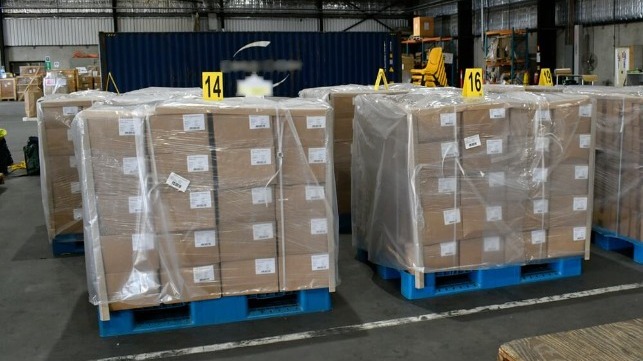
The bust started last year when AFP authorities intercepted a cargo from Italy at the Port of Melbourne. Concealed inside a containerized shipment of galvanized hooks, they found 420 kilos of MDMA pills, 120 kilo blocks of a suspected drug mixture and 80 kilos of methamphetamine.
The mixed substance tested positive for MDMA and ketamine, consistent with the ingredients of a valuable designer drug sold as "Tusi" or "pink cocaine." Further testing is planned to determine the nature of the substance, which is a niche product and may be worth as much as $100,000 per kilo on the Australian market.
Taken altogether, the estimated street value of the combined shipment was in excess of US$70 million.
The shipment was seized and swapped with inert substitutes to mimic the appearance of the illicit import, and the consignment was allowed to continue delivery. The goods (and the fake drugs) were delivered to an address in Brooklyn, Australia; the police allege that the consignment was later taken and moved to a facility near Sydney.
“Importing nearly half a tonne of MDMA into Australia is a significant criminal endeavor and demonstrates the insatiable appetite for illicit drugs in our country, and the lucrative market through which organized criminals seek to earn significant profit," AFP Commander Raegan Stewart said in a statement.
The other two Chinese nationals were identified during the investigation of the drug smuggling scheme. They were arrested in Sydney on Wednesday, and were charged with possessing methamphetamine precursors. One of them faces an additional charge of allegedly interfering with access to electronic records during an investigation.
Hapag-Lloyd Marks Milestone with Largest Fleet in 178-Year History
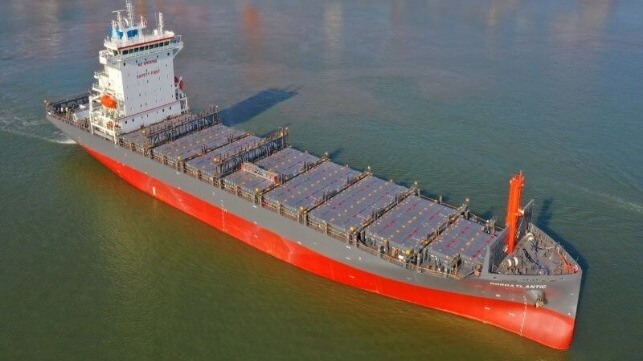
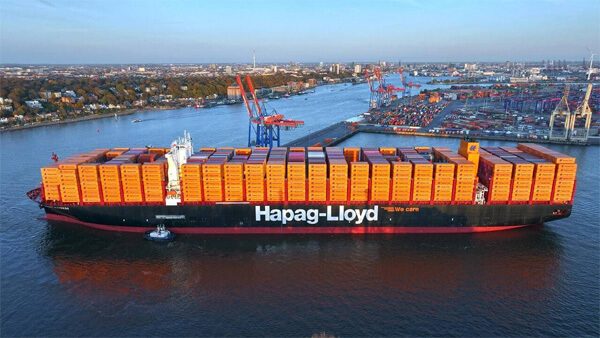
Chartered Nordatlantic becomes the 300th ship in Hapag's current fleet (Hapag-Lloyd)
Hapag-Lloyd is marking a milestone in the long and storied history of the carrier which is today the fifth largest in the container shipping segment. The company took delivery of a chartered vessel which becomes the 300th it is currently operating, making the fleet the largest in the history of the company which traces its origins to 1847.
“Today, we’re celebrating a significant milestone that will be making waves - quite literally! With the launch and delivery of the charter vessel Nordatlantic, Hapag-Lloyd AG now operates more ships than ever before,” the company wrote in a social media posting.
The 24,480 dwt vessel, which is under charter from Reederei NORD Group, is far from the largest in the fleet but it becomes number 300 with its sister ships, Nordbaltic and Nordpuma, to follow in service for Hapag-Lloyd. The vessels are being built by HuangPu Wenchong Shipbuilding Co., a division of China State Shipbuilding Corporation (CSSC). Each measures 564 feet (172 meters) with a capacity of 1,930 TEU including 313 FEU reefer containers. Hapag says they will be used to strengthen its intra-Asia feeder services and support its broader fleet upgrade.
“This milestone reflects not only the growth of our fleet but the dedication of our teams and the trust of our partners worldwide,” writes Hapag. “According to Hansa Online, Hapag-Lloyd’s capacity grew by an impressive 18.7 percent in 2024, reaching a total of 2.3 million TEU – a testament to our continued focus on connecting global trade.”
In its 2023 annual report, the company said it had 260 container vessels with a capacity of approximately 2 million TEU. It was up from 2020 when it reported 237 vessels and a shipping capacity of 1.7 million TEU.
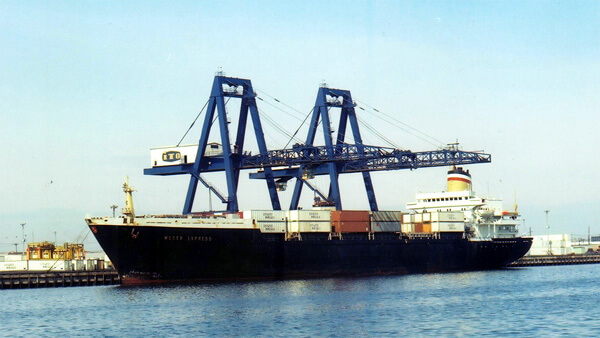
Hapag's first containership, Weser Express, started service in 1968 with a capacity of 728 TEU (Hapag-Lloyd)
It is less than 60 years since Hapag entered the container segment. They note in the company history that Sealand’s first container vessel arrived in Hamburg in 1966 and was viewed with skepticism. However, just two years later, Hapag-Lloyd Container Linien, a cooperation between Hapag and North German Lloyd inaugurated the Weser Express (728 TEU) from Bremen, the first European full container service to New York followed just two weeks later by the Elbe Express from Hamburg.
The unthinkable happened in 1970 when long-time German rivals HAPAG (Hamburg-Amerikanische Packetfahrt-Actien-Gesellschaft) and North German Lloyd (NDL) merged. At the time, the combined fleet was 112 ocean-going vessels.
The current fleet consists of 129 owned vessels and 171 on charter with a total capacity of 2.34 million TEU placing the company fifth in Alphaliner’s ranking of the largest carriers. They calculate the company has 37 vessels on order with a total capacity of 468,000 TEU.
This year also marks a milestone for Hapag as its new cooperation with Maersk, Gemini, is due to start in February 2025. It looks for continued growth and fleet expansion as it pursues the opportunity of the new operating agreement.
Hamburg Express introduced in 2024 is part of the company's new LNG fleet with a capacity of 23,660 TEU (Hapag-Lloyd)
Owner of Suspected Sabotage Ship Loses Bid to Get Anchor Back From Police
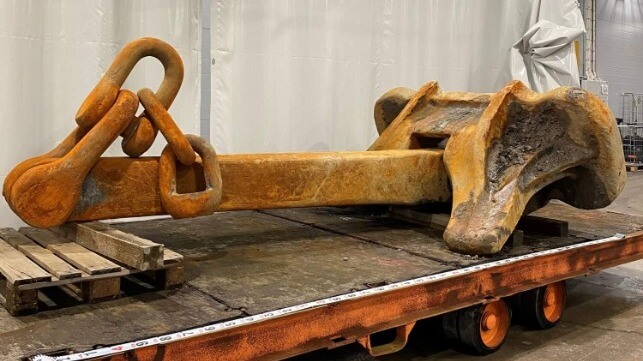
The owner of the Eagle S has lost a custody battle over the ship's anchor, which has been held as evidence (Finnish Border Guard)
Earlier this month, the owner of the "shadow fleet" tanker Eagle S lost a court appeal to regain the freedom of their vessel, which has been held in Finland for an investigation into suspected cable sabotage. On Wednesday, the shipowner also lost a bid to take back the ship's anchor, which Finnish authorities found on the seabed near the cable breaks.
Finland's National Bureau of Investigation believes that it has evidence connecting Eagle S to the outage. On December 25, when Fingrid's EstLink 2 power transmission cable and four subsea telecom cables suddenly shut down, government responders quickly linked the breaks to the position of Eagle S, an LR1 that had just departed the Russian port of Ust-Luga. The tanker was boarded, ordered to raise its anchor, diverted to Finnish waters and detained; Finnish President Alexander Stubb told reporters this week that the vessel would have caused more cable damage within 12 minutes if it had not been stopped. Possible additional targets could have included the Estlink 1 subsea cable and the Balticconnector gas pipeline, which was previously hit by an anchor-drag incident in 2023.
Eagle S was missing an anchor when detained, and attention immediately turned to whether it had cut cables by dragging anchor under power, as suspected in the previous Newnew Polar Bear and Yi Peng 3 incidents. A Finnish-Swedish team located the anchor on the bottom, near the end of a 50-nautical-mile drag track. Photos released to the public show that the anchor has a crack in its crown, and its flukes are much shorter than would be expected of a working vessel's anchor. Photos of the vessel from years past, when it operated under earlier ownership, show that it once carried normal Hall- or Speck-type anchors.
The anchor was recovered and brought ashore for forensic analysis. Shortly after, the vessel's attorney filed a court appeal to force the police to release it to the shipowner, UAE-based Caravella LLC FZ.
Herman Ljungberg, counsel for Caravella, told YLE that Finnish police had no jurisdiction over the vessel or her anchor. Since both were in international waters at the time they were taken into custody, he asserted, Finland's law enforcement reach did not extend to either.
The court disagreed with this interpretation and ruled in favor of the NBI, and the anchor will remain in custody. The bureau's attorneys argued successfully that Finnish law gives them jurisdiction when international acts target Finland - for example, when a ship cuts an international cable that connects to Finnish soil.
Ljungberg said that he would appeal the matter to the Court of Appeal and attempt to regain full control of the ship and the lost anchor. If the legal process takes too long, Eagle S may get trapped in the Baltic Sea's ice season, and would be exposed to conditions for which the vessel was not designed; given that the ship costs about $15,000 per day in upkeep, he said, the anonymous single-ship holding company may simply abandon her and walk away.
Even if the owner leaves the ship behind and stops paying for wages and operating expenses, the nine crewmembers who are suspected of involvement in the cable incident must remain. They are confined to the ship and are under a travel ban to prevent them from leaving the country while the inquiry continues.