Friday, January 17, 2025

Scathing analysis exposes MAGA’s 'illusion of populism' as a total 'con job'


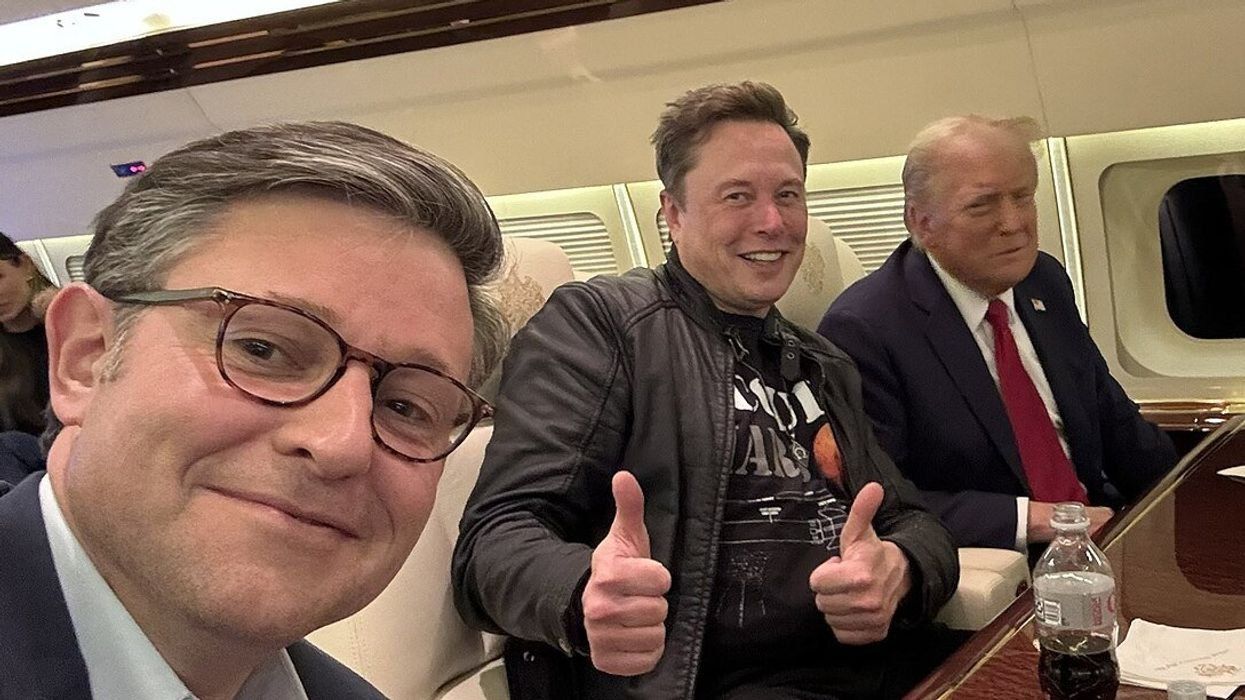
Donald Trump with Elon Musk and House Speaker Mike Johnson on November 16, 2024 (Wikimedia Commons)

January 16, 2025
ALTERNET

During the United States' 2024 presidential race, Democratic nominee and Vice President Kamala Harris laid out a variety of reasons why she believed that Republican Donald Trump's policies would be terrible for working-class Americans if he won — from health care to tax policy to tariffs. But right-wing media outlets repeatedly attacked Harris as an "elitist," praising Trump as the "populist" in the race — which, in the end, President-elect Trump narrowly won.

Salon's Amanda Marcotte examines the MAGA movement's "populism" in a scathing article published on January 16, arguing that Trump and MAGA's alliance with billionaire tech bros exposes their "populism" as an "illusion."

"Trump's Diet Coke addiction has long been used by the grifter-in-chief to sell his fans on the big lie of his career: that, beneath all the private jets and over-the-top gilded decor, he's a 'regular' guy just like them," Marcotte observes. "He, too, houses the sugar-free caffeinated beverages as a vague gesture towards 'health' in between housing vegetable-free greasy meals of cheap hamburgers and sugary desserts. He must be an ordinary, salt-of-the-earth man! After all, he drinks a product found at every common supermarket."

READ MORE: Torture? Shoot protesters? Greenland? Questions Hegseth refused to answer

Marcotte adds, "Never mind that Trump would never sully himself by entering a grocery store. He pays people to do that for him."

Trump, the Salon journalist laments, is able to "trick" MAGA voters "into thinking the rich former reality TV star is one of them."

"On Tuesday, (January 14)," Marcotte observes, "NBC News reported that tech billionaires Elon Musk, Jeff Bezos, and Mark Zuckerberg will all have prominent seats on the platform at Trump's inauguration. The symbolism is unmistakable."

Marcotte continues, "Those seats are usually reserved for family members, former presidents, and prominent politicians. Giving those seats to billionaires signals loudly that this is a new era of oligarchy, without even an attempt to feign allegiance to pre-Trump notions of government for and by the people. President Joe Biden was alarmed enough to make this issue the focal point of his final speech in office."

During a recent appearance on the New Republic's "Daily Blast" podcast, economist and former New York Times columnist Paul Krugman was vehemently critical of Trump's "extremely regressive economic program" — warning that "working-class voters are going to face higher prices and upper-income voters are going to benefit from tax cuts."

"Sure, you may never be able to retire or own a home," Marcotte laments, " but it seems the r-word is coming back into fashion! I'd call that a bad trade-off."

READ MORE: Economist Paul Krugman explains why Trump voters are being 'brutally scammed'

Amanda Marcotte's full article for Salon is available at this link.
Trump ran on promise to lower grocery prices — few Americans now believe he will


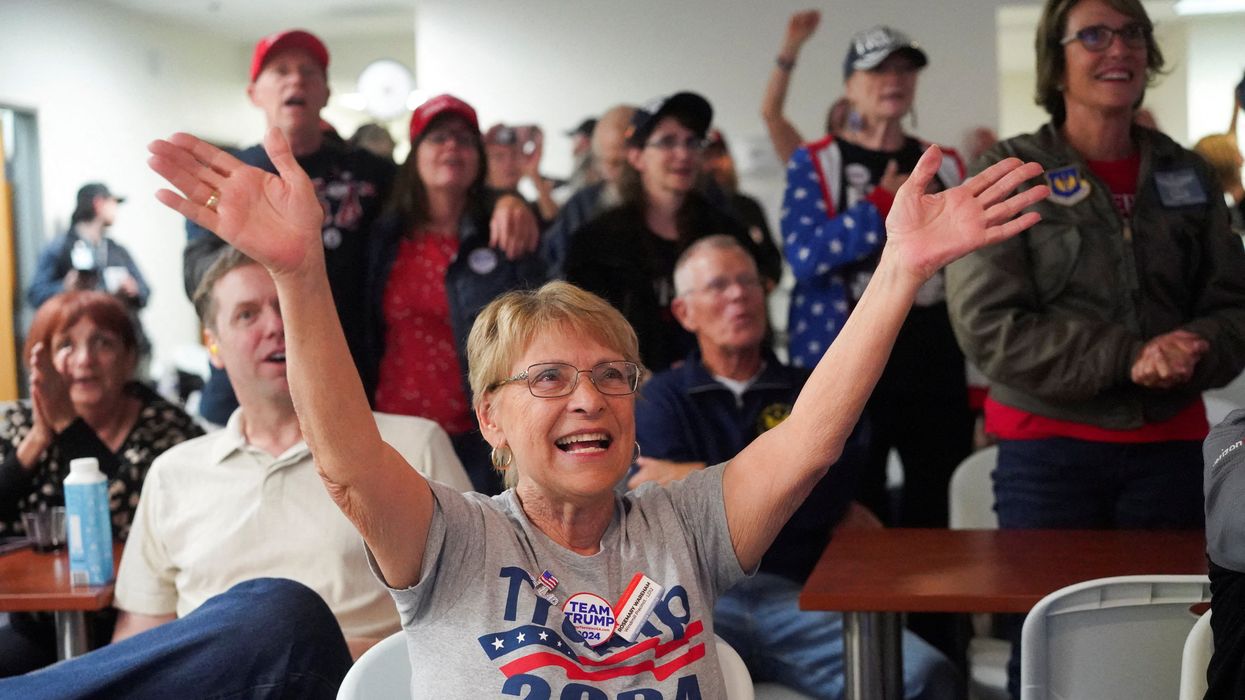
FILE PHOTO: Supporters of Republican presidential nominee former U.S. President Donald Trump react as Trump speaks from the Palm Beach County Convention Center, as they attend an election watch party at Maricopa County Republican Committee during the 2024 U.S. presidential election in Chandler, Arizona, U.S., November 6, 2024. REUTERS/Go Nakamura/File Photo
Supporters of Republican presidential nominee former U.S. President Donald Trump react as Trump speaks from the Palm Beach County Convention Center, as they attend an election watch party at Maricopa County Republican Committee during the 2024 U.S. presidential election in Chandler, Arizona, U.S., November 6, 2024. REUTERS/Go Nakamura/File Photo
January 16, 2025
ALTERNET

Just days before he is set to raise his right hand and place his left on a Bible to swear an oath to the Constitution, President-elect Donald Trump faces low public confidence in his ability to fulfill one of his top campaign promises: lowering the price of groceries. According to a new Associated Press poll, most Americans, many of whom cast their ballot on that pledge, do not believe he will bring them relief.

“From the day I take the oath of office, we’ll rapidly drive prices down and make America affordable again,” Trump told supporters on the campaign trail in North Carolina, the Washington Post reported. “Prices will come down. You just watch. They’ll come down fast.”

Just weeks before Election Day, Trump promised, “Vote Trump and your incomes will soar. Your net worth will skyrocket. Your energy costs and grocery prices will come tumbling down,” Business Insider reported.

He repeatedly vowed to voters that he would “get the prices down,” “end inflation,” and even “slash your prices.”


Then, after winning the election largely on that platform, TIME magazine asked Trump, “If the prices of groceries don’t come down, will your presidency be a failure?”

“I don’t think so,” Trump insisted, before seeming to backtrack on one of his top campaign promises. “I’d like to bring them down. It’s hard to bring things down once they’re up. You know, it’s very hard.”

Despite having voted for him, in many cases, on his pledge to lower the cost of groceries, voters now appear to have come to believe he will be unable to do that.

“Only about 2 in 10 Americans are ‘extremely’ or ‘very’ confident that Trump will be able to make progress on lowering the cost of groceries, housing or health care this year, according to a survey from The Associated Press-NORC Center for Public Affairs Research, while about 2 in 10 are ‘moderately’ confident,” the AP reported.

The AP poll finds 61% are slightly or not at all confident in Trump’s ability to lower the cost of food and groceries.

An extensive AP survey “showed that about 4 in 10 voters in the November election identified the economy and jobs as the most important issue facing the country and that about 6 in 10 of those voters cast their ballot for Trump.”

Those voters who believe Trump will not be able to fulfill his promise to lower prices may be correct.

Just days after the November election, the Associated Press reported, “many economists think Trump’s plans, including putting tariffs on imported foods and deporting undocumented workers, could actually make food prices rise.”

There is one person who appears to be holding Trump to his promise to lower prices, however. Karoline Leavitt, the Trump campaign’s national press secretary, now his incoming White House Press Secretary.

“The American people re-elected President Trump by a resounding margin, giving him a mandate to implement the promises he made on the campaign trail,” Leavitt told the AP after the election. “He will deliver.”

Watch the video above or at this link.
Trump-voting farmer warns crops will 'rot' if his workers get deported

Brad Reed
January 17, 2025 
RAW STORY


A farmer (Shutterstock)

A farmer who voted for President-elect Donald Trump is warning him not to go too far with his pledge to carry out the largest deportation in American history.

In an interview with Bloomberg, tomato grower Tony DiMare said that it would be a major mistake for Trump to institute the kind of crackdown on undocumented farm labor that has been enacted in Florida, where he says he's having trouble finding enough people to pick crops.

"A lot of people left Florida for Georgia, north, scared,” DiMare told Bloomberg. “Farmers had to let their crops rot.”

37-year-old immigrant farmworker Rene Trujillo similarly said that he's had trouble getting work ever since the Florida crackdown went into effect.

“Ever since they made that law, almost no one will hire you without papers,” he said.

Idaho-based farmer Shay Myers, meanwhile, tells Bloomberg that it is simply not realistic given current conditions to hire only American citizens or even only documented immigrants who come into the country on H-2A guest worker visas.

Myers says that he lost an entire asparagus crop recently when guest workers he'd hired were delayed at the southern border.

He also bluntly tells Bloomberg that if he "had to replace every falsely documented worker with an H-2A worker, it wouldn’t happen."

Trump's threats to conduct mass deportations, combined with his long-threatened tariffs and the continued spread of bird flu, could put upward pressure on food prices despite the fact that Trump pledged during the 2024 campaign to reduce the price of groceries.
Private firefighters highlight wealth divide in ruined Los Angeles


By AFP
January 16, 2025


Private firefighters stand watch at property opwned by billionaire developer Rick Caruso - Copyright AFP JUNG YEON-JE


Romain FONSEGRIVES

On one side of the street lie the ashes of ruined houses, lost to the huge blazes that defeated Los Angeles firefighters when hydrants ran dry.

On the other side, a small village of shops is still intact, watched over by tanker trucks and an army of private firemen.

More than a week after enormous blazes spread unchecked through swathes of America’s second largest metropolis, questions are being asked about how some of the city’s super-rich seem to have survived almost unscathed.

“All I can say is that we got hired and we have been ordered to stay here. I’m not allowed to tell you more than that.” a man in a yellow and green uniform told AFP in front of the commercial development.

The men, along with their pick-up trucks with Oregon license plates, were stationed at property owned by billionaire developer Rick Caruso.

Their presence — protecting stores hawking luxury brands like Yves Saint-Laurent, Isabel Marant and Erewhon — jars in a city where more than two dozen people have died and thousands of people have lost their homes.

“It sucks that there’s a lot of politics involved,” says another of the men. “We just want to do the job and help however we can.”

Caruso, who ran unsuccessfully for mayor of Los Angeles in 2022, did not respond to AFP requests for comment.

But in Pacific Palisades, a haunt of Hollywood celebrities and the ultra-rich, he is not the only one apparently using his wealth to protect his property.

Other private firefighters stand guard in front of some of the untouched princely villas that dot the hillsides.

– ‘Will pay any amount’ –


The sector made headlines in 2018 when Kim Kardashian and her then-husband Kanye West hired private firefighters to protect their lavish pad in the affluent community of Hidden Hills, north of the city.

The profiles of the two distinct areas that were hit by last week’s blazes — wealthy Pacific Palisades and the more mixed Altadena — have already served to put a spotlight on economic divisions in the United States.

The disparity was further highlighted in the immediate aftermath of the fires when real estate developer Keith Wasserman attracted an avalanche of criticism after a social media post.

“Does anyone have access to private firefighters to protect our home?” he wrote in the now-deleted post.

“Need to act fast here. All neighbors houses burning. Will pay any amount.”

Such services can cost between $2,000 and $15,000 per day, US media has reported, citing local companies.

But even for those with the means, calling on private firefighters is not always simple — most firms are contracted by cities, government departments or insurance companies.

In California, a law passed in 2018 limits how they can operate.

They are not allowed to use flashing lights or badges similar to those of public firefighters, and are required to coordinate with them.

Since this legislation came into force some companies have refused to serve individuals.

– Whose water? –

Private or public, firefighters all have the same mission: “protecting our community,” said Jake Heflin, a firefighter from the publicly funded Long Beach Fire Department.

“If it’s done correctly and done in partnership and in concert together, it can be very effective,” Heflin said.

But it can also create problems.

Taxpayer-funded services should not have to focus “resources on taking care of them, because either they’re ill-equipped or ill-prepared and they’ve gotten themselves into a difficult situation,” he said.

Firefighters “want to have those conversations well ahead of the event.”

How much coordination there was before the catastrophe in Pacific Palisades, where hydrants ran dry and some houses were effectively left to burn, is unclear.

For Jeff Ridgway, a 67-year-old Pacific Palisades resident who resorted to scooping buckets out of a swimming pool when the mains supply petered out, that is a key question.

“It will be very interesting to know if they used these fire hydrants,” Ridgway told AFP.

“I really hope they brought their own water.”

Musk backing for European far right ‘endangers democracy’: Scholz


By AFP
January 17, 2025


Musk's support for the far right across Europe 'is completely unacceptable' said Scholz - Copyright AFP Nicolas TUCAT

German Chancellor Olaf Scholz on Friday said US tech billionaire Elon Musk is threatening European democracy with his attacks on political leaders and support for the far right.

“He supports the far right across Europe — in the UK, Germany and many other countries. This is something that is completely unacceptable, that endangers the democratic development of Europe,” Scholz said.

Musk, the world’s richest man, has provoked fury across Europe with a string of attacks on the continent’s leaders, including Scholz and British Prime Minister Keir Starmer.

Musk, who used his influence and vast wealth to help propel Donald Trump to victory in the White House race, has also been vocal in his support for Germany’s far-right AfD before snap elections in Germany on February 23.

Musk earlier this month hosted Alice Weidel, the AfD’s candidate to be the German chancellor, for a wide-ranging livestream on his X social media platform.

He also boosted the livestream of an AfD congress by sharing it on his own X account, helping it gain a worldwide audience.

Dozens of EU lawmakers this week expressed “deep concern” over Musk’s interference in European politics in a letter to European Commission President Ursula von der Leyen.

Scholz on Friday said he was not criticising the fact that “a billionaire from another country is speaking his mind in a global world”.

But “his partisanship for the extreme right, whether out of business interests or for reasons that have something to do with his own political stance, that is unacceptable”, Scholz said.
Canada vows 'Trump tax' on US in response to tariffs: minister

Agence France-Presse
January 17, 2025 

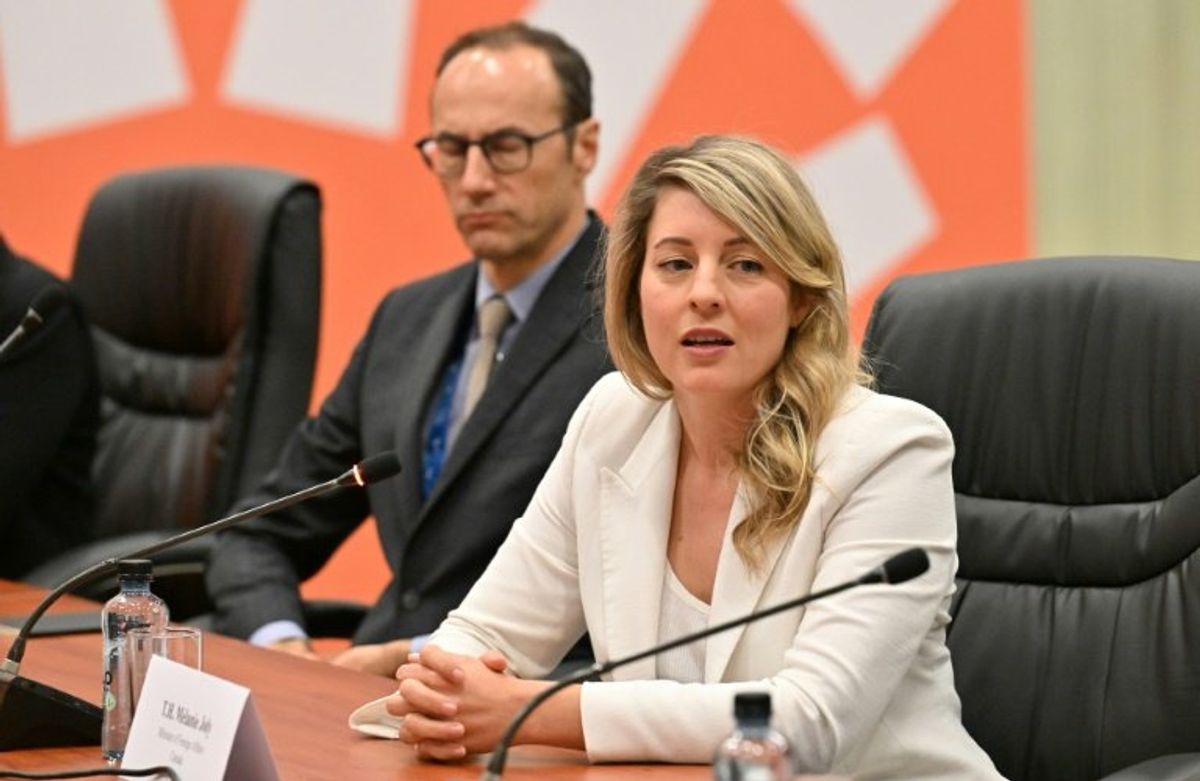
Canada's Foreign Minister Melanie Joly, pictured here at a November 14, 2024 meeting, is warning against a trade war with the United States under incoming President Donald Trump. (© Agence France-Presse)

Americans will be hit by a "Trump tariffs tax" if the US president-elect increases customs duties on Canadian products, the Canadian foreign minister said Friday, pledging a hard-hitting response in any trade war.

Donald Trump, who returns to the White House next week, has said he plans to slap 25 percent tariffs on Canadian imports as part of his economic and foreign policy plans that also target MexicoChina and other trade partners.

"This would be the biggest trade war between Canada and the US in decades," Foreign Minister Melanie Joly said. "The Americans would be starting a trade war against us.

"We are ready to put maximum pressure," she said at a press conference in Washington, adding that Canada has a series of measures prepared if Trump carries out his threat, which would have a major impact on Canadian consumers and jobs.

A government source told AFP that Ottawa is considering higher duties on goods from the United States including steel products, ceramics like toilets and sinks, glassware and orange juice -- in a first phase of tariffs that could be extended.

"We will be strong and unequivocal in our defense of Canada and Canadians," said outgoing Prime Minister Justin Trudeau.

"The proposed tariffs would put American jobs at risk, raise prices for American consumers, put our collective security at risk and raise costs all across the continent."

One scenario from Scotiabank suggests that a trade war could cause Canadian GDP to fall by more than five percent, increase unemployment significantly and fuel inflation.


'Financial pain': Canadian official warns US gas prices will skyrocket under Trump tariffs


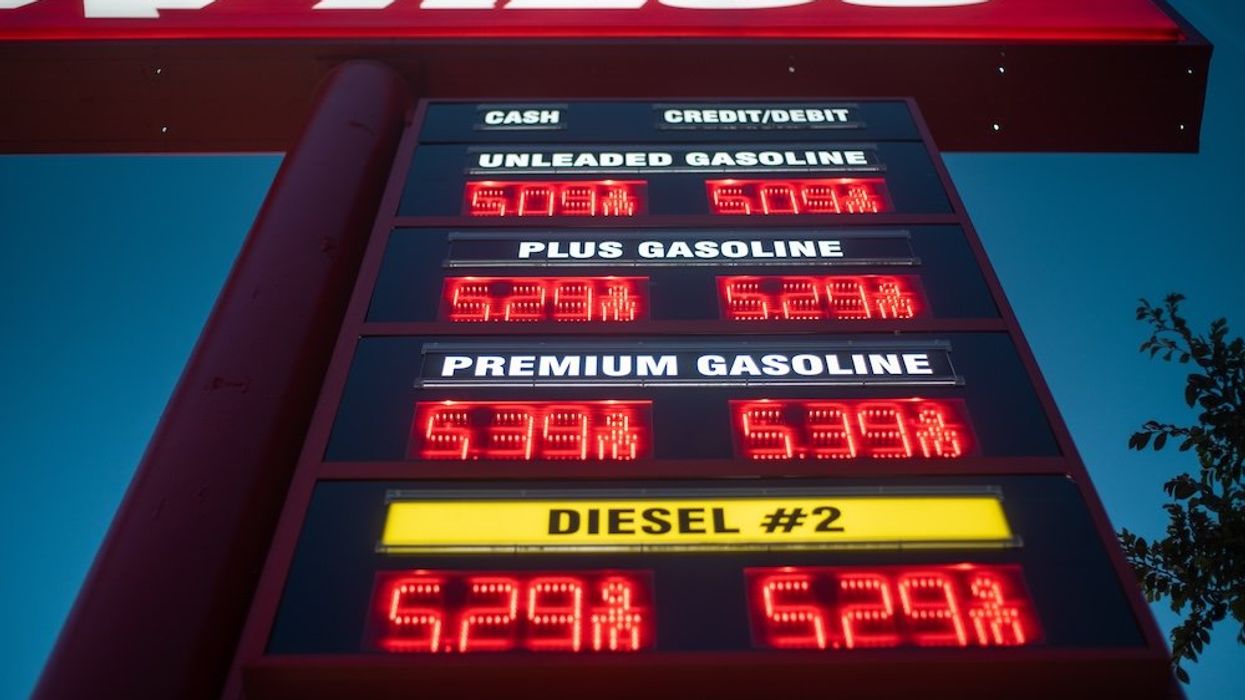
Prices at a gas station in Los Angeles, California on April 9, 2024 (Image: Shutterstock)


January 17, 2025
ALTERNET

Americans may be in for a nasty surprise at the pump when filling up their cars, should President-elect Donald Trump follow through on a key campaign promise.

Trump has pledged to impose a 25% tariff on goods brought in from Canada, as well as 25% for Mexican goods and 10% for Chinese imports. But the Canadian tariff in particular could result in a big hit to Americans' wallets should Trump make good on his tariff threat, according to a recent report in the Canadian Globe and Mail.

“The imposition of tariffs against the U.S.’s closest friend and economic partner will cause financial pain for Canadian families, no doubt,” Canadian Natural Resources Minister Jonathan Wilkinson said during a panel discussion at the Woodrow Wilson International Center for Scholars. “But it will also increase prices of energy and food for American consumers.”

Data from Trading Economics shows that Canada exported more than $131 billion worth of "mineral fuels, oils and distillation products" in 2023 alone. Wilkinson said that a 25% import tax on Canadian oil could mean that gas prices for Midwestern customers could jump by as much as 75 cents per gallon.

"For Midwestern U.S. refineries there are no real economically viable alternatives," Wilkinson said, adding that the U.S. imports roughly four million barrels of Canadian oil each day. "And for U.S. Gulf refineries, the alternative is to purchase from Venezuela – hardly a friendly or stable partner."

Rather than tariffs that could lead to a costly trade war between the U.S. and its northern neighbor, Wilkinson is instead proposing a closer alliance between the United States and Canada particularly focused on petroleum products (including both crude oil and natural gas). He argued that this would help reduce reliance on countries like China and Russia, especially in regions of the U.S. where there are no resources to extract locally.

"Canadian gas supplies parts of the U.S. where local supply does not exist, such as in the Pacific Northwest and California," WIlkinson said during the panel discussion.

In addition to fossil fuels, Canada also supplies the U.S. with uranium exports, which are used for nuclear power plants. According to Wilkinson, this is all the more reason for an energy-specific trade agreement with the U.S. and Canada given that the only other parts of the world where uranium can be obtained have an adversarial relationship with the United States. He added that this arrangement could also be economically beneficial for the U.S. in the long term.

"The U.S. leverages the resource abundance that Canada possesses for energy and minerals that its economy requires," Wilkinson argued. "And it obtains low-cost energy and low-cost minerals, which allows the U.S. to access energy at a discount, then thousands of American workers refine or transform it, and sell it at a higher price to the rest of the world."


Click here to read the Globe and Mail's report in full (subscription required).


Navigating Canada’s future with Trump’s second term in office


By Gitane De Silva
January 17, 2025
DIGITAL JOURNAL

]
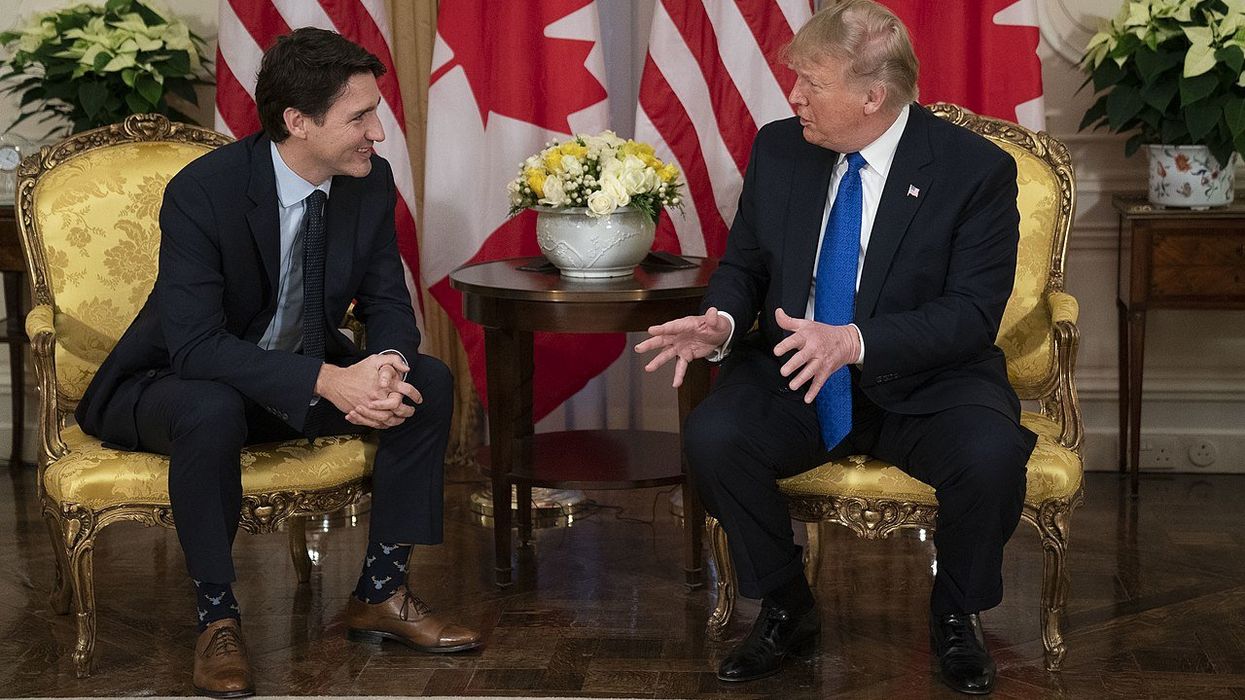
Donald Trump with Canadian Prime Minister Justin Trudeau in London on December 3, 2019 (Wikimedia Commons)


Gitane is a thought leader in Digital Journal’s Insight Forum (become a member).


We are just days away from President-elect Trump’s second term in office. With the rhetoric ratcheting up by the day, it can be hard to separate fact from fiction or wishes from reality.

One thing is for sure: President-elect Trump will take office on January 20, 2025. Regardless of your views of him or his policies, the second Trump Administration is coming and it is best to be prepared.

Thinking you won’t be impacted is not an option. The magnitude of the Canada-U.S. relationship is such that even if you don’t do business with the U.S., you will still feel the effects of any trade wars or border closures.

The numbers on tariffs are sobering. Canada’s trade with the U.S. represents more than 75% of our exports, accounting for 20% of our GDP. A proposed 10% tariff on imports into the U.S., as analyzed by Scotiabank, could lead to a 3.6% decline in Canadian GDP.

So what can we do?

Be informed

Many people are saying that we survived the first Trump Administration and the second one “won’t be that bad.” Except that I expect this time to be completely different. Trump is prepared, he has a professional team around him and he is appointing people to key positions. He also controls the White House, Senate and House of Representatives, and inherits a conservative-dominated Supreme Court. Believe him when he says he plans to take action on day one, and don’t expect too many checks and balances on implementing his agenda. And also don’t assume that everything he is pushing for is wrong. Asking Canada to pull its own weight on defence and security matters is a reasonable request, even if the methods are unorthodox.
Be pragmatic

One of my best friends is a psychologist who likes to remind me that in certain situations, you can be right or you can be happy. Sometimes, the person you are dealing with isn’t interested in the facts. You can spend your time arguing every point until you are blue in the face, or you can focus on the few things that really matter and get to yes on those. Canada and the U.S. are neighbours, for better or for worse. The fact that the relationship is asymmetrical doesn’t mean that Canada doesn’t have any levers. We will find a way to work together, not only because we matter deeply to each other, but because we have to.
Be engaged

Like a garden, relationships need tending. It’s unfair to expect the federal government to “fix this.” Democracy is a sport that requires the active participation of its citizens. Engage with your elected officials, business associations, U.S. colleagues, and others in this sphere to advocate for Canada’s interests and support efforts to find solutions instead of simply criticizing from the sidelines.

The next few months are bound to be bumpy, but if we are smart and strategic, we will come out smarter, maybe a bit leaner, and definitely a lot stronger.


Written By Gitane De Silva
Gitane is the Founder and Principal of the consulting firm, GDStrategic. She previously served as the CEO of the Canada Energy Regulator and as Alberta’s Deputy Minister for International and Intergovernmental Relations. Gitane is also a seasoned diplomat and a specialist in Canada-U.S. relations, having served as Alberta’s Senior Representative in Washington, DC, and Canada’s Consul General in Chicago, among other roles. A respected public policy leader, Gitane is a Special Advisor at Blue Rock Law, a Global Fellow with the Canada Institute at the Wilson Center in Washington, DC, and a Board Member with the Public Policy Forum. Gitane is a member of Digital Journal's Insight Forum


Residents of Canada, US border towns fear Trump creating divisions


By AFP
January 17, 2025


A border post marks the boundary between Derby Line in the US state of Vermont and its twin town of Stanstead in the Canadian province of Quebec 
- Copyright Parco Archeologico di Pompei press office/AFP Handout


Anne-Marie PROVOST

A shared library, sports fields and fire stations. The American border town of Derby Line and its Canadian twin Stanstead have been living in harmony for more than two centuries, but their bonds are being tested by US President-elect Donald Trump.

“There is uncertainty. Are we going to maintain our good relations?” says Jody Stone, the mayor of Stanstead, Quebec.

A black line that runs across the floor of the Haskell Library, which also serves as a concert hall, marks the US-Canada border.

The front door is on the American side, but Canadians don’t need to go through a customs checkpoint to gain access. Inside, Americans and Canadians regularly cross paths as they browse the library stacks.

“We have very, very strong ties,” says Sylvie Boudreau, president of the library’s board of trustees who lives in Stanstead, adding that Trump taking office on January 20 could bring uncertainty to the

Since they were founded in the late 18th century, the twin towns have relied on each other.

The Canadian town of 3,000 residents would get help from Derby Line’s fire department in emergencies, and similarly would offer help to its American neighbors when needed. They also share water and sewage, an ice rink and basketball courts, and American educators teach Canadian schoolchildren.

But everyone has been on edge since Trump’s election win in November, and even more so after his comments about tightening security at the border to stop illicit drugs and migrants from crossing into the United States, and slapping punishing tariffs on Canadian imports.


– ‘I like Canada’ –


The latter is a real concern for businesses in the region, particularly quarries and companies that sell granite, as well as finished countertops and tombstones to the United States.

Mayor Stone, who owns a distribution company, is preparing for the possibility of Canadian retaliatory duties on American imports.

“I’m preparing myself, I’m making sure to buy as much as possible in Canada because if there’s ever a problem with the Americans, I have to be able to supply my customers in Quebec,” he explains.

On the US side of the border, Trump’s remarks are also disconcerting to Americans, who consider the ties forged since the two towns’ founding to be more important than politics.

Trump’s trolling of Canada, including calling it America’s 51st state, does not make the United States a good neighbor, says Derby Line resident Rachel McDowell.

“I like Canada. I like going there. I don’t have any problems with Canada,” says McDowell, 27, adding that she fears Trump’s polarizing rhetoric will only create divisions.

Canadian Guy Lemay, a 71-year-old retired police officer, is in favor of strengthening the border as requested by the American president-elect. Ottawa has announced a Can$1.3 billion (US$900 million) plan to beef up patrols with helicopters and drones, and deploy more border agents.

But Lemay, who frequently goes to the United States to fill up with gasoline since it is cheaper there, says he is against imposing tariffs.

“It’s going to be rough,” he says. “And it’s the citizens who are going to pay, on both sides.”


'Puzzled' Panamanian officials scramble to make sense of Trump’s canal 'fixation'


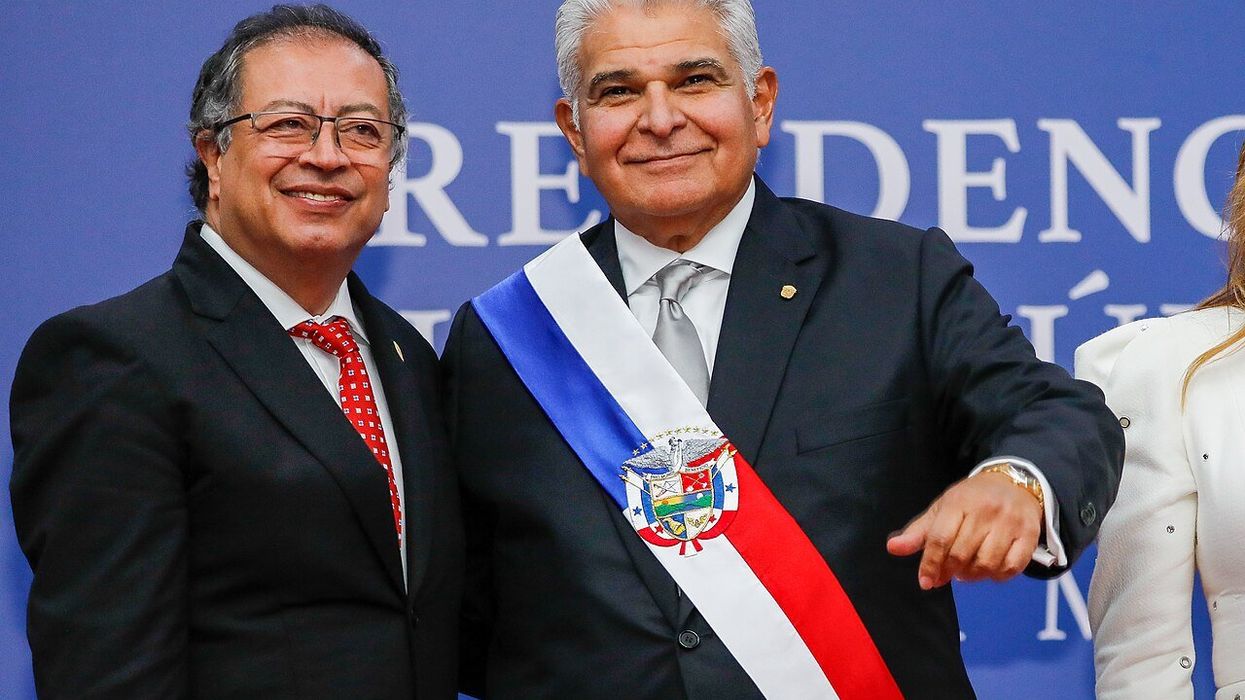
Panamanian President José Raúl Mulino in July 2024 (Wikimedia Commons)

January 17, 2025
ALTERNET

After President Jimmy Carter's death at the age of 100 on December 29, 2024, President-elect Donald Trump argued that one of Carter's biggest mistakes was giving the Panama Canal to Panama back in 1977.

The Panama Canal, opened in 1914, is an artificially created waterway linking the Caribbean Sea with the Pacific Ocean. And it is now managed by the Panama Canal Authority, which is owned by the Panamanian government.

But Trump believes the Panama Canal should revert to full U.S. control.

CNN journalists Phil Mattingly and Andrew Seger, in an article published on January 17, stress that some Panamanian officials are puzzled by Trump's desire to retake the Panama Canal — as they thought the matter was settled long ago. And they are struggling to understand Trump's motivations.

Jorge Eduardo Ritter, Panama's former minister of foreign affairs, told CNN, "I don't like to disregard what President Trump says, because when he says something, he might not mean exactly what he is saying, but he is looking for something…. This fixation with Panama — I sense that something is going to happen. I don't think it's going to be a military invasion or he will take over the Canal, but something is going to happen."

According to Mattingly and Seger, one of the things current and past Panamanian officials find puzzling about Trump's interest in Panama is that he "paid little attention to the country in his first term."

Trump, they note, never nominated a U.S. ambassador to Panama during his first administration and instead, relied on a "holdover" from the Barack Obama years.

Ilya Espinosa de Marotta, the Panama Canal Authority's deputy administrator, told CNN, "Why now? Hong Kong has been here since '97. We’ve been running the canal for 25 years. We've been very transparent — you can know this is run 100 percent by Panamanians, so why now? It puzzles me."

Read the full CNN article at this link.
‘Homeless people given free lunch’ to attend Trump Jr event in Greenland


People in Maga hats at meal last week did not know Donald Trump’s son and were invited off the street, hotel boss says


Miranda Bryant in Nuuk
Thu 16 Jan 2025
THE GUARDIAN

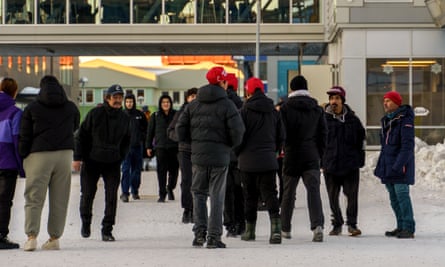
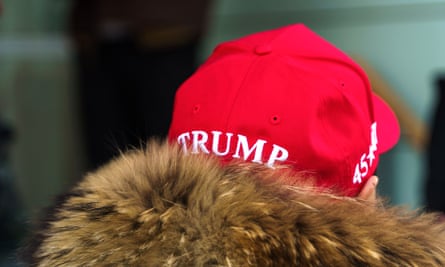
A group of Greenlanders who attended a lunch hosted by Donald Trump Jr wearing Make America Great Again caps were not dedicated supporters of the US president-elect but homeless people enticed by the prospect of free food, it has been claimed.

Trump Jr visited the Greenlandic capital, Nuuk, last week, shortly after his father declared it was an “absolute necessity” for the US to take control of the semi-autonomous Danish territory.

During his visit, Trump Jr went to the Hotel Hans Egede for lunch with a group of people wearing Maga hats and put his father on speakerphone. The president-elect told them: “We’re going to treat you well.”

But Jørgen Bay-Kastrup, the hotel’s chief executive, said many of his guests were not Trump supporters but people his team had met on the street who found out only later who Trump Jr was.

Describing many of the group as homeless people, he said Trump Jr “had just met them in the street and invited them for lunch, or his staff did. But I don’t think they knew who they were inviting”.

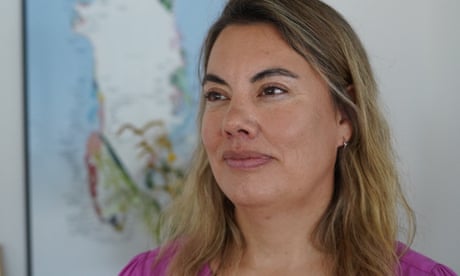
View image in fullscreenJørgen Bay-Kastrup, the chief executive of the Hotel Hans Egede. Photograph: Juliette Pavy/The Guardian

“That of course was a little bit strange to us because we saw guests that we have never seen in our hotel before – and will probably never see again because it’s out of their economical means.”

The group of about 15 people ate a traditional Greenlandic lunch including fish and caribou. They were not, Bay-Kastrup added, Trump supporters. “They were just, ‘hey, somebody invited us for lunch, let’s go and join him’. I think they found out later who it was.”


A spokesperson for Trump Jr denied the claims, describing them as “beyond the pale ridiculous”.

People outside the Hotel Hans Egede last week when Trump Jr visited Nuuk. 

A person wearing a Maga hat during Trump Jr’s visit last week. Photograph: Daniel L Johnsen/EPAPhotograph: Daniel L Johnsen/EPA

Trump Jr’s visit came as his father refused to rule out using military or economic action to acquire the world’s largest island.


Republicans in the House of Representatives have published a draft bill called the Make Greenland Great Again Act, which would allow the Trump administration, which takes office on Monday, to hold talks to attempt to purchase the territory.

Greenland and Denmark have repeatedly said that the island, whose foreign and security policy are controlled by Denmark, a Nato member, is not for sale. The Greenlandic prime minister has, however, said that his government is interested in deepening collaboration with the US and has its “doors open in terms of mining”.


Trump interest in Greenland is ‘wake-up call to Copenhagen’, says ministe


Asked about Trump’s interest in Greenland, Bay-Kastrup, who is Danish, said: “We are not a trade, we are not something for sale. We would like to cooperate, but we are not for sale.”

Since Trump Jr’s visit, people dressed in Maga caps and American flags have reportedly been distributing $100 bills and filming it outside the supermarket opposite.

One man, Jacob Nordstrøm, was quoted in the Greenlandic newspaper Sermitsiaq as saying his son, 11, had come home with a $100 bill. He told the paper, which described those handing out the money as Canadian-American influencers: “It’s really borderline shocking to find out that my 11-year-old son has received money from an adult he doesn’t know.”


Bay-Kastrup, who has witnessed the scenes from his office, said he thought most people probably found the stunt amusing, but that he had seen one person take a Maga cap and stamp on it.

In response to the Guardian’s request for comment about Trump Jr’s lunch guests, Arthur Schwartz, a political operative and friend of the president-elect’s son, said: “Do you think Donald Trump Jr was wandering around Greenland inviting homeless people … to lunch, or do you realise that the suggestion sounds so beyond the pale ridiculous that you should feel stupid even asking the question?

“There were cameras following him around from the second he got there to the second he left. Did they miss him recruiting homeless people … to his homeless person … lunch?”
Will Indonesia shut the nickel spigot to spur prices?

Trish Saywell | January 16, 2025 | 


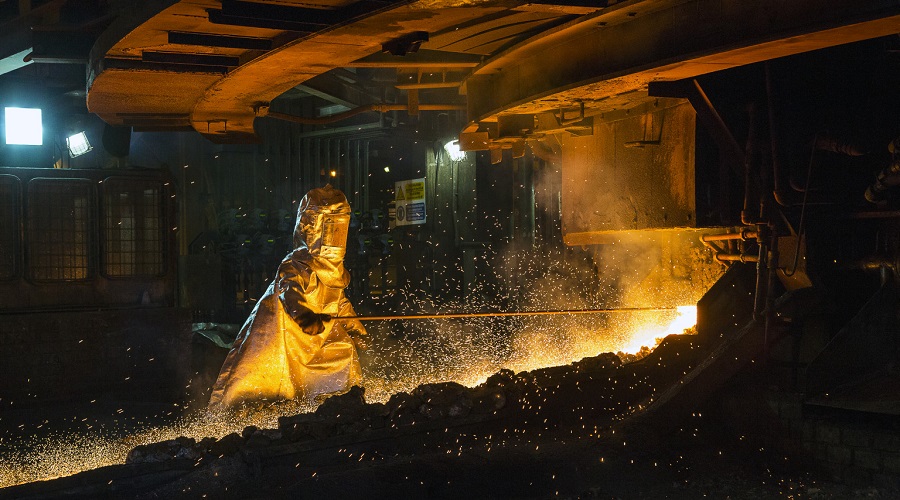
Nickel smelter in Sorowako, Indonesia. Credit: Marcelo Coelho, courtesy of Vale

Indonesia’s clout in the global nickel market rivals OPEC’s in oil.


The Southeast Asian nation — an archipelago of more than 17,000 islands straddling the Indian and Pacific oceans — holds the largest nickel reserves on the planet. It’s the world’s largest nickel producer and second-largest stainless-steel producer.

Last year the country produced 63% of the world’s nickel, up from 28% in 2020, and that share could easily rise to 75% within the next three to five years, according to Jim Lennon, a London-based managing director of commodities at Australia’s Macquarie Group.

“It’s the only place with the huge reserve base, the only place with available capital deployed by Chinese banks to finance projects,” Lennon said by videophone. “In the rest of the world, producers are struggling to get off the ground.”

Between 2020 and 2024, Indonesia added 1.5 million tonnes of new supply to the market. Last year it churned out 2.25 million tonnes of nickel (finished and intermediates), a 16% year-on-year increase, weakening prices and triggering mine closures in other countries.

“The nickel market has been in large oversupply for the last three years,” Lennon said. “Enormous growth in Indonesia has killed the nickel price.”

Last year the annual average LME price for the silvery-white metal plunged 22% year-on-year from $21,492 per tonne to $16,812 per tonne. In early January, the price was down to $15,482 per tonne.

The only other base metal that fell last year was lead, and by comparison, the lead price dropped by just 3%.


Operations suspended


Lower metal prices, combined with significant cost inflation across the mining sector, have forced many producers outside Indonesia to suspend operations. Macquarie estimates that over the last four years miners removed 500,000 tonnes of non-Indonesian supply from the market.

BHP (LSE: BHP; NYSE: BHP; ASX: BHP) put its Australian nickel operations on care and maintenance in October. The move, which may last until February 2027, nixes 90,000 tonnes of capacity a year from the market.

Recently France’s Eramet (ERA: EPA) and German chemical producer BASF (LSE: BASF) cancelled plans to develop a $2.6 billion nickel-cobalt refinery in Indonesia, claiming there was already an adequate supply of battery grade nickel. Western refiners also must compete with cheaper Chinese refiners that dominate nickel processing in Southeast Asia’s largest economy.

“You’ve seen the closure of the bulk of Australian nickel capacity, and all the guys who had plans to expand production have been driven out of the market,” Lennon said. “Even the big guys like BHP, Glencore (LSE: GLEN) and Vale (NYSE: VALE) have been struggling to break even in this environment.”

Half of the industry is cash flow negative, while Canadian projects and juniors are having trouble raising money and even considering to start production, he said.
Government policy

For its part, Indonesia recognizes it needs higher prices in the $16,000 to $18,000 per tonne range to sustain its revenue base. The main lever it has is to restrict its three-year permits, also known as RKABs, an Indonesian acronym that in English means work plan and budget. They were introduced in 2023 to crack down on illegal mining and improve the industry’s ESG standards. Among the new requirements is an environmental audit.


There have been press reports citing a government minister that the country could limit RKABs to as low as 150 million tonnes this year.

Removing 100 million tonnes of ore out of Macquarie’s base case ore production of 250 million tonnes would reduce Indonesian finished nickel production by around 900,000 tonnes, taking 35% off global 2025 supply, according to Lennon.

“But my feeling is they won’t do that, and the market doesn’t believe they’re going to do it because the price of nickel is near a 12-month low so it’s not responding.”

Government delays issuing RKABs last year meant that actual 2024 production of around 200 million to 210 million tonnes was below consumption of 235 million tonnes. The shortfall was met by destocking and by importing about 10 million tonnes of ore from the Philippines.

“It was a small amount, but it was a turning point in the dynamics of the ore market,” Lennon said.

For this year, Macquarie projects a 60,000-tonne nickel surplus, down from a surplus of 195,000 tonnes in 2024.


Price forecasts


Macquarie forecasts LME cash prices will average $16,500 per tonne this year, rising to $18,000 next year, $19,000 in 2027 and to $20,000 in 2028.

Others are slightly more optimistic.

Mark Selby, CEO of junior developer Canada Nickel (TSXV: CNC; US-OTC: CNIKF), predicts the metal will reach $20,000 per tonne by year-end, but that higher cost producers won’t rejoin the market until prices are even higher.

“Most of that stuff is not coming back until we see prices higher than $22,000,” he said during a recent presentation at the Mining Research Analyst Group’s annual forecast luncheon in Toronto. “That gives Indonesia a lot more room to basically push prices up without seeing a lot of that supply come back into the market.”

He forecasts a $20,000 to $22,000 range over the next few years.

Selby, who prior to Canada Nickel raised $100 million to advance RNC Minerals’ Dumont nickel-cobalt project in Quebec from initial resource to a fully permitted construction-ready project, predicts that 2025 “is really going to be a pivotal year because this is where Indonesia really flexes its muscles.”

The country has gone from trade and current account deficits to surpluses because of its leading exports, nickel and stainless steel, he said.

“Those numbers look way better at $20,000 a tonne nickel than they do at $15,000 a tonne. So, you’re going to see a lot of flex this year in terms of what’s going to happen with mine supply growth,” he said.” Indonesians will want to see a market deficit to see prices go higher.”


Wherefore demand


In terms of demand growth, nickel isn’t faring too badly. Total nickel demand continues to grow at around 5-7% a year, Lennon noted, adding that “copper would die for that kind of growth rate.”

Even with the slowdown last year, nickel demand has grown at nearly 9% a year since 2020, Selby said. Annual battery plant demand in North America alone will reach as much as 300,000 tonnes of nickel in the 2030s, he said.

“As the EV market shifts more to the US and Europe and away from China, most of the battery plants, all but one, being built in North America, are making high-nickel batteries,” he said. “They don’t want to depend on China or Indonesia for all that nickel.”

Stainless steel — the mainstay of the nickel market—dominated growth in nickel use last year, rising 4.8% year-on-year.

Nickel use in batteries hardly grew last year despite 25.4% growth in global EV sales. That’s largely because about 80% of Chinese EV batteries now contain no nickel, Lennon said.

But most analysts anticipate battery demand growth to return this year. Stricter carbon dioxide standards in the European Union and Britain, and the region’s absolute ban on all new internal combustion engine vehicles by 2035 should build momentum for EV adoption.

For the 2023-2030 period, Macquarie estimates a trend growth of 5% for nickel in stainless-steel production, 13% a year for batteries and 6.6% a year overall.
Grades risk

While Indonesia has a stranglehold on supply, Selby warns there are geological limits to the country’s reserves.

“These laterite deposits are basically big piles of soggy dirt five- to 50-metres thick and extend over a huge area,” he said. “You can go and pull the hills down, or valleys and certain ridges, for the highest-grade material. They’ve been doing that for 15 years now and they’re hitting the wall on multiple dimensions, which is really having an impact on grade.”

Macquarie estimates that average Indonesian grades have declined to about 1.6% nickel from a range of 1.8% to 1.9% previously and contain a lot more impurities. By contrast, Philippine ore is low in silica and magnesia.

“If you blend that with some of the ore in Indonesia you get productivity in the furnace,” Lennon said.

At the same time as grades are falling, there have been very few discoveries to rival the last million-tonne high-grade discovery in 1992 at Voisey’s Bay, NL.

“There’s almost no Western supply in the pipeline,” says Selby, whose Canada Nickel is advancing the Crawford nickel project in Ontario towards likely permits this year.

“I’ve been going at this now in Canada for six years and worrying about someone drilling a Voisey’s Bay — not happened,” and the amount of nickel exploration has fallen, he said. “Nickel is a 3.4-million-tonne market and it’s going to be over a 5-million-tonne market by 2030.”
South Africa mine rescue ends, anger rises over 78 deaths in police siege


Reuters | January 16, 2025 | 

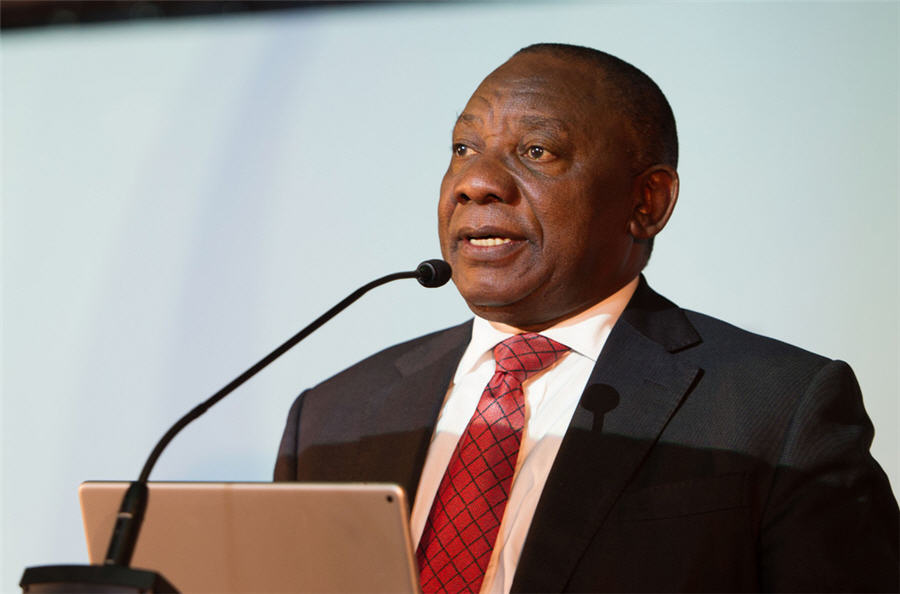
South African President Cyril Ramaphosa (Image: GCIS)

South African rescuers ended their attempts on Thursday to find anyone left in an illegal gold mine where at least 78 people died during a police siege, as a local volunteer described the horror of extracting their bodies from deep underground.


Police had encircled the mine since August and cut off food and water supplies to try to force the miners out so they could be arrested, resulting in what the GIWASU labour union called the worst state-sponsored massacre since the end of apartheid.


Since Monday, rescuers have used a cylindrical metal cage to pull up 78 bodies and 246 survivors, some of them emaciated and disorientated, in a court-ordered operation at the mine near the town of Stilfontein, southwest of Johannesburg.

The survivors, who are mostly from Mozambique, Zimbabwe and Lesotho, have been arrested and charged with illegal immigration, trespass, illegal mining and other offences.

The police have said they were enforcing a government crackdown on illegal mining and that to have allowed food and water down during the siege would have meant “allowing criminality to thrive”.

Mzwandile Mkwayi, 36, was one of two volunteers from the local township of Khuma, where most of the miners lived, who spent three days going up and down in the cage to bring out the corpses and survivors.

“I was scared. Those people were happy to see us, they were very happy. We told them ‘we are here to help you, please don’t die’,” he told Reuters on Thursday near the opening of the mine shaft.

“I put the bodies in the bags with my own hands. It was my first time to see a pile of dead. It will traumatize me for the rest of my life.”

Asked why he had volunteered, Mkwayi said: “Those people are our brothers. We’re living with them.”

On Thursday morning, the cage was sent down one last time, with a camera inside, which police described as a way of verifying information from volunteers who went down on Wednesday evening and said they could see no one left in the mine.

Reuters reporters at the scene saw the cage being lifted out empty and being driven away in a truck.

Mannas Fourie, the CEO of a rescue company involved in the operation, said it was possible some of the dead had been left in the vast network of deep tunnels and would never be found.

“If somebody got lost, you will never know whether somebody got left behind,” he told Reuters.

Abandoned mines


Illegal mining cost South Africa over $3 billion last year, according to the mining minister. Typically, undocumented miners move into mines abandoned by commercial miners and seek to extract whatever is left. Some are under the control of violent criminal gangs.

Ministers have consistently described the Stilfontein miners as criminals and one spoke of the need to “smoke them out”.

But local community members, civil society groups and labour unions have denounced the Stilfontein crackdown, with GIWASU condemning what it called “the dehumanization and criminalization of these poor, desperate miners”.

Thembile Botman, a community leader in Khuma, said local residents had been saying for months that people would die, and the deaths could have been averted had the rescue operation taken place sooner.

“The minister said they were going to smoke them out and they did. Congratulations,” he said, speaking with bitter anger.

Throughout the rescue operation, police and contractors operating the cage have not been going down themselves but rather have relied on local volunteers.

Police have not explained why they were not going down themselves but Fourie said it was better for the volunteers to go because they knew the miners and could gain their trust.

During the siege, police removed a pulley system the miners had previously been using to get in and out and waited outside the opening for them to come out, but community leaders and lawyers have alleged there was no way for them to climb out.

The pulley was later restored and removed several times during months of negotiations and legal action, according to civil society advocates and community members involved in supporting the miners.

The police have denied blocking the miners’ exit and said more than 1,500 miners did get out by their own means between the start of the siege in August and the rescue operation, which began on Monday.

(By Nellie Peyton, Xolani Nhlapo, Tim Cocks, Siyabonga Sighi, Tannur Anders, Bhargav Acharya, Sfundo Parakozov, Estelle Shirbon and Alexander Winning, Editing by Angus MacSwan and Alison Williams)