Saturday, January 18, 2025

EU, Mexico Sign Trade Deal Ahead Of Trump Inauguration


By Alex Kimani - Jan 17, 2025


The European Union and Mexico have agreed to a revamped free-trade agreement days before Trump begins a second term. Mexico, in particular, has been working to revamp the trade deal with the EU ahead of Trump’s inauguration as a way to show strength before the review of the US-Mexico-Canada trade agreement, known as USMCA. The U.S. is, by far, Mexico’s biggest trade partner, accounting for 83% of Mexico’s trade relationship. Trump has criticized the EU’s trade practices and said he would impose duties on exports by the bloc. He’s also said he’d impose 25% tariffs on goods from Mexico.

“This landmark deal proves that open, rules-based trade can deliver for our prosperity and economic security, as well as climate action and sustainable development,” European Commission President Ursula von der Leyen said in a statement.

Back in 2018, the Trump administration imposed a 25 percent levy on imported steel and 10 percent on aluminum, arguing that cheap imports were a national security threat and were decimating whole communities. The former president called the tariffs a big win for the country, saying they had helped revive U.S. steel and aluminum industries and created thousands of new jobs. Yet, evidence for the same was tenuous or mixed at best.

American steel manufacturers did receive an initial boost, with the New York Times reporting that dozens of steel companies had re-opened or made new investments courtesy of the tariffs. However, the bounty was only short-lived, with steel prices rapidly falling back to pre-tariff levels. Shares of steel companies were beaten up pretty badly during the time Trump was president. The one thing the tariffs undoubtedly achieved was a deterioration in relations between America and its closest neighbors and trade partners.

However, after months of games of high-stakes brinkmanship, Trump finally ended tariffs on steel and aluminum imports from Canada and Mexico, marking the first time the former president backed down on protection once it had been imposed. Trump is not known to be this charitable, with a reworked trade deal with South Korea in the previous year resulting in tariffs being replaced with quotas which were just as punitive. Washington was actually pushing for a similar quotas-for-tariffs swap with Canada and Mexico, but they stood their ground.

By Alex Kimani for Oilprice.com
NOTHING Beyond Profit

BP Slashes Jobs, Bolsters Oil & Gas Operations

By Andrew Topf - Jan 17, 2025

British oil major BP is cutting 5 percent of its workforce.

The job reductions are part of a cost-cutting plan that began in October 2024.

The job cuts align with a renewed emphasis on bolstering BP’s oil and gas operations and steering away from renewables.


The backlash against renewable energies continued this week as oil major BP (NASDAQ;BP) announced it is cutting 5 percent of its workforce or 4,700 jobs and 3,000 contractors.

The UK-based oil company said the reductions are part of a cost-cutting plan that began last October, when it identified $500 million of cost savings to be delivered in 2025 — 25 percent of the $2 billion target set for the end of 2026.

New CEO Murray Auchincloss was quoted by The Associated Press as saying that the company is “focusing resources on our highest-value opportunities” and that it has stopped or paused 30 projects since June.

In a statement, BP said “Last year (2024) we began a multi-year programme to simplify and focus bp. We are strengthening our competitiveness and building in resilience as we lower our costs, drive performance improvement and play to our distinctive capabilities.”

Despite efforts to sugar coat the bad news, BP’s share price has lost about 20 percent since last spring. The company has pulled back from several renewable energy projects and abandoned a previous plan to cut oil and gas output by 40 percent by 2030, states AP.

For example in October, BP created a joint venture with JERA, Japan’s largest power firm, to bring about “one of the largest global offshore wind developers.” According to Euro News, BP and JERA agreed to invest up to $5.8 billion by 2030, with BP committing to spend up to $3.25B. That’s a far cry from the $10 billion it pledged to spend between 2023 and 2030 on renewable energy capacity.

Oil and gas giants have come under increasing pressure to invest in renewables like wind and solar as net zero goals loom. BP, though, has said it will return to its core competencies, oil and gas, and is matching words with deeds.

On Jan. 16, Offshore Technology reported that BP will sign a deal with Iraq to develop four oil and gas fields in the Kirkuk region.

The Deep Dive notes that the job cuts align with Auchincloss’s emphasis on bolstering BP’s oil and gas operations and steering away from renewables.

The pivot mirrors similar strategies by BP’s industry rivals like Shell, which recently said it would stop developing new offshore wind projects. But it hasn’t yet helped the bottom line. In a trading update published earlier this week, BP reported that weaker refinery margins and reduced turnaround activities are expected to reduce Q4 profits by an estimated $100 million to $300 million. Further declines in oil production are expected.

Net Zero Investor observes that BP’s scaled-back renewable ambitions leaves its capital expenditures misaligned with net zero goals. The site quotes a review of BP’s Financial Investment Decisions by the Australasian Centre for Corporate Responsibility (ACCR). The report shows none of BP’s decisions in 2023 aligned with the International Energy Agency’s net zero emissions pathways for oil and gas.

The report also warns that if BP cuts less than its production targets, it is forecast to produce 84 percent more oil and gas in 2030 than it aimed to produce in 2020.

“BP claims its CAPEX is aligned with the goals of the Paris Agreement. However, if all oil and gas companies applied the same price-based framework as BP, they would sanction enough projects to exhaust the remaining carbon budget for a Paris-aligned world five times over,” according to Nick Mazan, UK company strategy lead at ACCR.

Net Zero Investor has an interesting explanation for why BP is cutting jobs now. BP, states the site, finds itself caught in the “valley of death” between the short-term demands of shareholders focused on profit margins, and the long-term expectations of investors prioritizing net zero targets.

With renewables currently accounting for under 10 percent of BP’s earnings, and with profits from oil and gas declining, BP like many of its peers is facing a vacuum.

“In a bid to keep investors at bay, the oil giant announced major job cuts, with some 4700 workers facing redundancies,” states Net Zero Investor.

By Andrew Topf for Oilprice.com
Big Oil Faces Wave of Climate Lawsuits from U.S. States and Territories

By Felicity Bradstock - Jan 18, 2025

Hawaii, Alaska, and Puerto Rico are leading the charge with lawsuits against Big Oil and the U.S. government over climate change damages.

These lawsuits challenge oil companies' deceptive practices and government inaction on climate change.

State-level legal action is gaining momentum and could reshape the landscape of climate litigation in the U.S.


Hawaii, Alaska, and Puerto Rico are some of the U.S. states and territories most affected by climate change, and they have all launched lawsuits against either the U.S. government or oil companies over the last year due to climate change challenges. This month, the U.S. Supreme Court rejected appeals from several oil companies attempting to quash a lawsuit from Hawaii that aims to hold firms accountable for climate change. The oil firms in question say that climate change is a federal issue and should, therefore, not be addressed at the state level. The municipality of Honolulu is now permitted to continue with its lawsuit against several oil firms, including Sunoco, Shell, ExxonMobil, Chevron, BP and 10 other companies, according to Hawaii state law.

The lawsuit focuses on what the claimants call “deceptive marketing and public statements” by oil companies. In 2020, the city and county of Honolulu and the Honolulu Board of Water Supply sued oil firms on the grounds that they violated state law for creating a public nuisance and failing to warn the public about the risks posed by their products. The Hawaii Supreme Court approved the lawsuit in 2023 saying that because it “does not seek to regulate emissions and does not seek damages for interstate emissions,” it does not fall under federal law.

In response to the Supreme Court decision, Ben Sullivan, the executive director and chief resilience officer for the city and county of Honolulu’s office of climate change, sustainability and resiliency, stated, “This landmark decision upholds our right to enforce Hawaii laws in Hawaii courts, ensuring the protection of Hawaii taxpayers and communities from the immense costs and consequences of the climate crisis caused by the defendants’ misconduct.”

In response, Ryan Meyers, a spokesperson for the American Petroleum Institute, said, “This ongoing, coordinated campaign to wage meritless lawsuits against companies providing affordable, reliable and cleaner energy is nothing more than a distraction from these important issues and waste of taxpayer resources.”

The U.S. Supreme Court has also seen legal action from the oil-rich state of Alaska, which is under severe threat of climate change. In 2024, a group of eight young Alaskans between the ages of 11 and 22 brought a lawsuit against the government claiming a new fossil fuel project violated their state constitutional rights. The lawsuit was filed by the non-profit organisation Our Children’s Trust. The rights in question are the right to protected natural resources for “current and future generations” and the right to be free from government infringement on life, liberty and property.

State-owned Alaska Gasline Development Corporation has proposed a $38.7 billion gas export project, which is expected to triple Alaska’s greenhouse gas emissions for several decades if approved, according to the lawsuit. The project includes the development of a gas treatment plant on Alaska’s North Slope and an 800-mile pipeline and liquefaction plant on the Kenai Peninsula to export LNG to Asia.

The lawsuit states that global warming is negatively affecting Native Alaskan youth by “interfering with their natural development, disrupting their cultural traditions and identities, and limiting their access to the natural resources on which they rely”. Some of the risks of climate change in the regions in question include climate-induced flooding, rapid permafrost thawing, and severe coastal erosion.

Earlier in 2024, Montana’s supreme court upheld a milestone decision in a legal case filed by Our Children’s Trust that required state regulators to consider the climate crisis before approving permits for new oil and gas projects. That case has since been appealed and is waiting for a verdict, pending a court case in July.

Also in 2024, Puerto Rico filed a $1 billion climate lawsuit against oil companies. The lawsuit accuses oil and gas companies of continuing to promote their products using unfair and deceptive trade practices when they knew they would pollute the island and contribute to warming temperatures. The lawsuit says that the firms failed to give warnings about the environmental risks linked with fossil fuel production. Exxon Mobil, BP and Chevron are some of the companies involved in the legal case.

Justice Secretary Domingo Emanuelli Hernández said when announcing the lawsuit, “These companies have known internally for decades that greenhouse gas pollution from fossil fuel products would have adverse impacts on the global climate and sea levels.”


Over two dozen U.S. cities, counties, and states are currently seeking compensation for the effects of climate change. Several non-profit organisations and state actors have launched lawsuits to bring awareness to the issue of climate change and accuse fossil fuel companies of directly exacerbating the problem through their actions. Depending on the outcomes of these lawsuits, it could set the precedent for future legal action to be taken at the state, rather than the federal, level.

By Felicity Bradstock for Oilprice.com
Canada's Rare Earth Rush: A New Frontier in Green Energy

By Felicity Bradstock - Jan 18, 2025


Canada possesses significant reserves of rare earth elements, crucial for green technologies like electric vehicles and renewable energy systems.

The Canadian government is investing in and developing its rare earth mining and processing capabilities to reduce reliance on China and support its net-zero goals.

While Canada has great potential to become a major rare earth producer, challenges such as strict environmental regulations and long development timelines for new mines exist.


As Canada rapidly develops its LNG production and export capabilities and expands its oil industry, the North American country may also be looking to boost its reputation as a rare earth elements producer. Canada has produced rare earth elements (REE) for several decades and is thought to have extensive untapped reserves. It has supported other countries in the development of their REE industries and is now looking to expand its domestic mining activities to help achieve net-zero goals and develop a regional supply chain.

REE are a set of seventeen metallic elements that are commonly used in many electronic devices such as mobile phones, computers, and electric vehicles (EVs). In the early 1990s, the production of REE was distributed fairly evenly across the globe, with China accounting for 38 percent of output, the U.S. 33 percent, Australia 12 percent and Malaysia and India five percent each. Brazil, Canada, South Africa, Sri Lanka and Thailand also had REE-production capabilities, although contributed little to the total global output. Over the next two decades, production became more concentrated in China, which contributed around 97 percent of global REE output by 2011.

As Canada looks to strengthen its energy security and solidify its role in the global energy market, the government is hoping to exploit the country’s largely untapped potential to mine REE. If successful, this could support Canada’s green transition and counter China’s dominance in the global REE market. The government announced a $70-million investment for global partnerships to promote Canadian mining leadership, as well as several other initiatives to help establish Canada as a major REE power.

Canada’s 2024 Critical Mineral Strategy Annual Report outlines plans to mine for over 30 critical minerals, with a focus on lithium, graphite, nickel, cobalt, copper, and REE. The U.S. government has repeatedly stated concerns about the growing dependence on China for critical minerals and REE, as well as other energy sources and products, as it looks to develop more regional supply chains. The expansion of Canada’s mining industry could help it provide a stable domestic supply of REE as well as support the development of a North American supply chain. James Edmondson, the research director at IDTechEx, said “It is believed Canada has very large quantities of these materials, even if they have not yet begun processing them in significant quantities.”

The global demand for REE is set to grow exponentially in the coming years, as more countries invest in renewable energy projects and the consumer uptake of EVs rises sharply. An October Future Market Insights report predicted that the global REE market will increase from a value of $6.2 billion in 2024 to $16.1 billion by 2034, at a CAGR of 10.1 percent.

Canada has some of the world’s largest known REE reserves and resources. In 2023, it was estimated that Canada had reserves of over 15.2 million tonnes of rare earth oxide. It is thought to have abundant supplies of nickel, which is widely used in EV batteries and mainly produced by China and Indonesia at present. In addition to widely available rare earths, Canada also holds large quantities of highly valued ‘heavy’ rare earths, including dysprosium and terbium, which are in limited global supply.

Canada has been developing its capacity in processing and separation, to produce metal and alloy, as well as for recycling rare earth magnets. The sector has received significant amounts of public and private funding in recent years in the government's pursuit of a green transition. Canada also has the potential to develop its magnet-making capacity, particularly as it is already a well-established producer of steel and aluminium, has a low-cost power grid, and has a skilled manufacturing workforce.

Canada has also contributed to several REE projects around the globe, supporting rare earth separation and magnet manufacturing activities in Estonia, the U.S., and Namibia. The North American country could, therefore, become a leader in the responsible, inclusive, and sustainable production of REE and supply chain development, thanks to its expertise in the sector and involvement in various projects around the globe.

While there is great optimism around Canada’s REE potential, experts suggest that the country’s strict environmental regulations may hinder the rapid development of the industry. New mines can take anywhere from 10 to 15 years to be developed if approved. This has led many to suggest that greater REE progress may be seen in the U.S., China, and Australia in the short- to mid-term, despite the untapped REE potential in Canada.

To successfully and sustainably develop Canada’s REE industry, the government must improve access to sectoral investment and mine development without compromising core environmental standards. Canada’s extensive experience in REE mining and role in the international critical mineral market could help the North American power become a major regional REE hub in the coming decades.


By Felicity Bradstock for Oilprice.com
Fire at Huge California Battery Storage Plant Forces Evacuations

By Charles Kennedy - Jan 17, 2025


A fire at the Vistra battery storage plant in California, one of the largest in the world, has prompted evacuations for hundreds of people, and part of a highway was closed early on Friday.


The battery storage plant in Moss Landing in northern Monterey County is some 77 miles south of San Francisco. The owner of the plant is Texas-based company Vistra Energy, whose shares fell in market pre-trade on Friday following the news of the fire.

The plant contains tens of thousands of lithium batteries, which could be difficult to put out once they catch fire.

“There’s no way to sugar coat it. This is a disaster, is what it is,” Monterey County Supervisor Glenn Church told KSBW-TV.

However, the fire is not expected to spread beyond the concrete building in which it erupted, according to the county supervisor.

All personnel at the battery storage plant were safely evacuated, Jenny Lyon, company spokesperson for Vistra Energy told The Mercury News via email.

The cause of the fire has not been established yet, Lyon said. An investigation will be launched once the fire is put out, the spokesperson said.

This is not the first fire at the facility. The plant saw fires broke out in September 2021 and February 2022, according to The Mercury News.

These two fires were caused by a malfunction in a fire sprinkler system, which released water and resulted in several units overheating, according to the investigations into the previous incidents.

In recent months, battery storage installations have been soaring in the United States thanks to incentives in the Inflation Reduction Act (IRA), which offered, for the first time, tax credits for standalone storage capacity.

Total costs of batteries and storage systems have also dropped significantly over the past decade to incentivize more installations across America.

In addition, collocating battery storage with solar generating systems has become a more popular choice among clean energy developers in the United States.

By Charles Kennedy for Oilprice.com
Biden erases more than $600M in final round of student loan forgiveness


President Joe Biden claps during a Department of Defense Commander in Chief Farewell Ceremony at Joint Base Myers-Henderson Hall in Arlington, Virginia on Thursday, when he also announced his final round of student debt relief.
 Photo by Bonnie Cash/UPI | License Photo


Jan. 16, 2025 / UPI


Jan. 16 (UPI) -- The outgoing Biden administration announced its final round of student loan forgiveness on Thursday, erasing more than $600 million in debt held by more than 8,000 borrowers.

In a statement Thursday, the Department of Education said 4,550 borrowers will receive loan forgiveness through its Income-Based Repayment Plan. Another 4,100 former DeVry University students will receive loan relief based on findings announced by the department in February 2022 that Devry made "widespread substantial misrepresentations about its job placement rates."

"For decades, the federal government promised to help people who couldn't afford their student loans because they were in public service, had disabilities, were cheated by their college or who had completed decades of payments. But it rarely kept those promises until now," Under Secretary of Education James Kvaal said in a statement.

"These permanent reforms have already helped more than borrowers, and many more borrowers will continue to benefit," he said.

Student loan forgiveness has been a priority of President Joe Biden and his administration, whose attempts to cancel billions of dollars in students loans have been met with staunch Republican opposition.

In the summer of 2023, the Supreme Court blocked Biden's plan to offer up to $20,000 in student loan relief to millions of eligible borrowers.

In response, the White House in February announced another plan, the Saving on a Valuable Education Plan, which had canceled some $5.5 billion in student debt held by more than 400,000 borrowers before an injunction prevented further implementation of parts of the policy.

According to the Department of Education, Biden, who leaves office on Monday, has provided a combined $188.8 billion in loan forgiveness for 5.3 million borrowers with 33 executive actions.

"For too long, millions of borrowers have been paying into a system that has not recognized their efforts. Now, thanks to this IDR Account Adjustment update and other Biden-Harris Administration efforts to fix this long-broken system, borrowers will finally receive the credit they've earned and be one step closer to relief, Persis Yu, deputy executive director and managing counsel of the Student Borrow Protection Center, said in a statement.

Along with the loan forgiveness, the Department of Education announced Thursday that it had completed the payment count adjustment for borrowers enrolled in the income-driven repayment play, allowed them to see their repayment counters when they log into their account.

Yu added that this change is "a critical step" to ensuring borrowers actually receive their loan relief.

"It gives borrowers the tools to hold servicers and the federal government accountable if they fail to deliver on the relief borrowers are entitled to under the law," Yu said.

With uncertainty hanging over the future of the loan relief programs with President-elect Donald Trump returning to the White House on Monday, Yu said they are encouraging all borrowers to screenshot their new count and save it in their records.

The announcement from the Biden administration comes just a few days after the president approved student loan relief for more than 150,000 borrowers.

Biden boosts loan for ioneer’s Nevada lithium mine to nearly $1 billion

Reuters | January 17, 2025 | 

Rhyolite Ridge South Basin. Image by ioneer Ltd.

The US Department of Energy has finalized a $996 million loan for ioneer’s Rhyolite Ridge lithium project, according to documents reviewed by Reuters, an increase of $296 million from a preliminary funding offer and a move aimed at boosting President Joe Biden’s green energy legacy.


Scant US production of lithium, an ultralight metal used to make batteries for electric vehicles and many consumer electronics, has left the country reliant on supplies from market leader China, an imbalance that the outgoing Biden has tried the past four years to offset.

The loan, details of which have not been reported, is nearly 50% larger than a conditional funding commitment made two years ago and cannot be reversed by incoming President Donald Trump.

Funds will be used to build a lithium processing facility in rural Nevada that will supply Ford and other EV manufacturers by 2028.

The increased funding was due to post-pandemic inflation and new geological studies showing the Rhyolite Ridge deposit, located roughly 225 miles (362 km) north of Las Vegas, contains more lithium than estimated two years ago, a senior Energy Department official told Reuters.

“That gave everyone more comfort that this was a far better resource than originally imagined,” said the official. The Energy Department also doubled the loan’s repayment timeline to 20 years.

Australia-based ioneer had estimated the mine’s cost at roughly $785 million in 2020. While company officials have acknowledged that figure is now much higher, they declined to provide an updated estimate.

James Calaway, ioneer’s chairman, said the loan closing represented an important milestone for increasing US lithium output.

Calaway said the company would now work to close a $490 million equity investment that South Africa-based Sibanye Stillwater agreed to in 2021. A Sibanye spokesperson said the company is in final due diligence related to ioneer’s project.

The government loan for ioneer comes less than three days before Biden leaves office and is one of the last actions taken by Biden-appointed Energy Department staff, who are returning government-issued laptops and cell phones on Friday.

Last August, Reuters reported that US mining projects were rushing to close government loans out of concern that Trump could block funding if reelected.
Loan details

The Rhyolite Ridge project aims to produce 22,000 metric tons of lithium annually, enough to produce 370,000 EVs, as well as boron, a chemical used to make soaps. That would give the project two sources of revenue, a key appeal to Energy Department loan officials. The US produces less than 5,000 metric tons of lithium annually.

The ioneer loan had been in review since 2021 and approval required the project to receive its federal permit, which Biden granted last October. Even still, the permit did not immediately lead to the loan’s closure and required more paperwork and negotiation.

The company will be able to access the funds in tranches once it raises additional equity, per Energy Department guidelines. Calaway said that ioneer is talking with other potential financiers.

Construction is slated to begin later this year. The loan includes $968 million of principal and $28 million of capitalized interest.

Biden officials in the past month have also finalized a $2.26 billion loan for Lithium Americas and announced a $1.36 billion conditional funding commitment for a direct lithium extraction project in California.

The Biden administration is “fully confident” that the three projects should be able to meet US lithium needs by the early 2030s, said the Energy Department official.

(By Ernest Scheyder; Editing by Veronica Brown and Toby Chopra)


Biden Administration Makes Final Moves to Advance Offshore Wind Power

offshore wind farm
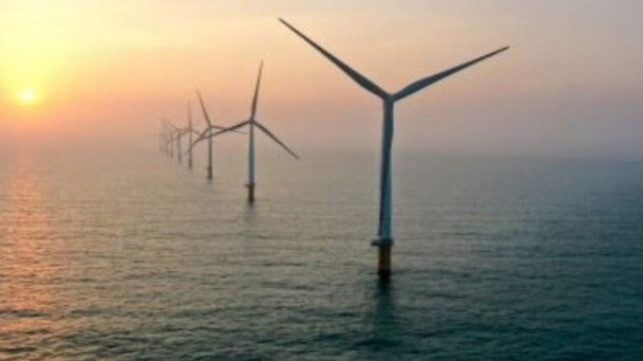
Biden administration takes final steps to push forward offshore wind farms (file photo)

Published Jan 17, 2025 3:48 PM by The Maritime Executive


On the final working day of the Biden Administration, the Bureau of Ocean Energy Management (BOEM) announced the approval of one more offshore wind farm project. It has been pushing forward in recent weeks to aid the industry ahead of an anticipated change in policy under the Trump administration.

The current media reports are that Donald Trump will sign an executive order on Monday, Inauguration Day, that places at least a temporary moratorium on wind energy projects. House of Representatives member Jeff Van Drew reported he had drafted an executive order for the incoming administration to order more research into the issues that Trump asserts including “windmills” kill whales and the need for subsidies to make the industry viable  Reports indicate Trump will halt actions until the approval of his nominated energy secretary Chris Wright, an executive from the fossil fuel industry, and nominated interior secretary Doug Burgum, former governor of North Dakota.

BOEM however today announced it has approved the Construction and Operations Plan for the SouthCoast Wind, a project proposed by Ocean Winds, a joint venture owned by EDP Renewables and ENGIE. Project. This is the final approval needed for the project from BOEM following the Department of the Interior’s December 2024 Record of Decision and Massachusetts in October moved forward with local permit approvals. The Rhode Island Current news outlet however is reporting today that the state's power utility, Rhode Island Energy, yesterday delayed a deadline till March 31 for signing its portion of the power purchase agreement and other approvals are still required for elements such as the cabling onshore in Rhode Island.

SouthCoast Wind will be located about 26 nautical miles south of Martha’s Vineyard and 20 nautical miles south of Nantucket, Massachusetts. The project will be able to generate up to 2.4 gigawatts of offshore wind energy for Massachusetts and Rhode Island.

The approved project includes the construction of up to 141 wind turbine generators and up to five offshore substation platforms located at a maximum of 143 positions, and up to eight offshore export cables located in up to two corridors, potentially making landfall in Brayton Point or Falmouth, Massachusetts. Compared to SouthCoast’s original proposed project, the selected alternative removes six wind turbine positions in the northeastern portion of the Lease Area to reduce potential impacts on foraging habitat and potential displacement of wildlife.

“We are proud to announce BOEM’s final approval of the SouthCoast Wind project, the nation’s eleventh commercial-scale offshore wind energy project, which will power more than 840,000 homes,” said BOEM Director Elizabeth Klein. "Under the Biden-Harris administration, we have made remarkable strides in advancing a clean energy economy, including approving more than 19 gigawatts of offshore wind energy.”

BOEM also this week set a timetable to start the environmental review for the proposed Vineyard Mid-Atlantic Offshore Wind Energy Project. It would be located south of New York with a total capacity of approximately 2 GW. The review is scheduled to run till March 1 putting it under the control of the new administration.

Yesterday, the U.S. Department of Energy also released the West Coast Offshore Wind Transmission Study and Action Plan for Offshore Wind Transmission Development in the U.S. West Coast Region. The study took two years to explore the costs and benefits of adding floating offshore wind turbines along the Pacific coast. The report shows that floating offshore wind could bring 33 GW of energy to the western United States by 2050 and asserts it would bolster the resilience of coastal communities.


In addition to the approval of the nation's first 11 commercial-scale offshore wind projects, BOEM held six offshore commercial wind lease auctions since 2022. It mapped a plan forward for additional permitting and auctions, but it will likely be stalled under the next administration.


Fincantieri Completes the Acquisition of Leonardo's UAS Underwater Business

Fincantieri Group

Published Jan 17, 2025 12:48 PM by The Maritime Executive


[By: Fincantieri Group]

Fincantieri announces the closing of the acquisition of Leonardo S.p.A.'s Underwater Armaments & Systems ("UAS") business line through the purchase of the entire share capital of the newly established company WASS Submarine Systems S.r.l. ("WASS"), into which the UAS business line had been previously contributed.

The transaction reinforces Fincantieri Group's strategy focused on growth in the naval defence business and the development of the underwater domain, strengthening its position as a leading technology integrator in the dual-use sector.

As foreseen by the preliminary agreement signed with Leonardo on May 9, 2024, and in line with the terms disclosed on that date, Fincantieri has paid today 287 million euros, representing the fixed component of the acquisition price. The variable component, linked to the growth targets of the UAS business line in 2024, will be determined following the approval of UAS’s final results for the 2024 fiscal year, for a total Enterprise Value of UAS, including the fixed component paid today, of up to 415 million euros, subject to standard price adjustment mechanisms.

With this acquisition Fincantieri integrates unique expertise in underwater acoustic technologies and advanced weapons systems, consolidating its leadership in the underwater domain. These innovative capabilities open new prospects for growth in the military and civilian sectors, with a focus on critical infrastructure security and the adoption of cutting-edge industrial applications and solutions.

Pierroberto Folgiero, Chief Executive Officer and Managing Director of Fincantieri, commented: "The acquisition of WASS Submarine Systems represents a decisive step for Fincantieri in strengthening its technological leadership in the underwater domain, a crucial sector for the future of maritime security and technology. By integrating advanced expertise in acoustic and underwater weaponry systems, we have expanded our ability to develop innovative solutions for naval defence while ensuring the protection of critical underwater infrastructure, such as submarine cables and offshore energy facilities. This confirms our goal to lead the evolution of advanced ship technologies, responding to global challenges with entrepreneurship and strategic vision."

The products and services herein described in this press release are not endorsed by The Maritime Executive.

LA REVUE GAUCHE - Left Comment: Search results for PERMANENT ARMS ECONOMY


AI is Empowering Shipowners to Tackle New Safety Management Challenges

WiseStella
WiseStella's AI technology has been developed in-house by a team of data scientists, setting it apart from off-the-shelf solutions

Published Jan 18, 2025 2:35 PM by The Maritime Executive


[By: WiseStella]

The maritime industry is undergoing a digital transformation, and one of the key innovations making waves is the integration of artificial intelligence (AI) into safety management systems.

The increased documentation required following the gamut of new rules and procedures place increasing demands on seafarers but companies like WiseStella are leveraging artificial intelligence to ease the cognitive burden to enhance safety across the global fleet.

"Seafarers today are faced with an overwhelming amount of information and documentation to manage," explains Ali Demiral, Chief Technology Officer, and AI lead at WiseStella. "This cognitive load can be a significant source of stress, especially when it comes to tackling complex safety assessments. But AI-powered technology can provide seafarers and ship managers with the tools they need to navigate these new requirements with confidence."

WiseStella's AI solution, dubbed "Wise-AI," taps into the power of large language models (LLM) to analyse vast troves of historical data from past safety inspections. By identifying common issues and potential root causes, the development, which is being incorporated across WiseStella’s suite of cloud-based solutions, provides seafarers with tailored recommendations and insights, even if they're unfamiliar with the intricacies of the regulations.

"Imagine a scenario where a second engineer is tasked with completing a self-assessment, for example," Demiral illustrates. "They may come across a question about the vessel's processes, unsure of whether current practices are 'as expected' or not. With the introduction of Wise-AI, they can simply input the details, and the system will suggest potential problem areas and offer guidance on how to address them."

This proactive approach not only helps seafarers save time and reduce stress levels, but it also fosters a deeper understanding of safety protocols. By learning from the AI's insights, crew members can better anticipate and mitigate issues, enhancing the overall safety of the vessel.

But the benefits of WiseStella's AI-based learning extend beyond individual vessels. The platform also provides fleet-wide benchmarking capabilities, allowing managers to compare their vessels' performance against industry standards.

"Suddenly, fleet managers have the ability to identify areas where their vessels are excelling or falling behind, empowering them to make data-driven decisions and target their training and resources more effectively,” Demiral says.

Interestingly, WiseStella's AI technology has been developed in-house by a team of data scientists, setting it apart from off-the-shelf solutions. This custom-built approach allows the company to continuously refine and improve the algorithms, ensuring that the system's predictions become more accurate and relevant over time.

However, AI outputs are always reviewed by academics and experts before the information is presented in the WiseStella platform.

“Physical assessment of the findings with ‘human-in-the-loop’ analysis helps improve information outputs,” says Demiral, “as AI continually learns from the additional input and recommendations to provide the optimum solutions.”

"The more data we collect, the better our AI becomes at identifying patterns and providing meaningful insights," Demiral explains. "It's a continuous learning process, and we're committed to staying ahead of the curve to support our clients' evolving needs."

One of the key advantages of Wise Stella's AI-powered platform is its ability to leverage data from a variety of sources, including industry reports and published research. By aggregating and anonymizing this information, the system can provide a comprehensive view of common issues and best practices across the maritime sector.

"We're not just relying on the data we collect from our own clients," Demiral clarifies. "We also incorporate insights from various guidance published by professional bodies and organisation ensuring that our recommendations are grounded in the broader industry context. This helps us deliver more robust and reliable solutions to our users."

As the maritime industry continues to navigate the uncharted waters of new safety regulations, the integration of AI-powered tools like Wise-AI into the WiseStella platform is poised to become a crucial lifeline for seafarers. By reducing cognitive stress, enhancing safety awareness, and providing data-driven insights, these innovative solutions are paving the way for a more resilient and efficient future at sea.

"The ultimate goal is to empower our clients to proactively address safety challenges, rather than simply reacting to them," Demiral says. "With Wise-AI, we're giving seafarers the tools they need to anticipate and mitigate issues, fostering a culture of continuous improvement and safety excellence."

As the maritime industry continues to evolve, the role of AI in safety management is only set to grow. Companies like WiseStella are at the forefront of this digital transformation, leveraging cutting-edge technology to support the people who keep our global supply chains moving. By easing the burden on seafarers and providing data-driven insights, these AI-powered solutions are poised to become indispensable in the years to come.

The products and services herein described in this press release are not endorsed by The Maritime Executive.