Friday, January 24, 2025

IRELAND

Hairdresser receives over €100,000 in compensation over her treatment while pregnant

/ 24th January 2025 /Subeditor


A hairdresser who was effectively demoted to cleaning and making tea after she said she was pregnant has won £90,000 (€106,000) in compensation, writes Elizabeth Haigh.

Kayleigh Flanagan sued for discrimination after noticing an "immediate change of attitude" from her employer, Amy Jury, after her baby news.

The mother-to-be was removed from the online booking system and could only take 'walk-in' customers, meaning she had "nothing else to do but clean the salon and make tea".

After a "severe deterioration" in work relationships, Ms Flanagan resigned and sued Ms Jury for "unfavourable treatment" due to her pregnancy and constructive unfair dismissal.

She has been awarded £89,849 after some of her claims were upheld by an employment judge who said bosses "sought to find fault with her work" and "were no longer invested in her" as a result of her pregnancy.


The Cambridge hearing was told Ms Flanagan started working at Envy hairdressers in Thatcham, West Berkshire as a senior stylist in June 2019.

On December 5 of that year, the stylist told her boss via text message that she was pregnant.

Ms Jury - who insisted she was happy for her employee - was on annual leave at the time but on her return Ms Flanagan noted there were "changes to her role".

Employment Judge Louise Brown told the hearing: "Most duties she carried out were those of an apprentice."Judge Louise Brown told the hearing: "Most duties she carried out were those of an apprentice."

The following month Ms Jury began disciplinary proceedings against Ms Flanagan, alleging "under-performance", although no evidence was presented at the hearing.

This was followed by a final warning before Ms Flanagan resigned.

Photo: Kayleigh Flanagan. Facebook
A DYING BUSINESS

Profits at John Player & Sons fall as cigarette market continues steep decline

Tobacco group said economic conditions ‘continue to create uncertainty’, particularly over demand for its products

Brands in the Imperial group include John Player cigarettes, Cohiba cigars and Rizla rolling papers.

Colin Gleeson
Fri Jan 24 2025 
IRISH TIMES

Tobacco and vape company John Player & Sons saw earnings fall by almost a quarter last year as the overall cigarette market in Ireland declined by nearly 13 per cent following a similarly steep contraction the year before.

Accounts for the company, which is an Irish subsidiary of Bristol-headquartered Imperial Brands, show the group made a profit of €10.4 million for the year ended September 30th, 2024, which was down from €13.7 million in 2023.

Brands in the Imperial group include John Player cigarettes, Cohiba cigars and Rizla rolling papers. The group also launched its vape brand Blu on the Irish market in 2019.

Revenue at the group rose to €57.9 million in 2024 from €55.5 million the year before. A dividend of €2 per share was paid out, amounting to €10 million, which was down from €8 per share amounting to €40 million the year before.

The company said the total legal cigarette market in Ireland declined by 12.8 per cent last year following a decline of 14 per cent the year before. The non-Irish duty paid sector increased to 34 per cent.

“Adding to this challenge, consumers are moving to value brands at an increasing pace as the result of the total tobacco market profit pool is shrinking,” the directors of the company said in a note attached to the accounts.

The company’s bottom line was further hit by an expense of €5.1 million relating to the settlement of certain deferred members in the pension scheme during the year.

This removed more than 70 per cent of liabilities from the scheme. The company said it expects to make no contributions to the defined benefit scheme during the next financial year.

The balance sheet shows total equity shareholder’s funds of €72.4 million, which was down from €73.6 million.

John Player & Sons said the current economic conditions “continue to create uncertainty”, particularly over the level of demand for the company’s products.

“The key risk and uncertainties facing the company relate to market demand for the products and the continued management of its cost base along with the general economic climate in which the company operates,” it said.

Selling and administrative expenses more than doubled in the year from €5.6 million to €13.4 million. The company’s manufacturing costs rose 4 per cent, while supply chain costs also increased.

Looking ahead, the company said it may have to contribute to the cost of setting up and funding of a “responsibility scheme” for vape products. The directors also expect “significant regulatory changes” to be implemented over the coming years, impacting costs and profit.

Some short-term financing was in place during the year and has since been repaid. The company does not have any external debt.

The company is currently involved in a number of legal cases, in which claimants are seeking damages for alleged smoking-related health effects, all of which are being “vigorously contested”.

The average number of people employed by the company during the year was 40, down one person. Staff costs soared from €3.3 million to €8.2 million due to the pension scheme.

Colin Gleeson is an Irish Times reporter

 Opinion & Analysis

TINASHE SITHOLE | Africa without borders could help continent prosper — what’s getting in the way


There is a pressing need to revive Pan-Africanism to foster peace and unity in defiance of rising political and economic instability — but how?


24 January 2025 - By Tinashe Sithole
Internal divisions, structural poverty, poor governance and competing national interests have undermined pan-Africanism over the decades, says the writer. Stock image.
MOSAIC OF INTERESTS Internal divisions, structural poverty, poor governance and competing national interests have undermined pan-Africanism over the decades, says the writer. Stock image.
Image: BOLDG

The vision of a “borderless Africa” is one of unity and shared prosperity for the continent. It is rooted in the ideals of the Pan-Africanist movement.

There are contradictions, however, between those ideals and the realities of governance on the continent.

There is an urgent need to revive Pan-Africanism to foster peace and unity. Internal divisions, structural poverty, poor governance and competing national interests have undermined Pan-Africanism over the decades. Political and economic instability are on the rise. The escalating conflict in Sudan has the potential to destabilise neighbouring countries.

Historically, Pan-Africanism began in earnest with the first Pan-African Conference in London, in 1900. Influential leaders and movements championed it, notably in the wave of African liberation between the 1950s and 1970s.

The formation of the Organisation of African Unity in 1963 marked a critical step towards uniting Africa. Leaders committed to creating a United States of Africa. But they often undermined unity through domestic authoritarian practices, power struggles and governance failures.

My academic research has examined domestic conflicts that have affected many parts of Africa. It has analysed ethnic conflicts in Sudan, Rwanda and Kenya, state-sponsored election violence and coups in Lesotho and Mauritania. It shows that political intolerance, bad governance and social marginalisation fuel instability and conflict within African countries.

In my latest research paper exploring Pan-Africanism and Africa’s developmental challenges. I argue that unity can only be realised if African states first address critical domestic challenges.

Challenges to Pan-African integration

Many regional initiatives emphasise cross-border integration and development. The African Union’s Agenda 2063, a framework for socioeconomic transformation, is one.

The goals of Pan-Africanism are at odds with the desire of political elites to maintain power in their individual countries. They see open markets as a threat to their authority

Agenda 2063 envisions a peaceful, prosperous and globally competitive Africa. It advocates for projects focusing on infrastructure, trade and empowerment of youth and women. But bad governance and socioeconomic inequality within individual nations undermines these ambitions.

For example, the poor governance of mineral resources in the Democratic Republic of the Congo has fuelled violent conflict. More than 5.6-million people are internally displaced, 1-million are exiled in neighbouring countries. Armed groups exploit the country’s mineral resources, worsening instability and undermining regional integration by creating cross-border humanitarian crises.

To bridge the gap between the ideals and practice of Pan-Africanism, African leaders must commit to:

  • resolve domestic challenges and systemic contradictions; and
  • foster equitable development that transcends national borders.

Resistance to open markets

The goals of Pan-Africanism are at odds with the desire of political elites to maintain power in their individual countries. They see open markets as a threat to their authority. The African Continental Free Trade Area shows this tension. It officially entered into force on May 30 2019 and trading under its framework began on January 1 2021. However, Nigeria, among other countries, initially delayed participating. It feared that cheaper imports would harm domestic industries and displace local jobs.

Agricultural sectors in less industrialised African nations are particularly vulnerable. They fear that competition from more industrialised African economies would hurt local farmers and deepen inequalities. For example, Botswana and Namibia banned South African vegetable imports in December 2021.

Botswana said the ban was meant to be good for local farmers and the economy. But it restricts free trade, creates cross-border supply barriers and puts national interests first. This blocks regional integration goals. Botswana’s new government has begun lifting the ban.

Internal strife

Structural poverty, governance failures and ethnic politics in some countries are barriers to national unity. Political power is contested along ethnic lines, deepening divisions.

For example, former Zimbabwean president Robert Mugabe was celebrated as a Pan-African leader for his strong stance against western imperialism. His legacy, however, shows he undermined elections through state-sponsored violence. He also weakened national unity by eroding democratic processes. Political persecution and economic collapse on his watch fuelled a refugee crisis, causing resentment and tension in Southern Africa.

Uneven benefits of regionalism

Regionalism has been championed as a pathway to Pan-African unity. Yet its benefits are uneven. The Economic Community of West African States has successfully promoted stability and peace and mediated conflicts in Liberia and Sierra Leone.

However, political instability, unequal resource distribution, corruption and weak infrastructure hinder broader progress. This includes expanded trade networks and stronger regional governance.

Mozambique, for example, is experiencing post-election unrest. And a deadly insurgency in the northern Cabo Delgado province has raged since 2017. These examples highlight how Mozambique’s political leaders have failed to address local grievances, instead fuelling violence and conflict for their benefit. This is at the expense of domestic unity, peace and development.

A belated military intervention by the Southern African Development Community in July 2021 failed to end the insurgency.

What needs to be done

A stable, inclusive and equitable domestic foundation is the basis of regional integration. For example, countries could use a framework that makes decision making and resource distribution more inclusive. This could promote national cohesion.

Without addressing internal governance crises, structural poverty and ethnic divisions, African states will remain fragmented. If they cannot unite their own nations, can they ever hope to unite as a continent?

Practical action to meet governance challenges together would strengthen Pan-Africanism.

One approach could be to establish a “cross-border unity and action forum” to help communities, business leaders and civil society bodies share best practices. They could also develop regional projects and take on common challenges.

Lastly, a “Pan-African local action network” could connect grassroots bodies, community leaders and small business forums across Africa.

Local entrepreneurs in agriculture or technology could work with counterparts in other countries through exchange programmes. They could establish regional business incubators, or simplified cross-border trade agreements. These connections between citizens would drive unity, shared accountability and solidarity.

A borderless Africa

Pan-Africanism is often used to deflect responsibility for domestic failures while offering superficial solidarity.

Without addressing internal governance crises, structural poverty and ethnic divisions, African states will remain fragmented. If they cannot unite their own nations, can they ever hope to unite as a continent?

As Kwame Nkrumah, Ghana’s first prime minister and president, stated: “If we are to remain free, if we are to enjoy the full benefits of Africa’s rich resources, we must unite.”

• Tinashe Sithole is a postdoctoral research fellow at the SARChI Chair: African Diplomacy and Foreign Policy, University of Johannesburg

This article was first published in The Conversation


The History of Pan Africanism

“Pan Africanism can be said to have its origins in the struggles of the African people against enslavement and colonisation” Dr Tajudeen Abdul-Raheem (Pan Africanism: Politics, Economy and Social Change in the Twenty-first Century) And this struggle may be traced back to the first resistance on slave ships – rebellions and suicides – through the constant plantation and colonial uprisings and the “Back to Africa” movements of the nineteenth century.

However, it was in the twentieth century that Pan Africanism emerged as a distinct political movement initially formed and led by people from the Diaspora (people of African heritage living outside of the Continent). In 1900, the Trinindadian barrister – Henry Sylvester Williams – called a conference that took place in Westminster Hall, London to “protest stealing of lands in the colonies, racial discrimination and deal with other issues of interest to Blacks”.

This conference drafted a letter to the Queen of England and other European rulers appealing to them to fight racism and grant independence to their colonies. It was the African American scholar and writer, Dr W.E.B. Du Bois who convened the first Pan African Congress in 1919, in Paris, France. Again it demanded independence for African nations. Further congresses – essentially extended meetings of like-minded Africans searching for a way forward - were held in 1921 (London, Brussels, Paris), 1923 (London and Lisbon), 1927 (New York).

Each reiterated and refined the demands for rights and freedom and built support for the cause. However, perhaps the most significant was the 5th Congress held in Manchester in 1945. For the first time, a large number of Africans from the Continent were present and the meeting provided impetus and momentum for the numerous post-war independence movements.

This Congress also reserved the right of the colonised, once peaceful methods had been exhausted, to use force to take forward their struggle for self-determination. Just over a decade later in 1958, Kwame Nkrumah, first leader of independent Ghana called a meeting in the capital city, Accra, of all the independent African states – Egypt, Sudan, Libya, Tunisia, Liberia, Morocco and Ethiopia – in order that they should recommit themselves to supporting independence for the rest of the Continent.

By 1963, there were 31 independent nations. Some were agitating for immediate Continental political union while others favoured slower steps towards unity.

Emerging from the exchanges between the two camps, the Organisation of African Unity (OAU) was formed in May, 1963. Throughout the twentieth century, cultural Pan Africanism weaved through the politcal narrative – the Harlem Renaissance, Francophone philosophies of Negritude, Afrocentrism, Rastafarianism and Hip Hop. Artists of African origin and heritage have found inspiration in and been drawn to exploring and communicating their connections with the Continent.

Post-independence, a new generation of African writers – such as Chinua Achebe, Wole Soyinka, Bessie Head gave voice to issues that could be recognised throughout the Continent (links to other pages from the key words here). The 6th Pan African Congress in Dar Es Salaam, Tanzania in 1974 took place fuelled by the radical Black movements sweeping the Diaspora espousing militant Black pride and fighting white domination with Black separatist organisation.

The Congress was attended by 52 delegations from Africa, the Caribbean, the Americas, Britain and the Pacific. Disappointed by the OAU's lack of engagement with the Diaspora, this Congress restated the global unity of Black peoples struggling for liberation.

Inspired by the principles of self-reliance being instituted by the Tanzanian president Julius Nyerere, many hoped also to give concrete support to the new wave of independence movements in Angola, Mozambique, Guinea-Bissau, Zimbabwe and South Africa – but the Congress was unable to create clear structures to enable such action.

The 7th and last Congress in Kampala, Uganda in 1994 sort to rectify this by setting up a permanent organisational structure to carry forward decisions taken at the Congress meetings. Still, divisions and debates remained – was Pan Africanism a movement of the people or had it now been taken over by governments, were Black Africans of Sub-Saharan origin the only true Africans? Pan Africanism is no different from any other broad based and passionate political movement.

It contains diverse and sometimes opposing opinions about the best way to fulfill the common objective of the self-determination of Africa and African peoples around the world. The 7th Congress aimed to reconcile differences and create a wide and open coalition of all citizens of African countries and Diasporic people of African heritage who wished to commit themselves to the liberation of the Continent and the Diaspora.

There have been no further congresses but Pan Africanism remains a vital force in Continental and Diasporic culture and politics.


 AMERIKAN HUBRIS

Italy's top court upholds Amanda Knox's conviction for falsely accusing innocent man of murder

ROME (AP) — Italy’s highest court on Thursday confirmed a slander conviction against U.S.
b0dc68fdb3435813d56619ca43bedb05c636964dd89e5d415e8c507291ccfead
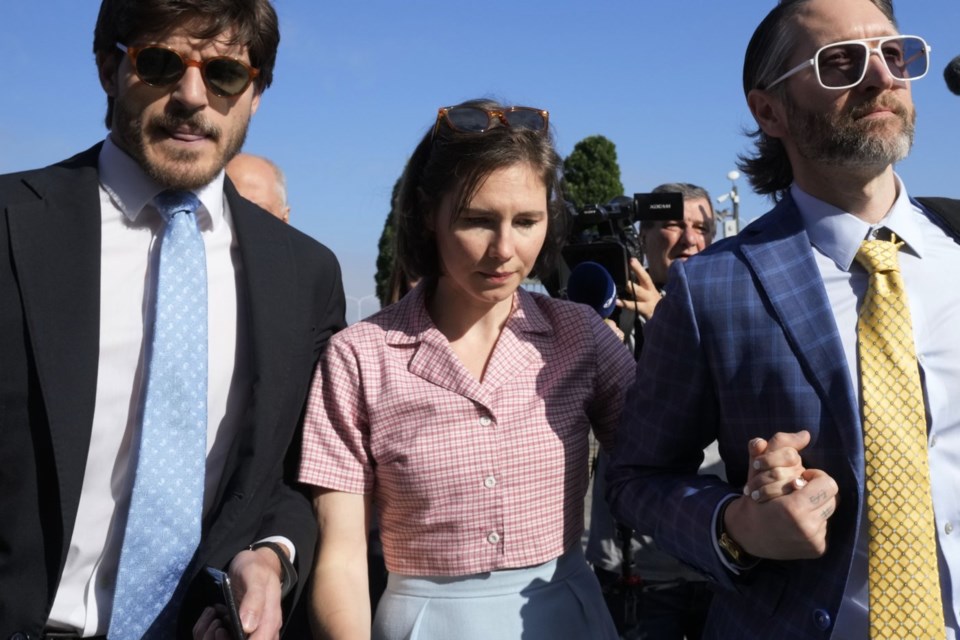
FILE - Amanda Knox arrives flanked by her husband Christopher Robinson, right, at the Florence courtroom in Florence, Italy, Wednesday, June 5, 2024. (AP Photo/Antonio Calanni, File)

ROME (AP) — Italy’s highest court on Thursday confirmed a slander conviction against U.S. defendant Amanda Knox for accusing an innocent man of murdering her British flatmate 17 years ago in a sensational case that polarized trial watchers on both sides of the Atlantic.

Knox had appealed the conviction based on a European Court of Human Rights ruling that said her rights had been violated by police failure to provide a lawyer and adequate translator during a long night of questioning just days after Meredith Kercher's murder in the university town of Perugia.

Judge Monica Boni read the verdict aloud in a courtroom that was empty except for a few reporters and guards. The lawyers for both Knox and the man she wrongly accused, Patrick Lumumba, had gone home during deliberations.

The ruling seemingly ends a 17-year legal saga that saw Knox and her Italian ex-boyfriend convicted and acquitted in flip-flop verdicts in 21-year-old Meredith Kercher’s brutal murder, before being exonerated by the highest Cassation Court in 2015.

The slander conviction against Knox had survived multiple appeals, and Knox was reconvicted on the charge in June after the European court ruling cleared the way for a new trial.

Reached by telephone, Lumumba said he was satisfied with the verdict. “Amanda was wrong. This verdict has to accompany her for the rest of her life,″ he said.

Knox's lawyer, Carlo Dalla Vedova, expressed surprise at the court's decision. “We are incredulous,'' Dalla Vedova told reporters in the courthouse by phone. ”This is totally unexpected in our eyes, and totally unjust for Amanda."

Knox called it a “surreal” day in a post on X.

“I’ve just been found guilty yet again of a crime I didn’t commit,” her post said. “And I was just awarded the Innocence Network Impact Award, ‘created to honor an exonerated person who raises awareness of wrongful convictions, policy issues, or assists others post-release.’”

Speaking recently on her “Labyrinths” podcast, Knox said: “I hate the fact that I have to live with consequences for a crime I did not commit.” She said consequences included difficulties in obtaining visas to some countries because of a criminal conviction.

Her defense team says she accused Lumumba, a Congolese man who employed her at a bar in the central Italian university town of Perugia, during a long night of questioning and under pressure from police, who they said fed her false information. The European Court of Human Rights found that the police deprived her of a lawyer and provided a translator who acted more as a mediator.

Knox, now 37, does not risk any more time in jail. She has already served nearly four years during the investigation, initial murder trial and first appeal. But Knox had continued the legal battle with the aim of clearing her name of all criminal wrongdoing.

Knox returned to the United States in 2011, after being freed by an appeals court in Perugia, and has established herself as a global campaigner for the wrongly convicted. She has a podcast with her husband and has a new memoir coming out titled, “Free: My Search for Meaning.”

Knox was a 20-year-old student in Perugia when Kercher was found stabbed to death on Nov. 2, 2007, in her bedroom in the apartment they shared with two Italian women.

The case made global headlines as suspicion quickly fell on Knox and her boyfriend of just days, Raffaele Sollecito. But another man, Rudy Hermann Guede, from the Ivory Coast, was eventually convicted of murder after his DNA was found at the crime scene. He was freed in 2021, after serving most of his 16-year sentence.

The European court ordered Italy to pay Knox damages for the police failures, noting she was particularly vulnerable as a foreign student not fluent in Italian.

Italy’s high court ordered the new slander trial based on that ruling. It threw out two signed statements drafted by police falsely accusing Lumumba in the murder, and directed the appellate court that the only evidence it could consider was a hand-written letter she later wrote in English attempting to walk back the accusation.

However, the appellate court in its reasoning said that the four-page memo supported a slander finding.

On the basis of Knox's statements, Lumumba was brought in for questioning, despite having an ironclad alibi. His business suffered, and he eventually moved to Poland with his Polish wife.

Arriving at court, he underlined that Knox “has never apologized to me.”

___

Barry reported from Milan.

Nicole Winfield And Colleen Barry, The Associated Press

China-US economic, trade cooperation mutually beneficial


Xinhua, January 24, 2025

China-U.S. economic and trade cooperation is mutually beneficial, and China does not intentionally pursue a trade surplus, a Chinese foreign ministry spokesperson said on Friday.

Spokesperson Mao Ning made the remarks in response to U.S. calls for a fairer trade relationship with China.

Despite differences and frictions between China and the United States, the common interests and cooperation potential are substantial, allowing both sides to enhance dialogue and consultation in this regard, Mao said.

In response to U.S. remarks regarding tariffs on China, Mao said there are no winners in a trade war or a tariff battle. Such a conflict does not serve the interests of any party and is not conducive to the global economy.

China.org.cn

WHO freezes hiring, restricts travel after US withdrawal

Trump’s planned exit “has made our financial situation more acute” the WHO chief told staff


FRANCE-POLITICS-HEALTH-EDUCATION-WHO
The WHO is “freezing recruitment, except in the most critical areas.” | POOL photo by Laurent Cipriani/AFP via Getty Images

The World Health Organization is freezing recruitment and slashing travel in response to the withdrawal of the U.S., its biggest funder, according to an internal email seen by POLITICO.


“As you know, the United States of America has announced that it intends to withdraw from WHO.  We regret this decision and hope the new administration will reconsider it,” Director-General Tedros Adhanom Ghebreyesus told staff in an email sent Thursday night.


“This announcement has made our financial situation more acute, and we know it has created significant concern and uncertainty for the WHO workforce,” he added.


In response, the WHO is “freezing recruitment, except in the most critical areas” and “significantly reducing travel expenditure.” All meetings must now be fully virtual unless in exceptional circumstances, and missions to provide technical support to countries should be “limited to the most essential.”


Other measures include limits to the replacement of IT equipment, a renegotiation of major contracts, and a suspension of office refurbishments and capital investments, unless needed for security or cost-cutting.


World Economic Forum 2025: Democracy is the key to navigating rapid change

As the global political economy faces a critical test, global leaders should urgently prioritise strengthening democratic governance and social safeguards in trade rather than undermining them.

ITUC General Secretary Luc Triangle took this key message to the 2025 World Economic Forum (WEF) Annual Meeting.


Fri. 24 January 2025


Ever since the WEF was formed to facilitate direct engagement between global businesses and world leaders, economic inequality has surged. Oxfam’s latest inequality report shows that billionaire wealth rose three times faster in 2024 than in 2023. Moreover, technological advancements have effectively put the world’s broken economic model on steroids, amplifying its flaws.

Across the world, people have lost trust in governments for categorically failing to deliver the prosperity that workers deserve. While the world urgently requires a New Social Contract, the self-declared change makers at the WEF seem to be entrenched in outdated approaches.
Social safeguards

We know what the problems are:In the second half of the last century, governments failed to build in the necessary social safeguards in the globalising trade and investment system to ensure a fair distribution of the wealth created.
Human and labour rights due diligence throughout global supply chains is crucial, but it remains unenforced for businesses and investors.
More than a century after the world agreed to guarantee all workers a living wage, a growing number of the working poor are forced to take on multiple precarious jobs to make ends meet, while the labour income share in the economy continues to drop.
There is no effective mechanism for the fair taxation of wealth. Meanwhile debt burdens and conditionalities are suffocating countries trying build their economies after colonial exploitation.

Against this backdrop, the WEF in Davos discussed the potential impact and development of Artificial Intelligence (AI). While financers and investors were keen to exploit the efficiency gains of these innovations, others voiced concerns about their potential social consequences.

The one per cent gathered at the WEF wield enormous influence over the reality of the 99 per cent. It is high time that democratic governments insist that they take their social responsibilities seriously.

Despite clear, worldwide signs that the ticking time bomb of unchecked, unequal and environmentally devastating economic growth is about to explode, leaders continued with business as usual.

As one of a few critical voices at the WEF, Luc Triangle met with leaders of international institutions, global companies and political leaders to stress that there is no time to waste in balancing globalisation.


"We have the tools and we have the opportunities – as well as the money – to fix the system, and ensure that we do not repeat the mistakes of the past."Luc Triangle

“The World Summit for Social Development in Qatar at the end of the year must guarantee that all people in all countries benefit from the benefits of global trade and investment. This requires delivering decent work through a Just Transition to a sustainable world economy that respects the fundamental rights of all, including limits on maximum working hours to ensure living wages or adequate social protection where needed.

“This will not be possible without mandatory human rights due diligence, an effective global tax standard, and boosting debt restructuring and cancellation. Only then will current tensions subside, allowing us to rebuild a better world based on a New Social Contract.”


Captain Cook statue vandalised again before controversial ‘Australia Day’

A statue of the British explorer is splashed with red paint and vandalised in Sydney’s eastern suburbs.

A statue of Captain James Cook is covered in red paint after being vandalized, in Randwick, Sydney, Australia on January 24, 2025 [Dan Himbrechts/EPA]
Published On 24 Jan 202524 Jan 2025

A statue of Captain James Cook in Sydney’s eastern suburbs has been splashed with red paint and its hand removed days before Australians celebrate their controversial “Australia Day” on Sunday.

New South Wales police said it received reports of a vandalised statue in Sydney’s Eastern Beaches at Randwick on Friday morning and that officers had seized “a number of items” at the scene.

The statute has recently undergone restoration work after a similar incident in February last year.

Cook arrived in Sydney Cove in 1770 where he and his crew landed at Botany Bay, opening up the continent now known as Australia to colonisation by the British Crown.

Nine years later, he was killed by Indigenous people during an attempt to kidnap a Hawaiian chief.

As a historical figure, he is often associated with Australia Day, held on January 26, to commemorate the arrival of the First Fleet in Australia in 1788.

The public holiday is typically met with large protests from Indigenous groups and their supporters across Australian cities who refer to the holiday as “Invasion Day” or “Survival Day” as it marks the start of violent European colonisation of the continent.

Indigenous people and their supporters argue that it marks a moment of grief, loss and shame for the descendants of European colonists, or alternatively, the survival of First Nations peoples.

Prior to the arrival of Europeans, Australia was home to more than 500 different Indigenous groups with multiple languages who were present on the continent for 60,000 years – if not longer.

Such calls have been rejected as “divisive” by conservatives and nationalists, including former Australian Liberal Prime Minister John Howard who rejected what he called the “black armband view” of Australian history in favour of a more positive emphasis on shared struggle, tenacity and overcoming adversity.
Source: Al Jazeera
Mike Bloomberg steps in again to fund UN climate body in response to Trump’s moves

Trump is repeating a policy decision he made at the start of his previous term in office, which similarly triggered a move by Bloomberg to uphold the country’s international climate obligations

By ASAF ELIA-SHALEV
JTA
JANUARY 24, 2025 
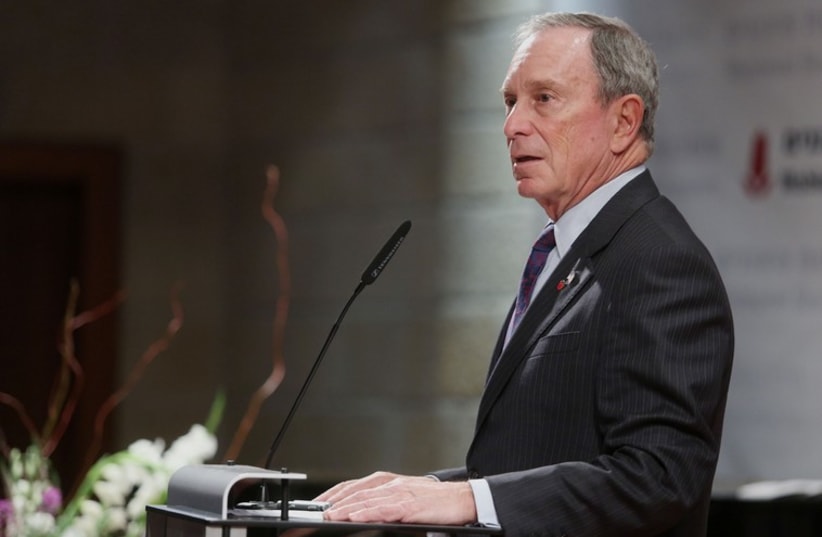
Michael Bloomberg(photo credit: MARC ISRAEL SELLEM/THE JERUSALEM POST)

Jewish billionaire and former New York Mayor Michael Bloomberg pledged on Thursday to help cover US financial commitments to the United Nations climate body after President Donald Trump said he would eliminate the funding and withdraw from the global Paris climate agreement.

The new Republican president is repeating a policy decision he made at the start of his previous term in office in 2017, which similarly triggered a move by Bloomberg to uphold the country’s international climate obligations.

“From 2017 to 2020, during a period of federal inaction, cities, states, businesses, and the public rose to the challenge to uphold our nation’s commitments — and now, we are ready to do it again,” Bloomberg said in a statement posted by his philanthropic arm Thursday

Money from Bloomberg and other unspecified US climate donors will help fund the United Nations Framework Convention on Climate Change, which runs annual global climate negotiations and tracks countries’ greenhouse gas emissions.

Bloomberg, among the richest people in the world, made his fortune in financial information and media. He has long been dedicated to fighting climate change and serves as UN special envoy focused on the issue. He is also a prolific philanthropist, having donated billions of dollars to a wide range of causes.
Former New York City mayor and philanthropist Michael Bloomberg hosts a roundtable discussion with municipal leaders throughout Israel from all walks of life 
(credit: Courtesy of Bloomberg Philanthropies)

Though he is not known for emphasizing Jewish philanthropy, he has become one of the largest individual donors to Israeli charities since the start of the war in Gaza. He gave $44 million to Israel’s Magen David Adom ambulance service and committed $28 million to help rehabilitate Israeli communities targeted by Hamas’ Oct. 7, 2023, terror attack.

Growing concerns

Trump’s positions on climate, energy, and the environment put him at odds with the growing concern about these issues among Jewish communal organizations in the United States. The most recent sign of the wave of is the first-ever donation by the Schusterman family foundation to a nonprofit focused on climate action.

Concern about the climate crisis has been especially salient amid the devastating wildfires in Los Angeles, whose severity, experts say, can be linked to increasingly erratic patterns of rainfall and drought.

The fires were highlighted in the announcement of the Jewish Funders Network of a workshop for Jewish donors who want to focus on climate, and in an essay by the head of the Jewish climate group Dayenu suggesting arenas where it might still be possible to make a difference despite Trump’s installation in the White House.
Ice in the sky: Thailand's fight against air pollution


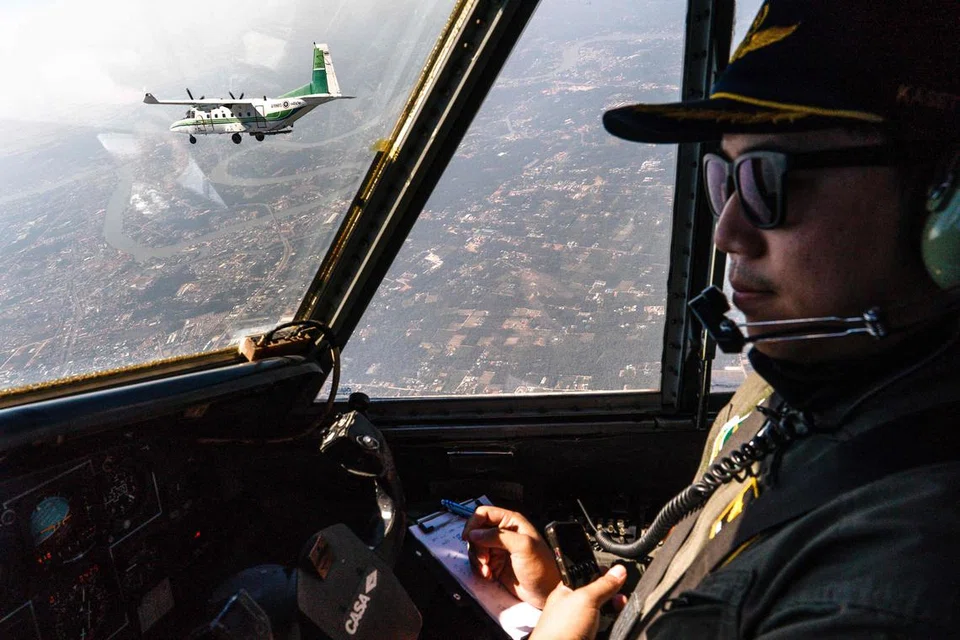
Twice a day, the Royal Rainmaking department sends aircraft up to spray cold water or dry ice into the layer of warm air to cool it down.PHOTO: AFP

UPDATED Jan 24, 2025,

Hua Hin - Flying through Bangkok’s cloudless blue skies, a small aircraft sprays a white mist over a thick haze of pea soup smog below.

This is Thailand’s desperate, unproven attempt at reducing the oppressive air pollution over its capital, which on Jan 23 reached eight times the World Health Organisation’s recommended daily maximum average.

The scourge has made more than a million people ill since late 2023 and cost Thailand more than US$88 million (S$119 million) in medical expenses, the public health ministry said earlier in January.

Air pollution in the Thai capital forced the closure of more than 350 schools – over a hundred more than the previous day – city authorities said on Jan 24, as Bangkok was ranked the world’s 7th-most polluted major city by air quality monitor IQAir.

According to Bangkok governor Chadchart Sittipunt, the main culprits are vehicle emissions, crop burning in the wider region and “closed” weather conditions – a warm atmospheric lid covering the dust, preventing it from dispersing.

Known as a temperature inversion, the kingdom is trying to deal with the phenomenon using a homegrown experimental method to displace the pollution.

Twice a day, the Royal Rainmaking department sends aircraft up to spray cold water or dry ice into the layer of warm air to cool it down.

AFP was granted exclusive access on board a flight over the outskirts of Bangkok.

Inside the small craft – which climbed to an altitude of around 1,500m – a scientist tracks the flight path on an iPad as two crew members release icy water from a pair of large blue containers that sprays out from the craft’s belly.

The theory is that reducing the temperature difference between the levels makes it easier for the trapped particles, known as PM2.5, to disperse into the upper atmosphere.

It is an unconventional method the department says is only used in Thailand.

“This is not the usual cloud seeding,” said programme head Chanti Detyothin.
‘Doing our best’

Countries have long tried “cloud seeding” – injecting chemicals such as silver iodide into clouds to trigger rain or snowfall – in attempts to alleviate drought and, increasingly, air pollution.

But its effectiveness is open to question and scientists say it has been shown to only be marginally useful in creating rain and absorbing pollutants.

Thailand’s worst smog happens during the dry season between December and April, when it is too windy and cloudless to induce precipitation.
Air quality falls in parts of Bangkok; residents urged to take precautions

The new technique was first used last year and is still in its testing stages.

Another aircraft measures pollutant concentrations before and after spraying to gauge the difference in air quality.

“The concentration (of PM 2.5) is less,” said Mr Chanti.

“The data suggests that at the level of our area of focus, the dust cleared up,” though he admits they cannot “make the pollution go away entirely. Even with this new technology, there are limitations.”

“We have been working every day for Bangkok to have clean air. We are doing our best as much as we can,” he said.
Oil and gas firm

Ahead of takeoff, rainmaking staff pile a tonne (1,000 litres) of either dry ice, or ice and water into a plane – traditional cloud-seeding aircraft with repurposed spraying equipment.

The dry ice – solidified carbon dioxide – is provided by Thailand’s oil and gas giant PTT and other energy companies.

PTT did not immediately respond to requests from AFP for comment.

Another fossil fuel company, Bangkok Industrial Gas, also donated dry ice to the programme this month, with managing director Piyabut Charuphen saying in a statement the gift was part of their “commitment to creating a sustainable future”.

Carbon dioxide is itself a greenhouse gas and the environmental and health effects of spraying dry ice in the atmosphere are not fully understood.

Ms Weenarin Lulitanonda, co-founder of Thailand Clean Air Network, accused the energy firms of “using cilantro to garnish their dish”.

The Thai idiom, she explained, meant that “instead of solving the problem, (they) are creating a beautiful image”.

Just one flight can cost up to US$1,500, and with aircraft taking off from three bases around the country, it can reach US$9,000 per day.

Mr Ekbordin Winijkul of the Asian Institute of Technology said it is more cost-effective for Bangkok to address the causes of pollution with proven measures such as low-emissions traffic zones.

City authorities are already pursuing many of these, he said, like banning some heavy-duty vehicles and working with other provinces to control agricultural burning.

“Before we try to do something,” he said, “at least we should have confidence in the data first”. 

AFP


Southeast Asian cities among world's most polluted, ranking shows


A view of the city amid air pollution in Bangkok, Thailand on Jan 24.
PHOTO: Reuters

REUTERS
January 24, 2025 

BANGKOK — Southeast Asian cities were among five most polluted in the world on Friday (Jan 24) according to air-monitoring organisation IQAir, with Ho Chi Minh City ranked second-most polluted, followed by Phnom Penh and Bangkok fourth and fifth, respectively.

In the Thai capital, a thick smog was seen covering the city's skyline. Workers, especially those who spend most of their time outdoors, were suffering.

"My nose is constantly congested. I have to blow my nose all the time," said motorcycle taxi driver Supot Sitthisiri, 55.


Air pollution is caused by a combination of crop-related burning, industrial pollution and heavy traffic.

In a bid to curb pollution, the government is allowing free public transportation for a week, Transport Minister Suriya Juangroongruangkit said.

Some 300 schools in Bangkok were closed this week, according to the city administration.

"They should take more action, not just announce high dust levels and close schools. There needs to be more than that," said Khwannapat Intarit, 23.

"It keeps coming back, and it’s getting worse each time."

Thai Prime Minister Paetongtarn Shinawatra said in a social media post that companies and government agencies should allow staff to work from home to reduce car use and construction sites should be using dust covers.

"The government is fully committed to solving the dust problem," she said.

In Vietnam's largest city, IQAir said the level of fine inhalable particles in Ho Chi Minh City was 11 times higher than the recommended level by the World Health Organisation.

Weeks earlier, the capital Hanoi was ranked the world's most polluted, prompting authorities to issue a warning about the health risks from air pollution and urging the public to wear masks and eye protection.

Governments in Southeast Asia were pushing for longer-term solutions to bring pollution down including a carbon tax and promoting the use of electric vehicles.