Thursday, January 30, 2025

Lula says if Trump hikes tariffs, Brazil will reciprocate

Agence France-Presse
January 30, 2025 

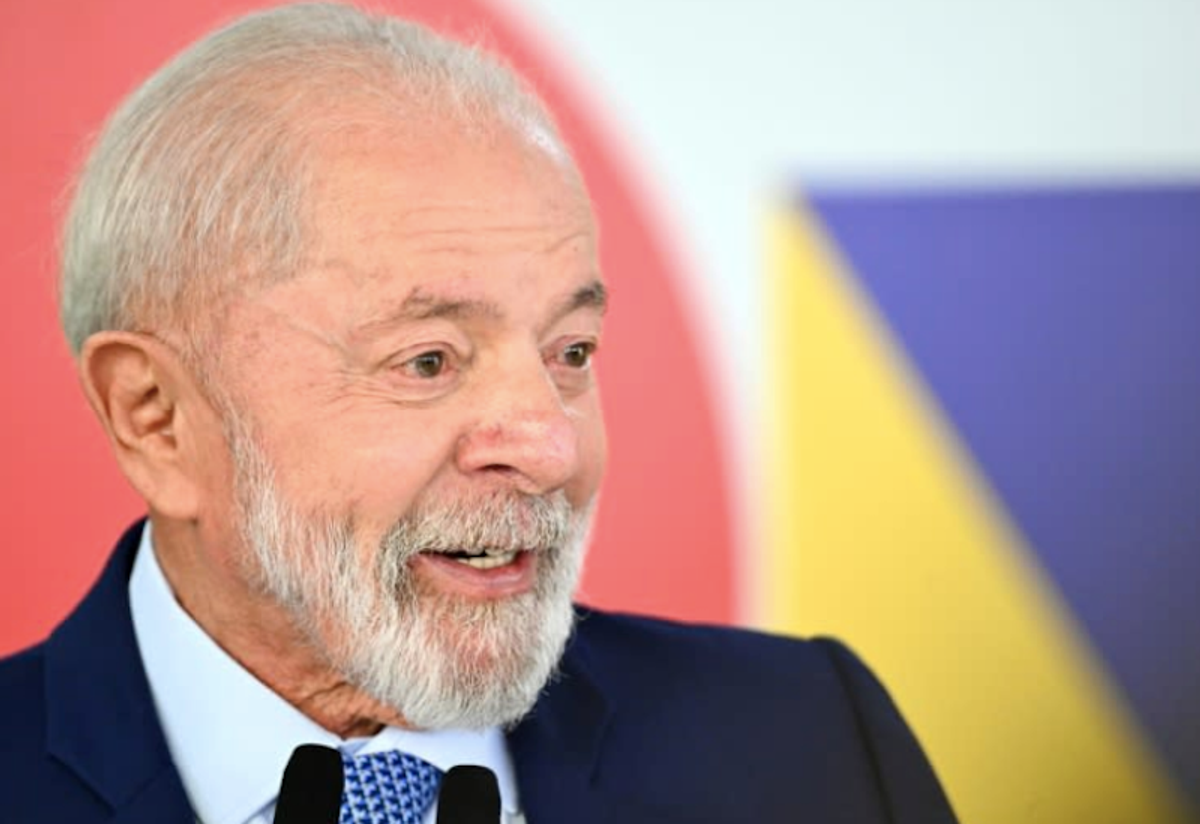
Brazilian President Luiz Inacio Lula da Silva said that U.S. leader Donald Trump's decision to withdraw from the Paris climate accord was 'a step back for human civilization' (EVARISTO SA/AFP)

by Ramon SAHMKOW with Fran BLANDY in Rio de Janeiro

Brazilian President Luiz Inacio Lula da Silva said Thursday that if US counterpart Donald Trump hiked tariffs on Brazilian products, he would reciprocate -- but that he would prefer improved relations over a trade war.

The Latin American giant is one of the countries that Trump has threatened with higher tariffs.

"It's very simple: if he taxes Brazilian products, Brazil will reciprocate in taxing products that are exported from the United States," the 79-year-old Lula told a press conference.

Lula, currently in his third term, said he would prefer to "improve our relationship with the United States" and boost trade ties with Brazil's second-largest trading partner after China.

"I want to respect the United States and for Trump to respect Brazil. That's all," he said.

Citing Trump's comments that he plans to take back the Panama Canal or get control of Greenland, Lula said "he just has to respect the sovereignty of other countries."

Lula also underscored the global threats facing democracy.

"For me, democracy is the most important thing in humanity right now ... Either we keep democracy working or we will have states more authoritarian than Hitler and fascism."


Lula, whose country will host the COP30 UN climate talks in the Amazonian city of Belem in November, added that Trump's decision to withdraw from the Paris climate accord was "a step back for human civilization."

He said he did not want a summit where "measures are approved, everything looks very nice on paper and then no country complies," slamming wealthy nations for failing to meet previous promises to give billions of dollars to help developing nations deal with the fallout of climate change.

"We want something very real so that we can know if we are serious or not about the climate issue."

- Seizing back the narrative -

The president held a wide-ranging press conference in the capital Brasilia, urging journalists not to hold back in their questions as his government seeks to reclaim the narrative after battling a wave of disinformation.

After undergoing emergency surgery to stop a brain bleed in December linked to an earlier fall, Lula vowed he was fully recovered and had "the energy of a 30-year-old."


With less than two years left of his third presidential term, Lula's approval rating has sunk to 47 percent, according to a Quaest poll published this week, with a notable drop in support from his key electoral base in the low-income northeast of the country.

Lula said he was "not worried" about opinion surveys, and brushed off concerns about high interest rates and public debt.

As expected, the central bank on Wednesday hiked the key interest rate by one point to 13.25 percent, despite a new bank president being appointed by Lula -- who has in the past criticized interest rate hikes.

"The president of the central bank cannot make a U-turn in a stormy sea," Lula said, adding that he had faith in new bank chief Gabriel Galipolo who would have "autonomy to do whatever is necessary."

Lula also sought to ease concerns over government interventions to lower food prices and vowed his commitment to "fiscal responsibility."

His government is weighing reducing import tariffs on certain goods, and he highlighted the need to provide more financing to ramp up production, saying he was working on a plan with banks for "the largest credit program in the history of this country."


Concerns over Brazil's ability to curb public spending in December sent its currency, the real, to record lows against the dollar.

© Agence France-Presse
UK car sector fears for Trump tariffs as output falls


By AFP
January 30, 2025


Almost 80 percent of cars made in the UK last year were exported, mostly to the European Union, according to industry data 
- Copyright AFP Kirill KUDRYAVTSEV

Britain’s vehicle production slid below one million units last year as the sector transitions to electric cars, an industry body said Thursday as it warned over US President Donald Trump’s tariff threats.

Factories producing mainly foreign-owned brands, including from Japanese giant Nissan and Indian-owned Jaguar Land Rover, turned out a total 905,233 vehicles, down 11.8 percent on 2023, said the Society of Motor Manufacturers and Traders.

“Multiple factors impacted car volumes, with the end of production for some long-running models as factories retooled for EVs, weakness in key global markets, and a slowdown in the transition to electrification amid tough economic conditions,” SMMT added in a statement.

Output is forecast to decline further this year to 839,000 units before returning to above one million vehicles in 2028, it added.

“This is, however, dependent on global car and van market demand improving, positive economic conditions and greater consumer confidence — and the delivery of the competitive conditions necessary to ensure zero-emission model launches stay on track,” the SMMT noted.

Almost 80 percent of cars made in the UK last year were exported, mostly to the European Union, according to its data.

Production of battery electric, plug-in hybrid and hybrid vehicles together declined more than one fifth but still accounted for over one third of total UK output.

– Trump tariffs –

SMMT chief executive Mike Hawes expressed confidence in the outlook as long as the sector benefits from “industrial and trade strategies that deliver the competitive conditions essential for growth amidst an increasingly protectionist global environment”.

“With new, exciting models and battery production on the horizon, the potential for growth is clear,” he added.

The SMMT recently reported that the UK car industry sold a record number of all-electric vehicles in 2024 — but still fell short of the Labour government’s mandated targets.

Across the Atlantic, Trump wasted no time in taking aim at electric vehicles following his inauguration last week.

His executive order on “Unleashing American Energy” included steps to ensure a “level” playing field for gasoline-powered motors and halt federal funding to build new EV charging stations.

Hawes expressed concern over potential tariffs imposed on the car sector by Trump.

“We are concerned… about rising trade tensions and potential application of tariffs,” he told journalists on the eve of the production report.

“What we are seeing is increasingly protectionist noises… In terms of the US, tariffs is Donald Trump’s favourite word.”

Hawes said the United States was “an important market” for luxury vehicles, such as UK-produced Bentley and Rolls-Royce cars.

While that allowed for “a greater opportunity to absorb any potential tariffs… we would hope to avoid any”, he added.


EU holds auto talks to revive embattled car sector


By AFP
January 30, 2025


The German union IG Metall reached an agreement with Volkswagen on a cost-cutting plan to avoid forced redundancies at Europe's largest carmaker's production sites in Germany - Copyright AFP Kirill KUDRYAVTSEV


Umberto BACCHI

EU talks to relaunch Europe’s embattled car industry are to get underway on Thursday, with automotive CEOs awaited in Brussels to discuss fines and competition from China.

The European Union is under pressure to help a sector that employs 13 million people and accounts for about seven percent of the bloc’s GDP, as it seeks to revamp the continent’s lagging competitiveness.

Chaired by EU chief Ursula von der Leyen, the so-called “strategic dialogue” will bring together carmakers, suppliers, civil society groups and others.

“The EU Commission recognises the urgency and severity of the situation, and the need for decisive action,” the EU’s executive body said in a note.

The get-together comes as the commission is in the midst of a pro-business shift, with firms complaining that its recent focus on climate and business ethics resulted in excessive regulations.

On Wednesday, it unveiled a blueprint to revamp the bloc’s economic model, amid worries that low productivity, high energy prices, weak investments and other ills are leaving the EU behind the United States and China.

The car industry in particular has been plunged into crisis by high manufacturing costs, a stuttering switch to electric vehicles (EV) and increased competition from China.

As a sign of goodwill, carmakers have been calling for “flexibility” on the steep emission fines they could face in 2025 — something the bloc’s new growth blueprint said should be on the cards.

“I would personally find it strange to penalise players that we are otherwise trying to help for the benefit of competitors who do not have the same constraints, particularly Chinese,” the commissioner for industrial strategy, Stephane Sejourne, told France’s Le Figaro newspaper.

Under ambitious efforts to combat climate change, the EU introduced a set of emission-reduction targets that should lead to the sale of fossil fuel-burning cars being phased out by 2035.

About 16 percent of the planet-warming carbon dioxide (CO2) gas released into the atmosphere in Europe comes from cars’ exhaust pipes, the EU says.

As of this year carmakers have to lower the average CO2 emitted by all newly sold vehicles by 15 percent from 2021 levels or pay a penalty — with tougher cuts further down the road, according to clean transport advocacy group T&E.

The idea is to incentivise firms to increase the share of EVs, hybrids and small vehicles they sell compared to, for instance, diesel-guzzling SUVs.

But some manufacturers complain that is proving harder than expected as consumers have yet to warm to EVs, which have higher upfront costs and lack an established used-vehicle market.

“We want to stick to the objective… but we can smoothen the way,” von der Leyen said on Wednesday.


– Sales and tariffs –


Sales of electric cars slid 1.3 percent in Europe last year, accounting for 13.6 percent of all sales, according to the European Automobile Manufacturers’ Association (ACEA), an industry group.

Announcements of possible job cuts have multiplied. Volkswagen reached an agreement with unions in December to slash 35,000 positions across its German locations by 2030.

Meanwhile the market share of Chinese electric cars has ballooned in the EU in recent years, reaching 14 percent in the second quarter of 2024, up from less than two percent in 2020.

Yet, critics say lifting the fines would unfairly penalise producers who have invested in order to comply.

It would also remove a key incentive for firms to speed up their electric transition at a time when Chinese manufacturers have raced ahead.

“It’s sending a signal to European carmakers that they can slow down even though they are already late,” said Lucien Mathieu of T&E.

Fines aside, there are other ways Brussels could support the sector.

A senior EU official said incentives for businesses to buy electric are an option.

“Company fleets” account for more than half of new cars purchased in Europe, the official said.

The 27-nation bloc could also seek to improve a patchy charging network, modernise grids to allow for faster charging, bring down energy costs, cut regulations and loosen China’s grip on battery production, analysts say.

Brussels has already imposed extra import tariffs on China-made electric vehicles of up to 35.3 percent after an anti-subsidy investigation concluded Beijing’s state support was unfairly undercutting European automakers.

But in a sign of the lack of unanimity on the best course of action, the move, which was opposed by Germany and other EU members, is the object of a lawsuit by BMW, Tesla and several Chinese automakers.

The German car giant, which produces certain models in China, said the surcharges harmed “globally active companies” and “do not strengthen the competitiveness of European manufacturers”.
US commerce secretary pick favors sweeping tariffs, hawkish China stance


By AFP
January 29, 2025


Howard Lutnick, Donald Trump's pick to be commerce secretary -- seen here during the president's inauguration earlier this month -- told his confirmation hearing he prefers across-the-board tariffs
 - Copyright POOL/AFP Kenny Holston/The New York Times
Beiyi SEOW

Donald Trump’s commerce secretary nominee said Wednesday that he favors “across-the-board” tariffs and a country-based approach rather than targeting products, signaling a hawkish China stance as he addressed US lawmakers on the president’s punishing trade agenda.

“We can use tariffs to create reciprocity, fairness and respect,” Wall Street billionaire Howard Lutnick told lawmakers at a confirmation hearing, denying such levies would cause broad inflation in the United States.

Lutnick’s appearance comes as Washington threatens sweeping duties on imports from allies and adversaries alike — with levies on major trading partners Canada and Mexico potentially unveiled this weekend.

On Wednesday, Lutnick said the president’s pledges were aimed at getting both major US trading partners to do more on illegal migration and fentanyl.

In announcing his nomination last year, Trump said Lutnick would lead the world’s biggest economy’s tariff and trade agenda, with additional direct responsibility for the US Trade Representative’s office.

Asked about the impact of tariffs on prices, Lutnick said “a particular product’s price may go up” but added that “it is nonsense” that they would cause widespread inflation.

Lutnick vowed, however, to work to understand the impact of retaliatory tariffs on US agriculture and manufacturing.


– ‘Strong’ export curbs –


If confirmed, Lutnick will helm a department overseeing export controls to competitors like China as well, aimed at ensuring the United States’ lead in sensitive technology with military uses.

On rivalry with China, Lutnick said: “Let them compete, but stop using our tools to compete with us. I’m going to be very strong on that.”

He separately stressed the importance of American-driven leadership in artificial intelligence.

Asked about the CHIPS and Science Act, a major law passed during former president Joe Biden’s term aimed at strengthening the US semiconductor industry, Lutnick called it “an excellent downpayment.”

But he added that “we need to review them and get it right.”

In introductory remarks, Vice President JD Vance said Lutnick would help convince businesses that America is thriving, bringing US commerce “back on track.”

The commerce department nominee was co-chair of Trump’s 2024 transition team, identifying new hires for the president-elect’s administration.

He serves as chief executive of financial services firm Cantor Fitzgerald.

In the past, he has criticized electric vehicles and blamed China for being the source of the deadly drug fentanyl coming into the United States.

He has also lamented previously the loss of manufacturing jobs in the world’s biggest economy, and offshoring to China.

On Wednesday, he vowed in opening remarks that he would help make the US government “more responsive” and stressed the need for healthy businesses of all sizes to drive the economy.

The Commerce Department under Biden ramped up export controls on critical technologies like quantum computing and semiconductor manufacturing goods, taking aim at access by adversaries like Beijing.

Trump’s administration could harden this stance.


UN confirms US demand to withdrawal from Paris climate deal


By AFP
January 28, 2025


On his first day back in the White House, Donald Trump announced the US withdrawal from the Paris accord - Copyright AFP/File SAUL LOEB

The United Nations confirmed Tuesday it had received notification from Washington of its withdrawal from the Paris climate change agreement, a key campaign pledge of US President Donald Trump.

On his first day back in the White House, Trump announced the United States would leave the accord, which is managed by the UN climate change body. It brings together almost all the world’s nations and aims to keep global average temperature rise below a critical threshold.

“I can confirm to you that the United States has notified the secretary-general, in his capacity as a depository, of its withdrawal on January 27 of this year from the Paris agreement,” said Stephane Dujarric, spokesman for UN chief Antonio Guterres.

“According to Article 28, paragraph two, of the Paris agreement, the withdrawal of the United States will take effect on January 27, 2026.”

The move comes as global average temperatures over the past two years surpassed the critical 1.5 degrees Celsius warming threshold for the first time, underscoring the urgency of climate action.

Trump previously withdrew the United States from the Paris accord during his first term. Despite this, the agreement — adopted in 2015 by 195 parties to curb greenhouse gas emissions driving climate change — appears poised to endure.

Washington typically provides 22 percent of the United Nations Framework Convention on Climate Change secretariat’s budget, with the body’s operating costs for 2024-2025 projected at $96.5 million.

Billionaire entrepreneur Michael Bloomberg has announced that his foundation will step in to meet the shortfall.

The secretariat is tasked with supporting the global response to climate threats, and organizes international climate conferences, the next of which will be COP30 held in Brazil in November.

Dujarric told a media briefing that “we reaffirm our commitment to the Paris agreement and support all effective efforts to limit the rise in global temperatures to 1.5 degrees Celsius.”

Since coming back to office, Trump has also declared a “national energy emergency” to expand drilling in the world’s top oil and gas producer, said he would scrap vehicle emissions standards, and vowed to halt offshore wind farms.

Critics warn the Paris withdrawal undermines global cooperation on reducing fossil fuel use and could embolden major polluters like China and India to weaken their commitments, while Argentina, under libertarian President Javier Milei, has also said it is “reevaluating” its participation.


CRYPTO ELDORADO

El Salvador merchants no longer obliged to accept bitcoin


By AFP
January 30, 2025


El Salvador declared bitcoin legal tender in 2021 - Copyright AFP MARVIN RECINOS, MARVIN RECINOS

Merchants in El Salvador, the first country to make bitcoin legal tender, will no longer be obliged to accept the cryptocurrency as payment, under a reform adopted to comply with conditions for an international loan.

The International Monetary Fund said last month it had reached an agreement for a $1.4 billion loan with the government of President Nayib Bukele.

But a condition was that “acceptance of bitcoin by the private sector will be voluntary and public sector’s participation in bitcoin-related activities will be confined.”

Furthermore, taxes must only be paid in US dollars — the country’s other official currency — “and the government’s participation in the crypto e-wallet (Chivo) will be gradually unwound,” under the deal.

The IMF had said the loan was “to address balance of payment needs and support the government’s economic reforms.”

The Central American country’s Bukele-aligned parliament adopted the reform late Wednesday.

Launching bitcoin as legal tender on September 7, 2021, Bukele said he wanted to bring the 70 percent of Salvadorans who do not use banks into the financial system.

Swatting away warnings about volatility risks, he promptly began plowing an undisclosed amount of public money into cryptocurrencies.

To spur Salvadorans to use bitcoin he created the Chivo Wallet app for sending and receiving bitcoin free of charge and gave $30 to each new user.

In September 2021, the cryptocurrency traded at about $44,000, but its value has fluctuated greatly and a year ago it was worth about $23,000.

Since Donald Trump’s election last November, the value has soared by about 50 percent, topping $100,000.

About 92 percent of Salvadorans did not use bitcoin in 2024, according to a survey by the Central American University.

Salvadoran town hopes Trump brings ‘good times’ for bitcoin


By AFP
January 29, 2025


A student reads a book at the bitcoin community center in the mountain town of Berlin in El Salvador - Copyright AFP Marvin RECINOS
Carlos Mario Marquez

Bitcoin enthusiasts seeking to turn a mountain town in El Salvador into a cryptocurrency haven hope that US President Donald Trump’s return to the White House will boost their cause.

At one of the many cafes in the municipality of Berlin that accepts cryptocurrency, barista Marcela Flores sees “good times” ahead.

“With Trump’s election and everything he recently said about bitcoin, we hope that bitcoin will grow,” the 43-year-old told AFP.

“Welcome to Bitcoin Berlin,” says a sign at the entrance to the picturesque town surrounded by coffee plantations.

Located 110 kilometers (68 miles) east of the capital San Salvador, Berlin has emerged as a rival to El Zonte, the surf town nicknamed “Bitcoin Beach.”

The cryptocurrency’s sign is a common sight around Berlin.

More than 100 businesses — home to about 18,000 inhabitants — accept bitcoin, including shops, hotels, grocery stores, bars, restaurants and gas stations.

In 2021, El Salvador became the world’s first country to establish bitcoin as legal tender, at the initiative of President Nayib Bukele, one of the country’s most fervent cryptocurrency enthusiasts.

The gang-busting leader recently said he expected Trump’s presidency would bring “an exponential revaluation” of bitcoin.

Trump has vowed to deregulate the sector and make the United States the “bitcoin and cryptocurrency capital of the world.”

Since his election in November, bitcoin has soared by around 50 percent in value, topping $100,000.

Charlie Stevens, a 28-year-old Berlin resident from Ireland, said that Bukele understood that bitcoin “will serve as our way of exchanging, saving and valuing things.”

“Now Trump is realizing that if you don’t join, you will lose or be left behind,” he added.


– ‘Bitcoin community center’ –


Gerardo Linares, 32, left San Salvador in 2023 and moved to Berlin with the idea of promoting the use of bitcoin and “educating” merchants and customers about it.

The town now has a “bitcoin community center,” where Linares and others hold training workshops and record podcasts.

“We started making a bit of noise on social media (and) foreigners started coming,” Linares told AFP at the center, which offers classes in English and computer skills as well as using bitcoin.

About 20 bitcoin enthusiasts from France, the United States, Canada, New Zealand, Australia and Ireland came to live in the city and collaborate with the project.

“I live in a Bitcoin standard: I get paid in bitcoin” and “I spend bitcoin here,” said Frenchman Quentin Ehrenmann, 28, who arrived in October 2023.

But not everyone is as enthusiastic: around 92 percent of Salvadorans did not use bitcoin in 2024, according to a survey by the Central American University.


“We see a disconnect between what people think about the crypto asset,” and how authorities promote it, said Laura Andrade, director of the university’s Public Opinion Institute.


Independent economist Cesar Villalona argues that bitcoin is unstable and only serves “for speculation.”


Bukele’s project to create Bitcoin City, a futuristic metropolis financed by cryptocurrency bonds, has not materialized.


But in Berlin, cryptocurrency aficionados still see bitcoin as the future.

In a downtown park, Julio Ernesto Cruz, 53, sells crafts including a green wooden parrot with a bitcoin symbol hanging from its beak.

The 53-year-old said that using the cryptocurrency had been “very positive” for him.

“We believe that bitcoin is the solution to achieving economic independence,” he said.


Trump says US will detain migrants in Guantanamo


By AFP
January 29, 2025


US President Donald Trump signs the Laken Riley Act in the East Room of the White House - Copyright AFP ROBERTO SCHMIDT

Danny KEMP

US President Donald Trump said Wednesday he planned to detain “criminal illegal aliens” at the notorious Guantanamo Bay military prison, used for holding terrorism suspects since the 9/11 attacks.

Trump made the shock announcement as he signed a bill allowing the pre-trial detention of undocumented migrants charged with theft and violent crime — named after a US student killed by a Venezuelan immigrant.

He said he was signing an executive order instructing the Pentagon and the Homeland Security department to “begin preparing the 30,000-person migrant facility at Guantanamo Bay,” Trump said at the White House.

“We have 30,000 beds in Guantanamo to detain the worst criminal illegal aliens threatening the American people. Some of them are so bad we don’t even trust the countries to hold them, because we don’t want them coming back,” Trump said.

The Republican said the move would “double our capacity immediately” to hold illegal migrants, amid a huge crackdown that he has promised at the start of his second term.

Calling Guantanamo a “tough place to get out of,” Trump said the measures announced on Wednesday would “bring us one step closer to eradicating the scourge of migrant crime in our communities once and for all.”

Trump hosted the parents of Laken Riley, the murdered 22-year-old US nursing student whose name the new migrant crime bill act bears, at the White House for the ceremony.

“We will keep Laken’s memory alive in our hearts forever,” Trump said.

“With today’s action, her name will also live forever in the laws of our country, and this is a very important law.”


– Rights concerns –


It is the first bill Trump has signed since his return to the White House, and was passed by the Republican-led US Congress passed the law just two days after Trump’s inauguration on January 20.

Jose Antonio Ibarra, 26, a Venezuelan with no papers, was convicted of murdering Riley in 2024 after she went missing on her morning run near the University of Georgia in Athens.

But it was the Guantanamo announcement that will grab the headlines.

Homeland Security Secretary Kristi Noem had told Fox News earlier that “we’re evaluating and talking about” using the facility for migrants, calling it an “asset.”

The Guantanamo prison was opened in the wake of the 9/11 attacks on the United States by Al-Qaeda.

It has been used to indefinitely hold detainees, many of whom were never charged with a crime, seized during the wars in Afghanistan and Iraq and other operations that followed.

At its peak about 800 people were incarcerated at the site on the eastern tip of Cuba. Testimony from detainees documenting their abuse and torture by US security personnel have long prompted domestic and international criticism.

The conditions there and the denial of basic legal principles have sparked consistent outcry from rights groups, and UN experts have condemned it as a site of “unparalleled notoriety.”

Former Democratic presidents Joe Biden and Barack Obama both pledged to close the facility, but both left office with the prison still open.

Last September, the New York Times obtained government documents showing that the Guantanamo Bay military base has also been used for decades by the United States to detain migrants intercepted at sea, but in an area separate from that used to hold those accused of terrorism.

‘Uncertainty never ends’ as deal to free Cuba prisoners unravels under Trump

By AFP
January 29, 2025


Liset Fonseca's son Roberto Perez Fonseca is in prison in Cuba for participating in protests in 2021 - Copyright AFP/File Yamil LAGE

Leticia PINEDA

Just two weeks ago, Cubans celebrated the anticipated release of jailed protesters in a deal struck under US then-president Joe Biden. Now hope is waning for hundreds still behind bars after Donald Trump scrapped the agreement.

In one of his final official acts, Biden on January 14 removed Cuba from a US list of state terror sponsors in return for the communist island agreeing to free 553 prisoners.

But six days later marked the swearing-in of Trump, who swiftly overturned the Vatican-mediated deal after just 192 confirmed releases of people dubbed “political prisoners” by rights groups.

Most had been rounded up in a crackdown on rare mass protests against the government in July 2021.

Trump’s decision, though not unexpected, came as a blow to prisoners’ loved ones who nevertheless try to stay positive.

“We cannot lose hope because I cannot imagine that my son, who is innocent, will remain in prison for 10 years,” Liset Fonseca, 64, told AFP of activist Roberto Perez Fonseca, one of the protesters jailed.

The releases, which started the day after Biden’s announcement, ended on Trump’s inauguration day January 20, according to rights groups.

“The releases have not resumed,” Camila Rodriguez of the Mexico-based NGO Justicia 11J, named after the date of the 2021 protests, said this week.

The “Todos” platform that collates information from several non-governmental organizations has counted 192 releases, including that of opposition leader Jose Daniel Ferrer and dissident Felix Navarro.

The authorities never released a calendar for people to be freed, nor did it provide a list of names.

Observers accuse Havana of keeping some behind bars to use as bargaining chips in potential negotiations with Trump.


– ‘I have faith’ –


Navarro, 71, said he was arrested with his 38-year-old daughter Sayli in 2021 when they approached police for information about protesters detained.

He was released on January 18, but Sayli is still serving an eight-year sentence on charges including contempt and public disorder.

“I have faith that they will free her one day,” Navarro told AFP of his daughter, hopeful the Vatican will be able to enforce the deal.

Navarro said he takes hope from his own release from prison in 2011 following a previous arrest in 2003 in a crackdown on dissent dubbed the “Black Spring.”

His liberation that time was also the result of Catholic Church mediation.

Navarro and his daughter, Fonseca and Ferrer have all been declared “prisoners of conscience” by Amnesty International, along with artist and activist Luis Manuel Otero Alcantara.

Alcantara was arrested as he attempted to join the 2021 protests and is now serving a five-year prison term on prior charges that include contempt.

“Uncertainty never ends, and neither does hope. Both will coexist until he is released,” Alcantara’s friend Yanelys Nunez told AFP.

According to official figures, about 500 of the 2021 protesters have been given prison terms of up to 25 years.

Some have since been released after serving their sentences.

Rights groups and the US embassy in Havana estimate the total number of “political prisoners” in Cuba to be around 1,000.

The government denies it holds any political prisoners, and accuses opponents of being “mercenaries” in the pay of the United States.

Until the dust settles on Trump’s reinstatement of Cuba on the US terror list, every family member of someone jailed in Cuba “is hoping that their loved one is among the winners of this risky lottery,” said Nunez.

UK prosecutors defend jail terms of environmental activists


ByA FP
January 30, 2025


Protesters outside the Royal Courts of Justice in central London to support 16 Just Stop Oil activists
 - Copyright AFP Marvin RECINOS


Clara LALANNE

UK prosecutors on Thursday defended the lengthy prison sentences handed down to 16 environmental activists, telling London’s Court of Appeal that their actions posed a danger to the public.

The activists with the Just Stop Oil (JSO) group last year received prison terms of between 15 months and five years for several stunts, including throwing soup on Vincent van Gogh’s “Sunflowers” in London and blocking the M25 motorway around the UK capital.

They have appealed the length of their sentences, but prosecutors told the court on Thursday that “each of the judges were right” as “all of these applicants went so far beyond what was reasonable”.

Their actions also presented an “extreme danger” to the public, they said.

The five “conspirators” who organised the action in which activists climbed onto multiple gantries over the M25 motorway, leading to its closure, “were at the pinnacle of the organisational pyramid of what was intended to be the ‘biggest disruption in British modern history’,” the court heard.

The action affected around 700,000 vehicles over four days, and the five activists were sentenced to jail terms of between four and five years.

The sentences were “the highest of their kind in modern British history”, Danny Friedman, a lawyer for the activists, told the court on Wednesday.

Hundreds of JSO supporters gathered outside the central London court on Thursday, sitting in silence on the road surrounded by portraits of around 100 people they said were “political prisoners” jailed across the world for environmental activism.

Police watched on, but the protest dispersed peacefully.

Just Stop Oil, which is urging the government to ban fossil fuel use by 2030, is known for its eye-catching stunts at museums, sports events and shows but has attracted criticism over its methods.

In recent years, previous Conservative governments passed a series of laws to punish their actions more severely.

NGOs Greenpeace and Friends of the Earth have denounced the crackdown and have joined the appeal trial, which they say will have significant implications for the future of peaceful protest.

The court will publish its decision at a later date.


More to come? Over 280,000 employees in the tech sector laid off in 2024

By Dr. Tim Sandle
January 30, 2025
DIGITAL JOURNAL


Unionized employees at Conde Nast, which includes brands like Vogue and Vanity Fair, walked off the job in protest of looming layoffs
 — © AFP ANGELA WEISS / File

Globally, 280,991 layoffs occurred in the tech sector in 2024. In the U.S. alone, 267 companies reduced their workforce with a combined 157,950 job losses.

As new rounds of mass layoffs at major technology companies are being announced in 2025, a new latest report examines the workforce reductions that occurred around the world in 2024.

The report has discovered at least 11,000 employees in the technology sector have lost their jobs since the beginning of the year.

The analysis comes from the firm RationalFX, who aggregated layoff announcements sourced from U.S. WARN notices, the job portal TrueUp, TechCrunch and the Layoffs.fyi layoff tracker for the entirety of 2024.

The report also looked into the latest layoffs since the beginning of January 2025, focusing on companies in the technology sector.

According to the research, at least 280,991 employees in tech companies were laid off last year, while January brought another 11,299 job reductions from major companies, including Meta, Microsoft, and Amazon. The tech company with the most significant layoffs in 2024 was U.S. PC maker Dell, which reduced its headcount by 18,500, followed by Intel (15,100 layoffs), and Amazon (14,968 layoffs).

The electric vehicle (EV) sector also experienced layoffs, despite its growth potential. Industry leader Tesla laid off 14,000 employees as it sought to reduce operational costs amid increasing production expenses.

Together, the 21 companies with the largest layoffs in 2024 announced a total of 156,654 job reductions. The wave of layoffs continues as companies focus on cutting costs, downsizing, and streamlining operations following significant hiring sprees during the COVID-19 pandemic.

Investments in artificial intelligence have also pushed the number of layoffs high as simpler, repetitive tasks are assigned to AI systems, while human workers are either transferred to other departments or laid off.

U.S. dominates layoff patterns


More than half of all layoffs in the tech sector were initiated by U.S.-based companies (157,950 or 56.21% of all), followed by 19,495 job cuts in German companies, 14,740 layoffs in South Korean firms, 14,675 layoffs in Chinese ones, and 12,608 job cuts in companies based in Japan.

Anotherfactor in Germany has been the economic stagnation with 2024 being the second year in a row of contraction in the economy.

Returning to North America, California is the U.S. state with the most tech sector layoffs, accounting for 40.4% of all job cuts in the U.S. and roughly 22.7% of all tech layoffs in the world. In 2024, 126 California-based tech firms laid off a combined 63,791 employees.

CAPITAL STRIKE

French luxury billionaire sparks tax debate with threat to leave


By AFP
January 30, 2025


LVMH boss Arnault is one of the world's richest people - Copyright AFP Dimitar DILKOFF
Katell PRIGENT, Jurgen HECKER

Bernard Arnault, the billionaire boss of the world’s biggest luxury conglomerate LVMH, has picked a fight with the French government by suggesting that companies could flee France for the United States to escape a planned tax hike.

As the government of Prime Minister Francois Bayrou is struggling to fine-tune a budget designed to tackle the country’s deficits and debt mountain, Arnault took issue with an expected key ingredient, a special tax on large companies.

“I have just returned from the US, and I have witnessed the wind of optimism in that country. Coming back to France is a bit like taking a cold shower,” Arnault said at this week’s LVMH earnings presentation.

Usually seen as close to President Emmanuel Macron with whom he regularly meets, Arnault was among a group of very rich men attending President Donald Trump’s inauguration ceremony in Washington this month.

In stinging remarks, Arnault dismissed Bayrou’s plan as “a tax made in France” and offered an unfavourable comparison between France and the United States.

In the US “taxes will fall to 15 percent”, Arnault said.

“When you return to France and you see that they are planning to increase taxes on companies that produce in France — to 40 percent — it’s incredible!

“If you actually wanted them to relocate, that would be the ideal way to do it,” Arnault fumed, after his group reported a drop in 17 percent of its net profit for 2024 on a 2-percent slide in turnover.

– ‘Nobody believes that’ –

The special corporate tax is the brainchild of the previous government under premier Michel Barnier, who was sacked by parliament in a no-confidence vote in response to his austerity budget plan.

Bayrou’s administration, which is scrambling to put together a new budget, is expected to retain the special corporate tax move, hoping to collect an extra eight billion euros ($8.3 billion) this year from the one-time measure.

Finance Minister Eric Lombard has vowed the move — which would take the tax rate for the biggest companies to above 40 percent — will be in force for only a year, a pledge quickly dismissed by Arnault.

“Nobody believes that,” he said. “Once they raise taxes to 40 percent, who will lower them again?”

The “exceptional contribution” would increase LVMH’s tax burden by between 700 and 800 million euros, according to finance director Jean-Jacques Guiony.

“There is growing anger” in corporate France towards the government’s fiscal choices, said Patrick Martin, boss of the Medef employers’ federation, who said that Arnault’s criticism was “obviously correct”.

Some companies were in a position to invest abroad, he said, “but those who can’t are trapped”.

The government drily rejected Arnault’s attack, with government spokeswoman Sophie Primas saying that “everybody must do their bit”, although she conceded that she understood his “anger”.


– ‘Drifting to the far right’ –


But a suggestion by Arnault, who is among the world’s richest people, that fellow billionaire and Trump advisor Elon Musk could serve as an inspiration “to slash bureaucracy in France”, was too much for Eric Coquerel, the president of French parliament’s finance commission.

“Some of the main company bosses in France are drifting to the far right,” Coquerel said. He accused Arnault of touting Musk as “a role model” even after the Tesla boss’s arm gesture at Trump’s inauguration that Coquerel called a “fascist salute”.

If confirmed, the new tax will concern 440 companies in France generating more than one billion euros of sales, with the highest rate — 41.2 percent — targeting those with turnover of more than three billion euros.

Lombard rejected the suggestion that the levy would hurt “the attractiveness” of France for business. “We want companies to invest, and foreign investors to come here,” he said.

The government hopes to cut the public sector deficit to 5.4 percent this year, from around six percent in 2024, by combining tax rises and spending cuts totalling around 50 billion euros.

After years of high spending, France has been placed under an “excessive deficits” procedure by the European Commission which has demanded that Paris bring its finances on a credible trajectory towards meeting EU rules.

The rules call for limits on annual deficits of three percent of gross domestic product (GDP) and of 60 percent on public sector debt.

burs-jh/sjw/db

DON'T LIKE PAYING TAXES....