Friday, January 31, 2025

CONSERVATIVES HATE SCIENCE; IT'S LIBERAL 

Employees at France's public research body up in arms over funding strategy


Researchers and students from France's National Centre for Scientific Research (CNRS) organised protests on Monday, calling for its president to step down. They are concerned that huge budget cuts and a new funding strategy will penalise some sectors more than others.


Issued on: 27/01/2025 - 
A researcher examines plants in an environmental chamber at the Ecotron, a CNRS facility (National Centre for Scientific Research) where researchers can experiment and measure the sensitivity of ecosystems to climate change. AFP/Thomas Samson


Tensions are rising among the 30,000 staff members at the French National Centre for Scientific Research (CNRS) following the announcement in mid-December to create "Key Labs".

The Rogue ESR collective behind the Paris-based protest argues that management is planning to prioritise human and financial resources for a select group of leading laboratories, known as "Key Labs," at the expense of others.

The collective is now calling for the resignation of the CNRS president Antoine Petit.

"In fields like particle and nuclear physics, some sites will be well-funded, while others will receive little support," Olivier Coutard, president of the CNRS scientific council, told franceinfo.


This move, Coutard warns, is creating a "highly destabilising" effect on research teams.

The protest comes at a time of heightened tension, after French senators voted two bills in January slashing over a billion euros in funding.

French minister rules out new taxes on households amid budget showdown

The so-called "Key Labs" are seen as a way to "mask these budget cuts", according to CNRS astrophysicist Olivier Bernen.

"Instead of openly saying, 'We’re cutting funds,' they’re saying: 'Only the best will get funding,’" Bernen, who is also part of the Rogue ESR collective, explained.

"It’s a clever strategy because it pits people against each other. It avoids the direct issue of creating a funding shortage, because the last thing anyone wants is for students to take to the streets."

Decline in resources


For Marc Odin, a geosciences researcher at the CNRS branch in Toulouse, this decision goes hand in hand with the decline in resources invested by the state in research over the past ten years, which also favours closer ties with the private sector.

He is particularly concerned that research into major issues such as ecology will be abandoned due to lack of investment.

Funding for dinosaur fossil digging falls, as French interest rises

Petit, however, defends the strategy, insisting he’s not neglecting other laboratories.

"Research is a balance of cooperation and competition. We know that international competition is getting tougher. We need labs that are 'front-runners,' to attract top students and researchers," Petit said.

At this point, the criteria for selecting these "excellence" labs remain unclear.

CNRS management said it is open to discussions but insists it doesn’t need the board’s approval to move forward with the changes.
UNDER THE VICHY REGIME

'Rails of memory' Holocaust memorial opens in French city of Lyon

A Holocaust memorial was inaugurated in Lyon on Sunday, marking the 80th anniversary of the liberation of Nazi death camp Auschwitz-Birkenau. Over 6,000 Jews from the French city were killed between 1941-1945.


Issued on: 27/01/2025 - RFI
"In Memory of the six million Jewish victims of the holocaust, which includes 1,5 million children, 1941-1945, 6100 came from our region" which adorns the "Rails de la memoire" (train tracks of memory) monument, in Lyon, France, inaugurated on 26 January 2025. AFP - ALEX MARTIN


The work, entitled "Train Tracks of Memory" (Rails de la mémoire), is made up of 1,173 metres of railway tracks, symbolising the 1,173 kilometres separating Lyon from the former Auschwitz concentration camp, in Poland, where a million Jews were murdered between 1941 and 1945.

Auschwitz was the largest of the extermination camps and has become a symbol of Nazi Germany's genocide of six million European Jews, along with more than 100,000 non-Jews.

The camp was liberated on 27 January by Soviet troops who found 7,000 survivors. The date has been designated by the United Nations as Holocaust Remembrance Day.

Around 76,000 French Jews, including more than 11,000 children, were deported by the Nazis with the help of the collaborationist Vichy government.

The new Holocaust memorial in Lyon – designed by Parisian architects Quentin Blaising and Alicia Borchardt – stands in a square near the central station, from which many convoys left towards the death camps.

How Allied photos revealed true horrors of the Nazi death camps

Inscribed on the edge of the rails are the words : "In Memory of the six million Jewish victims of the holocaust, which includes 1,5 million children, 1941-1945. 6,100 came from our region."

The architects recycled old railway elements to construct the memorial, including the rails, the wooden sleepers and the ballast.

"The reuse of railway materials symbolises the resilience and ability of humanity to rebuild after periods of atrocity" they wrote in their brief.

Several hundred people gathered for the ceremony on Sunday, including Jean-Olivier Viout, president of the Association for a Holocaust memorial in Lyon.


Visitors at the "Rails de la memoire" (train tracks of memory) monument, in Lyon, eastern France, on 26 January, 2025. AFP - ALEX MARTIN

He said it was important to remember the victims from the region but it should also be a "tribute to the six million victims of the Holocaust".

As a magistrate, Viout was a member of the prosecution at the 1987 trial of SS officer Klaus Barbie, known as "the butcher of Lyon".

Survivors strive to ensure young people do not forget Auschwitz

The mayor of Lyon, Grégory Doucet described the deportations that took place in Lyon as "unspeakable crimes".

Lyon was "smeared in blood" by "the incredible cruelty of its executioners", he said, referring to Barbie and the leader of the French militia, Paul Touvier.

"Anti-semitism is a poison that must be fought forcefully," Doucet told reporters, and thanked his predecessor Gérard Collomb, who died in 2023, for getting the memorial project off the ground.

(with AFP)

EU and UK clash in first post-Brexit legal battle over North Sea fishing ban

The EU and UK face their first post-Brexit legal showdown as the bloc challenges Britain's North Sea sandeel fishing ban – a minor environmental case with major political implications.


Issued on: 28/01/2025 - RFI

Fishing rights were one of the toughest sticking points in the Brexit deal. REUTERS - PASCAL ROSSIGNOL

In a significant moment for post-Brexit relations, lawyers for the European Union have taken Britain to an arbitration tribunal over a ban on sandeel fishing in the North Sea.

The case marks the first legal dispute between the EU and the UK since Brexit and could influence the Labour government's efforts to rebuild ties with the bloc.

The EU's legal representative, Anthony Dawes, addressed a three-member panel at the Permanent Court of Arbitration in The Hague on Tuesday.

"We are here today because the UK's prohibition of all sandeel fishing in its North Sea waters nullifies rights conferred on the European Union," Dawes stated.


Ten EU states back France in fishing row with Britain

The hearing, set to last three days, will delve into whether Britain's fishing ban violates the Trade and Cooperation Agreement (TCA) signed by both sides.

The arbitration panel, composed of legal experts from France, New Zealand, and South Africa, is expected to deliver a final ruling by late April.

While the financial stakes are modest – Britain estimates a worst-case revenue loss of upto €54 million for non-UK fishing vessels – the political implications loom larger.

The tribunal has two options: uphold the ban or determine it breaches the TCA.

If the latter, the EU could take retaliatory measures if the ban is not lifted, putting British Prime Minister Keir Starmer’s Labour government in a challenging spot.

France to seek EU legal action against UK over fishing rights
Opposition to concessions

Britain has defended its sandeel ban, citing scientific research that highlights the species’ critical role in marine ecosystems.

Sandeels serve as a vital food source for larger fish, marine mammals, and seabirds like puffins.

While UK fishing fleets don’t target sandeels, Danish vessels catch them primarily for animal feed and oil production.

The EU, however, argues that the ban is discriminatory, excessive, and unsupported by the best available science.

According to the bloc, it unfairly restricts EU fishing vessels' access to UK waters guaranteed under the TCA.

As both sides make their case, the dispute underscores a delicate balance of post-Brexit relations.

As environmentalists and Brexiteers alike might oppose any concessions, the legal spat could make it harder for the UK to smooth relations with the EU.

Starmer is scheduled to meet EU leaders next Monday to discuss enhanced defence cooperation in response to Russia's aggression, as well as NATO's defence spending goals.

But beyond defence, Britain is also eyeing a veterinary agreement with the EU to streamline agricultural and food trade, signalling a desire for broader cooperation.
African nations set to light up the homes of 300 million people by 2030

Several African nations have committed to open up their electricity sectors to attract investors and light up the homes of 300 million people currently lacking power over the next six years. "Mission 300" is driving the agenda at a two-day energy summit in Tanzania.

RFI
Issued on: 28/01/2025 
Heliostats (mirrors) at the KHI thermal solar plant in Upington, South Africa, produce electricity even when the sun is down. 
AFP - EMMANUEL CROSET

Nearly 600 million Africans live without access to electricity – higher than any other continent.

A plan dubbed "Mission 300", launched by the World Bank and the African Development Bank (AfDB) last April, is now racing to connect half of those homes to power by 2030.

The push aims to unlock at least $90 billion (€85 billion) in capital from multilateral development banks, development agencies, finance institutions, private businesses and philanthropies, according to the Rockefeller Foundation, which is part of the initiative.

"We want to expand and rehabilitate our electricity grids using the least cost possible," said Kevin Kariuki, vice president for infrastructure at the AfDB during a two-day energy summit of African heads of state in Tanzania's commercial capital, Dar es Salaam.

In Nigeria, an estimated 90 million people, 40 percent of the population, don't have access to electricity. The country, along with Senegal, Zambia and Tanzania is one of a dozen that committed Monday to reform their electricity utility companies, push renewable energy integration and raise targets to improve access national electricity.

Multilateral development banks and commercial banks represented at the summit will use the country's commitments to persuade their clients to invest in Africa's energy sectors, said World Bank President Ajay Banga.

UAE pledges $4.5 billion investment in clean energy for Africa

Create new jobs

Providing 300 million people with access to electricity is a crucial building block for boosting Africa's development by creating new jobs, Banga said.

The World Bank expects to spend $30-40 billion on the plan, Banga said, while the AfDB will provide $10-15 billion. The rest will come from private investors and other sources.

"The World Bank will pay countries as part of our support only when they make the (regulatory and policy) changes," Banga said.

Private capital has in the past blamed unfriendly regulations, red tape and currency risks for making investments in Africa's electricity sector hard.

Half of the targeted new connections will get electricity from existing national grids, the World Bank and the AfDB said, while the other half will be from renewable energy sources, including wind and solar mini-grids.

While Africa may have the most potential to generate solar power, according to the International Energy Agency (IEA), the continent has not yet installed enough capacity.

Zambia's crippling drought creates chance for solar power to shine

(with Reuters)
Facing Bolivia's economic crunch with toy houses, fake banknotes

La Paz (AFP) – For a month every year, thousands of Bolivians throng the stalls of an unusual market in La Paz, shopping for tiny toy houses and wads of fake cash -- substitutes for the real-life objects their hearts desire.


Issued on: 29/01/2025 - 

The Bolivian government is running out of dollar reserves -- forcing it to limit imports of subsidized fuel, causing shortages that have led to numerous protests
 © AIZAR RALDES / AFP


Customers of the Alasita market believe the trinkets, "blessed" by shamans, will somehow pave the way for the real thing.

This year, with Bolivia in economic and political turmoil, few items have been as popular as stacks of worthless, paper dollar notes similar to Monopoly money.

"The dollar is disappearing in Bolivia," said Vilma Mariaca, a homemaker who said she bought some fake greenbacks "in the hopes that we will have more" real ones.


Some items go for less than a dollar, while a stack of fake bills costs about $2. A house can fetch anything from $10 to $30 depending on the size and ornateness
 © AIZAR RALDES / AFP

She did not buy a single boliviano -- the national currency that has lost some 40 percent of its value to the US dollar since 2023.

At the same time, the Bolivian government is running low on dollar reserves -- forcing it to limit imports of subsidized fuel, causing shortages that have led to numerous protests.

Set in one of the world's highest cities, the Alasita market offers a stunning array of miniatures to choose from.

There are tiny buses and trucks, jewelry boxes, fuel canisters, stoves, visa cards, even replicas of university degrees.

In a reflection of recent shortages, there are tiny bottles of cooking oil, miniscule bags of rice, and canisters of diesel.

Pocket-sized houses, too, can be purchased, or for those on a budget, the doors, windows or construction materials needed to build one.


'Wishes come true'


Miniature items for sale include bricks, paint and other construction materials 
© AIZAR RALDES / AFP

Some items go for less than a dollar, while a stack of fake bills costs about $2.

A house can fetch anything from $10 to $30 depending on the size and ornateness.

In an age-old tradition inspired by El Ekeko -- the indigenous Aymara deity of abundance -- the purchased items are "blessed" by shamans clutching bouquets of smoking incense, then taken home to put on display.

Trader Rosa Vito, 75, insists the system is foolproof.

"When I was young, I bought a miniature house. We didn’t have a penny. And my husband said: 'What are you buying? It's expensive!' I bought the little house with faith, and within a few years, I bought my (real) house."

Many clients, she told AFP, "have had their wishes come true."

Mine worker Luis Sosa, 40, said his purchases at the market last year brought him good luck -- particularly the dollar notes.

There are miniature houses too, such as this one complete with a patch of lawn, a car and a pool © AIZAR RALDES / AFP

"I didn't lack any, I even had more than I needed," he told AFP.

This year, Bolivians may need more than a lucky charm to get ahead.

Experts warn of a difficult 2025, with inflation at its highest in 16 years and a ballooning fiscal deficit.

And while the populace is in uproar over high fuel, food and medicine prices, President Luis Arce and his predecessor Evo Morales are locked in a power struggle ahead of elections in August.

The Alasita market, listed on UNESCO's list of Intangible Cultural Heritage, will be open for nearly a month to mid-February.

© 2025 AFP

Presidents ‘are not kings’: Trump faces legal headwinds to birthright citizenship order


Analysis

Pushback against President Donald Trump’s aggressive immigration orders gathered steam Thursday with a court hearing the first of a set of lawsuits filed by a coalition of at least 22 US states to block his bid to end birthright citizenship. Many legal experts see the crackdown on immigrants as unconstitutional and predict a potentially protracted legal dispute.


FRANCE24/AFP
By: Nicole TRIAN
Issued on: 23/01/2025 

People line up against a border wall as they wait to apply for asylum after crossing the border from Mexico, Tuesday, July 11, 2023, near Yuma, Ariz. © Gregory Bull, AP


A federal judge in Seattle on Thursday temporarily blocked US President Donald Trump’s executive order ending the constitutional guarantee of birthright citizenship, calling it “blatantly unconstitutional”.

It was the first setback among a spate of lawsuits filed by multiple US states and advocacy groups seeking to challenge the order.

On Monday, Trump ordered federal agencies to refuse to recognise the citizenship of children born in the United States if they do not have at least one parent who is a citizen or legal permanent US resident.

With the ink on Trump’s numerous executive orders barely dry, 22 US states, including New York, New Jersey, Connecticut, Hawaii and California, came together in a dramatic show of political defiance, serving Trump with a barrage of lawsuits.


The cities of San Francisco and Washington, DC, joined the states in filing a complaint in the federal district court in Massachusetts.

Separate lawsuits were filed by immigrants’ rights groups and a pregnant woman who has lived in the United States for 15 years and is seeking permanent residency.

The United States grants automatic citizenship to anyone born on US soil, codified in the 14th Amendment of the Constitution.
Text from Section 1 of the 14th Amendment of the US Constitution
 © Library of Congress

"For more than 150 years, our country has followed the same basic rule: babies who are born in this country are American citizens,” New Jersey Attorney General Matthew Platkin said at a press conference after the complaint was filed on Tuesday.

He described Trump’s order as “an extreme and unprecedented act”.

“Presidents in this country have broad power. But they are not kings," he said.

New York Attorney General Letitia James reiterated her counterpart’s sentiments, saying that birthright citizenship is a fundamental right, part of “the great promise of our nation … that everyone born here is a citizen of the United States, able to achieve the American dream”.

The American Civil Liberties Union (ALCU) in a statement called the order “unconstitutional” and “a reckless and ruthless repudiation of American values".

Signed just hours into his second presidency, Trump’s order seeks to end birthright citizenship, which is the automatic citizenship granted to anyone born in the US, regardless of their parents’ immigration status.

Under the order, federal agencies – starting from next month – will cease issuing citizenship documents to children of undocumented mothers or mothers in the country on temporary visas, such as tourists or foreign students, if the father is not a US citizen or permanent resident.

Despite Trump’s steps to unilaterally scrap birthright citizenship, most experts agree that his powers are limited as only the US Supreme Court can determine how it applies.

Alex Nowrasteh, vice president for economic and social policy studies at the Cato Institute, told FRANCE 24 that the challengers to Trump’s executive order were likely to be successful in the courts.

“There is no legal basis for this order,” Nowrasteh said.

“They (those challenging the order) have more than 400 years of legal precedent on their side, the text of the 14th amendment, other US statutes, and numerous court decisions over the last 200 years,” he added.


‘Bedrock of American identity’

Birthright citizenship has been protected under the US constitution since 1868 and was instrumental in granting citizenship rights to African-Americans. The US Supreme Court last examined the issue of birthright citizenship in 1898, when it ruled in favour of a US-born child of Chinese immigrants who won a challenge after being denied citizenship.

Trump’s attempts to eliminate birthright citizenship would need a two-thirds vote in both the US House and Senate to successfully change the Constitution.

Supporters of Trump’s hardline immigration stance argue that birthright citizenship promotes illegal immigration and encourages pregnant women to enter the US illegally to have so-called “anchor babies”.

The belief that pregnant women exploit birthright citizenship has helped fuel longstanding arguments made by Trump that the children of unauthorised immigrants should be deported, along with their parents, even if they were born in the US.

According to recent figures from the Pew Research Center, about 4.4 million children born in the US and under the age of 18 were living with an undocumented immigrant parent in 2022. Of adults born in the US, an estimated 1.4 million have undocumented parents.

Dr Tara Watson, the director of the Center for Economic Security and Opportunity at the Brookings Institute and author of the book, “The Border within: The economics of Immigration in an Age of Fear,” said she is confident birthright citizenship will continue to exist.

“This order is mainly to create fear and signal hostility to second-generation Americans,” Watson said. “Birthright citizenship is such a bedrock of American identity and law that even creating the conversation is a really strong and disorienting statement.”

And only about a third of Americans favour bringing an end to automatic citizenship.

In an AP-NORC poll last week, 51 percent said they opposed changing the Constitution so people born on US soil are not automatically granted citizenship if their parents are here illegally. Some 28% said they favoured revoking that right while the rest did not have strong feelings on the subject.
‘Repel, repatriate or remove’: Broadening scope for deportations

Since being sworn in, Trump has left little doubt about whether he intends to follow through on his promise to “repel, repatriate or remove" migrants.

The US president has fast-tracked immigration changes that have left swaths of immigrants across the country fearful of the future.

Trump has suspended the programme for US refugee resettlement for at least three months and demanded a review of security that could see travel bans enforced on travelers from certain countries, something critics say would be a resurrection of the notorious “Muslim ban” from his first term.

In another sweeping move, Trump lifted existing restrictions on Tuesday to empower the Immigration and Customs Enforcement (ICE) agency and the Customs and Border Protection agency to conduct arrests at schools, churches and other sensitive locations previously deemed off limits.

An estimated 733,000 school-age children who are in the US illegally, according to the Migration Policy Institute, could be targeted for arrest at schools.

Some 43 percent of Americans support the idea of deporting illegal immigrants while 37 percent oppose it, according to an AP-NORC poll this week. But nearly two-thirds oppose separating children from their parents if they have been detained for entering illegally and 55 percent oppose deporting immigrants if it separates them from their US citizen children.

Watson said that many of the bold statements made by the US administration were designed to test the limits of executive power “legally and politically, both on immigration and a range of issues”.

“Allowing arrests in sensitive locations is intended to create a climate of fear and uncertainty,” Watson said.

“I’ve been expecting some large-scale immigration raids,” she said, adding the next few weeks still held a lot of uncertainty. “We’ll have to see how things play out.”

Trump’s executive order on birthright citizenship is slated to take effect from February 19, and legal experts appear to agree that lengthy court battles culminating in a US Supreme Court hearing is almost certain.

Trump will have to battle legal head winds, fending off a storm of lawsuits and a potentially wider public backlash from those concerned that any meddling with constitutional rights sets a dangerous precedent.
'Hunted like sport': Outrage as Missouri bill puts bounty on immigrants


X/@Sec_Noem via REUTERS
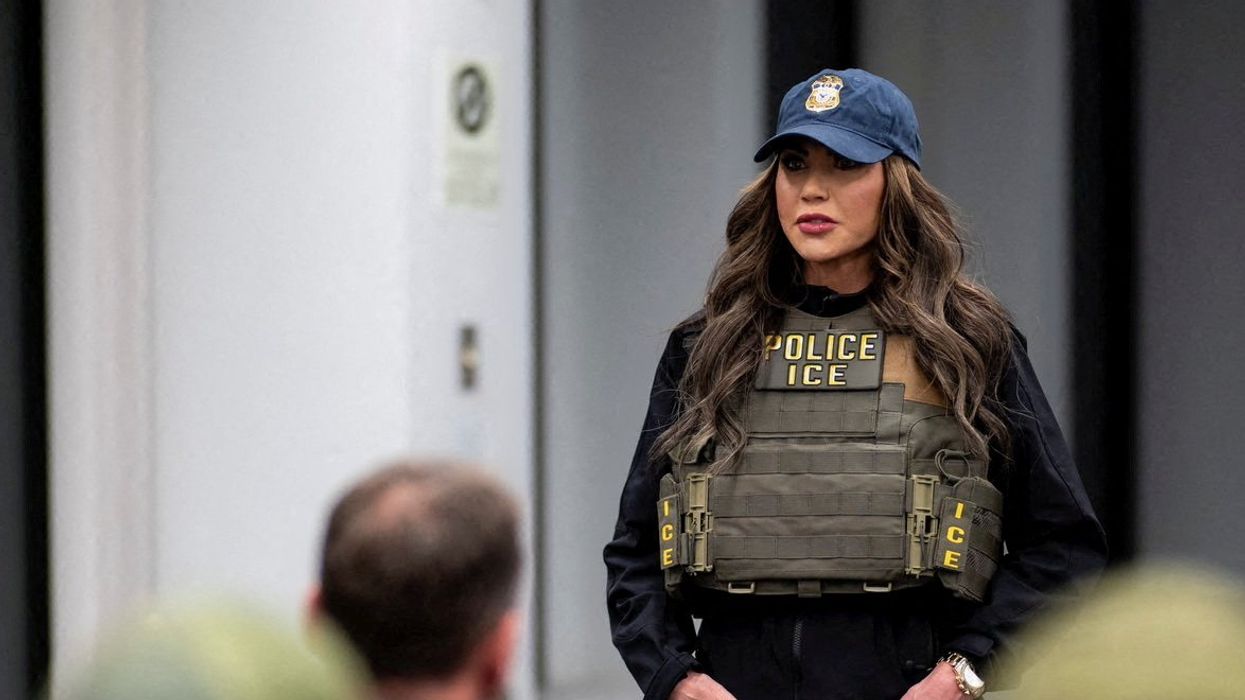
U.S. Department of Homeland Security Secretary Kristi Noem wears an ICE vest during a briefing with law enforcement agents ahead of immigration raids in New York City, U.S., January 28, 2025 in this image obtained from social media.
January 28, 2025

A confrontational legislative hearing Monday — with a witness calling a state senator a fascist and lawmakers battling over whether the state should put a bounty on undocumented immigrants — set the tone for this year’s debate on immigration and the state’s role in border security.

The most aggressive approach, in a bill filed by state Sen. David Gregory, would award a $1,000 bounty for tips that result in the arrest of a person present in the United States without authorization. Gregory, a Republican from Chesterfield, wants to authorize bounty hunters, usually employed by bail bond businesses to catch absconders, to track down people identified in tips.

And if the tip proves accurate, the person arrested would be charged with “trespass by an illegal alien,” and subject to life in prison without parole if federal immigration authorities declined to take custody.

“This bill seeks to create an ICE program at the state level,” Gregory told the Senate Transportation, Infrastructure and Public Safety Committee. “That’s essentially all it does. This is an ICE program inside the state of Missouri.”

State Sen. Barbara Washington, a Kansas City Democrat, said it encourages people to make reports based on skin color or English proficiency.

“Don’t tell me it is not going to happen because it is happening now,” Washington said.

Gregory’s bill — and another heard Monday from state Sen. Jill Carter, a Joplin Republican — are among several introduced by Republicans this session seeking to make it more difficult for undocumented immigrants to remain in the state.

Carter’s bill would also create new crimes based on immigration status. For simply being undocumented, a person could be charged with “improper entry” and could be punished by a fine of up to $10,000 and removal to a U.S. port of entry for deportation

The crime of “aggravated illegal presence” would be a felony applying to undocumented people who violated any other Missouri law. The penalty would be increased if the violation was a felony law.

Immigration and border security have been a major issue for the GOP nationally, helping get President Donald Trump elected to a new term. Trump promised mass deportations, and roundups began almost immediately after he took office.

There were 956 arrests on Sunday, the BBC reported. Colombia, which initially refused to accept incoming flights of people being deported, relented after Trump threatened to impose a tariff of 25% on all imports from the South American country.

Federal courts have blocked attempts in Iowa, Texas and Georgia to make it a crime to be in those states if a person is in the U.S. illegally.

During Monday’s hearing, immigrants — with legal status and without — said the bills filed this year represent an escalation of oppression.

“It is inhumane to say people should be hunted like a sport,” said Aura Velasquez, who has been a citizen for five years. “It would turn neighbors against neighbors and friends against each other.”

Immigration advocates argued that a community already fearful about having documentation to remain in the U.S. revoked would become more fearful.

“This bill fosters a climate of fear, where people feel unsafe engaging in even the most basic activities beyond going to work or school,” said Gabriella Cepeda, representing the Hispanic Law Students Association at St. Louis University. “They are terrified of being profiled or targeted life in prison for simply existing in the state without documentation. It is not just extreme, it’s cruel and unusual punishment.”

The handful of supporters, representing law enforcement and a conservative Jewish group, said the state must protect itself from human trafficking and drug trafficking associated with lax border security.

“This legislation would simply give law enforcement another tool in the tool box to assist our federal partners,” Lewis County Sheriff David Parish said.

Last summer, a Missouri House interim committee studied the issue of crime associated with illegal immigration. The report, published Jan. 7, drew no conclusions and reported that many of the witnesses said they feared problems associated with border communities reaching Missouri.

The report did not estimate the number of undocumented immigrants in Missouri but said studies show a substantial economic impact.

Undocumented immigrants paid approximately $113 million in state taxes in 2022 but cannot use the public benefits those taxes support like Medicaid. Their economic activity supports 160,000 jobs and $19 billion in total economic activity, providing “real economic stability that benefits all Missourians,” the committee report stated.

Washington peppered Gregory and Carter with questions about whether the state should trade that economic support for a state free of undocumented immigrants.

“We have 77,000 illegal immigrants that we have here in Missouri,” Gregory said.

“So they should all be subject to this, because you’re saying that we should arrest them just because they’re here?” Washington asked.

“Yes,” Gregory replied.


Missouri Independent is part of States Newsroom, a nonprofit news network supported by grants and a coalition of donors as a 501c(3) public charity. Missouri Independent maintains editorial independence. Contact Editor Jason Hancock for questions: info@missouriindependent.com.


Trump crackdown spurs migrants to seek refuge in Mexico

Naucalpan de Juárez (Mexico) (AFP) – After US President Donald Trump dashed her hopes of gaining asylum in the United States, Arianne Dominguez joined hundreds of other migrants seeking refuge in Mexico instead.


RFI
Issued on: 29/01/2025 -
Migrants wait outside an office of the Mexican Commission for Refugee Assistance near Mexico City 
© ALFREDO ESTRELLA / AFP

The 24-year-old Cuban arrived in Mexico less than two weeks before Trump took office on January 20 and almost immediately halted access to an app introduced by his predecessor Joe Biden to help process claims for entering the United States.

"I was in shock," Dominguez said.

"I thought about my family in Cuba who were hoping I could get to the United States. Then I had to think about plan B," she told AFP.

The alternative she decided on was to stay in Mexico and obtain refuge status.

She went to an office of the Mexican Commission for Refugee Assistance (COMAR) in a Mexico City suburb that is busy dealing with migrants seeking asylum in the Latin American nation.

Some migrants seeking assistance from the Mexican refugee agency have been waiting for days © ALFREDO ESTRELLA / AFP

Venezuelans, Cubans and other foreigners fleeing poverty, violence and political persecution wait in line for days to begin the process.

Juan Carmona, a 50-year-old Venezuelan mechanic, decided to stay in Mexico with his wife because they were unable to reach the United States.

"We decided on Mexico. We liked it a lot and for now we want to do this in the best way possible, completely legally, not to become undocumented," he said.

In 2024, Mexico granted refuge to more than 26,800 foreigners, according to official figures.

Migrants seeking assistance from the Mexican refugee agency have been waiting for days, some outdoors or sleeping in tents.

Others are on waiting lists operated by the migrants themselves.
'Things are not good'

In the southern city of Tapachula, long queues have also formed outside the COMAR offices as migrants wait under the gaze of soldiers guarding the building.

Many of the migrants had -- or were requesting -- appointments with US authorities through the CBP One app.

But now they see seeking asylum in Mexico as their best option for the moment.

"We're here to see if we can work while we're here or to make a life here. Things are not good," says Jose Ricardo Moreno, a 60-year-old Cuban who is traveling with his wife and 22-year-old daughter.

Before Trump took office, Moreno was given an asylum appointment in the United States for February 2, but he lost it when CBP One was axed.
Many migrants see seeking asylum in Mexico as their best option, at least for now © ALFREDO ESTRELLA / AFP

Janqui Martin, a 43-year-old Cuban doctor, said he was tired of moving between countries and decided to stay in Mexico.

"Mexico has welcomed us, opened the door to us and we have the possibility of working," said Martin, who left his wife and 12-year-old daughter in Cuba.

On his first day back in office, Trump declared a national emergency at the US southern border and vowed to deport "millions and millions" of migrants.

His administration said it would also reinstate a "Remain in Mexico" policy that prevailed during Trump's first term, under which people who apply to enter the United States from Mexico must remain there until their application has been decided.

The White House has also halted an asylum program for people fleeing authoritarian regimes in Central and South America, leaving thousands of people stranded on the Mexican side of the border.

Trump's office additionally said he had ordered 1,500 more military personnel to the border.

Shakira Chaparro, a 29-year-old Venezuelan waiting in the border city of Tijuana, said that crossing over illegally was now too risky.

"The best option is to stay here, find a way to get a permit to stay for a while or return to our country," she said.

© 2025 AFP


What to make of Trump’s Guantanamo plan for migrants


By AFP
January 31, 2025


The United States leases the site holding the Guantanamo Bay prison from Cuba under a treaty dating back to 1903 - Copyright AFP PEDRO UGARTE

President Donald Trump has said he wants to send 30,000 “criminal illegal aliens” to the notorious Guantanamo Bay US military base in Cuba.

The site houses the prison where hundreds of terror suspects labelled “enemy combatants” were held — many for years without charge — after the 9/11 attacks. Some were tortured.

Trump said this week he had ordered the construction of a detention center there to “double our capacity immediately” to hold undocumented migrants.

The plan has raised questions and concerns.

– Is it new? –

Guantanamo Bay has for decades been used to hold Caribbean asylum seekers and refugees caught at sea. Migrants are held in a different part of the base than that used for terror suspects.

In the 1990s, it was used to house tens of thousands of Haitians and Cubans who fled crises in their homelands.

They were accommodated in tent cities, many eventually sent home after being held at Guantanamo for years.

Trump’s move would entail a significant expansion of what is known as the Guantanamo Migrant Operations Center (GMOC).

But Deepa Alagesan of the New York-based International Refugee Assistance Project (IRAP) says migrants are already being held “in inhuman conditions, and expanding the facility will be nothing short of disastrous.”

In a report last September, the IRAP reported conditions at the GMOC including “undrinkable water and exposure to open sewage, inadequate schooling and medical care for children, and collective punishment of detained Cuban and Haitian refugees.”

– Is it legal? –


“Some of them are so bad that we don’t even trust the countries to hold them because we don’t want them coming back,” Trump said of the migrants he plans to ship off to Guantanamo — adding it is “a tough place to get out of.”

Bill Frelick, refugee and migrants director at Human Rights Watch told AFP that Trump’s intention appears to be “to detain people indefinitely.”

He explained there was leeway under domestic and international law to detain migrants administratively for short periods of time until they can be sent back to their home countries.

If they cannot be returned, “there is no longer a legitimate reason for the detention, and it becomes arbitrary,” said Frelick.

Making matters worse, Guantanamo is a remote, closed military base “which the US government has used to evade legal protections and public scrutiny” in the past.

“When detention becomes prolonged and indefinite and untethered from proper oversight, it violates human rights and may amount to torture,” said Frelick.

The UN human rights office said Friday that migrants should only be detained “as a last resort. And only in exceptional circumstances.”

Observers say migrants in Guantanamo would find it hard to access legal counsel.

Many would be legitimate asylum seekers who have the right under US and international law to live and work in America while their applications are considered.

– Is it necessary? –

Thousands of undocumented migrants have been arrested since Trump’s January 20 inauguration, including some accused of crimes.

An unknown number have been repatriated to Colombia, Mexico, Guatemala, Brazil and other countries. Trump has vowed to expel “millions.”

The US Immigration and Customs Enforcement (ICE) agency currently has funding for 41,500 detainee beds, according to the conservative Heritage Foundation think tank in Washington.

In a report this week, it said US military facilities such as Guantanamo “can play a central role in management of detention and deportation” — and already have been used for this purpose under previous administrations including that of Joe Biden.

The United States leases the site holding the prison from Cuba under a treaty dating back to 1903.

The communist government in Havana considers it an illegal occupation, but the US Department of State website states the lease was the product of “international agreement and treaty” and can only be ended by mutual agreement.


'Screwed up bigly': Stephen Miller slammed after calling OMB funding freeze a 'dumb media hoax'


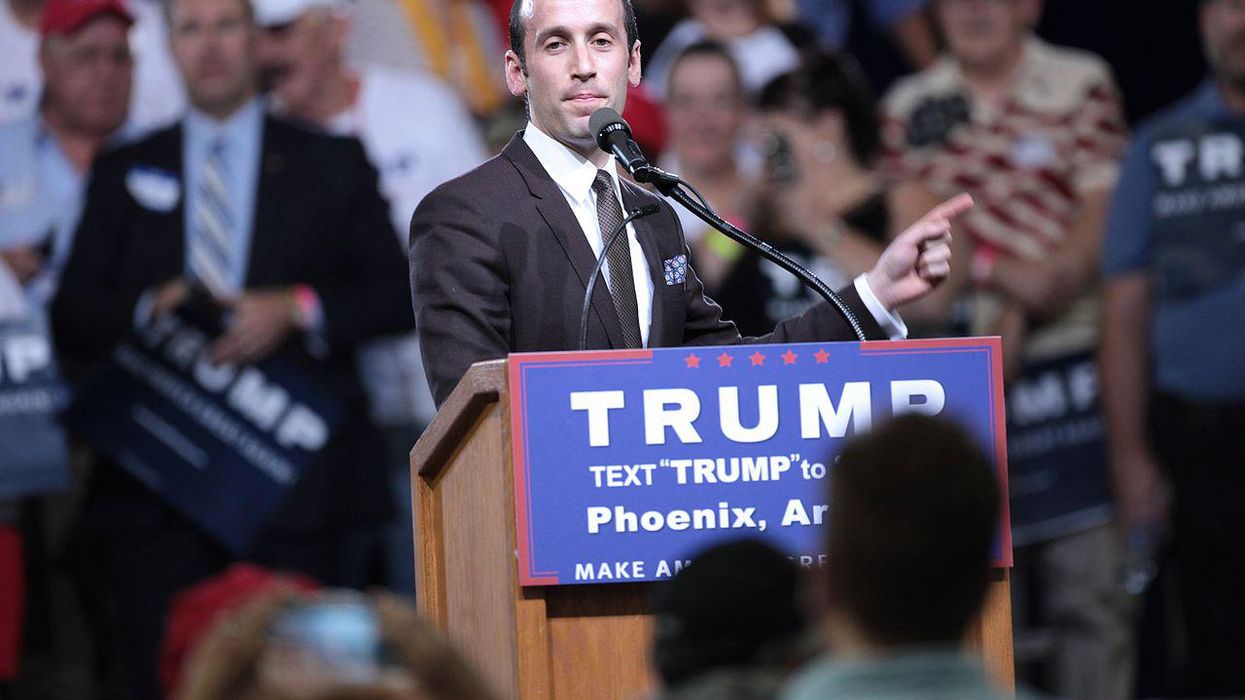
Stephen Miller speaking at a Donald Trump rally at Veterans Memorial Coliseum in Phoenix, Gage Skidmore

January 29, 2025
ALTERNET

Stephen Miller, President Donald Trump’s White House Deputy Chief of Staff, is under fire after appearing repeatedly to attempt to whitewash the Office of Management and Budget memo that ordered a funding freeze on “all Federal financial assistance, and other relevant agency activities that may be implicated by the executive orders, including, but not limited to, financial assistance for foreign aid, nongovernmental organizations, DEI, woke gender ideology, and the green new deal.”

The OMB memo, which was not publicly rolled out but rather discovered by journalist Marisa Kabas, appears to have led to the shuttering on Tuesday of the Medicaid portals in all 50 states. There were also reports that in addition to the Medicaid portal, the portal for SNAP, the Supplemental Nutrition Assistance Program formerly known as “food stamps,” also went down on Tuesday, along with other sources or recipients of federal funding.

Miller declared that the massive nationwide concern and confusion were a media creation.

“I can’t help it if left-wing media outlets published a fake news story that caused confusion,” he told CNN’s Jake Tapper. The confusion, Miller insisted, was a “false story” that was “created by the media.”

Later on Tuesday Miller doubled down, declaring on social media, “Welcome to the first dumb media hoax of 2025. OMB ordered a review of funding to NGOs, foreign governments and large discretionary contracts. It explicitly excluded all aid and benefit programs. Leftwing media outright lied and some people fell for the hoax.”

OMB was forced to issue an explainer Tuesday after media outlets accurately reported what the OMB memo stated. But some say that the FAQ was an opportunity for OMB to backtrack after massive, nationwide anger, fear, and confusion — which was somewhat quieted after a federal judge issued a temporary partial pause on the OMB memo.

U.S. Rep. Seth Magaziner (D-RI) responded to Miller’s remarks, writing: “They are back-tracking because we spoke up. Good. But make no mistake: their OMB memo ordered a freeze of *all* grants. The Medicaid and SNAP portals went dark. Head Start providers couldn’t draw funds. This was not a coincidence. It was their plan. And they screwed up bigly.”

Despite Miller’s repeated claims that the memo was clear and did not affect a wide array of federally-funded programs, The Boston Globe reported that “Children’s Friend, a Head Start program in Rhode Island, said it was unable to draw down $500,000 for this week’s payroll,” and “Open Door Health, an LGBTQ+ health clinic, said it could not access its federal funds on Tuesday.”

Congressman Magaziner also posted a list of organizations that he says are being blocked from receiving funding by the Trump Department of Homeland Security. “This is a gift to terrorists and our adversaries across the world. Trump needs to stop this madness and resume funding now,” Magaziner, the Homeland Security Ranking Member for Counterterrorism, wrote:


Outrage at Miller’s remarks calling the massive public upset and confusion over OMB’s memo a “dumb media hoax” was extensive.

“Completely false. Your first lie of the year. Payment Management Services (PMS), through which states get Medicaid funds from the federal government, had a banner saying payments were stopped because of Trump’s order. Stop lying,” wrote MSNBC columnist Rotimi Adeoye, whose bio says he is a former congressional aide and advisor for the ACLU Voting Rights Project.

“Sure there are dumb media hoaxes but if you accidentally turn off Medicaid people notice,” observed Matt Stoller, a political commentator, author, and the research director of the American Economic Liberties Project.

“Another familiar messaging strategy from the White House – cause confusion and blame it on a ‘media hoax.’ In reality, Programs like Medicaid, Meals on Wheels, etc were locked out of funding today. Either White House made errors or they aren’t telling the truth,” wrote Fox 32 Chicago Political Correspondent Paris Schutz.

“Republicans send out a vague, sloppy, unclear memo that gives everyone the impression that aid to orgs are under attack, Medicaid and other services stop working, Republicans go on AIR supporting this, but Democrats are blamed for pushing a hoax? C’mon get a new playbook,” wrote Tahra Jirari, Director of Economic Analysis at Chamber of Progress.

“No…you complete clowns put out a sweeping vaguely worded executive order that ORDERED ALL FEDERAL GRANT AND LOAN FUNDING TO CEASE, were called out by the public and the media for the disaster this would present, and are now blaming everyone else. You overstepped and got caught,” declared political commentator Andrew Wortman.

“Yeah, it was so explicit that OMB had to release another document in an attempt to clarify,” said Tad DeHaven, a Cato Institute policy analyst.

“Dude you guys literally shut off Medicaid. Which part of that were Democrats or the media involved with?” asked Paul Iskajyan, the Communications Director for U.S. Rep. Scott Peters (D-CA).

Stephen Miller, President Donald Trump’s White House Deputy Chief of Staff, is under fire after appearing repeatedly to attempt to whitewash the Office of Management and Budget memo that ordered a funding freeze on “all Federal financial assistance, and other relevant agency activities that may be implicated by the executive orders, including, but not limited to, financial assistance for foreign aid, nongovernmental organizations, DEI, woke gender ideology, and the green new deal.”

The OMB memo, which was not publicly rolled out but rather discovered by journalist Marisa Kabas, appears to have led to the shuttering on Tuesday of the Medicaid portals in all 50 states. There were also reports that in addition to the Medicaid portal, the portal for SNAP, the Supplemental Nutrition Assistance Program formerly known as “food stamps,” also went down on Tuesday, along with other sources or recipients of federal funding.

Miller declared that the massive nationwide concern and confusion were a media creation.

“I can’t help it if left-wing media outlets published a fake news story that caused confusion,” he told CNN’s Jake Tapper. The confusion, Miller insisted, was a “false story” that was “created by the media.”

READ MORE: ‘Despair and Violence’: RFK Jr. Is a ‘Predator’ Says Caroline Kennedy in ‘Damning’ Video

Later on Tuesday Miller doubled down, declaring on social media, “Welcome to the first dumb media hoax of 2025. OMB ordered a review of funding to NGOs, foreign governments and large discretionary contracts. It explicitly excluded all aid and benefit programs. Leftwing media outright lied and some people fell for the hoax.”

OMB was forced to issue an explainer Tuesday after media outlets accurately reported what the OMB memo stated. But some say that the FAQ was an opportunity for OMB to backtrack after massive, nationwide anger, fear, and confusion — which was somewhat quieted after a federal judge issued a temporary partial pause on the OMB memo.

U.S. Rep. Seth Magaziner (D-RI) responded to Miller’s remarks, writing: “They are back-tracking because we spoke up. Good. But make no mistake: their OMB memo ordered a freeze of *all* grants. The Medicaid and SNAP portals went dark. Head Start providers couldn’t draw funds. This was not a coincidence. It was their plan. And they screwed up bigly.”

Despite Miller’s repeated claims that the memo was clear and did not affect a wide array of federally-funded programs, The Boston Globe reported that “Children’s Friend, a Head Start program in Rhode Island, said it was unable to draw down $500,000 for this week’s payroll,” and “Open Door Health, an LGBTQ+ health clinic, said it could not access its federal funds on Tuesday.”

Congressman Magaziner also posted a list of organizations that he says are being blocked from receiving funding by the Trump Department of Homeland Security. “This is a gift to terrorists and our adversaries across the world. Trump needs to stop this madness and resume funding now,” Magaziner, the Homeland Security Ranking Member for Counterterrorism, wrote:

Outrage at Miller’s remarks calling the massive public upset and confusion over OMB’s memo a “dumb media hoax” was extensive.

“Completely false. Your first lie of the year. Payment Management Services (PMS), through which states get Medicaid funds from the federal government, had a banner saying payments were stopped because of Trump’s order. Stop lying,” wrote MSNBC columnist Rotimi Adeoye, whose bio says he is a former congressional aide and advisor for the ACLU Voting Rights Project.

“Sure there are dumb media hoaxes but if you accidentally turn off Medicaid people notice,” observed Matt Stoller, a political commentator, author, and the research director of the American Economic Liberties Project.

“Another familiar messaging strategy from the White House – cause confusion and blame it on a ‘media hoax.’ In reality, Programs like Medicaid, Meals on Wheels, etc were locked out of funding today. Either White House made errors or they aren’t telling the truth,” wrote Fox 32 Chicago Political Correspondent Paris Schutz.

“Republicans send out a vague, sloppy, unclear memo that gives everyone the impression that aid to orgs are under attack, Medicaid and other services stop working, Republicans go on AIR supporting this, but Democrats are blamed for pushing a hoax? C’mon get a new playbook,” wrote Tahra Jirari, Director of Economic Analysis at Chamber of Progress.

“No…you complete clowns put out a sweeping vaguely worded executive order that ORDERED ALL FEDERAL GRANT AND LOAN FUNDING TO CEASE, were called out by the public and the media for the disaster this would present, and are now blaming everyone else. You overstepped and got caught,” declared political commentator Andrew Wortman.

“Yeah, it was so explicit that OMB had to release another document in an attempt to clarify,” said Tad DeHaven, a Cato Institute policy analyst.

“Dude you guys literally shut off Medicaid. Which part of that were Democrats or the media involved with?” asked Paul Iskajyan, the Communications Director for U.S. Rep. Scott Peters (D-CA).


US judge blocks Trump freeze on federal aid spending


A US district court judge has temporarily blocked President Donald Trump's freeze on funding for federal aid programs. "I think there is the specter of irreparable harm," District Judge Loren AliKhan said at an emergency hearing. Another hearing is scheduled for Monday. Implementation of the funding freeze is on hold until 5:00 pm (2200 GMT) on that day.


Issued on: 29/01/2025 -
FRANCE24
By: NEWS WIRES

People protest against a funding freeze of federal grants near to the White House in Washington, Tuesday, Jan. 28, 2025. © Ben Curtis, AP


President Donald Trump's attempt to freeze hundreds of billions of dollars in federal aid was temporarily blocked in court on Tuesday, even as it sowed chaos throughout the government and stirred fears that it would disrupt programs that serve tens of millions of Americans.

Minutes before it was due to take effect at 5 pm ET (2200 GMT), a federal judge blocked Trump's spending freeze that would have affected thousands of federal grant programs. US District Judge Loren AliKhan granted a temporary halt after an advocacy group argued the freeze would devastate programs ranging from health care to road construction. The court will revisit the issue on Monday.

Trump's sweeping directive was the latest step in his dramatic effort to overhaul the federal government, which has already seen the new president halt foreign aid, freeze hiring and shutter diversity programs across dozens of agencies.

Democrats castigated the funding freeze as an illegal assault on Congress' authority over federal spending Congress' authority over federal spending and said it was already disrupting payments to doctors and preschool teachers. Republicans largely defended the order as fulfilling Trump's campaign promise to rein in the $6.75 trillion budget.

The Trump administration said programs delivering benefits directly to Americans would not be affected. But Democratic Senator Ron Wyden said his office had confirmed that doctors in all 50 states were not able to secure payments from Medicaid, which provides health coverage to 70 million low-income Americans.

White House press secretary Karoline Leavitt said on X that the government was aware of the Medicaid portal outage and no payments had been affected. She said the website would be back online shortly.

Health care industry officials said the interruption could cause lasting damage. "If the federal government stops pushing funds out to state Medicaid contractors, the result would be a complete debacle, with Medicaid providers going out of business," said Sara Ratner of health care company NOMI Health.

The White House said the freeze was needed to ensure federal aid programs are aligned with the Republican president's priorities, including executive orders he singed ending diversity, equity and inclusion efforts.
Wide-reaching programs

Trump's order faces another legal challenge from Democratic state attorneys general, who argued in a lawsuit that the freeze violates the US Constitution and would have a devastating effect on states that rely on federal aid for a substantial portion of their budgets.

Federal grants and loans reach into virtually every corner of Americans' lives, with hundreds of billions of dollars flowing into education, health care and anti-poverty programs, housing assistance, disaster relief, infrastructure and a host of other initiatives.

The proposed cuts could also take a heavy toll on Republican-leaning states, whose residents are significant beneficiaries of major federal programs.

The memo said Tuesday's freeze included any money intended for foreign aid and for nongovernmental organisations, among other categories. It directed 55 agencies to examine more than 2,600 grant programs.

The White House said the pause would not impact Social Security or Medicare payments to older Americans or assistance provided directly to individuals, such as some food aid and welfare programs for the poor. The Pentagon said it would not apply to its contractors.

In a second memo released on Tuesday, the White House said funds for Medicaid, farmers, small businesses, rental assistance and the Head Start preschool program would continue without interruption. But Democratic Senator Chris Murphy of Connecticut said the reimbursement system for Head Start had been shut down in his state, preventing preschools from paying staff.

It was unclear whether other multibillion-dollar grant programs, such as scientific research, highway construction and addiction recovery, would be affected. The White House did not appear to exempt disaster aid to areas like Los Angeles and western North Carolina that have been devastated by natural disasters. Trump pledged government support when he visited both places last last week.

The freeze followed the president's suspension of foreign aid, which began cutting off the supply of lifesaving medicines on Tuesday to countries around the world that depend on US development assistance.

A Reuters/Ipsos poll released Tuesday found that Trump's approval rating has fallen slightly to 45% since he took office on Jan. 20 and majorities disapprove of his efforts to rename the Gulf of Mexico and his attempt to deny citizenship to babies born in the US whose parents are not citizens.
Disputed effects

Agencies were trying to understand how to implement the new order.

The Justice Department will pause $4 billion in funding, according to a memo seen by Reuters, including aid for the National Center for Missing and Exploited Children.

Trump's Republican allies have been pushing for dramatic spending cuts, though he has promised to spare Social Security and Medicare, which make up roughly one-third of the budget. Another 11% of the budget goes toward government interest payments, which cannot be touched without triggering a default that would rock the world economy.

Democrats criticised the spending freeze as unlawful and dangerous.

"This decision is lawless, destructive, cruel," Senate Democratic Leader Chuck Schumer said. "It's American families that are going to suffer most."

The US Constitution gives Congress control over spending matters, but Trump said during his campaign that he believes the president has the power to withhold money for programs he dislikes. His nominee for White House budget director, Russell Vought, who has not yet been confirmed by the Senate, headed a think tank that has argued Congress cannot require a president to spend money. Democrats sought to delay his nomination, but would need Republican support to succeed.

At least one Republican centrist, US Representative Don Bacon, said he hoped the order would be short-lived after hearing from worried constituents, including a woman who runs an after-school program that depends on federal grant money.

"We don't live in an autocracy. It's divided government. We've got separation of powers," he said.


Trump orders federal funding freeze in possible violation of US constitution
Americas


US President Donald Trump ordered a pause on federal aid that could affect trillions of dollars earmarked for everything from education grants to medical research to small business loans starting on Tuesday. Democratic senators said the "illegal" order violates the constitution by usurping Congress's power to control the US budget.


Issued on: 28/01/2025
FRANCE24
By: NEWS WIRES
President Donald Trump campaigned on remaking the US government but he is accused of a power grab. © Kent Nishimura, AFP

The healthcare system for millions of low-income Americans and rafts of other programs were thrown into disarray Tuesday after President Donald Trump ordered a freeze on federal funding, a move opponents blasted as unconstitutional.

It was Trump's latest radical step since he took office a week ago, vowing to force the US government and its employees to back his right-wing political goals or face retribution.

Potentially trillions of dollars in federal grants, loans and other aid were frozen by the White House order set to take effect Tuesday at 5:00 pm (2200 GMT), casting a shadow over everything from education to small businesses.

Online portals used to access the Medicaid health insurance program for poor families and disabled individuals were quickly inaccessible.

"This is a blatant attempt to rip away health insurance from millions of Americans overnight and will get people killed," Oregon Senator Ron Wyden posted on X.

White House Press Secretary Karoline Leavitt said the website would be fixed soon and that "no payments have been affected."

She defended the drastic move as part of Trump's bid to make the government "good stewards of taxpayer dollars."

The freeze is not a "blanket" stop on spending, but a tool to check that "every penny that is going out the door is not conflicting with the executive orders and actions that this president has taken," Leavitt said.

She said the temporary pause would not impact individual Americans but would instead target programs to weed out anything "illegal."

She listed as examples racial equality and climate change programs that Trump has vowed to eradicate -- and did not answer a question about whether Medicaid recipients would be cut off.

The extraordinary measure follows a similar announcement that most US foreign aid is frozen.

Constitutional challenge


The order, signed by acting director of the Office of Management and Budget (OMB) Matthew Vaeth, did not make clear how such a pause on disbursements of funding will work or for how long.

Several non-profit groups have filed suit in federal court seeking a temporary halt to the order until its legality is assessed.

Federal spending included more than $3 trillion in financial assistance like grants and loans in fiscal year 2024 -- all of which was approved by Congress.

Democrats accused Trump of usurping Congress' constitutionally mandated control over budget spending as part of a broader attempt to force the government to bend to his personal will.

This has included firing independent government watchdogs and several career prosecutors who were involved in an official probe of his attempts to overthrow the 2020 election.

The Trump administration says the funding stoppage is just a way to enforce compliance with the administration's policies.

This is "certainly within the confines of the law," Leavitt said, citing the White House legal team, and claiming Trump "has the power to fire anyone" in the administration.
'Sweeping halt'

Democratic Senator Patty Murray called the White House spending order "a brazen & illegal move."

"The law is the law -- Trump must immediately reverse course, follow the requirements of the law, & ensure the nation's spending laws are implemented as Congress intended," she posted on X.

Another Democratic senator, Richard Blumenthal, said the "illegal" order will create "havoc" in medical and research facilities, which receive major government funding.

The White House memo stated that "federal agencies must temporarily pause all activities."

It stated that Social Security and Medicare benefits -- used by retirees -- were excluded from the pause.

Areas that might be impacted, it said, include "financial assistance for foreign aid, nongovernmental organizations, DEI, woke gender ideology, and the green new deal" -- references to racial equality and climate change programs that Trump has vowed to overturn.

Read moreTrump orders end of government DEI programs, LGBT protections

The Sierra Club, an environmental organization, said the freeze could jeopardize funding for everything from disaster relief to home heating subsidies, safe drinking water programs, and the National Suicide Prevention Hotline.

"In issuing a sweeping halt to federal funding, grants and loans, Donald Trump has... immediately and significantly put Americans in danger," Sierra Club executive director Ben Jealous.

(AFP)