Tuesday, February 04, 2025

Exposure to air pollution associated with more hospital admissions for lower respiratory infections


Men, people over 65 and those diagnosed with hypertension are the most vulnerable population groups


Barcelona Institute for Global Health (ISGlobal)


Air pollution is a well-known risk factor for respiratory diseases such as asthma and chronic obstructive pulmonary disease (COPD). However, its contribution to lower respiratory infections —those that affect the lower respiratory tract, including the lungs, bronchi and alveoli— is less well documented, especially in adults. To fill this gap in knowledge, a team from the Barcelona Institute for Global Health (ISGlobal), a centre supported by the ”la Caixa” Foundation, assessed the effect of air pollution on hospital admissions for lower respiratory infections in adults, and investigated the existence of subgroups that are particularly vulnerable to these infections. The results have been published in the journal Environment International.

The research shows that long-term exposure to PM2.5, PM10, NO2 and ozone (O3) air pollution is associated with more hospital admissions for lower respiratory tract infections in adults. The associations were stronger in menpeople over 65 years of age and those diagnosed with hypertension.

The study involved 3,800,000 adults from the COVAIR-CAT cohort, a large cohort of 7.7 million people based on the health system of Catalonia. The research team used exposure models to estimate annual average concentrations of PM2.5, PM10, NO2 and ozone during the warm season (May-September) between 2018 and 2020 at the participants' residences. Information on hospital admissions, mortality and comorbidities was obtained from various administrative databases. The study included hospital admissions for all lower respiratory infections and, separately, the subgroup of hospital admissions for influenza and pneumonia. A statistical model was then used to assess the association between air pollution and hospital admissions.

“The association between air pollution and hospital admissions for lower respiratory tract infections was observed even at pollution levels below current EU air quality standards,” says Anna Alari, ISGlobal researcher and first author of the study. “It is crucial to adopt stricter air quality standards, as more ambitious measures to reduce air pollution would decrease hospital admissions and protect vulnerable populations,” she adds.

Stronger association in men and people over 65

The association between air pollution and hospitalisations for lower respiratory tract infections was more pronounced in people over 65 years of age or with comorbidities, compared with younger people or those without comorbidities. Specifically, elevated levels of air pollution were associated with approximately three times higher rates of hospital admissions for lower respiratory infections among people aged 65 years and older compared with younger people.

In addition, exposure to elevated levels of NO2, PM2.5 or PM10 (but not O3) was associated with about a 50% increase in hospital admissions in men, while the association was about 3% higher in women.

The team observed the same pattern for hospital admissions for influenza or pneumonia, but with smaller associations compared to lower respiratory infections. “This may be due to the influence of available vaccines against the pathogens responsible for influenza and most cases of pneumonia,” says Cathryn Tonne, senior author of the study.


Reference:

Anna Alari, A., Ranzani, O., Milà, C., Olmos, S., Basagaña, X., Dadvand, P., Duarte-Salles, T., Nieuwenhuijsen, M., Tonne, C. Long-term exposure to air pollution and lower respiratory infections in a large population-based adult cohort in Catalonia. Environment International, 2025. Doi: https://doi.org/10.1016/j.envint.2024.109230

High PM2.5 levels in Delhi-NCR largely independent of Punjab-Haryana crop fires


An analysis of observations across a network of 30 sites

Peer-Reviewed Publication

Research Institute for Humanity and Nature

Figure 1 

image: 

Figure 1. Soon after the kharif/summer crops (mainly rice paddies) are harvested, large number of farm fires are detected from the satellites in late October to November over northwestern India (a:2022, b:2023; top row). A network of about 30 low-cost sensors has been deployed during the intense CRB period since 2022 (black circles in a, b). Our measurements show rural area air pollution in Punjab (c, d; middle row) and Haryana (e, f; bottom row) was significantly caused by paddy crop residue burning in the October-November months for both 2022 (left column) and 2023 (right column). The FDC maps, at 0.05×0.05 degrees grid resolution, are created from Visible Infrared Imaging Radiometer Suite (VIIRS) onboard the SNPP and NOAA20 satellites hotspot detections. The background shows the visible image of earth’s surface.

view more 

Credit: Aakash Project, RIHN


nternational collaborative research led by Aakash Project* researchers at the Research Institute for Humanity and Nature (RIHN) show an unequivocal contribution of crop residue burning (CRB) to air pollution in the rural/semi-urban regions of Punjab and Haryana, and a relatively lower contribution than previously thought to the Delhi national capital region (NCR). We have installed 30 units of compact and useful PM2.5** in situ instrument with gas sensors (CUPI-Gs) and have continuously recorded air pollutants in 2022 and 2023. New analytical methods have been developed to assess and predict the formation and transport of air pollutants due to emissions from CRB.

The adverse impacts of air pollution on human health, economic activities and lifestyle have been a major concern for decades as pollution at an alert level occurs each year during the October-November months in Delhi-NCR. One of the many hypotheses, to explain rapidly built-up and sustained high PM2.5 concentrations in Delhi-NCR, implicates large contributions from the paddy CRB in Punjab and Haryana states of northwest India (Fig. 1). Burning of rice stubbles in the region is a common practice for land clearing since mechanised paddy harvesting is adopted and is thought to protect fields from pests and preserve soil fertility. Although this formation mechanism of air pollution in Delhi-NCR is debated till date (e.g., in media reports and research publications), policymakers at state and central government levels have targeted eradication of CRB by changing behaviour of farmers in land clearing. The debate continues mainly because of the lack of systematic measurements from the regions of concern. In this study, the research team used a combination of (1) measurements from the Aakash Project’s low cost CUPI-G network, (2) analyses of air mass trajectories, fire counts and wind patterns, and (3) chemistry-transport simulations to assess the impact of CRB on PM2.5 in rural, sub-urban and megacity regions.

The research findings highlight that, despite a significant reduction in the satellite fire detection counts (FDCs) over Punjab and Haryana from 2015 to 2023, PM2.5 concentrations in Delhi have remained high. The PM2.5 concentrations showed large day-to-day fluctuation from site-to-site in both 2022 and 2023 (Fig. 1). Both years saw significant fire counts in southwest Punjab with daily-mean PM2.5 exceeding 300 μg m–3 in Delhi, but the meteorological conditions were markedly different for the peak CRB days of November 1st – 12th of 2022 and 2023. November 2022 witnessed a prevalence of northwesterly winds allowing the transport of airmass from Punjab and Haryana to Delhi-NCR on two occasions. However, in November 2023, a southwesterly low wind condition with speed <1 m s–1 limited air movement causing an accumulation of local pollutants in Delhi-NCR (Fig. 2). Our analyses showed that the buildup and sustenance of PM2.5 in the Delhi-NCR is primarily of local origin and can be inferred from the rise/drop in concert with implementation/revocation of Graded Response Action Plan (GRAP) stages as administered by the Commission of air quality management (CAQM) (Fig. 2).

“With the measurements at a network of about 30 sites covering Punjab, Haryana and Delhi NCR, we are able to separate the contributions of paddy straw burning to Delhi’s PM2.5 variations on the basis of characteristic PM2.5 events and at week-monthly averages,” says Prof. Prabir Patra, the leader of Aakash Project and principal scientist at Japan Agency for Marine-Earth Science and Technology (JAMSTEC). Multiple years of data (2022-2023; now 2024) gathered by the project helps to confirm the findings and (in)validate the hypothesis (Fig. 3).

Based on several types of analysis as presented in Mangaraj et al. (2025), we have been successful in processing the observation data and model-based analysis in near real-time. These data and plots have been shared online daily via the Aakash-RIHN website since 2023 (e.g., https://aakash-rihn.org/en/campaign2023-week13/). We have concluded that CRB in Punjab and Haryana cannot be made responsible for determining the air quality in Delhi-NCR, even during the peak rice stubble burning period (Oct-Nov). Apart from the fact that the horizontal wind flow is blocked by the Himalayas to the north (ref. Fig. 1a, c), the freshly emitted and photo-chemically formed PM2.5 is randomly transported in the other 3 directions horizontally and is diluted vertically through the planetary boundary layer ventilation (Fig. 3). “Our study underscores the importance of continuous monitoring of air pollutions in both source (Punjab), receptor (Delhi-NCR) and intermediate (Haryana) regions for implementation of targeted mitigation strategies to combat persistency of harmful air pollution,” says Dr. Poonam Mangaraj, the lead author of the article.

This research is conducted as part of the Aakash Project * (Project No. 14200133) of RIHN, a constituent member of NIHU. The intensive field campaigns of 2022-23 was conducted with support from the Centers for International Projects Trust (CIPT), India.

The measurement data of PM2.5 are made available from the RIHN database with open data sharing policy (https://aakash-rihn.org/en/data-set/).


*The Aakash project is exploring ways to shift people's behaviour to sustainable agriculture in the Punjab region to reduce the health hazards caused by air pollution, by clarifying observation-based relationship between straw burning and local air pollution; raising awareness of the importance of maintaining clean air among residents; and proposing the effective and beneficial use of rice straw by farmers.

**PM2.5: particulate matter less than 2.5 µm in diameter (popularly known as PM2.5). These fine particles can be inhaled during human breathing. Depending on chemical composition, defined by oxidative potential (OP), they damage the pulmonary cells. The particulates from materials burning usually have greater OP than those from natural sources, e.g., mineral dusts or secondary organics.


Article information

Title: Weak coupling of observed surface PM2.5 in Delhi-NCR with rice crop residue burning in Punjab and Haryana

Journal:npj Climate and Atmospheric Science

Authors: Poonam Mangaraj, Yutaka Matsumi, Tomoki Nakayama, Akash Biswal, Kazuyo Yamaji, Hikaru Araki, Natsuko Yasutomi, Masayuki Takigawa, Prabir K. Patra, Sachiko Hayashida, Akanksha Sharma, A. P. Dimri, Surendra K. Dhaka, Manpreet S. Bhatti, Mizuo Kajino, Sahil Mor, Ravindra Khaiwal, Sanjeev Bhardwaj, Vimal J. Vazhathara, Ravi K. Kunchala, Tuhin K. Mandal, Prakhar Misra, Tanbir Singh, Kamal Vatta, and Suman Mor

Article Publication Date: January 15, 2025

URL: https://doi.org/10.1038/s41612-025-00901-8


Figure 3. Diagrams showing that Aakash/CUPI-G ground-based observation network allows us to track the movement of plumes from Punjab to Delhi. Four days of high PM2.5 in Delhi-NCR are shown in 2022 (top row) and 2023 (bottom row). The CRB effect always elevates the daily mean PM2.5 concentration (red circles) in South Punjab, while the direct effect of CRB rarely reaches to Delhi-NCR. The CUPI-Gs recorded PM2.5 continuously, even under hazy and cloudy conditions when satellites cannot detect CRB or related information.

Credit

Aakash Project, RIHN

About RIHN

The Research Institute for Humanity and Nature (RIHN) is a national institute established in Kyoto in 2001. RIHN aims, through research that integrates the humanities and sciences, to address environmental issues concerning the relationship between "humanity" and "nature" in a broad sense as fundamental issues of human culture. We strive not only to engage the research community but also to collaborate with diverse stakeholders in society, including local residents, to find solutions to global environmental problems. 

For more detail, visit https://www.chikyu.ac.jp/rihn_e/.

Fake news stories wrongly blame transgender pilot for causing the DC plane crash

After 67 people died in a collision between a military helicopter and a commercial airliner on January 29 in Washington, DC, far-right social media accounts began wrongly accusing Jo Ellis, a transgender American helicopter pilot, for causing the crash. Ellis took to Facebook to deny the rumours. This comes amid a wider campaign by the Trump administration targeting transgender servicemen and women in the US Army.


This is a screengrab of a post on X making false claims that a transgender helicopter pilot caused the fatal collision between a military helicopter and a commercial airliner on January 29 in Washington. © X
Issued on: 03/02/2025
FRANCE24/AFP


"Some craziness has happened on the internet and I’m being named as one of the pilots of the DC crash,” Jo Ellis wrote in a Facebook post on January 31. "It’s insulting to the victims and the families of those lost.”

Ellis was forced to respond after a large number of social media users on X and Facebook claimed that she was behind the collision between a US military helicopter and a commercial airline in Washington DC on January 29, which led to the deaths of 67 people.

A transphobic fake news story pushed by pro-Trump accounts

So how did a fake news story like this spread? The families of two of the three helicopter pilots, Ryan O'Hara and Carrie Eaves, took to social media in the wake of the tragedy, to post about the loss of their loved ones. However, several days later, the identity of the third pilot – reported by the media to be a woman – was still unknown to the wider public.

On the evening of January 30, social media users with links to the far right began to claim that “the Pilot of the Black Hawk has been identified as Chief Warrant Officer 2 (CW2) Jo Ellis, a transgender woman”. Many of the accounts that shared these fake claims had a history of sharing transphobic and homophobic statements. Case in point: X account Fraxis, who claims to be the author of a book called “Fake & Gay: A Provocative Dismantling of the Homosexuality Myth”. Fraxis’s post about Jo Ellis gained more than three million views.

At left is the post published by X user Fraxis. At right is an account that goes even further, claiming not only that Ellis was involved but that “speculations” were rising about the pilot’s “deliberate intentions”. © X

"Jo has been making radicalized anti-Trump statements on socials,” Fraxis added in a post featuring images of Ellis. The post has since been deleted.

Other accounts went even further claiming not only that Ellis was responsible but that “speculations” were rising about the pilot’s potentially “deliberate intentions”.

"What happened may have been another trans terror attack,” wrote another pro-Trump X user with two million followers. His post garnered nearly five million views.

These baseless accusations are part of a wider context of dramatically increased hostility to transgender servicemen and women. President Donald Trump signed on January 27 an executive order to get "transgender ideology" out of the military.
'I hope you all know I am alive and well'

However, Jo Ellis was not flying that helicopter. Two hours after her initial Facebook post, she posted a face-to-camera video along with the caption "Proof of life and statement".

Jo Ellis took to social media to deny the allegations that she was piloting the military helicopter involved in the crash (right). She also shared a video to serve as a “proof of life and statement”. © Facebook / Jo Ellis

"This is Jo Ellis, I am a Black Hawk pilot with the Virginia Army National Guard,” she says in the video. "I understand some people have associated me with the crash in DC and that is false.”

"It is insulting to the families to try to tie this to some sort of political agenda,” she adds. "They don’t deserve that. I don’t deserve this. And I hope you all know that I am alive and well. And this should be sufficient for you all to end all the rumours.”

Our team contacted the Virginia National Guard by email. They confirmed that "there were no Virginia National Guard personnel on board the Black Hawk that collided with the jetliner Wednesday evening."

On the evening of January 30, by which point the fake stories about Ellis’s involvement in the crash had already started to circulate online, she changed her profile photo to honour the victims of the crash.
'I want to serve at least 15 more [years]. I love my state and I love my country'

These extreme rightwing accounts began pointing fingers at Ellis just two days after she published an article and a podcast with the US media outlet Smerconish about her experience as a transgender soldier in the US Army.

This is a screengrab of the article written by Jo Ellis in American media outlet Smerconish.com. © Smerconish.com

In the article, Ellis discussed the US Army's support in her transition, explaining that she had paid for it herself, contrary to what other fake claims were suggesting.

She also wrote about her patriotism and her love for the US Army.

“I’ve served in the same unit for 15 years. I want to serve at least 15 more. I love my state and I love my country,” she wrote.

The day after the crash, US President Donald Trump claimed that the collision “should have been prevented” and implied that diversity programmes – which promote the hiring of people with minority and marginalised backgrounds – within the Federal Aviation Administration could be the cause.

“They actually came out with a directive: 'too white.' And we want the people that are competent,” he claimed.

When asked whether he believed the crash was a result of diversity hiring, Trump said, “we don't know" what caused the crash but added: “It just could have been.”


FUMBLING TOWARDS FASCISM

Flemish nationalist Bart de Wever sworn in as Belgium's new prime minister

Conservative Bart De Wever was sworn in Monday as Belgium's new prime minister after seven months of tortuous negotiations to reach a coalition deal that shifts the country to the right. De Wever has pledged to crack down on irregular migration and has pushed for cuts in social benefits and pension reforms.


Issued on: 03/02/2025
FRANCE24
By: NEWS WIRES
Newly appointed Belgian Prime Minister Bart De Wever speaks with Spanish Prime Minister Pedro Sanchez at the Palais d'Egmont in Brussels on February 3, 2025. © Nicolas Tucat, AFP


Conservative Bart De Wever was sworn in Monday as Belgium's new prime minister, after striking a hard-fought coalition deal that moves the country to the right.

Reached after seven months of tortuous negotiations, the agreement makes De Wever the first nationalist from Dutch-speaking Flanders to be named Belgian premier.

A law-and-order candidate whose coalition has already promised to crack down on irregular migration, De Wever's rise to power reinforces a marked right-wing shift in European politics.

The 54-year-old, who in recent years has backed off on calls for Flanders to become an independent country, took the oath of office before King Philippe at the royal palace in Brussels.


From there, he headed straight to a gathering of EU leaders a few blocks away, for talks on defence and transatlantic relations -- quipping to reporters that he was "jumping right in".

On the day's headline topic, De Wever said Belgium was committed to meeting NATO's longstanding defence spending target of two percent of GDP, up from 1.3 percent at present.

"Europe has been a bit lazy on the topic of defence," he said -- arguing that Russian President Vladimir "Putin has woken us up."

Read moreEU leaders hold ‘triple first’ talks with NATO chief amid uncertainties over Trump’s policies

Faced with a twin challenge from President Donald Trump -- threatening trade tariffs as well as pressuring allies to ramp up defence spending -- De Wever said the EU needed to preserve its "relationship with the United States."

De Wever's N-VA party is part of the hard-right ECR group in the European Parliament, which also includes lawmakers from the parties of Italian Prime Minister Giorgia Meloni and Czech leader Petr Fiala.

"Our ECR group now has three prime ministers at the European Council table and participates in the government of seven countries," French hard-right lawmaker Marion Marechal rejoiced on X.

Hard-right parties, often riding anti-immigrant sentiment, performed strongly in European Parliament elections last year, and have topped recent national and regional votes in Austria, Germany and the Netherlands.
60-hour marathon

Split between French- and Dutch-speaking communities and with a highly complex political system, Belgium has an unenviable record of painfully protracted coalition discussions -- reaching 541 days back in 2010-2011.

This time around, five groups sought to forge a coalition after June elections that failed to produce a clear majority -- with talks led by De Wever's N-VA which claimed the most seats.

The new government brings together three parties from Dutch-speaking Flanders: the N-VA, the centrist Christian-Democrats and the leftist Vooruit (Onward).

And it includes two from French-speaking Wallonia: the centrist Les Engages and the centre-right Reformist Movement.

Together, they hold an 81-seat majority in Belgium's 150-seat parliament.

Coalition talks hit a wall during the summer over the issue of plugging the country's budget deficit -- estimated at 4.6 percent of gross domestic product in 2024, one of the highest in the European Union.

Belgium is one of seven EU countries facing disciplinary action for running a deficit above three percent of GDP, in violation of the bloc's fiscal rules.

De Wever, the mayor of Antwerp since 2013, has pushed for cuts in social benefits and pension reforms that have already sparked opposition from labour unions.

He had threatened to throw in the towel if no coalition deal was reached Friday.

An agreement was struck with just hours to go after a 60-hour marathon session to iron out differences over an 800-page programme.

But the gender makeup of the new government has raised some eyebrows, with 11 men and just four women.

De Wever's N-VA was already part of a right-leaning ruling coalition between 2014 and 2018.

He takes over from outgoing prime minister Alexander De Croo, whose seven-party coalition took an arduous 493 days to emerge back in 2019-2020.

De Croo had stayed on as caretaker leader after the June elections.

(AFP)


China hits back against Trump tariffs with retaliatory measures, renewing trade war

China on Tuesday countered US President Donald Trump's tariffs on Chinese products with a series of retaliatory measures, including tariffs on multiple US imports, announcing an antitrust investigation into Google and filing a complaint with the WTO.


Issued on: 04/02/2025 
By: FRANCE 24
Video by: Yena LEE

01:19
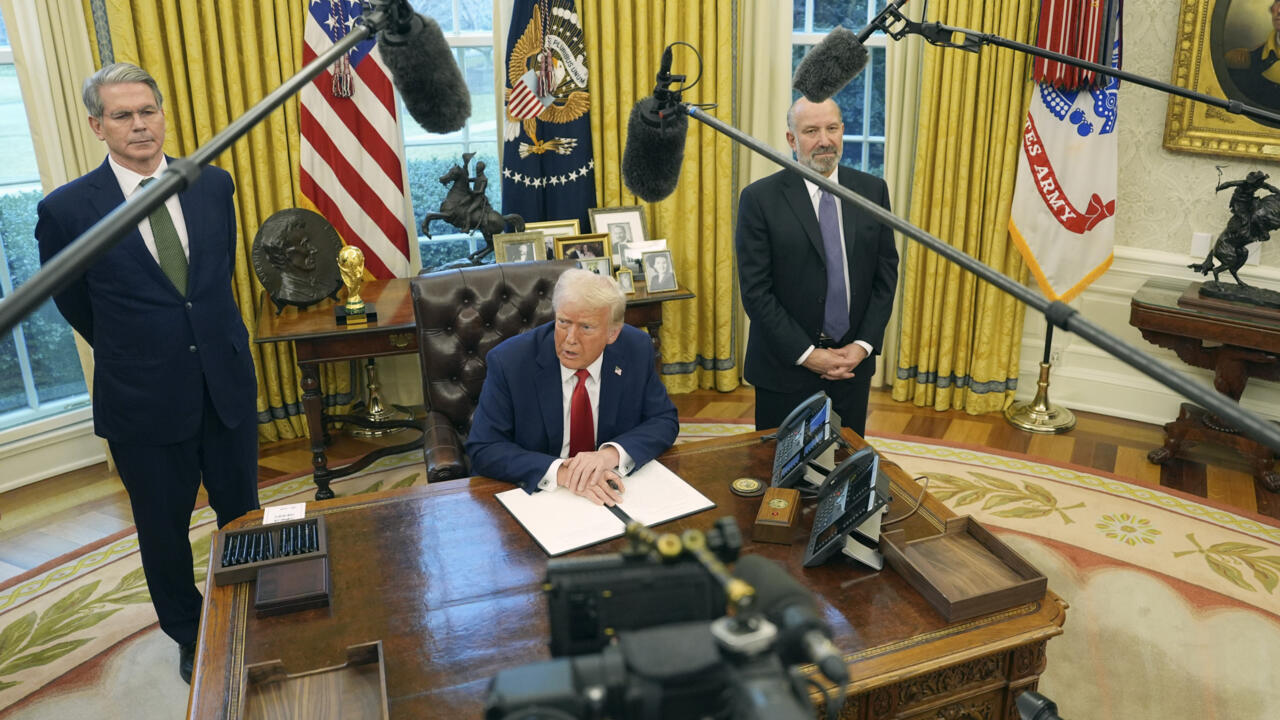
President Donald Trump, flanked by Treasury Secretary Scott Bessent, left, and Commerce Secretary nominee Howard Lutnick prepares to sign an executive order in the White House, February 3, 2025. © Evan Vucci, AP


China on Tuesday slapped tariffs on US imports in a swift response to new US duties on Chinese goods, renewing a trade war between the world's top two economies even as President Donald Trump offered reprieves to Mexico and Canada.

Additional 10% tariff across all Chinese imports into the US came into effect at 12:01 am ET on Tuesday (0501 GMT) after Trump repeatedly warned Beijing it was not doing enough to halt the flow of illicit drugs into the United States.

Within minutes, China's Finance Ministry said it would impose levies of 15% for US coal and LNG and 10% for crude oil, farm equipment and some autos. The new tariffs on US exports will start on February 10, the ministry said.

The Chinese government immediately hit back with a series of retaliatory steps. Beijing on Tuesday said it had filed a complaint with the World Trade Organization (WTO) "to defend its legitimate rights and interests" in response to hiked US tariffs on Chinese goods.

"China has filed a case against the US tariff measures under the WTO dispute settlement mechanism," the commerce ministry said in a statement, adding the US actions were of a "malicious nature".

China also said it had launched an anti-monopoly investigation into Alphabet's Google and added two US firms to its "unreliable entity list" on Tuesday, minutes after the additional US tariffs on Chinese goods came into effect.

China's Commerce Ministry said it had put PVH Corp, the holding company for brands including Calvin Klein, and US biotechnology firm Illumina on its unreliable entity list.

It said the two companies took what it called "discriminatory measures against Chinese enterprises" and "damaged" legitimate rights and interests of Chinese companies.

Separately, China's State Administration of Market Regulation said Google was suspected of violating the country's anti-monopoly law, and it had initiated an investigation into the company in accordance with the law. It did not offer any further details on the investigation or on what it alleged Google had done to breach the law.

Google products such as its search engine are blocked in China, but it works with local partners such as advertisers in the country.

No such reprieve for China, unlike Mexico and Canada

Separately, China's Commerce Ministry and its Customs Administration said on Tuesday that to "safeguard national security interests" the country is imposing export controls on tungsten, tellurium, molybdenum, bismuth and indium.

China controls much of the world's supply of such rare earths that are critical for the clean energy transition.

The export controls are in addition to ones China placed in December on key elements such as gallium used in manufacturing.

Trump on Monday suspended his threat of 25% tariffs on Mexico and Canada at the last minute, agreeing to a 30-day pause in return for concessions on border and crime enforcement with the two neighbouring countries.

But there was no such reprieve for China, and a White House spokesperson said Trump would not be speaking with Chinese President Xi Jinping until later in the week.

During his first term, Trump initiated a brutal two-year trade war with China over its massive US trade surplus, with tit-for-tat tariffs on hundreds of billions of dollars worth of goods upending global supply chains and damaging the world economy.

"The trade war is in the early stages so the likelihood of further tariffs is high," Oxford Economics said in a note as it downgraded its China economic growth forecast.

Trump warned he might increase tariffs on China further unless Beijing stemmed the flow of fentanyl, a deadly opioid, into the US.

"China hopefully is going to stop sending us fentanyl, and if they're not, the tariffs are going to go substantially higher," he said on Monday.

China has called fentanyl America's problem. But it has also left the door open for wider trade talks.

Neighbourly deals

Stocks in Hong Kong pared gains on Tuesday after China's retaliation, while the dollar strengthened and the Chinese yuan fell, dragging the Australian dollar lower.

“Unlike Canada and Mexico, it is clearly harder for the US and China to agree on what Trump demands economically and politically. The previous market optimism on a quick deal still looks uncertain," said Gary Ng, senior economist at Natixis in Hong Kong.

"Even if the two countries can agree on some issues, it is possible to see tariffs being used as a recurrent tool, which can be a key source of market volatility this year."

Over the weekend, Trump suggested that the 27-nation European Union would be his next target, but did not say when.

EU leaders at an informal summit in Brussels on Monday said Europe would be prepared to fight back if the US imposes tariffs, but also called for reason and negotiation. The US is the EU's largest trade and investment partner.

Read more EU leaders hold ‘triple first’ talks with NATO chief amid uncertainties over Trump’s policies

Trump hinted that Britain, which left the EU in 2020, might be spared tariffs.

Trump acknowledged over the weekend that his tariffs could cause some short-term pain for US consumers, but says they are needed to curb immigration and narcotics trafficking and spur domestic industries.

(FRANCE 24 with AFP, AP and Reuters)
Canada's Ontario bans US firms from government contracts in response to Trump tariffs


The Canadian province of Ontario on Monday announced a ban on US companies bidding on tens of billions of dollars' worth of government contracts in response to punishing tariffs imposed by US President Donald Trump.


Issued on: 03/02/2025 - 
By: FRANCE 24
The US and Canadian flags fly on the US side of the St. Clair River near the Bluewater Bridge border crossing between Ontario and Michigan on January 29, 2025. © Geoff Robins, AFP

Ontario, Canada's most populous province and its economic engine, announced Monday a ban on US companies bidding on tens of billions of dollars worth of government contracts, and dumped a deal with Elon Musk's Starlink in a pushback to US tariffs.

"Ontario won't do business with people hellbent on destroying our economy," Ontario Premier Doug Ford said on X. "US-based businesses will now lose out on tens of billions of dollars in new revenues. They only have President Trump to blame."

US President Donald Trump said he had spoken Monday to Prime Minister Justin Trudeau about the punishing tariffs he has levied on Canada, while pushing his argument that the tariffs were about a "drug war" aimed at stopping the flow of fentanyl.

‘Ripping up’ Starlink contract


Ford said he was "ripping up" a Can$100 million (US$68 million) contract with Starlink, signed in November, to provide internet services to 15,000 homes and businesses in remote northern parts of Ontario.

Starlink satellites were to start beaming internet services to northern Ontario starting in June.

The company's owner, Musk, is the world's richest man and a close adviser to Trump, who vowed to slap 25 percent tariffs on Canadian imports starting on Tuesday.

Ontario's liquor stores also started on Monday pulling US beer, wine and spirits off shelves.

Several other Canadian provinces including Quebec, Nova Scotia and British Columbia were doing the same.

The government-run Liquor Control Board of Ontario is one of the world's largest single buyers of alcohol, supplying its own stores as well as local restaurants, bars and other retailers in the province.

It sells almost Can$1 billion worth of US alcohol, or about 3,600 products, each year.

(FRANCE 24 with AFP)
Trump and Musk move to dismantle top aid agency USAID


The Trump administration and billionaire ally Elon Musk moved to dismantle top humanitarian agency USAID by shutting its headquarters to staff on Monday following Trump's order to freeze most US foreign aid. The agency distributes billions of dollars of humanitarian aid around the world.


Issued on: 04/02/2025 -
FRANCE24/AFP
By: NEWS WIRES
Video by: Yinka OYETADE

01:56
The flag of the United States Agency for International Development, or USAID, flies in Washington DC, Monday, Feb. 3, 2025. © Manuel Balce Ceneta, AP


The Trump administration on Monday locked US Agency for International Development workers out of their headquarters in downtown Washington DC as it moved to shutter the agency, prompting two Democratic senators to vow to block confirmations of State Department nominees in protest.

The lockout added to the chaos that has consumed the agency, which distributes billions of dollars of humanitarian aid around the world, since Trump ordered a freeze on most US foreign aid hours after taking office on Jan. 20.

USAID has also been targeted for closure by billionaire Elon Musk, who has been tasked by the president with downsizing the federal government. A senior White House official, speaking on condition of anonymity, said Trump was considering merging USAID into the State Department and had "entrusted Elon to oversee the efficiency of this agency."

A group of Democratic lawmakers, cheered by dozens of furloughed agency employees and contractors, held a protest in front of the USAID headquarters, which was shut to the employees for the day, according to an internal email seen by Reuters.

"We don't have a fourth branch of government called Elon Musk," said US Representative Jamie Raskin, speaking outside the building.

Senators Brian Schatz and Chris Van Hollen said they would block confirmation of Trump's nominees for State Department positions under rules that allow them to hold up nominations even if the Republican majority of the chamber want them to move forward.

"We have control over the calendar for nominees," said Van Hollen. "We will do everything we can to block State Department nominees from going forward until this illegal action is reversed."


'Against the law'

Hundreds of USAID programs covering billions of dollars worth of lifesaving aid across the globe came to a grinding halt after Trump on Jan. 20 ordered a freeze of most US foreign aid, saying he wanted to ensure it is aligned with his "America First" policy.

If USAID were put under the State Department, it would likely have dramatic consequences for the distribution of aid from the United States, the world's largest single donor.

Musk has been increasingly critical of USAID, calling it a left-wing agency unaccountable to the White House. Musk critics say his accusations are often lodged without evidence and may be ideologically driven.

The rush of events has underlined Musk's powerful role in setting Trump's agenda. Last week, Musk's team at the Department of Government Efficiency gained access to the most sensitive payment systems at Treasury and, as Reuters reported, locked some employees out of their agency's computers.

At USAID, two senior security staff were put on leave after refusing to provide classified documents to DOGE employees on site over the weekend.

"What's happening to USAID is against the law," Schatz told Reuters outside the agency headquarters. "It's flatly illegal, and it is dangerous to Americans at home and abroad."

Some USAID staff waved signs as the lawmakers spoke, including one that read: "USAID saves lives."

Democrats have argued that eliminating USAID's independence requires an act of Congress. Trump told reporters on Monday that he did not believe that was necessary.

"I love the concept (of USAID), but they turned out to be radical left lunatics," Trump said.

Rubio becomes acting USAID head

US Secretary of State Marco Rubio told reporters in San Salvador that he was now the acting head of USAID, calling the agency "completely unresponsive" and accusing the staff there of being "unwilling to answer simple questions" about programs.

"If you go to mission after mission and embassy after embassy around the world, you will often find that in many cases, USAID is involved in programs that run counter to what we're trying to do in our national strategy with that country or with that region. That cannot continue," Rubio said.

He informed Congress in a letter of the looming reorganization of the agency, saying some parts of USAID might be absorbed by the State Department and the remainder may be abolished.

In fiscal year 2023, the United States disbursed, partly via USAID, $72 billion of aid worldwide on everything from women's health in conflict zones to access to clean water, HIV/AIDS treatments, energy security and anti-corruption work. It provided 42% of all humanitarian aid tracked by the United Nations in 2024.

And yet it is less than 1% of its total budget.

The State Department issued worldwide stop-work directives after Trump's freeze order, with the exception of emergency food assistance. Experts warned that the move risks killing people.

Since then, dozens of USAID career staff have been put on leave. Three sources familiar with the matter told Reuters that USAID personal services contractors, who carry out the bulk of the work in the agency's humanitarian bureau, have also been locked out of their government accounts.

"Without PSCs, there is no longer functionally a Bureau for Humanitarian Assistance in USAID. The waivers from Secretary of State Rubio for emergency food and other urgent assistance are a smokescreen and farce if there is no one to make the awards happen," a USAID official said.

(Reuters)


Trump Plan for Migrant Prison Camp at Gitmo Should 'Horrify Us All'

"Guantánamo has long been a stain on America's human rights record. Using it to detain migrants would be a dangerous escalation of anti-immigrant policies," wrote one immigrant advocate.


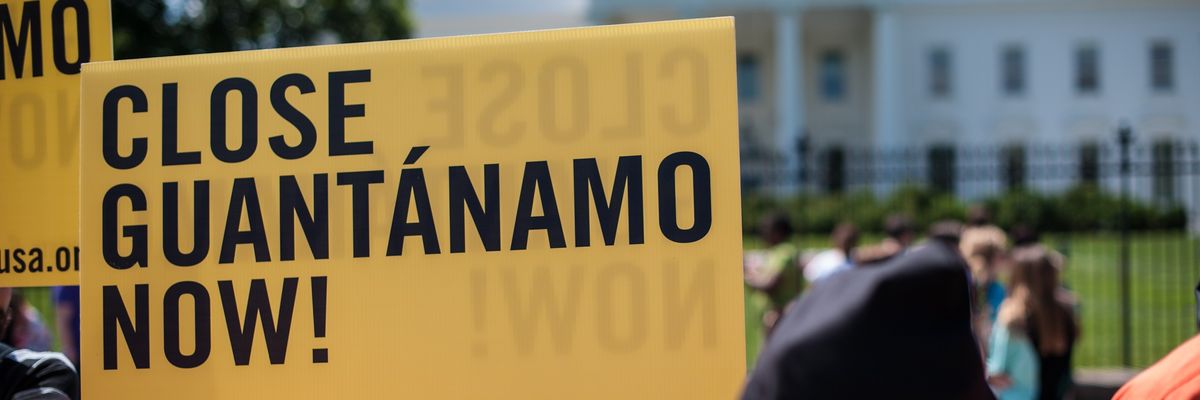
Protestors hold a sign calling for the closing of the Bay detention facility in front of the White House in Washington, D.C.
(Photo credit: Nicholas Kamm/AFP via Getty Images)

Eloise Goldsmith
Jan 31, 2025
COMMON DREAMS

U.S. President Donald Trump's announcement Wednesday that he is ordering officials to prepare the Guantánamo Bay Naval Base in Cuba to house tens of thousands of migrants was met with swift condemnation from rights groups this week.

"Guantánamo has long been a stain on America's human rights record. Using it to detain migrants would be a dangerous escalation of anti-immigrant policies," wrote Guerline Jozef, executive director at Haitian Bridge Alliance, an immigrant advocacy group, in a statement on Friday.

Trump announced the plan during a signing ceremony for the Laken Riley Act, legislation that strips due process rights from millions of undocumented immigrants, saying, "we have 30,000 beds in Guantánamo to detain the worst criminal illegal aliens threatening the American people."

A presidential action published by the White House that same day called on the Secretary of Defense and the Secretary of Homeland Security "to take all appropriate actions to expand the Migrant Operations Center at Naval Station Guantánamo Bay to full capacity to provide additional detention space for high-priority criminal aliens." The memorandum did not state how many migrants are expected to be detained there.

Vincent Warren, executive director of the Center for Constitutional Rights, called the move a decision that "should horrify us all."

"The order... sends a clear message: migrants and asylum seekers are being cast as the new terrorist threat, deserving to be discarded in an island prison, removed from legal and social services and supports," Warren continued.

Congressional Hispanic Caucus Chair Adriano Espaillat (D-N.Y.) said in a Thursday statement that he is "deeply troubled" by the plan, arguing that it raises "serious human rights concerns, risks significant abuses, and would impose unnecessary costs on taxpayers." Amnesty International has also decried the announcement.

Guantánamo Bay's military prison has become associated with the repression and violence carried out by the United States during the "War on Terror" that launched after the September 11, 2001 terrorist attacks. It has been used to hold hundreds of foreign terrorism suspects, many without charge, since it opened in 2002.

Facilities at Guantánamo Bay facilities have also been used to detain asylum seekers, migrants, and refugees for decades, but not in the manner that Trump is now suggesting.

Both Presidents George H.W. Bush and Bill Clinton processed Haitian refugees at Guantánamo Bay, but those were people taken into custody at sea, not brought from the U.S. mainland. And while the Biden administration last year considered processing Haitian migrants there as well, it never followed through with the policy.

Looking ahead, Warren of the Center for Constitutional Rights also vowed to fight back, saying his group "has challenged the U.S. government's use of Guantánamo in all its incarnations, and we, along with our partners, will do so again."

FCC Probe Into NPR, PBS Denounced as 'Attack on the Freedom of the Press'

"The FCC chair is clearly undertaking an effort to bully and intimidate independent journalism, which is a hallmark of authoritarian regimes where democracy is under siege," said one critic.


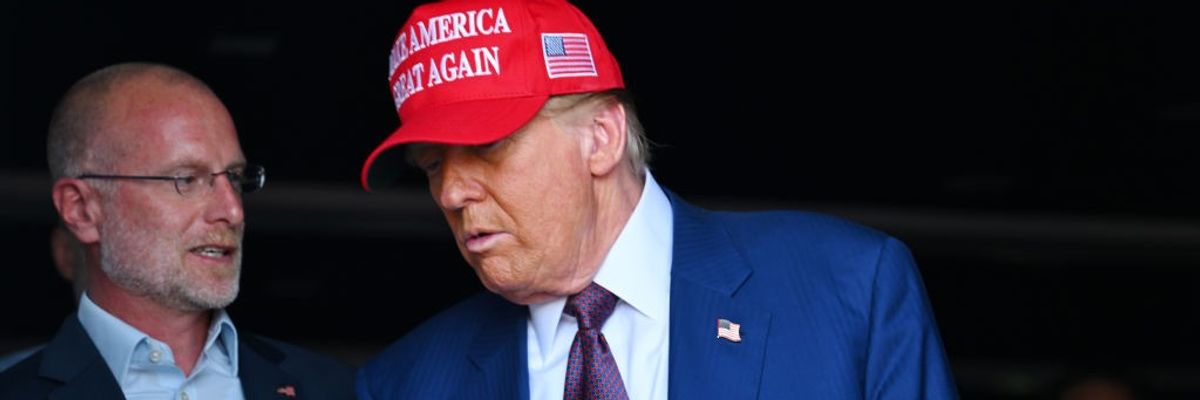
Donald Trump, then U.S. president-elect, spoke wiht Brendan Carr, his intended pick for chair of the Federal Communications Commission, at a SpaceX test flight on November 19, 2024 in Brownsville, Texas.
(Photo: Brandon Bell/Getty Images)

Jessica Corbett
Jan 31, 2025
COMMON DREAMS

U.S. press freedom advocates this week forcefully condemned Republican Federal Communications Commission Chair Brendan Carr's investigation into National Public Radio and Public Broadcasting Service that could lead to stripping them of government funding.

"If they weren't ringing already, alarm bells should be going off loudly," said Tim Richardson, program director for journalism and disinformation at PEN America, in a Thursday statement. "By using its investigatory powers, the FCC chair is clearly undertaking an effort to bully and intimidate independent journalism, which is a hallmark of authoritarian regimes where democracy is under siege."

"The Trump administration is clearly embracing such tactics and putting independent media at risk by undermining accountability of elected leaders and risking a less informed public," Richardson added. "We call on the FCC to dispense with such politically motivated investigations."

Jenna Leventoff, senior policy counsel at the ACLU, was similarly critical, saying that "the commission should not bring frivolous investigations into media outlets simply because they do not like their coverage. Investigations like this can chill coverage and threaten the independence of the press, making it harder to hold the government accountable and keep us all informed."


Free Press co-CEO Craig Aaron declared that "his seat as FCC chairman is barely warm, but Brendan Carr is already abusing his power and harassing public broadcasters with a sham investigation designed to scare journalists into silence. This is all part of Carr's far-right, Project 2025-inspired agenda."

"This bogus investigation is an attack on the freedom of the press and a bungling attempt to bash public broadcasters and further weaken their resolve to question the extremism, corruption, and cruelty of the Trump administration," Aaron warned. "This unjustified investigation isn't based on any genuine concern about whether there's too much advertising on public media. It's a blatant attempt to undermine independent, rigorous reporting on the Trump administration."

"Carr may not like public media—and that's no surprise given that he isn't a fan of journalism that holds public officials and billionaires accountable. In this, as in so many other areas under his purview, Chairman Carr is far out of step with the American public and their needs," he continued. "Communities all across the country rely on their local public radio and TV stations to provide trustworthy news reporting and a diversity of opinions. In every survey, the American public indicates it wants more support for public and community media, not less."

Aaron added that "in a healthy democracy, we would be investing enough in our public-media system that it wouldn't need to seek any corporate underwriting. Unfortunately, Carr's cronies in Congress and the Big Media barons they serve have instead for decades tried to zero out funding for public media. They have repeatedly failed because millions of viewers and listeners opposed them."

Carr—whom President Donald Trump first appointed to the FCC in 2017 and recently elevated to chair after he contributed to the Heritage Foundation-led Project 2025—announced the probe in a Wednesday letter to NPR president and CEO Katherine Maher and PBS president and CEO Paula Kerger.

"I am concerned that NPR and PBS broadcasts could be violating federal law by airing commercials," Carr wrote. "I have asked the FCC's Enforcement Bureau, with assistance from the FCC's Media Bureau, to initiate an investigation into the underwriting announcements and related policies of NPR, PBS, and their broadcast member stations."

The chair added:
I will be providing a copy of this letter to relevant members of Congress because I believe this FCC investigation may prove relevant to an ongoing legislative debate. In particular, Congress is actively considering whether to stop requiring taxpayers to subsidize NPR and PBS programming. For my own part, I do not see a reason why Congress should continue sending taxpayer dollars to NPR and PBS given the changes in the media marketplace since the passage of the Public Broadcasting Act of 1967.

To the extent that these taxpayer dollars are being used to support a for-profit endeavor or an entity that is airing commercial advertisements, then that would further undermine any case for continuing to fund NPR and PBS with taxpayer dollars.

Some federal lawmakers have already responded on social media. Sen. Ed Markey (D-Mass.) said that "the letter from Chairman Carr announcing a new FCC investigation into NPR and PBS member stations is baseless. He cites no evidence at all. Instead, this investigation is a dangerous attack on public media and local journalism."

Rep. Doris Matsui (D-Calif.) said that "public television and radio are essential for their local communities. The FCC must not be weaponized to intimidate and silence broadcast media. We should be supporting, not undermining, their contributions to journalism and the marketplace of ideas."


The two Democratic members of the FCC have also responded critically to Carr's move. Commissioner Anna Gomez said that "this appears to be yet another administration effort to weaponize the power of the FCC. The FCC has no business intimidating and silencing broadcast media."

Commissioner Geoffrey Starks said that "public television and radio stations play a significant role in our media ecosystem.
Any attempt to intimidate these local media outlets is a threat to the free flow of information and the marketplace of ideas. The announcement of this investigation gives me serious concern."

Maher said in statement that "NPR programming and underwriting messaging complies with federal regulations, including the FCC guidelines on underwriting messages for noncommercial educational broadcasters, and member stations are expected to be in compliance as well."

"We are confident any review of our programming and underwriting practices will confirm NPR's adherence to these rules," she added. "We have worked for decades with the FCC in support of noncommercial educational broadcasters who provide essential information, educational programming, and emergency alerts to local communities across the United States."

In a statement to NPR media correspondent David Folkenflik, who reported on the probe, Kerger said that "PBS is proud of the noncommercial educational programming we provide to all Americans through our member stations... We work diligently to comply with the FCC's underwriting regulations and welcome the opportunity to demonstrate that to the commission."
CRYPTO CRIMINAL CAPITALI$M

Entities Behind Trump Crypto Coin Made Up to $100 Million in Trading Fees in Under 2 Weeks


"Trump and his cronies get rich while the little guy gets fucked," said one critic.


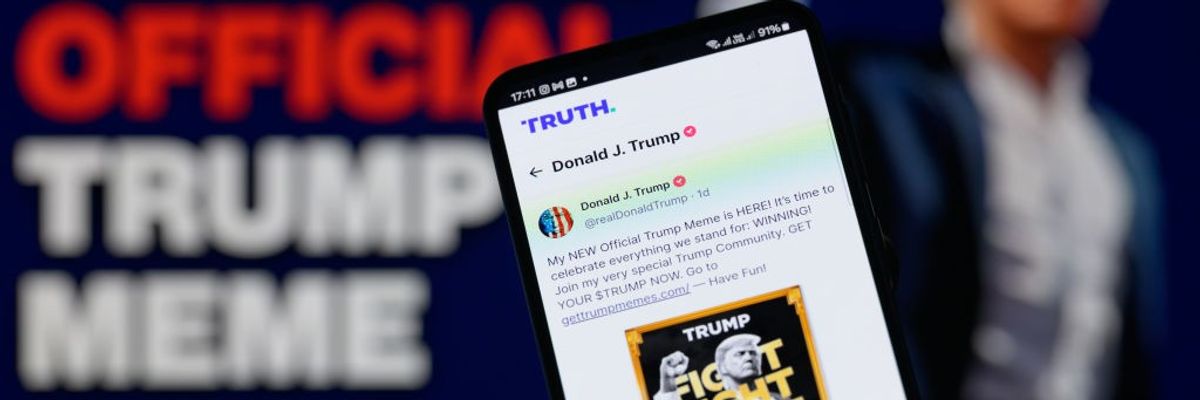
A smartphone displays a post from U.S. President-elect Donald Trump's Truth account announcing the $TRUMP meme coin on January 19, 2025.
(Photo: Jonathan Raa/NurPhoto via Getty Images)


Jessica Corbett
Feb 03, 2025
COMMON DREAMS


Reuters reported Monday that the entities behind U.S. President Donald Trump's cryptocurrency token "generated between $86 million and $100 million in trading fees" from the mid-January launch to the end of the month, sparking a fresh flood of criticism and accusations of grift.

Trump announced the $TRUMP meme coin on the Friday night of the first-ever Crypto Ball in Washington, D.C., ahead of his Monday inauguration. Its market value swiftly soared that weekend, but has since dropped dramatically. Reuters had Chainalysis, Merkle Science, and a third blockchain analytics firm whose founder requested that it not be identified review the blockchain, a public ledger that shows transactions involving the coin.

Merkle Science estimated that three crypto wallets earned $86 million in trading fees from January 17 to January 30, while Chainalysis put it at about $94 million for the same period. The third firm found that by January 29, it was roughly $100 million.

According to Reuters:
One of the entities behind the crypto coin is a company owned by Trump, called CIC Digital. The official website for $TRUMP says CIC Digital will "receive trading revenue derived from trading activities" of the meme coin. Reuters could not determine what portion of the fees so far, if any, had accrued to Trump personally, nor the ownership of the other entities behind the coin.

The creators of the meme coin receive a share of the trading fees from Meteora, a little-known crypto exchange where the $TRUMP coins were first sold, the blockchain analyses showed.

At least 50 of the largest investors in the coin have made profits in excess of $10 million each on the $Trump coin, according to Chainalysis. At the same time, some 200,000 crypto wallets, most with small holdings, lost money on $Trump on the exchange, it said.

Responding to the reporting on the social media platform Bluesky, an account called Trumpflation Tracker declared that "Trump and his cronies get rich while the little guy gets fucked, same story different year."

Software engineer Jonathan McHugh similarly said, "His entire life is one giant grift, most often of people who can least afford it."

Rodrigo Fernandez, a senior researcher at the Amsterdam-based Center for Research on Multinational Corporations (SOMO), said that "the conflict of interest if obvious—but he managed to flood the zone to such an extend that this detail will go unnoticed."

The White House did not address Reuters' questions about the trading fees; instead, it sent a fact sheet about Trump's executive order on digital financial technology. The news agency noted that the president "has pledged to put his assets in a trust managed by his children on entering the White House" and his son Eric Trump did respond on behalf of the Trump Organization.

Eric Trump told Reuters that he is proud of what "we continue to accomplish in crypto. $TRUMP is currently the hottest digital meme on Earth." Echoing his previous comments on the coin, the president's son added that "we are just getting started."

Late last month, former U.S. Treasury Secretary Robert Reich wrote about the $TRUMP coin—as well as the first lady's $MELANIA coin that soon followed—and tied both to the president's related executive order "protecting and promoting" the crypto industry.

"In effect, Trump is writing the rules for a business venture from which he and his family are personally profiting. It could earn them hundreds of billions of dollars," he stressed. "The real significance of such blatant profiteering off the highest office in the land is what it reveals—not just about Trump but about the entire oligarchic enterprise he fronts for. It is likely to contribute to a vast wave of public alarm and disgust."

Students Sue Columbia Over Suspensions for Pro-Palestine Activism

"They singled out a few of us to try to make an example out of us," said one of the student plaintiffs.


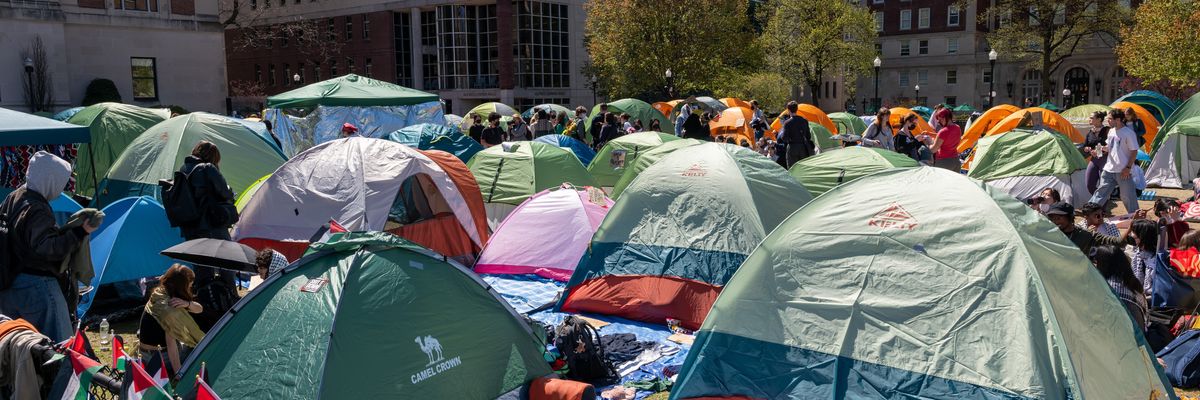
Pro-Palestinian supporters set up a protest encampment on the campus of Columbia University on April 22, 2024 in New York City.
(Photo: Spencer Platt/Getty Images)

Eloise Goldsmith
Feb 03, 2025
COMMON DREAMS

Three Columbia University students on Monday filed a lawsuit against the school administration challenging their suspensions related to pro-Palestine activism, according to an exclusive from the outlet Drop Site.

The students, Aidan Parisi, Brandon Murphy, and Catherine Curran-Groome, were all set to graduate this coming spring prior to their suspensions. After "a monthslong convoluted, and often intimidating, disciplinary process," Parisi and Murphy were given one-year suspensions and Curran-Groome was given a two-year suspension.

According to Drop Site, the complaint alleges that "the university violated its own policies during the disciplinary process, that the university targeted the students for their views, and that it violated New York's landlord tenant laws when it evicted the students from university housing."

"They singled out a few of us to try to make an example out of us," Curran-Groome told Drop Site. "None of us, absolutely none of us, deserved what we've experienced this year at Columbia in terms of the targeting and the discrimination and the violence and the repression."

The university was also sued back in March 2024 by the New York Civil Liberties Union and Palestine Legal, a legal advice and advocacy group, over its suspension of the school's chapters of Students for Justice in Palestine and Jewish Voice for Peace.

Columbia University was the site of vigorous pro-Palestine (and pro-Israel) activism starting in fall 2023, following a deadly Hamas attack on Israel that prompted a devastating Israeli military campaign in the Gaza Strip. Pro-Palestine students and student groups at Columbia demanded that the university divest from companies with ties to Israel.


In spring 2024, students launched two successive Gaza solidarity encampments on Colombia's campus. The launch of the first encampment coincided with an appearance by the university's then-president, Minouche Shafik, before Congress. (Shafik resigned in mid-August.)

Curran-Groome and Parisi were first suspended on an interim basis prior the launch of the first encampment for their involvement in a March 2024 event that featured speakers who discussed the history of different strategies for confronting occupation and colonialism, including armed resistance, according to Drop Site. Curran-Groome helped organize the event in her capacity as co-president of the Palestine Working Group, an official student organization.

According to the legal complaint, Curran-Groome sought approval to hold the event on campus. However, after sharing biographies of the speakers with the administration, a university official told her that the group would need approval for the event to be held on campus, per the complaint. The university officials allegedly said that the group could have the event on zoom, hold it on another date, or move it off campus. The Palestine Working Group chose the third option, according to Drop Site.

After the event, Columbia issued a statement calling it "unsanctioned" and "unapproved." Later, the school told Parisi and Curran-Groome they had been interim suspended for violating university policy and compromising the "well-being and safety of the university community," according to Drop Site, quoting the email that the students received.

"After the encampment was established, the students received an additional interim suspension, alleging they violated the first order by being on campus," according to Drop Site.

The school "used that suspension to then levy additional disciplinary actions, alleging that the plaintiffs had violated that first illegitimate interim suspension by then returning to campus," James Carlson, an attorney representing the students, told Drop Site.

The outlet did not give the specific circumstances around Murphy's suspension.