Saturday, February 15, 2025

The Hague Group Must Become a Global Initiative
February 13, 2025
Source: The Nation


The formation of The Hague Group is a critical step toward saving the international legal order. More states need to follow through to ensure the end of systemic impunity.

In Palestine, that abuses and violations of international law have become normalized is a fact. That impunity has been the rule, rather than the exception, over the course of the 76 years since Israel’s founding is another fact. And still, after 15 months of Israel’s brutal, revengeful assault on Gaza and its more than 2 million entrapped inhabitants, Palestine is at a climax. The catastrophic destruction of the entire landscape, the creation of conditions of life calculated to lead to the destruction of life, the attempted crushing of human dignity, have ushered in a new era: that of genocide, televised and livestreamed for the whole world to see.

Yet what we have seen in Gaza, and what we see now increasingly facing the West Bank, is not just a criminal assault against the Palestinians as a people—it is the erosion of the very protection function of international law and dangerous regression of the multilateral system, created to prevent conflict and protect civilian life. It is the creation of a world without civilians, where everyone and everything is either a target or collateral damage, and hence killable or destroyable.

Thus, after the Gaza genocide, international law stands at a precipice: If the laws that have been written as universal, to be applied equally to the strong and the weak, become systematically violated in defense of particular geopolitical interests, then the entire international legal system, premised upon the equality of all nations, is threatened—for all peoples.

In light of these developments, the tri-continental initiative launched in The Hague by nine states committed to holding Israel to account for its assault on Palestinian collective existence could not be more timely. The commitments that the group has set for this collective effort—upholding domestic legal mechanisms following the International Criminal Court’s arrest warrants, refusing harbor, and imposing an arms embargo—are part of the most fundamental obligations that all states have under international law in light of Israel’s long-standing crimes in the occupied Palestinian territory. These measures are an essential first step toward solving the question of Palestine, or “the Israel-Palestine conflict,” in line with international law.

Yet a solution will never be in reach until Israel’s sustained impunity comes to an end. Despite the efforts of the Palestinian people and some committed Israelis, the situation cannot be changed from inside Israel. International action is needed.

This is the task that confronts all states now. States have binding legal responsibilities in the face of protracted violations of international law, as is the case with Israel’s unlawful occupation and annexation of the occupied Palestinian territory, the apartheid regime it has imposed on the Palestinians, and, most recently, the genocide in Gaza. In light of the gravity of Israel’s actions, states are called upon to terminate all economic relationships, trade agreements, and academic relations with Israel. Such relationships would otherwise constitute aid and assistance for an internationally wrongful act. Under the law of state responsibility, states are required to cooperate to end through lawful means the breach in question—in practice, this means that all member states of the United Nations must cut all relations with Israel so long as it continues to oppress the Palestinian people. It is an obligation that is all the more urgent with the reprieve of a tenuously negotiated ceasefire.

In this crucial moment, The Hague Group sets an excellent example to other states as to how they can comply with their obligations under international law. The states that have signed on to the initiative—Belize, Bolivia, Colombia, Cuba, Honduras, Malaysia, Namibia, Senegal, and South Africa—are states with a history of consistent and principled commitment to the Palestinian question. These are also states that carry the wounds of a painful colonial past as well as the struggle for human rights that ensued. Their decision sets a powerful precedent, and I personally applaud these countries for their courage.

The states that have founded The Hague Group are leading the way in what must become a global push for collective action through international law—no arms for genocide, no aid for occupation, and no tolerance for apartheid.

I trust that more states will soon join this group. The purpose of The Hague Group is to end Israel’s exceptionalism and to make sure that what Israel has done in the past 15 months does not become the new normal for states for the years to come.

In the same fashion that states around the world united to end apartheid in Southern Africa, now the international community must come together to ensure the end of one of the most brutal apartheid regimes in history. If we are to salvage an international legal order in this current moment and move toward one in which imperialism and colonization do not continue to dictate its application, the international community, and the Palestinians most of all, must see this initiative grow.
Can Worker-to-Worker Organizing Help Labor Survive The Trump Era?

February 13, 2025
Source: Counterpunch


Photograph by Elliot Stoller – CC BY-SA 2.0

How many graduates of Buena Vista Elementary and Lowell High School in San Francisco have become labor book authors?

Probably not many–other than Eric Blanc, whose mother taught in that city’s public school system (and served as union president) and whose father was long active in its central labor council.

Blanc became a teacher himself and drew on that experience when writing his first book, Red State Revolt: The Teachers Strike Wave and Working-Class Politics. It chronicled the 2017-18 uprising in public education in Oklahoma, West Virginia, Arizona, and other states.

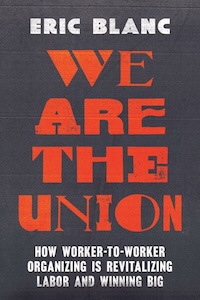
Now an assistant professor at Rutgers University, Blanc has just published a more wide-ranging study, We Are the Union: How Worker-to-Worker Organizing is Revitalizing Labor and Winning Big. It grapples with a perennial question facing the labor left—namely, what kind of break with business as usual, within established unions, would help more private sector workers win union recognition, first contracts, and strikes?

A member of DSA, Blanc argues that the current imbalance of power between labor and management in the U.S. can only be changed, for the better, with large-scale, coordinated organizing efforts rooted in the rank-and-file. His most detailed case study focuses on the four-year union recognition drive at Starbucks, one of the biggest restaurant companies in the world, with 380,000 employees and market value of $108 billion.

In the U.S., that workforce is relatively high-turnover, widely dispersed and fragmented into small, retail store size groups. The author’s interviews with founders of Starbucks Workers United (SBWU) take us behind the scenes of an amazingly durable campaign that began when “ten young radicals started salting Buffalo Starbucks stores in early 2021.” (One was Jaz Brisack, now a “practitioner in residence” at the UC Berkeley Labor Center).

“Worker to Worker DNA”


During its early months, SBWU filed almost two representation petitions per day at the National Labor Relations Board (NLRB). This implanted what Blanc calls “worker-to-worker DNA into the entire subsequent trajectory of the campaign.” Because of its do-it-yourself spirit, the campaign’s initial Labor Board election win rate was a remarkably high 80 percent. According to Blanc, SBWU could not have gained such traction if the organizing had been done in more conventional fashion, with heavy reliance on full-time union staff.

Backed by Workers United/SEIU, SBWU has since helped about 11,000 baristas win bargaining rights at 525 Starbucks stores in 45 states. SBWU had to develop union majorities, unit by unit and maintain them before, during, and after hotly contested NLRB voting. For two years, SBWU endured what Blanc calls a “scorched earth union busting campaign of unparalleled intensity and breadth,” with an estimated price tag of $250 million.

That effort was orchestrated by Littler Mendelson, a corporate law firm notorious (and often victorious) in the field of “union avoidance. To achieve that management goal at Starbucks, countless workers were harassed, several hundred were fired or suspended for their union activity, and baristas who voted for collective bargaining were illegally denied wage and benefit improvements granted in non-union stores, as an incentive to keep them that way.

Collective action—especially work stoppages—were “key to sustaining momentum and forging solidarity” and keeping the pressure on management, Blanc reports. “In addition to periodic nationwide mobilizations, many Starbucks strikes were begun locally as responses to grievances at their stores.” According to the author, SBWU also “did a great job fighting for and highlighting partial concessions from management secured along the road to a first contract.”

First Contract Fight

That goal suddenly became more achievable in February, 2024, when “Starbucks raised a white flag” and agreed to “begin bargaining in good faith and stop illegally denying equal benefits to unionized workers.” The ensuing talks on a “foundational framework for union contracts” have not so far led to a settlement. If the company’s new CEO, Brian Niccol (who makes $57,000 per hour) changes course–in light of Trump’s hobbling of the NLRB—labor relations at Starbucks could become brutal again, very quickly.

By December, the union disclosed, Starbucks had “yet to bring a comprehensive economic package to the bargaining table,” hundreds of still pending unfair labor practice charges had not been settled, and “$100 million in legal liabilities remain outstanding.”

So SBWU conducted a strike authorization vote in which 98% of the reported participants declared their willingness to walk out, if necessary, “to win fair raises, benefits, and staffing, protest unfair labor practices, and resolve outstanding litigation.”

During Christmas week, according to the union, 5,000 baristas participated in a job action, disrupting operations in 300 stores in 43 states. On January 31, the parties agreed to third-party mediationof their unresolved bargaining dispute.

While this high-profile national fight for a first contract continues, Blanc urges other unions to follow SBWU’s example: Develop and train more rank and file leaders in non-union workplaces, who “can self-organize and train others.” Use digital communication tools like Zoom “to quickly and widely scale up drives across huge spatial divides…so workers can directly coordinate and support each other without relying as much on paid staff and union resources.”

The author also recommends more “salting at strategic targets” since it was the conscious deployment of a “crew of radical salts” whose workplace activity led to the formation of SBWU. And he stresses the importance of seizing opportunities to “spread unionization as widely as possible,” like SBWU did when it was deluged with appeals for organizing help from baristas around the country, after its initial upstate N.Y. breakthroughs. In short, Blanc argues, “the labor movement needs to finally start acting like a movement again.”

Union Reform Aids Organizing

Blanc’s book also highlights recent union reform victories–within the United Auto Workers (UAW) and NewsGuild/CWA—which led to organizing program improvements. One common denominator of these successful internal election campaigns was “small pockets of newly organized, radicalized young workers [who] played an outsized role.” Their efforts have led to greater rank-and-file engagement in contract campaigns, more frequent strike action, and expanded membership recruitment in both the auto industry and the media.

Given the UAW’s much bigger size, the positive impact of the election of Shawn Fain and other members of Unite All Workers for Democracy (UAWD) to leadership positions, two years ago, is more widely known. Blanc lauds UAW’s new leadership for internal and external organizing initiatives which “raise expectations, tap into anger at corporate overlords, and show that workers can win big through mass militancy.”

It was no easy task rallying dues-payers understandably “cynical and checked out,” after years of Solidarity House corruption and dysfunction. Yet, during its 2023 contract talks with the Big Three, the UAW’s use of membership education and mobilization, unprecedented bargaining table transparency, and a selective strike strategy produced major gains, after years of divisive and demoralizing concessions. Just a few months later, newly energized and inspired UAW supporters at a non-union Volkswagen plant in Tennessee achieved a major southern organizing breakthrough, with more to come.

A NewsGuild Shake-Up

The catalyst for a similar organizational shake-up in the 30,000-member NewsGuild was Jon Schleuss winning the union presidency five years ago. As Blanc recounts, his main qualification for national union office was helping to organize the Los Angeles Times, a non-union paper for 135 years. Unlike Fain in the UAW, the 31-year old Schleuss had never been elected or appointed to any union position before, other than a local bargaining committee.

On this own dime, Schleuss went to the NewsGuild’s national convention in 2019 anyway. With backing from three locals, he got himself nominated as a candidate for president in a race everyone assumed was a shoe-in for an incumbent thirty years older and far more experienced than Schleuss. All Guild officers, headquarters staff, and field reps, along with many local union officials, opposed his candidacy.

Nevertheless, the young journalist proved to be an effective organizer of restive media workers nationwide. During a rare union presidential campaign debate, Schleuss called for “tapping the creativity of our members” in better organized campaigns against newspaper take-overs by hedge-fund owners and others “intent on destroying journalism.” If elected, he pledged to seek more resources from the Guild’s parent organization, the Communications Workers of America (CWA) and expand rank-and-file participation in the Guild’s own “Member Organizing Program.”

This MOP draws on four decades of CWA-backed member-based organizing in the public and private sector–using the model favored by Blanc for all unions (ie training and deploying active members, on a “lost-time” or volunteer basis, to recruit non-union workers in the same industry or occupation as their own.)

Strike Activity

During the last five years, the Guild has become what Blanc calls “a powerhouse of new organizing.” Its reform leadership has invested heavily in on-line and in person training of activists who want to get involved in external and internal organizing, contract bargaining, job actions, and strikes. As part of the broader organizing surge that made this possible, nearly 11,000 media workers won bargaining rights in more than 200 new units between 2018 and 2023, according to Blanc. In the last four years, the union has helped workers secure100 first contracts.

By last fall, when Guild members walked out at a legal publication called Law360, it was the union’s 24th strike of the year. Other targets included Teen Vogue, Vanity Fair, The NY Times, Chicago Tribune, and other media outlets, large and small. In 2023, 36 newsrooms were struck for varying lengths of time. While many of these were quickie strikes, not open ended ones, 100 workers at the Pittsburgh Post-Gazette have been out for two years, in the longest running strike in the nation.

In We Are The Union, Schleuss recalls when he and other Guild supporters signed up enough co-workers to get an NLRB election at the LA Times seven years ago. Even then, they knew their job was not over. After winning that vote, “we would still have to do everything we could to fix the union—to make it more focused on organizing and more focused on building rank-and-file power.” To keep their spirits up during their difficult contest with management, Times organizing committee members reassured each other that “we have more power than we know.”

In Schleuss’s view, that collective realization is a source of empowerment whether you’re “struggling against an employer who is fighting you every step of the way or you’re a rank-and-filer pushing against deadweight union leadership.” The strength of We Are The Union is Eric Blanc’s inspiring examples of workers overcoming both adversaries.


Steve Early has worked as a journalist, lawyer, labor organizer, or union representative since 1972. For nearly three decades, Early was a Boston-based national staff member of the Communications Workers of America who assisted organizing, bargaining and strikes in both the private and public sector. Early's free-lance writing about labor relations and workplace issues has appeared in The Boston Globe, Los Angeles Times, USA Today, Wall Street Journal, New York Times, Washington Post, Philadelphia Inquirer, The Nation, The Progressive, and many other publications. Early's latest book is called Our Veterans: Winners, Losers, Friends and Enemies on the New Terrain of Veterans Affairs (Duke University Press, 2022). He is also the author of Refinery Town: Big Oil, Big Money, and the Remaking of An American City (Beacon Press, 2018); Save Our Unions: Dispatches from a Movement in Distress (Monthly Review Press, 2013); The Civil Wars in U.S. Labor: Birth of a New Workers’ Movement or Death Throes of the Old? (Haymarket Books, 2011); and Embedded With Organized Labor: Journalistic Reflections on the Class War at Home (Monthly Review Press, 2009). Early is a member of the NewsGuild/CWA, the Richmond Progressive Alliance (in his new home town, Richmond, CA.) East Bay DSA, Solidarity, and the Committees of Correspondence for Democracy and Socialism. He is a current or past editorial advisory board member of New Labor Forum, Working USA, Labor Notes, and Social Policy. He can be reached at Lsupport@aol.com and via steveearly.org or ourvetsbook.com


A new system to study phytoplankton: Crucial species for planet Earth


Phytoplankton use sunlight to make energy and nearly half the oxygen we breathe, a new tool improves our ability to measure how individual phytoplankton cells are using energy


Biophysical Society

Harris Phytoplankton Study 

image: 

This new tool measures how individual phytoplankton cells are using energy. 

view more 

Credit: Image courtesy of Paul Harris.


ROCKVILLE, MD – Phytoplankton, tiny plant-like organisms in the ocean, are incredibly important for life on Earth. They're a major food source for many sea creatures and produce almost half the oxygen we breathe.  They also help control the climate by soaking up a lot of carbon dioxide, a gas that contributes to global warming.

Scientists want to learn more about how these phytoplankton use sunlight to make energy and oxygen, which can be useful in the context of environmental monitoring during global climate change. However, it's tricky to study this because the usual methods only give an overall average for a large group of phytoplankton, hiding the differences between individual cells, or they only give limited measurements of individual phytoplankton.

Now, researchers at The Hebrew University of Jerusalem in Israel have come up with a new way to study these organisms. They've built a system that can measure the light given off by individual phytoplankton cells, which tells them how efficiently each individual is using light. This new technique will help scientists better understand how different types of phytoplankton react to changes in their environment. The work will be presented at the 69th Biophysical Society Annual Meeting, to be held February 15 - 19, 2025 in Los Angeles.

“I look at how individual plankton react to changing conditions by looking at the light that they dispose of—or in scientific terms I look at fluorescence lifetimes. Basically, it’s how the phytoplankton convert light to energy they can use later,” said Paul Harris, who led the study.

This new system uses a special microscope to get a close look at individual phytoplankton cells which are sent down tiny channels. It measures the different colors of light the cells give off, which tells scientists a lot about how they're using light to make energy.

So far, Harris and colleagues have used the system to study three different types of phytoplankton, looking at how they change throughout the day and how they react to brighter light. What they found is that each type of phytoplankton has its own unique way of adjusting to changes in light, kind of like how some people put on sunglasses when it's sunny, while others might opt for a hat. Each species has its own way of dealing with light, and uses different strategies for surviving sudden changes in their conditions.

"We need to understand how these phytoplankton respond in order to predict and observe what's happening in the oceans, especially with regard to climate change as oceans warm," said Harris. “We hope to give some insight into how species are going to change,” he said.

The system could also help in predicting harmful algal blooms, which can spell disaster for fish and other species in the ecosystem and even poison humans if consumed. "We could use this tool to give advanced warning of algal blooms," he pointed out.

The ability to differentiate species and determine how they are using light and energy offers a powerful tool for assessing the health and productivity of phytoplankton populations, which are essential for marine food webs and global carbon cycling.

Image Caption:

This new tool measures how individual phytoplankton cells are using energy. Image courtesy of Paul Harris.

###

The Biophysical Society, founded in 1958, is a professional, scientific Society established to lead development and dissemination of knowledge in biophysics. The Society promotes growth in this expanding field through its annual meeting, publications, and committee and outreach activities. Its 7,000 members are located throughout the United States and the world, where they teach and conduct research in colleges, universities, laboratories, government agencies, and industry.


Scientists discover "genetic weak spot" in endangered Italian bear population


There are only around 50 Apennine brown bears left in the wild, and new research reveals one reason they may struggle to survive


Biophysical Society

Nunzio Perta Image 

image: 

Apennine brown bears have a specific genetic mutation within their mitochondria – the "powerhouses" of cells – that potentially impacts their overall health and survival.

view more 

Credit: Image courtesy of Nunzio Perta.


ROCKVILLE, MD – The Apennine brown bear, also known as the Marsican brown bear (Ursus arctos marsicanus), is a unique and critically endangered subspecies of brown bear found only in the remote and rugged Apennine Mountains of central Italy.

A new study by the Italian Endemixit project (endemixit.com) reveals a potentially critical genetic flaw in the endangered Apennine brown bear population of Italy, offering insights that could help boost conservation efforts. The work will be presented at the 69th Biophysical Society Annual Meeting, to be held February 15 - 19, 2025 in Los Angeles.

This distinct population has been isolated for centuries, evolving unique physical characteristics and behaviors that set it apart from other brown bears. With an estimated population of only around 50 individuals, the Apennine brown bear faces a severe risk of extinction due to habitat loss, human encroachment, and genetic vulnerability. Conservation efforts are crucial to safeguarding this species, which plays a vital role in the delicate ecological balance of its mountainous habitat.

The new research identified a specific genetic mutation within mitochondria – the "powerhouses" of cells – that impairs the bears' cellular energy production, potentially impacting their overall health and survival.

The mutation is in the ND5 subunit of Respiratory Complex I. And using a combination of advanced computer modeling and laboratory experiments, the researchers found that this mutation disrupts the function of mitochondria, leading to reduced energy production and increased harmful byproducts like reactive oxygen species. It’s like a factory with a broken generator: it produces less power and more pollution.

"This mutation appears to significantly impact these bears," explained Nunzio Perta, a graduate student in the lab of Daniele Di Marino at the Marche Polytechnic University, in Ancona, Italy. "It's like they're constantly running on low batteries. This could make it harder for them to survive, especially in a challenging environment."

But because they’ve noted that the bears make more reactive oxygen species as a result of this mutation, other researchers are now exploring ways that they might help the bears process these harmful byproducts. One way to do that, Perta explained, is by helping them eat more food with antioxidants in it, perhaps by planting more native berry plants in their habitat.

"By understanding the molecular basis of these genetic problems, we hope to create a plan to protect these bears in their natural environment,” said Perta. He added, “the bears are a crucial part of the very unique ecosystem that we have here in Italy.”

Image Caption:

Apennine brown bears have a specific genetic mutation within their mitochondria – the "powerhouses" of cells – that potentially impacts their overall health and survival. Image courtesy of Nunzio Perta.

###

The Biophysical Society, founded in 1958, is a professional, scientific Society established to lead development and dissemination of knowledge in biophysics. The Society promotes growth in this expanding field through its annual meeting, publications, and committee and outreach activities. Its 7,000 members are located throughout the United States and the world, where they teach and conduct research in colleges, universities, laboratories, government agencies, and industry.


Debt Derivatives Are So Tight Even Trump’s Tariff Talk Can’t Shift Them

By Neil Callanan
February 08, 2025
(S&P Global)

(Bloomberg) -- Even US President Donald Trump’s tariff rhetoric can’t rattle credit markets, a sign to some money managers and strategists that the market is too complacent.

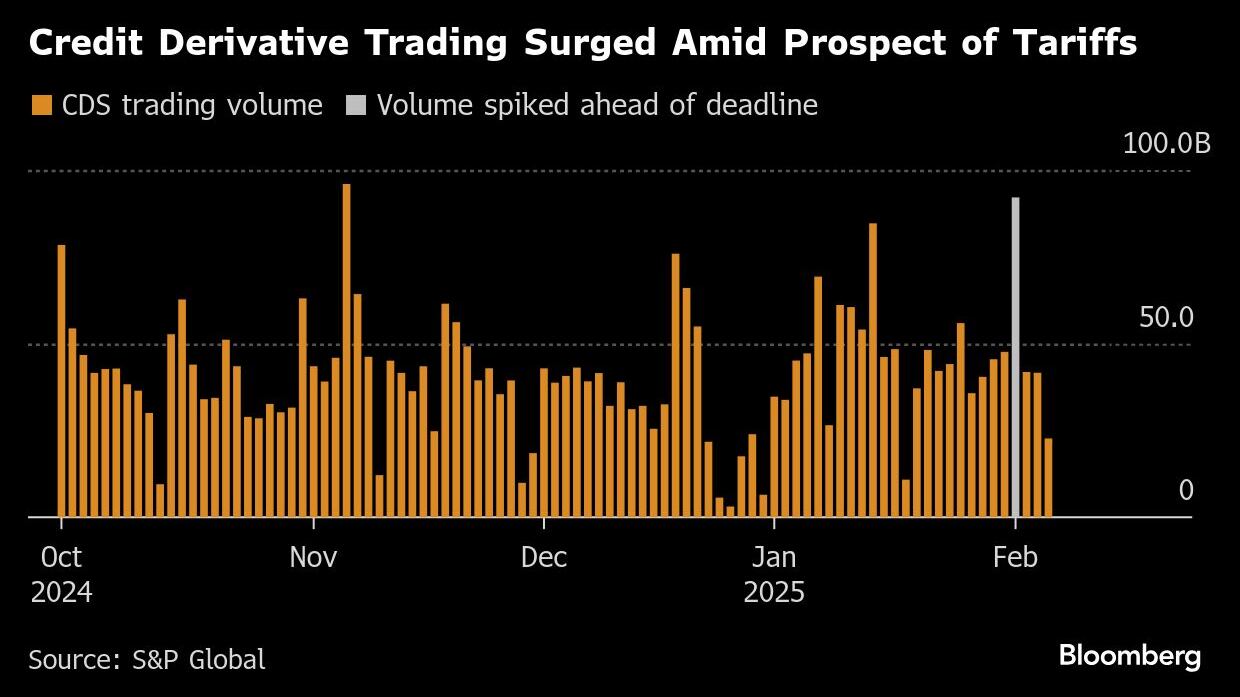
Prices on credit default swaps barely moved on Monday amid the prospect of levies being introduced on Mexican and Canadian goods, even as trading volume in the derivatives more than doubled from the previous week’s daily average. By Tuesday, activity had returned to more typical levels.

CDS didn’t sell off because “credit remains a tight asset class with the most stretched valuations across the board,” said Gabriele Foa, an Algebris Investments portfolio manager whose Global Opportunities Fund has “extremely cautious” positioning at present. “In high yield, CDS has only been at current levels three times in the last 10 years and that’s been followed by a sharp widening in the six to nine months after that.”

Trump is trying to revitalize US industry, cut the government deficit and gain bargaining power with foreign governments through the use of tariffs, with the latest due to be announced this coming week. The speed and breadth of the announcements has surprised markets. JPMorgan Chase & Co. credit strategists in Europe including Matthew Bailey turned bearish at the end of last month, arguing there are growing signs of market complacency, with pricing “extremely difficult to justify” and “feeling completely disconnected from the headlines.”

European analysts at the bank even compiled a ‘Trade War’ basket of CDS linked to European companies most at risk of tariffs, arguing that even though the threat of levies on Mexico and Canada have receded for now, “the risks remain significant” and tight valuations make setting hedges attractive.

Algebris’s Foa sees similar signs of debt investors becoming too comfortable with the emerging risks.

“The market is getting more relaxed with the idea that anything that is going to hurt economic growth won’t happen,” he said, adding that credit is “priced for perfection,” even though “we also do have volatility risk coming up. Credit’s in a tight spot.”

The sanguine reaction also contrasts with the foreign-exchange options market, where trading volumes have jumped to multi-year highs as investors buy downside protection.

CDS has benefited in recent weeks from the fact that the emergence of DeepSeek isn’t seen as much of a debt story, said one derivatives trader, who asked not to be identified. The threat from tariffs will have a more muted impact on credit because the asset class hasn’t seen the type of gains seen in the equity markets, so a hiccup won’t matter too much, the trader said.

Trump’s policies geared toward promoting growth and helping businesses may end up having a more material impact on credit, said Chris Wright, president and head of private debt at Crescent Capital Group, on the Bloomberg Intelligence Credit Edge podcast.

But even so, there is ample ambiguity now about what the future holds. With bouts of market turmoil expected to continue, many debt investors are focusing on interest income, or carry, this year rather than betting on further tightening of spreads above government bonds. That might ultimately result in bigger price moves down the line.

“Credit is negatively asymmetric at the moment,” Foa said. “You can pocket carry of 3% to 4% but if there’s an accident you can easily lose 10% to 12%.”

Week In Review
Investment-grade bond markets in both the US and Europe ground to halt on Monday as President Donald Trump’s plans for tariffs riled markets and dented credit sentiment. Borrowers were back with deals on Tuesday and Wednesday.

 Credit investors now face a choice: Sell bonds in exposed companies and avoid further losses or bet that the businesses are strong enough to weather it.

A group of Morgan Stanley-led banks sold $5.5 billion of debt tied to Elon Musk’s social-media platform X after receiving stronger-than-expected demand from investors.

Apollo Global Management Inc. is seeking to build a marketplace that would allow investors to buy and sell high-grade private assets more easily.

Private equity firms are finding more ways to keep a tighter grip on portfolio companies in financial distress, like adding new provisions to debt documents to curb creditor voting rights, and pushing back against cooperation agreements between lenders.

After trying to sell debt to finance Lakeview Farms’ acquisition of Noosa Yoghurt, a group of banks led by Citigroup Inc. are turning to private credit firms to drum up demand.

Rogers Communications Inc. is sounding out investors for junk bond sales in Canadian and US dollars that may reach about C$4 billion ($2.8 billion).

Insurance companies are snapping up asset-backed bonds to fund future payouts on their annuity products which are seeing record demand — a trend that is expected to continue, according to Morgan Stanley.

The biggest buyers of leveraged loans are welcoming the return of borrowers to the traditional loan market, but they aren’t embracing every aspect of private credit refinancing deals.

Norinchukin Bank boosted investments in riskier leveraged loans and sought additional capital after wrong-way bets on low-yielding foreign bonds led to wider losses.

New York-based hedge fund Fir Tree Partners — known for instigating activist campaigns against distressed companies — is returning outside capital to investors.

Oaktree Capital Management LP, the investment firm led by Howard Marks that made its name lending to troubled companies, is in talks to replace a group led by Nomura Holdings Inc. as the main lender to B. Riley Financial Inc.

Liberated Brands, which until recently operated Quiksilver, Billabong and Volcom, has filed bankruptcy, as has discount retailer Essex Technology Group, which does business as Bargain Hunt, while Nikola Corp. is exploring a possible bankruptcy filing.

On the Move

Ares Management Corp. has elevated Kipp deVeer and Blair Jacobson to the newly created roles of co-presidents, cementing credit as a crucial cog in the firm’s growth strategy. The pair, who will continue to be based in New York and London respectively, will work closely with Chief Executive Officer Michael Arougheti. Kort Schnabel will replace deVeer as chief executive officer of Ares Capital Corp., a publicly-traded investment vehicle focused on direct lending with nearly $26 billion in assets. Jim Miller will continue as sole president of the fund.

Macquarie Group Ltd. is shuttering its US debt capital markets arm, a business that includes leveraged loan origination, syndication and trading, to focus resources on private credit. The decision is set to impact roughly 80 staff within the firm’s investment banking arm, known as Macquarie Capital.

Barclays Plc added four bankers to its desk structuring significant risk transfers in recent months, including Krutheeka Rajkumar in New York, who joins as assistant vice president from Bank of Montreal’s risk and capital solutions desk. In London, Sarah Rainey and Akbar Farid, who are vice presidents, and Rehan Akhtar, an assistant vice president, were recruited from other parts of the firm.

Citadel hired Morad Masjedi, a former portfolio manager at Brevan Howard Asset Management, to focus on mortgage-backed securities as the hedge fund continues its push into fixed income. He started on Jan. 27 as a portfolio manager and will be building out a team.

Credit firm D2 Asset Management recruited former Freddie Mac Chief Executive Officer David Brickman to spearhead residential real estate investments, a sector the firm expects to benefit from structural tailwinds like a nationwide housing shortage.

Swedbank has named Erik Odhnoff as head of group credit. Odhnoff is currently deputy chief credit officer and will take on his new position on Aug. 1, replacing Lars-Erik Danielsson.

BNP Paribas SA recruited Peter Medynski for a newly-created role as director, loan capital markets, based in Sydney. He was previously with Credit Agricole SA for close to six years in a similar role.

--With assistance from Tasos Vossos.

©2025 Bloomberg L.P.
CU=$

Trump Penny-Killing Plan Stirs Hope of Profit, 20 Tons at a Time
February 14, 2025 


(Bloomberg) -- Adam Youngs is looking to make a lot from truckloads of the little red cent.

His company, Portland Mint, sells old pennies in bulk — 40,000 pounds (18,100 kilograms) at a time — to investors angling to profit on the copper that makes up 95% of the coins minted before 1983. A cache of one-cent pieces from Portland Mint with a face value of roughly $60,000 sells for about $120,000.

The wager is that those older pennies contain copper that would be worth about $180,000 at current prices. One snag: It’s illegal to melt a mass of Lincoln cents to harvest the metal. But penny hoarders gained fresh hope that their bets will one day pay off when President Donald Trump said this week that he ordered the Treasury secretary to stop minting the coins.

Perhaps the demise of the humble penny, the thinking goes, will eventually bring an end to the melting ban – positioning owners of the coins to cash in on their mountains of cheap copper.

“You buy at a discount now, things change in the future, then you can actually capture the true value,” Youngs said.


Trump’s broadside touched off a national fuss over the venerable penny, sparking reactions from nostalgia to a sense of “it’s about time.” The potential end of an era, combined with a copper rally in metals markets, is also breathing new life into a cottage industry based on piles of pocket change.

“Collectors and investors speculate the value of copper will go up,” said Ted Ancher, director of numismatics at Apmex, a precious metals dealer in Oklahoma City that has been selling copper pennies for years. “That is the primary reason they buy copper cents.”

Customers favor “the ’82 and earlier stuff,” said Dennis Steinmetz, founder of Steinmetz Coins & Currency in Lancaster, Pennsylvania. The company offers 5,000 pennies – with a $50 face value – for $79.

“As you may know you may not currently melt these,” Steinmetz’s website says. “However if the government authorizes melting you will be way ahead.”

There’s reason to be skeptical, however. It’s not clear whether Trump has the authority to cancel the penny without approval from Congress. Even if he does, the coin’s demise wouldn’t necessarily lead to the government scrapping the near-total ban on melting pennies.

“I don’t believe the penny’s elimination would affect the prohibition,” said Philip Diehl, former director of the US Mint.

In other words, potentially controversial policy changes would be needed to unlock the business opportunity. Even then, skeptics question whether all that copper would pencil out to a tidy profit.

“I cannot imagine anyone would have enough mass of pennies to make this very profitable,” said Adam Simon, a professor of Earth and environmental sciences at the University of Michigan who has studied US copper markets. “My educated guess is that the cost to do all of this would exceed the market value.”

Is that enough to torpedo the market for old pennies? No, it isn’t.

Modern pennies, composed of copper-plated zinc, contain little melt value. So the game for investors is to find the older, mostly copper pieces.

At his warehouse in Oregon, Youngs isolates the more valuable older pennies with 15 industrial sorting machines that can sift through 3,000 coins a minute. Do-it-yourselfers can opt for semi-automatic sorter made by Michigan’s Ryedale Enterprises that can work through as many as 300 cents a minute.


Or penny hunters can just buy old coins.

“We’ve seen a major uptick in the last few weeks with copper prices making headlines and rising again,” said Stefan Gleason, chief executive officer of Money Metals Exchange. The firm sells 34-pound bags of copper pennies for $203.66, or about 4 cents a coin.

Before Trump took on the penny, which the US has made since the late 18th century, people from select lawmakers to former President Barack Obama signaled openness to ditching the coin. One big reason is the expense: It costs the US about 3.7 cents to make a penny, according to the Mint’s 2024 annual report. The Mint struck 3.2 billion of them last year, more than half of all the coins it produced in 2024.

Canada stopped producing its penny in 2012 and instituted rounding requirements for cash payments to the nearest five-cent increment.

But if the US adopted a similar approach, that would probably increase demand for nickels, which are also a money loser for the Mint. From 2014 through 2024, it cost $776 million more to make nickels than the face value of the coins, an even bigger loss than for pennies. (The Mint made that back and more on dimes and quarters, whose production costs are lower than face values.)

For all the focus on money, though, some penny aficionados say the appeal goes beyond dollars and, well, cents.

David Frey from Zionsville, Indiana, built his 60-pound copper penny collection from a decade of his father’s saved pocket change. He said he likes to imagine the coins jangling in the pockets of countless strangers over the years.

Tristan Kwiatkowski, a collector from northeast Pennsylvania who recently acquired a Fugio cent minted in the 1780s, also has around 30 pounds of more recent copper pennies that he got by sorting through rolls of coins from his bank.

He predicts many people will keep trying to hold their old pennies as they become scarcer. But even if the melting ban were lifted, he said he probably wouldn’t part with his stash of copper coins.

“Coins are one of the most tangible pieces of history that somebody can hold,” he said. “Like a lot of people, I don’t really have much of an endgame for them.”

--With assistance from Charlie Wells and Stefani Reynolds.

©2025 Bloomberg L.P.


CU

Column: Tariff threat opens up transatlantic rift in copper pricing

Reuters | February 12, 2025 | 


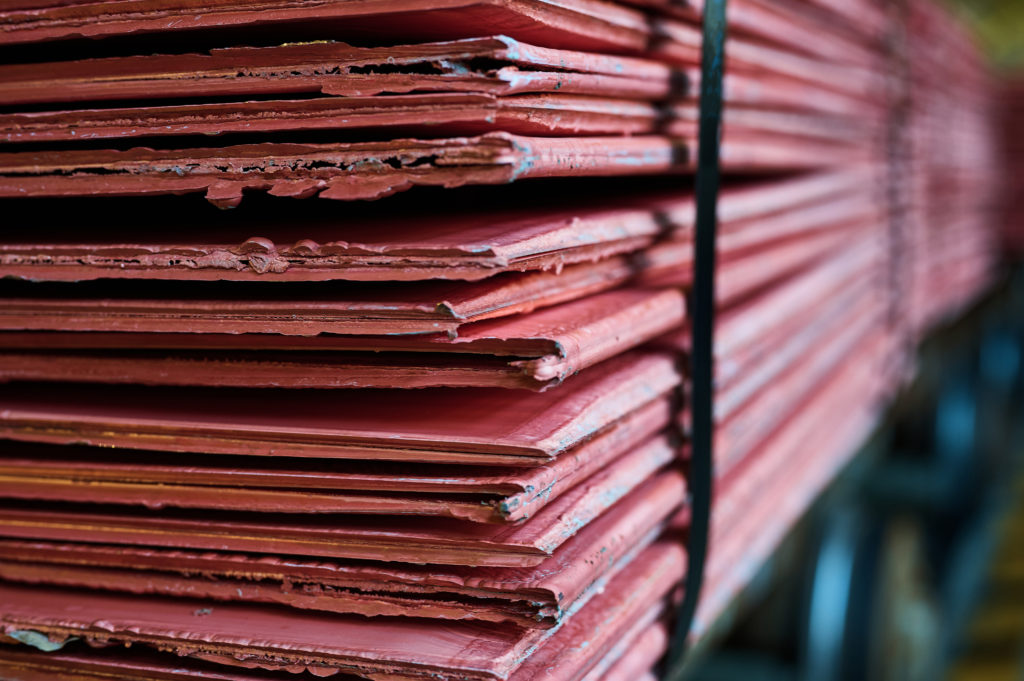
Stack of cathode copper plates. Stock image.


US President Donald Trump hasn’t yet imposed import tariffs on copper but the market is already pricing in the likelihood that the red metal will be next on the list after aluminum and steel.


The arbitrage between the CME and the London Metal Exchange (LME) contracts has blown wider in recent days, with the CME premium exceeding $1,000 per metric ton earlier this week.

Given that LME three-month copper is currently trading around $9,400 per ton, the transatlantic gap implies the market is expecting a 10% tariff at the very least.

Were Trump to go for the same blanket 25% tariffs that have been applied to imports of aluminum and steel, there is obviously further upside potential for the CME premium.

Overlooked for now is how Doctor Copper would likely react to an escalating tariff war with all the negative implications for global growth.

CME copper-LME copper spot arbitrage and CME stocks


Mind the widening gap

The aluminum tariff trade is playing out in the CME’s US Midwest premium contract because the CME’s underlying aluminum contract mirrors the LME’s international delivery status.

The CME copper contract, by contrast, is customs cleared with only domestic delivery locations, meaning it must reflect any inherent premium for US delivery.

That makes the CME premium over its international London peer a tradable gauge of any potential US tariffs on copper imports.

And right now it is trading at record highs, eclipsing even last year’s short squeeze blow-out.


CME copper stocks have recovered from the depleted levels that helped fuel that squeeze and now total over 100,000 tons.

But US consumers are highly vulnerable to any tariff barriers since the country is still reliant on imports for around 45% of domestic consumption, according to the US Geological Survey (USGS).

Hence the price sensitivity to Trump’s tariff threats, although what level of tariffs may be applied and against which countries remains a known unknown for now.

The blanket nature of this week’s announced tariffs on aluminum and the potential for even higher duties in the event of retaliation by trading partners has evidently spooked the copper market, forcing the arbitrage ever wider.
Damage impact

The immediate focus of the copper tariff trade is refined metal, which is understandable given that the United States imported just over 800,000 tons in 2024, compared with domestic production of 850,000 tons, according to the USGS.

However, trade flows would adjust over time and the CME premium is already providing an incentive for more metal to head to the United States.

The tariff impact could be much messier when it comes to copper products, given the complex flows of material between the United States and its Canadian and Mexican neighbours, both of which are threatened with 25% tariffs.

The United States exports copper wire to Mexico to be manufactured into automotive parts such as wiring harnesses and electric motors which are then shipped back across the border.

This trade amounts to 220,000 tons of contained copper each year, according to analysts at Project Blue. Slapping high tariffs on such imports is likely to see harness assembly relocate from Mexico to lower-cost Asian countries with negative knock-on effects for both Mexican and US companies in the automotive supply chain.

Both Mexico and Canada are also key suppliers of copper scrap to American processors, meaning tariffs could potentially divert flows to other countries, most likely China, to the detriment of domestic US secondary production.
Tariff drag

The interconnectedness of North American copper flows is just part of a bigger complex globalized picture, leaving the metal highly vulnerable to the sort of shift in trading patterns likely to ensue from US tariffs.

Doctor Copper has earned the honorific title precisely because the metal is so embedded in the global industrial economy.

Clearly, the potential for tit-for-tat tariffs between the United States and its trading partners could act as a major drag on consumption.

This has not yet been priced in by the market. The LME copper price has risen by 7% since the start of January, fuelled by expectations of improved demand, particularly in China.

But China is also in the cross-hairs of the new Trump administration along with just about everyone else.

If the tariff wars have begun, copper is going to be a casualty. But that will be reflected in the international price rather than the US price, implying a further fracturing between CME and LME markets.

(The opinions expressed here are those of the author, Andy Home, a columnist for Reuters.)

(Editing by Sharon Singleton)

Storied Peruvian executive resurfaces at Canadian copper startup

Bloomberg News | February 14, 2025 |


Víctor Gobitz, president of Antamina and of the Directive Council of the Peruvian Institute of Mining Engineers. (Image by PERUMIN.)

After decades overseeing some of Peru’s biggest mines, Victor Gobitz has reemerged at the helm of a Canadian startup that has plans to begin copper production in a year and go public in the medium term.


Gobitz stepped down as chief executive officer of a mine owned by BHP Group and Glencore Plc to lead Quilla Resources Inc., a firm he set up along with one family based in the UK and another in Peru.

Quilla acquired a company from Nexa Resources SA in a bid to restart the Chapi copper mine in Peru. The new owner plans to start producing cathode in the first half of next year at an annual rate of about 10,000 metric tons.

The mine, south of the Peruvian city of Arequipa, was halted in 2012 due to declining metal prices and operational challenges. Average copper prices have risen about 15% since then, partly due to additional demand from the shift away from fossil fuels, when big new deposits are getting harder to find, develop and finance.

Gobitz, whose two daughters are also involved in his new Toronto-based venture, looks to use cash from the Chapi restart to finance work on other opportunities for the 26,000-hectare (64,000-acre) land package — which isn’t far from a giant mine owned by Freeport-McMoRan Inc.

“We’ll be a closely held company for a time — until we restart operations — and then we’ll evaluate going public,” he said in an interview Wednesday. “We believe the potential is there to find a deposit of large dimensions.”

(By James Attwood)


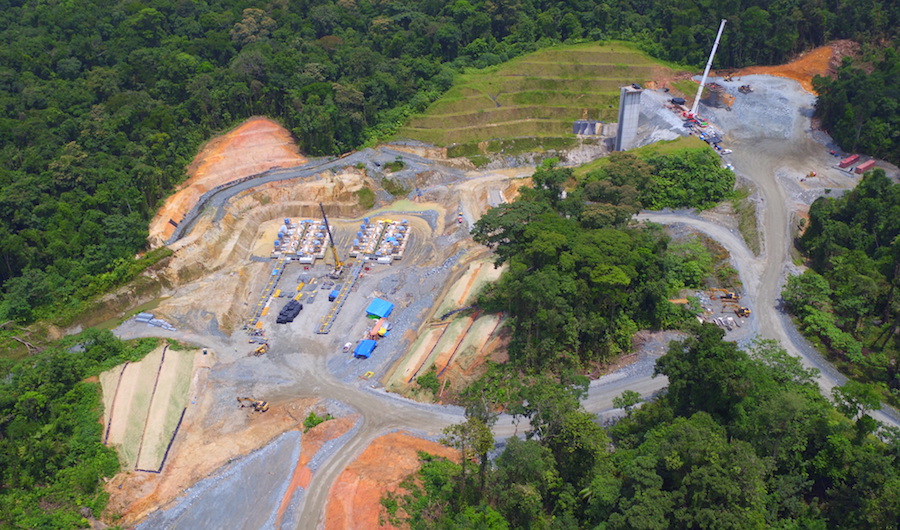
McEwen Copper requests major tax breaks for Los Azules mine in Argentina

Reuters | February 12, 2025 | 

The Los Azules copper project sits in the Andes Mountains at an elevation of 3,500 metres. Credit: McEwen Mining.


Canadian miner McEwen Copper, a subsidiary of McEwen Mining, has submitted a request to join an Argentine government incentives program that would give it significant tax breaks for its Los Azules copper project in San Juan province, it said.


McEwen plans to invest $2.7 billion in the mine. It has committed $227 million under the Argentine government’s Large Investment Incentive Regime (RIGI) to carry out the mine’s feasibility study, do exploration works, and prepare for construction.

The company could pour an additional $2.5 billion into the site to build the mine and production facilities under the incentives mechanism if approved, it said in a statement late on Tuesday.


Once the government gives McEwen the green light, its corporate tax rate for the Los Azules project will fall from 35% to 25%, and it will be exempt from value-added tax during construction and from export duties.

“Argentina is once again opening its doors to business activity,” said Robert McEwen, head and top stakeholder in McEwen Mining.

Los Azules could kick off construction in early 2026, pending environmental permits, a feasibility study and the RIGI tax approval, the firm said.

The mine is one of Argentina’s prime copper projects, located 3,500 meters above sea level in the Andean mountain range.

Argentina is mineral rich and could be key to meeting growing demand for copper due to the energy transition, but it has not produced the metal since 2018 when the Alumbrera mine was shuttered.

(By Lucila Sigal and Kylie Madry; Editing by Jan Harvey)


First Quantum will not rush into sale of Zambian copper mines stake

Reuters | February 12, 2025 

First Quantum’s Kansanshi mine in Zambia. 
(Image from First Quantum Minerals)

First Quantum Minerals will not rush into a deal to sell a minority stake in its Zambian copper mines, CFO Ryan MacWilliam told analysts on Wednesday after the miner’s fourth-quarter results.


The Toronto-based miner wants to secure a long-term partner at its Zambian mines and there are no “specific timelines” for the sale, he said.

“We have been consistent throughout that any arrangements we enter into in Zambia will be for the next 25 years,” MacWilliam said. “It’s really about getting the right agreement rather than a quick agreement.”

Saudi Arabian mining company Manara is in advanced talks to acquire between 15% and 20% equity in First Quantum’s Zambian assets, Reuters reported last October, citing sources. First Quantum has said it needs the money to finance output expansion at its Kansanshi operation in the northwest of the country.

The Canadian miner’s Zambian copper and nickel assets have become key to its growth after authorities in Panama shut down its then flagship Cobre Panama mine.

First Quantum wants a deal that works for its investors as well as the Zambian government, which owns a 20% stake in the assets, MacWilliam said.

(By Felix Njini; Editing by Jane Merriman)


First Quantum’s final hearings on Cobre Panama copper mine moved to 2026

Cobre Panama mine, the company’s largest copper operation. (Image: First Quantum Minerals.)

Canada’s First Quantum said on Tuesday the final hearing for the Cobre Panama mine under the International Chamber of Commerce proceedings has been moved to February 2026 from September of the current year.

The mine, one of the world’s top sources of copper, was shut down in November 2023, hours after Panama’s Supreme Court declared its contract unconstitutional. The decision to close down the mine was also triggered by environmental protests against the operation.

The Canadian miner also said the government of Panama had applied to the arbitration panel, requesting an extension of its submission dates after the replacement of an external legal counsel and on the basis that the new government required time to assess the situation concerning the mine.

Last year, Reuters reported that the Canadian miner opened a voluntary retirement scheme to workers at the mine, as the company awaited for a government decision on restarting the operation.

(By Tanay Dhumal; Editing by Anil D’Silva)

Column: Beer, not tariffs, will boost US aluminum capacity

Reuters | February 11, 2025 |

Aluminum beer cans. Stock image.

If in doubt, double down.


Seven years ago President Donald Trump ordered 10% tariffs on US imports of aluminum with the stated aim of increasing domestic primary metal production.

They haven’t worked.

This time the tariff is going to be 25% without “exceptions or exemptions” effective March 4. Together with a similar-sized duty on steel imports, the ambition once again is to bolster industrial self-sufficiency in the name of national security.

This is not good news for US consumers, judging by the sharp jump in the price of aluminum delivered to the US Midwest.

It’s also highly uncertain just how effective yet higher tariffs will be in rejuvenating the country’s aging fleet of aluminum smelters.

If greater aluminum self-sufficiency is the goal, there’s a much easier way of achieving it in the form of the humble beer can.

CME aluminum premium contracts for US, Europe and Japan


Import dependency

Aluminum has yet again been bundled together with steel in Trump’s tariff wars despite very different market dynamics.

While US steel imports account for 23% of the country’s consumption, the ratio is much higher at 47% for aluminum, according to the US Geological Survey.

The US is particularly reliant on imports of primary aluminum from Canada, which supplies more than two million tonnes each year.


The market is already adjusting to the potential shift in pricing and trade flows.

The CME Midwest US premium contract, which captures the cost of delivered metal on top of the underlying aluminum price, has risen by $100 to $629 per metric ton in the space of a week.

Given the London Metal Exchange cash price is currently trading at $2,645 per ton, the implied tariff cost is still only partially priced.

The aluminum market has been here before with the 2018 tariffs, which ended up being highly negotiable. Canada, for example, was initially included, then exempted, included again and exempted again, the second time in the space of a month.

The betting seems to be that there will be similar carve-outs this time around.

However, slightly ominously for US buyers of Canadian metal, European premiums have dropped sharply, suggesting that Canadian shipments will be diverted from the higher-tariff American market-place.
Power trumps tariffs

While steel tariffs have moved the domestic production dial, the same is not true of aluminum.

The number of US operating primary aluminum smelters has shrunk from 20 at the start of the century to just four.

The only plant to reopen after the 2018 tariffs – New Madrid in Missouri – closed again in January 2024.

US primary metal production last year was 670,000 tons, compared with 740,000 tons in 2017, the year before import tariffs were first enacted.

All hopes rest on Century Aluminum’s “Green Aluminum Smelter Project”, which is being backed by the Department of Energy with a $500 million award made under the previous administration’s Bilateral Infrastructure Law and Inflation Reduction Act.

Century has just drawn down the first $10 million tranche to fund further studies, which tells you a new smelter won’t be firing up any time soon.

Critically, the project has yet to find a committed source of energy, particularly the renewable energy it needs to classify as green.

Aluminum is produced by electrolysis and smelters consume huge amounts of power to convert alumina into metal.

The demise of the US smelter sector has been primarily down to high power costs and they remain the major hurdle for any greenfield smelter project.

Indeed, the competition for power is intensifying as data centres compete for renewable energy.
Don’t litter

There is an easier way for the United States to reduce its import dependency.

The solution is to hand but too often thrown away.

The country is the world’s largest user of aluminum beverage cans with 106.7 billion sold in 2021, accounting for over a quarter of the global market.

The recycling rate was just 43% in 2023, down from a peak of 57% in 2014, according to the Container Recycling Institute (CRI).

Just under half of all cans are thrown away to be land-filled or trashed. More metal is lost through improper sorting at recycling facilities, with losses assessed at roughly one third.

The total wastage in 2021 amounted to over one million tons of aluminum with a notional value of $1.6 billion, CRI calculates.

That’s a lot of aluminum being thrown away every year and significantly more than domestic production of primary metal. Moreover, remelting a beverage can is much more energy efficient than producing virgin metal since it typically requires only 5% of the power.

The countries with the highest recycling rates all operate some form of deposit return scheme.

Indeed, the US states with deposit schemes achieved a recycling rate of 74%, compared with 26% for non-deposit states, according to the CRI.

Roll out more deposit return schemes and some of that one million tonnes of landfill could be returned to the supply chain.

America’s energy constraints mean that boosting recycling is going to be a faster way of shoring up its domestic aluminum supply base than tariffs.

But tariffs are what the aluminum market and the US consumer are going to get.

(The opinions expressed here are those of the author, Andy Home, a columnist for Reuters.)

(Editing by Susan Fenton)