Saturday, February 15, 2025


The Rohingya crisis and the national question: A Marxist perspective


Published 
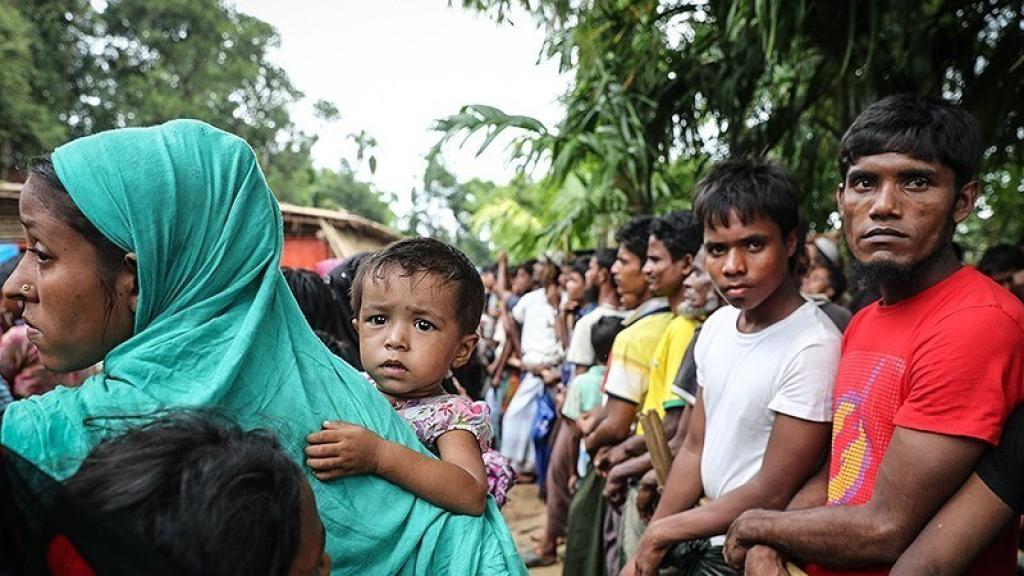
Rohingya displaced Muslims

The plight of the Rohingya people is one of the most pressing humanitarian crises today. As an ethnic and religious minority in Myanmar, the Rohingya have faced systematic discrimination, state violence and forced displacement. Our statelessness is a product of Myanmar’s exclusionary nation-building process, rooted in colonial legacies and post-independence power struggles. 

From a Marxist perspective, it is helpful to analyse the Rohingya crisis through the lens of Vladimir Lenin’s work on “the national question” . By doing this we can examine how oppressed nationalities and ethnic groups fit within the broader struggle against capitalism and imperialism.

The historical context of Rohingya oppression

The Rohingya are a predominantly Muslim ethnic group from Myanmar’s Rakhine State. Even with historical records confirming our presence in the region for centuries, the Myanmar government refuses to recognise us as citizens. The 1982 Citizenship Law institutionalised our exclusion by denying us legal recognition, making us stateless and depriving us of fundamental rights such as freedom of movement, education and employment.

This exclusion is deeply tied to Myanmar’s post-colonial nation building process. Since independence from Britain in 1948, Myanmar’s military and political elites, dominated by the Bamar ethnic majority, have promoted a rigid national identity based on Buddhist nationalism. This framework positioned the Rohingya as an “internal other” and facilitated their systematic persecution. Mass violence escalated in 2017, when a brutal military crackdown, justified as a response to alleged insurgent attacks, forced over 700,000 Rohingya to flee to Bangladesh.

The national question and Rohingya statelessness

In Marxist thought, “the national question” concerns the relationship between oppressed nationalities and the broader struggle against capitalism and imperialism. Lenin argued that national self-determination was essential for socialist movements but warned against nationalism being used to divide the working class.

The Rohingya crisis exemplifies this dynamic, where ethnic identity is manipulated to serve the interests of Myanmar’s ruling class.

i. Ethnic exclusion as a tool for elite power

The exclusion of the Rohingya serves Myanmar’s ruling class by diverting class struggle into ethnic divisions. The military junta and nationalist elites use anti-Rohingya sentiment to consolidate power, deflecting attention from broader economic injustices and working-class struggles. By positioning the Rohingya as a “foreign threat,” the state advances unity among the Bamar majority while suppressing broader dissent.

ii. The role of global capitalism and imperialism

The Rohingya crisis is not just a national issue, it is entangled with global capitalist interests. Myanmar’s military, despite international condemnations, benefits from arms deals and economic investments from regional and global powers. China and India, for instance, maintain economic partnerships with Myanmar’s government, driven by their strategic interests in natural resources and trade routes.

Similarly, Bangladesh, which hosts nearly a million Rohingya refugees in Cox’s Bazar, faces economic and political pressures that global powers exploit. The influx of refugees places enormous strain on Bangladesh’s resources, creating dependency on international aid. Organisations like the United Nations High Commissioner for Refugees and the World Bank provide humanitarian assistance, but such aid is often tied to broader geopolitical interests, reinforcing Bangladesh’s position in the global economic hierarchy.

Rohingya refugees in Cox’s Bazar: A crisis within a crisis

Cox’s Bazar, the world’s largest refugee settlement, houses nearly one million Rohingya refugees in overcrowded, under-resourced camps. While Bangladesh initially provided refuge, conditions have deteriorated due to resource constraints, political tensions, and international neglect.

  • Precarious living conditions: Rohingya refugees face food shortages, inadequate healthcare, and lack of employment opportunities (note: lack of fire safety measures and natural disaster safety awareness have led to several incidents where fires have broken out in the camp)
  • Security concerns: Armed groups and human traffickers exploit the desperate conditions in the camps. Threats to youth are increasing, as is the violence against Rohingya people in the camp, with some Rohingya even being murdered.
  • Political and economic pressures: The Bangladeshi government, facing domestic opposition, has increasingly restricted Rohingya mobility and access to education. It has even stopped cars from entering the camp, preventing long-term integration.

The crisis in Cox’s Bazar illustrates how refugees become pawns in capitalist politics within Bangladesh as much as pawns of global capitalist politics. Wealthy nations refuse to resettle significant numbers of Rohingya, while regional powers such as China and India focus on their own strategic interests rather than addressing the root causes of the crisis.

A call for solidarity and resistance

From a Marxist perspective, the Rohingya crisis is not merely an ethnic or humanitarian issue — it is deeply tied to state oppression, capitalism and imperialism. The ruling elites in Myanmar exploit ethnic nationalism to maintain power, while global capitalist forces benefit from instability and aid politics.

To resolve the crisis, solutions must go beyond humanitarian aid and address the structural forces driving Rohingya exclusion. This includes:

  • Challenging the Myanmar military’s grip on power and exposing its ties to global capitalism.
  • Advocating for Rohingya self-determination and ensuring we are recognised as equal members of society. By championing Rohingya self-determination, the workers’ movement inside Myanmar can undermine Buddhist nationalism within the working class.
  • Building solidarity between oppressed groups in Myanmar, Bangladesh and beyond, and linking the Rohingya struggle to broader anti-capitalist movements.

Ultimately, the Rohingya crisis is a stark reminder that ethnic oppression is inseparable from class struggle. A just resolution requires dismantling the structures of ethnic nationalism, state oppression and global capitalist exploitation that sustain their marginalisation.

 

From forest to finance: How carbon credits mask ecological destruction


Published 

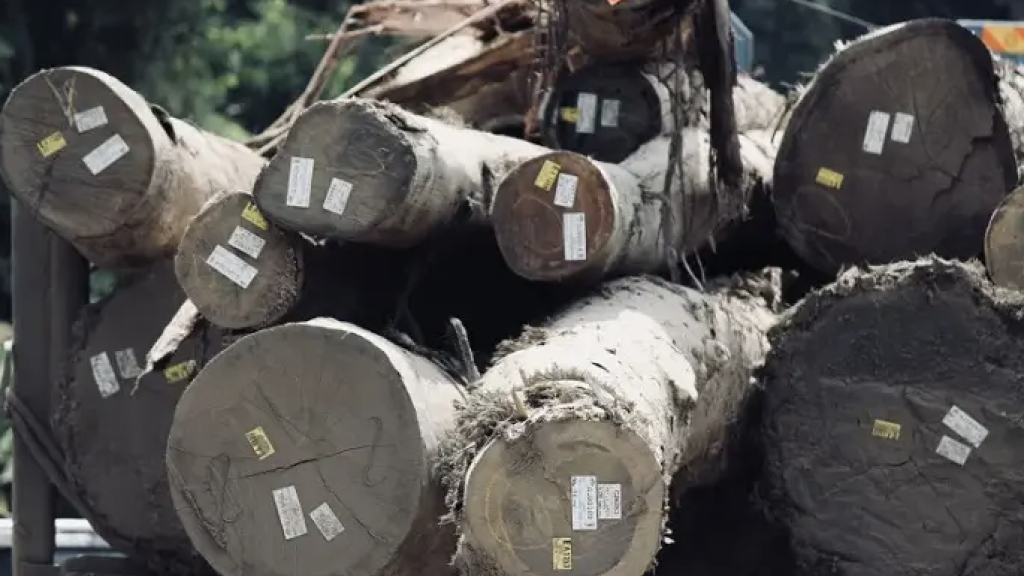
Logging has threatened wildlife and displaced native communities

First published at Aliran.

Certain quarters in Malaysia are pushing for market-driven mechanisms to cut carbon emissions and transition to a low-carbon economy.

And they are being given a platform to do so by parties who should know better. The Star, for example, featured a write-up extolling the benefits of carbon trading platforms.

What are carbon markets?

Carbon markets are platforms where “carbon credits” can be traded.

Companies or NGOs that carry out projects to remove CO2 from the atmosphere by planting trees or preserving existing forests will be awarded “carbon credits”. They will be given one credit for each tonne of carbon removed from the environment.

These companies can then monetise these credits by selling these carbon credits to companies that wish to “offset” their carbon emissions.

Basically, the purchasers of carbon credits are buying the right to continue their polluting activities.

The carbon credit-producing companies or NGOs will then get funds to intensify their carbon-reducing activities, according to the proponents of this idea.

The platform that enables the buyers to transact with the sellers is the carbon market. Malaysia is now setting up such a market.

The Socialist Party of Malaysia (PSM) fully agrees with environmental groups that criticise carbon markets. These markets are extremely “iffy” and are open to all sorts of abuse.

Allow me to share an example from Perak.

Kledang Saiong forest plantation

The Perak state government has approved a forest plantation project involving 4,280 hectares of forest in the Kedang Saiong forest reserve.

The plan is to completely fell the existing trees in about 90% of the total area (areas with a gradient of 35 degrees will be exempted). The logged area will then be replanted with three tree species that can be harvested for timber five, 10 or 15 years down the line.

Four firms (specified in the environmental impact assessment report) have been given the approval to implement this project.

These companies will earn handsomely from selling the logs obtained in the initial clear-felling phase of the project.

They will also gain from selling the carbon credits derived from replanting the area with trees. (The intention to sell carbon credits is clearly specified in the impact assessment report.)

Kledang Saiong forest reserve is a biodiverse forest with 62 mammal species, 60 reptile species and 205 bird species, of which 249 species or 76% are on the “protected” or “totally protected” lists (Chapter 6 of the impact assessment report).

However, the report characterises the entire 4,280 hectares of forest as “severely depleted” (see Table 7.3.9 in the report on “estimation of soil losses before, during and after the project”)

Hence, the negative impact of the initial felling of trees on carbon capture from the environment is grossly under-estimated, and the carbon credits “generated” by the replanting exercise, maximised.

Corporate greenwashing

The Kedang Saiong saga demonstrates the weaknesses of the market approach.

The project will destroy a healthy, biodiverse forest that is already functioning as a “carbon sink”. It has been dressed up as a major contribution to climate mitigation by misrepresenting the forest as severely depleted.

All the monitoring agencies from the Perak state executive council, the Forestry Department to the Department of Environment are not prepared to call this bluff.

The major players — the logging companies, the environmental consultants and the politicians empowered to approve the project — are driven by the mega-bucks this project will generate.

Mere rhetoric

This is exactly what will occur in carbon markets. The carbon credit buyers just want the credits to enable them to continue polluting, instead of taking steps (which might be expensive) to reduce their own carbon footprint.

The buyers do not care much about the veracity of the carbon-reduction claims of the NGOs or companies selling them the credits. All the buyers care about is that the credits will enable them to put off the difficult steps required to cut their greenhouse gas emissions!

The independence and objectivity of the agencies calculating and quantifying the amount of carbon credits produced is suspect.

If the environmental impact consultants are a company that was chosen by and paid for by the companies that were awarded the project, where to you expect the consultants’ allegiance to lie?

Given the way the Malaysian government operates today, the agency certifying the carbon credits will be ‘corporatised’ and required to collect fees from the producers of carbon credits.

The assessment of the amount of carbon emission reduced by each project will be entrusted to environmental impact consulting companies and paid for by producers of carbon credits. As they say, “He who pays the piper calls the tune.” How objective will this process be?

PSM believes that carbon trading is a terrible idea. Both the buyers and the sellers are in it to make money. So too the ‘assessors’ and the ‘regulator’ who certify the veracity of claims that the project actually removes that much carbon from the atmosphere.

The carbon-trading idea represents corporate capture of efforts to cut down greenhouse gases emissions! It will not help in actually reducing carbon emissions.

Cap and tax

We would like to suggest another approach — cap and tax. The amount of CO2 ‘permitted’ for industries should be capped. Each industrial unit will be given an upper limit (the cap) based on the industry and its scale of production.

Any greenhouse gas emission exceeding this cap should be taxed. The money gained from this tax can be used to fund projects that further reduce greenhouse gases and to pay for the transition to renewable energy. Such projects could include rehabilitating logged forests, harvesting methane from organic municipal waste to generate electricity, and installing solar panels on the roofs of all-government owned buildings.

The cap should be progressively lowered and the tax rate increased to provide the financial initiatives to transition to cleaner and more sustainable industrial practices.

Asean collaboration

Vietnam has already introduced a carbon tax of 50 cents per ton of CO2. Indonesia plans to introduce it at $5.20 per ton.

These rates are far lower than those instituted in Europe. France, for instances, taxes it at $52 per ton of CO2 and Sweden at $137 per ton.

Too low a tax rate will not create the economic incentives for users of hydrocarbon-based fuels to switch to renewable energy.

The truth is a CO2 tax will raise the cost of production and create a comparative disadvantage for any country trying to attract foreign investments — an important economic strategy for Asean countries.

This is why we need to have an Asean-wide discussion on carbon taxes. In this way, such taxes can be initiated jointly at a level that creates the financial incentives for industries to diversify to less polluting sources of energy, without creating a disadvantage for any of the Asean countries.

Speaking truth to power

Climate change is real, and we need to implement effective policies to reduce our carbon footprint quickly.

Unfortunately, it appears that climate change mitigation efforts in Malaysia have been overly influenced by the corporate narrative. The politicians in power seem to have embraced dodgy policies like carbon trading and “carbon capture and storage”.

The “Madani” (civil and compassionate) government is on the verge of diverting funds and effort into these highly questionable policies.

It is high time for environmental NGOs and concerned individuals to push strongly back against false corporate-driven ‘solutions’. Instead, they need to push for effective, sustainable programmes to contain the climate change crisis.

Dr Jeyakumar Devaraj served as Member of Parliament for Sungai Siput from 2008 to 2018. A respiratory physician who was awarded a gold medal for community service, he is also a secretariat member of the Coalition Against Health Care Privatisation and chairperson of the Socialist Party of Malaysia.
Fascism’s Final Gamble: The Fight for Democracy’s Last Breath

February 13, 2025
Source: L.A. Progressive


Amid the firestorm of democracy-destroying bombs Trump hurls at the institutions, values, and fragile promises of a wounded America, we must grasp the full anatomy of this assault. This is not simply an attack—it is a violent rupture in the very fabric of our society. It is fascism, thrashing in its death throes—gasping, desperate, clinging to power as the long-concealed rot of its politics collapses under the weight of its own deceit. For decades, it masqueraded beneath the banner of capitalism, but now, gangster capitalism stands naked, unable to mask its insatiable greed, its obscene inequality, and its total abdication of social responsibility. The last vestiges of its decency have fallen away, leaving only the cold, brutal machinery of exploitation.

Its only tool, now, is the naked power of the state, captured by billionaires who despise democracy, hate people of color, and dream of a society where justice and equality are treated as toxic viruses to be eradicated. It is a power so consumed by its own hunger for dominance that it can no longer even pretend to hide its true face. Beneath the glittering promises of prosperity and the smoke screens of false patriotism, this system is pure in its drive: the preservation of an empire built on the suffering of the many, for the benefit of the few.

What remains is the scaffolding of a racialized fascism, sharpened to a brutal edge. A captive state, shackled to white supremacy and Christian nationalism, its chains wrapped tightly around the throat of the public commons. This is not just a war on democracy—this is an all-out siege on the institutions that might dare to cultivate critical thought, on the systems that once held power accountable, on the very possibility of imagining a future in which equity and justice are real. This is not mere authoritarian drift; this is a full-scale offensive. A war without mercy. A battle for the soul of a nation.

Resistance cannot afford to be fragmentary, hesitant, or seduced by the illusion of reform. It cannot mistake small, calculated compromises for lasting change or the illusion of progress for real liberation. What we face is not a system in crisis, but one meticulously engineered for destruction—a machine of cruelty and greed, crafted to serve only itself, powered by corruption, and led by a death-dealing ideology. It is a beast with blood in its mouth, with decay in its bones, and with death as its final decree.

To fight this, we must first name it, unmask it, and, in doing so, strip it of the power it so eagerly wields. This is not a time for half-measures or shallow strategies. We must rise against it with the full force of collective defiance—together, unrelenting, unyielding. We must stand in the streets and in the halls of power. Our actions must not be small or meek, but instead loud, insistent, and bold. Nonviolent uprisings, strikes that choke the flow of profit, blockades that rupture the pathways of oppression—these are the tools with which we can turn the tide. Our voices must be relentless. Our bodies must be unmovable. Our presence must serve as a constant reminder that democracy is not theirs to dismantle—it is ours to reclaim.

Only through the awakening of mass consciousness—through a tidal surge of the young, the workers, the artists, the poor, the discarded—can we shatter the gears of this machinery of cruelty. This is a call to all those who have been silenced, forgotten, or ignored by this system. This is your moment to rise and take back what has been stolen from you.

We must not stop until this monstrous machinery is halted, not with whispers of reform, but with the thunder of resistance that makes tyranny tremble. Now is the time to act, to organize, and to fight—not just for a better America, but for a better world. We must breathe life into democracy before it is suffocated forever. The clock is ticking. The stakes are too high to wait. Now is the time to rise, to resist, and to reclaim our future.


Henry A. Giroux (born 1943) is an internationally renowned writer and cultural critic, Professor Henry Giroux has authored, or co-authored over 65 books, written several hundred scholarly articles, delivered more than 250 public lectures, been a regular contributor to print, television, and radio news media outlets, and is one of the most cited Canadian academics working in any area of Humanities research. In 2002, he was named as one of the top fifty educational thinkers of the modern period in Fifty Modern Thinkers on Education: From Piaget to the Present as part of Routledge’s Key Guides Publication Series.


The Chagos Islands Were Never Britain’s To Give Away
February 13, 2025


Diego Garcia, the largest of the Chagos Islands, houses a UK-US military base.
 (Photo: Alamy)

Nigel Farage and the Conservatives are having a meltdown about Britain ‘giving up sovereignty’ of illegally occupied land.

Britain’s foreign secretary David Lammy will this week meet his new US counterpart, Marco Rubio, to rescue Labour’s plan for the joint UK-US military base on the Chagos Islands.

The Trump administration appears to be challenging the UK government’s deal to permit Mauritius to take up sovereignty over the Indian Ocean islands.

Last October, Keir Starmer’s government announced an agreement with Mauritius whereby the UK would keep operating the military base on the largest island in the Chagos group, Diego Garcia, but that Mauritius would have sovereignty.

Ever since, a number of prominent Conservative and Reform MPs in Britain have become thoroughly incensed at the government. They have put down over 100 written questions in parliament about the plan in the last four months.

Shadow foreign secretary Priti Patel laments that the UK is “to give away a key strategic asset in the Indian Ocean ending more than 200 years of British sovereignty”.

Two former defence ministers have slammed the deal, with both Andrew Murrison and James Cartlidge calling it the Chagos “surrender”.

Cartlidge has also made the extraordinary comment that, given the importance of the base to the US, “anything that damages its defence posture… also undermines our national security”.


Right to return

Yet the most scandalous aspect of the proposed deal is that Britain and the US will continue to operate the military base at all, and deprive the Chagossians of being able to return to Diego Garcia.

Britain forced the population off the islands in the 1960s and 1970s to make way for the base.

The UK’s deal with Mauritius would allow Britain to lease the base for 99 years, and then to renew it after.

The Chagossians will be allowed the possibility of resettling only on the smaller, outlying islands and to “visit” Diego Garcia, presumably under tight control given the UK-US military presence there dominates the tiny territory.

Ninety-nine years and more isn’t enough for some Tories. Lord Bellingham, a former foreign minister, says the mere 99-year lease “will only encourage the Chinese” and therefore the UK should “go for a sovereign base island in perpetuity”.
International law

These MPs are displaying the same level of commitment to international law as they have done over Gaza.

In 2017, states at the United Nations voted to ask the International Court of Justice (ICJ) for an advisory opinion on the status of the islands. In February 2019, the Court concluded that Britain had violated international law when it created the ‘British Indian Ocean Territory’ (BIOT) in 1965.

The ICJ stated that “as a result of the Chagos Archipelago’s unlawful detachment and its incorporation into a new colony, known as the BIOT, the process of decolonization of Mauritius was not lawfully completed when Mauritius acceded to independence in 1968”.

The ICJ added that the UK’s administration of the Chagos Archipelago “constitutes a wrongful act entailing the international responsibility of that State”. It stated the UK should bring its control of the territory to an end “as rapidly as possible”.

Two years later, in 2021, the maritime law tribunal of the UN also ruled that Britain has no sovereignty over the islands.

Nigel Farage recently told parliament that his allies in the then incoming Trump administration “cannot understand why we would surrender the sovereignty of the islands on an advisory judgment from a pretty obscure court”.

In fact, the only basis to Britain’s claim to the islands is that it acquired them after the Napoleonic wars in 1814 – and never let go of them despite decades of opposition from most countries in the world.

Preemptive strike


The reason the government has made this deal with Mauritius now is crystal clear – Whitehall has been worried that international legal bodies would in future deliver even tougher judgements on Britain’s unlawful control of the islands.

Foreign minister Baroness Jenny Chapman told parliament last month that she feared “future rulings” against the UK and stated: “We believe that we are in a stronger position to negotiate ahead of a binding ruling than we would be waiting for one.”

Her foreign office ministerial colleague Stephen Doughty has been just as frank. He has said that the UK’s operation of the base was threatened because “courts were reaching judgments” and that “a legally binding decision against the UK seemed inevitable”.

This is why the government now says that “for the first time in 50 years, the base will be undisputed and legally secure”.

Put another way, Whitehall has known for decades it has been operating unlawfully. Chapman told MPs in parliament unequivocally last month that the move “to separate the colony” in the 1960s was “not allowable under international law.”

“That is why we have ended up where we have”, she added.

It will again be the unpeople of the Chagos Islands who will likely remain the main losers from whatever agreement emerges between Labour and Donald Trump.


Mark Curtis is the director of Declassified UK, and the author of five books and many articles on UK foreign policy.
Altadena Communities Unite to Rebuild as Developers Eye the Ashes

By Michelle Zacarias
February 11, 2025
Source: Truthout


Image by The National Guard, Creative Commons 2.0

Bernardo Osprio, a 60-year-old day laborer from Pasadena, couldn’t believe his eyes as he surveyed the devastation caused by the recent wildfires in Altadena, California. Having lived in southern California for more than 36 years, Osprio was no stranger to the region’s fire season. But the scale of destruction wrought by the Eaton Fire left him in shock.

When he returned to the fire-ravaged area, he found many of the homes he had once worked on reduced to nothing but rubble. Traces of what had once been families’ lives — their kitchens, bedrooms and backyards — were now nothing more than ash. The Eaton Fire, which burned through over 14,000 acres of land, claimed at least 17 lives and impacted more than 9,400 structures. For many residents of Altadena, fleeing the flames meant abandoning their homes with little more than the clothes on their backs, unaware it would be their final glimpse of what they had built there.

In the weeks following the fire, the response from southern California and beyond was swift. Volunteer efforts flooded in, with people offering labor, materials and services to help rebuild. Cities like Pasadena became hubs for organizing food, clothing, and other forms of aid for those affected.

Among those on the front lines of recovery were dozens of day laborers, including Osprio, who have partnered with the National Day Laborer Organizing Network (NDLON) to assist with the cleanup.

Founded in July 2001 in Northridge, California, NDLON began as an alliance of 12 community-based organizations aimed at improving the lives of day laborers across the U.S. Over time, it has grown into a national network, driven by a passionate staff focused on social justice and grassroots connections. NDLON’s significance has only deepened in the context of ongoing immigration and labor debates, especially during Donald Trump’s second presidency, marked by intensified anti-immigrant rhetoric and policies.

Many of NDLON’s immigrant workers have deep ties to Altadena, a historically Black and Latino neighborhood, and now they are playing a key role in its restoration.

“Nosotros somos parte de la comunidad — we are part of this community,” Osprio said, a sentiment that resonates with many immigrant workers leading recovery efforts in the wake of the disaster.

Altadena, a working-class enclave that’s home to generations of Black and Latino families, was decimated by the fire. Osprio, who had relied on his work in the area as a handyman, found himself facing an uncertain future. The fires destroyed not just his clients’ homes but also his livelihood, leaving him wondering what would become of the families he had worked with for years.

Recalling the first week of evacuations, Osprio said [translated from Spanish], “The situation was terrible — just the uncertainty and fear of what could happen next. It’s very dangerous still, many homes were destroyed, and the fumes and ash still remain in the atmosphere.”

When recovery efforts began, Osprio jumped at the opportunity to assist the cleanup crews. He quickly became a leader of the service brigade made up entirely of day laborers. Their matching orange uniforms bore a powerful slogan: “Solo el pueblo salva el pueblo” — “Only the people can save the people.”

The words on the uniforms serve as a powerful reminder of the critical role immigrant laborers play — not only in rebuilding homes but in revitalizing the very fabric of southern California’s communities.
Generations of Black and Brown Resilience in Altadena

Altadena, nestled in the Verdugo Mountains of Los Angeles County, has long served as a refuge for Black and Latino families striving to build better lives amid systemic challenges. Just 14 miles north of downtown Los Angeles, the community has historically been a place where homeownership was a hard-earned aspiration and where generational wealth was slowly and steadily being established.

But the Eaton wildfire destroyed many of those aspirations, especially in Altadena’s historically Black community. For decades, residents had worked relentlessly to build stable homes and businesses, often overcoming the lasting effects of redlining and other systemic barriers to create a sense of permanence and prosperity.

Altadena is home to many families who trace their roots back to the Great Migration, when many Black people fled the racial violence and economic disenfranchisement of the South for the supposed promises of California’s sunny skies and economic opportunities. By the mid-20th century, Altadena had become a thriving center for Black culture and entrepreneurship, with families investing their hard-earned money in homes and small businesses.

Latino families, similarly, have made Altadena their home for decades, drawn by the same opportunities for upward mobility and the hope of creating a stable future for their children. But while both communities have been able to establish themselves within this historically Black neighborhood, their paths to financial security have been fraught with obstacles.

Many Altadena residents, particularly BIPOC homeowners, have spent decades paying down mortgages, improving homes and establishing multigenerational family wealth. The fire, which destroyed homes and businesses, has threatened not only the immediate financial stability of these families but also the carefully constructed foundation of wealth that took generations to build.
A Call for Vigilance

As the city’s fire recovery efforts unfold, Altadena’s residents now find themselves fighting against more than just the smoke and ashes — they face the looming threat of a well-worn political and economic strategy known as the “shock doctrine.”

This moment of disaster, as in many other instances of tragedy, has created the perfect opportunity for those looking to capitalize on Altadena’s vulnerability. This is the essence of the shock doctrine, a term coined by Naomi Klein to describe how elites and powerful corporations take advantage of crises — whether natural disasters, wars or economic meltdowns — to push through policies that benefit the wealthy, often at the expense of vulnerable populations.

In Altadena, the shock doctrine could take several forms: upscale developments replacing fire-damaged homes, the erosion of rent control protections and the displacement of low-income renters as property values rise with an influx of wealthier, mostly white residents.

This pattern has unfolded in cities worldwide — from New Orleans after Hurricane Katrina to Maui in 2023 after the Hawaii wildfires. Now, Altadena faces a similar challenge in fending off wealthy developers seeking to “revitalize” the neighborhood, potentially pushing out the very residents who made it their home.

Volunteers at the Pasadena Community Job Center have raised concerns over another troubling trend: lawyers attempting to solicit clients at donation sites. According to reports from NDLON staff, legal professionals attempted to set up a table — without permission — at a donation site in Pasadena, in an apparent effort to attract clientele.

The unsolicited offers are widely seen as an attempt to take advantage of vulnerable homeowners desperate for assistance or financial relief. “It’s a clear case of predatory behavior,” said Palmira Figueroa, who witnessed the interactions firsthand. Figueroa, communications director for NDLON, has been directly involved in organizing cleanup and donation efforts in the community.

Civil rights attorney Areva Martin, has been working closely with victims of the Eaton wildfire. In an interview with Truthout, Martin described the predatory legal tactics her clients have encountered in the previous month. “For many lawyers, this [natural disaster] is seen as a litigation frenzy,” she said. “They view this as a lawsuit bonanza, assuming that there may be billions of dollars in settlements down the road.”

While Martin acknowledges that ethical rules prohibit lawyers from directly soliciting clients, she has observed a troubling trend of law firms and individuals flouting these guidelines. “Right now, they’re mostly targeting people through advertising on social media,” Martin said, noting that there have also been instances of in-person solicitation, like those spotted at the Pasadena Community Job Center. “People are posting up, sending emails, texting — they’re violating ethical guidelines,” she added.

Martin has been advising her clients to be vigilant, urging them to be cautious and discerning: “Do not sign anything or accept offers from strangers. Go through trusted friends, advisors, vet people and seek personal referrals. Don’t fall prey to predatory lawyers or developers.”

As victims remain in a vulnerable positions, state and local politicians have stepped in to attempt and implement safeguards. Gov. Gavin Newsom signed an executive order last month aimed at shielding homeowners in fire-ravaged ZIP codes from unsolicited offers for their damaged properties. At the same time, California Attorney General Rob Bonta filed charges against a real estate agent accused of attempting to price-gouge a couple displaced by the flames. Such alleged schemes reveal how vulnerable victims of calamities can be, often overwhelmed by the complexities of recovery and unaware of the dangers posed by unscrupulous actors.
“One Door Closed, But a Gate Opened”

As residents assess the long-term damage from the Eaton Fire, one of their greatest concerns is how the rebuilding process will unfold. While local leaders have pledged their support, the community has already stepped in to fill the gaps where city and state aid has been insufficient.

“One door closed, but a gate opened,” Osprio said, reflecting on how the community has come together in the wake of the disaster.

Furthermore, the Los Angeles City Council is poised to consider a series of tenant protections aimed at preventing further displacement of residents affected by the disaster. A proposal introduced by Councilmembers Eunisses Hernandez, Hugo Soto-Martinez and Adrin Nazarian would enact a one-year freeze on rent increases. The immediate stopgap measure is part of a broader package of protections aimed at shielding those displaced by the fires and alleviating the financial strain on vulnerable renters.

Martin acknowledges that while many displaced residents may feel powerless in this moment, there is strength in numbers. “In Lahaina [Hawaii], a group of residents came together and formed a community land trust to buy back their land,” she says. She encourages homeowners who have been displaced to stay engaged throughout the rebuilding process and to collaborate with neighbors in choosing contractor groups.

“I’ve been talking to families about doing that,” says Martin. “Coming together, either as a collective or in smaller groups, to buy the land and then collectively choose a developer.”

While she admits this may feel like a daunting task for one family, the prospect of several families coming together — representing four or five blocks or even an entire section of a community — creates a powerful force, one that can move forward as a unified front.

As calls for systemic change grow, many residents of Altadena are advocating for long-term solutions to address the root causes of displacement, including affordable housing, better fire preparedness and stronger tenant protections. In the wake of the Eaton wildfire, there is a renewed sense of urgency around uniting Black and Latino communities to rebuild, ensuring that all voices are heard in the process. By coming together, these historically marginalized groups can not only protect their homes but also strengthen their collective power to demand lasting change.

The Eaton wildfire has rattled Altadena to its core, but for many residents, the fight to rebuild, protect their community and ensure a place for all within it is just beginning.


Michelle Zacarias
 (she/her) is a queer Latina award-winning journalist, storyteller, and two-time cancer survivor. Born and raised in Chicago, Michelle currently resides in Southern California. As a CALÓ News reporter and UC Berkeley Local News Fellow, she covers health care, politics, equity and topics pertaining to state-sanctioned violence. Michelle writes the candid column Sin Pena, where she shares her journey navigating colorectal cancer and confronting health care inequities. Her work has appeared in Windy City Times, Teen Vogue, City Bureau, The Triibe, and more. In 2018, she won the Saul Miller Excellence in Journalism Award and was a 2024 finalist for the LA Press Club’s SoCal Journalism Award in Political Commentary.
DOGE Is Hiring. The Response Did Not Disappoint.
February 13, 2025
Source: Waging Nonviolence


Geoff Livingston - We Choose to Fight: Nobody Elected Elon Protest. Flickr.

DOGE’s hiring site has become a focal point for cathartic and even strategic outrage, underscoring the important role humor and rebellious defiance play in bleak times.

This week, word got out that the Department of Government Efficiency, or DOGE, was looking to hire “world-class talent to work long hours identifying/eliminating waste, fraud and abuse.”

It turns out that people had a lot of ideas about who should apply for those jobs.

Elon Musk and his team of 19-24 year old tech minions have been bulldozing through federal agencies, hacking into sensitive data, shutting down USAID, threatening federal workers with termination, and a host of other illegal and questionable activities. Protests against Musk and DOGE erupted in cities nationwide.

Now, the hiring site join.doge.gov has become a focal point for the outrage as people submit mock applications.

Hitler, Mussolini and Franco all “submitted” applications. One comment quipped “There’s a lot of out-of-work fascists since WWII.” Under qualifications, their applications mentioned things like “good at getting rid of bureaucratic red tape” and “leader in downsizing populations.”

Cruella De Vil (using the email hatespuppys@disneyvillainsunited.com) let Musk know that she has experience in breaking up Black/white relationships, views DOG(E)s as part of her brand, and has conducted round-ups before. Ebenezer Scrooge, though ineligible for being a British citizen, nonetheless lauded his world-famous “penny-pinching” and “ruthless cost-saving measures” and “willingness to work on holidays.” The Grinch wrote, “I stole Christmas. What more do you need?”

At one point, the website threw up blocks to prevent online attacks. It’s back now (in case you were wondering).

This flood of spam comments and fake responses to the DOGE hiring site is one of many similar campaigns aiming to overwhelm hotlines and emails.

A Missouri government tip site for submitting complaints about gender-affirming care was taken down after people overwhelmed it with rambling anecdotes and the “Bee Movie” script.

Similar protest emails have been sent to the Office of Personnel Management, or OPM, which is trying to get reports of noncompliance with their anti-trans efforts. Sending messages to defendingwomen@opm.gov, people are attempting to use a flood of complaints to prevent snitching from targeting federal workers upholding trans inclusion.

After the Trump administration warned federal employees of “adverse consequences” for not reporting colleagues resisting orders to eliminate diversity, equity and inclusion programs, citizens began submitting false reports to the special email account: DEIAtruth@opm.gov. Here’s one example: “A man named Donald Trump is doing affirmative action for billionaires and oligarchs against the mandate to stop hiring minority groups.”

Another campaign has been emailing the DOGE Caucus and suggesting that they cut the military budget or SpaceX contracts instead. (DOGE itself has no publicly available emails, but people can contact this pro-DOGE group at: doge@mail.house.gov)

The tactic of spamming websites, emails and hotlines tries to render them inoperable, or at least inconvenient, to those trying to use them to report or repress resistance. These kind of tactics have been used numerous times, often to great success. In 2021, Reddit users supported striking Kellogg’s workers by crashing the scab hiring website. In 2022, a teen coded a program to help other teens spam a tip line for reporting critical race theory being taught in schools. In 2024, Utah and Indiana’s snitch lines on bathroom accessibility was overwhelmed with hoax reports.

Humor and rebellious defiance play an important role in these bleak times. The fake applications aren’t just about jamming up the system. They’re returning a sense of agency to people, affirming their humanity and unleashing a bit of much-needed laughter.

Around 2000, when the student-led resistance group Otpor! sought to oust the Serbian dictator Slobodan Milosevic, they used a series of humorous pranks to build momentum and break through fear of the regime’s repression. For example, they would paste a photo of Milosevic’s face on a metal barrel, place it in the street and wallop it with a baseball bat. When people came running at the noise, they’d hand them the bat and say, “Sick of the dictator? Bang on the can.” That would bring more people, which would make more noise, which would build more interest in the movement to ultimately oust him. Otpor! grew from 12 students to 70,000 in two years and succeeded in kicking Milosevic out of power.

Humorous resistance tactics empower people through their mischievous, rebellious defiance of unjust laws and policies. Whether they succeed in crashing the hotline or not, they achieve the secondary goal of catalyzing people’s spirit of resistance. This was true even for a satirical post whose rumors outstripped its reality. The satirical post claimed that the ICE Hotline had been taken down after 90 percent of the calls were reporting Elon Musk. Even if untrue, it was uplifting to imagine. And who knows? Maybe this piece of speculative fiction will actualize into reality. As Snopes reported: “The rumor was presumably in reference to a phone number (1-866-DHS-2-ICE) for people ‘to report suspicious activity’ that’s listed on the header of the agency’s website.”

In the early days of Trump’s second presidency, when paralyzing fear and despair gripped many in a state of shocked immobilization, the effort to flood snitch lines broke through that reaction. It helped people tap into their defiance, laugh and unleash the sense of rebellious mischief that energizes a movement.

Where ordinary protests in the streets sometimes feel like they’re either falling on deaf ears or preaching to the choir, creative tactics like these are fostering a sense of solidarity and connection as the social posts circulate. They’re breaking people out of passivity with a relatively risk-free action that has a practical strategic purpose. And they’re lifting our spirits, too.

Even greater strength can be found in turning a small, plucky act of rebellion into a mass movement to hamper this administration at every turn. Dispersed, widespread acts of small or large scale “gumming up” of an opponent’s ability to operate has a long history, one that predates the Internet. The World War II “Simple Sabotage Manual” — once classified and now available online at Gutenberg.org — has been circulating widely in recent months. It includes tactics for hindering a hostile occupation regime, including stalling meetings with long speeches, bringing up irrelevant points and haggling over small details. Other tactics include “misunderstanding” orders, delaying as long as possible and sending supplies to the wrong place. In Nazi-occupied Denmark, such strategies were so effective that despite being controlled by the Nazis for several years, the Danish shipyards never completed building a single warship for Germany.

In the United States today, there’s a growing call for federal workers, civil servants, politicians, citizens and residents to resist wherever they can — even if the action can only stall the administration for a little while. We saw that in the U.S. Treasury’s acting deputy secretary, who resigned after trying to prevent the DOGE team’s demand for server access. USAID security chiefs who tried to prevent Elon Musk from accessing sensitive information were placed on leave, but not before alerting the public to what was happening. The Federal Election Commission Chairwoman Ellen Weintraub refused to resign when Trump fired her, saying “Received a letter from POTUS today purporting to remove me as Commissioner & Chair. There’s a legal way to replace FEC commissioners — this isn’t it.” USDA Inspector General Phyllis Fong also refused to resign her post and forced the administration to send security officers to escort her from the building.

School districts are refusing to let ICE enter or to enforce anti-trans policies. Cities are declaring themselves sanctuary cities for migrants and LGBTQ+ persons. Some businesses are upholding DEIA policies in the face of federal threats of prosecution. States are in open defiance to the federal government over the executive orders on DEIA, climate and trans issues.

Stalling, slowing, hampering, hindering actions can have a cumulative effect that adds up and wears down the opponent. Not all campaigns succeed in full, but each throws a little more grit into the machinery of hate and destruction.

It adds up. It slows them down. It gives the movement time to organize. There are countless ways to participate in these calls-to-action. Who will apply to DOGE next?
The End Game: Normalization
February 12, 2025
Source: CounterPunch


Photograph Source: Dan Scavino – Public Domain

Despite the fallout, there was little that was actually new or shocking about Trump and Netanyahu’s press conference last week. What shocked informed people on all sides of the Palestine issue was Trump’s forthright (if crude, ill-comprehended and oblivious) statement of the truth: that the United States is committed to the Judaization of Palestine and a process of “normalization” between a “greater” Israel and its Arab neighbors that involves a combination of apartheid and physical displacement. All the diplo-speak of Biden and his predecessors that so effectively obfuscated the Americans’ and Israelis’ true policies – gone. Trump is simply incapable of employing the clever phrasing needed to frame racist policies as rational statecraft.

Stepping back from Trump’s crude and stupid remarks, then, we can easily discern the thrust of Israeli/American policy, clear to most of us for years, but is now reaching its culmination in the “normalization” process. This is how it goes:Saudi Arabia, the Jewel in the Crown for completing the Abraham Accords, has conditioned normalization with Israel on a vague, never-to-be-implemented commitment to a “pathway” to a Palestinian state at some indeterminate future date. No details or conditions necessary; for example, would the Palestinian state be territorially contiguous, genuinely sovereign and economically viable? Why spend the political capital to get into problematic details over an eventuality that “everyone knows” (to quote Leonard Cohen) will never materialize? The other Arab states that have already normalized with Israel – Egypt, Jordan, the UAE, Bahrain, Morocco – haven’t even made that symbolic demand.
Arab government collusion with Netanyahu and Trump (& Biden, this is not just a Republican plan) empowers Israel to define less what the Palestinian Bantustan-“state” would look like (who cares?) and more the expanded Israel they would be normalizing. The parameters are clear: they were set out in detailed maps back in 2020 (see below). “Israel” is defined as the state of Israel in its 1967 borders PLUS its settlements. Israel thus expands to 85% of historic Palestine while the Palestinian “state” is reduced to three enclaves in the West Bank and an uninhabitable Gaza. For “security” reasons Israel also controls the borders (Palestine will not have a border with an Arab country), the airspace and even internal movement between the enclaves. No territorial contiguity, no sovereignty, no economic viability, and no capacity to bring the refugees home. A Palestinian Bantustan within an all-encompassing Israeli apartheid regime.

The fact that the normalization process is nearing its completion explains Israel’s push to ethnically cleanse Area C, the 62% of the West Bank where its settlements are located, and which is planned to be annexed. The most violent Israeli settler youth have been unleashed on Palestinian communities; indeed, they have been recruited into a special IDF unit called Desert Frontier where they join other army units in driving Palestinian farmers and shepherds from their villages and lands. More than 50 rural communities have been abandoned since October 7th; more than 40 new settlement “outposts” established to replace them. All to establish the “facts on the ground” that will then be normalized.

Whether a couple million Gazans are relocated semi-voluntarily or by force, or whether they just rot there under some puppet Palestinian or Arab authority makes no difference. Israel has no strategic interest in Gaza and, a few settlers aside, no interest in integrating it into a Greater Israel. It is marginal and expendable. Israel’s main interest is removing 2.3 million Palestinians from its direct rule, then placing the remaining three million of its West Bank Bantustan under some Palestinian Authority-type subcontractor. Thus a Greater Israel with a Jewish majority of 70-80% covering all of historic Palestine.The only actual condition imposed on Israel by the US and Saudi Arabia for the normalization process to go ahead is industrial quiet, quietizing the Palestinian issue so that it simply drops out of sight. Thus Israel’s intense campaign of pacification, beginning with eliminating Hamas in Gaza, the last bastion of effective resistance, but now spilling over into the West Bank where Israel is “Gaza-fying” the Jenin, Tulkarm and Nablus refugee camps as well as other pockets of resistance. (With, sickeningly, the active support of its collaborationist Palestinian Authority, desperate to “prove” to Israel that it is capable of taking control of Gaza.)
Then, with all this in place, normalization. A “Greater” Israel is recognized by Saudi Arabia, much of the Arab and Muslim world and the United States, the Palestinians regulated to “a problem” that demands little more than periodic lip-service. To be sure, this will be sold as the “two-state solution” the international community has long supported, but let’s call it by its real name: two-state apartheid.

Settler colonialism ends not with victory but by being normalized. For normalization means closure. Once an expanded Israel and its apartheid regime is recognized by the international community – if not formally by much of Europe, the BRICS Bloc and the Global South, then certainly de facto, which for Israel is good enough – there is little political space for the Palestinians to continue pushing their cause. Completion of the Abraham Accords represents the greatest threat to the Palestinians since the 1948 Nakba. Opposing it as long as normalization does not mean restoring to the Palestinians their national rights should be our priority.

Jeff Halper is an anti-colonial Israeli anthropologist, the head of the Israeli Committee Against House Demolitions (ICAHD) and a founding member of the One Democratic State Campaign. He is the author of War Against the People: Israel, the Palestinians and Global Pacification (London: Pluto, 2015). His latest book is Decolonizing Israel, Liberating Palestine: Zionism, Settler Colonialism and the Case for One Democratic State (London: Pluto, 2021).
LEBANON

UN Peacekeepers Watch Civilians Massacred

By Andrea Tenenti, Craig Murray
February 13, 2025
Source: Craig Murray


On 26 January, 26 unarmed civilians were shot dead by Israel and 147 wounded in a massacre observed by heavily armed UN Peacekeepers who did not intervene. I asked the UN the very hard questions which nobody else is asking them.

The civilians were simply attempting to return to their homes in accordance with both UNSCR 1701 and the current ceasefire agreement, and indeed UNIFIL has a specific mandate under 1701 to assist displaced people to return.

So what has gone wrong with UNIFIL? Is this Srebrenica syndrome? What is the purpose of the heavy weaponry deployed by the UN’s best equipped peacekeeping force, if it can never be fired? Why is the UN failing to monitot the hundreds of Israeli breaches of the Ceasefire Agreement? Why is the UN serving on a committee under a US General?

These and other questions I put to UNIFIL Spokesman Andrea Tenenti. I did so in my usual, I hope courteous, manner. The result is a fascinating conversation which I believe is an extremely important piece of documentation of institutional failure to confront Israeli and US aggression at a critical time for the entire world.


Tariq Ali on Trump’s Embrace of Ethnic Cleansing in Gaza & Global Rise of the Far Right

February 13, 2025
Source: Democracy Now


Screenshot - Tariq Ali

Acclaimed scholar and activist Tariq Ali joins us for a wide-ranging conversation. In Part 1, he responds to Trump’s support of the ethnic cleansing of Gaza, the U.S.’s capitulation to Israeli aggression in the Middle East and the rise in right-wing authoritarianism around the world. Ali says Donald Trump is “the most right-wing president in recent years” and exposes “in public what his predecessors used to say in private.”


Transcript

This is a rush transcript. Copy may not be in its final form.

AMY GOODMAN: This is Democracy Now!, democracynow.org, The War and Peace Report. I’m Amy Goodman, with Juan González.

Israeli Prime Minister Benjamin Netanyahu has threatened to renew Israel’s attacks on the Gaza Strip, saying the Israeli military will return to, quote, “intense fighting” unless Hamas agrees to release all remaining hostages by Saturday noon. This comes after President Trump said “all hell is going to break out” if the hostages aren’t freed. Hamas has accused Israel of repeatedly violating the ceasefire.

Meanwhile, Trump on Tuesday met with Jordan’s King Abdullah at the White House, where Trump repeated his threat to take over Gaza and displace the entire Palestinian population. Reporters questioned Trump about his Gaza proposal.


REPORTER 1: Mr. President, you said before that the U.S. would buy Gaza, and today you just said we’re not going to buy Gaza.


PRESIDENT DONALD TRUMP: We’re not going to have to buy. We’re going to — we’re going to have Gaza. We don’t have to buy. There’s nothing to buy. We will have Gaza.


REPORTER 1: What does that mean?


PRESIDENT DONALD TRUMP: There’s no reason to buy. There is nothing to buy. It’s Gaza. It’s a war-torn area. We’re going to take it. We’re going to hold it. We’re going to cherish it.


REPORTER 2: Mr. President, take it under what authority? It is sovereign territory.


PRESIDENT DONALD TRUMP: Under the U.S. authority.

AMY GOODMAN: That was President Trump, sitting next to a grimacing King Abdullah of Jordan, who later wrote that they will not accept the ethnic cleansing of Gaza. And the president of Egypt, President Sisi, canceled his trip to the White House next week after these comments.

We’re joined now by Tariq Ali, Pakistani British historian, activist, filmmaker, editor of the New Left Review, author of over 50 books, including, just out, You Can’t Please All: Memoirs 1980-2024.

Welcome back to Democracy Now! It’s great to have you with us on this side of the pond. But I do have to ask you: Mick Jagger wrote that Rolling Stones song for you, “Street Fighting Man”?

TARIQ ALI: Yeah, he wrote it and sent it to me, a handwritten version, saying, “Could you put this in the paper? I just wrote this for you.” I edited a radical newspaper at the time. “And the BBC are refusing to play this song.” So, we did publish the song. And, of course, a few weeks later, the BBC did play it. I mean, that was a time when politics and culture, radical politics, radical culture, were very mixed up together, in a good sense.

AMY GOODMAN: So, let’s go back to Gaza. You have President Trump doubling, doubling, tripling, quadrupling down, saying he doesn’t even have to buy Gaza, he’ll have it, he’ll take it. He’s also said, originally said, “The world’s people will be there, yes, including Palestinians,” now, “No, Palestinians have no right of return.” Your response to what’s going on there?

TARIQ ALI: It is so appalling, Amy, what is going on now. Trump said, says it in public, what his predecessors used to say in private, that, effectively, they are going to let Israel have its way, both in Gaza and, believe you me, in the West Bank. They will both be ethnically cleansed. That has been Israeli policy for decades, and now they feel they’ve had leaders in the United States. Trump is, of course, shameless and open about it. Biden did exactly the same thing. For six months, Hamas had agreed to the ceasefire plan. Netanyahu didn’t want a ceasefire, and Biden backed him.

So, one problem we have today, that the reason you have Trump is because the previous administration was so weak-willed and so weak-minded, incapable of doing anything, whereas in this very country we had Reagan, Bush, Truman calling Israel to heel when they exceeded what was considered to be decent, honorable, according to United States policies. When they refused to obey, they were called to heel. Neither Biden and now Trump calling these people, “Enough. The whole world has seen what you’re up to. Enough. We will not tolerate it.” Netanyahu threatening to break the ceasefire, and the response of the United States president is what? The response is nothing to do with the ceasefire, but “We’re going to take Gaza. We can.” The Israelis have got it for you by killing over 100,000 people. “And now we’ll do with it as we please.”

I mean, if this is the way the United States Empire is going to carry on functioning, there will be more and more — not immediately — there will be more and more resistance. If even the king of Jordan and Sisi in Egypt, who have so far backed the United States, are getting slightly scared, it’s not because they’ve changed greatly. It’s they are scared there will be an uprising in their countries. Jordan is three-quarters Palestinian anyway. And the Egyptian masses are seething. So, you have a really extremely serious situation building up in the Middle East, where they publicly, in front of everyone, want to expel the Palestinians. No cover-up. Netanyahu says, “We’re going to do it.” The U.S. president supports him.

JUAN GONZÁLEZ: And, Tariq, the famous Palestinian American intellectual Edward Said was a friend of yours. You’re write about him in your memoir. Said was prophetic in many ways in terms of his skepticism of the possibility of a two-state solution. What is your sense of how he would have responded to what’s happening today?

TARIQ ALI: Well, yeah, Edward was a very dear friend. We often discussed Palestine. And he felt, as did many others, that the only serious solution for that region was a one-state solution with equal rights for all its citizens — male, female, Jews, non-Jews, etc. — that that was the only way we could proceed, because a two-state solution had become a joke. I mean, if you look what’s been happening in Gaza for a year — an open genocide — if you see what they’re starting to do to the West Bank now, a two-state solution is impossible. No one will believe in it.

But a single-state solution has also now become very difficult, in my opinion. It’s the worst situation to confront the Palestinians. I mean, 70% — between 60 and 70% of the Israeli population backed Netanyahu. You have large numbers of Zionist citizens of Israel coming out and chanting once again, “Kill the Arabs!” just like many German fascists shouted “Kill the Jews!” What is going on? And the U.S., in my opinion, has completely abdicated its role to be an arbiter. It never was any arbiter, but now that’s just become a complete joke. So the situation seems grim to me. And whether it can be resolved simply within the area currently Israel-Palestine or whether it will have to expand and extend to the rest of the Arab world before people see sense is an open question.

JUAN GONZÁLEZ: And I’m wondering, as you mentioned the situation in Israel — clearly, we just had a segment talking about authoritarianism in Europe, as well the rise of fascists and right-wing movements, and especially anti-immigrant movements, throughout Europe. What is your sense of the role or the problems, in turn, that the left has had in confronting these movements?

TARIQ ALI: The real problem, Juan, is this, that all political parties, prior to the rise of these extreme-right parties that the professor was talking about, prior to that, we had a center-left and a center-right. Both of them supported the economic system we call neoliberalism, a very extreme, rampant type of turbocharged capital, which wrecked the social structure of many of these countries, privatized large industries, entered into the domains of health and most sacred and hallowed sections of the old post-Second World War state. And that collapse and the fact that parties of the center-left and center-right, whenever they came to power, did exactly the same thing — I wrote a book called The Extreme Center about these groups. They have now been shown to be what they were, which is useless.

So there’s a great hostility against these politicians. And there is nothing to the left of them in most places — France is an exception. And what people do now is turn to the right, saying, “We’ve tried all these jokers out. These guys are talking what seems to be our language. Let’s see what they’re like.” And from that point of view, this big turn to the far right, in a sort of curious way, it’s fitting that the champion now sits at the White House, the most right-wing president in recent years, especially on the domestic front. So, there is a symbiosis taking place between the European far right and the far-right government we seem to have got in the United States, and how they will work together.

I mean, one problem they have is — and this should be talked about — that Zelensky’s government in Ukraine, its hard core, are not just people who are far right, but they are actual lineal descendants of Ukrainian Nazis, who have been fighting. We shouldn’t forget that, too. It’s part of the picture. And just because the West is backing Ukraine doesn’t mean that these things are not going on there. So, it’s very difficult to give this a gloss.

What is happening in the West, as a whole, is pretty disastrous. It’s not just Orbán. He’s very open, like Trump. “Yeah, this is what we’re doing. We don’t care what you think. We’re going to do it. We’ve been elected. We have the power to do it.” There are people like that, but there are another layer of people, who supposedly oppose them, who, when it comes down to it, have policies which are not all that different. I mean, what the United States and much of Europe needs today is an opposition, which fights back politically, intellectually, with arguments, and, when necessary, comes out on the streets, extraparliamentary actions to defend democracy.

AMY GOODMAN: We just have 30 seconds. The most important message, following up on that rising up at the grassroots, you feel people need to hear around the world now, from your decades of activism?

TARIQ ALI: I think we need activists more than ever before. I mean, one of the most amazing things has been this opposition by students in this country, occupations of universities in defense of the people, the Palestinians, and the people of Gaza. We now need to extend these movements to what is happening domestically.

AMY GOODMAN: We’re going to continue this conversation and post it online at democracynow.org. Tariq Ali, Pakistani British historian, activist, filmmaker, editor of the New Left Review, latest book, You Can’t Please All: Memoirs 1980-2024.


Tariq Ali
Writer, journalist and film-maker Tariq Ali was born in Lahore in 1943. He owned his own independent television production company, Bandung, which produced programmes for Channel 4 in the UK during the 1980s. He is a regular broadcaster on BBC Radio and contributes articles and journalism to magazines and newspapers including The Guardian and the London Review of Books. He is editorial director of London publishers Verso and is on the board of the New Left Review, for whom he is also an editor. He writes fiction and non-fiction and his non-fiction includes 1968: Marching in the Streets (1998), a social history of the 1960s; Conversations with Edward Said (2005); Rough Music: Blair, Bombs, Baghdad, London, Terror (2005); and Speaking of Empire and Resistance (2005), which takes the form of a series of conversations with the author.
Leave A Reply
Source: Media Lens


In an interview with Israeli television last Thursday, Yoav Gallant, the former Israeli defence minister, confirmed that the so-called ‘Hannibal Directive’ was implemented by Israeli military forces on 7 October 2023, the day of attacks by Hamas and other Palestinian fighters.

There had already been strong evidence, including reports by Israeli news media, that Israeli forces killed many Israeli civilians, either in ‘friendly fire’ incidents or by implementing the deadly doctrine, intended to prevent Israelis being captured alive and used as bargaining tools for the release of Palestinians held in Israel.

In March last year, the Al Jazeera investigations team broadcast a thoroughly researched account of what happened on 7 October, debunking Israeli propaganda myths about ‘beheaded babies’ and ‘mass rape’, and including expert analysis of the likely implementation of the Hannibal Directive. Western media ignored the documentary’s careful findings.

In this English subtitled clip from Israel’s Channel 12 interview with Gallant last week, journalist Amit Segal explained to viewers that ‘the Hannibal Directive says to shoot to kill when there is a vehicle containing an Israeli hostage’. Gallant did not dispute the point. The former defence minister, who was sacked from his post by Netanyahu last November, went on to say that the directive was issued ‘tactically’ and ‘in various places’ next to Gaza.

The interview was the first time a senior Israeli official had confirmed that the Hannibal Directive was indeed deployed on 7 October. This remarkable admission has seemingly been blanked by the entire UK news media.

The original directive, which was kept secret and never published, was first implemented during Israel’s occupation of southern Lebanon in 1986. It allowed the Israeli military to use any force necessary to prevent Israeli soldiers from being captured and taken into enemy territory, even if such action would lead to those captives’ deaths. After being revised several times, the directive was dropped in 2016.

However, according to the Israeli newspaper Haaretz last July, it was once again implemented on 7 October 2023 and extended to the killing of Israeli civilians, if that was deemed necessary to prevent them from being abducted by Palestinian fighters.

In this new Israeli television interview, Gallant stated that the directive was used in some places, but not in others and ‘that is a problem’. However, in an article for Electronic Intifada, journalist Asa Winstanley pointed out that:


‘Contrary to Gallant’s statement that the Hannibal Directive was unevenly applied in different areas, Israeli newspaper Yediot Ahronot reported in January 2024 that at midday on 7 October, an unambiguous order was given from the high command of the Israeli military to invoke the Hannibal Directive across the entire region.’

According to Israeli journalists Ronen Bergman and Yoav Zitun, the order was to be followed, ‘even if this means the endangerment or harming of the lives of civilians in the region, including the captives themselves’.

An investigation published by Electronic Intifada on the first anniversary of the 7 October attacks concluded that Israeli forces, including tanks and helicopters, may have killed hundreds of their own people. Al Jazeera reported that 28 Israeli Apache helicopters used all their ammunition and had to be reloaded.

As far as we can tell from internet and newspaper database searches, there have been no mentions of Gallant’s admission that the Hannibal Directive was in force on 7 October. The most recent – and only – mention of ‘Hannibal Directive’ on the BBC website is from 2015. And we had to go all the way back to 2006 to find the phrase anywhere on the Guardian website. This is a shocking example of propaganda by omission.

As is well-known by now, in part because of an extensive recent piece by Owen Jones, Middle East coverage on the BBC News website is overseen by online MidEast editor Raffi Berg. Jones’s investigation, based on interviews with BBC journalists, past and present, pointed to ‘collective management failure’ in the upper echelons of the BBC. But BBC insiders also stated that Berg ‘micromanages’ the online Middle East news section of the website, ‘ensuring that it fails to uphold impartiality.’

Thus, for example, BBC News stories on the ‘war’ between Israel and Gaza – in other words, the genocide as recognised by scholars, legal experts and human rights organisations – regularly include the following copy-and-pasted sentence:


‘Hamas seized 251 hostages and killed about 1,200 people when it attacked Israel on 7 October 2023, triggering the Gaza war.’

This line resembles an Israeli government press statement. Note that there is no mention that Israeli forces likely killed many of their own citizens on 7 October. Nor is there an indication that the Hamas attacks were ‘triggered’ by decades of brutal Israeli occupation and apartheid. In other words, the BBC template line does not reflect the Palestinian perspective; and it is certainly not impartial, or even accurate, reporting.

One former BBC journalist said of Berg:


‘He did very little to hide his objective of watering down anything critical of Israel.’

And a BBC insider told Jones:


‘Many of us have raised concerns that Raffi has the power to reframe every story, and we are ignored’.

As we have pointed out repeatedly in our alerts and books, media propaganda, whether by commission or omission, is a systemic issue; it is not merely the machinations of particular individuals.

However, institutional groupthink and carrot-and-stick pressures ensure that journalists and editors who reach positions of significant responsibility can only do so by adhering to ‘mainstream’ narratives and news framing that satisfy the requirements of state and corporate power.

This has been seen ever more clearly by large numbers of people since 7 October 2023 in news coverage of Israel and Palestine; especially the glaring deceptions and erasures of the truth. The media’s grip on the public mind may finally be weakening.


David Cromwell studied natural philosophy and astronomy and did a PhD in solar physics. He worked for a spell with Shell in the Netherlands and afterwards took up a research position in oceanography in Southampton. He left that in 2010 to work full-time on Media Lens where he is an editor. He is the author of Why Are We The Good Guys? (Zero Books, 2012); co-author, with David Edwards, of two Media Lens books: Guardians of Power (Pluto Books, 2006) and Newspeak In the 21st Century (Pluto Books, 2009); author of Private Planet (Jon Carpenter Publishing, 2001); and co-editor, with Mark Levene, of Surviving Climate Change (Pluto Books, 2007).