Tuesday, February 18, 2025

Trump dispatches real estate dealmaker Steve Witkoff to solve global crises

Published February 18, 2025 Updated about 13 hours ago
US Special Envoy to the Middle East Steve Witkoff looks on, at the White House, in Washington, US on February 3, 2025. — Reuters/Elizabeth Frantz/File

WASHINGTON/BRUSSELS: When US President Donald Trump wanted someone to meet Russian President Vladimir Putin last week to open negotiations for a potential deal to end the Russia-Ukraine war, he didn’t dispatch his secretary of state.

The man he sent to the Kremlin to handle a titanic geopolitical challenge does not even have a diplomatic background, the BBC reported.

Instead, Trump picked his personal friend, golf buddy and billionaire real estate developer Steve Witkoff. The president has made Witkoff his Middle East envoy.

But last week the Bronx-born businessman found himself in discussions about ending a conflict in Eastern Europe — having been “with [Putin] for a very extended period, like about three hours”, in Trump’s words.

Witkoff was in Moscow to help facilitate a deal that saw the US and Russia swap prisoners, which was seen as signalling a possible thaw in relations between the two countries. Witkoff also played a part in brokering the current ceasefire agreement between Israel and Hamas, for which both Trump and his predecessor Joe Biden took credit.

Witkoff is now returning to the region — specifically Saudi Arabia — for the first US-Russian face-to-face talks over the war in Ukraine after Trump had his own call with Putin, according to BBC news.

So, who is Witkoff — dubbed by US media as “the man in the room”, taking centre stage as more potentially consequential international talks take place?

He was one of Trump’s first picks for his top team after his presidential election win in November. Trump wrote: “Steve will be an unrelenting voice for PEACE, and make us all proud”, the BBC reported.

“The president sees Steve as one of the world’s great dealmakers,” a White House official told Axios.

Witkoff’s preferred negotiating tactic was to use charm, according to another associate, but he could also turn up the pressure. The 67-year-old was raised in Long Island, New York and trained as a real estate developer in one of America’s most cut-throat markets.

Ukraine deal

US envoy Keith Kellogg on Monday said that he would not tell Ukraine to accept whatever deal is negotiated by President Donald Trump to end Russia’s war, ahead of a visit to Kyiv.

Kellogg is set to arrive in Ukraine on Wednesday for three days of talks that will include a meeting with President Volodymyr Zelensky.

His visit to Kyiv will come after top US officials, including Wikoff, meet Russian negotiators in Saudi Arabia on Tuesday for the first time since Trump blindsided allies by agreeing to launch peace efforts with Russian counterpart Vladimir Putin.

Kellogg said US officials were engaged in parallel efforts to bring Moscow and Kyiv to the negotiating table — with him spearheading the outreach to Ukraine. Trump’s envoy insisted that it would ultimately be up to Zelensky to decide if Ukraine accepts any deal that the US leader brokers.

“The decision by Ukrainians is a Ukrainian decision,” Kellogg told journalists after talks with US allies at Nato headquarters in Brussels.

Published in Dawn, February 18th, 2025


Opinion

Middlemen Are Trump’s ‘Alternative’ for Statesmen


Eyad Abu Shakra
Tuesday - 18 February 2025

US President Donald Trump’s engagements, as well as his statements to the media, have sparked concern in many corners of the world, including Western Europe, where most countries are NATO allies. This alliance had been established on the basis of a "military doctrine" to counter the Soviet Union, which Western nations saw as antithetical, ideologically and economically, to Western values, culture, and interests. A powerful communist rival that sought to expand its influence and export its model globally.

NATO was one of three alliances that Washington formed to "contain" the communist threat posed by the Soviet Union and Communist China: NATO in Europe, the Baghdad Pact in the Middle East (which later became the Central Treaty Organization, CENTO), and the Southeast Asia Treaty Organization (SEATO).

Over the years, and throughout most of the Cold War, the countries of these three regions, and others, were split between the "allies" of Washington and its "adversaries" who relied on Soviet and Chinese support. Even after the establishment of Israel, the collapse of the Soviet Union, and the emergence of a major nationalist state in its place, the Russian Federation, the historical alignments of the period broadly remained the same.

In the Middle East, President Trump’s recent positions, most notably his state intention to displace the people of Gaza to Jordan, Egypt, and other countries, have shocked many of Washington’s allies and friends in the region.

It is well known that the Democrats lost the last elections due to their cowardice and lack of scruple in the face of a fanatical, ideological, and religious Republican populist campaign, which was orchestrated by some of the staunchest supporters of "Greater Israel" behind the scenes: Sheldon Adelson and his family, Rupert Murdoch’s vitriolic media empire, and the oligarchs of the new media...

However, Donald Trump did not merely return to the White House; under his leadership, the Republicans also regained control of both houses of Congress, and he has built a conservative majority on the Supreme Court. As a result, Trump feels that the American people have given him an absolute mandate to do what he wants: even restructuring institutions, violating laws and norms, and dismantling the issues of broad foundations that underpin a sound democracy and ensure accountability and the peaceful transfer of power.

That is the domestic scene, where the disoriented Democratic opposition seems to still be reeling from its defeat in November. Globally, things are no less alarming following the flood of Trump’s unrestrained executive orders.

The Arab world was shocked not only by the cruelty of Trump’s proposal for Gaza, but also by his insistence on it, even after it was met with universal rejection from every actor concerned - with the exception, of course, of his Likudist partner and instigator. Several Arab countries are now taking action in the face of an increasingly worrisome situation that threatens an avalanche of regional complications.

Washington’s relations with the Arab world are part of a broader global pattern. Responsible figures from within the American institutions, particularly in defense and intelligence, have begun to sound the alarm, warning of the threats that the administration’s new course poses to Washington’s relationships and long-term strategic interests.

Some Americans were stunned by Trump’s unprovoked "antagonization" of their two neighbors, Canada to the north and Mexico to the south. This began with his stated desire to annex Canada and launch a new "economic war" against Mexico, after his presidency’s opening act had been the "border wall." As we have seen and continue to see, economic warfare through tariffs has become a weapon from the past that Washington wields in the present against any leader or state that insists on independence.

Equally shocking was Trump’s unilateral insistence on acquiring Greenland, a vast island belonging to Denmark, despite the fact Denmark, both a trade partner and a NATO ally of the US, has categorically rejected the idea. He also turned his attention to Panama, making a claim to the Panama Canal, which connects the Atlantic and Pacific Oceans.

At the same time, lawmakers in Congress, generals at the Pentagon, experts in research centers, and officials in military alliances (including NATO) have condemned several recent Trump appointments. One is Peter Hegseth, a right-wing commentator on Murdoch’s Fox News who was appointed Secretary of Defense. Another is former Congresswoman Tulsi Gabbard, a defender of Russian President Vladimir Putin and former Syrian President Bashar al-Assad, who was appointed Director of National Intelligence!

Adding to the "absurdity," US Vice President J.D. Vance made hostile remarks about the European Union last week. Meanwhile, the Trump administration, particularly through billionaire Elon Musk, has been openly supporting far-right parties in Europe, including the neo-Nazi Alternative for Germany (AfD) and the anti-immigrant Reform Party in Britain, antagonizing Washington’s two most strategic allies in Europe.

The European picture was made even more bleak as Trump and his administration reversed course on Ukraine. He stressed that he trusted Putin and that he wanted to make a deal, even if it meant forcing Ukraine to cede some of its territory to Russia.

In Asia, Trump took a coercive and domineering posture when receiving his guest, India’s hard right Prime Minister Narendra Modi, who is supposed to be among the closest allies of the US on the continent and whose role would be particularly relevant in the event of a major confrontation with China over trade or Taiwan. Modi was "forced" to agree to purchase more US oil (!), American-made cars, and advanced F-35 fighter jets (which New Delhi had not sought), along with modifications that would allow India to buy more US nuclear reactors.

In light of the above, there can be no doubt Ishaq al-Mawsili was right: "Every era has its state and its men."
“Mein Trumpf”

Don’t ‘Sell Ukrainians Down the River’ – Thousands of Americans Protest Trump on President’s Day

As resistance to the controversial policies of the US president grows at home and abroad, some Americans are beginning to protest against several of Trump’s foreign and domestic policies.

by Katie Livingstone | February 18, 2025
KYIV POST

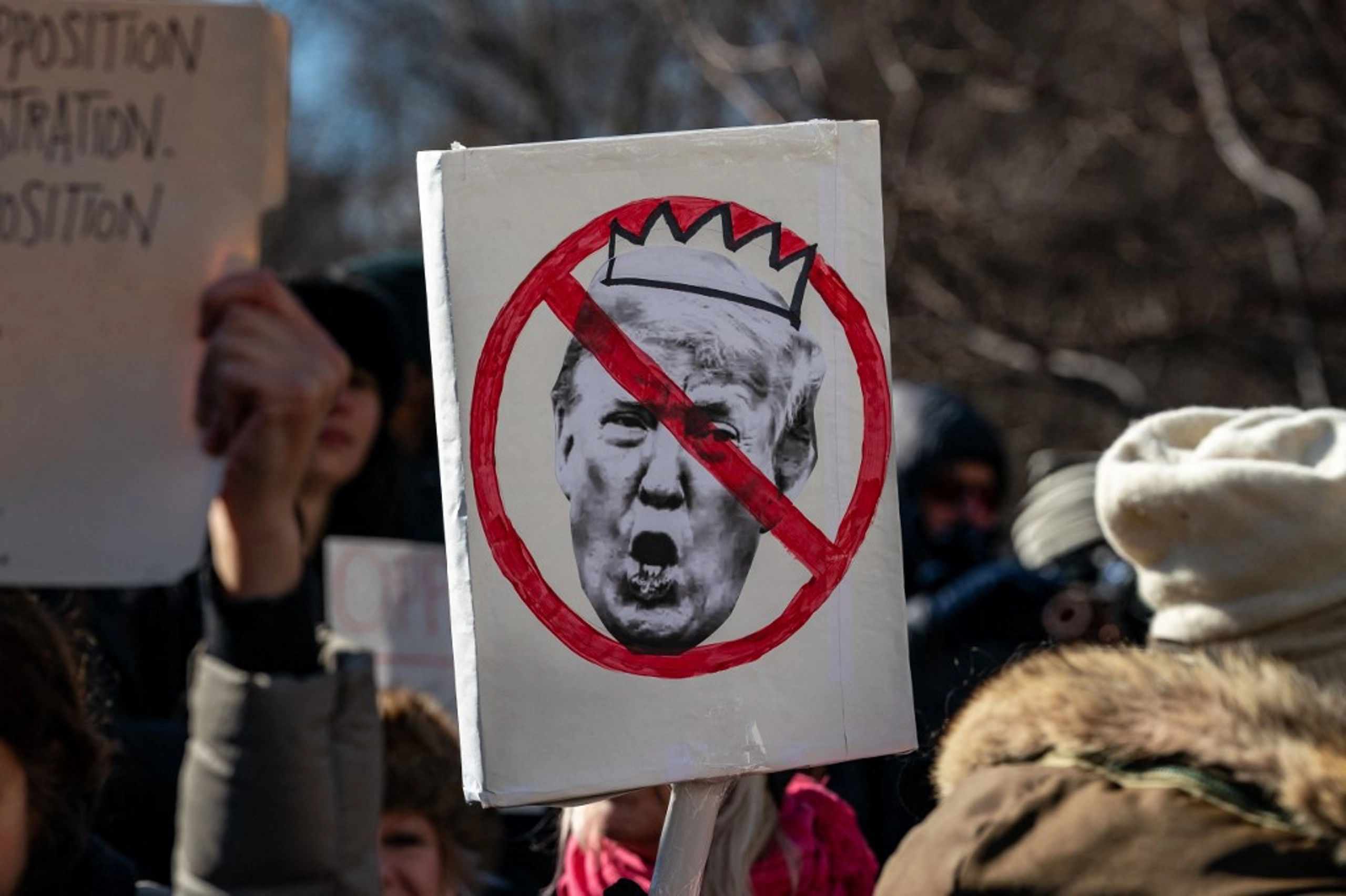
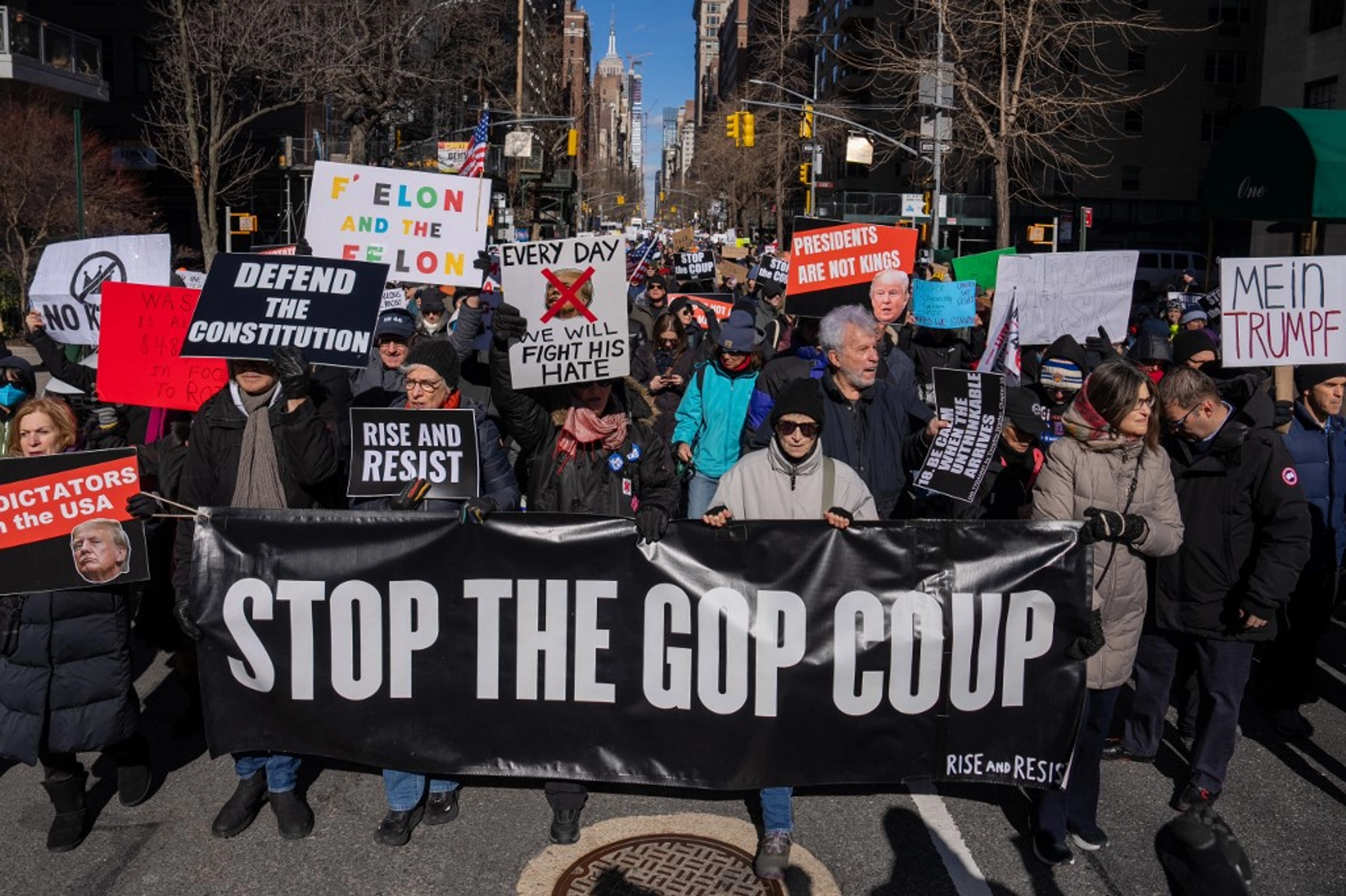
Demonstrators rally against US President Donald Trump during a protest, dubbed "Resist the Dictator," to mark President's Day on February 17, 2025, in New York. 
(Photo by David Dee Delgado / AFP)

Thousands of Americans have gathered in cities across the country on President’s Day to protest a wide-ranging array of policies and decisions coming out of US President Donald Trump’s new administration – including his approach to ending Russia’s invasion of Ukraine.

Less than a month into his second term in office, Trump has caused concern and even panic among American organizations and departments that he has targeted for closure – like USAID and the Department of Education – and shocked many observers with the broad powers he has unilaterally bestowed upon his special adviser, tech billionaire Elon Musk.

Demonstrators rally against US President Donald Trump during a protest,
 dubbed "Resist the Dictator," to mark President's Day on February 17, 2025, in New York. (Photo by David Dee Delgado / AFP)

He has also upended the US’s place in the global balance of powers. He shocked allies in Ukraine and Europe on Wednesday when he announced via his social media platform that he had had a “great” conversation with Russian President Vladimir Putin, breaking a three-year pause in diplomatic relations between the two countries that kicked off after the start of the full-scale invasion in February 2022.


Czech, Slovak FMs Dismiss Munich 1938 Comparison to Ukraine Talks
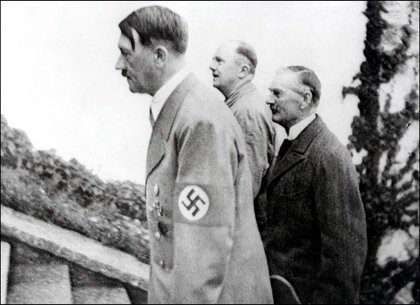
Several European leaders at a security conference in Munich last week drew parallels between the 1938 deal and the US and Russia meeting on ending Moscow’s war in Ukraine.

Peace negotiations appear to have begun during that call – without Kyiv, breaking a long-standing American promise to never negotiate about the war in Ukraine without Ukraine.

Images from states on Monday show people gathering to resist Trump’s policies, waving American flags and holding handwritten posterboards condemning the president’s recent actions as authoritarian. It’s the second national protest held since Trump re-entered the White House.

Common motifs seen on signs included: “Stop the GOP coup,” “Mein Trumpf,” and “No one voted for Elon Musk.”

The blue and yellow of several Ukrainian flags could also be seen rising above the crowd that gathered in Pittsburgh, Pennsylvania to protest the Trump administration on Monday. Rostyslav Boykowycz and his wife Kathy were among the protestors there to critique the president’s actions on Ukraine.

The Ukrainian plight is similar to the American plight at this time... There is a real possibility that the democratic system here will change. That’s apparent from what is happening. Not just the words, but what is happening.
Rostyslav Boykowycz, 86, Ukrainian-American citizen


Ukrainian President Volodymyr Zelensky has repeated that Ukraine will not acquiesce to any agreement concerning the war made in its absence, but speeches made by American officials at the Munich Security Conference last weekend stirred fears that Kyiv may have little choice.

Rumors about the agenda of a bilateral meeting between American and Russian officials on Tuesday in Saudi Arabia have not quelled those fears.

After an emergency meeting among European allies on Monday, UK Prime Minister Keir Starmer and French Prime Minister Emmanuel Macron announced that they would be willing to send troops under their national flags – but not as part of a NATO force – to maintain a peace settlement if necessary.

American officials said over the weekend that Ukraine had little chance of entering NATO or regaining its occupied territories and that US soldiers would not enter Ukraine under any circumstances.

Rostyslav, 86, told local NPR affiliate WESA that he and his wife were carrying Ukrainian flags to denounce Trump’s plan to “sell Ukrainians down the river.” He arrived in the US as a refugee from Ukraine after World War II and later became an architecture professor at Carnegie Mellon University.

Now he fears that authoritarianism is threatening both the US and Ukraine.

“The Ukrainian plight is similar to the American plight at this time,” he said. “There is a real possibility that the democratic system here will change. That’s apparent from what is happening. Not just the words, but what is happening.”


Katie Livingstone 
is an American journalist who has covered the war in Ukraine since 2022. Her work has been nominated for the Pulitzer Prize among other awards and featured in Rolling Stone, Business Insider, USA Today, and several other outlets. She is a Fulbright Fellow whose work has focused on illuminating the impact of conflict and foreign policy on people and societies across the world.
UPDATED

US tried to 'blackmail' Zelenskyy into signing the rare mineral deal in Munich. But, he stood his ground

The White House informed Zelenskyy that he would not be allowed to meet Vice-President J D Vance if he didn't sign the deal


Updated: February 18, 2025 

The US tried to intimidate Ukraine into signing a mineral resources deal in exchange for aid at the Munich Security Conference, according to a report. Ukrainian President Volodymyr Zelenskyy was told that he wouldn't be allowed to meet US Vice-President J D Vance if he didn't sign the deal.

However, Kyiv refused to bow to the pressure and was finally allowed to meet Vance, reported European Pravda.

The US blackmailing happened last week as Europe scrambled to respond to Vance's warning to European leaders. The US at that time was turning its attention towards pressuring Ukraine.

A meeting between J D Vance and Zelenskyy was to take place on Friday morning at the Commerzbank building designated for the American delegation. Though Vance was present and all arrangements made, the US suddenly informed everyone that the meeting was postponed. Many believed this was due to the delayed arrival of Secretary of State Marco Rubio.

However, the real reason was the high-stakes drama unfolding between Ukraine and the US.

The Ukrainian delegation was told by the White House to agree to US President Donald Trump's version of the mineral resources deal in exchange for aid. They would be allowed to meet Vance only if that pact was signed. The US delegation believed that the setbacks faced in Ukraine, including the current security situation, and the impending peace talks between Russia and the US would force Ukraine to toe the line. However, Ukrainian President Volodomyr Zelenskyy said no, the report said.

Kyiv was apprehensive about signing the deal as the draft was given to them just two days ago. The Ukrainian side needed time to study the deal and its economic implications. Ukraine had submitted a revised version of the deal, which was rejected by the US.

After Zelenskyy said no, the US dropped its insistence. "The harshness and pressure from US negotiators vanished as if by magic. The demand to sign the agreement was quietly dropped, and the meeting with Vance went ahead as if nothing had happened," the report added.

It also quoted an official of the Ukrainian side, who said the meeting was quite successful as Vance aligned with the Ukrainian position on many issues. "We arrived in Munich feeling pessimistic. But after the conference, our optimism has definitely grown," one member of the Ukrainian delegation told European Pravda.


Talks on Ukraine Without Ukraine? Ukrainians React to Latest Peace Deal

After a week of intense talks on both sides of the Atlantic, Kyiv Post talks to Ukrainians in the capital about their feelings on a potential US-brokered peace deal and what it means for Ukraine.
TODAY

US President Donald Trump reached out to Russian President Vladimir Putin last week to discuss ending the war in Ukraine – without letting Kyiv know.

The administration of Ukrainian President Volodymyr Zelensky reportedly learned about the start of the talks between the US and Russia on social media, leading to serious concerns among partners about how far Trump is willing to negotiate on behalf of Ukraine without Ukraine’s input.

The call was the first time leaders from the two countries have spoken since the Kremlin launched its full-scale invasion of Ukraine in 2022, but appears to have been just the start of a growing diplomatic relationship between the two countries.

Later this week, high-level Trump and Putin officials will meet in Saudi Arabia to continue the negotiations. Kyiv has not been invited to these talks either.

How do Ukrainians feel about these rapid-fire developments towards a peace deal brokered by the US?

In our latest video, Kyiv Post’s Corrie Nieto asks residents in the capital what they think.


US-Ukraine Deal: Worse Than WWII Reparations?

World » UKRAINE | February 18, 2025, Tuesday //  NOVINITE

Bulgaria: US-Ukraine Deal: Worse Than WWII Reparations?


The United States attempted to pressure Ukraine into agreeing to a burdensome deal regarding its natural mineral resources, in exchange for continued military assistance, reports The Telegraph. The draft agreement proposed by the Trump administration stipulated that the U.S. would receive half of the revenue from resource extraction in Ukraine and have control over future licenses for mineral exploitation. The terms of the deal, which were compared to post-World War II reparations imposed on defeated aggressor states, were seen as highly advantageous to the U.S. and detrimental to Ukraine’s sovereignty.

The deal required Ukraine to grant the U.S. a significant stake in its rare-earth minerals, oil, gas, and other resources. However, it provided Ukraine with no security guarantees, leading President Zelensky to refuse signing the agreement. U.S. officials attempted to pressure Ukraine into agreeing by demanding that the deal be signed at the Munich Security Conference in February 2025. When Zelensky held firm, the U.S. backed off, allowing a meeting with U.S. Vice President JD Vance to proceed.

Despite the failure of the resource-sharing negotiations, the peace talks in Munich saw some unexpected progress. Vance aligned with Ukraine’s position on the need for a lasting peace, signaling that the U.S. might be more willing to consider Ukraine's long-term security needs. The outcome suggested that Ukraine could leverage growing European support in response to the tensions between the U.S. and Europe.

The draft agreement, which did not include financial aid or military assistance for Ukraine, was seen as heavily skewed in favor of private U.S. investors. Critics argued that the deal’s terms, such as the U.S. receiving 50% of revenues, would have placed Ukraine in a vulnerable position. The resource-sharing arrangement would have diverted significant economic benefits away from Ukraine, further exacerbating its struggles during the ongoing conflict.

Following Ukraine’s refusal to sign, discussions regarding the agreement have been put on hold. However, both sides agreed to continue working on a revised deal, with Ukraine still open to negotiating terms that would benefit its economy and security. The standoff highlighted the complexities of balancing national interests and international alliances in a volatile geopolitical landscape.

Sources:

  • The Telegraph
  • Ukrainska Pravda
  • European Pravda
  • Reuters

Elon Musk shares video from sanctioned

state media of Russian delegation’s arrival,

calls them ‘competent leadership’

, February 18, 2025
Source: Meduza

Trump advisor and billionaire Elon Musk commented on the arrival of Russian officials in Riyadh for preparatory talks on Ukraine.

“This is what competent leadership looks like,” Musk wrote on his social media platform X, attaching a video of the Russian delegation’s arrival, filmed by the state-run outlets RIA Novosti and VGTRK. Both RIA Novosti’s parent agency, Rossiya Segodnya, and VGTRK are under U.S. sanctions.

On February 17, members of the Russian delegation arrived in Riyadh, Saudi Arabia, to lay the groundwork for U.S.-Russia negotiations. Among them was Kirill Dmitriev, the head of Russia’s sovereign wealth fund, who has already held initial meetings with members of Trump’s team. Foreign Minister Sergey Lavrov and presidential aide Yuri Ushakov are also set to take part in the talks.

Ukrainian President Volodymyr Zelensky said on February 17 that Kyiv was not aware of the negotiations in Saudi Arabia, would not participate, and would not recognize any of their outcomes.


OPINION: Trump is Selling Ukraine Down the River, and Europe With It

The Trump administration has forced us to face up to harsh new realities and their challenges for Ukraine, Europe and the world generally.

So far, from the Trump administration, it is a one-way stream of concessions to Russia.


By Timothy Ash
February 18, 2025, 
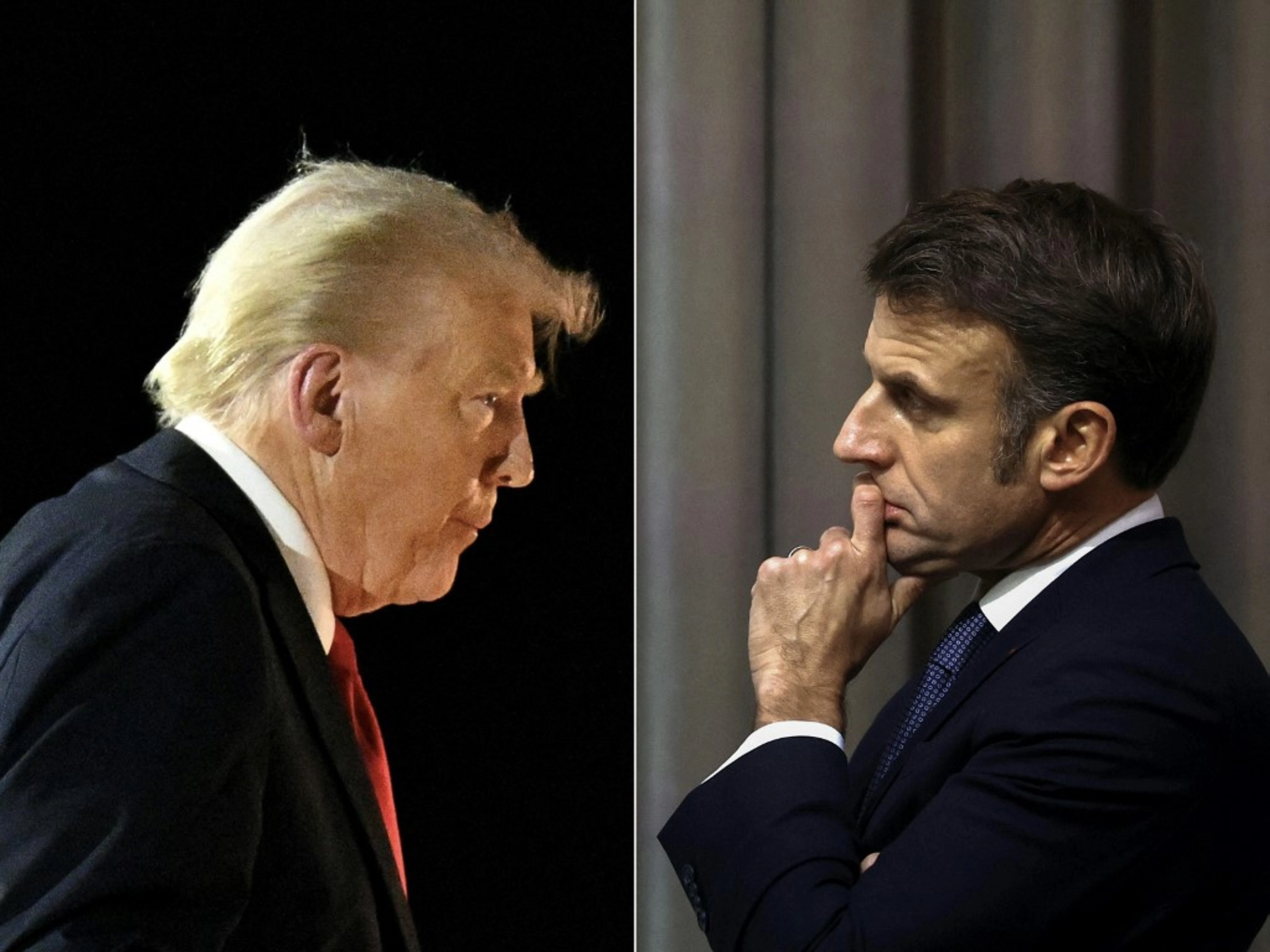
(COMBO) This combination of pictures created on February 17, 2025 shows L-R, US President Donald Trump and France’s President Emmanuel Macron in (Photo by ROBERTO SCHMIDT and Yoan VALAT / various sources / AFP)

As many others have now concluded, a pretty remarkable Munich Security Conference. Indeed, this year’s MSC was perhaps as defining an event as was Putin’s last appearance back in 2007 which I think marked a shift in Russian policy towards the West in a malign direction. The result of that was the subsequent invasion of Georgia in 2008 followed then by his first invasion of Ukraine in 2014, and then the full-scale invasion of Ukraine in 2022.

Hegseth, Vance et al sent a clear message to Europe that it can no longer rely on the US security backstop. That penny, or dollar cent, dropped, but also with Vance’s speech, I think the euro cent also finally dropped that Europe does not share the same values nor interests as Trump’s USA.

Europe does not share the same values nor interests as Trump’s USA.

On the values front, Europe values much more the rule of law, the fight against corruption and kleptocracy, and we can debate free speech herein (Europe has limitations on race hate speech, perhaps a reflection of its own history with regards to the Holocaust, while in the US free speech also has limits when it comes to criticism over Gaza policy).

The longer-term conclusions for Europe have surely to be:a) Europe has to plan to be responsible for its own defense, ex the USA, so NATO is dead, and hence European countries will have to massively increase defense spending, from 2% of GDP, to 3% and perhaps on to 5%.
b) Europe might need to look for alternative alliances and security arrangements, defense cooperation, including perhaps with Turkey, the Gulf states, and even China - note given that the Trump - Putin bromance might be part of a “Reverse Nixonian”, i.e., a new U.S. - Russia alliance against China, pushed I think by likes of Dugin, Carlson, et al.

But building an alternative security/defense arrangement to save Europe will take time, and what to do with the near and present danger from Russia?

The assumption from Europe there has to be that Putin will not stop in Ukraine - surely prudence suggests Europe has to plan for the worst, so future Russian encroachments beyond Ukraine, into Moldova, the Baltics states, et al.


The Art (and Pitfalls) of a Ukraine Deal
Talks between the US and Russia have begun. But excluding Ukraine at any stage does not bode well for the security guarantees necessary to prevent Russian aggression in the future.


The best line of defense has to be to ensure Ukraine does not lose or still survives as a buffer for Europe to give it time to shore up its own defenses.

The challenge herein is Trump’s current peace overtures to Putin, and the looming Putin-Trump summit in Saudi Arabia. Having given away much of the leverage the West had over Putin (NATO membership, territorial concessions, and US security guarantees for Ukraine or for a Western peacekeeping force for Ukraine), it is hard to see what Trump can deliver which will now ensure Ukraine’s security.

What is Putin going to give as a concession? So far, from the Trump administration, it is a one-way stream of concessions to Russia.

So far, from the Trump administration, it is a one-way stream of concessions to Russia.


Featured


Ukraine’s Armed Forces Deserve Better Than Broken Promises, Betrayal


Trump’s Secret Peace Deal with Putin? Ex-Trump Insider Reveals All


Ukraine’s ‘Madyar’s Birds’ Take Down Russia’s ‘Invulnerable’ Drones

Putin will surely see Trump as a soft touch, a weak, incompetent negotiator, and will push for maximum concessions from Ukraine, including limitations on its future military capability, regime change in Kyiv, or even constitutional changes in Ukraine to essentially ensure Russia’s veto on its future orientation.

That is a recipe for state failure in Ukraine. Herein either Russia will exploit the limitations on Ukraine’s future military capability to invade again, or the lack of security in Ukraine will ensure its failed future economic development, which will mean future economic, social and political weakness, again to be exploited by Putin.

The nightmare now for Europe is Ukraine’s state failure, which would mean tens of millions of Ukrainians refugees moving West (straining the political, social and economic fabric of Europe, further fueling the far right), and Russia subsuming Ukraine’s now enormous and effective military industrial complex. The combination of Russia and Ukraine’s military industrial complexes - first and second now in Europe - would be an absolutely existential threat to Europe.

No doubt European politicians have argued the above to Trump until they are blue in the face, but clearly, Trump has few cares.

He clearly just sees Ukraine, like Gaza, as a real estate asset, an asset to be leveraged, which was I think seen by the quite remarkable trip last week of Scott Bessant, US Treasury Secretary to Kyiv, armed with an agreement that Ukraine had to sign away half its natural resource wealth for a very vague future commitment of US support.


Actually, as far as Trump is concerned this is all just pay back for the hundreds of billions of dollars of US support already given to Ukraine following the full-scale invasion. Let Trump not let actual facts get in the way of his argument - given well established data suggests that US support has, as yet, been less than $100 billion. Pretty obscene that a country that has lost hundreds of thousands of people dead and injured in the defense of Western liberal market democracy is now being sent an invoice for the pleasure.

When faced with the likely Trump - Putin peace plan, which will likely involve no concessions to Ukraine, and particularly not on the most important point for Ukraine, its future security, I think Ukraine will be minded to walk away from any deal. Why would Ukraine accept any ceasefire that fails to provide any assurance as to its future security?


Why would Ukraine accept any ceasefire that fails to provide any assurance as to its future security?

Trump clearly wants a speedy deal - to secure his Nobel prize - then Ukraine likely will use its leverage while it has it and will play hard to get. It still has close 1 million troops on the battlefield, an ability to produce 40% of its own munitions, considerable munitions and financing (over $140 billion available to it) in reserves, and the prospect that Europe still has an incentive in ensuring it does not lose - as Europe knows it will be the next to feel the sharp end of a Russian bayonet. Europe will continue to fund Ukraine’s defense and hope to secure munitions to assist therein from wherever globally.

For Russia, the above means an extended war, little sanctions relief from Europe, at least, and the reality that while Trump is likely to step aside from supporting Ukraine, Russia still has to take the victory, on the battlefield. This still suggests years of war and sacrifice for Russia, and Russians. And the longer the war goes on, the weaker still Putin will look.

And the leverage Ukraine has will be in embarrassing the US, and Trump, as being wimps in the face of an aggressor, and of damaging US alliances, and trust in the US as a partner, for the bigger US battle for hegemony with China.

As is, Ukraine has little incentive to play ball with Trump’s sell out (down the river) peace plan.

The views expressed in this opinion article are the author’s and not necessarily those of Kyiv Post.

Reprinted from the author’s @tashecon blog. See the original here.


U.S.-Russia talks on Ukraine crisis omit key players: Ukraine and Europe

CGTN


U.S. Secretary of State Marco Rubio meets with Saudi Arabia Foreign Minister Faisal bin Farhan in Riyadh, Saudi Arabia, February 17, 2025. /VCG

U.S. Secretary of State Marco Rubio arrived in Riyadh on Monday, with reports indicating that he will begin talks with Russian officials on the Ukraine crisis there on Tuesday, excluding key players in the conflict: Ukraine and Europe.

In addition to Rubio, U.S. Middle East Special Envoy Steve Witkoff and National Security Advisor Mike Waltz are expected to attend the talks. Russian Foreign Minister Sergey Lavrov and Russian Presidential Assistant Yuri Ushakov will represent Russia in the negotiations.

Ukrainian President Volodymyr Zelenskyy announced on Monday that Ukraine will not participate in the U.S.-Russia talks and will not accept any outcome that excludes Ukraine.

Currently in the United Arab Emirates (UAE), Zelenskyy is set to visit Saudi Arabia soon. He clarified that his visit to Saudi Arabia on Tuesday "has no connection" to the U.S.-Russia talks, focusing instead on discussions to lower oil prices with Saudi Arabia. However, he noted that he would use the opportunity to learn about the progress of the U.S.-Russia negotiations through Saudi officials.

Concerned about being sidelined in the negotiations, Europe leaders have taken action.

French President Emmanuel Macron convened an emergency meeting in Paris on Monday, bringing together leaders from NATO, the European Commission, and key European countries, including France, Germany, Britain, Poland, Spain, Italy, Denmark, and the Netherlands, to coordinate a unified European response ahead of the Russian-U.S. talks.

Chen Yu, deputy director of the Eurasian Institute at the China Institute of Contemporary International Relations, told CMG that Europe considers Ukraine as a core interest. He noted that Europeans are worried that the current U.S.-Russia approach, bypassing Europe, could undermine European interests and lead to a peace solution that sacrifices concerns of Ukraine and Europe. Additionally, Europe fears this could result in further expansion of Russian influence in the West.

Ukrainian President Volodymyr Zelenskyy (L) meets with the President of the United Arab Emirates Sheikh Mohammed bin Zayed Al Nahyan in Abu Dhabi, United Arab Emirates, February 17, 2025. /VCG

After the meeting, Macron spoke with U.S. President Donald Trump and Ukrainian President Zelenskyy. He later tweeted that Europe seeks a "strong and lasting peace" for Ukraine, one that includes "strong and credible security guarantees" for the Ukrainian people.

German Chancellor Olaf Scholz also reiterated Germany's ongoing support for Ukraine, rejecting the notion that Ukraine should accept "everything that is presented to it under any conditions." He emphasized the importance of unity between U.S. and European allies in safeguarding European security. "There must be no division of security and responsibility between Europe and the United States," Scholz stated. "NATO is based on the principle of always acting together and sharing the risks. This must not be called into question."

UK Prime Minister Keir Starmer, speaking outside the Ukraine summit in Paris, called the future of Ukraine an "existential" issue for Europe. He suggested that Britain may consider deploying forces to Ukraine if a lasting peace agreement is reached.

However, Chancellor Scholz dismissed the idea of European countries sending ground troops to Ukraine, calling it "totally premature." He did confirm that European nations are prepared to allocate "at least two percent" of their GDP to strengthen Europe's defense.

Chen explained that Europe is pushing to play a more prominent role in resolving the Russia-Ukraine conflict amid ongoing U.S.-Russia negotiations. However, there are significant divisions within Europe regarding security guarantees for Ukraine and the potential for troop deployment after a ceasefire.

He pointed out that any realistic peace settlement would likely address Ukraine's security concerns, which are central to the country's interests. If such a solution requires Europe to take on more responsibilities, Europe may be willing to do so, including engaging in discussions about troop deployment. However, he cautioned that the situation remains complex, with substantial differences in positions, requiring ongoing observation of how events unfold.

OPINION: The Art (and Pitfalls) of a Ukraine Deal
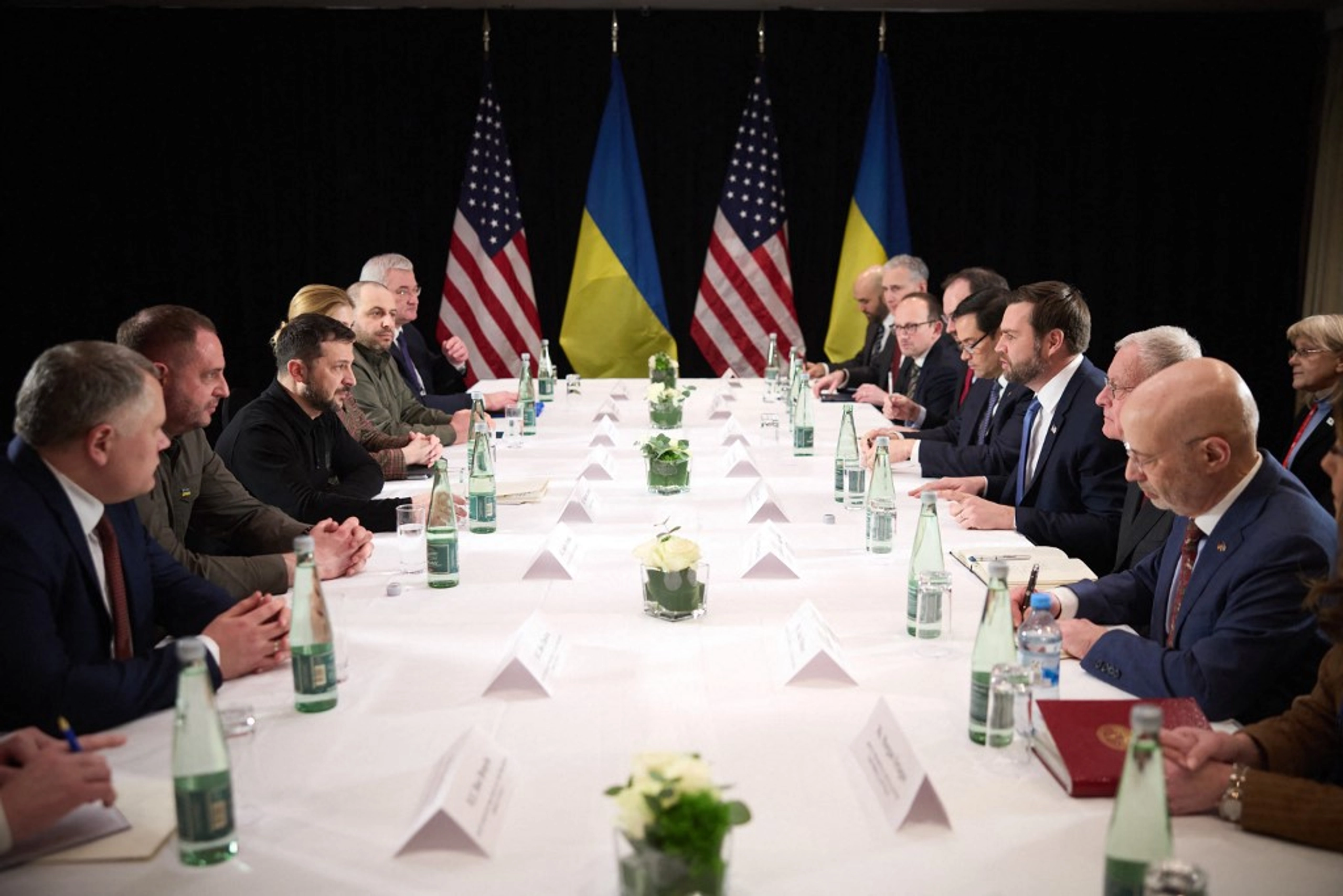
Talks between the US and Russia have begun. But excluding Ukraine at any stage does not bode well for the security guarantees necessary to prevent Russian aggression in the future.

By Lord Ashcroft
KYIV POST
February 18, 2025

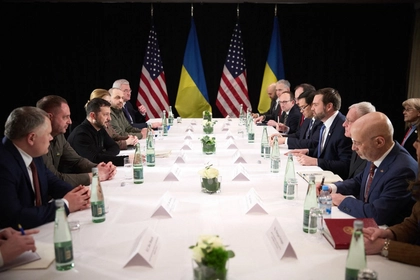
This handout photograph taken and released by Ukrainian Presidential Press Service in Munich, Germany on Feb. 14, 2025 shows Ukrainian President Volodymyr Zelensky (3L) and US Vice President JD Vance (3R) talking on the sidelines of the Munich Security Conference (MSC).
 (Photo by Handout / UKRAINIAN PRESIDENTIAL PRESS SERVICE / AFP)

As discussions on Ukraine’s future intensify, one recurring notion in diplomatic circles is that Donald Trump has set his sights on a Nobel Peace Prize by negotiating an end to the war. However, if he mishandles this delicate process, that prize will remain far beyond his reach. If his proposed deal leaves Ukraine vulnerable, fractures NATO, or emboldens further Russian aggression, his legacy will not be peace – it will be appeasement.

As my recent polling found, while most Ukrainians believe Trump’s election will mean a swifter end to the war, many also fear this will be on terms less favorable to Ukraine. The recent remarks by US Secretary of Defense Pete Hegseth do not inspire confidence. He stated unequivocally that a return to Ukraine’s pre-2014 borders is off the table. Does this mean the United States is prepared to disregard the Belovezh Accords of 1991, which affirmed Ukraine’s sovereignty within internationally recognized borders?

More troublingly, it would mark yet another broken American commitment to Ukraine – following the Budapest Memorandum of 1994, which assured Ukraine’s security in exchange for surrendering the world’s second-largest nuclear arsenal. A failure to uphold these agreements sends a disastrous signal, not just to Russia but to potential aggressors worldwide.

Ukrainian President Volodymyr Zelensky has made it clear that no deal will be accepted without Ukraine’s involvement. He has also implied that the US can no longer be fully trusted to align with European interests in the region. Gen. Keith Kellogg, Trump’s top security envoy, recently echoed the necessity of Ukraine’s presence at the negotiating table – but was noticeably vague about European involvement. Excluding Europe from a settlement on European security would be a serious and costly mistake.


First US-Russia Meetings Held in Riyadh Ahead of Official Saudi Talks
The head of the Russian Direct Investment Fund revealed that he has already met with members of US President Donald Trump’s team in the Saudi capital.


If a peace deal is to have any legitimacy, it must satisfy several key conditions.
Advertisement

The only real assurance of lasting peace for Ukraine is NATO membership.

First, it cannot leave Ukraine as an exposed buffer state, vulnerable to another Russian invasion in the coming years. A ceasefire that merely freezes the conflict without robust security guarantees would be a repeat of the failed Minsk agreements of 2014 and 2015, which Moscow systematically violated. The only real assurance of lasting peace for Ukraine is NATO membership. Anything short of that leaves the door open for further Russian aggression.

Secondly, any peace deal must consider the reality on the ground. Russia’s economy, despite Western sanctions, has been kept afloat by its ability to bypass restrictions – particularly through the sale of oil to India and other third parties. If Trump is serious about exerting pressure on Moscow, he must address these loopholes rather than force Ukraine into an unfavorable settlement. He must also understand that the very survival of Ukraine as a sovereign state depends on continued military and economic support.

Meanwhile, as these negotiations develop, Europe must step up. The continent has long relied on American military backing, but with Washington potentially shifting its stance, European nations must take responsibility for their own security. Trump has already made it clear that he expects Europe to contribute more to defense, and rightly so. Poland has led by example, committing 5% of its GDP to defense, while the Baltic states are set to reach this benchmark by next year. But others, including key Western European powers, have lagged behind. If Europe wants a real say in shaping Ukraine’s future and ensuring long-term stability on the continent, it must match its words with action.

The recent Munich Security Conference reflected these tensions. While European leaders expressed continued support for Ukraine, the reality is that decisive commitments on increased defense spending and military aid remain insufficient. In the meantime, senior figures from the Trump administration are reportedly in Saudi Arabia to engage in talks with Russian and Ukrainian negotiators. National Security Advisor Mike Waltz, Secretary of State Marco Rubio, and Middle East envoy Steve Witkoff are expected to push for an agreement in the coming days.

We must reject the notion that a rushed, ill-conceived deal is the only path forward.

Zelensky, however, remains deeply skeptical of Putin’s intentions, and for good reason. Russia has shown time and again that it does not honor ceasefires or diplomatic agreements. The OSCE monitoring missions that oversaw previous ceasefire lines were ignored and rendered powerless in the face of Russian violations. So, the critical question remains: who will enforce any new ceasefire? Will there be peacekeeping troops on the ground? If so, which nations would be willing to send them? And what happens if – when – Russia violates the terms again?

These are fundamental concerns that must be addressed before any deal is signed. A flawed agreement that fails to ensure Ukraine’s security could lead to an internal crisis, possibly even civil unrest. The thousands of battle-hardened Ukrainian soldiers who have sacrificed so much will not accept a settlement that undermines their cause. Any agreement that leaves Russia with the capacity to strike again, or forces Ukraine into concessions that betray its sovereignty, will not bring peace—it will simply set the stage for the next war.

The stakes could not be higher. We must reject the notion that a rushed, ill-conceived deal is the only path forward. A just peace must be one that guarantees Ukraine’s long-term security, holds Russia accountable, and reinforces the strength of Western alliances. Anything less would be a betrayal of everything Ukraine has fought for – and would all but guarantee that history repeats itself.


Lord Ashcroft KCMG PC is an international businessman, philanthropist, author and pollster. For more information on his work, visit lordashcroft.com. Follow him on X/Facebook @LordAshcroft.

The views expressed in this opinion article are the author’s and not necessarily those of Kyiv Post.


Trump’s Ukraine Envoy ‘Clarifies’ What Europe’s Seat at the Table Means

“If you believe there are going to be thirty-three people sitting at the same table (…) in all probability, the answer is no, not at all,” Kellogg explained.


by Euractiv | February 18, 2025,
Keith Kellogg, National Security Advisor to US Vice President Mike Pence, speaks during a press briefing on September 22, 2020, in the Brady Briefing Room of the White House in Washington, DC. (Photo by SAUL LOEB / AFP)

European views will be taken into account and Ukraine will not be pressured into a deal, the US envoy for Ukraine and Russia told a group of reporters at NATO HQ.

Keith Kellogg’s two-day visit to Brussels comes amid growing unease among European allies that a future Ukraine peace deal would be struck over their and Kyiv’s heads, as neither of them is expected to participate in the US-Russia talks in Riyadh, Saudi Arabia, tomorrow.

Ukraine’s President Volodymyr Zelenskyy said over the weekend that Kyiv would not agree to a deal that would be detrimental to his country or that resulted from negotiations in which he didn’t participate.


Kellogg said “nobody” would impose decisions on Zelenskyy as the “elected leader of a sovereign nation” and the decision about striking a deal would ultimately be the Ukrainians’.

Trump’s Ukraine envoy is expected to travel to Kyiv tomorrow night for a three-day visit, where he is scheduled to meet with the Ukrainian leader. He will then return to Washington and continue a tour of NATO capitals in the next few weeks.

At the table

Asked by Euractiv about his comments made on stage in Munich that “Europeans would not be at the table,” Kellogg clarified that this would not mean European concerns would not be taken into account.

“If you believe there are going to be thirty-three people sitting at the same table – exactly the same table – during the discussion, in all probability, the answer is no, not at all,” Kellogg said.


Trump is Selling Ukraine Down the River, and Europe With It
The Trump administration has forced us to face up to harsh new realities and their challenges for Ukraine, Europe and the world generally.

“If ‘at the table’ means that your views are heard, understood, transmitted, the answer is absolutely,” he said.

Washington sent a questionnaire to European capitals earlier last week to determine what resources they would be ready to contribute to a possible future peacekeeping force.

“Before any type of discussion and security guarantees is finalized, of course, those discussions are going to take place,” Kellogg said.

“Answers to those questions will be determined as you come up with the final process,” he added, throwing the ball back to the Europeans’ court.

Status concerns

Kellogg’s absence from the US negotiating team travelling to Riyadh raised questions over his leverage on Trump’s efforts to draw up a peace proposal – and how European input will find its way into them.

Responding to concerns about his status in the process, Kellogg said, “That doesn’t mean that the team is not fully synced.”

“They are going to come out of the Middle East, I will come out of Ukraine – we will go back to being synched up,” he said, adding he had a joint conference call with the negotiating team over the phone after Munich.

The team includes Secretary of State Marco Rubio, National Security Adviser Mike Waltz and Middle East envoy Steve Witkoff.

See the original report for Euractiv by Alexandra Brzozowski here.


China snow village apologises for fake cotton snow


Fake snow at the Chengdu Snow Village.
PHOTO: Sina Weibo

REUTERS
February 17, 2025 

HONG KONG — A tourist village in China's southwestern province of Sichuan famed for its scenic snow landscape said it was sorry for using cotton wool and soapy water to create fake snow after online criticism from visitors went viral.

In a post on its official Wechat account on Feb 8, the Chengdu Snow Village project said during the Lunar New Year holiday at the end of January, the weather was warm and the snow village did not take shape as anticipated.

China is facing hotter and longer heat waves and more frequent and unpredictable heavy rain as a result of climate change, the country's weather bureau has warned.


"In order to create a snowy atmosphere the tourist village purchased cotton for the snow...but it did not achieve the expected effect, leaving a very bad impression on tourists who came to visit," the Chengdu Snow Village project said in the statement.

After receiving feedback from the majority of netizens, the tourist area began to clean up all the snow cotton.

The village said it "deeply apologises" for the changes and that tourists could get a refund. The site has since been closed.

Photos on Wechat showed large cotton wool sheets strewn about the grounds, only partially covering leafy areas. A thick snow layer appeared to blanket the houses in the zone but as you got closer, it was all cotton, said one netizen.

"A snow village without snow," said another user.


"In today's age of well-developed Internet, scenic spots must advertise truthfully and avoid deception or false advertising, otherwise they will only shoot themselves in the foot."
BBC’s headquarters targeted by Palestine Action Group

Group targets corporation for second time

Ilayda Cakirtekin |18.02.2025 - TRT/AA


ISTANBUL

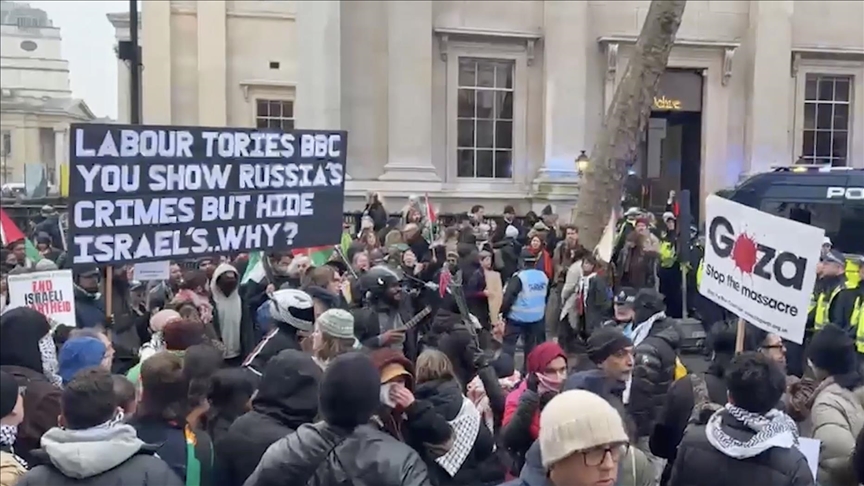
The BBC’s London headquarters were splashed with red paint Monday by the Palestine Action Group.

The group said that they also broke windows to protest the “BBC’s ongoing complicity in the genocide of Palestinians through its entrenched pro-Israel bias.”


“The BBC’s biased reporting isn’t a simple case of poor journalism – it’s a matter of life and death. By downplaying Israeli war crimes, the BBC is complicit in the genocide unfolding in Gaza,” said Palestine Action.

It pointed to the media’s role in fostering global complicity, adding the BBC had blood on its hands.

It noted that the latest action was a key part of a larger effort to hold them responsible.

“We will not stand by as the BBC sanitizes genocide,” the group added.

The BBC’s headquarters had been sprayed with red paint by the group back in 2023 in protest against its ongoing reporting on the Israeli-Palestinian conflict, attracting criticism for not being sufficiently balanced.

Despite promising climate research, ‘wolves won’t be back in Scotland anytime soon’ say experts


Copyright Daniel Allen/ Rewilding Europe/

By Jen Marsden
Published on 18/02/2025 -

Could reintroducing wolves be a viable solution to address the climate crisis? Rewilding experts aren’t convinced.

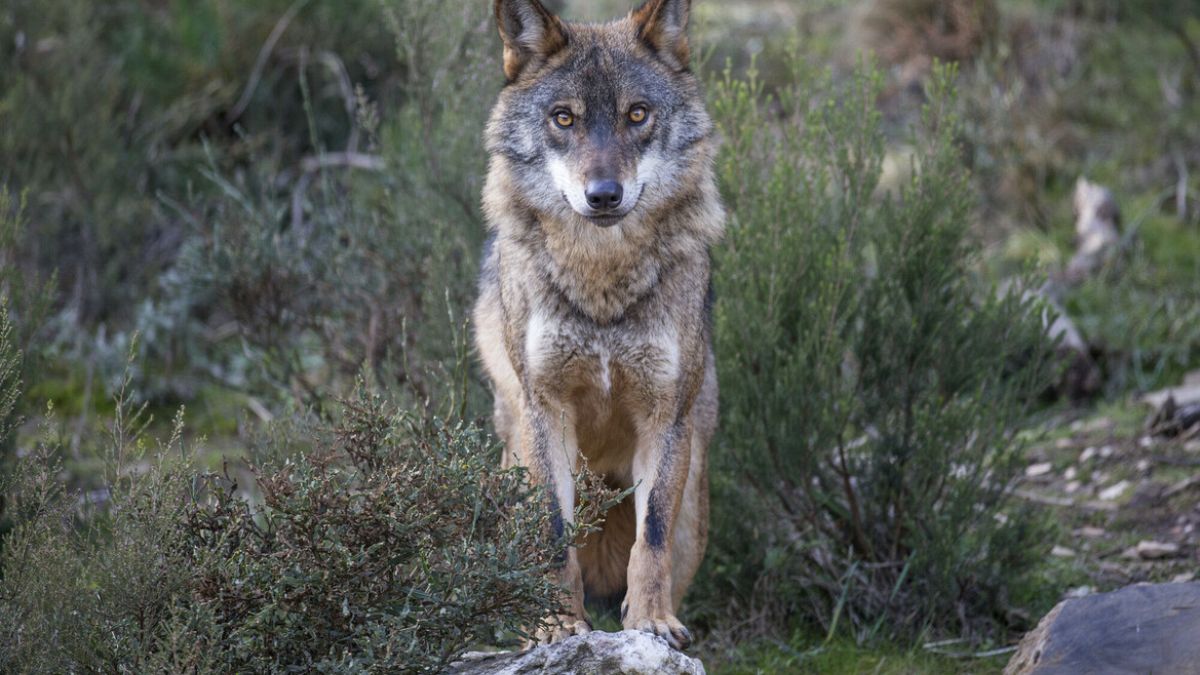
Reintroducing wolves to Scotland could help native woodland to expand and combat climate change, a new study by researchers at the University of Leeds concludes.

Central Europe has already seen several environmental success stories as wolf populations have “naturally recovered” without a formal reintroduction.

Wolves roamed freely around Britain for many centuries, as chronicled by Roman and later Saxon writers, but were hunted to extinction in Scotland around 250 years ago.

Despite this first-of-a-kind study, local rewilding charities in the UK are dubious that wolves are the best approach to mitigate carbon emissions, particularly with concerns over human conflict and the coexistence of predators and prey.

Richard Bunting, a spokesperson for UK rewilding charities Trees for Life and Rewilding Britain, says that the new study is “much-needed research”, particularly when looking at the “significant positive impact on woodland expansion and carbon storage”.

But, he adds, “substantial stakeholder and public engagement would be essential before any wolf reintroduction could be considered.”
Wolves would help expand native woodland by managing red deer populations

The recent University of Leeds study used a predator-prey model to determine the impact of reintroducing wolves to four areas classed as “Scottish Wild Land” in the Cairngorms and the Scottish Highlands. In these areas red deer eat tree saplings and, in turn, suppress the natural regeneration of woodland.

It’s the first time such a study, which was published in the journal Ecological Solutions and Evidence, has looked at how reintroducing wolves impacts woodland expansion and carbon storage in the UK.

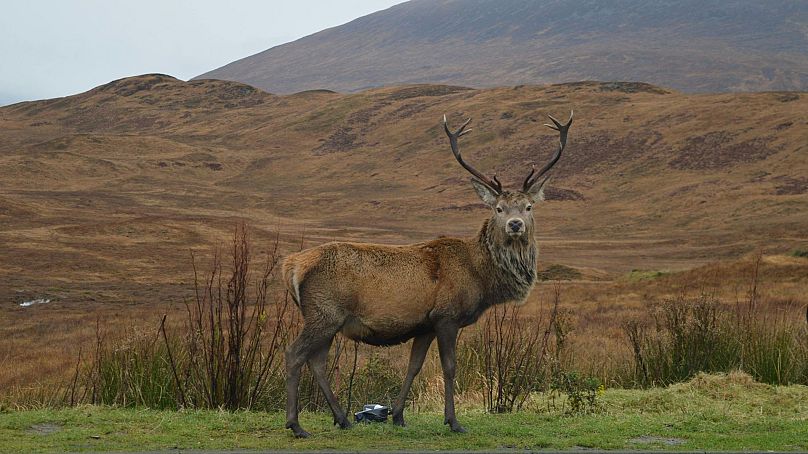
Even with local management measurements, red deer in Scotland have flourished in the last century without any natural predators to keep their numbers in check. The current population is estimated to be around 400,000.

A majestic red deer in the Scottish Highlands
Canva/Suman Shafi

This has led to a long-term decline and loss of native woodland - just 4 per cent of Scotland is covered, which is one of the lowest figures in Europe.

The team found that the wolf population would naturally grow to 167 wolves, which in turn could control red deer populations to a level that would allow trees to regenerate naturally.


This would allow native woodland to expand to an area that could capture one million metric tonnes of CO2 each year. Storing this much carbon would meet about 5 per cent of the British woodland carbon removal target, recommended by the UK’s Climate Change Committee as necessary to reach net zero by 2050.

Based on the research team’s model, each wolf would be responsible for an annual carbon uptake capability of 6,080 metric tonnes of CO2, meaning under current carbon valuations, each wolf would be worth £154,000 (€185,231).
Climate and nature recovery go hand-in-hand says expert

The lead author of the report, Professor Dominick Spracklen from the University of Leeds' School of Earth and Environment, highlighted that “the climate and biodiversity crises cannot be managed in isolation.”

"We need to look at the potential role of natural processes such as the reintroduction of species to recover our degraded ecosystems and these in turn can deliver co-benefits for climate and nature recovery."

The study also mentions other benefits to reintroducing wolves, such as fewer deer-related traffic collisions, reducing the cost of deer culls, and less risk of Lyme disease.
RelatedOne surprising benefit of recovering wolf populations in Europe is ecotourism. Spain now has a thriving wolf-watching tourism industry and accounts for 46 per cent of overnight stays in the mountain range of Sierra de la Culebra. There is also potential for this to happen in Scotland.

Europe has seen a dramatic wolf recovery in the last decade

Once the top predator species in Europe, wolves were hunted and persecuted to extinction in Western Europe. Small populations remained in areas of Italy, Poland, and Bulgaria.

Despite this Europe has seen a huge increase in its wolf population in recent years. This is not due to any official reintroduction, but rather a ‘natural recovery’, says Rewilding Europe.

In the 1990s, wolf hunting was banned in Poland. The native wolf population has grown over the last few decades, spreading west to areas of Germany and even the Netherlands, Denmark, and France.

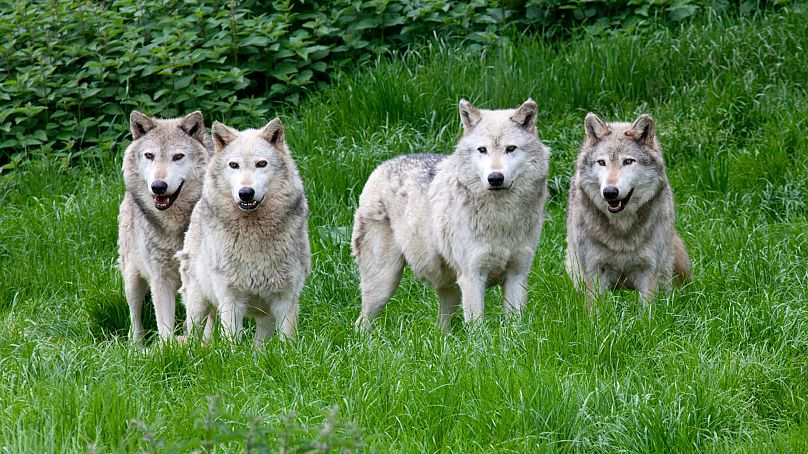
The total wolf population is now increasing across Western Europe by about 25 per cent each year and is thought to exceed 12,000, occupying 67 per cent of their historical territory.

A pack of four European wolves playing in grass
Canva/AlanJeffery

With more public acceptance of the predators, European legislation has also grown to protect them against poaching and exploitation. In a recent survey of 10,000 Europeans, 68 per cent of Europeans said that wolves should be strictly protected and 72 per cent agreed that they have a right to co-exist.

In addition to red deer, wolves also prey on roe deer, and to a lesser extent, wild boar and beavers.

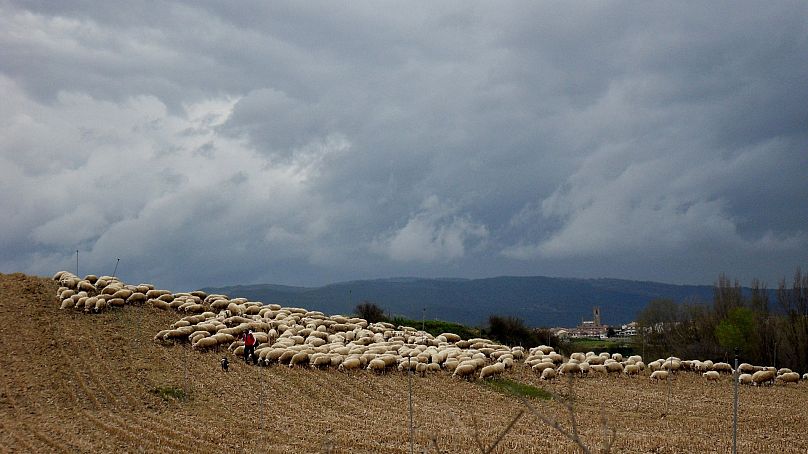
A field of sheep in Spain
Canva/schnurzipurz

However, while there are concerns that they prey on livestock in some situations, a 2018 study suggested that wolves kill around 31,000 livestock in Europe each year, mostly in areas where the availability of natural prey is low. EU data shows that wolves kill only about 50,000 of Europe's 68 million sheep and goats each year.
Wolves may not be the most suitable species for reintroduction to Scotland

The idea to reintroduce wolves to the Scottish Highlands first began in the late 1960s. It gained wider publicity after the successful reintroduction of both red wolf and grey wolf species into North American national parks in the late 1980s to mid-1990s.

However, most discussions around reintroducing apex predators to Scotland – and particularly wolves – come with many objections within rural communities, particularly from estate gamekeepers, livestock farmers, and deer stalkers.

There have also been concerns that wolves pose a danger to humans, yet in Europe, there have been just 11 non-fatal attacks during a period of 18 years. This is low in comparison to the 221 recorded cattle-related fatalities in Europe between 2000 and 2015, according to a study published in the Wilderness and Environmental Medicine journal.

A report by the Norwegian Institute for Nature Research suggests that the risks associated with a wolf attacking a human are "above zero, but far too low to calculate".

Lee Schofield, a co-author of the study, added, "Human-wildlife conflicts involving carnivores are common and must be addressed through public policies that account for people's attitudes for a reintroduction to be successful."
Related


Rewilding supporters are also dubious about a formal reintroduction of wolves to Britain. Trees for Life and Rewilding Britain spokesperson Richard Bunting says, “Wolves could undoubtedly thrive in Scotland, which is one of a handful of European countries still lacking a large terrestrial mammal predator. But wolves won't be back anytime soon because first, we need to learn how to coexist with these animals again.”


Adult female European lynx walking through woodland in Norway Scotland bigpicture.com

Rather than focusing on wolves, Bunting suggests a less controversial apex predator, the reintroduction of the Eurasian lynx, which is being supported by the Lynx to Scotland project.

“A carefully managed lynx reintroduction – another ‘keystone species’ vital for maintaining healthy living systems – is increasingly doable.

“This would make Scotland’s natural world richer and stronger, providing wider benefits for nature restoration, climate resilience and economic prosperity. It would be a huge win for Scotland in the fight against extinction and be hugely popular.”
Trump’s Tales About Me Are Fishy, Says the Delta Smelt

Scapegoated for the L.A. Wildfires, this Bay Area Species Urges Americans to Fight Back on Behalf of Small Fry Everywhere
February 18, 2025
ZOCALO THE PUBLIC SQUARE

It's me, the delta smelt. Donald Trump made me Public Enemy No. 1 with his awful lies, so I'm setting the record straight. 
| Courtesy of Wikimedia.


Do not tell fish stories where the people know you; but particularly, don’t tell them where they know the fish. —Mark Twain

I’m just a little fish, not even three inches long.

But my story speaks volumes.

Which may be why the biggest fish in America is gunning for me.

In the early days of his second term, Donald Trump made me Public Enemy No. 1 taking more shots at me than at Vladimir Putin or Xi Jinping. He called me a “worthless fish” on Truth Social. And he blamed me for every bad thing that’s happened in California this year, with the notable exception of Bianca Censori’s Grammys dress.

Worst of all, he pinned responsibility on me, little old me, for January’s Los Angeles fires. I’m not sure I follow his argument, but I gather that I somehow stopped water imports to Southern California, keeping reservoirs and fire hydrants dry. The president also used me as justification for his crazy decision to unleash abrupt and massive releases of water stored in two lakes in the Sierra foothills.

That move wasted water that California farmers will need this summer. I consider the state lucky that no one was killed in Porterville or Tulare County by this Trump-ordered flood. Those deaths surely would have been my fault too.

I haven’t responded to any of this, because what can I say that would change anyone’s mind? Trump keeps repeating his fish stories about me, even though all the Californians who know me have publicly called them lies.

It also hasn’t mattered to Trump that I have one whale of an alibi when it comes to the L.A. fires:

I’ve never been to Los Angeles!

Heck, I’ve never even made it down to the Monterey Bay Aquarium. I’m a fish that can live only in the California Delta, that convergence of the Sacramento and San Joaquin Rivers with the San Francisco Bay Estuary. So, rest assured, I couldn’t have started the Palisades or Eaton fires, or—to get ahead of the conspiracists—framed Roger Rabbit or killed the Black Dahlia.

I’m one of those things that can only be found in Northern California, like good sourdough.

Take it from me. This is a moment to stop blaming, and to start fighting as if your very existence were at stake.

For the record, let me say that I’ve never met Gov. Gavin Newsom, much less convinced him or the State Water Board to keep more water in the Delta to protect me. The truth, if anyone still cares about that, is that Newsom and the state government and just about everyone in California wrote me off long ago.

To be sure, I am very low on the food chain—I eat planktonic copepods and then bigger fish eat me—but still, I deserved better.

Let me take you to school to learn the ABCs of me. I, Hypomesus transpacificus (delta smelt is a nickname), used to be ubiquitous in my particular part of California. And I was considered pretty resilient—able to tolerate the varied salinity of the Delta, where the salty bay and rivers’ freshwater mingle.

But by the mid-20th century, my numbers went into steep decline. There were many culprits: disease; invasive species like clams and mussels; and greater pumping of Delta water to supply California cities and farms, especially in droughts, that impacted the flows of the fresh, cold water that is my lifeblood. By 1993, I was labeled a “threatened” species, in hopes that it would save me, but conditions got worse. By 2009, I officially became endangered.

That designation can sometimes inspire humans to save a species. The yellow-legged frog is making a comeback up in lakes and streams of the Sierra with human assistance. But I haven’t enjoyed that kind of support. California’s agricultural interests made me their bogey-fish, blaming me when the state government, in dry years, cut water imports from the Delta for farmers. Trump, parroting this pastoral propaganda, tried to kill me off during his first term, but the state beat him back in the courts.

The lies about my awfulness may well continue beyond my actual existence. Today, I’m extinct in the wild. For years, scientists have been searching for me in the Delta, but they can’t find me—in the same way that years of investigation haven’t turned up any evidence that the 2020 election was stolen.

More bad news: The delta smelt captive breeding program (which is even less sexy than it sounds), housed at UC Davis, has struggled to produce more of me—and may soon be dead. The Trump administration just pulled federal funding, as retribution for my supposed plot to burn down Los Angeles.

One last thing to know about me: Scientists often called me “an indicator species,” meaning that my health is a pretty good proxy for the health of the Delta ecosystem. I’m afraid that I also might represent how the vulnerable are going to be treated in this new America.

These days, politicians all say they are for the little fish, but when the water is fouled, they are quick to blame trans people, civil servants, children whose parents aren’t citizens, and anyone else too small and unpopular to fight back.

Scapegoating me, or any living thing, doesn’t solve our real problems—it just spreads the cruelty in our own ecosystems. “When we judge, we are always in a psychic space which is circular,” warned the late French philosopher and Stanford professor Rene Girard, who wrote about the human tendency to scapegoat.

Take it from me. This is a moment to stop blaming, and to start fighting as if your very existence were at stake.

I’d join you, but I lack the size and legal authority to fight humans and governments.

What’s your excuse?

Joe Mathews writes the Connecting California column for Zócalo Public Square and is founder-columnist of Democracy Local, a planetary publication.

ISLAM  HOMOPHOBIA


First openly gay Imam shot dead in South Africa


Issued on: 18/02/2025 - 
Video by: FRANCE 24

A man regarded as the first openly gay Muslim imam has been fatally shot while sitting in a car in South Africa in what many are calling an assassination because of his teachings. Muhsin Hendricks was ambushed by two men in a pick-up truck while visiting the southern city of Gqeberha on Saturday

.