Tuesday, February 18, 2025

A single protein may have helped shape the emergence of spoken language


Rockefeller University
NOVA1 

image: 

Expression pattern of NOVA1 in the brain of amouse. NOVA1 in green, nuclei (DAPI) in blue.

view more 

Credit: Laboratory of Molecular Neuro-oncology at The Rockefeller University


The origins of human language remain mysterious. Are we the only animals truly capable of complex speech? Are Homo sapiens the only hominids who could give detailed directions to a far-off freshwater source or describe the nuanced purples and reds of a dramatic sunset?

Close relatives of ours such as the Neanderthals likely had anatomical features in the throat and ears that could have enabled the speaking and hearing of spoken language, and they share with us a variant of a gene linked to the ability to speak. And yet it is only in modern humans that we find expanded brain regions that are critical for language production and comprehension.

Now researchers from The Rockefeller University have unearthed intriguing genetic evidence: a protein variant found only in humans that may have helped shape the emergence of spoken language.

In a study published in Nature Communications, researchers in the lab of Rockefeller researcher Robert B. Darnell discovered that when they put this exclusively human variant of NOVA1—an RNA-binding protein in the brain known to be crucial to neural development—into mice, it altered their vocalizations as they called to each other. 

The study also confirmed that the variant is not found in either Neanderthals or Denisovans, archaic humans that our ancestors interbred with, as is evidenced by their genetic traces that remain in many human genomes today.

“This gene is part of a sweeping evolutionary change in early modern humans and hints at potential ancient origins of spoken language,” says Darnell, head of the Laboratory of Molecular Neuro-Oncology. “NOVA1 may be a bona fide human ‘language gene,’ though certainly it’s only one of many human-specific genetic changes.”

Three decades in the making

Anatomical adaptations of the vocal tract and intricate neural networks enable our language capabilities. But the genetics behind them isn’t well understood.

One theorized genetic language driver is FOXP2, which codes for a transcription factor involved in early brain development. People with mutations in this gene exhibit severe speech defects, including the inability to coordinate lip and mouth movements with sound. Humans have two amino acid substitutions in FOXP2 that aren’t found in other primates or mammals—but Neanderthals had them too, suggesting that the variant arose in an ancestor of both human lineages. But some findings on FOXP2 have been disputed, and its role in human language development remains unclear.

Now NOVA1 has arisen as a candidate. The gene produces a neuron-specific RNA binding protein key to brain development and neuromuscular control that was first cloned and characterized by Darnell in 1993. It’s found in virtually identical form across a wide swath of the biosphere, from mammals to birds—but not in humans. Instead, we have our own unique form characterized by a single change of an amino acid, from isoleucine to valine, at position 197 (I197V) in the protein chain.

I197V isn’t the only amino acid substitution that distinguishes modern humans from other organisms, points out first author Yoko Tajima, a postdoctoral associate in Darnell’s lab. Several of them may be integral to brain development. “Such changes may have played important roles in the acquisition of characteristics that have contributed to the emergence, expansion, and survival of Homo sapiens,” she says. 

A specialist in how RNA binding proteins modulate gene expression, Darnell has been researching NOVA1 since the early 1990s, when he and his colleagues first identified it as the trigger of a neurologic autoimmune disorder called POMA that can cause extreme motor dysfunction. Recently they have begun to identify cases in which NOVA1 genetic variants are associated with developmental language and motor difficulties. 

“Understanding NOVA1 has been a career-long effort for me,” he says.

The current study, led by Tajima, used CRISPR gene editing to replace the common NOVA1 protein found in mice with the human variant I197V. They then used advanced techniques such as cross-linking immunoprecipitation (CLIP) analysis, a method developed by Darnell, to identify the RNA binding sites of NOVA1 in the mouse midbrain.

The big reveal

The first notable discovery was that the human variant had no impact on RNA binding related to neural development or motor control. It operated exactly as the one it had replaced.

So what was it doing? The second significant finding gave them a hint: binding sites that were substantially affected by the human variant were located at genes that coded for RNAs related to vocalization.

“Moreover, many of these vocalization-related genes were also found to be binding targets of NOVA1, further suggesting the involvement of NOVA1 in vocalization,” says Tajima.

“We thought, wow. We did not expect that,” Darnell says. “It was one of those really surprising moments in science.”

Darnell’s lab then joined forces with Rockefeller’s Laboratory of Neurogenetics of Language, headed by Erich D. Jarvis, who studies the molecular and genetic mechanisms underlying vocal learning.

Altered communications

Over the next few years, the collaborators investigated the impact on vocalizations among mice of various ages in different contexts. They found altered vocal patterns among both pups of both sexes and adult males.

“All baby mice make ultrasonic squeaks to their moms, and language researchers categorize the varying squeaks as four ‘letters’—S, D, U, and M,” Darnell notes. “We found that when we ‘transliterated’ the squeaks made by mice with the human-specific I197V variant, they were different from those of the wild-type mice. Some of the ‘letters’ had changed.”

They found similar patterns when they studied the hopeful mating calls of male adult mice exposed to female adult mice in estrus. “They ‘talked’ differently to the female mice,” he says. “One can imagine how such changes in vocalization could have a profound impact on evolution.”

The human element

The potential influence of I197V on human evolution became their next focus. To confirm that it wasn’t found in our nearest human relatives—the Neanderthals, who largely lived in Europe, and the Denisovans, named after the central Asian cave where they were discovered—the researchers compared eight human genomes with three high-coverage Neanderthal genomes and one high-coverage Denisovan genome.

As expected, our archaic relatives—from whom we are thought to have split about 250,000-300,000 years ago—had the same NOVA1 protein as all non-human animals. 

They then combed through 650,058 modern human genomes in the dbSNP database, a catalog of short sequence variations drawn from people around the world. If an alternative to I197V existed, it would be found here.

Of those 650,058 people, all but six had the human variant. Those six had the archaic variant; because the samples are de-identified, details about them are unknown.

“Our data show that an ancestral population of modern humans in Africa evolved the human variant I197V, which then became dominant, perhaps because it conferred advantages related to vocal communication,” he suggests. “This population then left Africa and spread across the world.”

Disease and disorders

In the future, Darnell’s lab will investigate how NOVA1 regulates language function with an eye on language or developmental disorders.

“We believe that understanding these issues will provide important insights into how the brain operates during vocal communications—and how its misregulation leads to certain disorders,” says Tajima.

Its neural pathways may come into play, for example, when various disorders renders someone unable to speak. Perhaps it influences the development of nonverbal autism; NOVA1 is one of the many genes linked to autism spectrum disorder. And in 2023, the lab reported on a patient with a NOVA1 haploinsufficiency whose neurological symptoms included a speech delay.

Adds Darnell: “Our discovery could have clinical relevance in many ways, ranging from developmental disorders to neurodegenerative disease.”


‘False’ springs, long summers mean uncertainty for NY grape growers


Cornell University


ITHACA, N.Y. – Warmer autumns and more “false” springs are disrupting the signals grapevines rely on to gain cold hardiness for the winter and blossom effectively in the spring, according to new research from Cornell University.


“In New York, we are right at the coldest edge that grapevines can tolerate, so as things get warmer, it’s great for the middle of winter, but it’s not great for the spring and fall, because it messes with the signaling grapes need,” said Jason Londo, associate professor of fruit crop physiology. “It sets us up for the potential for some years to be wonderful and others to have very heavy damage.”


The researchers examined 31 grape varieties over three years, to understand which external signals and genetic pathways encourage grapevines to shed their winter defenses and develop buds in the spring. They found that wild grape varieties that have evolved to survive the deep cold of Northern winters are fastest to develop buds in the spring and most vulnerable to late bud-killing frosts. Hybrid commercial varieties bred with those wild cousins are almost as vulnerable.


Northern climates have a shorter summer growing window, so plants’ signaling pathways urge a quick wakeup when the weather warms, Londo said.


“This is kind of scary because for decades we’ve been breeding and planting grapes for deep midwinter hardiness, which brings along with it this trait of waking up early. But now our winters are getting warmer and more erratic, so those cultivars are more at risk for late frost damage,” he said. “We live in this very dynamic climatic region, and climate change is making it more dynamic.”


Another study published in October 2024, examined how grapevines gain their cold hardiness in the fall. As fall temperatures stay warmer longer, the researchers sought to understand whether drops in temperature or light were more important in signaling grapes to gain cold hardiness. They found that neither factor induced sufficient cold hardiness; far more important was temperature oscillation throughout the fall.


“We thought if you put vines at increasingly colder temperatures, they would gain resistance to cold, but we saw nothing,” Londo said. “But as soon as we let the temperatures bounce, they responded.”


For growers, the key adaptation in the face of climate change is planting diverse varieties, he said. Growers, particularly in warmer microclimates near lakes, might consider planting some more Southern varieties. Cold-hardy varieties should still stay in the mix, because a polar vortex in the winter could kill off less-hardy varieties.


“The safest thing is for growers to plant diverse cultivars so that year over year, you have better resilience,” Londo said.


For additional information, read this Cornell Chronicle story.


-30-


Research shows how sellers and buyers can get better deals in eBay ‘best offer’ bargaining


University of California - Los Angeles


Key takeaways

  • In some bargaining situations, decision-makers may have private plans for every contingency. But when decisions are made on the spot, bargainers betray some of their private information, and this can influence the outcome of the deal.
  • An analysis of bargaining exchanges on eBay shows that when a response to a buyer’s first offer wasn’t quick, the more likely a seller was to accept the buyer’s second offer. 
  • Slow responses reveal that the seller actually finds an offer attractive; therefore, the buyer should follow up with another offer if they want to seal the deal.

Psychologists have discovered a strategy that could help eBay sellers make better deals: Don’t delay when responding to buyer offers. 

New research published in the Proceedings of the National Academy of Sciences — authored by a team that included UCLA — found that buyers were discouraged by slow rejections of their offers and, as a result, were less likely to make counteroffers. But buyers take note: The research also indicated that a slow response time could mean the offer was very close to the seller’s desired price.

“The finding adds a new element to game theory — the scientific study of strategic interactions — by considering not just what people choose, but how quickly they choose it,” said corresponding author and UCLA psychology professor Ian Krajbich.

On the online selling platform eBay, sellers can list items for sale at a fixed price but also allow buyers to make offers. The seller can accept or reject the offer. If they reject the offer, the buyer can make another one, which the seller can again accept or reject. The process continues until they agree on a price or one of them walks away. A buyer can also discontinue bargaining and click the “buy it now” button to purchase the item for the asking price. 

In some bargaining situations, decision-makers may have private plans for every contingency. But when decisions must be made on the spot, the researchers asked, do bargainers betray some of their private information, and if so, can this influence the deal’s outcome? For example, when bargaining over a price, a seller with a prepared plan can quickly accept or reject any offer. But without a prepared plan, the seller might need time to consider an offer, inadvertently revealing how attractive they actually find it. 

The researchers, led by Complexity Science Hub Vienna postdoctoral scholar Miruna Cotet, who conducted the research during her time as a doctoral student at the Ohio State University, hypothesized that eBay sellers who take a long time to reject offers signal that they are on the fence about whether to accept or reject. The buyer’s offer might have been close to the price they were hoping to get, and the buyer should make another offer. Sellers who reject an offer quickly signal that the buyer missed the mark by a long shot. Unless the buyer is willing to go much higher in price, it might not be worth making another offer.

Using a set of data from 2012 and 2013 recently made available by eBay for researchers to use, the authors analyzed about a million bargaining exchanges in a large number of sales categories. Researchers also created a few eBay accounts from which they made thousands of offers to hundreds of sellers, making each seller 10-20 offers for collectible cards, such as Pokemon and baseball cards.

Both the eBay and experimental data showed that sellers were, indeed, slower to reject better offers and faster to reject worse offers. The longer the seller’s rejection time to the first offer, the more likely they were to accept the buyer’s second offer. The finding was so strong that the researchers could predict whether a seller would accept the buyer’s second offer based on how quickly they rejected the first offer. 

“But what’s maybe most surprising in these results is that buyers don’t seem to be using this information as strategically as they should,” said Krajbich. The lesson for buyers, Krajbich said, is that they should take a slow rejection as a positive sign that they were close and make a new offer. 

“But we actually find the opposite. Buyers seem to be discouraged by slow responses from the seller. The slower the sellers were to reject them, the less likely buyers were to make another offer. In fact, buyers were more likely to make second offers to sellers who had slapped them down quickly,” Krajbich added.

The researchers did not find any indications that slow rejections caused buyers to move on to other sellers, purchase the items using the “buy it now” button, or change their minds about impulse buys. These findings point toward directions for future research.

Sellers may be driving away buyers by responding slowly, according to the research. Meanwhile, buyers might end up paying higher prices or missing out on good deals altogether by not following up with slow-responding sellers.

“Take a slow response as a good sign rather than a bad sign,” said Krajbich. “Don’t get discouraged. Don’t think that the seller is lazy or just dragging you along. Instead, consider that you might have them on the hook.”


Washington State Food Security Survey shows high food insecurity, with grocery prices a top concern


University of Washington


OLYMPIA, Wash. – Groceries were the most common expense reported as hard to afford in the past month, followed by housing, according to the latest WAFOOD survey. Rising food prices and the expiration of pandemic-era assistance programs have intensified economic pressures on households statewide.

The Washington State Food Security Surveys (WAFOOD) are an effort led by the University of Washington and Washington State University, supported in part by the Washington State Department of Agriculture (WSDA). Since 2020, the WAFOOD surveys have provided key insights into food insecurity trends and food assistance use to inform policy and collaborative strategies.

“Too many Washingtonians are struggling with food insecurity and the high cost of food. The federal government’s policies risk making the problem worse. That’s why I worked to stop a merger of grocery giants that would have raised prices. And its why I’m working with the Legislature to ensure that every student in K-12 schools has access to free meals. We must center the people, address food prices, and protect critical access to food assistance,” said Washington State Governor Bob Ferguson.

Results from the survey’s fifth wave, or WAFOOD 5, conducted from August to October 2024, show that the impacts of food insecurity were felt unevenly. For example, food insecurity was more common among households with children; larger households; lower income households; and households with Black, American Indian/Alaskan Native and multi-racial respondents.

Key Findings:

  • 78% of those surveyed felt that prices increased in the past month, and 82% were worried about future price increases.
  • 70% of food insecure respondents reported reducing their food quantity and quality due to high costs.
  • Among the 55% of surveyed respondents who used food assistance in the past month, individuals used a variety of programs tailored to different life stages and needs, with food banks/pantries, SNAP and school meals among the most-used programs. 
  • Stress, anxiety and depression were more common among food insecure households, with 84% of food-insecure households reporting high stress.

How food insecurity impacts health

“Food insecurity is when families can’t consistently access or afford the food they need,” said Dr. Jennifer Otten, professor in the UW Department of Environmental & Occupational Health Sciences. “Lack of access to nutritious food and not knowing where your next meal will come from — we know this leads to a range of negative health consequences. Food insecurity can lead to increased chronic disease risk, as well as long-term cognitive deficits in children and mental health challenges, including greater stress, anxiety and depression.”

Dr. Marie Spiker, assistant professor in the UW Department of Epidemiology, emphasized the value of state-specific data. “The WAFOOD surveys allow us to see who is struggling the most and how economic pressures impact food spending, mental health and diet quality,” she said. “Among our 5,528 survey respondents, a third of households earning $75,000–$150,000 reported food insecurity, highlighting the challenge for families not eligible for federal assistance.”

Food insecurity climbs in Washington and beyond

Food insecurity has been rising nationwide since 2021, with 9.5% of Washingtonians classified as food insecure in 2023, according to USDA reports. Temporary emergency allotments to the Supplemental Nutrition Assistance Program (SNAP) enacted during the COVID-19 pandemic ended in March 2023, further straining household budgets.

Results from WAFOOD 5 included 5,528 respondents from all counties in the state. In this wave and all prior waves, the WAFOOD survey intentionally oversamples households with lower incomes and those using food assistance to provide deeper insights into food insecurity throughout the state.

“This latest data confirms what our hunger relief partners across the state have been telling us. A growing number of Washingtonians are impacted by food insecurity and are worried about their ability to afford food,” said Katie Rains, food policy advisor at WSDA. “WSDA continues to support this important research because food is important to everybody. We all have to eat, and we’re in this together. By making this information broadly available to policymakers and community organizations, we hope to foster a shared understanding and collaborative strategies to address food insecurity and feed people well in our state in the years ahead.”


Additional information and past WAFOOD findings are available on the UW WAFOOD project page.


Q&A: Is it always ‘us vs them’? Researcher explains why flexibility is key


Penn State


UNIVERSITY PARK , Pa. — Urban versus rural. Penn State versus Michigan. Star Wars versus Star Trek. As social beings, humans gravitate toward groups. But sometimes group living can spur an “us versus them” mentality that causes conflict, especially when two groups are competing for the same limited resources, like money or a championship trophy.

In the following Q&A, Anne Pisor, assistant professor of anthropology at Penn State and Social Science Research Institute co-funded faculty member, discussed her recently published paper on the “us versus them” mindset as well as the causes and how to overcome it.

Q: What does your research say about the “us versus them” mindset? Is it real or a myth?

Pisor: It's not a myth, but it's not universal either. What really matters is whether we think there's something worth competing over. Humans are a hypersocial species, meaning we spend lots of time with other people. We're also a group living species, which means that we spend lots of time with the same “other” people, like our families, neighbors, teams at work, and members of religious and ethnic groups. Groups are important to us, and our brains are quick to recognize groups.

Sometimes groups can trigger an “us versus them” mindset. At work, you’re part of a team, cooperating to get projects and tasks done right. Sometimes it's challenging to get all the cooperation to work, but when it does, it feels really good. Now imagine there's another team that's working on a project like yours, and there's something that both teams want, but only one team can have, like a promotion or a particular customer. Suddenly, you're paying attention to who's on which team. That's when the “us versus them” mindset really gets activated.

Q: What role does perception play in activating the “us versus them” mindset?

Pisor: Initially, we have to recognize that there's a group in the first place. If you see someone walking down the street today, you may see them as just another person, but it's only if they're wearing maize and blue do you realize they might be a Michigan fan.

Next, there's the question of what you know about that other group. It may be that you've heard something about the Wolverines, or maybe you've interacted with Michigan fans in the past. Or maybe the person walking down the street is with three other fans wearing the same jerseys, and you're alone in your Penn State jersey — and then, regardless of what you've heard, you're outnumbered and feeling a bit wary.

Deciding whether another group is a threat depends on factors like group size, past experiences with that group, what other people have told you about the group and whether there's something both groups want but only one can have. All those factors integrate in our brains and can trigger “us versus them” thinking. Suddenly, we're paying a lot of attention to that other group.

But this “us versus them” mindset doesn't always happen. If someone walks by wearing a baseball jersey for a team from the West Coast you don't know much about, you recognize they're in a different group, but there's nothing both of you want right now. It's only one person, you don’t know much about who that group is or what they stand for, so there's not a lot of “us versus them” dynamics.

Q: Your recent work examines dynamics between two ethnic groups in Colombia. How much does culture contribute to the “us versus them” mindset?

Pisor: Whether we're talking about Colombia or the United States, many of the same factors are at play. Both countries are home to ethnic groups, whose members recognize a shared history and shared cultural practices. In our study in Colombia, two ethnic groups participated — one was Afro-Colombian and the other was Emberá, an Indigenous group. We asked individuals to partake in an economic game where they saw pictures of people from their community, from their own ethnic group and from the other ethnic group. They could choose to give money, leave money or pay to take money away from those individuals. When deciding whether to give money or take money from the other group, people talked a lot about past experiences with people from that group — had members of that group been cooperative? Had they been selfish? Just as in the United States, people were sometimes generalizing the behavior of one or a few people to a whole ethnic group.

Perceptions about the other groups’ resources mattered, too. The idea that resources matter carries across everywhere — the United States, Colombia, other countries around the world. If one group has little money and the other group is doing pretty well for themselves, then the group doing pretty well for themselves may not feel like the group with little money is a threat. On the other hand, if both groups have about the same amount of money, if there's any extra money available, then it feels like it's either us or them. Suddenly, we feel like we’re competing for those resources.

Q: How do we temper the “us versus them” mindset and encourage cooperation?

Pisor: There are three key ingredients that trigger the “us versus them” mindset — past experience, what we’ve learned from others about that group and, importantly, perceptions of resource availability and distribution. Research tells us that addressing any one of those ingredients can lessen “us versus them.” For example, when people in different groups have an opportunity to cooperate, to work together on a common goal, that can shift negative perceptions and reduce the “us versus them” mindset.

Changing institutions matters too. If we learn from important institutions like schools or places of worship that we should be more generous towards members of other groups and are given reasons as to why, that can reduce the “us versus them” mindset.

When you think about how to make a change, pick just one ingredient and focus on that ingredient, like bringing groups together or messaging. Challenges feel less insurmountable when we take those smaller, simpler actions. For example, you can look for or create opportunities in your community where different folks come together and share different vantage points. If you're not sure where to begin, start by talking about family, about bad days, about how we often need other people to lift us up — all good places to bring people together from across groups to have conversations.

“Us versus them” behavior can be amped up or turned down depending on context. It's very ancestral. We've been doing it for a long time. But humans are off the charts in terms of how social we are compared to most of the animal kingdom. There's power for us in cooperation. We're not machines with just one setting. When it comes to how we feel about other groups, we're very flexible, and that's something we shouldn't lose sight of.

TRUMP SNAFU
String of US air crashes in 2025 has rattled travelers

By Qasim Nauman
Feb 18, 2025
The New York Times –

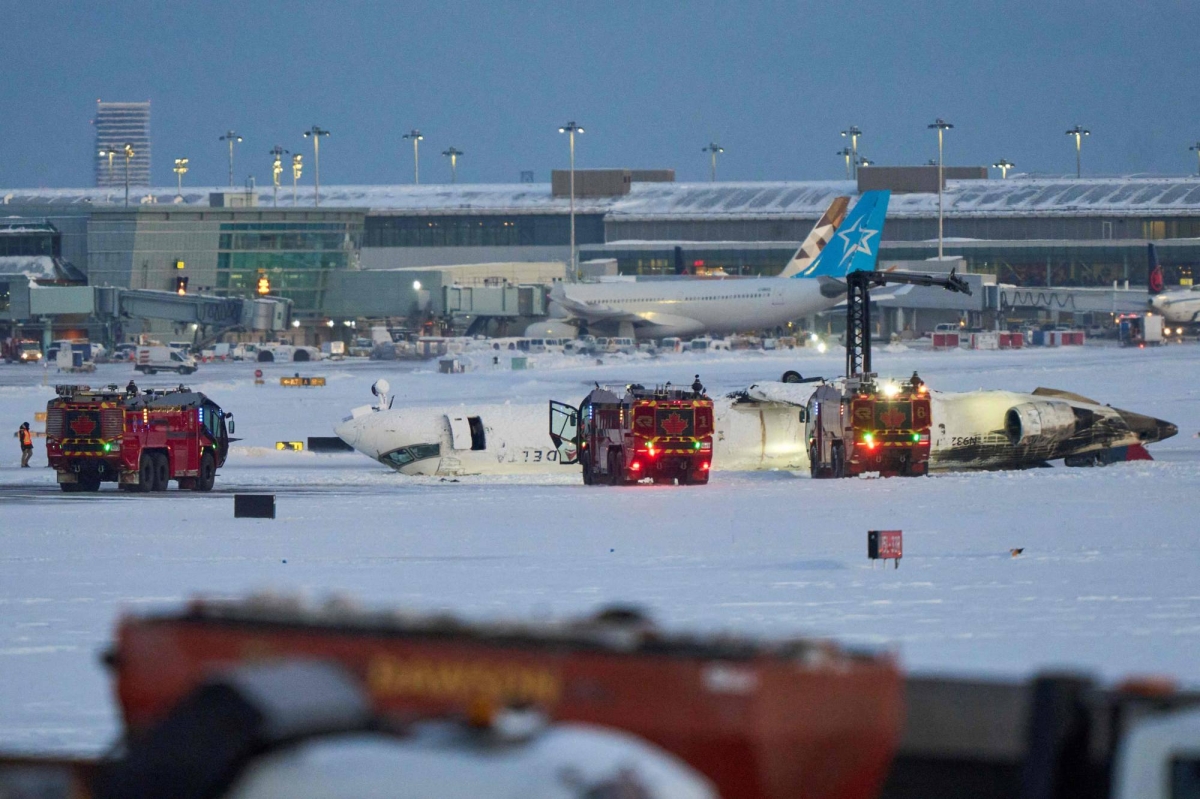
The Delta Air Lines crash at Toronto Pearson International Airport on Monday is the latest in a series of accidents this year that has spread anxiety among air travelers and prompted sharp criticism of American aviation regulators.

Here are the three major U.S. accidents so far in 2025

American Airlines jet and Army helicopter collide.

On the night of Jan. 29, an American Airlines plane was approaching Washington’s Reagan National Airport when it collided with an Army helicopter that was on a training mission.

The collision set off a fireball and sent both aircraft and 67 people — 64 on the Bombardier CRJ700 and three on the UH-60 Black Hawk helicopter — crashing into the Potomac River. There were no survivors.

It was the deadliest air crash in the United States in 20 years. In the aftermath, questions emerged about the flight paths of the helicopter and the plane, and whether staffing at Reagan National’s air traffic control contributed to the collision. An investigation is ongoing.

Medical jet goes down in Philadelphia.

A small medical plane slammed into the ground in northeast Philadelphia a minute after taking off Jan. 31, bursting into fire and engulfing homes and vehicles in flames. All six people on board, and one person on the ground, were killed, authorities said.

The Learjet 55 was transporting a child who had completed treatment in Philadelphia to her home in Mexico. She was accompanied by her mother, and there were also two pilots, a doctor and a paramedic on board, according to Jet Rescue Air Ambulance, which operated the plane.

Regional plane crashes in remote Alaska.

A small passenger plane carrying 10 people vanished Feb. 6 as it was flying to Nome, Alaska. Its disappearance set off a massive search operation, with Coast Guard and Air Force planes scanning a remote area along the western coast of Alaska.

The Cessna 208 Caravan was operated by Bering Air, a regional airline. Its wreckage, with the bodies of the pilot and nine passengers, was found the next day.

Before it crashed, its pilot had told air traffic control that he intended to enter a holding pattern while waiting for the runway in Nome to be cleared, according to the Nome fire department. But Alaska’s Transportation Department said the runway that the plane had been approaching had remained open throughout that day.

This article originally appeared in The New York Times © 2025 The New York Times Company
Chinese minister meets Myanmar scam centre workers


Chinese Public Security Assistant Minister Liu Zhongyi (second from right) at the Mae Sot International Airport in Tak province on Feb 17, after visiting the Thai-Myanmar border.
PHOTO: AFP

Feb 18, 2025

Thailand – A Chinese government minister met more than 1,000 alleged scam centre workers on the Thailand-Myanmar border on Feb 17, Thai media said, as the three countries vowed to crack down on the illicit compounds.

Public Security Assistant Minister Liu Zhongyi did not answer journalists’ questions as he took a one-day tour around the Mae Sot-Myawaddy frontier crossings, where cross-border crime has proliferated.

Media outlet The Reporters posted photos on Facebook of Mr Liu and his team meeting “1,030 foreigners”, alleged forced scam centre workers – hundreds of whom are believed to be Chinese – in a local militia command centre in Myanmar.

Scam compounds have mushroomed in Myanmar’s borderlands and are staffed by foreigners who are often trafficked and forced to work, swindling people around the world in an industry analysts say is worth billions of dollars.

When asked about Mr Liu’s visit, Chinese foreign affairs spokesman Guo Jiakun on Feb 17 told a news briefing that Beijing was “actively carrying out bilateral and multilateral cooperation with Thailand, Myanmar and other countries” to “eradicate the malignant tumour of online gambling and telecom fraud”.

The Karen Border Guard Force, a militia allied to the junta, said on Feb 15 it was ready to hand over 500 people linked to cyber scams to Thailand per day, following a major operation in Shwe Kokko, a notorious centre for scam compounds.

Thai media reported on Feb 15 the military task force responsible for border security in Thailand’s Tak province had coordinated with Karen Border Guard Force leaders to receive 7,000 workers from scam compounds.

On Feb 12, another local militia group handed 260 alleged scam centre workers from Myanmar to Thai authorities, some of who told AFP of severe punishments meted out by their Chinese bosses. AFP
All eyes on Malaysia’s next ambassador to the US after Maga photo controversy


Critics say Datuk Seri Nazri Aziz's action can be seen as a breach of diplomatic protocol and neutrality.

PHOTO: HAFLINNAZRIAZIZ/INSTAGRAM

Hazlin Hassan
 Feb 12, 2025

KUALA LUMPUR – Following US President Donald Trump’s re-election victory in November 2024, world leaders ranging from UK Prime Minister Keir Starmer to Indonesian President Prabowo Subianto scrambled to get on congratulatory phone calls with him. But up until now, Malaysia Prime Minister Anwar Ibrahim has yet to have his turn.

Academic and former deputy minister Ong Kian Ming chalked this up as a key “fail” on the part of Malaysia’s most recent ambassador to the US, Datuk Seri Nazri Aziz.

The former minister, who has in the past stirred controversy over remarks on race and policy, officially concluded his two-year stint on Feb 8, did not leave the US without causing a fracas.


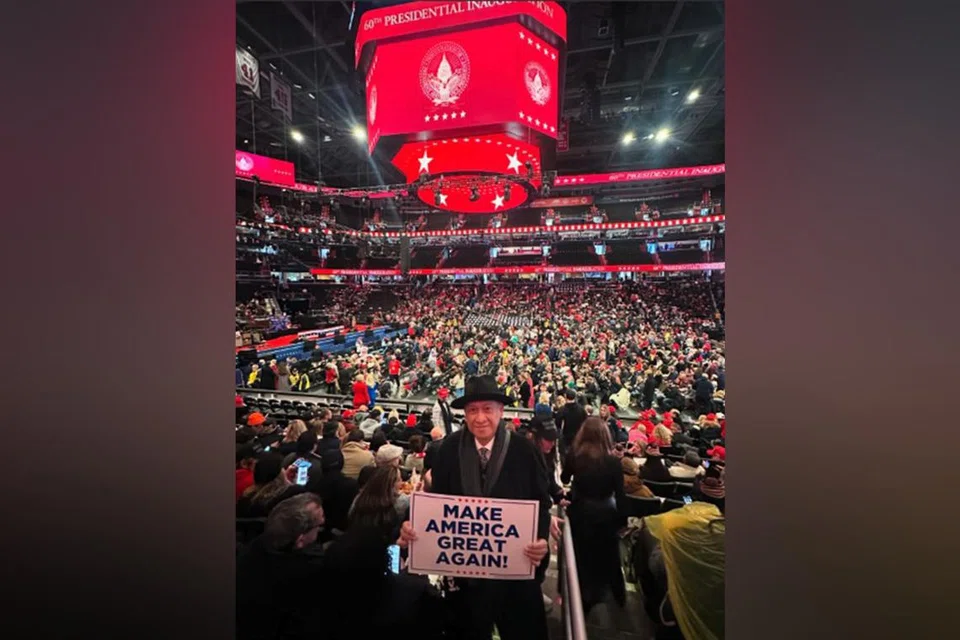
A photo of him holding up a Make America Great Again (Maga) sign at a victory rally for Mr Trump, posted on his wife Haflin Saiful’s Instagram account in January, sparked condemnation among some Malaysian observers.

The slogan, a rallying cry for the sitting US president, has become a catch-all phrase encompassing punitive trade tariffs and migrant deportations. Critics say that Mr Nazri’s action can be seen as a breach of diplomatic protocol and neutrality.

Veteran diplomat Dennis Ignatius, who last served as Malaysia’s High Commissioner to Canada, called Mr Nazri’s display at the Trump rally “shameful and unprofessional”.

“Very unbecoming for any ambassador to behave in such a manner. It goes against established protocol, diplomatic practice and good sense,” he said, according to a Feb 7 MalaysiaNow report.
Yes, I would also like to receive SPH Media Group's
SPH Media Limited, its related corporations and affiliates as well as their agents and authorised service providers. marketing and promotions.

He added: “Even the US ambassador here (in Malaysia) does not go about with Maga hats.”

Now, all eyes are on Mr Nazri’s successor, with commentators saying that a stronger and more circumspect figure is needed to forge better relations with the US, especially with a mercurial president in the White House.

Mr Nazri’s appointment in 2023 as ambassador had raised eyebrows, with several former diplomats questioning the move as he is not a career diplomat but a political appointee.

But Datuk Seri Anwar had defended the move, saying it was made during former premier Ismail Sabri Yaakob’s administration, and that confirmation from Washington had arrived before he took office in late 2022.

Mr Nazri, 70, is no stranger to controversy. During the Covid-19 pandemic in 2021, he faced public backlash for travelling to France to register his son for school there. Critics said that he should have remained in the country to focus on constituents in his rural seat in north-west Perak state.

His often abrasive communication style has led to several confrontations with political opponents and the media over the years.

Professor Ong pointed out Mr Nazri’s inability to arrange a phone call between Mr Anwar and Mr Trump following the US presidential election.

“The most obvious ‘fail’ by Nazri is not holding up the Maga sign, but his inability to arrange for a phone call between Anwar and Trump... These calls are important ‘signals’ in the diplomatic community,” he said in a Feb 7 statement to the media, noting that other South-east Asian leaders had managed to secure such calls.

Prof Ong, who is pro-vice-chancellor for external engagement at Taylor’s University, said that Malaysia needs an ambassador with strong connections domestically and in the US.
More on this Topic
Malaysia PM Anwar says will build trade relations, not wait for US tariffsAsia and the Trump administration 2.0

Mr Nazri defended himself with regard to the Maga sign. “We cannot show such a firm stand (against Israel) yet try so hard to speak with the Trump administration. That makes us look two-faced,” he said, in a Free Malaysia Today report on Feb 7.

As speculation swirls over who will replace Mr Nazri, Prof Ong proffered a list of potential candidates for Putrajaya’s consideration as Malaysia’s next ambassador to the US, which has elicited excitement among some observers.

The list includes the chairman of the Institute of Strategic and International Studies Malaysia, Datuk Prof Mohd Faiz Abdullah; Mr Anwar’s daughter and Parti Keadilan Rakyat (PKR) vice-president Nurul Izzah Anwar; jailed ex-PM Najib Razak’s brother and former CIMB group chairman Nazir Razak; Minister of Investment, Trade, and Industry (MITI) Tengku Zafrul Aziz; and former MP Yusmadi Yusoff.

According to a source close to Mr Anwar, several candidates are also lobbying for the position, including Senator and former minister Anifah Aman, and former international trade and industry minister Mustapa Mohamed.

Prof Ong said the ambassador must be able to engage with US leaders, formally and informally, through meetings as well as social media. Highlighting Mr Nazri’s dormant X account and his lack of a personal Instagram account, Prof Ong said that an active social media presence for overseas envoys is vital to project a positive image of Malaysia.

The next envoy should also have “direct access” to Mr Anwar so as to convey important information on bilateral relations and offer strategic policy recommendations, he added.


PKR vice-president Nurul Izzah Anwar and Minister of Investment, Trade, and Industry Tengku Zafrul Aziz are among the list of potential candidates for Putrajaya’s consideration as Malaysia’s next ambassador to the US proffered by academic and former deputy minister Ong Kian Ming.
PHOTO: THE BRITISH MALAYSIAN SOCIETY/FACEBOOK

Mr Amir Fareed Rahim, strategic director at risk consultancy KRA Group, said that the ambassadorial role has become more challenging of late amid growing global geopolitical uncertainties.

“The job has become much tougher, not only because of Trump but also due to the complex nature of US-Malaysia bilateral relations,” he told The Straits Times, adding that the two countries remain major trading partners despite widespread public anger in Malaysia over the Gaza war.

“Whoever is chosen must navigate the increasingly transactional nature of American statecraft, to present Malaysia’s interests as compatible with the America First mindset that has arguably taken over both sides of the political aisle there,” he said.

Meanwhile, some of the potential candidates have rebuffed speculation on the matter.

Mr Yusmadi, a lawyer by profession, and seen as part of PM Anwar’s inner circle, according to Prof Ong, told ST: “Out of all the names, I am the least possible. If it were to happen, it would be a miracle.”

But he stressed the importance of the ambassadorial role, saying: “Like it or not, the US is a key global player, and for Asean to be successfully effective at all levels, economic, social and cultural level, we need the US.”

As for Mr Zafrul, his current focus is to continue his duties at MITI, more so with Malaysia assuming the Asean chairmanship in 2025.

The minister said he was aware of media reports regarding suggestions from certain quarters that he be appointed as Malaysia’s ambassador to the US after his term as senator ends in December. “For me, any position offered now or in the future is up to the prime minister,” he told the Malay Mail news website on Feb 9.Hazlin Hassan is Malaysia correspondent for The Straits Times.
PRIVATIZATION WITH CHINESE CHARACTERISTICS 

Look who’s back: Alibaba’s Jack Ma shakes Xi’s hand at meeting of China’s
 business titans


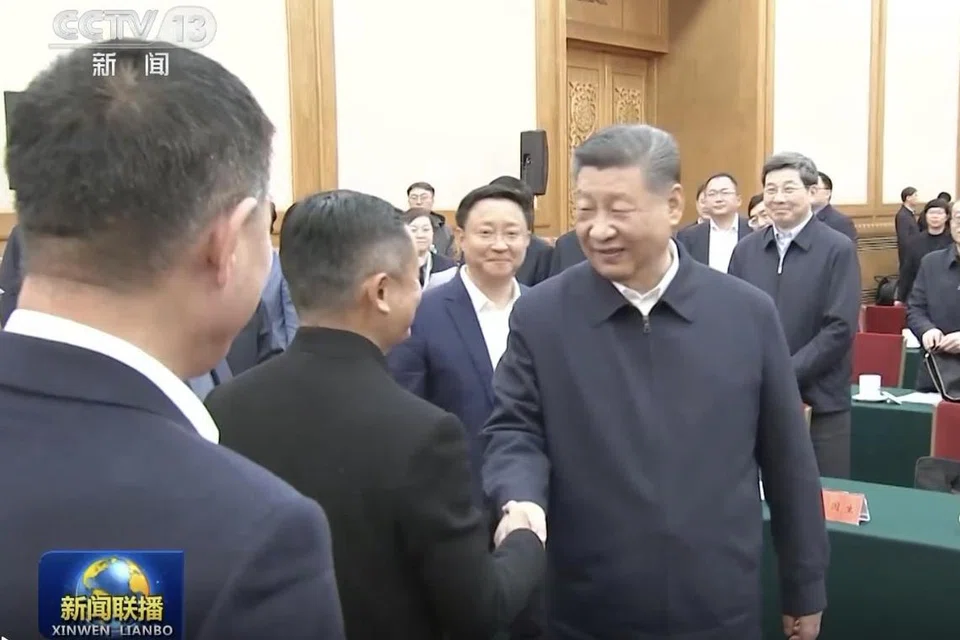
Chinese President Xi Jinping meeting Alibaba founder Jack Ma in a Beijing meeting on Feb 17.
PHOTO: SCREENGRAB FROM CCTV

Lim Min Zhang
Feb 17, 2025
STRAIT TIMES


BEIJING - As Chinese head honchos gathered for a meeting at the Great Hall of the People stood up to applaud the arrival of Chinese President Xi Jinping, a man clad in a black Mao suit looked especially cheerful.

Mr Jack Ma, the co-founder of Alibaba, had every reason to smile.

His very appearance at this rare meeting on Feb 17 between Chinese leaders and the heads of China’s biggest technology firms signals a rehabilitation of sorts for him, and Beijing’s desire to inject confidence into the private sector.


On the nightly news programme Xinwen Lianbo, Mr Ma was briefly shown shaking Mr Xi’s hand, although the former was not cited in state media reports as among those who spoke at the meeting.

The powwow had a star-studded line-up of tech executives such as those from Huawei, BYD, Tencent and artificial intelligence (AI) darling DeepSeek.

Mr Ma is regarded as the face of China’s private sector, but had earlier fallen into Beijing’s bad books.


In 2020, he had notoriously fallen out of the authorities’ favour when an imminent US$37 billion (S$49.6 billion) initial public offering from Ant Group, the fintech firm he founded, was halted. Since then, he has kept a low public profile.


ST Asian Insider: Malaysia Edition
Get exclusive insights into Malaysia in weekly round-up

Sign up

By signing up, I accept SPH Media's Terms & Conditions and Privacy Policy as amended from time to time.

Yes, I would also like to receive SPH Media Group's
SPH Media Limited, its related corporations and affiliates as well as their agents and authorised service providers. marketing and promotions.

But Mr Ma, who stepped down as Alibaba chairman in 2019 but is still regarded as its spiritual leader, has resurfaced in public in recent weeks.

On Feb 13, he took photos with staff at an Alibaba-owned supermarket in Changsha in Hunan province, days after he visited the Hangzhou offices of Xianyu, an online platform for second-hand goods.


The return of Mr Ma comes as Mr Xi needs private entrepreneurs to boost slowing economic growth with innovation, with an eye to coming out on top in China’s intensified rivalry with the US.

The private sector accounts for more than half of China’s economy, and provides the majority of urban employment and tax revenues. On Feb 17, Mr Xi said private entrepreneurs should have an ambition to serve the country.

“Entrepreneurs should be full of passion for entrepreneurship and for serving the country, strive for perfection, firmly establish feelings for the country, remember where their wealth came from... and promote Chinese-style modernisation,” he said, according to state media.

Developments in recent months have boosted the country’s confidence that it could be at the forefront of innovative countries by 2030, as planned. The guest list at the meeting appeared to be a showcase for some of these successes.

DeepSeek catapulted Chinese AI into global fame in January, when its chatbot’s performance was found to rival the industry’s best even though it was developed at a much lower cost. DeepSeek founder Liang Wenfeng attended the meeting, Reuters reported.

Meanwhile, BYD surpassed America’s Tesla to become the world’s top electric carmaker in 2024. The Shenzhen-headquartered firm threw down the gauntlet last week on autonomous driving tech, promising to bring these high-end, AI-driven features to the mass market.

In September 2024, Huawei announced a new tri-fold smartphone shortly after Apple’s iPhone 16 launch event, which marked its comeback in such high-end devices, made using sophisticated domestically produced chips.

The last time Mr Xi held such a high-level symposium focused on the private sector was in November 2018, which also coincided with heightened US-China frictions during the first trade war under the previous Trump administration.

In that 2018 meeting, Mr Xi vowed “unwavering encouragement, support and guidance for the development of the non-public sector of the economy”, amid rising protectionism and unilateralism.


On Feb 17, Mr Xi repeated that promise. His rallying call for enterprises to serve their country comes as China’s development in areas such as AI and electric vehicles has led to greater effort from the US to maintain its lead in technological innovation.


On this front, private enterprises are a valuable ally. The All-China Federation of Industry and Commerce – a government-backed association of private businesses – said in December 2024 that the sector contributes over 70 per cent of China’s technological breakthroughs.

China politics observer Alfred Wu of the Lee Kuan Yew School of Public Policy said the signalling from the Feb 17 meeting was twofold: to address international challenges and domestic economic stagnation.


“It is certainly good that the government hears from the private sector in person. But it remains to be seen whether this will lead to concrete actions that address their concerns,” Associate Professor Wu said, citing the difficulty in getting loans and dealing with predatory behaviour by local governments, such as profit-driven enforcement.


Mr Xi’s comments at the meeting offered some hope of action on these issues: He said that supervision should be strengthened, especially on “the rectification of arbitrary fees, fines, inspections and seizures”, and that the “legitimate rights and interests of private enterprises” should be protected.

Professor Bert Hofman, an economist at NUS’ East Asian Institute, saw the meeting as a concrete signal that government support for the private sector is real.

He said: “China’s innovation and development depend on a healthy private sector as demonstrated by the people in the meeting – all innovators in their own field.

“The fact that Jack Ma and Pony Ma (chief executive officer of Tencent) were in the meeting is good news for the platform economy, which had been under regulatory scrutiny for some time.”Lim Min Zhang is China correspondent at The Straits Times. He has an interest in Chinese politics, technology, defence and foreign policies.