Sunday, February 23, 2025

UK Power Grid Requires $60 Billion Investment by 2050

By Tsvetana Paraskova - Feb 21, 2025,


The UK could need up to $63 billion of investment in the power distribution network nationally to support additional demand and generation through 2050, double the current pace of additional investment, said the National Infrastructure Commission, the government’s independent infrastructure advisor.

The UK will likely need investments of between $47 billion (£37 billion) and $63 billion (£50 billion) by 2050 as a “step change” is required in investment in Great Britain’s local electricity networks. This investment would be essential to achieve the government’s growth mission and lower long-term energy costs for consumers, the commission said in a report on Friday.

The required investment levels would be at least a doubling of current annual allowances for load related expenditure, on top of business as usual investment, such as end of life asset replacement, the commission added.

The National Infrastructure Commission’s report says that with demand for electricity set to double by 2050, the current pace of additional investment in electricity distribution networks must also double to ensure the system can cope with rising demand and connect both new sources of renewable power and new electricity demands to the grid faster.

Investments, however, are constrained by legislation. Current regulation by the energy regulator Ofgem “is too complex and doesn’t encourage distribution network operators (DNOs) to make the proactive investments needed to boost network capacity and provide resilience to future climate impacts,” the commission’s analysis found.

In the report, the government’s infrastructure advisor calls for “a more proactive approach to both energy regulation and system planning.”

Ofgem is currently seeking feedback on proposed changes to the grid connection policy from a first-come first-served approach to prioritizing projects where generation capacity is needed the most and projects are at a more advanced stage of development. The regulator looks to reform the current connections regulation which has become inadequate as some early-queued projects have fallen behind schedule while more advanced projects are waiting for years to connect to the grid.

By Tsvetana Paraskova for Oilprice.com


UK to Partner with Big Tech on Nuclear Powered Data Centers

By Felicity Bradstock - Feb 22, 2025


Prime Minister Starmer announced plans for a major nuclear power expansion across England and Wales, including the development of small modular reactors (SMRs).

The government aims to streamline regulations and partner with the private sector to accelerate nuclear technology development, despite concerns about costs and safety.

While nuclear power is seen as a key component of the UK's clean energy transition, there are debates about the practicality of SMRs and the potential distraction from renewable energy deployment.


As the U.K. undergoes a massive energy transformation under the Labour government, there are high hopes for developing widescale clean energy projects, including nuclear power. As well as ambitious plans to deploy vast amounts of renewable energy, such as wind and solar power, and overhaul the country’s transmission infrastructure, U.K. Prime Minister Kier Starmer has shown significant support for nuclear power. Following decades of no new nuclear energy developments, several large-scale projects are now underway, and Starmer aims to construct even more nuclear power capacity in the coming years.

At the beginning of February, the PM unveiled plans for a historic nuclear power expansion across England and Wales. Starmer had previously called on tech companies to collaborate with the government to develop small modular reactor (SMR) technology to power the rising electricity demand that is being driven by data centres. He said the government would “push past nimbyism” as he announced plans to develop SMRs on various sites across the country. The U.K. Energy Secretary Ed Miliband has previously criticised the “not in my backyard” approach to clean energy projects for impeding the country’s green transition.

Starmer hopes the first small reactors will be built by 2032 and eventually become more common across the U.K. The government will now permit nuclear projects to be developed outside the existing eight designated nuclear sites, allowing for SMRs to be constructed on non-conventional sites. Echoing U.S. President Donald Trump, Starmer said his government would “build, baby, build” when it comes to nuclear power. However, while SMR technology is growing in popularity, there are currently no commercial SMR sites up and running globally, although several are expected to be launched over the next decade. This makes it difficult to clearly understand the timeframe and cost of establishing these sites.

In terms of regulations, the government has plans to establish a Nuclear Regulatory Taskforce to be in charge of making sure U.K. regulations align with international standards to facilitate quicker approvals for reactor designs.

There are high hopes that the private sector will support the government in investing in SMRs to help develop the technology faster. Starmer invited tech companies, such as Google, Meta, and Amazon, to invest in SMR-powered data centres in the U.K. “They are very keen to get the datacentres in and they’re very alive to the fact that the power is a big issue, so it is in their interest that this happens,” the PM stated. “There’ll be a lot of sense in that because it will give finance and a boost to the development,” he added.


The British aerospace company Rolls-Royce has criticised the former Conservative Party government for not supporting the development of SMRs. The company leads a British consortium that is developing SMR technology and critiqued the previous government for repeated delays in funding support for research and development. Starmer said that the new rules will provide a “great opportunity” for companies such as Rolls-Royce to accelerate their developments.

While nuclear power offers the potential to provide vast amounts of clean energy, supporting decarbonisation aims, some are concerned about the lack of practical application of SMR technology to date. Doug Parr, Greenpeace U.K.’s policy director, believes Starmer’s plan is unrealistic. “The Labour government has swallowed nuclear industry spin whole, seemingly without applying so much as a pinch of critical scrutiny or asking for a sprinkling of evidence,” he stated. “They present as fact things which are merely optimistic conjecture on small nuclear reactor cost, speed of delivery and safety, which is courageous – or stupid – given that not a single one has been built, and with the nuclear industry’s record of being over time and budget unmatched by any other sector,” Parr added.

Although several environmental groups now back nuclear power, as it has proven to be far safer and cleaner than fossil fuels, many are concerned that the development of the U.K.’s nuclear energy capacity could create a distraction from the deployment of renewable energy projects. In addition, many advocacy groups stress the existing delays in developing the U.K.’s nuclear energy sector, with companies having faced severe delays and cost increases in developing new nuclear projects in recent years.

Industry experts warn that SMRs could be extremely expensive to develop and run. The Tony Blair Institute for Global Change, which is investing in SMR development, has said that the technology “could have higher costs per MW compared to gigawatt-scale reactors”. There are also safety concerns, particularly as SMRs could be constructed on remote, non-conventional sites. This means that there must be rigorous regulations on the technology to mitigate any risk.

Nevertheless, if Starmer is successful in getting both conventional and small-scale nuclear power projects up and running across the U.K., it could provide abundant clean energy and help the country decarbonise. Meanwhile, Miliband has been steadfast in his support for widescale renewable energy deployment and a green transition. However, environmental groups are calling for strict regulations on the development of the U.K.’s nuclear power sector, to ensure that rigorous safety standards are adhered to.


By Felicity Bradstock for Oilprice.com


Is the West Losing the Race for Uranium?

By Haley Zaremba - Feb 22, 2025

The world is experiencing a nuclear energy renaissance, with global capacity expanding and driving a significant increase in uranium demand.

China and Russia have secured substantial uranium supplies, particularly from key producers like Kazakhstan, creating a challenge for the West.

The United States and Europe are facing an aging nuclear infrastructure and supply chain vulnerabilities, forcing them to reconsider their strategies for securing uranium.


This year, the world will generate more nuclear energy than it ever has before. “The market, technology and policy foundations are in place for a new era of growth in nuclear energy over the coming decades,” the International Energy Agency (IEA) wrote in a report published last month. This nuclear renaissance comes as public and private sectors galvanize in support of nuclear energy expansion as nuclear presents an increasingly convincing solution to keeping pace with energy demand growth without compromising decarbonization targets.

“It’s clear today that the strong comeback for nuclear energy that the IEA predicted several years ago is well underway, with nuclear set to generate a record level of electricity in 2025,” stated IEA Executive Director Fatih Birol. “In addition to this, more than 70 gigawatts of new nuclear capacity is under construction globally, one of the highest levels in the last 30 years, and more than 40 countries around the world have plans to expand nuclear’s role in their energy systems.”

This global expansion means that demand for nuclear fuel is about to go through the roof. As nuclear energy increasingly gains favor around the world, uranium demand is expected to far outpace supply, creating a tight market and heightened competition to ink deals within existing supply chains. The World Nuclear Association projects that demand for uranium will grow 28 percent by 2030 and nearly double by 2040, with far-ranging consequences for global markets.

And so far, it looks like the West might be losing the uranium race. With the exception of pro-nuclear France, the nuclear energy sector in the United States and Europe have been in serious decline over the last few decades. The U.S., while still the largest nuclear energy producer in the world, has zero nuclear plants currently under construction and is currently facing the reality of an aging fleet that will require a lot of plants to be retired in coming years, and miles of red tape preventing rapid buildout of younger plants. Germany, Europe’s largest economy, has made phasing out nuclear energy a central platform of its energy policy.

Now, nuclear energy is returning to favor in the United States and much of Europe, but they are returning to a market that China and Russia never faded from. And not only do Russia and China have longer and deeper ties in many of the world’s uranium markets, they’re also playing much more aggressively.

“Russian and Chinese players have been very keen to secure access to resources in central Asia and Africa, creating a very aggressive competitive environment,” Benjamin Godwin at Prism Strategic Intelligence recently told the Financial Times. Huge suppliers such as Kazakhstan are rerouting their uranium supplies to Beijing and the Kremlin, leaving North America and Europe scrambling.

Reports indicate that around two-thirds of sales by Kazakhstan’s state-owned mining group Kazatomprom went to Russia, China, and domestic markets in 2021. That represents a two-fold increase compared to 2021. Conversely, trade with the West has tanked. In 2021, 60 percent of Kazatomprom’s exports went to US, Canadian, French and UK buyers. In 2023, that rate had fallen to just 28 percent.

“We’re on a depletion curve that I don’t think many customers have realised,” Cory Kos, vice-president of investor relations at Cameco, the biggest western supplier of uranium, told the Financial Times. Kos indicated that this is thanks to “more flows of material into China.”

The impacts of this supply crunch could be far reaching, potentially causing geopolitical shifts. Changing global markets and volatility in Uranium stocks “may change how the U.S. and Europe secure uranium as rising demand stresses current supply lines,” TipRanks recently reported. “This could force them to consider local sources and create alliances to better compete with China and Russia.”

By Haley Zaremba for Oilprice.com


Uranium miner Cameco reports Q4 profit and revenue up from year ago

By The Canadian Press
February 20, 2025 

CAMECO BOUGHT WESTINGHOUSE  NUCLEAR

SASKATOON, Sask. — Cameco Corp. reported its fourth-quarter profit and revenue rose compared with a year ago, helped by higher uranium sales and prices.

The company says it earned a profit attributable to equity holders of $135 million or 31 cents per diluted share for the quarter ended Dec. 31, up from $80 million or 18 cents per diluted share a year earlier

On an adjusted basis, Cameco says it earned 36 cents per diluted share in its latest quarter, up from an adjusted profit of 25 cents per diluted share a year earlier.

Revenue for the quarter totalled $1.2 billion, up from $844 million a year earlier.

Uranium production totalled 6.1 million pounds for the quarter, up from 5.7 million a year earlier, while sales volumes amounted to 12.8 million pounds, up from 9.8 million pounds. Cameco’s average realized price for uranium was $80.90 per pound, up from $71.65 a year earlier.

Cameco’s fuel services business saw production of 3.6 million kilograms, down from 3.7 million a year earlier, while fuel services sales held steady at 4.2 million kilograms. Fuel services reported an average realized price of $35.41 per kilogram, up from $32.19 in the fourth quarter of 2023.

This report by The Canadian Press was first published Feb. 20, 2025.


Western Australians support lifting uranium ban, poll finds


Friday, 21 February 2025

With a new poll showing that the majority of West Australians support lifting the state's ban on uranium mining, Australia's national mining association is calling on the state's Labor Party to let voters know if it would consider overturning the ban if it retains power in the upcoming general election.

Western Australians support lifting uranium ban, poll finds
Exploration drilling at Kintyre, one of the four projects conditionally excluded from Western Australia's uranium ban (Image: Cameco Australia)

The Association of Mining and Exploration Companies (AMEC) commissioned the poll, which was carried out by market research consultancy Painted Dog Research. Well over half - 57% - of the 806 respondents to the poll said they would like to see Western Australia's current ban on uranium mining, implemented in 2017, lifted. This is up from a 2023 industry poll that found 49% per cent in support of uranium mining.

Asked "Do you support uranium mining as a way of reducing the world's carbon emissions?" 58% of respondents said they did, while 15% expressed "little or no support". But awareness of Australia's long history of uranium mining was low, with only 54% saying they knew that uranium has been mined safely in Australia for more than 50 years.

AMEC CEO Warren Pearce said the poll demonstrates that West Australians can "see the value" in uranium mining and "points to a community understanding that WA is a mining state, with the professionalism and skill to deal with uranium mining in a safe and responsible way".

Western Australia (WA) has significant known uranium resources but the Labor-led government has banned uranium mining since 2017, with the exception of four uranium projects that had already received ministerial approval from the previous government: Wiluna, Kintyre, Mulga Rock and Yeelirrie. "Quite frankly, it's time for WA Labor to reconsider the current ban and move with the times," said Pearce.

Australia has double the uranium resources of Kazakhstan and Canada, Pearce said, but is only the fourth largest producer. Western Australia "has the potential to be the eighth largest uranium source in the world", he said. "It would create more jobs, attract investment, diversify the economy from iron ore and gold, and create a new billion dollar commodity export market.

"With job losses in the nickel and lithium sectors over the past 12 to 18 months, now is the perfect time to throw out the ban and look to add a new commodity to our mining mix."

The Western Australia general election is due to take place on 8 March. Respondents to the survey were aged over 18 and from both metropolitan and regional parts of Western Australia.


South Korea confirms need for new reactors


Friday, 21 February 2025

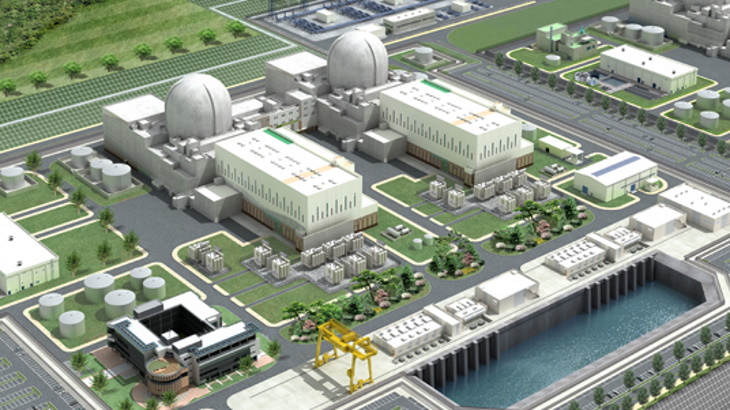
Two new large nuclear power reactors and 700 MW of small modular reactor capacity should be built by 2038 - in addition to the large reactors already under construction or planned - under South Korea's latest 15-year long-term energy plan, which has now been finalised.

South Korea confirms need for new reactors
An artistic impression of Shin Hanul 3 and 4 (Image: KHNP)

The 11th Basic Power Supply and Demand Plan, a draft of which was released in May last year, was presented to a plenary session of the National Assembly by the Ministry of Trade, Industry and Energy on 19 February. It was approved by the National Assembly's Power Policy Review Committee on 21 February.

The Basic Power Supply and Demand Plan contains domestic power generation facility plans for the next 15 years. It is updated by the Ministry of Trade, Industry and Energy every two years. The 11th basic plan includes plans from 2024 to 2038.

According to the latest plan, South Korea's demand for electricity will increase by an annual average 1.8% between 2024 and 2038, to reach 129.3 GW by 2038 - an increase of more than 30% from 2023.

Under the draft plan, the portion of carbon-free energy sources in the country's energy mix will increase from about 40% in 2023 to 70% by 2038. It says nuclear power generation is expected to grow from 180.5 TWh in 2023 to 248.3 TWh in 2038. The portion of nuclear power generation will grow from 30.7% in 2023 to 35.2% in 2038. The country's 26 reactors currently provide about one-third of its electricity.

The ministry noted the plan assumes the "smooth construction and continued operation of the five nuclear power plants already planned": Shin Hanul unit 2 (which entered commercial operation in April 2024), Saeul units 3 and 4, and Shin Hanul units 3 and 4. Together, these units will have a combined generating capacity of 7 GWe.

A further two large nuclear reactors with a combined capacity of 2.8 GWe, as well as 0.7 GWe of small modular reactor (SMR) generating capacity will be needed by 2038 to reach the target nuclear capacity, it said.

"After developing technology to ensure SMR safety, obtaining standard design approval, etc, commercialisation of domestic SMR [is expected] by 2035 on the premise of obtaining a construction permit in the early 2030s," the ministry said.

Former President Yoon Suk-yeol, who took office in May 2020 and was impeached in December last year, vowed to reverse previous President Moon Jae-in's policy of phasing out nuclear power, a policy which was brought in after he assumed office in 2017, and followed the 2011 Fukushima Daiichi accident in Japan.

Belgian nuclear extension financing plans approved by EU


Friday, 21 February 2025

The European Commission has concluded its in-depth investigation and approved revised plans for Belgium's proposed financing of the lifetime extensions of Doel 4 and Tihange 3 nuclear power units.

Belgian nuclear extension financing plans approved by EU
The Doel plant in Belgium (Image: Engie)

The context
 

Under a plan announced by Belgium's coalition government in December 2021, Doel 3 was shut down in September 2022, while Tihange 2 shut down at the end of January 2023. The newer Doel 4 and Tihange 3 would be shut down by 2025. However, following the start of the Russia-Ukraine conflict in February 2022 the government and Electrabel began negotiating the feasibility and terms for the operation of the reactors for a further 10 years, with a final agreement reached in December, with a balanced risk allocation

Belgium finalised plans in December 2023 to extend the lifetimes of Doel 4 and Tihange 3 by 10 years, providing capacity of 2 GWe from the reactors, which will be 89.8% owned by a joint venture between Engie's Electrabel and the Belgian state, and 10.2% by EDF's subsidiary Luminus. The decision to extend their lifetimes was designed to boost the country's energy security while keeping carbon emissions as low as possible.

The European Union's concerns
 

In July 2024 the European Commission launched its inquiry to "assess the need, appropriateness and proportionality of the measure" because of "doubts regarding the Contract for-Difference design and the proportionality of the (combination of) the financial arrangements, which might have relieved the beneficiaries from a too big share of the risk, as well as regarding the proportionality of the amount of the transferred nuclear waste liabilities".

A Contract for Difference is essentially where there is a future fixed price guaranteed for electricity generated, with the government either paying the difference between the market price and the agreed sale price, or receiving payment if the market price is higher.

The support being investigated was the creation of the joint venture to cover the necessary capital expenditure - Electrabel alone owns 89.8% of the units prior to the start of the lifetime extensions - a Contract for Difference aimed at ensuring stable revenues for 10 years and "financial protective mechanisms, such as a loan and an operating cashflow guarantee".  There was also a transfer of liabilities from Electrabel to the Belgian state relating to nuclear waste and used fuel, against a lumpsum payment of EUR15 billion (USD 15.7 billion).

The investigation's conclusions
 

In announcing its decision, the European Commission said that Belgium had clarified that "the nuclear reactors are based on an old technology whereby it is not secure nor technically feasible to often ramp up and down the power (‘modulate'). The number of modulations is therefore capped by the Belgian nuclear safety authority, which limits the flexibility of the reactors and the capacity of the nuclear operator to respond to market signals".

The EC also said Belgium had clarified that the financial support measures beyond the Contract for Difference "are complementary, covering different risks related to the project, thus necessary to ensure its long-term financial viability".

The commission said that to avoid undue distortion of the electricity market an independent energy manager would sell the joint venture's "share of the nuclear electricity on the market, and who will have the appropriate financial incentives, which are subject to re-evaluation after 3.5 years, to guarantee an efficient use of the stock of modulations".

It said that Belgium would set the strike price of the Contract for Difference "on the basis of a discounted cash flow model ensuring that the total aid amount is limited to the funding gap of the project" in a financial model which ensures the shareholders will get a market rate of return on their investment. There will also be an "intensified ... Market Price Risk Adjustment mechanism, whereby the pain (or gain) of lower (or higher) than expected market prices is shared between the Belgian State and the beneficiaries".

The commission said: "Following the additional evidence and modifications of the measure, the commission concluded that the aid is necessary and appropriate to achieve the objective pursued, as well as proportionate as it is limited to the minimum necessary, while competition distortions caused by the measure are minimised. On this basis, the Commission approved the Belgian measure under EU State aid rules."

Engie said the operation of these two reactors and the dismantling work under way of its other units will maintain around 4000 direct, indirect and induced jobs.

Viewpoint: South Africa's G20 Presidency - will nuclear energy be on the agenda?


Friday, 21 February 2025

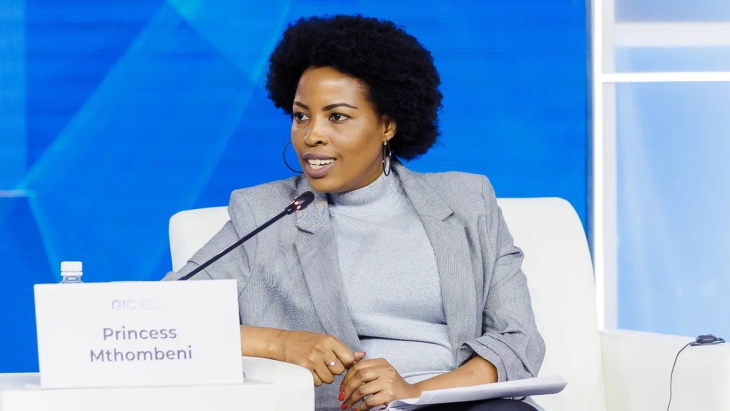
As South Africa takes the helm of the G20 Presidency in 2025, there is widespread curiosity about the nation’s agenda and whether nuclear energy will feature prominently in these critical discussions, writes Princess Mthombeni. With the theme "Solidarity, Equality, Sustainability", South Africa is poised to address global challenges, but the question remains: will nuclear energy’s potential to support sustainable development and energy transitions be part of the conversation?

Viewpoint: South Africa's G20 Presidency - will nuclear energy be on the agenda?
(Image: Princess Mthombeni)

The G20, or Group of Twenty, is a forum of major developed and developing economies established to address global economic and financial issues. Representing 85% of the global GDP, more than 75% of global trade, and two-thirds of the world’s population, it is a crucial platform for multilateral cooperation. South Africa, a G20 member since its inception in 1999, assumed the Presidency on December 1, 2024. This marks the first time an African nation has held this position, a significant milestone for the continent.

South Africa’s G20 Presidency comes at a time when the global community is grappling with economic recovery, energy transitions, and sustainable development. Since assuming the role, South Africa has already hosted the First Sherpa-Finance and Central Bank Deputies Meeting in December 2024. Upcoming discussions include the Research and Development Working Group Meeting, the Energy Transition Working Group Meeting, and the Task Force on Inclusive Economic Growth, Industrialisation, Employment, and Reducing Inequality. These forums offer a unique opportunity to integrate nuclear energy into the broader G20 agenda.

South Africa’s nuclear research and innovation sector, however, faces significant challenges. A 2023 report by the Academy of Science of South Africa (ASSAf) highlighted the country’s limited participation in International Atomic Energy Agency (IAEA) initiatives and a lack of strategic direction in nuclear research and development. The report recommended enhancing interdepartmental collaboration, developing a human capital strategy for sustainable nuclear applications, and integrating research into isotope hydrology and nuclear medicine. These recommendations underscore the need for nuclear technology to be a key focus during the Research and Development Working Group discussions.

The energy transition is another area where nuclear energy could play a transformative role. South Africa operates the Koeberg Nuclear Power Station, Africa’s only commercial nuclear plant, which has been a cornerstone of energy stability and economic growth. In July 2024, the National Nuclear Regulator approved a 20-year life extension for Koeberg’s Unit 1, reaffirming its importance to the national grid. Eskom, the state-owned utility, recently emphasised Koeberg’s contributions, noting that the plant adds R23.1 billion to South Africa’s GDP, supports 1,600 permanent jobs, and stabilises the Western Cape’s power grid.

Policy frameworks also highlight nuclear’s potential. The Department of Mineral Resources and Energy’s Integrated Resource Plan (IRP) 2019 allocated 2,500 MW of new nuclear capacity, while the draft IRP 2023 proposes up to 14,500 MW by 2050. These plans position nuclear as a vital component of South Africa’s efforts to achieve net-zero emissions target while addressing energy security and many other socio-economic challenges.

Globally, nuclear energy is gaining renewed attention. It currently generates 9% of the world’s electricity and is the second-largest source of low-carbon power after hydropower. At COP29 in Baku, six nations joined a declaration to triple global nuclear capacity by 2050, bringing the total number of endorsing countries to 31. The United Nations Economic Commission for Europe (UNECE) has unequivocally stated that international climate objectives cannot be met without nuclear power, describing it as essential for decarbonising energy systems.

The IAEA’s involvement in the 2024 G20 under Brazil’s Presidency marked a turning point for nuclear energy’s inclusion in global forums. The agency presented strategies for scaling nuclear power to meet net zero goals, setting a precedent that South Africa would do well to follow. By inviting the IAEA to this year’s G20 meetings, South Africa could ensure nuclear energy remains a focal point in discussions on energy transitions.

South Africa’s leadership in the G20 presents a unique opportunity to champion nuclear energy as a solution to pressing global challenges. Fourteen G20 countries currently operate nuclear power plants, two are exploring the adoption of nuclear technology, and six pledged at COP28 in Dubai to triple their nuclear capacity by 2050. With its extensive experience and established infrastructure, South Africa is well positioned to advocate for nuclear’s role in sustainable development.

The time has come for South Africa to move beyond rhetoric and demonstrate tangible commitment to nuclear energy. Integrating nuclear into the G20 agenda is not just a matter of national interest but a global imperative. By prioritising nuclear discussions in the Research and Development, Energy Transition, and Inclusive Economic Growth working groups, South Africa can set a powerful example of leadership and innovation. Nuclear energy has proven its value - it is time for the G20 to give it the attention it deserves.

Princess Mthombeni, an award-winning nuclear communicator, writes in her role as a founder and communications lead at Africa4Nuclear.

Akkuyu's first back-up diesel generator being commissioned

Friday, 21 February 2025

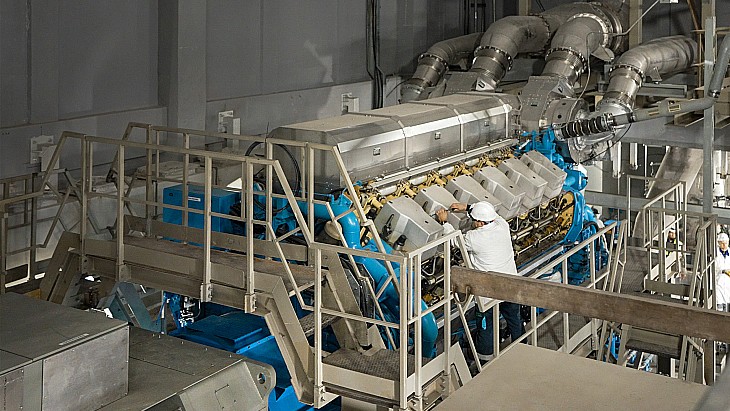
The first back-up diesel generator - which plays an essential role in safety systems - has been launched for the first unit at Turkey's Akkuyu Nuclear Power Plant.

Akkuyu's first back-up diesel generator being commissioned
(Image: Akkuyu NPP)

Each of the four units at the Akkuyu plant will have three diesel generators, which will be ready to operate within 15 seconds of being required to provide power if the mains power supply is lost.

The first diesel generator was started at idle and there will now be tests of its operation under load, with around 50 checks to take place in various operating modes. Once these tests are successfully passed it will be put into "standby" mode, where it will be ready to automatically start to provide back-up power when required.

The commissioning of diesel generators is required before the cold-hot testing phase of the reactor unit.

Andrei Zhukov, Deputy Director and Technical Director of the NPP Under Construction at Akkuyu Nuclear said: "Backup diesel power plants are one of the basic elements of nuclear power plant safety systems. These plants serve as independent power sources for the nuclear power plant in case of a main power supply failure. Together, the three diesel generators in each unit will be able to provide power to all designed systems of the unit for at least 72 hours without refuelling."

The Russian VVER-1200 reactors at Akkuyu are each designed to have three diesel generators - two for the emergency power supply and one for the normal operation system. Each plant has a capacity of 6.3 MW and are located in independent buildings. They each have a back-up start-up system which allows remote start-up from the nuclear power plant or from the back-up control centre. In total a fuel reserve for six days of backup power is stored on site.

Background
 

Akkuyu, in the southern Mersin province, is Turkey's first nuclear power plant. Rosatom is building four VVER-1200 reactors, under a so-called BOO (build-own-operate) model. According to the terms of the 2010 Intergovernmental Agreement between the Russian Federation and the Republic of Turkey, the commissioning of the first power unit of the nuclear power plant must take place within seven years from receipt of all permits for the construction of the unit.

The licence for the construction of the first unit was issued in 2018, with construction work beginning that year. Nuclear fuel was delivered to the site in April 2023. Turkey's Nuclear Regulatory Agency issued permission for the first unit to be commissioned in December, and in February it was announced that the reactor compartment had been prepared for controlled assembly of the reactor - and the generator stator had also been installed in its pre-design position.

The aim is for unit 1 to begin supplying Turkey's energy system in 2025. When the 4800 MWe plant is completed, it is expected to meet about 10% of Turkey's electricity needs, with the aim that all four units will be operational by the end of 2028.

Leaked Records Reveal Sanctioned Truck Parts in Russia

By RFE/RL staff - Feb 22, 2025

A Norwegian company's automotive parts were exported to Russia through a Turkish intermediary, evading EU sanctions intended to restrict Russia's military supply chain.

Leaked customs records show millions of dollars worth of these parts were shipped to Russia, some of which ended up with companies tied to the Russian defense industry.

The investigation highlights the difficulty in enforcing sanctions and the crucial role civilian trucks and their parts play in Russia's war effort.


The Kremlin's war on Ukraine has dented the vehicle stocks of the Russian military, which has increasingly relied on civilian trucks since its full-scale invasion three years ago this month -- including for the transport of equipment and personnel.

U.S. and EU sanctions imposed not long after the February 2022 invasion aimed to choke off the supply of Western automotive parts that could help keep Russian President Vladimir Putin’s military humming.

But a leading Norwegian automotive supplier has exported millions of dollars in truck parts that ended up feeding Russia’s war machine via a Turkish intermediary, which resold them in circumvention of EU sanctions, an investigation by Schemes, the investigative unit of RFE/RL’s Ukrainian Service, and Norwegian public broadcaster NRK has found.

Kongsberg Automotive, based in Kongsberg in southern Norway, is a major supplier of parts to leading car brands like Volvo, Ford, Scania, and Jaguar Land Rover. It says it halted all direct exports to Russia in 2022 on its own initiative, calling sales to an “aggressor” state “immoral and reprehensible.”

But leaked Russian customs records obtained by Schemes show that at least 126 shipments of Kongsberg Automotive parts were made to Russia from July 2022 to April 2024 by Hidirusta Otomotiv, one of the Norwegian company’s customers in Turkey, which has not joined the Western sanctions coalition targeting Moscow.


The total listed value of these shipments was around $2.8 million, the leaked records show.

The roundabout route of the Norwegian company’s vehicle parts highlights the difficulties Western governments have faced in using sanctions to stem the flow of equipment and electronics critical to the Russian military.

Prior to Russia’s February 2022 invasion, Istanbul-based Hidirusta Otomotiv had no recorded shipments to Russia, according to records from the commercial customs-data aggregator ImportGenius. That changed seemingly overnight: By 2023, Russia had become the Turkish firm’s largest market -- and remains so today, ImportGenius records show.

Most of Hidirusta Otomotiv’s shipments to Russia consisted of Kongsberg Automotive parts it bought from other resellers, while it imported the rest directly from the Norwegian company.

Hidirusta Otomotiv did not respond to a request for comment. Kongsberg Automotive called the resale of its parts into Russia “unacceptable and contrary to our values.”

Norwegian Parts, Russian War Machine

While most Hidirusta Otomotiv shipments of Kongsberg Automotive parts were sent to Russian companies involved in truck repairs or transportation services, two -- A.P.R. and Gruzavtozapchast-36 -- have documented commercial ties to Russian defense firms.

A.P.R. supplied car parts to Orenburgagrosnabtekhservis, a partner of one of Russia’s oldest and largest machine-building and metallurgical enterprises, Kirovsky Zavod, which has been under U.S. sanctions since 2023.

One of Kirovsky Zavod’s subsidiaries, St. Petersburg-based Universalmash, provides parts for Russian military hardware the Kremlin has deployed in Ukraine.

Gruzavtozapchast-36, meanwhile, has ties to Baltic Leasing, a Russian company that last year supplied bulldozers to one of Russia’s largest military training facilities, which has been under Ukrainian sanctions since 2023.

Neither A.P.R. nor Gruzavtozapchast-36 responded to requests for comment in time for publication.

Launching Attack Drones

Civilian vans and trucks have become increasingly vital to Russia's war effort due to the toll taken on its military vehicles during the all-out invasion, according to Aage Borchgrevink, a senior adviser at the Norwegian Helsinki Committee for Human Rights and a sanctions project coordinator.

“The war in Ukraine is very much about logistics. The entire Russian economy is geared toward producing the goods and services that will make this war possible. One of the most important things here are trucks and car parts,” Borchgrevink said.

Moreover, civilian trucks can be used not only for transportation but also for launching attack drones like Iranian-made Shahed-136, which Russia actively uses in its strikes on Ukraine. In March 2022, the Iranian military-focused outlet IMA Media published a video detailing how this works.

“To keep the wheels turning -- literally -- Russia needed an entirely new fleet of trucks, which then required spare parts,” Borchgrevink said.

Research by the Helsinki Committee for Human Rights and the Norwegian risk-analysis firm Corisk shows that Russia’s truck imports surged in the winter of 2023. Since then, Moscow has increased its truck imports tenfold, according to a Corisk report, a move aimed at sustaining battlefield logistics despite severe Western sanctions.

Corisk researcher Erlend Bollman Bjortvedt said Russia increasingly relies on civilian vehicles to transport “everything from food to ammunition and grenades to the front lines.”

Russian media reports echoed this trend, urging citizens to donate civilian vehicles to the war effort, citing a severe shortage caused by Ukraine’s extensive use of drones.

“Just one small part can cause a truck to malfunction. So when you're a Western company and you produce perhaps small parts that look innocent, a rubber ring for a few dollars or a ball bearing, it can be that small part that actually makes a defective truck start working again,” Bjortvedt said.

Negligence Or Sanctions Evasion?


Confronted with these findings, Kongsberg Automotive distanced itself from the transactions, stating that it ceased direct sales to Russia in 2022.

In a written response, the Norwegian company said: “We believe that it is unacceptable and sad if our products end up in places where sanctions apply. The alleged resale by our customers is unacceptable and contrary to our values.”

Kongsberg Automotive, however, argued that tracking products after sale is difficult.

“Once we sell our goods, we lose ownership and control over the supply chain if they are resold multiple times, as seems to be the case here,” the company said.

Kongsberg also expressed shock that Hidirusta Otomotiv had resold such a high volume of its parts to Russia, saying it failed to properly vet its Turkish customer and claimed it did not know Hidirusta’s largest export market is Russia.

“We could have had better routines in place during the onboarding process,” Kongsberg said.

Following Schemes and NRK’s inquiries, the Norwegian manufacturer said it had terminated the relationship with Hidirusta Otomotiv and instructed all its customers to stop dealing with the Turkish firm. Moreover, the company said it now requires aftermarket customers to sign contractual commitments to uphold sanctions.

Legal experts say Kongsberg Automotive could face consequences if authorities determine it failed to conduct proper due diligence.

The obligation to check sanctions compliance falls on the authorities of the respective EU member states. In Norway, it is the Police Security Service (PST).

PST deputy head Inga Bejer Engh said a company can be punished -- including criminally -- if it fails to do enough to learn that its customer is violating sanctions.

Engh said she is unfamiliar with the Kongsberg Automotive case and that it would depend on whether the necessary degree of culpability has been demonstrated.

“To decide what constitutes prudent conduct, you have to ask yourself how an ordinarily reasonable and conscientious person would have acted in the same situation. To be punished for negligent breach of the sanctions rules, the company must therefore have acted differently from what can be expected of an ordinarily reasonable and conscientious company,” Stian Oby Johansen, an associate professor at the University of Oslo’s Department of Public Law, said.

Experts say Turkey is widely recognized as a sanctions loophole, meaning companies exporting goods there should exercise heightened scrutiny over potential resales to Russia.

Borchgrevink of the Norwegian Helsinki Committee for Human Rights said it was “disheartening” that Kongsberg Automotive appeared to “put in significantly less effort to track their goods and prevent these situations from occurring.”

After reviewing the findings of the Schemes and NRK, Ukrainian President Volodomyr Zelenskyy's sanctions policy commissioner, Vladyslav Vlasiuk, said the case “casts a shadow over the entire sanctions policy and its effectiveness in the EU.”

“Spare parts for trucks in particular are what help Russia to be strong on the battlefield. That's why this is a problem,” Vlasiuk said.

Oleh Symoroz, a 28-year-old veteran soldier who became an anti-corruption activist after a severe battlefield injury, said he wonders if the EU and its member states do enough to enforce sanctions.

“Western countries, including Norway, can make sanctions effective. And if they had used that power, these sales to Russia would not have happened,” he said.

By RFE/RL
Federal Judge Orders State Department to Renew Funding

By Eurasianet - Feb 21, 2025

A federal judge has ordered the State Department to lift its funding freeze on foreign aid programs, including USAID-sponsored operations.

The State Department claims it has complied with the order, but plaintiffs have filed a motion for contempt, alleging a lack of comprehensive review and "brazen defiance."

An independent news outlet in Tajikistan has praised USAID's work in the region and warned that its termination would harm US interests and efforts to solve social and economic problems.


US foreign assistance to Eurasian states and elsewhere remains in limbo as the State Department pushes back on a federal court order to lift a funding freeze and resume full operations.

Federal Judge Amir Ali issued a temporary order on February 13 to lift a funding freeze on foreign aid programs around the world, including USAID-sponsored operations. Since then, administration officials have not issued any instructions to implementing organizations concerning the resumption of programmatic activities, or on accessing already appropriated funds.

In a filing February 18, lawyers for the State Department contended that the government is in compliance with the court order, claiming that a comprehensive review of thousands of contracts and grants showed that officials had the authority to suspend them at will.

In response, lawyers for plaintiff organizations filed a motion calling on top officials from the State Department, USAID and the Office of Management and Budget to be held in contempt. The motion cited anonymous sources within USAID who say no comprehensive review of agreements has occurred. The plaintiffs accuse officials of “brazen defiance” of the court order, adding that the assertion of a comprehensive review “strains credulity.”

Judge Ali set a February 20 deadline for the government to respond to the contempt motion.

Meanwhile, a lengthy commentary published February 19 by a leading independent news outlet in Central Asia, the Tajik-based Asia-Plus news agency, praised USAID and laments the agency’s pending demise, calling it harmful to US interests.

The commentary notes that USAID had provided roughly $20 million in assistance over the past two years to help “to vulnerable households facing growing food insecurity in Tajikistan,” adding that about 200,000 individuals had benefited from the program. It also lauded programs to help farmers produce more nutritious crops to help expand export markets, and highlighted the agency’s key role in helping contain the spread of HIV/AIDS.

“The current administration's vision of the importance of this organization [USAID] is strategically short-sighted, since in these times, soft power instruments are the most important factor in international affairs, and abandoning them will seriously affect America’s [global] standing,” the commentary states. “Most importantly, we must take into account the fact that the termination of USAID and American aid in general will seriously affect efforts to solve [social and economic] problems facing countries like as Tajikistan.”

By Eurasianet.org
Imminent recession? 

DOGE’s mass layoffs spark fears of broader economic ripple effect

Economists warn of a recession signs “in weeks.” Here's what you can do now


By Daria Solovieva
Deputy Money Editor
SALON
Published February 22, 2025 5:45AM (EST)

Unemployed men line at "Big Al's Kitchen for the Needy," which provides three meals a day consisting of soup with meat, bread, coffee, and doughnuts, feeding about 3500 people daily. (Getty Images/Bettmann )


A month into President Donald Trump’s second term, the Department of Government Efficiency (DOGE) — which is not a government agency, but an outside advisory group — has been on a rampage in what is shaping up to be the biggest purge of the federal government in modern American history.

The teams at Doge, which is run by Tesla CEO Elon Musk, have targeted agencies including the Department of Agriculture, the Consumer Financial Protection Bureau, the Department of Education, the Department of Energy, the Department of Health and Human Services, the Department of Homeland Security, Internal Revenue Service, National Park Service, Department of Veterans Affairs and U.S. Agency for International Development (USAID).

At least 85,000 federal workers have been impacted so far, with tens of thousands being fired or accepting “deferred resignation.” At the Office of Personnel Management alone, an estimated about 75,000 federal employees took the offer as of last week, the AP reported.

While most Americans support the idea of making the government run more efficiently, the way these layoffs are carried out is raising concerns about the immediate and long-term impact on the U.S. economy.

“It seems almost unavoidable at this point that we are headed for a deep, deep recession,” Jesse Rothstein, an economist and professor at UC Berkeley, in a viral post on Bluesky on Tuesday. “Just based on 200k+ federal firings and pullback of contracts, the March employment report (to be released April 4) seems certain to show bigger job losses than any month ever outside of a few in 2008-9 and 2020.”

"It seems almost unavoidable at this point that we are headed for a deep, deep recession."

Rothstein, who served as a top economic advisor in the Obama administration, was quick to note that it’s not the layoffs themselves, but the workers’ lost productivity that presents a concern.

“Even greater damage will be done by the loss of federal government productivity,” he said. “The workers who are losing their jobs were worth more than they were being paid! We are all poorer when roads, planes and food are unsafe, when parks are closed.”
“Their absence is going to make the government run less, not more, efficiently”

While the exact number of how many layoffs are still to come is uncertain, with estimates up to 75% of the total federal workforce, their immediate impact could become more regional, some economists suggest.

“The direct macroeconomic effects of these layoffs will be localized and small in the aggregate,” says Neale Mahoney, an economics professor at Stanford University, noting that roughly 1.5 million are laid off in a typical month.

Like Rothstein, Mahoney is concerned about the long-term productivity effect on the broader economy and safety of U.S. aviation, health care and other industries that the laid-off federal works helped to keep on track.

“I'm concerned about the downstream consequences on the functioning of the government,” he told Salon. “The people who have been laid off — FAA aviation safety assistants, USDA specialists battling bird flu, IRS workers helping people navigate tax season — quietly help the government work for everyday people. Their absence is going to make the government run less, not more, efficiently.”

While this could be devastating and have serious consequences, it doesn’t necessarily lead to a recession, according to Deloitte’s chief economist Ira Kalish. There are elements of Trump’s economic policies that continue to be fleshed out, including tariffs and inflation.

“It is hard to make a forecast as we simply don’t know what the administration will do regarding tariffs,” Kalish told Salon. “Nor do we have a good indication yet as to what the Congress will do regarding taxes and spending. Assuming no dramatic policy changes this year, I don’t see a recession coming in the near future.’

Still, many politicians like Jasmine Crockett, U.S. representative from Texas's 30th congressional district, continue to warn about the risks of a recession.

“We’re living with this incompetent administration that is literally driving us to a recession at warp speed,” she said earlier this week, warning of more layoffs in the private sector. “All I can say is, Hold on to your money and make sure that you have a way to make money, even if you lose your job.”

The layoffs have not been limited to the federal sector, with the tech and airline industry also announcing layoffs in early 2025.

Earlier this week, Dallas-based Southwest Airlines announced the largest layoffs in the company’s history, which would impact 15% of its corporate workforce or about 1,750 jobs.

JPMorgan Chase initiated several rounds of layoffs, while Amazon, Blue Origin, Meta and Chevron are among the companies planning to lay off thousands of workers.

“If the private sector also loses jobs, which I expect it will, then that pushes you into deep, deep job losses that are the kind of thing you only see in very serious recessions,” Rothstein noted in an interview with Paul Waldman for his Substack newsletter The Cross Section. Rothstein didn’t reply to Salon’s request for comment before publication. “I would expect that there's already quite a bit of private sector pullback happening in the next couple of weeks.”

Daria Solovieva is a veteran business journalist with 15 years of experience writing for leading financial newsrooms globally, including the Wall Street Journal, Bloomberg and Fortune magazine. Her work spans a wide range of topics, including personal finance, economic empowerment, structural inequalities, financial literacy, and the intersection of money and mindfulness. Her upcoming book explores the feminist history of finance.
Half of Canadians and Americans think their countries are in a recession now: poll
February 22, 2025 

U.S. President Donald Trump speaks at the Governors Working Session in the State Dining Room of the White House in Washington, Friday, Feb. 21, 2025. THE CANADIAN PRESS/AP-Pool via AP

OTTAWA — As Canada stares down U.S. President Donald Trump’s repeated threats of devastating tariffs, roughly half of Canadians and Americans believe their countries are in an economic recession right now, a new poll suggests.

The results of the Leger survey — which polled both Canadians and Americans — suggest that Canadian and Americans hold many similar views on the state of the economy and their personal financial status.

The poll also suggests that 39 per cent of Canadians who are currently employed are worried about losing their jobs within the next 12 months — a three-point increase since last month.

Sébastien Dallaire, Leger’s executive vice-president for Eastern Canada, said that the results “add up to a long series of difficult moments.”

The poll was conduced between Feb. 14 and Feb. 17 and surveyed 1,550 Canadians and 1,000 Americans. Because it was conducted online, it can’t be assigned a margin of error.


The survey says that 50 per cent of Canadians and 51 per cent of Americans polled believe that both countries are already in a recession.

Neither country is experiencing a recession right now but the Canadian Chamber of Commerce estimates that Trump’s threatened 25 per cent, across-the-board tariffs would shrink Canada’s economy by $78 billion and push the country into a recession by next summer.

The chamber estimates the U.S. economy would also take a hit of US$467 billion.

The poll suggests that slightly more than half of Canadians — 54 per cent of respondents — consider their household finances to be in good shape.

Another 46 per cent report living from paycheque to paycheque, while 59 per cent of American respondents said the same thing.

Dallaire said that although the United States is a wealthy country with more economic clout than Canada, income inequality is also greater there because its social safety net is less robust.

“The big difference between the two countries is in Canada, you do have more protection, you do have more backup if things go south a little bit, but in the United States it can be much tougher if you’re not able to make ends meet,” he said.

The unemployment rate in Canada stood at 6.6 per cent in January 2025, Statistics Canada reported.

The polling industry’s professional body, the Canadian Research Insights Council, says online surveys cannot be assigned a margin of error because they do not randomly sample the population.

This report by The Canadian Press was first published Feb. 22, 2025.

Jesmeen Gill, The Canadian Press


70% of Canadians support retaliatory tariffs on United States: poll

By The Canadian Press
February 21, 2025 


OTTAWA — Seventy per cent of Canadians are in favour of dollar-for-dollar retaliatory tariffs on the United States, a new poll suggests.

Nearly half of respondents to the Leger poll — 45 per cent — said they were strongly in favour of such tariffs, while 25 per cent said they were somewhat in favour.

U.S. President Donald Trump has pledged to impose steep tariffs on imports from Canada and other countries.

He has announced plans to implement a number of different tariff measures and signed executive orders to impose 25 per cent tariffs on all steel and aluminum imports starting March 12. Earlier this month, he paused his stated plan to hit Canada and Mexico with 25 per cent across-the-board duties, with a lower 10 per cent levy on Canadian energy.

Trump also has repeatedly pushed the idea that Canada should become a U.S. state and in January threatened to use “economic force” to annex Canada.


Leger reports 81 per cent of respondents said they were worried that Trump would use economic means, including tariffs and trade sanctions, in an attempt to force Canada into a “much closer and more formal union with the United States.”

The poll was conducted between Feb. 14 and Feb. 17 and surveyed 1,500 Canadians. Because it was conducted online, it can’t be assigned a margin of error.

Sébastien Dallaire, Leger’s executive vice-president for Eastern Canada, said the strong support for retaliatory tariffs shows Canadians are angry.

“It speaks to the level of anger on the part of Canadians, that they are willing for the government to take actions that in the end will hurt our pocketbook,” he said, noting retaliatory tariffs might increase prices or make some products less available to consumers.

Most poll respondents said they had cut their purchases of American products, with 63 per cent saying they were buying less in stores and 62 per cent saying they were buying less online.

Just over half — 52 per cent — said they were buying less through Amazon. Half said they had cut down on fast food purchases from American chains and 43 per cent said they were buying less from U.S.-based retail chain stores.

Almost one-third — 30 per cent — of respondents who had a trip planned to the United States said they had cancelled it.

But only 19 per cent of those who subscribe to U.S. streaming services reported cancelling a subscription.

More than two thirds — 68 per cent — said they had increased their purchases of Canadian products.

Dallaire said there are “large proportions of Canadians who are willing to put money where their mouth is.”

“They’re not happy and they’re finding alternative ways to spend their money, trying to support more local products, move away from American products or brands,” he said. “And so it’s a pretty significant movement.”


The polling industry’s professional body, the Canadian Research Insights Council, says online surveys cannot be assigned a margin of error because they do not randomly sample the population.

This report by The Canadian Press was first published Feb. 21, 2024.

Anja Karadeglija, The Canadian Press

Canada can legally challenge tariffs, but will Trump fall in line with the ruling?
February 21, 2025 

Rolls of coiled coated steel are shown at Stelco, in Hamilton
 THE CANADIAN PRESS/Peter Power

If U.S. President Donald Trump imposes tariffs on Canadian goods as he’s repeatedly threated to do, experts say Canada has a strong case to challenge it under the Canada-U.S.-Mexico free trade agreement.

The question, though, is how quickly any decision may come through the process — and more importantly, whether the U.S. would respect any decisions from the outcome.

“A rules-based system is only as good as the willingness of the government who’s subject to it, to comply with it,” said Wendy Wagner, a partner at Gowling WLG.

The free trade agreement is a nation-to-nation agreement, so there’s no one else to appeal to if a country decides not to respect a decision.

America’s past performance on adhering to trade decisions has been mixed. Areas of contention include complicated measures such as figuring out how much foreign content is in an automobile or the long-running softwood lumber dispute.


What Trump has threatened, though — blanket 25 per cent tariffs on Canadian goods, with the exception of 10 per cent tariffs on energy — doesn’t contain much grey area, said Wendy.

“We’re not arguing around the edges here,” she said.

“There couldn’t be anything more offensive to a free trade agreement than a 25 per cent across-the-board tariff on all the products that originate from that country. It’s the most blatantly antithetical measure that you could impose.”

Enforcing the law

The blatancy of the threatened measures do bring into question whether any ruling through treaty channels will have much impact, Wagner said.

“There’s a larger issue about the extent of adherence to a rules-based system, both internationally and domestically.”

The U.S. has already shown a disregard to findings in the past. When it imposed metal tariffs in 2018 the World Trade Organization ultimately ruled in favour of China that the move wasn’t allowed, but the U.S. refused to comply.

Canada could also decide to challenge this round of tariffs at the WTO, as well as through CUSMA.

Based on the rules of the regional treaty, Canada could launch a challenge which would prompt mandatory consultations between countries within 30 days of filing the complaint.

If there’s no resolution through that step, the next would be to establish a dispute settlement panel. It acts as a sort of tribunal and goes through the process of hearing arguments and evaluating the evidence and produces a report on its findings.

The time it takes to get through a complaint varies, but past cases have generally run around a year to a year and a half, Wagner said.


The complaints process

The dispute panel’s report sets out what the offending country needs to do to fix the trade issue.

If the U.S. didn’t comply, then Canada would be allowed under the system to impose dollar-for-dollar counter measures.

This is something Prime Minister Justin Trudeau has already said the government will do as soon as the U.S. imposes tariffs, but technically Canada will also be in violation of the treaty if it imposes counter-tariffs ahead of the process.

While Canada may have to get ahead of the process to respond given the scale of the threat, it’s still important it goes through the treaty steps to get to the same result, said Clifford Sosnow, a partner at Fasken Martineau DuMoulin.

“Ultimately the result of the (grievance) process is compliance, and if there’s no compliance, retaliation, and so in many ways, you’re back to square one,” he said.

“But symbolically and legally, it has important aspects to it, because it effectively for Canada is an affirmation of the importance of the agreement.”

Going through the process will also force the U.S. to participate and submit to the process. That makes it harder for it to say it’s abandoning the whole treaty, said Sosnow.

“Effectively it creates some stickiness between a president who’s already poorly disposed towards the agreement, and at the same time affirms the legitimacy of the agreement.”

Committing to the treaty

For Canada, following the legal steps also affirms that the legal structure is the way to resolve disputes, he said.

“In other words, a rules-based system as opposed to a power-based system. So there’s both strategic value to this (and) there’s symbolic value to it.”

A U.S. refusal to participate in the process would effectively renounce the whole treaty, a sharp contrast to Trump’s apparent position that he wants a better version of the treaty he originally agreed to when negotiations open up on June 1, 2026.

“It would be effectively a highly, highly controversial, and in fact I would suggest an unprecedented, repudiation of the agreement.”

A full abandoning of the treaty would be much more significant than Trump’s tariffs, which he claims to be doing over national security concerns at the border. While the claims are tenuous at best, Sosnow said, they’re at least still within the framework of the treaty.

“The logic of that is very poor, the logic of that is very weak, but that’s the tenuous connection to the agreement.”

When Trump last imposed tariffs on Canadian steel and aluminum in 2018, the process was resolved through counter-tariffs and diplomacy, not through the treaty process.

The last round had Canada agree to several measures to limit exports of what the U.S. considered subsidized metal, but Sosnow said Trump has made it clear he’s not interested in a measured solution.

“That seemed to mollify the president (in 2018). Right now, the president is saying, ‘I won’t be mollified by that the second time around.’”

This report by The Canadian Press was first published Feb. 21, 2025

Ian Bickis, The Canadian Press